Episode Transcript
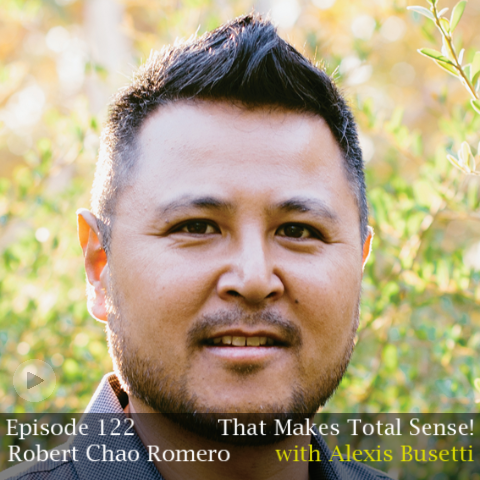
Speaker 0 00:00:07 Welcome to that. Makes total sense. A podcast dedicated to exploring God's generosity and justice. I'm Alexis. We setting the Christian aiming to ask good questions and encouraging you to do the same. Every one of us is wired by God to live out generosity and justice, but the house sometimes alludes us. That makes total sense is a way for us to get together, posture ourselves as learners and challenge one another to practice generosity and justice in a tangible way every day. Hey everybody. Um, I'm really thrilled to be sitting across from Robert Schauer marrow today. Um, he's in California. That's right. Robert, am I right? Yep. And LA area. And if you don't know this about the show already, one of my absolute favorite things about the podcast is getting to talk to people who are smarter than me. And I just do it like every single week.
Speaker 0 00:01:04 And I'm reading, Robert's bio preparing for this and I'm like, okay, he's guys, he's only published like 15, some odd books. He's a pastor, he's a professor, he's an attorney, he's an author. Um, and he's kind, and, uh, the interactions that I've had with you, Robert both in person just now, before we started recording and then also in video lectures and online and things that I've seen, I'm just so thankful for, um, the spirit that you bring to the church and to the conversation that we're going to have today. So welcome. Robert, I'm glad to have you, it's
Speaker 2 00:01:40 A privilege to be here.
Speaker 0 00:01:42 So we're going to talk about a book that, um, was published last year, called brown church, five centuries of Latino, Latinos, social justice, theology, and identity. And, um, Robert, I've seen you around, I've been following you on Twitter for a while and I've seen this book and I confessed to you earlier, and I'll just confess to the listeners now that I just put off reading this book for a while, um, because I'm brown and I didn't know if it was going to feel a bit too personal because as you, as you mentioned before, when we were recording, we are, um, we're complex people with a, with a, with a complex history. So, um, I just I'm, I just want to say that I'm thankful that I read it. Um, and, and I'm looking forward to getting into that complexity with you today.
Speaker 2 00:02:44 Thank you.
Speaker 0 00:02:47 So can you give us first, a little bit of your own personal background? Because with the two last names, people are probably guessing at your, at your own heritage, if they don't know you already.
Speaker 2 00:03:04 So I am a mixed race. So my dad is an immigrant from Chihuahua, Mexico. My mom is an immigrant from who be in central China. I grew up here in LA and I've been here for a lot of decades, but I think like it's helpful to kind of explore some of like my formation. Um, I was born in east Los Angeles, but I was raised in the suburbs of LA during the time, just a few years after the end of second educational and residential segregation. Now I'm not that old, but what most people don't realize is that, um, education public schools in LA were not desegregated most of them until 1970 and 1970. So I'm a gen X guy. So I was starting my public school career, just, you know, a few years after that. And in that context, there was very strict racial lines that we brought from our, from our homes and people brought from their homes.
Speaker 2 00:04:13 And if you think about it this way, okay. So my dad is the same age as Donald Trump, right? Donald Trump was shaped by this mindset of Jim Crow, residential segregation from his dad who was born in the early part of the 20th century. And so here I come like this mixed race brown kid who looks to most people, you know, Mexican into the public school. And I had to kind of try to, and specifically into public schools in the suburbs that were largely white and I had to figure out, well, how do I survive? How do I, even though I don't understand what's happening, how do I kind of get people to accept me? And that's where I, for many years kind of wrestled with, how do I sort of fit into whiteness? I can, I can pause it. There, there's a lot of stories there, but so I think it's really important for me to sort of share that background. And then, um, it's been a long journey of sort of untangling detangling healing growing with Jesus over all those identity issues.
Speaker 0 00:05:19 Yeah. Um, you, you hit a word that I, that I definitely want to talk about later. I've got some like bullet point notes here. And so I'm hoping that later we can touch more on whiteness and the connection to colonization and things like that. Um, because some of those words are getting thrown around right now and not everyone is kind of clear, um, when we're defining those, what we mean by that. And so, um, and so I appreciate you starting with that and I want to, I want to come back. That was a good pause place. And I want to be able to come back to that in just a little bit. Um, I want to talk about even just the title of the book. So if you can define for us what you mean when you say brown church or brown theology, um, but then the subtitle really highlights what I think you're going for, which is like, we can't even, we can't talk about this in 2021 moving into 2022, we can't talk about brown church and brown theology with only this context in mind, we really do have to go back and at least get a basic understanding of the history of the brown church.
Speaker 0 00:06:34 Um, I'll say just to kind of
Speaker 2 00:06:35 Start us off. An example of that is when I talk with people who have maybe some theological education or they've been in some biblical study spaces or something like that, when we, if I might say brown church, they might say liberation theology, kind of like a, you know, uh, you know, an association word association kind of thing, but we can't even talk about liberation theology, right? Without understanding this, um, this history of the brown church, going back multiple centuries, this didn't start with Oscar Romero or something like that. So tell us what you mean by brown church or brown theology, and then why understanding the history is an important step moving forward. Sure. So the brown church in my sort of framing of it was born in fifteen, eleven, fifteen, eleven in what is now still the it's still the island of Hispaniola where Haiti, Haiti rests on one side, the Dominican Republic on another, and in 15, 11, 8 years before Luther nailed his famous thesis rate, eight years before the Protestant Catholic divided, um, there was a Dominican friar by the name of Antonio the month casinos, right?
Speaker 2 00:07:47 And to kind of refresh our history, memory banks, um, Columbus, he gets lost looking for it for a new route to India. He crashes into what is now the Caribbean, but by 1511, like the Spanish colonization project had been going on for a couple of decades. And, um, first of all, the Spaniards invented what we call race in the Americas. During that 20 year period, they lumped all indigenous peoples together and called them Indian and created that term. They called themselves, even though even Spaniards themselves came from very diverse backgrounds. Back in Europe, they called themselves were Spanish. They, after, as the indigenous population began to diminish and through genocide, they brought in, um, African slaves called them blacks, right? And the Spanish had created this racial hierarchy there. Right. Um, and they said, if, if, if you fit into this on the top part and we, we call you Spanish, then you get all the stuff you get that the privileges to serve in the highest religious offices, you can own land, you can own slaves.
Speaker 2 00:09:00 If you're Indian, then we're actually going to take away your land and make you slave make you a slave, right. To some Spanish landowner. And all these things by 1511, over half of the indigenous population of the islands in the Caribbean were dead. When Columbus came, there were hundreds of thousands of indigenous peoples, just in the Caribbean and tens of millions of indigenous peoples throughout the Americas, right? About 1511. There was this, this genocide that had taken place because of slavery, war famine, all these kinds of things, right? And Antonio de Montesinos in 1511, he preached the first racial justice sermon to the Spaniards and the island of Hispaniola. And he said, listen, very carefully to the words I'm about to share. He said, God gave you Spaniards, the privilege of sharing about Jesus's love. But instead you twisted that as an opportunity for selfish gain.
Speaker 2 00:09:59 And if you don't repent, God's going to send you to hell. That's what he said in 1511, right before the Protestant Catholic divide, before any of the, whatever our justice or contemporary justice conferences in the U S before, whoever wrote their books, right from, um, whatever seminary right in the 21st century, like Montesinos in that sermon together with his fellow Dominican friars, they gave birth to the brown church and from 1511 to the present through colonization and slavery and Jim Crow segregation, and the exploitation of farm workers and patriarchy and machismo and immigrant exploitation, the brown church has existed in a continuous line for 500 years. The reason why that's important is because, well, there's lots of reasons, but first of all, as I am a professor at UCLA, as I speak across the country, I meet thousands. There's thousands of people, especially millennial, gen X, Latinas, and Latinos who are like, I don't identify with this thing called evangelical Christianity in the us, because they're telling me that if I'm going to fight, if I'm going to follow Jesus, that I need to support Donald Trump and be part of the mega movement. And they're like, I don't have a space to fit. So for those many people who are wrestling, struggling in that spiritual borderlands that we talked about before coming on to the conversation, my message to them is you do belong, welcome home. You belong to this 500 year history of the brown church, this 500 year history of, of distinctly Latino, Latino, Christian, social justice, that is with Catholic and Protestant and ha it was even before that it was born even before that, that distinction was made. Right. And so the brown shirt says, welcome home.
Speaker 0 00:11:55 Amen. Robert, I'm going to pause right there if we can, because, um, you mentioned the spiritual borderlands that we were talking about before we started recording. I'd like to, to read just those maybe two sentences, um, from the book where you first introduce that, and I'll just say, this is it's, dog-eared, it's underlined, it has a star and like yes, with an exclamation. And I will just share my, my very deep annotated copy says the story of my life, like the, you know, with, so I received that welcome as a, as a Latino woman's day. I receive that welcome, but I want to, but I'm going to read what you say, um, because you shared some stories, um, in the introduction of your book of some of these people who fit the profile, um, of, of, of what you just described. And then you say, um, Latinos who care about faith and justice occupy a spiritual borderlands in many institutional religious spaces. We feel out of place because our concern for social justice issues is not understood. And, um, that, that to me feels like the brown church.
Speaker 2 00:13:22 Yeah. That's, that's at the heart of it. That's the brown church, this 500 year, holy spirit led tradition of Christian social justice, you know, in Latin America and among us Latinas and Latinos and, and that spiritual borderlands place, it's such a painful place to be such a painful place. And if there are listeners that are wrestling with that, it's like, oh boy, I just might, as a pastor, my heart, especially it goes out and just says, you know, um, God calls you Mihai mijo, you know, and, and God has a, has a home for you. Right. You belong in the church. I like to think of like, you know, like the different, um, descriptions of John and the book of revelation of people, of every tribe, language, nation, and tongue, right. That are going to be represented that are represented right in the kingdom of God.
Speaker 2 00:14:10 But a lot of times, as Latinas and Latinos, we feel like we can't be our own tribe if you will. Like, even though, even though we're one of the tribes that John describes, maybe we're a few of the tribes, I don't know. But a lot of times we're forced to fit into another tribe in order to be, to feel accepted. Like when I was a kid, you know, growing up in the 1980s, right. In, in, in, in recently desegregated Southern California. Right. And so it's like, no, we're one of the tribes, but we're like, it's like, just like Moses traveled. You know, I, I try to read through the Bible once every year and, you know, reading, uh, just finished the book of Exodus yesterday and it's, you know, just like God journeyed, yellowy journey with the Israelites, for, you know, afforded for 40 years through the desert and deliver them from slavery and then let them lead them in this journey.
Speaker 2 00:15:02 Right. And to becoming the people of God. So we as Latinas and Latinos from every part of Latin America, right. And in the U S Latino community today, like for 500 years, we've journeyed with Jesus to the holy spirit. Right. Um, and we're one of, one of the tribes, right? So I think hopefully that is a hopeful message, a message of belonging. I should also mention the, what I mean by brown, because that's, that often gets misinterpreted by people who don't even read the book, but who want to find fault with it. I probably do the same thing too. So I've been guilty of just skimming like the back of a book and then getting mad too. So I guess shouldn't be hypocritical, but by brown brown, I'm using it as an, as a metaphor for first of all, the cultural diversity that is the Latino Latina people as Latinos and Latinos would come in all shades and hues and ethnic mixtures.
Speaker 2 00:16:00 There's Armenian Latinos, there's Jewish Latinos there, you know, diverse many, many diverse indigenous first peoples of Latin America. There there's different Spanish, Italian, Asian, like me, Korean, and every mixture that you can imagine, of course, this is very critical, Afro Latino, um, you know, um, communities that form one of the backbones right. Of, of Latin America as well. But we have all that in our mix, all that in our heritage, right by God's design in brown is a metaphor for all of that. It's a metaphor for all of that, right? So it's not like a literal brown, right. But it's a metaphor for that. Secondly, brown is a metaphor for being Latino in the us.
Speaker 2 00:16:47 And what, and what that means in terms of being kind of in between black and white, in the racial dialogue, the racial discussion in politics in church denominations and wherever it. And I think since you're in Houston, I mean, Texas is a perfect example of that, that in-between liminality, right? So a hundred years ago, well, first of all, Texas was Mexico. Right. But that being said after, after it was sort of taken away from Mexico, along with like California, Arizona, New Mexico, we can keep going, but I'll stop. Um, but a hundred years ago, Texas and California in many different places, Arizona tried to segregate Mexican students. And they said, we're going to create segregated Mexican schools for Mexican students and Anglo students, white, Anglo students will go to other schools and black students will be even more segregated. Right. I mean, it's terrible. Right. But, but we did as, as Mexican Americans in Texas is we went to the courts and there is a famous case called Delgado Bastrop. Um, though God was part of my family line somewhere too.
Speaker 0 00:17:56 But
Speaker 2 00:18:01 Yeah, so that's very cool. So like I'm from the Romero, the Delgado's that are from El Paso, Texas, and from all that whole area, but our lawyers went to the courts and what they argued is they said you can't segregate our kids, we're white, but we're a special kind of white that still experiences discrimination. Because back then the, um, the 14th amendment of the equal protection clause applied only, it was created to protect African-Americans post-slavery right. And, and so whites were not covered by that those, those equal protection kind of laws. So when, when, when we would go to the courts in Texas, we'd say, Hey, we deserve to be protected by the equal protection clause. And the courts would say, no, you don't, you're white. And the same time, we would try to use that to our advantage and say, Hey, we're white, you can't segregate our kids.
Speaker 2 00:18:57 And the courts would like scratch their heads and calling, you know, experts from the university of Texas and all these places and anthropology professors and stuff. And they'd say, are Mexicans white. Right. And what's funny is 10 times out of 10, maybe nine times out of 10, they would say, yes, Mexicans are white. They can't be discriminated. They can't be segregated according to Jim Crow codes. But at the same time, we just, you know, we'd go back to Houston or to Austin or wherever, and they would still discriminate against us anyways. Right. I just come up with a different reason. Right. So we're kind of like we have, we're brown, we're metaphorically brown, right. Some of the privileges of whiteness. Right. Um, and then some of the, the, the, the, the parallel experiences of our, of our black sisters and brothers, but we're kind of in between right. Kind of left out of the racial dialogue. And we could say much more about that, but brown is really a metaphor for being Latino. And the brown church is a metaphor for being Latino in the U S church. Right.
Speaker 0 00:19:57 I actually, I'm actually really curious about that. I actually, I kind of do want you to say a little bit more about that. Um, w one of the things that I was, uh, I was, uh, maybe preaching teenager, um, going back and my Mexican grandfather picked me up from school one day. This was like really random. He never had a cause to do that really, but, you know, my parents were busy or something. And so he picked me up in his little, you know, Buick Regal with Mexican flag hanging from the rear view mirror and on the front of the license plate, you know? Um, and, uh, and that was the day that, um, the pop star Selena, uh, Kington Eder Perez had passed away. She was shot and killed that day. And I, at the time, because I was, you know, my own thing and I was a teenager and I totally was not listening to Diana music.
Speaker 0 00:20:51 Like my grandfather was right only when I was at his house. Um, I was listening to other pop stars. I was listening to white pop stars and black pop stars, but not brown pop stars at that point. Um, but anyway, I remember this because he was deeply grieved, um, by what had happened. And, and, um, and it was on the radio, of course they were talking about it and giving news updates and, and everything they knew about it, but that got me stirring, right. Culturally, what was, what was happening, what was going on. And, and I could, I would have named it differently then obviously, but I just kinda wanted to know. And so I started probably like a lot of people after she had passed away beginning to get into her music and become a fan and things like that. And then when the movie came out several years after her death, there was a line in the movie that for me, it like everything that you just said was kind of encapsulated in this line, right?
Speaker 0 00:21:46 Because there, she didn't speak Spanish either. I didn't grow up learning Spanish, but she learned to sing Spanish. And her father in the movie says tells her how complicated her career is going to be, because she wants to tour in Mexico. Right. And he says to her, look in, in the states where we're too Mexican for the Americans. But if we were to go to Mexico, where too American for the Mexicans, right. And he says it, you know, and he kind of goes on with some other kind of humorous lines, you know, here, everything is all the food is too bland, but in Mexico we get the runs, right. He says, and he's like, we're just, we're, we're, we're too Mexican for the Americans. And two American for the Mexicans. We just don't fit. We just don't fit either, either place and other, another friend of mine described it, um, and kind of a more serious way is this like double rejection, um, almost, and being brown feels that way in a lot of spaces and the Mexican-American space.
Speaker 0 00:22:43 And, and in my experience, in my opinion, but also in America, as you say, with the, the white spaces and the black spaces, it is, it is kind of, we have that some privilege and some discrimination, and it's not, we don't really fit in a binary. Um, I'll add to that one more thing before I asked you to talk again about that, but even I don't, I don't know what you would have to say about this, but I grew up very confused, even filling out forms because, you know, I had, I had, um, actually someone say to me, last year, we were having this conversation. She said to me, Alexis, you're biracial. Like, and I had never identified as biracial because I grew up always being taught and believing and having to fill out forms that Hispanic was an ethnicity, not a race. And so I grew up filling out forms.
Speaker 0 00:23:32 And what I often did was I checked the box for white and checked the box for Hispanic. But most of the time it was a really messed up form because it would usually say white. And in parentheses, I don't know if you remember this, it would say non-Hispanic so say white non-Hispanic and then another box would be Hispanic. So I would just kind of try to tick people off and check both because both were true about me. I was, I was white, not Hispanic because my dad's family is not Hispanic. And I was also Hispanic because my mom's family is Mexican. And so even in that, there's not a box for me as a brown, mixed woman, mixed race or mixed ethnicity. That's not even, you know, that's not even clear, right. So I am that. I am going to ask you if you can, to explore that kind of this identity that we have as, um, as brown people living in America, Latina and Latino brown people in America.
Speaker 2 00:24:33 I think first, I would say that like the dilemma you're describing about the different boxes and stuff, it shows how the whole system of race is socially constructed. Right. And we're the earliest stages of recovering from that. Right. As simple as possible. Right? So in Latin America, right, illegal scheme was developed that said, if you are legally defined as Spanish, then you get all these privileges. If you're legally defined as Indian, then you don't, if you're legally defined as something in between, then there was somewhere in between the us had that same thing. Right. If you were legally, again, this is a legal thing, right. To talk about the lawyer, part of my background. Yeah. Whiteness. Wasn't just like an ethnic description. Like, oh my, my grandma's from Sweden. That wasn't what white was white from the very beginning was a legal definition. And if you fit into that legal definition, according to the constitution, according to according to federal and state laws, then you could become a naturalized us citizen.
Speaker 2 00:25:41 For example, from 17, 19 17 90 until 1953, I think a person could not become a naturalized us citizen if they were not legally defined as white. Let that sink in for a second, right? From 1790 to about 1953 or 54, something like that, a person could not become a naturalized us citizen if they were not legally defined as white. So there was the scrambling in the courts and Haney Lopez. One of my old professors at Berkeley wrote a whole book about this called white by law. And he looked at there's dozens of cases in which people of every single ethnic background from Chinese to Japanese, to Armenian, to Syrian, to Italian, all went to the courts to say, this is why I think you should consider me to be legally white. And the arguments were crazy. I won't go into the right. But for that reason, right?
Speaker 2 00:26:31 Like white to be white was not just an ethnic description. It was a legal thing. Right. And there were high stakes involved. If you could get yourself kind of, to be legally defined that way. So that being said, right, if they were legal categories, white and all these different gradations of, of black and the one drop rule and all these kinds of things. Right. And so, um, the U S for several hundred years strictly monitored and policed, those definitions of, of, and created these changing definitions of who is white, who was black, but all those concepts are made up.
Speaker 2 00:27:12 They're totally made up. Right. But we think they've always existed. Then again, bring in the Latin American part. It gets even more complicated because our family members come from a different racial, legal history. Right. And many of our family members come, some of our family members come from place where they weren't considered white in Latin America. Right. And then they come to the us and then they're like, you're, you're just a Mexican. Right. And they're like, no, we're white. And we're like, oh, actually I'm evangelical. Oh, I love Donald Trump. Oh really? Okay, great. Come, come to my church. Right. It's still a complex negotiation, but it's, it's, this, his history is so important to understand. Um, and I think it's going to be our generations coming up that are going to detangle untangle something in terms of even scripture. Right. I know that there are many, there's really good books, Christian books that have come out that sort of look at sort of mixed race identity in the Bible.
Speaker 2 00:28:10 And there's so much value to that. Right. But one of the things that I, you know, after thinking about this for 50 years, I'm like, we're struggling to read back our us Latin American racial terms into the Bible because in the Bible, people just, they just married. It was like, okay, you're a person is, let's say they're from the tribe of Benjamin. And they go hang out in Syria because there's a famine. We just married a woman from there and you have kids. And they're like, they're not like my kids are, are they, are they Syriac? Are they blah, blah, blah, like other blah, blah, blah. Like, because we're, our, our thinking is so messed up that we have to read back into what our mini sort of, um, we're reading back. And acronystic really something that people just have always done in human history, which is to inter merrier. And, you know, it's like, it's a little bit more complicated than that. And yet it's not right. So I guess my point is that like, we're, detangling this mess for hundreds of years, right? And I hope that the church can be at the forefront of that. This I'll say this. Like, what do I tell my kids? My kids are mixed race several times over, right. My wife, my wonderful wife, beautiful wife, Erica is, is German American from Indiana. No less. Right?
Speaker 2 00:29:32 So like, I've always wanted my kids not to wrestle with the deep wrestling that I had to go through to figure this out from a biblical perspective. So this is after all these years, decades, this is what I tell my kids. I say, Robert Jr. Atlanta. I say, Robert, you are, God's precious unique son and Jesus Christ. You are first God's son because Jesus died on the cross and rose again, to, to draw you, to reconcile you to himself, you a part of the church. And what makes you guys unique son is that, first of all, it's your individual individual unique gifts and talents, and all the things that God has made you a scientist and this and that, blah, blah, blah, your distinct personality, who you are and your ethnic heritage is, are like treasure. They're like treasure. I say, imagine one pot of treasure. That's your Mexican Chihuahua treasure. Another pot of treasure is your Chinese treasure. Another pot of treasury is Ruby's and whatever, from German, Indiana, and then another pot is grant in LA, right? And I say, knock, knock, knock, knock those barrels down of treasure and mix them all up because you don't have to choose. Right.
Speaker 2 00:30:50 And you're also, um, a son of God, right? Your gender makes you uniquely you. So all of that though, holistically, holistically, not kind of, you know, kind of like separated out into parts. All that holistically makes you guys unique, whole beautiful son in Jesus Christ. That's what I tell my kids, right? And that the cultural treasure part comes from revelation 21 verses 26 and 27, where John is saying, John says, after Jesus comes back and makes all things new, the glory and honor of the nations will be brought in the glory. And honor of the nations will be brought in the cultural treasure and wealth of all the different ethnic groups we will be brought in for eternity. Right. Um, and so that's where I'm getting that, that, that, that concept from a cultural treasure, what race did was race said, the only some ethnic groups have glory and honor, and we'll lump those ethnic groups that we approve up together and we'll call them white race said only some ethnic groups are glory and honor. And w we'll give them a distinct name, whatever that name is, we'll call it white. We'll call it Spanish. We'll call it whatever. And that's the privileged group that has glory and honor, and the other groups don't right. That's race in this biblical. The Bible says, no, everybody has distinct glory and honor cultural treasure and wealth that's God-given. And that is of eternal value.
Speaker 0 00:32:15 That's good. Um, before we move on from, from this particular part of the discussion, um, I think it's important that we name a couple of the things that you name in the book on this race discussion. Um, one of them is, and I may not be saying this, right. You kind of went down your, uh, percentages of, of different, uh, parts of your heritage that are all going to be toppled over and mixed around. I love that imagery, um, of this, uh, rasa Kosmynka maybe close. Um, and, and I looked, and it was actually funny. My husband and I did this the same thing several years ago, and his came back first. And, um, and my husband is, um, is his background is largely, um, Italian and Scandinavian. And so when his came back, you know, and the particular one that we did, they map continents in different shades of the same color.
Speaker 0 00:33:15 So Europe was blue and, uh, maybe, uh, south America is yellow, right in Asia was red or something like that. And his came back and they were all blue. They were just different shades of blue in that made up his 100%. And so when mine came back, I was kind of expecting it to, I don't know why, but I was expecting it to look similar. Um, but mine literally had every continent represented except Antarctica, obviously, and Australia. And other than that, I had all, I had five continents represented on my DNA mapping. Um, and so when you, when you had yours, I thought this, this is us. This is the, this is, this is who we are as, as Latino people. Um, you know, this is, this is who we are. So that was really beautiful to me, but also want a name that we have not been without our own ugly racial history.
Speaker 0 00:34:10 Um, and, and one of the quotes in the book that, that I just want to pull is, as you say, one can be a faithful follower of Jesus or a racist, but not both. And this is not just talking about what we've seen, white supremacy and stuff like that in America, in the last, you know, century more than that, of our history. But this also goes back to, um, the history of Latinos in the world. So I do think it's important to name that. Can you, can you talk about that a little bit, how it's affected us as, uh, as communities with, with respect to one another?
Speaker 2 00:34:46 Sure. Well, first of all, as Latin Americans, people of Latin American descent, we invented racism in the Americas. It's the whole month casinos thing, right? It's like 150 years before the pilgrims ever even thought of coming to the Americas. We created the first racial categories, right. Of white and black and Indian and Indian and so forth. And those of our Spanish forebears put themselves on top and invented it. Right. And so for several hundred years in Latin America, all this racism that took place in the U S took place in, in, in unique ways in Latin America, just with different names, right. They took different forms, but it's the same thing, essentially, right. And to this day we carry that history and those attitudes within us. Right. So I'll give you an example. A couple of, I remember once walking in my neighborhood and I, I, we were new to the neighborhood and I see one of our neighbors and he and his wife were Latino. His wife was actually, um, I think Japanese, Peruvian, and he was maybe Italian, Peruvian with other ethnic backgrounds, but I remember meeting them. And within two seconds, his wife says, my husband's, my husband is Italian. I gives you not within two seconds, two sentences. My husband is Italian. And I'm like, I don't care. It's nice to meet you. My name is Robert. Right.
Speaker 2 00:36:12 But that, that's like a Latin American calling card. In other words, my husband is white. Right. So, you know, he deserves respect or somehow he's he's or at once I remember I was going to like a gas station nearby house, and I was going in, give him a credit card to get gas. And the lady who, the Sinatra who was helping me was you're a little older than me, not that much older. And we started talking in Spanish a little bit and it turns out both of our families are from Chihuahua, Mexico. And she said, oh, that's funny. We're from, we're both from Chihuahua, but I'm light-skinned and your dark skin. Ha alright. And I'm just thinking to myself, oh my gosh. It's like, and who's the UCLA professor with two doctorates and, and all this kind of stuff. Right. I'm getting dissed by the, by the, by the gas station lady. Right. Who's trying to one up me on her racial, whatever qualifications. And I'm just like, that's the kind of thing that happens. And, but in more harmful ways, right. There's, there's fierce discrimination, structural discrimination against indigenous peoples in Mexico and in different parts of Latin American, just like the us structural systemic against Afro Latinos, Latinos, same thing. And so we have a very everything that the U S has experienced and done. We did it first. And then we bring that over to the U S and you can imagine what a mess that makes. Yeah.
Speaker 0 00:37:44 Uh, it was, it was interesting. I'm taking, um, a class right now on, um, on migration, um, you know, immigration identity, these kinds of things. And there was talk of exactly what you just brought up of, um, seeing a cycle, um, of this kind of discrimination with Latin American immigrants specifically. So coming over and they experience discrimination because of not fitting profiles and because of white supremacy and things like this. And then they end up some, some people end up perpetuating that cycle with newer immigrants who come to the country and they treat them with the similar discrimination as, as they have experienced. And so it, it ends up having kind of like this, it ends up being kind of, right. So what you would, you would anticipate the result would be when you have something like that.
Speaker 2 00:38:39 And again, that's the game of whiteness, right? That's what a game there's been played. Right? I mean, my family, the same thing, right? My family, the Romeros are from Chihuahua, Mexico, which has they explicitly, they see they're white and they come to the us and then they, you know, then they say, oh, look at those central American Indian people that are coming, blah, blah, blah. There's horrible things. Right. And then they joined the Republican party. And I think, let me, before I get anybody to matter, I think Latinos can have different political perspectives, but they join the crazy stuff even to, even to even more cling to white identity. And anyway, and that's also part of our being the nature of being brown, right. There's always been a few of us, Latinos, Latinos. If we get enough education, if our skin is white enough, we have enough money. We can pass into whiteness, not perfectly, there's still some bumps along the road, but think of Ted Cruz
Speaker 0 00:39:38 In Texas, we have to think of Ted Cruz. We have no other choice than to think of Ted Cruz. Right.
Speaker 2 00:39:47 And it's like, or we could say, okay, I'm going to get my education, my professional background and everything. And I'm going to be like Moses, right. Not in a, like an arrogant way, but I'm going to, I'm going to continue. Even though I have all the education of Pharaoh and all the opportunity, I'm going to choose to identify with my people of Goshen. Right. And use my resources and use my education and so forth to help uplift the whole tribe. Right. I'm not saying, and so there's nothing in that that is like against like becoming economically, economically successful or professionally successful. It's more of an attitude, right? It's like, am I going to just dis most people that come from my same background and then just get me get mine, me and mine, or am I going to sort of try to lift up the whole community? Right. And that's, that's a fundamental dilemma of brownness. And part of that fundamental dilemma is also that the vast majority of brown people, right. To use that metaphor will never have the opportunity to assimilate into whiteness. It's just not going to happen. Just like the vast majority. Right. Of Israelites when they were slaves in Egypt were going to remain slaves in Egypt. That was just right. But there's always, again, there's that whiteness escape hatch.
Speaker 0 00:41:04 Yeah. Can, can you, I, I'm going to take full advantage of talking to an attorney I'm really enjoying this Robert, because it just it's. Um, because I think that we, I have an opportunity with you to kind of, uh, succinctly and specifically define some of these terms. Like I mentioned before that are kind of floating around. Um, and so I'm going to link a, I don't know if you've seen it, I'm going to link a lecture too. Um, that Willie James Jennings gave at fuller a couple of years ago, um, called can white people be saved where he specifically talks about whiteness, um, and uses that term. And so to kind of give people that perspective also, but when you say, um, this is the cycle of whiteness, or, um, it's not, it's not necessarily about XYZ, but it's an attitude. So can you, can you kind of just talk about that?
Speaker 0 00:42:02 Because I will even say a couple of years ago when I was first introduced to that term, it was actually on a podcast where they just breezed past it and I was offended, but I didn't know why it was kind of like reading the back of the book and I was mad about it, right? Like, like you talked about before. And so I want to give people opportunity. Like, if you're going to be mad about it, let's at least let Robert define it. And then you can decide if you're going to be mad about us using that term of whiteness. So can you, can you give us that, uh, at least a good working definition? Sure.
Speaker 2 00:42:31 Again, I think to take it out of the realm of the emotional at all. Right. And I can say like, but also I want to say that I understand sort of like how it presses a lot of emotional buttons. Like it's like, I'm going to say that first of all, but think about it out of the emotional realm as a legal term, right? It was in the law, in us, federal law, in us state and local law for at least two or 300 years. If someone had the legal status of white, the legal status, again, you had very specific privileges. You could live in certain parts of the, of the city. You could get any kind of job you want. You could get any post in a church. You could sit in the front of the church, you could ride anywhere in the bus. Right.
Speaker 2 00:43:21 You could become a naturalized us citizen, right. Like white. So just think of it as it was a legal term. Right. Um, what that legal term was supported by certain types of, um, philosophical underpinnings, right? There's some, some even tried to make theological. So there was this idea and it's, and the thing is the history is so well-documented that at first in the U S history white to fit into that legal category meant Northern, Northern Europe, Northern Europe. Right. And if you were a nerd from Northern Europe, you were easily accepted into that category of white and got all the privileges. Right. But whiteness at that, from the very start imply, and I'm better than anybody. I'm better than other people that are not white. So I'm better than Mexicans. I'm better than blacks. I'm better than Orientals. Right. So whiteness also created other categories to put other people down.
Speaker 2 00:44:22 Right. So I'm white and I'm not the thing called Oriental. That's inferior, I'm white. And I'm not this thing that's called black that's inferior, et cetera. Right. So whiteness for the very good goat, it was not just a neutral term. Like I'm white. Yay. I put on some sunscreen, it was like, no, I'm white. And therefore I have all this privilege in us society over time who was white expanded, there was a lot of debate or Italians white, like the boost SETI thing. Right, right. For a long time, uh, right. Maybe if you press them legally, but it was like same exclusion or Jewish people white from Eastern Europe or blah, blah, blah. Right. And then, so who became, who became accepted as white, the box has changed, but from its very inception, it was always, I'm white and therefore I'm not inferior like these other legal groups that I'm going to create.
Speaker 2 00:45:14 Right. So when Willie Jenean says like, well actually let me back up because this was like a theology kind of conversation. People even develop theologies to justify that. And they said, oh, African-Americans have the mark of Cain. And that's why, that's why they're inferior. They're black skin is the mark of Cain. So we can therefore segregate them and enslave them, things like that. Right. Um, or that people would say, oh, you know, um, at the time of Babel, God dispersed all the different races of the world, which is totally really reading into that passage. Of course. And therefore the racist quote unquote, that we've invented are supposed to always remain separate. So we need to maintain educational segregation in seminaries and, and uh, um, certain Christian colleges, white people can't inter marry or even date with nonwhite people until like the 1980s, things like that.
Speaker 2 00:46:12 Right. Et cetera. Right. So people also put the illogical veneers on it, right? The way the Spanish did it, they looked to Aristotle. Aristotle had this concept of natural slaves, natural slaves. Aristotle said it in different population groups, certain people are natural slaves. Meaning like they don't think, well, they're not good at reason they're better with their hands they're blah, blah, blah. They're natural slaves. But the Spanish did was some of them, not all of them, but a lot of them did. They said everyone that we define as Indian is a natural sleep by virtue of them just having brown skin and not being Christian, not being born Christian they're natural slaves. Right. So, and, and, and anyways, my point is that the term white was never neutral. Right. It was never a neutral term was always in for some type of superiority, um, whether it was in Latin America or in the U S right.
Speaker 2 00:47:10 So when Willie, Jen, Jenny, and says provocatively, can white people be safe? What he means is kept well, I actually, I mean, I have the book sitting at my desk, but I haven't read all of it. But, but I think what, let me just say what I think he means by that is that if a person clings to this identity of I'm white, therefore I'm better than everybody else. And I'm not this, I'm not that I'm not that. And I loved Jesus too. Can that person be really be safe? Does that person really know Jesus? Right. Not, but see, that's very different from, and I think of course, it's, it's intentionally provocative to put it that way, right? We're not saying kind a Scandinavian Italian American person, like your husband to be safe. That's not what we're saying. We're saying can someone that, that clings to and centers this whole racial identity of superiority, can that person really know Jesus? That's what we're saying. Right. So the hard part is to say, okay, this is where I feel bad for white people. Right. How can white people then disentangle kind of the glory and honor of the different ethnic groups that, that, that, that, that have come together in the U S how do you celebrate that? The glory and honor part, but detangle it from this term called whiteness that implies by its very definition from day one, that white mint superiority.
Speaker 0 00:48:40 Thank you, Robert. Oh, that's good. When you said disentangle. Um, yeah. Cause it is, I mean, I was actually just, just having, I mean, I have this discussion semi regularly, but just even recently having a discussion of like, it is really difficult for, I think it's, I think that's one of the reasons it's really difficult for people who have always identified as white, but maybe don't understand the history that you just gave us of whiteness. Um, because, because even because even that is in meshed and they don't understand the inmeshment not because, because it's kind of like my, my husband's favorite line from Mark Charles is you don't know it because you weren't supposed to find out. Right. And so it's kind of like, well, you weren't, you weren't supposed to find out, right? Like we, weren't supposed to find out about this history that you just told us.
Speaker 0 00:49:27 And so, um, it's difficult to disentangle it to an unmet shit because we weren't even really supposed to know that this is what that meant. We just think it's kind of like you joked were white, put on some sunscreen, you know? Um, and it's, and it's, and it's not, I mean, it's, it's, it's not, but I thought of in Daniel Hill's book, he has a, he has a book called white lies where he talks, he bases it on one of the ideas from Willie Jennings, where he talks about white supremacy as being a parasite on the American evangelical church. And so that's what I thought of when you saying disentangle, like this is not, it's not just like a little flea or a tick that you kind of pluck off. This is like something where this is actually feeding and, and has its, has its claws in.
Speaker 0 00:50:16 And so disrupting that is painful. Right. Just pulling that parasite off. It's not as simple thing you do with the tweezer. This is a painful process because it has been, um, tangled up for all of these centuries really. Um, you know, that we're talking about. So thank you for going into that history. Um, I feel bad because this is like, not as focused on the book as I wanted it to be, but this, the conversation is so good. And I'm glad that you can, um, that you're able to, to go to these different places with us, but I did have whiteness and colonization on my list. I'm just going to go ahead and, uh, and check it off. But, um, one, one thing maybe I'll, I'll, I'll ask the last thing that I kind of want to, and then I'll let you wrap it up.
Speaker 0 00:51:03 But we started by talking about the being in the spiritual borderlands, and we've talked a lot about diversity and racism and, um, and the brown church being a place where social justice really began in this theological setting. But one of the things that you kind of wrap up the book by saying is that the goal of social justice, isn't social justice, it's the beloved community. Right. Um, and I think that, that even that is something that has been misconstrued. Right. You know, when is someone, someone called me a social justice warrior, and I thought, am I supposed to, is that supposed to be an insult? I don't understand, like know where that's, where that's coming from. Um, but I think it's because it's this idea that these things that the social justice doesn't serve the beloved community somehow when really, um, that's the whole point. Right. So I would just ask you to kind of expand on that and then, um, and then maybe also just, um, give you an opportunity to, to wrap us up or get out there. Some of the ideas, either from the book or from this conversation that you feel are really important that we might leave people with.
Speaker 2 00:52:16 Absolutely. So the goal of the brown church is not the brown church, right? I'm not trying to like create like some people say, oh, there's no brown shirts. There's just the church, all your heritage. And my point in saying, and even framing the term of the brown church is to show that we as Latinas and Latinos by God's design or one of the tribes, yes, we are. God's children to the fact that I'm guys filed does not make you any less God's child. Right. Right. The fact that my son is distinct from my daughter doesn't make them any less my children. Right. So the first is that right? The goals of the brown church, the goal of the brown church is the, is the John's vision in revelation, right? Every people of every tribe, language, nation and tongue workforce should be before the feet of Jesus. Right. And redeemed God's redeem creation. Right. Made possible about that by the blood of Jesus Christ and his resurrection right now, that's the goal, but injustice interferes with the beloved community. You can't have it. Right. Revelation 21, 26 says that the glory and honor of the nations will be brought in. But verse 27 says that nothing, that sin will be brought in.
Speaker 2 00:53:28 Right. And when we talk about sort of deconstructing this, whatever you want to call it, decolonial colonialism or whiteness or whatever. We're talking about. Verse 27. Just think about that for a while. Right. We want to keep all the verse 26 as part of the U S right. And there's a lot of glory and honor here in the U S that's why I'm here. That's why my family is here. My family is not packing up their bags to go back to Mexico or China, even though, you know, we have deep connections there, there's glorious things about the us as well. Right. But then there's some really verse 27 things, right. That we're talking about that are, that are horrible, that have been horrible for centuries and that they hinder the beloved community for happening. Right. Um, and every time someone in a reflexive unthoughtful way says, oh, that's just CRT.
Speaker 2 00:54:19 You're a social justice warrior. It's just, it's a cheap way of not having the conversation. Right. And not getting to verse 27. Right. The brown church is just, it's just a different entry point into the beloved community that I believe God wants to use. Not for everybody. There's other entry points too. But the entry, many of the entry points we've been trying for the last 50 years have not worked. That's for sure. So if we keep doing the same thing and expect different results, it's not going to happen. Right. But I love Jesus. I want people to know Jesus, Jesus changed my life as an adult. Like, and my primary spiritual gift is actually evangelism. Not even justice, even though I'm a community organizer, I'm all these things. I'm a pastor first. I'm an evangelist first. And that's my, that's my final plea. Right? And sackcloth and ashes to my sisters and brothers listening, unless we talk about verse 27, we're not going to get to verse 26 and we're not going to have the village when we're not going to fulfill the vision of people, of every tribe, language, nation, and tongue, as part of, part of the beloved community of all that Jesus died for that he gave his life for that he rose again for, and that is our mission.
Speaker 2 00:55:34 That's the goal.
Speaker 0 00:55:36 Amen. Robert, would you pray for us?
Speaker 2 00:55:42 Thank
Speaker 0 00:55:42 You.
Speaker 2 00:55:45 Or Jesus. It's all about you like the songs. It's all about you and Jesus. It's so easy. Lord guide to first learn about justice and then forget about you. It's so easy to just focus upon our personal relationship with you and forget about your larger redemption of all things. And all people help us Lord, just to be the people of the early church who didn't get it right all the time. Lord put, it kept their eyes on you who saw Lord Jesus, who learned from you directly, or as Paul talks about Lord in the book of Colossians and Ephesians Lord that you are Lord and savior in king. And you came to reconcile all people in all things to yourself or God through the cross, through your amazing sacrifice. God. And when you rose again on the third day, Lord God, that new creation began send us out. Lord guide us agents with your new creation and of your beloved community. Amen.
Speaker 0 00:56:48 Thank you so much. Amen. Um, the name of the book one more time that we barely skimmed the surface on today. Sorry about that. Robert is called brown church, five centuries of Latino, Latino, social justice, theology, and identity. I will link it in the show notes. Now that you've heard about it, or if you're reading about it again, don't be like me. Don't wait to read this. Um, it was so good. So rich. Um, if you identify as brown, um, I hope you feel seen in this book like I did, um, even just in the first few pages. So, um, thank you for being with us. Robert. If people want to connect with your, find more, find out more about your ministries or the things that you're doing, where's a good place for them to start.
Speaker 2 00:57:30 Sure. Thanks everyone. So Twitter, prophet Chao Romero on Twitter, Robert Chao Romero, C H a O on Instagram, Facebook, all the regular things. I'm all on kind of there.
Speaker 0 00:57:46 Awesome. Well, I will link all of those in the show notes. Thank you again so much for being with us today.
Speaker 2 00:57:52 Thank you to Ron. It's a better pleasure.
Speaker 0 00:57:57 The links for all the resources mentioned in today's episode can be found in the show notes, music and podcast production by Seth B city. Be sure to give us a review on iTunes and subscribe at your favorite podcast listening app, you can also visit us at that. Makes total sense.com