Episode Transcript
[00:00:10] Speaker A: Welcome to that Makes Total Sense, a podcast dedicated to exploring God's generosity and justice. I'm Alexis Busetti, a Christian, aiming to ask good questions and encouraging you to do the same.
Every one of us is wired by God to live out generosity and justice, but the how sometimes eludes us. That makes total sense is a way for us to get together, posture ourselves as learners, and challenge one another to practice generosity and justice in a tangible way every day.
Shantae we had a really great pre conversation a couple of weeks ago and a really great pre conversation now. And I forgot to tell you this. So this is one of these. Anyway, this was kind of fun for me. I have had this copy of your book for a while now, and when I grabbed it to prep to read it and prep for this conversation, the first thing that I noticed was that message. You signed this for me and can I read it to you?
[00:01:17] Speaker B: It reads, yes, sure.
[00:01:19] Speaker A: Alexis, may you grow in receiving God's boundless love.
And I picked up your book and had forgotten. I'm sure I'd seen it right when it was mailed to me. I'd forgotten about it. And I was like, I need to, like, I don't know if this was an Instagram post, I would need to save it. Maybe I need to take a picture of it. And so it's always in the gallery of my phone.
I have shared this before on the podcast. So, Alexis, may you grow in receiving God's boundless love.
I've shared this before on the podcast, but when I was early into my therapy journey, and I'll tell you a couple things about me. I am a one on the Enneagram.
I am an eldest daughter and I was raised in a Southern Baptist church in the Bible belt of the U.S. now, that's code for some things.
And I was having a conversation with my therapist and I was talking to her about my relationship with God and my prayer life, and she was kind of asking me about it. And I just remember telling her, I just, I just want to please God. And so every day, you know, I just ask him, what. What can I do, God, to. To please you today?
And so she's. She was like, infinitely patient with me through. Throughout our years of journeying together.
And in that moment, she didn't discount that that was something that I, you know, kind of should be praying or she. She didn't say anything like that, but she said, okay, I would love to challenge you.
What if, in addition to everything else, you're praying every day, what if you added Something that. That sounded like this, God help me to experience your love today.
And I thought that was the stupidest thing she could have said to me.
I just thought, well, yeah, sure, God loves me. You know, I've been singing that since I was, you know, two years old or whatever.
But it was a very. It was a very wise piece of advice and a wonderful addition. And when I read your message, I was brought back to that place because I think, I know it's true for me, but it may be true for a lot of people that.
That's a wonderful place to.
To be, is growing, as you put it in this message, in receiving God's boundless love for us, that it's something that we can, you know. Yeah. Anyway, we won't ever grow out of that, out of that need or out of that.
Yeah, we won't ever be like, yeah, yeah, I'm good. I got it. You know, so anyway, so I just wanna. I just wanna thank you for that because that just felt. I just felt really seen by that message. And it was funny when I considered, oh, my goodness, how long this book has been sitting on my shelf, how. How long ago it came out, the fact that we hadn't even met when I received it, and it just felt really meaningful and beautiful all over again. So thank you so much for that. That was a real gift.
[00:04:56] Speaker B: Yeah. Thank you for sharing that. That's something that periodically I do. God, would I experience your love today, show it to me in, like a palpable, like a tangible way. And I got stories about how God has shown up, but we ain't got time for that. But, yeah, and that's my prayer for every person who reads the book, that they may come in thinking, oh, I'm going to go love my black neighbor. Yes. You know, but really, it's. As we choose to love other people, we get to receive God's love.
Right.
[00:05:29] Speaker A: It's wild, isn't it? I just think about how amazing it is in so many different relationships. I was listening to this podcast today that I found on my walk. I listened to what now by Trevor Noah sometimes. And there's a.
I just love him.
[00:05:44] Speaker B: He's hilarious.
[00:05:45] Speaker A: He's hilarious. And today, like, out of everything, there was a parenting episode on. And I, like, don't generally, like, you know, migrate towards things like that, but I. I sure felt like I needed it today because, you know, sometimes you just have one of those days or one of those weeks or one of those months anyway.
[00:06:03] Speaker B: But the.
[00:06:03] Speaker A: The psychologist or the. Whoever was on There, the parenting expert. Expert was saying something similar to what you just said. But in our parenting relationships, you know, where she's like, that's one of the areas where we get to grow as individuals is when we. When we parent our kids.
Some of the challenges that we experience when we're parenting our kids, if we work at it and allow it to, they can really help us grow as people, too. And, yeah, when I hear you saying, like, yeah, oh, yeah, I got this. I'm gonna love my black neighbor. Mm.
And, you know, can we. Yeah. How can we experience God's love more? How can we get to know ourselves and grow ourselves as well? So, anyway, that's a long intro. We haven't even said the name of the book, so I'll say it. I'm so glad you're here.
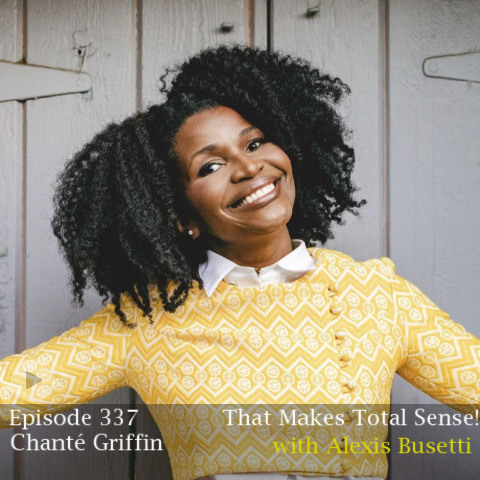
It's called Loving your black neighbor as yourself, A guide to closing the space between us. And Shantae Griffin is here with me today.
It is a beautiful book.
I enjoyed it. I just enjoyed it so much, and I can't wait to dig in and talk about it.
I want to get to the target audience for this book, but maybe before we explicitly say that, I want to start our conversation where you started the book.
And that is, I just want to ask you to talk about your experiences growing up near la.
I love la. I tell my husband all the time I was born to live in SoCal, and he shows me our bank account, tells me I was not born to live in SoCal. And I argue with him every time.
But about your experience growing up in and around la, and really about your earliest experiences just being surrounded by black communities and that being your. Your norm and how that formed you and shaped you growing up.
[00:08:12] Speaker B: Yeah.
Well, it's so interesting. I moved to LA when I was about three years old. I was born in Fresno, California, which is the central part of California, to two parents who got married at 17 and 18.
Yeah, 17 and 18.
[00:08:29] Speaker A: Mine, too, by the way. 17 and 18.
[00:08:31] Speaker B: Oh, gosh. Yeah.
That's crazy. I'm grateful, but that's too young.
[00:08:35] Speaker A: It's too young. Just for the record, we both say it's too young, but, yes, we're grateful. And.
[00:08:40] Speaker B: And so my father moved her family to LA because he wanted to become a famous musician.
And, you know, if you're teenagers and you're having kids, you don't have a lot of money. And so we didn't. You know, we lived in what would be considered the. The hood of Los Angeles. It was predominantly black. I went to an all black mega church filled with, you know, choir rocks and hand claps and people passing out, you know, under the power of the Holy Spirit. And I don't know if you ever saw this GIF that was, like circulating and it was a bunch of kids, black kids in a cafeteria, and they were like, clapping and there's this little black boy on this table and he's like dancing. I don't know if you've ever seen. Yeah, okay. One of my favorite GIFs, like, ever in life. That's what my childhood felt like.
That's what it felt like. Surrounded by black people in my neighborhood, my church, my school, and just joy and happiness and not to be cliche, dancing and music and love. Like, that's what it felt like to go to a school where every teacher looked like you and every school, every teacher believed in you and said, you're so smart, you're so capable, and you're like, yeah, I am. Whoever said I wasn't?
So it was. We were in a bubble. I mean, I see now, right, we were in neighborhoods that had been redlined, neighborhoods that had been set apart for black folks and other folks. I didn't know that. I just felt community. I just felt love. And so it was a wonderful way to grow up, honestly, to be affirmed when you go into church, to have your culture affirmed in, in all the ways it is good, right, to go to church and hear how God will provide and how God wants to care for you and how God sees you. All these beautiful things.
And I guess one way to say this, the bubble was kind of burst when I moved from that community into a more, you know, multi ethnic community and then experienced like explicit racism for the first time. And so. But growing up, even though there wasn't a ton of money, even though it was technically not the best neighborhood, you know, according to, you know, what is it, Will Zillow?
To me, it was, it was fabulous.
[00:11:03] Speaker A: Thank you so much for sharing that. I, I was particularly intrigued because I hadn't thought it was years ago, was the first time that I met someone who could kind of put into words what you talk about immediately following that in the book. So you kind of moved on up a little bit, Jefferson style, and you moved into this neighborhood that was not necessarily this redlined kind of. We're going to, you know, have all of the black people and people of color in this particular area that is not desirable. People who don't know the history of redlining. I'll put some, put a book in the, in the show notes here so they can. They can read it. The Color of Law is probably the place to start, even though it's. It's a big one. But.
But you talk about the standards, I will use beauty. Carolyn Sumlin talks about white supremacy in that there is a standard for what is considered beautiful.
And what you just described in this early part of your life. White supremacy didn't speak to that standard for you in the beginning of your life, but then you were introduced to it.
Talk about that.
[00:12:33] Speaker B: It's.
I wanna. I'm trying to think who it is. Is it Zora Neale Hurston? And she has this piece where she's like.
I'm definitely paraphrasing, but it's like, you don't see how beautiful I am. Like, you don't see how talented and capable I am. What's wrong with you?
So I think it was slowly.
Me, right?
[00:12:54] Speaker A: Yeah.
[00:12:55] Speaker B: Maybe I was in the fifth or sixth grade when we moved.
You know, the more I was out in this, you know, multiethnic society, the more I realized, like, oh, some people, they want to throw the N word at me and why, right? I was pretty much a straight A student, top of my class, you know, spelling bees, killing it. You know, I was one of those kids. This is so obnoxious. I could say it now, but I would finish my work early and then just kind of smugly be like, I'm done.
The extra credit kit.
[00:13:25] Speaker A: Oh, yeah.
[00:13:26] Speaker B: So when people began to, you know, question my intellect, I'm like, what? What are you talking about? It was just.
It didn't really phase me all at once. It was more, like, in stages. So, like, let's say when I got to college, went to Pomona College, predominantly white institution, very prestigious, very difficult to get into. I was the first person in my family to go to college, right? Huge, huge deal to make it into one of the top schools in the country. With two parents who did not go to college, right? Grandparents who did not go to college and got there, you know, would go. I love to dance. Would go to parties. You know, I'm just dancing, having fun, and no men. None of the guys would look at me, like, and think I was beautiful. And I was like.
Like, back home, hey, how you doing? Hey, beautiful. And I'm like, okay. I know it's not me. I don't know what's wrong with y'. All.
I know I'm beautiful. So it was. It was just. I was dumbfounded and. And really saddened. I wouldn't even say hurt, but just Saddened because I felt like some of the best parts of who I was as a person, they were being overlooked or just not even looked at at all to begin with.
And I knew I was one of the select few that had been given access to certain levels and certain spaces in terms of academics and beyond. So to see some of my really, really gifted black friends not be invited into honors and AP classes when they were smarter than me, truth be told, was difficult. Difficult to.
[00:15:14] Speaker A: And we, we need to talk about that as you, we set the stage.
[00:15:18] Speaker B: For.
[00:15:21] Speaker A: What you, what you talk about in the book Loving our black Neighbors as ourselves. Loving. Loving our black Neighbors. Well, is that the experience that you're sharing right now is not one that is unique to you.
It exists because racism is something that is embedded inside of America.
This quote lives in my head rent free. I just shared it with my 13 year old the other day at breakfast. And I don't remember what we were talking about, but Mark Charles, Native American activist, author, he says when we have questions about things like this. So I would say when you have a question, why is my black friend, who is definitely smarter than me not being invited into these honors classes or into these things? And you could use anything. The first time I heard him say it was why?
If you're wondering why women still make 80 something cents on the dollar to men, if you're having these questions.
[00:16:35] Speaker B: The.
[00:16:35] Speaker A: Answer to those questions is because the Constitution is working.
That is why.
The Constitution Mark Charles names again is, was written by white land owning men for white landowning men.
And so when we see some of these systemic injustices affecting even the redlining that we, we talked about at the top of this conversation, when you see these things, do all of these black people live together in this small area, in these houses that are smaller, that are not as nice in these communities, that where the area is not considered to be as desirable. Well, it's because the Constitution is working because the Constitution was written by white landowning men for white landowning men and it continues to privilege white land owning men.
And that can be, you know, a lot of things. Like it contributes to the injustices that women see and it contributes to the justices that bipoc folks see.
It contributes to the injustices that people who are experiencing poverty see because we weren't the ones who were the founders had in mind, the authors of the Constitution had in mind when they were trying to decide who gets rights and who gets privileges in this country.
And you name that and you along with many other People who are brilliant and write about things like this say it's not just in our country, it's also in our churches.
Shantae, that's hard.
But I want you to talk about why that's important for us as we have this conversation about how to love our black neighbors. Well, talk about why that is so important, to really get that foundational part about racism just being embedded.
Yeah.
[00:18:41] Speaker B: I think that it's really easy to simplify complex issues.
And as believers in the United States, I would say, and that's still speaking very generally, I think one way to answer your question would be like if the church in the United States had a very, very low, almost zero percent divorce rate, had a, you know, almost zero percent abuse rate, right?
Had just everyone had all of their needs met. Like the Axe community you saw flourishing multi ethnic communities, right? Like if the church in the United States stood in stark contrast to the rest of the United States, then we could say, oh yeah, Racism. No, that's not prevalent here.
Sexism. No, that's not prevalent here. Abuse. Oh, no, no. Oh no, no.
Like, we live and die by the word, right? We are purified and refined by the Word. We are held to the, to the highest standards, and we are also upheld by the highest grace, right?
And so when, however, our stats mirror the world, right?
And I think one of the issues where it doesn't, I think adoption rates for Christians are slightly higher than the rest of the United States, praise God. But we still have children who have yet to be adopted, right? And so I think we have to ask those questions. Why are there black churches?
Right? Like why. Why are there predominantly white churches? Where did this come from?
Just to ask questions. I'm not making a judgment either way. Just to ask questions.
Why are our neighborhoods segregated? Like, what happens when our church was one way because the community was one way. And now 50 years later, it's different and our neighbors look different, but yet they don't come to our churches. Why is that?
Right? So. So I think it's very easy to, to not want to ask questions or to give really simplistic answers or to pretend like, well, Jesus is the answer, but practically, how is Jesus being the answer? Through us?
And so, yeah, I'll stop there. I don't know if that answers your question.
[00:21:29] Speaker A: I don't need you to stop there.
But I'm.
[00:21:32] Speaker B: It, it.
[00:21:33] Speaker A: It is helpful and I think part of it. I'm speaking as someone who does not consider myself to be a history buff. I don't love reading history to Be truthful, my husband's book stack looks very, very different from mine.
Our vacation books, trust me, look very, very different.
And, and he loves to read about that kind of stuff. I don't. But I am learning how important asking those questions, as you name it is.
I think a lot of times it is easy. It's easy to oversimplify, as you just said. And I think it's easy to just kind of shrug our shoulders and say, well, it's just always been this way.
Why are there black churches and white churches? Well, because it's always been this way. But when you dig into the history, you're asked the questions and you go, actually, no, it hasn't just always been this way for any of those questions that you raised, plus more.
And we're living in that legacy.
Unless we're actively doing something to try to change that. We're just submitting to the status quo, which isn't helpful.
Let's go to the scripture.
You spent a lot of time in the first part of your book with the story of the Good Samaritan. You call him the Love Samaritan.
This story gets a lot of mileage, and I love it. I love it. I love that this story gets a lot of mileage.
One of the things that came out as I was reading your thoughts on it that I think is helpful here is this idea of proximity and nearness. Let me attach that to what we just said.
Like you said, let's start asking questions. Because if we don't ask questions, we might as soon we might oversimplify. We might say, this is just the way it's always been. We might then just go with the status quo. And I would say I could, I could look at the first couple of guys in the Good Samaritan and say, they're just status quo guys.
Like, I don't even have to blame them as evil or bad or something. I can see myself in them and say they're walking was, yes, it was neglect, a hundred percent. It was that all of the, all of the things that we want to say about them are true.
But I think superficially we could say, and they were just kind of letting the status quo maintain itself.
There's a guy who's injured, they're just going to let him stay that way.
But the other guy comes in and offers not just help, but the way that you talk about it, he offers proximity and nearness. And I would like for you to talk about why that felt, why that feels meaningful to you in this conversation about loving Our black neighbors.
[00:24:53] Speaker B: Well, yeah. What I love about the Good Samaritan, AKA the love Samaritan, is that in the scripture, it says, right? The.
The other men, they walk past on the other side, like, they see this man injured, and they just. Whoops. They just go another way because they don't to have the proximity and the intimacy and closeness with him for various reasons, which we can't get into right now, but I do discuss in the book, but the love Samaritan, he actually makes it a point to come closer.
And as he comes closer, he can witness the extent of the injury that has happened to this. I call him the robbed man, right? The man on the side of the road.
And he can see, oh, this man has been beaten. This man is gasping for life. This man has been, you know, physically, emotionally, just abused and left to die on the side of the road.
And so in that moment of intimacy, of closeness, his heart cannot help, I believe, like, open up to the man and say, well, what can I do right now? I believe even before he got close, he saw there was an issue.
He was obviously the type of person who was carrying up to be like, let me. Let me go and see what's happening here.
Let me go. So there was something in him. It wasn't just the proximity. It was something in his heart that was open to his neighbor.
Open to his neighbor already. And then when he got close, he saw the extent of the injury, and he said, oh, my goodness, I have to do something. He put him on his own animal, carried him to safety. He bound up his wounds. He started acting like a nurse and a doctor to him. And he stayed with him over time to make sure that the man was okay.
So this wasn't like, oh, I'm gonna call somebody to help you. He's like, no, he did it himself.
He. Right. He extended his resources. And then after time, it seemed like the. The. The robbed man was okay. He left him at the inn. He.
He now gets an assistant. He says, innkeeper, can you make sure that this man is okay? I'm going to come back. Back. Here's some money to care for him, to make sure he's okay, right? I'll come back, and if I owe you anything, I'll pay you. Then he could have said, all right.
[00:27:18] Speaker A: He.
[00:27:18] Speaker B: He could have taken the man out of the, you know, the inn and been like, all right, you're back on the side of the road. You're good, you're good. Okay, cool, I'm going on. No, he knew that the man Needed sustained care and attention over time, and he made sure to do that.
And so I really equate the robbed man in the good Samaritan story to our black neighbors, right? When you look at historically and contemporarily how black Americans have been pushed to the side of the road, how they've been injured, injured, economically injured, physically injured, emotionally injured, and not having the best schools or funding. When I say best schools, I mean funding the best funded schools, let's put it that way, right? And when I say nice neighborhoods, I'm speaking to esthetically beautiful, which is correlated and connected to money, right? These aren't, like, value statements. And so when we talk about our black neighbors, it's, I believe, only when you get up close and intimate with them that you can see the extent of the injury and you can say, oh, my goodness, what can I do to love you in this injured state?
Right. What can I do? How can I give you my time, my energy, my. My attention? How can I give you my resources?
How can I enlist other people to come and care for you as well? Because there are other things I need to do. I can't just sit here and be right. But. But I want to be a part. Not just. I don't want to offer just immediate assistance, but I want to make sure that you are restored back to total health and wellness.
And I think there's a message for us. Are we willing to get close and intimate and up close and personal with our black neighbors, see the extent of the injury and be a part of the healing and the restoration process? Right. Will we be people who choose to repair and to love and to recognize it will cost us something.
It will, right? The love Samaritan, it cost him time. He. He was. He had places to go and people to see. It cost time.
It cost him energy.
He had to walk physically while the animals carrying the. The robbed man, right? Physically, he had to pay a toll. He stayed up, right, for hours tending to the need. So there was. There was a toll on his body. He gave money, right? But what I. What I love about it, and I will. I'll end here, is that what he got, what he got from.
Oh, my goodness.
Do you know how beautiful it is to be a part of someone's restoration, to actually be able to witness it?
So beautiful. Do you know the bond that you make with someone when you're a part of their restoration and the part of their repair, whatever it is, how much when they look back on the experience, they thank God for you and and it's not because you, you know, you were their hero or their savior, but because you loved them, right? And how you feel like, yes, I loved and I, I participated in this loving experience with this, this stranger or someone, you know, it is so beautiful. It is so beautiful. And so I feel like when we choose not to be intimate, we choose not to be close. We are denying ourselves the beauty that intimacy in relationships with our black neighbors actually gives to us.
There's a beauty that we miss out on when we don't choose to get close to people, when we don't choose to give, when we don't choose to care.
And it's not just them, like I said at the top of the interview, them that are receiving. You are, we're receiving.
[00:31:16] Speaker A: I just want to put that on repeat.
So I feel like, I just want to like fast forward this, let that play again and then start.
Thank you for that.
One of the things that was circling in my head as you were talking, there's so many.
But one of the things goes back to this foundation we're setting for this conversation.
And I'm thinking about the injury. You're saying he's, gosh, this, this good Samaritan is getting close and he can, he can see the extent of the injury and this, this causes him to take action.
On a side note, I enjoyed the book. In the book, the way you talked about compassion being in the bowels. I have heard that so many times in the bowels and the guts. But when you got real with it, I was like, oh, okay, sorry, that might be a teaser. Get the book.
But he, he, he was compelled. He, he needed to take action because of what he was witnessing when once he gained that proximity. But he had to make the choice to gain the proximity in the first place. He had to go on that side of the street.
But one of the things that kept circling in my head was going back to the foundation part again is, is to say the story picks up with Jesus telling the story after the robbed man was robbed.
So I am not black, I am mixed Hispanic.
I want to talk to my non black listeners and say we are picking up and seeing injury that we many times were not there to witness the source of the injury.
These things have been generational.
We are living in current with current effects of racism and effects of racism that have been long lasting in our country.
And so not seeing what happened did not stop the good Samaritan from providing the care.
He didn't say, I didn't see what happened.
He could have said some really tacky, nasty, hurtful, disgusting things.
Like, we know what kind of people travel on this road.
He's probably laying over there because he probably stole something.
Maybe he got attacked. Maybe he deserved it.
That's ugly and tacky and nasty and hurtful and all these things. And maybe if the Good Samaritan or someone else wouldn't have said it out loud, there may have been people who were thinking it and thought, yeah, I'm just gonna let him be. You know, any number of things.
That's gross, but.
Or they could have just said.
He could have just ignored it. Like, we don't know what was going on in the heads of the other two guys. We're not. It's not explicitly stated in the story, but they see it and do nothing.
Who knows? Maybe one of them did see the injury happen. We don't know. There may have been people on this. On this fictional road who. Who saw exactly what happened and they couldn't be bothered by it.
But where the story picks up. My point is where the story picks up in this situation, we don't have any understanding that this guy who helped actually was privy to the injury happening in the first place, where it came from.
Also, it doesn't seem to concern him.
What he sees is a person who is struggling, who is suffering, who is injured.
And in that moment, he helps him as it's recorded.
No questions asked, really.
He just offers him what he can offer him.
And I think that that's meaningful because I think sometimes. And I'll implicate myself here and say I'm curious and I might have questions about. Man, these things are complicated. Like you said, we oversimplify. And I want to understand and I want to know and all that stuff, and there's nothing wrong with that.
But sometimes I can be the person who gathers too much information before I make a decision to do something.
And that's not really what we see in this story. And that's not what you're communicating in the book is, why don't you fully understand this, that and the other before you choose to listen to your bowels, to listen to your compassion calling you to act and to do something that is. That's necessary and that's loving in the situation. So, I don't know. Just a little response, I guess, to that.
[00:36:29] Speaker B: Yeah, it's interesting that you, you know, talk about the road, because this road, the story, people think Jesus made it up. Right? But the road is very much real.
And what's interesting about that road is, was Very steep.
And so there were robbers that would hide out to try to take advantage of people who were going to worship. Right. In Jerusalem. So very, very interesting. So you're right. The, the men who passed by, they could have said, oh, I mean, were you one of the robbers who tried to, you know, rob somebody and then they beat you? I mean, were you this? Are you that? Are you a no good person? All these reasons for not caring enough, right, to actually go close to even see what the issue was.
And so there are a lot of ways that black Americans have been and continue to be blamed for the ways that, you know, we can just look at statistics statistically, right?
We, we are not faring as well as white Americans and other Americans. And there's just so many areas where that is the case. If we look at, you know, instances of disease and, you know, death and just different things, there's just so many disparities.
And so we are often blamed for it instead of being helped in the midst of it, right? And the appropriate person and people and systems being blamed. But it's really, when someone's in need, it's not the time to play the blame game and to figure it out. It doesn't even, it doesn't even matter, right? Like, imagine this. Your kid is writhing in pain and their hand is bleeding, and you're like. And you see like a, a stool that's fallen off. You see the cookie jar that's broken. You see crumbs on the counter. And then you're like, oh.
And you're like, oh. So did you, did you, you tried to get a cookie?
[00:38:39] Speaker A: Huh?
[00:38:39] Speaker B: Huh? Didn't I tell you not to get a cookie?
[00:38:41] Speaker A: Huh? Huh?
[00:38:44] Speaker B: What kind of a loving parent would actually do that?
Absolutely not. What are you doing? You're trying to stop the bleeding, right? Is there any glass in there? Let me get that out. Let me care for you. You don't care how they got cut. All that cares is making sure that they get taken care of because you love them.
[00:39:07] Speaker A: That's right.
Yeah.
[00:39:09] Speaker B: But when we don't love people, when we're antagonistic towards people, when we feel like, well, those people, they're different or they're you know, they're not as this, as me. They should really do this.
They don't do that. That's why they're in this situation. When they're in need, then it's like, oh, God, right? If you're not, if you, if you don't have love, then you will blame them just like you would blame Your, Your child for cutting themselves in the cookie jar and falling down.
[00:39:43] Speaker A: Yeah, and you read my mind of where I wanted to go next. And, and I would say, now let's talk. Now let's talk to Christians. Now let's talk to some church folks, because we're not over here saying, I don't love somebody.
And I know, and I know that you know that, but that's why I think it's important to point out what you do talk about in the book that relates to this, which is seeing people oftentimes through different lenses that we may not really be completely conscious of most of the time.
Two of the lenses that you brought up that, I mean, I just, you know, real talk like, I wish you wouldn't have, like, open and read my mail in some of it, but you did is pride and hierarchy.
And, and I'll, you know, and I'll, I'll go back to that. You know, the, the relation to the. Related to the Mark Charles quote. America is built on hierarchy.
Everywhere we look, it's. It's hierarchy. It is hierarchy. I remember I've got middle schoolers and high schoolers, and I, I've had some conversations with my kids and I have seen the wish list lists. It's. It's holidays time. And I've seen the wish list on my kids and I'm, I'm. I'm projecting onto them a little bit my middle school self where I'm like, our hierarchy was. Now I'm gonna really date myself. And the transcript probably won't even be able to get this because it's not a thing anymore. But my hierarchy back then existed with who had Z. Cavarici genes and who did not, who had guest Genesis and who did not, who had this kind of purse and who did not. And there was a social hierarchy even related to who had what.
And, and it's just, it's just embedded. It's just everywhere we look, there's hierarchy. And so it's not a blame game. Say, oh, you see someone else through lens of hierarchy. We may be doing that. We may be looking through that lens and not even realizing we're doing it. But we need to pay attention, is your argument, and I agree, by the way, that we need to pay attention to what those lenses are that we're seeing people through. So talk about how that affects us when we, when we see people through. And those are just two that you, that I, that I picked out that you name pride and hierarchy. There are others, but what difference does that make when we are seeing through those lenses and don't realize it. And then when we, when we do and try and do something about it.
[00:42:38] Speaker B: Yeah. I mean, when, just to talk about hierarchy, when we operate from this, then we, without unconsciously decide who is going to get our love and who is not going to get our love. So let's say, right, you go to a new church and you're trying to meet people, it makes sense that you be like, oh, here's a family just like ours, right? Maybe similar, similar socioeconomic place, Maybe similar, similar ethnicity, similar number of kids, something. Okay, cool. Let's invite them over for dinner.
Let's, you know, let's do coffee with them. Let's do a play date. But maybe there's a black neighbor who. Maybe the question is, do you feel like they're just like you?
And if not, then automatically you aren't thinking about, let's have dinner together.
Automatically you aren't thinking about play dates. And so, right. So even just that concept of like us, sometimes there's hierarchy kind of built into that. Well, same economic class level, same educational level, say. So if someone's at a different lower level, right, Then they're not like us, which means we're not going to invite them. And you're not necessarily trying to be unloving or unkind.
It's just. It comes with the territory, right? And so I think a better question or way to approach our days and our relationships is you can wake up in the morning, God, open my eyes to truly see my neighbors today and show me ways that I can. I can be loving to everyone I come across.
You don't even have to say black. You can just say in general. But you can say black. You get specific, right? And see how right. God begins to open your eyes when you go into church. God, is there someone you want me to show love to today at church? Maybe someone I don't yet know, Just be open, right? So just opening ourselves up. God, am I am. Do I have a hierarchy that I operate from? Could you show me that? Could you reveal that to me? I mean, once you start asking God questions like, like, refine me Jesus questions. Oh, God's going to answer. Like, people say, God doesn't answer prayers. I' ma tell you, God answers all the internal character formation prayers. I promise you, you're asking for the wrong things. You're asking for money, you're asking for fame.
Ask for spiritual formation. I promise you, you'll have it before the end of the day. You will have your answer.
[00:45:18] Speaker A: No No, I don't want to ask for those things. Those are hard.
I don't want to.
My nephew, when he was 4, he used to say, I can't want to. And like I said, I can't want to. Say, I can't want to.
[00:45:31] Speaker B: Someday. I don't want to want to.
[00:45:33] Speaker A: I don't want to want to. There are some of those days when I don't want to want to.
But you're right, it's real.
[00:45:40] Speaker B: And on those days, my prayer has to change. Then my prayer is, God, help me want to want to love my neighbor today.
[00:45:47] Speaker A: Yes.
[00:45:49] Speaker B: Right. Got changed. Show me the importance of loving my neighbor, the criticalness of that. You don't know how God's going to show you, but you can pray prayers even when your heart isn't ready to pray the prayer.
[00:46:02] Speaker A: Yeah.
[00:46:03] Speaker B: And that's the beautiful thing. God honors that. God honors just that little bit of, like, that little bit of faith, that little bit of I believe help my unbelief. Like, okay, God can work with that. God can work with it. Just, I just need a little bit of space in your heart.
[00:46:18] Speaker A: Man, this is, I'm just gonna say this is like a footnote.
Well, you, you had some great. I love a footnote. You had some great footnotes in the book. But this is so, this is a footnote in this conversation I just recently read through for a project I'm working on for school.
Just read through the second edition of Divided by Faith by Michael Emerson and Last name Smith, second author, I can't remember. So this book is like 25 years old, the first edition. It's embarrassingly probably still on my, like, want list. And I hadn't read it. And then I saw, for this project I was working on, there was a second edition that came out. And I read through the second edition last week. It's fabulous. And I'll, I'll put a link there for the, for the old one and the new one. But the things that we're talking about, when I said earlier, like, some of the stuff is backed up by stats.
These guys have the stats on, on what this looks like in the US For Christians.
So it is of particular interest to me and particular interest who, maybe for folks who may be listening to this conversation as well, like the stuff that you're writing about from personal experience and saying, let's put a spiritual side to this, let's do this and that. Like, they, they did a lot of the statistical work, interviews, surveys, you know, these kinds of things. And I just kept Thinking man, a way to interrupt some of what I, of what I read in that book would be some of these things you're challenging us to do as believers say, God help me to see the places in my life and in my communities where I see hierarchy.
Like what that's, that's a powerful request to make. And then what if we actually saw it and what if we actually did something about it?
[00:48:30] Speaker B: Yeah.
When you think about, in the book, I talk about honoring our black neighbors and I use the foot washing of Jesus, washing the disciples feet and telling them this is what you are to do.
And in that moment, that moment, Jesus is dismantling hierarchy.
I mean, there are lots of moments in scripture, but that's a moment because someone in his position would never wash anybody's feet. That was the work of servants, right? And so he's just showing like, this is how I want you to love one another. This is how I want you to treat one another. Right? There is no, like you're there and I'm under you. And even though we see position in the New Testament, we see elders, we see deacons, we see all this, that they're still supposed to serve. Right. And get on their knees and wash people's feet. So hierarchy in the sense that we know it's Jesus is dismantling it.
And so that's the beautiful thing to know. Like once that gets, once that's dismantled, we get to experience a really pure form of love.
The fact that Jesus came down in human form, right.
And put himself on a cross for us, that is the purest form of love.
And he, he, he went from a high place to a very low, low place and said, I'm going to be intimate and up close and personal with you, man.
He's modeling that when you give things up, when you're willing to take up a cross of sort and love people deeply, it is so beautiful, right? Like the disciples, like resting on Jesus's chest like they're, they're with each other day and night. He's calling them out. He, I mean, this is, this is all relational.
This is all relational. This is all intimate.
And so yes, it is challenging sometimes, Sometimes you feel the challenge and the cost of loving your, your neighbor, loving your black neighbor. You feel it, but it's the same way you feel it when you're raising your children. There's a cost, but you'd still do it.
There's a cost to going to work every day and working, but you do it.
Anything worth having is worth paying a cost. For.
And loving our black neighbors is no different.
It's worth the cost, because what you get in return is going to be way better than what you poured out, I promise you.
[00:50:58] Speaker A: Yeah, no, it's. No, that's. That's really good. I've. I'm. I'm gonna. I'm gonna stick to the plan here because I've got, like, a lot of other things swirling around in my. In my head. But there are a couple more questions that I'd love to. That I'd love to get to, and one of those is you have a section in the book. This was so beautiful and intriguing to.
[00:51:17] Speaker B: Me.
[00:51:19] Speaker A: About learning cultural love languages.
And you shared a story briefly, of a family who. I think they were international students, and they had come to a place where you were.
And everyone is trying to be real respectful of them and their time and their space. And so. So when they want to see them, they're, like, putting it on calendars and making it happen and making sure that they have plenty of warning and all of that.
And what was communicated back to you was this didn't necessarily feel terribly loving to the new family because they were from a culture where people just dropped in unannounced. And. And that was that closeness that, you know, that informal nature of visits and things like that is. Is what felt like home to them, and it felt like love to them.
And.
And so it. So I'm bringing up that. That story to say the people who were in their lives were trying to love them well, but they weren't able to receive. Receive it in the same way, because the culture where they had come from and for. In this case, they were international, an international family, which is very different. And so they're like. There was a disconnect. There is. Is what I'm trying to say. And so there wasn't any blame like Shantae do better, you know, but it was like, oh, I can learn from this. I can listen to them and do something for them that would help them to feel. Feel loved and connected and valued and seen and all of those things.
[00:53:03] Speaker B: Yeah.
[00:53:03] Speaker A: And in your case, it wouldn't have been much skin off your back, really, to change the way that you interacted with them. And so that was just one example. But you give a lot of examples in the black community where there's some kind of general, like, love, cultural love languages there that we could.
That we could learn from when we're trying to learn our love, our black neighbors better.
[00:53:28] Speaker B: Yeah. And I think every culture has them. And my name for them is the black love lenses. Black love lenses. And you know, when you think about, like, let's just take something like communication, like we're talking in African American culture, crosstalk is how people talk. So one person is talking, another person talk. And it's just, it can seem chaotic, but there's a flow and you're just going. And in other cultures, right, like you let one person finish, then the other person talks. Or sometimes you have space and you. No, no, no, no, no.
So I could come across as rude. So I was, you know, renting. When I was writing my book, I was renting an artist cabin from a white family.
And we would have, you know, sometimes communal dinners and we talking and I would notice, I was like jumping in and I was like, oh, oh, you got to stop. Shut.
Like they're gonna perceive that as rude, right? Like, you know, you have to stop and then let them fully finish and then you start. Otherwise they're gonna think you're just talking over them all the time. And so I had to be like cross cultural and, and love them in the way that they like to be loved in terms of communication.
And so what I really love about black people is that like, one way to love us, and I'm talking about specifically black Americans in the United States, is intimacy.
That's the first black lovelands intimacy. And, and one of the reasons is if you even go back to, to the motherland, to Africa, where, you know, many of us originate from community, and, and being together is such a high value, it's a high cultural value. And so that's, that's true for many black folks in the States. Like, we love being together, we love the community. And then if you add racism on top of that, how we've been treated since we've been on that land, intimacy is something we, we especially value, right? So if you choose to be up close and personal with us, especially in a culture that says stay away, you don't want to be around these people, that means so much. And so whether that's intimacy, you know, being close to your black neighbors, at work, at church, in your neighborhood, it means so much and communicates so much. The second black love lens honor.
And we, we talked about like the foot Washington. But in so many, you know, countries, honor is a huge deal. It's even more important than respect.
And so in the book, I talk about ways you can show honor to your black neighbors. Even people you don't know. There are specific things you can do to communicate. I see you. I love You. I honor you. I honor you. The third black love lens is standing up, right? Standing up against injustice. And this is huge, right, because we have been treated so unjustly in not only in the United States, but around the world. So if you. You're willing to stand up for us the same way the love Samaritan stood up for the robbed man, right? And said, okay, I'm going to take him to this inn. Okay, innkeeper, you take care of him. Here's some money, right? He stood up for him. We appreciate that so much. Such a loving thing to do.
The fourth black love lens is God's gifts.
And so these are the resources or the things that pass from God to you to your black neighbor. Okay? So this can be an instance of, you know, maybe you're praying one day, and I know different people believe different things about God's voice and prayer, but maybe you just feel like. I feel like I'm supposed to give this black woman. I know, $50, right? You don't know why. So actually, I'll give you. I'll give you a real story.
So my mom was at our black megachurch growing up, and she goes to the ladies restroom, obviously, to use the restroom before service, and she says, she. She hears God say, there's a woman next to her black woman. Like, give her your Bible.
Now we're at church.
There are plenty of Bibles. You know what I'm saying? Like, there's a bookstore. Our church has a bookstore with plenty of Bibles. And it right next door, God's like, give the woman your Bible. My mom's like, okay. She gives the woman her Bible. And the woman starts crying. My mom, why are you crying? She's like, I never actually owned a Bible. And I prayed and asked God to give me a Bible, and you just gave me one.
That's. That's a God gift.
That's a God gift.
Something that you give to your black neighbor because God put it on your heart to give it to them.
And a God gift isn't just money or it isn't just a Bible. It is a gift from God's heart.
It is a gift birthed from love.
And if there's one thing black people are going to do is give to one another.
We give to one another. I write about giving statistics in the black community in my book. So if you can actually say God, how do you want me to love my black neighbors? How do you want me to give your gifts to them? The Holy Spirit will. Maybe you'll hear a voice Maybe you'll just have a sense I should do this. And then, like, when you can give something, that someone Something they've prayed for, that's huge.
If you can give someone something they prayed for and you didn't know that they prayed for it, man. We talk about evangelism. That's evangelism. We talk about just, like, justice in, like, small ways, everyday justice. That's justice, right? And then the final black love lens is the spirit of love.
Just God's spirit. Love is. If you can just write. And I talk about the spirit of love just welling up inside of us as we pray.
Right. As we choose to be people of prayer who intercede, who. Who pray over our black neighbors, who disseminate God's love through prayers and intercession. Oh, my goodness. If you can. If you can choose one of these ways to love your black neighbor, you won't be doing pretty. Okay. But all five. Come on. Huge.
Huge.
[00:59:37] Speaker A: Oh. Oh. I. Yeah. So that was. That was such a great. That was such a great section of the book.
As we close up, I'm going to circle back around to where we started, and I said, we're not going to talk about the target audience of the book now, but we'll talk about it later.
I just looked at the clock and I was like, dang. Okay, so as we land this plane, I would love to ask you.
[01:00:07] Speaker B: To.
[01:00:07] Speaker A: Give us some closing thoughts for the audience you had in mind when you wrote the book. So maybe name them and then give us some closing thoughts. Because I would say this is something that just again, another little footnote.
This is kind of a thing, especially like in 2020, racial reckoning, all this. We had a lot of non black folks who were curious and wanted to be allies, and they were kind of like randomly grabbing black folks and being like, tell me everything you know.
And that was often unwelcome because a lot of those black folks did not put themselves out there for such interactions and questions. And it was just. Anyway, you have been very generous, intentionally very generous with your wisdom, with your thoughts, with your advice, with your welcoming into this conversation.
And so I'm asking you that. Obviously, it's. It's been the whole time we've been talking, but I'm. But I'm. But I'm saying that when I'm asking you to address the target audience for the book, I'm doing this as someone to say, I recognize that you have made a choice and are continuing to make a choice by having conversations like this to put yourself in the middle of these conversations to be a place where people can pick up the book and they can, they can, they can glean from what you have. You have chosen to put out there as your own generous choice. So I just want to be clear about that.
So could you, as we close our timeout, maybe say, I know you said a lot in the book, but in this conversation, what might you say to listeners who fall into the target audience you had in mind when you were. When you were writing?
[01:02:03] Speaker B: Yeah. I mean, the book is really for anyone who is. Sees or starting to see something's not right. Like you. You have lots of questions and probably more questions than answers.
And maybe you're starting to see things not only in our society and our culture, but maybe even in your own heart, maybe even in your own family, your community, your church, and you don't know what to do. It can feel overwhelming. Right. It can feel all encompassing.
And I, I think to my, my message and to you would be to, like, understand that God loves you.
[01:02:45] Speaker A: More.
[01:02:45] Speaker B: Than you could ever love your black neighbor.
Right. God loves your black neighbor just as much as he loves you.
And so. Right. Choosing to be a person of love, choosing to intentionally love your black neighbor.
It's not like a project.
It's a spiritual process.
And so you really, the more you just open yourself up to God, God's word, open yourself up to God through word, through prayer, through community, the more you're going to become a person of love and love your black neighbor.
Right. So you. All you really need to do is be intentional about your prayers and intentional about being open. Right. Intentional about listening and. Right. And. And then everything else will come from that. You don't have to, like, go out and do 10 things right now, like, let me do this literally. Pray. Pray the prayers in the book that I've given you. Really open yourself up to God, Be humble before God and then do whatever the Holy Spirit, the Spirit of love, invites you to do. That's all you gotta do. It's very, very simple. It's not complicated at all.
It really is. And it may feel complicated, but it really isn't. God will give you the steps if you're open, if you're really open to them.
[01:04:09] Speaker A: Yeah.
Thank you so much. This has been a really great conversation.
Again, the name of the book is Loving your black neighbor as yourself, A guide to closing the space between us by Shantae Griffin. And I appreciate you so much. The words in the book and the words in this conversation and your encouragement. Thank you so much for being with me.
[01:04:35] Speaker B: Thank you.
[01:04:37] Speaker A: The links for all the resources mentioned in today's episode can be found in the show Notes, music and podcast production by Seth Buscetti. Be sure to give us a review on itunes and subscribe at your favorite podcast listening app. You can also Visit us at thatmakestotalsense.
[01:05:07] Speaker B: Sam.