Episode Transcript
[00:00:10] Speaker A: Welcome to that Makes Total Sense, a podcast dedicated to exploring God's generosity and justice. I'm Alexis Busetti, a Christian, aiming to ask good questions and encouraging you to do the same.
Every one of us is wired by God to live out generosity and justice, but the how sometimes eludes us. That makes Total Sense is a way for us to get together, posture ourselves as learners, and challenge one another to practice generosity and justice in a tangible way every day.
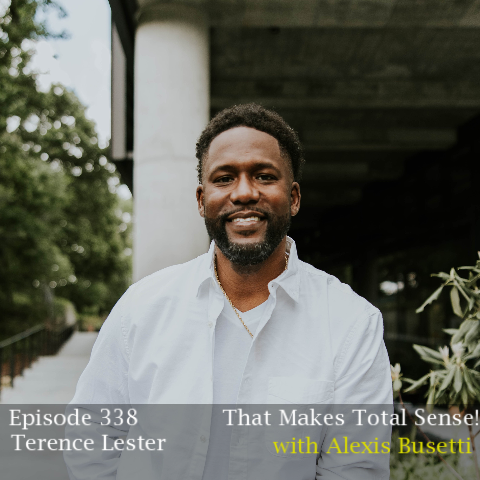
I don't always do this, Terrence, but I feel the real need and joy to introduce you as Dr. Terrence Lester.
[00:00:55] Speaker B: Wow.
Are you serious?
[00:00:57] Speaker A: Dr. Terrence Lester? Here's part of it. This book is obviously about education that we're going to talk about. So I think it's, you know, like props, let's say. Dr.
I have a mentor who says he has an earned PhD, which is legit. Like, I get that now. I'm getting it more and more.
But also way back in the day, my husband went through his doctorate while we were married.
And I don't know if your wife feels this way, but I was like, I feel like I need an honorary doctorate just for being with someone, for living with someone and partnering with someone while they're getting their PhD. It is tough.
Props to the person who gets it. But also their support system is so key to that. And then now as this, like I'm a second year PhD student and it's hard work, Terrence.
[00:01:59] Speaker B: Yes, yes, yes, it is hard work.
[00:02:03] Speaker A: It's not a joke.
[00:02:04] Speaker B: It's a lot of intellectual sacrifice.
[00:02:09] Speaker A: Say more about that.
[00:02:10] Speaker B: Yeah. Well, firstly, thank you for acknowledging the earn PhD.
So when you think about it on a day to day basis, you have to grapple with what is bogging down your mind.
It's the bills, it's, you know, what I have to do with the kids, it's what I have to do on my schedule if I'm working a job, you know, the list of things. And so that takes up a lot of mental capacity. And then when you think about adding in educational journey, right? You have articles to read, you have classes to attend, you have papers to write, you have research to examine over and over and over again. Because sometimes scholars write an abstract.
What are you really saying here? You know, until you get that information, and sometimes that takes up a lot of intellectual capacity where you don't have enough margin to think about other things. And so you kind of spread thin what I say in the, in the mind. Right?
We were just talking about, you know, you're wrapping up another semester and you can't wait to just rest your brain. Right. Because, yeah, it's spread thin in many ways. And so shout out to your husband. Shout out to you who journeyed with him through his process, and now he's doing the same for you. But, you know, I remember days when my wife would make the sacrifice with me when we wanted to go out on a date. You know, we would settle for sitting on a couch, but sometimes I would still be glancing at articles because I needed to retain the information. Or there are mornings on a Saturday when we would normally go out and walk in nature.
I was on the call, right. For hours at a time, listening to lectures, trying to retain the information.
But, you know, you need people around you. And I'm glad you talked about support, because support is key when you're journeying to become what it is that God is making you to be.
[00:04:24] Speaker A: Yeah. Thanks so much, Terrence.
We're going to talk today about your book, From Dropout to Doctorate. So it's. It's. The full title is From Dropout to Doctorate, Breaking the Chains of Educational Injustice. So I just want to say first that you've.
[00:04:38] Speaker B: You've.
[00:04:39] Speaker A: I feel like you're almost like a regular guest on the podcast now, but you've been on a few times, and your work, even prior to this book, has really informed a lot of my own work. So I just want to say thanks for that.
But in this particular book, I want to set the stage based on kind of what. What I encountered as a reader, if that's all right.
[00:05:02] Speaker B: Yeah.
[00:05:03] Speaker A: Because when I first came, kind of read the.
The recap, you know, like the press release that they send out, and I was kind of like, I didn't know exactly what to expect, but I knew, because I knew your work, that it was. That was going to be great. And it is.
But what I found here is I would say there are many who have probably seen the statistics or know some of the history of this educational injustice that you're talking about.
So it's. It's familiar in some ways, but at the same time, numbers on a page, data, statistics, history. While it's important, it's. It's. It's imperative.
[00:05:56] Speaker B: It's.
[00:05:58] Speaker A: It can't really paint as full a picture as we can get when we listen to someone else's story.
So this book, for me, when I was reading it, I was really amazed at how you were able to weave in your own lived experiences with your education journey and your experiences with educational injustice and into the statistics, the history, but also Research on how, on solutions, you know, like, how could we help? How could this become better?
And so, and so as a reader, it really filled. Your story was so compelling in that it helped. Not everyone's story looks like yours, but it helped fill in some, some of the gaps where maybe we might see a graph or see a historical anecdote. And then we go, oh, no, no, no, no. Like, this is what it kind of feels like and looks like and moves like when, when your story was included and threaded out. So, so I just want to acknowledge that. But I also want to say, I want to ask a question, kind of my first, my first question related to that, which is, I'm a memoir girl, and I could read memoirs like All Day and All Night.
And I would say your book could have.
It could have been just a memoir and it would have been powerful and beautiful and wonderful and meaningful.
But why tell me about the added parts to it? Why weave in this research, this history, these things about the educational injustice, about the system as a whole? Like, why was that part important for you to include when I think there could be an argument made that your, your story is, is compelling in and of itself, but it's had so much more added to it to bring this, this systemic, this holistic view of the educational system into it.
[00:08:06] Speaker B: Yeah.
The great question. Firstly, thank you for, as a scholar, thank you for noticing the positioning of myself in what I would describe as a historical timeline.
One of the things I learned early on in my journey to receive my PhD at this professor, and she would always give this exercise, Dr. Karen Baird, and she would talk about SPNs. What is the SPN? It was a scholarly personal narrative.
And so we would look at research.
Then she would ask us the question, how do you position yourself in the research as a scholar, not just an observer of data? Right. But how does this data actually cross over and overlap into your personal life?
And as a researcher, you're thinking, like, I didn't sign up to be like, burying my soul or, you know, putting myself in, in the research or to understand how the research itself has impacted me.
And, you know, as I reflect on my journey, could not help but to think about positioning my personal story in this ever expanding historical timeline. You know, it made me. Started to start. It made me start to think about, like, the neighborhood I grew up in as a matriculated through the educational system. You know, why was, you know, buildings outdated on my side of the.
Why were there potholes that were never fixed? Why was there air pollution?
Was there an immense Amount of poverty, why did it seem like crime was a little more intense?
Why was certain things.
And so I started to question all of these things. But then I started to realize that their connectivity to history, right. When I started to research the city and the design, right. I started to realize that there was street names that were named after people who were intentionally separated. The city, you know, intentionally concentrating poverty in certain communities, namely black communities.
I started to read and study how, you know, redlining itself sometimes meant that highways would divide, wealthier communities that had higher property values and more wealth and more influence versus those that drove people into impoverished communities. I live in those communities. And so not only is history connected to the positioning of where I grew up, I started to realize, oh, this was by design. And. And not only was it by design, but it. It was almost set up for my. My failure, my academic failure, right?
And so I come up with a chart just trying to map out so I can make sense of what's happening.
And I name it the Generational Trauma and Educational Inequity Framework. And so, if you can imagine, there's this linear framework where it's historical systemic oppression that produces injustice, maybe in public policy, things like redlining and institution that denies access and Jim Crow and vagrancy laws, all of these things that were legalized and the exclusion of those who were black and brown, that leads to poverty, the social live conditions, right? So policy can actually concentrate poverty. Right? And poverty itself is the social living conditions. Like why, why, why, why is this side of town as higher concentrations of poverty, the poverty itself produces the trauma, right? Because the environment that you're living in, you can't help but to experience trauma. There's one scholar, I quote in the text where she's saying, poverty is trauma. And sometimes we're separating the terms from each other, and she's saying poverty is a form of trauma. And so that trauma itself has an impact, a direct impact on what I argue as educational challenges and educational outcomes and sometimes educational injustice. And so that's why I kind of chose to share my story, but not remove the history that was being formed in fashion long before I was even born, right? Even the very hospital I talk about that I was born in at Grady Memorial Hospital, is named after somebody who, you know, systemically did not even want people to receive care who looked like me. And so all of these things are important to note because, you know, my life could have turned out totally different had it not been for the community. And even when I go back into the community because I'M still a part of it that I emerge from and I do work and things like that.
There's some people who weren't as fortunate to have access to be considered, quote, unquote. And I use these earmarks, making it out or having access accessibility to things that otherwise would not be afforded to them. Right. Being able to be on a podcast, being able to be called a doctor, being able to, you know, talk about what we read or having a speaking engagement or. You see what I'm saying, Like, there are a lot of people right now who have similar stories to mine that I hold dear my heart and is one of the reasons why I do my work that just did not have opportunities. And I, you know, I kind of tread lightly saying that, you know, God's grace, my life without real. With. With realizing that God's grace is still in, in the community that I emerge from.
[00:15:14] Speaker A: Yeah. Yeah, I appreciate that so much. Terrence, man, you hit on. It's like you were looking at my notes. I know you didn't cheat. I know you can see my notes.
But you hit, you hit a lot of the places that I'm with bullet points that I'm hoping we can elaborate on on today. And one of those is you call yourself a Grady baby early in the book. But I want to point this out because you talk about being a Grady baby, you talk about growing up near Campbellton Road and those inequities that are associated. But I would love it if you could talk a little bit about the history of those places of what it meant to be a Grady baby. But I also want to do this in the context of your age because it was really fun for me to read through this and the time markers that you gave because we're similarly aged. I mean, I think we're only a year or two apart in age. And so I say this to say, a, we're young, okay? But also, B, like, this is not history.
Like, this is now. These, these injustices that you're talking about that your book addresses are, are happening now, and they've had a long Runway. So I would say, you know, we struggle in, in the U.S. because somebody says, oh, well, you know, public schools aren't an issue anymore because, you know, that was brown versus board. And now we're. We're good. Everything's integrated and everything's fine. And it's like, this is a real short view. I mean, that's exaggerated. But I do think there' perspective that says any of these injustices, inequities are Something that was solved already or it would happen in the past. And it's like, no, it really is, as you said. You said, almost set up for someone like you to fail. I would say I think they were designed for someone who looks like you and someone who looks like me.
I'm a mixed Hispanic woman, and I'm keenly aware of the stats when I look back and I say, you know, my Mexican side of the family, when I would visit my Mexican side of the family, my grandparents, aunts and uncles, where my mom grew up, it was as you described. It was on the poor side of town. It was literally like. They called themselves refinery kids because you could see, smell. I mean, the smokestacks. The refinery was right there, you know, Was that in the part of town where my white side of the family lived? Absolutely not. You know, it wasn't in the side of town that had more income that the judge. I grew up in a small town in Oklahoma, but you think the judges and the doctors and the lawyers lived near the refinery?
No, of course not. You know, it was by design. I grew up in a. In a town that literally was separated, black and white, by a railroad track.
[00:18:16] Speaker B: Exactly.
[00:18:17] Speaker A: East side and west side, where the east side had and still has all the black churches, the black grocery store, the black funeral parlor, the black, you know, all of that and any public housing that was associated. And the refinery. Right. And all of those things. And the west side didn't look anything like that. But it's one city, and you wouldn't know.
[00:18:39] Speaker B: But it's one city.
[00:18:40] Speaker A: Right. But you wouldn't know if you'd never set foot on either side of those tracks.
So, yeah, it's by design. These things don't just happen.
These things haven't just happened in the US So I took way more time there than I wanted to, Terrence. But I really. I'm just saying, a. It's not history, and this has had a long Runway, and things like this continue. These. These are perpetuating things. Unless someone, we. Policies, whatever, come in to break up the cycle.
[00:19:16] Speaker B: Yes.
[00:19:17] Speaker A: So sorry. Grady babies. Camelton rub.
[00:19:20] Speaker B: Yeah, Yeah. I. You know, the term Grady baby in the city of Atlanta is twofold, right. One, it's kind of like this, in American vernacular, that is used to say that I am an original from the city of Atlanta. It's almost like, in many ways, a badge of honor, especially in, like, the hip hop culture where, you know, if. If a person says that, you know, I'm. I'm a Grady baby.
If a person Says I'm a Grady baby. It's like, oh, you're from Atlanta. Like, you. You are literally from the city. Right? But that term doesn't just, you know, suggest that you're from Atlanta.
It suggests that you're from a specific part of the city.
The history of Grady Memorial Hospital kind of exemplifies this because it has origins and racial segregation. It was established in 1892, and it was named after a journalist named Henry W. Grady, who actually advocated for. For white supremacy, post Civil war public policy that actually discriminated against black people. And so the hospital itself provided segregated and unequal services to both black patients and white patients.
So if you can imagine going to Grady during that time frame when it was really flourishing and became the central hospital in the city of Atlanta, did you imagine being a black person and like, you're not even seen in the same way. Right. And so the name Grady baby actually emerges from, you know, the Grady's. Right.
And it spoke to this segregated practice. Right. And so when the new Brady actually opened up in 1958, it kind of solidified this legacy of segregating patients where they had two separate wings.
And so by the 1960s, civil rights activists and Atlanta student movement with Dr. Martin Luther King Jr. Led protests about this kind of segregated approach to providing health care. Right.
And this is 1960s, right. I was born like 20 years later. Right.
And so that's not. That's two decades. That's not a huge distance in this very same hospital right after they decided to desegregate.
But that did not what was happening in the social political climate. You're talking about the 1980s. You're talking about this whole language around welfare queen and war on drugs and some of the public policies that's actually targeting black and brown neighborhoods off of the tail of historical redlining that already, you know, concentrated poverty in certain communities. And so when. When I talk about being from Campbellton Road, there's a rich history, because I don't want to talk about my community in a way that only suggests that it was just impoverished because there was a rich community there, you know, was shaped there.
There was love there, there was potential there. There were dreams. There are dreams there. There's a sense of flourishing there. You know, my mom that raised me in this community, and my grandparents was there. My grandparents was married 70 years before. My grandfather passed right off this same road, you know, off of county line in Atlanta. And so I'm guessing, I'm saying, although, that there was this systemic thing going on I think the, the community itself did a great job in the best that it could to pour into people like me, people like others, like one of close friends who has a family and is flourishing in this career and stuff like that. One of my longest, you know, friendships, 35 plus years, you know, we played at Ben Hill Gym together, Harvey Strickland, you know, we both watched each other grow. But we also know how the same environment, given the social pressures, the systemic things and systemic factors happening, can also become entrapment for a lot of people. And so that creates the cycle I think, that you're describing.
[00:24:47] Speaker A: Yeah. I think it's really important that you point out how those things can all be true at the same time.
[00:24:54] Speaker B: I'll be true.
[00:24:55] Speaker A: Yeah. Yeah. Because the systemic injustices. Don't discount the community.
The, you know, the thriving that happened, the love, you know, all of that that you're, that you're talking about.
And you know, and at the same time, to name that this was and is, you know, continues to be.
Intentional. Yeah.
[00:25:20] Speaker B: Yes.
[00:25:21] Speaker A: Intentional.
[00:25:22] Speaker B: Yeah. I mean, I, I can go right down to Grady Hospital right now. It's the number one trauma hospital in the state of Georgia. Right. If anything happens, you know that you're going to Grady because they have some of the best care. But also it is most frequented by, you know, sometimes people who don't have health insurance. The unhoused community parts of the city that the opposite end of having wealth. Right.
You know, Atlanta is still one of those cities where it's on the list of cities that has the greatest wealth gap, especially amongst those who are black.
Hear a lot about the city, but also know that where we are in our, in our country, in our world, and what has happened historically will continue to create more inequities. And my heart breaks, you know, because right now we're doing a lot of work in Title 1 schools and to walk in schools and to work with social workers and talk to principals and to know that a child who never asked to be poor, never asked to be unhoused is growing up in the same types of circumstances that in many cases will rob them of their potential if they don't have people in the community to intervene and kind of push back against structural design that could very much a lot of their future success.
[00:27:12] Speaker A: Yeah.
I want to move from what we just talked about there to continuing to talk about the systemic injustices in the realm of education. So you just talked about how Atlanta has one of the largest, is one of the cities with one of the largest wealth gaps.
And I think that a lot of times, again, when we're thinking about headlines, I may just be implicating myself here more than I am anyone else. But I just think like we see headlines or we understand certain things to be true, like public schools being funded by property taxes. You know, like that's easy. Kind of low hanging fruit definitely contributes to the injustices, but that's not where the problem ends. That's like one set of data that, that helps us understand the educational injustices. But it really is, there's, there's so much more.
One of the things that you mentioned was a term that I had never really heard of, but the redlining part is familiar to me. But this educational redlining.
Oh yeah, that was something that I was like when I read it. I mean, it's got a dog ear, it's got a bracket, it's got a star on my copy of the book.
But this was one part of the conversation that was, that was new to me. Just as an example. So you want to talk about economic or educational redlining, that's fine. But. But maybe that and maybe some of the other pieces that those of us who don't have the exposure that you give us in the book. Yeah. So what is, what are some of these things that make this a holistic thing? It's not just about like property taxes and district.
[00:29:08] Speaker B: Yeah. So I said on a school governance council, council for Title 1 school. Right.
This school's, this school's population started to decline and now it's on the list for school closures maybe next year 2027. When you look at the neighborhood that it's launched in, historically it's large in one of those communities that would be considered historic black neighborhood.
But now it's being gentrified. They built what they call the belt line through.
It's raised the value of properties. I mean you could, back in the day, I mean, less than 10 years ago, you could find an investment property for, you know, 50,000. That could be a fix and rubber, so on and so forth.
Same.
Most unlivable is half a million dollars.
There is the mall that was in this community less than two miles away from the school has been closed down for a redevelopment. Right. They're about to put new housing there.
The belt line that wraps around the entire city goes through several of the historic black neighborhoods, driven property values up. And guess what?
The residents that are native to those communities can no longer afford to be in the community, which caused the population, student population to decline.
This concerns the principal. So Much so because we are starting to see absenteeism amongst the student population.
In many cases the students aren't absent because they don't have the potential to learn, but in many cases because their basic needs aren't being met. Some, some kids walk to in that neighborhood, some kids are able to drive, their families are able to drive them to school two minutes away. You talk about relocating people to another facility where that could drive up absenteeism even more. And so when I talk about redlining or educational redlining and the reason I put education in front of redlining is because housing and education go hand in hand.
[00:31:38] Speaker A: Right.
[00:31:40] Speaker B: Like you said, schools funded largely by property taxes. Right.
Local property dictates much wealth is in a community, can often dictate, you know, access to newer textbooks, you know, exposure to college tours, tutoring. I just left the Title 1 school earlier today and the principal is saying like, if you really want to help, just come and volunteer to tutor because we need to lift up the data to actually meet some of the academic standards.
When you grow up in a community that doesn't have an immense amount of wealth and you know, you may have overcrowded classroom similar to another school that we're doing work in. And so what how does that impact, you know, when you grow up impoverished, you know, you don't have exposure to some of the dreams forwarded to students who may grow up in a wealthier neighborhood. And I have to make this personal. I was given a talk in Chicago around educational injustice, educational redlining.
And there was a professor from a university in Chicago, he's there. And she asked me a question and I flipped the question back on her. I said, when's the first time you ever learned that you could go to college?
She says, oh my, you know, parents, you know, was in the fourth grade that you want to know the age I was when I believe that I could make it go to college and make it 20.
Yeah, you had 10, 11 year head start.
And so educational redlining is also in the form of what we're seeing now, the reduction of, you know, access to funding to actually go to educational institution. We've seen executive orders reduce that.
You know, sometimes you aren't able to qualify to go to certain schools. Sometimes distance itself, it becomes a barrier with where you are positioned geographically. And so all of these different dynamics can create what I would call exclusivory factors prohibit you that draw lines around your life.
The geographical location that you're in, the geographical location that you're in that dictate what you're exposed to, the geographical location that dictates the types of representation that you see. Right.
You walk into the school, you have to ask yourself, when was the last time a student who was emerging from this community that's being gentrified even saw a black man who has a Ph.D.
right.
[00:34:47] Speaker A: Right.
[00:34:47] Speaker B: So all of these factors can create what I would call injustices that fill the future potential of future doctors, future lawyers, future academicians, future professors, future politicians. If is growing up in that type of environment and they can't see it and how they can, can they become it? And you need to go to college to even access steam, science, technology, engineering. Right. The arts, mathematics. Right. You. You see what I'm saying? And so if you were, if you are growing up in an environment that is being targeted maybe by predatory investors, a lot of people who are buying up property, they don't even live in the city of Atlanta, gentrification, displacement, all of those things, then how can you even dream of one day going to college if this creates a cycle and the generational poverty that you may face going forward? I don't know if I answered your question, but I am personally thinking about these students who I'm hoping that the community supports them in ways where they are able.
To achieve academic dreams.
[00:36:31] Speaker A: Yeah. So there's. When you were talking, something came to my head and I am no expert. I don't even know if I would consider myself a great student in this area. But I can just say what I observed as a parent.
So a few years ago, we were trying to make decisions. Trying to not even make decisions, but really try and figure out what our options were. We had a kid entering middle school, and we lived in a district where the district received federal funding for free meals because there were enough students in the entire district. This is one of the biggest districts in our area, so where every kid in the district had lunch and breakfast served to them, which was great in all sorts of ways.
And so we were, you know, coming up on middle school, this was the first kid who was going to have, you know, who was going to go to middle school in this district. So I'm asking the principal who we, who we knew and we're friends with. And I said, what about this middle school? We're zoned to this middle school. And she looked at me straight in the face and shook her head.
Wonderfully kind black woman who was the principal of this elementary school, which, by the way, I just loved sending my boys there. So they. Because you're talking about what do you see? Well, they saw the head person at their school was a black woman. The assistant principal was a Hispanic woman, which I just. This was an incredible experience for them. But she looked at me in the face and she shook her head and she was like, nope, you can't do it. So I was like, okay, so I'm going on there and I'm looking and I'm like, well, if we don't do that, then what are our options? Because I have this educator telling me I would not send my kids to that school, but we're zoned to that school. So I'm like, what do we do?
So I look online. First of all, the system is so confusing. I'm like, this is not tooting my own horn, but I'm like, I literally at the time had two master's degrees, and I could not figure out how to navigate the online system for this school district to figure out if we even had options, you know, for something else. So I'm looking on it, and turns out, because I'm talking to people in the neighborhood, and I don't know anybody in our neighborhood who are all zoned to this middle school who send their kids there. Not one parent, Lots of private school kids. But I couldn't figure out one public school family who sent their kids to the school. So I'm like, well, what do you do? They like, you get a transfer. I'm like, well, I don't know how to do it. So anyway, I go on. Long story short, there's an option that basically says if the school you're zoned to has gotten an F grade, then that is reason enough for your child to go somewhere else. But here's the thing. When I look at this, and again, I'm just an observer, so I'm observer asking these questions, but I'm like, wait a minute.
I know enough to know that how hard it is to get kids to school.
You got parents who work, you got single parent families, you've got transportation that are issues, you've got scheduling issues, you've got, you know, all of these things. And if you're. If you're transferring from the school that you're zoned to, then you're asking for your kid to go to a school that will not have school transportation, right? You don't have a bus, right? So you already have. The system is hard to navigate in general.
I learned during COVID that in this same district, there were tons of families, tons of households that didn't have any devices that their kids could do online school with exceptions except for a parent's cell phone. Right. So there's not laptops, there's not PCs at these. You know, they don't have these. They might have an iPad, but really they're doing online school on their parents phones.
So if you're using your phone for that you don't have, you literally don't even have the screen space to navigate some of these online systems that they're. That the district is asking you to navigate. Then if you don't want your kid to go to this school because it's already been graded in F, then you have to figure out a way for your kid to get somewhere else. If you're not zoned there, hello, that means it's a further distance away and it is ever twice a day. Right. You've got to get your kid there and get your kid out. But if you're not zoned there, then you don't qualify for the bus.
So how are you supposed to do it? Does your work schedule allow for you to take your kid to school at 8:30 and pick them up at 4 every single day with no option for a bus?
Do you have the financial means to pay someone to do that transportation for you? Do you have the family support that your, you know, grandparent could come and do that? We didn't have any family who live close. It's not like I could just call my sister and say hey, can you take my kids to school? Right. But all of those things. So I say so the kids who end up. Not again just my observation, but I'm like the kids who end up having the ability to not go to a school that we're graded F are kids who already have a bunch of systemic privileges or advantages. Maybe you should. I could say that the kids who would be stuck. Right, right, right. But they can choose who wouldn't have those same choices are going to be stuck going to this school that was already graded F.
Well, yeah. Where's the margin for those families? Are those, you know, is that going to be a super involved pta? What is the fundraising going to look like at this school? You know, these families who, you know, if.
[00:42:14] Speaker B: Anyway, I'm just sometimes, sometimes when the student population drops. So another. I'm glad you said that.
A lot of the families moved into the neighborhood with the school that I was just describing opted not to send their children there.
[00:42:32] Speaker A: Of course.
[00:42:32] Speaker B: Which is why this school made the list to be closed.
[00:42:36] Speaker A: Right.
[00:42:37] Speaker B: Which is crazy because. Yeah. And it's like the students who are There actually need this school to be here.
[00:42:44] Speaker A: They need it to be open, and they need it to have resources.
[00:42:48] Speaker B: Population drops, the budget drops.
[00:42:51] Speaker A: Yes, yes.
[00:42:53] Speaker B: All of these things in turn, ends up impacting the students, right?
[00:43:00] Speaker A: Students who are already living in places that systemically have disadvantaged them in the first place.
[00:43:08] Speaker B: It's crazy, and that breaks my heart.
It takes a long time, if you are fortunate, to meet the right people, have the right relationships, have the right doors open to you, have access to some. Some advantages to overcome.
I was.
I was talking to my dear friend Ray James. He's the head of school at Boyce Angley School. It's a school downtown Atlanta. Majority of the students that attend this school, they only go through, I think, sixth grade, are unhoused, the entire school.
And we were sitting down, having a conversation one day, and he was like, man, I'm glad you're here.
Kids need to see tangible representation of what's possible, you know, because sometimes we prop up the athlete or the celebrity or whoever and we say, you know, this is the ideal, when in reality, many people won't get to that level or status, right? And this, we need to see the teachers, we need to see the attorneys or the lawyers, we need to see, you know, professor, we need to see head of school, you know what I mean? Counselor, social worker and stuff that is reachable because there are examples that need to be present.
But he also says this.
We need to be more aware of what we are asking of our students.
We are asking of our students in a moment, in a classroom, in a one class, to overcome 30 years of generational poverty in one setting.
That is unfair, right? And so we. We have to understand the historical aspect, personal aspect. We also need to ask ourselves, how might I become a servant? How might I become a contributor? How might I become a community to someone who may have disadvantages, to leverage my advantages so they can become who God has created them to become. I am a product of people seeing the best of me.
Wrote a book called I see you. You know, people calling out my strengths, people supporting me, mentorship, guidings, people becoming sources of safety where I can.
The types of questions needed, people who I could go to and ask and say, do you think I could put myself through college? Professors in college when I didn't have transportation, who would loan me their cars so I could make it to class? Like all of that matters, right?
And the pieces of community, you know, that community person, that community person and that educator and that mentor in that church in that place, all was used of God to make me into who I am, which is one of the reasons why I leverage my voice to continue to sound the alarm, to say, we have to be proximate.
Even if your child doesn't, go to the school, go serve and volunteer at a school that is not your own child.
You know, to make sure that a student who may not have the same advantages as your own child has equal access and opportunities that your child has.
Go and volunteer and tutor. Right. Go and be proximate and figure out and discover the needs that you may need to fill the gap in. Because it's about the whole community. I think what we do sometimes is we isolate ourselves and we'll say, this is just my little part of the community.
And that part of the community that may be five miles down the road or seven miles down the road or eight miles down the road, that's their community. And this is my community. I'm just going to focus on mine. It's like, no, we need to push back from that, that narrative. It's about the whole community, it's about the whole city, it's about the whole state, it's about the whole nation, it's about the whole world. And that's why I like ML King's phraseology when he says, this is a global village, this is a world house, and anybody that I come in contact with is my neighbor.
[00:47:55] Speaker A: Yeah, Terrence, I feel like I felt like this the last time that you and I talked, that when the conversation was just cooking, it was about time to wind up.
But I want to mention a couple of things before maybe we can close out.
But I want to just say, gosh, give a few bullet points for listeners because there are so many things on my notes that we're just not going to get to. But that we're so important.
Felt so important for me when I was reading it. You've talked a little bit and we've. We've kind of touched on the role of trauma, also on poverty, how those are connected, cultural trauma. You know, you talk about post traumatic slave syndrome. You talk about it's generational poverty or generational trauma and poverty. All those things we did. I got to check that one off. We did touch on educational redlining. Gosh, there was a great part in one of your reflections where you talk about external oppression becoming internal oppression.
Gosh, I want to, you know, again, on these things that we, if we had a part two, you know, you talk about getting your GED versus being a fifth year senior and just, you know, I wish we had time to talk about what that looks like in your context.
You did talk about support and community just now, but also you talked about how impactful the support you received from the black church was. And I would love to connect the black church to this educational journey that you have.
All of these things that if we had unlimited time, we would just riff on all of them. But maybe to round us out, I would love to end where you start and kind of in the book, because you were talking about support, community, but also how meaningful it is to do what we can do. And a reader can't help but notice that this book, and so much of this book in the story that you tell is dedicated to your father, who you lost.
[00:50:16] Speaker B: Oh, yeah.
[00:50:17] Speaker A: Recently.
And.
And I would love if you would just share why in particular your dad's role in your life felt. It felt meaningful to include that part of your story, specifically when you were recounting your educational journey.
Like this connection that you're. That your dad in your life had with your educational journey, which I would say, I mean, praise God, is not over yet. Now you're teaching, which I think, duh, you should be teaching. Like, you're. You're an incredible teacher, but, you know, from, from. From elementary school all the way through your doctorate, and now to imparting that on. On others.
What about your dad? In that.
[00:51:12] Speaker B: Shout out to my father, late Tyrone Lester, I was sitting beside his hospital bed. He is in the last month and a half of his life.
And, you know, firstly, whenever someone invites you into their most vulnerable state out, that is a gift.
And I feel like the gift my father gave me was the ability to see him at his most vulnerable and fragile state, which my sister and I became caregivers.
And we would just have these conversations and he would reflect to me his upbringing. You grew up in D.C. projects.
You know, you talk to me about historical things. You know, he was born in the 50s. He remembers, you know, you know, crack epidemic. He remembers, you know, public policy dictated certain things. You know, my grandmother, which is his mom, is still alive. She's 93. She still texts me, you know, from time to time. She walks two miles every other day.
And just. Just that history and just learning that some of the opportunities that I had to overcome in my personal life to get through, get to and achieve, he never was able to do that. But he became a successful entrepreneur and all these things.
And to sit beside his bed and him look at me and. And tell me these words. He says, t. That's what he used to call me, you got to always be forever forward.
It meant a lot. He was also one of the first people to call me Dr. Lester when I defended my dissertation. He wasn't able to attend the physical graduation, but he came and I still have a video clip, one of the only video clips of my father calling me that and saying that he was proud.
And I was able to record his audio voice. But like to know that my dad was have been watching my work in the community and the way that I love my family and to have him call that out in his last days is something that I will always carry, but also will show up in how I love my own children.
Because he did his best and I honor his best.
There are not many who get to a place in their life where they are able to humanize their people.
It's three phases that one, clinical psychology says that the parent child relationship, especially from the child's perspective, you idolize, you demonize. If you're fortunate enough, you are able to humanize.
I was able to humanize my father, and I carry his legacy with me.
I know he is proud of the work that we continue to do and show up. And yeah, that's important.
I hope that answers your question. But it was important to include because writing this book gave me an opportunity to grieve well, but also gave me a chance to paint a full picture of messiness of life and what forgiveness really means.
[00:54:50] Speaker A: Yeah, I really appreciated that, Terrence, and I appreciate you sharing that because as you mentioned, it was a gift to be with your father at his most vulnerable. It was also a gift for readers because it felt like the stories that included your father came from a vulnerable place for you as an author.
And so I'm grateful for that gift that you shared with us.
It was funny. I told you before we got on, I was on a call with our mutual friend Jasmine Bellamy, and we were actually talking about vulnerability in that conversation and how, you know, that's been something that's been striking me lately is how do we. How can we care for others well when they're vulnerable? And how can we admit our own vulnerability and allow others to care for us? Well, vulnerable too. And that's. And that's tough.
But I also think in a strange way, it connects to what we've been talking about because there are lots of folks who are educationally vulnerable, and you've shared a lot of really great, really great calls to action for, like, how can we care for people well around us who are experiencing that kind of vulnerability? Too.
[00:56:07] Speaker B: Yes.
[00:56:09] Speaker A: So I'm really. I'm really grateful for that. And I appreciate you sharing those things about your father. That what you shared with the idolize, demonize, and humanize, I had never heard that before.
And as a parent of four tweens and teens, I thought that would be the greatest gift for me as a parent if all of my kids somehow got to that humanizing part of me.
[00:56:43] Speaker B: Yes.
[00:56:44] Speaker A: You know.
[00:56:45] Speaker B: Yeah.
You know, it's. I think all of us, you know, hold that, the joy, intention of. Of parenthood and. And wrestle with the question, am I doing my best when we really know that we are. And so I think a huge part of that for me, spiritually speaking, has to be placed God's hand knowing that, sowing all the seeds that within my.
Maybe may we all experience that.
[00:57:25] Speaker A: That's right. That's right. That's right. But I imagine what a gift for your father to.
To understand that you as a kid, you know, as a grown up, but as a. As a child of his had gotten to that point of humanizing, because that is.
Parenting is hard.
Parenting is hard. Parenting is hard.
And I imagine, I can imagine that your humanizing of your dad was a real joy and gift and honor for him in his life that you got to that point. Yeah. Thank you so much for sharing that, Terrence. Like I said, I feel like I could do a part two with just those bullet points, but for now, I will encourage folks to grab a copy of this book. Like I said, I love to read a good memoir and it has that aspect. I also am a student and I love to get into the weeds on the research and all of those things, and it has that as well. And it is beautifully woven together. So I'm so appreciative of this and of your work. I want to say the name of it again. And of course, there'll be a link to where people can grab a copy in the Show Notes, but it's called From Dropout to Breaking the Chains of Educational Injustice by Terrence Lester. Earned PhD.
[00:58:57] Speaker B: Earned PhD. Thank you so much.
[00:59:00] Speaker A: Thank you so much, Terrence, for being with me.
[00:59:03] Speaker B: Thank you.
[00:59:05] Speaker A: The links for all the resources mentioned in today's episode can be found in the Show Notes, music and podcast production by Seth Buscetti. Be sure to give us a review on itunes and subscribe at your favorite podcast listening app. You can also Visit us at thatmakestotalsense.
[00:59:27] Speaker B: Com sam.