Episode Transcript
[00:00:10] Speaker A: Welcome to that Makes Total Sense, a podcast dedicated to exploring God's generosity and justice. I'm Alexis Busetti, a Christian aiming to ask good questions and encouraging you to do the same.
Every one of us is wired by God to live out generosity and justice, but the how sometimes eludes us. That makes total sense is a way for us to get together, posture ourselves as learners, and challenge one another to practice generosity and justice in a tangible way every day.
Okay. I am super stoked.
[00:00:46] Speaker B: See this.
[00:00:46] Speaker A: We're already going to start here. Jesky. That's how we say it.
[00:00:49] Speaker B: That's it. Yeah, that's how I say it.
Jet ski.
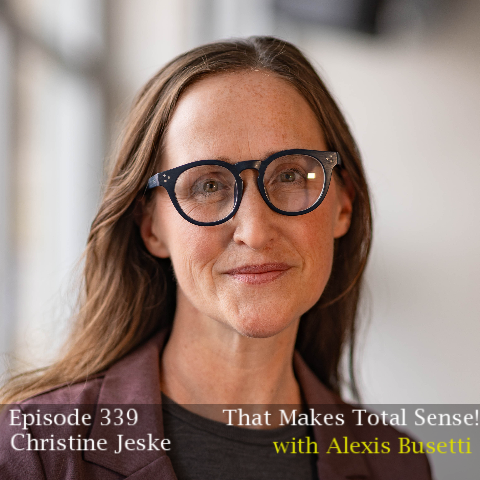
[00:00:53] Speaker A: Oh, there you go. That's perfect. So normally I do that pre record. We'll see if that gets edited or not. But I'm here so, so pumped with Christine Jeske.
Her new book, I just finished this morning over coffee and a granola bar, and it's called Racial justice for the Long How White Christian Advocates Persevere and why.
I'm so glad you included the and why not just in your subtitle but also in major portions of the book, because that's always where I am. I'm like, what? But why is this happening? But what's going on? And so I'm really glad that, I mean, we'll get there, but I'm really glad that you didn't just stick with the stats of what is, but really try to kind of figure out what is going on behind the scenes. So anyway, thanks so much, Christine, for being here.
[00:01:45] Speaker B: I'm so glad to be here.
[00:01:46] Speaker A: Yeah.
Okay.
[00:01:48] Speaker B: We anthropologists love why questions. I tell people that's. That's like our specialty because you can get stats on stuff that tell you what is happening, but it's really hard to tell why or how. So that's what this is.
[00:02:00] Speaker A: It's. Oh, I'm. I'm so grateful for it. And it is really hard to tell why. And sometimes it can be. I mean, socially, I will just say up front what. You know, sometimes it can be dangerous.
I remember way back, I was in a MOPS group. I don't know if you know what that is. It's like a mother in one of those. Yeah, yeah. So my kids were little and I remember hearing a speaker, you know, who came to talk to all of us young moms. And one of the things she said was basically it's she. And she discouraged us from assuming that we knew the motivations of anybody, which was so helpful relationally. A lot of us were in seasons where we were Meeting new people, interacting with new people. There's, you know, in laws and relatives and all sorts of things. And so a lot of times we'd say we'd see in action or we'd have a conversation. We'd say, oh, she just said that because, you know, oh, she just said that because she wants to be mean. And then we're like, okay, but we don't really know why she said that. We might assume because it was hurtful, that she said it because she wants to be mean, but we don't really know what her motivation was.
And you spent a lot of time asking.
There's not some assumptions here, which is great. So as. As an anthropologist, and I would. Those aren't even in my notes, but I would love for you to talk just a tiny bit. You may be the first anthropologist I've had on the podcast.
[00:03:29] Speaker B: Oh, I'm so honored.
[00:03:30] Speaker A: Just so exciting.
It is very, very exciting.
Anthropology is something I'm digging into in my doctoral studies right now. So I'm just super, super thrilled to have you. But I don't think.
I'm sorry, I don't think anthropology is real commonplace. I don't think we know exactly what anthropologists do. So if you could give us at least the elevator pitch of, Of. Of anthropologists as a profession, kind of. What do you guys do? How do you study?
[00:04:00] Speaker B: Yeah, let me actually start with a story too, of how I ended up as an anthropologist, because I so relate to people who are like, what is anthropology? Is that like Indiana Jones? Like, do you go around and put things in museums? The answer is no. And most of what he did would be considered entirely unethical by anthropologists today.
There are four sub branches of anth.
One of them is archaeology. And so that's like looking at usually ancient items from the past, but basically like material goods that humans have. One of them is linguistics. One is biological anthropology. So that's looking at the remains of human bodies or human bodies today, what we can learn about people from that. And then mine is cultural anthropology. So that's really studying how culture interacts with life in all different forms. So you can do anthropology of economics, you can do anthropology of natural sciences, of politics, of whatever.
I stumbled onto anthropology because I was living in South Africa and had worked as a sort of community development person with this microfinance organization helping people start businesses. And basically that organization shut down. We hit a point where it was not doing what the founders had designed it to do. We're looking for other jobs. And found about. Found out about a seminary that asked me to teach a class on community development. And we got there, moved in, and then they said, you know, actually we have someone else who could teach that, but could you teach a class called Intercultural Communication and Anthropology? And I was like, I don't know what that is. I majored in English and piano, and then I did an MBA in International Economic Development.
But I had a class on intercultural communication in my grad school. And so let's check it out. And they had this textbook. And, you know, every day I would sit in this classroom with people from all over the African continent. Continent who were studying to become pastors and missionaries and.
And like, just talk about culture and talk about how it affected our faith and our life. And, like, everything we did, and it was. It was so much fun. And then I ended up going back to the United States and looking for what I do next with my life and got a PhD in it, and now here I am. So. But what we do in terms of, like, how I study race and how it's different from other books on race or other. Other studies of race, there's been a lot of historians, for example, who study race, and they look at, like, how did we come to this place? What is Jim Crow? What was enslavement? What's immigration policies?
And then there's often, like, sociologists who do a lot of different methods. We're really similar to sociology. But one thing that is more common in sociology is sort of looking at big data sets. So you might be able to say, look, we can tell you that, like, there was a survey done by sociologists in 2020, found that out of, you know, 2,000 people surveyed, 9% of white Christians said that they were highly motivated to address racial injustice.
I look at that number and I'm like, dang, that is. That's. That's a small number. And it is like, it's half as many as the white people. More generally in this nation, it's one fifth as many as black Christians. And so I was already kind of starting this research, but I saw that number, and I'm like, that puts a number to what is happening here. What is going on with white Christians? And there's been a lot of books that have looked at, like, the 91% of white Christians, like, how they have participated in racism throughout history, but what's going on with the 9% who are still committed and why are they? And. And. And in order to kind of ask that question of why or how. How did they get to be committed to what they're doing for racial justice that involves interacting with people. So typically, our methods in anthropology are like, you interview people, you talk to them for hours, and often you hang out with them too. So I found, like, churches I could go to where I could watch people interacting. I went to, like, racial justice training organizations and watch what they were doing because people don't always do and say the same things. So we kind of combine those to see what's really happening.
[00:08:07] Speaker A: Yeah, thank you so much. Thanks for that. Intro to Anthropology, Cultural Anthropology, and also to the research, because that, actually, we didn't plan this, but that's this perfect segue because that's my first bullet point here that I want to ask you about. I actually jotted down those exact stats because I want to kind of start the conversation by asking you first. You know, you. You partially answered it, but, like, why the focus for you on the. On the combination or the intersection of white and Christian?
But the, the quote, that. One of the quotes I have from, from that section is they are especially disengaged from struggles against racism. And there's another place where you say you, you just mentioned there's only 9% that are likely to be highly motivated, but there's another part where you say they're not just, like, not motivated, but they're actually generally skeptical of the work. And so I know that you, you mentioned this, and it's true, there have been a lot of books kind of written that, that 91%. But I am curious, from your.
From your research, what, like, what about that combination of white and Christian makes that group particularly demotivated or skeptical, are disengaged from that?
[00:09:39] Speaker B: Yeah, that's a great question. And again, I almost intentionally designed this study to not answer that question directly because other people have. Have looked at it. And I gotta be honest, too. Like, the previous book that I wrote for my PhD dissertation is called the Laziness Myth. And it was about how racism plays out in South Africa, especially in workplace contexts, and how people survive with really high unemployment rates. That was a really heavy book to write, and it was fascinating. I'm really glad I wrote it. And I feel like maybe I'm ready to go back to, like, interviewing people in really hard places for a next project. But I was at a place where I was just like, I just want to hear from people who are doing something that works. Yeah, got to interview people who are doing something that works. But as far as, like, why it's so hard, I think here's what I've heard and what I've read from other people's research especially, I think one of the things that has happened historically among Christians, Christians in this country is we have latched on to individualistic narratives of how salvation plays out and how our faith life plays out. And Michael Emerson and. And some other sociologists have. Have looked into this and their, their word for it is like anti structuralism, like refusing to see the structures of society affect what we do. That converting to Christianity and loving Jesus does not immediately make our social systems around us fixed. Like we have to actually put work into that. And that, to me, that's what I heard, you know, from my research interviewees was that is actually entirely what the Bible teaches us to do too. But we've often just downplayed that narrative. You know, all of us like certain portions of the Bible more than others, and we talk about them more like that. You can look, you can see that happen throughout history. And sometimes we need a correction to lean more into. Into narratives that we have haven't focused on as much.
You can look into sort of the history of politics in the United States too, and how Republicanism got tied up with evangelicalism from like the 1970s on. And you know, you can trace out that history. There's a lot of different reasons that it happens. But I will say one thing, that as far as even the people that I was talking to, there's just a lot of reasons why it's hard to persevere.
People with good intentions do not necessarily have good effects to what they do and do not necessarily know how to keep pursuing those good intentions.
As far as just why white people, specifically the phrase that came up over and over again from both white people I interviewed and people of color that I interviewed, was they can walk away. It's just easy to not think about race when you're white because you can find white communities. You can not have to name that in your life. It's sort of the unspoken norm of humanity in America is we don't think about whiteness or we don't have to think about whiteness, whereas we have to think about other racial categories.
So I wanted to hear from people who could have probably walked away from it. Why would they not?
[00:12:45] Speaker A: Yeah, yeah, yeah, thanks for that.
I wanted to name a few resources here because as you said, lots have been written on it. You named Michael Emerson's work. That was exactly the first. First place I was thinking was Divided by Faith, by Emerson and Smith. These will be in the show notes.
I would encourage people to grab the second edition copy. They did a 25th anniversary that I just took a look at and it's fascinating, but they did some interviews like you did, but a lot of survey work. And so that was it's kind of like, you know, referring back to my comment earlier of like they're not assuming what the motivations are. They're actually asking people like, what's what's the deal here? And they're responding with things like the individualism, anti structuralism, things like that. So that's a great one. Other ones that people have people have probably heard of all of these, but I'll just throw them in the show notes just in case people have an easy link. Color of compromise so Jamar Tisby wrote that several years ago. He looks at it as a historian. Jesus and John Wayne Kristen Cops you may do does that in the same way as a historian, that connection with Republicanism as you mentioned there and then that they can walk away. One that I want to mention here crossed my mind when I was reading your book as well.
Scholar and author Malcolm Foley has written a book recently called the Anti Greed Gospel. But he was on the podcast back in 2020 when he was still a doctoral student. And one of the things he said that that still haunts me to this day. So I'm gonna put the link to that episode in the show notes is is he said exactly what you said. Is that his for him? Well, he said a nuanced version of that. He basically said for him to understand like white people and white culture is a matter of life and death.
[00:14:35] Speaker B: Yeah.
[00:14:36] Speaker A: He can't just not engage, not understand, not, you know, really participate in and have this when you said like white people can walk away from the racism conversation, they don't have to engage in other, you know, multicultural conversations. They it's, it's not, it's not something that for Malcolm, when he's saying this is a matter of life and death, this is a man in case people don't know who who's one of his major areas of research was on lynching in the United States.
And so it's, it's not just a, a phrase that he's using or a hyperbole. I mean, this is, this is real life.
And so I do think that that is one of the major differences is like you said, not just what do you feel compelled to study or engage with, but what do you have to engage with or study.
Yeah.
[00:15:35] Speaker B: Can I jump into. And of course, we're citing sources too.
A really great book that unpacks those numbers I mentioned of that survey about Christians and evangelicals specifically Engaging with Racism is Faithful. Anti Racism Moving Past Talk and Systemic Change is by Chad Brennan and Christina Edmondson. And they're the ones that I cite for that. That number of 9%, if people want to dig into that further.
[00:15:59] Speaker A: Yes, that's a great one. I might even, I feel like I do have an episode with, with them and so I'll cite that one as well. Yeah, that I, I actually kind of see pictures of that, those graphs when I, when I'm thinking that through because some of those things were not. They were kind of expected for me in that book, those stats. But some of those were actually very surprising for me in that book. So. No, that's a great one. Thanks for, thanks for adding that one as well.
This might be a good time to mention before we move on, as we've had this conversation I mentioned to you before we started recording, you shared some of your story at the end of the book, which was really helpful. Helpful for me gaining some context and understanding from where you're coming from as a, as a researcher and as a scholar in this space and as a conversation partner for you and for the folks listening. I am reading this book as a mixed Hispanic woman, so kind of very specifically recognizing I have kind of a white side of the family and a Mexican American side of the family or brown side of the family. And so when I'm reading this book and thinking about my work and thinking about how I engage, it felt precarious sometimes to read these things because as you mentioned, you, you'd heard this from, from other mixed race folks. I can see myself on both sides of many of these stories that were told from the book. And so that was a. Yeah, there were, there were lots of the parts of the book that felt uncomfortable to me. I'm just gonna be real. But that was part of it for me was that tension of kind of recognizing where I am as a mixed person in some of these spaces, including, you know, conversations like this one.
[00:17:49] Speaker B: So.
[00:17:49] Speaker A: Yeah, anyway, so great.
I wonder if you might tell Christine. I started this book and I was like, I am so uncomfortable. Like it was one of those things. It was like, I don't want to say it was the exact, it wasn't this exact thing, but my kids, I'm learning, you know, Gen Z lingo or whatever, and they're like, you know, something happened at school. They're like, mom, I had such secondhand embarrassment, you know, like there was Like, a lot of, like, second hand.
Like, I don't know what to call it. Not embarrassment, necessarily. It was like this secondhand discomfort. This, like, I'm feeling like I don't want to be sitting at the same tables as some of the places where you were sitting.
And I'll just be real and take a deep breath. Hannah and Mark's story. At the very beginning of this book, I kind of thought, we've already booked this interview. What did I get myself into?
This is gonna be a real tough one. So I'm glad I persevered. I'm so glad I finished. I'm glad we're talking today. But it's not just me, right? This Hannah and Mark was hard.
[00:18:57] Speaker B: Yeah, it was hard. And honestly, I came home from the interview where this woman told this story, and I was like, I think that's the beginning of the book. I think it has to be it.
We're both in tears when she told this story.
I could tell the story for your listeners. Explain what we're talking about. Yeah. So the story was told to me by a woman that I call Hannah, although the names in the book are pseudonyms. But Hannah, when she was in college, went to a Halloween party and she was a runner and decided that she wanted to dress as one of her heroes, who is an Olympic runner, Lawrence Griffith Joyner, who's known as Flo Jo. And so she looked really carefully at the pictures of this runner, who's a black woman, and did her fingernails like her. Made, you know, her penny, the same number, everything. Hannah is a white woman. So she went to a store, bought some makeup that was dark and put it on her to basically put on blackface. She didn't know the history of blackface. She didn't know about minstrel shows. She didn't like how putting someone else's body on as a Halloween costume is so just offensive.
And she also went to that party, and no one else told her. So it wasn't just that she didn't know. She didn't know someone who knew at the time.
Years later, she's sitting at a table with a family friend that we refer to as Mark, and she starts just mentioning this, that she dressed as Florence Griffith Joyner. And the man is like, wait, and you put on makeup? She's like, yes. And he's like, you what? And, you know, there's this pause, and she describes that moment where he's looking at her, and she describes it as a certain kind of a gaze.
And let me just read her words as she described this, she said, it's probably the most charged moment of my whole life.
And she said, I feel like I've seen this gaze from black people looking at me at other times. And I was like, what do you think that gaze meant to you? And this is how she interpreted. And we weren't actually able to talk with Mark, so I don't have his. His story of it, whereas often in. In these accounts, I have both people's stories of what they experienced. But this is what she said.
I think there's a little part of them that has hope, you know, that this stupid white girl might learn something. Like, she might just learn something. But then I'm sure they've been disappointed so many times, like, do you dare even hope for that?
And that is kind of the framing question of this whole book. Do you dare hope for racial reconciliation, for justice? For what? Like, what are you hoping for? And then if.
How do you hope? What do you do with that hope? Why do you hope?
Because I realize that if I want to understand how people became engaged with racial justice for the long haul, the central question was, like, how do they keep hoping? Because it's really easy to run out of hope and stop and do something else with your life.
[00:22:00] Speaker A: Thanks for sharing that one. I feel uncomfortable again. Uncomfortable again, less uncomfortable, because I knew it was coming, but it. It.
[00:22:10] Speaker B: That was.
[00:22:11] Speaker A: I will say I'm grateful that you began with that question, but.
And at the same time, it just feels like incongruent in many ways to our experiences, because. And I know that part of what you were discovering is how people can still hope when they have been at this work, you know, for this long.
I want to get to the other parts of the book, Collision, and asking a lot of why, responding to grace. But on this. On this hope part, actually, just.
I had this reiterated to me today. It was near the end of the book, and I think it was an interview you were doing with.
Maybe. Maybe she was an expert at this in her work. Sorry, I can't remember because I wasn't thinking I was going to remember, list it. But she talks about the mythical man who pushes the boulder. Yeah. And that was such a powerful image for me. Because, you know, I think what. What she said. And please correct me, because I'm just doing this from memory, but I think what she said was that it's common, or a lot of us can look at. Or maybe that's how I made meaning of it. Can look at the boulder and focus on the boulder.
[00:23:29] Speaker B: And.
[00:23:30] Speaker A: And I Think that's where I feel a lot of times is like, gosh, this is just the thing. She called it this doggone boulder. You know, we're just pushing this boulder up.
But that what happens when we can change our perspective to the strength of the man who keeps pushing up the boulder? And maybe the strength, maybe I interpreted the strength that he gained from continually pushing that up.
And I do want you to talk a little bit about the hope, kind of the abiding hope that you talk about. But. But I think it's also important to name the delusional hope.
[00:24:08] Speaker B: Yeah.
[00:24:08] Speaker A: That you name, because that felt like a really powerful juxtaposition, you know, a comparison for me. And part of what stood out was that the delusional hope is conventional.
[00:24:22] Speaker B: Yeah.
[00:24:22] Speaker A: Wondering if you can elaborate on what you mean by that and the distinction between the delusional hope and the abiding, multifaceted hope.
[00:24:31] Speaker B: Yeah. So as I just. To back up, like, what I was trying to do in this book, I started out thinking I want to understand how white Christians persevere toward racial justice. And I was like, well, one, I have to figure out, how do I even choose which white Christians to include? And also, I don't want just their point of view because, like, they could say a lot of nice things about themselves, but I want to hear from other people around them. And so I actually started with faith leaders of color, leaders of churches and organizations that are working for racial justice and people of color and ask them, what does racial justice look like? We had, you know, at least an hour long interview about that. And at the end of it, I would say, who do you know who's a white Christian who has been doing this for a long time that you would recommend I interview? And some of them actually, like, paused and were like, I don't know.
And that was interesting in itself. Like, they'd be like, wow, that's a thing that I can't think of anybody I want to recommend. Most of them did recommend somebody, and I would ask them why that person. So we had this, like, back and forth about the people that I talked to. Okay. So then from there I'm talking to these white people and asking them, how did you get to be somebody who might be recommended for this study? How did you, like, what stories led you to be committed to racial justice? And I noticed very early on that they just kept talking about hope. And they would say, I don't hope in the same way that I used to hope when I got started. And then I would be like, what do you mean by that? And often they'd say, I don't know, we don't have words for different kinds of hope. And I realized that often when we talk about hope in Christianity, but like everywhere, we're just like, get some more of it. You just need more, not less. And it's like this one dimensional thing. And I realized we need to have nuance to it in the same way that you could name all different species of mammals. We need to have different terms for different kinds of hope because some of them are harmful. There's a book by a theologian or religious scholar, De La Torre is his last name, and it's called Embracing Hopelessness. It's a tough book to read. I stumbled upon it and I'm actually reading it with some students this semester, and I'm like, I might wreck them. I don't want to ruin their faith. But he talks about like, hope has been weaponized so often. And many, many scholars of racial justice have actually pointed out that same idea, that when we get hope wrong, it can be a tool of white supremacy. Like, it is a way to keep white people supreme.
And by white supremacy I just mean, like all the systems that keep white people having more power or seen in society as being at the top of a hierarchy. And so there's a way that you can talk about hope that does that. That's the effect of it. And it's a hope that basically says, you know, if you see a little bit of racism happening, like, you know, downplay it. It's not that big a deal. Like, just keep, kind of keep doing what we're doing, maybe do it a little more, but keep things as they are. And so that's what I use the word conventional to describe. It's, it's a way of hoping that says kind of just sit tight, don't rock the boat, and it'll work itself out.
And that, that keeps things as they are, right?
So if you're in power, that's a nice kind of a hope. But if you're not in power or you are vulnerable or suffering, that can.
There's a phrase that I stumbled upon in the book Invisible man by Ralph Ellison, where I might miss it slightly, the wording of it, but he basically says what he, this black character in the story experienced was white people.
I think the quote is hope them to death and keep them running. And that idea of like hoping someone to death, I feel like it names a part of how racism has worked in our history.
[00:28:17] Speaker A: Gosh, I want to not Leave hope entirely. I want to keep coming back to.
[00:28:26] Speaker B: It, but, yeah, we gotta answer the question of, like, a different kind of hope. What does that look like? We could get there later or now.
Let's make sure we don't. Don't skip that.
[00:28:35] Speaker A: We won't skip it. But it's leading me to think about something that I was thinking about a lot over the course of this, reading your book, which was when you refer to grace.
So these are both kind of.
Can be kind of Christiany words. And you, as a researcher and anthropologist, really work to kind of define.
Define these things a little bit better.
But especially in your talking with white Christians about how their hope has evolved, you know, as they've gone about this work.
But also, there was a significant relationship to grace in their work. And I would say that was even reflected in Hannah and Mark's story. You know, that just her kind of internal thinking maybe, you know, his hope that some stupid white girl, you know, in her words, might be able to change was an acceptance of grace for her.
And so I'd love for you to talk about the.
The mutuality maybe of the grace, some of the stuff you referred to. But also what really struck me was that it's not transactional in that it assumes and even expects a continuation of relationship, which felt so huge to me.
[00:30:13] Speaker B: Yeah, I'll pick up with that story of Hannah and Mark, because I do actually come back to that in a later chapter when I'm talking about grace. So in that interview with her, we went on to unpack. Like, what was this gaze? Why was this such a. Like, the most charged moment of your whole life? And so one thing that happened after that moment where they're looking at each other, he's making a decision, what am I gonna do? And he decides to say, I'm gonna educate you. And he, like, stays at the table and talks her through why this was so problematic.
And she was obviously moved by that moment. But she also said, you know, like, I've had other moments where I feel like people have done that for me. And she described this moment years later when she was working as a teacher. She'd had a racist incident happen at work where she was culpable for something. It was a really hard day. She saw this event advertised in her city that was talking about racism, and she decided to go to it. And there was this black pastor. She was not a Christian at the time. She went to this church where they had this event and listened to him talk about it. And she describes that as, like, he was just speaking as if we could change. And again, like, she could feel this hope, but the hope was tied to what we later would call grace. She didn't know that word, grace at the time, but she described what happened. So she stayed at this event. Afterward, the. The speaker, a black pastor, invited people to come up and talk with him, which in itself, again, like, what a gift. Like, he didn't have to do that. She knew that. Like, he didn't have to do that. She goes and tells him about how she's struggling with this thing that happened at work. And he listens. And she said the look on his face there was.
Here's her words. She said, understanding how effed up we are and yet still.
And her voice, like, cracked, moving into tears at that point. And I love that phrase, understanding how effed up we are and yet still, like, I think that is one of the best definitions of grace I've ever.
Yeah, yeah.
You know, for this reading, I was like, okay, I have to actually, like, come up with a rigorous definition of it. And so how I define it is. It is a gift.
So it's a chosen gift. It occurs within a prior condition of indebtedness. So at this point, she knows I am culpable. I am like, you know, all these different ways that that sort of indebtedness happens in the context of racism, it can be like, you. You literally just did something wrong. But it's also like, how do you deal with the legacy of unearned privilege that you have? We are, like, standing, sitting on land that was taken from native people, indigenous people in this land, like, all this. This unearned giftedness. So it's in that. That context, grace is given. It's not demanded, and it's not deserved. And so I think that is where sometimes Christians and other people go wrong when they're trying to figure out what to do with racism. They're like, oh, people should forgive. Like, we're a religion of forgiveness. And so, you know, if I did something wrong, I can just tell people, forgive me, and we'll move on. But that's not actually, like, a theologically regularist definition of grace. You don't get to demand it. There's a man who was talking about this, and he's like, if you demand it, it's not grace. That's not what grace is. I love that. It was just, like, so real.
And then another thing about it, it traces ultimately to God. And here's where I think Christians have this huge disadvantage. Sorry, huge advantage. When we're dealing with racism is that we have grace from God as a starting point. And so it wasn't just white people who talked about grace. It was also very much people of color. And they would talk about, like, the struggle and the weight of having to forgive. But as Christians, they would say, this is what we do. This is what Jesus did for us. We do it not on our own strength, but we do it because we are also responding to what Jesus did for us. And it's not just like people of color who have to practice giving grace, it's everybody. And so we know this is what it is to be a Christian.
And then the fourth part of the definition for me is that it anticipates response. It doesn't get to demand a response. So you can't be like, I'm going to give you grace today, but only if I see better results tomorrow.
It just gives and it anticipates response. And that again, is like something that goes wrong in the context of racism is sometimes people think like, oh, I've been given grace and so it's done, we're even. I can walk away from this. And one great phrase that another person I interviewed said about it is they're like, we don't want to get to a place where we're all even. We want to get to a place where we're working together. And that gets into like, what are we hoping for? Often we talk about anti racism, which is not a bad word, right? We know that we need to be against something. We need to actively work against racism. But it misses like, what are we for? What are we pro?
How are we pro justice? What does justice look like? And part of what I heard from people, you know, I ask people, what are you hoping for? And try to get like, you know, analyze what, what was in common across all those different answers. And there were all. There really were a lot of different answers to that question. But one thing that was in common across so many of them was this idea of mutuality that we have to have relationships that are back and forth relationships.
If I may, I'll describe this metaphor that I find helpful for this, which is a pendulum.
And the idea is like, when you receive a gift of grace, it's kind of like if you think of the pendulum as like what you owe to people around you. When you owe somebody a debt, it's kind of like the pendulum is pulled back and, you know, you should give something. So you feel this sense of like, I should let it swing back in the other Direction so that I give back to someone else.
A gift of grace is kind of like the pendulum is already pulled back. You already owed something, and then you get a gift. Gift that, like, pulls it back even further. Now you. You literally, like, owe more, but it. It like jump starts that feeling of wanting to respond.
And over and over again, the. The stories that people told that really, like, brought them to tears were stories around that feeling of, like, I knew I already owed somebody something, and then they gave me something more, and how could I not respond to that? And so they'd see their whole life as like, I'm just responding to these unearned gifts.
And it kind of keeps this pendulum swinging. You respond, but you don't respond exactly. Paying it back to somebody, you respond with a different kind of a gift, and then they give you a gift, and it's like the pendulum is swinging back and forth. And that, I think, is kind of a picture of what good relationships look like is we don't get to a place where even. We get to a place where we're sharing together and we recognize both of us have important gifts to give.
[00:36:56] Speaker A: Yeah. While we're on the topic, and I was. I'm tempted to. To. To bounce around and come back to it, but I think I want to hang out here for a minute if that's all right. Because in the sections on grace, you've. You've covered the. The stuff that is just felt like super encouraging and meaningful and powerful to me.
But there's also another aspect of the grace part that has been controversial and charged.
[00:37:28] Speaker B: It was the scariest thing to write about, let me tell you, like, because there's a lot of important writing that says, like. Like stop asking for demanding or demanding black forgiveness or, you know, forgiveness in the context of racism.
[00:37:42] Speaker A: Yeah, yeah, yeah. I mean, can you talk about. Because you. You name a couple of instances that probably. I mean, they were quick to my memory, and probably for our listeners, they were to.
You name the situation, the murder with. I think it was the police officer, Amber Guyer. I think, again, I didn't write that one down.
And then also, you know, Barack Obama's Amazing Grace speech that both garnered a lot of media attention and. And there was an embracing of that and also pushback for both of those. So I don't know if you want to talk about both of those or maybe just one as an example of kind of. Yeah. Another facet of that grace aspect.
[00:38:33] Speaker B: Yeah, maybe. Right. They go hand in hand in part because the media response to the both of Them people were referencing back and forth to both of them. Yeah, I, I can talk about maybe the, the one that happened first, which was a police officer named Amber Geiger walked into an apartment, she claims, thinking it was her own apartment, but it was not hers. There was a black man there named Botham Jean, and she shot and killed him. And then afterward in the court case. So Botham, who was killed, his brother Brandt Jean was at this trial and he offered this like teary, heartfelt forgiveness, like, basically said, I forgive you, Amber. This white police officer, and people watched it and it's like, goes viral and everybody's like, oh my goodness, that's so beautiful. And black people are saying, like, why do you think that's so beautiful? Why do you think this should happen in the context of a court case?
Because it's gonna affect the sentencing. You know it is. And so like, just because this man gets all teary and says, I love you and forgive you, I don't know if he said I love you, but I forgive you, that it somehow lets this person off. They have still committed a murder. And so it raises these questions of like, what happens when you offer grace? Are there still consequences and should there be?
And most people I talk to would say, yes, there probably still need to be consequences. Well, at the very least, there needs to be a response, or there should be. We hope there is a response of making it right in the future.
Yeah. And so those stories come to mind when we start talking about grace in the context of racism.
One way people talked about it is just because grace can go wrong doesn't mean it can't go right. Also, one of my favorite lines in the book is just a random thing, but I was having a conversation with this friend of mine who's a theologian and explaining how I was using grace. And I was like, can you help me make sure I get this right? Like, I don't want to do anything heretical. And she pointed me to some great resources, but I'm talking it through and she's like, oh, so would you say that like grace is kind of like the special sauce in how people become of anti racist for the long haul? And I was like, no, I think actually grace is not the special sauce, it's the burger. And so like that for a while, it's like actually in the, the index, like you can look up grace and then there's like a little subheading that's like, as special sauce, not the burger. Or sorry, as burger and not special sauce.
[00:41:17] Speaker A: Right.
[00:41:17] Speaker B: It gives a Helpful analogy. Like it is essential. It's actually like, you cannot keep doing this long term if you don't have a way to deal with the guilt and the harmonious.
Because how are you going to relate to people if you don't have a way to do that?
[00:41:28] Speaker A: Yeah, I think you say something in that, in that little paragraph. I think you say something like, you can squirt special sauce at the end. Yeah, but you can't. You can't. You can have a burger without the special sauce, but you can't have, you.
[00:41:42] Speaker B: Know, a burger without a burger.
[00:41:43] Speaker A: Right, right. Yeah, yeah, yeah. So, but, but that is. Oh, gosh, that feels precarious to think about Grace being the burger if we stay on that analogy. Because it can go wrong. Of course, as you say, that doesn't mean it can't go right.
But that foundation feels precarious then.
In some ways.
[00:42:10] Speaker B: Yeah. Because it really does depend on multiple parties. It's not just on one side or the other. And we wish that it somehow could be. Again, I think it's like this desire for an individualistic solution to things. I think it would be maybe what some white people would desire to be able to sort of stay at home, read some books, watch some movies, get informed, do the work on your own. And I think that phrase is important. Like there are things that you need to do on your own, but if you could somehow just stop there and be done with it, that would be appealing. But really, the way I heard people talking about what they're hoping for in the long term is relational. And that means we have to get in spaces together where people have been hurt and people have hurt other people.
And that's scary. And it means it's embodied and it means, I describe it kind of like learning how to dance. Like, you're going to feel awkward for a while. You're going to have to build trust.
I wish I had better news that we could somehow skip to the end and I could just give you a five point bullet point list of stuff you could do from your own bedroom, you know, at your, your desk or whatever you want to do it. But it's not like that. We got to get in there together.
[00:43:27] Speaker A: Yeah, that, that takes me back to some of the things that we alluded to near the beginning of the, of the interview. But when you're, when you're kind of describing that like you can just, you can read the book or you can do this or you can do that, and you can do it on your own, but one of the Just foundational pieces of this research. When you. That when you're talking to folks, is that often their introduction, I might say, to this work or to racism being, you know, present and problematic. And all that, excuse me, involves what you call a collision.
[00:44:07] Speaker B: Yeah.
[00:44:08] Speaker A: And I think that part is really important because we can.
We can have things that happen to us. And that's kind of how some of the people in the book described that something happened to them.
And. And really, I want to be clear that think about how to phrase this. When something happens to us, sometimes that doesn't involve our agency, you know, something is acted upon us, but. But it does involve our agency, what we determine to do after that.
So I had someone very close to me who became pregnant as a single woman, a teenager, actually, an older teenager, and she was very frustrated. Her son is now older and, you know, he's an adult himself. But she said she was often frustrated because people would say to her, oh, wow, well, you really got your. Got your life together or got your act together. And they'd say, well, I mean, I guess you had to. You had a kid.
And she would, depending upon the context, look at that person sometimes and say, actually, I didn't have to.
There are lots of instances where things like this happen and people don't choose to move forward in the kind of ways that I've moved forward, and not in a disparaging way or a shaming way whatsoever, but to kind of name her agency in her life, you know, to say, yes, we had something that happened that wasn't planned, but what happened moving forward was, you know, those actions were planned.
And, you know, it wasn't just some, you know, kind of magical or fairy tale thing. It's like, oh, you got dropped in this spot and now, you know, you're Cinderella or whatever. And it's like, that is meaningful, that that agency is there. And so that was kind of what I saw with some of these.
A lot of the stories in the book, especially the folks who've been doing this for decades, many of them that you interviewed, is they've had a collision, maybe that started it, or collisions throughout the the time. But they have taken those moments and what they've learned from them and chosen to move forward in action in the way that they have, where they're pursuing justice in that way. So I want you to tell us kind of how you're defining collision. Maybe some examples of that might be helpful.
Yeah, because I'm just. I'm looking at some of the other subtitles going, oh, this was. They were so good talking about. Yeah. Invisibility and culpability and, you know, things like that. But first, maybe tell us what you mean by collision and what that looked like for some people.
Yeah.
[00:46:55] Speaker B: So again, I would ask people, fill in the blank. I would not be committed to racial justice if not for blank, and have them fill in the blank with stories. And like, we've talked about already. Like, some of those stories often would point to grace, whether they use that term for it or not. But a lot of the stories were what I started calling collision moments. And I define that as when the learned white social imagination clashes with reality so forcefully that it prompts a conscious and visceral response and to unpack that just a little bit. So, like, we all have these conceptions of how reality is supposed to work, and we learn those from the people around us. And there's a term for that in social sciences. We call that the social imagination. It's like how we learn from society to anticipate how society is supposed to work.
And I go into a little more detail on that, and I say, well, part of that, like a sort of subcategory of our imagination, our social imagination, is what we could call a white social imagination, which is what we learn from white people about how racism should work. And we're absorbing this all the time.
And so I talk about collisions as moments where, like, we've been trained to expect society should work a certain way, and then it doesn't.
An example of that was this man who lived in a predominantly white neighborhood in a large city. And he knew just kind of from little hints that are surrounding you all your life, that there's borders to that neighborhood where you go and you don't go. And he told the story of, like, one day, just like, going for a walk and getting to a crossroads that he knew was a border of, like, beyond this. It's black and Latino and.
And, like. But people didn't necessarily use those words. They'd say, like, oh, it's a sketchy neighborhood, or it's a little bit dangero neighborhood or whatever. And standing there at that corner, he walked into a gas station and got a Gatorade and stood there drinking this Gatorade and struck up a conversation with this man who was from the other side of this. This border that we learn exists in the world. And he talked about this conversation as just a moment where he saw the world was not what he imagined it to be.
I can. Can share some of my own story, too, so readers maybe have intuited this, but maybe I haven't named it, but I am white.
My immediate family white.
But I have a cousin who.
Her father, my uncle, was black.
So she's mixed race. Presents as black. And she was dating a man in high school, got pregnant with him. He was black. They had his child.
When I was in college, I went to her high school graduation, sat with her boyfriend and her child, and celebrated her graduation. Went home that night. The next morning, I'm in my dorm room, I get a phone call from my mom, and she says, that boyfriend was shot and killed last night.
And for me, it was.
It was a collision. You know, I didn't have a word for it then, but it was not just that someone was murdered. Like, that in itself was like, you know, throws off your view of how reality works. Like, people are not supposed to get murdered. But I also, tracing back to that moment, I know something else went through my head, and it was, people don't get murdered. Oh, wait, black people get murdered. Like, that's what I have seen. And asking myself, like, whoa, why is that?
Why do I think that? Is it true?
Where does that come from? What are the statistics around that? But also, why does this happen in society? And I couldn't ignore it. And I just kind of went through college asking people, help me understand how racism works in this world. And in some ways, this book is the book that I wish that I had back then.
Um, but like you said, like, you can walk away from a collision. Um, they're jarring in the moment. You have this, like, visceral response. But people do it all the time. Right. Like, you can get over it in a couple days and not think about it. The difference I noticed. So white people describe collision moments, but people of color also describe collision moments in their lives. And I noticed this really striking difference was that white people often. What was surprising about it was they were like, how did I get to this point in my life and not know this? Why is this the first time I've seen this?
And for people of color, it was like, collisions are painful because they're so common. They're like, oh, that happened again. And my grandmother and my mother and everybody I know has had that happen so often.
So the frequency of collisions is. Is often like, part of the. The strength of them. But it's really different across people in color. Of color and white people.
Yeah. And so what do you do about it? And that. That's where the second piece comes in that I call asking why? And that's like not just walking away from it it and protecting yourself from that thing ever happening again. That's so jarring. But looking at what the context of that is and saying, like, how do I understand it better? And not just like checking it off a list, but like making that your posture for the long term.
[00:51:54] Speaker A: Yeah.
Gosh, I'm looking at the time and trying to, and trying to figure out where in these notes I want to go, because I.
Okay, I think I'm going to ask you.
We'll have maybe this question and then we'll go back to Hope to, To round it out. But I don't want to miss this. So one of the collision points I'm going to ask you to talk about more is. Let's see if I can actually read my notes here. You've got the book in front of you, but it's the collision with ranking and invisibility, I think, if I'm not mistaken. Help me. Is that. That's kind of where you talk about white normativity, right?
[00:52:37] Speaker B: Yes, yes.
[00:52:39] Speaker A: So I'm wondering, you know, spend whatever time you, you want to there. But I just wanted to name one of those categories of collision and kind of refer back to what you said that a lot of, like the white folks are saying. How did I not realize that this, like, how, how have I gotten this far and kind of not realized that this was. That this is the way it is.
But one of those categories that was particularly helpful to, to re. Emphasize, I think for me, based on other readings I've done, is that ranking and invisibility piece colliding with that.
[00:53:17] Speaker B: Yeah, I talk about, like, what is it exactly that people collide with? Like, what's the reality that often we don't, we don't name in our everyday social imaginary.
And so, yeah, there's one piece of it which is like ranking, that human beings have been ranked in our racial system. That that's what it's doing.
People have been creating categories of human beings for as long as human beings had been, like, interacting with each other. Like, you can go back to very early in the Bible and there's people who are like, oh, they were like the metal workers and they were the, you know, and people have different languages. Right. Like, so categories themselves are not necessarily good or bad. They're just that we form groups. Right. But what race specifically does is it hierarchically ranks human beings. And it's where one group says, I'm going to use my power to create narratives and beliefs and systems and institutions that keep us as the top ones in the hierarchy.
That's one thing that people collide in and noticing that happening. Actually, this woman, Hannah, whose story we've been telling, she had a little moment when she was in grad school in studying education, where she's in a linguistics class, and somebody said some things about African American vernacular English or black vernacular English, like the ways that people will ally different consonants and, you know, a word like gonna. Or.
Yeah, you can think of examples. But she heard that and her first thought was like, oh, well, that's wrong. As a teacher, I'm going to. To teach people how to speak incorrect grammar, which is like white speech, and suddenly realized, like, whoa, what makes me think that. What makes me think that one way of speaking is better than the other? And that's like hierarchically ranking humans. And the speeches that they. The ways of speaking, they use white normativity or invisibility is the word that I just kind of use for it as an everyday word for it. Like, is this idea that we don't have to name what is white. Like, if you take a theology class and you're studying mostly authors who are European and white, you just call it theology. If you take a class where you're studying mostly black theologians, you call it black theology. And we do this with history. Like, there's history and then there's black history. There's like Latino history or, you know, we put an extra word on there to name what is not white, as if that is the not normal thing. And you can trace that happening through all kinds of different ways that we talk about reality.
[00:55:46] Speaker A: Yeah, thanks for. Thanks for naming that one. That one.
[00:55:50] Speaker B: Yeah.
[00:55:50] Speaker A: Because there's various collisions, you know.
[00:55:52] Speaker B: Yeah.
[00:55:53] Speaker A: Various things that people are colliding with, I guess I could say. And that was.
That was one of those. That was tough.
Let's talk about hope. We said we were going to return to it. We're not talking about delusional, conventional hope now, but I think you refer to it sometimes as abiding hope, or like a multidimensional hope.
But I guess when you're asking the questions and the answer is, I don't hope in the way I used to, what does hope look like now for some of the folks that you interviewed? And what was the felt difference for them?
[00:56:36] Speaker B: Yeah, maybe I can go back to that story that you mentioned earlier, too. This was from.
It's actually from a woman who's a professor as well, Gloria Ladson Billings. And so I use her. Her real name, because she's a scholar of race in her own work, but she's also a member of a church that I go to sometimes in my city.
And she told this story about Sisyphus, the myth of this man who's cursed to push a boulder up the hill every day. And she said, you know that boulder and is going to come down that hill. But the idea is this, white Americans focus on the boulder, but the African American struggle is focused on Sisyphus. Sculptural renderings and paintings of Sisyphus will show you a person with these incredible biceps, amazing quadriceps and deltoids. It's about the strength that Sisyphus has developed from pushing this Dagon boulder. It's going to come back down the hill. But listen, your job is not about getting the boulder up the hill. Your job is that you're going to get up there and push it.
And as you're pushing it, you're going to get stronger. And that image of like pushing a boulder that probably comes back down the hill is how I saw people kind of talking about hope. And I describe it as like a struggling hope or a gritty hope, a rugged hope. Like I, you know, there's a lot of different words people use to describe it, but what people do with that is like they know it's going to be a struggle. And it goes back to like they've had collisions, they had, have understood at least something of the history of racism that like this is not just something that ended with the civil rights movement or ended with the end of slavery, that it is ongoing and it just keeps like changing and finding new ways. Like our immigration system today is like our latest manifestation of what racism is doing in our country. There's always new manifestations of it. And so it's this idea of like, you're going to have to keep on struggling. It's not going to be a short term fix what people do with it though. So I name at least four things that people do and I love how these fit together. One is lamentation.
So naming how hard and messed up this world is, naming that in the context of God's presence and saying, God, you see it too, but you're good, you're still a good God.
A second thing is mending. And that is like actively repairing and changing the social systems around us. Not being like, I'm just going to have my one person of color who's my friend and we're going to just like be nice to each other, but like we're going to actively change the systems around it, mend those social systems systems one is risking. So it's taking risks. Again, like I talked about, like, it would be nice if you could just like sit in a corner and do this by yourself. But that's not how it works. We have to get out there and engage with each other and change things that are stuck, and that means taking risks. And then the fourth one is leaning into joy. And I love that I got to finish the book with that idea because people named it over and over again, too. They're like, when you see how bad the world is, it makes the good good look all the better. Like, and so you lean into joy and you celebrate and you notice when there's successes. And like, if you want to stay in it for the long haul, I do really think that that is so essential. It's like you have to see both and the good and the bad and really celebrate the good.
[00:59:53] Speaker A: Yeah.
Thank you so much, Christine. I think that is the perfect place for us to. To wrap this up. Is talking about hope and joy in this.
Again, the name of the book is Racial justice for the Long How White Christian Advocates Persevere and why.
Christine, thank you so much, not just for your work and for this book, but for joining me today and for your perseverance in this as well. And same for you, really.
[01:00:26] Speaker B: Thank you. You know, you're doing this podcast and it is so important. So thanks for having me here.
[01:00:30] Speaker A: I appreciate it. The links for all the resources mentioned in today's episode can be found in the show Notes, music and podcast production by Seth Buscetti. Be sure to give us a review on itunes and subscribe at your favorite podcast listening app. You can also Visit us at thatmakestotalsense.
Com it.