Episode Transcript
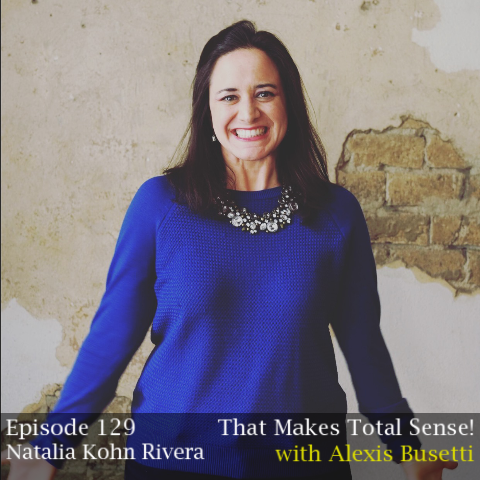
Speaker 1 00:00:07 Welcome to that makes total sense. A podcast dedicated to exploring God's generosity and justice. I'm Alexis. We setting the Christian aiming to ask good questions and encouraging you to do the same. Every one of us is wired by God to live out generosity and justice, but the house sometimes alludes us. That makes total sense is a way for us to get together, posture ourselves as learners and challenge one another to practice generosity and justice in a tangible way every day. Everybody I'm here with Natalia Khan Rivera today. And I have to admit that when I began this book that we're going to talk about today, or Montas I really thought, oh my goodness, like she took my bio, some of these first words, um, that Natalia uses to describe herself that we'll chat about, um, are, are words and phrases and experiences that I've had in my life too.
Speaker 1 00:01:07 And sometimes Natalia, we feel like we're the only ones. So I just want to say thank you to you and your co-authors for writing this book because, um, if it did nothing else and it did a lot of other things in my heart, um, it reminded me that, um, I'm not alone in my journey and, um, that there are lots of other, Atlanta's lots of other women who are having similar experiences and able to hear God's words to them, um, in their particularities. And, um, it was, uh, it was a beautiful thing to read. So thanks for the book and thanks for coming on.
Speaker 2 00:01:43 Well, thank you for having me. It was a pleasure, all of that. So I'm glad it blessed you in this lesson. You,
Speaker 1 00:01:49 Yeah, so the book is at Hermanas deepening our identity and growing our influence. And, um, this is going to be the topic of our conversation today, but to give us a little bit of background on, um, you as an author, and if you want to share anything about your coauthors as well, um, you know, please do so because there were three of you who wrote this book and took turns in the chapters and it's beautiful. Um, but can you give us a little background on your, um, just your personal background and kind of let it, let that lead you into where this book came from?
Speaker 2 00:02:30 Yeah, yeah, of course. I'm Argentinian, I'm Armenian American. So I call myself AAA, um, just because it works and it's funny. Um, but I was born in Argentina with two, a huge, huge family. And, um, and then moved here with my family when I was three months old. And so it was raised in California, Pasadena and, um, by my mother is full Armenian. Um, but she's very Americanized, um, or was, and my dad is very first-generation immigrant. Um, and so I was very, um, I lived in a very cross-cultural world, but most of my friends were white or Asian growing up. And, um, just because of the schools we were in. And, uh, and so it was interesting. Uh, but then I went to high school, it was public and, um, got to really get into my identity more as a high schooler. Um, and then in college I was introduced to InterVarsity, which does a lot on your faith and your ethnic identity.
Speaker 2 00:03:41 Um, and so that was the first time I saw that the two worlds come together and I've been working on growing in my ethnic identities ever since I was 19 I'm 41. So it's all a journey I would call it, um, both our Argentinian side and the Armenian side. And, uh, just how the Lord has led me, um, to grow in that, um, and to own who I am and not just to be, you know, uh, for a while the Lord had to call me out just gonna, this is not a color blind journey. You know, I don't, I made you who you are, even though I would cry. Like this is so confusing. I don't fit in any world. Well, did you push too many buttons when you created me? Um, you know, all those things. And so I remember as a ten-year-old crying about it, I'm just really confused ethnically, you know?
Speaker 2 00:04:31 Um, and so I w I didn't belong in the Armenian world cause it speak the language. Um, but I identified a lot culturally and I lived in its neighborhood, uh, Lebanese army neighborhood. Um, and then I spoke Spanish that put me in the Latin world, but I was white skinned. And so that put me, I was just, I was a wider Latina. And so I was just really confused, um, as a kid. And so, and to watch my brother who, uh, looks Jewish, she has a more of the Jewish side of our arts and things, but he looks, um, uh, yeah, so which one did he own? So he all one and didn't own as much the two. And then the Lord has been leading me to really own too in a, in a more balanced way. Um, so I don't know if that might be too much information, but there you go.
Speaker 1 00:05:24 No, it's really good. And I'm sure that people who, you know, who know me or have heard me, like, how has that related to yours? Well, some of the things that you mentioned are this question of what are you, right? And I'm like, this is, and, you know, I've, I've mentioned that sometimes to, um, my friends, Britain, particularly, um, you know, my white friends or my black friends. Right. And, and that's not a question that they've ever gotten before. Um, but you use the term, uh, ethnically ambiguous. I have been a bit more self-deprecating and kind of said, generically ethnic, like I've just, I looked generically ethnic that olive skin, um, you know, getting the question of what are you, um, I, you know, it is kind of hard because you do wrestle with that, right. You kind of go, what in the world is this, like, you know, I had so many times when I was just like, why can't I just check a box?
Speaker 1 00:06:20 You know, like, am I, am I allowed to just check a box? You know, when, when I was growing up, I don't know if the forms have changed much, but, um, the forms in the states typically said, Hispanic back, you know, then I'm, I'm, I'm your age, I'm 40. And so they said Hispanic, but there was always a box for, so I'm, I'm Hispanic and white mixed, but they would say why in parentheses non-Hispanic and then the next box would be Hispanic. And so I would often just check both and just say, I just, I'm just going to mess with these people because I don't, because I am both, my dad is white, non Hispanic, and my mom is Hispanic. So I am white and Hispanic. I don't get to say white, non Hispanic at all to get to say Hispanic, not white, you know?
Speaker 1 00:07:01 So it is, um, it is kind of a confusing thing, but I'm curious how, and I think this will lead into the book some, but I'm curious how the Lord in your life, what did it look like in your life for you to begin to see the connection between your ethnicity and your faith life? Like why, why was that, why do you think that was important to God? Or why did God want that to be important to you? Like, can't, can't these things just be separated or, you know, what's wrong with that kind of color blind kind of thing. Aren't we all just people, you know, whatever we want to say, like why does marrying those matter?
Speaker 2 00:07:39 Yeah, it's a good question. Um, it just comes from my experience with the Lord, but I truly believe at the end of it it's so that we can reach more people in the name of Jesus that we can help the gospel apply to every context. See, most of the worlds can think, especially the Muslim world, because I have some experience in that's where you'll see that faith come out more. But, um, we'll say that Christianity is a white man and woman's religion. And so I believe that, uh, that's gonna, he's gonna equip people to help people understand that the, the, the gospels for every culture, tribe and country nation, tongue, right. And so it's got to go out to everybody. And so I was 25 and I was really growing in my Latina ethnic identity, especially with Lafaye, which is where I work with InterVarsity, which is the Latino arm of university, which is a college, uh, movement on college campuses.
Speaker 2 00:08:47 So I was thriving and I was supervisors Korean American. Tell me, Hey, it's really amazing to see how strong you are and growing in your Latina ethnic identity, but you're dropping your Armenian. And I was like, none of that, it's too much work. You know, like this is already a lot of work. And, you know, across an in I'm feeling that inadequacies in one world, trying to in my young immaturity, trying to prove myself, all those things totally wrong. You know, I I'm wearing my hoops now, but that's when I first started wearing hoops and like big old lipstick and, and, and, you know, mascara to make myself look more Latina, which was completely funny, um, to think about, but he was like pressing me for the Armenian. And I had this conversation with the Lord. I was like, look, I don't want to do this again.
Speaker 2 00:09:36 This has already been a journey. I don't want another journey. Um, and so could we just keep it to Latina and American and, um, and he's like, no, and, and I'm a preacher, I'm a preacher speaker teacher. And, um, he says, I can't with credibility, give you racial reconciliation talks. If you're not reconciled yourself, I heard that from the Lord 25, and this is my well, like ridiculousness back to him. I said, well, that's okay. Give it to somebody else. I'll take other issues. I don't want it. I don't want the ethnic racial reconciliation message. So it's not like it would break my heart for that message because that's the gospel in a lot of ways is like the Jew and the Gentile, right. The Samaritan, um, the, just everybody else. And then, and so I just, I was like, okay, God, like finally, finally I submitted and surrendered.
Speaker 2 00:10:36 And he led me on this Armenian journey. Um, and it's been amazing new friends, new churches, um, going to a fun restaurant and dancing. And, and then God taking me to my, what you would call your like motherland, which is where Armenian Turkish. And so I went to Turkey as an Armenian, which that's an its own story and craziness. Um, and what does racial reconciliation look like between two enemies that are really brothers and sisters that look like each other share the same meals, sort of the same recipes, but there was a genocide in 1915 where the Turks killed 1.5, um, Armenians and where Hitler got his idea for the Holocaust. And so, um, I I've been working in that racial reconciliation. Well now had I not gone into the Armenian journey seven years prior, he probably would not have, um, trusted me to enter into those worlds.
Speaker 2 00:11:36 Right. And I w I would not have been able to connect the way that I did as an Armenian. And so I think it's, it's faith, um, and understanding that the Bible is not colorblind to leave, read scriptures with the ethnic, um, context as very important part of the scripture, because it's not in the evangelical world that I was raised in Christian schools and all those private Christian schools, I was never taught to look at a scripture through its ethnic lens, never looking at the background of who these people are other than Jewish. Right. And so it was just it's, um, it's been really amazing to see how God uses that. But I think at the, at the beginning and end of the day, he does it so that the gospel is that much more powerful. And, um, it's fascinating. Like when you peel off the layers of a gospel story, it is amazing and fascinating.
Speaker 2 00:12:33 You can relate to anybody and then got, took me to Africa for five years straight. I, I mean, I was just, my early thirties was Africa. Twenties was Latin America, and my late thirties was the middle east. And so that's kind of where you put me for awhile and, and so Africa to see scriptures through their lens, but to learn to receive it, like that took me on my, I had to learn how to do that. And I'll be like, oh, no, that's not how you read it. Oh, no, no, that, that's not true. Like for them to say this, I own, in my context comes because I didn't come about it from an American, like I'm going to push my American scripture onto you. And so it's really important is the ethnic identity journey in your faith journey and how they're really tied together. And they're intertwined.
Speaker 1 00:13:20 Yeah. Thank you so much for that. Um, because you're right. When we look at, you know, often in American, even evangelicalism, when we look at the Bible, we, we are kind of pushed or allowed or, or shown kind of the Jewish lens and that's it. But like, even just reading through some of the stories, like you can't even get through parts in the old Testament and several parts in the gospels without seeing all the EITs right. And it's like, how can we re you know, we we've got all of these, all of these EITs that we're reading about, well, this is important because this is not just people who happen to live in, uh, in different neighborhoods or different regions of this world. Like these are people with their own cultures and things and values and things that mattered to them. And, and, and that the God of Israel would be this universal God for them and invite them into his family is, is a complicated and beautiful thing.
Speaker 1 00:14:22 Yeah. Thank you so much. Um, and so I really appreciate that you shared that about, about, you know, exploring and, and owning and reconciling both sides of your ethnicity and inside of you and, and the American part too. Like, that's, that's a huge, a huge, significant part of your identity. Um, gosh, that's really meaningful to me to think, God's saying, if you're going to do this work, you need to be reconciled, um, inside of yourself and what we can learn from that. Um, so on the Latina side, where did the, this book come from and why did you and your coauthors really feel like this was an important thing for you guys to write and to get out in the world?
Speaker 2 00:15:15 Well, it's come from, um, I joined Duran when I was in college that I always want to try to book. Um, and one of my roommates corrected me and was like, don't joke around. Maybe that has that for you. And I was like, oh, okay. And, but I was not I'm I'm, I don't consider myself like a writer writer. I'm more the content. Um, I got gives me downloads. I just, I, I just love to receive from him. And, and, um, he had been teaching me how to hear from him. And so he was telling me he was getting me ready for this book. It was a four-year process, but it started with my, uh, the idea of being mentored by a biblical person. And so Hannah, it mentored me, uh, and my singleness, cause I didn't get married, tell us 38. So I was introduced to Hannah at 25, 24.
Speaker 2 00:16:06 And so she mentored me. And, um, that's where the idea came from is like, um, the three of us authors are all, we're all in college ministry and we're pastors in college ministry. And, um, we had, we were mentoring women and men a lot and recognizing just the, that a lot of Latino women don't have women to look up to. And I didn't want them to just look up to us three human Latinas. I wanted them to understand that actually the scriptures are meant to be our most concrete mentors. And so in college ministry, in universities and the mentor word a lot. And so I had been mentored by eight significant people in my life, but I think likes to understand how scripture mentors need. So Hannah was the first one that the holy spirit used to really mentor me. And then you'll see later is the Shula.
Speaker 2 00:17:01 I'm sure Mike keen the lat that, you know, um, well we can go into those ladies. Um, but they meant to know the ancient mentors to know them. And so that's the idea. And then InterVarsity press, uh, which is our community came to us and was like, Hey, we want to reach and provide for Latinas in particular Latino women. What ideas do you have your own fields? We're not on the field. And they said, we're the writers just like, we'll edit because I was like, I'm not, I can write a book and it's a lot, it's a price, a crazy process. And I said, you, you bring the content will help you. Right. You know, will. And so, um, you know, it took a year and a half a year to get the book, um, on like an idea on the page. Then they quickly said yes to it.
Speaker 2 00:17:55 And, and then it took a year and a half to write it with that. It's small. So it's a four year process. Um, and, uh, life changing in so many ways, but we really wanted to bring something to Latinas that said, this is for you. This is for you. And in the, in the evangelical world, there's not a lot of, of Latina authors or Latino books. And that's more discipleship. There's a few that are more in the academic seminary worlds, but there isn't the one that an 18 year old could pick up or a 35 year old could pick up. And so that's where this book came from.
Speaker 1 00:18:33 Yeah. It was interesting. I just, um, had the chance to talk to Sandra van obstacle and about her, her divisional and an eight, a Enneagram eight. And I was telling her like, look, I've been doing devotionals since I was in high school. Right. I mean, for sure college. And I'm like, I really think I was racking my brain. And I'm like, I don't think I've ever read a devotional bio, Latino woman until hers, you know, which is crazy. That's absolutely, that's absolutely crazy to think about it. I'm not saying there aren't others. I'm not saying they're not out there, but I'm just saying like, what's popular, what you pick up. What's well known. What is just the thing that is kind of the default, um, is not books written for Latino women by Latina women. It's just, there's just not out there. And so I shared with you before we started recording that this book felt like such a gift to me, especially because of what you just said about these biblical mentors that I had never really seen myself in the scriptures in those ways, you know? And, and yes, to be clear, we're not saying these women in the scripture, these women, biblical characters are Latino women, but we're looking at them from this lens and saying, oh, I can, when I look at this, through who I am and my culture, I can see aspects of myself in, in these women. Um, and their stories minister to me in a particular way as a Latino woman. Um, so maybe we can start with Hannah, um, because I don't go, go ahead. Yeah, go ahead.
Speaker 2 00:20:26 Y you haven't seen yourself and most churches that I've been a part of most communities, um, maybe because they're black, um, they're, they're male preachers. They both, don't give a lot of attention to the females in the Bible and there's 43 women to learn from, and they don't get airtime, play time, whatever you want to call it. And so I started, cause I do a lot of women's ministry. I started noticing the lack of understanding, or even lack of like, um, why these women don't know their own ladies in the Bible. And there's a sad sense of, we can't own it as well. If we're always put into a Paul and Peter and, uh, you know what I mean, like a scenario. And, um, and so I was just like, this is not good. And so I started, um, teaching these women in Pasadena that are mostly over 60 to 80 of them and noticing that they don't know the bleeding woman, they don't know the Canaanite woman.
Speaker 2 00:21:36 They don't know, you know, all these ladies except they bait. And they may know Esther and they may know Ruth. Sure. Yeah. And so I was like, you know, and my mom who grew up in a Christian life, her life and family and church, your whole life, you know, turns to me one day and was like, can you do Mary Magdalen? I don't know much about Mary Magdalen, which led me on a whole journey of my recent mentorship through Mary. And I was like, I don't either mom, other than she's at the tomb for the first resurrection of Jesus. That's like where she first saw it. She was the first person, but I didn't know her until, you know, you start coming into their friendship with God and you start understanding it. So I think it's something that the, the American church has not done a great job in terms of helping men and women, women, and men, whatever order you want to put it. Um, uh, learn from the ladies in the Bible.
Speaker 1 00:22:36 I mean, when you said 43, I was like, are you serious right now? I mean, and I'm like, I'm a seminary student, right? Like, this is what I do, right. Is I, I read and write about the Bible. Right. And I'm like 43 women. Like that's
Speaker 2 00:22:49 Well, in that list of 43 women that we need to learn from. Yeah.
Speaker 1 00:22:56 But, you know, I, I believe that. And I'm thinking about one of, when you, when you said that Hannah had mentored you and she was kind of your first mentor, um, I'll say kind of candidly, one of the women that I, I probably would, I wouldn't have used that word until, until you, until you said that, but I would say for me, it's been the Samaritan woman at the well, but thinking about her and how much she's ministered to me and her story has ministered to me, I'm thinking yeah, 43 women. But a lot of those women are probably unnamed. I don't know if you're, if you're counting unnamed women like her. Right. But we're saying it's, it's, it's, that is even kind of one of those like this, I don't know, kind of this, uh, residual effects of patriarchy, right. Is like, is like, it's even hard to say, how can I learn about someone?
Speaker 1 00:23:43 How can I know her? Can I let her mentor me? How can I, um, you know, kind of be this virtual friend of hers in the Bible when I don't even know her name, you know, um, the bleeding woman is another good example, right. I'll be like the, the Shulamite woman, all of these women. Like I don't even, we don't even know their names. And, and I don't know, I, I think I'll be kind of sitting with that for a little while, as a woman, because I completely agree with you. I think you're right in this, um, culture where the men are, the preachers, um, it's really easy, you know, it's just kind of, we just kind of gravitate toward that. Right. We, we talk about, and to people who look like us, and so men are gonna preach about Peter and Paul and the disciples and David and Abraham, and, you know, and this is just to where, you know, but, but it's important for women and men
Speaker 1 00:24:44 And men, um, to hear and see those biblical women who were so impactful for the gospel, who, who were impacted so much by Jesus and, and by your table, but also that they are impacting their worlds for, um, the Lord, which is yeah. Good night. Yeah. Okay. So before Hannah, sorry. I said, Hannah, and then we talked about that, which was so good, but it reminded me of this. I had this question that I wrote down because I w I want to see if you can just kind of like explore it a little bit with me, that subtitle of the book is deepening our identity and growing our influence. Can you tell me about those aspects of this book?
Speaker 2 00:25:33 Well, it identity came from like our relationship with Jesus and then our identity as Latinas in a woman, but this was written for American content text. Now what's crazy is that it's not translated in Spanish and is going around Latin America. So I don't know how they, as Latinos in these contexts that are very homogeneous, um, context. Right. Um, how they're, they're, you know, taking on this American kind of book. I mean, we wrote it for American audience Latinas, and, and so we wanted them to understand their identity in the cross-cultural setting. Um, because we are still a minority, right. And maybe the city you're living in, we are not the minority, but for most of the country, we are like San Antonio, LA, you're all going to say we really are coming up into the majority. Yes. But, um, Arkansas, Alabama, Diego, I mean, I'm in San Diego and we're still, I mean, I'm a part that I'm, we're not the majority.
Speaker 2 00:26:42 Um, and so just kind of like that, and then influences like a lot of women we met would say, oh, I can't lead, I can't do this. And so that's why rehabs in there. Um, we had trouble narrowing down the list from 43 to 12. I mean, of course it took, it took hours and days and lots of prayer who are the 12 or highlighting, and, um, InterVarsity Prescott did let us choose the ladies, which was great. And, um, and so it was hard. I mean, there's some ladies that need, if we could do another one, I would, I would say me to be in there. Um, but, uh, yeah, so it was just kind of like, how do we influence? Like if Ray hub is in, Jesus's like genealogy and she was like a prostitute and, you know, mean like everybody, and she gets this chance to lead in her family and lead in, in every way. I was like, wow, that's amazing. Like, uh, we can too, we can leave. So how do we become leaders in our context, in our families, in our churches, in our cities and our workplaces as Latinas. And so that's why it was like identity and influence. We really wanted to do identity, intimacy and influence, but it was then too long of a book, but that's why you'll see intimacy woven throughout the whole book as well. Yeah.
Speaker 1 00:28:07 Oh, that's so that's, that's great. I thank you for that because I, I would say that that has been that's was one of the places where I saw myself in the book, right. Was saying, well, I can't lead this there's. And, and in part it's not necessarily because there's not desire there. Right. I think for many Latino women, it's just, there's not space. Um, for us, you know, um, or at least we feel like there's not space
Speaker 2 00:28:35 For mixed folks like us who are biracial multicultural, guess who all our kids are going to be like guests going to be. There's a lot of space now for mixed people to lead where I first started my ethnic journey, a mixed with still weird when I was little, there was very, and my school is, nobody was mixed. I was like the only one in my classes. And so like, you just chose one who's, what's your dominant, what's your major, you know, like of your ethnic backgrounds, but now it's like mixes. I mean, where we now have a lot of space, which is why folks like us with different backgrounds need to do the work of engaging, of owning all those things so that we can, God can trust us to lead in those moments and help people understand that Jesus did not, especially for mixed folks that are, can be in the confusing world or like the in, I don't understand I'm in the hyphen. I'm both, I'm not either one and all that to help them understand that there's a place in and to keep growing and to keep digging and to keep owning, and God will get you. And I used to say to Jesus, I'm just going to fake it till I make it. You know, like I was like, I feel
Speaker 1 00:29:49 Like I said so many times
Speaker 2 00:29:52 I don't speak the language and I'm saying I'm Armenian. And like, all these things is, I was like, but now I'm like full on own it. There's no faking it here. Like, I, I, you know, and I don't know if it's just experience. I think it's a lot to do with friendships of those, of like, I, you know, Armenian people were off limits to me for like 20 years of my life. So like once I started making best friends with Armenian people, I was like, now I can, I feel more like, oh, I get it. Like I am them. Like, I completely get that. I'm very Armenian, you know, but would not have known that until I became friends with people who are living more in that culture. And so I just think it has a lot to do with your relationships as well, which we will, if we keep saying we're not legitimate in that we're not credible in that we won't ever make those friendships.
Speaker 1 00:30:42 Gosh, you can quit preaching to me now, Natalia, I'm kidding. Completely. Please preach to me because it's so good. But there, I think there is, you know, um, I'll, I'll put a little plug in for gender Crane's book. It was so, so valuable. Um, it's called mixed blessing. But even that wording, what was funny is, so I kind of told you before we shared recording a little bit about my house growing up, um, my house growing up, my parents actually, they just called my sister and I mixed, like, we grew up that wasn't derogatory at all. Like we just grew up like saying we were mixed owning that we were mixed knowing that we were mixed, but I would say, but it's one thing to have that experience at home and really be encouraged to own that at home and then to go out and have the, what are you questions?
Speaker 1 00:31:33 Right. Because that, that stinks like every time, you know? Um, and so there is something different about that, but then I would say, I felt like, and I don't know if this is true. I think Chandra, just speak to this. How so I'm 40, but kind of there's this in-between space where being mixed was really, that's like a pejorative term. This is not something you want to admit. This is like something where being mixed is not something that you own. It's shameful, you know, it feels like a shameful thing. And it really wasn't until I read Chandra's book that I was like, you know what, I'm going to own that again. Like I'm gonna, because, because it did kind of put me in that spot where I felt like I had to pick one, you know, and picking one, depending upon, you know, what my long-term environment was or who my friends were or, you know, things like that.
Speaker 1 00:32:24 And then just going, no, but I'm losing a big part of myself when I make myself pick one or I'm convinced that I have to, um, pick one, you know? Um, so kind of reading that really helped me own that again. And then when spoiler, she says in there, Jesus is mixed, which is not really this world. Cause you just said rehabs in the genealogy and, and she's not an Israelite. Right. And there's a lot of, of women, um, in Jesus' genealogy who are not Israelites. So what does that mean about what does that mean about Jesus, right? Yeah. So he, he owned that and, and, and, and I, and thinking about kind of being in that same category as him was really pretty cool,
Speaker 2 00:33:13 But yeah, we could talk all about ethnic stuff for a long time. I don't know if you want to go to this stay right here. You want to go, but yes, I completely, Jesus has mixed and there's so much to say about mixed blessings. Yeah,
Speaker 1 00:33:26 Yeah, yeah. But I think it's an encouragement to me when I said, when I said start preaching, I'm joking, but it's an encouragement to me because I think you're right. I think that there are spaces for, um, not just for us, but people, you know, coming into that
Speaker 2 00:33:40 To a place in my ethnic identities. I do plural because that's everyone now knows that is where I would say I'm a hundred percent arts and time and a hundred percent Armenian, 50% garbage, like, cause it's really, if you look at your at, you know, it's not going to be 50 down the line. Right. Like we know that. And so it's like, I would just say that I'm a hundred percent, you know, people just were like, yep. You know? And, and then when people ask me, what are you, I now love that question. They hate it. I know. I love it. Cause I was like, you're seen, and that, you're curious about why, because I you're, it's coming out of me, this like this, you know, how God made me is I get a little unique and you're like curious about it. That's I like the question now.
Speaker 1 00:34:30 I love it. I love it. And that was, that was actually last night, literally last night at the dinner table, I said something about our Latino family. And it was funny because I'm like, well, there's six of us and only four of us are Latino because my son is, uh, African and my husband is, uh, we were trying to decide how to call him because he's, you know, European American or Anglo, you know, or whatever you want to call him. And he said that exact same thing that you did to my, to my kids. So, you know, he said, you, we just have to remember that you guys are a hundred percent Latino and you're a hundred percent, you know what daddy is, you know, he's named off of his, uh, you know, his background. But, um, yeah, so beautiful. But I do think it's important.
Speaker 1 00:35:12 I do think it's important to talk about that, um, as the context for this book. And so we may not get as far as I hoped in talking about some of the women. Um, so I'm just going to say, so just use that as an excuse to grab a copy of this. If you read English, grab it in English. If you read Spanish, grab it in Spanish. I'm so glad to hear you say that I'm going to buy a copy for my Spanish speaking girlfriend, um, that I think she'll love. But, um, I don't know. I wanted to start with Hannah in part, because one of the things that, that you mentioned with her, because I think I will say that the Canaanite woman, we've kind of almost spoiled it to say, just read about the Canaanite woman. That's a really tough one to write about, but, but Jesus brings out everything.
Speaker 1 00:35:59 We just talked about all of these racial tensions. Right. Um, but with Hannah, the thing that really ministered to me and her story is that a lot of in the Latin culture, I think sometimes we feel like we're, I feel like I'm too much because our emotions are big and we express them in big ways sometimes. And um, when you talked about Hannah, you, you, I mean, there's that part where like the priest thinks that she's drunk because her emotions are so big. And so, um, I don't know. I know that's not the reason that Hannah became a mentor to you, but can you talk about that part of Hannah's story?
Speaker 2 00:36:59 Well, um, yeah, I mean, she's, she's passionate and there's something about Latina, like ladies that, um, I noticed that we can sort of sequester our emotions and like, there's something about Hannah getting to just really give it, just lay it all out there. And I think Latina women, when we get the space in place to do it, it is so much fun. And so like for instance, I was at a birthday party with most like here in this very, I live in a very like white kind of area of San Diego. And, and so a lot of my friends at my church are white and most of the churches white and I totally missed the diversity of LA by a lot, but I, I miss it and I'm at this restaurant and it's a surprise party for 30th birthday. And I was like, are we going to yell, surprise, you know, the restaurant's full and these, all these women are like looking at me like, and I was like, well, why would it be y'all surprised?
Speaker 2 00:38:13 And I'm thinking myself, if I was with my, both of my ethnicities, we would have that wouldn't even been a question. Right. Yeah. And so I was like, that's not the space. This is not my space to like, no, because, but Latinos would never, are you crazy? Of course, or you are, and we're going to be loud at this restaurant. And if people look at us, that's okay. You know, and I think most Latinos would, would be like, yeah, you do that. Like we're, we're allowed, especially parties. And so of course she walks in and of course we all look at her smileys and go, you know, and I was like so different. And so I, you know, just brought it in that moment. And so Hannah gets to like freely explode with all this pent up frustration and pain of who knows how many miscarriages and the desires that have not been met and disappointment after disappointment. And so I just love that she's ambitious. And I think like Latina, we need Latino women. We need to create those spaces. If they're not already where we can just unleash it with the Lord, at least unleash it with the Lord and be who we truly are. And so I just love that about Hannah and that's how I connected her to like more of the Latinas. Um, but yeah, I don't know if that answers or helps answer your question.
Speaker 1 00:39:34 Yeah, no, it, it does. It just, it just feels validating to me. Right. Like I said, I'm, I'm feeling like I'm seeing myself inside of these characters. Right. And inside of this book because, um, yeah. It's something that I could, that I could relate to because in part for myself, I know I'm sure some of it's personality, but I do recognize that a lot of it is culture right. Where I'm just like, I just kind of feel toned down in general. Like I have to, I just to have to turn the volume down on myself, um, when I'm in a lot of these spaces, right. And especially church spaces, right. Is I have to, I just kinda have to turn this, turn this down a bit. Um, and when I'm with my, you know, my Hispanic family, it's not that way. It's just, it's just all out all the time.
Speaker 1 00:40:20 And we're great with that, you know, but, um, Ben has kind of had to turn it down in some of those spaces. Um, one of the things that we've been that we've been touching on and talking about is that this book was written by Latino women, um, for us. And this hit me like a ton of bricks. When you talk about Lydia and this partnership that was modeled through her, between men and women. Um, and, and I want you to maybe talk about if you would, some of the, I've used the word residue already in this conversation, but kind of this patriarchal residue maybe, um, in the Latin culture, but it's not, because I think there are particularities in which it is unique to us, but we've already talked about that male influence in the American Christian space. Right. So, um, yeah. So maybe talk about that a little bit. What's what's that
Speaker 2 00:41:31 I'm living Lydia right now. Oh,
Speaker 1 00:41:33 Good. Good, good. Well, yeah. So tell, talk about that more, because even when you talk about like this machismo and you know, all of this, like I said, it just felt very much like, oh yeah. Like I, I, I totally get that.
Speaker 2 00:41:44 I think like, um, it did all depends on what people are, are raised with. And so InterVarsity is egalitarianism, meaning men and women can be equal. So, um, in every, like we do everything. So not just the men for each or whatever, like the, we, so lady Lee, lady leaders, lady preachers have been very much encouraged in our Latino environment, which is absolutely breaking down so many barriers. So that's why a lot of us can preach and teach is because the men have said, no, we're doing it in a conference. Some of my guys will be like, the ladies are going to actually lead us most of the time. There'll be like one speaker, that's a male. Like we want to show how different this is, how freeing this is for a Latina 18 year old to come into that and grow into that. Cause they've never probably been exposed to.
Speaker 2 00:42:36 I sure wasn't this isn't just Latina. This is like the world, like the male patriarchy in church is, is real. And it's how it's in most, a lot of churches, maybe women aren't allowed to pray up front. Um, and, uh, women are allowed to be preached, uh, to be pastor title. They're called directors if they're in any leadership, which is where I'm at right now. Um, and so like, it's just how it is in a lot of the church in the, in the U S and so it's not just Latina, you know, issues, but, um, we for sure have the machismo and if you're raised in a Latin, uh, depends if you're Pentecostal, you do see a lot more women that are upfront. So that's, uh, you know, it all depends on your context. Um, and yeah, it's, uh, Lydia and Paul to people that are against women in tearings who are like, I can't do this when we can do that.
Speaker 2 00:43:45 When you talk to them, they're going to use Paul's scripture on Trinity. And, but I always go, what about Lydia? Well, what about Lydia? Well, what about how Paul names women before men in a lot of his like, names that they're like, but why would you put a man in front of a woman? Because culturally speaking, that's not what you did. And Paul did that. So like Paul's not a female hater at all. And neither was Jesus at all. They empowered ladies left and right. But we are not taking into consideration all these ladies. And if you're raised in churches where you never see women from the pulpit, maybe even from the scriptures, you're going to be raised in a very like narrow thinking of like men, women can't leave when we can't pray up front women can't do this upfront. And so it makes total sense where they get this theology from, but Lydia breaks it down because Paul and trust Lydia with one of his like emerging churches, as he goes around, he never stays very long.
Speaker 2 00:44:49 And in a place guys, like, so he's got these leaders, well, Linea is like his top notch leader. And she's as females that can get, and her posse is a lot of ladies. And so like, what do you do? He left it to them because of their maturity in the Lord and what they were understanding about Jesus. Not because of, you know, oh, shoot. I got to wait for a guy to come in the field before I go out. And so he didn't end, this was his beloved church of Philippi. Right. So there's one of his favorite churches. So I'm just like, man, Lydia breaks down all of that for us. But if you don't know Lydia, so now I have questions. I have conversations with women raised in the church that don't know Lydia is at all. And so it's like, well that then you're going to stick with Timothy's passage that Paul writes and just go, Paul just made it for, you know, oh man, when I get up to having to be like, Paul, you really needed to put some disclaimers in that Timothy passage to understand that people it's context, context, context, like, why didn't you write it a little bit
Speaker 1 00:45:51 With some footnotes ball? Yes,
Speaker 2 00:45:54 I get it. I get why they were taking over anyways. So, but you gotta love Lydia. You gotta love these, these women that are breaking down all these like warms, right? Mary, Martha break down a ton of norms that, you know, no ways Mary allowed it to be at Jesus's feet. That was for a male disciples to sit at and she's allowed. And not only that, when her sister says get her off that and get her into the kitchen, get her away from his feet. Jesus totally just defends. Mary's like, no, she's exactly where she needs to be. And she's choosing the one thing, which is me. I mean like anyways, so Mary and Martha also blow up that, that cultural stuff for us too. Um,
Speaker 1 00:46:38 Um, wow. Um, I think, you know, it's, when you say this, I'm, I'm sitting here thinking and I'm just going to be, I'm just going to be real. And I'm going to say, when you say, what about Lydia and what about Mary and Martha? And even me say, we narrowed this down to 12 women, but there's 43 and all of this, I would say, um, as a, as a woman and some, sometimes even you mentioned in this chapter on Lydia, um, and a lot of times in Hispanic culture, we are kind of raised to be there for men, right? The things that we do are for, um, for the men and it's just a very different, um, gives us a very different picture of our own identity. Um, and even, you know, in, in my, in my white church that I grew up in, um, we might not have said what about Lydia, but we, we would, but it was almost like before we could even ask the question, what about Deborah?
Speaker 1 00:47:38 Right? Let's take it back to judge's right. What about Deborah? The answer that we always got was this was like a really shameful situation for Israel at the time, because the only reason Deborah was there is because there were no men available and willing and kind of worthy enough to lead in this space. And I can tell you when I took my old Testament class in seminary and we had a unit on Deborah, I was like, well, for crying out loud, you know, that's not even there, right? We're going over this text in Hebrew mind, you I'm like, it's just not there. But as you say, this patriarchy is not just in the Latin culture. It's, it's everywhere, it's worldwide global and, and, and so many ways. And, um, and we would say, you know, you, you have this book of these beautiful women and still, sometimes we're fighting against the culture that says they're exceptions to the rule.
Speaker 1 00:48:47 And so I guess maybe as we kind of come close to wrapping up, um, I may ask you, I love, I started, sorry, started crying when you start talking about Mary and I love talking to pastors. Um, so I may ask you to pastor us for a minute, um, pastor me for a minute, and just, what would you say to the women and men who might have heard the response of, well, that's great. You have a book of 12 women, but you do know that there are the exceptions to some kind of role, or you do know, look like I mentioned before, some of them are not even named how important could they possibly be to the faith, um, or in some ways try and discount their stories. Um, and what they mean in our, um, faith culture. What, what would you say to us who feel discouraged by that kind of response?
Speaker 2 00:49:49 I think it goes down to, which is, um, the story of Shulamite and flung Solomon. Um, the fact that Jesus chose the church to call be called a bride to take on the female. And, um, if you wanted it to just be males and males can only do this and men can lead and only men can lead, then I wouldn't doubt. He would choose that as the count he wants, like, um, but he gave the identity to his church as his bride. And we have to get that. We have to understand that. And as Jesus is coming back in this world is shaken and we are in it and we may constantly be shaken until he comes back. Um, and you know, in revelation, as we're getting closer and closer and nobody knows the day or time or anything, I always ask the question, would he bench 60% of his church is 60% of the churches, female.
Speaker 2 00:50:50 What do you bench us and say, sorry, you're not allowed to play. You can't play. You can't lead. I don't need you. I don't want, you know, anybody who just heard me say that, I hope it's cringing inside because you know, God would never say that. And so he's saying, I want to empower everybody. Especially the women that have not been empowered to now, God, to lead light has to get lighter email. That scripture as darkness gets darker, light has to get lighter, no ways. Eventually anybody who has Jesus in their life, everybody's all playing. C'mon like more and more people are losing out on hearing Jesus. And there's still six to 7,000 people groups that do not know Jesus yet. So it's like, why is, is like so much of the mission field ladies, because they're allowed to go out into the, into the international world and be missionaries, but they can't lead in their own churches here in America makes no sense to me.
Speaker 2 00:51:55 So I would say he's getting this all ready to just be lights, where we are to be leaders where we are to be, uh, in love with Jesus and, and, and bring them, you know, bring people to a Lord. And some of the best of Angeles that I'm surrounded with are by Latina grandmas who are like, I don't care what people say or what people think about me. I'm old enough to just be like, wait, I can not wait till I'm 70. Let's just put it that way. If I'm already this bold, I can only imagine. And so like, they get away with whatever and they're like the best. And so it's like, they don't care what people think. They, they just know Jesus is there in love with Jesus they're widows. They've never been married, were by men, Dina. I would eat this who were raped, raised single moms who are like the best evangelists I'm seeing, because it's like they get it, you know? And so I'm learning from them as we all should just like be a light. You're not disqualified. You're not benched go, go and lead with Jesus because he wants to lead with you.
Speaker 1 00:53:05 Amen. Um, Natalia, I know we've, we've covered a lot of ground today, but, um, is there anything that I, I mean, what did I not ask? Where did I not go that you really, um, maybe hoped we would? Or what would you like to leave us with as we, as we close out our time,
Speaker 2 00:53:25 I'll come back. If you want me to, I don't know if you do that with returning people, but I do. And I love it. I love talking about the bridal paradigm, which exploded, um, in that song, Solomon, if I could write another book, it would probably be song of Solomon, um, how much that has changed. I disciple of ministers, pastors on college campuses through song Solomon, um, and, and the bridal paradigm. And so just like intimacy with God, um, and how he weaves the bridal paradigm throughout, from the beginning to the end. And why is it important and how does that relate to our connection with God and our intimacy with God and, um, that, and then hearing his voice, I'd like, you know, I loved to talk about that. Um, yeah, but those are, those are two of my favorite things to talk about, um, outside of what we talked about, ethnic identity in Jesus and why he, why he loves to make. And, you know, I just want to leave this. I was getting interviewed for being a director women's at my church. And, and I was just like something new came out of me that I was sharing the interview was we cannot be colorblind because when we're in heaven, we keep our languages.
Speaker 2 00:54:46 So like, we, our bodies probably are different. You know, all these things are different. Who knows how old we are, but like, we keep our languages. Cause we're S we're worshiping in our tribe, tongue, our tribal tongue. And so, like, I can't like he doesn't erase my culture is what I'm saying. So I'm, I'm with this for, for eternity, you know, as of course being Christian, the most important thing, but like how, why doesn't he erase it if it's not, if we're just do Gentile. Cause they use that in the colorblind defense, which is incorrect usage in my opinion. But like, we need to like embrace this because he loves who, how he made us and he loves cultures and, and get to know have as many friends across cultures as you can to see God in and warm more, more light, you know? Um, my African-American friends, oh my gosh.
Speaker 2 00:55:47 Like how much they've taught me about Jesus. Right. My Asian American. I mean, like I love cross-cultural friendships. It's weird. I don't, you know, it took me a long time to get to my own people because I went cross-cultural before I went my own people. Right. Like, and so like, it's so amazing to learn from Christians around the world and just Christians here that don't look like me, maybe speak another language because I get to know God in deeper ways and bigger ways than just my own two cultures or three American allow him to be. Right. Um, so yeah, that's so important.
Speaker 1 00:56:22 Thank you so much in Tanya. I've just felt incredibly blessed by our time together. So thank you so much again for coming on. Um, the book that is now available in English and Spanish. I'm so excited about that. Um, and Ramana deepening our identity and growing our influence. I will put a link to this in the book. Um, and Natalia, besides, um, your website, is there, um, is there a good place besides that, that we could, uh, connect with you if you want me to add that? I will. Oh, perfect. Okay, good. Good, good. Thank you again so much for coming on. The links for all the resources mentioned in today's episode can be found in the show notes, music and podcast production by Seth B city. Be sure to give us a review on iTunes and subscribe at your favorite podcast listening app, you can also visit us at that. Makes total sense.com