Episode Transcript
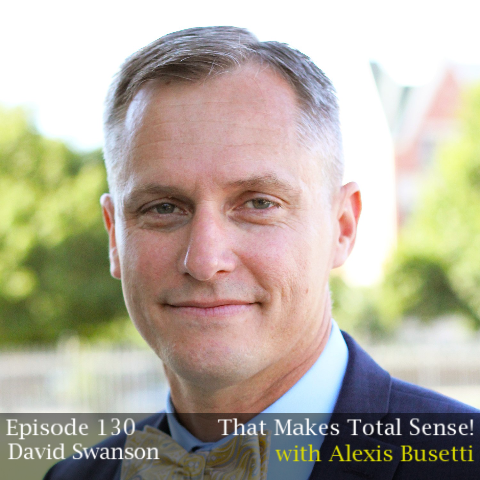
Speaker 1 00:00:07 Welcome to that makes total sense. A podcast dedicated to exploring God's generosity and justice. I'm Alexis. We setting the Christian aiming to ask good questions and encouraging you to do the same. Every one of us is wired by God to live out generosity and justice, but the house sometimes alludes us. That makes total sense is a way for us to get together, posture ourselves as learners and challenge one another to practice generosity and justice in a tangible way every day. Everybody, I want to say, I don't always say when I'm recording, because usually it's random and unimportant and not really applicable to the topic of conversation, but today my guests, David Swanson, and I are sitting in our homes across the country from each other, uh, thankfully in the warm, because it's stilly outside and we're recording this on Martin Luther king Jr day. Um, so I don't know, David, if your kiddos are home from school and running around, like mine are, but we are all here and I'm having flashbacks to the first part of the pandemic, right?
Speaker 2 00:01:15 Yep. We're in the same boat for sure. For sure. Although I do have to imagine it's a little colder here than it is.
Speaker 1 00:01:22 I mean, maybe a smidge, you know, we've, we've had a little cold front and then I think today it's going to start warming up. It's going to be in the sixties. And I imagine I did see her Instagram story yesterday and I imagine, yeah, we're not, we're not even in the same boat.
Speaker 2 00:01:35 We're in the twenties all day.
Speaker 1 00:01:38 It made for beautiful ice though.
Speaker 2 00:01:40 Oh, it's gorgeous. Now we love it. Actually. It's, it's absolutely spectacular. The cold is very relative for sure.
Speaker 1 00:01:46 Cold is relative. Yes. Our, um, you know, we hear the lawn crews year-round here in Houston, so
Speaker 2 00:01:54 We trade snowblowers for that for
Speaker 1 00:01:55 Sure. Absolutely. Yeah. Yeah, for sure. So, um, I want to say that David has been on the podcast before it was actually episode 61. And I'm going to link that in the show notes today, because when David was on before we talked about his incredible book, Redis cycling the white church from cheap diversity to true solidarity. And while I did not reread the book for this conversation, I did go back and listen to our previous conversation and I will say it was excellent. So I'm just going to tell everyone, um, you know, prime the pump and go back and listen to the first time that David was on. Um, we talked a lot about his book and, um, and the conversation and what that looked like then, which was October of 2020. And so I've asked David to come on now, because while I do enjoy speaking with authors about their book, when everything has been published and set up, and this idea has been printed and put out to the world, I asked David to come on and talk about things in kind of a more fluid way, just asking David, can you come on and tell us, what are you observing, processing, responding to feeling about these same topics since your book came out.
Speaker 1 00:03:19 So post-election is still in the pandemic, you know, all of this. So, so that's the context of our conversation today on Martin Luther king day actually is I wanted David to come on and just say, can you give us some kind of real-time commentary about what you feel like this racial relations, white church, you know, all of these things kind of surrounding the stuff that you wrote about what does that look like now? So, David, I don't know where you want to start.
Speaker 2 00:03:47 It's funny to think about October of 2020. It feels like a really long time ago. I mean, I don't know about for you Alexis, but time just has felt strange over the past couple of years on the one hand, it feels as though it's kind of compressed because there's, I mean, we were chatting just a second ago about, you know, locked down quarantine and the memory of sort of when the pandemic started. And that kind of seems like yesterday. And then it feels like we've been here forever too. So October to me feels like it works 20, 20. It was like a long time ago. And I think at that point, what a lot of us were talking about was whether this moment was different. We were coming out of a summer where there were so many marches and protests corporations were making these statements and these commitments towards, towards racial justice.
Speaker 2 00:04:45 Um, and a lot of us were, were, were wondering out loud, is this a different moment? And what we heard from, you know, people who know what they're talking about, not just some random pundits was, no, this is different. This is different because we've never really had a point where so many white people were publicly, um, you know, demonstrating calling for showing up on, on behalf of, uh, of racial justice, where white people were being so, uh, visibly engaged. And I heard that from quite a few peers and mentors. That's, what's different about this moment. There's been plenty of moments of, you know, protests and where it's very clear how, how, you know, pervasive racial injustices, but to see so many, so many white people, that was what felt different to people. And so it did feel like, oh, maybe reckoning is the right word, right?
Speaker 2 00:05:42 Maybe, maybe this is a tipping point of some kind and who knows, this is what we have historians for, right? This is what are our children and grandchildren will have much better insight into this than we do currently. But as we moved into the fall and then into the winter, the conversation really changed from, you know, really moving the needle on racial justice and some very practical ways to conversations about critical race theory and, you know, school board, hearings, and debates and so on. Um, things like the 16, 19 project being sort of lifted up as this anti-American, um, you know, curriculum or essays and so on. So I, that was pretty discouraging to me. I don't know about for you, but, but that I felt like I was getting sucked into more and more of those conversations. And I was finding myself, you know, debating something.
Speaker 2 00:06:41 I didn't really want to debate, like, I didn't know anything about critical race theory. I hadn't read anything about critical race theory and all of a sudden people are, are, are calling different ones of us, critical race theorists. Now why, what, what is this about? I do think for me, and I'll, I'll, I'll say this and kind of curious what your experience has been, but I'm helped, uh, by having some of the historical vantage point that any time there has been a movement for racial justice, like a groundswell, whether that's, you know, the civil rights movement or the, the era of reconstruction, um, maybe some of the abolitionists movement there, there's always a pushback. There's always a concentrated pushback that results in things like, um, you know, Jim Crow, lynching, um, you know, segregation, laws, uh, the civil wars, you know, so on. And I think that's probably helpful to keep in mind at a moment like this, that this is not new to see the focus shift to something besides racial justice to see the focus so squarely on something else to see people mobilized in opposition to, uh, to racial justice.
Speaker 2 00:08:03 I think the thing that's discouraging about it is seeing so many Christians fall for that seeing so many Christians be supportive of that. Um, and that's, I think where some of my, my most down moments over the past year have been in those spaces and just seeing how easily, um, so, so many Christians get sucked in to that. And, um, and miss some of the bigger picture of what I would say is God's kingdom and God's Shalom for, for all people. So that's been some of my experience over the, over the past year. I don't think I'm alone in that, but I don't know. Does that ring true for you?
Speaker 1 00:08:42 Yeah, I mean it does. And, and I would say, I think what helped me with what you just said was kind of naming the timeline of it because, you know, it was funny when, when I went back and listened to our conversation, we recorded in October of 2020. And at that moment it was like, oh, the election's a month away. You know? And, and when we think about, we just had the anniversary of January 6th, 20, 21, and then at the time that you and I recorded the election was, um, was a month away. That seems like a lifetime ago. Um, but the time frame that the kind of the time stamp almost that helped me when you were, when you were talking, is thinking back, I hadn't even thought about the protests, right? Like that seems like a lifetime ago. But when I think about that and I'm like, I didn't necessarily, during the summer, it was probably happening, but I didn't notice the church mobilizing in the same way in protest to the protested things.
Speaker 1 00:09:45 Right. I didn't notice the mobilization in the church over the summer. I just noticed the mobilization of the people who were standing up against the injustice. Then it was like we took a breath. And in that timeframe, the election also happened, right? The, the, all of the aftermath room election also happened. Right. And then in the same kind of sweep, I feel like you're seeing exactly what you named now, there's this, there's this pushback and what's happening in the pushback. We're seeing lots of Christians get, get, you know, come in with the pushback. And if I go back just a tiny bit to that spring, summer of 2020, I happened to be reading the blood of Emmett till, um, by Timothy Tyson at the same time as the nation and really the world in some places where it was exploding over the, up of the murder of George Floyd. And it was a very odd, kind of surreal moments. I had several odd kind of surreal moments in that in part because, um, George Floyd grew up in Houston. And so we had the viewing of his body and the Memorial service here in Houston, um, at one of the large churches down here. And I, um, made a decision to go, uh, to the viewing of his body the day before the Memorial service.
Speaker 1 00:11:20 And in part I was doing this, I felt almost kind of like, I don't want to say, like, to make it sound too dramatic, but almost kind of like in the spirit of this book, I was reading of what had happened with him until this was very much to me the same story, right? This is very much the story of Emmett till was a child, but above a black man who had been lynched in white America, his body was there for the viewing so that we could witness what we had done as a society. And even in that there was apathy and pushback. Um, so there was a moment to me where I, again, I, I admit then I think it's okay that I was emotional in these moments, but I was driving home from the viewing is actually my mind and my husband's wedding anniversary.
Speaker 1 00:12:12 And he, um, was home with the kids. And I went to this during the day, because of course it was COVID. And all of that, we were trying to figure out who, who could do this. And I said, I really, I really want to go. And on my way back, I was just listening to the, the local Christian radio station. And I just became really angry because there was this huge event happening in town. The traffic was nuts. They had, you know, uh, you know, trams taking us from one place to another so that we could get in, right. Everyone's distancing and you know, all of this. And when you go to this side of town, you can see this it's Netty over there. Like the entire, this entire neighborhood is, it's just, you know, there's, there's signs, there's people, it's a very, there's lots of energy and lots of traffic in this, in this situation.
Speaker 1 00:13:09 And I'm like, if this was the rodeo, if this was the, you know, the, the gun fair, if this was, you know, whatever, there would be some sort of acknowledgement on the radio, even if it was just avoid this part of town, if you're not involved in this event, because the traffic is so crazy, but I came home and there was nothing, oh, there was just in the silence was deafening for me because I just thought, how are we not seeing this? This is happening in our own city. And the Christian media representation in our city is not even acknowledging that it's a thing. But I say that because as I was reading this book on him until the historical perspective helped me, right? I'm like, all I have to do actually between this story and what I'm seeing unfold right now is switch out a few keywords for different keywords.
Speaker 1 00:14:02 And I basically have the same story. So now people protesting for racial injustice are not communist anymore. We're Marxists. Right. So we just kind of swap it out. Right. And then, you know, you can see, um, you know, courtroom scenes, right. Mirroring each other, even outside of courtrooms, mirroring each other. Right. And I'm like, this is the same, same story. You know, there used to be a song I sing when I was a kid it's like, same song, second verse, a little bit louder and a little bit worse. Right. It's the, it's the same song, second verse. And so that really has been discouraging to me, but also giving me some perspective of what's of what's happening.
Speaker 2 00:14:45 I think it's important to have that historical perspective. I think we get, we, we ended up spinning our wheels. Otherwise we ended up getting very discouraged. We think as though somehow we were unique or this is, this is unique to our generation and as discouraging as it can be to recognize some of those, uh, those patterns, we also do have to say that they're not exactly the same, that things have changed. Um, as much as they have not changed nearly enough. And as, not as much as they have not changed, as most white people think they have changed, uh, there are nuances, there are, there are differences. And we need to be aware of those particularly, I would say, as Christian people who believe that the kingdom of God is coming and has come in the person of Jesus and the presence of the holy spirit, we need to be the people who can recognize those, those nuances and respond to them, respond to them faithfully, uh, and, and not just get overwhelmed, not just think, well, what's, what's the point then of even, you know, pressing for, for justice and for righteousness, that, that historical perspective reminds us of, of people like Emmett Till's mother, right?
Speaker 2 00:15:52 Who a faithful Christian woman who made incredibly difficult and yet brave choices that ended up really shifting the trajectory of the entire nation. And in some ways, her decision to open her son's casket instigated the, the, the civil rights movement, uh, kinda gave, gave birth to it. And in many ways, so we need to remember those things as well, right? That our, our moment is fraught with those sorts of possibilities and potentials as well. And we, we shouldn't allow ourselves to get duped or overwhelmed by the, by the moment, but to say, you know what, this is, this is actually part of it. This is not a battle against flesh and blood. This really is a battle against the spiritual forces of evil. So let's not get confused and turned around. Let's be faithful in this moment to continue doing the things that Christians have always done.
Speaker 2 00:16:49 And these sorts of moments, faithfully following the way of Jesus, building relationships with the people of God and people of Goodwill in our, in our communities and doing whatever we can to embody, um, the kingdom of God to be that, that, that, that city on a hill, I'm thinking about that radio station and how they either willfully or not were oblivious. And I, I think that's telling, um, because so much of what we see right now is a kind of organized resistance to, um, to human flourishing, to righteousness in our communities and an individual's lives. We see opposition to voting rights. Uh, you know, we see this kind of wholesale rejection of telling the truth of, of American history. And so on this, this is organized stuff. We need to recognize it as such, but the average white Christian driving on that day, listening to that radio station, isn't thinking about that.
Speaker 2 00:17:59 They're not, uh, they're not aware of those kinds of things. And one of the reasons we're not aware is because we are relationally distant from those who are impacted by these systematic attempts to disenfranchise, to, um, to, to, to wound, to hurt people. And I think this is something that we need to kind of hold together. It's not one or the other. We need to be very aware of the, of the systematic nature of injustice and not, and be, be smart about that. Be intelligent about that, but we also need to be aware of how the lack of relationship can make it hard for us to see that, that systematic stuff. If I'm not in relationship with someone who is going to that Memorial service, or who feels as though their community has been deeply impacted by the murder of George Floyd, if I'm not in those, those relationships, then I can just be making my way through the city on that day, almost totally oblivious that this thing that has been an earthquake in a particular community is happening just outside of mine, outside of my site.
Speaker 2 00:19:09 And so this, I keep coming back to the same, like segregation is still happening. It's still the kind of organizing principle in many of our lives. And there is a system systemic edge to it. There also is this deeply relational edge that is, has separated. Those of us who are white from our sisters and brothers, so that, so that you could be driving around the city on that day and not even know who's morning, not even know who's lamenting. And so being completely unable to join them in that morning and that element, but what if you were, what if you were relationally connected? So, so even though this moment doesn't seem to impact your community from one vantage point because of your connection with these sisters and brothers, you realize it does, it does impact you. Well. Now I'm mourning with those who mourn I'm lamenting with those who are meant, but also I'm going to start becoming aware of some of the systemic stuff as well.
Speaker 2 00:20:10 I'm going to start becoming aware that these aren't just one off events, but as I listened to the testimonies of my sisters and brothers, my eyes are going to start getting opened up. And so I'm going to start seeing some of these, these connections so that when that concerted backlash comes, I can, I can engage with it a little bit skeptically. I can, I can be a little bit suspicious of this. I can be a bit curious. What does this sound like to my black and brown sisters and brothers? Here's my instinct around it. But now I'm curious about, about how these things, uh, so anyways, um, I'm a little bit rambling here, Alexis, but I, it, to me, it just feels like we have to hold these two together. And for those of us right now in this moment of, of, of backlash or turmoil or whatever you want to call it, those of us who are white, I do think it's still important to, to sort of look at our lives, honestly, and ask ourselves, like, who has input in my life? Who am I connected to relationally whose narrative and experience in this country is informing my own interpretation of it.
Speaker 1 00:21:10 So you answered the question I was going to pose. So thanks. Um, but now I have a question, I think you, you may not be able to answer. And so I'm gonna, I'm gonna kind of try and frame it, um, in a way that I think will be helpful. Um, but I'm also just kind of honestly trying to think through it and process through it. So, um, I, I hear, I think I hear what you're saying and what you're saying makes sense to me, as far as segregation, like a relationship, this kind of thing. And to me, when I add those pieces together, if it, if it looks like an equation, which it doesn't right, it's a nuanced and we're living in, we all have all of these things, but, um, if I, if I can, if I can add those things together and on the other side of the equal sign for me is apathy.
Speaker 1 00:22:02 Um, and, and that makes sense to me. Um, and I, I told you before we started recording, I was about halfway through King's letter from a Birmingham jail when I realized, oh, I better heat up my coffee and, and hop on the computer. Um, and so I think that, I think that king talks speaks to this, but when, when he talks in the letter, he talks about how he's getting harassed, basically because it never, it's never going to be the right time for the white moderate for, for them to act and do something right. Even as, even as civil and non-violent, as they're being, it's never going to be the right time. Right. Um, and, and so I think when I say what you're saying makes sense to me and leads to apathy. I, it's harder for me to see the jump from apathy to critical race theory, issues, school, policy, step, to like pushing for, um, I guess pushing harder for segregation. It may be, that's a good way to frame it. Like we're segregated, so we become apathetic, but you think that that would be enough kind of, but it seems like the segregated leads to the apathy, which leads to some sort of desire for movement, which leads to more segregation. And I guess I'm wondering if that cycle is even at play a little bit, how are we jumping from the apathy point to this desire for more active resistance of the injustice piece? Does that question even make sense?
Speaker 2 00:23:44 No, it does. Well, I mean, let me, let me in the age of that, and you tell me if I'm hearing you well or not. Um, I think it's important to say this stuff is all really complicated in that everybody's experience of it is different. And so one person's, you know, apathy might be someone else's full throated engagement with opposing, uh, racial justice, right? Uh, or buying hook line and sinker into some kind of conspiracy theories about who's taking over the country. Um, so having said that a couple of thoughts, one, I don't think we can underestimate fear and the way that fear gets layered on to, to a lot of this, so that, um, I might be apathetic about the pursuit of justice, but if somebody starts telling me that I need to be afraid because the pursuit of justice is going to lead to, to such and such, it's going to lead to two white people becoming oppressed or experiencing reverse racism, which now a significant percentage of white people in this country actually believe that white people are more likely to be discriminated against the people of color.
Speaker 2 00:25:03 Um, if I believe in the crazy replacement, uh, theory that is now kind of the buzz on, you know, some pretty extreme right wing websites and is now being talked about by some Fox news, pundants, uh, no offense to any of your listeners who aren't our Fox news folks, but this idea that white people are going to be replaced, you know, in, in this country, um, by, by demographic changes and that white people need to actively resist that to maintain their, their, their majority. If I, if, if I'm hearing this, I'm listening to this, if this is starting to shape, you know, how I view the world, that fear is a powerful motivator. If I'm being told that something is being taken from me, or I could lose something, uh, often that is a real, it's a really tactical way to get me to join something, to oppose something, to resist something, to call my representatives, to show up at a school board meeting.
Speaker 2 00:26:06 Now, there are some people who know a lot about critical race theory, and they have their reasons that they think critical race theory or just critical studies in general are not helpful. We can set that aside for now. I think that's not the vast majority of us. The vast majority is, are not critical race, uh, experts. Instead, what we have is our activists who have found this language of critical race theory, and then lumped underneath that all sorts of things like black history, for example, right? Or, or, uh, African-American literature or teaching history with more accuracy than we typically have. And so, so now people are opposing those things, opposing critical race. They're, they're posing those things with, but, but we're, we're doing it because we've been motivated by fear of something that we're going to lose something that's going to be taken from us.
Speaker 2 00:26:54 Um, the, again, this is an old story. This is always how race has worked in this country. And we see how the origins of racial whiteness in this country, it's when wealthy white people see that poor white people are finding solidarity with, uh, enslaved black people in this country w this, this was not going to end well because there's many more of them than there are of us. So this kind of racial cast system gets developed where to be, to be black, is to be biologically enslaved. Your, your children will be, will be enslaved, which is never the case for a white indentured servant, for example. Um, so, so race is always built on this, this fear of losing something so that the poor white person can say, I may not have much, but at least I'm not. Um, and so when the threat of even that is taken away of not being in the majority of not being associated with, with the majority in power, again, I think it's a powerful, motivating thing.
Speaker 2 00:27:52 So for those of us who are Christians, we have to reflect on that. We have to ask, in what ways am I being motivated by fear? In what ways are the narratives and the myths of fear motivating me to move forward in a way that may not be, um, in loving solidarity with sisters and brothers of color in this case. Um, do, do I have more of their voice in my ear than I do these, these narratives of fear? Am I being more formed by the live testimony of the body of Christ, the diverse body of Christ, or by these partisan ideological voices that have their own agendas to them? It, that, to me feels like a really simple question that we can ask ourselves again. I think segregation makes it difficult if we don't have access to those, but at the very least, if we're willing to ask ourselves, which of these two voices is loudest in my head, is it this partisan ideological voice, or is it the body of Christ, the diverse body of Christ that at least gives me a point to pause for a minute and to reflect at the, take a breath and to say, you know what?
Speaker 2 00:28:57 I actually might need to do more work around developing some of these relationships, maybe start by reading some books, um, that, uh, that allow my imagined imagination to be, to be more accurately and truthfully formed in a, in a moment like this.
Speaker 1 00:29:13 Yeah. Um, I want to, I want to pivot to something that is a little feels a little bit more, it feels controversial to say it feels it's definitely requires a great deal of nuance to discuss. And if you don't want to go there, you just tell me, Hey, I don't want to go there and we'll either leave this part in or settle, cut it out. But when you were talking about this is how race has always worked in this country and kind of expanded on that point. One thing that I thought of, and it, I think I'm thinking of parts from your book, but also some of this Willie Jennings, like whiteness part kind of comes in as well, where we might as white Christians be able to say, look, I do have the voices of black people in my head. I go to church with three black families, and they all are really on board with the things that I'm hearing from my peer group outside of this community.
Speaker 1 00:30:26 And so I really don't actually know what you're talking about, um, because I do have, you know, these voices in my head and I don't really feel the need to expand and read somebody else because I, I, I have read this person or that person. And I do, I am friends with these people and these guys not to make it a binary, but maybe in our heads, it sounds like these guys agree with me, these guys, you know? And so that kind of the partially I'm thinking about some of the aspects of the conversation you have in your book about, um, kind of multicultural churches or churches that have a lot of minority population, but still look a lot like a majority culture. So that's, you know, part of it and then kind of weaving in this idea of whiteness that Jennings introduces to us that it, it does have to do with race. And at the same time, anybody can be white. They don't have to actually racially be white because of the mindset of whiteness. So I don't know, where are you tracking on that?
Speaker 2 00:31:32 I mean, whiteness in this country, it's racialized. So that those of us who, uh, you know, have lighter skin are more likely to identify as being white and being perceived as being white, but there's always been a kind of scale and a continuum where black is on one side of that scale. So to be black is to not really have any access to the promises of whiteness to be white, is to have the most access to that. And then for everybody else, you know, we kind of fall somewhere along that spectrum often by how we're perceived, you know, by biologically. Uh, so I remember talking with a Mexican-American woman, a younger woman in her twenties about a year ago, and, you know, to engage with her, uh, she was from Utah. I assumed I was talking with a, a white woman and she said as much, she said, you know, my, my grandparents, when they immigrated this country, they did everything they could to leave behind any cultural historic, you know, linguistic in anything that would code them as being Latina, Latino, Mexican.
Speaker 2 00:32:42 So she didn't have access to language, cultural traditions, and she's lamenting that now. Right. You know, she's acknowledging, uh, I grew up white. Now, this is just what two and a half generations into that immigrant story into that immigrant experience. Um, so that's how whiteness works in, in, in this country, right? We're not, it's not static, it's, it's malleable in that kind of way. So that, uh, to, to, to hear from one person of color, uh, saying I'm actually great with the status quo, the racial status quo in this country requires a little bit of reflection and a little bit of nuance to think about what are the ways that whiteness is impacting, you know, this, and as a white person, I say that really carefully, really humbly, I'm not interested in or narrating anybody's experience or anything like that here. I'm just being, you know, really kind of deeply formed by my own colleagues and mentors of color, who, who, who have talked about this and who have written about this, you've talked about Jennings and the way that he writes about, uh, about whiteness, um, for those of us who are white, we ought to be aware of whether the spokespeople of color we most gravitate to are mostly acceptable to other white people, or whether they are mostly engaging with and affirmed by and celebrated by, um, you know, people of color that feels really basic to me.
Speaker 2 00:34:16 I don't think it is basic because we know that the spokespeople who get lifted up, right, we know we see the same handful of, of, of persons of color who get elevated and who get used as well. Hey, this person affirms my perspective. In my opinion, to me, all that shows is our detachment from actual communities of color, where we could have conversations, not with somebody, we read online, someone who shows up as a pundit, but actually conversations with, with, with loved ones and family members and friends and church members. Like that's where those conversations should be happening, where we should be asking, am I missing something here? Is there something in your experience that that should inform my own experience? I remember being on this radio interview with, uh, a radio host in Detroit and a white man, and he kept talking about these kinds of spokespeople.
Speaker 2 00:35:07 And, and I'm thinking this man lives in Detroit, which is a very black city with lots of black Christians and lots of African-American churches who, for generations. And yet he had no engagement with the neighbor. It was all that, you know, so, so, so for me, that's, again, that's a helpful sort of reflecting question, are the voices I'm engaging with the kind of pundents that are going to be acceptable to people like me, or are they flesh and blood conversations with neighbors who are living this stuff out who love Jesus and are following Jesus like I am, but whose experiences might be different enough that I have something important to learn from, from them?
Speaker 1 00:35:47 I feel like now I want to take it to the day because I'm like, as time has progressed, I'm sitting here staring at this letter on my desk. Right. And I'm going, okay. I mean, I don't know. It's like here we are during the civil rights movement, when Martin Luther king was actually doing his work here, he was largely, his opposition was from white people. He was celebrated by people of color and opposed white, white people. And this letter is a response to opposition by white clergymen, as the decades have passed, white people have celebrated him
Speaker 2 00:36:42 Sanitized and then celebrate it.
Speaker 1 00:36:44 Right. I was going to say diluted, but yes, I think maybe, maybe, maybe both. We can say both maybe sanitized and diluted and then celebrated. But when we look at King's work, he was called a communist. He was assassinated because of his work. Um, I don't know. Can you talk about king for a minute, or can you talk about this phenomenon for a minute?
Speaker 2 00:37:16 Yeah. I mean, the thing about that letter that is so difficult for me is that he's, he's writing to people like me, right? He, he's not writing to the clansman. I'm not writing to the segregationist. He's writing to the white people who took to use a phrase that we hear. Sometimes these days would imagine themselves as being on the right side of history when it comes to righteousness and justice, and he's pointing out the hip hop ocracy, um, of their position, uh, which is to, to, to on the one hand, want to publicly say yes to civil rights, no, to segregation, uh, yes, to this vision of, of, uh, righteousness and reconciliation. And on the other hand to maintain their power, to say, we, we are the ones who get to determine the timeline. We're the ones who get to determine the methodology for how this will be, will be brought about.
Speaker 2 00:38:13 And, and king points out the utter hypocrisy of this. Uh, and, and really in a sense as you, you don't get to do both. And, and that's that's to me, right? Like that's, that's the, the, the, the prophetic word to those of us who would say, well, no, we, we want to be for this. We want to be for this, this biblical vision of, of justice and Shalom, uh, of, of, of true and genuine reconciliation and repair and, and on and on, uh, don't want to give up our power. Uh, don't want to submit to the leadership of people of color. Don't want to submit to the agendas that have long been set by communities of color and congregations of color. Who've been doing this work for forever, who have a deep and profound wisdom about how this, this, this ministry and this work can happen.
Speaker 2 00:39:10 But instead, we're going to start our own conferences. We're going to plant our own churches. We're going to, I mean, you know, we're going to write our own books. And I look, I've written a book, I planted a church. So again, I score them and all of this and all of this stuff. Um, but the, the, the word of hope that king all was offers. And this is one of the, just kind of crazy things about him, despite everything that he went through and faced is, is he always holds out this possibility for genuine love and genuine reconciliation. He talks, uh, he, he, he makes the distinction of, of a, I love that this is not a human generated love that this is a love of God that is actually available to us to love one another with. So even though he can be so critical again, to somebody like me, he doesn't slam the door on the possibility of true friendship, true reconciliation, but he does make clear rightly so, what that will cost me, it will cost me something significant.
Speaker 2 00:40:15 I will, I will have to open my hands. I will have to become aware of the way that I've hoarded power and hoarded privilege. And I'll have to repent of that in a, in a physical visceral, I would say, biblical turning and going in a different direction kind of way in order to participate in that, that vision of, of beloved community that he was so convinced is, is still available to us despite, despite everything. So I wanna, I always want to let king make me nervous and make me uncomfortable. You know what I mean? I feel like if, if, if he's not doing that, then I've also probably diluted him or sanitized. Uh, so I, I need, uh, we at our church yesterday on the Sunday, before king day, we did a conversation about some of these things and it's our, our black pastor and myself, and, and I find myself yesterday getting uncomfortable and squirming a little bit. And I think that's probably a good thing. Um, if, if I'm ever not doing that, it probably means that I've not just alluded king, but I have a diluted view of myself as well.
Speaker 1 00:41:25 Yeah, no, I agree. I, um, it's part of the reason why it takes me so long, I, for a little while, for a year or two, um, or I don't know how long about, I've tried to read this letter for a year on king day. Right. I'd kind of seen that, um, that some people had that tradition. I thought, I think I can adopt that. Um, and so why it takes, I mean, it's a lengthy letter, but besides that, that's why it takes me so long to get through it, right. Is because then I'm like, oh crap. Like a lot of ouches a lot of ouches. Right. So, so I, I wholeheartedly agree with you, right? Like, I, it's not, it's not fun to squirm in your seat when you read this. Um, and I think part of how we get to the point where we can squirm in our seat is by the thing that you're talking about.
Speaker 1 00:42:20 Like, you have done some of these things. We've also done some of these things under the mentorship and leadership of people of color who've been working in this space for a very long time. So this is not like this is David Swanson's, you know, this is the way to come and do this David's way. Um, and it comes from continued relationship, right? Because I'm thinking that when you were talking about you can't really have it both ways and the way that king says you don't, you don't get to do both of these things. And I think we can see that historically. And then some of the things that I was thinking about right now are right, because here's the thing on today and this weekend, some of the voices who, um, have been in great opposition to CRT, for example, and the end, the umbrella, everything under it that they try to put under it.
Speaker 1 00:43:12 Like you mentioned before, some of these same white Christian voices, and I don't want to pick out a boys, I just kind of want to look at this as a movement. I would say, like this, this kind of political religious movement that is in opposition to this umbrella, some of this, um, this movement is also participating in quoting king, for example. Right. And so it's both right. Like I got, um, an email, there was a large, uh, Christian, nonprofit organization that if I said the name, everyone listening would know. And I used to, we used to financially support them for years and years and years. And in the midst of 2020, when I started seeing some of the things that were coming out, um, we withdrew our support and I actually wrote an email to the president and just kind of told him why now here's the thing.
Speaker 1 00:44:04 He doesn't, he did. I, he doesn't know me. Right. He probably didn't read the email, but, um, I kind of just wanted to express my voice. Right. Um, but I had a, I had an email come through from them that I guess I hadn't unsubscribed to yet. And the, the, it was just like last week and it was legitimately, the subject line of the email was how to fight against CRT. Like that was the actual subject line. And I thought, where in the world is this coming from? But at the same time, like I haven't checked their social media or anything like that, but I'm like, this is the same kind of organization. Right. Who would definitely like prominently display photographs of king quotes, you know, all of this stuff. And I'm not, I'm not saying this in any kind of way that I'm not doing things that are SCORM worthy, but I'm just noticing this dichotomy inside of the movement.
Speaker 1 00:44:56 It's very confusing. I think it's very confusing to white Christians because we see, I mean, I don't want to like take it completely out of context, but it's like, we, we see the dirty water and the clean water coming out of the same pipe and we think it's all this the same. Right. And so I think it's, it feels very confusing. I think it feels confusing to white Christians who are watching that, trying to figure out what, who is going to disciple us. Right. But then I think it's also kind of wretched looking to people, Christians of color, right. And people of color who are like, what are you doing? What, what is this movement doing? What do you stand for? Who are you standing with? Um, so I don't know, not really a question, but again, I'm just kind of like processing this as you're, as we're talking,
Speaker 2 00:45:50 It is super discouraging. Um, you know, white, white people have always appropriated black culture and, and black, uh, symbols, uh, black music, black literature. So it's a very, it's a very normal thing. It's, it's, it's terrible. But I think we can think of this as a kind of appropriation that kind of appropriate and king, uh, in order to maintain white power. And I, I, that sounds terrible. Right. I mean, to, to maintain white power, but I do think that that's so, so there's some, some sociologic sociologists who've done some work around this recently. Um, what is their book called taking America back for God? I think, you know, this book that Perry and Whitehead and Perry and Whitehead, um, and, and they, I think they show pretty clearly in their very kind of rigorous empirical research that this is the desired outcome for, for many white people is the, the, the maintenance of a kind of racialized, uh, power. So, and that's the, that's the fear again, right? What happens when we, when we lose that, I'm less concerned about how people of color observe and Christians of color in particular, how they observe the dynamic you just described, because they'd been observing that for ever, right. It's
Speaker 1 00:47:09 Not a new song.
Speaker 2 00:47:11 I mean, it's, it's terrible. It's wrong. We don't, but, but I don't, I don't lose a lot of sleep over that. Cause, cause I think in many of those communities, they have the interpretive framework, you know, so they're, they're not going to lose their faith over white Christians. Right.
Speaker 1 00:47:26 They don't have to come up with a new category for what's
Speaker 2 00:47:28 Happening. Yeah. Not so much, not so much. I get much more concerned about white Christians who are being discipled by that, who are being influenced by that. You use the word confused. And I think that's really helpful because I do think there are, there are white Christians who find themselves confused. They, they are kind of waking up to some of this, they're being exposed to some of these, these, these voices and mentors, Christians of color, and there's receiving that kind of literature, or they're sitting under, you know, preaching in their church that has this partisan edge to it. And, and the question is, well, how can both of these be coming from the same faith in Jesus? How can we both be reading the same Bible? And that that's, I think a real genuine concern. And so how do we engage with those folks who are in that place?
Speaker 2 00:48:19 My, I think my best counsel and it's sort of a broken record here is that, that we, in that moment, we prioritize as the voices and the experiences of those Christians who we've not really been formed by. So if we've mostly been formed in white Christian spaces, then it's, that's probably a good thing for us to intentionally position ourselves so that we are being discipled and spiritually formed in spaces that are not, that are African-American congregations, immigrant churches and so on. And, and basically turning up the volume of, of those voices and those experiences, those biblical interpretations, those worship experiences, and so on. I think that doesn't solve the question of, of our confusion, but I think it starts to lessen it a little bit more because we, what we do is we find that, that these are women and men who have been deeply formed in the scriptures who love Jesus, were committed to the, uh, to the costly way of, of, of following Jesus.
Speaker 2 00:49:20 And yet who come at the scriptures very differently around some of these questions because of their lived realities. And what we find oftentimes is not, oh, here's, uh, here's position a and here's position B what we tend to find is, oh my goodness. I just never even saw that in the scripture. Oh my goodness. I never even heard these passages preached before. It's not as though there's a, uh, you know, two different choices or two binaries, it's that in many white church settings, a lot of the, the biblical narrative kind of have to get set aside. Jesus has to get diluted and sanitized as well in some ways, in order to, to keep the status quo. And now you step outside of those spaces and it's not like, well, here's a different Bible we're going to read now. It's just what we're going to pay attention to these passages as well. And we're going to let Jesus speak loudly in this area in the same way he spoke loudly. And these that's been my experience at least is that it just feels like I'm a more holistic, a more faithful reading of scripture and engaging in, in the life of the community together so that we it's more of a, oh, I just, I just missed a lot of this. I just, I just didn't get to see it. You know, it was almost a lament of, ah, there's so much more here that I just never got to experience.
Speaker 1 00:50:45 I'm going to say something, we don't have time to explore, so I'm going to throw it out. And then I'm going to let you close this with whatever you want. But when you were talking about that, um, I'm like, ah, but the pushback sometimes in that, is that in much in many white Christian American spaces, we have been discipled to believe that the way that we have always heard, understood and interpreted the scriptures is the way to hear, understand and interpret the scriptures. And so a, it shouldn't matter if I go to hear, understand, or hear interpretation of the scriptures from someone who doesn't look like me, because there is one way to do this. And so if I list, if I'm white and I listened to a black pastor or a Hispanic pastor or an Asian-American Spanish pastor and an indigenous pastor, they're going to tell me the same story, the way I've always heard it, because, um, there is a theology with a capital T and that looks like the theology that white Christian America has adopted as its own.
Speaker 1 00:51:51 Um, and so for me, that becomes one of the problematic places is there is even a resistance to listen from another scholar, from another pastor, from another lay person's experience because we have, um, a piston ecology issues, right? How do you know what you know, well, if it comes from your experience or if it comes from your experience as a black man or as an indigenous woman, then maybe I can't trust your experience because that's not the way that I've experienced things. Or when you read something through the lens of your ethnicity, then maybe that's clouding your view because this is the kind of the way, like I said, kind of this theology with a capital T that we, um, say is, is the, the okay way to do that. And so I just kind of want to name that. I feel like that could be an entire episode in and of itself.
Speaker 1 00:52:51 Um, and in fact, I may link cause I've had one or two conversations that kind of are, um, include some of that space and read a book or two on and include some of that space. But I just kind of want to throw that out there. I know we can't really, we can't really chase that rabbit right now, but I agree with you. And I think what you're saying is important. I would even say as someone who is currently involved in theological education, a lot of times our seminaries are even guilty of this, right? Where we have a black theology or liberation theology or womanist theology, Asian-American theology, or the theology of king. Right. And we kind of put all of these, um, with the adjectives in front of them to describe it theology and the descriptor is there, but whatever normative theology we're used to as white Christian American theology that comes from reformation most likely, and you know, all this kind of stuff is kind of the capital to theology and everything else has, um, a descriptor for it.
Speaker 1 00:53:54 Um, which lessons are those perspectives to a degree, I think that's not helpful. Um, and it's just because of the majority culture, right? And that's, that's something that I think about sometimes, right, is if we lived in a space where the majority of culture looked different than white Christian America than it would have a different capital T perhaps. Um, and you know, anyway, so there's different ways to look at it. So I just kind of want to say a hundred percent. I agree with you. And I can also see that there is sometimes that's even that, which seems like a step and not an easy step to take maybe, but like an obvious step to take like, okay, well I'll just go and sit under this pastor or read this book. Sometimes there is like a step zero before that, where we have to deal with whether or not we experienced that resistance and even wanting to put ourselves in that position
Speaker 2 00:54:49 Part of step zero is acknowledging that in the same way that say African-American culture in this country or a first-generation Mexican American culture in this country, uh, has its own, uh, you know, ethnic cultural lenses. So does whiteness. Right. And that is often a heavy lift, but I think you've identified that very clearly. If a person can't get there, if a white person can't get there, then yeah. The suggested way forward is, is, is never going to happen. But if we can say, oh yeah, that actually makes sense. Like we all, we all have our own cultural assumptions and experiences. So yeah, probably as a white person, if I've mostly engaged with other white Christians. Yeah. We're going to have our own perspective. Okay. Okay, great. So that means that my sisters and brothers who have had different experiences in this life are going to come at this from a different starting point.
Speaker 2 00:55:45 And again, my experience in most of this is that you, you start to spend time with these sisters and brothers and it's not, oh, here's a different Bible. Here's a totally different theology. It's, we're just, we're, we're coming at the same thing. And we're after the same thing, but our starting points are different. So we hear nuances. We pick up on themes on theologies, in different kinds of ways. And one of the beautiful things is we spend time in these places. And these communities realize actually, oftentimes this community's view of the authority of scripture is even higher than mine. You know, their way of kind of reverencing God's presence is even higher than mine. And so that's where I think a lot of that can start to crumble. Uh, some of those defenses can start to crumble cause you find your, your own heart kind of warmed in those spaces because, oh my gosh, these sisters and brothers loved Jesus just as much or more than I do.
Speaker 2 00:56:33 They esteem the scriptures just as much or more than I do. So how can I not honor them by participating in this kind of communal interpretation around, around scripture two together, that's the best case scenario. And you've pointed out all sorts of reasons why it can be hard for us to get there. I think one of my new year's resolutions is to be more hopeful in some of these areas and try to try to at least say out loud, I think this is possible. And maybe not likely for many of us, but I've seen too many again, particularly white Christians. Who've said, actually I am willing to take some of these steps and have watched their lives change significantly for the better. And to, to say that that this, this can't happen again, lots of hurdles, lots of obstacles. But I, I think with, with king, I want to, I want to cling to that, that possibility, even when it feels like, you know, a mustard seed,
Speaker 1 00:57:26 No, I actually really appreciate that. I'm going to follow you in that. So hold me accountable. I'm going to be more hopeful in this as well, because sometimes, sometimes my husband's so rude. Sometimes he calls me Debbie downer because I can tend to look ahead, you know, look at these things. I'm like, I'm not, I'm just being realistic. Okay. You know, like, but I w but I don't want to be a Debbie downer. The truth is I want to be hopeful because even as you said, like king always lit left space for that. Right. He always, he always leaves space for that. Um, David, I know you mentioned long today, but I do want to give you some time and space to kind of end this conversation. Um, however you would like to.
Speaker 2 00:58:07 Yeah. I mean, I think we we've, we've covered it. I hope that as folks listen in, there'll be encouraged that, um, that regardless of the moment, regardless of the, the, the, the circumstances, regardless of what's, what's coming up in the next few months, there's going to be lots of reasons to probably can be discouraged, uh, around things like voting legislation. And so on that there, there is still all kinds of opportunities to proactively engage, uh, with the way of Jesus and the people of God. And, and to do that locally, to do that in your community. And, and particularly for those of us who are white and find ourselves in majority white spaces, there are so many good opportunities for us to, to engage in this ministry of righteousness and reconciliation. And, and, and I'm so encouraged these days to hear from more and more white people who are not writing themselves off either because they are white or because they're in majority white spaces, but whose paradigm has begun to shift and say, actually, because I'm white and because I'm in a majority white space there are all kinds of opportunities for me to have a, an impact when it comes to the reconciliation of the people of God.
Speaker 2 00:59:19 So I hope that your listeners will be challenging that and encouraging that, um, my prayer for all of us in, in those spaces is that we will have the eyes of faith to see how the holy spirit is moving and to get on board with that, even when it feels really small or maybe insignificant, but to start there and to trust that that God is always, always faithful to keep his promises to us.
Speaker 1 00:59:41 Thank you so much, David. I appreciate that. Um, again, the book that we really didn't talk about today, but is out there and is just as good and relevant and amazing today as it was when it released is recycling the white church from cheap diversity to true solidarity. And David, if people want to engage with you in this topic online, where can they find you?
Speaker 2 01:00:03 The website is DW swanson.com and all the links to social media, and then a newsletter I try to send out every couple of weeks can be found there.
Speaker 1 01:00:13 Awesome. Well, I will link all of that, including, um, the books that, the book that I just mentioned of yours and the other books that we mentioned. Um, I'm also going to link the video to the kind of the Jennings thing that we alluded to earlier. Um, so people can get ahold of that and a link to the full text of the letter from the Birmingham jail. So thanks so much, David for coming on.
Speaker 2 01:00:36 Thanks for having me.
Speaker 1 01:00:38 The links for all the resources mentioned in today's episode can be found in the show notes, music and podcast production by Seth B city. Be sure to give us a review on iTunes and subscribe at your favorite podcast listening app, you can also visit us at that. Makes total sense.com