Episode Transcript
Speaker 1 00:00:06 Welcome to That Makes Total Sense. A podcast dedicated to exploring God's generosity and justice. I'm Alexis bti, a Christian aiming to ask good questions and encouraging you to do the same. Every one of us is wired by God to live out generosity and justice. But the how sometimes eludes us that makes total sense is a way for us to get together, posture ourselves as learners, and challenge one another, to practice generosity and justice in a tangible way every day. Hey everybody. It's another one of those time zone. I feel like it's like a time warp. I'm sitting here drinking coffee, which is what I have done with my friend Jack every time we've gotten together. But it's late for you to drink coffee. Jack. What time is it in Jerusalem?
Speaker 2 00:01:00 Well, it's, uh, 7 35. I'm actually now in, in, in Bethlehem, but is Jerusalem. Bethlehem are at the same time. I, I came here cause it's quieter than, uh, you know, where I am at. So I thought it'd be the office to be. So my office is in Bethlehem,
Speaker 1 00:01:16 7:30 PM in your
Speaker 2 00:01:18 Office. Yeah. I'm a drinking, I'm drinking water so that I'm not, uh, gonna stay awake tonight. You know, we drink coffee like this time and be awake.
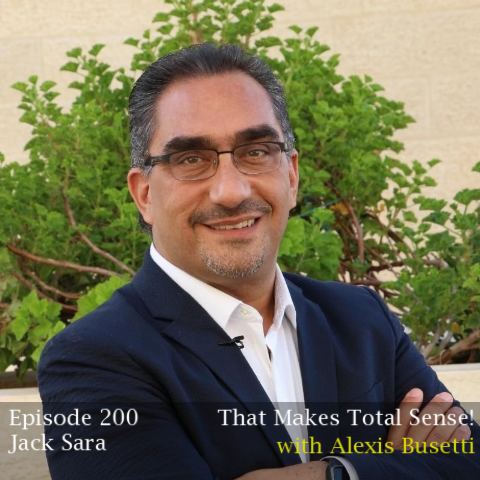
Speaker 1 00:01:27 <laugh>. That's good. So my friend Jack, Sarah was so gracious to join me for this conversation from, as you mentioned, his office in Bethlehem. Jack is the president of the Bethlehem Bible College, which is, uh, an incredible institution, and I hope that we get to that. So, Jack, let's not end before we, um, end up chatting about that a bit. But I invited Jack to come on the podcast because when we met last year, his story and experience as growing up as a Palestinian Christian in the Holy Land was so impactful for me. It was so meaningful for me to hear Jack's story, to meet Jack, to spend time with him, um, and his students. And I just thought this would be a great opportunity for our listeners to share in some of that. So, Jack, I'm really appreciative of you coming on the podcast.
Speaker 2 00:02:26 Thank you. Thank you, Alexis. And the greetings to the listeners as well are to be with you and them on this podcast.
Speaker 1 00:02:35 So let's start, if you would, we, um, I'm thinking back to some of the time that we were together on the, on the little bus, and you were given the microphone and said, share a little bit with the crew that was there. We were a small group, but you shared with us about your upbringing in Jerusalem, and I would love for you to do that first. Um, but could you give, um, I would say you, you can't give us a background on the conflict, there's no way mm-hmm. <affirmative>, but, um, when people think of Jerusalem, they think of the holy sites. They think of tourism, they think of, uh, Israel as a, as a nation. Maybe they think maybe of the Jewish people. Um, they may not think of Christians, and they may not think of Palestinians. So what, like, describe your hometown from your perspective, if you would, and then share a little bit about your upbringing there.
Speaker 2 00:03:39 Thank you. Thank you, Alexis. I, uh, you know, I usually really try to challenge, uh, anyone who listens to us about, uh, you know, about them, probably and never heard about the existence of Palestinian Christians in, in Palestine, the Holy Land. Uh, because basically this is not on, on their news, and it doesn't come on their horizon because, you know, we think of the holy land as, you know, the, the, the holy land that Jesus lived in 2000 years ago with Jews and, and others, and the temple and other things lit related to the Bible and related to the scriptures. And we forget that there's 2000 years of history of, uh, presence for peoples in the Holy Land. Peoples that included, uh, you know, Jews included, Christians included drums, you know, included Biant, including Muslims for 1,400 years now. And, uh, within that period of time, you know, of two millennials, you know, there were Christians living since day one of Christianity.
Speaker 2 00:04:42 I mean, Jerusalem, where I live, not far away from, uh, where I was born is where Christianity started, for God's sake. It's where, uh, you know, uh, Pentacles, which just, where just were celebrating Pentecost, we're still, you know, I don't know if you know anything but the, the, the, the we, the Western Church celebrated Pentecost is back last Sunday, and next Sunday is the Eastern Orthodox or the Orthodox, uh, communities. And the evangelicals in this country will celebrate Pentecost. And, and where it happened in Jerusalem, my city. Uh, so since then, there has been Christians, you know, for a period of time they were Jews, then Roman, then Byzantines, then they were under the Islamic crew, several rules and dynasty that were here, uh, later on under the Ottoman, then under British. And, uh, and now under the Israeli occupation. So the Christians continue to remain, uh, grew in resilience, grew in their, uh, I would say love for their faith, for many of them. And, uh, generally Christians here are so proud to be called Christians. Uh, it's not just, uh, some of them might not believe, like, you know, how we want them to believe, but for them, the impression carries a history, carries tradition, carries their culture, carries their persecution and suffering and resilient and struggle, uh, during these two millennials.
Speaker 1 00:06:02 Yeah. Yeah. Yeah. Thanks for that. And then you were born and raised in Jerusalem, and I just, and I just wanna say this too, because for folks who haven't been to Jerusalem, haven't been to Bethlehem or to the Holy Land in general, um, we said earlier, you're at your office in Bethlehem, but this is, I mean, in, in the States, I have described it as like a suburb, <laugh>, like, it's, it's not a far jaunt from Jerusalem to Bethlehem. So can you describe, um, the proximity there? Maybe as you, as you get into a little bit of your story?
Speaker 2 00:06:42 You know, the proximity is like, like, uh, you know, Seattle and Ta Tacoma is like, you know, this two cities that are connected. Uh, they always call them twin cities because I mean, once you leave, uh, what is now the checkpoint of Bethlehem, you're in Jerusalem. So the only thing that separates between Jerusalem and Bethlehem is a, is a wall, a massive wall that sadly, uh, Israel had built, uh, almost like an appetite wall. And then the checkpoints, uh, you leave this and you're in Jerusalem already, so we're talking about one mile, two miles, you know, between, uh, Bethlehem and Jerusalem. So it's very close. And many people from Jerusalem are originally from Bethlehem, and many people from Bethlehem, originally from Jerusalem. So they're very much connected in a way. So we're talking about less than two miles. I live, for example, uh, three miles away from my office. Uh, but it takes me forever to get to my office because of the hurdles of, uh, you know, the checkpoints.
Speaker 1 00:07:41 That's right. Yeah, that's right. Um, let's talk about that for a minute. I know I keep saying I want, I want you to get to your story of your upbringing, and I do. But, um, but I, but I wanna say this, we, you and I met, I don't know, six, seven months ago, something like that. And I, on one of my trips to the Holy Land, I had been multiple times, but, but what I kept saying before I left was, this will be my first time to visit Palestine. Hmm. And, and it was, and I was, um, overwhelmed by a lot of things. The, the, the a a a person's first trip to the holy land is overwhelming. I would say in general. I've, I've heard this, lots of folks who've toured, lots of people who've who've gone for visits. Um, and mine was too, but my first trip to the holy Land was back in 2003.
Speaker 1 00:08:41 <laugh>. My most recent trip in, in 22 was overwhelming because it was my first time to visit Palestine. And I will say I had in my imagination from the news, um, oh, there's a checkpoint, there's awol, there's a checkpoint. But this is not what I experienced when I traveled. And you say it's three miles away, but maybe it takes 45 minutes. I'm thinking like, you know, that's saying we could, we could walk there faster almost than you could drive with all of the checkpoints. Sure. Um, and all of the, and all of the hurdles to go, to go through it. And, um, and, and, and I'll also name this and this, this is going to possibly feel controversial to people, but I want them to, I want people to, to feel the challenge. Um, when you said the, the wall that was built by Israel, that is almost like an apartheid wall.
Speaker 1 00:09:42 The United Nations has said that what is happening in Israel, Palestine is apartheid. Um, and, and when I went, that was what I experienced. I actually went back to my room in Jerusalem and looked up legal definitions of apartheid to make sure that I wasn't kind of, you know, crazy. And I thought, no, this is exactly what, um, what the people who live here are experiencing. So, um, I didn't think that we were gonna do this, but if we could kind of jump ahead, like, when you talk about hurdles to get three miles, what does that look like for you? And what does that look like for the people who first are allowed to travel on, you know, between, not everyone, as far as I understand it is even allowed to make sure that three mile journey from Jerusalem to Bethlehem or, or other places from the West Bank to Israel. So, so what does that look like for you, and what does that look like for the Palestinian people?
Speaker 2 00:10:46 Well, it's good you made the dis distinction that it's, uh, you know, it's different. Why I am different. Me, and I would say not only me, but anyone who was born in Jerusalem with what is called Jerusalem identity card, or, uh, Palestinians who were born in, in the area that was occupied in 90 48, and they are now called, uh, uh, Israeli citizens, Palestinian Arabs with Israeli citizenship. Uh, these people and myself and people from Jerusalem could, uh, go in and out because our residency is, um, Israel, but for people who are from Bethlehem and, you know, all the cities, the Palestinian cities, but since we're talking about Bethlehem, generally speaking, most people here, 99% of the people are not allowed to go into Jerusalem and to go through the checkpoint. It's mainly for those who have the permissions, that means workers. Uh, that, when you said walking, actually even walking is gonna take for hours sometimes for workers to go out from here, which is, I would say about 30 to four 50,000 people.
Speaker 2 00:11:54 Uh, and hourly, they get the permission to go and work out in Israel. These people like start, uh, standing in row at four o'clock, uh, am in the morning, so that by 7:00 AM they're, uh, out of the checkpoint. And some of them takes them like forever so that they get to their work or they're working. And mostly a lot of them prefer to sleep whenever they have the freedom, or they have the permission to sleep in Israel so that they don't need to do this. Uh, horrible, I would say back and forth thing. And, uh, the checkpoint is what defines now, I would say, uh, it's not only, and it's not, uh, the, you know, it's not alone, but it is what defines now the suffering of the Palestinian people. Because it is a, it's a more than a symbol. It's a symbol for controlling, it's a symbol for, uh, limiting your movement, limiting your freedom, limiting your, anything you want to dream your dreams even.
Speaker 2 00:12:49 I mean, just if you think of any people, I look, I'm looking outside the window and seeing young people even, I mean, not even to go far. I think of my students at the Bible college, Bible college students who dream to be pastors, who want to serve God, who wants to be in Christian ministry, 21, 22 years old, you know, I would say saints who love God and who love the word, and you ask them, you know, uh, what do you think of Israeli eighties? Or what do you think of the Jews? And right away they were nothing, something good. You know, sadly speaking, I would say, I'm sadly speaking, they only think, uh, offered people with guns pointed at them. Uh, so the checkpoint, that's what it symbolizes. Our suffering, our struggle, our, uh, uh, you know, freedom that was stolen, our land that was stolen, 75 years of, uh, <unk> catastrophe, uh, since 1948.
Speaker 2 00:13:43 And it is, uh, not just thepoint that are around the border sometimes, that speaking, they are inside of Palestinian cities, to the point that, you know, kind of like the Palestinians feel, it's better for us to live this country than stay here because, you know, uh, it's very difficult. You know, I'm describing, uh, the lives of my, my friends and my students, and my church people and my church, uh, parishioners and, uh, friends and brothers who I worship with. Uh, I have, because I was born on the right, on the, I would say on the other side of the wall, I have this freedom of going in and out. But if you are born on the, this side of the wall, that it is a different story,
Speaker 1 00:14:25 Right? And that, as you just said, from your home to your office, is three miles. I mean, this is,
Speaker 2 00:14:31 Yeah.
Speaker 1 00:14:32 This is not, um, hundreds of miles that we're talking about. This is miles in some cases, blocks that made a difference.
Speaker 2 00:14:40 Yeah, I was, uh, last month I was in the US again, and I drove from DC to Phil, to New Jersey, to Philadelphia and back to New York. And, and no one even asked me, who are you? You know, no one even asked me, you know, where are you going? But here, you cannot even drive 500 meters before without someone stopping you, or, you know, if you wanna go out of the city and then telling you. So just imagine if you have a family, Ima I imagine, you know, a family in my church with little children, they wanna take their kids for fun. They have nowhere to go. They wanna go to restaurant. And sometimes it's like they will drive for half a mile, and that's it. That's their journey, stopped right there at 500, you know, less than half a mile, uh, to take their kids out, you know? And, uh, at the contrary, where people from other places can drive for hundred of kilometers and miles and take them to the sea and take them to see fun things and enjoy life and enjoy the world that we're living in, that, uh, we don't get. And, and my people don't get to experience that, uh, uh, real life. I mean, I would say.
Speaker 1 00:15:41 Yeah. Thanks for sharing that, Jack. Can you tell us now, we'll back up. I said we were gonna start, um, about your experience as a Palestinian growing up inside of Jerusalem. What, what did that culture feel like for you as a kid? How did that, um, begin to change if it did, as you, as you came of age, you know, as you grew into a teenager and into a young man, um, you know, could you see what kind of differences, perhaps could you see between your experience and the experience of, um, neighbors or of people, um, you know, Jewish Israeli citizens? Um, yeah, what did that, how did your life in Jerusalem, uh, you don't have to compare it to what you've just said in Bethlehem, but there were some, no doubt, some similarities and some differences. And then just like, how did that affect your wellbeing? You know, when you talk about, like, they can't even take their kids for fun, like, but what, what did that look like for you being on the other side of the wall didn't exist then, but, um, the other side of the checkpoints and, and the, and the, and the barriers that, that existed because of, of those multiple wars. And then, um, yeah. What did that, what did that do for you emotionally and mentally?
Speaker 2 00:17:11 I say not to make comparison. You know, I grew up in a family that really wanted to shield me and my sisters from all what's going on in the world here. You know, both my parents have seen two wars, you know, 1948, in 1967, maybe 1948, they were little kids. So they vaguely remember things. They only heard from their family, but they heard that they lost their houses, both of them. And then the 67 war, which was, you know, uh, they've seen bloodshed. They were, uh, kept in houses, underground, whatever. And they've, they've experienced that free life, I mean, in, in their lives. And, but then since then, you know, it's always war after war. Risings, you know, uh, conflict, but, uh, being who they are, and I think they represent many other parents. They wanted to shield me and shield my sisters from this, this thing.
Speaker 2 00:18:08 So they focus on putting us in school, you know, go to study music, do this like, like, you know, a lot of people that just wanted their kids to be busy, to grow, to advance and be the best kids, be best students, get good marks, good grades, something that they did not have that, something they did not have, uh, uh, that love the same way that we had. But then a reality jumps on the face in our faces when things like, what, what we call now and, and, and it's new in history, the first Antifa that started in 87, and that Antifa was a people's uprising, the Palestinian people, that enough is enough. You know, we've been since 67 under this occupation, or 1948 and then 67, and they started this, what's called now the stone in Tifa, which is basically men, women, children, uh, was people's movement, people's, uh, revolution, people's uprising.
Speaker 2 00:19:05 And once the stats started, you know, in a way, also, sadly speaking, my family also wanted to shield us from this. So they, uh, would warn us not to go here, not to go there, not to when we hear anything on the streets, to kind of like call us in, not to let us go out. And, uh, and I, I, I was curious when I was a teenager, and you don't want just to kind of like stay home and not knowing that everything else. And then you started hearing that some of my friends are being beaten or, or put in prison for some, sometimes for nothing. It's not that they did something. So, uh, that curiosity added, uh, what added to it. An incident that happened to me personally, walking in one of the streets of Jerusalem, getting picked up by Israeli soldiers, and I did nothing.
Speaker 2 00:19:55 I really just, I was just picked up by them. They jumped on me and my friend put us on a jeep, took us to police station, beat us up, and charged us with throwing stones at the fact that we did not. So it just kind of like, you know, pushed things in my head, in my heart to kind of like, why did they do this? And, and, and believe it or not, another incident like that happened to me. So after this, I just, being who I am, you know, more of like, not just curious also, I don't wanna say you're rebel, but I wanted to react. So I reacted in a way that I wanted to be involved in the whole, uh, what we call in father situation, to the point that I was put in prison several times, sometimes for things I've done and sometimes for things I didn't do.
Speaker 2 00:20:38 Just, you know, I, I, uh, I, uh, at that time, anything you say was illegal. I mean, it was under military rule and the mil military was so, uh, so, uh, their a trust. It was so hard that if you were even caught with a little Palestinian flag of, uh, less than a four, you'd be put in prison for three months. And I did all of this, I would say, and, uh, experienced, uh, a lot of, uh, lot of beating. I mean, when I say in prison, that's not like, you know, come with us, you know, and things, it's like 10 soldiers jumping on you cross putting you on a, on a wall, beating on you, uh, uh, handcuffing you from your back, and then, you know, driving you all the way, almost like dragging you, you know, to the police station. And there, what happens is you are under interrogation for a certain amount of time, because they want a confession out of me so that they put me in prison longer, period.
Speaker 2 00:21:34 And, uh, thankfully I never confessed on things because sometimes I didn't do the things that they were charging me with. But some of the periods were somewhere between, uh, a week to two weeks. And the last of them was three months when I decided maybe this is about time to start doing something else. No, the setting of Jerusalem that I grew up with com connected with, this whole thing of the infa things was segregation. So you have, in Jerusalem, they have neighborhoods that Palestinians lived in, and you have neighborhoods that Israelis live in. And somehow, uh, I don't want to kind of like read much and just burden the listeners with so much information, cuz a lot of things you could read on. But if you, if you are a Palestinian living in Jerusalem, even if you are considered Israeli citizen, and even if you have Israeli identity card, you're never treated like an Israeli.
Speaker 2 00:22:30 You're always second class citizen. Uh, you know, there are segregation. There is, uh, offices that Palestinians go to and offices that Israelis or Jews go to. There is an office in the municipality for Arabs. There's an office for Jews. And it's not related only to language. If people could justify this, it's not justified. The same thing in the Ministry of Interior and every, a lot of other things. And you feel like there's this pressure, pressure, pressure on Jerusalemites and on on Arabs in particular, to the point that you are feeling all the time. All the time. I mean, even up till today, you know, I, today I took my kids to the Ministry of Interior in East Jerusalem. They never experienced this because usually the area where we live, it's part of West Jerusalem. So we usually go to the Ministry of Interior at West Jerusalem.
Speaker 2 00:23:19 So we went today because we couldn't find an appointment except for this particular office. I take my kids and go there and right away, like, you feel this is different, you know, people are treated differently. You're shouted at, you're doors are slammed on your face. You're treated in a way that is, you know, kind of like telling you we're, we're doing you a favor or, you know, you're, you don't even deserve what we're doing to you. You know, all this kind of like atmosphere that you feel, you know, something is wrong here. Something is, you know, these people should serve me. I'm paying them, you know, they get their salaries from my taxes. They're not like, you know, doing me as just a service. You know, they're, they should be serving me because, you know, I, I need these papers and I, I have the right to have these papers. But the way you get it, because you're Arab is different at the other side of the city in Jerusalem, things are totally different. People are more polite. You are, you, you stand online, you know, cleaner offices, all sorts of things. So there's, you feel this right away. Sorry, I'm talking too much, but just, you need to experience it just to understand how, you know, the differences between, uh, between where Palestinians live and where Jews live.
Speaker 1 00:24:37 Yeah, no, I, I'm, I'm thankful that you did, and I'm glad that you used the word segregation because the, uh, people who listen are listening in the states that that rings a bell for us, right? We, because we've experienced that as a, as a country to some degree, we experience it still, even though it's not official. Um, it's not legal. We experience it still as a country. And so it's good for you to, for you to say that I'm grateful that you did. Um, I, I don't, I don't know whether or not to go here, but, but, but, but I'll just, I'll just do it because you said it's important for people to understand, and I think it is, and that's the reason that, that I asked you on is a, to help people understand that Palestinian Christians <laugh> do exist. That they have a story, um, you know, to tell.
Speaker 1 00:25:30 Um, but then when you, when you mention the, the experience, it's important for people to understand, but it's very difficult. So I would say one of the things that surprised me the most on the trip where you and I met is that I had been to Israel to, from, from the north to the south of the, of the country multiple times from, from Aldan to Allo and Jerusalem and Tel Aviv. And, and as much time as I had spent in Jerusalem, first I would say I, um, had never seen the wall. Second, I had never been through a checkpoint. And third, I would say that I was surprised to see that probably most my experience was like most tourists experience in Israel. And, and I think that this is important as we talk about the existence of Palestinian Christians, because so many evangelicals from the west, from from everywhere in the world, from Africa, from Asia, uh, from Europe, from the North America, south America, are coming to Israel to tour as faith.
Speaker 1 00:26:56 You know, this is a pilgrimage of, of our faith. And at the same time, we are missing the people. <laugh>, yes, we are missing Palestinian Christians. And your plight there, and, and I I I I will say this, and then I wanna let you respond. I came back and I was taking, um, a course from a professor who teaches a lot about Israel and its history. And he had lived in Israel for, I don't know, some many years. And I came back and I, I set an appointment to talk about a paper, and we ended up chatting about my trip, and I was telling him what I, what I had just shared with you. And he said, instantly, he said, well, of course this is intentional that the tourist industry in Israel absolutely intentionally wants to make sure that the tourists are shielded, that they don't see what's happening in the Palestinian Territories. And this is devastating to me as, as a, as a Christian, knowing many people, loved ones who will tour the country with a certain thing in mind, and that they are being intentionally kind of forced to not see not only Palestinian, Arab Palestinians, Muslim Palestinians, Christian Palestinians who live there and what their living conditions are like now.
Speaker 2 00:28:32 Yes, you, I think you have, uh, you have used that word, and I was about to say the same word. You're shielded not to see certain things. It's, it's not, it's not just that. I mean, anywhere. You know, I, I exp I have, uh, you know, a degree in tourism, and I did do a lot of tour guiding around my country, and I know how, you know, you, certain paradigms are built so that you are sorry to speak, to say this to a lot of the listeners who came on those, uh, holiday land tours and holiday land trips. It's, uh, you know, partially it's a business. And the other part, you are kind of like guided how, you know, the tour guide and the tour leader and the company, and everyone is guiding you. You cannot decide on your own. You cannot decide even on allocation you wanna go to, so you are kind of like, uh, you know, you're led like a sheep, you know, <laugh> anyway.
Speaker 2 00:29:34 And sadly, sometimes you, you're led as stray, you know, you're dead in places that it's lovely to say, you know, and they kind of like remind us of great things, uh, about our faith and about, you know, who we are as Christians. But at the same time, uh, it dissects us from modern day reality of the peoples that live here. It's not only Palestinians, it's, you know, you ask questions if, if Israel is treating all Israelis the same, or the Jews are the same, or how the Jewish are people, is there, uh, people treated? I mean, there is this notion of saying, uh, and you keep hearing it, you know, we are in the only democracy in the Middle East, but, you know, uh, is this kind of like, uh, uh, statistics ask for all Jews and all Jews feel the same. Does Ethiopian Jews feel that way?
Speaker 2 00:30:24 Does Russian Jews feel this way? Et cetera, et cetera, from things that we're just thinking of them, because there are certain slogans or terms that are put in our minds, and they kind of like shape now a certain philosophy of thinking about this land. And that's where, uh, I think, uh, sadly speaking, Americans and others, westerners, they were brought up in the critical thinking and everything. They wanna analyze and, and, and bring the logic to, and they understand. They ask questions. I mean, they, the Americans ask que all the time, they ask questions, but when it comes to Israel, they're like stupid, sorry to use that word. When it comes to things in the <inaudible>, it's like, you know, things clash. And, uh, where is your an analysis? Whereas your critical questions, where is this, why this looks like this? Where is this, why there is a wall?
Speaker 2 00:31:23 Or things like this that you kind of, like, you cannot take it for granted, you know, if this, if this tour guide or that tour leader or this teacher tells you this is a, it's, this is, is this is not a wall, this is a, a security fence. You know, this is a lie. You know, can, can, can't you ask, I see a wall in my eyes. Why is, why you call it a security fence for God's sake? You know, things like this, that kind of like the average American tourist, and I say tourist pilgrim, of course, sometimes pilgrimage has a sw part of it. Devotion, identification with the people, feeling the people's pain and understanding, you know, uh, the setting and the church that is here, where's the church? You know, whether it is, uh, Palestinian or, or international or even, you know, Christians from Jewish background because they're, they are here at least connect with them to, to at least feel that this land is not just emp empty the, like what I say, full of dead stones, but has no living stones. It does have living stones. Maybe they're not many, but they're all over the place.
Speaker 1 00:32:27 Yeah, yeah, they are. And, and I think that it's good that you, that you bring this up. Um, I will, I, I keep thinking I'm going
Speaker 2 00:32:36 To, I'm sorry. I'm sorry about using the word stupid, I feel now, but, you know, I wanted like the ignorance of campina where we, we know everything, but when it comes to this particular issues related to the holy land, we kind of like lose it.
Speaker 1 00:32:51 Well, right. And I, I, I don't, I don't, yeah, I, I knew what you meant, and I don't feel bad about that. I wasn't, I wasn't gonna think that. But I appreciate you clarifying. I think part of what we're seeing, and I keep thinking I'm gonna, I'm gonna link, um, I chatted with May Hannon about the conflict, uh, in another episode. And so I'm gonna link that for people who want more, uh, background that we're, we're kind of assuming a lot of background here and, and may helps explain that. So I'm gonna link that and there's some, some great resources in that episode as well. But,
Speaker 2 00:33:20 You know, Alexis, even the word conflict is need, need to be justified, cuz it's not a conflict. That's, that's right. It's more, it's, it's, uh, you know, we use the word conflict so that we could talk about two equal parts. So this is not real only, it's not conflict, it's just something much more beyond that.
Speaker 1 00:33:37 That's right. No, you're right. You're right. And I, I think part of what, what I was thinking is part of what, especially American Christians when in, I don't know, men, many American Christians, um, es especially in evangelical culture, I would say, um, when you say that when it comes to Israel, the, the critical, the critical questioning, the analysis, the critical thinking kind of come, kind of stops. And I think part of it is that there is an, there is an equation, um, between some sort of biblical idea that people have been taught and the current political like nation state of Israel. Um, and these two, um, ought not be equated in the same way that many people equate them. And it gives this, uh, yeah, it's kind of this rose colored glasses as we might say, or this sense that the, the nation state of Israel can do no wrong.
Speaker 1 00:34:38 Um, but this is just, this is false first of all. Um, but it's not a helpful way to, uh, to think about what's happening in Israel in Palestine with the people who currently live there. And as you say, all Israelis don't have the same perspective on, you know, pol politics and what's happening right now. And the Christians in the Holy Land come from many different backgrounds, including Palestinian Christians and including, uh, people that would identify as Messianic Jewish people, right? Who as you mentioned, Christians from, with a Jewish background who have a very different experiences than, um, than Jewish Israelis might have. And so I think it's important to just kind of reiterate as, as I think we've been doing that this, um, the land and the, the, the situation of the people in the land is very complex. I'm thinking about words that you and I have used and, and trying to think of some ways to link these, because I realize even the vocabulary for people who aren't very familiar with it can be, um, can be confusing. And, you know, complicated. We've talked about apartheid and, and Tofa and we've talked about, um, you know, NOK and we've talked, you know, all of these, all of these terms that, um, that go into the history and the current situation in, um, in Israel, Palestine, even what to call the geographic place, <laugh> is not sure, um, is not straightforward. Um, and yet we have pockets of Christians, and I wanna say, I wanna say this, who have been there, as you mentioned, for 2000 years,
Speaker 2 00:36:35 Yes,
Speaker 1 00:36:37 For 2000 years since Christianity was called a thing was called a religion was called by name. This land has been, has had a consistent presence
Speaker 2 00:36:49 True
Speaker 1 00:36:50 Of believers
Speaker 2 00:36:52 True. And, and this is what unique about, uh, uh, Palestinian Christians, you know, uh, you ask Palestinian Christians, I I try not to use that as as a term saying, you know, even Jesus was, was part of our people or Palestinian. Cuz some Palestinians like to brag about it, saying Jesus was a Palestinian. Of course, we know from history that Palestine was not the name for the country when Jesus was here, came, uh, started in hundred 33, basically called Palestine for 1,900 years. This country was called Palestine. You know, uh, even if Jesus is not kind of like considered to be Palestinian, you know, talking about 1000, a hundred years, uh, of the country called Palestinian or Palestine story. And the people who lived here, whether they were, you know, in a region that was called Palestine or part of the Arab countries that was called Palestine, or it was always called Palestine.
Speaker 2 00:37:55 And, uh, Palestinians are, uh, especially Christians, you know, are, are, are very proud of the heritage of being, uh, Christians as, as, as a first. So when you ask us, I mean, ask anyone on the streets, especially Christians, even if they are well known atheist, you know, but they are Christian family, they'll tell you, I'm a Christian, and, and it's of course it's a paradox or it's a, some sort of dichotomy. I mean, you're a Christian, but you don't believe in, well, they tell you, yes, I'm Christian, you know, I'm proud to be Christian from 2000 years of history, heritage, my family, been here, 40, you know, stayed here, had this term that we use all the time, sumu, which means something like resilience, but more deeper, harder. They just like stood through the storm. It's like, you know, a house that stands on a rock and, and just stayed here despite all the waves of, uh, rain and storms that hit it.
Speaker 2 00:38:56 We stayed, we remain here. We're small in number. I mean, we'll talk about Palestinian Christians. We don't make even of the whole population of the holy land to be, you know, to describe both Israel and Palestine, not even 1.5%. So it's a small percentage that remained here, remnant of this heritage, of this history, uh, decreasing sadly. And it is decreasing because of the pressures we're facing. You know, when you're here between, you know, face, uh, pressure, like you're between a rock and a hard place, you have, uh, uh, people in, in like in Jerusalem. I mean, it's not hidden fact that you get attacked for being Christian sometimes by, by Israeli Jews, by religious Jews. If you're coming across, you might be spit at, uh, you know, uh, churches sometimes might be attacked. And it happens. I mean, just look within the, the next, the last five months, how many attacks already happened on churches and clergymen who are Christian things like this kind of like keeps on on pushing against us.
Speaker 2 00:40:00 For some it, it strengthens our faith. And for others to say, you know, what fed up, you know, I don't want my kids to grow up in his, especially if you have your family, you have little children. I mean, you know, this, I mean, more than anything it's just say, I stayed here, I remained here, you know, I'm willing to face a struggle, whatever, but my kids, you know, maybe I don't, I don't want 'em to face the same thing. So I wanna protect them and, and take them out and just go to Houston and <laugh> and I enjoy, you know, enjoy a better, you know, uh, uh, experience of Tex mix and all, everything that you have around there.
Speaker 1 00:40:36 Uh, yeah, yeah. And great chocolates and great coffee and all the things. But, um, I wanna, Jack, if we, I know we're running short on time, but I wanna, on that note, I'm wondering if you can tell us about the students at Bethlehem Bible College. The folks who are there, who are studying, who have made a commitment to Jesus, made a commitment, um, to your people. What do you see in those students that feels promising for the future of Palestinian Christians?
Speaker 2 00:41:10 To be honest with you, Alexis, this is, if I look around and I see the level of hopelessness that is increasing and the darkness that's increasing, one of the things that at least kind of like, uh, sparks hope in my heart for this area is my students seeing, uh, these students who have, you know, some of them might have choices to study something else, but they decided to come to this very small little college in Bethlehem. I may say small, we're really small. I mean, in comparison to other universities just in their area, and decided to study the word of God because they love God and they love this word, and they wanna teach it to others and serve, whether it is in church or in a Christian organization, or just grow their children in the word of God, you know, uh, as mo you know, house mothers, some of them are like that.
Speaker 2 00:42:03 So it does, it does bring courage into my heart and hope into my heart to continue doing what I'm doing as the President of Bethany Public College. This is the place where we have this incubator for leadership for, uh, the future of our Christian community here and others. And I'm not, I'm not talking about only, you know, church leadership. I want my students to be there in the community, you know, leading in politics, leading in anything, any domain, you know, that God kind of like locks them in. They could be leaders right there in stand to wherever they are, yet they need a lot of prayers. And they also kind of like sometimes lose hope. You know, the Bible College has been here for 43 years, started out of this very tiny vision of seeing leadership in the church and almost like, uh, you know, if you ask our founder, Dr.
Speaker 2 00:42:51 Bashar Awa, like, why did you start the college? He tell you, you know, I had students, what you study the word of God, be pastors, they end up going outside the country and they, they never come back. So, you know, the, he said, let's start something here locally and ongoing. You know, now we have all sorts of programs from diplomas to master's degree, you know, to be a degree in biblical studies to master's degree in peace and justice. And all of this is just focusing on helping these students to, to be equipped with tools. It's not just information that you want to fill their heads with. I think it's transformation that we are looking at in their hearts and minds and their character as, as Christians.
Speaker 1 00:43:34 That's amazing. Thank you so much for sharing that. I mean, when I got to meet a few of your students, they, it felt hopeful to me as well, and so I appreciate you sharing that contrast. Um, what would you leave us with? I mean, I feel like we, we've covered a, we've <laugh> covered a lot of ground here, but for, but for people who maybe haven't had the opportunity to visit the Holy Land, or for people who maybe have one image in their mind from, from their Bible studies or a different image from the news, um, what would you leave us with, um, concerning Palestinian Christians concerning the Holy Land concerning current events? You pick it. Um, what feels really important and meaningful to you in, in this moment in time?
Speaker 2 00:44:23 Well, uh, once you asked me this question, the only term that came into my mind is come and see. And, uh, I think common C is, uh, is what we really want. Questions. If you can't afford coming, you could listen to us, listen to people like herself who came and so, so things differently. You know, common C is not just, you know, when, uh, when Nathan, I think it was Nathaniel who was called, you know, is when he was told that there is this man and we, we think he's the Messiah. And he says, you know, from Nazareth, can't anything good come out of Nazareth? And then, you know, their response was, come and see. And when he came and saw and experienced this man that even knew about his life, he knew he was where he was sitting under the tree. He knew about, you know, things that really kind of like goes beyond just, uh, shielded tour of holy land trips and you know, this luxury things that you're doing just kind of see, rub shoulders with us and, and come have food just for a fellowship. You don't have to study here or do this tour. Just come have fellowship and see how, you know, there are things that beyond, uh, what you have ever heard in your lives. And I think you would be a good <inaudible> for that Alex existence. You have pay, you came, and so, and, uh, I think you still have a heart to come and see again.
Speaker 1 00:45:49 Absolutely. Yeah. I'm hoping to get back over. Yeah, come and see. That's a good word, Jack. Thank you so much. Um, I'm gonna have links to the Bible College and, uh, to some of the, uh, some of the things that we've mentioned here today. Thank you so much again, my friend, the Reverend, Dr. Jack, Sarah, president at Bethlehem Bible College. Always so good to chat with you.
Speaker 2 00:46:13 Thank you Alexis, and blesses all our listeners, uh, this day. Bye-bye for now.
Speaker 1 00:46:20 The links for all the resources mentioned in today's episode can be found in the show notes, music and podcast production by Seth Bus. Be sure to give us a review on iTunes and subscribe at your favorite podcast listening app. You can also visit us at. That makes total sense com.