Episode Transcript
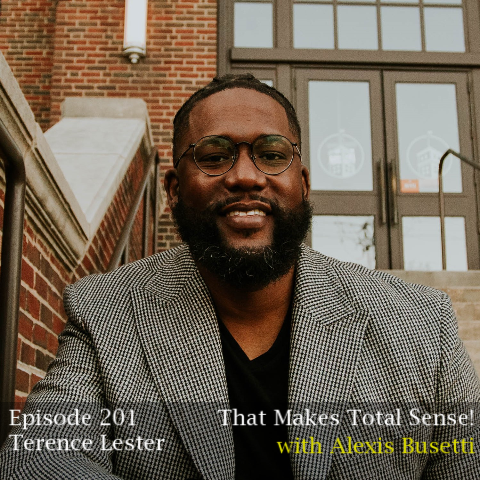
Speaker 1 00:00:06 Welcome to That Makes Total Sense, a podcast dedicated to exploring God's generosity and justice. I'm Alexis Boetti, a Christian aiming to ask good questions and encouraging you to do the same. Every one of us is wired by God to live out generosity and justice. But the how sometimes eludes us that makes total sense is a way for us to get together, posture ourselves as learners, and challenge one another, to practice generosity and justice in a tangible way every day. So, Terrence, the last time we spoke, I did not introduce you as Dr. Lester, because you were not Dr. Lester <laugh>, but, uh, the last time we spoke, but you are now, and so I say Good morning, Dr. Lester. How are you? <laugh>?
Speaker 2 00:01:02 Good morning. Uh, Alexis. I am, I am really well. And I just wanted to say thank you for, um, having me on again and to be able to stand with you in solidarity and serve in this way.
Speaker 1 00:01:17 Yeah. Thank you so much. Um, I do, I do wanna say, um, before we get started, that there are lots of us, um, listening and me, who have, um, you know, followed, followed you on social media for a while, but then there was this, like, major traumatic, um, event in your life. And so I'm gonna name that and just kind of ask if you can maybe give us a little update on how you're doing and how your family is doing since the accident. I know it was a year ago, but this was a major, major accident that caused major damage, um, to your body. And so how, um, how are you feeling n now <laugh> in, in June of, of 2023?
Speaker 2 00:02:05 Yeah. Well, um, yeah, so it was May 14th, 2022. My wife and I had gone out to, uh, dinner, uh, to celebrate a, an achievement that our organization received. And, you know, it was one of those moments where last minute, you know, spur of the moment, um, where we wanted to just like relish in the fact that God was, uh, present and, you know, was doing something special, uh, through how we serve the community. Uh, and we didn't wanna rush past that moment. And so we are at dinner with friends, we're having a good time, and then we leave, and it's around 11 o'clock at night. And I was really tired, uh, just from work throughout that week, and I asked my wife if she would be willing to drive, and she agreed, and I fell asleep in the passenger seat. And, uh, the next thing I know, I woke up with screaming and, um, I was on the ground and EMTs were running over to my body, and I heard one scream out, flip him over to see if he's still alive.
Speaker 2 00:03:19 I glance up and I look at a mango car and I see my wife limping around the car trying to make it over to my body. Um, and I black out again, and I wake up in the hospital with, um, you know, a surgeon telling me that they had to perform emergency surgery, two emergency surgeries, and, uh, 10 hours of surgery. I wake up and, um, the orthosurgeon is telling me that it is going to be a while before I can walk again. And I'm just like, you know, um, just in shock, you know, trying to figure out what is what had just happened. Um, I spent almost a month in the hospital. I get out and Alexis, I'll tell you, like last year this time, like on this exact day, I could not walk. And, um, I just, I remember all of the grief and the loss, the loss of mobility, um, you know, the real reality that I would be living with, uh, a disability and all of that, uh, that came with it. And I, I would say one of the only reasons I was able to make it through, um, was my wife and my children and, uh, my faith in God. Uh, just realizing that although I couldn't move or I didn't have mobility, uh, that my worth never left me.
Speaker 1 00:04:45 Hmm. Terrance, thanks for, uh, thanks for sharing that part of your story. Um, and thanks for ending it that way. Um, I wanna say that was one of the, one of the things that touched me in your book was you say the same thing of, of a friend you met who had experienced homelessness, and he came back, you know, he had gotten a new job and was doing some speaking, and you, and you really named that about him, right? That his dignity and worth didn't leave him when he was experiencing homelessness. And he didn't gain it back when he got a job and was able to do some public speaking gig, um, that he always had it. And, um, and that vein obviously has, has been one of the, one of the foundations I would name of your work, uh, that ability to recognize people's God giving dignity and treat them as if that's the truth about them, which it is.
Speaker 1 00:05:55 Um, but also that was a thread throughout the book that we're gonna talk about today. Um, and one of the unique things at this, at this point, um, you and I are both voracious readers. Um, and so especially being in this where we talk, right? Talk about this kind of thing, a lot about, um, race in America. I'm not gonna say I never learned anything new. That's absolutely not true. I often learn new things. Um, but what struck me about your book was not necessarily new information, but it was a new perspective, and that was you writing from this lens of someone A, who had experienced homelessness, and b who works with people who are currently experiencing homelessness. Um, and, and that dignity that you talked about, knowing that about yourself in, in those times, but also knowing that about the people that you work with and then, and then also trans, transferring that knowledge to this topic of, of racial solidarity, um, is huge. So as we kind of move into talking about the book, I'm wondering if you can talk about how your experiences, you know, the, the, the car accident that you didn't obviously know was coming, but came in literally in the middle of writing this book for you. Um, but the, the car accident, but also your experiences, your work experiences, and your personal experiences that aren't directly related to race, although there's intersectionality, we'll get there, <laugh>. Um, but how did that perspective help give you just a unique way to see this race conversation?
Speaker 2 00:07:44 Yeah, you know, Alexis, I, uh, I work in an organization that is very proximate to individuals who are both unhoused and experienced in poverty. And so that has been, uh, the bulk of my work for the last decade. And, you know, uh, they're three constructions, uh, related to, uh, this idea of poverty as Teresa Gowan defines it's sin talk, sick talk, and system talk, right? Uh, these are like the narrative framings, uh, that people tend to lean into when discussing the subject. And, uh, most often people, uh, view poverty or impoverishment through the lens of sin. So like some type of moral failing, um, you know, a character flaw, et cetera, lazy, don't want to get a job. All of these, uh, type of, uh, negative connotations as it relates to the subject of poverty. And in this, uh, framework, she says, the way that society or individuals has decided that this should be solved is through punishment, exclusion meant right, um, this, uh, marginalization, right?
Speaker 2 00:09:02 And so, um, what I pushed back on, uh, with her work and her research is that we missed the worth talk, right? Um, and what I'm arguing when I talk about this, this subject of worth is that sometimes, uh, we have allowed, uh, the narratives or these, uh, embedded ideas about those who are poor and unhoused to cause us to either one, mistreat them to, uh, wrongly, uh, judge them, uh, based upon stories that we've never been proximate to. And then, uh, in many ways, thirdly, we kind of define their whole existence around some narrative that we have swirling around in our minds. And so, the bulk of my work has been, uh, being proximate to the stories of individuals that society says should be invisible, should be excluded, should be pushed to the margins. And that proximity itself gives me, um, an opportunity to understand the stories of individuals that larger society doesn't have, uh, the time to listen to or has even given the attention to listen to.
Speaker 2 00:10:19 And so, you know, with being proximate to those who are unhoused and experience some poverty, you, you get to meet some of the most beautiful people and you get a chance to understand, uh, that person's, uh, social location, uh, their hi historical shaping, uh, what led them into the plight. Because homelessness and poverty isn't monolithic, everybody has their own unique, uh, arrival into these types of plights. And so, uh, and with that, it, it gives you a greater capacity to have compassion and empathy and, and, uh, be, uh, uh, you know, available to serve and walk, uh, with people, uh, through some of the toughest moments of their lives. Right? And so, you know, while all that is going on, while I started thinking about my own story and my relationship with race, uh, which is kind of how I opened the book, I start to see like these parallels of like how, uh, people experiencing homelessness are treated, whether they're, you know, criminalized in public space, uh, they're overlooked or being mistreated for experiencing homelessness.
Speaker 2 00:11:30 Uh, they're socially excluded, right? For being unhoused. There are, uh, tons and tons of laws. There are over 180 cities around the country that have laws and ordinances around this issue that, uh, criminalizes the very existence of those who are unhoused. Uh, you're discriminated against, uh, for experiencing the plight, right? And then, uh, you're constantly fighting false narratives. And that's the same thing I experienced as a black man, right? Sometimes criminalized for just existing in, uh, public space. We've seen all types of stories, uh, in the news where, uh, people have been called, uh, have, have had the police called on them, uh, for being black. Um, sometimes you're overlooked, uh, for being black, right? Uh, there have been many times, uh, I remember one time, Alexis, I was, uh, giving a talk, right? Um, in this predominantly white space, and we could talk about it later, but I had gone in and the people who greeted me did not know I was the speaker, and they followed me around <laugh>.
Speaker 2 00:12:35 They literally followed me around until they introduced me, and I go on stage. And they felt shame because their prejudice in that environment did not allow them to see me as someone that could contribute to, uh, the community. Uh, sometimes you're socially exclu excluded and being, uh, feared for being black, and you're discriminated against, uh, for your skin color, and you're constantly fighting these like anti-black narratives, uh, that suggests that you're somehow less than. And so, when I saw the intersection of those two, you know, I really felt compelled, uh, during the last, uh, few years, uh, to link my anti-poverty work with anti-racism work, because ultimately, this is what King is describing when he is talking about the triple, triple evils of, uh, poverty, racism, and militarism. Yeah. So I gave you a lot there, but
Speaker 1 00:13:29 <laugh> Yeah. No, it's good. I want, I want it a lot. Um, thank you. Um, one of the things that struck me when you talk about being proximate, um, so, so I wanna kind of just mention two things, but I want you to, I want you to help on the, well help on both of them, but I really want you to talk about the second one. So when you talk about proximity, that is one of those things that I think is often, I won't say necessarily it's misunderstood, but we might misapply that. I think we, historically we've done that, right? So, so especially like, um, conservative white folks will be like, well, you know, like, um, I, some of my best friends are black, or like, you know, we, we just need to have good conversations if we can just sit down and have good conversations and that'll be great.
Speaker 1 00:14:16 Or, you know, um, but my, the, the, you know, the teacher at my son's school, you know, is black or whatever, and we think that because we just have this kind of physical nearness to someone that, a, we're not prejudice, b we don't have any racist ideals, or, you know, something like that. And then of, then of course we have all this, you know, fragility and shame talk, and we can, we can go there too. So, but, but the proximity that you're talking about, I wanna say a is different. Um, it's deeper. There is more, kind of, more to it than what I think we've historically kind of, uh, put on that, uh, you know, on that idea. But one of the things that particularly struck me, when you talk about proximity, you talk about proximity to people and to their history. Yes. And that's kind of this sub, you know, this, uh, subtitle of your book is, uh, how confronting Buried History can Build Racial Solidarity.
Speaker 1 00:15:14 I don't even think we've mentioned it, sorry, this is All God's children, <laugh> <laugh> on Lincoln. Everything in the, in the notes, I think we just kind of got, we just kind of got going, this is all God's children, uh, by Terence Lester, how confronting buried history can build racial solidarity. But so there's this proximity to people piece, which I think yes, as you've described it, and as we can work in it in this way, is super important and helpful. But this added piece of proximity to people's history and how that makes a difference. And I wanna say, I think that you're talking about a people's personal history, even how you just said, you know, when people are unhoused, that's not a monolith. Everyone has a different story for how they got there. So there's this personal history aspect, but there's also, um, a cultural history aspect.
Speaker 1 00:16:04 We can say, when I meet someone who is Chinese-American, I can say part of their, per their history as a people group in the US includes the Chinese exclusion Act, right? When I meet an African-American person, I say, part of the cultural history includes, uh, slavery and Jim Crow. You know, when I meet, um, a person who is Hispanic, but specifically someone, you know, like my family is Mexican, this includes a lot of, I mean, there's current immigration stuff, but there's a long history of the US kind of, I read in one book, they lit the author literacy at having, wanting the us wanting to have its cake and eat it too, when it came to Mexican immigration. You know, there's all of these different things we can name, of course, native am American people have a cultural history that's very, um, just awful and traumatic in, in this country.
Speaker 1 00:16:54 And so, a, we don't hear about those things very much. And there's a movement right now that is looking to make it where that we hear even less in school and our children here, here, even less in school, but that people's being close to people is important, but being, being close to people's history is important. So can you like, elaborate on what that would look like and why that's so important? Cuz I would say this, I'm gonna be done talking here, but that's an another thing that we often hear is, oh, well, that was in the past. Well, it was okay because that was in the past, but why does that, why do we still need to learn those things about one another?
Speaker 2 00:17:39 Yeah. Um, I was, I was invited to this, uh, predominantly white church to sit on a panel to discuss matters of race. The pastor who had invited me, uh, it was him and I, and we were having a discussion. He had just, uh, broken his leg like months back, and he had just started, um, you know, moving around again. Uh, but in the back room before we, we went out, he told me that he was in a lot of pain. Well, he didn't look like he was physically in a lot of pain, but, uh, he told me that, uh, in the back. And so we are on stage. And, uh, he says, uh, similar framing to what you just stated, what do you say to people who says, we've moved past that. And I look at him and I say, um, well, I want you to get up and I want you to jump around and I want you to move around.
Speaker 2 00:18:42 And he says, you know, I can't do that. And I say, well, it looks like everything is okay. And he literally jokingly, like, kind of, uh, nudged me on stage, and everybody got it in that moment that sometimes we are wanting to rush people past the pain that they still may be caring and dealing with. Um, when I talk about getting proximate to people's cognitive proximity, right? Um, and I think cognitive proximity in itself is allowing yourself to challenge the false frames that have been embedded or passed down through generations because you were unaware of the knowledge, right? Um, it's allowing yourself to be immersed in someone's, uh, history in a way that can orient your lens to understand how they are seeing the world, how they are experiencing the world. And it challenges you to reframe some of the ideas, uh, that have been embedded.
Speaker 2 00:19:49 Uh, normally I ask people who taught you that, you know, because, uh, history is mostly caught <laugh>, you know, frames are mostly caught. What through, uh, rhetoric, you know, through speech and through observation, who have, who did you observe, right? Uh, that influenced how you cognitively think about another group of people. The second thing I'm talking about is geographical proximity. I'll never forget, I was talking to, um, a, uh, a, a guy on a podcast, and it is, is his podcast dealing with race, right? And so, um, his whole notion was to create space, uh, for, uh, his, uh, predominantly white audience to come and listen and, uh, kind of like grapple with some of these things. But towards the end of the conversation, he asked me, he says, you know, what would you say, uh, to someone like me, uh, who needs to, you know, uh, stand in solidarity and be in relationship, et cetera?
Speaker 2 00:20:53 And I asked him something very basic. I say, what's your routine? What do you shop? What do you eat? I mean, the whole laundry list. And every place that he's named was at a distance from the very community that he said he wanted to be in relationships with, right? It was a slight tweak in his schedule that put him in geographical proximity where he started to cultivate some of those relationships. And then I talk about it in the book, he reaches out to me and he talks about a relationship, uh, with someone he had, um, established with. And they have become good friends. And, you know, I, I would say this, I wanna read this quote, Alexis, um, it's by Ethan Keller. He says, if you want to be someone's ally, but you haven't been hit by the stones being thrown at them, you aren't standing close enough.
Speaker 2 00:21:49 I'll say it again, if you want to be someone's ally, but you haven't been hit by the stones being thrown at them, you aren't standing close enough. And that's what I'm talking about when it comes to proximity. Uh, proximity is just not some, you know, uh, cliche term that we use, whether in church or other spaces where we talk about this, this intention of being close, but we haven't necessarily taken the steps to understand someone's historical shaping, uh, the social location that they're emerging from, how that's impacting them, uh, both emotionally, spiritually, um, on the inside of themselves, but also, uh, socially, outwardly, you know, where, where they live geographically. You know, I've said this before, I believe, but you know, most times we're talking about loving our neighbors, but we also have to love, uh, the neighborhood and we have to be concerned with the issues that are faced, uh, by that neighborhood, by that neighborhood. And so it's, it's this sort of like getting proximate in all of the ways, right? That we desire to be in solidarity and in relationship with others.
Speaker 1 00:23:03 Yeah. That reminds me of the place I thought I was gonna start, at least according to my notes, which was a actually in the afterward of your book. So these, so, so this struck me in a way that it was just like, oh my goodness, I had never thought about it before. Um, but, uh, Vanta West wrote the afterward and she says, um, <laugh>, someone might be reading this thinking if we're not, um, we're not supposed to belong if we're Christian, we're to be in the world and not of the world. But she says, she goes on to say that she thinks that maybe we have misunderstood these words. I'm kind of paraphrasing at this point. Um, but no, I'm not going to, cuz this is so good. She says, they're not telling us to disconnect from each other, but to have a Christ-like perspective concerning each other and Christ-like love for each other, why would we who are made in the image of God and placed on the earth together be then commissioned by the one who came for all to not be for each other?
Speaker 2 00:24:10 Hmm.
Speaker 1 00:24:11 Isn't this so good? <laugh>?
Speaker 2 00:24:13 Yeah.
Speaker 1 00:24:13 It's so good. Because I mean, I think that that's, that's, now I, I think that that's kind of part of it. I don't think we consciously think that, but what you were just talking about, we're gonna love our neighbors, we're gonna love the neighborhood, we're gonna be proximate in all of these kinds of ways, but at the same time, we really do, we really have misunderstood this scripture some where we sequester ourselves, ourselves and, and we, um, and we, and we kind of keep away. And it's just this really bizarre thing, I think for, for Christians to do. But, um, but we've done it. But Jesus is actually calling us toward each other.
Speaker 2 00:24:58 Yes. Yeah. Yeah. I mean, that whole phraseology of, um, you know, how people use that particular scripture to distance themselves creates more barriers, right? Um, I read that as you are in this world to have a different value system, what is that value system? When I look at the life and witness of Jesus in, uh, Matthew chapter nine, and it says that he comes across people who are weary, who are scattered, who are broken, who are in need, right? Um, who may be struggling with poverty, who may be struggling with exclusion meant who may be marginalized, uh, because Howard Thurman says that Jesus speaks to those who have their backs against the wall because we have that Christ-like value system. It pushes g it pushed Jesus close, right? But he, here it is, we find ourselves retreating. And I believe that God is calling people, uh, to be more proximate and to have be mo the scripture says he was moved with compassion. So my question is, why aren't we moved with compassion to extend tables, longer tables instead of building, uh, higher walls?
Speaker 1 00:26:18 Right? I mean, you could just preach all day and I would <laugh> I'm here for it. I'm just, I'm gonna sit here for it. Um, no, that's good. I just thought it was, I just, anyway, it just hit me like something that had never hit me before. Um, let's stay on this proximity and proximity to people's history for a minute, because if my calendar is right, this episode is gonna drop on Juneteenth. Yeah. And I am like, I don't know, 60 miles from Galveston or something like that. And there may be people, miles, something like that. Pretty close. Pretty close. Um, yeah. It takes about an hour for us to drive down there if we're gonna go. Oh. Um, but, and, and even me saying Galveston, there are people who are listening, who are going, I have no idea what Galveston has to do with Juneteenth, because this history is still buried to a degree, even though it is now a federal holiday. This history is still buried. Um, so you mentioned Juneteenth in the book, if you can give us a short history lesson enough to wet people's appetites so that they can go learn more, um, about this holiday. But I do, I would love for you to talk a little bit about, um, you know, how even that event has impacted how we live with one another now, and the fact that that history has been buried for so for so long.
Speaker 2 00:28:06 Yeah. Yep. Let me ask you something before I start. When do most people celebrate Independence Day?
Speaker 1 00:28:16 Huh? We're coming up on it July 4th.
Speaker 2 00:28:20 Right? Why
Speaker 1 00:28:28 <laugh>? Because now you're gonna make me, now don't make me do this, Terence, because my dad taught history. No, I'm my dad taught history, so don't make me do it, because this was the day, right. The signing of the Declaration of Independence, because the people in us were rebelling against their authorities in Britain. They decided they wanted to, they didn't wanna be under their authority anymore.
Speaker 2 00:28:51 They didn't want to be under their authority. Right?
Speaker 1 00:28:55 Right.
Speaker 2 00:28:56 So they fought for what their liberation.
Speaker 1 00:28:58 That's right. That's right.
Speaker 2 00:29:02 Africans who were enslaved in the US were still in enslaved when they were fighting for their liberation from Britain. Right?
Speaker 1 00:29:12 That's right.
Speaker 2 00:29:15 Now you go years later and there's a civil war, right? And in, after the Civil War in 1863, um, you have Abraham's Lincoln, uh, signing of the Emancipation Proclamation. Right? To free what? Who the enslaved, those who are enslaved.
Speaker 1 00:29:37 That's right.
Speaker 2 00:29:38 So those who are enslaved are getting their liberation, but not really, right? Mm-hmm. <affirmative> from enslavement only to find out, you know, that those who were still enslaved in Galveston, Texas had not heard that they were free. So they did not hear those people who were enslaved in Galveston until 1865.
Speaker 1 00:30:05 Say that again, please. We need to know how many, we need to hear how many years these were separated.
Speaker 2 00:30:10 It's a little, it's a little over two, two years.
Speaker 1 00:30:12 That's right. Did
Speaker 2 00:30:13 You imagine having someone declare your freedom, right? Your liberation, and then you not realizing that you have been liberated or set free until a little over two years later. That's why we say Juneteenth, June 19th, 1865 was when the rest of us found out that we had been liberated. And, uh, you know, uh, there's still some t-shirts and some means that go, go, go around that say free ish, right? Mm-hmm. <affirmative>, mm-hmm. <affirmative>. We are still dealing with, uh, some, uh, some residue from enslavement, from Jim Crowism, from all of the things that were, were structurally and system systematically set up, uh, for b black people not to really thrive. Right? And so, if you don't know your history, uh, Juneteenth is one of the reasons why black people actually celebrate Juneteenth and not really get all excited about July 4th is because during July, on July 4th, we weren't free, right?
Speaker 2 00:31:24 Mm-hmm. <affirmative>. Um, and then you think about, uh, Alexis, it took 156 years, right? From that date, I just named for larger society to recognize or come in contact with this information because it just recently became, uh, a national holiday. So now <laugh>, I, you know, I still talk to some of my, um, uh, my friends who are white that say, you know, I'm, I'm grateful for the holiday, but really don't even know the deeper meanings by how, by why they are getting a day off on Juneteenth. Um, which is, uh, very ironic. And then I also think about my K through 12 experience and how that history wasn't taught when I was in high school. You know, when I was in middle school, when I was in elementary school, it wasn't until post K through 12 where I started to develop my own independent scholarship and read books from people who identify with my existential experiences that I came in contact with this information.
Speaker 2 00:32:34 And here it is today, uh, we are starting to see this, um, it's almost reminiscent of, uh, black codes where, um, you know, uh, people were kept from learning, uh, certain parts of their history or even learning in general, uh, being able to read and write and encounter information in a way that would empower them to make them stronger. And we started to see, uh, these things happen all around the country again, where school system has systems have banned books, right. With this critical information in it that will give people that cognitive proximity that we were actually talking about earlier. So it's, you know, it's important that we not only acknowledge that, but we understand that history, so we don't repeat it. So we have an accountability system in place to say, this was done and it did not work. And not only did it not work, it harmed people, you know?
Speaker 1 00:33:38 Right. When you say your K through 12 experience, I, um, I was in my thirties when I learned about the Tulsa massacre, which you also name in the book, and that's, that's particularly significant for me because I went K through 12 in Oklahoma <laugh>. Like how many years of state Oklahoma state history did I have just to, I mean, this was one of the biggest massacres in our country's history Yeah. Happened in my home state. And again, as you mentioned, it wasn't in my K through 12 public school experience that I ever heard about it, ever. And, um, and then, you know, that even, you know, that one in particular, I think when we're, when you were talking about, and thank you so much for sharing that example of your sharing the stage with that pastor who was, who was in pain. Um, you know, because one of the things that we, I've talked about on the show and had some guests, but is about, um, the wealth gap, uh, among black people, individuals and families, and white individuals and families in the us.
Speaker 1 00:35:01 And then you go, yes, take Tulsa as a case study on that, where this community lost everything. And because it was considered at the time, quote, a riot, the insurance companies didn't have to pay them. So they lost everything with no hope of recovery. You know, if, if, if, if my home were to get destroyed by a fire, I would have insurance to cover it. But because of how it was, you know, coded in the, in the law enforcement system at the time, the people who lost everything, didn't, didn't, weren't able to recover any of that through insurance, and their businesses were gone. And that's just one example. The people who had earned so much had to start completely over. And this wasn't one isolated incident, right? I mean, there were, there were so many of these throughout the country, and that's just like, kind of the worst of the worst that doesn't even talk about redlining or, you know, any of this kind of thing. Um, and so when we see, we do have to get approximate to people's history to understand what's happening with people now, um, yeah. And so much, so many times We miss that.
Speaker 2 00:36:17 We miss it. Um, I got chills, uh, hearing you talk because, you know, imagine, you know, having a home, having, you know, a business, uh, we're talking about in the Greenwood District of Tulsa, um, and you are starting to feel like you, your, your existence matters. Your contribution to the world and society and people around you matter. And out of nowhere, because people, uh, who were inflamed by white supremacy and racism thought that you and your existence and what you've built and what you've established needed to be burned to the ground.
Speaker 1 00:37:15 Ground, literally
Speaker 2 00:37:17 Ground. Literally, people were, um, murdered families and businesses lost everything. And even if you travel to Tulsa, Oklahoma, right now, that whole entire area has been gentrified. Uh, there are still generations of black families that have not received reparations for, um, the loss. And you think about generational trauma and generational pain and collective pain and what that does to black people. Uh, and then you talk about redlining, uh, drawing lines around neighborhoods to concentrate poverty, uh, which is one of the things I'll be discussing. Uh, next week, I'm doing a lecture at, um, um, uh, Simmons College in Louisville, Kentucky, and I'll be addressing the fact that US history, right? Uh, well, most sociologists and political scientists say that there are two mass homelessness eras, right? And, uh, US history, it's one that happens around the Great Depression. The other one happens underneath, uh, the Reagan administration, uh, with the reduction of tax cuts and, um, the deinstitutionalization, which causes chronic homelessness, what people know homelessness as right now.
Speaker 2 00:38:42 But, uh, most people don't know that the first protest for homelessness happened in 1932, and it was mostly white veterans that marched at the White House, right? Because they were tired of not having access to resources and being, uh, living in encampments, uh, near Hoovervilles in Hoovervilles. That's what it was defined as, right? Um, and most people don't understand that. But fast forwarding, most, the most, uh, people who are unhoused and experiencing poverty right now are black and brown people. You know? And most people don't even make the connections that the first people who were unhoused in the new Americas were indigenous people. This was their land, you know, uh, Africans who were unhoused, uh, from Africa and brought to the New Americas right? And experienced homelessness. Right? And then you go through enslavement, and then you go through Jim Crow, which a part of Jim Crowism, uh, produced, uh, this, uh, redlining, right?
Speaker 2 00:39:48 Where it was, uh, a law that kept black people from accessing home loans, which also is a form of wealth owning land, right? The ability to pass down wealth through generation, through land, the ability to be able to have somewhere stable, to call your own to reside, et cetera. Right? We are still seeing residue of that history impact black families, brown families, even to this day. And most people don't even focus on that part of the history as in relationship to homelessness. They don't even, uh, lift up the fact that, uh, you know, uh, by definition that it's more than two homelessness eras. There was a homelessness era, uh, before the, the Great Depression, which was enslavement and the colonialization of these, uh, of this land today. Yep.
Speaker 1 00:40:44 You know, when you, when you said under Reagan, my husband and I were having this conversation actually just this morning, and, um, and he was saying how it was interesting how in the spaces that he grew up, which were generally religiously conservative white spaces, Reagan is the hero. Uh, Reagan is the hero. And I was instantly flashback to, there's a, there's a, there's just like one line in the movie, Selena, where they're, uh, the, they're portraying where the family's restaurant has gone out of business. And she's kind of, the mom is kind of speaking in Spanglish, and then she says something about Reaganomics, right? As they, as they shutter their restaurant, because black and brown folks in the US did not experience Reagan's presidency in the same way or the aftermath even of Reagan's presidency in the same way, um, that other folks did. And on that note, and you talked about this area of Tulsa being, having been gentrified, talk about the story of the guy in your, that you write about who had moved into, I, now I forget which city it was, but had moved in and, and constructed. I think he either remodeled or constructed a house before the area became gentrified, and who, who, now, I can't remember who it was, but anyway, but he experienced proximity because he started listening to his neighbors
Speaker 2 00:42:11 Yeah.
Speaker 1 00:42:12 This after the gentrification started to happen.
Speaker 2 00:42:14 Yeah. This is, uh, one of my good friends. He's, man, he's, uh, in his late seventies now, but he had been doing, um, advocacy and justice work for 40 years through an organization. He found it and, uh, traditionally trained as a psychologist, right? And so I think it was in 2016 when I did a campaign, I walked across the country, uh, to do this documentary. He was one of the people that I interviewed in the film, uh, voiceless. And he basically said that before he had moved into this neighborhood, he had never heard of the term gentrification. It wasn't until he started going to the same churches and worshiping alongside those who were poor in the community. He started building relationships, uh, being g in geo geographical spaces with, uh, people and listening to them that he encountered prayer requests from the people who were sitting on the, on the pew next to him in the church saying, please pray for me. They've just doubled my rent. Please pray for me. The landlord is talking about selling my house, and that's gonna force us to move. And he says, while he was getting richer, because he had access and privilege his neighbors, when he says neighbors, he's talking about the people he worships with at this point are getting poor. And he said, it dawned on him that, um, his blessing became their curse.
Speaker 1 00:43:54 I mean, it, it would, it's almost a miracle that anyone would experience that realization. But I would say it just feels almost impossible if you don't have relationships with people around you, like you just described. Yes. If the only other people we're worshiping with, you know, talking to the coffee shops, going to the gym with whatever are people who experience the same privilege as we do, then, you know, we just compare investing notes <laugh>, we don't.
Speaker 2 00:44:33 Right.
Speaker 1 00:44:33 We don't understand. Um, we can't have those realizations. It's, it feels almost impossible. I mean, short of the Holy Spirit, obviously, but it just feels almost impossible to even have those understandings and realizations. And if we don't have those, we can't do anything about it.
Speaker 2 00:44:51 Yeah. Yeah. I mean, that's exactly right. Um, I talk about, uh, solidarity in, in terms of a framework, uh, in, in the book. And, um, the very first thing in that framework is, uh, la lamentation is lamenting, right? It's about creating this type of space where you can hear the lament of others and you can join them in that lament. And let me tell you why lament is so, uh, powerful. Because lament comes straight from the fears, the angst, the sorrows, the grief, um, the challenges, the adversity. I mean, you fill in the blank of life. And this is outflowing from a person's center, their innermost sacred part of their being, their their, like, their heart, right? And being proximate to that. There's no way you can argue someone's lament because it's a lived experience. And if you stay in close proximity long enough, people's laments around you become your own laments because you're in connection with those persons who are lamenting. How could you not cry like Jesus when Lazarus died?
Speaker 2 00:46:19 <laugh> Jesus is so proximate to Mary, Martha and Lazarus that when lost occurs, the most powerful, one of the most powerful verses in the entire Bible is just a few words. And Jesus wept. I mean, talk about lament. It's, it's profound, it's powerful, but it builds the types of bridges that we desire to see, because it means that we are standing in solidarity with people who have the courage to lament, right? And then you listen to others. You can't listen to o others that you haven't heard lament, right? Sometimes we want to listen to others only to respond, but we haven't really heard their cries and how life or systems of injustice is affecting them in ways that's producing the outcry, right? And I think through that listening, we are we creating this type of space where we listen to others and we remove the fear of them having to challenge or face censorship, right?
Speaker 2 00:47:34 Because that's the other thing, like, if we are only listening to others to edit them, then we have, are are also contributing to why they are lamenting. And then you have learning from others, right? It's, it's this genuine desire to not invite people to your table, but to say, I'm going to descenter myself enough to go sit at someone else's table, right? You're taking time, uh, to be invested in, in a way that is not putting a burden on people, but you're, uh, being proximate enough where that learning happens because you're in relationship, not because you're seeking out people who you could just pull on and tug on, but when you're in relationship with people, things that are, are, are, are their lived experience becomes a classroom because you're close in proximity with them. And then the immersion of yourself, uh, I read a quote earlier that says, if you think you're an ally, but you haven't been hit by the stones that's being thrown at those you say you're ally with, then you're not standing close enough. Like, have you taken time? And I'm not just talking about one brief event, I'm talking about time after time, creating it as a rhythmic lifestyle to immerse yourself in the world of other, that's, that's then how you show compassion and have empathy. That's how then you learn how the ways in which you are needed to stand alongside others. And that's when you can fondly use your voice.
Speaker 2 00:49:05 And I mean, just that whole funnel of standing in, in solidarity and all of those happen, uh, at different moments, but you kind of orient yourself and it's all like scripturally based, um, to have this posture, to want to love neighbor. And when Jesus is saying love neighbor, he is not saying love people just like you, <laugh>. He's saying, go to places, um, and be around people who, who who isn't like you. And that's how you can measure if you're love is truly love. Cuz anybody can tolerate someone just like themselves.
Speaker 1 00:49:46 Terrance, you're almost, you're almost sounding like Jesus here. You're almost, I mean, it's just, but it's like, yes, yes. And then of course we know that Jesus takes it even a little bit further, but I could hear his words and your words of saying, if you just love the people who love you, even the gentiles do that. Who cares, right? <laugh> the people. And that even the people who dunno God do that. But as we named before when I was talking about the, the afterward, it is, um, we're, we're called to have a different value system. And included in that value system is loving people who don't look like us. Who, who even Jesus says, even our enemies, which I like. There's anyway, there's always gonna be space for me.
Speaker 2 00:50:45 And to learn to love them also, uh, just insert that someone else's history is not your enemy.
Speaker 1 00:50:54 Oh, say, say more. Say more.
Speaker 2 00:51:02 So you think about it like, could you imagine someone saying that someone that something, a book, a documentary, a series, um, that contains your historic, your historical shaping, your history is not good enough to be taught. You have to posture yourself and orient yourself where you start to view someone else's history as your enemy. As your enemy. Give me the person leave the history is the same thing as saying, I don't want none of the person, because you can't receive people as Father Gregory Bowl says, in love unless you receive the whole person. So, you know, I would, I would just submit that not only did Jesus say, um, to love your enemies, but I would challenge people to think of people who they haven't loved because they view their history as an enemy.
Speaker 1 00:52:15 Okay? So can I just say off of that for a second? It just made me, it just made me think about this. And I, this is like completely off the cuff, but in, in evangelicalism, one of the things we love, and I'm not judging it, I'm just saying this is one of the things we love is somebody who has had an actual come to Jesus moment. And we love it, particularly when their history is a little sketchy. I'm just gonna say that. I'm just gonna throw that out there, Lord. Right? Like, we want to hear the story of the drug dealer who has come to Jesus. We wanna hear the story of the addict who has come to Jesus, of the person who used to be in a gang who has come to Jesus. We want to hear all of that because we can see this juxtaposition and it makes us appreciate the grace of Jesus even more.
Speaker 1 00:53:07 Right? This is not a bad thing, I'm just naming the kind of the phenomenon. Like we love that. And when you, that came to my mind when you were saying someone else's history is not your enemy. We have some hard things in our history and just like we can look at an individual and say, this was, this was not in vain. God has shaped and formed this person even through their experiences that were traumatic, that were tough, that were sometimes evil, um, and has brought them to a place where they're being formed by the Holy Spirit. And these things that they experienced were not in vain. God is utilizing those in their life, right? That
Speaker 2 00:53:56 Will preach
Speaker 1 00:53:58 <laugh>. If we can appreciate that about an individual, why can we not appreciate that about our shared hard history
Speaker 2 00:54:08 That make, oh my goodness. I mean, that makes me think about the eschatological hope of those who were enslaved. Mm. That sacrifice their lives in hopes that future generations, future seeds, someone like me could be free enough to speak. It makes me think of my 91 year old grandmother who is still alive and in her right mind who just visited my, um, art museum at, uh, Lu Walls, which she's the oldest person that has ever come through. She stood inside the museum and she talked to me. She's my living, uh, historical epistle, right? Um, who needs a podcast when you can hear it straight from your grandmother, right? But she's telling me how she wasn't able to go to museums. There's certain stores that she wasn't allowed to work in. There's certain parts of town she remembers vividly drinking out of colored water fountains and being afraid to go into certain parts of town and, and all of the things that she fought through. And then in this brief moment, she talked about her history, but then she started to affirm my future, right? In a way that, um, made me appreciate where she had come from, knowing that I come through her lineage, right? And that her sacrifices, her support, her words of wisdom, all matter because God was in it all right? And I'm able to do what I'm doing because I'm standing on the shoulders of someone who experienced a part of history that other people are trying to bury.
Speaker 1 00:55:59 That's right. That's right. Terence, thank you. I'm gonna let you wrap us up and uh, you can go wherever you want cuz I'm just gonna be real. We got to maybe half of the notes <laugh> that I had, <laugh>. That's why people are like, get the book. It's good. Get the book. Um, I I will just like bullet point a couple of things that we did not, not get to. So while, while you're thinking about how you wanna end us, um, we didn't talk really at all about, like, we talked about it, we talked around it, but we didn't talk about, um, power. Ooh. Like especially in the church, um, about yes, being nearsighted, but you have a whole, a whole section on that. That was crazy. We didn't talk about your experience of being on staff in a predominantly white church and what that looked like, um, for, for you.
Speaker 1 00:56:54 And, you know, I would, I would encourage people who find themselves in maybe a predominantly majority cultural church to read Terrence's book and, um, and learn from your experiences of behind the scenes. That's all I'll say about that one cuz there's a lot of there that we can learn, um, from that. So anyway, that's a few bullet points that I'm just like looking at without really scouring my notes. Um, so it's definitely a worthwhile read to get, um, to get all of those things too that we didn't talk about. But where are you gonna, where are you gonna end us?
Speaker 2 00:57:28 Yeah. Um, wow. I was, I was reading, um, Philippians, uh, chapter two in verse three and four, and it says, let nothing be done through selfish ambition or conceit, but in loneliness of mine, let each esteem others better than himself. There is a lot of, um, ambition and conceit as it relates to the struggle and the, the struggle for whose history, whose narrative that needs to, to rise to the top. But if we are to take the posture of Jesus, we need to esteem others. We need to consider others and sometimes better than ourselves to remind us that we are all, um, uh, created in fashion than the image of God. But then verse four, it says, let each of you look not only for his own interests, but also for the interests of others. And I just think that's a, a huge powerful message, right? That a lot of the division that we see is because people have been full of pride trying to protect their own interests and those interests steps on the history of other people.
Speaker 1 00:59:12 Gosh, thank you so much Terrence. I appreciate it. Um, again, I'm gonna name the full book now, <laugh>, since we didn't get to it till late. This is, is by, um, doctor Dr. Terrence Lester. Uh, it's called All God's Children, how Confronting Buried History Can Build Racial Solidarity. Now, I feel real bad, tell me the release date on this. Oh my goodness. June 20th.
Speaker 2 00:59:38 Yeah, it's the day after Juneteenth.
Speaker 1 00:59:41 Come on. Alright, this is fantastic. So again, I now, now I'm gonna have to adjust everything, even if it wasn't there, so that this does release on Juneteenth and then I can say, get the book tomorrow. Um, you know, it'll be the last day to pre-order on when this releases. But Terrence, I'm so grateful, um, for you coming back on again. I'm so grateful for your work and for your words. Um, just for, just for how you show up. Thank you so much. Uh, it's gosh, so greatly appreciated here.
Speaker 2 01:00:11 Uh, I'm, I'm honored and, uh, grateful to serve alongside you today. I can't wait for people to hear this one.
Speaker 1 01:00:18 The links for all the resources mentioned in today's episode can be found in the show notes, music and podcast production by Seth Busti. Be sure to give us a review on iTunes and subscribe at your favorite podcast listening app. You can also visit us at. That makes total sense com.