Episode Transcript
Speaker 1 00:00:06 Welcome to That Makes Total Sense, a podcast dedicated to exploring God's generosity and justice. I'm Alexis Boetti, a Christian aiming to ask good questions and encouraging you to do the same. Every one of us is wired by God to live out generosity and justice. But the how sometimes eludes us that makes total sense is a way for us to get together, posture ourselves as learners, and challenge one another, to practice generosity and justice in a tangible way every day. Well, John, I didn't tell you this before we hit record, but a, I love reading books that journalists have written, <laugh>.
Speaker 2 00:00:52 Why is that?
Speaker 1 00:00:53 I lo I feel like it's one of my favorite things. So I recently, um, had John Ward on the podcast in his recent book Testimony. Um, but I think that I love, and this, this was, he wasn't the first one, but memoirs, but also, um, biographies and also just stories maybe about, or books may be about a, a story. Mm-hmm. <affirmative>. And this is why, because I am not a history buff. I kind of hate it. Like I can't make myself sit down and do it and read it. But when I read these kinds of stories written by journalists, you guys have such an knack for inserting the history <laugh>. And it's like, it feels like getting the medicine with the sugar. You know? I'm like, oh, I'll Dr. I'll drink that. You know, <laugh> John's trying to gimme that. I'll drink. I'll take that. And, um, and your book felt like that to me. You know, you covered a lot of your life and your life covered a lot of this, um, of this kind of history in, of, you know, race talks of racism, mental health, you know, even religion, um, church life, all of that kind of stuff. And I got bits and pieces of that history through your story. Mm-hmm. So I learned a lot, but it didn't necessarily feel like I was reading a history textbook, which is not a bad thing. It's just not necessarily my thing.
Speaker 2 00:02:14 <laugh>. That's good. That's, that was deliberate on my part, so, yeah.
Speaker 1 00:02:18 Well, you pulled it off, I think, in an incredible way. So thank you so much. Now I'll say this, I love reading books by journalists, but I do feel slightly intimidated interviewing journalists since this is what you guys do, <laugh> for a living. So bear with me.
Speaker 2 00:02:36 That's all right.
Speaker 1 00:02:37 I think it'll be
Speaker 2 00:02:37 Hard to interview. It's hard to interview people. So, but just think of as a conversation, like, that's what I'm saying, just ask what's naturally occurs to you, like, you know, questions you naturally have. Nothing's off limits.
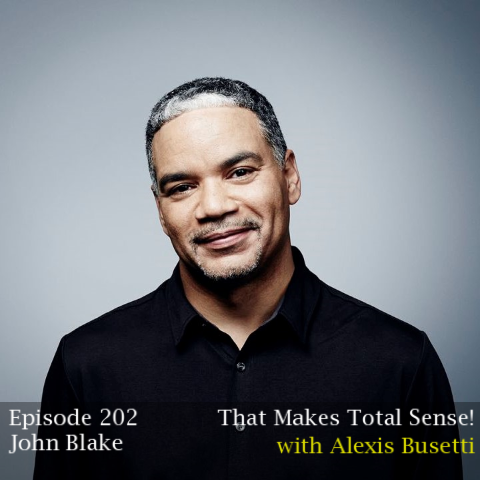
Speaker 1 00:02:49 There we go. So we'll hit it then. Okay. So if people haven't figured it out yet, I'm hitting sitting here with John Blake from c n n. Uh, he has written just an incredible book called, more Than I Imagined, what a Black Man Discovered about The White Mother. He Never knew. And, and I wanna just say like, Abram Kendi endorsed this book, and at the top, the little quote that they pulled from his endorsement, um, it, it reads, reads like a thriller, but is packed with pockets of compassion and wisdom. And I was like, oh, well, I don't even have to open. Like, yes, I wanna <laugh>, I'll read that. Of course, if he'll talk to me, I'll talk to him. And it really is, thank you. Like this, it reads like a thriller. I think I told you earlier, I read it at the pool cuz it felt like a novel in, in some ways. And you're just an excellent storyteller. Um, but I do wanna pause there and say that I wanna thank you for this because as impactful and as as, as well as the book reads, I want to just say upfront, this is not a fictional story,
Speaker 2 00:04:01 <laugh> No, no.
Speaker 1 00:04:03 This is your story. Right. And, um, and I don't want, you know, for me as a reader or for, for listeners to kind of just consume this as if we're talking about a novel or a thriller or something like this, because this is your story and all of the twists and turns and losses and gains and, and loves and griefs, um, are things that you've lived through and that you're learning from. Um, so maybe let's start there and we'll just say, I'm grateful and at the same time, why share this?
Speaker 2 00:04:41 Why, why share this story?
Speaker 1 00:04:42 Yeah. Why share this with us?
Speaker 2 00:04:45 Well, there's a personal reason and there's more of a professional reason. The personal reason is, um, you mentioned, uh, kendi comparing it to a thriller. I kind of thought of the story more, almost like a mystery, a detective mystery where I'm trying to figure things out from the very beginning of my existence. And the idea, uh, for began when I went back to Baltimore, my hometown in 2015, to cover the violent protest that was big racial protest slash uprising, rebellion, whatever you wanna call it. And my neighborhood went up in flames, NA, national Guardsmen were out, martial law was called. And I remember going back there to cover the event for C N N and seeing my neighborhood go up in flames because of racism. And yet at the same time, I knew that the white and black members of my family were coming together despite the racism, this long history of racism that had divided our family.
Speaker 2 00:05:44 And I wanted to know how did that happen? How did we become a family? Because it was a mystery to me. Um, I had white members of my family who thought that black and white people shouldn't, uh, be raised together. They used the N-word. One of them physically assaulted my father. They wanted nothing to do with me. And yet we became a family. And plus, you know, I wanted to know about my mom. Um, my mom disappeared from my life not long after I was born. And I had no memory of her. I didn't know what she looked like, didn't know the sound of her voice. There was no picture of her around the, uh, house. And only the only thing my family would tell me is that your mother's name is Shirley, she's white and her family hates black people. So I had to figure that out as a kid.
Speaker 2 00:06:31 So that's the personal reason. The professional reason is that I've been writing about race for about 25 years in this country, and it's exhausting. And I've never seen it so bad as I've seen it now. And the reason I think it's so bad now is I feel like, it seems like there are a lot of Americans who believe that racism is just a permanent part of our life, that we can't get past it. That these divisions are permanent. And I was like, wait a minute. My story says otherwise. Um, I've seen people change in ways I never expected in my family, so I thought it was worth sharing.
Speaker 1 00:07:06 Yeah. Thank you so much for that. Um, so your mom who disappeared from, from your life shortly after you were born was a white woman and your dad, who you did know, but was also absent in many ways in your life, especially as you were growing up, was a black man mm-hmm. <affirmative>. And your dad was, again, I'm, I'm trying to resist the urge to call your dad a character in the book, but I read <laugh>, but I read him as a character. Yeah.
Speaker 2 00:07:36 He's very colorful. Yeah.
Speaker 1 00:07:38 But your dad, um, I wanna kind of talk about him for a minute because what was interesting to me about your dad is how you introduced him in the book. I, I think if I'm recalling correctly, he kind of had the white is right attitude, I think is what you say, um, kind of at the beginning. Yeah. And, and I want I want you to explain that a little bit because as we get to know your dad more throughout the book and, and understand some of his experiences throughout the book, um, I realize how that must have been true in some ways, but also how your dad had just a very unique and kind of wise perspective given his experiences as, um, as a sailor. Right. And what, what his experience was like in the military, especially during that time before the rest of the United States was, um, you know, was desegregated. So, um, can talk about maybe what you learned about race and race relations from your dad.
Speaker 2 00:08:48 <laugh>. Well, my father was a really colorful man. I, I tell people my job, I've met so many celebrities. I mean, I've interviewed Nelson Mandela, Charlton Hest, I mean celebrities, actors. But I feel like my father is the most interesting person I've ever known. He had so many different dimensions. And to answer your question about what I learned from him, I think one of the things I really learned from him, which I, this is something I couldn't really understand as a kid, is, um, that he lived with a certain amount of freedom that a lot of black men didn't live with during his, during his era. So my father was born during the Depression. He grew up in a segregated United States, but yet at the same time, he would take all these chances. He felt like if he wanted to go and date a young white woman, even though interracial marriage was illegal in Maryland and much of the country, he was gonna do it.
Speaker 2 00:09:47 And so as a kid, I couldn't understand where he got that kind of freedom and courage from. And then later on I began to understand that part of it was because of his job. It was a very unique job. He was a merchant marine, meaning he went on these ships and he sailed around the world, often through war zones. So he, when he was on these ships, he was on a ship with white men. And because of the nature of the job and the isolation at the sea, they didn't mimic a lot of the racism that you see on weight on stateside. So on, on the ship. The only thing that mattered wasn't a man's skin color. It was, was could you depend on him if your life was in danger? And I think that created a kind of a, he was accustomed to treating, being treated a certain way.
Speaker 2 00:10:34 And I tell people, the most integrated space for a black man in the mid 20th century was the deck of a merchant marine chip. So my father had this freedom. He wasn't intimidated by white people. He wasn't also consumer than his bitterness and hatred toward him because he knew them as friends, as individuals. And that was so rare. And that's one of the things I learned from my father, that there are things you can only learn when you're in a relationship with people, as you know. So he, he really helped me with that. And, uh, he, he's also just incredibly brave person.
Speaker 1 00:11:07 Yeah. Um, I gather that, and I really love the way that, um, that you honored really your whole family, uh, thank you in this book because, um, you know, none of us are perfect people and we all have things that we wish we could change, things we wish we could take back, character flaws, all of these kinds of things. And, um, and you really just wrote of your family, including some of those things with a lot of dignity and respect and honor paid toward them. And, and I really appreciated that. Um, and I feel, and I felt that when you, when you wrote of your mom too. Thank you. And, and even with your, your parents' relationship. So I asked you ahead of time about spoiler alerts. So I'm gonna, I'm gonna try and be real careful, but this is one that you said, ah, I've written about this publicly, so it'll, so it'll be okay.
Speaker 1 00:11:59 But, um, part of the mystery of this book was what happened to your mom mm-hmm. <affirmative>, where was she? Where did she disappear to, um, you know, what became of her? And you realized that I think maybe in your, if I'm getting the timeline right, you'll have to correct me if you were a young adult or a teenager perhaps, when you, when you, when you met mm-hmm. <affirmative> your mom in, um, when she was inpatient for inpatient mental health care mm-hmm. <affirmative> mm-hmm. <affirmative>. And how can, can you talk about maybe what you learned from your mom about, about mental health? Yeah. And, um, and the things that surrounded that, because as we just mentioned with the, the, with the racism there, your dad grew up, it came of age in a very kind of specific timeframe. But your mom as well, um, and you as well, um, you know, we talk about mental health much differently in 2023 than we did when you were a teenager or a young adult.
Speaker 2 00:13:09 Yeah. So it's a little bit more context. So I met my mom for the first time when I was 17. And it was a completely unexpected meeting. I I thought my mom had either died or she just didn't want anything to do with me because I had never heard from her or her family. And so I was on my way to college at that point in my life, and I would totally embrace my black side. I didn't wanna think about the white side. And then one day my father said to, you, want to meet your mom? And three days later I, along with my younger brother, Patrick, we were driven to this really menacing looking brick building. And we would guide it into a waiting room. And our mom came out and we saw this thin white woman. And she had these like kind of goodwill hand-me-down clothes on.
Speaker 2 00:13:56 And when we met her, and she came up to us. And for her, there was no embarrassment. She was just so happy to see us. She hugged us. I didn't know what to do. I had never even used the word mom before, but it was, then I realized we were standing, we were standing in the waiting room of a mental institution. And no one had told us, they didn't even tell us on the day that we were driven out there, that that's where my mom was. And part of the reason I think they didn't is because I met my mom around the mid eighties. Uh, people didn't talk openly about mental illness. They didn't know how. And I don't think my family didn't know how. Now I spent a lot of the book talking about how that meeting impacted me. Like how I would have to get to know my mom, how, how I would have to see her beyond her illness.
Speaker 2 00:14:42 But one of the things that was really obvious to me that very first meeting was that it immediately began to shift my racial attitudes. So in the world that I grew up in inner city, all black Baltimore, nobody like white people. And we only saw white people as like these abusive police officers or people who had things that we didn't. And I thought that no white person could understand what it meant or couldn't understand what it meant to be black, to be treated a certain way, just because of the way you were born and how you looked, that you would be treated with contempt to be looked down upon. But when I went into that mental institution, and this was a very specific type of mental institution, this place had a notorious reputation. They would chain patients to bids, they would subject them to medical experiment. So my mom went through hell, I could sense that immediately when I met her. And so for the first time in my life, I was like, wow, I've never seen it. I've never seen a black person suffer like that. I remember thinking that when I saw her. And so for the first time in my life, I began to have empathy for a white person. And it came because my mom had this severe form of mental illness called schizophrenia.
Speaker 1 00:15:56 Yeah. Thanks for sharing that. Um, I think later in the book, you, you name that your mom knew what it felt like to be marginalized. Yes.
Speaker 2 00:16:06 Yes.
Speaker 1 00:16:07 And that was really powerful. Can you, can you elaborate on that a bit? Because you did end up forming a bit of a relationship with your mom after
Speaker 2 00:16:14 That and Yeah. I, I, I, I, it took me probably two decades to really see her for herself and not her illness, because that's so difficult because as a young man, when I met her, I, I immediately became a caretaker. And then in a certain level that I felt resentful, because you're supposed to be my mom. I'm supposed to, you're supposed to look after me. But that couldn't, that could never be. So I had to become a caretaker. So it took me a while to, to, to see her for who she was. And so, to give you some perspective on her, she was a, a 20 year old working class Irish Catholic woman when she gave birth to me and my brother. And again, interracial marriage was illegal. It's hard for people to understand today how risky it was to have interracial relationship. Black men were killed for walking with white men in public like my father and mother would do.
Speaker 2 00:17:15 In fact, when my father first tried to visit my mom, he couldn't even get a cab driver to take 'em over there because it was too dangerous. So I would always think that my father was a real, uh, a real brave one. But my mom was just as brave because she defied her family. She defied her community. She defined a whole time to see that her common humanity with, with, with people, with black people. She didn't, you know, she could imagine a world where people weren't hung up on race. It was kind of weird. She had this mental illness, but when it came to race, she saw much more clearly than 99% of white people of her era. So she was really something. And as I got to know her, I could see that that same defiance, that feistiness was still there, even with her illness.
Speaker 1 00:18:02 Yeah. Thank you for that. Um, I wanna stick in that timeframe Okay. Of your life, because, um, you were about to leave for college when you met your mom and you went to Howard
Speaker 2 00:18:16 Mm-hmm. <affirmative>. Yeah. And
Speaker 1 00:18:18 I loved when you talked about that. Um, I have a few friends who have attended, um, HBCUs and I enjoy hear. I I love hearing about other people's college experiences because I look back at mine with such fondness and, you know, still have some of my best friends now are ones that I met when I was at university as well. Um, but I want you to talk about your experience at Howard for a minute. How it, first of all, the, um, kind of the surprise of your admission, your, your own surprise of your admission, but also what the difference that that, I mean, I don't remember how, how long is the, the, the train ride? How long is the drive from Baltimore to about
Speaker 2 00:19:05 40 minutes? About 40 minutes.
Speaker 1 00:19:06 Right. So, so the, so the difference, you know, these, these two, these two geographic areas juxtaposed, um, you know, sitting next to each other, what you experienced as you entered Howard, and then even how you ended up, um, how you ended up staying.
Speaker 2 00:19:29 Well, for me to go to Howard, it was only a 30 minute drive. Oh, a 40 minute drive to DC from Baltimore. But it, it might as well have been bluto another planet. Um, what I experienced was, even though I went to this elite black university, I mean, Howard is the Kamala Harris, for example, was one of my classmates. Howard is like the Harvard of the black community. All these big shots, Andrew Young, all these Thurgood Marshall all went through Howard. And so when I went there, I experienced not so much, uh, race shock. I experienced class shock. I had never been around upper class wealthy black people before. So that was part of the shock when I went to Howard. And it was such a difficult transition for me that I almost flunked out because I didn't feel like I belonged there. Cuz I grew up poor in inner city.
Speaker 2 00:20:21 But also, secondly, what Howard really taught me, another lesson. It was about race. When I began to meet all these affluent black folks, most of them went, almost all of them went to these integrated high schools. And, and I began to look at their yearbooks. And I was like, wow. I thought that growing up in Baltimore, which is supposedly the north that I grew up in, a really kind of, uh, uh, I, I wasn't in the Jim Crow South, that the, that the, that the hard raw racism was in the South. But they humbled me because I began to look at all these yearbook photos and they're, they went to these beautiful schools with all these white students. And I began to realize that part of the reason people like Kamala Harris, they were so advanced and so poised and so smart, it's because they had spent all this time in white schools having access to the same resources and being around white people. So that humbled me. Secondly, about race, and the final thing that Howard really, really changed me is that I ended up joining this church that was an interracial church. And so that began to, that the, what started with my mom accelerated when I joined his church, because for the first time, I saw white and black people and brown people hugging one another, calling each other's sister and brother. And I had never seen that before. So that was very powerful for me as well.
Speaker 1 00:21:42 Yeah. The way you write about in the book, and correct me if I'm wrong, is it's the, it was the integration Yes. In these schools that made the difference.
Speaker 2 00:21:52 Yes. Yeah. So integration is like the, one of the uncool words you can say right now. It's almost like saying ratio, it's almost as bad. Like people automatically leave the room. But one of the things I talk about constantly through the book is that I feel that there are certain things. What I what I tell people is this, facts don't change. People relationships do, and I have seen this up close as someone who writes about race, we thought, for example, the George Floyd video was gonna lead, lead to transformational change. We thought Obama's election would lead to trans transformational change. All these things happen that we think, but then when the outrage or the glow of an event fades, we go back to the racial status quo in this country. Which means that we're still living racially and racially different worlds. For the most part, white, black and brown kids don't go to the same schools.
Speaker 2 00:22:47 They don't live in the same neighborhoods, and they definitely don't go to the same churches. But when I look at my life, what changed the white members of my family who were so racist that they attacked my father, how did they, how did one member of my family go from somebody who didn't want anything to do with me until I was in mid twenties to somebody who was sending me Black Lives Matter emails and reading me, you know, reading about John, how did that happen? And it was not a book I gave, it was not a lecture. It was being in this relationship and being in these interracial communities. And what I say is that this is kind of like this overlooked element that we need to address racism thing. Yes. Give me that candy book. Yes. Go out there and protest. Yes. Put your Black Lives Matter sign on your lawn, but do you have somebody with another race in your house? Do you belong to community where you meet people, different races and different perspectives? That is also a crucial greeting into addressing racism in the church and also in the secular world.
Speaker 1 00:23:44 Yeah. That's huge. Um, I just, you know, there's a lot of, may, maybe maybe another topic for another day, but the, but the education piece caught me for a minute. Yeah. And, and I'll say this, I, I went to a couple of years of middle school in, in northern Indiana. My dad did graduate work at that time in my life. And, um, and I had grown up in a very, in a, in a small-ish town, but it was big enough to be pretty racially diverse. Mm-hmm. But it was small enough that, um, you, you couldn't necessarily, uh, sanction it off. Like you couldn't section it off by, um, by race and neighborhood and all that stuff because there was one high school for the town mm-hmm. <affirmative>. So everybody, everybody ends up here. There's one middle school for the town, everybody end up here. Well, I went to this middle school in, in, in northern Indiana.
Speaker 1 00:24:40 I came back, there's, it was, it was kind of diverse, but there was like lots more white folks than I was used to kinda being in one space. But when we came back, that experience made me as a incoming eighth grader, made me nervous about going back to my hometown and being in this really diverse, well-integrated middle school and high school. Mm-hmm. <affirmative> now, I wouldn't have named it at the time mm-hmm. <affirmative> that it was race that was, was giving me the problem. But what I did recognize was that the tiny little school districts around my small town, now I can see, oh, these, they weren't quite suburbs, but they were a little bit rural. And these were places where you could count everybody who wasn't white in one hand. Yeah. Yeah. K through 12. Right. And I, I knew some people who had gone to one of these schools and I was very, very close to being in that district.
Speaker 1 00:25:33 And when I came back, I was telling my friends at, in, in Indiana, I hope I get to switch districts and go to this other school. Now, I'm ashamed of that at this point, but it was how I felt at the time. Thankfully that didn't happen for me. I ended up in my small town in the, you know, the one little school and the one high school. And it, and, and now I feel like this is definitely part of what has made me who I am as, um, you know, as a person to have these experiences. So naming that as a good thing, but then also, uh, hearing, you know, reading, you write about Howard because Howard is, is this, you know, it's, it's not a monolith as far as people and experiences and all of this kind of stuff, but it is an all black institution.
Speaker 1 00:26:23 Right, right, right. And so then kind of, you know, I I, I just am interested if you can share even just a little bit about some of the nuance of, of some of these, um, about some of the, some of the benefits and drawbacks of these different, you know, spaces. Because I am thrilled that HBCUs exist. I think it's a good thing. I think you would agree. And at the same time, there are some drawback, some drawbacks to having these, um, racially segregated spaces as well. So, um, yeah. So can you talk about that, especially in education for just, just a minute?
Speaker 2 00:26:57 Yeah, and that's a good question. It's a very complex question. I mean, it is ironic that I would go to an all black school to realize the importance of integration. But that's, I mean, that's what happened. So, um, you know, historically black colleges like Howard were formed after the Civil War. A lot of them, because black people couldn't go to white schools, they wouldn't accept them. And that, that per that persisted well into the 20th century. And so we had our own parallel institutions, our own schools. And so there are benefits to it for ex. So for example, if I would've gone to a white school at my age, coming from my type of neighborhood, I don't think I, I don't think I would've graduated. I think it would've been even more shocked. So those, those places are good. Um, for black people like to learn about your heritage to get more support.
Speaker 2 00:27:48 And, and I don't think they contradict in integration. So, for example, there are people who believe that integration means that if I'm black and if I go into a white space, I have to give up my culture. I have to give up who I am. Um, uh, like for example, my wife is Latina, you know, that, that means that she would have to give up her language and her culture and she would have to become like a white person. That is not integration how it was originally thought. That is assimilation. Integration is when you sharing space, but you're also sharing power. You can bring your whole self into it. You can be yourself. So when I went to an integrated church, for example, a r see there's a difference between a racially mixed, an integrated church, racially mixed people share of different races, share the pews in an integrated church that's racially integrated.
Speaker 2 00:28:41 They share the pews and they share power. When I look on the pulpit, I see black and brown people. I don't just see white men. I see women, when we sing the songs, we're not just seeing European songs. We might sing a Latin song. We might sing a, a black spiritual, the theology, all those things acknowledge different cultures. So you need that. So you can, I can go to Howard, I can, I can dip into my little black world. Like I would dip into a black barbershop barbershop, but I can still go into this other white world. Now, I will end that thought with this. There, there are a lot of black people who say, I'm integration weary. I'm tired of chasing white people. They don't wanna be around us. And I, and I get that and I get that. But one of the reasons I think integration is important besides the spiritual reason, you know, to, you have to see your common humanity and people, you have to be around different people in it's diverse society. There's also a practical reason. Black people have never had the same resources as white people when we've been isolated. There's a quote from the, the Cole Hannah Jones of St. Air. She said, there's never been a moment in our country's history where we have been isolated from white people and had the same resources. So that's what I saw at Howard when I saw those classmates like Kamala, they had access to the same resources, white kids. And I didn't have that. And I acutely felt that.
Speaker 1 00:30:00 Yeah. Gosh, thank you so much. I wish this is a, we're we're, we're looking at each other, but no one else can see me. So I'm like trying not to like amen and preach and all, but I'm like pointing at you going, yes, yes, yes. Talk about that because, because you're exactly right with the, um, so thank you for, for kind of moving with me on that nuance and, and explaining that a bit more. But I wanna move to the church now, cuz you started there and your church experience especially, you're gonna have to remind me of the timeframe again. This started for you in the mid eighties.
Speaker 2 00:30:32 Yeah, yeah, right. Eighties. Yeah, when I started gonna church Yeah. These in integrations, which
Speaker 1 00:30:36 Is, which it just blows my mind. Yeah. Because I'm like, this, this is like a case study for us. Like if we could do half as well as what, you know, and I get it. I'm like, you know, you, you don't make any quals about, it wasn't a perfect place with per we No. Talked about that. But, but the, the model, the effort, the um, the learning that people in that church were willing to do, to live with one another as brothers and sisters in Christ is a model for us that I wish we would take advantage of today. I wish that we would grasp onto that because what, you are probably more aware of the statistics than I am of these, uh, multiracial or multi-ethnic churches. And I almost wanna use air quotes when I'm saying that. Who, when you look at the staff page, it's all white men. Yeah,
Speaker 2 00:31:29 Yeah.
Speaker 1 00:31:29 Or you know, it's all white men and then you have one or two faces of color. Um, I'm just gonna throw this out there cuz I'm a woman in seminary, so I'm gonna say, and all the women are directors and they're not pastors, you know, because they, they can't be that kind of thing. I would say that to you, I think I'm preaching to the choir who married a pastor <laugh>. So, you know, but you see some of these things and you go, this isn't a multiracial church. Like you're, you're saying this isn't an integrated mm-hmm. <affirmative> space. People might be sharing pews, but they're not sharing power. Right. Can you talk about the power dynamics? You mentioned it with the, even with the resources right. And education and all these kinds of things. But what about, cuz power even feels like a real weird word to say when it comes to church. I know there's been a lot, especially in the news right now about abuses in the church and things like that. But we're gonna talk about power in the purest sense of the form, um, right now how Jesus modeled power for us. But what, talk to us about this power and how that power dynamic is important, what that looks like in these integrated spaces, especially the church spaces.
Speaker 2 00:32:39 Okay, so one of the things that was really important for me to reconnect with my white family members, I had to overcome this hostility toward my white family members and just white people growing up in the neighborhood I did. And so attending these integrated churches, that was crucial because that's the first time I became friends and close with white people. And so I, I went to one integrated, well, I went to one racially mixed church that was just racially mixed. As soon <laugh> as soon as the neighborhood changed and black and brown people started going to the church and they went about, they went above like the 40% ratio. All the white people said, see ya, you know, they were gone <laugh>, you know, but I went to this beautiful church in Atlanta and it, to me, it was the great example of this is how you do it.
Speaker 2 00:33:28 And this is the answer to your question. What I've experienced to be in a genuinely integrated church, generally multicultural church, is one, is that conflict is not bad. It's healthy, you're going to have it. It's not a bad thing. We had arguments, debates over everything, music, worship and all. But getting it out, talking about it, I think made us healthier. And two, I think you have to have a certain type of leader. It takes, it's very difficult, I think for a lot of white men in this culture to share power, to think that I can learn from a woman that I can learn from a black or brown person. But I just happened to go to a church where there was this white minister who did not see himself as a leader of the church. He saw himself as a co-leader along with his w his wife, who was a woman and a pastor as well as other black and brown people in the, in the church.
Speaker 2 00:34:22 And he was constantly being challenged about his racism, about his sexism and all that. But it, he, he was open to it. I mean, this is the part of the journey he had lived. He had grown up in the Jim Crow South where he believed that black people were subhuman. So he was accustomed to kind of interrogating himself. So that, seeing that up close, that helped me. So when I had, for example, to try to reconcile with my mother's sister, who would, who I remember when I first met her, she wouldn't even admit that race had nothing to do, had anything to do with her absence from my life. Those spiritual tools I learned through those places really helped me reconnect with her. And, and, and, you know, that really helped me connect with my mom because my mom would help her get through those years in those mental institutions with her devout Catholic faith as well.
Speaker 1 00:35:13 Yeah. I I wanna hang out there for a minute because there was, there was, um, a dialogue that you recorded in the book with your pastor and Oh yeah. I believe it was a black woman who was Yes, yes. I, yes.
Speaker 2 00:35:29 <laugh> Yes. She attacked him.
Speaker 1 00:35:31 Yeah, yeah, yeah. I mean, she said something to him, something to the effect of Right. Like, like a, like I think you're just, you're not accustomed to, to people like me treating you like a peer.
Speaker 2 00:35:44 Correct. And, and he was becoming angry. All churches have disagreements about worship, theology, alsos of stuff. But in this context, there was a black woman who was disagreeing with this white male pastor, and he was becoming really angry. And she checked him, she said, are you getting angry because you're not accustomed to a woman and a black woman talking to you this way? And to his credit, he said, you might be right. And you know, she was telling him that you're, the way you're acting right now is very racist and sexist and, but if you can admit that we can work with that, she said, your racism doesn't surprise us. It, it ain't gonna surprise the black members of this church. We can live with that so long. You're open about it and you repent about it, and we move on. And he did. And those two became so close that they will go around, give lectures and write books together.
Speaker 2 00:36:34 I mean, to me, what really helped me become a Christian, when people start coming to me talking about being a Christian, they would talk about the cross salvation, getting to heaven, be honest, that stuff was abstract. But when I saw white, black and brown people together in church, when I read the book of Acts and you see all these racial division, all these gender division, Jew, Gentile, but they were getting, they were finding a way to get past that. When I read about Jesus, who would reach out to a Centor, a Roman who would've a zealot and a tax collector that spoke to this young black man from Baltimore whose white family didn't want him. That was the thing that drew me. And I think that's the thing that can really help this country right now, because we have these racial divisions, but the church has a great story to tell. So anyway, yeah, that's my experience, uh, with, uh, at Oakhurst, the church you mentioned. Yeah.
Speaker 1 00:37:24 Yeah. But you know, it, it's, you're, you've, you've said it and we've, we've said it all throughout this conversation, there's tension. Yeah. People make mistakes. We, we have issues that we need to deal with and, and being comfortable that there is a process struggling with each other. Well, if we can do that, because there will be these kinds of struggles that you're, that you're talking about between, between this pair even. And I wanna say one thing that struck me about your story and and challenges me, is that you share some of these moments where you interrogated yourself.
Speaker 2 00:38:07 Oh, yeah, yeah.
Speaker 1 00:38:08 Even after, I mean, after becoming a Christian, I just wanna name that it's not like you like got saved and you're like, oh, yes. And now everything in my life is perfect and I have forgiven my aunt entirely and everything. You know, like, mm, you were in process and you, and you named that you were in process. And I wanna take that because one of the places where it struck me the most was your interaction with your mother's sister.
Speaker 2 00:38:38 Yeah. Yeah. That's an incredible story.
Speaker 1 00:38:41 Yeah. Can you talk about that a little bit and how, how that relationship caused you to, to, to give into that sim to interrogate yourself in some of those, in some of those ways and how that impacted you.
Speaker 2 00:38:55 Yeah. So, um, part of, you know, we were talking about integration and the, and part of integration is supposed to be what some people call mutual transformation. It means that not only are like white people transformed, but black people are transformed. We're both transformed by this experience of getting to know someone who seems different. And that's exactly what happened with me and my Aunt Mary, my mother's sister. Uh, she was somebody that I frankly just disliked and intensely I heard stories about her coming up and how she really disliked black people. She wanted nothing to do with us. And so when I met her in my mid twenties, she asked to meet me. I didn't wanna meet her, but she asked to meet me, and we met. I was just being polite. And gradually, as I got to know her a little bit, I finally asked her one day, like, why didn't you reach out to us when we were younger?
Speaker 2 00:39:49 And I said, was it because, uh, we were black? And she's like, no, it's because you weren't Catholic. Your race had nothing to do with it. And so that made me even angrier. So she was in denial about her racism and my mo my mother's family racism. So the speed of the story, um, part of what helped our relationship is that, um, I kept her at a distance for a long time because I thought she was upfront about her own racism. But then something happened to me, and I tell a really dramatic scene in a book where I caught myself acting in a racist way. Now I know there's a debate in the black and brown community. Can black or brown people be racist? Do we really have power? I don't know. I don't wanna get into that debate, but we can definitely pre-judge. And I prejudged someone because of their color.
Speaker 2 00:40:37 And I was said, you know what? I gotta maybe show a little bit more grace to my aunt. So after I had that dramatic experience, I reached out to her, and I don't want to give away too much, but I discovered in a very vivid way that so much of what I thought about her was wrong. That she was so much more than I thought. And then when I made that discovery and it, and I made that discovery one afternoon, kind of like an accident, everything changed, everything blossomed. And she is, we're just extremely close. I talk to her all the time. And so when people say, you know, people's racial attitudes can't shift, you know, white people can't change, we can't change. I'm like, look at my aunt. I mean, I remember one day she was, we were just talking and she said, I asked her to, I asked her about something and, um, I apologized for not telling her something I should have.
Speaker 2 00:41:30 And she said, oh, don't worry about it. We're family. I'm like, we're family. And for us to go from that, where we didn't even talk to each other, where I, I didn't even want to shake our hand when I first met her to, we are family. See, these are the stories we don't hear a lot about. And I gotta put, put the blame on people like myself in the media. I come from West Baltimore and there are plenty of stories about black men coming off from West Baldman or being angry saying, there's no hope. America will never change. And I think you, we have to tell stories that acknowledge racism, but also show the possibility of people changing. And that's part of what I wanted to do by telling that story by my aunt.
Speaker 3 00:42:12 Mm-hmm.
Speaker 1 00:42:13 Thank you so much for that. Um, that took me back to a place in the book where, um, as you mentioned, I mean, you, you, you, you, you go through some of your different assignments as a journalist and, um, and you know, this isn't often the story that makes the headlines and Right, and, and sometimes it does, but it's somewhat easily forgotten because even though it's beautiful, it's not kind of bombastic in the same ways as, um, as some of the other things. And, but, but I wanna talk about, you named at the beginning of our conversation that writing about race for you for the last 25 years, you have found yourself exhausted in some ways, and you haven't always gotten to share these kinds of stories like your families. And one of those seasons for you was when you were reporting in la
Speaker 2 00:43:23 Yeah.
Speaker 3 00:43:25 I
Speaker 1 00:43:26 Don't have a specific question about that because it feels like a really sensitive season. No,
Speaker 2 00:43:31 I don't mind talking about
Speaker 1 00:43:32 For your, for your career. But, but can you just, just share what, um, maybe some experiences or some insights that you gained to what was happening racially in our country at that time? It was the early nineties, if I'm not mistaken. Yes. From, from thinking back to that, it was the, it was Rodney King
Speaker 2 00:43:55 Days, right? Right. So, um, so context, I, my first job outta college, I moved to LA in the late 18 nine, um, <laugh> late 1980s in the early 1990s. And I covered gangs in south central black gangs. So at that time, this might not mean anything to people today, but during that era, there was a serious crime problem. In la you had these different warring gangs, um, that were fighting each other in la. And so many people were being killed by drive-bys, assault, you know, assault rifles. They were called the Crips in the bloods. The whole genre of gangster rap came out of that world. And so that experience taught me a really important lesson about racism. So part of my job, what I would do is I would go down to what we call South Central Los Angeles. That was the black neighborhood in LA where most of the gang shootings took place.
Speaker 2 00:44:52 I would go there maybe two or three times a week to cover shootings. I would see bodies taken away. I would see kids who were killed. I would go to kid funerals of little girls, all that kind of thing. And I tell the story in the book where I had this really unexpected encounter with a black family. I was interviewing them about something, this really bad shooting. And I realized as I was interviewing them in a house, I, something happened that I saw that really drove home to me how miserable their existence was. How they had lived day to day. And the lesson I learned from this, to answer the question, is that I remember going back and talking to one of my friends, and keep in mind they had about 500 murders in South Central, uh, like 1989 when I was my first year there.
Speaker 2 00:45:41 And I remember telling one of my buddies, I was like, and they were white kids dying at dis rate. This country would not accept it. And but you, but nobody paid attention because they were locked up away in this black neighborhood. And our kids weren't dying. White kids weren't dying. And so what I said to him is that I used to think that racism, that the heart of racism was people hating you, like using the N word and all that. But I said, I think there's something worse than hate. And that is indifference. And what I saw is that there were all these well-meaning a lot of well-meaning white people who were just totally indifferent to what happened to these isolated black neighborhoods in South Central wasn't their kids. They didn't care. So they were indifferent. It wasn't even hate. It was something worse. It was indifference. So that's what I learned from that experience.
Speaker 1 00:46:30 Gosh, Sean, thanks for sharing that. Mm-hmm. <affirmative>, I won't spoil it for the listeners who are gonna read the book, but I'm en envisioning, um, you know, when you, when you, when you read a story and you have your imagination Yeah. Paints the picture for you. And, and, and that's one of those images that I'll carry with me is, is, is my imagination. When you, when you wrote about interviewing that family, um, as we bring our time to a close, uh, this is one of my most fun questions to ask, but I especially love asking professors and journalists this question, which is, what's the question I didn't ask <laugh>?
Speaker 2 00:47:10 Um, so the subtitle of my book is what I discovered about the White Mother I never knew. And so maybe a question that would be, and cause I asked myself, what did I discover from my mom? What did I learn from my mom? And I will try to say, say it, uh, succinctly. Um, my mom was poor. She was a poor white woman. Um, she spent most of her childhood in orphanages. When she was 20 years old. Her two sons were taken from her. And she lived most of her life in a mental institution. Um, once when I had to gather her belongings for move, everything she owned could fit into a cardboard box that was the size of a microwave of it. So I tell people, like my mom was the type of person, if you saw her on the street, people would cross over because they would say something is wrong with her.
Speaker 2 00:48:03 She had nothing. She had no power. But this is what I learned from my mom. When my mom and dad met each other in 1963, over 90% of Americans opposed interracial marriage. Today, that percentage is totally reversed. Something like 94% approved of interracial marriage, biracial children. And that cuts across political lines. It is no big deal when you see interracial couples of biracial children today. And I asked myself, how did that happen? And part of the reason it happened was because of people like my mom, my dad, they were part of this vanguard of black and white people. Brown people in the mid sixties said, I'm not waiting for the Supreme Court. I ain't waiting for the politicians. I'm gonna love who I love. We're all human beings and many, when, when she my dad, all these other people begin to do that, that created this momentum for change, this ripple effect.
Speaker 2 00:49:03 They sparked what I call good contagion. And so what my mom taught me is that people who seem like they have no power can really remake America. They can take on the forces of bigotry and intolerance and change things. She was part of that vanguard. She helped create the world where I live in now. There is no, I'm living proof that this country can change. And people seem like they have no power can do it. So that's one of the big lessons I learned from my mom. I always say she had more power than she realized. She was more extraordinary than she realized. And I wish when she was, you know, I wish I could've conveyed that to her, you know? But that's what I would like to add.
Speaker 1 00:49:44 That's so beautiful. John. Thank you so much. Um, again, we've been spending this time with John Blake from c n n. He has written an incredible book called More Than I Imagined, what a Black Man Discovered About The White Mother He Never Knew. John, thank you so much for being on with me and for sharing your story and for continuing to challenge and encourage us in all of these ways that you've done today.
Speaker 2 00:50:11 Well, thank you for inviting me. I appreciate and thank you for those really excellent questions.
Speaker 1 00:50:16 The links for all the resources mentioned in today's episode can be found in the show notes, music and podcast production by Seth Busti. Be sure to give us a review on iTunes
Speaker 4 00:50:26 And subscribe at your favorite podcast listening app. You can also visit us at. That makes total sense com.