Episode Transcript
Speaker 1 00:00:06 Welcome to That Makes Total Sense, a podcast dedicated to exploring God's generosity and justice. I'm Alexis Boetti, a Christian aiming to ask good questions and encouraging you to do the same. Every one of us is wired by God to live out generosity and justice. But the how sometimes eludes us that makes total sense is a way for us to get together, posture ourselves as learners, and challenge one another, to practice generosity and justice in a tangible way every day.
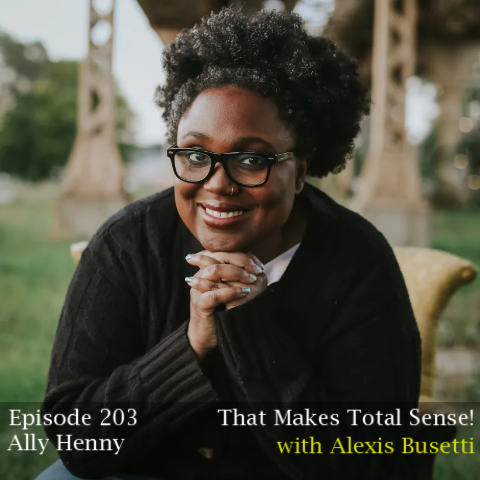
Speaker 2 00:00:42 Hey everybody, I am just super excited because I got to spend the last couple of days sitting by the pool in a ridiculously hot Houston reading. Allie, he's new book, and it was fabulous. And now she's here. Hey, Allie.
Speaker 3 00:01:03 Hey. I'm so glad to be here.
Speaker 2 00:01:06 I am just, I'm just so excited that you, that you are here. Um, your book is called, I Won't Shut Up, finding Your Voice When the World Tries to Silence You. And, um, and I just wanna start off by saying thank you. Like thank you for writing this, thank you for sharing your story. Um, thank you for yeah, for just, I know that it's not an easy situation, but thank you for guiding, uh, so many people as we're, um, as we're kind of walking these journeys together.
Speaker 3 00:01:48 Yeah, yeah. It's something that I really, you know, think is important work. So again, you know, thank you. Thank you for having me here.
Speaker 2 00:01:55 Yeah, it is, it is super important work. But, and I wanna start with the book in particular by asking, because I, I have a hunch of what I think the answer is. Um, but I wanna ask you, when you were writing this, who were you in envisioning would be reading it. Yes. So in other words, who's your audience, but who did you envision really reading this?
Speaker 3 00:02:22 Um, the people that I envisioned reading this were black women. Um, yes, specifically. So, you know, I know that, um, especially whenever it comes to books about race and racism and justice and stuff, that there's an audience of people, um, who aren't black or who are even specifically like, like white folks who like to read this type of thing, who like to read and learn from this type of thing. But my, but my main audience was, was black women, and then kind of out from that, um, black, uh, black people just in general. Um, so various intersections of identity there. And then out from that, um, you know, people, people of color and the various intersections. And then out from that, um, white people. And so I knew that kind of within that, some of the, some of the through line would be, um, not just like black cisgender women, women, but people of marginalized gender. You know, there's, I talk about, um, I talk about sexism, um, some misogynoir and stuff in my book. And so there's some aspects where I think that if you, if you have experiences as a person of a marginalized gender, there, there are things that you, um, might understand and, and resonate with, even if the experiences aren't the exact experience you at least resonate with, um, just some of the things that that happened and, and some of the, the idea and stuff behind it.
Speaker 2 00:03:50 Yeah, that was, that was my hunch. And I actually really enjoyed as a reader, I really enjoyed that because it felt like in the most holy way, I was eavesdropping on a really good conversation, right, <laugh>. And we can learn a lot from, you know, just from sitting back kind of as a fly on the wall and listening to those conversations that aren't really meant for us or about us or, you know, we're, we're not the focus of that, but we can learn a lot from sitting back. And, and he really hearing those conversations. So that's kind of how I felt as a reader as I was like, Allie is, is encouraging. She's, she's talking to black women that she knows, or that she doesn't know. And I, I kind of get, I just kind of get the privilege of like, sitting here and, and you know, like, holy eavesdrop, right?
Speaker 2 00:04:48 But in this, in this way where I get to hear, um, hear what you might say given the opportunity, um, in those situations. So I'm really grateful, um, and I learned a lot from your story and from the, from the things that you were willing to share. And I'm hoping that we can go through some of those things that maybe concepts that I might have been familiar with, but the way that you named some of these things were really helpful for me. And so this isn't gonna be necessarily like a rapid fire kind of thing, but I'm hoping that we can have that I can, that I can ask you about a few of these things that I think they'll be really meaningful to the people who are listening to it now. And, um, one of these things is kind of a thread throughout the book when you talk about the constellation of harms. Can you talk about that phrase and, and what that means in the context of, of your story?
Speaker 3 00:05:43 Yeah, so I,
Speaker 2 00:05:45 Uh,
Speaker 3 00:05:46 I created this term, I coined this term the constellation of harms to describe the way that the, our experiences are all sort of in our, our individual experiences are interconnected, even with like, broader narratives, with broader things that are happening in our lives and, um, in society even. And so, um, there are various, just various ways that whenever we have experiences, whether it could they be positive, ne positive or negative, they can be experiences with oppression, they can be positive experiences, but, um, but all of our things that, that we, that we have and that we and that we go through are all in all interconnected. And so then whenever we start talking about a constellation of harms, what that means is that whenever we experience harm, that harm doesn't happen in a vacuum. It doesn't happen, um, just out of the blue and there's no, and there's no reason for it.
Speaker 3 00:06:47 Um, often harm happens because there's something else, there's some other harm that happened before that, and then some other harm that happened before that. And so it all kind of just, it all kind of, when wherever you really like, get into it and draw the, the threads and the through lines and all that other type of stuff, you see this broader thing that, that, you know, my personal experiences aren't just my experiences, but they exist in a, in a broader, in a broader spectrum of things. So in the book I discussed, um, early in the book, I did talk about how my grandmother, um, died of lung cancer. And so, um, before that she had, she had a prolonged illness, um, before she passed. And there were a lot of things that I experienced during that time, uh, during her illness that were difficult. And so that, um, that harm that I experienced, those things, those things that I, that I dealt with were connected to the broader, um, experience of her having cancer.
Speaker 3 00:07:50 And so then her having cancer was connected to the broader harm of big tobacco, basically lying to the world, uh, for years about the safety of their products. And so all of the things that I was experiencing as, you know, an 11 and 12 year old in having to deal with my, with my grandmother being ill, that that came from my grandmother using a product that she didn't know was gonna kill her. And then it goes back to these, you know, big wigs in a, these, these, you know, old white men in a corporate boardroom somewhere deciding that they were going to obfuscate about what the, the risks of using their products were. And that then goes back to broader, um, exploitation of people's labor and capitalism and all this other type of stuff. So it's not just that I experienced these things, um, these things were connected to, to broader things to broader, to broader injustices. Yeah. Thank you. Thank you
Speaker 2 00:08:54 So much, much. And I, I do love how that thread, that phrase, continued throughout the book as you shared so much of your story. And just for people who, remind me the, the date that this is coming out, that this, oh,
Speaker 3 00:09:12 Today
Speaker 2 00:09:13 What?
Speaker 3 00:09:14 Yep. Yep. Today's, today is the release day,
Speaker 2 00:09:17 June 20th. Congratulations. Why? I'm so sorry. That's like the easiest thing. It's lo low hanging fruit that I should have just like checked right before we came on, was on congratulations. That'd be book launch today. This is amazing. Um, so for folks who like, we'll be getting it in the mail or by the time this airs, they've just gotten in the mail or books haven't read it yet, you kind of go through, um, parts of your story, um, moments from your childhood through your, your teenage years and your, um, early adulthood and share, um, share kind of, uh, key stories that are illustrative of what, of, of, of what you're communicating. And one of these terms, again, that hit me pretty hard, you talk about is the moment and, and the moment in caps and, and you grew up, um, I would say probably your town and my, your hometown and my hometown probably have some similarities.
Speaker 2 00:10:25 They're kind of middle America, bible belt, rural ish, small towns. My mine was kind of like one of those where everybody knew everybody. Like, I look so much like my mom that I can't like walk around a grocery store, right? Without someone, I don't know, coming up to me and telling me that I must be her daughter <laugh>. Um, this is this kind of town. Um, but the, the moment for you was when you were growing up in a town that was, that was kind of like that, um, a predominantly white town. So what is, what is the moment?
Speaker 3 00:11:04 Yeah, so the moment is, um, something that a lot of minorities experience, particularly those of us who grow up in small towns, but it doesn't, it's not just limited to that, but it's the moment that you first encounter, I shouldn't even say it's like that you first encounter racism. It doesn't have to, it doesn't have to be a first encounter type thing, but it's, but it's a moment when you recognize that a certain person or a place that you're involved with or something like that, um, that that person is racist or those people are racist or whatever. And so sometimes it's a first encounter type thing, um, and you might, and it's, and you, and you encounter it the first time, but it doesn't have to just be your first encounter, um, with stuff. Um, and maybe even better, even maybe even better stated. Um, cuz even in the context of the, of the book, the story that I, that I used, the, the mo that that I used, where, where I start to talk about the moment, that wasn't my first experience with racism.
Speaker 3 00:12:07 Um, sort of the, the long story short is that there was, um, a group of young men who made a bet with me in fifth grade that I could go the whole week without talking. And so there's, and there's so much wrong, there's so much sexism, there's so many different things that are, that are like looped up into that. But then, um, I ended up winning the bet and, um, I was sort of like, Hey, I won the bet and kind of was like, you know, I don't know, wanting my, my wanting my current congratulations, wanting, like, you know, hey, good job. Wow, I didn't think you could do it, blah, blah, blah, blah, blah, blah. And, um, one of the boys, uh, caused me a string of racial slurs. And so, um, this was a, this was a kid that I thought we were friends, we, we were friendly.
Speaker 3 00:12:50 I, I thought we were cool, whatever, whatever. And so then he pops off with these racial slurs. And then I, at first, the, the first couple ones that he says, I, I didn't ever hear, I had never heard before, but then he says one that I was like, oh, I know what that means. And you're, and like this is, this is racism that you're in. And so like, it was, it was so, it was just completely disorienting. Now, that wasn't the first time, and I say this in, in the book, that that was be, that was, you know, far beyond the first time that I had experienced racism like that. But there's something about whenever you think that somebody is your friend and or you <laugh>, excuse me, or you, you, you think that somebody is your friend. You're in a place that you think is safe.
Speaker 3 00:13:35 Like, so, you know, you're, you're at church, you are at work, you are with people, and you think that you're safe and then they drop racism on you, and then they just keep on going. Like, you know, it's just, it was just like, you know, them, them saying a racial slur, them, them making racist gestures and whatever, they, they just go on. Like, it was nothing like, you know, they were telling you, Hey, it's sunny outside, or, you know, hey, yeah, you know, the, the, the sky's blue or whatever. And they just keep on going. And it's this, and you and you, the disorientation even that you experience with that. And for some people that might be, that might happen during their first encounter with racism. Um, for some people, you know that that happens. I mean, there's situations where maybe you experience racism or racism kind of comes down the pipe and you're not surprised by it.
Speaker 3 00:14:26 Like you're not, you're, you're in a situation, you're like, I'm not surprised if this person is racist. But the moment is like, whatever you're like, it just is something that just completely captures you off guard. Cause you think, again, you know, we're friends, you know, you are, we we're friends, you know, we, we have a, a good rapport, you know, I didn't think that you were that type of person, whatever. And then, and then you're caught off guard because they go and say something completely vile or do something completely vile and you're just kind of left there to reckon with it.
Speaker 2 00:14:56 Right? Cuz you say in your book that a white supremacy is everywhere and that white people are just gonna do racism.
Speaker 3 00:15:07 Right.
Speaker 2 00:15:08 Just expect it.
Speaker 3 00:15:10 Yeah.
Speaker 2 00:15:11 That's the expectation.
Speaker 3 00:15:12 Just kinda expect it. And you, you kind of expect it, but even whenever you expect it, there are times that people, that people surprise you. So that, that's what, that's what that is. Mm-hmm. <affirmative>. So it's like, you know, I, and I, and I talk about this, um, I talk about this a lot in, in my book. It's like, you know, I, I grew up, um, I grew up with a lot of, of people that, with a lot of, um, I, I was, I was very aware of race and, and racism and, and that sort of thing. Like I was not someone, um, that was surprised by the existence of racism. There are some people that, um, had maybe had that experience. That was not my experience. I always knew that I was black. I always just understood that for whatever reason, that that, um, that that identity was contested, that that was like contested space to be in as a black person.
Speaker 3 00:16:08 I don't know how I knew that. I just kind of always knew. It was just something that I just sort of picked up. And so I really thought that it was my job then, because I just knew like, inherently, okay, white people are gonna be racist. They're gonna be racist things, they're gonna say racist things. It was my job to sort of like prevent that. It was sort of my job to be like, well, if I, if I, if I'm able, you know, to, to not be a certain way, um, to, to, if I, if I can, you know, show people that, you know, I'm not a stereotype or if I can, um, just sort of, you know, brace myself for these things. And then whenever, whenever I experience them, it's sort of my job to just sort of ab absorb the blows and to not actually, um, it's, it's my job to absorb, absorb the blows rather than pushing back.
Speaker 3 00:16:56 And so then you might ask yourself, well, well, you know, if you, if you expect it, well then, well then how is it, how is it then a surprise? And then, and it, it is a surprise because you sort, you sort of learn, there are some people that like wear their racism and like they are, they are overt about it and, and they're unabashed about it. And even if they're not just out here like calling racial slurs, like you, like you just know like this person's prejudice. Like you just, like you, you know that. And so, but it's completely different when you don't know that. Like, so, you know, in general, okay, yeah, white people are gonna act this way. You know that in general. But then like your white person acts that way. That's, so it was like your friend who you were cool and were hanging out with, and were whatever your friend does that thing you are sitting in the, the class in church and your friend <laugh>, the person who's your friend makes a racist gesture with their lips, turns their lips inside out, and it's like, Hey, I have lips like her.
Speaker 3 00:18:04 Like whenever, like that, like, that's your friend. That's not a person, that's not some person that you're like, okay, that you avoid because you know that they're prejudice. That's your friend. You've been to their house, you've babysat their kids, you've sat at tables with them, you've sat in pews with them, you've sat in classrooms with them, and they, and like they have, they've been friendly towards you or something like that. Like, and you just, and, and so it just, it just comes unexpectedly. It just is, it's just, it's just something that, that whenever that happens, um, that's way, that's just, that's way different. It's like, it's almost maybe even a way to say it is that like, it's a, it's a betrayal that happens. Like it's a be it's a betrayal of the trust of the, of the confidence that you've, um, that you've gained in a person.
Speaker 3 00:18:58 That this person isn't going to, isn't going to do this. They're, they're not going that you, they're, they're, they're, they're, they're not. And they're kind to me. And I, and I don't wanna sound like, oh, well, just because white people are kind, that, to me that means that they're not gonna be like, I'm not, it's not naivete. It's just straight up. Like, you trust someone you trust, like, like a person has shown themselves to be trustworthy, and then they go and say something, or then they go and do something. And that, that gives you an indication that, oh wow, this is like, this person is what is Yeah. And that's, and that's what the, what the moment is. It's not just like, oh, I became aware that there was racism in the world, or, or like, there's some, like, that's, that's not, that can be it, but it's not. But, but it, it's more, it's deeper. It's more, it's more nuanced than that. Like yes, it can be somebody, um, gaining that awareness of racism, but it can also be, um, it can, excuse me. It can, but it can also be that, um, betrayal of, of trust that you, that you had in people and within a situation or whatever.
Speaker 2 00:20:12 Yeah. Talk about, talk about what happens or what can happen when, um, maybe, maybe it's the moment, maybe it's something similar, but you have a chapter in your book about what happens when white people try, like they try not to be racist. Um, but I'm thinking about also, so I'm thinking about white people who are like trying in the quotes, um, not to be racist, but then I'm also thinking about the fact that we just said white supremacy is everywhere and there's lots of white folks who are trying without the quotes. And so if they get caught up in a moment, their response can be rage. Like you talk about in the book mm-hmm. <affirmative>. And it can also be someone who is in the trenches trying to do the hard work of anti-racism and they need to learn and they're open mm-hmm. <affirmative> to learn.
Speaker 2 00:21:17 And there's different responses that can come from, from all of us, like from all of us being just immersed in white supremacy, which is horribly harmful to Yeah. Our whole society, right? Like it is obviously harmful and oppressive to black people, to people of color, all of this. And, and white people just usually don't realize how harmed they are. Mm-hmm. <affirmative> by it. Because one, one thing I love that Daniel Hill talks about is that white supremacy says a lie about everyone. And when we believe a lie about who we are, then that's harmful to, that's harmful, you know, to everybody. And so mm-hmm. <affirmative>, this isn't a get, this isn't a get outta jail free, get the white person off the hook kind of thing. But I do wanna talk about, I wanna, I want you to talk about your experiences, cuz you name a lot of them in the, in the book of like, this is a white person trying and this did not go well. Like, this person is just gonna keep on their own trajectory. Um, but then also maybe some encouragement to these outer rings. Who of people who are reading your book, who are listening to this conversation going, I don't wanna be that girl. I don't wanna be that guy who says something that causes harm. That, you know, and, and, and continues to do that perhaps in ignorance, perhaps out of habit, perhaps out of family culture. You know what I mean?
Speaker 3 00:22:51 Yeah, yeah. Can you say more about that? I wanna make sure that I'm, that I'm answering the right question.
Speaker 2 00:22:56 Well, I mean, I think that, so, so when you say people like your, your white people, right? Mm-hmm. <affirmative>. So, so, um, I, I come from a mixed background mm-hmm. <affirmative>. And so I'm just gonna be real that a lot of times my white people were my family <laugh>. Mm-hmm. <affirmative>. Yeah. Right? Like my extended family mm-hmm. <affirmative> and you, and it's just exactly what you described. Like, these people love me. We, we, we trust one another. We, you know, we do all of this and still we've had those moments where something was said or something was done that was harmful. And then we, we kind of, there's kind of choices that are made there, you know, and how do we respond in those moments when those are harmful? Um, and so I'm, you know, I'm kind of thinking about for, for times that I've experienced that going.
Speaker 2 00:23:55 Do I say something that's really, that's a really difficult conversation to have, you know? Yeah. Do I assume that this person actually meant to harm me? Do I think that they knew what they were saying? You know, like, there's some of these kinds of things, or, or, you know, and, and to be honest, most of the time I've just kind of chalked it up to white supremacy. I've just kind of chalked it up to racism. I've, I've, I've taken the harm and kind of moved on, but it always kind of lives in the back of my head. But I know that, especially now that people, and I'm thinking about stuff that's happened years and years ago mm-hmm. <affirmative>, especially now that people are having this conversation more openly, I think in, in our lifetimes, I feel like in my lifetime, this is a conversation we're having more openly now in, in this timeframe. Um, people don't want to just keep going on that trajectory many times. Right? Um, they want to understand where, maybe their own history, cultural history of where has this come from? Why have, why did my grandpa always say these things? You know? Right. What, what was it? Right? And they maybe really do want to change their trajectory and the trajectory of their kids so that their grandchildren aren't repeating stuff that they've said.
Speaker 3 00:25:10 Um, yeah. You know? Oh, yeah, yeah. Go ahead. Yeah. Sorry. Um, so I think that, um, first of all, we, we have to do away with the notion of white innocence. So there's, so there's the notion often that white people have that, oh, well, they, they didn't know what they, what they were saying. They didn't know what, they didn't know what they meant. They didn't, blah, blah, blah, blah, blah, blah, blah. And I think that we, that we have to let go of always trying to, well, well, oh, this person's innocent. They don't, they don't, they didn't know. They didn't, they they know, not forgive them for they know not what they did. And, um, I, I think that that, um, lets a lot of people skate by on, um, they, they knew full well what they did. And I don't think that they, they knew what they, they knew what they were saying.
Speaker 3 00:26:04 And that could be painful. Whatever. It's our, it's our white people. It's our, it's our post friends, it's our family, it's our whatever. That can be, that can be frustrating. That can be hard to think, well, you know, that person, that person did that, that person said, said that thing. And I think that there's an impulse to, to wanna be like, oh, but they just didn't know. They didn't, they didn't quite understand. They didn't want, wanna, whatever. And I'm not saying, you know, that we sit around and constantly think the worst of people be like, well, they must be a member of the Klan because they said this, and their secret. Like, that's not what, I'm not saying that we have to be paranoid and that we have to spin narratives about people, but at the end of the day, somebody, somebody says a word that maybe they don't realize.
Speaker 3 00:26:45 They, they say a word, they use a phrase, they make a gesture. They do something that they, that they maybe didn't realize, quote unquote, was racist. I think that it, it can be easy for us to be like, oh, well, they just didn't know. Well, you bless, bless their heart. They didn't, they didn't know. They didn't know what they did. But why didn't they know? Why didn't they know we are, we are how many years into this thing? Why didn't they know that it was unacceptable to, to say those words, to wear that outfit, to do those things? And so it, so the, so I think that we're past, well, but they, but they didn't know. And I would, and I would even dare say that they didn't know really was never an option ever because they, they've always, they've always known. It's just that certain things were always acceptable.
Speaker 3 00:27:39 And now that certain things have not become acceptable, some people, because they, some people have refused to, this is, and this is where we get into some of that, well, well, yo, the PC culture, the cancel culture, oh, the whatever, because, you know, back in some people's day, people who have living memory still, it was, it was completely acceptable to do blackface. And we say like, like, nothing has changed. Blackface has always been unacceptable. It has always, it has always been wrong. There's just, there's just a time, we're just in a time now where there are consequences for doing those things. There's consequences. We're, we're saying not going to tolerate this in our society anymore, but those things were always wrong. So, you know, your uncle, your grandparent, your, your cousin, your whatever, that says something racist, they are living in a time when that thing was always wrong.
Speaker 3 00:28:33 Now, just because they didn't know that it was wrong, we have to ask, why didn't they know in, in whatever year it was in, in 2006, why didn't they know this this was wrong in 2023? Why don't they know in 1989, why didn't they know that this was wrong? Because it was always wrong. It was always, always, always wrong. And so then with that said, I can certainly understand a person that is ignorant that they, that they don't know what they don't know. Um, this is a story that this is a free story that wasn't, that wasn't in, that I didn't include in the book, but there was one time, um, a few years ago when it, it was, um, it was around Christmas. I was, I was at my in-law's house and, um, my father-in-law, like they were talking about the Kwanza celebration or whatever that was happening in Kansas City.
Speaker 3 00:29:27 And my father-in-law, like, said something about like, how Kwanza was like a religion, blah, blah, blah, blah, blah. And I looked at him and I was like, um, no, that is not what Kwanza is. And like, whatever. So, you know, he, so he started in on what he thought Kwanza was, and I was, and I was like, no, that's, that's not, that's not what it is. Like what, what on earth? What? And it was, and he wasn't trying to be mean, he wasn't trying to do anything. He just did not know he was ignorant. But it was frustrating because it was like, ha, I mean, I've been part of this family for, for like, you know, during near 20 years. Like, how, like, how, and not, not that, like I, you, I used to, my family used to celebrate Kwanza, my mom and I used to celebrate Kwanza.
Speaker 3 00:30:07 Um, but just, but I just haven't in a very, haven't celebrated Kwanza in a, in a very long time. But it's like, this is something that's part of African-American culture. You have an African-American person in your family, you think that you would like, you know, want to know, like, you know, basic stuff about black culture before you just start talking about it. And that's not even something that, again, like Kwanza, I have no like, big emotional attachment to it, but it's just like the basic, the like, like something that's like, you know, okay, there's a, there's a holiday that's around the same time as Christmas that African-American people celebrate. Maybe I should know what that thing is, <laugh>, like, maybe I should know what it is and why it exists, and blah, blah, blah, blah, blah, blah, blah. And I was just like, and, and I was just, I was dumbfounding.
Speaker 3 00:30:49 So I'm just like, bro, like, no, like you are, you are out here on some, like, missing on some serious, serious misinformation. He didn't, he didn't know I wasn't, I wasn't mad that he didn't know it was, it was ignorant. I was, I was mad that he just like assumed that he knew it was gonna speak on authority about something that he knew. I was like, child, you, you talking and you don't even know what you're talking about. Like, I was like, I, I was, I was upset about that, about that aspect of it. But he wasn't, he wasn't, he wasn't trying to be derogatory or anything like that. He was just speaking out of a place of ignorance. So the cure for ignorance is knowledge. So yes, somebody might not know some, but again, I think that we have to ask ourselves, why doesn't the person know?
Speaker 3 00:31:35 And the answer to that question is often because it comes down to white supremacy, but often they don't know because they, they aren't exposed to people, they aren't exposed to different cultures. They move through the world with the privilege of thinking that their experiences, their, their lives are the default. And so whenever somebody comes off with something and they just, and they just don't know and they just are saying things, um, I think that the most detrimental thing that we can do to people is to presume and to presume white innocence. And to just be like, well, you know, and to try to make excuses for it, rather than being like, okay, but why, why don't, why don't we know this? Why, why? I think we need to interrogate, like, okay, you don't have to be, again, you don't have to be mean to people, but just wait a minute, you know, this is, this is so, so, you know, to me it's like again, you know, using, using my family example, you don't know something that's basic to my culture.
Speaker 3 00:32:34 So you don't know something that's basic about, about me e essentially. And so you're gonna come from a position of ignorance and assert that ignorance in a way that's kind of like, ooh, that's, that, that's like, why, why did you do that? Like, why, like why did you, why did you pop off? Like you were the authority on what Kwanza was? When you don't know anything, when you don't know anything about it. Whatever you, whatever you have, you have an African American sitting right next to you and you could have just asked me like, so do you know what Kwanza is about? Like, cuz I've, I've heard, you know, I thought that it was this and that or whatever. Like, you could have come, you could have led with curiosity, but you chose to lead with, oh, I know, I know things because I'm a white man.
Speaker 3 00:33:14 And it's like, and that's, and that's never, and that's never a good place to be in. So, you know, for my grandfather, I could be like, well, you know, or my, my, my grandfather Lord, my, my father-in-law, I could be like, he's my, my kid's grandfather obviously. Um, but my, but my father-in-law, um, I could, I could be like, well, you know, oh, what he, but he just doesn't, he just doesn't know and he just doesn't, okay. But, but I I, I've been part of his family since 2002. So <laugh>, it's a, it's some, it's some way I, you know, I was, I was his kid's girlfriend since like 2002. Since 2002. So he's had since 2002 to get his stuff together and to know, and to know about this. So all of that, all of that. Then to say that whenever somebody is trying to not be racist, they're trying, I think that for those people, whenever they confront, whenever they are the arbiters of a moment, they say something that, uh, they say something or they do something that's not acceptable.
Speaker 3 00:34:10 The responsibility then is on, is on them to do better. And I think it's not, I think that some people is like, you know, a white person does something wrong and they just like want to like melt into the earth. And it's like, oh my goodness, I just, and, and, and so then it becomes about, the situation becomes about how, how good a white person they're trying to be, and not about like why like, like what the implications of the things that they did were, and sometimes it becomes like, you know, like on the color of purple, like Miss Millie, like Yoshi, she gets this red whatever. She's like, I've always been good to you people. And it's like that whole, that whole thing, like, um, you can be that kind of white person and be like, well you, I've always been good to you people.
Speaker 3 00:34:56 I've always, I've always, you know, tried to, I've, you know, I, I always, you know, uh, pour one out on Juneteenth for y'all. I'm always, I'm always there, you know, I Martin Luther King Day posting a quote, like, whatever you can, you can go through the litany of things that you of good, that you've done, or you can sit with it with the sting and the reproach of, I just did something that harms someone. And, um, you know, Daniel Tiger has a really good lesson about this. Um, you know, uh, saying I'm star, I'm sorry, is the first step, then how can I help? So you do something wrong, you say you're sorry, and you ask, how can, how can I help? How can, how can I make it better? What can, can I do to make it better? And sometimes people are just like, no, you know, it's good.
Speaker 3 00:35:40 It's whatever. And there's nothing that you can do. You don't have to be like, like stalkerish and weird and like, and be all, cuz then that, that gets to be like labor for black folks when it's like, okay, I've gotta, I've gotta help you to not have a meltdown because, because you, you messed up. I mean, sometimes we just have, you just have to, you just have to accept that you're not gonna, that you're not gonna get it. Right? And one of the things of white supremacy is perfectionism. One of the, one of the, um, one of the features of white supremacy is an un an unyielding, uh, type of perfectionism that doesn't, that doesn't allow for mistakes and doesn't allow for grace for mistakes. Now that doesn't mean that people aren't gonna, aren't gonna, you know, tear you apart because you did something, because you did something harmful and vile and they're upset and they're, and they're, and they're in trauma and they're triggered and they're hurt and they're whatever.
Speaker 3 00:36:33 That doesn't mean that, you know, somebody's not gonna read you the riot act because you did, um, because you did something that was harmful. But, but I think that a lot of people, a lot of white people, something that I see happen is that it's like, okay, you, you weren't perfect at being anti-racist, so now you're just gonna quit. Now you're just, you're just gonna take your toys. You're gonna pack up your toys and go home. And I'm always like, so wait a minute. So you're tell, so like, you did something wrong. So are are you telling me that you're gonna become a member of the clan now because you made a mistake? Because that's exactly, that's exactly how people act. It's like, well, you know what? Yeah, I, I tried not to be racist here, but people keep on calling me a racist. And I, and so it's like, okay, so people, so you're trying not to be racist and people are telling you that you're still being racist.
Speaker 3 00:37:19 So then you sit, so then you sit back and you, and whatever it was that you were doing, you do the opposite of that. Or you do differently than that. But a lot of people be like, well, I guess I would've joined the clan now. Well, I guess I can't ever, well, you know, you've lost an, you've lost an ally. And it's like, well, oh, okay. I mean, okay, so you're so, you are so, you are another white person that is in that, that just decided it's too hard to not, for you to not be racist, so you're just gonna not be an ally anymore. Like, what does that, what does that even mean? And it's so it's the, it's the weirdest, it's the weirdest thing. I've encountered this so much is like, it's like, well, you've just lost a follower. You've just lost an ally.
Speaker 3 00:37:59 It's like, what are you Oh, oh, oh, okay, Karen. Like, you've lo you've lost, uh, you've, I guess, okay, like, I guess you're gonna go and like, you know, become a skinhead now. Okay, cool. Like, what? Because, because you didn't, because I told you that you, that you can't, that you can't wear dashiki on Juneteenth. You're like all of a sudden that just, that's, that's a, that's a bridge too far. Or, uh, or people are telling you, Hey, there's a black kid's body laying in the street that's been laying in the street for, you know, an hour. And people are really upset about that. Um, there's a, there's a, there's a video of a guy being, being choked out on the internet right now. And, um, we just, we don't want to hear how sorry you are and all this other type of stuff. We just want you to sit down and shut up and, and mind your own people.
Speaker 3 00:38:48 And then you get mad and you're gonna run and you're gonna whatever from the, from the situation. Like sometimes I think that white folks, white folks get so like caught up in perfection when it's like nobody's telling you to be the per, that you have to be the perfect ally. What we're saying is like, are you like, whenever, like, like when, when it hits the fan, is you still a fan? Like whenever it comes down to like, whenever, whenever it comes down to you actually having to do the work to lean in, to stand up for something to, to, to repent, to, um, apologize, whatever the, the situation may be. Whenever it comes down to that, are you gonna, are you gonna run away or are you going to, are you gonna face up to it? And so sometimes I think that that white people think that they're trying to fight racism is good enough.
Speaker 3 00:39:42 And so whenever somebody says, well, it's not good enough, then it becomes, well, but, you know, but I, but I don't, but I didn't know blah, blah, blah, blah. So that's, that's like a lot of words, um, to maybe say, not really say a whole, a whole, whole lot. But I, but I, but I guess that the, the, just some all of what I said up all that, that, um, that tangent, uh, is simply that, you know, I think that when, whenever white people are, are trying not to be racist and they make missteps and whatever, I think that, um, it does a detriment to everybody. It does a disservice to everybody to assume that person's innocence without, um, and though they didn't know and assume that person that they, and to assume their ignorance, not their, their innocence and their ignorance and to be like, oh, they didn't know whatever, without actually asking the question.
Speaker 3 00:40:31 Well, why didn't they know? Why didn't, why didn't they, why, why didn't they know this? And then, um, and then whenever, excuse me, and then whenever it's people that, you know, it's white folks that we are adjacent to, it's, it's family members, it's, it's close friends, it's whatever. Well, how could you have a relationship with me, a black person or me, you know, a a biracial um, Latina person. How can you have that relationship with me and not know what is acceptable or unacceptable to do? How could you, how could you be insensitive to that? How could you, and why are you insensitive to that? And there's no, to me, there's no, there's no innocence there. Even whenever it's your family, it's like you, you took the, like you, like you, you are in this family, these people are in the family, and you realize that you might have prejudices against their people.
Speaker 3 00:41:24 Why would you not examine those prejudices and examine and learn what is it, what's acceptable to say? And not to say, even if you don't, even if you're not gonna deal with your prejudices, like even if you're just gonna be like, I don't care. I still think, I still think that this group of people are garbage, but I don't want to say something that might offend people because they're my family. Like, even if just like that basic level of like, I still think that these types of people are garbage. They're cool, my family's cool, but these type of people are garbage. Like, why, why would you not learn the basic things not to say? So even if it's just, even like faking like that you, that you're not racist or faking that you're not prejudice, why would you, why would you, why would people not learn that?
Speaker 3 00:42:08 And so I have to ask like, if people aren't learning and don't know some of those basic things that then that, then that's a deficit in them. And that's not something for me to try to, that I have to try to excuse. I can just say they, they don't, they don't have it. And then the other aspect of it too is that, you know, I think that for white people, it's not to have a meltdown just because you don't, you don't get it right because you're, because you're not gonna get it, right? Because you live in this white supremacist society that you live in a white supremacist, a white supremacist society that doesn't want you to know and doesn't want you to get it, that that doesn't want it to get you right, doesn't want you to get it right. They want you to keep making these mistakes or keep having these attitudes.
Speaker 3 00:42:52 That's maybe the better way to say is they want you to keep having these attitudes cuz it keeps white people on top. So obviously, yeah, you're not gonna know everything and you're gonna make mistakes and you're gonna, you're gonna be offensive, you're gonna whatever. And, and you're gonna, and there's people that are gonna be upset with you because of that. And so you have to learn to live with that and pick up the pieces and do and do better the next time. Apologize, you know, apologize, pay reparations, do whatever it is that you need to do. Dust yourself up, dust yourself off, pick yourself up, dust yourself off and, and keep and keep going. Don't be the person that's like, well, you know, I guess that I can't, I guess I'm just not gonna be anti-racist anymore because black person told me that I, that I suck at the, that I suck at this. Like, that doesn't even, like who, like who, who are you, who are you really hurting? Like who? It just, anyway, but, but yeah,
Speaker 2 00:43:45 No, this is, this is so helpful. So thank you. Like sincerely thank you. This is, this is very, very helpful for me as I'm kind of processing this stuff and I, and that, that I just can't, I I'm probably gonna have that in my head. It's like, why didn't they know? Right? Like, so asking that question, not presuming white innocence, cuz it doesn't do any good for anybody. Um, not presuming the ignorance. Um, and I wanna go back to something this, this kind of pairing of things that you said, um, while you were talking about that. And, and I'm, cuz I'm, I'm wondering, I'm like hoping that I'm kind of making, um, making some connections here, but this is about, there's a difference. So you talked about the constellation of harms, but you also talk in your book about the difference between hurt and harm.
Speaker 2 00:44:45 And that sometimes white people just have to have the feelings hurt, and this is kind of what you're talking about. But then that we see sometimes when white people get their feelings hurt because they're not, they, they mess up. They, they, an attitude that's still in them is revealed or they, or they make a stupid mistake or whatever it is, then they get their feelings hurt instead of being Daniel Tiger about it and saying, I'm sorry, and how can I help? Um, and then when you say, when you're saying like, just kind of talking about that and like who's, you know, well, well you just lost follower, you just lost an ally, blah, blah, blah. I'm like, yes. It's like, um, this is the micro, I think if I'm making these connections, version of what you talk about, I, I like bracketed this statement. I put three stars next to it. It was this crazy thing. But, so I wanna read it directly from what you said, but you said I had to come to terms with the hard truth that a lot of people will say they don't wanna be racist, but they will make choices that indicate they are not willing to let go of white power.
Speaker 2 00:45:50 And this is like the micro version of it. Like, I'm just gonna take my toys and go home, then well fine. You just lost a follower, fine. You just lost an ally. You just lost like, like it's like if you call me, if I'm telling you I ally, I'm really trying <laugh> I'm trying to do this work, I'm trying to be in this, I'm trying to be in this with you. I'm trying to be anti-racist. I'm trying to be an ally, I'm trying to be whatever. And then you call me because I messed up. You call me out on it and I say, fine, I'm gonna take my toys and go home. It's exactly this statement on an individual level to me, right? Like, like, like I'm, I'm gonna tell you that I'm trying not to be a racist, but then when you call me out on it, I actually don't wanna let go of my power or my pres or what I believe or or my perspective that I have power in this situation.
Speaker 2 00:46:34 And so I'm just gonna leave you exactly. Well, fine, then you're gone, then you're dead to me, right? Then, then I'm gonna take my stuff, I'm gonna go home. But this is on the individual level as I'm hearing you describe it there, but it's also on the societal level, right? Mm-hmm. <affirmative>, it's also on the cultural level. It can be on the church level, the organizational level, the familial level, whatever it is, there's all sorts of levels. It goes all the way, you know, it goes all the way out. Um, because white supremacy is everywhere, but you can say all day long that you're not a racist <laugh>, you can, I'm thinking mm-hmm. I'm the least racist person in this room, right? Like, you're <laugh> but you're not willing to let go of white power. And you say sometimes white people just need to have their, have their feelings hurt.
Speaker 2 00:47:22 And I can, I could tell you some, some things that have come to my mind as we were talking of when I have said or done something really stupid and thankfully I have really good friends around me who have said, did you just hear yourself? Like, did you, did you hear what you just said? And my feelings got hurt, but I tr I really am, I hate saying trying now, but I really am trying like, oh man, you know, like, and, and the the hurt, I can internalize that, right? And I can make it self-reflective. Mm-hmm. <affirmative>, I mean, on my best days, um, I can do those things and not make it about this. I can ask some questions as far as that's, you know, willing to go or whatever, but there's a difference between me getting my feelings hurt because I screw up. And, and even in that moment, the harm that I've done Yeah. To you by my comment. Right? Exactly. And so talk to us about the difference there between hurt and harm and also even if you wanna elaborate on that, on that power dynamic and um, and what that looks like on, on whatever level, on whatever level you're thinking about it.
Speaker 3 00:48:30 Yeah. And so I'm gonna be real honest here. I remember what I, I remember writing about hurt and department. I can't remember specifically like what I said about, about hurt and harm or like the differences and stuff between it. So I'm sorry if I'm not like verbatim, um, quoting like what I, what I said in the book. Cuz sometimes my memory for the things that I write is like, oh yeah, I did write that, didn't I? That was ru Oh my goodness. Yeah. Um, it's
Speaker 2 00:48:57 A bonus when you go back and you're like, man, that was really good. Yeah, I know. It's, it's like, oh wow, I wrote that. Wow.
Speaker 3 00:49:01 That's, that was man, that person,
Speaker 2 00:49:03 Right? Yeah. Right. Oh, I
Speaker 3 00:49:05 Wrote, oh, I wrote that. Wow. Okay,
Speaker 2 00:49:08 Cool. She's good. Yeah, <laugh>.
Speaker 3 00:49:10 But yeah, you know, I think that, um, so just speaking, so, so whatever I said in the book is what is what I said and that's and that's right. Um, but speaking, but speaking like more, more broadly about hurt and harm. Like hurt is something, it, it hurts, but it ultimately can be, it can ultimately be leveraged for, for good or for your good harm is something that the, that the effects of it are, are lasting and there's, and there's no, there's no benefit toward it. So like, I think, I I use this example in the book where like getting wisdom tooth surgery hurts, getting your wisdom teeth removed. That hurts, but that doesn't harm you, that doesn't like that. That's, that that hurt is to keep that impacted tooth from getting infected. And that impacted tooth also hurts, but that impacted tooth can harm you.
Speaker 3 00:50:04 And so getting the tooth removed, getting that tooth extracted, it also hurts. But that's something that, that ultimately is going, it's, it is for your good. Um, I guess it could maybe suck if you have, if you have complications, if you get like dry socket or something like that, then we can, we can talk about, we can talk about that. That the thing that that, you know, was, was intended not to, not to harm you ended up ended up maybe, um, causing some complications and that type of thing. And that, and that even happens in anti-racism sometimes. There are things that we, that we try to do that, um, we think are gonna be helpful. And then, oh, sorry. Oh no, that didn't, that didn't end up being, that didn't end up being helpful. We ended up maybe, um, if not, if not perpetuating, um, one particular system, maybe we ended up doing something that ended up, um, harming ended up, uh, the unintended consequence of, of harming people.
Speaker 3 00:50:54 Um, more like that's something that absolutely can happen. Um, but a lot of times people confuse hurt, they confuse the pain, the temporary pain with harm. And so they, excuse me. So they, they confuse, they confuse that my feelings are hurt because I was called out. I am experiencing, um, embarrassment or pain or maybe even rejections insensitive dysphoria because somebody called out the thing that I did and I'm embarrassed by it and I'm, and I'm sad and I'm humiliated and all these other type, all these other types of things, they can, sometimes people confused their feelings with. Well, but you, but you did something that was like perpetuated harm on someone. And so, and maybe there's even, I, I don't want to, maybe there's even, and I don't wanna like make, you know, how our feelings and stuff into a hierarchy and stuff, but maybe the, the harm that you inflicted and the hurt that you felt, maybe those things maybe are equal.
Speaker 3 00:51:59 You just, you just happened to say something and it wasn't like you were calling somebody a racial slur, but you just, but you said something that was insensitive and somebody said, oh, that was insensitive or whatever. And, and, and the person isn't distraught about it. It's just like, eh, don't say that. Um, and so maybe, maybe your embarrassment about it and your feelings about it really are more than what the situation really, really was. It's possible for, for that to happen, for there to be, for there to be, it's not that every single time a white person does something racist, every, like black people are like, yeah, we're like clutching our hearts and like, oh my gosh, I'm dying. There's sometimes, cuz cuz there's some things that are, so, there are some things that are just so ingrained. I know I can't speak for everybody, but I know in my own experience sometimes there are things that, you know, people say and I know what they meant and then that, like I know that they, that I, I'm giving you my friend that she said something, I know what she meant.
Speaker 3 00:52:55 I might not have said it that way, but I know what she meant and I know that she wasn't trying to suggest whatever, or that, that she wasn't trying to suggest, you know, that I was somehow inferior or something. Like, like I know that. And so I can keep on going, but then my friend might realize like, oh, might come back to me and be be like, you know, I said this earlier and I realized that it could have been taken this way and this, and that's not what I meant. Well yeah, her feelings and her, like her embarrassment her or her whatever, is much different than me. Cuz I'm, I'm, I wasn't, I wasn't bothered by it at all because I knew, I knew what she meant. And so that, so like, yes, we can, we can have those instances where our hurt over a situation is maybe bigger than, than the harm that we did that, that we did to somebody.
Speaker 3 00:53:42 But that doesn't change the fact that that harm that's happening, that that racial harm that's happening is a perpetuation of a system. It's a perpetuation of a mindset. It's a perpetuation of all these different, of all these different things. And so even if in this moment your feelings are more hurt than that, you didn't do really any harm to me. And your feelings are hurt. And so you can still sit with those hurt feelings. And those hurt feelings aren't gonna, aren't gonna damage you long term. And then in the good in, in the good thing. Like, Hey, the thing that you said and did, it didn't harm me. Um, but then there's times whenever it's like you do something and maybe you're adding to somebody's harm. You're adding to somebody's pain. And I think that, um, what a lot of white people struggle with is because white culture is so geared toward comfort, and it's so geared toward like psychological and social comfort.
Speaker 3 00:54:36 There's a, there's a lot of, um, there's a lot of making sure you don't hurt people's feelings or, or, um, and it's not that we don't have courtesy in, in other cultures. We do have courtesy, we do have courtesy in other cultures, but the but courtesy looks a little bit different. And so, um, white culture can be very much, uh, predicated on, on white culture, can very much, um, could very much, very much emphasizes appearances and emphasizes just, you know, how, how people feel in situations and if somebody's comfortable or if they're uncomfortable with something. And, um, I'm not necessarily saying that that's, that that's wrong. But I am saying that whenever it then comes to a situation where you're doing harm to people and somebody is saying, Hey, you know what you said, like that, that was racist. Or, you know, you're being really, you're being really cultural in culturally insensitive here.
Speaker 3 00:55:36 Or, you know, you can't, you, you showed up here in blackface and you showed up at the Halloween party in blackface, and that's not okay. Or, you know, excuse me, like, or you, you, um, referred to this group of teenagers, teenage boys walking down the street as gang bangers. Like, you know, you live in, you live in the suburbs. Like there's not gangs out here. Like, um, you, you set you whatever, whatever the situation was, you did something that you should not have done. You opened your mouth, or you moved your body in somewhere, whatever you did, something that you should not, you should not have done. White people confuse the hurt that they feel, the discomfort that they feel at being called out on, that they confuse that with it being just as bad as a situation and the thing that they did, because they have big feelings about it.
Speaker 3 00:56:26 So the something I hear that I hear all the time is like, you know, being called a racist is bad. It's like, so like, you know, like, it's, it's hurtful. I've had, I've had so many people be like, it's, it's so hurtful to be called racist, whatever. I'm just, you know, blah, blah, blah, blah, blah. And it's like, well, people wouldn't, wouldn't call you a racist if you didn't do racist stuff, or, or yeah, maybe people are saying white people are racist because white people are racist. And that doesn't, that doesn't have to be a death sentence for you. You don't have to be like, you know, bury me in the ocean with my ancestors because it was, because you were, because like somebody's saying, your your kind does things sometimes, often without thinking about it that are harmful, that that's harmful, that's racist or whatever.
Speaker 3 00:57:12 You, it doesn't have to be, it can be like, okay. Yeah. Like people, like sometimes white people make being called a racist. They make it into like this big, like, it's like a, it is like a terminal diagnosis. Like, and I don't, and I don't mean to, you know, belittle like terminal diagnosis, but it's almost like, you know, yeah, I was, I was diagnosed with the racism. I don't, I don't have log, I don't have log for this earth. And it's like, we just, we just said that you that, yeah. You're like, you're racist, so don't be like, it's like <laugh>. It's like, it's not that, it's not that hard. Like it's, but it's like, it's like, oh, they said, and, and so there's no matter, no matter what I do. Well, yeah. I mean, I guess if you're, if you're gonna be like, bolstering up this white supremacist system, then yes, you are.
Speaker 3 00:57:55 So, so getting to the, the quote that you, that you said then that a lot of people, and I think that what you said was right, that, that what I, what I had named before was a microcosm of this idea that some people, it doesn't matter how much they say that they love you, it doesn't matter that, that you know that they're your pastor, that you're, that they're your friend, that they're your uncle, that they're your auntie, that they're your grandparent, that they're your parent. It doesn't matter because some people care about their power and their dominance over you more than they care about you being a whole person, you being healed in whole. And white people oftentimes care more about white supremacy. They care more about white power than they do about healing racism. And that is often why institutions remain. Churches, organizations, school systems remain entrenched in racism because they don't want to do something different.
Speaker 3 00:58:58 They don't Well, but we've always done things this way. Well, the way that you've always done things has been racist. And so they don't have the imagination to say, well, maybe we should do something. Maybe we should do something different. So we've had this tradition that you could only dress this certain way, or that your hair can only be this certain way. Well, hey, you, you, if you want to not be racist, maybe you need to realize that, like, so a good example of this that I'll, that I'll give is like, with military regulations, with mil, with military dress regulations. Now, first of all, I am not promoting the military industrial complex at all. I'm saying this as the daughter of a ve of a, of a veteran, um, who has P T S D. Like, you know, yes, our veterans like whatever, you know, love them great, but also military industrial complex.
Speaker 3 00:59:47 We need to completely rethink because it's doing a lot of harm in the world. But there are a lot of people that join the military because they don't have other options because of, because of classism, because of racism, because of all these other different types of things. But I think this is that, this is, so I'm using this example, but it's not an endorsement of like, of the military and industrial complex. And so, you know, we have these military regula regulations where like, um, for a long time it was like you couldn't, you couldn't have beards meant like, like you men couldn't, couldn't have, couldn't have beards. Um, nobody could have beards, I guess is maybe the better way to say is that people, people couldn't have beards. Um, there were regulations about, about hairstyles and all these other types of things. And so the beard one to me was particularly interesting, um, because you have people who have beards for religious reasons, and so <laugh>, so they, they, they have beers for religious reasons.
Speaker 3 01:00:39 And so some of the rationale people say, but they, but you know, they can't get, they can't get gas masks on. They can't, you know, do all this other type of stuff. It's, you know, the uniform, blah, blah, blah. Well, then it's like almost forgetting that like, there are people in the world with the same religion that live in other countries that don't have, it's like, you think of people who are, who are like Sikh who are part of that religion. There are people in other parts of the world that are parts of militaries that they don't have to violate their religion. It like, like that, that they're using stuff. I mean, you think about like, you know, the, the Israeli army, a lot of them, they have orthodox people in them. They've got whatever, and they, and they figure, they figure a way around it.
Speaker 3 01:01:20 But, but we wanna say, but white supremacist, um, white supremacist agenda. American military wants to be like colonizing imperialize. American military wants to be like, well, no, you have to do, you have to do things our way. For the longest time, um, you know, black people couldn't wear our cultural hairstyles, couldn't wear the, uh, the hairstyles that honestly would best serve us and best protect us in the desert in what, because a lot of the wars that we've been fighting in for the last 30 years, 40 years have been in the desert. And, you know, we like, like, we couldn't wear, we couldn't wear those styles. And so it, it, it took, um, a lot of arguing, a lot of, a lot of whatever, to finally to finally get things to a place where people, where people could have those things. But the, but the structure itself was white, was white supremacists.
Speaker 3 01:02:10 It, it was based on things that for, for white men, it worked for them. It was, it was, you know, great. It, it wasn't violating, it usually wasn't violating their religion. It, it usually wasn't vi So I should say, I should even say you white Christian supremacy here, that it wasn't, it wasn't vi it's not, not having a beer doesn't, doesn't violate, um, a lot of white Christians religion, um, you know, having the, the helmets and stuff are crafted exact for white men's heads. It's not crafted to accommodate, um, African American or African descended hair that grows, that grows up and not down, and all these, and all these different things. And so like, yeah, it's just so, so even in, in some of our, in some of our institutions within society, there are things that are hard coded to whiteness and to white supremacy.
Speaker 3 01:03:02 And people then act like, to change or to question those things would be to question the institution itself, which we should be doing. First of all, um, we absolutely should be questioning some of these long standing institutions that we've had. We should be questioning in our society, why do we still, why do we still have need of them? Why do we still, why do we still feel like, what were the aim? What were the aims of these institutions? And have the aims changed, or ha have the aims? Were, were the aims good at first? And have they changed to promote something that's not been good, or have the aims, or have the aims always been not very good, and we just have gone with it. Um, but it's okay to, for us to, for us to question these things and for us to push back upon these things.
Speaker 3 01:03:50 But white supremacy doesn't want us to do that because everything has always benefited white people. And so if it, if the system has always benefited you, why would you wanna change it? Why would you wanna question it? Why would you want to interrogate it? Why would you want to ask hard questions about the system if it's always benefited you? And that's what a lot of white people do then. So then we end up in this situation where, where people then in an institution have to make the choice between the institution. You have, you have black and brown and indigenous people. You have, you have gender minorities, you have people, um, sexual minorities. You have all, you have people who, um, are, are poor or un unhoused, whatever it is. You have people who are from historically excluded groups, then within the institution saying, Hey, this institution is harming us.
Speaker 3 01:04:40 It's not benefiting us. And so then the people who are in power, who are often people who have always been in power, or they're the people who maybe they're, they've not been from groups that historically have always been in power, but they have been, but they are people from historically excluded groups who have said, well, we're gonna keep excluding the same people that you excluded. Um, so it's, okay, so, so I'm, I'm cool, and so I'm gonna be up here. So, so, okay. Yeah. Oh, yeah, we can promote him. Like he's, he's one of us practically, and so and so, yeah. So then it's like, yes. And then it's like, you know, Hey, I'm, I'm, I'm in the tree house. I'm, I'm the negro in the tree house, and let me pull up, let me pull up the, uh, the, the ladder underneath me. So none, none of y'all can get up here either, but, but like, oh, look, look at these good white people doing that.
Speaker 3 01:05:20 But, but the people who are invested in some of these institutions, they're invested in the institution. And so they love the power of the institution. They love the power that they have, they love whatever it is. And they don't, and they don't wanna correct. They don't, they don't wanna, they don't wanna correct the, the things about the institution. Um, and I just, I firm, I firmly believe that, that, you know, any institution that tells you that it, that it can't change because of whatever, whatever, whatever it ca or that it's gonna, or that change you, it's gonna take a while, a long time or blah, blah, blah, blah, blah, blah. They're, they're doing that. And, um, just know that they're, that they're saying that because they're trying to find a way to have the things that, that you're asking for and to also maintain white supremacy.
Speaker 3 01:06:05 And so, and they realize that the things that you might want might be in com in conflict with white supremacy. And so they're, they, they're realizing that it's not Burger King. They can't have it their way. And so they're trying to, so they're, they're gonna, and so a lot of times they, they doubled rather than going through and doing the hard thing and going through deep change and blah, blah, blah, blah, blah. They just say, oh, you know what, we can't, we can't do that. That's gonna, that's gonna be too much. It's gonna be too costly, whatever. And they, and they maintain, they stay, they stay in white supremacy land,
Speaker 2 01:06:36 Right? With the power. Um, oh my goodness, Allie, this, this time has flown by, um, for me <laugh>, and I'm looking at it and I'm going, oh my goodness. I have like, I have a page of notes still, um, that we're not gonna get to, which is a great place to say, please grab a copy of this. Um, it's, it's just, it's just so good. Um, I have a couple of, I mean, can I like throw out, I'm, I'm gonna hand it over to you to end us with whatever, however you wanna, how you wanna end us. But I have a couple of like, almost teasers of these like bullet points that I put in my notes that I'm like, okay, we have, I was gonna ask her to talk about, um, Obama actually not being the Antichrist <laugh>, I was going to ask her to talk about Stonewall Jackson and, uh, praying to, to Stonewall Jackson.
Speaker 2 01:07:25 This was a bizarre, um, story. Um, we did not even get to Pastor Blank, who, um, is a thread throughout the story of this book in this, uh, predominantly white but kind of, uh, multicultural, multiethnic, multiracial church. Yeah. Um, anyway, there's like a lot respectability politics, which you like, kind of touched on. I feel like even there in that last, um, little bit. But there's like, so there was so much, and, and these were just the things that I thought we might be able to cover. I have dog ears and notes and annotations and stars and Sam Moore's and like giant what in all capitals with question mark, exclamation point, question mark, exclamation. I've written, I've written it up this whole book. And so I'm grateful for it, but there's so much we didn't get to. So I'm gonna ask, oh my goodness.
Speaker 3 01:08:19 You, oh my goodness, <laugh>. Yeah. Yeah. So, you know, where would you end this <laugh>? So, you know, I'll, I'll do, I'll do, of those of those bullet points, I'll do, I'll do Pastor, and I'll do, um, and I'll do Stonewall Jackson. I'll end with Stonewall Jackson. Okay. Okay. Um, because that's, because I feel like that, that's, that, that's a high point. So <laugh> in this, in this book, um, in this book, there is a recurring character, um, called Pastor. And so the way, so the way that it's surrendered in the text, and you'll, and you'll see this whenever you buy the book, is that it's pastor, and then there's a, and then there's a blank next to it. So that is, um, oh, an homage, uh, a little, a little bit of an homage to, um, Mr in the Color Purple. So in Alice Walker's, um, book The Color Purple, there's a character, um, that that, uh, named Mister that, that, um, the Color Purple, the book is written in apostle form, so it's written like it's letters is Sealy, writing letters to God.
Speaker 3 01:09:20 And so in the book, she refers to her husband, who's mister, um, I believe in the book that he's, that we get, his name is Albert. In the movie, we learned that his, that his name is Albert, um, but she only refers to him as Mr. And then she, and then she has a blank after it. So we don't know what his name is or what his last name is, or whatever, whatever it is. It's only Mr. And so, um, this pastor character, um, it's really, we kind of throw him shade. It's, we kind of cathar like, like having catharsis here. And then in that, this, this pastor that I, that I am referring to in the book, um, you know, there's, there was some, um, spiritually abusive things that this, that this individual did. And so I didn't want to, and not necessarily comparing him 100% to Mr.
Speaker 3 01:10:05 Even though one of my friends, whoever I told her that I was doing this, she was like, yeah, you know, this person really kind of sounds like him a bit sounds. And I was like, oh, okay. Like he's really kind. Cuz if, if you understand the character of Mr. And Mr is just like, he's this, he's this very like, uh, blustery just kind of like whatever loud man that is, that that is really, um, antagonistic toward the, toward the character of Sealy. But you also realize that he's kind of like a small person and is kind of, and, and, and, and can be kind of, um, cowardly in a, in a way that, that there's a lot of things in his life that he's, and so I'll say it this, cause I'm, I'm saying this, I don't wanna necessarily say this about this person that you realize, you, you realize in the color purple why Mr is the way that he is and you feel sorry for him.
Speaker 3 01:10:53 And so for me, because I know this individual and I know and I know why he is the way that he is, that it, that it, that it actually, like, looking at this, it actually hurts my heart that it's like, yeah, this person, this person, you know, says and and does all these, all these things that are just so whatever. And it's because, and it's just because of e experiences and because of, of hurt in his life that it's that, that he, that he, um, sort of, I think needs, that needs power, he needs for his church to be a certain way because as a reflection of him, because of whatever. So anyway, um, so yeah, so I see some commonality, some commonalities there, but, but, uh, but, but that, that person, that that character is sort of, is that, that, um, the way that that's rendered is an homage to, um, Alice Walker in the Color Purple.
Speaker 3 01:11:46 Um, using, using that. But then also cuz I, because some of this, cuz you know, if you write a book then you know that sometimes you can't, you can't slash don't always, um, want to use people's real names and everything. And so sometimes that's, um, legal stuff, um, of using you, you have to get people's permission, um, to, to use their real name in the book. So, so, you know, really funny, like my, uh, so I had to, there's a few people that I, um, had to get permission from to, to basically like, they, like they appear in my book and I had to get permission from them. And so there, there was like maybe one or two more than this, but, um, the main people that I thought it was really funny was my mom and then my sister Amy and my husband. And so <laugh>, I'm like, so I'm like sending this thing, like this legal thing to them and they like had to this legal document to them and they had to like, you know, sign it and send it like, to me.
Speaker 3 01:12:39 And I was like, so basically it was like, yes, it's okay that I'm in your book. And so cuz my husband was like, well what if I don't wanna be in your book? And I'm like, why, why are you being like this <laugh>? Anyway, so that was so, but, but I, so, you know, but, but a lot of other people have like pseudonyms and stuff for their names, and so I didn't feel right making that character. Uh, I thought about, you know, giving him a name like, you know, like Pastor Chad or something, something like that. Actually somebody that's a, that's a pastor, that's a pastor Chad. Um, but like, you know, I thought about you like giving him, giving him a name like, you know, pastor Broski or like whatever. And I'm just, and I was just like, it doesn't feel, it doesn't feel right to give him a different name.
Speaker 3 01:13:18 I I'm not going to, you know, use his real name. And so, but it doesn't feel right to give him, it doesn't feel right to give him a different name. And so then this is just me, this is like, and, and I've, I have been to therapy, I talked to my therapist, I've talked to my therapist about some of this. I hope that I don't sound like as mean or like as petty or redemptive as the person as this comes off. But I realized that like, I didn't want to give him a name. I wanted to give him erasure because I didn't want, I was like, you know what, I'm gonna pay him with the same eraser that he, that he paid me with and that he paid the other black women with in the situation that comes to a head. Um, toward the end of the book, I realized that the best thing that I could do is, is that this person, this person who, um, you know, wants to have a church that wants to have a, a, a mega church and wants for his church to, um, be, to have multiple, multiple campuses in southwest Missouri and all this stuff and, and really, you know, prides himself on, on having, um, the most diverse, diverse church and his city and all this other type of stuff that the best thing that I could do to pay somebody with that is just eraser.
Speaker 3 01:14:32 Like, you don't, you don't, you don't get a name and so you don't, you don't get a, you don't get a name in my story. And that maybe sounds like, wow, that's like, I really have a lot of harsh feelings toward this person. I don't have a lot of harsh feelings toward this person, honestly. Um, my, I I, I love this individual. Um, I, I pray for this individual painful as it as it is sometimes I pray for this individual to do better and to do right. And I, and one of the things that I know that this person, one of one of the things, and it's not for me, like, oh, well God gimme a sign because I need a sign because I'm in charge of people's, you know, souls and whatever. But it's just like, I know, like, like the Bible talks about having, I'm sorry if I'm getting, you're too spiritual here, but, um, the Bible talks about, um, having works that are, and I always mess up what the word is cuz I'm thinking of 15 different translations.
Speaker 3 01:15:24 Um, having, having works that are veteran in keeping with repentance or something like that, having works. There's a, there's a, maybe I feel like that there's like another, that there's a better word that says, but, but you have, but, but you're having works that are veteran in keeping with repentance. And so for me, one of the things I'm like, you know, this, this like, like there's some things there that, that need to, that need to be repented of first of all to, to God more than anything, but anybody. But you know, more, more than anything to, to, you know, the Lord, but also like, you know, whenever you do harm to people, you, you apologize. And so I, I know I, I will know that this person has like, turned around and is trying to do better whenever the people that, um, he's harmed receive whenever certain people, um, receive apologies, um, for, for the things that, that he did, um, that drove, that drove them, um, from, from his congregation and whatever.
Speaker 3 01:16:15 So anyway, so that, so there's that. So that's, that's what, that's who, what, what he is and why that is that way and that story, all of those stories, because he shows up several different times. That's very difficult. Um, that that was, that it, it's less difficult, I think because I've written it and I sort of have maybe gotten an aspect, um, an aspect of catharsis from it. Um, maybe it's not as big or it doesn't, it, you know, you'd you'd have to tell me as a reader, like, does it, does it loom as large as I, as I think that it does, does it make sense? Like, is it one of those things that's like, why did she even include this in here? What's this even? Because for me it was like, you know, like, it was like, oh, bad, yo, like I'm, I'm tell this story and now I'm sort of like, you know, I mean, it's not, I, I need, like, I needed to, to tell the, there it, it is germane to the book.
Speaker 3 01:17:03 It's not just like me exercising my demons, like, oh, here, I'm gonna talk about this person. And like, you throw shade. Like, there, there are reasons why I'm talking about this, like, that are, that are conducive that, um, there's reasons conducive to the storyline that I'm talking about, that I'm talking about this person in my book. But, um, I, I really, um, what was I gonna say? That that was a difficult, that was difficult story to tell because there's aspects, you know, as much as I'm, you know, like, oh yeah, I'm paying this person dust and like, whatever. There is an aspect of it where it's like, you know, I kind of feel like I kind of feel like a fool because I was part of this church as a young person and, um, as a, as a young adult and experienced spiritual abuse and left, moved, moved, cross country left and then came back.
Speaker 3 01:17:49 And so then, and so then came back to Missouri, came back to where I was living and, um, started attending there again. But I started attending there again because it seemed like things had changed. And I talk about that in, I, I talk about that in the book and some of the reasons why, but it is, but to me it does like kind of feel embarrassing to be like, yeah, you know, I was at this, this, this church that was spiritually that these, these people were spiritually abusive toward me. And then I went back and then, you know, like six years later, like five years later, six years, six years later, I went, I went back and it's like, you know, why would you do that? And so, you know, I, or I, I give, I think I get, hopefully I give reasons why that makes sense, um, in the book, um, as to, as to why I, as to why I did that.
Speaker 3 01:18:30 But then I, but then, you know, I'm in the situation, I'm reading the room, I'm like, oh my gosh, this is, this ain't, this ain't given what I'm supposed to give. Um, and so then it's sort of like, oh. And so I guess you have to read the book, I guess to, to, you know, find out and, and see and experience or whatever, um, all of what that is. And you can do and you can decide, um, what you think of me after that. But it was sort of exposing and vulnerable to talk, to talk about that thing. But then Stonewall Jackson, yes, Stonewall Jackson here. Our prayer, um, that was probably, um, there were some aspects of that chapter that were difficult and that were difficult mostly in the trying to kind of, you know, turn it to the reader and kind of to try to, to try to, to where it wasn't just like, I'm telling this story, but like where like, it's like there's, there's something that, you know, we can take away from it.
Speaker 3 01:19:14 So, so that, so it took me a little bit to really get something that was, that was, that I felt like could be solid takeaways. And that's the chapter where I talk about white people trying, um, to, to, you know, seek justice and all this other type of stuff. And it, and in this case, in the case of Stonewall Jackson hero prayers, it went very wrong. It did not, it did not give what it was, what it was supposed to give. But, um, yeah, that chapter, but that chapter, other than like trying to make it into make, make the, make the point, like stick the landing on it, that chapter of every, there's some like really super duper heavy stories or things that feel heavy to me, like writing in there. That one is heavy, but I thought I tried to write it like funny and hopefully it comes off like comedic.
Speaker 3 01:19:58 Cause I tried to write it like, because that chapter is actually between a couple of, um, chapters that are kind of heavy. And so I was just like, I, I want to, I want this to be funny. So hopefully it comes off like you're like, if you laugh, if you laugh during Stonewall Jackson, hear our prayers. If you are, if you were laugh, if you were crying because you were laughing and not crying because like how, you know, horrible. The situation was you're supposed to cry, you're supposed to be crying, laughing, not like crying, crying. Um, but if you're crying, crying, it's like, it's okay cuz there's a lot in this book that you can potentially be crying, crying about. But this is supposed to be like your, this is your laugh in the book. And I laughed so hard about it, but the short of a story is that I was a part of a church that, um, had this thing that they called a justice mandate.
Speaker 3 01:20:37 And, um, they were, you know, really, um, really cared about like racial said that they, you know, really cared about racial justice. And of course, you know, they, the church and stuff was very, was very like anti-abortion and all this other type, excuse me, all this, all this other type of stuff. Um, so that, so that was really, that was a kind of really interesting thing to, to be in for myself. But that's, that even going, getting into that, that's, that's like a whole, like, getting into like the justice of this church, like the justice mandate of this church is real, is just really, is really interesting and probably is a whole other, a whole other story itself. Um, but I, but you know, the idea of something that they, that they were talking about was racial justice. And I thought, you know, that's, that's great.
Speaker 3 01:21:18 You know, y'all, y'all, I I hadn't ever heard a church or articulate if they cared about justice before. And so that was really, that's what was really what got me in. Um, that, that that really, that was one of the things that that really, that really hooked me, hooked me into that church. There were a few other things, but that, but that one was one was one thing, um, that I, that I was really like, oh, you know, I've not heard about this before. I've not heard of people really caring about these things before a, a church really, you know, making that part of their identity. So yeah, that, that's, that's really great. Now I eventually learned that there were aspects of that that, um, could have been that, that a, I learned that their aspects of it, one, some of the, some of it that I didn't quite agree with or didn't quite, if I agreed with the point, didn't quite agree with some of the execution, um, or was just like, in the case of some of their stuff on race and racism, where it was like, oh, okay, y'all don't, y'all are a bunch of white people that, uh, and a few, and because it was a multicultural church, so a few people of color, but like, y'all are white dominated, white led ministry that really wants to do things for racial justice, but you have no idea.
Speaker 3 01:22:26 Y'all have, y'all have no clue what that means. And so anyway, this ministry, um, had had a prayer room and um, we, and then we would get to, we would get together and we would pray and we would, um, and, and we would, um, we, we would, you know, get together and we would pray. So there was a, so there was an aspect, um, where, um, we were praying for a conference or something that was happening, like in the details of it, or in the book, there was a point where we, uh, were where the, where the prayer leader was leading a prayer. And, um, this church was in Virginia, I guess I, I should have said, so this church was in, was in Northern Virginia. And so there's a point when, um, they were praying and somebody decides that they're going, that they're gonna say like, you know, that, that we, um, that that, uh, that we should be like Stonewall Jackson <laugh>, that we should, that do there, that we should be like, that, we should be like Stonewall Jackson in the sense, not be like him, like a person who's fighting for slavery and all this other type of stuff.
Speaker 3 01:23:26 But in the sense that whenever at the, at the battle of first Manassas, um, whenever, whenever they were getting, whenever the Confederacy was getting beat, they were getting the breaks beat off of them. Jackson like is like, no, I'm gonna go in, I'm gonna fight. And so he ends up fighting, he ends up taking over and like the, the, the Confederacy ends up winning. So like, as he's leading a charge, somebody says there Stan Jackson, like a Stonewall rally around the Virginians, essentially, it's like, what? This, what, what this guy says. So the history of all this, this guy is like talking about the history of all of this. It like the prayer meeting. And so then it's like, okay, well we are gonna, we're gonna now pray, um, and uh, for, to be, for people to be like Jackson, like a Stonewall. So, so there is for, for, for us to be like, you know, rally around the Virginians, whatever.
Speaker 3 01:24:12 So there, so then, because you know, there's spontaneous prayers and we would sing and that type of stuff with seeing some of the prayers, whatever. So somebody starts a chorus, it's like, there's Stan Jackson, like a Stonewall rally around the Virginia. So everybody's praying this, like, they're singing and praying, like singing and praying this, and people are like, going nuts about this. And I'm just like, what? Like what <laugh>? So like I talk, I say a much better in the book, but it was just, it was one of those moments that it was like, it was like, the record just scratched. It was like, we're do, we're do what now? We're, we're, we're like, no, we're, we're, we're praying, we're we're, we're gonna invoke Sonj Jackson in prayer. Oh no, <laugh>, how about we don't do this? But anyway, it was, it was rat. You gotta read the chapter. I tell the story much better. Oh, there's a lot more to it than that, but, oh my gosh. Yeah. Stonewater,
Speaker 2 01:25:00 I, no, I'm sorry. I had to mute myself because my husband has warned me. He's like, listen, when I make all kinds of noise on this side, people cannot hear your guests. But I was just doubled over again listening to you think. I mean, cuz I, it's like I have the picture in my head. I can see the prayer room, like I can see, you know, it's, it's in my head when we're Ooh, like a stonewall.
Speaker 3 01:25:21 Anyway, yeah. I just, I I could, that can't that chapter that, that was my favorites. I can't to to write, but yes, I can't, you gotta read the book. Not forget, you gotta read the book. Just read, just read that chapter.
Speaker 2 01:25:31 Just read the Stonewall Jackson. Anyway, I am, thank you. Thank you for indulging me for retelling that story. It is, um, it's one of those things that we're like, we, we have to laugh to, to keep from crying sometimes.
Speaker 3 01:25:45 Yeah, yeah.
Speaker 2 01:25:46 Um, and so I'm grateful, I'm grateful for you and for your work and for the book, for this conversation, for um, yeah, for what I am have learned from you and continue to learn from you, um, and for your generosity again to just share those experiences, uh, with us. So I'm just, I'm incredibly grateful by the time people hear this episode, the book will be out cuz it comes out like as we're physically speaking right now, um, I won't shut up finding your voice when the world tries to silence you. Obviously the link to purchase this will be in the show notes with a couple of the other things that we've mentioned. Allie, I'm just so grateful. Thank you so much. Thank you for having me.
Speaker 1 01:26:32 The links for all the resources mentioned in today's episode can be found in the show notes, music and podcast production by Seth Busti. Be sure to give us a review on iTunes and subscribe at your favorite podcast listening app you can also visit us at. That makes total sense.