Episode Transcript
Speaker 1 00:00:06 Welcome to That Makes Total Sense. A podcast dedicated to exploring God's generosity and justice. I'm Alexis Boetti, a Christian aiming to ask good questions and encouraging you to do the same. Every one of us is wired by God to live out generosity and justice. But the how sometimes eludes us that makes total sense is a way for us to get together, posture ourselves as learners, and challenge one another, to practice generosity and justice in a tangible way every day.
Speaker 0 00:00:42 <laugh>.
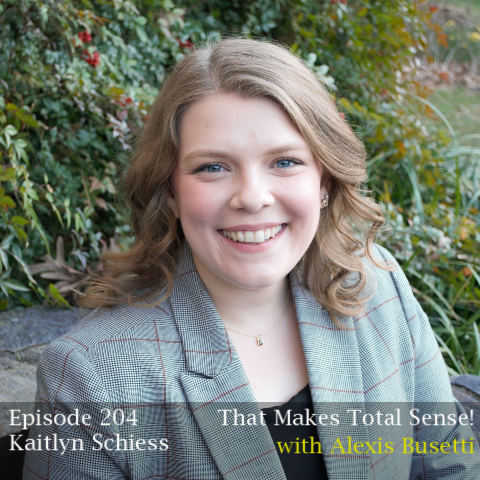
Speaker 2 00:00:44 All right. Um, hey, everybody. I'm, I'm like super, super thrilled to be with Caitlyn Chess right now. Um, I have finished a book, this comes out in August, is that right?
Speaker 3 00:00:56 Yes. August 22nd.
Speaker 2 00:00:57 22nd. Okay. I was like, do we have an actual date? Okay. August 22nd. This is called The Ballot and the Bible, how scripture has been used and abused in American politics, and where we go from here. And Caitlyn, I just wanna say like this subtitle for me, like already felt a little bit dicey <laugh>, right. I was like, oh, do we have to say abused? Like, do we really, do we really have to go there? And then I'll just spoiler like, and then you open with Trump's like, photo op Yeah. Where he holds a Bible, and I'm like, yeah, she did
Speaker 3 00:01:39 <laugh>.
Speaker 2 00:01:41 She had to go there. Because we have to be able to really see where we have been in this country and our use of faith, our use of the Bible, our use of, of, of scripture, and even church. Mm-hmm. <affirmative> and politics and all of that stuff. And how intertwined it has been and that it hasn't always been healthy. And I think we have to, we have to say that not only has it not always been healthy, it's been really harmful mm-hmm. <affirmative> in
Speaker 3 00:02:06 A lot. Yeah. And it's, it's interesting to hear you say resistance to the abused part, because I feel like there's a subset of people who are resistant to that. You know, the initial reaction is kind of like, no, I wanna think about how it's been used. Well, but I was also often writing some of these chapters, thinking about the people who are just thinking about the ways that it's been abused. I think there's also a kind of reaction after 2016, after 2020, after, especially younger Christians, especially younger evangelicals, saw so much misuse and thought, let's just chuck this whole thing. Like the Bible's for my personal inner spiritual life. It is not for the political sphere. There can't possibly be good examples in history of it being used well. And so it was important to me to include both, like, as you said, to examine some of the misuse because it's instructive to us. And then find examples where it was really positively used well to say, actually, there are a lot of really important things in American history that moved in the, the direction of goodness and justice that would not have happened without, you know, deep reference and submission to scripture.
Speaker 2 00:03:06 Yeah. I'm, I'm really glad you said that because as I was reading this, um, it's, it's really hot in Houston right now. So this was kind of my pool book for a few days. Mm-hmm. <laugh>. But as I was reading this, when, when I was kind of debriefing with my husband as, as I went through, and one of the things I told him is, I feel like Caitlin is both sides in this, in the best possible way, <laugh>,
Speaker 3 00:03:28 <laugh>.
Speaker 2 00:03:29 But you know, because you are, because you're right. Yeah. I mean, you just said that right there. There's tons of places where we can say this is, this is, this is horrible. Yeah. This is really no good. This, this has only been abusive. But then as you mentioned, there were lots of places where, um, where we wouldn't have gotten where we were without, without the helpful edifying use Yeah. Of scripture. And, and I think that's part of what, it feels so complicated and so hard mm-hmm. <affirmative> to sort those things out in our minds. I think, especially because right now we kind of tend toward these dichotomies. It's either good or bad, it's black or white, right? It's harmful or helpful, and this like mushy in between space. We're not very good as a culture in parsing that out right now.
Speaker 3 00:04:17 Yeah. And I think part of it too is as much as people have grown to be critical, perhaps of the church tradition that they grew up in, I have, you know, reflecting back on growing up in, you know, predominantly white evangelical churches have grown to be critical of that. I weirdly f found that some people who learn to be critical of the tradition they grew up in still stay so wedded to only thinking about that tradition. And so they think there, there are not good examples <laugh> of, of scripture being used. And I don't even think that's right. I think there are some examples within the tradition I grew up in, of it being used well. But it's especially true that there are examples outside of the tradition that I grew up in where scripture was used really faithfully. And so for me to say, no, it's just impossible, it can't be used well, there are no good examples, is still to have a pretty kind of self-centered, narrow understanding of not just my own tradition, but really the last 30, 40, 50 years of my own tradition.
Speaker 3 00:05:10 I'm not thinking very historically, I'm not thinking broader than, I mean, this book is really focused on America. We could have a whole other conversation about scripture being used globally in all kinds of positive political and social ways. But even in my country, a place that I feel identity and community with, there are really great examples. It just often tends to be from people who come from different backgrounds than I do. It does tend to come from more marginalized perspectives. And so for me to kind of say no, it's all bad, is actually really to kind of replicate some of the problems I'm seeing in my own community instead of kind of addressing them.
Speaker 2 00:05:46 Yeah. So what, what you've done here, I love it. It felt, it felt like a, like a cousin of color of compromise to me when I was reading.
Speaker 3 00:05:56 I'm
Speaker 2 00:05:56 Glad to hear that. So, you know, so, so kind of a survey right? Of, of how the Bible has been used and abused, and you just kind of take, I just kinda wanna give folks the layout. So Yeah. Cause I'm, I could tend to jump all over the place. There were so many great little little spots that I wanted to highlight, but just for folks to kind of understand where we're coming from in the book, you're, you have written kind of like, I don't wanna say a chapter per era, but that's kind of how it's set up. Yeah. Is like these, these kind of, uh, places where we would say, yes, we could see the use of scripture being very heavily used in this space, and then what did that look like on the ground? So you've got, you know, you do this historically from the, the founding and Revolutionary War.
Speaker 2 00:06:43 You hit the Civil War pretty hard, which I appreciated, especially I'm taking class on slavery right now, and we're just now in our modern context. And so that was really helpful for me to have that also. Um, but civil, where you hit the civil rights movement, you hit, um, kind of the Reaganomics era, of course, Trumpism, you know, Bush and Obama. Yeah. So you've got this, you know, lined out, and we can, we can see how the Bible has been used here. But what was interesting to me is a lot of, um, kind of flip-flopping of like, people that you would think, okay, well, you just said yeah, and maybe it wasn't exactly you right, but like, your grandpa said this and you been like raising this tradition. Then you flip around and then you say something completely different, and then maybe your kids say something completely different, but you're, you're trying to back up your, your policies, your politics, your beliefs, your whatever it is with the Bible. So, um, so given that, what, when you th, I mean this is kinda your wheelhouse, but what was the place where you were like, the people need to hear this, like this, this could be <laugh>, this could, this could be a project for me. Like where was the place where that <inaudible>?
Speaker 3 00:07:55 Well, I mean, I will say just in general thinking about the book, part of the goal was, I mean, I really just wanna write a book about how to read the Bible when it comes to politics. Like, I think I love the Bible, I love talking about the Bible. And I think it actually can be a real source of common ground for many of us who disagree politically. It should be, it has not been, to be clear, I have no kind of romantic ideas about the fact that we can come together on the Bible cuz we can't. But I have found in my own church that conversations that start in a Bible study studying scripture, and then go to some political or social place are better conversations than conversations where it starts with the political or the social issue. And then we start throwing Bible verses at each other.
Speaker 3 00:08:32 And so I thought, what could I do to help us think better about how we're reading the Bible when it comes to politics? And I wanted to use historical examples in part because I'm, am I a nerd? And I'm studying this stuff? And I think it's really interesting, but also because I thought I wanted to give tangible examples people could hold onto instead of thinking about interpreting the Bible in the abstract, which we never do. No one's ever doing it in a vacuum with no cultural or political influences, but hopefully with some examples that felt distant enough from us that we wouldn't just come ready to fight. Um, there's, there are applications to contemporary issues, and I don't kind of avoid those in the book, but trying to give examples that someone who reads the book and really disagrees with someone in their church or someone in their family could take the historical example and say, well, let's think about this.
Speaker 3 00:09:17 And the first one that got me really excited was thinking about loyalist priests during the Revolutionary War citing Romans 13 against the Revolution. And I thought it was so interesting in part because the Romans 13 gets thrown around constantly. This is the verse that we use against, you know, protest for racial justice. This is the verse that we u it's used a ton. I learned even more in our conversations about immigration and refugees as it's Roman 13 says, obey the government. Um, it became really contested during the pandemic, like churches that had to follow, um, restrictions for meeting or mask mandates that got thrown from a completely different kind of political side to say, no, actually you have to obey the government. And I thought some of the people who use that as if this is an uncomplicated passage that is easy to interpret and apply in a particular situation, would really hate the so-called straightforward interpretation of it during the Revolutionary War.
Speaker 3 00:10:11 These are patriotic people that really care about America and thought they were being treated unjustly in that period and needed to revolt. And yet, I wonder if they would think that, you know, if they were to apply their own interpretation of Romans 13 to that era. And so that was the first example that kind of came to mind when I was planning this out in my head. And I, I thought it would be helpful not only to say, okay, let's look at how that passage was interpreted and say, do we think that's a faithful interpretation or not? Let's look at what we can learn, not just about right or wrong interpretation, but about what kind of habits do we get in. Um, so that's one period. But many of the other chapters talk about other periods where a similar dynamic was at play where one side sort of said, we are on the side of, here's a straightforward verse.
Speaker 3 00:10:54 Romans 13, obey the government first Peter, honor the king. Like, it's just, it's easy, it's straightforward. The other side on during the Revolutionary War relied much more on narrative and sort of said, here's a story about an unjust king. This is about, you know, David and Goliath. This is about Shaak Micha and a Bendigo. This is about, you know, these are story, let's go to Revelation even and see Christians standing up to unjust powers. And so I, that's a thread throughout a lot of this history is not just that there are certain habits we get in, do we draw to, do we find ourselves drawn to narratives or to explicit commands that we can pull sometimes out of context, but also what, what of those tend to be more powerful and to what kinds of people and to what kinds of political ends? And so that was an early example that I was familiar with already before I started the research.
Speaker 3 00:11:42 And then I kind of did the research to plan out the chapters. And then half of the chapters at least changed <laugh> because I got into, you know, further into the research and thought, oh, there's something even more interesting here than I thought. Or actually this kind of political issue needs to be explored more. But that was the first one where I thought, I actually think as you said, your great-great-great grandfather in the same kind of political tradition in the same part of the country, who I think kind of feels the same way about things, did not in interpret Romans 13 the way that you would <laugh>.
Speaker 2 00:12:11 Yeah. I mean, that was probably one of the ones, yeah. I mean those back and forths, right. Of, of when, when do we say this? This is very clear. Right, right. Like, I I, and, and I'm one of those people now where I'm like, if you're telling me something is clear, I'm actually pro, I've already turned you off probably mm-hmm. <affirmative> like in my mind, well, the Bible is clear. I'm like, yeah, I probably didn't, I just probably didn't hear it. I'm, I'm doing my shopping list in my head cuz I didn't hear anything
Speaker 3 00:12:36 <laugh>. You
Speaker 2 00:12:37 Know, because it, because it's a because it's a complex, our, our sacred text is very complex and, um, yeah. And, and I appreciate you saying that about do we pull this from here? Is it narrative? One of the things that, um, that came up for me was, uh, a conscience reading or a moral reading Yes. Of the text as well. And then one thing I'm hoping that you can, um, that you can talk about a little bit there is the two, the two phrases that came to my mind were, when you were talking were cherry picking and literalism <laugh>. Cause these are, cause these are still pretty, uh, these are still pretty problematic today. And like, what, what does this look like on the ground when we're having those conversations that you, that you mentioned earlier? And we all do these things Yeah. We all cherry pick and we're all claiming to some form of like, this is clear, or this is literally what it says, or can't you understand this story for what, right. What it, how it actually reads. We're all doing this. So talk to us a little bit about Yeah. Cherry picking and literalism and how that has played out for us in our Yeah. In our political culture, our Christian political culture.
Speaker 3 00:13:54 Yeah. When I was going through the first round of editing this book, it was right after Roe v Wade was overturned. And right, while there was kind of this like student loan forgiveness debate, which I'm still waiting. I've got a, I've got a little bit of student loans, I'm waiting for us to figure out what's going on with that. Um, but I thought it was so interesting in both of those examples, people had very similar habits of using scripture. They were just coming from opposite political directions. So there were people and, and in both fights, right? So there were people during the Roe v Wade one that would say, here it says, I formed you in my mother's womb. In your mother's womb. So there you go. There were people who pulled kind of an obscure reference from the Old Testament law and said, no, here's an abortion in the Old Testament.
Speaker 3 00:14:34 So there you go with not much explanation from either of those sides or interrogation of what, how we're interpreting the Old Testament or what we're thinking about ethical questions, which are kind of different than other kinds of interpretive questions. And then in the student loan forgiveness debate, it was like people were throwing, um, the jubilee in the Old Testament and saying, okay, no, you've gotta forgive loans. And then other people were pulling, you know, various references from Proverbs about, you know, no, you have to, you know, stick to your word and fulfill your debts. And, and so I, I think you're a hundred percent right. We do this in all sorts of ways, <laugh> for all sorts of political reasons. Um, the cherry picking one, I think a lot of people are, are used to hearing that as in just, you picked a verse that just supported the thing you already wanted to say.
Speaker 3 00:15:17 You probably pulled it out of context. Um, I al so not only is it important to say a lot of people are doing that for lots of different reasons. I think the, the problem there is not only just to say, let's not pull verses out of context. Let's not pull them out just for this political purpose. But then sometimes that can be a claim that's used against people who are just trying to apply a particular passage of scripture. Or you just cherry picked that one verse. So you don't wanna cherry pick in a real sense, but you also don't wanna say, no, actually most of scripture doesn't apply to this political issue, or there's no guidance we can find. Or, you know, you're just cherry picking the literalism one is, is so tricky, <laugh> because, um, people do, as you said, use it for lots of different ways, like in lots of different ways for lots of different reasons.
Speaker 3 00:16:00 I think one of the interesting ways that was really helped me, as you mentioned earlier, the Civil War chapter. Um, I went in with an idea of kind of what I would find and the kind of interpretive moves that I assumed pro-slavery and abolitionist folks would use. What I was surprised by was that the real kind of divergence I found was not between the pro-slavery folks and abolitionist folks. It was between the hermeneutic that both pro-slavery and abolitionist white people used to interpret scripture. And the hermeneutic that predominantly free or enslaved black people used to interpret scripture. So both sides of the debate from, oh, you know, predominantly white interpreters tended to say, let's just, this is what the words say, we have a, they're really influenced by the enlightenment. They're like, we have a rational approach to this. We'll find the words in the text.
Speaker 3 00:16:51 Um, we'll find some way, you know, to kind of have a few steps between the historical context of this verse and the one that we're in, and we'll apply it. And obviously there's a lot more going on there. There's interesting interpretations on both sides of that. But that tended to be the approach. Um, and it was often abolitionist folks that said, you know, don't take some of that stuff. So literally in the sense of this is now a direct command to you today, they said, let's look at the general moral direction of scripture. And often they were doing something that they had very good, they were on the right side of this debate. They had very good reasons for it. Um, but they did often kind of subordinate scripture to their own moral sense. What I think is probably right, I will, I will certainly find here if I look hard enough, that is not what most of the black interpreters that were writing and speaking during this period were doing.
Speaker 3 00:17:39 They were looking at the grand narrative of scripture and finding themselves in a particular place in it. This is why the story of the exodus has always been really important for black communities in the US to say, this is an example of God liberating God's people against an unjust ruler. And if God has done that in history, and I don't think of history in such a rationalistic way where there's the past and there's me and there's a bunch of distance, I think in God's providence, I'm a part of the people of God, which means I'm part of the same people that God freed in the Exodus. I believe God will do that today. And that becomes this way of seeing myself in the story and seeing what God demands of me. Now, that's a very literal <laugh> in a certain way of reading scripture. And so there are a lot of kind of contemporary historians and biblical scholars that will look back at that period and say, it was the pro-slavery folks that read the Bible literally.
Speaker 3 00:18:32 And it was the abolitionist folks that didn't read it literally. And I go, are you reading the black people <laugh>? Like the black people are reading it very literally. They are just, see, they're emphasizing different parts of it. They're seeing it in a more holistic lens. They're asking, I think, really important questions about what this means for us ethically, not just is this an accurate account of history or how does this fit into a systematic theology? They're asking what does this narrative mean for the way God has interacted with humanity and what does that mean for God interacting with me? Now, that's a very literal approach. It's just not literal in the way, in the kind of wooden, um, surface level way that we tend to think of the word literally.
Speaker 2 00:19:13 Yeah. I I thank you for going into that. I think one of the, when in one place in the book you say this is, this is just an unhelpful term <laugh> Yeah, yeah. Generally to use. And that way, and, and I wanna go back to the, to the black interpreters that you, that you just mentioned, because I, I really have been loving reading black interpreters from that space. Like I said, I'm, I'm kind of, I in my own in another class kind of doing some, some similar work in that. Yeah. And one of the things, this isn't from, from those texts, but one of the things that came to my mind when you were talking was that this, this grand narrative of, of God, I'll say, I will say of God being a liberator. Yeah. Um, it's like this is not an obscure, this isn't an obscure story and Right.
Speaker 2 00:20:03 Even though it's kind of a strange story in a lot of ways, um, it's not an obscure story. And I think about God like this, this makes sense in that God continues to define him himself by this story. Yeah. Right? Yes. Like, we see God when he's giving commands, when he's saying who he is, when he's saying who the people of Israel are, he keeps referring back to this. Yes. Like, I am the God who brought you out of Egypt with a, with a, with a mighty hand and an outstretch arm. And he keeps saying this over and over, like he's defining, like he's naming himself as this kind of a God, like as, as this God. And so it's not obscure that people who were enslaved would say, God has said <laugh>. Right. He is the one who liberates people. Um, and, and he liberated this, this people. And so, yeah. So it's, it's this, we haven't, we haven't said this term yet, and I'm hoping that you can, that you can say it, but this, this hermeneutic is different Yeah. Than this one that is really severely influenced by enlightenment and rationality and, and stuff like this. This, um, even when we look at narratives, there's different ways
Speaker 3 00:21:18 Yeah. To look
Speaker 2 00:21:19 At that. Yeah. So, um, yeah. Anyway, thanks for, thanks for going there. I think kind of along those lines, when you, when you say like, I, I can't remember exactly how you phrased it, but the Bible can inform <laugh>, right? It really can inform as believers how we look at these things. And so one of the things that I wanna ask is like, what, what is the Bible and what isn't it mm-hmm. <affirmative> when it comes to how we're looking at policies like you just named a couple that are like right now, uh, Roe versus Wade. Um, you, we have the student loan forgiveness, but then we've got all sorts of stuff that we've kind of thrown out here. We've got, um, you know, pandemic issues. We've got immigration stuff that's looming large. We've got, um, just general economy kinds of things right now as we are, as we're sitting here, thankful that people are actually, like, have figured it out with the dead ceiling and everything on June 1st.
Speaker 2 00:22:24 Um, but, and, and then kind of in quotes here, kind of both sides are looking to the Bible to help inform how they're thinking about these policies. But I would say, I think this should go without saying, this is kind of obvious, but the Bible isn't a policy book. Right. Sometimes people have to say this, like, my, my husband's a an earth scientist, he's a geologist. Right? And so, and so sometimes like people, we have to say like, the Bible isn't actually a science textbook. Right. And so, like, you know, it's not, it's not that it's not a science textbook, it's not a policy book mm-hmm. <affirmative>, but mm-hmm. <affirmative>, we, you know, but it's not actually absent of some of those things either. Right. And so, help us think about this better
Speaker 3 00:23:10 <laugh>. Yeah. Yeah. Oh, I'd love to. Um, that's such a great description of it, Alexis. I feel like that's, that's what a lot of people I think are coming to this conversation with is like, I don't wanna treat the Bible like a thing. It's not, I don't wanna treat it like a policy manual. I don't wanna treat it like, you know, a historical record, like that's the point of it, or it just has all of the answers to life. But also, I don't want it to have nothing to say to my political life. That's a huge chunk of, again, like I, I'm not thinking political just in terms of how I vote or the candidates I support or the policies I care about. I'm thinking my life communally together. That's a, that's my whole life actually. That's not even just a part of my life.
Speaker 3 00:23:48 That's everything. I want the Bible to have something to say to that. Um, it makes me think about, I have just over on my bookshelf here, a, um, Patriots Bible, uh, just a fun little memento I got online. That's terrifying. Um, but on the back it has a quote from Ronald Reagan. And Ronald Reagan says something like, um, you know, the answers to all of life's questions are found in this one book. Um, and I'm just thinking like, I have lots of questions <laugh>, like I have lots of questions. The Bible does not answer. Um, I have questions about the Bible that the Bible does not answer, but I also have lots of just like practical questions that the Bible does not answer. Um, so I think one of the things that we should say first and foremost is that the Bible is a story that is intended to be formative for the people of God.
Speaker 3 00:24:34 Um, it is in, in a certain sense, the church's book. It doesn't come to us just like floating on the clouds. It comes from generations of people compiling and editing and handing down across generations. This is the story of God's people. It's not just a record, it is inspired by God, but the way that God chose to do that is through humans and through this particular community of humans. And so I think that's the first thing to say about it. If that's true, and it is this story, and it has lots of of smaller stories within that story of how God relates to communities and how God desires communities to live together, then it will have instructions for us and how to live in our communities. Um, to go back to the, the student loan example, part of the reason I was so frustrated with people just sort of like shooting off a quick tweet with like, here's the jubilee so that proves we need to forgive student debt.
Speaker 3 00:25:27 Part of the reason I was so frustrated by that was because it gave fodder to people who are critical of something like the Jubilee having anything to say to our political life when I don't think those are the two options. It has nothing to say to us or, well, here you go. I quoted the verse, we should obviously fulfill this political goal I have. Instead it's to say, well, the Jubilee tells us that human communities, first of all, in in a fallen worlds with sinful humans, human communities will just naturally in their organization and across generations have wealth that gets accumulated unjustly with certain people and a lack for others. The there are reasons God gave these instructions because this would happen. So we know that's true of ourselves, that some people having a ton of money and other people having no money is not just the world working perfectly for justice.
Speaker 3 00:26:12 That is a broken part of our communities that will happen if we aren't doing something to stop it. And that God cares about providing for the most vulnerable people. And that part of the way that God cares for those people is instructing those with more to provide for them and doing it in a systemic way, having a community that has rules that function towards that goal. Um, do I think that we can just institute the jubilee? Well, we don't have farms. I mean, not all of us do <laugh>, so I don't know how we could do that. Um, but, and, and land doesn't work the same way and poverty has different causes today. And, you know, but to say that the options are either institute the jubilee or have it say nothing to our political life is not right. Instead, I think the best thing that I can say about this, and, and a big part of kind of my heart underlying a lot of the book, was to say, this is harder than you think.
Speaker 3 00:27:03 But it is not impossible. Like, those are not the two options. It requires the guidance of the Holy Spirit, which often the guidance of the Holy Spirit happens by being in a community that has different perspectives. Um, it requires careful study. It requires time and patience to discern not just what does scripture say, but what is happening in God's world around us and what does that demand of us in this moment? What passage is appropriate for now is not just a hermeneutical question in the kind of strict intellectual sense. I can interpret this passage really, really well, but if I miss that this is not the passage for the moment, this other one is then I have still failed to handle God's word faithfully. It requires both of those elements. And so that's a big part of the political conversation, is like, I want us to interpret scripture in a kind of hermeneutical musical approach.
Speaker 3 00:27:54 Like, what do these words mean? What, what role does this story play in the larger story? I want us to do that really well. That alone will not tell us what this means for our political life. It will require also us with the guidance of the Holy Spirit discerning what does God demand of us now? What does our community look like? What are we overemphasizing and what are we ignoring? Those kinds of questions are crucial interpretive questions as well, just as it is like, as you know, from your classes, like learning the biblical languages, <laugh> and like learning genres and understanding historical context, like all of that is important. We can be excellent at that though, and really fail to know how scripture actually applies to the moment that we're in.
Speaker 2 00:28:31 Gosh. So I'm thinking now, this isn't, this isn't a big pivot, but I'm just gonna throw the term out to tell you where, where my mind is going. Yeah. Let's see if we can go there together. Okay. So now I'm thinking about Christian nationalism
Speaker 3 00:28:46 Mm-hmm.
Speaker 2 00:28:46 <affirmative>, and I'm thinking about that because I'm thinking we want to do what you just said. We want to do this in an excellent way, in a faithful way. Um, and part of one of the, part of what we hear thrown around, right? And it's been, I mean, forever, certainly since I was a kid, is America is a Christian nation. Right? Right. And so part of what I just kind of wanna say out loud is even talking about this, so yes. In how we, in how we interact with our communities as believers, whether we are in a community of believers or if we're just in a community and we happen to be believers. Yeah. The Bible definitely informs exactly what you just said, how we interact in that way on the political scale and the national political scale. I think it also should inform how we interact in that, in that national political scale with the understanding that we're actually not a Christian nation.
Speaker 2 00:29:49 Right. <laugh>. And so this was one of the things, I'll just throw this out. I didn't, I didn't think I was gonna mention this, but it came up when I was in my mind when I was reading your book when I was in college, um, I, and I've, I've always been like a little bit off when it came to my white evangelical spaces that I grew up in. And I, I wholeheartedly blame my really compassionate dad who also studied politics mm-hmm. <laugh> for that. I wholeheartedly blame him. But, but, um, one of the things that I, I got into an argument with my roommate about was, was prayer in schools, like prayer in public schools. Right. But I, as a Christian in the Bible belt was supposed to be on the opposite side of that argument than I actually was. Hmm. But my argument, I couldn't have named it at the time, but it was, it was based in this idea of pluralism though.
Speaker 2 00:30:44 Mm-hmm. Right. Like, I'm great, I can pray, but am I gonna force everyone else to do it? No, I don't think this is actually okay. And I didn't have really great, well formed arguments at that point, but I kind of knew what my gut was telling me. Yeah. And some of this came to my mind because I really loved the, the chapter on Bush and Obama mm-hmm. <affirmative> and how you compared their political faith talk and their political scripture talk, which spoiler, one of them had more scripture than the other one. <laugh>. Can we guess which one? <laugh>? Um, but, you know, and one had more generic faith talk than the other one. Yeah. Can't we guess which one? Um, but you know how this looked in and you wrote about it in the context of, of pluralism mm-hmm. <affirmative> and what that looks like in our nation. So there's not like a true question there, but just kind of moving from like yeah. Bible informing our politics and community and on the grander scale, then what does that look like? You know, and, and how do we actually re respect become, you know, respecters of the people who we live around while the Bible is informing us in that way?
Speaker 3 00:31:59 Yeah. Oh, thank you for bringing up that chapter because it is one of my favorites. And I, I, this is not something, I mean, most of the chapters were really, I mean, I was reading a lot of primary sources, but I was really dependent on secondary sources to help me kind of figure out what was going on. I'm not a historian, I'm a theologian that wants to be very historically <laugh> informed. Um, but this was the one chapter where I really went, oh, I discovered something here. I think like, this is not something I've seen people write about. Um, so I was really interested in Bush and Obama's prayer, breakfast speeches, this like annual opportunity that they have to, and now things have gotten weird. The prayer breakfast, like there's two versions of it now, and it's kind of complicated. But for those two presidencies, those eight years, um, or excuse me, 16 years across the, the two of them, um, they had a yearly opportunity to kind of give a speech to religious people, to faith oriented people about the country, but also really to make a more religious or kind of faith-based statement.
Speaker 3 00:32:56 And I thought it was really interesting that Bush who was lauded as you know, the most Christian president, um, there's some pretty wildly overstated things some people said at the time about how Christian, how amazing Bush was. Um, and Obama, who spent most of his presidency to this day trying to convince people that he was not Muslim, which would be fine, I think, but he was not, he was a Christian. He is a Christian. Um, and so very different kind of public perceptions of them when it comes to religion. And what was interesting to me was that across the eight prayer breakfast speeches that Bush and Obama gave, as you said, as you alluded to, Obama quoted scripture much more frequently than Bush did. I think the most interesting part of this is that across the eight prayer breakfast speeches, Obama, or excuse me, Bush never mentioned the name of Jesus in all eight of them.
Speaker 3 00:33:45 This is supposed to be his most religious speech, never mentions the name of Jesus in all eight of them. Obama mentions the name of Jesus in all, but one of those speeches. And in an early one of those speeches, he talks about the nail scarred hands of Jesus. So interesting. You know, in contradiction to their public personas. And I think really part of what's going on here is that Bush wanted to kind of talk about faith in really generic terms. He wanted to draw on the civil religion and say we all basically believe the same things. He, he was much more likely to talk, especially about kind of Abrahamic faiths or, you know, what we all share, or to just say, you know, generic terms for God like creator or provider to talk about faith more than any specific faith. Um, and he, the more I dug into it, the more I realized that even during his presidency, people talked a lot about how he was very known in an identity sense for being a Christian.
Speaker 3 00:34:39 But he was very private about what that meant. No one really knew who was advising him spiritually. No one, he didn't have a church in DC that he went to. Whereas Obama, in some ways, people would think, you know, less distinctly Christian because he was more open to other religions. He referenced a greater diversity of religions in those prayer breakfast speeches. He worked across some greater religious divides than maybe someone like Bush did. And he talked a lot about religious extremism and the need for pluralism. And yet he also talked a lot about his own faith in very specific terms. And I think part of what to learn here is, I actually think the more that we can be specific about our faith tradition and say, I am a Christian, I'm coming from a particular tradition, scripture gives very particular claims on me. It's not just this generic thing that anyone can pick up and apply in their political life.
Speaker 3 00:35:32 It actually requires the Holy Spirit to interpret it well. It requires the community of faith for it to be interpreted well. And so that's a specific faith claim. I actually think the more that I say, I'm not just trying to kind of come from a generic religious angle. I'm coming from a specifically Christian one and I want to hear from people of different religious traditions and backgrounds what their specific beliefs and gifts are for our community. I mean, I had someone a few years ago ask me, I think actually it was less than a few years ago, it was during the, um, 2022 election. Someone sort of said like, don't you think maybe Christians should be less public about the fact that they're Christians when it comes to their political life? And I said, well, I, I was in the same spot I am right now when I was giving the interview.
Speaker 3 00:36:13 And I said, well, my next door neighbors that are right here, Muslim family, nowhere that any of them go, can they pretend they're not Muslim <laugh>? They dress as if they're Muslim the way they are coming from a different country. So if you listen to them talk, you'll imagine that they're not from America. There is no ability for them to live the social and political public life that they live as if they are not coming from a particular religious standpoint. And that's true of a lot of religions other than Christianity, in part because we have been so predominant in the United States, in part because most Christians don't wear anything that sort of signifies publicly that we're Christians other than maybe, you know, a really big cross or something. Um, but that's become such a generic symbol now. It might not even tell you anything. And so I think it's really important for us to say, to protect the rights of other people who come from religious communities, have other sacred texts that they think put burdens on them to act in certain ways in public life.
Speaker 3 00:37:08 It actually is important that I'm honest about where I am coming from. I'm not voting for immigration reform or for candidates that will support immigration reform because I just think it's a good idea. I really am looking at scripture and seeing that God judges nations by how they treat foreigners, <laugh>. I am doing that because I believe that is true and it's how I'm interpreting scripture and it's the community that I'm coming from. I think the more that we can be upfront about that without making those real gifts of scripture demands upon other people, making them coercive, making them like weapons, the more that we're actually opening space to say, I'm bringing my gifts to our public life. I want you to bring your gifts. And we're not gonna pretend they're the same. Cuz they're not, they're different. And that's a good thing. I wanna honor what you're bringing, just like I want you to honor what I'm bringing.
Speaker 2 00:37:53 Yeah. I mean it's the, when you, when you named it just now again, and you did in the chapter as well, but um, of Bush's kind of civil liberty of like, oh, we kind of all are, you know, and, and you go, I mean, that, that kind of like sounds good to a bible about Christian. I keep referencing Bob. I mean Bush is a Texan, let's just say it, you know, next week I'm gonna fly out of, you know, his daddy's airport. Right. <laugh>, I mean like, this is like, this is, this is, it feels good Yeah. In some ways right. To hear that and you go, yeah, yeah, you're right. You know? Yeah. We kind of all can't we all just get along kind of, you know, thing. But then I think what I have always thought of in my, like, I don't know as a kid, as a teenager, when I just kind of had that little like empathetic going, yeah, but what if we were the minority? Like, what if I was the minority? How would, it's just a simple golden rule kind of thing. Like how would I want whoever was dominant, whatever group was dominant at that time to treat me, you know? Yeah. And it's a really, you know, I don't know, just kind of simplistic way to think about it, but when, when you think like, well no, we're not actually all the same and the Abrahamic faiths aren't actually, are
Speaker 3 00:39:04 Not Yeah. The same.
Speaker 2 00:39:04 Yeah. You know, and, um, and to just kind of say, yeah, I mean we're, we're all kind of here, we're all kind of see the, the same way and all the same. It's, it's really, I mean, I would say it's like it's disrespectful mm-hmm. <affirmative> to, to other people and their experience and their religions, but it's also kind of disrespectful to Christianity.
Speaker 3 00:39:25 Yes.
Speaker 2 00:39:26 Right. Too, to say that like, like there are major differences and part of respecting one another as people is to recognize the differences. Yeah. And as you said, there's a particularity, there is something about this text. It requires something of me that's different than what your neighbor's text requires of them. And, and as you mentioned, that we can each bring our gifts Yeah. And really help one another and help make things, you know, better, hopefully. But this requires that we actually recognize that people have different gifts than we do.
Speaker 3 00:40:05 Yeah. And,
Speaker 2 00:40:06 And it sounds like
Speaker 3 00:40:07 You, like you said, it sounds nice to be like, oh, we all kind of, but it's like, no, I believe a man in the first century is God and lived and died and rose from the dead. That is not just like a generic nice thing that we all believe. That's a really specific thing that has implications for how I live my whole life, including my political life. And if I want that to be a part of my public life, which I do, I need to recognize that my neighbors do not think that <laugh>. Right. Like, that is not what they think about Jesus. And so pretending like it's all the same is not, isn't helpful.
Speaker 2 00:40:38 It's not the same. No, you're right. Yeah. No, you're right. Um, gosh, Caitlin, I don't know. I'm like looking at the time and looking at what, where, where else would we wanna go? <laugh>. There's lots of things. Um, okay. So, okay. Do we have time for like one more kind of major topic? Sure. Okay. Okay, great. Because I, I wanna, uh, you start, and you don't fully end the book with Trump, but you've got, you've got like a Trump intro Yeah. And then kind of a Trump outro before you get to, uh, before you get to the, where should we go from here? Clear. Clearly Trump is not where we should go from here. Trumpism. Yeah. <laugh>. This is not how you end the book. Yes.
Speaker 3 00:41:19 No, no, no. Here
Speaker 2 00:41:20 We go. Let's you know. Um, but I would say something that it's not necessarily a thread throughout the book, but we've got wide evangelicalism, which has been hugely influenced by dispensationalism. Mm-hmm. <affirmative>, and then we this kind of literalism as well, which we've touched on. And um, and we, and we saw what we saw on, uh, January 6th of, of 21. And there's lots of prophetic kinds of language and things happening with like, who is Trump and, um, and these, these kinds of things. And even, I want you to even like, in two seconds give us like a little Caitlyn definition of prophecy there, because I think like mm-hmm. <affirmative> gonna get us on the same page. Um, but so much of this is, is, is happening as I see it from, from my lens, how I grew up is because we're really, really interested in what's gonna happen.
Speaker 2 00:42:14 Yes. We want eschatology drives so much of our religious ideas, but also our political ideas because Yeah. You talk about how Lindsay, which I love <laugh> cause he helped us, I won't say, I won't blame him entirely, but he really helped us marry these two mm-hmm. <affirmative> mm-hmm. <affirmative> with this glue of eschatology to really bind up how we're reading scripture in some of these ways and how we're reading the political situation. Yeah. How we're reading what's going on in other nations and things like that. I'll say, just throwing this out, I was listening to, I don't know if it was the Daley or something recently about, uh, the, the title was something like, Trump is gonna get the nomination. It was something like this, it's Inevitable or something like this. And, uh, the journalist was interviewing folks who were at one of the recent Trump rallies and they was, they were kinda saying like, what do you want from him?
Speaker 2 00:43:11 Like, what would you want or what, or either, what do you, what would you want from him as if he became president again? Or what would he be doing if he were in the White House now instead of Biden? It was questioned like that. And one of the women was like, well he's gonna end this war between Ukraine and Russia, you know, if, if he had been here, this never would've happened. And I thought, oh dear. Yeah, <laugh>, like, I had no idea that someone sitting in a house in DC would have that kind of power. Yeah, yeah. End a year plus long war between two countries that we don't have any control over. Yeah. It just was wild to me. But then, you know, but then I think back to then I think back to some of those wonderful primary texts that you had the privilege of reading. Yeah. I've only read a chapter of late Great. Um, but, you know, but, but they're married. Yeah. So can you, can you talk a little bit about like, again, like maybe just like two seconds on prophecy and then like how these are, are married, this is how we see things now. Many of us, yeah.
Speaker 3 00:44:16 I'll try to give a really short definition of prophecy. I just did a, a directed study all last semester on, um, the prophets and the meaning of prophecy. Um, so I will keep it short, but I mean, I think the, the most general definition is just to say prophecy is a word from God to a particular person or a group of people. We forget a lot. There's actually like groups of prophets in the Old Testament and in the new, um, and so that can be a variety of things. It can come out in physical actions. Some of the prophets do some weird stuff. Sometimes it's songs like Deborah's song. Um, sometimes it is a specific word, sometimes it is predictive. Very often it is also confrontational of the moment that someone is in. Sometimes it's comforting. Sometimes we forget that like some prophecy is comforting, especially prophecy as it's described in the New Testament is often described as a word of kind of exhortation encouragement, um, especially thinking of people in the early church facing great suffering or, um, persecution.
Speaker 3 00:45:12 Thinking of word of prophecy might be this word of encouragement. So it's a diversity of things. Um, but we do exist in America in part of a historical, cultural, political tradition of thinking of prophecy as primarily or even exclusively in some ways predictive. And thinking that that requires something of us politically. Some people find this very strange, right? If you come from the outside and you see that Americans, many Americans have been shaped by a theology that says, we will be raptured out of here and things will only get bad until Jesus comes back. Things are only gonna get terrible. We'll get raptured out of here before it gets too bad. Hopefully. Um, you would think those people wouldn't care about politics at all because things are only gonna get worse. And honestly you want them to get worse. Why would you wanna stop anything bad?
Speaker 3 00:45:58 Jesus is coming bad. Um, and also it's not gonna affect you. So why do you even care? And yet there has been great political momentum coming from folks shaped by this eschatology in part because it's a eschatology that very often and this part is, is really, you know, quite unorthodox. This is not what even most dispensational pre-millennial theologians would say, but in a popular form, what often gets said is nothing about this world matters, it's going up in flames. So why do we even care? Um, so that means I can exploit the environment. Um, I can hurt other people as long as I also share the gospel with them. I can do whatever I want. The only thing that really matters is the next life. But it's also a theology as you just described, that that has a lot of confidence in our ability to know what is coming because the Bible will just explain it to us.
Speaker 3 00:46:45 Um, there's an an early 20th century prophecy novel, which I, in the book don't get into the, like, the fiction part of this very much, but it, it's an interesting part of this history, um, called the Omega Project. And I, I wish I had read this before I wrote the book cuz I would, it would've made such a good example because in this book, basically after the rapture, a bunch of people who are left behind just basically make a computer like not, I mean not computer at that point, but like some kind of process to just put in information about the Bible. It'll just put in all the data, the bible's, just data stick in all the verses all the chapters, put it in there, you know, click some buttons around, make some things move, and out pops interpretation and un and unsurprisingly what pops out is dispensationalism.
Speaker 3 00:47:28 Um, so it's just, it's a mathematical process. It's a rational process, it's just clear. Um, and it will tell you what is coming next. And so then you get all the timelines and the charts and the, and I come from this tradition. I went to a seminary that's, you know, one if not the primary place that this theology came out of in Dallas Theological Seminary. Um, and I will say a lot of the popular stuff is very different from what the kind of theologians writing about this, um, throughout the, you know, 19th and 20th centuries wrote. But there was still for them a great emphasis on a quote unquote literal interpretation. Um, which was not literal in the sense of, well this is just what it means. It was literal in the sense of, I'm kind of ignoring the genre here. I'm not really thinking about what these images would've evoked for people who read it throughout history.
Speaker 3 00:48:15 I'm just thinking what does this on its face look like to me? And especially as nuclear fears are increasing in the middle of the 20th century, it starts to feel like what Daniel says and what Revelation says is describing nuclear warfare. There's really complicated, um, kind of linguistic ways of thinking that Russia, or that at the time the Soviet Union must be GOG as described in the Bible. And so that must mean that we have to kind of react this kind of way politically. Um, and so I think that's one of the biggest, I think lessons for us in this is not just let's pay attention to how dispensationalism has shaped American evangelicalism. There's a lot of energy for that right now, and I think that can be really good. And immportant, I think the, the lesson that has more applicability to us though is not just let's read the profits different, which is important or let's read revelation different.
Speaker 3 00:49:07 I think the bigger lesson for us is let's have a little less confidence <laugh> in our ability to just so clearly understand what's happening here. Because we might not think dispensationalism pops out of a computer if you just put the Bible in it. But we do often tend to think, if I just have the data right, I have the right hermeneutical rules, I can pop out the right interpretation and I can have a lot of confidence that I am right and that I can live my life correctly because of it. And I think that period should give us some humility to say people were scared. I mean, I did not live anywhere close enough to that to have that sense, but my parents will talk about the fear of like getting under their desks and thinking, you know, what's that gonna do to help me if a nuclear bomb hits my elementary school?
Speaker 3 00:49:52 Um, but that's a kind of fear and a desire for stability that we have. Now, it might not be about nuclear weapons, though in some ways it can still be, that's still a very real threat in our world. It might be a global pandemic that scares you really badly and makes you think that you're seeing signs of, of the coming antichrist or the mark of the beast. And at least then even if you're world is really sad and hard because people are sick and you can't go outside and things are scary. At least I can pretend I know what's coming next and I can prepare for it and I know my role in it and that that has easy examples in some more conservative evangelical spaces. But it has lots of examples outside of that too. None of us are immune from that desire to, to find in scripture a secure footing that says, you will be safe, you know what's coming in the future, you will be okay.
Speaker 3 00:50:40 And the good news is in that kind of really specific wooden way, we don't have that God does not give us just this clear path of like, these are the timeline of events, but the story of Revelation was intended to be a comfort and a source of security in a very different way, in a way that said, you will face suffering. You are facing suffering currently, God is sovereign over all of it. And in the really ultimate sense, you know, the end of the story, like for all of the, you know, interpreters in this period that got obsessed with the first 20 chapters of Revelation, very few of them paid attention to the last two and the description of new creation and wiping t every tear from every eye. And God being with God's people, that is supposed to feel secure to us and like hope to us, but not in the way that, you know, kind of reconstructing this timeline or scenario. And like putting red string in between different photocopied Bible pages on your clipboard in your mom's basement probably does. Um, but we still can find that comfort and that hope.
Speaker 2 00:51:37 Thank you. No, that, that feels really great. And that actually feels like, um, that feels like a really good place for me to wrap up. But I wanna give you, um, I wanna give you another shot, um, because this, it's, it's really, it's a great read. It's, it's a rich, it's a rich read and we've touched almost none of it. So <laugh>.
Speaker 3 00:52:03 So
Speaker 2 00:52:03 What is, so I wanna give you like it given, um, from your vantage point, because this is again, like your wheelhouse. This is what you talk about, this is what you work in, this is, you know, a lot of your community. Um, what, how, how would you encourage folks who just feel maybe a little bit overwhelmed by Yeah, even this i this idea. Like they trust God, they trust scripture, Jesus is their everything. And there may be maybe afraid, or at least they feel they can see the things that we've just mentioned and going, this, this feels really chaotic when I, when I look outside of my window. Um, how would you encourage, how would you encourage folks to um, yeah. To just faithfully read and help the Bible through the Holy Spirit to inform those experiences for them that feel chaotic or scary?
Speaker 3 00:53:05 Yeah, yeah. Um, one of my kind of favorite parts of the book is the very end. Um, and in some ways I wish I, that whole section could have been longer, but there was so many other things we needed to do and cover. And, um, but one of my favorite little, like very last part of the book is, um, it's earlier in that last section, is talking about, um, Dietrich Bonhoeffer's really famous speech that he gave, I mean very close to the rise of Hitler in Germany. And he talked about reading scripture against ourselves, not just for us, but against us. Um, and I think for some people that's the word they need to hear. It's like you're not reading scripture against yourself for people who feel so overwhelmed, um, and maybe discouraged by people they have seen misinterpret scripture. I think the better word is another part of that speech where he's talking about how a lot of people at that point, which is funny for us now to realize we've been having the same conversation for decades.
Speaker 3 00:54:02 But he's saying a lot of people at this point are, are bemoaning the fact that the church is dead. The church has no power, it's just dead. And I love the way he said, he responds to this cuz he, he narrates this man on the street, like telling him the church is dead. And he said, um, you know, the, the pious faithless, the kind of people who, who act like they're really pious, but they don't actually have any faith, their response to this is, the church will rise again. We will work really hard. We'll make it something beautiful again. Like let's just get together and do it. And he says, the, the non pious faithless, the people who just don't care that the church is dead, rejoice great church is dead. It's been abusive, it's been, you know, repressive great, the church is dead. And he said, it's the, it's the actually faithful people who respond to this claim.
Speaker 3 00:54:45 The church is dead. And say, of course, because just like our savior, we find our life in death. Um, and I just think for people who, and I have felt this way, who feel like there is no goodness in the church that I am in or in, in the American church. I see abuse, I see misinterpreting scripture, I see corruption, I see money that's misused. I think it's good to hear both that there's a church that is broader than the very small one, that you are a part of the very narrow tradition, the very short history. But that even if there are parts of this that die, our life is found in our death. Like the, the hope of the resurrection of Christ is the hope of my resurrection in the future is also the hope of the resurrection of the whole people of God and eternity. And that is the kind of, as I said before, the hope and security that we actually need that actually feeds our soul instead of this fake security that comes from thinking that we have all the answers. That the Bible is just a rule book, that if we interpret it correctly, we'll just be perfect people and live perfect lives. We won't, but that hope of, of our resurrection, of the resurrection, of the people of God and eternity is a hope that, that we actually can stand on.
Speaker 2 00:55:57 Thank you so much, Caitlyn. That's beautiful. Um, again, the book releases August 22nd. It's called The Ballot and the Bible, how Scripture has been used and abused in American politics and where we go from here. Thanks so much for coming on Caitlyn.
Speaker 3 00:56:13 Thank you Alexis.
Speaker 2 00:56:15 The links for all the resources mentioned in today's episode can be found in the show notes, music and podcast production by
Speaker 1 00:56:22 Seth Bus. Be sure to give us a review on iTunes and subscribe at your favorite podcast listening app. You can also visit us at. That makes total sense com.