Episode Transcript
Speaker 1 00:00:06 Welcome to That Makes Total Sense. A podcast dedicated to exploring God's generosity and justice. I'm Alexis Boetti, a Christian aiming to ask good questions and encouraging you to do the same. Every one of us is wired by God to live out generosity and justice. But the how sometimes eludes us that makes total sense is a way for us to get together, posture ourselves as learners, and challenge one another, to practice generosity and justice in a tangible way every day. Okay. I can tell you I have, I do this, you know, a decent amount of times during a month, and I felt particularly excited and nervous today, Karen.
Speaker 2 00:00:54 Oh no, <laugh>.
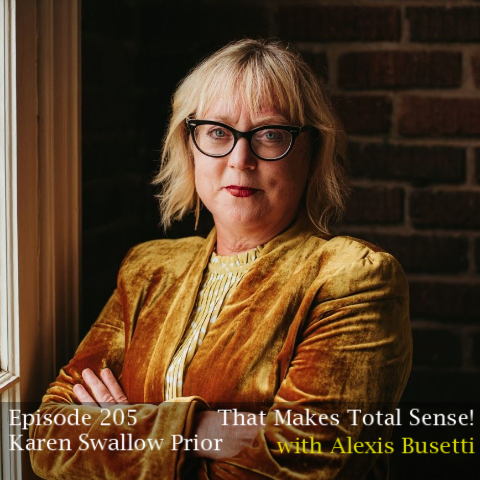
Speaker 1 00:00:58 I think it's because, so I'm with, I'm with K S P, I'm with Karen Swallow prior today, and I'm so pumped. Um, but I get flashbacks to like my days in undergrad English lit classes. And I'm like, oh no, please, no, cuz I don't, I don't know the things I'm supposed to know <laugh>, but thankfully there won't be a test, I don't think.
Speaker 2 00:01:19 Uh oh. Did you miss the test? I did send it. I sent it to you. No, no, no. <laugh>,
Speaker 1 00:01:26 I didn't get it. Um, but Karen has written, of course, lots of incredible books, but this one that I finished at the coffee shop this morning is called The Evangelical Imagination. How Stories, images, and Metaphors created a Culture and Crisis. And so, Karen, welcome to the podcast.
Speaker 2 00:01:47 Thank you for having me. And there will be no cast
Speaker 1 00:01:50 <laugh>. I'm so excited about that. Cuz I can't, I've been, I've been studying and my brain is kind of mahi and I can't do it. I do wanna say two things about the cover of this book, though. First, I love that you have the same image as was in my grandmother's guest room on the front cover. This brings back a lot of warm memories. I feel like I'm sleeping on a day bed when I look at it. And second, I have followed you on Twitter for a while and I'm sure this conversation has come up, but I probably have missed it. There's no Oxford comma.
Speaker 2 00:02:27 Oh, you know, that conversation hasn't come up, but it's just like, there's no way
Speaker 1 00:02:34 It hasn't come up.
Speaker 2 00:02:35 I know now that you're pointing it out. Right. I, it's like house style and I just, like, I, as a writer, I, you know, have to give, I've had to give, I have to give that up, you know, because you're, whatever, whoever you're writing for, they, I, I put in the Oxford commas and they take them out, you know? So
Speaker 1 00:02:58 You're an Oxford comma person.
Speaker 2 00:02:59 Oh yeah. Absolutely.
Speaker 1 00:03:01 Okay. I just thought, yeah, I just thought, how could I miss that? I really, you know, not that my respect would've lessened that much if I found out that you weren't, but
Speaker 2 00:03:11 I, no, I, yeah, no, I get it. I get it. I you are, I appreciate that. Yeah. Oh, absolutely. Yeah.
Speaker 1 00:03:16 Okay. Okay. Good. Okay. I feel I'm feeling a little bit of relief. I'm feeling lesser.
Speaker 2 00:03:19 I mean, you know, the whole meme with the now, so I'm gonna mess it up. But, you know, like the, the Nazi and the stripper and you know, that meme Yeah. I mean,
Speaker 1 00:03:27 No, but now I'm gonna look it up. Yeah,
Speaker 2 00:03:30 For sure. I, I dunno if you have, like, put those in your show notes, but you should, it's like, it's like the reason for the existence of the Oxford comma. Yeah. So you don't mix up so that it, it's, you'll never get it out. You'll, you'll wanna burn your eyes out when you look it up, but it's great.
Speaker 1 00:03:46 And then I'll put a link so everyone else can wanna burn your eyes
Speaker 2 00:03:48 Out too. Please do. Yeah.
Speaker 1 00:03:50 Okay. I did. Now I put a note too, myself. Nazi stripper, Oxford comma, that's all it says. Yeah.
Speaker 2 00:03:55 Yeah. If you can't find it, let me know. Cause I usually try to keep it on hand. It's, it's good. <laugh>.
Speaker 1 00:04:00 Okay. I'm, I am feeling a little bit of relief now because I, I was, I was jotting it down. I was like, wait a minute. Surely, surely I'm talking to an Oxford comma person. Okay. So now that, that's outta the way how stories, images, comma and metaphors created a culture in crisis. Um, okay. So really I will say a little bit about why I was nervous, just to get it off of my chest. And then we can dive in because the book covers it. So I feel like we're in good shape. But for those of you, I can't imagine that there's people out there who don't know you. But for those of you who don't know, Karen, um, has been an English professor for many, many years. And I feel like you are definitely uniquely qualified to, to write about what you write about in this book.
Speaker 1 00:04:51 At at the same time, I feel like I am uniquely unqualified <laugh> to have this conversation. And this is why I used to joke with people when I was in college. Cuz I went to kind of like a snooty liberal arts school for my first couple of years of school, this little private school. And I would, and I realized, I was like, uh, not the same. It was like the Sesame Street, one of these things does not belong in that thing was always me. And I was like, I would say to people like a joke. Like I realize that I haven't read any of the things that if you are, and I would always say, if you are learned, you should have read all of these texts. And I have read none of them. Like my college entrance exam was like, or uh, entrance essay was like a, uh, you know, write on a piece of literature that you have read that's really moved you and been meaningful for you in this season of life. And da da. And I wrote on Grover's the monster at the end of this book cuz I didn't have any like, real literature to write about. Um, you know, I'm sure I read what I was supposed to in high school, but that was a very small, you know, number of things. And so speaking to an English professor, I'm a little bit nervous cuz I have not read any of these things you should have read if you are learned.
Speaker 2 00:06:10 But I talk about the Dr. Pepper jingle in this book Yes. And a thi in the night. So, you know, you know, let's keep our standards adjusted accordingly. Dickens Yes. But, you know, but Dr. Pepper, come on
Speaker 1 00:06:25 Dr. Pepper. That's true. And I grew up, you know, in Oklahoma, which I refer to as Diet Texas. And so Dr. Pepper was like coming out of the water fountains in school. Right. I mean
Speaker 2 00:06:35 That's what I've heard. Yeah.
Speaker 1 00:06:37 This was what we drank. Um, okay. So good. Now that that's done. Yes, you do talk about Dickens and Austin and a bunch of other people that I can't even name cuz I haven't read them, but
Speaker 2 00:06:47 Dr. Pepper too,
Speaker 1 00:06:48 Dr. Pepper. Yeah, for sure. And I mean, we'll get to some of the others like John and Cash. Yeah. I just wanna, I just wanna say I'm a decent student. When you said stop here, watch the video, listen to the song. I did it.
Speaker 2 00:07:01 You did. Oh, you're an amazing student. That's all.
Speaker 1 00:07:05 I mean,
Speaker 2 00:07:05 This had you
Speaker 1 00:07:06 In the shop.
Speaker 2 00:07:07 Had you seen, you hadn't seen that before then. No. Isn't it amazing?
Speaker 1 00:07:12 It's amazing. Yes, it is good. It
Speaker 2 00:07:14 Is amazing. See how good you are.
Speaker 1 00:07:16 I know, right? And I thought, good taste. I'm gonna talk to her.
Speaker 2 00:07:19 Yeah,
Speaker 1 00:07:20 Yeah. I'm like, I'm gonna talk to her. So I pulled out my earbuds and I just, I just put it right there on my phone and watched it this morning. It was fantastic. Um, and we'll get there. We'll get to Johnny Cash. If not, we'll put that in the notes too. So, evangelical imagination. Karen, I am the f the first, the introductory chapter on imagination. I feel like my brain still hurts. So I'm gonna ask you to start there. I know you can't rehash the whole chapter, but set the scene for us for what we're even talking about. Get us on the same page if you could, because when we say imagination, people's imaginations are gonna go in a bunch of different places. Mm-hmm. So get us on the same page as we enter into this conversation.
Speaker 2 00:08:13 Okay. Great question. So, and, and to back up a little bit, when I was working on this book, um, and I would talk, you know, use the working title, which turned out to be the final title, the Evangelical Imagination. We didn't have the subtitle then. Um, you know, a lot of people expected that I'd be writing about like, you know, CS Lewis and Tolkien and, you know, well that's probably about it cuz that's what people think of when they think of the evangelical imagination. But, um, but what I'm really talking about, and I'll explain this further, is, is the social imaginary. And I'll, and, and I'll I'll define that I'm a teacher. I know most of my readers aren't familiar with that or, you know, needed explained, but, but there's a connection there. So, so when we talk about it, so I start out kind of talking about the imagination, um, what it is I talk a about, like how it's been perceived throughout history because, um, because because like, as you said, you say the word imagination and people are gonna think very different things.
Speaker 2 00:09:15 Like some people think th think of imagination as like, oh, something that I don't, I don't really have, I'm not good at it. I don't have a good imagination. But, you know, but my best friend, you know, she's very creative and very imaginative and, and people will think things like that when really the imagination is, I think, of course I'm, you know, pro imagination is really kind of the foundation of what it means to be hu human. Like, it's not, we all have imaginations. We just not may not be aware of it. Our imagination might be, you know, sort of subdued and not very colorful. But we use our imaginations all the time. If you are thinking about tomorrow, you are using your imagination. If you're thinking about what you're gonna have for dinner tonight, you're using your imagination. So we, you know, we kind of put it in a category of like, you know, something creative, unusual, weird.
Speaker 2 00:10:11 Some people have it, some people don't. But it really is just the kind of, it, it is our ability to create a picture in our mind. And many of us, if we're more verbal like I am, we're gonna use words to kind of process those pictures. Um, and I think, you know, it, it's so foundational because we are made in the image of God. We are the work of his imagination. And the fact that we have an imagination and use it is a reflection of his image in us. And so, I mean, that alone, that idea alone, you could sit and talk about and think about for a long time. And that's just like a couple sentences in the book <laugh>. Um, but if we just start there and realize it's something fundamental to being human, um, it's a reflection of God's image in us.
Speaker 2 00:11:02 We all have one, whether we're sort of aware of it or just like we all have muscles, right? We're, we don't ne and and we breathe. We don't necessarily think about it unless we have reason to think about it. Um, but it's there as part of what, what, what makes us human. It actually precedes reason because imagination, as I, as I kind of explained in the book, it, it contains the, the images and the experiences and the metaphors and the stories from which we reason and think. So. So if I am thinking about tomorrow and what my day is going to be like, I'm actually, those logical, rational processes that I'm going through are pulling from my previous experiences that are in my imagination. Like, you know, like, oh, like, oh, you know, oh, it's, it's gonna be a bad day because it's supposed to rain.
Speaker 2 00:11:51 Or there's gonna be a, you know, there's construction, I'm gonna get caught in traffic. Like the, that's already in our, our pool of imagination. And so I kind of set the groundwork there, but then I, then I then I, you know, go into the more philosophical direction, which is kind of where this book lands. Um, talking about our sort of communal imagination, which Charles Taylor calls social imaginaries. Um, so there's a way we use the word imaginary as a noun. And you know, you just, it's really just like a pool, a pool of images and metaphors, um, that we share through our collective experience, um, and through just our culture. And they're usually pre-cognitive, so we're not even aware of them. And a and a really easy example that I can use that is just sort of part of the American social imaginary and I I talk about a little bit in the book is the American Dream.
Speaker 2 00:12:49 Now, we not, might not spend a lot of time talking about the American dream. You, you would, if you took a class with me and we studied Arthur Miller's Death of a Salesman, we would talk about that. But you might not ever even use that phrase or talk about it, but it is there. If you think that you are not successful in life, you might not even realize that it's because you don't have a picket fence around your house. And somewhere in there in our social measure, you got this idea that to be successful means that, and we have a whole gen, I'm sorry, like, stop me when you're ready to <laugh>. We have a whole generation of millennials and Gen Zers who are sort of put down because they don't, you know, they're still living at home or they're not married and not having children.
Speaker 2 00:13:38 And the reason people don't even realize that it's because we have this collective idea of what it means to be successful that we've carried for generations and things around us have changed, and we haven't changed our image of what success should be defined as based on that. And it, it's because we have this thing in our social imaginary that tells us what success is. And we haven't stopped to examine it and interrogate it, ask if it's right, ask if it needs to be adjusted, but we need to do that. And that's what I'm trying to do in this whole book for the evangelical social imaginaries.
Speaker 1 00:14:14 Yeah. And, um, and you do it, and I love the, the, the context and the history and the, the holes that you fill in. So my husband and I were having a conversation recently with a friend of ours, and we were talking about just even the word evangelical and how there are a lot of folks now, it's, it's maybe different right now, but I, I can say for me, I remember, gosh, maybe 15 or 16 years ago, I remember hearing that phrase and not even knowing I I I had never heard it mm-hmm. Before mm-hmm. <affirmative>. And I'm like, oh, like I didn't know I was one and my parents were, and my grandparents on one side and, you know, kind of back and back and back. Like, I didn't even know that that's what I had never even heard the, the name, the phrase of what we were.
Speaker 1 00:15:06 And you used kind of the off the off quoted, you know, the fish in water. They don't know even what the water is because we're just swimming in it all of the time. And so the interrogation of this is important. As you were talking about the picket fence and, and millennials and Gen Zs living at home. I remembered, uh, my first kind of, I call it my big girl job. You know, when I, when I graduated underground, I got my first kind of big girl job. One of my coworkers literally did have a picket fence. And it was one of those things that she was just like, it was super meaningful to her mm-hmm. That she lived in this suburb and it was like a relatively new house. And she physically had a white, a white even picket fence around her house. And it just made her so happy.
Speaker 1 00:15:53 And she drove her minivan and, you know, all of the things. Um, but then when you were talking about living at home and not interrogating this, I'm thinking about all of the other cult, many of the other cultures in the world who are like multi-generational households, right? Mm-hmm. <affirmative> mm-hmm. <affirmative>. And this is like not a sign of not being successful that an adult child would still, right. And even using the word still right. Like that would still live with their parents. Like this is super common in a lot of of cultures. And even as those, you know, people from those cultures have landed in the states, it's like this, this isn't, doesn't have anything to do that they would think that was weird, right. That this would have anything to do with success at all. This is how their families operate. Mm-hmm. <affirmative> mm-hmm. <affirmative>. Um, but even still, we might look at that as being kind of strange or why would that happen? Because as you point out, we just haven't interrogated those things that we have just, um, clung to as being, as being true. Right. Right. Um, and the, the, um, and the the evangelical culture, we don't do a very good job of interrogating ourselves.
Speaker 2 00:17:07 Right. I mean, I think, you know, human beings don't
Speaker 1 00:17:11 <laugh>, right? Sure.
Speaker 2 00:17:12 But, but for evangelicals, I mean, we add to the layer of being human, this sort of culture that teaches us, um, that we have the answer, right? No, no, because we, no, I I'm an evangelical, let me just say that up front. So, so everyone knows I'm a Christian, I'm born again, I love Jesus and Jesus is the answer, and I have the answer. But that doesn't answer everything. Right. Like, that's the thing is like, having that answer doesn't answer every other thing for every day and every culture and every life and every situation, it, you know, it points us, it, it provides a path, it provides peace maybe, and all, all those, but it's not an answer to every, we don't have an automatic answer to every single thing, but somehow we think because we have the ultimate answer that everything else should be, you know, we don't, we have all those too. And that's just not, not true. And I, so I think that is part of what makes it harder for us to stop and ask the questions and to examine our unexamined assumptions.
Speaker 1 00:18:19 So this, this kind of, uh, I don't even know the word I wanna use right now, but kind of this, like, I'm, I'm thinking of when you're the pic the word picture I have in my head is like, when you have two pieces of construction paper that are glued together and you try and pull 'em apart, and sometimes you can't cuz they get kind of stuck to each other. And I'm thinking, this is, this is how I envision, uh, how you're describing this with some of the, like British in Victorian culture and things like this with evangelicalism, that they're kind of, they're just enmeshed in a lot of ways. And I would say in, I want you to elaborate and correct me in some of those things here in a moment. But the point is that it's been this way for a minute. Right? Right. Right.
Speaker 2 00:19:00 So, right.
Speaker 1 00:19:01 Why do you think, and I agree with that, it is, but why do you think it's important to have these conversations of interrogation right now in the place where we are in evangelicalism, especially in the States?
Speaker 2 00:19:16 No, that you've packed a lot into that question and I'm still stuck on that. Like, I'm really picturing the, the, the construction. Like that's a really good picture that you made of the construction paper glue together. I love it. I'm still thinking about it. Um, but so, so first I wanna, um, unpack a little bit what you just said about the Victorian culture, cuz that's kind of the origins of this book, is that, um, I teach a lot of Victorian literature and I, I have taught for many years in an evangelical setting where most of my students grew up in evangelical subculture, more so really than I did. Even though I grew up in a Christian home, it was not, you know, we, it was kind of like before evangelical subculture with such a pervasive thing. Um, and so we would study Victorian literature and talk about, you know, look at how it, it, it idealized, um, duty and the domestic sphere and the woman's place in the home and the woman's place on the pedestal and, and pur purity culture and the double standard of the, for, you know, for women, uh, versus men.
Speaker 2 00:20:23 And so my, my students and I would observe, we'd be reading this literature and um, and it would just see, for them, it would seem like what they were were taught was Christianity. And so we would stop and say, okay, so this idea of, you know, women being an, the angel in the house, something I talk about in the book, you know, women being angels, they're either Madonnas or whores essentially. Um, is this a biblical idea or is this just Victorian? Right? And because, because the evangelical and that kind of give a brief history, evangelicalism, which started in the 18th century and continued to grow in influence and significance, really helped to usher in the culture of the Victorian age. And so victorianism, um, in as good and as bad really is kind of an evangelicalism writ large. And so just that question over the years of my, you know, I would say to my student, you know, ask them, is this, you know, what, what's truly biblical versus what is just Victorian?
Speaker 2 00:21:22 So I think that's a really important question to ask now. Well, for many reasons. And, and one of them is, is that, um, is that this younger, the younger generation is seeing a lot of, the're seeing the difference between the two sides of the construction paper. Now, some of it, you know, I wanna say some of it's because of my brilliant teaching of Victorian literature in the classroom. Uh, but really a lot of its because they're experiencing the rupture between real Christianity and the superficial kind that does tolerate abuse and cover up and oppression and racism and all of those things. And this generation is seeing the difference. And part part of that's because of the glories of the internet that allow conversations that expand far outside the limits of our local communities or our local subculture or whatever it might be. Um, and so people are starting to question and they're starting to leave.
Speaker 2 00:22:30 There's a whole evangelical movement, um, uh, people are deconstructing. I've written about that and there is a lot to deconstruct. Um, and yet there's also, we don't wanna throw out the baby with the bath water. So that, that's the, the work that I want to begin doing in this book. And it's just a tiny, tiny beginning and joining other people who've been, be beginning it and kind of separating those two pieces of the construction paper to unravel, you know, true biblical Christian faith from the cultural trappings. And it's not just victorianism. I mean, there are lots of other cultures that caught up in it, you know, like confederate culture of the south, or you know, or, or you know, or pull it up, pull yourself up by your bootstraps is ism of the north, or what, whatever it might be. There are lots of ways that culture gets entwined into our faith. That's just what it means to be human. Um, but we're seeing such big cracks in fishers right now, in this moment that I think we really have to do this work.
Speaker 1 00:23:36 Yeah. I'm, I'm wondering if you can give us an example of, of one of the, one of the things that is very evangelical but doesn't necessarily have its origin as solely evangelical. And, and feel free to choose one that's better. The one that's coming to my mind is, um, is this concept of, of testimony. And that
Speaker 2 00:24:06 Was, that was the one I was gonna pick,
Speaker 1 00:24:07 <laugh>. Yes, yes. But it's, it's, it's fascinating to me because I've had lots of conversations, uh, recently and read lots of books and even, you know, remember chatting with, with people who are kind of, of this younger generation going, I don't have a testimony like kind of in quotes, right? I'm like, I don't, I don't understand, right. But basically what is meant by that is I don't have a, I once was bad and now I'm good mm-hmm. Kind of situation to say at a youth group, college ministry, whatever, you know, kind of night. And, um, and that, that discussion of testimony was really interesting to me. So can you Yeah. Give us some context there.
Speaker 2 00:24:54 Yeah. So that I, yeah, that's a great one to, to, you know, to talk about, just kind of try to show what I wanna do in this book. And, um, and so I, I'm pulling out things, you know, they're, they're, cause social imaginaries are what they are. They're isolated and discreet. They're influenced by the culture and they influence the culture. So obviously testimony in itself has lots of different meanings, like the testimony we give in court, the testimony that Paul gives about his own salvation, the New Testament. So this isn't strictly evangelical, but it's something that evangelicals came to emphasize. It grew out of our emphasis on the conversion experience, which is another separate chapter. Um, but because we emphasize having it an individual conversion experience, we also emphasized telling about that experience, right? And so, um, if you grew up evangelical or you're in an evangelical context now, you know that there's this importance placed on, as you put it, you know, telling your testimony.
Speaker 2 00:25:53 And usually, you know, that word in that context means telling the story of the, the, the hour, the day, the moment that you were saved, right? Because you should know that exact moment, hour, and day. Which by the way, I say in the book, I don't. Um, and, uh, and so we emphasize that and then we also emphasize the drama of the story, right? So, you know, I mean, and, and I, I wanna back up and say I'm an English professor. I love stories, I love well told stories. I love drama. That's part of being human. So that, that's great. But there's a temptation that we have with that humanity in us to think that the more dramatic stories are somehow better or more valuable or somehow, you know, give your, your more authenticity or significance to your faith or your conversion. And that's number one, simply not true.
Speaker 2 00:26:58 And number two, it can lead to the temptation to kind of embellish the stories, which is not good. And I, we probably have all, you know, experienced that or suspected that or seen it. And so, so we can take this really good thing testimony, telling a story, telling a story, well, our salvation and it can become distorted to the point where we forget that even some of the great theologians and church fathers told us that we don't always know when that moment is because we don't always, we can't, as humans, we can't know when God begins his redemptive work in us. Or if you're just like me and you grew up in a Christian home and you accepted Jesus at a very young age before you could articulate it and put it in words that you would remember, uh, now I remember my baptism and I remember other things that, you know, I know, um, that, that it's smart that I, my knowledge, my saving knowledge of, of Jesus.
Speaker 2 00:28:02 So I have assurance. But if, you know, there are all these things that, that we still recognize if we think about it yet somehow get lost in this or easily get lost in this emphasis on testimony, which again, is a good thing. But any good thing taken to excess leads to distortions and to, you know, to failures in another direction, like emphasizing testimony so much. Or, you know, that we think that it needs to be a dramatic before and after story. And as I say in the book, someone said to me once, and I never forgot it, like, no parent ever wants their child to have a dramatic testimony, right? Who wants that? We want just, you know, the quiet ordinary, um, cuz you have a dramatic testimony that means you lived through something bad and who wants that?
Speaker 1 00:28:49 Yeah. Yeah. And you talk about in the book, like, um, now I may be jumping around here, but you talk about in the book like different kinds of writings, different kinds of novels that emphasized kind of these different, uh, these different ways of mm-hmm. <affirmative> of telling stories. So you're nodding Yeah. Give, give us more on that.
Speaker 2 00:29:13 Yeah. So, so evangelicalism, um, you know, its emphasis on conversion and testimony that began in the 18th century happened alongside the rise of the novel, um, which is my area of expertise. So I love talking about novels. And so that's another part of it. It's not just rooted in Christian doctrine or theology. It's also rooted in the fact that within culture, the idea of the individual and the individual's rise in progress and that rise in progress forming a, a, a story, um, like we find in novels, um, was happening at the same time. And so we can look at the 18th and 19th century novels that focus on, you know, a character like, like Pip and great expectations, or like Jane Eyre and Jane Eyre, or, you know, or like Dorothy Brook in Middlemarch that show, you know, this individual who's going through a life transformation that maybe cast in spiritual terms overtly or not.
Speaker 2 00:30:18 But it's still, it's a, it's early novels, especially our conversion stories or conversion narratives, um, as they're called in in the scholarship. And so part of how we began to see ourselves as evangelicals is reflected in the kind of art and literature that was becoming prominent at that time, which was true, it's true of the novel as it developed. It's also true of bumper stickers and t-shirts. Like we, we can see, you know, bumper stickers express many times the essence of a person's understanding of their faith. And, and it is kind of a chicken and egg thing, which, you know, we can see. And then, which came first, I don't know. But they come up alongside one another because that is just what it means to be human and to be influenced by culture.
Speaker 1 00:31:08 Okay. The bumper sticker makes me want to go to materialism, but we're gonna put a pin in materialism because I wanna go back to something that I never would've even brought up in a conversation about imagination. Um, and that is sentimentality. Mm-hmm. <affirmative>. So you brought up art and different kinds of writings and, and things like this. And, and I like, I mean, I'm kind of, I don't know, I have, I have felt in a lot of ways like kind of a stereotypical sen sentimental person, right? Like I, I, I enjoy that kind of thing. I joke that my husband is n not like he doesn't have, he's one of the, he doesn't have a sentimental bone in his body, right? Like mm-hmm. <affirmative>. I mean, this is just very, very far from him. And so I believe this was the chapter. I, I just wanna, I just wanna throw out the chapter titles and subtitles and headings are worth the price of the book. So can I just say that <laugh>?
Speaker 2 00:32:11 You can, you can absolutely say that <laugh>
Speaker 1 00:32:14 There. Like, just,
Speaker 2 00:32:15 I'm really starting to have fun with that <laugh>.
Speaker 1 00:32:18 I could tell. It was great. If I'm not mistaken, this is in the chapter that the subtitle has the, the phrase public urination in side of it. And so I did happen to read the little section, you'll know the one I'm talking about, about Thomas Kincaid. I did read that to, um, to my husband because I thought he would get a kick out of it. Um, and did, but we did, yes, <laugh>, of course, and this, but this sparked a larger conversation on sentimentality. So I'll bring up, um, uncle Tom's cabin as one of the examples that you use. Um, and maybe that's one that's like probably lots of folks have read or at least know about that, you know, like, tell us, first of all, it's another one of those places where it's good that you're a teacher, so you can kind of define this for us, because again, I think it's one of those terms that we just kind of, we kind of throw around, but then like, why is it not helpful <laugh> to this evangelical imagination?
Speaker 2 00:33:22 Yeah. Yeah. So, yeah. So, alright, I'll, I'll put on my, my best teacher hat here. So sentimentality is, you've already kind of, um, made clear in your comments. It's just, it, it's really, we use it as sort of a synonym for emotion. Um, and, and that, that works. So if we say something has sentimental value, we mean it's not worth money. But, you know, it has fond memories for me, and so it's meaningful to me. Or you, you said, you know, your husband doesn't have a sentimental bone in his body, so that means that he's not attached to things that have just like emotional, um, value to them. Um, and so sentimentality again, is part of being human sentimentalism is kinda, that's when it sentimentality slips into a worldview that, you know, emphasizes feelings above everything else. So like, detached from reason, like, so, so, you know, reason and emotion are both good.
Speaker 2 00:34:16 They're part of what it means to be human and they need to be in balance with one another. But sentimental art, which is kind of the focus of that chapter, um, is the kind of art that, that it's, it's, it's designed to just bring out emotions. Um, and, uh, you know, so like the easiest example would be like Hallmark movies or Lifetime movies. And I just don't say anything more about them, but if you can at least recognize that that's what they're for. They aren't really designed to make you think or be critical. They just bring out emotions, I guess. I don't watch them. Um, that's my comment. So <laugh>. Um, and so I, you know, as you mentioned, I talk about King ca I don't know if I should give away why I talk about public urination or not. That's like a fun part of the book, I think. Oh,
Speaker 1 00:35:04 No way. Yeah. Ok. Ok. Leave it. Yeah, you're gonna, you'll have
Speaker 2 00:35:07 To read that to find out why I talk about public urination. Um, but, you know, it, it, but Uncle Tom's cabin is a really good example because, because it, it is a novel that has been credited with abolishing slavery, um, because it helps white people to see the humanity of slaves and the cruelty of slavery. That's really putting it in short, you know, terms, obviously stopping was much more complicated. That involved civil war too. Um, but the criticism of, of a book like Uncle Tom's Cabin is that while it engendered warm, fuzzy feelings of its target audience, which was white people toward black people, it did strip them in some of their hu some of their humanity and complexity. And so it's fine to be moved by something and to, you know, we want to develop empathy, but not at the expense of distorting reality to the point that, well, we only like certain people if they evoke this emotion in me.
Speaker 2 00:36:24 But if they evoke other emotions or fears or confusion or, you know, sim dis dissimilarities then, and that doesn't feel as good, then I might than then, then I might not be as accepting of their full humanity. Um, and so we might seek justice only because it makes us feel good, not because it's objectively right now. That's a very nuanced point. I want, I wanna say that. I wanna say this is, this is can be, you know, hard to think about and hard to make those nuances, but it's actually really important. Um, you know, there's a, there's a, an an analogy that I don't mention in the book, but might be helpful when we're talking about like sexual objection, uh, objectification or even something like sexual assault. Um, and it's common to say, well, what if this were your wife or your daughter? Which is, yeah, yeah, that's a good point.
Speaker 2 00:37:23 But really how much better to say this is human being. It doesn't matter if you have an emotional attachment through relationship to the human being. Like you shouldn't have to think about it that way for you to just recognize this is wrong and evil. And again, so again, that's a nuanced point, but it's something to think about. Um, again, we're only human and so it's easy for us to use relationships to see things in terms of relationships, and that that's just, that's fine. But what we really wanna get to is, is seeing people in situations through the eyes of Christ, you know, which really doesn't, shows no favoritism or partiality, but just sees the humanity and everyone regardless of, you know, our relationship to them.
Speaker 1 00:38:13 Yeah. Thanks for, thanks for pointing out, um, that nuance and, and kind of talking us through that because, you know, I think especially now, I feel like there there is at least sometimes I, I, I feel maybe a little bit of a frustration where it's just kind of like whatever gets someone to move mm-hmm.
Speaker 2 00:38:36 <affirmative> mm-hmm. <affirmative>,
Speaker 1 00:38:38 Just, just do the thing already, right? Or, you know, but there is a way that we get there that's really important mm-hmm. <affirmative>, because hopefully it's not an incident. An and I isolated incident where we might move or, or ask someone to move. But it is a continued conversation. It's, um, expanded relationships, you know, things like that. It's mindset changes. Um, and so it does become important. It is already important to have those, those, uh, kind of more thorough mm-hmm. <affirmative> conversations, um, and, and thinking about things in those ways rather than just kind of like pulling at someone's heartstrings to get them to push a button, you know? Right.
Speaker 2 00:39:22 And, you know, and just to use a, you know, more, much more down to earth example. We all know this, like when the, the beer commercial that has puppies and horses, and that makes us cry, you know, like, like, yeah. I, it we, we know our emotional heartstrings are being pulled and we can objectively say like, no, that doesn't make that beer brand better. Um, and yet it somehow, you know, it, it, it works too, right? Like, uh, at least to, to get those emotional heartstrings and, and pulled and then, you know, and then probably a lot of the rest that happens is not even at the cognitive level, it's just subconscious and it, and it, and it works. Or else they wouldn't spend so much money in advertising and marketing to do this. Right?
Speaker 1 00:40:03 Yeah. Yeah. I, I'm gonna make a leap that may not be, it may not be valid, but I'm, but I'm thinking about these things also as, um, as symbols, because there's art in this, uh, in this chapter, and that makes me kind of wanna circle back to materialism. But I'm wondering if we can do it this way, because I'm thinking that we have these things that kind of, um, they, they mean something to us. They pull on our heartstrings. And then I also feel like all of a sudden then like the ownership of those things becomes a symbol of like, who we are or maybe who we want to be or who we want to portray ourselves to be. And so you mention it, so I'm gonna mention it. So we have a lot of hobby lobby art in our homes, right? Because these things have bible verses on them, or they portray a certain thing and, and their stuff.
Speaker 1 00:41:02 Mm-hmm. <affirmative>, you know, the, the conversation with the, with, I think it was in the, um, the chapter on, um, domesticity, am I saying that correctly with, you know, like, uh, uh, how a woman might, uh, you know, have adorned her home in Victorian ages and then like, we, we can see this now, like on Instagram, right? It's a very, it's the kind of a similar, similar kind of thing. But, but all of this materialism isn't, it is definitely evangelical subculture, but it also is kind of in this construction paper thing, again, because it's, because it's married to this Victorian culture. I'm gonna give you a place, uh, choose your own adventure, because I'm not getting my thoughts straight. But I also thought about inside of this is also like something I hope we touch on later, which is like the ability to have upward mobility that, you know, existed.
Speaker 1 00:41:55 And, you know, all, all of these things are kind of wrapped in, in our, in our homes and kind of what we want our homes to feel like, and what do we want other people to feel like when they're around us? And, you know, these kinds of things. This is a very evangelical culture. I've, I've had a conversation, maybe multiple conversations because I live in the Bible belt, so these are so easy to find, for example of, oh, I went into this store and I just felt so much at home because they were playing the Christian radio station, and this is supposed to make me want to spend my money in this store because an acquaintance of mine has said, oh, you've gotta go, you've gotta go to such and such. You've gotta go buy your t-shirts here. Because when I walked in, they were playing Caleb or whatever the, you know, Christian radio station is. So there's not a question embedded in that, because I said, before we started recording, I told Karen, I'm still processing this because there's just so much here. But, um, but choose your own adventure. How do we get from this sentimental art and things like this to things that we own? Mm-hmm. Then, and we, and we hoard and we portray, and this is part of who we are in evangelical culture.
Speaker 2 00:43:20 Yeah. So, so one of the, so one of the things I did in the book that really came through my research is to, um, to show how this, you know, adorning our homes with certain objects that are identity markers and say who we are and how we live didn't start with, you know, 20th or 21st century evangelicals. It does go back to the Victorian age, but what was happening also at that time was the ability for mass production. So, you know, technology so often determines our culture. And so you couldn't, you mentioned, I don't remember if you mentioned this, um, when we were recording or not, but the, I think you did about the, the, the cover art being, um, in your grandmother's home, right? So That's right. Yeah. So that kinda art was ubiquitous, not because, I mean, it was ubi people didn't have it because they saw it and it was unique and they loved it and expressed their own artistic taste.
Speaker 2 00:44:23 They had it because it was mass marketed and produced and sold, and our, our tastes were cultivated to like that sort of thing. And it was easily, easily available and replicable and all those things, and then became an identity marker. And so that is true of many things, not just evangelical or Christian art as true of, you know, cars and t-shirts and purses and bags and shoes, right. That people buy. Um, and so there's a, there's a materialism that's drives much of this. But what I try to talk about in the chapter on materiality is also that we are, because we are flesh and blood human beings, and we live in a physical world with physical bodies, we can't help but have material items around us and express ourselves through material items. And so, you know, again, with many of these chapters, I kind of went in saying, wanting to rant and rail against materialism, fundamentality domesticity.
Speaker 2 00:45:31 But as I was researching and writing and going through the process, I realized, well, you know, I would come to a try to come to a more balanced view, um, and, and say, you know, we are, you know, we are material creatures, so we're going to be surrounded by material things. And maybe we can be more thoughtful about that and realize that the thing that we like and that we bought isn't because we, we chose it entirely out of our free will. But because there are marketers and advertisers and product placement strategies going on that help lead us to do that. Um, and so we can recognize our materiality and our needs and to have material things around us, but also realize we're being played and we're being marketed to. Um, little shout out. I, I wish I had thought to include this in the book.
Speaker 2 00:46:23 I love it when I have these ideas that are too late to put in there. But if you've never wa ever watched, and you shouldn't, you should, if you haven't, the Truman show, right? The Truman show, the great film, I won't give much away, but product placement is a huge part of this sort of artificial world that Truman lives in that he doesn't know, uh, at the beginning is completely artificial. And in some ways we're all, you know, kind of Truman's living in this world where we're being, products are being placed and that we're putting too much value and too much of our own identity in them, rather than, um, you know, seeing our, our identity as it authentically is, uh, in who we are.
Speaker 1 00:47:07 It's funny that you say, you know, technology drives some of these things because I'm like, we actually own the Truman Show on D V D. This is one of my husband's favorite movies, and we have nowhere to play it <laugh>. Cause the only DVD player we own is in the car <laugh>.
Speaker 2 00:47:25 I still have some DVDs. I don't know why. Cuz we don't have a DVD player anymore. So.
Speaker 1 00:47:29 Yeah, I know. I'm like, I'm staring at a box. There's a box sitting over here on the shelf full of DVDs including the Truman Show, and we don't have anywhere to play them except for the car. So, but anyway, um, but yes. That's, that's really good. I, I can't believe it. Karen. I'm feeling, I'm feeling super stoked because I I told you that there's no way we're reading it through all my notes. And I have one last one circled. It's a big one. Okay, though. So, um, so this is the last thing I have, and then I will let you after that, kind of close it however you want to, but
Speaker 2 00:48:01 Oh, yeah, put that on me. Thanks, <laugh>.
Speaker 1 00:48:04 No pressure. No pressure. Um, okay, so the, I I will say I got through all my notes, but just for listeners, that's because, and for you, it's because I just had to pick a handful, right? I mean, the whole, the whole book, there's so much shooter process, but the chapter on Empire, like rocked my world. Yes. Some of it was familiar to me, some of it was not.
Speaker 1 00:48:30 But the ideas in the chapter on Empire, um, specifically what I have written down is Empire Entrepreneurs Moody Graham, Trump, Falwell. So I feel like it's kind of pick your poison, but I'm wondering if you can just to kind of give us a taste of what you are referring to when you were talking about empire and, and kind of Christian entrepreneurship, if I can even say it that way. Mm-hmm. <affirmative>, um, I was fascinated with what you had to say on DL Moody. And, and I have, I know folks who have gone to Moody Bible College. I want to say I even had a moody study bible probably in college or something like this. Um, but I just had really no idea kind of what the beginnings of that <laugh> Empire <laugh> looked, uh, looked like inside of Evangelicalism. So school us on DL Moody.
Speaker 2 00:49:36 Okay. So w well, again, this was, you know, and I have nothing, you know, I have lots of friends, you know, who teach and work and have been to Moody and I I, and of course I've, you know, taught at Liberty for 22 years. So, so, so this is my world. Um, but the process of writing this book was, I'm being very transparent in saying I was learning things for myself about my very own world that I didn't know. Now, lots of other people knew them. Uh, a lot of people might read this book and go, well say, this is old news, right? But I'm writing from inside going, huh, wait, here are some assumptions that I never examined some floor joists and beams and structures that I didn't know were there. And with Moody, kind of what I, what I learned that I didn't know before is how he really married business models to evangelism and Christian education.
Speaker 2 00:50:30 Um, and so, um, in fact the, you know, the, the, the sources that I saw talk about how even just like the metaphors were the same. And so, um, so the whole idea of a, of a Christian institution, Christian and evangelical subculture being businesslike and being reflected by wearing suits and ties and having a certain haircut, which is what I experienced at Liberty, like that a lot of the origins are there. And I didn't know that I, I mean, and if you stop and kind of look at it from the other side, why on earth did people think that being a conservative Christian, you know, because I think, you know, I don't think of myself as conservative that you had to dress a certain way. Like, why did you know, like, like a bus? You know, obviously, you know, there are lots of ways to dress conservatives conservatively, why business success? Um, and so that just kind of blew my mind. And so that's where, where the, the moody part fits in is just how he consciously himself and the, um, experts that he drew from around him put into place, you know, business principles in order to build this Christian, um, educational institute.
Speaker 1 00:51:49 Yeah, that was, that was wild for me. Just, you know, reading just Yeah. That little section on, on the research of him. But, you know, we also have Billy Graham mm-hmm. <affirmative>, and of course I would say the Falwells, but of course Falwell Senior. Um, and even, uh, just a little section on Trump just to make sure that we're all, you know, kind of on the same page. But this, this was particularly interesting to me because you mentioned, I think this was the chapter, the chapter where you, Mary mentioned Mary's Magnifica, and, um, may maybe it wasn't, but, but, but I just, I just wrote Aricia sermon on that text and, you know, part of what I was drawing from is of course, you know, she talks about the, the proud and the powerful being toppled, right? Like, this is the way of the kingdom. Mm-hmm. <affirmative> not creating our own empire to look, you know, in, in certain kinds of ways. But, um, anyway, it's striking when we, um, when we sit back and think about it and, and, and look at some of the things that, as you mentioned, many of us are looking at them from the inside mm-hmm. <affirmative>, and then, and then, you know, kind of start to ask ourselves, well, I'll say for me, oh, crap, now what? Mm-hmm. <affirmative> mm-hmm. <affirmative>, you know, as we,
Speaker 2 00:53:17 Well, that's, that's where I go
Speaker 1 00:53:18 As we sit inside,
Speaker 2 00:53:19 Right? Right.
Speaker 1 00:53:20 As we sit inside. Um, so when I said I was gonna give you the chance to end it, this is sometimes how I, I love to ask this question, but I particularly love it to ask this question of, of journalists and professors, specifically professors, because I have been sitting in those classes where you can see it on their faces where he or she is. Like, if you would just, if you, we've got this text, we've got this material, if you would ask me this, then I could expound on that. Um, so this is the question I have for you. What is the question that I didn't ask?
Speaker 2 00:54:03 Oh, wow. Um, let's see. That's, that's a hard good question. All right. The question you didn't ask is what's the solution?
Speaker 2 00:54:21 Which is, you know, in the process of, you know, and by the way, I'm so bad at that. I mean, I actually, um, when I first proposed this book to my editor all the way back in like 2019, that's how, you know, long it took me to, to write this book and work in projects that were ahead of it. Um, you know, like all good editors, he said to me, okay, so what's the so what, because I'm making these connections going, oh, like Evangelicalism is like victorianism. It's more Victorian than biblical. And he says, so what? And it took me a long time to figure out the so what and things changed from 2019 till, you know, I was finishing this book up last year, um, in fact, I think it was my editor who first proposed a while ago putting the word crisis in the subtitle.
Speaker 2 00:55:11 And I said, no, no, no, no, I don't want, you know, it's not a crisis. But by the time I finished, I was like, okay, I'm okay with that. I do. And again, this is just, this is me. Uh, and I recognize that other people have been way ahead of me, and they're probably saying, you know, told you so, told you so, and I, and I get that. But like, I'm feeling the weight of the crisis. And so the, you know, I write books to share what I'm learning. Cause I, I write books to learn, and then I wanna share what I'm learning. So I'm being totally transparent here and just saying, these are the, this is the process. This book is the process that I've been going through from the inside. Um, you know, as, as you said. And so the, so what for me is just, and you already alluded to it, is going back to the way of Jesus, right?
Speaker 2 00:56:09 Um, we've lost so much of Jesus in the power and the institutions and the money, and the empires and the ideas and the culture wars. And I'm an ideas person, and I'm a, you know, I, I was formed in the culture wars, and I'm all about changing the world. I really am. That's who I am. But I'm realizing now through looking at these things that, that if we lose Jesus in the process, you know, then we've lost everything. And so, um, for me, that's the solution. And I, you know, I kind of carved that out a little bit. It's nothing revolutionary, right? It's only as like, revolutionary as Jesus is. But I didn't come up with that idea. I'm just for myself trying to find my way back to him, um, in this culture.
Speaker 1 00:57:06 Yeah. Well said. Thank you so much. This has been super fun. I'm grateful there was no exam. Um, but it's been, it's been super fun. Uh, tell what's the release date of this?
Speaker 2 00:57:21 August 8th.
Speaker 1 00:57:22 August 8th. All
Speaker 2 00:57:23 Right. August 8th. So right around the corner, really,
Speaker 1 00:57:26 It is the evangelical imagination how stories, images, and metaphors created a culture in crisis by Karen Swallow Pryor. Thank you so much for coming on.
Speaker 2 00:57:38 Thanks for such a stimulating conversation and for doing me the honor of reading my book and letting me talk about it.
Speaker 1 00:57:46 The links for all the resources mentioned in today's episode can be found in the show notes, music and podcast production by Seth Busti. Be sure to give us a review on iTunes and subscribe at your favorite podcast listening app you can also visit us at. That makes total sense.