Episode Transcript
[00:00:05] Speaker A: Welcome to that Makes Total Sense, a podcast dedicated to exploring God's generosity and justice. I'm Alexis Busetti, a Christian, aiming to ask good questions and encouraging you to do the same.
Every one of us is wired by God to live out generosity and justice, but the how sometimes eludes us. That makes total sense is a way for us to get together, posture ourselves as learners and challenge one another to practice, practice generosity and justice in a tangible way every day.
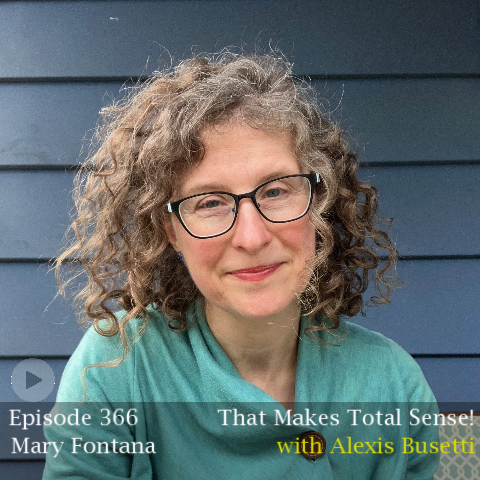
Oh my goodness. This is the second recording, Mary, where I'm like, I'm pressing record and then. And I'm like, why isn't, why am I not hearing anything? Okay, we're hearing something and now we're actively recording, I think. And I'm sorry. So, so, so thrilled to meet and be here with Mary Fontana today. She's written a really incredible book that we're going to talk about called Strangers in the Province of Practicing Radical hospitality on the U.S. mexican border.
And Mary, I've raved a little bit about this pre record to you, but I love a good biography. I love a memoir and this felt like a biography of a place today to use your phrasing and mine. A biography of Annunciation House, which we're going to talk about. And one of the things that I love about a well written biography, which this was one, is how it helps me understand not just the central figure that I might be interested in. Although, to be honest, I did not know I had an interest in Annunciation House before I started this.
Enunciation House was not like a celebrity or historical figure that I was like, oh, I have to know more. I'm so glad I do now.
But it's not just about the central figure, it's about the context around that central figure, which is one of my favorite things. Because if I just tell on myself for a second, I don't love reading history.
I'm not a historian. I don't love reading history. One of the ways that I have gotten the most history in my, in my reading diet is through biographies and memoirs because I can, I can understand a little bit more about the context of that figure. So this book really did that for me. So I just want to start off kind of with a little bit of that context and where I'm coming from and also to just say thank you for bringing Annunciation House to my attention and for providing a lot of that context that helps me understand the immigration situation, especially at our border, southern border, a little bit better. So thanks for that and thanks for coming on.
[00:02:49] Speaker B: Thanks for having me. Alexis. And I love that you picked up on this sort of biography of a place, because I lived and worked in Annunciation House in my early 20s, and I really felt like I had a relationship with it the way you have a relationship with a person. And so in some ways, I do think of it as a, you know, I don't mean this literally, but as a sort of being or something that you can be in relationship with and therefore that you could also write a biography with about. Rather, it's a. It's a place that has a lot of personality and kind of has its own spirit.
[00:03:24] Speaker A: Yeah, yeah, yeah. So let's start off and just tell us about Annunciation House for other listeners who were kind of like me and had never heard of this great place. So tell us, you know, where it is. And it's hard because you've written a whole book on kind of what is it? But, you know, the kind of the CliffsNotes of, like, what is Annunciation House?
[00:03:42] Speaker B: Annunciation House is a house of hospitality for migrants and refugees located on. In El Paso, Texas, which is right smack on the US Mexico border. What is the house of hospitality? Well, it's a place where volunteers live side by side with guests from mostly from Latin America, people in migration. It's a place where migrants and refugees can receive basic humanitarian, humanitarian services, shelter, food, clothing, and accompaniment, meaning that volunteers share their lives, get to know the people who stay there, get to know their names and their situations, and just try to treat them with dignity and respect and walk alongside them for the sometimes a few days or sometimes a few weeks or months that those people are staying at the house. It's been around since 1978. It was founded by a group of young El Pasoans who wanted to live their lives with greater meaning and purpose. One of those founders is still the executive director, Ruben garcia. And in 2004, 2005, right after college, I volunteered there for about a year and a half and still am connected with it by serving on its board of directors. And so these. In these last few years, I researched and wrote, as you say, a biography of the place.
[00:05:02] Speaker A: Thank you so much.
Yeah, when I think about this. So 1978, that was the year my husband was born. And so it's just. It feels like, oh, my gosh, this has a really short, in some ways, but long history. And I know it's something that we will talk about, kind of probably interwoven throughout the conversation, I anticipate.
But a lot of things have changed on the border since 1978. I'd say there's probably some things that are similar, but a lot of things have changed.
One of the things I'm excited about, about this conversation is in addition to talking about Annunciation House and the type of place that it is, who it has served, who has served there, you know, those kinds of things. And is, again, what I kind of want to open with a little bit of this context of. Of surrounding Annunciation House. And so I can't. I can't wait to get to the start, because it didn't. Sounds like from the book, didn't start off of like, oh, yes, this is who we are. We're going to serve migrants and refugees.
But that's a need in El Paso. And I've had some really great teachers when it comes to immigration, especially immigration, as it looks like on the US Mexican border.
I am no expert by any stretch of the imagination, but to say that it's complex is probably the understatement of the century.
So I'm wondering if you can kind of give talk a little bit about the beginning with Rubin and some of the early, early folks at Annunciation House. Because like I said from the book, it didn't sound like we're like, oh, yeah, this is the vision we're going to. We have this spot here, this real estate, and we're going to serve migrants and refugees. But how did that evolution begin to where that became the primary clientele for who Annunciation House would serve?
[00:07:05] Speaker B: Yeah, it started with a discernment group of up to, you know, between 15 and 20 young people in El Paso, all of whom were really seeking to live lives of greater meaning and purpose. And these were all young Catholics. They were involved with various programs through their Catholic diocese. But they wanted more than that. They wanted some kind of ongoing experience of Christian community and just like I said, a greater sense of purpose. And they thought some of them had the idea, let's form an intentional community built around some kind of service.
And so the diocese had an old vacant building that it offered for their use, and they moved into that building. Five of there were just five who ultimately made the commitment for a year to live in this house.
When they moved in, they did not have a mission. They did not know what work they were going to do that was intentional because they wanted to get to know their neighbors. The house was located in a very poor neighborhood, just about 10 blocks from the US Mexico border. They didn't want to come in with a preconceived idea of how they would serve that community. They wanted to really get to know it and then let the mission come to them.
What they realized after a time as they met people and listened to what they needed, initially, they would, if they could, they would refer families that they met to other social service agencies in town. So if they found someone who needed housing, they would say, well, there's already a homeless shelter in town. Go over there. But people would come back to them, and they started hearing this familiar refrain of they won't help me because I don't have papers. They realized that the people in El Paso who were, to use a sort of phrase out of Catholic social teaching, the poorest of the poor.
I think probably other people use that phrase too. But the poorest of the poor in El Paso were the undocumented, because they couldn't stay at other shelters in town. They wouldn't be aided by. They couldn't get food at the food bank.
And this is right on the US Mexico border. the time, the border was very porous. People would cross back and forth. They would have family on both sides, they would grow up on both sides. It was very common to live on one side of the border and work on the other.
So there were just a lot of people there who had been there for a long time. They themselves were not migrants or immigrants, but they could not get help there in their hometown. And so that's when these founders of Annunciation House said, okay, we're going to become a house of hospitality that will serve the undocumented.
A few years, even after that decision came about, not maybe just a year or so, there were some big events in Central America that sent waves of refugees fleeing northward. And this was, I'm thinking of the. The revolution in Nicaragua where, you know, there was a long time dictatorship that had been supported by the US that was fought by a group of revolutionaries.
There were civil wars in El Salvador and Guatemala, and so many refugees from those wars, from that violence came fleeing northward and again, needed a place to stay, came through El Paso, and there was nowhere else that they could get help. And so that's where the founders of Annunciation House saw this need and said, okay, we're going to provide hospitality for the people that need it the most here. And that is the poor, specifically the undocumented poor in migration.
But just to add on to that or to sort of stress something, even then, I think they recognized that they didn't start the house for those people. They started it because of their own hunger, their own need for meaning, for connection. And I think it was really Important. It's been important to the ethos of the house to keep that idea always in mind that the people who work there are there because they need something, they need community, they need connection. And that sort of puts the guests and the volunteers there on this equal footing where they each need something and they each have something to offer, and they can sort of help each other by living in community together.
[00:11:13] Speaker A: Yeah, thanks for that. I thinking here, like, there's so many things that are coming into my mind, but maybe we can talk a little bit about, expand just a little bit on some of the things that were happening.
I again, wish sometimes I were a student of history, but I'm just not. So you talked about wars, dictatorships, things like this. The US had involvement, and I would say had, you know, then late 70s, early 80s.
But some of those things, as I read in the book, had happened. US Involvement had begun decades before, and many times it continues, you know, even until now. I would say we even see with this current presidency, lots of, of movement and action in Latin American countries that affect how people live in these areas. And I want to stress, because narrative is important and usually I'll share with guests prerecord things that, from my social location that might be important. And I totally forgot to tell you this. So anyway, guests have heard me say this before. Listeners have heard me say this before.
I'm mixed Hispanics. My mom is Mexican American.
My dad is white.
My mom was third generation.
I do not speak Spanish. Please do not speak Spanish to me. I would love that if I could. That would be my superpower, besides flying. But that's, that's not where I am.
But still, especially when I was younger, I jokingly have said before, and this is probably not a phrase I would use all the time, but I would say I just kind of look generically ethnic. And so a lot of would say to me things like, oh, you know, or people speak Spanish to me in various places. But I say that to say I grew up in a town where people knew my family.
And so there was a lot of. And I, I hate to say this, but it's true. I grew up in the Bible Belt, especially in Christian spaces, especially in evangelical spaces, white evangelical spaces. There was a lot of hostility even towards, you know, like I said, my. I'm. I'm fourth generation and mixed. And there still was this. If I had a dollar for every time I heard someone tell me, you just need to go home. You need to go back to where you came from. You know, that kind of Thing. And this is growing up, you know, in the. In the 80s and 90s.
That kind of narrative is the kind of narrative that we hear from our president right now.
You know, I'm thinking specifically about, like, this, their language. They're not sending us their best. They're sending us animals, monsters, rapists, criminals, you know, drug dealers, you know, this kind of thing.
What I'm hearing, even just in this conversation. But again, this is things that I've. I've had a lot of really, A lot of other really good teachers.
Generally, we know this not to be the case. People are coming, making this long, arduous journey that I hope we'll get to talk about a little bit more later because they are afraid or because they are hungry, because it is not possible for them to live safe, flourishing lives wherever they're living and they're seeking those things. I mean, we could get into a lot more. I've had a great teacher talk to me about the push and pull of, you know, factors. You know, sometimes there is a pull factor. Maybe it's economic, you know, like. Like you said, we work on one side of the border and live on the other side of the border kind of thing. And if. And once that border gets closed, then you might say, okay, well, the pull leads me to be maybe on this side. But then a lot of times, like you were mentioning, with these political situations, there's a. There's a push factor that says, I can no longer stay here. Even though this is my home, I need to find safety somewhere else. I'm kind of being pushed out of my current environment and into.
Into another place that is.
That's different, that's foreign, that's safe, you know, safer for me. And so that's a real long way to just kind of ask, like, can you give us maybe some high level, like, what was the reality for a lot of people's situations? And how did the US Contribute even to some of that? It's very complex, and I understand that. But I do think it's important to say it's not just, oh, you guys messed up. This was a terrible situation. It's like, oh, my gosh, there's a lot of muck that we've all kind of stirred about here.
[00:16:11] Speaker B: Yeah, yeah, yeah. And. And before I get into that, just to respond to some. Some things you were saying about where you grew up and some of the. The hateful words that you yourself have heard. You know, let's. Let's remember that the US Was founded by immigrants. This land was wrested from its first peoples who are still here. You know, the first nations, the indigenous peoples that are still here and present in the US and so most of us are the children of immigrants.
And actually let's also remember that much of our southwest used to be Mexico. So in a place like El Paso, so many of the people there are Mexican Americans. They can trace their roots back many generations. They did not immigrate, I mean, I guess, you know, and probably many of them are sort of mixed indigenous and Spanish heritage. And maybe at some point they had far, far ancestors that came from Spain, for example, but they have lived in that land for many, many years before it was the US So as they say, the border crossed them. And so I think, you know, there's so much just incorrect animosity that's directed towards people perceived to be immigrants who have belonged to this land for a long time. So that's just, just one thing.
I, when you look at the people who, the people who were staying at Annunciation House in each of the last roughly five decades than it's that it's been in existence, often there's sort of a key demographic there that you can name and also just as often you can trace that to some specific policy decisions by the US government. So just to give a really big overview, in the late 70s and the 1980s, the, there were, as I mentioned, many Central American refugees fleeing north. And in all cases in El Salvador, in Guatemala and in Nicaragua, those were violent conflicts where the, where one side was being funded and armed by the U.S. we were sending military aid and just to give a specific example, and often we were funding a very oppressive, of very conservative right wing military dictatorship. And this is in the time of the Cold War, so it was sort of sold in the US as a, you know, a bulwark against communism. But there were also deep economic interests at play. So as here's one example, the Guatemalan, the Guatemalan civil war can even be traced. It was going on in the 1980s, but even 30 years before that, in 1954, the CIA helped orchestrate the overthrow of Guatemala's democratically elected president, who was a socialist and who was carrying out land reforms that would have taken land from the United Fruit Company, which is a huge corporation that had members of its board.
I think it was the Secretary of State at the time and also the head of the CIA. And you can look all this up, it sounds like conspiracy theories, but it's, it's not. This is very like widely known information.
They were on the board These high, high ranking US officials were on the board of the United Fruit Company, which stood to lose a lot from this democratically elected president In Guatemala, the U.S. the CIA orchestrated a coup to overthrow that government and put in a more friendly government. And it was sort of military officers that lost power in that coup that later went on to sort of foment the Guatemalan civil war that would last for decades and that would result in the genocide of many, many indigenous Guatemalans and lots of atrocities. So that's just one example. But you know, also in El Salvador, a hugely repressive government, the US Was funded something like the quadrupling of that country's military.
And under that regime, which was extremely violent, something like a quarter of El Salvador's population fled to the U.S. so that's the 1980s. In the 1990s, you had NAFTA, North American Free Trade Agreement and some other trade policies.
And so NAFTA reduced trade barriers between the US And Mexico and allowed kind of goods and capital to flow back and forth between the two countries, but it did not include any provisions for workers to move between the two countries. Even though Mexico really asked for that, pressed for that, the US Would not allow it. And so after NAFTA was passed, immigration from Mexico to the US rose dramatically because farmers in Mexico, people who had had livelihoods in Mexico, were now being put out of business by imports of cheap US corn or just these agricultural conglomerates that were multinational companies that sort of put the small farmers out of business.
And so a lot of Mexican workers just could no longer make a living and they came to the US for work. And then just moving through the decades, in the early 2000 2000s, there were, for one thing, there were a lot of unaccompanied minors coming north.
And a lot of those were people whose parents had come in the 1980s and they were now teenagers and they were trying to rejoin their parents.
You also had a huge amount of violence right in, in Mexico, specifically because of the war on drugs. The US Was partnering with Mexico on trying to, to sort of stamp out, stamp out drug producers. But of course, the US is, is the, we're the people that are consuming all the drugs and kind of funding that industry. And so there was huge violence in Mexico and a lot of people fled because of that. In the 2010s, you had big surges of families from Central America, again because of rising violence, a lot of which had to do with, with drug consumption. So that's just like a very brief overview. But the US really has had economic policies, political, you know, political strategies that have really destabilized a lot of countries in Latin America and given people reasons to come north.
And then at the same time, I guess the other piece of it is that the US has not provided legal pathways for people to come. So the US Economy employs a lot of immigrant labor, and a lot of that is undocumented labor. I've read estimates that something like half of agricultural workers. So the people that pick our fruit, for example, are undocumented, but we don't offer visas for those workers.
We have a seasonal worker visa program, but the number of visas it offers is something like a tenth of what the economy. Economy actually employs. So we, We. We've sort of provided reasons, helped construct reasons that people want to leave their countries, but we haven't provided ways for them to come legally. And so that has fueled illegal immigration.
[00:23:43] Speaker A: Yeah.
Thank you. Gosh, thank you so much for that.
No, it's so. But it's so. But the, the context, though, is really important. I think a couple of things that I would just also add to that and, you know, correct me and, And. And help guide some of that, but just, Just kind of little footnotes to that. I remember reading a book, of course, now it's. The name has escaped me, but if I find it, I'll put it in the show notes. When it comes to workers. That was talking about how the U.S. it was funny because I was like, oh, my goodness. This author actually used the phrase, the US Wants to eat. Have its cake and eat it too. You know, when it. When it comes to. To that kind of dynamic that you were talking about. I've also read things that say. Said this. It's not. And I think this is kind of the overarching thing for me.
Two things. And then I'll. And then I'll hush and we'll move on to the next part of the conversation. But I would say one. One is.
This isn't. It's. It's complex, it's complicated. But some of these components, it's. It's not impossible.
You know, I think. And again, correct me if you know or, you know, I can. I can look it up later. Someone can write in and say, no, you're totally wrong, Alexis. But I mean, places like Canada have visa systems exactly like you're talking about for seasonal workers and things like that, where they, like, have algorithms and run the numbers and they just come out, like, much, much closer to what, you know, like something that we would do as an example. So it's not like things things like all of the problems are like impossible to solve.
I remember, you know, there was a lot of talk about, you know, these kind of common sense immigration ref laws that would get all the way through when Obama was president was one of them. And then it just gets stopped. And I think there are probably lots of political reasons for things like that. We've seen one even recently with this administration as well. And then lastly, I will say one of the phrases that is really helpful for me came from Dr. Alexia Savatierra. She talks about this topic a lot.
I'll try and put something in the show notes. I think there's a podcast that you can listen to. She's done a lot of interviews about it, but she talks about the immigration system being these three things, ineffective, illogical and inhumane.
And that phrase has really helped me because and of course, you know, she, Dr. Salvatierra goes, goes into a lot of the reasons why or what about it is illogical, what about it is ineffective, what about it is inhumane. But I think I just kind of want to name that for us and for the listeners to say like this is, this is something that this system is really flawed and broken and it is complex, it is complicated.
But it is also like something where when people who are like really smart people who have compassion and care and you know, all this have tried to solve these for various reasons, it seems like it just always gets stuck or bypassed or you know, something like that. And in the meantime, thousands and thousands and thousands of people a year are stuck in limbo, are in these situations like the folks at Annunciation House. Sometimes it's more, sometimes it's less. But there are like real people at the heart of this broken system who are just at its mercy, unfortunately. And, and real lives are affected by this really broken, ineffective, illogical, inhumane system that we're living inside of. So that's just maybe kind of what I would, what I would add to that.
Go. Oh, go ahead. No, no, I was just going to say so moving back to Enunciation House, they started serving undocumented folks.
And as you mentioned in the, in the early 80s, in the days of the house, I want to, I want to kind of focus on the part that you, where you left off about.
It's, it's difficult for people to have a legal way to, to be here and to stay. It wasn't in the 80s and it is now.
And so you've got folks who, who are in this situation and sometimes they're, I I'm thinking right now about stories that you tell in the book of going, okay, I've got. I've got these papers. I've got, you know, this thing that I. That I received from whichever organization it was at the time, if it was border patrol, if it was ICE or, you know, whoever. And. And. And so they're in this kind of limbo where they're here and, you know, can they travel, can they move? Can they do, you know, can they do that? So I'm wondering if you can talk about maybe if a story comes to your mind or just like, kind of what that's like for folks who have found themselves at Annunciation House, but they've been in this, like, weird limbo situation legally, where even as you said at the beginning, like, we're here because someone else won't. Won't help us because we don't have whatever it is we're supposed to have.
[00:29:34] Speaker B: Yeah, I think that we often.
This is true in a lot of areas, but certainly in immigration, there's a tendency toward binary thinking. Someone's illegal, you know, someone came here illegally or they came here legally. And in fact, there's a lot more gray than that. So in the book, I talk about one woman named Lorena. She. This is someone I got to know when I was at Annunciation House 20 years ago. She's from Honduras. She was. You know, she had. She had a young child, and she was working in a US Factory there, and she just couldn't make enough to live on, couldn't support her child. So she decided to come to the U.S. she came to the official U.S. port of entry in El Paso and asked to enter. She didn't have any kind of permission or any visa, but she was there in the middle of the night with this little baby, and basically, the person, the Border Patrol or Customs and Border Protection agent took pity on her and said, well, we're going to let you in, and we're going to give you an immigration hearing in front of a judge, and you can kind of plead your case. This was a discretionary thing. It doesn't happen very often, but it does happen. So she did not enter the US Illegally. She was allowed in, but she didn't have any kind of official visa. They gave her some sort of temporary paperwork called parole, basically kind of a discretionary thing. So she wasn't. Again, she didn't legally have, like, some kind of full permission, but she also didn't enter illegally. She broke no laws.
Then she was staying at Annunciation House kind of waiting for her immigration case to go forward.
That takes a very long time because our immigration courts are just severely backlogged.
And in the meantime, she wasn't authorized to work. She couldn't. She. She. She could leave El Paso if she filed the right paperwork, but she. That's kind of. It's a bit of a hassle. She was hoping she would have a hearing before a judge. So she really felt like she was in limbo, like you say, just hanging around, waiting, not knowing when. When anything might happen.
Eventually, she just. She grew tired of that. She said, I just. I have to get on with my life. And she had a family member elsewhere in Texas, and so she kind of looked into traveling on and.
But in her. As the person that she was hoping would take her to. To see her in Texas instead basically kidnapped her and kept her locked in a house.
And, you know, so there was kind of mysterious to her what was going on, whether they were going to try to traffic her or what. But eventually she escaped. So now she had a case. Actually, this was a terrible ordeal she went through. But there is a category of visa for people who have been the victims of crimes committed by U.S. citizens. And that category of visa is intended to help those people be able to come forward, talk to law enforcement, enforcement, help convict a criminal.
So she now had an immigration case going on, but that stalled out in the courts. She couldn't find an attorney that would help her at a price she could afford. And so on and on, and years are going by, and she's trying to. She's raising her kid. Basically, the long and short of it is eventually she gives up that case for the U visa, the victims of trafficking visa, and she just goes to live in a Texas city with her son. She.
She finds someone, you know, she falls in love, she gets married, she has a job, steady job. She starts her own business. She's living as an undocumented person in the U.S. which, you know, there are an estimated around 12 million undocumented people in the U.S.
and again, she never broke.
She never committed a crime because of the way that she entered and then how things went from there. She overstayed her parole, but that's actually an administration, an administrative violation, a civic violation like a parking ticket. So she's not a criminal. She has no. She couldn't be charged with any crime.
But she also can't obtain legal status. She can't get a driver's license, she can't vote. She is always in lives in fear of being deported. She now has children, more children who are US citizens. And if she were to be, be deported, she would be separated from her, from her children. So she is in this limbo state where she probably will never be able to live without, without those fears of being deported, of, of being detained, of being separated from her children.
And at the same time she did achieve what she came here to do. She has been able to support her kids. She's, she, you know, economically she's done much better than she would have done in honduras. Her children, two of them, you know, her younger children are U.S. citizens. They speak, they all the kids speak perfect English. They will be able to work and live here. And you know, Honduras after she left, became a very dangerous place.
She has avoided some of that, the worst violence. She has kept her children safe. So just to say, you know, in some ways she, she achieved what she set out to do, but she also is condemned to this life in the shadows. And from the US's perspective, I ask what is gained by keeping someone like her out of citizenship? Why not have a path where someone who has roots here, who has lived here a long time, who has abided by our laws, who has contributed to her community, who has a job, why not have a path for that person to gain citizenship? But we don't, we don't have that. There's no way for her, her to become a citizen. And that's a very typical case for people who are in this kind of in between state of generally being law abiding, hard working people who can't find a way to get full legal status in the us.
[00:35:29] Speaker A: I think we need to say that again, there's not a way for her to become a citizen. And, and this is, I think what, and again, I think because it's so complicated, I am under the impression that most folks in the US don't really understand that, like, don't really understand that for someone who, you know, like you said, just cannot economically, as an example, like cannot make ends meet. Like you said, it used to be more porous, maybe they'd work on one side and live on the other or things like that. That's not possible now.
And so in the same kind of way, and so to say, okay, well we'll just cross over the border and just, everybody just lives in El Paso and we, you know, as an example and we just do this, there's just, it's just not possible. The categories I have, I have heard that helped me understand it were blood, sweat and tiers. So you know, a family sometimes for economic reasons, but also then sometimes, you know, asylum seekers, people who are afraid or leaving their country for other, you know, persecution of in certain categories. But even those A, are not guaranteed, B, are limited and then C, it doesn't cover kind of like most people who might just want to come and say, you know, this, this would mean a better life for, for me and my family. So I'm wondering if there is a way that you can help us understand or maybe emphasize that even more. Because I think, I just think that that is really a kind of a bizarre thing for us for the most part to grasp when it comes to immigration is it's not like there's a whole, like, it's not like.
Let me pause here.
Get, get. Gather my thoughts. I think that for some people, we think, oh, it's just that people are choosing not to do this the legal way, right? Like, oh, it's like you just drive on a street, duh, you just drive below 45, the speed limit's 45, you just drive 43, it's fine. But it's, it's, it's not that there is this way. There's this handbook and you just come across and you just say, oh, we're just intentionally breaking the rules. We're intentionally, intentionally doing it. It is that the pathway, which is what the, the word that we've been using, the common word that, that we use to describe this, the pathway for many, I would say most people, just doesn't exist.
And I think that that's a, that's like a. Something that we can't really wrap our minds around. Can you help us wrap our minds around that?
[00:38:15] Speaker B: Yeah, well, a couple things. First of all, I mentioned there's about, there's somewhere around 12 million undocumented people in the US and I think in general, when we think of undocumented immigration or illegal immigration, we think of people crossing the border, you know, clandestine illegally crossing, you know, through the desert or however it is. And we probably think mostly people of color, people from Latin America.
The reality is about half of the undocumented people in the US did not enter the country illegally. They came in on a visa. And so a lot of these are probably going to be people from Europe, people from countries that have pretty, for which the US has pretty permissive visa requirements. So if you're from England, if you're from Germany, if you're from kind of a high income country, I think, I don't know all of, but I think the same would apply from like Japan or Taiwan. You can, you, you don't need to do any pre, pre paperwork to get, or. I think you need to like, register online, but you don't need to. There's no sort of high hurdle to get a temporary visa to the US Like a tourist visa. You can just buy a plane ticket, fill out a form online, and you can arrive here the airport, you know, they'll let you in.
And of course, there's a time limit on that, but you can easily enter the country legally. And then if you overstay your visa, you become, you know, you essentially become undocumented, but you haven't, you haven't entered illegally. And so again, you've committed a civic administrative violation that is not, there's not a criminal category for that. And again, that's about half of all immigrants. But key. So the reason I'm sketching that out is it really matters there what country you're from.
[00:40:07] Speaker A: Yes.
[00:40:08] Speaker B: Not even necessarily your income level in that country. The assumption is if you're from Germany, if you're from France, you have a certain level of income, you have a certain.
I guess there's less fear and panic that you're coming to the US to take our jobs. Even though actually, again, about half of the undocumented people in the US Are people who have come in legally and then overstayed their visas. But if you are Mexican, you don't get that kind of assumption. You don't get that grace extended to you if you are from a lot of countries in Latin America or the Caribbean or Africa.
And therefore you're sort of automatically looked at with suspicion if you are applying to, to come to the US On a tourist visa or any other kind of visa. At Annunciation House, we had a volunteer, someone who wanted, from Mexico, who wanted to come volunteer with us for a year, filled in all the forms. We got references. We did a background check. We had. This person was going to volunteer with us. We wanted them, we had a place for them to, to stay, and they could not get a visa. They, they, the. They went to the US Consulate in Mexico and they were turned down. The volunteer actually told me, the prospective volunteer. I went in there and the man just laughed at me. He just laughed at me because there is this suspicion, oh, you're gonna, you know, that there's, it's, it's really just these racist assumptions of, oh, you're a criminal. You can't really be wanting to go volunteer. You're going to, you know, I don't know. And so just to lay that out There first, that based on just where you're from, the facts of your birth, the US has very different ways that it treats you in terms of whether it will allow you to come. So the people that need to, that do feel the need to cross illegally are people who can't easily come in, like I said, another way. So they're generally people from poorer countries.
In order to get a visa, you have to have certain, you either need a close family connection who's a US Citizen. A lot of people don't have that. And it can't just be any family connection. It's like, you know, a spouse, adult child, a parent and I think a sibling, they can apply for US Citizenship. So it's family connections or it's work. And there, like I said, there's a number, there's far too few. Sort of low wage, low skill, I put low skill in quotes.
Worker visas for the amount of workers that our economy employs. So for most workers in construction, in agriculture, in food processing, which employs a lot of immigrants, in care work, like in hospitals or elder, elder care, we employ tons and tons of immigrants, but we don't have the number of visas that the economy would need to staff those jobs. So you just, you can't get a visa. If you want to come and work here and you're a low wage worker, it's very difficult, difficult to get a visa. There just aren't enough. And then the third category is political asylum or humanitarian reasons. But as you alluded to, Alexis, there's those, the definition of who is allowed to come for, for political asylum is very narrow. You have to be, you have to be able to demonstrate that you have been persecuted on the basis of your race, religion, nationality, political opinion or membership in a social group. I might be forgetting one, but that, that's, it's very narrowly defined. So for example, victims of gang violence, which there are, so there are gangs in, in certain parts of Central America that are basically running, they are almost like a government, but they are, of course they're, they're not the official government, but they are very violent, very. They extort people. They, you know, they make it impossible possible to run a business or to just go about living your life.
But if you've been persecuted by one of those gangs, if they've killed a family member, if they've burned down your, your store and you come to the US and ask for, for asylum, that's generally not considered a category that we, that we extend asylum to. So yeah, if you are a person from a low income country that is not. That does not have a US Citizen, family member or a highly specialized profession or very clear narrow grounds for asylum. There is no way for you to enter legally.
And that's, that's just the reality. It's very, it's.
It's very difficult to, for people to. And, you know, and immigrants, many immigrants that I've met feel that difficulty too. They just think I have such a compelling, you know, this is why I need to come here. It's so clear to me. But, but I. You're saying there's no place for me here.
Yeah.
[00:44:49] Speaker A: Yeah. That is. Thank you for, for reiterating that. I just think that's really important, especially in our political climate today.
[00:45:04] Speaker B: And you know what? If I just add one thing. It wasn't always like this.
My ancestors, I have ancestors from like half a dozen European countries who came in the, in the early 1900s or a little before. All they had to do was not die on the boat. They just had to show up at a port of entry. And there were some very narrow. Like, if they actively had tuberculosis and were coughing up blood, you would be, you know, sent to quarantine. But generally in those days, you just had to get here. There were no quotas. There were no, there were no requirements.
If you got here, you were a. There was not even this idea of illegal immigration. That came later. And so.
And like all of the hundreds of thousands of Mexican workers that are economy employees, up until the 1960s, there were no restrictions on them coming and going from the US Because. And in fact, their labor was actively recruited and invited and with. We had some programs, the Bracero program, for example, that actively recruited these Mexican workers.
And when we stopped all that and we put restrictions on them, that actually increased the number of undocumented people here in the US Even year round, because people who had previously traveled back and forth to work now said, well, now that it's harder to cross the border, I'm just going to stay here full time and I'm going to keep my family here. So it has not always been like this. We used to have much more lenient immigration requirements. And my family, like, that's why I'm here and that's why a lot of us are here. If we can trace our roots back to sort of your different countries, Northern and Western Europe.
[00:46:42] Speaker A: Yeah, thank you for that addition.
Where my mind went when you were talking about these lack of a legal path, I went back to.
And I think it's just so, it's, it's striking to me now, because I just went back and looked and it, it something that Reuben, founder of Enunciation House, wrote and it said in 1987 newsletter. And so I'm like, okay, and here we are almost 30 years later, and you could probably say the same thing, but it's, but I would say it's a, it was a message for Christians, and I'm a Christian. Many folks listening to this podcast are as well.
And what he said is just as striking and poignant and necessary, I think, today, almost 30 years later than he did, you know, as when he said it in 87.
I might just read a snippet of that, if I will, and just ask you to comment on that, if you would, especially given your time at Annunciation House and your connection with it and how it, you know, maybe resembles, you know, gives us an example of, of how Christians can respond to what's happening even today.
But he says, in part, it's.
It's not a new thing that Annunciation House does. Rather, the problem is that it does it openly. And as Annunciation House has come to symbolize the plight of people entering the country without papers, so also has it come to represent the tension that exists between a Christian response to the basic needs of human beings, be they undocumented, and the laws seeking to make it even more difficult for these people to exist.
He writes, how long will it be possible for us to walk into our churches on Sunday, oblivious to those in our midst who are afraid of even walking into a church?
Can the gospel have any real life and meaning so long as some in our midst struggle to exist simply because they happen to be born into poverty or under conditions that we would never accept for ourselves?
If there be truth in the gospel call of treating the least among us as we would the Christ, then all we can say to those who come to our doors is, bienvenidos, mi casa es su casa.
[00:49:14] Speaker B: That could be. That could have been written this past winter when there was this big surge of ICE agents in Minnesota. And people, I mean, this is still happening, but people are afraid to go out and go to church.
I think it's really important to kind of keep in mind that no one, not Ruben Garcia, whose quote you just read, no one's in favor of illegal immigration.
And ultimately we should try to create a better system in which people don't feel the need to migrate illegally, whether because they are safe in their home countries, in their home communities, or because we have safe legal pathways for them to apply to, to come to the US But I think for Rubin and for the founders of Annunciation House, there was this urgent issue, which was that these people are already here, These immigrants, these refugees. They are here in our communities, and we must respond to them.
This is not a hypothetical. This is, I was a stranger, and you welcomed me. I was hungry, and you fed me.
I was homeless, and you gave me shelter.
And so I think that. That those founders, Annunciation House, would argue that we don't have a choice when it comes to someone in need. That when we're face to face with them in our communities, yes, we have to figure out bigger political solutions, and that's also really important work. But we cannot simply turn our backs on people in need because we say, oh, you didn't come here the right way, or you broke the law.
So I think Annunciation House knows that it kind of has two. It has two jobs, and one is to work for change, work for. Do education and advocacy so that we might bring about a more just system. But it also thinks it's really important to. To welcome the stranger today, to provide that hospitality today.
And we all are going to do that in different ways. I don't think every, you know, I don't think every Christian has to do or can really do every.
Live up to every ideal of the faith or every demand of the gospel. I mean, I guess that would be wonderful. I don't feel like I can do that. So not everyone needs to start a homeless shelter or something. But there are ways that each of us, wherever we are, can encounter people in their need and try to live in solidarity with them, try to support them with whatever, with what we have. And these days, I also. One thing I do still for Annunciation House is some of their volunteer coordination, which is largely online.
And for many years, I've had people emailing me, especially when the board is kind of in the news, and they'll say, oh, I wish I could help. You know, I live in. I live in Ohio or I live here or there, but I could come down for a few days and work, and I generally turn those people away. It's not that helpful to have someone for a couple days. But more and more now I just say, listen, the border is everywhere now. This is happening in your community.
Look around you and say, and you know, where. Where are the needs? Is there a rapid response network?
Are there people providing housing or hospitality for recently arrived immigrants or for people who have been here a long time but have been detained? You know, are people supporting their families? This is happening in your community. And you can look around and be a part of it again, even if politically. Because I know politically this is an extremely divisive issue. And we do, and we do need to do a lot of political work on immigration. But beyond that, there's the human need. Can you look at the people in your community and say, here is a mom who, you know, who has been detained and her children still need care and need to get to school, or here is a family that can no longer go out to work because, you know, whatever it is like, this is a family in my community. Can I look beyond some of the politics and reach out to them as a human being?
[00:53:37] Speaker A: I think it's that part. It's the. As a human being.
There was an organization that I was familiar with when we lived in Houston called Houston Welcomes Refugees because, well, Houston historically has consistently welcomed very, very large numbers of refugees. And one of the main things that they asked of their volunteers was to be a friend.
You know, it was very, in, in some ways it was very, very simple. It was, can you just show up and be a friend?
You utilize your empathy, put yourself in a situation. They had activities that you could do. You know, they train, when they train their volunteers and, you know, ways that could help with that, some of which still live rent free in my head when I think about them. But, you know, it was, can you just show up and be a friend? Pick someone up at the airport, you know, bring them a meal, you know, have each other's kids play together, you know, things like that. Like, what would you need if you were in a brand new place, almost regardless of how you got there?
What would you need if you were in a brand new place? And how, you know, can we help provide that? So I think that that's just a really.
It's an incredible reminder. Even as you said, like, it just struck me again in a new way when you said, think about the things that were happening in Minnesota. You know, like, this is not, this is not near the U.S. mexican border. And yet, you know, the border was there and is. And is there.
I want. Go ahead and respond to that. And then, and then it made me think of another, another thing that I want to ask you about. The Denunciation House has done.
[00:55:31] Speaker B: Well, sure, I, I love the, the, the question about can you be a friend? And actually it made me think I was listening to another of your podcasts where you're talking with Marianne McKibben. Dana, I hope I'm getting her name right, about pro productivity versus presence. And actually this is sort of. This is a shift away from just the nitty gritty of immigration. But I think one thing that was so important at Annunciation House was just being with people, spending time with people. It is so American to focus on the tasks that we can get done. Like, okay, you need a place to stay. Okay, we need to cook these meals, whatever. You can focus on that. But really, just as important, or if not more important, is the. Is presence, is spending time with people. What's your name? What do we have in common? Where are you from? Tell me about your kids.
And that was what I think many refugees, many people in migration, that was so important to them, to just be seen as human beings, to just be seen as.
To be. To feel relaxed, to feel like they were at home for. Or welcome in a home, you know, still feeling like they are far from home, but to be welcome in someone's home. And that's why the.
These Annunciation House calls itself a house of hospitality. Because it's not just about. It's not just a homeless shelter. It's not just we're providing these services. It's. We're inviting you as our guest. We want to make sure you're comfortable. We want to sit and talk to you.
That. That presence can, you know, that befriending people and not that we become everyone's best friend. And it's like a. It's a transient relationship. People come and move on. But for that time to just try to fully see them and make them feel welcome is just really central to the spirit of Annunciation House.
[00:57:21] Speaker A: Yeah, Mary. I looked at the time and I was like, oh, my gosh, there's no way. Oh, my gosh, there's no way. Okay, so I have one more question. I'm like, there's so much in this 46 years, this biography, that we didn't even touch anyone. Everyone grabbed the book.
It'll be in the show notes for people to grab it. But I want to ask my kind of last question and then give you the opportunity after that to kind of wrap us up and just how you want to end us. You know, usually, especially in a conversation like this, I might ask, what did I not ask? What did I forget? You know, kind of what did I leave out that you think will be important for the. In this setting, in this conversation, but especially on the lines of just the humanization part, One thing that struck me as it was kind of threaded throughout parts of the book was. Was the border awareness experience that Annunciation House provided. And I'M wondering if you can talk about what that was designed to do to help with the humanization, I would say, like for individuals, but also like societally. I think that was one of the things I grappled with and maybe to kind of. I don't know if you said this in the book, but the thing that came to my head right now was like maybe kind of to fight the stereotypes a bit. And especially when we have migration conversations about the southern border.
[00:58:42] Speaker B: Yeah. So the border awareness experiences are immersion learning trips the Annunciation House hosts where often it's college groups or maybe a church parish brings a group. They bring a group down to the border for a week and they stay at Annunciation House. They meet some guests and hear their stories. And they also go around to the border wall itself and to different organizations in El Paso and in its sister city of Juarez, Mexico that are working with immigrants. Whether it's, you know, they'll talk to border patrol and the Drug Enforcement Agency and they'll talk to worker nonprofits and human rights organizations and just to get an understanding.
What is the border? What is the border really like?
It is. It is a lot about confronting and subverting stereotypes.
One thing that Reuben, our director, the director will talk about is there's this public image of the border as very, very dangerous. Like you could be walking down a street in El Paso and just get hit by bullets. The reality is that El Paso is statistically one of the safest cities in the country.
Generally, immigrants commit fewer crimes than.
Than native born Americans. So some of it is like to bring people there and say, actually this is a really vibrant place. This is a place where rather than the border being a place of division, it's a place where the people who live here see it as a place of great connection, of back and forth, of two languages being spoken, of two cultures really mixing. And the two sides of the border there are more similar to each other, I think, than they are to other places sort of in the interiors of their respective countries.
And so. Right. The idea is people can go there, learn more about immigration, try to understand what it's like for the people sort of at the front, at the front lines or the people who are really affected by it and then go back to their communities and bring that awareness whether they then, you know, because it's a lot of college students, some of those people will then go on to work in immigration or human rights or some of them will just. We've had people go back to their home communities and start hospitality efforts. Where they then in their church or in their community center are sort of receiving people.
So it is meant to sort of spread some ideas about how we can all get what the border is actually all about and how we might sort of bring that knowledge back to our communities.
It's hard to wrap up a big topic like this, but I guess maybe one, one way to wrap it up is to say you've now listened to me talk about immigration for an hour. I think it's really, I was born here in the US I've listened to. I interviewed a lot of immigrants, guests at former Guests Annunciation House for my book. I really hope that people learning about immigration will seek out immigrant voices to listen to, to read, to study. And you can get a lot of those in my book. I include a lot of sort of first person narratives. But there are also some really talented people, immigrants writing about immigration.
Anyone who is interested, you know, who's interested in migration through Mexico, for example, I would point to.
There's a really great reporter from El Salvador named, oh my gosh, Francisco Martinez. I'm pretty sure that's his name. He's written a great book called the Beast about migration through Mexico. There's a fantastic memoir, if you like, memoir by a Salvadoran immigrant named Javier Zamora. It's called Solito.
Just like it will just tear at your heart.
And so, you know, there's, this is. You can, you can look up further sources, but I just really like to elevate the stories of people who have actually been through these experiences.
[01:02:42] Speaker A: Gosh, that's, that's really helpful, Mary. Thank you so much for that. It is very difficult to wrap up a huge topic like this. I'm going to, I said you're going to have last word and you totally did, except for this. I just want to point out some things that we didn't get to just for folks who are listening to. I mean, just little bullet points about how really rich this book is.
She, Mary, shares the story of Reuben and one of the other founders, Delia, as they traveled through Central and South America kind of in the early days of Annunciation House and how that impacted them personally and the growth of Annunciation House. Also beautiful story about a woman named Berenice who took of care care of Don Luis. That just really touched me and Reuben, you know, again, asking kind of how we can learn from them also, I mean, gosh, the, I would say the history, this biography goes all the way up until just a couple of years. And so there's a really incredible section on family separation, which most of us probably remember.
Also on migrant protection protocols, MPP that these policies that were put in place. And so there's so much more, but these are just the notes that we didn't get to today here. And I also almost never do this, but I'm going to also put in the show notes a Bible study that I co authored with Dorcas Ting Tosen, just called Migration that really has what Mary said, a lot of stories from folks who have migrated and biblical stories as well. And just kind of a combination there to help us. People who profess to be Christian say, can we understand a little bit better about how God thinks about migration, how migration has always been a part of who we are as humans?
And I love that. Ruben also had a quote talking about how the ability and the right to move is just a human one and how we really have sometimes get in the way of that. And that felt really well said and inspirational to me. So thank you so much, Mary, for being on again. The name of the book is Strangers in the Province of Joy, Practicing Radical hospitality on the U.S. mexican border. I'm so grateful for your work then and now with the Nancy Nation House and in this book and for being with me today.
[01:05:13] Speaker B: Thanks, Alexis. It was great to talk to you.
[01:05:16] Speaker A: The links for all the resources mentioned in today's episode can be found in the show Notes, music and podcast production by Seth Buscetti. Be sure to give us a review on itunes and subscribe at your favorite podcast listening app. You can also Visit us at thatmakestotalsense.
[01:05:38] Speaker B: Sam.