Episode Transcript
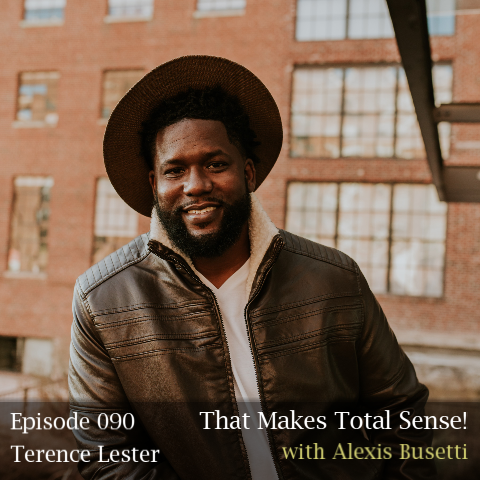
Speaker 0 00:00:07 Welcome to that makes total sense. A podcast dedicated to exploring God's generosity and justice. I'm Alexis resetting the Christian, aiming to ask good questions and encouraging you to do the same. Every one of us is wired by God to live out generosity and justice, but the house sometimes alludes us. That makes total sense is a way for us to get together posture ourselves as learners and challenge one another to practice generosity and justice in a tangible way every day. Okay. Everybody. I am thrilled. I'm so excited to be sitting across today from Terrence Lester. He has written a new book that I think even when this podcast comes out, we'll still say it's forthcoming. It comes out in may. Is that right? Terrence May 18th, May 18th. It is called when we stand the power of seeking justice together and I have read it and I have loved it. It is incredible. Thank you so much for coming on, Terrence.
Speaker 1 00:01:11 Thank you. Thank you so much for having me. I'm excited to be here to have a conversation would be okay.
Speaker 0 00:01:16 Oh, I am thrilled. Um, I want to ask you if you can, because this is your, this is your second book, right? Like the second one by IVP, I guess. And, um, but this you've been working in this space for a long time. And so can you just tell us a little bit about love beyond walls and maybe if you can even give us a snapshot of what you guys did with, um, with love sinks in and, and kind of what that looks like, because we were talking before we started recording, you're writing this book during the pandemic and everybody's work kind of changed during the pandemic, including yours. So can you give us just some insight on what you were doing before and then kind of how you guys pivoted to, to, um, relate to what was going on and meet some needs during the pandemic?
Speaker 1 00:02:05 Yeah, sure. Um, well firstly, thank you again for having me on the podcast. If you don't know, my name is Terry Lester and I'm the founder and executive director of love beyond walls. We're based in Atlanta, Georgia. Um, it was a little over a year ago actually, where we had to pivot from a centralized, uh, ministry to more of a de-centralized ministry. And what I mean by that is while the pandemic was starting to peak and rise, and we started to hear more about what COVID-19 is and how it can affect, uh, vulnerable populations. Uh, we were also hearing this conversation that was emerging from the community in which we were positioned, uh, with our community center. Uh, people would walk into our lobby and literally say, I feel like I'm going to die because I have nowhere to wash my hands. And we're talking about people experiencing homelessness because our organization advocates on behalf of, uh, people experiencing homelessness.
Speaker 1 00:03:10 And there was this one guy named Dimitri. Uh, he came in and he's just in tears. And around that time, uh, everything was shutting shutting down. So like libraries were closed. Libraries are predominantly used, uh, by people experiencing homelessness as daytime shelters where they access information, uh, have access to technology are able to use public restrooms, et cetera. Um, and buildings and businesses were starting to close. And I was left with this looming question, how do we transport, uh, this basic critical need to a population that has already been dealing with social distancing long before the pandemic. And that's when I had the idea of repurposing portable hand washing stations. Uh, traditionally our organization has used RV units and other, um, creative projects to temporarily house people. As we walk with them out of that, the issue of homelessness and, you know, with RVs things that people use as luxury items like to go camping or to take trips.
Speaker 1 00:04:19 Uh, we noticed that there were features on this RV, like, uh, porta-potties portable cooking stations, portable hand washing stations. And so my idea was simply to repurpose, uh, one of those features and to start disseminating, uh, this critical, uh, access, uh, and resource, uh, to a population of people who wouldn't have the ability to wash my hands. And I remember telling my wife, I was like, I'm going to put sinks in the streets. And she was like, what? Yeah, you should do it. Right. And, uh, I pivoted to, uh, you know, providing the sanitation, uh, via these hand washing stations, we started with five, uh, one of my friends, Lecrae hopped in, he donated 15, it started to grow and we got to about 50 in the city of Atlanta. And then, uh, all of these companies started to get involved like Bronnie and Porsche and the NFL foundation and at the, and, uh, Southwest airlines and all of these, uh, companies that were helping to fuel this mission. And we grew to about, uh, we're in 57 cities now and, uh, two additional countries where we were providing access to this critical, uh, resource, uh, by de-centralizing our approach to partnering with other, uh, organizations and individuals on the front line and serving, uh, you know, uh, this vulnerable population. But traditionally LaBeija walls has always been a space, uh, to, with people experiencing homelessness, wrapping a community around them with these critical, um, uh, relationships, uh, so they can escape the issue of homelessness. So I hope that gives you a good snack.
Speaker 0 00:06:12 Oh, it gives me a great snapshot. I can just I'm like picturing that conversation. I think I'm going to put the sinks in the streets by that do that. No, that's amazing. I mean, because really that was, I mean, if we can remember even back to, uh, over a year ago, right. When this was first starting, and that really was the primary message that we were getting from, from the government from health officials, right. Was wash your hands, like continuously wash your hands. And I just can't imagine, as you're saying, like these places where people were, were utilizing that service, they did, they started to close and, um, wow. And to be able to step up and meet that need. That's incredible. Um, but the partnership too, I think the partnership, it kind of leads us into what you're writing about in this book. Like, it's good for you to have the idea and for you to do it, but there is no way on the planet that you can do that by yourself, not even in Atlanta.
Speaker 0 00:07:09 Right. And so having your friends and then, and then this growing step up, um, that's, that's a lot where we find ourself in your book. So can you tell us kind of where, where did that come from? And as, even as you're writing in the middle of the pandemic, I'm sure you're, some of these thoughts are starting to evolve and change too, as, as your work is, but tell us about when we stand and what was the real clear message that you wanted to get across? Like, you know, if, if people, if people left with something, what is the message you wanted them to get with when we stand and why did you want to write them?
Speaker 1 00:07:45 Yeah, that's a great question. Well, there are a number of things, uh, that come to mind. Uh, you had the growing rise of, uh, social media trauma. Uh, we have all experienced it where from the Palm of our hands and, uh, smart devices, we can encounter injustices from all around the world, uh, varying from sex trafficking, to homelessness, to issues of racial tension. I mean, issues in other countries like it's all in this device. And what happens is there are so many hearted, uh, willing people who want to actually make a difference. But the real reality is that sometimes you can become overwhelmed with all of this information, right. Um, and it can lead people being paralyzed. And, uh, that parallelization within itself causes a person to, uh, feel like even their small piece, even if they tried to contribute something that it would not matter.
Speaker 1 00:08:50 And so one of the things that I'm trying to get at in this book is that yeah, all of it matters. Uh, every single piece matters. You're a small piece connected with somebody else's small piece connected with somebody else's small piece helps to paint this grander narrative that, uh, dad is telling. Right. Um, I oftentimes use the analogy or the metaphor of a, of a puzzle box where on the front of a puzzle box, it's this beautiful image, right. And it's all of these, uh, individual pieces that make up this image, right? Well, we are in a community, uh, and there's no powerful message then guys, family existing in the earth. And what I'm afraid of is that sometimes that each one of us have been given, uh, you know, a skill or talent or some type of, uh, resource in the form of a piece.
Speaker 1 00:09:48 And we withhold that piece. We don't connect that piece to other people's or persons pieces, uh, to make or create this, this beautiful picture that we all desire. I think the other thing too, is that, uh, we do a lot of talking about issues, but in that not a lot of, uh, actual, uh, doing the work. Um, we talk about these larger scale issues for getting that it takes local change, uh, repeatedly over and over and over again, to create the type of larger change that we wish to see. There are people right now in your community that are hungry. And sometimes we focus on the bigger issues and forget that the Lord is calling us to meet some of those, uh, tangible, uh, needs right before us. You know, there are people right now who will go to sleep with no running water and we're still, uh, semi in, uh, in the pandemic. And so like, I'm really trying to encourage people to see themselves as being part of this larger tapestry, uh, of social change and this larger tapestry of what God is wanting to do through our collective togetherness, as well as tell people that's you are needed, uh, everything about you is needed your neck for research, your neck, for cooking your neck for, uh, doing art, your neck for whatever it is, uh, that whatever piece you have to this larger puzzle that it's needed.
Speaker 0 00:11:24 Oh my goodness. I'm like, I'm picturing we always, so we have four kids, right. And they're all, they're all young ish like elementary school age. And so normally we're in Houston. So the weather, you know, we'll deal with it in the summer, but the winter, Ooh, it gets a little chilly, you know, maybe in the fifties or something. And, you know, over Christmas, we'll just put, leave a puzzle on the dining room table. And I am telling you, there is nothing worse on the planet than getting to the end of that puzzle. And someone says, where's the last piece so hard. And we got all this and we have this huge thing and we're missing it. Like this fish doesn't have an eyeball, you know, where this house, you know, like the we're missing the door. And it's just like, man, you know, like it just, you, you have this satisfaction of getting, you know, getting everything done, but when there's that one missing piece, you know, and if you think about like those words you use, like we, if we withhold, you know, our gifts or whatever it is that we're, um, you know, that, that we're to contribute.
Speaker 0 00:12:24 I mean, that's, that's crazy. Um, I was just having a conversation with a girlfriend yesterday and she was telling me about something really exciting, you know, she's getting ready to pursue in her life. And we were, you know, celebrating together. And she just said these words, she just said, I really think there are other, other people, like basically what other people are going to do in their lives. She was like, I really just think it's attached to me being obedient right here. I'm like, yeah, right. Yeah, no, it is. And God will find another way if we choose to come back, but don't, we want to be a part of whatever it is that he's doing, you know?
Speaker 1 00:13:02 And that's the most exciting part of, you know, working together in community with others, standing together with others, that it goes against isolation, which we all know that isolation can do. I mean, what greater message have we all learned from, uh COVID-19 and the damage that isolation can do for our mental health, for our sense of spiritual development, uh, for our, just our, our health, the healthiness of our community, um, isolation can be very damaging. And I think, uh, what the scriptures say are true when it says that, uh, it's not good for men mankind, right. Uh, to be alone, uh, there is something to that aloneness, uh, that can become really destructive in how we fulfill our individual and collective purposes of God.
Speaker 0 00:14:00 Yeah, no, you're absolutely right. And, um, you, you had this great part in your book where you're talking about that connectedness and about getting out of our bubbles. Right. And I went, I went to, uh, my first couple of years in college, I went to a little private school in Texas and they used to talk, they would say the name of the university, which I won't say right now, but they would say it and they will say, it's, it's the bubble, right? It's this university bubble, because we were this small school, this small little liberal arts school and everything that you needed to do could be done on campus. And you didn't, you didn't even have to own a car, right? Like you could, obviously you could eat and do your laundry and work out and, you know, whatever. And you know, like most bigger universities, but, but it was kind of a small university inside of a bigger city, instead of like, I ended up graduating from OU, which is kind of a big university that makes it like a college town. Right. So it kind of feels like everybody's connected, but they would call it like this university bubble. Right. And, and so they would say, look, when your student comes here, they would tell our parents, when your student comes here, they need to like read the news and stuff.
Speaker 0 00:15:10 It's easy, right. To just think that like, everything is happening, it's happening right here, you know, in this, in these, you know, square yards or whatever, where you live. So, um, you had a beautiful quote from Martin Luther King, but what can you share that can help us get an idea about that isolation versus connectedness that is important when we're talking about, um, working together.
Speaker 1 00:15:33 Yeah. It's it's so what, our amazing point that you just raised about how we can co-exist with people that we are, uh, distant from, and it's kind of our running or an authority that we have been using the phrase social distancing, um, which I don't even like the phrase ology, because it speaks to social isolation. I've been reframing that to use a physical distancing from, from one another. But I, I say that because I think, uh, it, it reminds me of like, inattentional blindness where we can be around something or some person or some building, or we take the same route home from work in our cars and we pass the, the social spaces or these, these persons, uh, so long, you know, we become so familiar with them that we actually become blind to them. Right. And I think what that blondness does, like if I don't see you in all of your humanity, if I don't see the community in all of its, uh, you know, beauty and as well as, uh, troubles, right.
Speaker 1 00:16:54 Then I can become, uh, emotionally, spiritually, physically distant, uh, from those persons or that community. And I forget that, uh, the community is also connected to me, uh, that when I stand, uh, for the community, that I'm also standing for myself, right. I remember talking to one of my friends, uh, who leads an organization. He's a older white man now, but he talked about how, uh, when he lived in the suburbs before he started the organization, he would ride past the communities that were being gentrified. You never could really understand, uh, you know, the problems and why people would be in an uproar when he saw it as just like revitalization. He said, it wasn't until he gave up his career, decided to intentionally move into the neighborhood neighborhood to start this organization that he made that shift from those people's problems to our problems, those persons fears to our fears.
Speaker 1 00:18:01 Right? And I think this is even what Jesus tries to do when he says that you should love God with everything, but then you need to love your neighbor as yourself. He's connecting us and giving us an opportunity to see that we're all connected and that God loves every single person. And I go on to say, I think I wrote something one time that says, if you are attempting to love your neighbor, that also means that you need to love the neighborhood, the neighbor, and you need to be concerned with the issues or the problems that the neighborhood is facing. Right. We need the poor understanding of the totality of the persons that we call a neighbor. And when Jesus uses that word neighbor, he's, he's also talking about people who are like you, they come from the same social location that you came from, who, uh, who doesn't talk like you, we didn't have the same historical shaping as you may have. That's what it means to truly love someone. And to truly understand that we're all a part of the community, because if you're only measuring your love based upon those persons that look like you, then that's a false sense of false measuring system of how much love that you've been actually distributing.
Speaker 0 00:19:22 Yeah. I mean, and I think that's a perfect example because I think, I mean, I don't remember if you, if you shared any of the stats in your book, but I'm sure you're familiar with them as I am of just like people who in general, we are generally friends with, we go out with like people who do look just like us, right. And I'm like, here's the deal? This isn't, this is not because that only people who look like us live around us or are we're in contact with it's because it's like your friend, because we just drive past, or we just walk past, or we just ride past, or we just look past, you know, the people who don't look like us because we, we have eyes for same.
Speaker 1 00:20:05 Yeah. And the truth of the matter is that there's a sense of comfort and familiarity. Right. Um, but if you are a believer, Jesus pushes past those boundaries specifically in the, in the book of Luke, when he talks about how you came to give good news to the poor, he embraced, uh, persons who were socially excluded. He, uh, you know, talk to women which went against his own, uh, traditions and customs. And so like, Jesus, the person of Jesus, the historical Jesus centered the poor, and he affirmed women. He, he did all of these things that challenges the way we live and function in our society today. And that is true camera culturalism, where we live counter cultural to the status quo, so to speak. Um, and I guess that's what I'm trying to communicate that the way forward is together, the way four is when we truly see the humanity of our neighbor and understand that we are connected to that neighbor.
Speaker 1 00:21:15 And that neighbor is a part of what ML King calls the world house, where he had his grander picture of the neighborhood. It's just not, you know, I live on this street is no God created the world. And we're a part of this world and global village of persons. And, um, you know, where do you get your coffee from? Look at the tag on your shirt, your favorite, certain, where was it manufactured? You know, uh, the, the rug or the decor in your home, where did it come from? It came from, uh, people were, who probably aren't even like you. And it comes from a much larger social location. And, uh, once we started to see how all of our worlds collide, uh, just from the book bag, I carry the hat that I'm wearing, the microphone that you're talking through right now over the podcast, uh, that the air pods that I have on the bracelet I have on it, we understand what ML team was talking about when he says that when we wake up in the morning, we have a, a global, uh, interaction, right. That we are, uh, bombarded with all of these different creations and stories from many different people in the world house.
Speaker 0 00:22:35 Yeah. No, it's, it's so good. I just kept thinking when you were talking about the historical Jesus and how he, and how he did those things, I'm like, yeah. And that's one of the things that made him and Paul, right. Super controversial is they didn't S they made accommodations for people who were different, right. They didn't say, well, you can only hang with me. And I'll only love you if you come in my house and do things my way, you know, it was like that. I mean, I'm going to be blunt here, but like, that was the whole controversy over circumcision. Right. And, and they said, no, you don't actually have to look like this. You know, you can come and be a part of God's family, be a part of what God is doing on the earth as you are from, and be a part of what he's doing.
Speaker 0 00:23:14 The important thing is that we want you to be a part of what we're doing. The important thing is you are loved, right. You and you get to come and experience and be a part of that love the way that you are. Yes. I'm not talking about discipleship and spiritual formation, but I'm saying in your community, right. You don't have to change. You don't have to change these things about yourself. We're accommodating for our right. Which I just think is anyway. So beautiful. Um, so thank you for that. I will tell you one of the things I'm like, kind of trying to figure out where to go, cause there's just so many amazing things in this book, these ideas swimming around in my head. Um, but I kinda want, wanna, I kinda want to switch gears slightly. Um, when you're talking about MLK, is that like the world house.
Speaker 0 00:24:12 And I think that a lot of, I will say a lot of majority evangelical culture in America, that all of these, all of these, uh, words here to describe that have been discipled into. Yes, that is a good thing. Let me get my house in order first. So I'm going to do the world house thing, Terrence, I'm with you, MLK I'm with you. I'm going to do that, but I need to get my house in order first. And when I told the story about Paul in your book about his desire to do what I would say, we, many of us have been discipled into, okay, let me get my stuff together. Let me get my finances together. Let me get my success story together. Let me do this so that I have something to share. And I just kind of want to stop there and say, can you help us with this mindset and give us some other options, a more holistic way to look at that idea?
Speaker 1 00:25:18 Yeah, I it's interesting. I met Paul at a, an engagement. I was speaking that, um, it was a collective of nonprofit leaders, church leaders, uh, persons in, you know, the social service space, uh, um, social workers, uh, had come together to put on like this forum. And I was asked to give a talk. And so I get on stage, um, telling a little bit about my story, the work that we do with LaBeija walls. And then I challenged people with these ideas of proximity and presence and how proximity actually changes things. Uh, Paul was a gentleman that came up to me after the talk and he says, man, I got to take you in the coffee. I got to tell you my story. And he was just like really anxious. And, uh, two days later we're sitting down in a, in a cafe and he's telling me how he gave up the American dream that was causing him the most spiritual poverty that he had ever faced within the context of his life in order to pursue something more tangibly, real, and to create, uh, this sort of eternal treasure that will outlive it.
Speaker 1 00:26:40 And so we're talking and talked, told me about how, uh, he had started the business. He was on a track. He was listening to all of the financial gurus. He was trying to save, save, save. And he was, uh, working almost a hundred hours at a warehouse where his business was, he was missing his wife. He was missing his child. And yeah, there was, he was working and grinding really hard to furnish this lavish lifestyle that he thought meant everything. And he says, I found myself in a space where I was in pursuit and I didn't even know who I was anymore, or my wife and I was missing these precious moments with my children, let alone figuring out what it actually was that God wanted to do in my life. Um, and I'm not talking about Paul, but I think there's this spiritual poverty is much more robust than just, you know, I, I'm not following Jesus spiritual poverty can happen when we were in pursuit of material possessions.
Speaker 1 00:27:50 And we placed those things above our purposes and calling that God is calling us to a spiritual poverty can happen when we don't open ourselves up to a community of persons. And we have that emotional void or, um, this emotional heaviness, spiritual poverty can happen in a number of ways in the relationships that we choose to seek out that aren't really fruitful for our lives or spiritual poverty can happen when we are in pursuit of these, uh, these materialistic possessions that, you know, uh, that we equate worth and value with. Right. And I think that's what he was giving getting it. And he had this realization that I can be used of the Lord now. Like I don't have to wait until I get to a space where I have a million dollars in a bank. And me, myself, my family, and everybody is taken care of who he says, who, who even knows if that will ever happen when the Lord has need of me now.
Speaker 1 00:28:57 Uh, and I think so many, uh, believers in putting off the opportunities that they can be used of God to have an impact with the world around them now in pursuit of something that could create more spiritual poverty in their lives. Right. Um, and that's why I say that we need to pursue something real. Paul had this, this perspective shift, he lost a friend and he used the pain and the grief of the loss of his friend, because his friend was really passionate about sex trafficking to use his skillsets that he was using, even in his own business to start building houses, uh, for, uh, survivors of sex trafficking. Um, he started with the, just this one idea had no clue of how all of these things would come together, but he started talking about this idea and all of these people just started getting around this dream.
Speaker 1 00:29:57 Yeah. Contractors chipping in, I mean, they built all of these homes. Like these tiny homes were persons who were skeptics taping. This injustice could actually have a safe space to resettle and restart their lives. Uh, churches got involved, local politicians got involved and it was just this beautiful story of what is both underscores about. This is what the true essence of the gospel is that when we put, uh, the first things first, that when we store up treasures in heaven, uh, that when we focus on the things that Jesus centered his life on, that we get to see God do these miraculous things. But also we get a chance to see communities coming together as a result of our own obedience, uh, similar to like what your friend was talking about. And I think it's so profound, um, that we have this opportunity. We just have to choose it right. There are so many willing people who want to do this work, but they're not available because they have become trapped in the cycle of the pursuit of the things that are fleeting.
Speaker 0 00:31:06 Wow. People who were there, but they're not available. That's yeah. That's, uh, that felt loud right now. Um, but it's good, but it's good because we, um, it's also good to, to, um, to have your remind us, to be aware, you know, of what's happening around us so that when we see those opportunities come up or when we have something that pricks us to get our attention, um, that we can actually do something about it and, um, and be obedient. And that's, uh, that's amazing because I think that's part of it. Sometimes we get an idea where we say, I don't even know how this is going to work, or if it, and to hear that Paul's story of going, it just started coming together. Right. People just started gathering around it and, and doing the work and it's, and it's beautiful. Um, I think you talk a lot about that kind of, I feel like I didn't, I didn't like go and parse out the sections or anything, but as I was getting toward closer toward the end of the book, I thought, okay, he's really prepped me.
Speaker 0 00:32:18 He's given me some motivation. He's inspired me and now dang it. If he did not sneak in how to actually do the work, right. Like the practical stuff at the end, um, you know, like you can actually do this. Right. Um, but a couple of things that I want that if you can kind of go along, even with Paul's stuff, is you tell a, I'm getting these in backwards order, I think from the book, but a, you tell us to do what feels natural. Right. Do what is just what just comes naturally to us? What, what does always gets your attention? You know, I I'd say it's kind of it's that, um, I don't remember. I can't think of the, the technical word right now, but you know, this, like when you, when you're, when you're thinking about buying a Honda and then all you see is Honda is right.
Speaker 0 00:33:03 You know, like you're going to have one of those social justice issues probably that's like that. So you tell us to do what feels natural, what comes to you, but also that you don't need to be an expert. And I think that, that, you know, as someone who I've worked in the field of social work, I have a master's degree that focused on social justice. And I think that is one of those things. I think sometimes people feel like if they don't have some of those pieces of paper or experience professional experience or qualifications, that they're disqualified somehow from doing it, but that's just not the case. And you really elaborate on that. So can you tell us about that, you know, how to move forward in like what feels natural and then that we don't have to be an expert.
Speaker 1 00:33:47 Yeah. Okay. Thank you so much for, uh, talking about this because I think this is the, one of the most critical pieces in why people with hold. Um, they feared, you know, enter an, even into a conversation around, you know, the topic of race or, uh, social injustice or whatever it may be because they feel ill-equipped. I have always taken the role of a student and because I have a, uh, not a palms down approach, but a palms up approach with my hands, uh, facing upwards. I'm always positioned, uh, as hearing Alan suggests with open hands, right? Uh, many of us live our lives with clenched fist. Uh, he was using this more metaphor as a metaphor about prayer, but I take this metaphor to mean with anything that we do actually live our lives with clenched fists, what can I protect? Uh, what can I keep for myself?
Speaker 1 00:34:58 What can I hoard? Uh, how can I protect myself and close myself off? So I don't look like a fool. How can I hide my vulnerability, all these things. Right. And what I'm trying to get people to realize is that God had, has already given, uh, you a set of gifts or skills that you may not even realize that could be used in the fight for social change and social good. Um, your skill set may be a neck and research because that's what you're doing in your career. Uh, many people think that, uh, when you get involved in a cause or some other type of issue, that all of your skillsets just remain at work. Like you just, you leave them at the office. You, you pull out the file cabinet and you touch your skillsets, and then you pick them back up when you returned to work the next day, it's like, no, you have been wired, uh, specifically, uh, in a, in a creative way, uh, by the creator creator.
Speaker 1 00:36:06 Um, and those, those skillsets can be transferable. Uh, I told the story of, uh, a medical doctor who had a, uh, you know, the skillsets of organization and the eye for details and all these things and how she actually translated that into putting on, uh, the first, uh, uh, conference about diversity and inclusion within the context of our church, where she just use all of those skillsets to create the platform, invite the people, uh, for this amazing event to happen. Now, her church is in constant talks about how they can become better with equality and equity and inclusion and diversity and all of these hard topics, but it was her skillset that she uses in her career that was transferable for her to participate in helping to design something that has benefited her church. Like, just think about what's before you, I remember early on in life, my mentor used to use this acronym, uh, for the word mad.
Speaker 1 00:37:19 Oh, it's he says, uh, it stands for make a difference that whatever makes you mad, then that is a clue that that may be an area that you need to make a difference in. Um, and so, like, I, I really try to push people to realize, you know, what upsets you when you wake up in the morning, what do you think about knee that needs to be adjusted or altered or changed in the world? Those can be some inklings as to how you may need to spend your time, and then even realizing taking a social, uh, inventory in the, uh, in the context of your own life, in the context of your own soul and doing like some examinations and saying, well, what do I have to bring to the table? You know, what are my unique skill sets? What do I do in my career, or as a hobby or something that I just really enjoy doing.
Speaker 1 00:38:15 And once you realize that, you know, find a place or a space where those gifts or skill sets or hobbies can be transferable, and you actually make a difference when you are connected with other people who may already be doing the work. Um, and, uh, you know, just the encouragement that no contribution is too small. Right. You know, and when people push back and say, well, I, you know, I don't, it's, it's too small ass ass ass, the desert, when it drop a water, do some difference. You know what I mean? Like we have to think bigger than just trying to live with those clenched fists that I was speaking
Speaker 0 00:39:00 Well. And I think of, you know, the, the work with love sinks in, you know, when we think it feels small to us, someone who has four sinks in their house, washing hands feels like a small thing. Right, right. But then you go, right. But ask someone in this population who's experiencing homelessness. If washing his hands is a small thing, that's a huge thing. Right. That's a huge, huge thing for that person. That is something that you don't think about. I, I think it's that way with our gifts too, if I can throw that in there, because I think a lot of times when we are particularly gifted in something, we think that is a small thing. Right. And so we go, like, if you're, you're particularly gifted in administration and organization and, and, and, and someone with those gifts might be tempted to go, are you kidding me? Anybody could organize that. Anybody could put that party together. Anybody could do this and you go, no, here's the thing. Really. Nobody, not, not everybody could. Right. It's people who are particularly gifted like you, but when that is your gifting, you think it's easy. So it's you think it's a small thing. And I think sometimes we can also discount ourselves in that respect too, of not really realizing what it is that our contribution would bring.
Speaker 1 00:40:21 Yes. Major point major point major point. I, you know, I hear it all the time. Uh, like I was in conversation with, you know, someone who was more of an operator right. Than a visionary. And he's like, man, it just baffles my mind, how you're able to come up with like all of these ideas. And I'm like, well, that's a skillset that I've been given from the Lord. It's like one of my gifts, but man, you know, it baffles my mind how you can be organized about everything and think about every single detail. Like, I don't think there should be any competition in who has this gift or who has that gift or who has that talent or who has this knowledge. I just think, you know, we need to figure out how can those things come together and work with synergy and chemistry and be used collectively to actually create the type of change that we are all desiring to see, you know, somebody research connected with someone's idea for a sink, right? Or, uh, you know, the idea for a sink connected with a carpenters, a skill set to think about how this can function. I mean, all of those things working together actually makes a difference in real time when a person walks up to it and says, I'm able to wash my hands before I eat. That is the power in the mess.
Speaker 0 00:42:00 Yeah, no, that's good. I'm like, I'm like looking at the clock and realizing I have a hundred other places I want to go, but here's what I want to do. Instead. I want to ask you as we kind of, as we kind of start to wrap up, um, I want to ask you what, what's the last question you would have wanted me to ask instead of me throwing out my last question. What as you think about this book, as you think about the messaging, even as you just think about what you woke up with this morning, um, what do you want to leave us with?
Speaker 1 00:42:40 Yeah, it's a, um, a really great question. I don't have a question, but I probably do have, you know, a statement, uh, yesterday I had written a quote, um, on Twitter and it says one of the greatest tragedies in life is our casual apathy and numbness towards the suffering and crisis of others. Um, and then are going to say that those who rely on this sort of indifference, not only miss miss the opportunity to realize that this numbness an app can cause harm to others who may need compassion, but it's also this call for us to really start to see each other. Um, I think that is a critical message in this moment. That right now, in your context, in your social location, that there are people that you have yet to meet possibly that you should be connected to, uh, to do the work of God, to make this world a better place.
Speaker 1 00:43:55 And the main message out of all of this is that we are all God's creation and that we are all a part of the family of God and we are all needed in this work, uh, together. And so I would encourage you to think about what intentional questions you may be able to ask yourself to help process what you've heard to think about what type of margin you need to create in your life, because you may be willing, but you're not available because your schedule is full field. Um, and even process what is my unique contribution, uh, that I can bring to the table. And I would just really push people to think about not withholding, um, it's withholding it's it's when we don't share the love of God that we see more chaos is when we, uh, forget that we are called to stand with in solidarity with our brothers and sisters who may be faced with, uh, their own unique oppression that we missed opportunities to affirm the inherent dignity worth and value in someone that is our neighbor. Right. Um, and, uh, I think the last thing is that, you know, if, if your theology only includes me myself and, uh, then it's not a theology, it's a morality,
Speaker 0 00:45:28 But that went on a t-shirt.
Speaker 0 00:45:33 That's good. Yeah. Yeah. Then it's not a theology. Wow. Terrence. That's good. Thank you so much. I'm so glad you, um, man, do you covered a lot of those? A lot of those things that I was, that I had swimming in my head about neighbor love. Thank you so much. Um, the book again is when we stand, it is incredible. I just, I was telling Terrence before we signed on to record that, I just felt like it was challenging, but in the way that I just felt like Terrance was coaching me through this. Like, you can do this, you got this, this is why it's important and you can do this. But again, it's when we stand the power of seeking justice together, it comes out IVP, say it again, May 18th.
Speaker 1 00:46:25 Yup. May 18th, it's 20 days awake. Then you believe it,
Speaker 0 00:46:29 30 days. That's crazy. So when this comes out, there will still be time to pre-order, which is awesome. And it's helpful for them to get like the right amount of copies and stuff like that. Right. So it's helpful when people can pre-order this, um, you won't regret it. It's so great. You'll share it. And, um, you'll, you'll just love it. I think it's amazing. Um, Tara, where can we keep, uh, keep in touch with what you're doing with love beyond walls and you on social.
Speaker 1 00:46:59 Yeah, sure. If you want to follow our work with our organization, it's at love beyond walls. That's Facebook, Instagram, and Twitter. And if you want to follow me personally, um, I try to post a lot of educational, uh, conversational type topics that's at, um, Terrence Leicester, uh, that's Facebook, Instagram, and Twitter. And you spell it. Uh, I M T E R E N C E L E S T E R. Perfect. I'll put of
Speaker 0 00:47:30 Those social media links in the episode notes and also Ellie to order the book. And, um, and then it'll switch those switch from our pre-order to an actual order in, you know, less than two days by the time this airs, when it comes out. Thank you so much Terrance for your time. I really appreciate it. Yeah. Thank you. Thank you for having me. The links for all the resources mentioned in today's episode can be found in the show notes, music and podcast production by Seth city. Be sure to give us a review on iTunes and subscribe at your favorite podcast listening app, you can also visit us at that. Makes total sense.com.