Episode Transcript
Speaker 0 00:00:07 Welcome to that makes total sense. A podcast dedicated to exploring God's generosity and justice. I'm Alexis besetting the Christian, aiming to ask good questions and encouraging you to do the same. Every one of us is wired by God to live out generosity and justice, but the how sometimes alludes us that makes total sense is a way for us to get together posture ourselves as learners and challenge one another to practice generosity and justice in a tangible way. Every day.
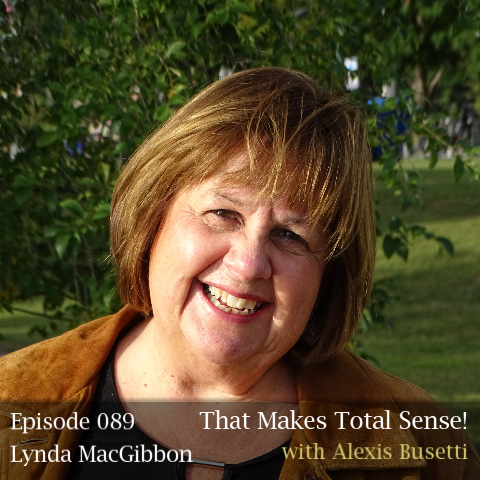
Speaker 1 00:00:39 I am talking today to Linda McGiven. She is the author of the recent really recently released book, my vertical neighborhood. How strangers became a community. Hey Linda.
Speaker 2 00:00:53 Hi. It's great to be with you.
Speaker 1 00:00:55 Thank you so much for coming on. I told you right before we recorded that I finished your book this morning and it was the only word I kept thinking was delightful. I never even used that word, but it was so delightful. Thank you for this book.
Speaker 2 00:01:10 Well, thank you for that compliment. I'm glad that you enjoyed meeting my friends. I did.
Speaker 1 00:01:16 I enjoy meeting your friends and I am like really kind of sad in my heart that I haven't been to any Monday night dinners, but we'll get there. We'll get there. Um, Linda, can you start by just telling us a little bit about what brought you to this move in the first place? Because you have been, you've had a career as a writer, as journalist and, um, and you're living in an environment that looks a lot different than you had for the rest of your life. So what, what brought you to your vertical neighborhood?
Speaker 2 00:01:53 Thank you. Good starting question. You know, it was about 10 years ago. I was just 49 about to turn 50. Um, I work for InterVarsity in Canada and colleagues had approached me to see if I might consider moving to Toronto. I was living on the East coast of Canada. At that time I was doing campus work for diversity. I had already made a big shift in my life career about nine years before that, just as I was about to hit 40 actually. Um, so I was doing campus work and they said, you know, with your journalism PR background, why don't you do communications work for InterVarsity? We're trying to grow that area, but I did not really want to move. Um, from the East coast of Toronto or to the East coast of Canada to Toronto for big city, I was in a small town.
Speaker 2 00:02:38 Um, I was happy with my life. I thought I was happy with my life. It was interesting as I started to talk about the job itself, I started to get a bit of vision for, Oh, maybe I'm ready for a change. And then I think the other thing that happened for me is I had thought that I would live my whole life in this small, small city in a suburb of a small city was living in a house was really comfortable, but I had traveled the previous few summers to a big city in central Asia and lived there for four, four week stretches. And I discovered I kind of really liked it cities and I didn't know that. So I had this unsettled thing going on in me anyway. So I finally said yes to the invitation, to, to move uproot my life and move to Toronto, which was, you know, moving from a town of small city of about 140,000 to a well Canada's largest city, one of the largest cities in the world. So it was an invitation for a job move and a bit of a feeling of unsettleness in my soul that maybe God was bringing me to do something new or try something new in my life. And I do like change. So, you know, all the ingredients were right.
Speaker 1 00:03:52 This is, this is so amazing to me. So I, I mean this in, and I don't even know if you've seen the show. I mean, this in like the most endearing way possible when I was at the pictures that were coming to me, as I was reading your book and the images of the house that you used to live in and how you kind of described yourself, I thought, Oh, this is iconic garden. Like,
Speaker 2 00:04:18 Definitely not as good a cook as her, but I do love her recipes. I like this is a beautiful woman in a beautiful home who creates
Speaker 1 00:04:26 Beautiful atmospheres for com for people to come and eat beautiful food, right? Like this is, this is like what I was picturing as I was reading your book. And then I thought, well, I gonna, she just moved. Like, she moved,
Speaker 2 00:04:39 Moved to the big city, too
Speaker 1 00:04:43 High rise, you know, and the hospitality followed her, uh, followed her there. And, um, and that's kind of how I pictured, you know, where you were. Right. Beautiful, you know, idyllic setting, right? Like the, the most amazing Airbnb. Right.
Speaker 2 00:05:02 Well, you know, nothing is ever really, truly, I do. Like, cause when I had to sell that house, I ended up getting an infestation of mice. Um, Oh no. Yeah. So the whole time I was trying to sell it, I had a really good neighbor or two who would come and I was often in Toronto and they would come over to my house before somebody came to look at it and they would hide all the most traps, you know? Cause I was away for legal neighbor. Oh yeah. I know I was away for weeks on end. And then they would, you know, and then the house would show, I bought a pest control, like a service to go with the sale of the house because it was so hard to get rid of these mice in this hundred year old house. Anyway, you know, every idyllic story has a little bit were real lifeline,
Speaker 1 00:05:42 The story behind the Instagram post. Right? Like what's,
Speaker 2 00:05:47 I love it.
Speaker 1 00:05:48 I love it so much. Um, so this isn't a spoiler alert. I don't think, I will say it's at the end of your book, but it's in the acknowledgments and I kind of, um, I'm hoping you'll start us there. Um, but it comes from some advice that you received after you were, um, when you were making the transition and we mentioned you had been in journalism, you've been doing a lot of things in and you had a column and the advice was, Hey Linda, something to the effect of why don't, why don't you take a break from writing about community and start living into it. So can you start us with that piece of advice and what that meant for your lifestyle change?
Speaker 2 00:06:31 Oh, that's a, that's a lovely place to start. Yeah. Very good. Then a dear friend of mine gave me that piece of advice. Um, I had, um, been writing a newspaper column for about, well, the 10 years after I left the newspaper, I was writing it before that, but I kept writing it after I left journalism professionally. And, and then even when I, and it was a newspaper that was based in Eastern Canada. So even when I moved to Toronto, I kept writing for that same newspaper and publishing things online and I was writing and just, it was called people, places and things. It was just all the life. And, uh, I, I continued to do it for the first year I was in Toronto, but it became harder and harder to write for an audience of people back East when I was living in Toronto, even though I was invited to write about Toronto, if I want it to.
Speaker 2 00:07:20 And I did, it just became harder and harder to do that at the same time I was, I, I had come to Toronto and we can unpack this more later, carrying a question with me about loving neighbors. And so I was doing a lot of things to try to figure out how do I meet neighbors? How do I engage with them? And my good friend, Janet, um, was listening to me talk about wanting to do this. She was also listening to be talked about, you know, maybe it's time to give up my newspaper column. Maybe it's time to step away from that life completely. Um, which was very hard for me. I had, you know, wanted to become a journalist reporter for newspapers since I was a kid in grade nine. And, um, and giving it up felt like I'm really cutting off a huge part of my life, but it felt more and more like I should do it.
Speaker 2 00:08:10 And she said to me, you know, you're trying to live in the community. Just, just let the writing go for awhile. And, uh, so I, so I did, I submitted my resignation to my editor back in, back East at the newspaper. I remember driving home from the office that day crying the whole way. Like what have I done? Like, I, I know it's the right thing to do, but it feels like I've just cut off my right hand, you know, literally cause that's what I write with. So I, but I did, I stopped writing the professional newspaper column, uh, and began to live into more. And some things in community were starting to happen by that time, um, in, in my condominium building. So yeah, I lived into, um, and then, you know, the people often ask me, well, why this book, why did you write about this? And honestly, the book, the book became a book because people kept saying to me, when I would tell them stories about my life and then in the condo, you should write a book about this. You should write a book about this. And even my friends often would say, you're going to write a book about this. We could be a TV show.
Speaker 2 00:09:21 So, so, so I began to get lots of encouragement later on, but in that first year, I, I did, you know, stop writing professionally or publicly, um, and just lived into it. It was, it was a good word of advice. And I had no idea at that time that the book would ever come to be. Yeah.
Speaker 1 00:09:40 Well, let's talk about that question that you mentioned, because I know you had had some other, some influence from some other authors and Christian leaders and, and it really, I, I shared with you a little bit before we started, we started recording, but during this pandemic, when we're just home, right, we're just home, this idea of neighborhood and neighbor and really, I mean, living, let out with the people in your close proximity became real to me in a way that it never had been before. Um, and we live in neighborhoods that look completely different, right? I live in a, like, not really the suburbs, but kind of, you know, of a large city, but it's these, you know, um, we have these front yards that you mentioned that the kids never play in, you know, cause everyone's out back and, and, and we don't see our neighbors much because we go in through the garages and, and that kind of thing, but the neighbors and that idea became more real to me during the pandemic.
Speaker 1 00:10:44 And I'd love for you to share the part that really struck me when you were wrestling with this question was number one was loving, right? What does that actually mean for, for us to love our neighbors and why is that, you know, maybe what God was commanding us to do, but then also the neighbors being different than, you know, people you go to church with, for example, and the normal kind of run of the mill, you know, um, you say that, but like normal community, right. That we're a part of as Christians, that's kind of our normal, um, community. And so you're kind of wrestling with both of these things and, and how you were brought up. So I don't know, take us through that because that was, that was so thought provoking to read.
Speaker 2 00:11:32 I, um, I've always been, I think, um, the kind of Christian who really wrestles with, what does it look like practically to live out my faith? I I'm, I'm very, you know, I'm a reader I love to read and be challenged by spiritual ideas and theological ideas. But I think maybe it's because I was a reporter, a journalist for a long time, always for secular press, but hopefully most Christians are like this, but I just like, it's not enough for me just to have this theoretical faith. Like why, why live it? If, if it doesn't make sense to live it. And, uh, when I hear somebody who's really living it, tell stories about it and often quite inspired. Um, I remember hearing, I think it's Jackie Polander who, I don't know if you know her story, but she was in the forbidden city, the wall city in Hong Kong.
Speaker 2 00:12:24 Anyway, she's a phenomenal story of mission life. And I remember hearing her talk about, um, reaching out to gangs at one point and, and all kinds of really difficult places where she lived and saying to the crowd she was talking to, this is my story. This is not your story. So you can be inspired by it, but you can't live at exactly. Like I lived in which you know, it was a good, a good word. I, um, I heard Michael Frost, the miss geologist and author from Australia speak, uh, it's over 15 years ago now, probably longer. And he told stories of, with a group of fellow believers, moving into a neighborhood expressly to meet neighbors expressly, to live out their faith in a, in a loving way. I heard him speak at this conference that was about youth work. It wasn't about neighborhoods, but I heard this story and I could not shake it.
Speaker 2 00:13:18 And I, for a long time, even in, when I was living in the East coast, in new Brunswick, I kept trying to figure out how could I do this more? And I talked to friends about it and how do we do this? Like we're already in a neighborhood kid. Some of my believing friends lived in my neighborhood, like, can we do things? And we did some things, but I had so much going on in my life already. And I was very involved in my own church. I had a set group of friends, you know, family. I had a complete life. You might say, now that's not an excuse for not turning your life on end. If you feel like God is challenging you to actually explore commands or explore teaching or explore what it means to live our lives as Christians, but the move to Toronto, um, it was like a little light went on for me.
Speaker 2 00:14:04 And I was kinda like, Oh, I'm, I've got a clean slate. Like I really want to explore or trying to live my life the way I, I heard Michael Frost live, his, it won't be the same, but what if I tried to create my, in my condo, that's the center of my life. That's where my friends are gonna come from. That's where I'm going to spend most of my time. What if I didn't do any of the normal things I usually would do when I moved to a new place, like get really, really involved in the church or, you know, look for Christians to be my friends and I was working for Christian organization. So that wouldn't be hard, but what if I didn't do that? But if I left space, um, and that was the first question, like, what if I left space for this?
Speaker 2 00:14:49 What would happen? The question about what does love mean came later as I began to probably even more as I began to write and reflect on what had happened. Um, but the, is it possible? What would it look like? This is, this is the one of the first and greatest commandments for us. Um, you know, I think in the book, I say, you know, if you don't get this one, right, I don't, you know, and Jesus said it, this, everything else hangs on this. So it wasn't, it was this opportunity to try something. I didn't really know what that would mean, but it was like, well, let's try it. And, and a prayer to God to say, glad I'm re I'm willing to try this. I don't quite know what it will mean. And I had no idea what it would be. I think I would have still done it, knowing what it meant
Speaker 1 00:15:42 And the adventures in the book are. I mean, I know, I know only a sampling, but I mean, they're, they're incredible. But even just that, that, that question of what would it look like if you left space and, and I'm just going, like throw this out there and say, that feels like a really scary question to ask as a single person moving to a brand new city for a job, because I'm just thinking I'm like putting myself in that position. Right. And my first thought was, well, what if the space doesn't get filled? Right? Like there's only so many, I love to read. There's only so many books I can read. Right. There's only so many, you know, what, if it leaving the space, you know, creating that space. Um, and it's not just, it's not like a margin, right? Like this is like, this is the page. The page is blank. What, what, what if something doesn't happen in the study?
Speaker 2 00:16:39 It's a fair question. You know, I, I had some safety nets. So as I said, I worked with a Christian organization and I already was friends with colleagues who I'd known before I made the move. Um, I could reach out to any one of them and try to insert myself into their lives a little more than I was. I had a brother in the nearby city, you know, and, and his, his daughters were in the area. Um, my nieces, they were very kindly, often invited me to hang out with their friends, you know, so I wouldn't be lonely. Um, and I still had a network of friends all over the country and even around the world. So I had a lot of support and a lot of encouragement in peoples in my life. But, but I was, I was pretty determined not to fill the empty spaces.
Speaker 2 00:17:24 And so I do remember different times, like kind of coming home on a weekend and thinking, I just need one thing in the weekend that I know is going to happen. So it might be that I'd go to my brother's for dinner, you know, but I'll leave the rest of the time open, but I'm an extrovert. So I get energized by people. So, you know, I, I figured out fairly early on that, like, I need one thing scheduled, that's a sure thing. And then I can leave the rest of the margins open to see what happens. Um, so I, you know, it wasn't as if I went in with no support, no safety net, no encouragement from other people. And I, I remember a time when I was feeling like this, it took, it took a year before I really, um, things really started to happen. And I really started to meet people who became friends in that first year. I remember a colleague at work, invited me to go hiking with some of her friends one Saturday. And I was like, Oh, finally, like I can go be with some people and do something fun. And that makes it sound like I wasn't ever getting that. But the first year was lonely. Um, yeah. Chosen loneliness.
Speaker 1 00:18:35 Right. Yeah. But that's so brave. Right. I mean, I just think, um, because when, when my family moved to Houston, uh, 11 years ago, so we were my husband and me, and we had three week old twin girls that this was the most insane part of our lives, the most insane transition ever. And we had lived in our college town with our campus ministry. So, you know, we were in an, in a, in a different campus ministry, but you know how home, it just feels like home, right. For the students. And so we had maintained our relationship with those, with those friends. We're still friends, you know, with them 20 years later and, and all of this, but we had never really been in a place where we had to make friends. Right. And so, um, I remember honestly thinking it was kind of odd at our, at our previous church in Oklahoma where people would come and that's where they made friends was at church, because I thought that's kind of odd to me, but it was because we had had college friends, right.
Speaker 1 00:19:40 That we had kind of grown up together, you know, in our young adulthood. And they were our friends. But then when we moved here, I'm like, Oh, this actually makes perfect sense that people would, that would be the normal place where people would make friends, right. If you're a Christian and you move into a new city, then you find a church, hopefully without too much trouble. And then you begin to build friendships. And that's where your kind of primary, you know, friendship network ends up coming from is your church. And when you said in your book, I went and talked to my pastor and said, you know what? I may not be here every Sunday for the sake of my neighborhood. I might not be here every Sunday, Linda. So I think there's also
Speaker 2 00:20:27 A little bit of realistic life experience in that one as well, because I've moved, um, you know, probably five or six times in my life to university and then from one job to another job. And in my experiences of seeking my community in church, uh, it's not that easy. So I think I learned over time, I used to say to people, I feel like it takes me nine months to a year when I've made a move somewhere to actually start having friends, to start having a community that I feel like I belong in. And I think if I look back to the moves that I did in my twenties, thirties, forties, even starting at a church was incredibly lonely. Um, people, people have their connections already. They have their groups of friends. I mean, honestly the figuring out how to love our neighbor in the church.
Speaker 2 00:21:18 Pew is maybe another book, you know, because, because strangers are everywhere and we do gravitate to the people that we know that we want to have a conversation with, that we want to invite out to, to lunch. So I had experienced the loneliness and how difficult it was to establish friends, even in church. So I was under no false pretenses that if I had just done that life would all be smooth sailing. Um, I guess I was prepared for it to take a while. Yeah. I was prepared for, to take a while because in my experience it always takes awhile. When you make a move, you know, thank goodness for Facebook. I used to tell people because all my friends back home and like family, they were all on it and they were always active with me, um, to see how things were going. So I could at least have a chat online.
Speaker 1 00:22:09 Yes. But you know, it's, it's true. I remember one day we were, we were driving home from the place where we, we were actually at this, at this same congregation for about nine years when we moved here and early, early on, we were driving away. And I was, so I remember driving home from one of our early, you know, church services and just, almost being in tears because I was telling my husband on the way home, I just want to be known. Right. I just, I just want to feel known. I just want, I want some friends, you know, to feel known. And of course it really irritates me sometimes when he does this, when he like throws the Bible verses back in my face. Right. And he says, well, what does the Bible say about friendship? And I'm kind of like, I dunno, why don't you tell me what the Bible says about friendship?
Speaker 1 00:23:00 You know? And he's like, well, doesn't it say, maybe in Proverbs, somewhere that he, who wants a friend should show himself friendly. And, and I'm like, well, what's your point? And his point was obviously if I want friends and I want it to be known, then I need to extend the hand of friendship first. Right. But it didn't feel that way for me. Cause I thought, well, I'm the new kid and that shouldn't be on me. Right. That should be this, you know, you, people should be flocking to me. Right. Of course, in, in my sensitivity and my postpartum ness and you know, everything else and the move and the transition. But I, I think I'm giving myself too much credit. I probably would have felt like that in no matter what the circumstances were. Um, but he was right, right. He was right. That he, who wants friends should show himself friendly. And, and that crossed my mind so many times when I was reading your book and I want to start there, I want to go there. I want to go there with the Monday night dinners and all of that stuff because you and Rachel showed yourselves to be friendly. And man, if you didn't attract some friends, so can you, like, I don't even know whatever you want to share about that, how that started and how you really excited to functionally live out this command,
Speaker 2 00:24:21 Right? Yeah. Yeah. Yeah. And just before I tell a story from the book, you reminded me of a story from the church that I went to, uh, back East, um, in my early days of going to that church, I remember sitting in the Pew one, one Sunday and during communion and feeling like I've been here for like six months and I don't feel any connection to anybody that's beyond the superficial. Hello. And so I said to God, unless something changes, I'm going to go find a new church. Like, can you change something? Can you give me some glimmer of hope? And, and that very night, actually that very day after church, somebody came up to me and said, I'm having a party tonight. Do you want to come? And I was, I was like, okay, I think I'm supposed to stay here. And I was, it was a great church, eventually a group of friends that I started having a Sunday lunch.
Speaker 2 00:25:08 We had a Sunday soup group. And what we did was somebody volunteered to make soup. Uh, and they would make enough soup so that if somebody new was in church, we could invite them to come with us. And we did that for quite a while. And sometimes we had to take bowls from the church's kitchen home with us because when nobody had enough bowls, you know, sometimes there was many people sitting around the living room, but it was simple. Right. It was very simple. Um, so I have had you experience of again, practically, what does it mean? We have to be intentional and do something. So, uh, back to, to Rachel. Um, so the first year I was in the condo by myself, living here, you know, trying to meet people, joining the gardening committee, trying to be friendly, going to the condo Christmas party.
Speaker 2 00:25:55 And it was all difficult and superficially friendly and nothing was moving, you know, nothing was really happening. And I was, I was praying a lot like, God, I really try to leave space for this, but it's taking an awful long time. And then, um, we hired a, um, a new graphic designer at work and she was moving from the States and, uh, she was going to work on my team. And, uh, and so she did, she came and, uh, she ended up moving into the building. I won't tell the whole story, but she ended up moving into the building, um, and actually onto my floor. So we bookended the 15th floor of our apartment building. And she had the same kind of value for hospitality. Uh, she can meet anybody anywhere and get to know them. Um, she's way more courageous and risk oriented than I am.
Speaker 2 00:26:49 Um, and would quickly invite anybody to, you know, pop into her place for a cup of coffee or sit for hours and talk to them at a cafe if they just met on a bus stop or in the condo hot tub, which is one of the stories in the book. Um, so when she moved in, we started to have these conversations about what our value was and what I was hoping to do and what she was interested in doing. And we agreed to do it together. And that's where everything really changed. Um, she's an introvert, I'm an extrovert. Um, but we both love people in our own ways. Uh, she loves to cook and she loves to cook for a crowd. Um, I don't love to cook as much as she does, but I love to be in a crowded room with people. She likes to be at the kitchen counter quietly talking to one person.
Speaker 2 00:27:40 So we were a good pair. We were good. We were a good partnership that way. So, so, you know, we, we talked first about our values and what we wanted to do. And then we started to think about, well, what could we do next? What could we do first? And the very first thing we did was we threw a Christmas potluck and we invited everybody on our floor. Again, it was, it seemed easier to write, uh, an invitation from two people on a floor who lived in two different apartments than one person. And I don't know if that was just me feeling awkward about condo etiquette and rules or nervousness about it. It probably would have been fine. Had I done that on my own, but I wasn't the type of person to do it on my own. So it really helped when she moved in.
Speaker 2 00:28:22 So we did this, we did this potluck and at the end of the night, um, Rachel just announced everybody, Hey, on Monday nights in January, I'm going to start Monday night dinners, everybody, you know, Monday night, you're home, it's, you're just back to work. You don't really feel like cooking necessarily and who wants to eat alone anyway. So my door will be open. I'm going to cook food, anybody can come. And that started what we called her Monday night dinners. And we did that for about five years. Um, consistently, you know, either at her place, my place, sometimes as we met more neighbors, they would, they would host, but it really was, um, a lot of fun, a fair bit of stress and, um, really lovely, really lovely. And at first, um,
Speaker 1 00:29:11 It's going to be, man, it's going to be hard for me not to give everything away in this book, but I want everyone to read it and have the experience that I had of getting to know your neighbors. Um, but at first, you know, you, you do talk about, I don't think the awkwardness, um, as I, as I read it, I didn't felt like I didn't feel like it ended with the invitation, right? Like you and Rachel kind of sitting going, um, is anybody going to show up how much food do we actually have? You know, being kind of nervous, right. About like just putting yourselves out there and you're in your homes. Um, and you're cooking right out there for, um, for anybody to, to accept or reject or, you know, whatever, like doing that. And, and, and I just want to point out, I love how there's even this neighbor relationship with Rachel, where it was easier to do it with her U2 formed a community to reach out to a larger community. Um, but when we do that, this entire book reminded me that there's just, there's always risk in relationship and there's always rift in relationship too. Right?
Speaker 2 00:30:20 Absolutely. Yes. It doesn't matter. I mean, you know, we know that's in the church as well as outside of the church, right? Yeah. Yeah. Somebody asked me recently what we were talking was an interview with the book and the person said, well, what would you, how do you handle people making you feel uncomfortable? And I thought it was such an interesting question because I think perhaps as Christians, we should be prepared to be uncomfortable. I think about how uncomfortable some of my friends were, um, and neighbors even taking the risk to come join us for a Monday night dinner or as we started to do other things, um, have a conversation about faith, if that was not what they were used to or any number of things like I realized, Oh, if I, if I'm only in my community, that's just like me. Um, I'm never uncomfortable.
Speaker 2 00:31:20 Or I shield myself from being uncomfortable. But as when I'm a stranger somewhere I'm often uncomfortable. So the person who I'm supposed to see as my neighbor is probably feeling uncomfortable and perhaps what I'm supposed to do and following Jesus's commandment is to help make them comfortable. Even if it means I am not comfortable. You know, I think about like bits of Raritan story, which is so familiar to us, but I mean, it had to be uncomfortable for that man for that Samaritan man to go handle a person who was all beat up and bloody on the road to get him on his donkey, to get them to the hotel, like to get him to go back again. He diverted himself from his agenda, all those things make for discomfort. Um, and I, I've learned, I think one of the things God has taught me through the experience of this, you know, theological, sociological practice that I wanted to do.
Speaker 2 00:32:22 Um, I've learned that it's okay to be uncomfortable. That that's probably where my greatest learning and some of my greatest adventures come from yeah. Is being uncomfortable. Yeah. It's okay. You know, the rifts, the challenges, the Monday night dinners, we had no rules except was welcome. You have to talk about everything and anything and people did. And, and some people didn't come back and some nights I would sit there and feel like, Oh, this is like being in a really dysfunctional family where your uncle Bob is sharing his utmost, you know, the surgery he just had on some part of his body. That's it. And just realizing that I just stumbled on it flow. I'm just not going to worry. I did worry. Of course
Speaker 1 00:33:08 Curious. Um, I'm curious about how, like, how did you choose in what kind of tangible ways maybe, or, or even mentally and emotionally, like, how did you choose to, um, I don't know. I w I don't even know how to phrase this, like how to respond in some of those situations that you were in, because what I see when you, when you talked earlier about being inspired by someone else's story, but not being able to live it. Right. I just thought I want to, I'm inspired by this. Like, I'm inspired by the responses that I read about in your book. Like, for example, I really want to be friends with Brian. <inaudible>,
Speaker 1 00:34:03 he's great. You guys probably make it made an, a, an unlikely pairing, right. When you're out and about. Um, but I think that that's exactly what you're talking about, this, this uncomfortableness, um, we often miss, um, the beauty, because maybe we're afraid of being uncomfortable, but when the discomfort comes, then we've got to respond to it and that helps us grow. Right. So, um, so I know that wasn't a very eloquently phrased question because I'm kind of thinking about it as I'm going, but, um, but I would say maybe the, the, the blunt way to ask it is, um, this book in the responses felt they felt very new Testament to me. Um, but in that, unfortunately they felt a little bit different than kind of like the youth group Sunday school answer that I was used to growing up. Does that make sense? I don't mean absolutely that, but no, no, no. Yeah. So take that maybe.
Speaker 2 00:35:05 Yeah. I, um, you know, I've had people ask me, is this a book about how to do evangelism so that people will become Christians? And my answer is no, it's not. It's a book about what it means to love your neighbor. And I think there are two different, I think there's two different things going on in, in Jesus's call to us, to love our neighbor and his call to us, to the great commission. I don't, they're not separate, but they don't necessarily the same results. I mean, we don't know the result cause that's totally up to God anyway, but I've, I really have come to believe through my experiences and through my reading of scripture to, and trying to search it out, that the command to love our neighbor is just that you love your neighbor because you want, because this world will be a better place if we all love our neighbors.
Speaker 2 00:36:00 And because everybody's made in the image of God and therefore they, um, you know, this isn't my term. This is, um, Scott McKnight's term in the Jesus creed, but he talks about sacred neighbor love, like not safe neighbor love sacred. Baber love learning to love your neighbor because they are a sacred person made in the image of God, regardless of what they do with your love. That is true of them. And I, I realized that I need it to be friends with my neighbors, to extend love to them, to receive love for me from them, because that's the command and God would do something out of that. But they might in, I mean, to my knowledge right now, you know, many of them still would not profess to be followers of Jesus. Definitely not. Um, but I am, I want them to be, I want everybody to be, but I, it, it, it's not what the book is about.
Speaker 2 00:37:08 It's really about what happens when we respond to the person immediately in front of me right now with whatever need they might have, but maybe also whatever need I might have if they're looking back at me as neighbor. So it's, it's a, it's an, it's a momentary. Now this present moment reality versus what I'm hoping for long-term might happen. Uh, and I, you know, I think I also came to learn that through, as I really reflected on our stories. And I reflected on what happened over the course of the five years that I write about in the book. Is it to love your neighbor? Is this very much in the moment in the space and the time it's not necessarily for a lifetime, um, it's not a lifetime command for that particular neighbor because the neighbors are always going to change who's in front of me at the moment. Yeah. So I don't know if there was a long-winded answer to that question.
Speaker 1 00:38:08 No, it's really, it's really good because I would say just, I had, um, I wouldn't say I had the same question spinning as I read it. I didn't. Um, but what I would say is the question that I probably had that I actually, I forced out of my mind, if, if we want to be honest, I forced it out of my mind as I was reading, it was who's going to become a Christian, right. As I'm reading about these people, and that's kind of, you know, like I'm trained to do that, like I'm a Christian, this is, it's a great commission where, you know, we're evangelicals right. Coming from it, coming from evangelism. And that's what you want to know. Right. Cause you care. I, I, I care about your neighbors. I don't know them. And I care about them so deeply. And I'm like, Oh my goodness, who's, who's it who's, who's gonna, who's gonna do it.
Speaker 1 00:38:53 Right. He's gonna do it. But what I, I had to push that out as I was reading it, because I thought the end game is loving your neighbor. Right. And in one of the pages I dog-eared was you exactly hit on it and allowing yourself to be loved by them. Right. Um, so I mentioned earlier during the pandemic, I kind of, we ended up seeing our neighborhood a little bit differently, um, because we were all, we were all here. We were all home and we got to know each other and learn about each other in ways that we really hadn't because we were all just kind of hanging out like, you know, 10 feet apart, probably at the early time, you know, in front yards. Cause the weather was beautiful. Well, at least you were 10 feet apart. Not like there were no walls between the anymore.
Speaker 1 00:39:38 Right. We could see each other and we saw your was walking by right. Who couldn't just stay inside all day. And, and people walking dogs and everything. And, and we, we position ourselves in our front yard and we got to know our neighbors. And I, I will say of myself several years ago, I, um, you know, started seeing a therapist and one of the, kind of the major, you know, things she tells me one day, she just kind of looks at me and she's like Alexis, um, something to the effect of like, you need to deal with this independence of yours like this, this kind of independent street. So I tell to people, I tell my, my husband and my best friend of 20 years, and I say, look, I'm really not sure what's wrong with my therapist, but she seems to think I have this independent streak, you know, happening.
Speaker 1 00:40:27 And they both looked at me like I had three heads, like, duh, like you, how much are you paying her for her to tell you something that we already, you know, already knew, but it was this independent streak. I'll tell you it was so bad that when we had babies, I would often ha this is awful. This is an awful confession. I would often hesitate to, you know, bring other young moms food or things like that because, um, or to, or actually to allow them to bring me food because I just thought I can't do it. Like I'm, I'm drowning right now. And I can't put it back. And, and the thing was, I wasn't comfortable receiving if I couldn't reciprocate in some way, I just, it was awful. Like I just couldn't do it. And so when, when we had our third baby, um, I actually specifically asked these mom's groups that I was a part of not to put my name on the list.
Speaker 1 00:41:19 So they're like, we want to bring you food. And I'm like, I, I can't accept it from you. And I didn't go into all of it, but I just knew no look, because if somebody has a baby in three months, I'm not going to be in any position to, to bring them a meal. You know, we had three kids under the age of three, for 10 months in our house and we just couldn't do it. But slowly that has chipped away. And I think what, the more and more I learn about this mystery of community that God has in store for us, right? The more that independent street gets stripped away and neighbors, friends, church, people, whether they're believers or not, I'm like, this is part of God's plan for us to love each other in this way. Right. And so one, one of the times during the pandemic, we had neighbors who had moved in the month before lockdown.
Speaker 1 00:42:18 And they have, you know, kids are kids ages. And so they started to play with one another. And it was something that we, we all knew, everyone was being super careful and not going anywhere. And so these kids who had just met each other, just played in the front yard for months and months and months, they just played in the front yard. And at one point, you know, groceries are kind of hard to get and things like that. And at one point I just made some comment of like, I mean, we're just, we're, we're just running out of milk. Like, you know, they had limits on what we could buy. And we have four kids who are drinking milk all the time. I was like, we just can't, we can't even keep up. It's crazy. I am telling you if the next thing I knew my neighbor is knocking on my door with a gallon of milk.
Speaker 1 00:42:59 Wow. Yeah. And I hate to tell you that it was one of the most uncomfortable things I did to take it from her because I'm like, okay, let it just feels like such a basic need. Right? I'm like, I can take care of my notes. No, but no, I really couldn't write. And she could buy more. She didn't have as many people in her family. And she brought over this gallon of milk and it was almost like it's dam burst, right. Where I'm like, I can do this. I can live with Uber's. I can live with my community. I can receive milk. I can give granola. I can eat.
Speaker 2 00:43:30 Exactly, exactly. And you don't even have to keep track. I mean, you know, well, you shouldn't keep track and different personalities, whether you're, it doesn't matter what you believe or where you come from. And that's a personality type to whether you're going to be keeping track of that or not. But if we can get out of that habit, you just, you know, you, it, it just is so much more helpful because then we're just neighborly to each other. We're just pitching in where there's a need and receiving when we have the need. Um, and, and my neighbors, um, have helped me in all kinds of ways. And I think they would say the same of me, you know, I needed to sell a car and I was really nervous about selling it online. I didn't want to go for a test drive with a stranger, but my friend Brian said, I ended up help you with this. You know, I'll do all of that for you. I'll go on the test drive. So very practical thing. Um, I probably wouldn't have, well, I might've asked him by then, but he, um, you know, that's just a practical thing that I realized I would have soldiered through and tried to do it on my own, but this was way better.
Speaker 1 00:44:41 And even revealing our needs to one another. Right. So you guys are all sitting and you're having dinner and that starting to be open and vulnerable and even revealing that you have those needs instead of just,
Speaker 2 00:44:54 Yeah. Yeah. And I would say, you know, we did a number of different things. Um, one of the most significant things we did. Um, so as Rachel and I would get together, we would talk about, okay, well, what else can we do? What else can we do? And, um, it was her idea to start a writers group. And we threw around the idea, like we thought about what about a movie night? Or what about a book club? And, but I, you know, her response was, well, people will just talk about the movie or the book, but if we write, they'll talk about themselves, and this is a way to get people deeper into talking about themselves and the writers, we also did a two year Bible study in the gospel of John. Um, but I would say the writers group was the most sacred space that I had ever inhabited with anybody.
Speaker 2 00:45:42 I, I couldn't believe it from the very beginning, how vulnerable people were willing to be, how open, how they would answer questions about what they'd written, whether they were writers or not. Um, we began to learn about each other and often I would leave. We did it in the public dining room of the condo building at the end of the night. We're supposed to go from like seven till nine. And we were often there till 11 at night, some work nights. So that was hard, but I would often leave the room and just feel like, I don't know when I have been in such a sacred conversation in my life with people really revealing things about themselves and trusting the people in the room to listen. And it wasn't always the idyllic and perfect believe me. And I share a story of my own brokenness in that regard.
Speaker 2 00:46:29 Um, but, uh, that, you know, we did the Monday night dinners for about five years and it, then it came to an end. Um, we continued though with the writers group just up until the pandemic last fall. And, um, but I would say, and this might take us in a bit of a different direction now, but things come to an end and it was really hard to stop both the Monday night dinner and the writers group, but we knew that it had come to an end and we knew we were trying to keep it going, but it didn't feel organic or natural anymore. And so, you know, I really wrestled with the question, well, am I, am I giving up on meeting my neighbors now? Like, what does this mean? How does this shift? Um, but no, I don't think that is true at all, but I think we need to allow ourselves to live in and out of season for things and not just say something has to be that, to do the same thing forever, um, to let things go and to let neighbors go, um, as they come and go and you sort of know who's in front of me now.
Speaker 2 00:47:37 Yeah.
Speaker 1 00:47:38 Right. And as those relationships shift, right. And so, as we see in the book, some of your neighbors did disappear and many of them evolved into friendships. Um, where, you know, you say, when, when people don't want to spoil it and people move away, but they would come back. Right. Or, or being able to reach out and, you know, you could, um, and they feel the same way about you, even if you're not in close proximity anymore. Um, and then those apartments get filled with other people. Right. And, and that seasonal part of it, I think is a really, I think it's a really beautiful picture of the maturation. Right. Of, of being able to enjoy the seasons as they come and go.
Speaker 2 00:48:28 Yes. Yeah, yeah. And whoever God brings across your path or any given time, you know, I, in the pandemic, I, when I'm at walking, I'm always intrigued by the people who will stop and have a conversation. Even briefly, either the other day I was walking that was, had my camera with me. I'm a bit of a birdwatcher now. And I just, I like to take pictures more than I like to walk, but, uh, I was, uh, a man stopped me and he said, would you mind taking a picture of my dog? And I just got my dog back. I haven't had him for a long time. So I said, sure, I'll take your picture. So we did that. And then he, he started to just talk to me and we probably stood there and we talked for 10, 15 minutes on the path. And I'm, I probably go a little longer in those conversations now than I might have 10 years ago. Um, because I'm wondering like, God, this is a neighbor right now. This is somebody in front of me at this moment. And what else do I have to do with my time? I don't need to rush away from it. But you know, our tendency is to move on and do what we had planned or go, you know, wherever I was walking. But, but I think we, we can spend a little longer, even with the stranger, which is the neighbor is a stranger, generally speaking,
Speaker 1 00:49:55 Is that, is that part of it for you? I was going to ask you what you've learned. And I S I still want to ask you that about this, about this weird commandment, right? This ancient commandment to love our neighbor, but what I've heard from you a couple of times, and you can tell me if I'm hearing this correctly, but I feel like what I've heard from you a couple of times, is that a significant part of loving our neighbor is submitting to them or submitting to God our agenda. Now it may be in it, it may be agenda, um, kind of in the broad sense, but it could also be like, what is on our what's on our, to do list for today. Right. Um, and I had never really, I have experienced that, but I don't know that I would have named it that way maybe until just now that, that part of loving my neighbor is submitting to her, my agenda.
Speaker 2 00:50:51 I think that's really well put, because we will do that for people we naturally love. We will know, generally speaking, we will do it for our family, our spouse, our best friends, our pets. And we will actually submit our agenda to their agenda because we love them because the relationship is worth it. So I wonder if one of the reasons God gave us the word love in relation to neighbor is because he expects the same thing from us, because that is what makes the difference, right? Like relationally, when I submit my agenda to your agenda, when I stopped doing what I had planned and give you the time for what you had planned, or when I accept something, you offer me, it changes the relationship dynamic significantly, I guess, in some ways we're giving away our own power. And I like it when somebody gives me, gives away their power to me.
Speaker 2 00:51:51 I like that feeling right. I feel seen, I feel like being paid attention to, I feel like it's, it's also not transactional anymore. It's like, no, no, it's not transactional. This relationship we have, I'm actually giving you time and I'm spending some time with you or I'm stopping what I'm doing to take care of whatever it is you need. And love is not a transactional word, but often our experiences with strangers are very transactional in and out quickly. But how would that change us if we actually stopped thinking about those interactions as transactional and, and love is it doesn't mean it's again, it has to be forever. It's, it's like this momentary love it's love in the moment. And how would you behave to somebody that you did love in this moment? So I've, you know, I, I I've thought a lot about the word love and why not other words. And I, you know, I talked about this in the book, like why not tolerate or be kind to, or respect or pay attention or, you know, any number of good words, love is such a powerful word. It's not the same as any of the other ones.
Speaker 1 00:53:06 You're right about that. Um, I'm going to ask you, I'm not going to ask you to tell a specific story. I do have my favorites, um, from the book, but, but you do, I feel like that theme comes across and I don't, I don't know that you ever, that you ever put those exact words on it necessarily, but I feel like that theme comes across in how you, um, communicate about your interactions with your neighbors in the book. Oh, I chose to do this, even though I really wanted to be in bed by this time, or, Oh, I, you know, I chose to do this, even though I was nervous, you know, about what that might look like or, or one of those things. And I could see you submitting your agenda to your neighbors during that time. Can you, can you think of, and pick like one of your favorites, it doesn't even have to be in the book, but one time where you think you could see that experience with significant w you know, worth it, fun, memorable, um, one of those times when you did that and got something you weren't expecting,
Speaker 2 00:54:01 Well, I won't, I won't give away the story. Um, but, um, there's a chapter in the book towards the end called dancing with Brian. It's probably one of my favorite stories in the book. Um, yeah. And, and, you know, I was already working on writing the book when that happened. And, um, when that whole evening took place, when we went dancing, and I remember thinking, this is a typical writers thing when you're writing, but, you know, I remember as the night unfolded, I just kept thinking, Oh my goodness, this is, this has to be in the book. This has to be in the book. I can't really believe this is all happening to me tonight. This has to be in the book. And so, and I, and I think I said it to him, like this is going to be a story. I tell it.
Speaker 2 00:54:42 But I said, I'm not telling the story of what, of what our experience was tonight to anybody else, because I want it to be a surprise when they read the book the way the whole evening unfolded. But that to me, um, you know, that evening, my friend, Brian invited me to go dancing with him and late I'm, uh, you know, I'd like to be in bed with a good book, uh, on a Friday night, but I do like to dance and I appreciate his friendship. Um, and it turned out that, that, that I realized after we got out that there was, uh, you know, he had lost his mother recently and that she had been actually buried and in another country that day. So it was a significant day for him and the invitation wasn't really about going dancing. It was really about having time to spend with somebody not to be alone.
Speaker 2 00:55:27 And so, um, but I didn't know that until later in the evening, when he reminded me that that's what was happening. So I said yes to the invitation, because I mean, by then, we'd been friends for quite a number of years, and he had never asked me to go dancing with him before. Um, and we have a platonic friendship. So, um, I just felt like I have to say yes to this, even though I'm uncomfortable with it. And it's definitely out of my comfort zone, you know, everything about it on many levels, except I love to dance. So I liked that part of it. And I, and I trusted him, um, so that, you know what I have done that five years before, would I have been willing to take the risk? I think my ability to risk grew the more I risked, because I began to realize I had this conversation with a few people since the book has come out, I've, I've realized that to be vulnerable is survivable to be unfiltered in your conversation is survivable to sh you know, I've shared a fair amount of my own vulnerabilities as I've written the book.
Speaker 2 00:56:44 Um, and I realized, Oh, you can actually survive those. And they can lead to new conversations that are fantastic and, and helpful. Um, you know, I mentioned that when I moved to Toronto early, my niece and her sent her boyfriend now, her husband were really great about inviting me to go places with their friends. If I was lonely, you could come hang out with us. But recently, um, after my niece read the book, I mean, she and I have now begun to have a really wonderful, transparent conversations about life, um, which I'm not sure, you know, we, we might've had them to some degree, but it's just provided a permission. And because we will survive actually maybe more, um, trusted openness, sure. That it causes hurt. There can be lost. Um, there can be lots of grief. Um, but I wore willing now to go with the risk of the vulnerability than not.
Speaker 1 00:57:51 I love that the more your ability to risk grew, the more that you risk,
Speaker 2 00:57:57 Like a muscle. And I think an awareness that God's commandment is a good commandment. He means it for good for us, not just for our neighbors, but for us, there's a reason, right? It's this is good for me. I will be come, I will get more out of life. I will fall more alive as I love my neighbors. It's, it's so worthwhile to me. So it, you know, God means for our good, and he gave us this commandment because it will be good for us. Um, doesn't mean it won't be costly, but to follow Jesus is to, to count the cost. Yeah. Yeah.
Speaker 1 00:58:43 Linda, as we, um, as we start to wrap up, I'm wondering for people who are inspired by your story, in your stories, by people who will, who have read the book and who will read the book, um, and are inspired by your stories, but live with their own neighbors. And I'm thinking people who live it everywhere from being in a high rise, like you, to people who, you know, live in a rural setting where their closest neighbor is maybe a mile away, just what you've pointed out. We will have neighbors. There will be a repairment or a mailman, or they will, you know, they will go to the store right. And buy eggs and, um, and they will run into neighbors. So what is your, um, what's your challenge? What's your encouragement? What is your advice for those of us who are seeking, maybe even for the first time, in a real, tangible way to follow that ancient commandment to love our neighbors, what would you, what would you tell us as we seek to do that better?
Speaker 2 00:59:48 Well, the very first thing is to pray about it, ask God, what does it mean for me? Like, what do you want me to learn? What's the next tangible step I can take. I'm really afraid about this. Is there something tangible? Can I actually just say to the clerk in the store, how's your day going? That's, that's loving a neighbor, right. Just to say and demean it. How's your day going? Um, you know, it doesn't have to be that you open your house every Monday night for dinner again. That's what happened for me. It can be something as much as talking to the person on the bus that you're sitting with. Um, it's just, what's a tangible step. So I do really think it's a, it's a personal prayer between you and God to what, what would you ask of me? Or how do I learn this?
Speaker 2 01:00:35 Show me how to learn it. Um, it may also be show me somebody else who I can do this with, so I'm not doing it alone. Um, so that's, I think primarily the very first thing is prayer and my friend, Rachel, and I, I mean, I prayed other people prayed for me. And then we prayed for a long time as we got. And we always prayed, um, as we were, as we were sharing things with our neighbors, but, um, God will answer it. He will answer it. So it's a good prayer, you know, how would you have me to do, who do you want me to see? Like help me to see the person in front of me, um, in our, I think the other thing is, you know, it's not an easy world to love a stranger. It's not an easy world anymore. Society is so polarized.
Speaker 2 01:01:26 Um, somebody challenged me recently by asking me if I, or suggesting that I wasn't necessarily as empathetic to people who didn't think, like, I think as I am towards people who do think, like, I think, and initially he didn't quite say it that way, but as I worked it out, I realized, Oh, what you're telling me is my empathy is stronger. If I think people see things the way I see it and value. So it's very easy for me to roll my eyes at somebody who says something that I find politically strange, or, you know, they're on a different side of the fence. And I realized, Oh, loving my neighbor is actually being empathetic. Like putting myself in their shoes, even if I disagree with them or I, I can't for the life of me, think of how they ever came up with that opinion, but loving my neighbor. It means I'm empathetically looking at them and thinking, why do you think that, okay, let try to put myself in your shoes. Because if I do that, I might actually be able to have a conversation that doesn't involve me rolling my eyes, or, you know, quietly in my head thinking you're crazy. Like, what do you think that, so empathy is a muscle too. And, um, it's probably the one I'm going to work on next.
Speaker 1 01:02:46 But you know, as I'm, as I'm sitting here, I'm actually physically sore from, uh, from attempting a new sport this weekend, even though I knew better, um, all of this talk about, you know, muscle, the, the risk and the empathy. Um, I'm like, but Linda, sometimes it's, it's, you we've already talked about discomfort. Sometimes it's not comfortable to be empathetic and to risk. And sometimes it hurts and, and we, and we get sore, but we can trust that. God is. Yeah.
Speaker 2 01:03:21 I also wouldn't want anybody to think that I didn't have boundaries because I did. I mean, I took time for myself. I, you know, recovered in good conversations with Rachel afterwards to unpack things that have been difficult. Or I gave myself lots of time on my own. So boundaries are important, you know, resting up when you've done a workout to get those muscles, give those muscles rest is important. Um, yeah. So it's not like you just throw up on your door and that's it, right? It's yeah. Neither is it that you keep the door shut
Speaker 1 01:04:03 Neither. Is it that you keep the door shut? I feel like that's the, I feel like that's the perfect place to wrap up. Um, Linda, um, this, this book was a gift this time with you today has been a gift. Thank you so much for coming on.
Speaker 2 01:04:20 Thank you. I've really enjoyed the conversation.
Speaker 1 01:04:22 This book guys. It's so good. This book is my vertical neighborhood. How strangers became a community IVP, put it out last month. It is delightful. Linda, how can we, um, get in touch with you, um, and get our hands on the book?
Speaker 2 01:04:42 Yeah. So the book's available anywhere. You want to buy it, um, through your independent bookstores will order it, or they might have it. You can order it online. Those people in the U S can order it directly from the university press. And I'm in Canada through chapters, Indigo or local bookstores have been getting it for people. Um, I'm on, um, Instagram and Facebook. So you can generally find me by searching at Linda McGibbon and Lynda with a Y I have a blog, um, that I don't keep up to date as much as I should, but you can also follow me there. Linda McKibben dot
Speaker 1 01:05:19 And infrequently on Twitter. Me too. I mean, honestly, I was off, I was off for about a year. I just got back on because I thought I should probably activate this while the park is five. I'm an infrequent Twitter person as well. I think for a long time, my, uh, bio said something like I'm here to read and not to tweet, you know, every once in a while and see if there's anything interesting. And then we'll log off before I start rolling my eyes, you know? Oh my goodness. Thank you so much, Linda. We'll, I'll put links for all of this, including, um, the IVP at page that university press page for the book. Um, it is, I mean, it's just, it's described, I think appropriately as a memoir and this is, it's just, it's just beautiful. I can't wait for you guys to read it for you to you've met Linda and natural meet all of her friends. I'm so excited. Thank you so much for being on Linda. Thank you, Alexis. It's been delightful to chat with you. A great conversation.
Speaker 0 01:06:23 The links for all the resources mentioned in today's episode can be found in the show notes, music and podcast production by Seth B SETI. Be sure to give us a review on iTunes and subscribe at your favorite podcast listening app, you can also visit us at that. Makes total sense.com.