Episode Transcript
[00:00:07] Speaker A: Welcome to that Makes Total Sense, a podcast dedicated to exploring God's generosity and justice. I'm Alexis Buscetti, a Christian, aiming to ask good questions and encouraging you to do the same.
Every one of us is wired by God to live out generosity and justice, but the how sometimes eludes us. That makes Total sense is a way for us to get together, posture ourselves as Lear, and challenge one another to practice generosity and justice in a tangible way every day.
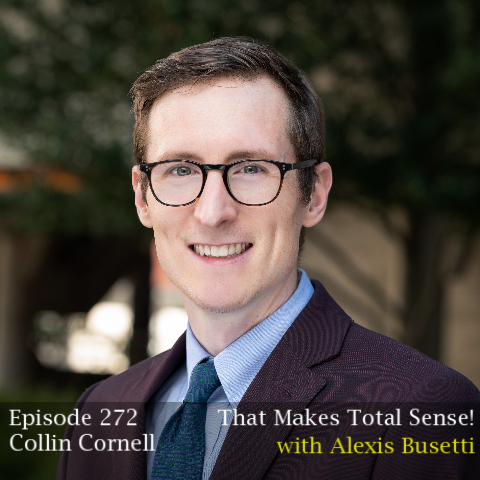
Okay, Colin, I. You have been so patient with me in getting this, getting this scheduled because. So for everyone, my friend Colin Cornell released a book last year, or early this year, I guess. And I was like, oh, yeah, that sounds like a great title. Let's talk about that. And then I read it and I was like, colin, I can't talk about that.
[00:01:06] Speaker B: Who does that say more? Alexis, why couldn't you talk about it?
[00:01:10] Speaker A: Okay, first I need to say. I need to say what it is. I need to name him. I'm holding it. So for everyone who's interested, I'm going to put it in the show notes. There you go. How's that?
Okay. So Colin wrote. It's really a booklet.
I mean, 60ish pages, right.
On purpose. It's like part of a series from Cambridge University Press. Okay. It's called Monotheism and Divine Aggression. And I was like, I'm all in. I'm totally interested. And then I forgot I was going to say this out loud. I was like, I'm all in. And then I get in and I'm like, I am not a biblical scholar. Colin, why did you even let me read this?
[00:01:56] Speaker B: Yeah, it's pretty. Pretty exegetical, pretty historical as well. A lot of ancient Near Eastern texts and phenomena, so.
[00:02:06] Speaker A: Oh, I wanted to pass it straight to Seth. I was like, I don't even. This is your thing. You know, you guys should be having. If we want to record on this book, I'll pass the mic to Seth and then you guys can record on this book. We'll make it like a special edition or something. I don't know.
But the reason why it caught my eye, let's say the reason why it caught my eye was this Divine Aggression piece. So this is why we're Turning today to Dr. Colin Cornell, who studies Old Testament. Yahweh is aggressive in the Old Testament.
Some might say violent, some might say genocidal. Colin.
And this feels very problematic for believers in Jesus, followers of Jesus, but I would say also for followers of Jesus who kind of in some way are in this Venn diagram. With me, who I as a kid was like real ticked off that as a country we had the death penalty.
Right. And this is like, arguably people are like, what about serial killers? What about, you know, and all of a sudden I'm like, no, I don't think this is a great idea. And so I might say that maybe justice driven folks, folks who might categorize themselves as progressive, you know, these kinds of things, people who posture themselves towards generosity and justice.
[00:03:43] Speaker B: For example.
[00:03:44] Speaker A: For example, yeah.
And so this, the, the aggression and the violence feels really, it feels really problematic. It feels incongruent maybe to me. And so you were really patient with me again. Decided, we decided let's have a conversation. Maybe not as much about ancient near east biblical studies stuff as in that book, but it's, it's great. But, but like just talk through this. And I'm looking to you now of course as a friend, but also as really specifically as an Old Testament professor. So you have folks who come in, you teach obviously at a Christian seminary, evangelical seminary. So a lot of folks are walking in who probably, I'm guessing, sound like me, where they're like, what do we do with this?
[00:04:35] Speaker B: 100%. That is, yeah, absolutely accurate to my experience as an instructor at Fuller, but even honestly at other schools I taught at previously, that students come into an introductory Old Testament course with some serious misgivings, maybe on the books. They feel obligated to the Old Testament in some way responsible for it.
But in practice they might feel some reluctance, some hesitance, some unease, especially because of this. You pick the word incongruity or.
[00:05:10] Speaker A: Yeah, it feels incongruent.
[00:05:12] Speaker B: Yeah, yeah, incongruent with the, their, the kind of commitments they have, especially patterned on the self giving of Jesus Christ and his seemingly fairly non violent way of, of being in the world.
And so yes, that sense of incongruence, discontinuity, sort of being out of sync somehow the way that God acts and looks in the Old Testament vis a vis the New. Yeah, that is absolutely what students bring with them into class. And I wonder, you tell me, Alexis, but if it might be helpful just to say a little bit about how this topic kind of surfaced for, for me before I moved to thinking about how, how I now try to help students situate the Old Testament testimonies to God and their Christian faith. So I didn't. That, that sounds agreeable.
[00:06:09] Speaker A: Yeah, for sure.
[00:06:10] Speaker B: I didn't get into divine aggression or wrath or violence because those were actually honestly even topics that especially troubled me when I as A as a sort of younger person, younger Christian, I think that I had maybe even more basic, like the Odyssey, problems and issues, how to really think well about our experiences of suffering and evil, how to think well about God's ultimate responsibility for everlasting suffering, how to square that with the goodness of God revealed in Jesus Christ. Those are the presenting issues for me. Less so the angularity of the Old Testament in relation to the New, to its witness to Jesus Christ.
So I got into it actually more through this historical corridor. I was initially in grad school very interested in the ways that Israel's Judah's experiences of downfall and loss and interruption and trauma generated some of the literature of the Old Testament. So the way that exile, dispossession, the end of kingship, how those historical moments led to kind of shaped in some ways the Old Testament as we receive it as Christians. So this is more of a historical kind of question and consideration. And it seemed to me I was really obsessed in grad school with this idea that God's aggression, I'll maybe say a little bit more in a moment about defining that, but God's acting in seemingly harmful, damaging, at least ways even towards God's own covenant people. That, that, that theology really reached a sort of degree of radicalism in and through Israel's downfall. So that was a big idea that I was interested in. But then conversely too, how God's mercy was in a, if you will, radicalized through that same experience that Judah used to have. All these institutions that were metrics for God's favor, God's disposition towards them. So if, if your land is flourishing, your crops are great, your king is succeeding in battle, your temple, temple operations are happening, you know, on schedule, on a pace, and all that's going right, all of those tell you that God is happy with you, God's, you know, favoring you. But when all those institutions are lost or interrupted or gone, you can, you could say right off the face of history and Israel in fact kind of did say that that indicates this deep divine disfavor. God is upset, God is angry with God's people, God is wrathful. But it also means that you lose those same metrics for understanding God's favor and God's love. And so making the sorts of claims that the biblical prophets do about God's compassion and mercy after disaster hangs on almost an exclusively faith based way of viewing the world. A truly just God's pledge, God's promise, just this sort of hope for God's character since it can't be directly interpreted right off the surface of national history in the same way as it had been before. So all that to say, that's what I was really interested in grad school, is how these historical episodes, historical moments, stimulated fresh theologizing, fresh insights, we might say, into God's person and character, especially through the exile.
[00:09:56] Speaker A: Okay, okay. Wait, wait, wait. Sorry, Can I stop? Okay. Can I stop, please?
[00:10:00] Speaker B: Yeah.
[00:10:00] Speaker A: Okay. Because this is. This is great. I knew we'd find a way to jive. I'm just. I was just like, what, how, how, how. This is such a big topic. Okay, so I'm really glad you started with Israel. I didn't know that you were going to start there, but I was like, I was going to say this first, and now I'm going to say it as a footnote. So I'm not expecting you to take this and go anywhere. I'm going to say this as a footnote.
Part of what two things that. When I think about how the violence is troubling to me, especially toward people, groups like you mentioned, toward God's own people, but also towards other people, groups like through God's people.
In Miami, I read Native American theologians who were saying how. Well, let me. Let me stop. Let me put this first. Years and years ago, I was having a discussion with an old friend who had gotten a graduate degree from Christian University. And we were going back and forth about this. And this particular friend, I said something. And this particular friend said to me, yes, but biblically, Israel is always the protagonist.
And I had enough of my M. Div under my belt at that point to go. I think there was a point in my life when I would have said that. Like, doctrinally, I was trained to say that.
But reading theologians from all different lenses, I was like. And then. And then kind of relooking at some of those stories that I was familiar with. Again, I was like, I don't know that I feel that way anymore, that Israel is just blanket, always the protagonist. They're always the good guys, no matter what they do. I'm like, some of the stuff they did was pretty damaging if we. If we believe any of this is historical.
So that was one of. One of the things. And then reading the Native American theologians and hearing from them, like, kind of this. This different viewpoint that as Christians, we often just automatically associate with Israel. Right. And this also makes sense if Israel is always the protagonist. We're always the protagonist. We're the people of God, you know, all of that. And the Native American theologian is saying, we read this and we associate ourselves with the Canaanites who were ripped from the land, who were killed, who's, you know, place and families were destroyed because another group came in and said, this land belongs to me.
I'm specifically talking now about when Israel came and took over the land after the Exodus. And so anyway, those, those particular places where we see in the Old Testament, God, God's violence just kind of blanketing a people felt problematic for me. But then I started to also encounter different, kind of different perspectives on that.
Now I was, I was going to say one thing more and ask you to go somewhere on it, and I totally forgot. So it's probably better that you just go, yeah, I mean, you were headed next.
[00:13:17] Speaker B: Thanks for that footnote. And I think, I think it's, it's, it's very much relevant to the point that you're, you're remembering perhaps. I believe it's. Robert Warrior has an article called Canaanites Cowboys and Indians, which is really, almost achieved a classic status in Old Testament studies. And I haven't, I didn't assign it actually at Fuller, but I've assigned it in previous Old Testament classes that I've led. Yeah. And he really does make that. It's not even necessarily an analogy, but discerns the sort of resemblance between the experience of the Canaanites being dispossessed, driven out and destroyed with the historical experiences of indigenous nations in the so called.
[00:14:03] Speaker A: I remembered my other one. Yes, thank you for that. I jotted that down.
So if I can find a link that's available to people at large, I'll put a note in there.
Okay, here's the other one. This is, I'm gonna just admit this. Okay.
So I, and I know you're going to talk about this, about how some students tend to view Jesus. So down the road you don't have to go there. Next. But here's my upfront confession. A, that's been me, but B, on your notes, talking about how did the people of God kind of view God's favor or his disfavor based on some of these things that made me remember.
I took a class on theology of exile that was really formative for me. And there was just like, I feel like it was almost like an in passing in one of the chapters. But I grabbed onto that like it was a foothold on a climbing, you know, wall. And there was a scholar quote, I think it was in Christopher Wright's book. But there was a scholar quoted who was just talking about how other historical Communities have. Religious communities have taken what's happening around them, as you were mentioning, and they've kind of used that to say so. Like it's. It's like an inverse. So they say, oh, we're experiencing drought. Right. Our God must be displeased with us.
And so I.
I held onto that, thinking about Yahweh and Yahweh's people. Okay. This is. I mean, me just processing. Right. Because I don't want to admit to myself that. That Yahweh is as violent as he's depicted.
And so I'm like, maybe that's it. You know, these horrible things are happening. They're going into exile, and these unthinkable trauma is happening to these people.
Yes. What. What would you be left with except for God must hate us? You know, he must have divorced us, he must have left us. He must be done with us. And so for me, I kind of inverted that in a way to help me process, because I don't know how to think about this very well theologically. And so I'm like, I don't know, maybe it's not that God caused this. Even though there are explicit places in the prophets where that's what they say.
Maybe it is that these terrible things are happening. And that's the only conclusion that they can possibly come to that makes any bit of sense, is our divine creator is. Is done with us.
[00:16:44] Speaker B: Yeah, I mean, I think that's actually really perceptive, Alexis and I. I've been past referred students to. There's a proverb. I don't remember the chapter and verse, but. But it says that the. The wounds of a friend are better than the kisses of an enemy.
[00:16:59] Speaker A: Yeah.
[00:16:59] Speaker B: And that, I think, really does help us to understand the kinds of theological claims we find in the prophets that in the wake of this just absolute devastation, downfall, interruption, disorientation, deportation, that Judean exiles had this choice whether to kind of, I guess, leave all that unexplained, that. Or simply to say that the Babylonian gods are the winner or that some other God is mad at them. You know, Jeremiah, chapter 44 talks about Jeremiah when he was down in southern Egypt, that some Judean exiles there said, well, it's because Josiah stopped the sacrificing that was happening at these other sites that the queen of Heaven is mad at us. So that's why this has happened, because we. You. You guys told us to just worship the Lord alone. We did that, and now somebody else is mad at us. Anyways, various explanations, but the alternative to that to either accepting it as this random event without explanation to the victory of another God, to the anger of a God that you left behind, you forsook, is to say that it does come from the known covenanted creator.
And that's a way of making sense of this event that I think was preferable to exiled people to say even this terrible thing, we're able to narrate it somehow and make some awful sense of it in relation to the God that we know.
And that's only ever always this preliminary moment before we trust this same God whom we trust and know to move on from this event and to be responsible for a future that we can live in and flourish. So it's kind of. It's sort of, as you know, the one requires the other. If, if our God can be responsible and able to bring us back into thriving, that same God must be responsible and sovereign enough to oversee even this horrible awful event in our. Or series of events in our national life. So I do think that you're right that, and that's insightful in part as a historical clue that it really was trauma and a kind of trauma response, just talking at the historical level that leads to much of that writing dealing with exile. I mean, as you know from your class on exotic theology. So I think that's right. And I, I now actually assign in the intro class a book by David Carr about holy resilience. And, and he does a great job, I think, of explaining the sort of awful sense, if you will, that casting God as the source of, of downfall and suffering made to traumatized people and the inheritors of that traumatized legacy. But like I say, that's only a historical note that helps us to understand how it came. Came about. Doesn't necessarily give us all that much help for what do we now do with it? You know, you and I are many centuries downstream from this literature. We're not. We don't occupy the same position of having gone through exile.
And so how, what kind of sense do we need to make of these texts in terms of how we can, you know, envision God and discern who. Who God is? So that's the more theological question that, that I myself in, in my dissertation and my earlier work and including that monotheism, short little monotheism book didn't really get into. I really see that book as the tail end of my historical era, if you will. I wanted to write about wrath and mercy through exile and talking about how both of those get really dialed up through that experience. But dissertation has to be focused. You'll discover this soon enough, Alexis. And so had to essentially lop off the second half and just talk about the divine aggression piece. And then Cambridge followed up, couple years later, now do this little element.
So that's why I went, I followed through on that. But, but it really is more of a historical entry. It has to do with understanding how the biblical God looks like other gods is similar, is different, and does make the argument that the biblical God is relatively more aggressive, which is a challenging claim theologically, but again, it's just sticking within historical parameters. The biblical God is more aggress compared to other gods, in part because he is the only God. So there's a, an integral relationship in that book between when you extol and play up this God's power and sovereignty and exclusive lordship, there's a trade off there that also entails that this God is the source of wheel and woe. Like Job says, know, shall we accept good from this, from this God and not also evil. And he means evil in the sense of kind of suffering, not moral evil.
And I'll just. Last thing I'll say about that short little elements book, the tail end of my historical phase is it traces out how neither Jewish nor Christian communities have actually lived with that model primarily. So even though we both accept Hebrew scripture as canonical as our premier unique resource for knowing God, we also don't necessarily follow out that vision of God as the sole exclusive divine power. We say that we do. We're monotheists, you know, all of us. But at the same time, we also, I think very oftentimes let other kinds of agencies and powers exercise some play, some power, some influence in the world so that horrible suffering and events don't come directly from God's hand necessarily. They also are mediated through sin, Satan, evil, fallenness, the chain of natural events and so on in ways that I don't think you'll find that same precedent for in Hebrew scripture.
[00:23:22] Speaker A: Right. Which is the problem, right? Like, I mean, because, I mean, like I said, I'm, like, I'm real great. I did the same thing. And exactly what I told you with that exilic theology, you know, little thing is like, oh, okay, so maybe this is, this isn't it. But the prophet says this is from God, you know.
[00:23:42] Speaker B: Yeah, yeah.
[00:23:43] Speaker A: And, and that, and that is where I found myself, like, blasted, you know, like, I can't, I can't, I can't do this. And I think even as you, as you say, as we have lived through this downstream, we will Say things. When we're wrestling in the realm of the Odyssey and things like that, we'll just say, you know, that really sucks. You know, a car accident that was someone else's fault or, you know, this happened. And, you know, and we deal with grief and, you know, all of these things. And it is. Well, bad things just happen and they suck and, you know, whatever.
Anyway, I won't get into one of the other things that just crossed my mind, but there is a. There are some sects within our Christianity now in the US and globally who would say, yeah, someone is being punished by God, you know, for. For doing X, Y, or Z, or, you know, things like that. Yeah. And so that's one step further, if.
[00:24:39] Speaker B: I may, Alexis, that's just to say that oftentimes those sects reflect a relatively higher view of the Old Testament.
[00:24:46] Speaker A: That's right. Yeah, you're right. No, you're. You're exactly right. Okay, so here's my. I've gotten you completely off track, so I would say this, okay. Choose your own adventure. Number one, if you can remember where you were going before. All my footnotes go there. If you can't.
What I'm curious about, or maybe next, if you can, is what questions do you see students come in with or concerns or when they're in. I remember my Old Testament intro class was wacky because we get in. I mean, and I'm saying we had people from. Literally from. I think the youngest student was probably like 24. Oldest student was probably mid or late 60s. You know, the years of pastoring in that room. There were decades combined of pastoring in that room, and still the intro class was like, nope.
Like, what are we saying? What are you telling us? What are you having us read? You know, it was. It was wild. So say all that to say it wasn't just like a. Check this off the list. We got. We got this done. This was rocking some worlds in the OT500 class. I kind of assume that in intro classes that you have taught and maybe taken that some of those you've seen, some worlds rocked, too.
[00:26:08] Speaker B: Yes. No, that's for sure. That's for sure. Now, I definitely hold that thought. Sort of what students bring in and how I now try to help them out, to overcome, in a way that incongruity that they feel between the Jesus that they love and the Old Testament that they feel obligated to. So I hold that thought. I do want to get there. But I do keep in mind your footnote about Robert Warrior and sort of the analogy between Canaanites and indigenous peoples and the New World.
And about that, I want to say that also comes up in OT classes now, not necessarily his essay, but the general kind of the sense that the materials calling for indiscriminate slaughter of Canaanites, students do object to that, but also see that landing in North American history, that it was an authorization for colonization, subjugation, dispossession, and so on of indigenous nations. So that's real how I start to. I won't say answer that or resolve that, but to kind of reframe that for students is in some ways to remind them of the situation that the biblical text first addressed. So that before becoming this inheritance of several global faiths, this was literature that was helping a dispossessed colonized people to make sense of their lives and also to live in ongoing relationship with the God that they knew and trusted and loved. And so just that's important because it means that as with New Testament texts, characters, figures, moments, literature that was initially a counter imperial became the kind of tool and authorization of empire, of colonizing. And so just for us to keep in mind that there's a gap there.
And that means that in fact, the kind of analogy can run the other direction as well. So thinking about not so much the resemblance between Canaanites and native people in the New World and their experience of colonization by European powers and later the United States, but of the analogy between the indigenous peoples being dispossessed and Judeans who were dispossessed and relocated and so on.
That's a real kind of resemblance there as well.
And that, in a sense, if you will, the Israelites perhaps to some extent read that singular, horrible, decisive national experience onto their own past selves and onto past other selves, other nations.
So there's a lot of historical detail we could maybe get into. But just to say that the primary history, Genesis through Second Kings, leads meaningfully to its finale, which is the downfall of Jerusalem and the deportation of Judeans. So that we have many instances of falling happening before that final national fall. And I'd say arguably the sort of fall story in the. In the beginning, getting kicked out in an easterly direction. The Tower of Babel, AKA Babylon, the Golden Calf story, the strange fire, all these incidents of kind of wrongdoing and experiencing punishment and from God anticipate and make sense of that final punishment. They're. They're kind of the breadcrumbs along the way to that finale.
And also then God's serial responses of graciousness of preservation also feed into a hope in that final situation that the book addresses of being deported. If God was faithful and gracious and all these other past awful events, even though a lot of people lost their lives, you know, in the golden calf story or the flood story, huge, you know, awful, you know, worldwide cataclysm in the text.
If God was faithful and kept, preserved, remnant in those situations, then God will also do that in this current situation of exile, deportation.
And I would also say that the experience of the Canaanites in that long rehearsal of the national past, they anticipate Israel's own fate so that the Canaanites are driven out of the land. They lose the land through disobedience and idolatry. Idolatry, principally.
And so what happens to them is in fact what then happens to Israel. And that is why they are in the story is as kind of this prelude to Israel's own experience for the same reasons that happened later to Israel and to Judah.
And also, just to keep in mind that at the time of the writing of the, you know, of the. Much of that literature, probably Canaanites are not necessarily a people that one really encounters anymore. So this is a sort of past remembered people whose experience sets the template for Israel's own later experience.
That doesn't magically dissolve all the problems. But I'm. I'm hoping it does in some ways, recenter, if this is the experience of suffering, the trauma that gives shape to a lot of this literature. And I think that most OT people will accept some version of that that we. We do well to take seriously that crucible for understanding why all these other stories look the way they do and what role. Even kind of outsiders, others that the. Not protagonists, if you will, do what they do in the. In the story.
[00:32:35] Speaker A: Yeah, okay, A. I'll buy that.
I'll.
I'll buy that.
I'm picturing people getting like, sucked into the earth. Right. This is one of the stories in the Torah. Right?
People get sucked in.
[00:32:55] Speaker B: Yeah.
[00:32:55] Speaker A: I mean, big, you know, opens up and then anyway. But yes, there always is some. Some kind of remnant or redemption or mercy or something afterwards. Okay, I'll buy that. I'll buy the fall, the many falls before that. I don't. If I had had that framed. I want to like, apologize to my OT 500 professor and say, I'm sorry if you. If I was supposed to remember that narrative structure and I didn't, but it feels new to me with you saying it. So anyway, I'm appreciative and I buy that.
Dang. It's almost like you're a biblical studies professor. Okay, hang on.
Okay. No, I. And all of that I buy. And the, the, the Canaanites, that to me, I would. To say it kind of in a different way. Again on that.
When I was studying the exile from that different perspective, one of the things that caught me there was. It was kind of like this, like, oh, crap, like Israel.
It was. They. It's like the hurt people, hurt people situation. Right. Like they were, they were the ones who all of these terrible things happened to and then they turned around and did the exact same thing. But then to your point, then it happens kind of again in the reverse with them with their exile exilic experiences after that. Major history. Okay. Okay, thanks for lining that out. I'm feeling a little bit more oriented. But no, not resolve. There's no resolve there for me. No. I like the narrative structure there though, that I can follow because of. I would say for what I'm receiving from that and you tell me like, no, you missed the point. Okay. But what, what I'm getting out of that is a couple of things.
Number one, not that it's a cycle, but I'll use this breadcrumb picture that you said of like, the breadcrumbs aren't always a fall. There's always some sort of God coming back. Yahweh comes back and redeems, or as you say, he provides mercy. At the other side of that, there's always something.
Even when it's like, oh, he's ticked and he just wiped a whole bunch of people out. He didn't wipe everybody out, you know, or specifically he'll come back and say, okay, now let's.
Let's do a redo, you know, so. So that's one of the things that I'm.
Yeah. That I'm receiving in that. But also I just kind of want to say in general, what helps me is thinking about the people telling their own story. They're making sense of what. Yes, they're making sense of. Really. I mean, there aren't they. They're making sense of the exile in most of these. That early history that you're talking about. Did I, did I understand that? Did I get anything from my biblical studies classes?
[00:35:59] Speaker B: Yes. No, that's totally right.
[00:36:00] Speaker A: Time wise, they probably are making sense of what has happened to them as a people.
[00:36:06] Speaker B: Yes, yes, that's totally right. So, so far, yeah, spot on. I. I will say to what you. The last thing you said there is actually for me really important for starting to turn. We've still just been the history land so far. This is just kind of talking about the. How this literature emerged, the ways that some of that experience. You can discern that location or that intent from its presentation. Just history. So. But start starting to turn towards how. How does that actually help us with this incongruence question, which is, I want to keep in mind the last thing you said there, I think is important for that. And that's that the. The wrath, if you will, the aggression, the violence is in the past.
And it's in the past in several of the key episodes. So that if you think about the flood story, for example, in that account the world takes a different contour after that event.
God authorizes humans and animals to eat flesh after the flood in a way that was not true of animals and humans before the flood.
God pledges never to do that again. That's the difference. Pre flood, post flood, there's sort of a renewal of God's covenant to Noah and his descendants on the far side of the flood. So all that to say that the kind of aggression that characterizes God before the flood is always, for us as readers, it's always already in the past. God will never be like that again. That's. That's effectively what that story says. God did this kind of. And in that case, it's aggression or wrath is not really even quite the right descriptor. God is regretful. God is grieved to his heart. It says sort of, I think, one of the saddest verses in the whole Bible.
But nonetheless, God completes the ruination of the world that humans have already begun by their violence. And then after the flood, God sort of channels. Manages kind of a controlled burn of human violence towards other creatures. Anyways, just to say that aggression and violence is always. It's in the past, it's in a previous era that we can never go back to. Similarly, the golden calf story, the way that God acts in that story, the kind of upset and wrath that God experiences, God threatens with Moses. I'm going to start over. I just want to take you, Moses, start from scratch, leave these people behind. And Moses persuades God not to do that. I really love Everett Fox's translation, says that Moses soothed the face of God and then God reveals God's character in a way that has never been the case before.
That's where that sort of grace formula occurs, where God says that God is faithful and generous and loyal and long suffering to a thousand generations and visits the punishment on the iniquities of the fathers and sons to the third and fourth generation. So hugely imbalanced divine character in that key episode and again in us as readers, that God who is upset before Moses intercession and before the grace formula we will never encounter because we live on the other side of that, of that moment of revelation. So that moment that aggression is all is locked, if you will, into the past in a way that God no longer operates like that. God has a sort of new fresh basis of relationship which is that grace, grace, gracious self that God disclosed to Moses and after Moses intercession. So that aggression is locked into the past. And I'd say the same thing basically for a lot of the prophetic literature. It's always a two step schema, two step drama. God in the first part of a lot of the prophets. You get Isaiah, Jeremiah, Ezekiel, some of a lot of the 12, not all of them, but most of them. You've got a lot of doom and gloom, front end, and then you've got relief, mercy, new covenant, new temple, whatever on the far side of it. And that initial step is the present that the, that that literature addresses. So, so that's already done. The sort of prophecies of downfall are, are real. They've already happened. They're already kind of in the past already for readers of this literature. They're not, in other words, wrath and mercy don't come to us as these kind of co. Equal Janus faces of God. That you could get this one or you could get that one. It's more so that the wrathful dimension of God's life is in our past already. It's already happened. And then it's the future of God being merciful and restorative that lies still ahead of us as readers. So that temporal dimension, that pastness that you mentioned is actually, I think potentially really important for us to make sense of it as theological leaders, not just as historians.
[00:41:24] Speaker A: So I hear you and I still don't like it.
I still, I still don't like it. And part of the reason I say I still don't like it, well, there's a lot of reasons why I still don't like it. Okay?
One of the reasons I don't like it is because one of the things that helps me to trust God, now I'm not talking, now I'm not talking as some sort of scholar or seminary or something. I'm talking about like a person who wants to follow Jesus.
Part of what I of one of the major things that I have to lean on is God's otherness.
And so saying that. So I would say this, saying that these things are in the past.
Well, okay, let me pause for a second because part of this, I guess what I should say for myself is I'm also. I also feel incongruent when I, when I default to how was I discipled early on to read the Bible? And then since then, how have. How have I been trained to read the Bible as a seminarian? And there is some overlap, but those things are not the same.
I grew up Evangelical Southern Baptist, Bible Belt, and so those ways that I learned to read the Bible, like I said, there is some overlap, but they aren't the same. So that's where some of the incongruence comes is because I can hear you as a scholar and as a historian say, okay, but this is in the past for this people.
And I say, okay, I get that. Also, though it's serial and episodic, man, God's always getting mad and then turning things around, right? Like, it seems like a pattern not in the past. Right. Like it's continually happening.
But then also whenever I think about this, I think, well, crap, that sounds like the way I would act or the way my neighbor would act or the way, you know, whatever. It's like we screw up and then we come in and we say, okay, we're not going to do that anymore. And there is, to humans, I think, a very healthy rip and repair. And we learn about that in therapy and all that kind of junk. And I think that's good, right? And we try not to rip in the same places or rip as much, you know, and then we get better and better at repair. And I think all of that is good and reasonable and all that kind of stuff. I just don't want God to do any ripping.
That's where I am is I don't want God to do any ripping because God is other to me. And that's part of. And again, this is like me just talking as a person who's trying to follow Jesus is. I'm like, I don't want. I don't want that. You know, like, when God looks like a human, and I don't mean incarnation, but I mean when I see aggression or when I see violence or when I see, like, did he lose his temper or, you know, what happened there, Then there begins to. There are feelings of mistrust or there are feelings of, like, what's going on? Like, can't he handle himself? Or, you know, like, is he Relying upon Moses to soothe his face or, you know, some of these things. Which is very. Which is a very sweet word. But so. So I hear you saying that it's. That it's in the past. And I think that's where I want to live in my head is, let's explore this. You know, what did this mean for this people? What did this mean? You know, blah, blah, blah.
But then. But when I just think about it as like someone who's striving to be a disciple, I'm like, this is still feels confusing to me because even. Even if I relegate this to the past or if I relegate this to Israel's past, then it still becomes difficult. Like, I still say, I still question myself. Like, am I okay with a God who would flood, as you mentioned again, like in the text, the entire world, but, you know, like, who would destroy like this?
That feels really hard.
[00:45:53] Speaker B: Yeah, no, it does. It absolutely does. And this definitely segwaying more towards how I respond to students now with some of this stuff. But I definitely hear you as far as, like, even if it is sort of locked in amber in the past, it still is a reality that.
[00:46:11] Speaker A: Right.
[00:46:11] Speaker B: Strikes us as scary or just intolerable potentially in terms of how we understand God.
So I want to zoom out even further and just say we live in a world where that is ripped, so we have to. Does it sound okay?
[00:46:32] Speaker A: It does. I was like, I didn't see a recording button. And I was like, please tell me I had. I actually did push the button.
[00:46:39] Speaker B: You did? You did? Yes.
[00:46:40] Speaker A: Okay. I was wigging for a second. I just had to move my mouse to see that it actually was there.
[00:46:44] Speaker B: Woo.
[00:46:45] Speaker A: Okay. Not that this wasn't great conversation, but, you know, let's get this on the record.
[00:46:51] Speaker B: Yes.
[00:46:52] Speaker A: At least your pieces. We're gonna raise all mine later anyway.
[00:46:55] Speaker B: No, no.
[00:46:56] Speaker A: Yeah, go ahead, go ahead.
[00:46:58] Speaker B: But yes, just. The world we live in is ripped, regardless who. Who ripped it. Sometimes it's clear that specific human actors, organizations, companies, nation states are responsible for doing the ripping and violence in our world. Other times, it's harder to discern exactly how responsibility falls out. And so I take it that the temporal organization that we find in the Bible is one way of framing what is more ultimate, if you will.
So saying it's before relative to the present is just a way of saying that one of these experiences, one of these realities, is closer to us, is more present to us than another. So it's just a way of rec. It still recognizes the reality of ripping, suffering, violence, etc, but it puts it kind of at a step removed from the ways that we now interface with God. But I'll say again just that the temporal framing is just one way of thinking about what is really more ultimate, what is really at the heart of our world.
And I do take it that we all, I guess, make a decision about that, but that especially as Christians, we trust somehow that God's goodness, God's compassion, triumph.
They are more basic, they proceed. These are a couple of. Those are temporal ways of saying that they come at the end, they're the finale, they will triumph in the end.
Also that they're prior to everything else that we claim about the world. And the Hebrew Bible very much matches that sensibility. It puts a world that's without violence, that's peaceable, where God blesses, where God ensures that each creature has a home and food to eat and can flourish. That's what it puts at the very beginning in Genesis 1.
And also all of its future visions of the prophets, very often in different ways, not all the same intensity or the same profile, but it puts a world that is non violent, you know, the swords made into plowshares and all the rest at the end. So again, this is just a chronological way of framing what is more basic in the world and at least in that kind of temporal schema. Hebrew scripture says goodness at the beginning, divine goodness and mercy triumph at the end.
And in the episodes in the middle, if you will, it says that wrath, aggression, ripping, I like your word, is somehow preliminary. It's sort of a prelude, it's a precursor to God's merciful and compassionate and restorative work.
So however you want to frame it, whether it's like along a timeline, whether it's just in terms of sort of depth, you know, which is more basic, which is more foundational, which, which is the bedrock of reality.
If in terms of is one instrumental or feeds into the other, either way you want to anyway of those that you want to slice it, the Hebrew Bible comes out on the side of God's mercy and compassion is in fact it is the deeper reality. And wrath and aggression is a timestamped preliminary. It's post the initial thing, it's pre the final thing, it's imbalanced in the middle thing. And in all these episodes of divine wrath and freak out, they lead to some reality. They're just kind of set up, they're foil to God's ongoing relationship with Israel. God's commitment to bring flourishing to, to humankind into the nations and to creation. So just to say doesn't resolve it. But I. I take it zoomed way, way out. It's a way of saying something that we actually kind of all negotiate in our own way, which is this life is pretty ambiguous. It's full of. It has a lot of suffering and violence and randomness to it. And we can either just say that's the way the world is, it is in fact just like that, or that this suffering and randomness and violence that we just commonly experience is somehow not what is most important and basic about. About the world and about God.
[00:51:36] Speaker A: Okay, again, I hear you.
Here's my question, because we are specifically talking about the Hebrew Bible in this moment.
I guess what I would say to that is, why do you think then you've studied it quite a bit. Why do you think then the violence receives so much emphasis?
Because I.
Because I agree, it. It begins and ends their book, ends The. The end of essentially every prophet, even the ones that I really can't stand, shout out to Ezekiel right now. I mean, you know, ends in a real beautiful place, right? I was. Side note, I was at an ordination service for a friend this weekend, sitting next to a friend who knows me well enough. We see it come up and she nudges and she's like, Ezekiel. And it's, you know, this passage from Ezekiel. I'm like, I can't even stand it. So anyway, the person comes up, reads the scripture, you know, it's a very mainline, reads the scripture. And she says to me that. Oh, what did she say? Some. Something about John saw fit to put these words in the mouth of Jesus or, you know, something like that. And I'm like, girl, you know, I'm kind of growling anyway, and then they read it and I'm like, oh, that is beautiful. Gosh, why do people hate Ezekiel so much anyway? But they end in. A lot of these prophets end in a beautiful place, right? With lots of hope, I think, and, and mercy and some of what. Ezekiel is a good example for me. It just, it feels unspeakable, like unimaginative. Unimaginable. The. The. The mercy that will be received, the presence of God that will be at some point. You know, it's like we can't even put this into words. It's like so going to be so amazing, you know, and all this stuff.
Now granted, there were some words before that in Ezekiel that were very traumatic and traumatizing. So if I buy and I. And I do the bookend piece or the. What is More basic or what is more near to us and the thousand generations versus the three or four.
I guess what has been your experience when you hear people or students or maybe even yourself with this focus on the violence?
Like, where have you heard that this comes from, given these other parts, this frame that is mercy or hope or redemption or repair or all of that, if that. If that's the kind of the main part, why is everybody focusing on this, like, appetizer, you know.
[00:54:33] Speaker B: Yeah, that's a good question. And leads, I mean, very directly to the sense of. The sense that a lot of students come into an OT class with is. I would say, among other things, it's not necessarily terribly organized. So the Old Testament strikes a lot of. A lot of people as very kind of miscellaneous, you know, mishmash of this and that. The other thing, you know, you know, a couple stories from the flannogram, a few high points, but not. It doesn't have any real architecture to it. It doesn't have a kind of scaffolding. And so that's why the bookending piece is at least a first step to help orient that it does begin in a meaningful way. It does end in some meaningful places, and it has some. Some kind of core, arguably, texts in the middle, these decisive episodes, where we see the world assume a new shape, where we see the relationship between God and Israel take on a pretty distinct new form relative. Relative to what precedes it and how those build greater mercy into their kind of right. Right into the. Into the frame. So that's part. That's part. It's kind of helping students understand the architecture of it. But the other piece. Why is it that the violent text, the genocidal texts stick more and bother more for reasons I. I think are. Are good and right that they do.
And yeah, so they just stick because they are. They seem that more glaringly incongruent with the merciful, saving character of God.
How to respond to that is again, to point to the topography of Hebrew scripture, to so really do hang on to what the beginning and end, what the sort of imbalance in the middle of these quarks, creedal statements are to give, to give you kind of guidelines for it, but also I'd say to. Just to understand that part of the reason why the violence and death and all that occupies such a relatively large place is simply credibility.
Say more so death, murder, betrayal are at the heart of our Christian fate. I mean, we literally, if you're at a liturgical service, recite it week by week. The reason why I mean, among others deep theological reasons is to ensure that we understand that God meets us. God comes into this world. God's not just operating in perfect world at the beginning or at the end or with this very nice obliging people, Israel, that God is able to act and does fully draw near in situations that are really awful. And that's what God did. We say in Jesus Christ. God entered into situation of imperial occupation, of religious strife, of just plain old spiritual obduracy, all the rest of satanic capture. Think about how many people's bodies were, you know, misshapen and harmed and you know, held by demonic forces that Jesus drives out in, in the Gospels. So anyways, that's where God meets us. And that's part of why I'd say there's a heck of a lot of violence in the Old Testament because it's serious about God, maintains covenant relationship even in a world with real tricky politics, with massive injustice, with people, rich people getting rich at the expense of poor people, with all rest and to ensure God really comes in that situation. That's part of my answer. The second part of my answer, which is I think related, is just that a lot of the trickiness, especially of the Old Testament, although arguably also with the Gospels, is that God repurposes very broken and awful institutions, people realities.
So for example, just one example, but it's very prominent one for Christians and Jews, is kingship.
This is not an idea, as you know, that God is initially very pleased with.
[00:58:55] Speaker A: He tries to talk him out of it like a lot.
[00:58:57] Speaker B: Yes, God does try to talk him out of it because of how exploitative kings just are. It's like it is structured in a way that almost it cannot avoid being exploitative.
Tries to talk them out of it. They want a king anyway, they get a king, a series of kings.
And God does use kingship. King kings become this key idiom for us, for, for us inheritors of Judaism, Christianity, of the monarchy, to recognize God's principal agent in the world. I mean, that's what we confess is a Christ, an anointed kingly figure.
And so somehow that exploitative messed up institution that God initially opposes, God's able to onboard that to such a radical extent that it can become like core element of our Christian faith. Like it's in the, it's in our name as such. And so that's the other piece of why is it so violent? Because God is at work to, to repurpose, to adapt to kind of jiu jitsu, absorb and redirect these really awful human realities, including war, violence, tribes, you know, like this very rough and tumble world.
And so in some weird oblique way, even though it is awful, it is at a minimum a reassurance to us that God is. Just because the churches are fallen, divided, sinful, awful, exploitative. They have a history of being such basically from the beginning. There is. Sorry to say there's no golden era.
Doesn't mean that God isn't also still meeting with us and desiring us to sort of join God's purpose and the working of God's spirit.
[01:00:58] Speaker A: Okay, okay, okay, so here's the deal.
60% of me is saying I wish we had started there.
The other 40% that's learning to appreciate history more is really grateful that we didn't start there. So I just feel like, you know, props to me for my own sake. I'm really trying. I recorded yesterday with a historian and so this was all history. You'll think this is funny. I say this in the episode, but that her book started in the 1500s. And so the joke at our house between Seth and me is I was like, oh, I'm like, why'd she have to start so early? This is so. And he's like, Seth is like, why, why so late? Like, it seems like she missed all of this stuff, you know, but whatever. So. So I'm really glad that we started with history. But those two points have me in some places that I'll stay after we hang up. The first one, I kept envisioning wars and violent geographical places that are happening, like right now. And thinking about how in, in some way, don't we have to believe or in some way, if that were me, wouldn't I want choose, have to believe that God was present with me here.
That feels really meaningful to me. This death piece, this death and destruction and violence that we confess, right, as you said in Jesus, that we have a God who enters into those places.
I would say another nod to the booklet that these places who have peoples who have more than one God, not every God does enter into those places.
[01:03:12] Speaker B: Correct.
[01:03:14] Speaker A: There are some who don't, but ours does. And that feels especially meaningful in this violence piece of what if. And again, this is all thought exercises for me. So I don't have any resolve. But I start to think, what if I started to think about the violence in those ways of a plate of places, rips even as we've, you know, had those discussions of places where God enters in thin places, right? Is what some say maybe it's some strange kind of Thin place where God, I think so enters in.
So that feels really helpful for me. Thank you for that.
Yeah, the other, the other thing about the kingship piece, I was thinking about this again for a different book I read by a different author for the podcast, talking about that piece of kingship. This is a human name for God, but that.
And you always like, no, you really don't want a king. Promise, promise you don't want one. This will not go well. This won't go like the thing that you think it will. And it. And it didn't for the most part go like they, like they wanted it to or like they thought it might. But as you say, at the same time this became like when, when Jesus came and God, and God in Yahweh, in the Hebrew scriptures, even.
We recognize this, though this is a familiar way for us to relate to God, to name God, to name our relationship with God even.
And there was a worship song 100 years ago that I used to listen to, and one of the first lines was, God is not a tyrant king.
He is kind.
And. And I loved that so much because again, it, it for me emphasized God's otherness. But even in God's otherness, we only have the language that we have. Yeah, for me, I only have one. Some of us have more than one. You have more than one, but I only have one. So. Yeah, but the king, you know, is a language that we can, we can grasp and we can understand that. And that God would utilize that picture, that language, even that breaking in also feels meaningful. And of course, we recognize that Jesus specifically. Well, I would say that Yahweh was the kind of king that they wanted but could never have, arguably. And then Jesus was the kind. Was the opposite of the kind of king that they were expecting, acting in that he wasn't a tyrant, didn't demand, you know, certain things of them. So anyway, those two things feel. And now I'm just kind of thinking about them, like, wishing that I was like in the back of a class somewhere. And then I'd have to get notes from somebody else because that's, that's kind of where I am is like those two things feel really meaningful to me. And how to frame, to use your words, like how, how to frame this or maybe help me think about this in a. In a better or different way than I currently am.
[01:06:37] Speaker B: Yeah, I mean, I think that what you said there, it's extremely important for. To keep in mind for all of our theological language that we commonly sing about him, about preach about. Teach about all kinds of metaphors for God that are drawn from human relationships of asymmetrical power.
Masters and servants, husbands and wives. Biblically, that's a very different sort of power relationship than kind of a current modern egalitarian marriage. Shepherds and sheep, kings and subjects, those are all our sort of go to, you know, metaphors, language for talking about God. And they are only ever sort of a jumping off point for God to take and to refill with the content that God wants to give to them, which we find, I'd say, in both testaments is very much of a repurposing.
Pick it up and give it a new shape, give it a new content.
Yeah. And so I think that's true for a lot of the institutions. We see already in Hebrew scripture that you have to tell a flood story. So what's it going to look like when this God is the Lord who is responsible for this event?
It changes it in a lot of ways. One God's in charge. It's a moral question rather than just a question of making humans making too much noise, keeping God up at night. I mean, that's really what we find in the Mesopotamian versions. So anyways, kind of taking the inherited materials and reinventing, reforging them in a way that matches God's character that, you know, God is seeking to disclose.
[01:08:30] Speaker A: Okay, so I want to land the plane, even though it feels like we're still really high up in the air. And I. And I don't. But I don't want to crash. So. So I'm going to ask you to do this, let's say, so at Fuller, with a quarters of 10 weeks. You get week one, and you're like, okay, we're. We're 10% of the way there.
[01:08:58] Speaker B: This is.
[01:08:58] Speaker A: This is it. So somebody walks out of your class first night and says, Dr. Kunal, I just. I don't know what to do with this. You know, I'm coming in. I've got these questions, right? These, these. I see this. And I'm really kind of looking to this OT class to maybe there will be no resolve, but I'm looking for this to make more sense.
Can you give me something to think about between now and next week that might help me have, you know, might help me give me at least part of a lens or help me have something in the back of my mind as I'm reading through some of these texts that might help me with that. Some, any. If. If there's anything different than what you've already said.
[01:09:50] Speaker B: Yeah, let me say at least a couple things. One is advice that I received when I reached out, actually, to somebody who a quite famous Old Testament scholar, and when I had my first semester of seminary and was having my world rocked by learning some of the things, one does, an introductory Old Testament course. And he advised me essentially just to hang in there, to keep praying, to keep praying with the texts, and also to keep in mind that generations of seminarians before me have negotiated these complicated matters and have come out the other side with a hearty, lively faith in God.
And so I also just pass along that counsel and say, especially in my class, trying to practice praying with texts, even ones that you find really difficult, is a key observance. And then holding in mind not just generations of seminarians running out behind us, but that there's probably a page of this literature that hasn't inspired, you know, beautiful lives, projects of emancipation, as well as atrocities.
So there's a lot of responsibility there, but there's also some reassurance that we can listen to these texts and receive life from them because our forebears in faith have, in fact, done that for centuries.
[01:11:20] Speaker A: That's really good. Thanks for coming on and just kind of spitballing with me today.
[01:11:27] Speaker B: Thanks for the invite.
[01:11:29] Speaker A: I'm really appreciative that your spitballing is a lot better thought out than mine, but I am grateful. I'm grateful for you as a conversation partner. Recorded and unrecorded often in some of these spaces. And I'll name. I'm going to name this booklet again because, you know, there may be some folks out there who are like, this is exactly it. It's fantastic. I'm just not a biblical scholar. And so we knew that. And so I might have gotten lost a couple of times anyway. Monotheism and Divine Aggression, part of the Cambridge University Press and Elements series there. I'll have the link to that as well, as we each mentioned a few things, and so I'm going to try and look those up and make sure that those are listed, too, for folks who wanted to explore those a bit further. But thanks again, Colin, for coming on.
[01:12:14] Speaker B: Absolutely. Thanks for having me.
[01:12:17] Speaker A: The links for all the resources mentioned in today's episode can be found in the show Notes, music and podcast production by Seth Buscetti. Be sure to give us a review on itunes and subscribe at your favorite podcast listening app. You can also visit us at. That makes total sense.sa.