[00:00:07] Speaker A: Welcome to that makes total sense, a podcast dedicated to exploring God's generosity and justice. I'm Alexis Bussetti, a Christian aiming to ask good questions and encouraging you to do the same.
Every one of us is wired by God to live out generosity and justice, but the how sometimes eludes us that makes total sense is a way for us to get together, posture ourselves as learners, and challenge one another to practice generosity and justice in a tangible way every day.
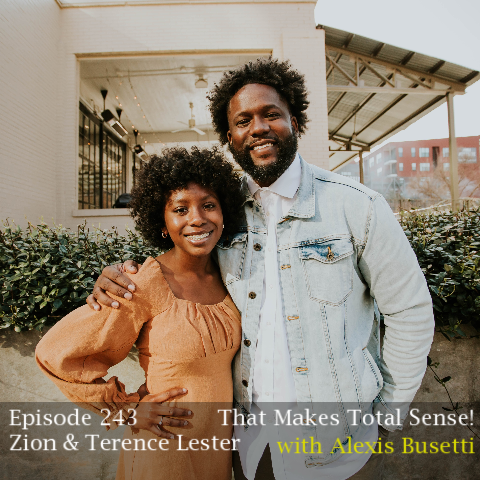
Okay, so I'm super stoked because I have only one. I was gonna say I never have, but that's not true. One other time, years ago, have interviewed a father daughter duo who wrote a book. So this is like only my second time ever to do this, and I'm so honored to have the lesters with me. Hey, guys.
[00:00:59] Speaker B: Hey. How's it going?
[00:01:01] Speaker A: Great. I'm so grateful that you guys are here.
This is a first. When I received the copy of your book Zion learns to see, I had my kids review it for me.
[00:01:15] Speaker B: Oh, wow.
[00:01:17] Speaker A: So we have a ten year old, a twelve year old, and 214 year olds. And I asked them, especially my youngest, I said, look, I got this in a full disclosure, it was in a stack of books on my dining room table when I was finishing up school for the quarter. And I was like, oh, yeah, I need to start putting stuff away. Hey, read this and let me know what you think. And so he read it and he's like, yeah, that's pretty good. And so anyway, you got a yeah, that's pretty good from my youngest, and we all really loved it. So thank you so much for putting this out into the world, Zion.
[00:01:54] Speaker C: Of course, yeah.
[00:01:57] Speaker A: Oh, go ahead. Go ahead.
[00:01:58] Speaker B: Terrence, I think it's awesome that you got a. Yeah, that's pretty cool.
[00:02:04] Speaker C: Yeah, I mean, you know, some tweens.
[00:02:06] Speaker A: And teens aren't all this is. I'm going to be stereotypical here. Aren't always super enthusiastic about everything you put in front of them, you know? So anyway, I thought that was great to get it. Yeah, that's pretty good. So anyway, out of my kiddos, but Zion, you're the one who co wrote this book. And so you've heard from probably tons of kids at this point who have read it and families who have read it. But I want to ask for you as the author, co author.
What made you want to write it? Like, where did this book come from for you?
[00:02:44] Speaker C: This book actually came from a personal story of mine from the second grade. Ever since I was young, I used to serve with my dad in the heart of Atlanta, serving those who are unhoused.
Later on, he actually made his organization. I've been serving with him, with his organization.
And in the second grade, I was just really inspired by what my dad was doing and by his work. So I came up with a campaign with. And I wanted to raise money for those who are living in poverty. So I kind of gathered the whole school to, like, join me in this campaign. And we.
[00:03:31] Speaker A: I love how she's real casual about that. I kind of gathered the whole school. Yeah, we did. Okay. Sorry. Keep going.
Yeah.
[00:03:39] Speaker C: And I raised about how much it was.
[00:03:45] Speaker B: Well, the campaign was all the kids in the school, the students started collecting change. So you raised $52 and, like, 13 cent.
[00:03:55] Speaker A: Nice.
[00:03:56] Speaker B: Yeah.
[00:03:57] Speaker C: And what kind of made this book happen was I always loved to read and write since, like, an early age, and I would always try to make, like, these little mock children books, like, out of construction paper when I was small. And I kind of just, when I was, like, ten, I brought up the idea that I really wanted to make a children's book to my dad, and we made it happen.
[00:04:24] Speaker A: That is. That's amazing. And so my next question as I read it, and I know, I mean, I cheated a little bit on the back flap. It tells us, like, a little bit about that.
But I'm curious, like, and, you know, just go where you want to go with this, but I am curious. Besides the campaign that is talked about in the book, that, you know, that the character puts forth in her school, are there other parts of this story that are either autobiographical for you or that maybe ring true with some of the experiences that you've had serving with your dad over the years?
[00:05:05] Speaker C: Um, many of the parts in the story are true, even, like, when I, me and him got sandwiches together and passed them out.
Yeah.
[00:05:18] Speaker A: That's so great. That's so great. And we. So, how old are you right now? Remind me.
[00:05:24] Speaker C: I'm 1515.
[00:05:25] Speaker A: Okay. That's what I thought. So you're just, like, a smidge older than the kiddos that I have in my house. So I have 14, 1412 and ten. Everybody had winter birthdays, so we're finally over this winter birthday hump, and now everybody's 14, 1412 and ten.
And I get that this is probably. I mean, I'm not the publicist, but I can see this probably, you know, of course, it's marketed to a little bit younger audience than the crew that's in my house. But I do have a couple of questions. So, first, for my kids age group, this kind of early teen tween age group. I told you offline that I had my kids review it before.
What, if anything, would you hope that a group of kids that age might get from it? And then what would you hope that the target audience would get out of this as well? The target age group.
[00:06:26] Speaker C: Okay, I'm gonna answer your first question first, and then I might need you to. Yeah, that's great question.
[00:06:34] Speaker A: Sure.
[00:06:36] Speaker C: To the.
You said the age group that your teens are.
[00:06:43] Speaker A: Yeah, 14, 1412 and ten.
[00:06:46] Speaker C: I would definitely say that usually around that age, I feel like as teens and us as a generation, kind of are aware of, like, the things happening in the world, such as homelessness, but we're not kind of, like, doing things to get active in, like, trying to make a difference and getting involved.
So I think we're. They can gonna start trying to, like, have volunteering. I know teens that age use social media. Social media.
You can use social media as a tool. Social media is a tool, and you can use it to share.
Share about the cause and just use it to address the issue. And I would say they can start their own projects by telling people about the issue and do small, kind things for other people every day. And educate yourself on kind of injustice, injustice that others face, or even starting an organization, such as my dad did, and even just giving money to organizations that focus on these causes.
[00:08:15] Speaker A: Yeah, yeah, that's. That's really good. Um, before we go to the second question, I. I think I'm aware as a parent, um, we live in Houston, which is another big city like Atlanta, a lot of urban space, and we're kind of. I love it. I had a friend, uh, who's from the, from New York, say, I just love. I love living in the city because we're all on top of each other, you know? And it's like, I I didn't grow up that way, though, and my husband didn't grow up that way. We grew up in kind of small towns. And that isn't to say that there weren't people who were experiencing homelessness in those towns or poverty in those towns, because certainly there were, and there. And there are, but it's not as. Maybe as evident as when we live in a really big city. And so I think that's something that I am aware of as a parent, is that when we just drive throughout the city, we're having more questions, more interactions, more conversations about these kinds of injustices, because it's more visible, I think, than it was in the smaller, you know, smaller towns. That I grew up in. You know, I didn't know if there was a shelter, for example, in my. In my hometown, but here in Houston, it's one of the places I would imagine that it's similar to Atlanta, where injustices just are a little bit more evident as we continue, as we just kind of go about our daily lives.
[00:09:46] Speaker B: Yeah. I would add, though, when Zion actually launched her project, I remember it so vividly, because I was in a campaign where I was walking across the country, and she was taking these news clippings to school. And her teacher, instead of telling her to put it away, she used it as an opportunity to educate the entire class about homelessness. And words like community center and shelter started to come up, which are words and terms that some kids or students aren't aware of. Right. If they're not facing it themselves. And the thing that I'm most proud about as a parent, um, even watching what Zion did, she unknowingly got the whole school involved. But also this raised awareness amongst the adults in the school. Right. And the adults started to think about the students who were actually in the school, who were experiencing homelessness. And I always tell people, like, if you're not living in the city, one of the greatest ways to understand what is going on in the community is to get involved in the local school. And even if you don't have a child in the local school, you can still have conversations with community liaisons, parent liaisons, school principals, just to understand the pulse of the hidden and homelessness and poverty that exists.
[00:11:25] Speaker A: Yeah, yeah, yeah. No, that's really, that's really good.
Just a real quick add on that. It was something.
My sister and her family live in the Oklahoma city area, so not quite as big population as Houston or Atlanta, but, you know, and her kids all went to the public school, you know, system there. And she told me, I guess my niece was in elementary school, probably, and she said, you know, they have free lunches for every kid in my niece's school. And it was because the majority, you know, there was a certain percentage of kids who income. Whose family, you know, income wise, qualified for that, and so they received some sort of grant, I think, at the time. And the entire, you know, her entire elementary school had free or reduced lunches. And that was one of the things that hit me, you know, same thing. I used to work in a suburb of Oklahoma City, and it was similar. And I thought, oh, my goodness, this is like the suburb where I worked. It was like, it was a college town, you know, all of these, and you just don't think of something like that. And again, here in Houston, it's similar.
My kids get the same thing because the population needs this. And during the summers, this is something that's concerning. So I just want to use that personal example to affirm what you just said, because I think it does become hidden. We see kids coming and going, students coming and going, riding buses, wearing uniforms, and don't really know all of the times what's happening, you know, at school or behind the scenes in their families.
[00:13:02] Speaker B: Yeah. And before you get back to Zion, I just. I do want to make, you know, parents and people aware that the largest population of people who are unhoused or fastest growing population aren't adults. They're actually children. Right. And so, you know, at least 4.2 million young people experience a form of homelessness every single year. Right. 50% is actually stated to be experiencing this for the first time, and the other half, almost 50% is 42% have experienced some type of transitional homelessness more than once. And so in many ways, um, I think Zion's idea to write this book to help teach parents and also children about kindness is so real because, you know, lovey and walls has done work in schools, and we've gone in and seen elementary school students in the office in tears and crying because they were being bullied, not because they didn't understand the lesson, but because they couldn't wash their clothes, because their families were living in motels and transitional living spaces, and they didn't have access to laundry services, and so they are being bullied by the stains that they have in their uniforms or because they only have one uniform. And so it is very important to be aware and to have these conversations as Zion is stating.
[00:14:46] Speaker A: Yeah, Zion. So to go back, I'll restate the second question, because now I might have a tiny little ad since we've. Since we've kind of gone through some of that. So that is. So you answered really great. Like, what about, you know, kids that are the ages of my kids, but now this is, you know, this is a beautiful picture book that. Whose audience is a little bit younger, but I think your dad brought up something great, which is why it's great to have these conversations in community. Right. So. So your dad brought up something that it's not just, okay, great. This is a children's book, but this is targeted to the children, to the families, you know, the children and the parents. And so my. My question for you is, you know, what about the kiddos who would be reading this probably around that, you know, second grade, probably, you know, grade, but also their parents. I will. I will have a little confession for me. When my kids were quite a bit younger, I tried to have these conversations. You know, we made the, you know, packets with water and crackers and socks and cards and all of these things, but, um. But I found myself, um, doing quite a bit of censoring of myself because I just didn't know, you know, how to have these conversations with my kids. I wish I had had something like this when they, you know, you know, seven years ago or whatever, but. Because I think this is really helpful language. But so maybe, you know, what can, you know, kids and parents of this age, what can they do? How can they have, you know, start to have these conversations in ways that are meaningful and maybe that will grow with them?
[00:16:31] Speaker C: Well, I believe that.
Well, starting by little by little, I do believe that this book really, truly teaches the lesson of compassion and showing empathy for others. And I feel like that's the biggest part of it, too.
Kind of like, two. I know that younger kids like, that, like, young, young kids are not really able to do too many things, like donating to organizations or maybe starting their own campaigns, or they could. I mean, it just depends on the age. But I really feel like the biggest lesson is compassion as well, and just being kind to others, because you don't really know what others are going through, especially, like, when that comes to school. They don't know, like, what their peers may be going through either. So it's always important to show people kindness. And, like, the saying not judging a book by its cover as well.
[00:17:38] Speaker A: So, yeah, that's really good. Yeah, that's really good. I read through it again before we signed on, and that repeated phrase of just, like, showing people that they matter, really, that refrain is just sticking with me in this conversation is, like, nobody's too young to show someone else that they matter to God.
I think that's a really good message.
I'm wondering if you can. Because, again, like I said, I was kind of a scared mom when my kids were younger about a lot of things, and I kind of censored quite a bit, and I wish that I'd had this tool. And part of the reason is because you don't shy away in this book from some of the more, like, sensitive topics. And one of those is that the main character in the story feels discomfort at times with her surroundings, with the behaviors that she encounters from people that she doesn't know.
And so I just want to invite you to expand on that a little bit. You know, why did you think it was important to include those pieces? And, you know, how does that help the audience as we're, as we're learning how to think better about these kinds of injustices and situations and people?
[00:19:12] Speaker C: Well, what I can say is I feel like those pieces weren't included because that happens in real life when we get in certain areas, kind of like how Zion was in the book, she was getting closer to an area where most of the people in the area were kind of impoverished and didn't have houses. So, of course, the area started looking a little different to what she usually knew. And I don't know, but I want to ask you, and what do you think about that?
[00:19:52] Speaker B: I think you were touching on it well, when you said that sometimes the discomfort comes from the unfamiliarity of places that you don't normally frequent. And because you were a child, you were learning these things from for the first time?
There are even many adults that haven't had certain experiences, and that kind of breeds the fear. And I think we wanted to include that because, you know, we do live in, you know, an area that looks very different from the area where our organization is. And we haven't always lived in this area, but, you know, as our kids were getting older, we wanted to keep them close to where I grew up, you know, and where the work happens and where real life happens and teach them that, you know, they are growing up in a world where these things will be around them. And we have one or two options, right. We can ignore and contribute to the invisibility of the suffering of others, or we can lean in and say, I truly believe that everyone matters to God, and whoever I come in proximity with is my neighbor, and I'm moved to love my neighbor as God has loved me.
[00:21:21] Speaker C: Right? Yeah. Thank you.
[00:21:24] Speaker A: That's good. It's a good combo answer.
You know, I want to hit on that. Just a minute. This, the invisibility I was interviewing, did an interview a while back that I'll put in, that I'll put in the notes with someone who works with people who are experiencing homelessness in a different part of the country. And one of the things that she said that really has, I hope it stays with me is, you know, she talked about eye contact.
Right. And just like, I mean, this is one of those things where in, in my neighborhood and my, in my direct area of town, there are, you know, for people to be on the intersections is pretty common, you know, with signage, you know, asking for help, and it's really easy, and I'm speaking for myself. It's really easy just to put on my shades, you know, just put on my sunglasses and sit and, you know, adjust the radio. That's the most convenient time, you know, to lean over and adjust the radio, you know, just, you know, because I feel awkward, you know, or whatever it is. But this kind of, you know, behavior from me does not a show people that they matter, and it. And it also contributes, like you said, to the invisibility factor, and no one wants to feel invisible.
[00:22:54] Speaker C: Say something. I just wanted to mention, even in the story, like you said, eye contact was important. And even in the story, she, Zion, followed her dad's example, and I was just flipping through the pages, and that was really important in the story as well, where it said, each time she followed her dad's example, she looked people in the eyes, smiled, and introduced herself.
And I believe that was kind of her just seeing them as people, because they're human. People want to be seen, and I feel like that was important. That kind of just made me think of it. Yeah.
[00:23:37] Speaker A: Yeah. That's right. That's exactly right.
I think that's something that's innate for us as creatures of God, that we know that we want to, that we all want to feel seen.
But I want to ask you specifically, because of the work that I've cheated a little bit. I've talked to your dad a couple of times, and I've seen some of your dad's work, but he does this in part. Terence, you tell me if I'm stepping on anybody's toes, but he does this in part because of his faith.
And so I want to ask you, Zion, like, when you're even just now talking about this and talking about people matter, how does your faith affect your work? Or, you know, how does your work affect your faith? How do those things go together for you in this?
[00:24:38] Speaker C: I think my faith affects my work because I believe that everyone matters to God, and we should treat, like God said, treat our neighbors well and how we want to be treated, as well. And I really believe in that, and I guess that's what has reflected in my work, and, yeah, I really believe that, as well.
Yeah, yeah.
[00:25:05] Speaker A: That's good. Anything to add, Terrence, to that?
[00:25:08] Speaker B: I'm proud to hear say that, like, listening to her sometimes, you know, makes me a little emotional because, you know, like, Zion pointed out the point in the story where she says, and she followed her dad's example.
You know, my caution to parents is you know, we can create checklists and share notes and have the lectures or the verbal lashings. Right?
And none of that matters. What truly matters is that we are setting a tangible example because our children are watching us. And just, like, hearing her talk, I can hear, you know, a part of the work that me and my wife have done, like, coming out of her. And it is because we have created service as a core value, but that is grounded in our faith. Right. We don't serve to be saved. We serve because of what God has done for us. And out of the overflow of the love that we've experienced, the blessings that we enjoy, the privileges that we have, we want to steward that in a way where we become a conduit of love to our neighbors who may not have the same things that we have. And you never know how your service, your act of kindness towards others, will give them the empowerment to rise above their situation. I mean, you know, my story. I'm a product of that, and I truly believe that. And so that is what I'm trying to model with my children. You know, Timothy. Paul writes in Timothy that the home is the priority, that is the first ministry. And just watching my daughter and hearing her talk, it makes me very emotional but very overjoyed about the possibilities of her future and, you know, other children's future. Right. Who really get this message and embody it because they are the future leaders of tomorrow.
[00:27:32] Speaker A: Yeah, that's good. I think as a parent, I feel like I just kind of want to. I just kind of want to say this out loud, because I, you know, I think as. You know, sometimes as pastors, theologians, people who work in this space, I can get, um, real caught up in words, you know, like, I kind of want. Like, let's. Let's talk this out. Let's, you know, these big. These big ideas about God and, you know, all these things, and that's like. That's like my love language, right? Like, let's talk all day about that kind of thing.
But even interacting with you guys just now and reading your book, it helps me to, you know, as a parent, to say, just because we may not be having all of these big conversations, theological conversations that are like my love language, we. Our kids are. They're gleaning, first of all, but also they're doing stuff. You know, they're. They're showing kindness at school, or they're thinking about these things or they're noticing things that maybe I'm not noticing. And this is, you know, their ministry might look similar but it also might look very different, you know, than mine or than yours or than another parent. And so just to have that, you know, try and make that space and have that, you know, give our kids the freedom to explore, you know, how can in their lives, you know, show people compassion, show others that God matters, you know, it might. It might be. Be following example like this, but, you know, it could also look different, too. And so that, you know, that really excites me. You know, when I. When I see and when I. When I listen to you guys, I.
[00:29:24] Speaker B: Would say I.
I'm probably similar to you. I love robust, scholarly conversations. I read a lot. I also write a lot.
And of. I just love critical dialogue about, you know, things in the world, things about God, the way that we approach and think about injustices, so on and so forth. Historical conversations. Right.
But what I found, even as a parent, sometimes the people that I am in deep dialogue with aren't really showing up in the world in tangible ways. And so, you know, orthodoxy or, you know, doctrine or philosophical understanding of something does not always flesh out in the practice of things. And so pragmatism is a powerful tool when you think about the practice of what you believe. Right.
You know, where we can sit around and say it all day, you got to love your neighbor. Okay. How do we take this theological concept and actually apply it? By getting in the car, scheduling some time driving down to a local organization, getting out of our car. Maybe it's cold outside, you know, helping an organization set up. Because families will come from all walks of life to receive resources and then walking across the line of unfamiliarity. Right. I don't know you. Or discomfort to be proximate. Ask somebody their name, notice them. Look at them in their eyes. Create the type of space where they feel belonging enough to share their suffering. Right. Honor their suffering, lament with them, and then pray. That is what it tangibly means to say, you know, oh, we need to just sit around and love our neighbors as ourselves. We know the words, but then, as James says, we can't be doers. I mean, hearers of the word and not doers. Right. And so that's the part that I really want my children to grasp, and that's what we're hoping that parents will take away from the work that we're doing.
[00:31:53] Speaker A: Yeah. Zion, it's like you said, that getting moving through that discomfort. Yeah, I think that's so important. This reminded me, Terrence, I was going to mention this offline, but since you mentioned it, I'm actually going to put it in the show notes.
Doing the work. You talked to my friend Jasmine Bellamy. Oh, yeah.
[00:32:15] Speaker B: Yeah.
[00:32:16] Speaker A: I mean, J. Listen, I can't even. I can't even start talking about Jasmine right now, because I just. I mean, she's so. She's so dear to me, but I love, you know, the work that she's doing. And when. When she featured you. Because she's talking about prat. Exactly what we said. Practicing love. What are we doing? Are we actually being practitioners of this work that we say we support?
[00:32:40] Speaker B: Yes.
[00:32:41] Speaker A: Theologically. Right. And you. And you guys are doing the work. Writing about it is valuable. Talking about is valuable. All that stuff is good. But how are we. As you said, how are we showing up in the world, moving past Zion, this discomfort that I'm so grateful that you mentioned, because it's real. It's just like you said. That was your answer, right? Like, this is what happens in the real world, right?
[00:33:02] Speaker C: We.
[00:33:03] Speaker A: We get uncomfortable, and we have to move toward that discomfort to practice that. So that's good. Okay, now I gotta jot that down. Okay.
[00:33:16] Speaker B: I am actually, uh. I'm sorry.
[00:33:18] Speaker A: No, go ahead.
[00:33:20] Speaker B: She came with an idea. We'll probably talk about it. But she came up with this concept called Zion's Closet.
You mentioned title one school. So we're about to partner with a few schools to build closets for kids who are unable to access certain resources to be able to go in the closet. So we're equipping teachers and educators and counselors and community liaisons to be able to access this closet, which will be an active, you know, active thing and a tangible thing that, you know, Zion will be able to mobilize people to get involved in.
[00:34:04] Speaker A: Yeah, that's fantastic. Tell me a little bit more about it. Zion. Like, where did the idea for that come from for you?
[00:34:11] Speaker C: Um, well, the idea kind of came from, like, we were just talking about.
There are students, there are children who are experiencing poverty, who are experiencing homelessness, and we might not even know it. And this closet is kind of being there as a support for these kids that are going through that and just giving them these resources that they need and just being, like, giving them that help that they need.
[00:34:46] Speaker B: Shoes, clothes, undergarments, hygiene kits. Yeah. Products.
Sometimes families need something as simple as detergent to wash clothes, you know?
And the way that one educator communicated it to us the other day was that for us, this is everyday things that we kind of use for another family. It may be a lifeline, and so, you know, just kind of centering ourselves and knowing that and asking the question, how would God want us to show up knowing these problems exist? Right.
[00:35:32] Speaker A: Yeah. I want to interrupt just real quick, and before we move on to the. To my next question for you, but I just want to, like, I just want to point out your language, Zion, because I've heard some things that are just. That are just kind of making me giddy, that I'm like, I am 40 something years old, and if I had had some of this language that you have now as a teenager, I just think, anyway, there's my paradigms. It's kind of paradigm shifting language, and it may seem simple, but I just want to. I just want to name it. I just want to point it out. You said some of these words. A tool, a support, resources. Terrence, you just said lifeline, but you're naming some of these. Social media can be a tool, or this Zion's closet can be a support. It's going to contain resources for these families. And that said, I'll tell you. Can I tell you what I hear when I hear that? First of all, I hear someone who is aware of what's around you?
There's that sometimes people preach on Moses staff. What's in your hand? What do you have? You've got a tool, and you've got resources. But also what I hear in that is a real community mindset. I hear in that someone who.
What I hear is someone who looks around and says, this is what I can do. But also I can share these things so that other people realize things that they can do. You know, like when you say a tool or a support, if you point out, hey, you have a hammer, you know, you see what I'm doing, but you have a hammer. You could do this, too, if you wanted. You have a pencil. You could write that note. You have it. What? Like, you have, you know, community. You have these tools, these resources. You can do XYZ, and it would serve as a support for, you know, families in these spaces, which really also, I think, speaks to, again, just stuff that I'm. When I hear that, this is what I hear. I hear, you know, when I hear support, I hear agency, I hear, you know, I hear interdependence in that not, hey, everybody, guess what? Zion the superhero got here, and she's going to solve everything. It's like, hey, this is community. This is what we can do to interdependently support one another. And there are going to be times when other people are going to need more, maybe support or different kinds of support, and we can use the tools that we have, the resources that we have, and put those in the hands of people, or we can put them in our own hands and. And use that. So I just want to say thank you for that language. I feel like those. Those things would have shifted my paradigm probably if I'd had them 20 years ago. I'd be, you know, I don't know, maybe a little further along in the work these days than I am now. So thank you for that.
Oh, go ahead.
[00:38:50] Speaker C: Oh, I was just saying. Of course, yeah. Thank you for saying that and noticing all of that as well. Yeah.
[00:39:00] Speaker A: I want to ask you, and you may not have any. Sometimes it's. Sometimes it's hard when. When you get put on the spot. So that's not my goal, is to make you feel like you've been put on the spot. But I am wondering if you have any stories understanding, like, with privacy and all of that in place, confidentiality. But if you have any stories that you could share of any, you know, interactions or experiences that you've had that have just been particularly impactful for you as you've engaged in this work.
[00:39:33] Speaker C: Um, I actually do have one story, and I believe I told you about this. It was my 9th grade year. I I'm actually in JRLtc, and I had this friend in JRLtc, and I would talk to her almost every day. And one day, she's just going along telling me about how excited she was for her birthday and the things she wanted to do, but it wasn't possible because her family wasn't able to pay bills for their house. And I just really, later that day, I really thought about it. I just really contemplated on that. Like, this is real. This happens to people. And I asked her that very day, I asked her, is there anything that you. Is there anything that you like? What do you like?
Like chips, whatever. And the next day, I went to the store, and I got her a couple of snacks or whatever, and I gave it to her that day, and I said, this is for your birthday. I just wanted to do something nice and kind for you. And I know that that wouldn't help her problem, but her issue that was going on, but that I just wanted to do something kind for her because she wasn't able to do what she wanted to do for her birthday. And I just wanted to show her kindness, um, by getting her something for her birthday. So that's one particular story that kind of came to mind when you said that.
[00:41:27] Speaker B: Yeah.
[00:41:28] Speaker C: And, yeah, that was powerful, you know.
[00:41:32] Speaker B: From a parent's perspective, too. Like, she came home, and she was talking about this young lady and just the struggles that her family was going through. And I was like, who is it? And she was like, I just met her. Like, she literally had just met her. You didn't, like, y'all wasn't, like, super close or anything like that? And she asked my wife and I would. We'd be willing to help her, serve her in that way. And we were like, yeah, you know, like, let's do it. And so went to the store, and just to see her be very intentional and specific and, as you said, allow the person to have some sense of agency, although they're going through a very difficult time, was just. I was really proud of her. I thank you for having the courage to share that. But, you know, it's things like that that touches my heart, because as she grows up, how does she translate that into the. To the world? She's doing this in school. Right. And the response that the young lady had, you know. Yeah.
[00:42:51] Speaker C: She was really thankful. Like, she wasn't expecting it at all. She was. She was grateful. Yeah.
[00:42:58] Speaker B: She felt seen.
[00:42:59] Speaker C: Yeah.
[00:42:59] Speaker B: Yeah.
[00:43:01] Speaker A: Yeah. That's amazing.
[00:43:03] Speaker C: Like, the little things matter.
Yeah.
[00:43:06] Speaker A: Yes. The little things matter. And that you asked, I mean, you know. Yeah. I just think that's really special. Thanks, Zion, for sharing that.
Snacks, by the way, also a love language of mine, so, like, I feel that real deeply. You know, I would. I would be thrilled today if someone got me, you know, snacks for my next birthday, but I do think that's. I do think that's. That's a really.
That's a really great example, and I think, too, it's just, you know, one of the threads that's showing up in this conversation is that we just don't know when we're interacting with people. You know, it is easy to see a struggle of homelessness when you see someone with a sign on an intersection, but it is not always easy to see the struggle of poverty and transitional housing, as you mentioned before, for Terrence. And, you know, people who may be experiencing homelessness, who we interact with every day in settings like a school, you know, that we're just. We're accustomed to kind of coming and going, and we may not realize what. What people are experiencing unless we. Unless we ask, you know? And so I think that's. I just. I didn't expect that thread to come up quite so. Quite so vividly, but I'm really appreciative of it, Zion.
I'm grateful. I really love that you told me that you used to kind of make construction paper children's books. That just like, it just warms my heart. And now that you have one out with a publisher and stuff and you're doing press and all of these things, and it's, you know, it's getting into the hands of children and families.
What are your hopes for this book as it is going out into the world?
[00:45:02] Speaker C: Well, my biggest hope is that it makes an impact on anybody who reads it because I feel like anybody who does read it, I know it has a target for an age group, but I feel like anybody can get a message from this book.
Even the other day, my grandma had actually read it, and she was, since she was so inspired by it. And I just, that goes for saying that goes without saying that, like, anyone can just like, learn something from it. And I feel like that's what I really hope for this book, that, to share it with the world and that somehow changes somebody's perspective on homelessness or just being kind to others. So. Yeah.
[00:45:54] Speaker A: What about you, co author? What are your hopes as this book goes out?
[00:45:59] Speaker B: I fully support exactly what Zion says. You know, I feel like you led the conversation. Well, you know, I echo everything you said.
Well said.
[00:46:14] Speaker C: Thank you.
[00:46:15] Speaker A: That's great. That's great. Thank you so much. Tell me the, by the time this airs, this will have already been released. But what was the birthday for this book?
[00:46:26] Speaker B: It was, came out on March 12.
[00:46:29] Speaker A: Perfect. And this is Zion learns to see by Terence Lester and Zion Lester and the link so that people can get their hands on it will be in the show notes for this conversation.
Thank you so much, both of you, for joining me and having this conversation today.
[00:46:47] Speaker C: Thank you.
[00:46:48] Speaker B: Thank you so much. It was, it was, it was awesome. This is like, this is our, what? 1st, 1st official podcast. Like at length. Yeah. Like, yeah. Yeah.
[00:47:00] Speaker A: I feel so honored. Thank you so much for coming on. This is just, this is a joy. Congratulations again.
[00:47:07] Speaker B: Thank you.
[00:47:07] Speaker C: Thank you for meeting with us.
[00:47:10] Speaker A: The links for all the resources mentioned in today's episode can be found in the show notes, music and podcast production by Seth Buscetti. Be sure to give us a review on iTunes and subscribe at your favorite podcast listening app. You can also visit
[email protected].