[00:00:07] Speaker A: Welcome to that Makes Total Sense, a podcast dedicated to exploring God's generosity and justice. I'm Alexis Buscetti, a Christian, aiming to ask good questions and encouraging you to do the same.
Every one of us is wired by God to live out generosity and justice, but the how sometimes eludes us. That makes total sense is a way for us to get together, posture ourselves as Lear, and challenge one another to practice generosity and justice in a tangible way every day.
Okay, so we might get interrupted. Lori. What? I can't believe we just messed around, talked around, pre record for a few minutes and I didn't even tell you we might get interrupted because partially inspired by your book, I'm going to go ahead and say it. People can judge me. That's fine. I'm finally hopping on one of the bandwagons that I have wanted to be on for a while, which is composting. I don't know why.
[00:01:07] Speaker B: I love that.
[00:01:08] Speaker A: Yeah, I don't know why. I mean, I do know why. I haven't been there anyway. It's just I'm. This doesn't necessarily. Anyway, it's hard for me and do some things. I don't love worms anyway. But Houston has several composting services. Oh, wow. They like give you a bucket. Yeah. You know, and you put all your stuff in a bucket, and then you put your bucket on the curb and they take it away from you and you give a new one.
[00:01:33] Speaker B: I mean, that's like the best case scenario, right?
[00:01:36] Speaker A: This is. This is how I'm feeling. So I'm going to try it out. But anyway, they're supposed to drop my bucket off actually today.
[00:01:42] Speaker B: Yeah.
[00:01:42] Speaker A: So if the door.
[00:01:43] Speaker B: I count that as a worthy interruption.
[00:01:46] Speaker A: So we'll see. We'll pause it if we need to and we'll come back. Great. Okay. So people are like, why is composting inspired by. Okay, where. Where are we?
So I'm. I'm super excited. This is shout out to my friend who said, you always say this. I finished your book this morning.
That was for Jasmine.
[00:02:08] Speaker B: Hey, let you read it. A lot of. A lot of hosts don't. Don't read the books. So it's.
[00:02:13] Speaker A: I'm just really. I'm just a nerd.
[00:02:15] Speaker B: I love it. I'm a nerd, too.
[00:02:17] Speaker A: Yeah, I'm just a nerd. I gathered that. I mean, you know, nerds unite. I gathered that from the notes.
[00:02:25] Speaker B: Where's that bumper sticker?
[00:02:27] Speaker A: Yeah, let's make it and let's get it.
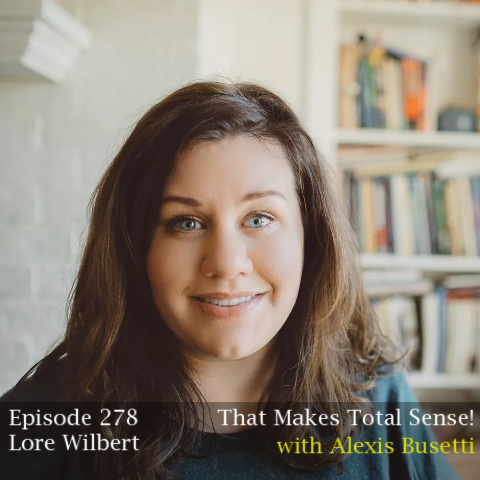
So I'm with Laurie Ferguson, Wilbert we're going to be talking about her. Beautiful book, by the way. Like, beautiful, textured, wonderful cover called the Understory. An invitation to rootedness and resilience from the forest floor. And so part of my, you know, composting thing was again, my friend Jasmine gets a shout out. She calls herself a joyful disruptor.
And isn't it beautiful?
It's. It helps me sometimes because I want to be a disruptor, but I'm scared of being a disruptor. So thinking of myself as a joyful disruptor feels. Feels better for me. And this is just like one of those. We're recording this right now, like a week after the election. And so this is one of those things for me that just. It's like just this one small thing, you know, can I do this one small thing? And these, like, scraps and these dead things. I'm going to. I'm going to partner with people in my community and they can do their beautiful work and nature can do its beautiful work and turn it into something that will give life someday. And that's really.
So much of what you've written about in this book is, to me, that's what I gained from. It's like our losses, the scraps, the places that feel dead or unworthy or ugly in some ways, that something really beautiful and life giving can grow from those things. Not in some sort of triumphalistic, you know, whatever kind of way.
[00:04:16] Speaker B: Not at all.
[00:04:16] Speaker A: Not. Not at all at all.
But with this metaphor of, this is what we actually see in creation. This is what we see in nature. This is what we see in the forest floor.
And so anyway, so I just thought it was. I thought it was very, very beautiful. So thanks for writing it and thanks for sharing that and also so much of your story with us as readers.
[00:04:43] Speaker B: Thank you. Thanks for saying that.
[00:04:46] Speaker A: I am curious, Lori, if you can do two things for us at the beginning.
Number one, tell us what is the understory? It has a technical definition that you refer to at the beginning, and then a little bit of your artistic license of how you use it. So one, what is the understory? And then the second thing we already said, nerds unite. I usually skim the acknowledgments, and one of the things that stood out to me, I think it was. That's where it was in yours, is that you came into this book without an outline, which sounds probably wild for a lot of us who write for various reasons. Uh, you were like, what? That feels, you know, kind of crazy. But I But I'm curious, like, when. But you came into it with something. You came into it with it, with an idea, with something stirring in you. So I'm wondering if you could also share what was stirring in you as you thought to bring us this text.
[00:05:46] Speaker B: Yeah, that's such a great question. Two questions. First question, what is the understory? Basically, it refers to anything beneath the canopy of the trees. Doesn't usually include the forest floor. But as the reader will discover quickly, they became one and the same for me, everything beneath the canopy and what was laying on the forest floor as I, as I opened the book.
And so I kind of conflated them together. But it's also, you know, it's a double meaning for what's the story beneath the story in our lives, we're all living a story, and it's informing how we live and decisions that we make. And, you know, nobody, we don't live in a vacuum. Nobody pulled this vote over the past week with, with, with no reason. There was a reason. There was a story behind their story. So just kind of me exploring my own story and the story underneath the story as to how I wrote the book without an outline. I eventually did have an outline, sort of a rough outline with some threads that kind of wove through. But, you know, a friend of mine told me one time that there are two kinds of writers, and I think there's probably more. But she said there are writers there, there are experts who want to te everything, and there are explorers who want to bring you along on the journey. I'm a ladder. Like, I'm always going to be the explorer. And for me, you know, E.B. white said writing is an act of faith. And I think sometimes just part partly because of the culture of content creation that we live in right now, the emphasis on, you know, book proposals and having a plan and all these things, it's just, I think it's just kind of like suffocated artistry in a lot of ways. And so I wanted to. Unfortunately, I had an editor who was really willing to let me do it, but I just wanted to write my way into a story, write my way into a book, somewhat clumsily, somewhat messily, and let it be what it, what it would be. And I think I was able to do that.
You know, there's things, it's. It takes about two years from concept to release, and so now we're almost three and a half or two and a half years out. And there's things I wish I had done better or differently. But I brought the reader along on a journey, and that was my aim. So.
[00:08:22] Speaker A: Yeah, yeah, I was just reading.
I'm in school right now. I feel like perpetually I am in school, but reading. I'm reading about writing, actually, today. And that was one of the things that the authors brought out, is that it is in writing often that we discover what we're writing about. Yeah.
[00:08:48] Speaker B: Flannery O'Connor said, I don't know what I think until I write about it.
[00:08:50] Speaker A: Yeah, yeah.
[00:08:52] Speaker B: Famously said that.
[00:08:52] Speaker A: Yeah, yeah. So I think, anyway, I'm grateful for you bringing us. Bringing us along on that.
In fact, the tagline to the podcast here is exploring God's generosity and justice. And so that's my goal and has been my goal since the beginning of the podcast is not. You know, I think we could look at the. Look at the notes. But I say something like, if we could together posture ourselves as learners.
[00:09:21] Speaker B: Yeah.
[00:09:22] Speaker A: And I felt that way so much in your book. A. Because I didn't know anything about the understory, but I. But it was written so beautifully that I found myself walking with you. My imagination. And, you know, on.
Oh, on the day, it was late in the later part of the book, you go walking with a friend, you think your husband's fighting off a cold. You end up both having Covid. It's pouring down rain. And I. And I'm imagining this, but in my mind, I'm. I'm cringing because I'm the only one in my family who does not enjoy. We call it a rain walk.
When the kids were little, my husband used to take them out on rain walks. And they would go. We have little bayous everywhere in the city. And they would go on trails in the bayou or sometimes just in the neighborhood. But it was pouring down rain. It was, let's go on a rainwalk. And this is not even my kind of rain. Well, there's no umbrellas. There's no. I mean, there's nothing. It's like, that's. The point is to be outside in the rain and I'm like this. It gives me the heebie jeebies. I just don't. Oh, love it.
[00:10:28] Speaker B: It was a lovely hike that, if I remember correctly. It was lovely. I mean, you know, I was getting sick, so that part wasn't lovely. But, yeah, the walk itself was lovely.
[00:10:37] Speaker A: Just the idea that our friend would call and say, this rain is amazing. Yeah, let's go for a hike.
[00:10:44] Speaker B: I do think that having lived in Texas for a chunk of years, I do think that rain in Texas is a little bit different than it is in the Northeast, especially that time of year. It's more like rainforest rain than it is like a, you know, thundering down, pouring rainstorm, so.
[00:11:03] Speaker A: Well, that's fair, but still. Anyway, this book is a lot. I mean, the rain, which some people find very soothing. Some people, like me, know that it's necessary, but, you know, want to be inside during it. But the book is, it's about these things that are, you know, for, for me, I'm bringing it up because rain is not my favorite thing. It's kind of hard and it's, you know, but, but the book is about loss in some places and, and, and hopefulness, for sure.
It's about all kinds of deaths and grief and, and processing and, and it's a really big metaphor of things that happen in the understory, things that happen on the forest floor. So I'm wondering if maybe a place that we could start might be with an introduction that you give us early on and we meet. I, I gendered her. We meet her.
[00:12:17] Speaker B: No, I gendered her.
[00:12:18] Speaker A: Did you gender her? Okay. I just, I couldn't know if I gendered her into my imagination. Okay, you gendered her. Tree 103. You knew who I was gonna say. Tree 103. Three, can you, can you introduce, introduce our listeners to tree 103?
[00:12:32] Speaker B: Yeah.
Yeah. So tree 103 was the tallest tree in New York State. And it was, it grew up in a little grove of pines, white pines, called Elder's Grove. It was not far from where I lived at the time when she fell. And a dear, dear friend of mine was the one who discovered that she had fallen and notified the, the forest rangers and caretakers of the forest that she had fallen. And a few months later, he and I decided to hike back and go look at her. And I expected to feel as we were. You know, we went through these layers of forest, like the newer forest from the last, you know, 50 to 100 years and then to an older section of forest to like 200 years and then back to this 3 and 400 year old section of old growth where tree roano 3 was. And you know, as this beautiful hike back on a beautiful day. And what I expected was to feel a lot of grief. I mean, here's the tallest tree in all of New York State, you know, a 350 to 400 year old tree who had, through a stroke of wonder and grace, survived the, the absolute decimation of the forests by white settlers in the area.
Anyway, so she had survived and she was still standing. And in a. In a series of unfortunate events, she fell.
And so my friend and I were hiking back and I expected to feel a lot of grief seeing her this, this giant of a forest. And really when I got back there, what I felt was awe and what I felt was like a surprising sense of hope. And I did not expect to feel that. And later on I, I went and I researched a little bit and there was a nearby forestry professor from one of the nearby colleges who, when describing her, said, dead. Yes, but I prefer to think she's just not vertical anymore.
And it was like this light bulb went on in my mind that was like I. I feel like that I feel like I have so much more to live and yet I just feel like I'm not vertical anymore. And this is, you know, post 2016, post 2020.
And just, you know, experiencing like so many other especially white Christians, our own complicity in systems of propping up things, our own ignorance, but also just our own, like, grief at being part of something that we didn't understand or couldn't see. And now we suddenly could and it just flattened us and so many of us, and we all had to start doing some work that other people have been doing for quite a long time before us. And so just facing my own work that I had to do, I just felt flattened. I felt not vertical anymore.
And yet there was something almost, it seemed miraculous or mysterious or even magical. I don't like alliteration, but I just did it happening with tree 103 just a few months after she had fallen.
Moss was beginning to grow on her sides and squirrels were finding new homes. And she was, she was going to take. She is going to take three to 400 years to fully decompose into the soil below her.
But she will never disappear her. She is eternally part of the makeup of soil beneath her now.
And so, you know, you talked about it not being triumphalist in the sense of raw, but it's really more. It's more about like, the glory of disappearing, the glory of hiddenness, the glory of, like, being here and being here eternally and not really being very full of glory anymore.
And that's kind of the process that I walk through myself and decide to bring the reader along with me on the story of Tree 103 and the story of the new tallest tree in New York.
[00:17:30] Speaker A: Yeah, thanks for sharing that part, Lori.
I'm going to take us just adjacent to that. It's. I did. I I jotted something down just now. And so it may not. It wasn't in my notes originally, so it may not. You may have to correct me, but we talked about the journey that some white Christians have been on for the last, you know, four or eight or 12 years or so.
And there was a part in your book because, I mean, we know sociologically that people seek sameness.
[00:18:11] Speaker B: Yeah.
[00:18:13] Speaker A: And there's. But there's a part in your book about fungi. Fungi is a thread throughout this, and I think, if I'm remembering correctly, again, the metaphor of planting a forest that might be full of trees that are desirable trees to be cut and utilized.
[00:18:41] Speaker B: White pine.
[00:18:43] Speaker A: White pine.
[00:18:43] Speaker B: A plantation of white pine.
[00:18:45] Speaker A: Yep, there you go. But that the discovery that if the sameness is actually interrupted by other types of trees, not even conifers. Right. But deciduous trees. If I'm remembering that these different systems of fungi that they have will serve one another and feed one another and actually make these trees that they once thought would be best served in a place of sameness, that they actually are healthier and better and stronger if they're surrounded by trees that are not like them. Like, so, I mean, I'm just like, okay, talk to us about that. I actually love hearing about the actual biology of that. But I'm also wondering how, if you know, what that spoke to you and your community or how that impacted you as you were doing some of that work that you just talked about.
[00:19:47] Speaker B: Yeah. So very high level, the science. There's. There's, you know, one writer calls it an eternal matrix, this system of mycelia underneath the forest floor. You know, you can peel back just the top layer of dirt in any forest and you will see sort of white little threads that. It's the mycelium layer. And they are sharing resources between different kinds of trees. And of course, they can do that in a monoculture, in a forest full of white pines and nothing else. But as you said, it makes those white pines much stronger and more resilient and better wood.
So even you can look at it from a consumerist point of view, it makes a lot more sense to grow. Unlike with Unlike. It makes more sense to, you know, they used to clear forests of, like, ash and beech and birch and just grow the pines in these. In these forests that they were just using for logging. But once they discovered that this mycelium was basically, was sort of like a, I don't know, a neighborhood app that was, do you need more vitamins? Do you need more of this uni? Then they Realize, oh, these, this, these ash, these trash trees is essentially what they would call them. These, like, trees that can grow up really quickly were actually essential for these pines to grow strong and resilient. And not only that, it helped the ash and birch and beach and all those to also grow strong and resilient. And so you have a more diverse forest, which actually leads to fewer forest fires, it leads to better wood, it leads to better oxygen and better carbon storage for our world, like as there are. There are no negatives to having a diverse forest. And this is true. I mean, we know this.
This is not new wisdom, even if we didn't understand the science of it.
You know, you think about, like, indigenous people planting the three sisters corn, beans and squash. Squash. Like we, we've always.
People have always been practicing diversity, diverse ecosystems, even if we didn't know how exactly they were working in sort of a symbiotic relationship with one another.
And so as I was processing, you know, the monoculture of my own life and just the effects that that had on me and the effects that it had on other people because of my complicity in various things, I was really challenged by that. Really, really challenged by the lack of diversity in my life. And not only that, how difficult it is. The reality is it takes a long time to grow a tree. You can't just plant a tree in a forest and think that it's going to be able to be a part of a strong and resilient diverse forest within the first year. It's going to take a long time to be able to stand on its own, to be able to offer to other trees what they need and become a real integral and important part of that forest. And I think, you know, talking about, like, performative ali shift and stuff like that, like, we can't. That's just. It doesn't happen quickly. We cannot just snap our fingers and become a diverse community.
It takes. It takes a lot of long, hard work and humbling work, sometimes humiliating work, sometimes getting it wrong.
Yeah.
[00:24:04] Speaker A: I feel like there have been times in my life when I've definitely taken that work for granted either. Mostly, you know, lots of experts in my life, they didn't become experts overnight.
Some areas that I know about that other folks may not, I didn't learn about overnight.
But when we see people living lives that we're like, yes, that's it. You know, it didn't. It didn't happen. It didn't happen for them overnight to stay on the tree metaphor for a minute. We live, my family Lives in. For Houston, it's an older neighborhood. In the Northeast, it would be a baby, but in Houston, it's an older neighborhood. And one of the things my husband and I say, a. We like houses with character, which sometimes means that their electrical work is not up to code. But also we love neighborhoods with big trees, big mature trees. And my son and I were walking the dogs last night, and of course, it's. It's dark early here now. And we pass by this corner house, and it has these four huge trees in front, huge again, by Houston standards. And they're all decorated with lights. And it was interesting to me, and it caught my eye because the house itself didn't have any lights on it. There were Christmas lights wrapped around the trees, but no lights around the house.
And I just thought, this is so beautiful, like, what a showcase that is. And, and. But they didn't get there overnight. You know, we could buy a house in the, in the burbs and get more house for our money, and then we would have. Yeah, the little saplings would be big someday. But we appreciate and want, you know, and like, just that they're already there. And I will admit, though, it's so easy to take that for granted, take all of that old growth for granted, because I wasn't here when they were saplings.
[00:26:19] Speaker B: Yeah.
[00:26:21] Speaker A: When they were first planted.
[00:26:22] Speaker B: Yeah.
[00:26:25] Speaker A: One.
One thing I want to ask about as. As we talk about that, that has. It was really hard for me to read about, and I acknowledge that as hard as it was for me to read, these parts were endlessly more difficult for you to live.
But you talk about some of the relationships in your life that changed, as I'm guessing, as a result of your transformation and your work and things that. That you came to look at things differently is how I. How I interpreted it as I was reading. But obviously, feel free to correct that.
But I think it rang true because so many people are experiencing that kind of thing. I mean, we have Thanksgiving coming up in a couple of weeks, and it's going to be tough for lots of families to sit around the dinner table. It's going to be tough because there are lots of parents who looked at this election cycle much differently than their grown kids did.
It's going to be tough. Tougher than usual sometimes with that aunt or that uncle you might sit across the table with.
And you were pretty open and pretty, you know, felt pretty vulnerable to read some of those places. And so I'm wondering if you. If you'd be willing to share some of Those, you know, those evolutions maybe in relationship and how you process those. And in a way that, you know, with the aim being people may be going through something similar right now. What might be helpful for them to know or understand about how you process those?
[00:28:30] Speaker B: Yeah, I think something that might be important to say is that I've always, I'm a little bit of a scaredy cat.
[00:28:39] Speaker A: And I, I'm laughing because I can relate.
[00:28:41] Speaker B: Yeah. So I think like, if I look back at my childhood, like I was called by my family, like, you're a bleeding heart liberal. You're such a, you know, some derogatory language for people who have soft hearts.
I grew up in a very political family, a very, very, very right leaning family. And I was always kind of the black sheep around that stuff. Like I've always leaned soft on some things. Like I've always leaned and I think increasingly as I aged, I realized, like I leaned left on a lot of things. And you know, I, I very much believe in competing truths. I very much believe in, you know, pluralism. We need different ideas and different ways of combating the same issue to really rid our world of, of evil.
And so I'm, I, I can find virtue in Republican policies, but I personally lean left and I always have. That's not, that isn't new. I think what I learned over the last eight to 10 years is that I was also a scaredy cat and that I would often go along to get along or pretend to agree with certain people in order to not cause conflict or enter into conflict. And ultimately what I realized was that I acted in a way that I thought would help me to feel the most love.
Like I, I acted almost, I kept my mouth shut or went along to, to for whatever reason, but mostly just because I wanted to be loved.
And I think the thing that shifted over for, over the last 10 years for me is just a realization that like, I don't need to act way to be loved. I am loved. I'm a Christian and I believe the God of the universe created me and loves me and made me the way that I am and the way that I will flourish and the people around me will flourish. And ultimately the way that our world flourishes is for us to be what Andy Crouch calls gloriously, magnificently ourselves.
And so, yeah, of course there's brokenness in me that I need to submit to Jesus and to push away from in my life. But I think ultimately who I am is good and who I am is loved and who you are is good and who you are is loved. And the more that we can act out of that love instead of acting for to be loved, the better our world will be in every way. And if that is true for me, it is also true of my relatives who watch Fox News 24. 7 and of my other relatives who are rabid pro Trump supporters.
As difficult as that is for me to act, sometimes it is the truth. And they are profoundly loved, and they do not need to act for my love, and they do not need to deserve my love.
And that is. That is a difficult space to live in. That is not easy. And I think, you know, there's one. I quote Emma Gannon in the book, and I say, we're. She says, we're social animals. We go with the herd that will harm us the least. And I think there is something good and virtuous about saying, like, that's not a safe place for me right now. Like, I'm being actively harmed in this environment and I need to remove myself versus this is just an uncomfortable place for me to be or an uncomfortable person for me to be with. But at the end of the day, they are loved and they do not have to act for my love. And I'm loved, and I do not have to act for their love. And whether they feel my love or not or whether I feel their love or not, it doesn't really.
At the end of the day, that doesn't really matter. My aim is to image God as best as I can to them. And with them saying all of that, like, these are all very, like, big ideas, and they're just much more difficult across the Thanksgiving table.
They're even difficult across the Thanksgiving table with people who voted just like I did, but who see the world differently, because we all see the world differently.
And so then our. The way that we can show up in the world that I think does lead to more diverse spaces is that we can show up with a desire to understand. So there are some neighbors that I will never agree with. There are some family members I, I never see myself agreeing with. I'm. I. I'm an enneagram9. And so everything in me wants peace. But I will push, excuse me, I will push strongly against the idea that, number one, uniformity is unity. It is not unity.
That's a monoculture. Not interested in that. And I will also press strongly against the idea that we have to go along to get along, or we can all agree to disagree. I actually disagree with that.
We may disagree and we maybe we have to agree to disagree But I can still seek to understand and I can still seek to be understood. And those, I think those qualities are more important to me now than they ever were before. In particular. And maybe for some people the flip is true. It is becoming more important for them to understand others. I think the older I get, the more I'm like, I want to be understood myself. That was never, like a strong value for me before because I tried to minimize my presence in a lot of ways, minimize my own thoughts in order to just keep peace. But more and more, I'm just willing to show up as myself and say, like, yeah, I disagree with this. I don't think it's the most helpful way to think about this. Or have you considered a different way of thinking about it? And to just show up as I truly am, and that's scary work, but I think it's good work. And again, I really, I love Andy Crouch's words about showing up magnificently as ourselves, and that's how the world flourishes.
And so I want my, as much as I despise Fox News, I want my Fox News watching relatives to know that if they want to share with me something that they, that they saw on Fox News, that is framing how they think about a certain issue, I'm here to listen to it. I'm here to learn.
Not from them about this issue necessarily, but I am learning. I'm willing to learn about who they are as a person. And to me, they're different things. And I think sometimes we think, if I'm going to share space with this person, that means I have to somehow understand their issue from their point of view. And I'm just not sure that's ever going to happen in a lot of relationships. But I can seek to understand the person.
[00:36:26] Speaker A: I kind of want to have that on repeat.
Thanks for sharing that. But especially I think from the high level to the micro stuff that you just talked about, what if, you know, restating a bit, but what if, you know, we showed up confident in our own belovedness and also equally as confident in the belovedness of the people who are in front of us.
And that, that, as you're, as you're pointing out, is what was driving us. Like, how can I, how can my actions actually be birds out of love come through this filter of love first? My words, how can they do the same thing? And, and I think it's really important that you point out as we seek to understand each other and as we seek to be understood, that listening, because I'm with you there Are some, some, some ideas I may change my mind on? Some definitely I have changed my mind on over the years. There are some. Or I say I, I don't foresee that happening or myself, but I think it's important. And I'm sitting with that for a minute, restating as I sit, sit with it for a minute of what if we listened, not necessarily with the aim of like, oh, yeah, I'm going to, I'm going to learn something new about this subject from you. Even as you might be parroting Fox News. Not interested. If I was interested in that, I'd tune into Fox News. I'm not. But what can you teach me about yourself? Yeah, and I think for me I probably want to go like a little bit further. And that's the reason I use not maybe not further, but a little bit different place for me is I think about that and that's why I use that phrase like, what can you teach me about yourself? Because I think I am tempted sometimes if I'm just being real honest, be like, oh, this person just blah, blah, blah, blah, blah. And that means in my head I might, I might finish that sentence for them. Oh, that means they are XYZ or they think XYZ or whatever. But like really coming into this honestly as a student and saying, how, how can I learn about you? What would you like me to know about you, about your experiences, about your thoughts in this? Like, tell, tell me what you want me to know. Why is this important to you? Because as you mentioned at the beginning, we're talking about the title. Everyone has an understory. Everyone has a backstory for all of these things, ourselves included.
Anyway, I just think that's really beautiful.
[00:39:27] Speaker B: Yeah, I think like it's. Sorry, can I. No, it was. I think that for me the pandemic was really illuminating around this, especially with the vaccine.
I think this was such a polarizing issue for so many people and we would, you know, broad brush it like, oh, you're either loving your neighbors or you're not loving your neighbors. But when you actually sat down with a lot of people and I come from a very like anti vax family, a very non traditional medicine family, and I'm pro vaccine. Like I. That's where I am these days. But that is my background and I think sitting down with people and hearing their stories and hearing in particular one person who I had a lot of conversations with this around this with and just hearing her perspective, not just like the things she was listening to, but her own fears and anxieties about the world, about her family, about her family members, her young and vulnerable family members, her older, vulnerable family members. Just like man, at the end of the day, people, people have both. They can, you know, Walt Whitman, they contain multitudes. They have both fears and anxieties. They have joys, they have pains. They have all these things and these are the things that are leading them to believe the things that they believe. They are leading me to believe the things that I believe. And at the end of the day, that is a very. If you're fearing something, how could I demonize you? Like, I know my own fears that ravage my own soul, that ravage my own politics and thoughts about things. How can I, how can I demonize you? If you're struggling with a fear of something when it comes to the vaccine, I might disagree strongly. I might, I might think, man, if you weren't afraid of this, I think you would have a different perspective. But you can't just tell someone who's afraid of something that's not scary. They have to be able to. They have to know that they're safe. They have to know that they're loved. They have to know that they're, you know, just a series of things that help us to feel safe and not fearful. And as Christians, we get to be an expression of those to one another. And the conversation about the vaccine got so much easier for me. Not easier in the sense of like, oh, it's simple. It wasn't simple, but it got easier. It was just like, man, I'm.
You're too loved for me to broad brush you. You're too profoundly loved by God, the God of the universe who doesn't want you to walk in fear for me to broad brush you. And I'm not saying everyone who is anti vaxx is that way because of fear. I'm just saying in my experience, that was the, that was the conversations I was having. And I think, I think when we can have that sort of humanizing perspective toward people on all kinds of issues, we're going to have different kinds of conversations.
And I think ultimately, yeah, they're less viral in the sense of like, they're not going to go viral. Those kinds of conversations, they're going to be quieter and secret, more secretive and private, but perhaps better.
[00:42:54] Speaker A: Yeah.
Yeah, I think so.
There is a note on that that I'll just, I'll make thinking about the vaccines.
I think I, in my head, like, intellectually, I assumed that I would get the vaccine whenever it was available to Me, and I did in real life.
But you mentioned earlier that you've always been soft and things like. And me too. And I've gotten the same. I've gotten the same kinds of communication from folks who've always known me. But I was also very scared. I was a very scared kid and adolescent, especially in a young adult. And I felt a lot of that coming back during the pandemic and various ways, you know, we had. We had a lot of time to sit and just think about stuff. And for someone who had a background of being so afraid like I did, that was fertile ground for more fears to crop up. But I would say, even though it's. It's not a goal of those kinds of conversations, as you and I have mentioned, like, you're not going to change my mind. I'm not going to change your mind necessarily. That's not the goal. It's just open up and get to know one another better.
But I would say I remember something in the news. I can't cite it because there's no way I could think of the source now, but I just feel like I remember hearing on the radio and different newscasts that one of the biggest influencers for folks who found themselves as maybe leaning towards anti vax was conversations with loved ones who actually had had the vaccine or were planning on getting it. And that was way more successful, as I remember, than any sort of campaign or news broadcast or anything like that. And I remember having a conversation with some very close relatives of mine that because of the employment of one of them, were able to get it really early. Like, these guys got vaccinated really early. And I just remember having a phone call. We don't live in the same state. I remember having a phone call and saying, gosh, like, do you feel okay? And. And just being honest and saying, I. I think I want to get it, but I'm a little afraid, you know, I mean, gosh, this thing came up quick. And of course, they're older than me, so I have more experience and all these. And I was just like, gosh, I don't know, and. And them alleviating my fears by just sharing about their own experiences. None of us are scientists. I mean, in. In my little circle that I'm talking about, right? None of us are scientists. None of us have expertise. We all have the access to the same information.
But I just remember how I felt. Those fears just kind of start to dissipate as I listened to folks. I loved their experience. And then just saying, like, what can we do to help, you know, and they were saying, they were saying, like, this is their conviction. You know, they felt like this was really important. This was a way to love your neighbor, you know, all those kinds of. Of things.
And I do, and I do remember that helping. And so even though it's, it's not a goal, I think that there are, there are some times when things like that happen and you go, yeah, that's actually.
That's actually really nice. You know, I mean, in my case, like I said, intellectually, I was there already.
[00:46:19] Speaker B: Yeah, I get it.
[00:46:20] Speaker A: But was I going to take my body?
[00:46:22] Speaker B: It's a lot scary.
[00:46:23] Speaker A: I hesitated, you know, like, oh, I hesitated before that needle went into my arm the first time. Now I've had all sorts of boosters and, you know, all that kind of stuff. It was fine.
But I would, I would say even then after that, I, I was able to call back and say, hey, you know, like, and then share more experience. Hey, this. I had this aftermath or these side effects or, you know, whatever. Yeah, I did too. But don't worry, you know. Yes, take an ibuprofen. It'll be better in the morning.
And so I think even, you know, it's. It's just a practical. Some of one of those examples. But what happens when we, when we do those things in community.
[00:47:00] Speaker B: Yeah.
[00:47:03] Speaker A: Earlier when you were talking.
[00:47:04] Speaker B: Sorry, go ahead.
[00:47:05] Speaker A: No, go ahead.
[00:47:06] Speaker B: Kurt Thompson says, opens one of his books with this lovely phrase, we come into the world looking for someone who's looking for us. And I think, yes, that is it. We are just looking for someone who's looking for us at the end of the day.
[00:47:20] Speaker A: Yeah. Yeah. And there's, I think, lots of someone sometimes who are looking for us and we're looking for them. Yeah.
One thing that I have found, I. It's. Now it's. We're on a different topic, but I do want to kind of slip it in. When we were talking about diverse forestry earlier and how we are kind of drawn to sameness.
We're talking about the pandemic now. And there was a. In 2020, as some of this reckoning was coming about, as you mentioned, there were lots of social media campaigns decolonize our bookshelves.
And I was very fortunate to be in a seminary program at the time.
And one of the things that I was able to learn in a. In a formal setting that we can, we can all do similarly in, in areas that. Of our lives where, where we, where we feel. That is, I was able to look at different theological contexts, different Authors and reading, even in community with my peers, but also in community with authors who, as we're, you know, talking about this, who see and read the scriptures from a perspective that's very different from mine.
[00:48:53] Speaker B: Yeah.
[00:48:54] Speaker A: And. And how many of us, and white evangelical, American evangelicalism, have been trained to read and see the Bible through the lens of white maleness, reformed white maleness, to be a little bit more specific and to have the opportunity theologically to see the Scriptures through the texts, through the lenses of people who do not look like that has been one of the best gifts that I've been given.
And so, anyway, so I just kind of wanted to throw. To throw that out there because I'm like, when I. When I read a story, I can read a story in a brand new way just from following along and having a conversation partner of an author who has had different life experiences, who's had different communal experiences than me and say, oh, my goodness, I have literally never thought of that when I read, you know, XYZ Story before for. But it's a way to open up my perspective. And it's. And it is a real gift because we can't possibly have all of these experiences. Yeah. So. So anyway, so it's a real gift.
Let's see. I'm looking at my notes to see what we might have time for and what we left out. Okay. Maybe we can. Maybe we can begin to wrap up here.
I had the most notes.
Okay. I have the book in front of me on page 160 and 161, the Talk about weeds. Lori, before you got there, I wrote myself a little note that said what you actually said on the next page, which is that what I wrote is weeds are what we don't want in a certain place.
So that's the same. We must have heard the same similar gardeners say this. So I'm. I'm outside and I can't grow anything. And it's very sad. And I want everyone to feel sorry for me because I can't. I can't grow anything. I just try and I can't. My grandmother had this beautiful garden, and now my aunt lives in the house and she continues to have this beautiful garden. And she gave me these succulents that I'm gonna have to share with her on things. She gave them to me last year and they have not grown very much. And I'm. I feel all kinds of sad about it. But because of that, I asked a friend of ours years ago who redid our landscaping in the Front. I was like, I just need things that cannot be.
[00:51:36] Speaker B: Yep.
[00:51:36] Speaker A: Like, you live in Houston. I live in Houston. You know what the weather is like. I need you to fill this space with low. Low maintenance is probably too high of a bar for me. Like, I need things that physically I will not be able to kill.
[00:51:53] Speaker B: You need a bunch of weeds.
[00:51:55] Speaker A: I need a bunch of weeds. Well, this is. What's funny is I probably do need a bunch of weeds. But then I find myself going out there and I'm picking. I'm picking, you know, all of these things. And as I'm going through, I always think about that. That these that I'm picking out. And I'm telling my kids, if they ever help, sometimes they do, and I'll say, pull this out. Pull it out by the roots. I usually tell them, you know, because we don't want it to grow back. They always do anyway. It doesn't matter. But then one of my kids especially will say, this one, you know, this one, or whatever. And I'm trying to point out, like, we have, like, five different kinds of plants here. If it doesn't look like one of those, pull it out, you know, because I don't want it.
But then all of your writing about weeds and of course the metaphors and all of this stuff, and then I started, we won't do it here. I'll. I'll schedule something with my therapist. But I'm like, you know, what about me? What about where I am? What about, you know, so I don't know. What. What about weeds?
And then what can we. What can we learn about ourselves from all this talk about weeds?
Yeah.
[00:53:08] Speaker B: I think the question that I. I want to ask is, like, what are. What are we so afraid of?
Like, is it keeping up with the Joneses and having a perfectly manicured lawn? We know from science, we know from those who study the climate and who study ecology that. That lawns are actually some of the worst things we can do for our Earth. That's, you know, having short moan. Homogeneous, or like a monoculture of grass is pretty bad for our yards. And yet, you know, we've got HOAs who are policing our little.
You know, for me, they were policing my little wildflower garden when we lived in Dallas.
[00:53:56] Speaker A: Even after you put the bricks out.
[00:53:58] Speaker B: Even after I put the bricks up, they still did not like my wildflowers.
[00:54:03] Speaker A: As a Houstonian, I feel like I have to throw out here. Of course, it was in Dallas.
[00:54:07] Speaker B: It's true, it's true, it's true.
But I guess the question I ask in the book is like, why are we so afraid of wildness? Why are we so afraid of things that are different than other people?
I understand some people live with an HOA and they don't want to get ticketed all the time. But, you know, I have a friend who just. Some friends who live outside of Austin, they just bought. Well, years ago, they bought some property outside of Austin, and she has been. They just. They finally moved there. The house just finished, and she has been planting native plants all over. It's a kind of a prairie where they're living. And so there's just native grasses everywhere and native plants, and it's. You know, I'm just watching it from afar take shape through her Instagram stories, and I just think it's so beautiful because she's just. She's. She is listening to the land and what the land wants to give her and finding beauty in things that we might find ugly if. But. But only because we're judging them against our neighbor, not because they're in and of themselves ugly.
And so I guess I just would say welcome the wildness.
Welcome the things that are a little different, a little uncomfortable.
Question. Why we feel this need to be uniform? Why do we feel this need to look like everyone else in our little postage stamp, you know, neighborhood?
What is the pressure external, like an hoa? Is it internal? Just a feeling of needing to keep up with the Joneses. And then, you know, take that question, too. Obviously, it's not just a question about what's in our yard and what's in our gardens. It's a question about the things that we believe and the things that we are afraid to believe or afraid to say we believe.
And, you know, I end that chapter, I think, with, oh, it's the same chapter where I think I went on a little walk, maybe with my friend, and in the rain. And at the end of that chapter, my friend, I have Covid, and I'm recovering from appendicitis on our porch. And my friend drives up and he has a pot of some ferns that he dug up from the.
The garden that. Or the hike we had gone through. And I was like, do you think it'll grow here, like, in our garden? And he was like, what would it hurt to try? Can't hurt to try. And I just think that about weeds, like, or the wildness, the things that we.
The things that are different, the things that.
That feel a little uncomfortable, that are more cultural than even biblical.
What would it hurt to try those on what would it hurt to let a little wild grow?
[00:57:32] Speaker A: Yeah, that's good.
I mean, I can also set an appointment with my therapist. But I think I'll just say this quick statement that personally, it kind of makes me think, like, about times in my life and maybe others, too, where maybe we were made to feel like weeds, you know, Like, I try not belonged. Yeah, you don't look because you don't belong here, you know?
[00:58:02] Speaker B: Yeah.
[00:58:02] Speaker A: And. And then you go, because. Because every time I pull weeds in. In my front flower beds, I really do think about that. Of, like, if we were somewhere else, this would not be a weed. You know, if I wasn't. If I wasn't trained to look for, you know, these are the things that belong here, these are the things that don't. There would be another space where this would. This would not be a weed. I wouldn't be fighting to pull it out. I might be fighting to keep it here. You know, what can I do to nourish this plant? You know, like your friend with the native plants. What can I do to nourish this? How can I help this to thrive in this space?
[00:58:45] Speaker B: I think the thing that's, like, so beautiful about that question, too, and this goes back to that beautiful Andy Crouch quote about being magnificently ourselves, is that, like, you know, there's that old adage, like, bloom where you're planted. But the reality is, like, a cactus is never going to grow well in Massachusetts, and a lilac will never grow well in the deserts of Arizona. Like, we can't always bloom where we're planted. The things that will bloom where they're planted are the things that are native to that place. They're the things that belong in that place.
And this is, for me, this is. This says so much more about the ways that we try to be things that we're not.
You know, like I said, I lived in Dallas for 10 years, and it.
I know everyone I know who loves Texas loves Texas. It was not the place for me. Like, I did not bloom there. Like, it was very difficult for me to live there. I am from the Northeast. I love the Northeast. I bloom in the Northeast.
And I stopped pushing against that reality. Like, why am I continuing to force something to be a reality just because of X, Y and Z, I'm not going to do it anymore. And so you know which plants will do the best in your garden?
The plants that want to be there.
The plants that choose to be there and are being who they are, like, gloriously themselves, magnificently themselves, and do you know, how our world will flourish, it's by you being magnificently yourself and being exactly who God created you to be, where God created you to be. And I think that's. That is such a liberating truth to me.
[01:00:37] Speaker A: Yeah, Lori, I had a couple of more notes that we won't get to. But I want to ask you to end this for us.
It's kind of funny to me. I wasn't going to guide you, but now I'm finding myself here. So anyway, so if you don't like this, choose your own adventure. It's totally fine. No offense there, but you're talking about the geography of things. And I look out and, and in Houston and we don't get. In some, some parts of Texas they do in Houston, not as much. Where we don't get the snow cover like you might already be experiencing where you are. Not yet, but we won't get anything like that. It's very unusual. And so it just kind of feel. It just feels green. It looks green all the time, which is beautiful in some ways. And also hard too. In some ways. People are.
[01:01:42] Speaker B: It was hard for me.
[01:01:44] Speaker A: Yeah, it is very hard. It's tough. People are starting to decorate for Christmas and the songs don't hit the same. You know, all of this stuff, we're not dreaming of a white anything. It's just going to be hot.
So I guess maybe my, my. I wasn't going to guide you, as I said, but maybe I will. And if you don't like this, it's fine as we go into winter.
In your book you had a lot about what that has looked like for you and what things that you've observed in the winter season.
And so I guess thinking, I'm thinking particularly about self care and maybe connecting that with some of the winter. In my mind, winter means slower, you know, calmer in some ways.
But as we go into winter, for a lot of folks it's there. What observations from winter in these places where you bloom might you give for us as we're, as we're navigating this winter season right now?
[01:03:03] Speaker B: Yeah, well, I think it is almost universally true that nothing blooms all year long. And I didn't originate that saying.
I don't know who said it first, but it wasn't here. But it is almost universally true that nothing burns, blooms all year long.
There are moments of seasons of dormancy, there are seasons of rapid growth, there are seasons of rapid seeming death, but it's not death. Like right now it might look like all of these Trees around me are dying. They're not dying. They're just shedding leaves.
And that happens in Houston, too.
It happens in New Zealand. It happens in Germany, happens in China.
It happens in even a place where I used to live, Guatemala, which is called the land of eternal spring.
But there is still seasons happening, even in a place where it appears that there's very little variation between seasons.
And so my encouragement to those who are either struggling with the dormancy of what winter might be bringing or the hiddenness of what winter brings, you know, under a cover of snow, would be to not look the whole world over and long for what, you know, Massachusetts has down in Texas, but instead to look at what Texas has.
What is. Where is dormancy showing up in Houston? Where is dormancy showing up in California and Oregon and Kansas?
Because it is showing up. And I think it teaches us something about our own lives if we'll look at it and pay attention to it. I think, for me, one of the things that I talk about in the book is how this dandelion plant that is, you know, in the middle of January, there's no snow on it, but it's still alive. It isn't dead.
And then suddenly it's covered by snow, and it's still alive. It's just covered by snow. And what is. What is God trying to teach me through that? The process of being hidden and still gloriously alive.
There's something good to be found wherever we live. There's something good to be found. Even though I didn't bloom in Dallas, I certainly learned a lot there. And.
And I think that that could be true of wherever we are, because we're people of place where people, you know, God put us in a garden.
God didn't put us nowhere. He put us in a place. And so it's just our work to pay attention to that place.
[01:06:31] Speaker A: That's good. Thanks, Loree.
Again, the book is the Understory, An Invitation to Rootedness and Resilience from the Forest Floor by my guest, Lori Ferguson Wilbert. And I'll have the link to the book in the show notes. Thank you so much, Laurie, for coming on and spending time with me today.
[01:06:52] Speaker B: Yeah, thanks for having me. I'm excited about your composting bin coming.
[01:06:56] Speaker A: Me too. I think they came and dropped it off. I got a little ding on my watch, so I'm excited. Talk soon.
[01:07:03] Speaker B: Okay.
[01:07:05] Speaker A: The links for all the resources mentioned in today's episode can be found in the show notes. Music and podcast production by Seth Buscetti. Be sure to give us a review on itunes and subscribe at your favorite podcast listening app. You can also Visit
[email protected] RA.