Episode Transcript
[00:00:07] Speaker A: Welcome to that Makes Total Sense, a podcast dedicated to exploring God's generosity and justice. I'm Alexis Buscetti, a Christian, aiming to ask good questions and encouraging you to do the same.
Every one of us is wired by God to live out generosity and justice, but the how sometimes eludes us. That makes Total Sense is a way for us to get together, posture ourselves as Lear, and challenge one another to practice generosity and justice in a tangible way every day.
Okay, Chris, I want to start off by saying this. I don't remember if I. If I told you this or not, but this, I feel like, can this sets the stage a little bit, at least for me? So a few months ago, I met someone who knows you.
[00:01:01] Speaker B: Okay.
[00:01:01] Speaker A: And this came up because we were just chatting about we're just kind of getting to know you kind of thing. And this was before I had started my program, my current program, and I. She knew I had been at Fuller for my M. Div. And, and I. I told her that I was. I was getting ready to start a PhD program at Fuller, and she said, can I tell you one piece of advice? And I was like, shoot, you know, like, I'll take anything at this point. And she said, take any class you can with Chris Blumhoffer.
And I told her, spoiler alert. That's exactly what I did in my M. Div.
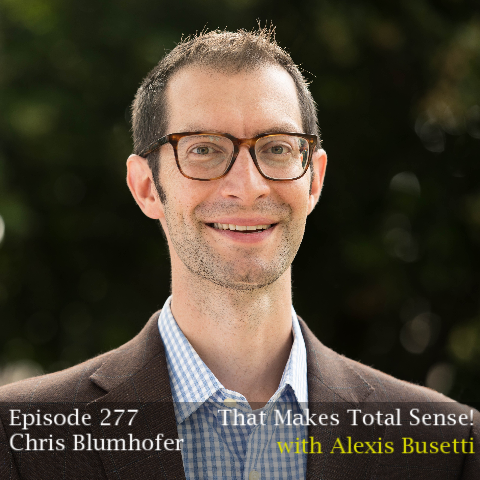
So I'm way ahead of you. So, so this is where we are. I'm sitting with Chris Blumhoffer, who was my New Testament professor at Fuller, my M. Div. Also, I took a slavery in the New Testament class with you. That was super enriching. And I really did. There were quarters when I was like, I'm not sure what I'm going to this quarter. And I would just, like put in the find button, you know, put your last name in and see, you know, what popped up.
So I'm super grateful that you agreed to come on the podcast today.
We are going to start with a short article that is on Fuller Studio that I will link in the show notes for this episode called how can we Read the Bible Critically in Faith. But before we get there, I would like for you to do just like a little self introduction to kind of give us, the listeners, some context for when we talk about this. So I mentioned that you're a New Testament professor, but you do more than that. So when we talk about this kind of, where are you coming from? So if you could locate yourself for us, that'd be great.
[00:02:46] Speaker B: Sure. Well, Alexis, it's great to be on and to just tell you I think you have very generous friends.
I teach New Testament at Fuller.
I am ordained to that position as a minister in the Presbyterian Church. And so it fits into a larger vocation of serving the church. When I got to Fuller, a colleague named Steve Argue, whom you probably know, led a session where we tried to condense our sense of vocation to one sentence. And he helped me in that express my vocation as I open Scripture with and for God's people.
And so I locate my study with, which is really a joy to host conversations and contribute to them and really be around a table with people when we study the Bible and also in scholarship and in kind of my own study to do it for others also.
And I kind of bridge this world of seminary, academy and church, which is where I'm called to be. So that's a little bit about me. I teach for Fuller from a distributed location. I live in Durham, North Carolina. I did my PhD work and MDIV at Duke. So I live kind of in the shadow of Duke University, where my wife still works. And before that, I'm from Wheaton, Illinois. And I grew up in the shadow of Wheaton College, where my mom taught and was really influenced by some really wonderful, thoughtful Christians from my time there, even before I got into academics.
[00:04:36] Speaker A: Yeah, thanks for that.
I just also want to. Just when you said you grew up in Wheaton, I don't think I realized that, but that, you know, I think many folks are like me where we either grew up evangelical or evangelical adjacent. Many of us are still there. And, and there's, you know, differences, nuances. Some, some are nuanced and some are larger kind of differences on how we read the Bible, how we approach the Bible, how we were taught and discipled to interact with the Bible.
I'll just say I was one of those kids. Listen, I was eating spaghetti dinners probably on Monday nights or something like that for like a year or more in my elementary school because I was a Bible drill kid, right. Like, I can put my hands on. I mean, no one's going to see this video, but I can put my hands, like, right, you know, my left hand on top, my right hand underneath this book. And you know, when they said Beatitudes, like, I knew where to find.
And. And so. But in that context, for me, I think I was taught lots of really wonderful things about the Bible that it is in enrichment for us. It gives us life and there's so much depth and all of these things.
And also at the same time, I grew up in kind of a. Like a literalist context, you know, a place where it wasn't just that, you know, I've seen, you know, the bumper stickers that the Bible says I believe it, and that's, you know, and that's it, and that settles it. And that was kind of my context growing up. And so there was a little bit of a fear maturing not just in, you know, life right in age and emotional maturity and things like that, but also spiritual maturity leading into my time at seminary, where I'm like, I. I don't know what to do with this. You know, I don't really know what to do with. With this text and how. And how to look at it. And gratefully, I had some really great professors that kind of met me where I was and my colleagues where they were too, because we were kind of all over the map, which is one of the. One of the beautiful things about Fuller, I think. But I'm wondering if we're gonna get to this article. But. But you. You use this terminology that I think is really helpful there, which is believing criticism. So the title again is How Can We Read the Bible Critically in Faith? And I think that that is something that I feel like so. So many of us wrestle with it, whether we're seminarians or not, just in our everyday life. What place does this book have in our faith walk?
[00:07:35] Speaker B: Yeah, I had the.
I had the real blessing of good teachers who.
I didn't go out seeking this, but they walked me into really confronting the challenges of believing Scripture to be fully trustworthy.
And they problematized those claims for me, pointing out the historical challenges that exist in the Bible, what we might say are the moral or ethical challenges that exist with holding this book as canonical and authoritative for our lives and doing that through close study of Scripture and the history of the study of the Scriptures in the modern times.
And these are evangelical scholars. And what sets an evangelical apart from a fundamentalist is the willingness to keep the question open and wrestle with it and not just reject the question when Scripture seems to be unhistorical or contradictory, but to really struggle in that place. And that's historically been a very fruitful place for the church to exist, being willing to be confronted by. By Scripture as a word that we didn't speak to ourselves.
And I didn't seek that out, but at the right times, that those teachers found me and helped me. And they did what I think all good biblical academic studies do, which is they disorient people, and then they walk alongside of them towards some kind of reorientation.
And so I was really blessed to experience that in college and again in graduate school.
Yeah, that's the blessing of coming up evangelical in this way. So I did grow up in a conservative evangelicalism, but because it was also a curious and humble evangelicalism, I didn't feel scarred as life got more complicated and the Bible started to bear some of that complexity too.
[00:09:47] Speaker A: Yeah, I. I'm glad that you named that, because I think that there's, like, again, there's a spectrum of experiences when I started the podcast, and I would say fundamentalism went pretty well with some aspects of my personality. You know, like, I'm like. I kind of, like, rules, you know, they help me feel safe in some ways. You know, I. I have some type A tendencies, you know, things like this. And so, um, it's.
It's good. It was good for me. I, you know, at the time, I was experiencing it of like, it's kind of. It feels good to have kind of the quote, right answers to things. Oh, yeah.
And, you know, I think that's great. As life gets got more complicated for me, I would say then some of those things started to come into question. They didn't. They seemed a lot fuzzier than they had been before. And I just started to kind of wonder to myself in this faith that I'm. That I'm trying to walk out, what if. Just like, you know, what if. What if having kind of the right answers isn't really what this is about?
What if it's. It's. It's good also to ask questions, but also to learn to ask kind of better questions than some of the ones, you know, that. That I had been asking or that I had been hearing asked, but also, as you mentioned, to.
To hold those questions. And so, you know, I want to name a couple of things that your class helped with as we kind of go into this article a little bit.
One of them, for me was the picture of Jacob wrestling with the angel being analogous to us a lot, you know, wrestling with the text and not just like, I feel like that. I felt a lot of permission in that. And so if you recall helping us with that analogy, I'm wondering if you can kind of flesh that out a little bit here.
[00:11:58] Speaker B: Just remember, Jacob gets wounded in that seed, and he limps for the rest of his life. Yes, he did.
And so I love.
Well, I don't just love this emotionally. Like, I think to be a Protestant, to be committed to the word of God as the way in which God is present to us means that we have to open our whole lives to the Bible and be willing to live in that risk. That is what Protestantism is. It's a radical confidence in the word of God, but we can't hold anything back. So it's a super high risk encounter. When we have a question, we have to be willing to bring that to the Bible and we may not get the answer we wanted and we certainly won't get the comfortable answer most of the time.
Jacob has a really difficult life. A lot of that is a self inflicted wound. But occasionally when he tries like he also is wrestling with God and God will bless him, but will also disable him in a certain way.
So it's a chastening encounter with Scripture. And I think that kind of willingness to be present, to be blessed but chastened is the mindset of a faithful life of reading.
And I, and I do think going back to something you mentioned beforehand about kind of certainty and the right questions, I do like we have to base our life on something. There has to be truth in the Bible, God. It has to reveal God truthfully to us or else we're just more pitiful than anyone else. But we also live with the Bible for the scope of an entire life. You know, birth to death and generations live with Scripture. One of my professors in seminary said, you know, could we just replace the Bible with just an answer to all our questions? Like what if Wayne Grudem's systematic theology was really all we needed and we could like put the Bible to the side and just get the answer on everything from systematic theology.
And it's a great question because it's such clearly the answer is clearly no. We're meant to live with this book in relationship to the living God. And so we also have to journey with it and let it continue to inform us as our lives invariably deepen as we suffer and we try to live the full breadth of a life in relationship to God. So it's just a never ending encounter.
And I've been more and more drawn to that over the course of my scholarship. And I think just as part of just getting older as a human being and as a Christian, just realizing it's not just about the answers. I need answers to some questions, but I also need to keep coming back to this book to be nourished in ways I didn't even know I was hungry or I didn't know the question, but I knew I was looking for something. And Scripture informs us as we, as we keep turning to it.
[00:14:58] Speaker A: Yeah. In the article, you mention a writing by Augustine and I, and you focus on a little bit on this, on this part of knowledge which we've, which we've kind of been talking around. And I think it's kind of appropriate as seminarians. Right. You know, like, you walk in and the Bible is like one of your texts. Like, it's one of the main texts for many of the courses.
But this also, I think, you know, there's. There's no. I. I chuckle often. I have a friend after I graduated who said, oh, you've fully mastered divinity. Right? And I'm like, you know, and I think that some, you know, that, that, that is kind of a. I don't know. I think it's a temptation, maybe even for some of us. Like, we get in, we have this text, and we're just gonna master it, you know, like, oh, now I know everything there is to know about the Bible, or there's no. No other questions. But even if that's not, Even if that's. That's not it, I do think that this knowledge piece can get kind of trippy for us seminarians or not.
So can you talk about that a little bit? Name. Name any of the other stages that Augustine talks about as well. But, but particularly knowledge as it applies to our conversation today.
[00:16:16] Speaker B: Yeah. Well, in just as a general kind of framing for how Augustine was approaching biblical interpretation, he developed these seven stages through which readers pass. And it starts with, like, the fear of the Lord. Just think of the posture in which you approach God. Like, that's the initial stage, has nothing to do with what you read or your literacy. It's just your heart stage. The holiness of your life is stage two. Then knowledge, then the hunger and thirsting for righteousness follows that. And then this kind of undivided love of God comes after that. And it all ends with achieving wisdom.
So a person who's a great interpreter of the Bible will be a wise interpreter. But as Augustine teaches us, or as the Bible teaches us, the fear of the Lord is the beginning of wisdom. So as soon as you achieve wisdom, you just jump back into this process of the fear of God, a holy life, deep knowledge. You're just in this cycle that never ends.
Now, he really believed in every one of those stages and was a. If you, as you've read Confessions, which he's. He's a real student of the human heart and the human. The interiority of the life and the complexity of our minds and hearts.
But he was particularly concerned with the knowledge that preachers need to have. And so he like, lists. It's beautiful. He lists the all the secular kind of knowledges that readers, preachers of the Bible need to have. This is one of the places he develops the phrase of plundering the Egyptians, the idea that believers are to gain the best of insights and knowledge from all the disciplines, mathematics and astronomy and philosophy, and bring them into this, the knowledge of God as they read the Bible.
But it never stopped there for him. You always get, you always are in this process where your knowledge is being chastened and conditioned and drawn into this love of God, this undivided heart that seeks after God, wisdom and the fear of the Lord. You can never divorce knowledge from an obedient life, from a life of charity. There's unity for him.
It's a little bit different in our world today. In the modern world, knowledge and especially historical knowledge has a certain kind of authority. So it's like if I can look at a person or a political movement or anything, and I can describe where it came from and why it exists based on historical causation, I've now kind of claimed it, I've explained it away.
And we do this in Bible sometimes too, where we, like, look at a story. Like, there's a story in John chapter nine, which I'm teaching this week, where Jesus heals a man born blind. He goes, and his neighbors, like, some recognize him, some don't. The Pharisees and Jewish leaders question him. And he's like, someone healed me. And they're like, it wasn't. He's like. And because it was a Sabbath, they're like, well, whoever healed you was a sinner because you broke this apath. He's like, well, he healed me. And they're trying to get this guy to renounce the healing that he experienced. A lot of John scholars have been convinced by this view that sees that as a story that may be played out in the life of historical Jesus. But it also, it's like a parable of the Christian life coming to faith and then being persecuted and challenged and tested for your confession, for the confession of faith. And they, they locate that in the second century that John is describing the experience of these second century Christians. So it breaks it apart historically.
To explain that text historically is not actually to understand that text. No matter how complex the history of composition is for John 9, it doesn't actually bring us to the point of understanding what Scripture is teaching in John 9. If we can explain the origin of that story, the social factors that created it, the tensions of 1st and 2nd century Christianity. But we're really tempted to. If you can offer a historical explanation of something, you've sort of explained it away, you've done your job.
And so in our day and age, it's really easy to get stuck at the step of knowledge, because knowledge is power. And if you can, you can stand in a pulpit or behind a lectern and explain something, people will give you authority because you have met their criteria for accounting for something.
But Augustine, that doesn't get stuck at stage three. For him, the ladder goes up and down in both directions. And to get stuck at stage three is actually a really pitiful thing because you're not developing the character that God has created the human heart to live into and the relationship that God's created the heart to live into. So it's, it's tricky because knowledge is tricky, and the Christian life is hard. And it's tricky because life in this modern postmodern time that we're in has tended to view historical knowledge as a very authoritative kind of knowledge. And that itself is pretty dangerous for us.
[00:21:38] Speaker A: My mind's going in a few different places, but I think I'll start here.
Not getting stuck on the knowledge piece and it being a cycle.
I had a guest on one time when we were. We were talking about.
We were talking about something related, and she gave me this word picture of like, kind of. You could, you could say it either way, kind of spiraling in or spiraling out. But like, this topic maybe is one. It's, it's a, it's a line in, you know, going in one direction. But whenever you're spiraling, you hit it, but you hit it in these different places in your own life. And so you come around and you go, oh, like now I'm seeing this in a different way than I did when I was here, you know, because I've walked five miles since then, or, you know, something like that. I'm seeing it from, in a, in a different place. You know, this line is going out and my circle is going out. So. So the cycle part is intriguing to me. But you also mentioned something in this article. Again, another good word picture of imagining this text of like, when, like a knot. And when you pull on one place, maybe it loosens up in one place, but then it gets tightened up somewhere else. And I think that for me, one of the things, you know, I won't, I won't say, go out and say like it's a red flag, but I think sometimes it feels like a Yellow flag to me if I hear like a preacher or. Or a Bible teacher, someone say, well, clearly, Right. Like talking about the b. Talking about some places in the text. Right. Like, clearly the text, you know, says this, that, or the other. I'm like, there are like a handful of clearly, you know, like, God loves me. I'm, like, really convinced of that at this point. I'm really convinced this shines through in the Bible that clearly in the text there are places where we can say, yes, yeah, God loves me. I don't have a lot of other places where I'm like, oh, clearly, you know, this is it. And so we could talk about that if you want. I welcome pushback on that. But I think that the tension piece is one for me where, you know, there are some of these things where, like, maybe this felt like a clearly.
[00:23:49] Speaker B: Yeah.
[00:23:49] Speaker A: And then we pull somewhere else and it doesn't feel as much like a clearly. Or maybe pulling on this makes something else feel less certain or. Sure.
And. And that there are.
I didn't really mean this, but kind of in a pun way. There are kind of loose ends, though, right. Like, a lot of them inside of this. And. And I am. Was guilty of that, especially I think, early in seminary or even just in passing, you know, like, I would see something. Oh, I really want to take that, or I really want to explore that because I'm. I have all these questions, you know, and then I'm. And then I'm going in. And maybe for a fleeting moment, because I learned my lesson, but for a fleeting moment, I think, oh, this is. I'm going to. I'm going to hear the answer on that, you know, and it's like, no, you're not. You're going to be left with probably a lot more questions.
[00:24:38] Speaker B: Yeah.
[00:24:39] Speaker A: When you're done with it.
[00:24:40] Speaker B: We live by arguments. Right. And so, like a lot of the times the phrase that is introduced with the word clearly, that idea, that's actually the conclusion.
Clearly, the Bible teaches that slavery is an offense against God and a kind of blasphemy, except then you kind of get your hands dirty from Genesis, Exodus, Leviticus, Deuteronomy, across through Paul's letters, and it's not as clear. And this was one of the things that prompted me to teach that class that you later took.
It was the statement you hear a lot if you live in this world, which is that slaveholding Christianity had the better Bible arguments.
And, boy, that's a troubling sentence, isn't it? Clearly the Bible teaches this or that. About slavery. And you're jumping into the conclusion when you get there. And we shouldn't let the language trick us that things are that simple.
At the same time, we live by arguments. And so, like, we as Christians have accepted the answers to a lot of arguments. God is Trinity, God is love. These are things that we. These are construals of the biblical story and the history of God and God's people that we base our lives on. And maybe there are fewer of them and we should be really careful about adding too many more of them unnecessarily, and we shouldn't make it seem easy.
But we also live by those arguments. And I think it is healthy to crack open that argument every once in a while. This is a great thing to be. This is what a master of divinity is, hopefully, is someone who, like, has cracked open the question and seen, like, oh, yeah, Trinity is the Christian name for God. We can go with that one. I've studied that. And then you put it back together and you can, you can. But now you can defend it. Now you can talk to someone in your church about why Trinity is the biblical way to think about who God is. Um, but I'm not supposed to say write when I lecture. That's one of, like, the tics that my wife, when she hears that, she says, don't do that. Like, whenever academics do it, it's presumptive and it's rude and it, it's condescending when you, when you share an idea and you say, right, don't do that. So I try not to do it.
[00:27:12] Speaker A: That's great. No, I'm, I'm kind of. I'm kind of chuckling to myself because you said it was a tick. I think it's a tick. Not just for academics.
For many folks, it is. It's kind of the. Of the 2000s, I think.
[00:27:26] Speaker B: It's a. Crazy, isn't it? I mean, just think about what that says about us as a culture where in our in between statements, we're begging for affirmation of the last thing we said. That's a strange thing.
[00:27:39] Speaker A: And we're assuming. Yeah, it's presumptive. Right? Like, like you're going to agree with me. Right? You know, you're, you're. This is. Whatever I say is. Is right. Right.
I want to, I want to go back. I know this wasn't the point, but. But it, it matched something on my notes in kind of a different way. So I'm, I'm wondering if, if we can go there for A minute.
[00:28:00] Speaker B: Yeah.
[00:28:02] Speaker A: One of the other places I didn't go back to my notes in your class. These were a couple of the things that stood out to me and were among other guides as I went through. I took your New Testament class early in my M. Div. And along with this wrestling picture of kind of giving me permission to wrestle with the text, I think this was you. I'm going to laugh if it wasn't. Hopefully you can too, but I think it was you. We talked about looking, looking at the text like people peering down into a canyon or something like that, I think was the picture. And so from different places on the rim, we're going to see things differently. And earlier you talked about how Augustine was saying, like, you know, you've, you've got it. You can have all of these other. You're going to maybe not become an expert in these other disciplines, but bringing these other disciplines into the text, which I think is something that is just generally really hard to. It's generally really hard to do. But especially now because, I don't know, I've talked about this quite a bit with my husband of like kind of being a generalist career wise versus kind of having this like, area of expertise. And one of the things that I've said to him because he, he is an expert in many ways in his field, but he's a scientist. He's an earth scientist. Yeah. And we've had this chat quite, quite a bit. We've been married for over 20 years and since we were at college and grad school together, even to now people, wherever we are, there's usually one or two people who in like this kind of one of. One of the conservative threads of Christianity who will a question something about his career, maybe not directly, but you know, this kind of thing because he's a geologist. And so this doesn't, this is incongruent for some people.
And so anyway, I have said to him that I feel like just generally in, you know, faith talk that we would really benefit from hearing more from scientists, you know, in general. Right. Like I. Right, here we go. Chris, stop. I'm going to stop right now because I just said it. But Francis Collins is an example. I took a class on history of science and theology at Fuller and I utilized Francis Collins works in my final paper for that class. But it was really helpful. I didn't, you know, necessarily buy every single thing that Dr. Collins said, but it was really helpful for me to hear a perspective from someone who is not a theologian but just a Christian. Who is well educated is an understatement. A well educated scientist and medical doctor and research scientist and all of that.
My husband is a geologist. Many times in some church circles, guys like him and their perspectives get kind of kicked to the curb because we don't recognize that their profession, their vocation, their perspective would have anything to say about the text, about faith, about church life, about, you know, any of these things.
But not everybody is a vocational theologian or biblical scholar. Most aren't. Most have professions or knowledge, wisdom in other spaces. And what do they see when they peer, you know, into that canyon?
[00:32:02] Speaker B: Specializations are just really fascinating parts of our world today.
Sort of a unique thing in the history of human culture and Christianity. Also, to think of the degree of specialization that exists.
Of course, clergy have always kind of been a specialized set. There's a specialized set of knowledge there. But there's a lot of character formation happens when people are trained in a particular way. I once when, when my mom was sick with cancer, I decided to try to look up, you know, the clinical trials with her type of cancer. And I immediately was reading. It was English, but it was not the English I had.
Trying to make sense of these things. I needed someone who has been. My sister is a medical doctor. She's fluent in that language. Her mind and attention and just the connections she's capable of making are completely different than mine. And I could never become that kind of person at this point in my life.
The same with any of the sciences, but it's not even academic expertises.
People who are caregivers develop a certain kind of attention and habit formation and heart formation that is necessary for the Christian life, I think, and certainly for reading scripture well and relating to God. Well, my dad was a plumber. The kinds of curiosity and disciplined hard work that he developed over his life are certainly related to the kind of disciplined spiritual life that he has carried out for his whole adult life. So I don't think we cannot afford biblically to despise other parts of the body. It shows a lack of imagination for how God is working formationally.
But hopefully we can actually just talk about honoring all these gifts as they are developed faithfully, including gifts of academic specialization, even biblical specialization, but not to demean the other things that are happening. I'll just share one more little anecdote on this. So I spent 10 years of my life getting a PhD or trying to get a PhD, and because of that, I spent the bulk of my 30s without any hobbies.
I never watched a football game. I read Very few books. I did not take up, you know, like men's league softball or all the other kind of stuff that people do as they're turning that age.
I'm a certain kind of person in my 40s now because I don't have those experiences from a decade of, you know, early midlife. That's just who I am, you know, and I've accepted that there are costs to certain formations and I, you know, we just have to accept that and, you know, live with that and not despise other formation.
[00:35:07] Speaker A: Yeah, that's, that's really good. I'm glad that you brought up other areas and other types of expertise immediately when you said a caregiver and the attention to some of those details. Your dad as a, as a plumber, I think I say every time I get a haircut, I am absolutely blown away because I have zero spatial awareness. Like when, you know, I mean, if my husband had a dollar for every time I told him a piece of furniture would fit somewhere and he knew it wouldn't, just in his mind he can imagine because he's very spatially aware and he knows that it won't. Of course, the number of times he's, you know, just said, okay, let's, you know, we'll give it a shot or whatever.
But, you know, this ability to kind of think in three dimensional space or, you know, some of those, it's just, it's mind blowing to me. But I think about, you know, I think often in, in the academy where I am, we think about those different perspectives as far as culture is concerned. And that's very familiar to us. And I think that's a, I think that's a good thing to bring into our Bible reading. But I think it's also a good thing when we are able to welcome all of the disciplines, all of the areas of expertise, all of these to say you, you can bring something to this reading that I can't bring. Because like, as you said, we were talking about your sister. My mind won't work that way at this point. Like I, I could, I could never be a cosmetologist. My mind just won't work that way. I can't formulate that kind of thought.
[00:36:57] Speaker B: Yeah. It is interesting that Augustine didn't really think cross culturally. He thinks as widely as astronomy, music, math, linguistics. These are the kinds of knowledges that are all required of good biblical readers.
I don't know if that's a function of just the size of his world or other assumptions he was making. One of the Interesting things in the Biblical Guild is.
So the illustration you're citing is from Christo Gonzalez's book Santa Biblia, where all these people are on the rim of a canyon looking down and you can see a clump of trees at the bottom from your angle. But people 500 yards away looking down could see it totally differently. And maybe it would appear they would see additional features you couldn't recognize from your angle. It's a great, It's a great perspective. Some of that's. We're trying to name the differences of life experiences that inform our ability to see, our capacities to see.
Some of those are cultural, some of those are social. Location is a shorthand for all sorts of internal, internal formations, effective formation.
And we really need to widen our appreciation for those things in the field today. So, again, like the way the hegemony of historical biblical knowledge is not.
It's not appropriate to the catholicity of the church. It's important as a form of knowledge, but it can be out of balance.
And that's one thing we gotta work to correct.
[00:38:52] Speaker A: I want to ask you to say more.
There's a lot in that statement there, and I think I will speak for myself. I, early on in my, in my young adulthood, I never thought about the hegemony aspect, partially because my faith world was very small.
Mine, this is my experience. I, I lived and read with people who looked very much like me.
I had been discipled to look like the group that I was with.
And so even the, even the, I always mess the word up, the catholicity, even that I was something that I couldn't see very well.
Yeah. So I know we're going to land the plane, but I was going to ask one more question, but I'd love for you to just expand on that a little bit more, if you could.
[00:40:10] Speaker B: What's really fascinating thing about biblical interpretation is that most of Christians throughout history, up until about 18, well, 1780s, 1790s, the orientation of their study was not historical reconstruction.
It was an encounter with the living God when it was done in a historical mode that was put in service of re. Encountering God through the historical imagination.
And along with that was a kind of naive view of history, that the Bible is representing history as it plainly happened.
And all that's been complicated throughout time.
But underlying all of that was a sense that God is alive and speaking and that the work of a Bible reader, especially an expert, but a Bible reader, is to bring his or her life into the, into contact with God and to work out from that place where we are.
I find that a very refreshing thing to remember that it's that encounter with God and for the sake of being transformed into the image of Christ is the purpose of Bible reading in the church.
And the rise of historical criticism really problematized that because it tore apart the idea that Scripture is representing history as we imagined it, that the narrative is disconnected from life on the ground of 1st century Palestine or 8th century Israel or whatever.
And in some ways we're still living in that space. The questions have changed.
And it's sort of a shame that we have to kind of rebuild this plane while we're flying it now because.
And what I mean by that is we have to. We've realized that historical critical scholarship is important but not sufficient for the needs of the church.
We can't get rid of it, but we can't limit ourselves to it. But we've also realized that it took up so much space that it basically blocked out a lot of other views for a really long time and even explicitly or implicitly delegitimized those other views.
I do think this is so I try to frame this theologically as an issue of the catholicity of our biblical interpretation that God's church extends across time and space and many, many cultures and peoples and ways of reading. And that to be faithful Christian readers, we need to attend to God's work in the church. Catholic it's slightly different than talking about diversity for its own sake, because I think God is committed to diversity because God is committed to catholicity. So we might as well just jump to catholicity because that's where God is. That's where historically the church has seen God working. And it extends it through time as well as geography and location on the planet.
Well, I think it's helpful to recognize that God has never actually stopped working in those places. But we have a lot of recovery work to do as contemporary interpreters in reading more widely and.
And engaging new questions and also old questions that have never actually gone away, that have to do with the encounter of God now and what God's been doing in culture, especially through the damage of modernity, that has been very damaging to a lot of places and people. So in the historical biblical criticism and mainstream biblical criticism is. Is caught up in some of that, but it's independent of it. Also, modernity has just been a crazy time in human history in terms of colonizing a lot of the world. And so learning to read the Bible in this place, in this time is a really. It's exciting. It's an opportunity, but it's a challenging one.
[00:44:50] Speaker A: All right, here's my last question for you.
You are regularly with seminarians, but you are also a pastor. So you are regularly with folks who will never cross the threshold of a seminary. Praise the Lord.
And they are operating in their own contexts, in their own vocations. And it is wonderful and beautiful.
And I have shared some of the things that you shared with me as a student, as part of your classes, some of your classes.
But what I'm curious is what encouragement and or challenge might you offer to lay readers who are hopefully reading in community, but they are.
Maybe they're coming to the Bible for some of the first time in their life, or maybe they are like me and they have had some, you know, some background, some that they would love to keep, some that they would love to question.
Maybe. What might you offer that you, that you think, oh, this, this might be helpful? You know, put, put this away in your backpack as you're on your, as you're on your journey with Bible reading. What might you offer as a, as a pastor?
[00:46:26] Speaker B: I would say as a mate, as a way of encouragement. I would say many Christians for thousands of years have staked their life on this text, and God has proven faithful to them as they've done that. And you can do it, too, in what you understand and in what you don't understand.
Never let go of the faithfulness of the living God to his people through scripture.
I really think that if we're going to survive as a church this time we're living in, it will take some courage. It will take us reclaiming the amount of courage it takes to be a Christian. And we can't let go of scripture in hard times. So that's my first encouragement. Just hang on to the Bible and remember that lots of people have done this before you. Many have taken it to the grave, and you can do that, too.
So we shouldn't forget that.
It was helpful to me.
I won't share the name of the person who recommended this to me, Alexis, just because it might alienate some of your listeners. But he was a fuller grad.
He said he's a pick a theologian.
Pick someone you admire in a church and read that person, live with that person. And I think that was good advice. You don't have to pick.
You don't have to pick a very hard person. You could jump in with Karl Barth or Jonathan Edwards or something like that.
For me, it turned out to be Dietrich Bonhoeffer. I've been reading him for a long time. And I will keep reading him as a kind of just a thought partner, a companion. Augustine is another one for me.
The practices of devotional reading never lose their importance.
I would say that, too.
That's something I learned in high school. That has never gotten old, and I've been.
It's taken discipline to maintain it in becoming more of an academic reader of the Bible. But memorize it. Memorize the Bible, pray the Bible, read it every day. Don't think you're better than that. That's dangerous thought. That's more of a warning to seminarians. But maybe we can all hear it.
What am I forgetting? Alexis?
[00:49:00] Speaker A: I think that's it. Okay, that's. I think that's. I think that's great.
If you can't think of it right now, I won't put you on the spot. You can send me a note later.
If people wanted to start somewhere with Bonhoeffer or Augustine, you know, a text, a text that they might. That they might pick up if they wanted to borrow your thought.
[00:49:27] Speaker B: With Bonhoeffer, you should start with life together and then with discipleship and get the new copies that published by Fortress, because the old ones were abridged in translation, so there's whole chunks missing.
And it's a hard text to read the whole thing, but it's just great. You should start there and then you can branch out into the lectures and the other letters and stuff.
With Augustine, I would say on Christian teaching is a great place to start. Or Confessions and then read the sermons.
And if you have a lot of time, read City of God also. But the primary way of doing theology in the early church was biblical interpretation. And so you can find them online or buy them for cheap on Amazon. You know, Augustine's sermons on the Psalms or on John. These are great.
They're kind of exposition like that we might recognize as 21st century Christians, but they're also just really ambitious theology, and it's great to see it.
[00:50:54] Speaker A: I love it. Thank you so much.
Again, the name of this article that we touched on a little bit today in our conversation is on Fuller Studio, and it's called How Can We Read the Bible Critically in Faith? Thank you so much for coming on.
[00:51:10] Speaker B: Thank you, Alexis.
[00:51:12] Speaker A: The links for all the resources mentioned in today's episode can be found in the show notes, music and podcast production by Seth Buscetti. Be sure to give us a review on itunes and subscribe at your favorite podcast listening app. You can also visit us at that makes Total sense dot com.