Episode Transcript
[00:00:10] Speaker A: Welcome to that Makes Total Sense, a podcast dedicated to exploring God's generosity and justice. I'm Alexis Busetti, a Christian, aiming to ask good questions and encouraging you to do the same.
Every one of us is wired by God to live out generosity and justice, but the how sometimes eludes us. That makes total sense is a way for us to get together, posture ourselves as learners, and challenge one another to practice generosity and justice in a tangible way every day.
So I was just telling my guest today, Isaac, that I was doing a recording just yesterday with another author who has written on immigration and all of the stories that were told in both of these books. It was Tristina Rathbone, and I'll note her interview here in the show notes. But these stories took place that are told in the books, took place prior, obviously, to where we are right now politically in our country, where I'll just kind of give a little time stamp.
Yesterday, charter plane landed with refugees, and I almost want to use that in air quotes. South African refugees landed here in the United States.
The Trump administration invited them.
And at the same time, men and women, but men have been deported and are imprisoned in an El Salvadorian prison, and college students are being detained.
So this is an interesting time that we're currently living in.
And Isaac, I apologize because I did not warn you and I didn't even know I was going to open with kind of that political. But I think it's, I think it's good to just note this is where we are right now in our country.
Immigration, migration, refugees, asylum seekers. This is not anything new to our country, to us as communities, to. To us as a church community, a greater church community.
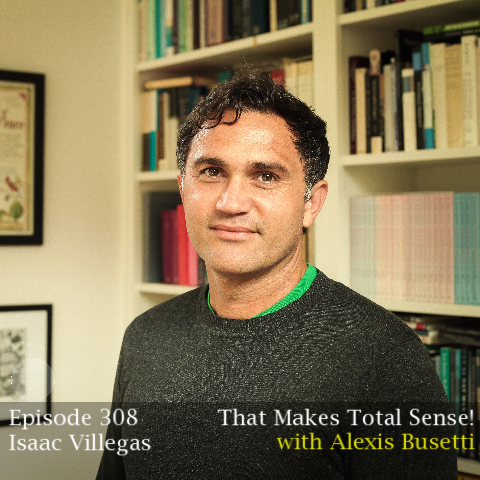
But it is good, I think, for us to dive into educating ourselves more and more of what the larger context of migration is theologically and politically and communally. And your book really helps us do that. So welcome to the show. Isaac Villegas, you've written a wonderful, wonderful book that I just finished. I even love. It's textured. The COVID is textured. Just feels good in my hands.
[00:03:02] Speaker B: I love what they did that. But first of all, Alexis, thank you so much for having me. I'm very excited for this conversation.
[00:03:07] Speaker A: Me, too. It's called Migrant A Christian Vision for Immigrant Justice. And Isaac, there's so many, so many places that I am ready to go, but I want to give you a moment to, as, as I would say in my seminary context, to locate yourself. So will you give us what you think would be helpful in your social location, maybe theologically, what. Your, what Your training is what tradition you're coming from, but then also your own families.
Journey, history of migration.
[00:03:49] Speaker B: Yeah, no, yeah, that's great. So in terms of, like, where I fit in the world, in terms of church tradition, I'm what is called technically an ecclesial mutt.
[00:04:03] Speaker A: Same. I love it.
[00:04:05] Speaker B: Yeah. So I grew up. My parents are from Latin America. My dad's from Colombia, mom from Costa Rica.
We grew up Catholic, Roman Catholic in LA and got caught up in the charismatic renewal movement within Catholicism. And then that became a little more interesting for my parents.
Pentecostal, Vineyard, storefront church, speaking in tongues, all of that.
And then More recently, after 9 11, I kind of had a bit of a crisis of faith. Got. I didn't quite understand churches. I was part of calling for revenge, and I was like, you know what? Jesus calls us to love our enemies, that that should matter.
And I joined Peace Church, Mennonite Church, usa, the Anabaptist tradition. So I'm.
I'm an ordained minister in Mennonite Church, USA.
I live over here in North Carolina. Durham, NC.
Was a pastor for 16 years in the church. And now taking a break, stepping back from that for a little bit to do some academic studies.
[00:05:15] Speaker A: That's great. Thank you so much for that location. I think that helps, especially the location currently in the Mennonite tradition, because I could tell it informs a lot of your writing and how you're telling the stories that you were telling.
Just a quick kind of maybe introduction to the book as a reader, kind of how I. How I read it. And then please correct me because I'm. I'm great with that.
It is a. It is a short book, but it was so powerful and impactful, and I think that was, for me, it was. It was twofold.
As a theology student, I. And probably will be a perpetual student of theology in some ways.
I love the biblical references in the book, the. The relatedness to scripture with the stories of real humans that you told. And. And, you know, that's. That's. The other part is that each chapter tells stories of people whose lives have been impacted by migration, of various. Of various sorts of.
And it's not just the stories of migrants themselves, but the stories of those who serve migrants, who work with migrants, who even. I mean, in the beginning of the book, who serve migrants. The legacy of migrants in their. In their deaths, which was just so powerful and beautiful and very it.
I think I may have used this phrase in our prerecord conversation.
It was a lot to hold the stories of These individuals of the migrants and of the people who were serving them. And I'm grateful for your expressions in this book and from your own experience in your own theological traditions, because just helps us understand the real humanity of what we're talking about. Especially as I mentioned at the beginning of the conversation, right now, things feel like kind of quote issues, and they don't feel like. Like neighborly people. You know, it doesn't. It doesn't feel very neighborly. Doesn't feel very peoplely, you know, is not a word, but it just, it. It's. We hear statistics and we hear numbers and we hear of executive order murders and all of these things. And. And it doesn't feel close to home.
But these stories help bring this close to home.
So I just want to. I just want to say that I'm very grateful for that and the layout of the book.
Maybe it would be good to kind of start by saying, where did this particular book come from for you? Like, the desire to write it, but the desire also to write it and release it right now, Right?
[00:08:30] Speaker B: Yeah, yeah. No, thanks for that. I mean, there's so many beginnings for the book. The More I think about it because, like, on the one hand, you know, like, we grew up with the migrant story. My parents are immigrants. Like, that's where I grew up. That was our lives in California and Arizona.
So in some sense, it was like always thinking about God in that context of God who sustains our faith and faith of my family and friends, um, the midst of all that. So it's like family.
So I've been thinking about it since I've first had thoughts about God.
Another starting point is a sermon I preached at Church in 2011. I remember it. That's where, like, the title came to me. I was just preaching, and it was a sermon about a psalm about how God goes with God's people as they. As they're moving. Because this biblical thing, theme of the people of God on the move as pilgrim people is significant in scripture and theology, early church.
And I just found myself talking about a migrant God for migrant people, and just kind of took a note of that. And then it snowballed into a book.
And then another place that it starts is with the pastoral ministry and caring about people at church, caring about neighbors with and without documentation, walking with them in this landscape we got here, this political nightmare.
So I'd say those are kind of the. The starting points of how the. The book began. And then I would say, like, the thing that made me want to write it you know, there's one thing to have thoughts, thoughts that, like, I preach about or thoughts that, you know, I just keep to myself in my head or write them out in a journal.
But the reason why the book came out, like, the reason why the Thoughts became a book that I wanted to share with people is because I'm typically, like, pretty bummed out about our world. Like, I.
It's bad out there, and I have friends that are hurt, and it's just not good. In terms of our immigration scene, it's horrific.
And I, in the midst of all of that, like, in my mind to sustain my faith and my hope and my work, I would kind of replay stories of people that I had met along the way who are just doing amazing work, incredible work, faithful work, and they gave me hope. And so I figured if I'm replaying them in my mind to give myself hope of, like, what to do, I'll share them with other people because I imagine there's other people out there who are looking for a way to. To make things work, to keep on struggling, to keep on loving God and our neighbor and learning from others who. Who do that well. So that's why the. That's why the book happened.
[00:11:27] Speaker A: So I'm going to give you a little map into what just popped into my head, maybe how I want to move forward again. You're free to be to it, but I'm thinking about your book now backwards.
So I'm thinking about, you know, we've talked about this political system and how it is it's messed up, but you gave several examples. I think it's important for context, for all of us to maybe remind ourselves.
While I do think that the Trump administration is different, and I'm not the only one to say that this administration and the one before is different than what we've seen before, he is not the only president to have really dehumanizing or not good migration, immigration policies. So this is. This has been something that the US has dealt with for an extended period of time.
As a mixed Hispanic person, I think I'm particularly, and I would imagine that you are as well, particularly keen to how this has impacted Latino communities throughout the decades and more. We could really say centuries, you know, or on the way to centuries. So while I do think the Trump administration, there's a difference, it's not like everyone else had a clean track record. Maybe I should say that.
And so I'm thinking about your book kind of backwards. And one of the first things that I'm hoping that you can, can retell that was really impactful for me. Was your family's own story of, of experiencing or your family's larger community experiencing eminent domain in LA and then moving with your father's factory job to Arizona and that, the housing situation, how that moved. And then also the expectation that the US has and really has always had on brown folks to do the work.
This, you know, this kind of work, factory work, agricultural work. For my family it was railroad work.
It was also kind of dirty city government work, but blue collar.
And then also, you know, we experienced a similar thing of, you know, where my, where my family, where my Hispanic side of the family lived in our town, looked very different than what were my white side of the family lived, you know, close to the refinery, you know, things like this. And so I was struck when I read your family's story. And I was not that I thought, oh, it's just me, but it was like, oh, yes, it's because this is an intentional pattern, an intentional political pattern and intentional political strategy that moves a people kind of where they, the government thinks they should be, you know, and many of those socioeconomically, geographically, all of that. And I just thought your story of your family's move within LA and then to Arizona really exemplified that. So maybe we could start there. And that kind of gives a personal story again to the political landscape.
[00:14:48] Speaker B: Yeah, that's great.
Yeah. So exactly what you're saying, how we wind up in places, in cities where we live, our homes, where we grow up, because of factors beyond our control.
And so, yeah, so my family, my parents, they met in Redondo Beach, California and they, when they got married, they're looking for a place to live and they moved to like the Latino part of town. It was a lot of part, like was Central American in that area.
And I always, you know, I'm growing up in that community, I thought to myself, like, oh, that's interesting. This is where we are. Like it, you know, these are my neighbors, Spanish speaking, Latin American folks.
And digging a little deeper into the history of Los Angeles, I discovered that in the 1950s, most of Mexican, Mexican American and then Central American folks lived in this place called Chavez Ravine, which is like right downtown near the city center.
And when the new mayor was, you know, 1950s, this is like everyone is worried about, not everyone, what should I say?
Politicians, political leaders were worried about communists.
And so they just for no reason started worrying about this community in Chavez Ravine.
And public housing that was emerging as like centers for like communist cells, just like wild you people just like trying to make money to sustain families. And so they took it over. Mayor Paulson took it over and said, you know what, we're just going to make things a little bit better out here and then you can move back. So seized the Lanth Remnant domain, moved everybody out. And then he was just like, you know what, I'm changing my mind here. I'm actually going to sell it, give it to the Brooklyn Dodgers. And that's how the LA Dodgers moved to. That's how the Brooklyn Dodgers moved to Los Angeles. And so that was a whole community that was displayed. I mean there's, there's just like really scary scenes. You can look online, all these pictures from the newspaper of just sheriffs like dragging people out from their homes and bulldozers like destroying it all.
And so people were scattered. Latin Americans living in the United States were scattered and then mostly moved south of LA into more of an industrial park, which is where we grew up, where I grew up. So that's where my dad was a factory worker in, in Carson, which is like a whole just industrial zone.
And we were in the bedroom community for Carson, which was Lomita.
So yeah, it was the factory and all of that that moved us there. And then when we moved to Tucson, my dad needed to keep his job and they moved the factory to Tucson for probably like NAFTA related. I mean, I don't exactly know cheaper labor closer to the border.
And so we moved with the, with the factory. But the, the funny thing that happened is, I mean, I guess funny looking back is that when my parents sold a house in Los Angeles, which was, you know, a fine house, it wasn't great, it was just what you could afford in that neighborhood.
The housing prices in Tucson were just so much cheaper. And so they bought a really nice house in the foothills, which people like us, I guess couldn't necessarily afford. And so we were like the only Latin American folks in that residential neighborhood. And it was kind of a wild world to grow up. And you know, like we would hang our laundry outdoors and that was not quite what people expected of my dad, you know, would always, on the weekends was fiddling with our V. His VW bug, you know, blue VW bug.
It was up on the, up on the Jacks, changing well, doing whatever needed, you know, we were. He was the only one in the neighborhood who, I mean, no one had VW bugs in our neighborhood. They all had like, I don't know, Mercedes and stuff like that.
And yeah, so it was like this interesting the way that the political economy in the United States pushes people in certain directions in terms of how. Where they live, which also has to do with like, where people go to schools, the friends you make, who you fall in love with. I mean, it's all of this. So a lot of times people like to say things like, oh, you know, we got to make this distinction between the, the private and the public or the political and the religious or at home or at work. But all these things are shaping all of that. Like it has to do with the intimacies of our lives. Immigration policies, policy, how jobs function, who gets what kind of job.
This is also why, I mean, this is another tangent, I guess, but this is also sometimes, like, I get a little worried where like, well, meaning church groups and I mean, churches. There was a movement, I would say, let's start here. There was a movement where churches realized.
Christians, we all realized that we need to care about our location.
And so it's just like, hey, look, this is where our church is, therefore we should care about our parish. And everyone adopted parish language, building on like, you know, Episcopal, Anglican, Roman Catholic understandings of the role of the church in society.
And so you think about immediate neighbors. But I mean, and all that's great, important, but what we need to dig a little deeper, I think, and to realize that our neighbors have been formed in a particular way. Like, if you're middle class, you've got a middle class neighborhood, your neighbors are middle class.
What does it mean to think about all the neighbors who've been moved away from us, who don't necessarily live where we are? Don't we care about them too? Just because we can't see, we don't see them at our local grocery store or Whole Foods or food Line. Where I'm at doesn't mean we don't. We shouldn't care about them.
So. Yeah. So geography very much matters in terms of how we imagine our lives and who counts as our neighbors.
[00:21:12] Speaker A: Yeah, I was grateful for that whole chapter because it brought in a lot of, I think, these behind the scenes things that influence that, that we just, we're just not. Many of us just aren't aware of. And it, and it doesn't have to be a policy that was signed yesterday. It could be policy that was signed 50 years ago that is still affecting, you know, like the Dodger stadium is still where the Dodger stadium is. Right. You know, and it's like, okay, well, those families are gone. You know, I mean, all of that's. And, and this is. We're still being, you know, still being affected by that.
I would also, I want to say, just ask you to say just a little bit more about the labor force.
I think it was the same chapter, if not it was close, where there was a quote from one of the organizers near the beginning of the COVID 19 pandemic where agricultural workers or said we, we have gone from being illegal in, in quotes to essential.
[00:22:24] Speaker B: Yeah.
[00:22:25] Speaker A: And. And again, I would say this is, this is something that we, that we saw happen during a Trump administration. But this pattern has been going. It's a cyclical thing. I, at least my understanding from the history I've read, this has been going on since early 20th century, at least, where the US realizes it has a need.
These are people who will fulfill this need because they also have needs. And then they say, come in. And then they say, go away. And then they, you know, like, I read one author and I cannot remember for the life of me who it was, but years ago that described it as the US Having. Wanting to have its cake and eat it too when it comes to Hispanic and Latino immigrants.
Can you talk about that a little bit?
[00:23:21] Speaker B: Yeah, no, that. Yeah, thanks for picking up on that. Yeah. So there was the person you're talking about. She was a farm worker organizer in Florida. And she. I remember, I was just watching news. I can't remember Spanish news. It was either Telemundo or Univision. I can't remember.
And she was just like, being being interviewed and it was during the pandemic. And she's like, oh, all of a sudden we're essential workers.
I've always been called an illegal worker.
Like, are we needed for this economy? Like, that's. Let's talk about that. And I was just like, yeah, that's. That is the story of the immigrant labor force in this country. I mean, it goes. It's not just Latin American. I mean, this is Chinese folks for, you know, railroad or labor in the west coast, whatever it might be. I mean, let's remember the enslavement of kidnapped Africans.
[00:24:14] Speaker A: That's absolutely right.
[00:24:16] Speaker B: Taken from their home violently for labor for, you know, working under enslavement to build this country.
So, yeah, so I feel like it is all about. It is a labor story. There's a great book I read as I was reading about this stuff, this journalist, I think it was in the 50s, 60s, he just went around and visited all these agricultural places throughout the United States. I mentioned this in the book.
And he was just like, look, this is a version. This is he's not. He didn't say this is a, another form of slavery necessarily. He's like, it's not the same thing as the enslavement of Africans in the United States. But he's like, it's, it's evolved from there. It's mutated. It is kind of. And he was talking about the Latin American Mexican labor force in agricultural communities.
And his book is called the Slaves We Rent.
And it's just that that was what he was noticing. And the reason why it's just so insidious is because even if people and I, and I have friends who have visas to work here in the United States legally, you know, like whatever kind of visa status, and on the one hand, it's great, like, they get a job, it's wonderful. But at the same time, there's still a precarious labor force because at any. Their visa status is tied to their employer. So what that means is, like, if your employer is not treating you right, you're not going to complain because you don't want to get fired, because if you get fired, then you lose your visa status.
The United States depends on precarious labor, vulnerable labor force, so that people tolerate bad conditions for their lives for a little bit of money. The other thing to do, I like to point out, is that even if people who are like, you're saying, like, the United States needs cheap labor, I mean, it's horrible. It's like, not a great thing we got going on here, but it is the case. The United States needs cheap labor, which is why undocumented people come. I mean, companies need them.
I grew up in the Southwest agricultural life. That's what, that's what it was all about.
But it's also the case that, like, those people, even though they're undocumented neighbors here in North Carolina who are working in the, in the fields, they still are taxed. They still pay taxes on their income. They have itin numbers. So the federal government gives them tax ID numbers so that they pay for our social, for social services that they don't benefit from because they're unto. So it's just this horrible. I mean, during the first Trump administration, I was. One of my jokes that I had, because I looked up the numbers, was that undocumented workers here in the United, In North Carolina were paying more in taxes than Jared Kushner because he was, like, paying nothing. So it's just like, what is this world we've created? It's horrible.
[00:27:36] Speaker A: I think, I think it's important to, to Name that to. To kind of re. Emphasize that. And also that the narrative is the opposite.
And. And that feels. That feels hard because.
And I think, you know, I'll pick on church folks for a second because I am one.
But I think that that's. That's hard because then, you know, there's a. There's a certain kind of vein with church folks that we say, well, we want justice and we want fairness. And, you know, and so it ends up, though, sometimes being an excuse for promoting a different, you know, something agenda that we want.
And so we say things like, what, they're stealing from the system and they're not, you know, this. And you're like, actually, it's what you said. You know, undocumented workers are paying into a system that because of their lack of documentation, they're actually not allowed to draw from.
And so that's unfair.
That's the thing. That's unfair.
Among other things.
So I think it's important to name that this is something that's been cyclical in our nation for centuries.
[00:28:52] Speaker B: Can I add one thing about that?
Just wild? It is the scripts that are in our media that inform our lives. I was talking to a friend about this last week, two weeks ago, and she was telling me that, like, she has a hard time with her parents, who are, you know, like, Fox News is always on at her house when she goes to visit them, and that's their world. And so she was talking to her dad and it got difficult. And my friend was like, okay, dad, you're saying two things at the same time. I'm trying to understand how they fit together. On the one hand, you're saying the illegals. I mean, this is. I'm putting scare quotes.
This is his language. The illegals are taking our jobs.
And you're also saying the illegals are a drain on our society because they're taking our social services.
And it's like those two things contradict each other.
It's not possible for both things to be true.
And it was this moment where she finally connected with her dad, being like, yeah, I have to think more about that. Actually, I believe both of those things, and I understand that they both cannot be true.
[00:30:03] Speaker A: Yeah, I mean, it's a crazy thing. And I was going to say it's just, again, one of those things that these are operating.
This system of how the US has done its labor is operating underneath the surface. And many of us, us don't realize what's. What's happening. And so just an acknowledgement that, like, we Have a problem. We want to have our cake and eat it too. We want those two things to be true at the same time. You know, all of these things and it's, it's just not possible to keep going like that.
[00:30:39] Speaker B: Yeah.
[00:30:41] Speaker A: Continuing to move backwards in your book.
[00:30:44] Speaker B: Wait, can we stick?
[00:30:47] Speaker A: Absolutely.
[00:30:48] Speaker B: Because you're in, you're, Let me just name something that I'm actually uncomfortable with. I mean, in myself. And I'm just trying to like, tell me what you think is so I, it is, all of what we're saying is true and it is the case. Like when I make arguments to people about the social well being, the common good, all of that, the flourishing life, whatever the words people like these days about to talk about, you know, an abundant life, good for everybody. It gets into conversations about the economic. And so, and then it becomes like, oh, wait a minute.
These people who are my friends, neighbors, like we need them economically for the sake of our country.
Right. And I'm, and I make those arguments because it is true, like it is economic. But then at the same time I feel a little icky about it actually, to be honest.
But the logic of it, because it's like, why in the world do we think that human lives are valuable if only if they play like a role in our economic good? You know what I mean? Like, we have to like monetize people to all of a sudden say that we need them as part of our lives. Right. Isn't that, Yeah, I don't know. What do you think about that?
[00:32:04] Speaker A: No, it is, it is totally icky.
No, it is, it is totally icky. And, and, and I agree with you. I think when I hear that argument, here's my assumption is that people are making that argument.
I, I, here's my assumption that they're making the argument because they are prepared to meet the person that they're speaking with where they are. Yeah, so that's, that's kind of what I, I think. I also, here's, here's another one where I feel icky. So we will exchange icky ones.
I often will hear people defending having, allowing for immigration, like let's, let's have legal pathways for immigration. And I will hear people defending that especially, especially church people. Again, I'm picking on church people because I am one who will, who will defend that by, by saying, giving statistics for the amount of, of percentage of immigrants who are coming in from globally who are Christians.
So it's like, well, we, you know, and I'm like, okay, like I, again, like, I, I Kind of see where you're going. And that's not the reason that I think it's okay that people should go, be able to come here. I want people to come here no matter what God they worship or if they worship no God at all, Especially refugees and asylum seekers who might be fleeing danger. You know, I say especially, but, yes, for everyone. But if someone is fleeing because their life is in danger, it doesn't matter to me on that level.
On that level, it doesn't matter to me if they profess Christ.
You know, I want that person to be safe.
But again, I think when people make the. That even that argument, I think they're trying to meet other church people where they are and saying, open your arms to Christians.
But again, as you referenced at the beginning, like, this is actually not what Christ calls us to.
[00:34:11] Speaker B: Yeah.
[00:34:11] Speaker A: Is just to welcome those who would. Would be inside of our faith communities. We're called to a welcome much broader and much wider, a loving welcome. That would be inclusive.
So. Yeah. So I feel lucky about. About. About both of those, actually.
[00:34:31] Speaker B: Yeah. No, that's good. Yeah, this is good. Yeah. So I. I mean, yeah. So in my book, I do make the argument that we need to care about the body of Christ, that when one member suffers, as Paul says, we all suffer. When one is rejoices, we all rejoice. And that through our baptisms, we are made part of each other's life. Like, existentially, we become each other's kin. As Sassy Diaz argues in the Kingdom of God, we become part of each other's lives.
And I talk about the way that here in my community, when ICE did, like, raid our neighborhoods and took away members of our, you know, various churches, like, it felt like the severing of the body of Christ. And that's what we talked about it. So, yeah, all of that. I'm with you. And like, you're saying at the same time, it should matter for any of our neighbors if they're taken for us, taken from us. You know, like. Yeah, so that's. I mean, maybe. How about this? So I think the reason why the identity of the body of Christ as caring for members of the body, that our lives are tied to one another, one another existentially, is trying to. At least maybe when I'm using it, I'm trying to say, you know, that, like, what's the old line that water's thicker than blood? Like, baptism is like.
[00:35:58] Speaker A: Oh, right, right.
[00:35:59] Speaker B: A tie to our lives that is means more than biological kinship. Genetic. Genetic kinship as a way of saying, like, the nation state should not determine who we belong to. Like the nation state says, no, you should care about citizens, not aliens.
And then I'm saying, like, well, before.
[00:36:20] Speaker A: Your vice president said that. Yes.
[00:36:22] Speaker B: Who said that?
[00:36:23] Speaker A: J.D. vance. Right. And the Pope corrected him, I think, is what he said. Right.
[00:36:27] Speaker B: Yes. The new, the new Pope. Pope Pope Bob, now Pope Leo, Bishop Bob, Archbishop Bob, now Pope Leo. Yeah. Corrected him on the orders of love is the right old from Augustine's there in Thomas as well. But yeah, so J.D. vance was saying.
I mean, it was. He was. It was even a little weirder for him because he's saying, first of all, because it also is part of that, like, what's the natalism thing that all the right wingers are about?
So it's like, first you care about your. Your house, like the people.
[00:37:00] Speaker A: Right, Right. Yeah.
[00:37:01] Speaker B: Then you care out. And then it's like, sit, you know, you work your way out. And then citizens. And then. No, like, right, everybody on the other side of borders, they do not fall within that purview.
But yeah, so. Yeah, exactly. So it's saying like, no, J.D. vance, you got it wrong. Just like the Pope told him, for Christians, that's not how we think.
[00:37:20] Speaker A: That's right.
[00:37:21] Speaker B: You have not been properly catechized.
Yeah. And I guess maybe then the. Yeah. So I think that all that goes to say, like, there's an idolatry when it comes to. Of the nation state where we think we like, outsource to them to determine who we're responsible for. And that's just not thinking Christianly is. But then the other part is about like, just neighbors in general. And, and I, I agree with you about like, we're just.
I mean, Jesus says, love your neighbor as yourself. And then there's no like, caveat about determining the status of that neighbor. It's just neighbor.
[00:37:57] Speaker A: Yeah, no, that's right.
I'm glad you paused us there and kept going and then you actually took us where I or I hoped we would go anyway, so it was perfect. Perfect tangent.
[00:38:08] Speaker B: We were lying.
[00:38:10] Speaker A: That's exactly right. I love it when it works out like that.
But I want you to tell us more about your experiences and the experiences of the people in the book in. In two areas, but they're connected. And so you just mentioned one, which is the ICE raids. And again, so I mean, to be clear, I don't have the date on this book, but this book was written before this most recent election. So like, let's just say that. So again, like all these Things that I talked about at the front of the show, friend of this episode, these are all brand new. When you wrote this.
And so this, this isn't what we're talking about, however, we are seeing these things, like concentrated, just inflated compared to what you wrote in the book. So these are some of the same things. I'm going to name them in bullet points, which just feels like real insensitive to my whole self right now, but I want you to elaborate on them. But you're talking about ICE rage, you're talking about arrest, you're talking about people getting detained, you're talking about disappearing, you know, ICE disappearing people.
And then the intervention that, that, the interventions and the efforts that you have been a part of, that you have witnessed both as groups of citizens who had determined, this is, this is like, not on my watch. This is not what we will do.
And then also the, the.
This isn't really what it's called, but I'm thinking like the neo church sanctuary movement.
You know, this was. And you can maybe go into the history a little bit if you want. This, this was a thing decades ago, and then it kind of got a resurgence, especially during Trump's first term.
And then maybe if you want talk a little bit about how the Trump administration has decided that will not be a thing, the churches will not be. There won't even be an option for a church sanctuary as far as this administration is concerned. They're trying to make it be that way. So I know that was a lot, but in the middle part of your book, you talk a lot about this, all of these dynamics. And again, I think it's some things that are coming out a little bit in the news now. But the one what you were writing about, there will be many of us who were not even aware that those kinds of things were happening on a daily basis.
Involved real people and very scary, you know, could be lethal situations if it involves people, you know, especially people being, you know, deported and things like that.
[00:41:00] Speaker B: Yeah, yeah. So, yeah. During the first Trump administration here in North Carolina, we had this strange experience where we had local municipalities and counties that were like, look, we need, we care about our lives, our community. What we have here is beautiful, the diversity.
And we do not want Trump's ICE administration to come and descend into our communities and disrupt stuff and deport neighbors, people we care about. And so it was this interesting, like, opposition between local elected leaders and the federal government. Trump.
And because of that, we were like just people. Community members felt empowered to be like, hey, look, you Know the life we have here should be sustained. What can we do? How can we contribute to the safety of our neighbors? And what we set up were kind of ICE Watch, we called it, or Community Defense Organizing, where people would get trained to identify what ICE agents look like and what their vehicles look like. These are clandestine officers who don't drive around and don't advertise themselves because they operate on the edges of the law.
They don't want to be found out. But you can start to figure out the criteria, what they look like.
What we realize is that if you show up when they're conducting a raid or about to conduct a raid, and you bring out your phone and start recording them, they get a little squeamish about what they're doing, and a lot of times will go away.
I should also say that this is part of our model, what we developed here with this community defense. ICE Watching was based on earlier organizing with Black Lives Matters movement, folks, and what became known as, at least around here and I know elsewhere, COP Watch. So very similarly, like, when you see an officer arresting somebody who is black or brown, for the safety of that person being arrested, you take out your phone and you just, like, start recording. So it is the same kind of model that we use from Black Lives Matter organizing into COP Watch to ICE Watch.
And it worked. I mean, it was successful. I mean, there's been accounts throughout the United States in. In the first Trump administration where people show up like that, and then ICE agents would go away.
It's still going on now. I mean, back when we did it, it was just cobbled together, like. But things are much more organized here in. In our community, and there's signal threads, and people are doing amazing stuff.
The thing that changed this time around during this Trump administration was. And this. Was this. Something that was so scary, I mean, is scary, was that there were ICE impersonators.
And so they were. It's basically like vigilante groups who put on uniforms, made themselves uniforms that said ICE on it, even put decals on their vehicles that. That said Department of Homeland Security, and would show up and just, like, threaten to arrest people and demand to see papers. This happened here in Durham at the Latino grocery store, which is like the main grocery store. Like, it was the day or two that week of Trump's inauguration.
Like, people showed up dressed as ICE and, like, impersonate officers. It became a phenomenon that the FBI organized kind of these sting operations, operations throughout the United States, and arrested people who are doing this. Some of them were formally or Currently still members of the Proud Boys. So it's, I would say what happened now. And it's because of what, you know, Trump like led all these people to January 6th. People, you know, lawlessness now reigns. And so these groups feel empowered to do that. So that I would say is an added level of fear.
And that has changed this time around.
That was just one aspect of your question. Maybe you could tell me, remind me of the.
[00:45:21] Speaker A: Yeah, yeah, yeah. No, thank you for that. But this is so ice. ICE raids and arrests were happening, are happening. We know that you've organized, you guys, your community has organized, but then also the church groups have organized and provided sanctuary. And this was, this was happening. Help me. In the 80s, this was happening.
Reagan. I mean, we don't have to talk about Reagan, but we could talk about Reagan.
So this, this was happening in the 80s.
And then there was a bit of a. My understanding again, but correct my history, there's a bit of a lull because there was. The need was not as great.
And then the need increased again.
And, and the movement is not maybe as as far reaching as it was before. Not as quite as many congregations, but still congregations participating in that. So I'm wondering if you can share a little bit about that, what that.
But that logistically was. But also what it physically meant for folks who needed that. And then if you, and then if you want share your understanding about where that stands now with the current administration.
[00:46:39] Speaker B: Yeah. So yeah, church sanctuary.
Yeah, you got, you, you have history. Right. So 1980s, it became a very important movement here in the United States.
And church sanctuary is basically churches with their property saying that we will welcome people who are being chased after by the law, by officers, and we will keep them safe and we will protect them non violently through civil disobedience and not let immigration police trespass onto church property.
That became very important in the 1980s.
It was basically in.
So as Reagan was covertly funding propping up dictatorships in Central America and all these conflicts were happening and people were fleeing, there were war refugees.
Reagan did not want to acknowledge them as war refugees because then he would have to acknowledge his own complicity in the wars. And so he was denying them asylum, refugee status.
But they kept on coming because, you know, you're fleeing for your life. What are you going to do? And churches stepped up. Southside Presbyterian in Tucson, Arizona, very important church in organizing this. They started welcoming people and defying the law. And they had press conferences that said, we're not doing this in secret. We're caring about our neighbors, we're offering them sanctuary.
Don't trespass onto church property. We're here protecting them. And that developed into a whole movement of churches. It was.
They called it the Underground Railroad, modeled after, you know, the first underground railroad of keeping enslaved people free in the United States by moving them into. Up north and into Mexico from the southern states.
So it modeled after that same idea. And people were being moved up from the US Mexico border up to, like, the North Chicago, where there weren't as much immigration police. So our new. The. I mean, people call it the new sanctuary movement. But during the first Trump administration, a bunch of churches organized themselves to do something very similarly, very similar. So here in North Carolina, we had six people in sanctuary at one time, which I think was the most of any of the states.
And these were churches. My church was one of them, where we just set up our lives to care for people. The person in our church, her name was Rosa, and we converted a church office into her bedroom.
A.
A, like a closet, janitor's closet, basically, with a.
With a water hookup into a shower. Yeah, I mean. I mean, we had people who were, like, contractors and stuff like that at church who made this, like, thrilled for their skills to be used for the. For the Lord's work in this way, which was awesome. And, yes, Rosa lived at our church for two years, and we kept her safe.
She didn't leave at all. It was one of these things where we had no idea what we were getting. I mean, we knew. Kind of knew what we were getting ourselves into, but we also didn't know.
We learned a lot from each other, But I remember things like that first week, I get a text from Rosa, you know, like, thank you very much, Pastor. This is. I'm so grateful.
And by the way, is there anywhere to do laundry? And I was just like, oh, my gosh, laundry. I'm an idiot. Of course. We need to figure that out. And so we had to organize. My life was basically working Excel spreadsheets on figuring out, like, who's going to buy groceries, healthcare visits, let's say, or, you know, laundry.
And she became a part of our church life.
I don't go into this too much in the book, but as I keep on thinking about that time, it was. It was a really interesting moment where the line between guest and host gets flipped. It's like, it's such a strange binary to think about guests and hosts, because in some sense, Rosa was like a guest at church, you know, like, it wasn't her church, but we opened it and we said, hey, look, this is hospitality. This is, like, as my grandmother taught me to say, mi casa, su casa. Like, my house is your house. Like, make yourself at home.
And.
And she lived that out. And then it became the case. It's just like, wait a minute, we're only there for church. You know, rare. Like, you know, once or twice a week, let's say, for a meeting.
But she lives there, so, like, it becomes the church is, like, basically her house.
And then we use the sanctuary sometimes for our worship stuff.
And then she started making meals in the kitchen for our community potlucks, let's say. And then we were like, hey, look, you're really good at this.
This could be a fundraiser. Like, maybe you could make it make pupusas for sale or, you know, so it was all this kind of. And then she started feeding us, and I'm like, whoa, wait a minute. Are we the host? Are you the host?
So, yeah, it was this beautiful moment of growing together and understanding what it means that, you know, in the body of Christ, in the church, kind of these scripts are always flipping on us and power is always shifting.
Yeah. So it was a. It was a hard. I mean, I'm. I'm speaking, like, now nostalgically, but at the time, I was a mess. I was a panicked mess because I was constantly worried about ICE coming. I mean, because they had made threats to her, to her attorney, sending her scary notices, we set up around the clock evening accompaniment at her request. So, you know, I would spend the night there at church, just making sure no one would come by. I mean, it is scary to live at a church when you don't know anything about it, too.
And then, yeah, Rosa's courage, like, every day waking up and being like, you know what? I'm going to stay here again today for the sake of remaining in this country so I can be with my kids.
Yeah, she was an amazing, amazing witness in terms of the history of sanctuary, you know. Yeah. Like I. Like you said, it's. You know, 1980s were a very important model, but it goes all the way back to the early Church.
There are councils in the 3rd, 4th century.
Augustine, in his City of God, talks about it as well, where churches were a place of protection for people who needed to be kept safe from punishment.
So Augustine talks about, in terms of the sacking of Rome, where the Visigoths who were invading Rome would not trespass into churches because they honored the sanctuary of those churches. So people who were afraid for their lives would run into the sanctuaries, and knew that they would be kept safe.
There's biblical warrant for this stuff in the Bible, in the Old Testament, there's cities of refuge that were set up in Israel where people. They were just designated. Like, if you need a place while you're working on whatever it might be that you're being threatened to be punished for, here's a place where you can have some safety for a while.
[00:54:01] Speaker A: Yeah. I mean, which is.
It's a. It's a remarkable legacy and. And witness of.
Yeah. Of the. Of a biblical faith that I'm.
It just feels. It's, as you say, like, even when we think about it biblically, there's something about it that separates us. You know, it seems nostalgic. But as I was reading the story about Rosa, I mean, this. The season for Rosa in the church lasted two years or something.
[00:54:30] Speaker B: Yeah.
[00:54:31] Speaker A: Is that right? I mean, you know, and I think. I think about. Think about never really leaving a building almost, you know, for that period of time. And then, as you're saying, just the community gathered around her to. To care for her needs and then also her caring for your needs, as you pointed out.
But this is. This is stuff where I think, too. I mean, it's. It's. It's a hundred percent not the same thing, but I think parenting or. Or even. Or it doesn't have to be parenting, you know, just marriage or other friendships or, you know, whatever, where it's like. Yeah, there's sometimes where it's, like, gross, you know, like, it's just. It's just like the nitty gritty of everyday life. It is not the Disney movie, you know, it is not this, you know, happily ever after.
You know, it's like somebody's got to do the dishes and somebody's got to take out the trash. And as you said, like, laundry, you know, like, this is amazing. But, you know, she's going through clothes and some. Someone's got to, you know, think. Think to take care of that. And so it is. It is beautiful and wonderful to think about kind of on that, you know, high theological level.
And then I'm struck. This just came to me in the beginning of your book. You know, you talk a lot in this book about how Jesus cares for bodies.
You know, Jesus cares for our bodies. Jesus, the. The incarnation was obviously an embodied event. And he's in. He's washing feet and he's healing people's bodies, and he's feeding their hungry stomachs, and he's touching people, and he was very, very concerned with our bodies.
And we have, I think, in some traditions, just really done a disservice to that embodiment that Jesus modeled both in his. In his physical body incarnate, but also in just how he engaged with the people around him. He didn't try to over spiritualize everything and say, oh, well, you'll be. You'll be free in the life to come. You know, it's like, ah, give me a break. You know, like, what about.
Right. This is, you know, like, what about. What about right now?
What does that look like right now? And that Jesus cares for Rose's body right now, you know, in. In the midst of her.
Of her fear and, you know, for precarious situation of.
[00:57:01] Speaker B: Of.
[00:57:01] Speaker A: Of the threats of violence that had been made against her. Jesus cares about that in. In her physical body. And to witness that as the church, by also caring for someone's physical body feels like a remarkable opportunity. Hard, but really significant.
[00:57:25] Speaker B: Yeah, I think maybe. I mean, this is church at its best. Right? I. I understand. Like, there's. We get it wrong all the time and we repent and need to change stuff. But one thing that I learned in being a pastor for all those years is like, we really need. We really worry about each other's lives. Like, I mean, I. I was a pastor of a. A smaller church. Like, you know, there was never. At our.
At our most. At our largest, we were probably like, not like pushing 100, let's say. So maybe something with a smaller congregation where, like, the lives, the people who are there are totally important. And if somebody's in a walker, like, you make sure that, like, the church is set up so they can join you, or if somebody, you know, fell and hurt themselves and now, you know, has a situation where there's a wheelchair or somebody, you know, who, like, hearing loss or whatever it might be. Like, we. We look out for each other because we want to include each other in our lives. And so it. Yeah, just the bodily care as Christian care.
I grew in learning that. I mean, the church taught me that, and I think that set us up well for, you know, figuring out how Rosa fit into that.
But yeah, I think there's something to maybe small church life where we learn to take each other's wellbeing seriously and our bodily needs seriously.
[00:59:01] Speaker A: Yeah.
Oh, there's so much more that I want to say there, but I want to move us somewhere else. So I will say for that. Get the book. Get the book. Because I'm thinking of all these scenes, these wonderful scenes in this Chapter on the book about. Especially about embodiment food. Oh. Oh, my goodness.
[00:59:16] Speaker B: Oh, yeah. There's a whole chapter there.
[00:59:17] Speaker A: There's a whole chapter on food. I know, I know, I know. Maybe, maybe I'm. Because I'm about to take us. Sometimes my husband calls me a Debbie Downer. I'm about to take us to a Debbie Downer place. But maybe, maybe if we have time, we'll come back to the food. If not, I'll say, spoiler alert, Doritos. And that's all I'll say. And people can grab a copy.
But I do want to take us before we close out. I want for you to say more about how you opened the book.
As I mentioned, I went kind of backwards through the stories that you told, but where you opened the book was both thought provoking and alarming.
And I would say, because again, my perception, where we are socially, politically, culturally right now, it is difficult sometimes for us to understand the gravity, you know, the, the humanity that we're dealing with when we're talking about policy issues and executive orders and things like that. And we're.
And. And it's very, very difficult, I think, sometimes to get through the noise of the news and to really understand the full implications of what's being talked about.
And you begin the book.
One of the opening chapters is called Death in the Desert.
And I would like to invite you to.
To talk about that and what, what, you know, what you want to share right now. I know it's all meaningful, but I think what felt particularly meaningful for me was, gosh, there's so much. There's so much Isaac, again, bullet points. And then you just take it where you want it. But the, the clergy, who have really dedicated their ministries, at least in this season, to marking deaths in the desert, specifically of migrants.
Also the biblical connections to Cain and Abel, I think was in that chapter.
And then also the death of Jesus.
You know, the thing that we, I want to say, celebrate, but we do celebrate every week.
It's what makes us who we are as a. As a community, as a people of faith.
And, and there is still kind of, as we've talked about, there's a nostalgia, there's a separation to that. We weren't there.
And so it's hard for us to kind of fully grasp. I'll say it's. For me, it's hard for me to fully grasp sometimes not just the incarnation, but also the crucifixion and the resurrection, which is. Which is important. The embodiment, the new embodiment, of Jesus. But yeah, I'm wondering if you can share some things about that opening chapter on death in the desert that struck you, as I'm remembering. This was not a part of your regular ministry, but these were ministries that you had the opportunity to visit and participate in.
[01:02:52] Speaker B: Yeah, yeah. But I think this is a connection to what we were just talking about before, about bodily care and how we work, because this is about, you know, bodies in their death and corpses. And I mean, it is a long Christian tradition that we care about deaths, we care about the corpses, burial practices, all of that.
But, yeah, I highlight and I tell the story of Alvaro Enciso, who. He's a Colombian immigrant, came in, I think, the 60s.
And he. He. He's an artist. He came for the American dream, he said.
And I got to know him through mutual friends. And what he does is he's an artisan. So every.
I think it's Tuesdays, once a week, he goes out and plants crosses in the desert where remains have been found. People who've crossed the border where they've died.
The coroners or the medical examiner's office in that county in Arizona, they keep track with a database online with the GPS coordinates. Wherever remains are found, he uses that and as GPS and takes people out. And he.
He makes these crosses in his art studio at home with found objects from the desert. So whatever people have left behind that he's found, you know, like glass from a bottle or plastic from.
From a necklace or rubber from a shoe.
Pictures from wallets, someone's loved ones, and they just. They died and their wallet was left behind. And so he thinks about this kind of found objects and putting them on his crosses as making relics.
So the objects remember stories and plot lines that he doesn't know the meaning of. He will never know who these people are, but he wants to honor them. So he uses those objects, part of his cross, and he goes out there and on the cross, you know, if there's.
If there's a name, if the medical examiner's not office has figured out the name that he will put that on the cross. Or sometimes it's just unidentified because it doesn't know who. Who they are.
But it's this. Yeah. Devotion to caring for people after they die. Oh, and the name of his. He calls it an art installation is what he's doing.
And he calls it where. Where dreams die is. Is what the name of his art installation is.
But exactly like you're saying, like, this is also. This is, I mean, Christianity, our faith. The Cross is a very important symbol. And what it remembers is a death, an execution. I mean, beyond.
It's not just an execution is. It was torture. I mean, they tortured Jesus.
Torturous death as a, as a public deterrence. And that's exactly what is happening in the desert there. So the, the policy that kind of has created the situation in, in the U. S. Mexico borderlands, especially in Arizona, the Sonoran Desert, which is the, the deadliest of the crossing areas, is called prevention through deterrence.
And it was in 1994. And exactly what you're saying, the 19 anti immigrant policy is a bipartisan, bipartisan organizing of the party. So this was under Clinton's administration and prevention through deterrence was a way of building enforcement barricades near big cities because that's where people safely can cross so that you push them into more dangerous areas in the, in the interior, in the desert.
And Doris Messner, who was the director of the Border and Customs Enforcement Agency, this was before ice and she said, she said we had hoped, we had thought that the desert would be our ally.
So the sense of, you know, people would realize that you just die out there and that would deter people from crossing. So it's kind of this public deterrence death.
Yeah. And like you're saying, I mean it feels like this should be something we care about as Christians because we care about the death of Jesus.
John Sobrino, a.
He was a Jesuit theologian in El Salvador and his understanding of the cross as he says that the crucifixion of Jesus turns our attention to the crosses in our world today, that that's what the crucifixion does.
Where else are we, because of our sinful structures causing people to die and be killed?
So I think this has everything to do with our faith and, and how we think about Christianity and think about what Jesus means for it all.
[01:08:14] Speaker A: Yeah.
Do you want to talk a little bit about the connection that you made to Cain and Abel?
[01:08:21] Speaker B: Oh yeah, Canaan, Abel. Sorry.
[01:08:23] Speaker A: Yeah. No, no, no, that's, it's, it was striking for me.
[01:08:26] Speaker B: Yeah. So I mean, the Cain and Abel story, and this maybe goes back to what we were talking about at the beginning in terms of who counts as a neighbor, somebody that we can care about. And so, yeah, so that story in Genesis where Cain kills his brother and tries to cover it up and, and then God confronts Cain and says, you know, where's your brother? And he's just like, don't ask me. I'm. Am I my brother's keeper?
And God says, you Know his, his blood is crying out for me from the ground.
And yeah, it is just such a striking scene. That blood in the ground exercises agency and communicates with God that death, even in death, that blood, someone's spilled life, God listens to that person. God listens to that death. That God is concerned and confronts Cain and says, look, that person is still your responsibility.
So I, yeah, so that, that story just comes to, seems all the more important in, in the desert where you know, people die their, their blood.
It's a blood soaked land and that blood matters to God and therefore matters, matters to us.
So Alvaro and Ciso, who puts these crosses out there, I can't remember how many when I was last visited him, he, he, he's put out. So he does basically three crosses every Tuesday.
And he's been doing this, I don't know, 20 years. And, and you know, sometimes he'll go more often, but he's put out like over a thousand crosses.
People died. But the database right now is about 4,000 people, 4,000 spots, GPS locations where remains have been found. And so Alvaro, you know, jokes, I mean, you know, like when things are so horrible, you make jokes as a way of surviving. It's just like, I guess I'll be doing this at this rate until I'm 125 is what is.
And then he, and then I, and then he says, you know, that's assuming there's more people aren't added every summer.
[01:10:55] Speaker A: Yeah, that's right. And that's one county.
[01:10:57] Speaker B: That's just one county.
[01:10:58] Speaker A: It's one county.
Isaac, I want to ask you to, to end our time together as a pastor.
I know that you don't pastor all of us because we don't. We're not all part of that church in Durham. But, but you're a pastor with experience under your belt ministry in this area. And so if folks have listened to this and they have had anything that has caught their attention and they have thought to themselves, how could I respond?
What would you say to them?
[01:11:42] Speaker B: Yeah, so the most, yeah, thank you for that question.
I mean the most immediate response that comes to my mind is try to find, I mean what I try to tell in the book. Yes, you work backwards. And so I did start with all the hard stuff about death and about, I tell stories about going to visit prisoners at ICE detention center. And you know, it's bad out there. It is very bad.
And there are communities who are doing things and we can get involved with what they're up to. I know around here Church World Service needs all the volunteers they can get because the federal government is not giving them the money that they said they would give to help resettle refugees and asylum seekers.
So volunteer, find your local church, World Service or World Relief Office and see how to help people build community together.
But, I mean, the thing that I'm actually now thinking is the book is kind of an arc, and I end with this story of a migrant shelter in Tijuana, Mexico, where I've gone to volunteer. And what was so amazing to me in being there is to see migrants care for each other's lives and that God is sustaining them. And I don't have anything to do with that. You know, I mean, it's that I think part of what I hope to describe in the book is that people are caring for each other out there. And even if we can't do it all, even if I can't do it all, to know that.
That God's gr. By God's grace, people look out for each other on the journey, care for each other's lives, and we should be grateful for that.
[01:13:42] Speaker A: Yeah. Amen. Thank you so much.
I want to say the name of the book again.
It's Migrant A Christian Vision for Immigrant justice by Isaac Villegas, who you've heard from today. Isaac, I am so grateful again for this book, for your expressions, for your work, for your ministry, and for how I came away from this moved and educated.
So just thank you for being with me. And for what it's worth, I just want to encourage you to continue in the work that. That you're doing. And.
And I'm just grateful that you've encouraged us to do what we're called to do as well.
[01:14:29] Speaker B: Well, thank you so much, Alexis. I've really enjoyed this conversation, grateful for you and being willing to talk about my book.
[01:14:37] Speaker A: The links for all the resources mentioned in today's episode can be found in the show Notes, music and podcast production by Seth Buscetti. Be sure to give us a review on itunes and subscribe at your favorite podcast listening app. You can also visit us at that makes Total sense dot com.