[00:00:10] Speaker A: Welcome to that Makes Total Sense, a podcast dedicated to exploring God's generosity and justice. I'm Alexis Busetti, a Christian, aiming to ask good questions and encouraging you to do the same.
Every one of us is wired by God to live out generosity and justice, but the how sometimes eludes us. That makes total sense is a way for us to get together, posture ourselves as learners, and challenge one another to practice generosity and justice in a tangible way every day.
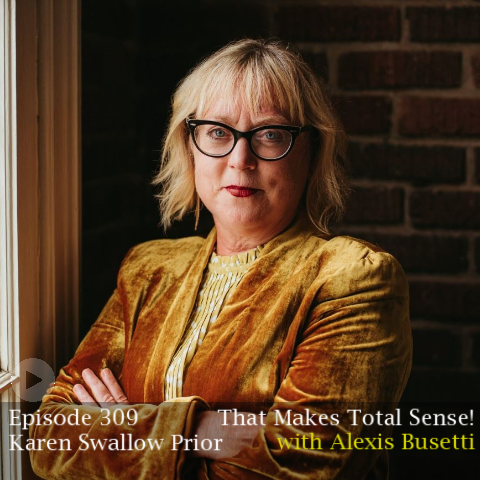
Karen, I am so, so thrilled to chat with you about your new book that I would say I was reading mostly at the pool this spring and summer.
[00:00:57] Speaker B: It must be warmer where you are than I am, because I don't even want to open my pool. It's so cold.
[00:01:02] Speaker A: I am telling you it is. Well, I'm in Houston, and I know you said you just got back from Dallas.
[00:01:08] Speaker B: Oh, that's right. Yeah.
[00:01:09] Speaker A: Even warmer in Houston generally.
It's rude, but I'm like, we're already in the armpit phase of Houston, where everything. It just kind of feels. That's so gross. It just kind of feels like an armpit. I mean, it's like humid and hot and sticky and gross. But being by the pool is kind of the only way we found to survive that in our 15 years here in Houston.
And it was just so wonderful. I got to go by myself yesterday, and so I was finishing up those last couple of chapters by myself by the pool, and it was wonderful.
The book that we're talking about is called you have a Finding your Vocation in the True, Good and Beautiful by Karen Swallow Pryor. And I was thinking, how do I describe this book without saying, this is so beautiful?
But it really is. It was just.
It was a wonderful reflection on something that I think, obviously so many people are chatting about. I'm coming to you as a geriatric millennial. And so I felt really seen in this book.
When I was reading it, I thought, oh, Karen has worked with a lot of people who look like me.
I felt really ye. I just felt really seen and ministered to while I was reading this. So thank you so much for putting this out there.
[00:02:29] Speaker B: Oh, that just is so encouraging. Thank you.
[00:02:33] Speaker A: I really would love to start. You start this book in a way that felt close to my heart because it's one of the reasons why I started the podcast. One of the things that was in my head when I started the podcast, which was when in my life, and especially in my faith life, I was kind of brought up to really.
To memorize and to know the right answers to Things.
And as my faith journey started evolving, I really started to begin to wonder, I wonder if maybe the answers aren't really the thing. Maybe the questions are more the thing. And what would happen in my own life as someone who is bent toward rule following and things like that? What if instead of searching for all these right kind of in quote answers, I started asking questions? And then maybe my questions would get better with time and experience and all those kinds of things. And so when you start this book by a book about calling with what if we're asking questions and hard questions, and you have a series of what if questions about calling that I was like, okay, I actually think I really like this because you say up front and, you know, spoiler for everyone. This is not a six steps to find your calling book.
This is about calling and vocation. And you really start by asking questions. So I want to ask you, why start there with more questions?
[00:04:17] Speaker B: Wow, that's. That's a good question. I'm trying to think back into my thinking process when I was drafting this book, and obviously the questions emerged in thinking about this topic and writing about it. But I would say really the best answer to that good question is this is actually my style of teaching as well. And this book is drawing on, as you've already hinted at, my decades of teaching millennials and Gen Z and so forth. But in teaching literature, really, the best way to get at what literature is doing is to ask students questions about the text, ask myself questions about the text. So that's really kind of a way that I go through life. And I think it's a way to approach some of the hardest questions that we have to face in life.
[00:05:08] Speaker A: Thanks. I think one of the things that struck me, and again, I think it's important to name that part of my social location as a millennial, because you, you talk so straightforwardly to us and kind of how we were raised to think about calling, vocation, work, career, those kinds of things. And the thread for me that I kind of hung on as I was reading this, and it's been something that I have been thinking about, but you framed it just enough differently that I really appreciated that. And that is this question of what if our calling, questions about our calling kind of get answered as we're journeying.
So there's all sorts of things about that, like things about our calling can change, you know, or things may not be related to work or career in the ways that we thought it was. You know, I think my generation, so many of us were grew up with this romanticized idea about calling and career. You know what, like what do you want to be when you grow up? Was the most common question probably asked of our elementary school aged selves. And the dream was like whatever you said in kindergarten was what you end up majoring in and that's what you end up doing until you retire at 65. You know, like that's kind of the dream. And, and, and you know, it sucks for you if you said you wanted to be a princess or a dinosaur, you know, when you were, or an astronaut when you were in kindergarten, you know, you may not get to be that T. Rex for the rest of your life, but we just romanticized that idea.
But as I sit now in my 40s, in now my third graduate school degree program, people are like, what are you going to do when you get done? Still the same question. I'm like, I don't really know. I'm figuring it out right now. Doesn't seem to be the right answer for some of that. I mean, I have some ideas. I'm not going in completely, but, but the thread that I hung onto was what if some of these questions get asked and answered as we're going.
So I'm wondering if you can unpack that a little bit, especially for those of us for whom that idea is foreign to the paradigm that we know when it comes to calling.
[00:07:43] Speaker B: Yeah, well, I'll start answering that with an example that kind of comes from a different generation, a much older generation, which again, much of this is generational in terms of our attitudes and expectations, which I do talk about a little bit in the book. But my late mother, who we lost last year at age 88, was a typical woman of her generation who, you know, married relatively young, had her children.
You know, we weren't, we were Christians, but we weren't fundamentalists. So she picked up odd jobs here and there and did that to help support the household. Nothing, you know, there was nothing strict about her not working, but her, her primary calling was home being a mother.
But she also, all of her years, she, even, even when she was in grade school, she literally went to a one room schoolhouse in Maine where we grew up. And she, she would help the teacher assigned her to help teach the younger students. And then later she just became a Sunday school teacher in whatever city that my mom and dad lived. She, she was in her 80s before she looked back, having never been trained as a teacher, only had a couple years of college at a, like at a two year college, looked back and said I was A teacher.
God called me to be a teacher. And she taught her whole life, and she never thought of it as a calling until she was in her 80s, and it was a calling. And so. But she grew up in a different generation where she wasn't necessarily thinking about that question as much as we are demanding people think about it now. And so that can still happen to us. We. We might go into it thinking we have to have the answer right away and we need to know the answer. But it's going to happen for many of us the same way. We're going to go through our lives and do different things than we expected to do, or it will look different than we thought it would look, or we will change things and we will look back and go, oh, that's what was going on. And so I think that is probably universal throughout human history, but we're just given a different set of expectations. So the answer, you know, the process might be the same, but our attitude toward is different because we've been given those different expectations.
[00:09:54] Speaker A: Yeah. That was one of my favorite examples that, that you shared in the book. And I'm like, it was. Wait, wait, I'm trying to think. It was her story, the one where she was still. Or was it a different one where she was still just sending things to children. Sunday school.
[00:10:10] Speaker B: That's what she ended up doing in her final years when she was too frail to go to the church building. She, she just found children in India and children in the family that she mailed lessons to. Yeah. All the way until the last few months of her life. Weeks. Really? Yeah.
[00:10:25] Speaker A: That's amazing. I just. And, and, and I love. Thank you for sharing that example, especially from your mother's life. I love it so much.
And it leads into one of the other things that I would love to listen to. A lecture series on this, I think.
So you share as much as you want, is why I'm saying that. But the connection between calling and work and thinking about your mother, who never had a formal job as a teacher, but that was her calling. And you share some stories in the books of animal lovers who have a job that's completely unrelated to any of that. But consider caring for animals as an example to be their call. But somewhere along the way, this has gotten conflated in ways that aren't necessarily always helpful.
[00:11:24] Speaker B: Yeah.
Again, being an English professor and a word person, I love to start with definitions. I do that in the book. I actually found some great definitions given by Elizabeth Gilbert, the writer. And so I cite some of her Definitions which are very helpful, but just to sort of back up our work, whether it's our job or our career or maybe our calling, the way that we provide for ourselves, whether outside the home or inside the home, it's just. It's just something we all have to do. We have to provide for ourselves.
And sometimes the way we provide for ourselves is through our calling.
Sometimes it's through just a job, sometimes it's through a job that becomes a career. And then maybe we feel like it's a calling. Sometimes it's through multiple jobs, sometimes it's by, you know. But we do our part by staying home and taking care of the people in the home. And that doesn't bring money in, but it still is providing. So there are all kinds of ways that we provide for ourselves and our families, and they don't necessarily overlap with calling or another topic that I talk about, which is passion. But it's a particularly modern and particularly American feature to. Well, you've already said how you grow up. Being asked, what are you going to do when you grow up? Or even I cite a report in the book where it's also particularly American to ask to. To meet people at a party or social event. And the first question be, what do you do?
We just, as Americans get so much of our identity in what we do and how we make money that it really does give a distorted sense of both calling and work.
And so those are the kinds of things I'm trying to. To unpack. If I were good at draw. I wish. I wish I were able to include in the book sort of Venn diagrams, because there can be. So there can be overlap and then there can be no overlap. One of my favorite recent memes that I've come across, which is very funny, I'm sure you can find it easily, if anyone wants to Google it, is the three circles.
What I'm now see, I won't remember what I'm good at, what the world needs and what makes money. And there's like three separate circles, no overlap, you know. And yeah, I mean, that's a pretty dire description. But, you know, it is the fact for many of us, for at least some of the time, if not all the time.
[00:13:56] Speaker A: Yeah, I.
When you said I was thinking of a completely different Venn diagram that one of my daughters told me about, something about a DJ and a pastor and something else. Anyway, that sounds.
[00:14:07] Speaker B: Oh, that sounds even better.
[00:14:09] Speaker A: Something about, you know, what do they say when they're up front? Anyway.
But no, I think that. I think that you're right. It's interesting because I have tried. Well, to think about that question. There's a Frasier episode a long time ago where Roz is dating a man who helps with the trash pickup in their city. And that's. The whole episode is about everyone asking for Frazier. They're all real snobby and, you know, what do you do? And she kind of has this, like, public fit about, why are we asking everyone what they do? This isn't what defines who someone is. And I've actually tried to change that for myself, which is like, I. Someone. I forget where I got this suggestion from. I heard someone say, what about asking someone, like, what's the most fun thing you've ever done? Or what's the most fun thing that's ever happened to you? And I asked that at a party where I didn't know anyone and got some super great stories, including someone who met Beyonce when they were teenagers, you know. Right. Super fun.
And then I was on the phone with a friend the other day who was telling me about his new girlfriend. And that's really what I wanted to say. Oh, what? What is she and what does she do? And instead, I caught myself and didn't ask a great question, but it was like, what does this season of life look like for her? You know, like some. Then that's real open. You know, we can. We can say a lot of things to that, but it's hard to.
To act in ways that are countercultural and really be intentional about not letting that part be the first thing and the last thing that we know about anybody. Part of that is because careers change, but also, as we've talked about a little bit Lise alluded to, our callings are probably going to change.
One of the things I thought of.
I'm so grateful for you. Talking about how we provide for ourselves in some way that's financially and sometimes it's in the home and providing for ourselves in different ways.
But, you know, I was thinking, I think you give the example of someone, you know, who is called to be a spouse, but when their spouse passes away, then that calling changes, that part of their calling changes. And while that feels very grim to say, it did serve as a very concrete example to me of how our calling shifts and changes and evolves throughout our lives based on seasons and relationships and community and what we learn and know and come to know about ourselves and about God and about the people around us. So, yeah, I'm really appreciative of that.
You mentioned passion and I would love for you to talk about passion a bit. This is where I annotated again. I don't think I've ever said the word millennial so many times in a conversation, but I'm feeling very millennial in this one. And I wrote when you. I would love for you to talk about the timing of this, in this etymology.
But I wrote in the book, millennials never stood a chance when it comes to this talk about passion. So can you talk more about. About passion specifically?
[00:17:46] Speaker B: Yeah. So I clearly one of my target audiences in writing this book was the millennials and younger the people that I have taught. Although that's not the, you know, I definitely have words for the middle aged people who, who are looking back, like myself.
But one of the central points I wanted to make in this book was to push back against the maxim pursue your passion or follow your passion.
And as it turns out in when I sat down and began to do research for this book, as it turns out, my gut on instinct against that turns out to be well supported in research. And I cite Cal Newport, who does a lot of work on work and calling and vocation. And he's the scientist, he can do all the research and cite all the data. I included some of it. But he actually, I was trying to be gentle and kind and in pushing against his advice, but he calls it dangerous because. And he actually cites research that shows that passion actually follows competence.
So when you become competent at something through the skills you have and cultivate. And then also importantly, he points out the time that you put in the, you know, sort of staying in a role or in a place for a while, then you become passionate about it. I'm really abbreviating his research, but just to show that, that it's out there. But I came to this conclusion long ago, teaching first high school students and then college students who would be so passionate about things. And I would, through my process of getting to know them and teach them, learn, either they were really not gifted in this area at all, or it was just, it was so unrealistic.
And I do admit in the book and give myself the name dream Squasher.
I admit I have been a bit of a dream squasher, but it is because there is a lack of reality oftentimes in these dreams.
And that lack of reality, again, I am not faulting young people or people of any generation, but we live in a world that throws up so many distorted images of what life looks like or success looks like or whatever career and work look like that our own Perceptions have been malformed. And so we have romantic, idealized images about what something, you know, a career or a job or success would looks like.
And in my own experience, I encountered this most often when I would have students, you know, 20 years old, coming into my office and saying, I want to be just like you. Tell me how to be like you. And I would say to the 20 year old over and over, well, if you want to be like me, you won't write your first book until you're 47.
And their jaws would drop to the floor like, oh, really? Because, you know, they obviously had mine writing it next year.
And so I go, you know, oftentimes we don't see all of the work and the foundation that has built to, for someone to be successful, but also that success, often for myself included, it comes a kind of a, on a, A not straight path. Like, I'm not necessarily doing the things that I thought I would do when I was in kindergarten or eighth grade or even in college. I found my way along the way, just like we talked about before.
And that's how you discover what you're good at, what the world needs from you and what your calling is.
[00:21:33] Speaker A: Okay, so you said eighth grade, so I have to say this.
In eighth grade, we took one of those like, what are you going to be when you grow up tests, you know, these aptitude little kind of personality tests. And I consciously knew, and I kind of wanted to see if I could skew my results to give me interior designer. Because at the time. Okay, Karen, don't laugh. Because at the time I was watching Designing Women, like, like so much Designing Women, and I was like, oh my goodness, this looks like so much fun. Okay, here's the deal. It did skew it. I was able to do it. So a, you know, interior designer, for me, I got the results. But B, I'm like, here's the thing, there's nothing about me that could actually be an interior designer. Like, please don't ask my husband how horrible I am with like, spatial stuff. How many times I'm like, I swear that couch will fit. And he's like, I swear that couch will not fit. It just takes a tape measure to let me tell you that there's. Or if it does, you won't be able to act, actually sit down, you know, all of these kinds of things. But anyway, what, what we want to be when we, when we grow up, in addition to the passion piece, as you were talking, I just kept thinking how many times we were told that we could be anything we wanted to be growing up. So you're talking about, you know, being a dream squasher, but praise God for dream squashers.
I mean, thank you.
I'm serious. I'm like, there really is, I think, something that can happen to some of us who believe that, and then we become disappointed, not just when things are hard, but when things are actually, like, outside of our abilities or giftedness. You know, I can use my physical limitations as an example. That's kind of easy for me to see and then also kind of laugh at. Like, I am not ever going to play in the WNBA. Like, I'm 5:3 and I suck at basketball. And to your point, I don't have a competence in it or a desire to work at it to gain a passion for being good at basketball or becoming good at basketball, even if the giftedness were in me, which I don't believe that it is.
But I'm wondering. It wasn't central to the book. But even just as a side note, those limitations, I think, are part of our journey when we're asking questions about our call.
You had an example in the book of talking to a girl who really wanted to be in nursing, I think it was, but who was not.
[00:24:13] Speaker B: She wanted to be an obgyn.
[00:24:14] Speaker A: There you go. That's what it was. OB gyn. But she wasn't great at math or science.
[00:24:20] Speaker B: She liked babies, I guess. So, yeah.
[00:24:22] Speaker A: Which is great.
[00:24:23] Speaker B: But yeah, yeah, yeah, that. That was. And that's going back. My goodness. It's going back probably 35 years. That was my first encounter. And I think I say that in the book. That was the first time. And she said that her mom told her she could be anything.
[00:24:38] Speaker A: That's right.
[00:24:38] Speaker B: And so there I was. I'm like, I don't want to contradict your mom, but I do want a reality check. And I don't remember how I navigated, but that. I remember that as the first time I heard that and that I can do anything. And by the way, if we were doing. If I were doing a multimedia work instead of a book, I would have linked to or pointed to you or included. So listeners can Google it now, that wonderful Saturday Night Live skit.
You can do anything.
Just look for it. It's really hilarious. It's making. It's making this point from a while back when that phrase became so popular and obviously is bad, but can I share? You hit on something that I want to expand on, if I may.
[00:25:19] Speaker A: Yeah, go for it.
[00:25:20] Speaker B: So you talked about how this idea that you can do anything and pursuing your passion, even if you're not good at, at it.
I mean it does two things. It prevents us from finding what probably is our true calling and giftedness. But it also leads to so much unnecessary disappointment and despair and disillusionment. That's what really I think does so much harm.
Because when we have expectations that are far too high for reality, we're going to be disappointed. But when our expectations are low, and I don't mean to say go around having low expectations, but in some sense, if our expectations are realistic and sober, they will be lower. And for me, and again, this is my personal story and maybe that's why I'm so passionate about this is. I mean I just grew up in a very humble home, middle, lower middle class parents, not academics. I loved books. I was very. Just a plain quiet girl of no remarkable anything.
And I just went to college and got a PhD, became a professor, became a writer.
I mean growing up in rural mean, you know, playing with horses and chickens.
I had no expectation or no vision for any of this. So to me it's all bonus, it's all gift, it's all grace. And I'm so thankful for it. I can't imagine what it would have been like if I had this sense of entitlement or expectation that was completely realistic in my. I was living my life in disappointment. I want to live, I want us and all of us to live our lives in gratitude and surprise and marvel at how much more we've been given than we ever expected to receive.
[00:27:20] Speaker A: Yeah, no, I appreciate that, Karen. I think that that's, I think that that's really great and I would prefer to have that instead of everywhere you're sharing, you're like, oh, I can do anything I want. Except for that, except for that, except for that. You know, it's these expectations, unrealistic expectations.
I heard someone say a long time ago it was about relationships, maybe marriage, that unrealistic expectations are just pre resentment basically.
But that stinks if you end up resenting yourself or your community, you know, for saying something that just really isn't, just really isn't realistic.
There are a couple places that I want to go next that you told a story of a friend who you described, I think as steady, not necessarily super outwardly passionate about one thing or another.
And I have to admit that when I read that paragraph, I thought about my husband and how I think you may even said this. The world just needs steady people like this.
What did you mean when you're describing Your friend as steady and how the world needs people like her.
[00:28:36] Speaker B: Yeah, so this was in the context of the Passion chapter. And again, this is a generational thing and it's, it's not only modern and not only American, but it's even worse in the church, if I can say that, like this idea that we have to be passionate, on fire about everything.
And so it was really in this context that my friend, who was a relatively new believer, was exposed. You know, kind of got exposed. Like you have to be passionate about this and on fire for this. Her nature is just, is steady and steadfast and persistent.
And I just remember her, it seemed to me like she was almost trying to artificially pump herself up and get her passions going and feel passionate about things that it's, it's actually okay to just, you know, to be, to be steady and quiet about.
We don't have to be all emotional about everything. And so, yeah, I don't know that I've ever had the conversation with her, but I think she's come to that realization, you know, many years later on her own.
But it was just something that I observed and it took me a while to figure out this, that, that this is what was happening is that the world was especially the church was saying you need to be passionate about this, that and the other thing. And she wasn't. And so she thought there was something wrong with her. Well, some of us are just, you know, even keeled people and the world needs more of those.
[00:29:58] Speaker A: Oh, that's 100% right.
I say that as one of those who's not necessarily that even killed, that we need the even killed ones.
Oh, I'm glad you said the church.
This is something that, this has a.
What you talked about in the church, specifically in this context that I'm about to bring up, has a long kind of personal history for me. And so it was good to read it and I'll share a little bit of it.
You talk about this idea, and I would say, especially prevalent in American evangelicalism, that church work is like the most noble kind of work. So ministry work. Church work is the most noble.
Way back, like way way back.
My husband and I were first married.
He had finished grad school, his first, his master's. And I was working and we were, we were looking for that church work. You know, we thought we're going to be foreign missionaries or, you know, whatever, and rejection just everywhere we turned.
And it was a very wild thing that I was not hearing very, very often or from very many places. But Again, my even keeled husband said to me one day, and it's like one of those, one of those memories that I can like pretty much see myself in the conversation where we were, and he's a geologist and he said, God has made me to be a really good scientist.
What if I'm supposed to work and be a really good scientist?
And it was like one of those mind blowing situations and conversations that ended up, it was at a decision making point for us. And so he continued on and pursued his PhD and he's been working as a good scientist for 15 years plus now he continues to be a very good scientist.
And it was paradigm shifting for me as someone who grew up with this, you know, you can do anything you want to do and blah, blah, blah, but being in ministry is the highest calling.
But I would also say, and there's, we can, we can side note it or we can centralize it, whatever you want to do, Karen. But I think also included in that, in some church cultures, and I speak this as a woman, there's a lot to be said about high callings in the context of church that isn't necessarily ministerial work. So I have a lot of single friends who have struggled in church contexts where marriage is noted as the highest calling of an adult human.
For women who have, you know, been in church context where the highest calling is as a wife and a mother, you know, and then for men, recognizing that not all men will be pastors, where the highest calling is as primary breadwinner, essentially.
And going back to that, how do we provide, you know, for ourselves and for the people around us who depend on us. So anyway, I was glad to see you dispute that and I will let you elaborate on that.
Again, this is one of those, like I could sit in 100 lectures. So take as much time as you want talking about that. But I was thrilled to see it in the, in your book.
[00:33:42] Speaker B: Well, if I do a revised and expanded edition of this book, I will include your husband's story because that is right to the point. And it, I mean, I have to shake my head because this kind of thinking is so prominent in evangelicalism. And yet what was the Protestant Reformation about? Well, yes, it was about, you know, reforming certain doctrines, but a chief among those doctrines was the doctrine of vocation.
And it was the whole idea that there is no higher or more sacred calling. All callings within or without the church are designed by God in helping, in serving, fulfilling our call. All of our calls to serve our neighbors, whether in the church or out of the church in all of the places. And so it just boggles my mind that, that we have somehow gone back or lost that important, important teaching of the Reformation. And, and I still, you know, I cited in the book, the most recent high profile instance of my hearing that again from a pastor that, you know, the pastor is the highest calling. And, and again, that, that, that wrong teaching has so many ripple effects because as you said, well, if women can't be pastors, well, what are they supposed to do? And if a man isn't a pastor, what is he supposed to do? And it's this whole, it sends us all off trying to figure out what is the highest calling when they're really the only highest calling for a Christian is to follow Christ. Everything else is to fall into place based on all of the individual things about how he made us and gifted us and where he's, he's placed us. And, and there is no higher calling. And there is beyond that. And there is no foreordained blueprint for each of us to follow in church life, family life, community life.
We just call to be faithful and we'll find our, our callings.
[00:35:52] Speaker A: I mean, now, Karen, you, I'm jokingly saying, I hope you, I hope you're prepared to defend this, but you also say, and I loved it, I loved it, I loved it, that God has no perfect plan for your life.
Karen.
[00:36:08] Speaker B: Yes. Well, I do cite a little book that changed my, my thinking on this radically when I first read it by Gary Friesen. It's an old classic book.
I cite that, and I think it's 30 or 40 years old. It's called Decision Making in the Will of God. And he, in a very, very pedantic, boring way in the book, and I, you know, I lays out scripture by scripture, topic by topic, how outside of the revealed word of God in the Bible, there is no other blueprint or will that he has for us. So if we're deciding between Job A and Job B, if both fall within the parameters of God's Word, they are equally fine.
Same with spouses and houses and all those things. What we need in order to make those decisions is wisdom and discernment. And that's where it does get hard. But God isn't going to bless us more because we make this choice or that choice.
We simply need to be wise. There'll be consequences, obviously, if we make a less wise decision or we, you know, we choose one job and that company closes. I mean, that's not, that's not, you know, those aren't things that God is going to protect us from. That's where wisdom and comes in and a fallen world comes in.
But he can use it all and will use it all as we pursue him in our primary calling, which is what that is. And so in a way, that idea that there is, you know, we're going to fall out of God's perfect plan. That's a myth.
That's freeing. That's very freeing. But it's also gives us some responsibility. It's not a matter of finding the detailed plan. It's a matter of developing wisdom and maturity and surrounding ourselves with wise people that we can seek for guidance and learning from circumstances and learning from past experiences and holding it all with an open hand. I think as we make our way.
[00:38:14] Speaker A: Jumping off of that.
Thank you for that. I'm joking, but I agree.
There is no perfect blueprint.
It's hard though. I mean, it can make things very difficult walking inside of that paradigm. I think for me it caused a lot of fear.
What if I make a wrong turn?
That can be scary and. But there's a lot of freedom that opens up when we think about things differently and that. I kind of want to jump off of that into the second part of the title of your book that, that you name as the Transcendentals.
So I just want to say for the record, the first half of the book where we're talking about kind of where this conversation has been so far, calling and ways of thinking about this and vocation and all of that felt very like very necessary work for me. And then by the time I got to your sections on the true, the good and the beautiful, that felt refreshing, like it kind of filled in some of the spaces that were remaining after I read the first part. But tell us what the transcendentals are and maybe their relationship to one another and our relationship with them.
[00:39:46] Speaker B: Yeah. So my basic argument in the book, which is, as far as I know, a novel argument, when I write a book, I'm exploring and examining for myself. And so here in this book, you have me drafting a life thesis. I guess.
I hope it. I hope it works.
Now it. My argument is that, you know, while I don't have a perfect blueprint for your life and God doesn't have one either, and while I don't have six easy steps to finding your calling, I do believe that if you pursue the true, the good and the beautiful in all that you do, you will find your calling.
Now, that probably doesn't sound very helpful either. So it sounds Good, maybe, but what does that, that mean? Okay, so I do try to unpack it a little. And. And of course, the true, the good and the beautiful. Truth, goodness and beauty are talked about a lot in philosophy and art.
And so it might seem weird to, like, how do we apply that to work and calling? Well, that's what I try to do.
And the transit, they're called the transcendentals, and they are ideals. And the way the philosophers talk about them, from ancient philosophy to modern, is that. That no one has to defend or justify or rationalize how good they are. Like, nobody would say truth, goodness, and beauty are bad. Like, we don't have to justify them. We all want everything to be good, true, and beautiful, whether it's a person, a job, a situation, or a chair. Like a chair needs to. If we, if we have a chair, we want it to be a true chair, and we want it to do its work well. We want it to be good. And if it can be beautiful, that. That helps too.
So everything that exists, we would want to be good, true, and beautiful. And so that would be true of our, Our work as well. And so I devote a chapter to each of those, those transcendentals and talk about what they mean sort of in the larger sphere, and then try to apply them to what that might look like in, in our work lives and in our. In and in finding our vocation.
And I think probably the, The.
The. The biggest cumulative effect that I'm trying to achieve when I look at all three is to show that you can be doing the most ordinary, unseen thing.
And if you are doing it in truth, goodness, and beauty, that is everything.
We've replaced truth, goodness, and beauty with being great or being significant or doing big things, when in fact we should just be pursuing these, these things because they reflect God's character and his nature. They come from God and they lead us to God. When we pursue those things, we're actually pursuing God himself.
[00:42:56] Speaker A: So one of the things that this section did for me on that note was affirm some of the ways that I have been. I would say that I have been exploring, but also ways that I have been learning and am being trained in some of my, like, seminary education, for example, to connect with God.
You know, when I was growing up, there was kind of one way to connect with God.
[00:43:30] Speaker B: It was that quiet time.
[00:43:32] Speaker A: Well, you know, you get a gold star.
It was, you know, it was like just 15 minutes a day, you know, with this devotional and with this scripture.
And I'm not, and I'M not knocking a daily scripture reading and a quote from, you know, quiet time with God.
But I think I, I missed, you know, as an example how the beauty in nature can connect us with God.
You talk about in the book how we're meaning making creatures and that is like I, I live inside of the city, but things are blooming right now and my, my kids will sometimes mock me because I'll just see, I'll see a flower, you know, and just stop. Oh my goodness. You know, and I'm not, I'm the opposite. I'm not like you. I'm not a gardener. I just. There's so much of me that wishes I was, but I just don't think I will ever have the competence and therefore the passion to do, to do that.
But I'm just, you know, there are moments where, and maybe it's as I age especially, but I'm like, it just blows my mind, you know, and I think about the beauty, but then it connects me to God. God as creator, God as lover of beautiful things, but also God as beautiful, you know, God as good, you know, even God as true. Like this thing came up from the earth, you know, from the soil and the way that it has as far back as we, as we know.
And there is just something magnificent about seeing, you know, those, those things, those beautiful things and good things and true things that connect us with God and help us to make meaning of, of of ourselves and our lives and what we see around us.
You're a literature person. I don't know if you would agree with my kids assessment but when I, when things like that happen for me I have, I have teenagers and preteens and when things like that have perfectly. Oh, oh my goodness, look at this flower. My, my kids will say mom, you're such a Hufflepuff.
[00:45:57] Speaker B: I think that's Harry Potter, right?
[00:45:59] Speaker A: It is Harry Potter, but you know, they're. Oh, you're such a hufflepuff. But anyway, so I think that that, that was helpful for me to think about that connection with, with God and, and with ourselves.
I'm wondering if you can talk a little bit about how our search for those things in what we do and really and in how we do it. That was one of the things that I was, was, was holding on to. Is, is not just what we do but how we do it and, and how that can help connect us to more aspects of our calling.
[00:46:46] Speaker B: Yeah, I mean I start with the true in this section of the book and one of the things that I say as Christians, especially as evangelicals, if that's what you are, we're really good about talking about truth, right? We, we love the truth. And again, that goes back to, you know, the quiet time and studying God's word and knowing what's true and fighting the post truth era and so forth. And, and so we're good at that. You know, I mean, I even say one of my favorite sayings is, comes from Augustine's all truth is God's truth. I do love that.
But if, if it's, if we care, care that much about truth, then we ought also care as much about goodness and beauty. And so I think obviously truth when it comes to calling has to do with integrity, being true to your work, being truthful in your work. I mean, moral truth, that, that's important. It also has to do with some things we talked about earlier, like, like knowing being true in terms of how you assess yourself, your strengths and your weaknesses, like, you're not going to be in the wnba. That's a good true thing to recognize.
It also has to do with being true about the nature of the work. And we've talked about that. Like, if, if you're really not good at math and science, you may not be able to graduate from med school. Maybe you can. I don't. But probably not.
So true about yourself, true about the world, true about the work, true in your work.
Those are important. And I think most, you know, most of the people in my audience sort of get that. Then we get to goodness and goodness. Of course, you know, we think of moral goodness, but there's also just goodness in the sense of like, do doing good work well. Like, oftentimes we think, well, if we're doing, if we're doing work that is of that higher calling, like the ministry pastor in the church that's already good, it's good enough because the work itself is good, but we put perhaps less emphasis on how the work is done. And so that, you know, a supermarket clerk who does her work very well is doing good work.
And I cite, I think it's in this chapter where I cite Dorothy. I might have well just made the whole book, Dorothy Sayers, because she has so much to say about work and she's. And I, and she says that before you can call anything Christian work, it needs to be done well. Like, if we are Christians, we need to do our work well. And not just ministry work, not just church work, no matter what it, what it is.
And because, you know, God made the world good and all of the good that we can do in it is a reflection of Him. He invites us to be part of his good work. And that involves a lot more than church work.
But the part. The last chapter, which to me is. Is. Is my favorite, and I saved it for last because it's something. Again, as modern American Christians, we tend to think, especially if we're from the Protestant tradition, we don't think a lot about beauty, beauty in its, you know, most aesthetic sense when it comes to art and music and literature, let alone the beautiful in our work. But I draw on Aquinas's famous properties of beauty, which are proportion, integrity and luminosity.
And of course, he's, you know, that's sort of like a how we would assess art.
But our lives and our work are forms of art as well. And so if we use that kind of rubric to look at the work that we're doing and we think about how we can bring integrity to our work and not just honesty, but wholeness, like a wholeness our. Bring our whole selves to all the things that we do in life, to all the callings that we have, because we always have more than one.
And then we can bring proportion, like by giving each part, each of the callings that we have, what it needs, what is due in that particular season or that time. Sometimes we're going to need to give more to family. Sometimes we're going to need to give more to our job. Sometimes we're going to need to give more to our citizenship or to our neighbors, but it's about being proportionate. And then when we think about luminosity or illumination, all the work that we do should bring light to the world, just as God said when he made it, made the world, let there be light. We can, through our work, no matter what kind of work it is, bring more light to the world so that people can see him through our work. And that is what is truly beautiful. And that is how pursuing those things is how I think we can find and more importantly, fulfill our callings.
[00:51:40] Speaker A: Karen, the luminosity portion of that last chapter was so meaningful for me.
I think it was. Was it another story about your mom who would call the people when she needed help with things? You know, and the tech guys would answer on the other end. And it's like they provided luminosity, they lumen things for her. And, you know, probably didn't think about their jobs necessarily, as some of this, you know, what this high calling kind of in quotes that we've talked about, but what a Beautiful and good and true thing they were doing, what beautiful and true and good work they were doing by illuminating these things for someone who needed that in that time and in that moment and in that space.
I'm going to say this one. This one is. This one is for my husband. I almost never do this, but this one's for Seth. When you were talking about doing things well, there is one of our favorite episodes of the Simpsons where there's a character whose name in the show is Sherry bobbins.
And she comes in, of course, as a. As a mockery of Mary Poppins. And she teaches all of the kids in the Simpsons household how to do things in the half a star star way.
So all of the work is not. Is not done well.
It is not good work. It is all halfway, halfway work. And there's songs and everything else.
[00:53:20] Speaker B: Oh, my.
Once in a while, there may be a time and place for that. Proportion allows for that. But not general, not generally.
[00:53:28] Speaker A: We're not doing things the Sherry bobbins way, but we're doing things the beautiful and good and true way.
Karen, to end us, I am going. I'm going to ask a really selfish question that really the whole conversation has been an answer to honestly. But you tell a lot of stories in the book of being in close proximity to someone, whether it's for a moment or for a long time. I'm thinking of office hours. You're sitting with someone, and I'm saying, you're sitting with someone who looks like me. You know, you're sitting with a millennial who, you know, went to high school in the 90s or, you know, and. And this person was told their whole lives. These things that we've talked about. You can do anything you want.
Maybe this person grew up in Christian America where they were told, what is the high calling?
And I'm wondering if you met them at a.
At a book event for this.
What.
What might you share with them as an encouragement and I mean, even as a challenge. Some of these things were challenging for me as I read them, but as an encouragement as they are in maybe this part of their journey. Lots of folks may be looking at their middle career, their second career kind of things, or their. Maybe moms who are parents who are going back to work or someone who has been laid off or, you know, any of these things where they're like this. I'm at a journey, a place in the journey of my calling that I did not expect to be at 40 something.
What might you share with that person?
[00:55:15] Speaker B: Well, I have been in that place at 50 something so I definitely understand and I I would share that that God uses it all. I'm in his perfect economy. Nothing is wasted.
And that we need to hold what we've done in the past with an open hand just as we need to put out an open hand for what he might do in the future.
And I think it's just helpful. I think again, we're combating so much in our culture that gives us wrong ideas that we just need to separate out what it is that can make the money. We need to live to survive versus the things we do because because we have a passion for them or the things that we do because there's a need that we can fulfill. And that is part of what we're all called to do is to serve our neighbors through our work and to let the you know, if we're pursuing truth, goodness and beauty and ultimately pursuing the Lord, to let him lead us.
And you know, my life verse is the the mind of man plans his way, but the Lord directs His steps.
We can plan and scheme and that's good, but we need to be sure that it is the Lord who is directing our steps because he will take us places that are far better than the ones that we would go to. And we just have to trust Him.
He will do it.
[00:56:54] Speaker A: Amen to that. Thank you so much for being with me.
This book releases on August 5th, so it's available for pre order now and the link to where listeners can find that will be in the Show Notes. Again, it's called you have a Finding your Vocation in the True Good and Beautiful by Karen Swallow Prior. Thank you so much Karen for being with me today.
[00:57:18] Speaker B: Thank you so much for having me.
[00:57:20] Speaker A: The links for all the resources mentioned in today's episode can be found in the Show Notes music and podcast production by Seth Buscetti. Be sure to give us a review on itunes and subscribe at your favorite podcast listening app. You can also Visit
[email protected].
[00:57:52] Speaker B: Sam.