Episode Transcript
Speaker 2 00:00:07 Welcome to that makes total sense. A podcast dedicated to exploring God's generosity and justice. I'm Alexis. Boetti a Christian aiming to ask good questions and encouraging you to do the same. Every one of us is wired by God to live out generosity and justice, but the how sometimes alludes us that makes total sense is a way for us to get together. Posture ourselves as learners and challenge one another to practice generosity and justice in a tangible way every day.
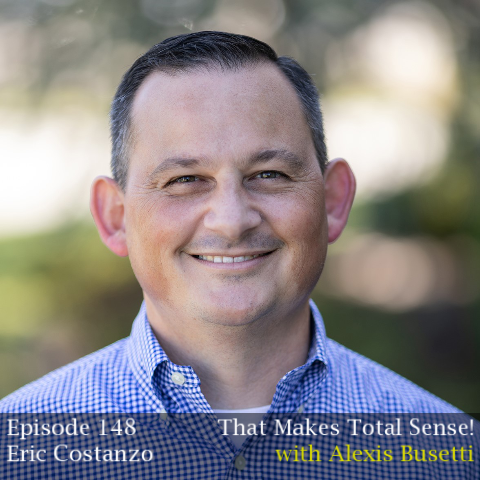
Speaker 0 00:00:39 Hey everybody. I am so excited to be here with Eric Costanzo, who is the co-author of a brand new book. In fact, this book is so brand new. I don't even have my hands on a copy of it as we are recording. Um, but it is called inable how marginalized kingdom voices can help save the American church. Welcome Eric. So glad to have you on.
Speaker 3 00:01:05 Thank you. I'm glad to be here, Alexis. And we did not intentionally give a title to our book. That's such a hard word to pronounce for.
Speaker 0 00:01:12 Oh, did I mess it up already? I probably did. <laugh>
Speaker 3 00:01:15 No, no. I just like everybody pauses. Like it's inalienable. There's a lot of people jumbled up there, but uh, but thank you for having me on and talking about our book.
Speaker 0 00:01:26 Yeah, it's actually really funny cuz I, I told you a few of my kids are home today and so I, I don't have a physical copy, but when, um, some of my kids were saying, cuz you know, I'm trying to get everyone situated. I don't know how that looks in your house. We each have a lot of kids, we, as we discussed pre-recording and so I said, I'm about to hop on a podcast. And one of them said, is it about a book that you were reading? And I said, yes. And then I heard one of them scatter off and say, was it the one about the aliens? And then <laugh> um, yes, <laugh> and then left. And I didn't, I didn't confirm or deny. So you know, what, what happens in the, in the music room is gonna stay in the music room here. I didn't, I didn't confirm or deny the alien, uh, <laugh> book.
Speaker 3 00:02:07 Well, a book on aliens would probably be far more interesting to them, but hopefully for us, we, uh, adult adults working in the church, this one is, is interesting too.
Speaker 0 00:02:19 No, this is gonna be fabulous. So I have like I'm you may hear me, you know, moving my papers around because I was reading this on, um, on PDF. And so I've got like different pages of notes and different spots as I was, as I was going through it. But um, with me that's always a good sign. This was fabulous. Um, you co-wrote this with, um, Matt Sorens who has been on the show before and I'll link his episode and also Daniel Yang. And I wanna say not the hard word to say at the beginning, but the subtitle of this book, how marginalized kingdom voices can help save the American church. So Matt is in the nonprofit world, um, Daniel, and you are both pastors. And I'm curious because this sounds, especially this last part to save the American church, I'm imagining that there would be people who might raise their eyebrows at that and say, I don't really know what you mean. <laugh> save the American church. And so I'm so glad that that's where you guys started in the book. So I feel like that's a really good place for us to start in this conversation as well. So pastor, what do you mean save the American church?
Speaker 3 00:03:35 That's a great place to start and a great question because yeah, people might ask that on both sides, they might be like, why does the American church need saving? Why is everybody so critical of us? What, you know, what's so bad and you know, even, even things this week, we could, we could start listing some reasons why people are critical of American churches and Christians, or there's the other side. That's like burn it all down. You know why, if it's gonna, if it's dying, let it die. And then maybe in its place, something will be born. That is a little more faithful to the new Testament church or not. So, uh, riddled with the, the idols and things we deal with in, in the book. So we believe that it was important for us to write this book with a hopeful tone, which somebody who reads the first six or seven paragraphs might not think that's gonna be the case.
Speaker 3 00:04:26 They might start off and think, okay, this is another book that's gonna just beat up even evangelicals for the 2016 election and things past that. And you know, we felt like we needed to address some of those things up front because there, there are a lot of issues and we use the illustration of the ship is sinking in some ways. And, and as a part of the illustration, we say part of our goal in this book is to stop drilling holes inside the ship that the church has been doing to itself. And we said, you know, if the ship is sinking, it would be a good decision to stop drilling holes inside the ship and continuing to put more holes in the bottom as we've been doing. And so we list out those things up front, but again, we want to take a hopeful turn and say, we do believe the American church still has some really faithful elements that are worth saving.
Speaker 3 00:05:17 We believe the immigrant church, which is inside the American church really has a lot to offer us and we want to, we are still insiders. And so we want to take a hopeful point, uh, or, or hopeful approach where we're not trying to burn it down in the book and none of us have jumped off the ship to this point. Now I don't think the three of us are willing to ride the ship to the bottom, but you know, I am a pastor and my church is a, uh, an American evangelical church and a Southern Baptist church. And I see a lot of wonderful things here that are absolutely worth saving. In fact, they're not really dying here, but we are a part of the larger body of the American church. And we're a part of a convention of churches as Baptist. So anything that happens in any one of those churches, it affects us. And so I, we, we see reasons why the American church still has some very hopeful elements left. And in our book, I feel like we talked to a lot of very faithful American Christians or immigrant Christians who are here in the United States that hopefully will continue to move maybe from the margins of the Christian sector, into the center and be able to lead us as we, we try to address some of these things.
Speaker 0 00:06:36 Yeah. I, the picture that stands out in my mind, um, the, the word picture, as you were talking about the ship was, I, I don't think I have it marked, but there was a place where there was some, uh, saying right of someone in two people in a, in a ship, in a boat and someone's drilling holes underneath themselves, like saying, what, what does it matter to you? <laugh>, I'm just, I'm just drilling holes right here. And you're like, oh my goodness. Like, in some ways that feels like what it's happening, you know, like, I, I, I am hearing you and thankful for the faithfulness that you guys have encountered and at the same time, thankful for your, um, you know, uh, helping us see that they're that there, that there are holes that we just can't ignore. Right. We can't say well, because it's, it's going well in my neighborhood or it's going well in my church. Um, then we can't ignore kind of the broader, larger picture. We can take those as glimers of hope as, um, uh, places to emulate. Right? What, um, what is working what's what's going well, the relationships that are growing and things like that. And at the same time, pay attention to the drills, the, the holes that are being drilled underneath our neighbors.
Speaker 3 00:07:40 Absolutely. Yeah. We, we, when we use that illustration of the sinking ship, we, we quote a rabbi parable, a short little parable about, you know, why are you drilling holes in the ship? Why does it matter to you? I'm just drilling underneath where I'm sitting and well, don't you realize you're about to flood the ship for all of us. And that's a, that's a, an important, you know, way for us to consider how, yeah. Our individual choices and decisions matter, but in the community of faith, they're all inter interdependent and interrelated and the things we do affect everyone else in the church.
Speaker 0 00:08:11 Yeah. Um, so I feel like, you know, by the time this comes out, it may be slightly old news, but I will say we're recording this at the, um, at the end of may. And you mentioned being a part of the Southern Baptist convention. I grew up Southern Baptist convention. So, so here in that, when I say that like 18 years, right. In a Southern Baptist convention church, um, my <laugh>, my dad's parents have both passed away now, but I used to very affectionately describe them. Um, as the whitest, most Southern Baptist people you would ever meet in your life, um, you know, which included lots of really great things too about, you know, hospitable and, you know, all of this kind of stuff. But when we, when we talk about looking at what's going on in the larger ship, I would like to hear your perspective because, um, some, there are some people going, like you said, there are some people who may be in the burn, it all down camp going, gosh, why is this news?
Speaker 0 00:09:04 You know, and there are some people who maybe are mainline Protestants or not a part of the convention, or this is not a familiar thing to them to understand, to, to, to kind of wonder again, why is this news? But the SBC is the largest Protestant denomination in the country. Um, or at least it, it was, I think it has been for a long time. And so to pay attention to what's going on inside of the SBC, um, is important. Not because it's necessarily going on everywhere in the same ways, but because it's a, it's a pretty big chunk of the, um, of the pie of the American church. Um, and there are lots of faithful, as you mentioned, churches and pastors and, and representatives inside of the SVC. And there have also been consistently a lot of problems. So a major report came out this week, um, that you used your seminary, uh, speed reading skills to <laugh> to get through. So, well, I mean, how would you, I mean, I'm just, I'm just kind of curious how, how would you comment on that kind of inside the, the context of this discussion of, of this, this might be a place where I would, I would certainly look and say, yeah, the American church that needs to be saved what's happening in the SBC right now is a pretty good, I don't know, maybe example or evidence of, of, of something that we might cite.
Speaker 3 00:10:20 Well, as a pastor of the, of an SBC church here in my city, in Tulsa, and we're, we're a, a prominent church here in Tulsa. If we were in Texas, we'd be a medium size church, but in Oklahoma, <laugh> little bit larger, not megachurch, but a little bit larger. And we, um, so we get often, you know, interview requests when any news happens like this. And, uh, I've, I, I prepared something in advance cause I knew those were gonna come. And the word I used after reading the report is that I'm mortified. Mm. I wish I could say I was surprised, but I'm, I, you know, we've known that these problems have existed. There's been, uh, reporting on it. That's been very well done and, and needed and things that this report revealed, which we a, as a part of the annual meeting last year voted to make sure that it was released in full and not redacted information.
Speaker 3 00:11:15 And, you know, it needed to come out, but it's not pretty, it's the opposite of that. It's sinful, it's evil, it's shameful. And unfortunately, uh, far too many of our pastors and entities, uh, are, are NA are mentioned by name. Mm. You know, and it's, it's something that, where, where we deal with in inalienable, there has to be some acknowledgement by the American church. In this case, the Southern Baptist church convention of churches that we have to repent of this corporately. You know, we get so focused on our individual rights and individual decisions we're supposed to be making and, you know, owning our own our own life and, and making our own path and, and, you know, personal repentance. And that's very important. Some of those are more American values than biblical values maybe, but the Bible has such consistent corporate repentance and corporate prayer.
Speaker 3 00:12:20 Uh, I just preached through Lamentations for L not the most, uh, not the most, uh, positive sermon series I've ever done, but it was very meaningful us meaningful for us coming, uh, at here after two years of a pandemic to, to do some lament corporately. So often in that short book of the Bible that people pray, God, we have sinned. Mm. Or Jeremiah is speaking. The prophet is speaking. Lord, we have sinned. He even says things like, you know, those who are dead and gone, they send against you we're paying the consequences for their sin, but there there's this biblical acknowledgement of, you know, people like people in, uh, uh, in the American evangelical world often say things like, why should we apologize? Mm-hmm <affirmative> for things we didn't do, or people who, who are long gone did because the Bible gives us some patterns for that corporate repentance to say, yeah, we, we didn't do that personally, but our ancestors did, or our four bears did.
Speaker 3 00:13:22 And we're all a part of the same body. We're all a part of the same family. And we all have the same sinful tendencies in our hearts. And so we need to say, as Baptists, we are all to blame. We, we cannot point the finger here at the liberal media for calling it out. Or, you know, I'm, I'm saying that in jest, but you hear those things. We can't say, uh, oh, we're being persecuted. You know, we have nowhere to look, but inward, we have nowhere here to say that the blame should be placed except for on our own leaders and pastors who were supposed to be shepherds and protective shepherds and have failed to, to model the good, the great, she, the, the good shepherd and have been, we we've really been harmful to our sheep, to, to the Lord's sheep, I should say.
Speaker 3 00:14:15 So it's, it's terrible. And, you know, I want to be one of those pastors and leaders who acknowledges though, none of those things happened in my own church. We are a convention of churches. And we, we were being told about these things. And, and especially some of our key leaders were being told about these things. We're, we're seeing now for over two decades and they chose to sweep it under the rug to protect the church, so to speak and look at how that if you're not protecting the sheep, you're not protecting the church. And it's all going to come to light at some point. And that's where we are today.
Speaker 0 00:14:53 Wow. Thank you, Eric, for, um, for talking about that, because it is, it's really difficult. That's a, that's a really, really difficult, um, subject. It's a really difficult, um, gosh kind of phenomenon that's been happening. And so I just appreciate you taking time to thoughtfully, um, kind of walk us through that from your perspective. And yeah, and I, I agree. Um, I agree wholeheartedly with, with what you said and, and, you know, you mentioned, thankfully you mentioned, uh, you and your co-authors mentioned a lot of those, um, theological concepts in the book right. Of, of corporate, uh, repentance and corporate, uh, lament. And, uh, that those things are very biblical. And, and honestly, I feel like the whole book it is written with, um, with a hope that the ship doesn't have to sink. Um, but it also, just, as you talked about there, it, it is, it is, um, how am I, how am I gonna say this?
Speaker 0 00:15:58 I'm trying to think it it's, it's a, I feel like it's an honest introspection too, right? Like this book, doesn't say this, this is the American church has to be saved from everyone else. Who's attacking us. <laugh> this is like, this has to be saved from the, from the, maybe the decay or the things that we've allowed to happen, um, to ourselves. This is, this has happened on our watch. This has happened on our ancestors' watch. And, um, and we have a, a corporate responsibility to decide whether or not we wanna plug up these holes. Right. Um, and, and move forward, seeking the Lord, like those biblical examples we have of, um, those moments of corporate repentance and C corporate limit. And so I appreciate you, um, talking through that,
Speaker 3 00:16:43 And you said that, well, those are, those are some important themes of, of the book that we believe a lot of our global brothers and sisters model, that they, they live in a much more of an inter interdependent kind of community. And so if their sin inside the church, they own it all together. They lament as a, as a, an entire church or a community. And they, you know, they, they go out and, and live amongst the people in that kind of community, which is a little more of that culture in certain places in the majority world than it is in America. But I think we have strengths to bring to them because our, our focus on individualism can be idolatry, but it can also be a, you know, a good example of accountability. And sometimes maybe our global churches would say, we don't, we, we need to learn a little bit better about how to keep our, our folks accountable. You know, like our pastors are burning the candle at all ends, and we need to remember to, to, they need to be accountable to their family, you know, and things like that. So we could work together in partnership, if we would be willing to widen our, our range of voices that influence our lives.
Speaker 0 00:17:51 Yeah. I'm glad you went there because, um, one of the first places that I wanted to ask you to touch on specifically, so I'll say, you know, part of the book, the way this is written, it's really written beautifully, um, with a, we, uh, pronoun throughout the book and, and, um, and that that's addressed early on. Um, but there are also a few places where each of you as authors, um, talks to a specific, uh, circumstance or story that you've had in your life that illustrates whatever the point is that you're making in the chapter. And one of the first ones was, uh, was from you, if I'm remembering correctly on, um, your experience at Amsterdam 2000, was that, was that yours? I'm hoping that you can, uh, elaborate a little bit on that because I, in my mind, I get that you were, you were young, right? Like in college or something when, when that, uh, when that event happened. And so I'd love to hear what your experience was like, and then how you feel like that has shaped, you know, your ministry and how you're viewing this partnership, um, with global Christians as you've grown up in your ministry.
Speaker 3 00:18:53 Yes. I was a much younger man. Then thank you for pointing that out. I was,
Speaker 0 00:18:57 I think we're about the same age. I kind of did the math in my head when I <laugh>, when I read that part of the book.
Speaker 3 00:19:03 Good. Well, um, to some people were, were still young to some people were ancient that's right. I, uh, I was going into my senior year of college and it was this amazing invitation. I got to represent my university at Amsterdam 2000, which was Billy Graham's last ecumenical conference that he participated in. And, you know, back in those days, I, I just thought, oh, I'm, I feel so honored to be invited to a Billy Graham sponsored thing. And what ended up being was this incredible conference of, well, over 120 countries represented and all believers and all church leaders or students, and, you know, I'm, I'm from Oklahoma. I had traveled a little bit, but that was my first time ever leaving the United States. And I had never seen anything like the procession of all the nations that walked in, that came in, in the, in the opening worship, gathering, waving flags, many of them wearing traditional dress.
Speaker 3 00:20:08 And we all sang how great thou art, but it wasn't in English. It was in every language in the room. And it was, I, I mean, I was just a puddle. I mean, I've never, and I'm not a big crier. I just, I just couldn't believe that. And I'd never seen anything like it. And it felt a lot like, you know, every tribe, tongue in nation, Kathryn before the Lord. And I just remember thinking, I, this is, this is what I want. This is the church that I wanted to know. I didn't realize I'd heard or read, but I didn't realize this is what it was like. And, and I felt so underequipped, I felt like I, I knew nothing. And the, um, the, the whole just multicultural multiethnic element of the church also made me realize at that point in my life, how few people had ever I'd ever had teach me who were not white American people. And, uh, that was huge. You know, I started to seek out more educational opportunities from people who came from a much different background than me, and, and have been very enriched by that.
Speaker 0 00:21:20 Yeah. Um, I love that you guys, um, point that out in the book, it's not just something that you're saying here. It's, it's a, it's actually a point in one of the chapters. And you mentioned, um, you mentioned pastor Daniel Hill by name, who, um, has been on the podcast as well. He is pastor in my, um, denomination and he, um, kind of had an, a, a little awakening of sorts and realizing, um, exactly what you had just said. How many, how much of his formation had happened by white men, Christian men in America. And, um, you know, that goes into a whole lot of other, you know, a whole lot of other things like, uh, I think there was a stat in, in the book, even among multi-ethnic multicultural churches, only something like, I didn't jot it down. Only something like 16% are, are led by black pastors.
Speaker 0 00:22:14 Um, you know, so, and the vast majority are led by white pastors. And so, uh, you talk about Charlie dates, I think in that situation saying if, if we, no, not, not that he has anything against the multicultural church in general, but the fear that if that took over that the black church disappearing would be detrimental to black, uh, parishioners because of that fact that there that's where the black pastors are. So he makes the invitation, if you want to be in a multicultural church, come to our church, right? Sit under preaching, listen to sing, uh, music led by black ministers and make this a multiethnic multicultural church. And I just have to, I kind of have to throw that out there. My parents actually did that. Um, a few years ago, they left the SBC church. They had been in literally, they met in the youth group at this particular church <laugh>.
Speaker 0 00:23:07 Um, but because of some of, you know, some of the issues that came to light, uh, in 2020 with Rachel, uh, racial, you know, reconciliation and righteousness being such a focus, um, they realized that this, um, they were kind of growing in a different direction than, um, than the church that they had always called home. And so, um, so they left and became members of, uh, of a black church and their community and they love it. And, um, that's, they, it is just it's. So it's really fabulous for them, but, um, but I appreciate you pointing that out, be in part, because I will say this and then I'll, and then I'll hush and let you get and let you respond. But in part, I would say, because when it's the water that we swim in kind of, so to speak, we probably don't realize who is forming us or that they look a certain way.
Speaker 0 00:24:01 Um, you know, uh, one example of that for me is I was, I was interviewing, um, a Hispanic woman who had written a devotional and I'm like, okay, like a, like a good SBC girl. I've been doing devotional since I was, you know, 12 or 15 or something like that. Right. I'm 40. So this is a few decades worth of devotionals and realizing I had never bought one. I had never owned one written by a woman of color before ever, like, how does that happen? But I didn't realize it had only been American white men and women until I got hers. And then I'm like, this is kind of crazy. Right. But, but I say that to say, I feel like I, I want to be aware of things like that. And even, and even I had been in that exact same position.
Speaker 3 00:24:48 Uh, that's so incredible about your parents. And I think part of the, the ch one of the challenges we're addressing in the book is that when you talk about the devotional, it's because not a lot of that has been made available in the mainstream American evangelical or American church culture. I mean, if it, and it might be even that way, if you went to an African American church, you might say that in some ways, there are some of the resources that you and I have known better have not been made available. We've had these silos kind of built up. And, and so I, the, the, we, we brag in a joking way that the bibliography is the best part of inalienable, because we really intentionally try to platform the marginalized voices who speak on their own. And by marginalized, in many cases, we've marginalized them, even if unintentionally, just because our circles are so narrow.
Speaker 3 00:25:40 And, um, we, we love the different resources from global Christians, Christians of color, um, not just men, but lots of women that really spoke into this project and into our lives. And so much of that ha I think is, is really what, what the book is all about. It's trying to back up the, that subtitle and that idea by actually showing how it can be done. So to change your library and, and improve it by adding some new voices that don't come from the same, same old places. Not that those are bad when they come up with new sources, but, you know, there's an example of a, a, a, there's a lot of Arabic Christian theology in a couple of chapters from its incredible couple of incredible sources of Arabic Christian scholars in the middle east, who not only are just amazing biblical scholars in their writing and research and, and teachers, but they, they live and, and for generations, their family has lived in the middle east in cultures, very similar to what we read in the Bible.
Speaker 3 00:26:44 So they can bring these fresh insights, not only from scholarship, but from life and family and heritage. They're like, oh yeah, you didn't, you didn't catch that little notation in the Bible. We still eat like that. You know, and it means so much to, to us that we were able to bring so many of those folks to the forefront of, of the project. And, uh, and, and you mentioned Charlie dates and, and Daniel Hill and all of that, you know, I resonated with Daniel Hill, what we quote in the book where he said, you know, I, I realized that I didn't just need to include more voices of color in my life. I needed to sit under them and let them be my authority.
Speaker 3 00:27:26 Yes. And then Charlie then says, you know, Hey, the multiethnic church is great. But if, if a whole lot of people start leaving African American churches to go to multiethnic churches led by white pastors, we're still kind of running into the same thing. You know, we need, we need to, to keep those, those leadership positions at the table open. And instead of starting new churches, invite those pastors, invite others to sit at the table in partnership and in cooperation so that we have churches of every, every different kind of community kind of like what I experienced in Amsterdam where, you know, the, the church was really at home in its local context.
Speaker 0 00:28:07 Yeah. I love how you guys, there's, there's a, a little line where you say, because, because you said there's nothing wrong with the, with the white American voices who we have listened to, but, um, you, you, you say something to the effect of, it's not that we're making those voices obsolete. It's just that we're recognizing that they don't define Christianity. And, and I think that's really important because, um, in kind of exploring more and more of the multi multicultural spaces, I have found that often, if something is different, a voice is coming from another culture, like maybe the Arabic, uh, Christians that you speak of might be a good example when they come at something a different way or come to a different, you know, conclusion about something that they've read as a biblical scholar. It feels off maybe to people who have only been formed by those white American voices, but that doesn't mean that it's wrong necessarily.
Speaker 0 00:29:09 And so, um, you know, there, there was a push, there was kind of a phrase that I remember in the last couple of years of people a addressing this very issue, not only with, um, you know, sitting under direct leadership of, uh, Christians of color, but even being, um, mentored by authors, right. And books. And, and there was a phrase like decolonize, your bookshelf. <laugh> right. Mm-hmm <affirmative>, we need to decolonize our bookshelves. And, and, and I saw some people push back, you know, against that phrase a little bit, but, you know, I'm wondering if you can take us there because you guys have a portion in your book where you talk about, and I, I wanna say like what that actually means, because we have seen, I love that you guys use the phrase American religion, but there's been, um, gosh, this is what I grew.
Speaker 0 00:29:59 This is what I grew up with, right. Was, which is, we're kind of not just exporting Christianity. We think we're exporting this American religion. We're bringing a colonizing mentality to people of the globe, with the understanding, with the false understanding, with the, with the false narrative that we're bringing God to them as if God isn't there. And that we're bringing our American religion to them because that's the right way that they should look at God or something like that. But when we begin to listen to global Christians who have had God with them, <laugh> right long before any American Christians came on this scene, then it gives us a really rich perspective of what following Jesus looks like.
Speaker 3 00:30:45 I, I actually wrote an article a few years ago about the Christian populations that exists in places like Syria and Iraq, that we would call a Syrian Christians. And they actually can trace their Christian lineage to the book of acts. And you have, you know, have Christians in, in India who would say the same thing because of the apostle Thomas. And you have lots of Christians in north Africa, places like Ethiopia, like the Ethiopian Coptics, they're like, you know, we, how long, how old is your church? My church is 42 years old. Oh yeah. Ours is, goes back to the days of the book of acts. So right. How many American evangelicals even know those folks exist, know that you could go to their, in some of those places, you couldn't really go right now, but if you could step into their worship spaces and say, you know, this area, our, our, our Christian community's been worshiping here since the days of the new Testament.
Speaker 3 00:31:43 And we try to widen the, that lens and, and range of voices here to, to global Christians, but also the Christians from the past and say, if we think the great commission is basically from the west to the rest, even though Christianity's heart and soul began in the middle east, we're doing it wrong. If we think that missions is from Tulsa, Oklahoma out, as opposed to a very circular, uh, partnership of global Christians all over the world who are also practicing missional lifestyles and sending people with the gospel, we just totally misunderstand. And so then of course, we're gonna impart American religion or American culture more than we are actually the gospel and faithful biblical teaching. So when we talk about the great commissions near the end of the book, because there's, there's a great commission kind of sending command Jesus in all of the gospels and in acts one, and even, uh, Daniel wrote the section about the, the great commission in Genesis, you know, of sending out Abraham to be a, a blessing, and even just the great commission of, of human beings being created in God's image.
Speaker 3 00:32:57 And, uh, we say, you know, all of that, I is not about imparting American religion or Western culture. It it's about being faithful to the transformation that Christ brings into to the, the whole being of a person and our brothers and sisters in Christ around the world are not super interested in learning American religion, though. Our culture is heavily influence influencing the world. And we have to fight that too, where we don't bring in sort of a, a syncretistic version of the gospel that makes folks think well, if I, if I believe this, then I can become more like my American friend, cuz there are sure a lot of parts of our culture that we don't want. We don't want to impose on a, a group of people who are following Christ faithfully and, and bring our idols to them. You know? So I think that it's really important that we make that separation.
Speaker 3 00:33:56 And one of the starting places is realizing the global church doesn't need us to bring them Christ. They are fully fledged members of, of the church and living in the kingdom of God, which is at work around them right now. And so when we go to them, Christ is already there and that's true in places even where the church doesn't exist, Christ is already there. He is present in all of creation. We, we don't go there and bring Jesus to the people. We announce him, we announce his kingdom. We, we are his hands and feet and it is so arrogant of us. And it's just like our, our culture tends to be, but it's so arrogant of us to walk into a, a global setting and to say, uh, the saviors are here. <laugh>, you know, but that's how, how we've kind of acted. And so that transforms a lot of the way churches would view and do missions. But we try to bring that back near the end, from the standpoint of the, uh, immense value of the global church that we wanna remind folks of, or even introduce to them if they've never considered it.
Speaker 0 00:35:00 Yeah, no, I really, I really loved, um, those sections and to bounce back to what you said earlier, I, I like, I second, that that bibliography is in this book. Excellent. Right. Um, I, uh, I happen to be at a seminary where we read lots of, uh, voices that have been marginalized. And, uh, you quote one of my professors, uh, sing genre and a few places in the book, but there were also lots of voices that I kind of thought, oh, I, I, I should know this. Like I should know this guy or I should know this gal and I, and I didn't. And it added, um, voices to that. I want to add to my library, right? Both from, uh, the, our current context and historical voices, which is one of the most beautiful parts of the book that, um, that you guys really, I think it, it's, it's consistent with our reckoning that we need to corporately repent and corporately lament, because this is how the body of Christ works.
Speaker 0 00:36:00 It's consistent with that to say, but we're also leaning on our ancestors' understanding of, of Christ and the church that we are not reinventing the wheel <laugh> with every generation when it comes to this. This is one of the beautiful things that, that Jesus established when he established the church is that we get to lean on our predecessor's understanding of, of him and of the church at large. Um, I do want to go to one part of the book that I feel was just, it was so beautiful and meaningful to me, and I'm probably still processing it in a lot of ways. And, and the, the beginning of this chapter was actually, um, was actually from Matt where he said that he was called on to preach on the verse that the, when Jesus said the poor will always be with us. And that, that he said is his least favorite verse.
Speaker 0 00:36:53 <laugh> at least in the gospels. Um, but I, I wanna say that because I think in part, and maybe this connection is, is not accurate, but I think it probably is the narrative that some people have heard or, or is kind of underlying, is that a lot of these global Christians that we're talking about live as, um, in, in the global south or in developing countries as we call them. And so there's poverty, there's not a ton of access to formal education. You know, there's all of these things that I think in the, as American Christians we could use. And I think we do use that narrative to, or that those, those examples to kind of create a narrative that maybe what they have to say, isn't as sophisticated. Maybe it's not as profound. Maybe it's not, you know, all of these things because, um, we're looking at, um, a segment of the population that doesn't have access to the means that we have.
Speaker 0 00:37:47 And the, one of the points that you guys make it's in a slightly different context. But one of the points that you guys make is that though God doesn't show favoritism, he is uniquely present with the poor and that, like I said, I'm, I'm kind of still processing that. And so I don't wanna, I don't wanna speak necessarily out of turn on that, but I, I wish that you would, um, elaborate a little bit on, um, on that idea, um, as you guys do in the book and, and anything else that you might wanna add there,
Speaker 3 00:38:20 We, we mentioned that some American Christians really kind of push back, or I think we use the word bristle at that language that God has a, a preference for the poor there's. We quoted some well known teaching on that as the preferential option for the poor, we, we use the word inclination, but throughout scripture, there is just this consistent theme that God is uniquely present with the poor, the widow, the orphan, the, the foreigner, he hears the cries of the oppressed. He sets himself against the oppressor. You know, these are constant themes that people will American Christians are and are even being conditioned right now to say, whoa, whoa, whoa, that sounds woke. You know, that sounds this, that these, these, whatever the next buzzword is, it'll, it'll get thrown out there and you say, you know what, well, it's biblical, so let's start there, let's turn off the media or, or the Facebook or whatever, uh, voice for a second.
Speaker 3 00:39:23 Let's start with the Bible and see if you see this to be the case. And so we try to build that out from the Hebrew scriptures all the way into Jesus saying, you know, my, the, the spirit of the Lord is on me. He has sent me to bring good news to the poor and, you know, and, and then he, he says, you know, freedom for the oppressed and the prisoner and sight to the blind becomes all of this kind of discussion the day of, of, of atonement and, and the day of, of the forgiveness of, of debt. And, you know, it's just, uh, amazing where Jesus hangs that banner from Isaiah over his entire ministry in there in the synagogue Nazareth. And, and, uh, we, we argue there that if the, in that chapter, if the gospel we preach is not good news to the poor, it's not Christ's gospel that's right.
Speaker 3 00:40:17 And, um, and we, and I tell a story about this awful experience I had in, in new deli India, where this little, little child begging in the street reached in and touched my leg. And the vehicle I was was in had no doors, you know, and that night, the biggest thing I just kept wrestling with because we were there to do mission, you know, is the gospel. We were bringing here, good news for that little girl, because if it's not, then it's not good news. And the there's just this overwhelming, uh, nature to global poverty that I understand why, or, or the refugee crisis. I feel like it seems like we can't even make a dent in it, but the gospel, because it's so personal and it's, and it comes with such freedom that it really can make that difference and, and bring light into that darkness.
Speaker 3 00:41:04 And so we do believe that God is uniquely present today in places of poverty and suffering, much like the scripture represents, you know, why were so many, why were so much of Jesus' time and ministry spent with signs and wonders that weren't just showing off. They were with the poor, the sick, the broken, and they were setting them free and bringing healing to them in ways that the people marveled. We know that person, you know, how, how are they seeing now? How is this possible? And, uh, and so we're, we're called as the church to do that, that same kind of ministry as the hands and feet of Christ and, and, and impoverished places. And listen, some people will push back on this, cuz they just haven't experienced it. But anybody who spent time working in large context of poverty or working closely with the poor and the oppressed or the orphan or the widow, they know exactly what we're talking about, because you can sense that God's at work there, you can sense his love and care, and you can even see it in many of them who are believers or even those who are seeking, you know, who is God that they have this strange sense of hope and, and awareness that God loves them.
Speaker 3 00:42:20 And they're so loving and giving and kind when they have nothing to give, at least in the minds of most Americans, you're like, look, we'll show you what they have to give. It's not tangible things, but it looks a lot more like Jesus than we do. So that, that chapter is meant to be a biblical dive into the, the, you know, we quote, uh, Nicholas ter store, the qu quarte of the vulnerable. Why does the Bible so often bring together the poor, the widow, the orphan and the immigrant, the foreigner, because it there's so much vulnerability there and God wants his people to be his hands and feet in those contexts.
Speaker 0 00:43:02 Yeah. As you were, as you were talking, I just thought it's kind of funny cuz I don't, I don't have, you know, any, any Bible stats or anything on me at the moment. But recently I read, um, the story of the man who was born blind and Jesus heals him. Right. And then that's, that's kind of the, the debate of, well, why, why did this happen? And then the religious leaders go to the parents and the parents say, why don't you just ask him? And then he, you know, and, and, and that whole thing and <laugh>, and what came to my mind as you were talking is I thought, oh my goodness. Like we like often looked to these biblical scholars to interpret these stories for us, but what was happening in real time, the biblical scholars, weren't the ones with the answers. It was that, that quartet that you were talking about, including the infirmed, uh, right.
Speaker 0 00:43:49 Maybe to, to add one and, and Jesus is saying, go ask them, I want you to hear their testimony. Right. Because he was uniquely present with them in those, in those moments. Right. And, um, and it just struck me that it's like, but man, we've got it twisted, you know, these days, like why are we not just asking the people who Jesus is uniquely present with to reveal to us, to show us, to give us, uh, testimony of their experience and, and allow us to just be witness of how Jesus is moving and working, and loving and being present, you know, in their lives, in these moments, like how rich are we because of the gospel, writer's recording of stories that happened when Jesus was walking the earth. But you know, we often don't give the same credence to what's happening in, in real time, uh, across the globe and even, you know, with our, with our neighbors.
Speaker 3 00:44:43 Mm-hmm <affirmative> yeah, yeah, no, great. That's, that's great. And, and we want their voices to be the voices we hear to your point there, let, let them, let them tell us their story. You know, they're not just a sermon illustration, let, let our, let our brothers and sisters in Christ in these contexts lead us because if we are truly sick and the ship is sinking and they, you know, their exponential growth is, is being well documented, then why are we still treating them? Like, they're our little brothers and sisters.
Speaker 0 00:45:16 That's right. That's right. Um, gosh, one of one last place. I think we, I think we have time to go if, if you've got it. Um, sure. Because you talk about the pushback, which is, which is real. And I think when you, when you talk about this, this quartet of the vulnerable, these almost all look like political issues. If you really name them. Right. I mean, immigration, that's an easy one right now. Right. But orphans and widows, what kind of social, uh, help do we, you know, do we give to the, to the poor and, and the orphan in the widow and, um, in immigration and in the book, you guys give a chapter over to this conversation on, um, on being, let me see if I can say how you guys put it advocacy and discipleship freed from partisanship. And then I put my own little note there, next to that, I say freed from partisanship, but not from politics because the point that you make and, and others have made it well to you guys, quote, um, Caitlin shes, who is one of my favorite voices on this subject. It's that, it's that all of this stuff that we're talking about is political. Um, but we are talking about advocacy and discipleship free from partisanship. So maybe, can you give us a distinction there and then talk about how this advocacy, um, kind of by nature is political, but doesn't have to be, um, partisan
Speaker 3 00:46:49 I'm, I'm glad you mentioned Caitlin. You can tell, uh, in, in certain places in the book, she's had a big, I impact on us, her writing and her speaking. And so I don't know her personally, but she's, she's a, a, just a significant voice for us. Um, the, the partisanship and discipleship, I feel like they, they pair well and contrast each other. We're called to be disciples, not faithful members of our political party. And I mean, I'll get, I'll, I'll disclose that I've had people leave our church because they truly believe that no one can be a Democrat and a Christian at the same time. And, and I've had to wrestle with that with them. And, you know, no, I'm not going to ask the person to leave who has a Hillary Clinton bumper sticker on their car, but let's move on. You know, uh, or the, the family who named their dog, Bernie, it is what it is.
Speaker 3 00:47:43 But we, uh, we, we wrestled with that here. Like partisanship is such a huge part of the problem with American politics and American culture anyway. And in the church, the kingdom of God calls us to rise above all of that. And, and so the partisanship side, I think, is the problem part of the problem, but politics are, you know, for, for the pastor who would say, well, I will never touch anything related to politics. Well, they don't necessarily abide by that on sanctity of life Sunday, you know, because people look at abortion as a very political issue. Clearly it has been recently, uh, forefront in the news there. And so there are some areas where, when we do biblical advocacy for people, which means I'm standing beside you, or maybe in this case, I need to stand in front of you and deflect, or I need to be the one who helps open a door for you, because if I were in, if the rolls reversed, I might need you to open the door for me because you have the you're closer to the center of that, that society.
Speaker 3 00:48:51 When we do advocacy for people, it is going to sometimes have to be addressed at the political level. I immigration's such a great example. You can't help immigrants without dealing with policy, because there are just some folks that, that the immigration policies are the barrier for them to come the right way. As people say and do things legally, there are times where somebody is, you know, that their oppression is because of a policy or a decision or an injustice that's happened to them at a legal level. And sometimes you have to appeal to political help because the, the, the local legal level is not doing what it's supposed to, or the civic government is failing. And so, you know, we, we do have to do some advocacy sometimes that touches into the political world, but we can do that without being highly partisan and saying things like, well, I'd love to help you, but I'd be helping the other side in the process.
Speaker 3 00:49:49 Or, you know, I, I can't touch on that because too many people in my church will leave. Cuz they'll think I'm getting political well, there's right and wrong. And there's biblical and, and guidance for that. And there are certainly some examples in scripture where the apostles and others appeal to authorities that look kind of similar to what we have here in the Roman empire. And then there are plenty of times in scripture where men and women stood before Kings and stood before powerful people and they advocated for others, or they advocated for faith, or they stood firm and, and gave their life because they believed it was, it was an essential issue. So we, we believe that biblical advocacy can be, uh, something that flows out of discipleship and it doesn't have to be heavily partisan. And so we, you know, we all have some political preferences and leanings, and for me they've changed over time, but we, the, the extreme versions of partisanship becomes so inflexible that they really push out a, a truly biblical ethic and, and, and that happens on both sides. So that advocacy is, is, uh, to be done in a Christlike and biblical way. And that's our first responsibility.
Speaker 0 00:51:10 Yeah. I appreciate that so much, Eric, you know, as I look over, um, my notes that I took as I was reading the book again, really, really good. Um, and my notes for the show, I'm like, we have covered a lot of,
Speaker 3 00:51:26 I know you read the book, I can tell for sure. I'm so thankful for that,
Speaker 0 00:51:30 But, you know, I'm just thinking like all of the, the topics, right, this is, this is a, this is a wide array of, of, of topics and, and thoughts and ideas. And, um, and I'm so grateful for you and your co-authors who did this, um, in, in such a beautiful way. Um, what I, what I might ask you to do as we, as we've closed this out, cause we have covered so much. Um, and I I've joked before that. I should I say I should. When, when we're scheduling, put a little disclaimer in there for people with pastor in their title or in their resume to say, I might ask you to pray, um, at some point during the show. And so I am going to ask you if you feel comfortable to pray us out. And, and I would just say, I would just ask if you could pray for the audience of this book, whether they have read it or not, whether they will get their hands on it or not the people that you had in mind, um, when, when you pinned this, um, if you could pray for us and, and what we can do and, and how we could be, um, influenced by the ideas in this book, um, and how we can be maybe influenced by these marginalized kingdom voices that you guys, um, that you guys mentioned.
Speaker 0 00:52:42 But, um, you know, I just wanna be open and I just wanna invite the people who are even listening right now to be open to what God might be saying. Even through this conversation,
Speaker 3 00:52:53 I would be happy to do that. And, you know, we, we, in the very first chapter have the last section says, who is this book for? And so we, we talk throughout about some folks who may be in different places, even in, even with, with Christ in different places, in, in their relationship to the church or hurt in, in their relationship with the church. And so I would love to be able to pray for all of them. Thank you so much for having me yeah. Be a part of,
Speaker 0 00:53:22 I appreciate it.
Speaker 3 00:53:23 Okay. Shall we pray?
Speaker 0 00:53:25 Yes. Thank you so much,
Speaker 3 00:53:28 Lord. I just thank you so much for Alexis and thank you for her heart here for, uh, opening up new opportunities for people to engage with the scripture and to consider Christ's love. And thank you for the way that you've just given her such a brilliant mind to be able to communicate well, to understand and, and share what she understands with people in, in tangible and practical ways. And thank you for giving her a heart to dig into this topic and, and read our book so thoughtfully. And thank you for the leader that she is. And I pray for each person who will hear this podcast and for those who don't, but might fall into some of those categories, either of people who are, are still inside the church and they are really just, they're sort of slugging it out right now with all of these difficult things that you would give them endurance and just help them to keep their eyes focused on use so that they can be faithful and leaders who are not giving up.
Speaker 3 00:54:22 I pray for others who are barely hanging on Lord, that you would, would let them see you and remind them that the church is supposed to be your body. We are your bride. You love us and where we've been unfaithful, Lord, you've never been unfaithful. So please Lord help them to not impart any of their hurt from humans onto you Christ, because we want them to, to hang onto you. Yes, for those who have left the church, but their hearts are still open to having a community of faith around them and pray that you would bring them into that community and maybe even use some of the resources we've given to help have some good discussions and build some strength back from a good starting place. And for those who are thinking, they'll never come back, I pray Lord that you would just open up a pathway for them to commune with you, and also to have some faithful people around them that represent you well. And for those who feel like they're on the outside, looking in of the church and think it's strange and weird, and, and maybe even awful, I pray that you would, would help someone or, or through the, the ways that only you can let them see you, who for you truly are. And as, as Christ is lifted up, draw them to yourself. And we pray Lord that you would help us to be faithful in all that you've called us to do. And in the name of our Lord and savior Jesus Christ. Amen.
Speaker 0 00:55:44 Amen. Thank you so much, Eric. Again, I'm gonna, hopefully not mess up the title of this book in, alienable not about aliens <laugh> as my kiddos in, in alienable how marginalized kingdom voices can help save the American church by Eric Costanzo. Who's joined me today. Um, Daniel Yang and Matt sores. And I will put the link to where you can find that in the show notes. Thank you again, Eric so much. This has been a real joy.
Speaker 3 00:56:14 You're very welcome. And thank you for having me.
Speaker 0 00:56:19 The links for all the resources mentioned in today's episode can be found in the show
Speaker 2 00:56:22 Notes, music, and podcast production by Seth BTI. Be sure to give us a review on iTunes and subscribe at your favorite podcast listening app, you can also visit us at that. Makes total sense.com.