Episode Transcript
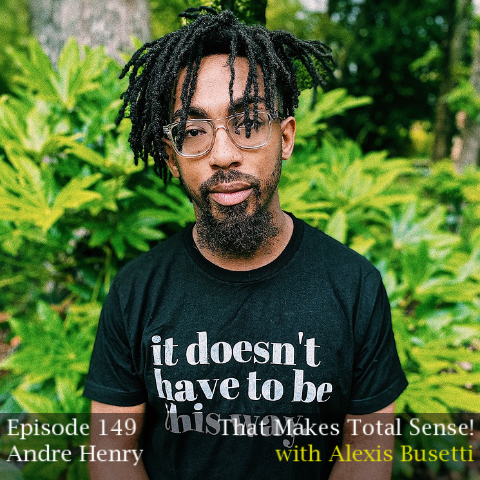
Speaker 0 00:00:07 Welcome to that makes total sense. A podcast dedicated to exploring God's generosity and justice. I'm Alexis, Boetti a Christian aiming to ask good questions and encouraging you to do the same. Every one of us is wired by God to live out generosity and justice, but the how sometimes alludes us that makes total sense is a way for us to get together, posture ourselves as learners and challenge one another to practice generosity and justice in a tangible way every day. Hey everybody. I am. I'm so pumped because I spent the weekend partially at the pool, actually reading Andre Henry's newest book, all the white friends, I couldn't keep hope and hard pills to swallow about fighting for black lives. And we finally got our audio together. So Hey Andre. I think everyone can hear both of us now.
Speaker 2 00:00:59 <laugh> hi, thanks for having me.
Speaker 0 00:01:02 Yeah. I'm, I'm so pumped to have you, um, I, I wanna say a couple of things that I'm gonna link before we get going on the conversation on the book, and that is first that I just watched your playing hooky video on YouTube. And so I'm gonna link that because I think it's phenomenal. And, um, I first heard of you and your work and some of the stuff actually that you write about in the book, like the Boulder and things like that on, uh, conversation you had with Dr. Lamberton, who is the current president, a fuller seminary. And so I'm gonna link that conversation as well, because that one, um, was really impactful for me as a listener when I heard that. So I realized there may be a little bit of overlap in the content, but I would be really excited for people to go and hear you on Dr. Lab Orton's podcast as well. So I just wanna throw that out there.
Speaker 0 00:01:52 Um, so first I just wanna say that I love the way that you have presented us with a few, a few threads in this book that kind of go the whole way through mm-hmm <affirmative> um, I wouldn't say it reads like a memoir, but it, but there's enough of your story in it. Yeah. To make it feel really, um, really personal in that way. Right. Mm-hmm <affirmative>, I mean, there's enough of your story in it. Um, and there's also enough of your vision as an artist, um, as an activist, your vision for the future. And, um, and I have to say I was super intrigued, not just by the title we'll get there. Um, but by Jamar tisie's endorsement, because he calls the book militant, that's the first thing he says. And, and so I wanna go there with you because that's one of the things kind of throughout the book, you talk about this being this movement, being nonviolent and militant, as opposed to militaristic, um, right. And that there's a difference. So I don't really know where you wanna start, but I just love that you there's, there's this vision, there's this artistic creativity and your own story going through it, um, to talk about this non-violent but militant movement that you're seeking to be a part of and build.
Speaker 2 00:03:10 Yeah, well, um, you know, the militant part is, is important to me because first off I learned, I learned it from, you know, Dr. King was actually the first person that I heard talk about, you know, militant nonviolence. And this was something that because only gets so much of Dr. King, you know, in school and mostly it's a kind of whitewashed version of him, right. We don't hear a lot of what his perspective is in his own words. Right. But I spent a lot of time in Dr. King's writings and speeches, and he uses a lot of militant language include word itself. You know, he says, you know, the, um, 1967, the, the year before he passed, he talked about, you know, nonviolence being militant, organized, being still the best hope that, you know, black people have for, for liberation. So I'm careful to include that because when we talk about nonviolent struggle, civil resistance, or which people shorten to nonviolence a lot, you know, there are all of these ideas that, that are flying around.
Speaker 2 00:04:27 And some of them, I think are coly misconceptions about what, what it actually means to engage in nonviolent struggle against oppression. And one of the, one of those biggest misconceptions first off is that a lot of people don't understand that it is an act method of struggle, right? And if you understand that it is an active method of struggle, <laugh>, uh, you, then you can understand a little bit more why the militant part makes sense, because we're talking about militant in the sense that it is strategic. It is active, it's confrontational, you know, um, it depends on a, a deep analysis of the conflict situation and all of these things are really how conflict is waged. You know? So just one more thing I wanna say about that is a lot of people I think are shy about that kind of language, because we do live in a world of perpetual war and are, and so I think some people, you know, they get nervous about that be, but what I said in the book about being black in, in an anti-black world is that you may not like to think, think about this in those terms, but if you're black in this anti-black world, the world is already at war with you, they're already at war with you.
Speaker 2 00:05:50 And when you go out to protest, they're gonna come out with tanks and guns and flash bang, grenades, and tear gas on all those things. Right? And so you have to understand that the way that they operate in this militaristic society, I'm call them the powers because we are, you know, you're a theology student. So you understand probably Walter wink, you know, theology out, you reverse these things as the powers. I, I stole that language from him, you know, but the, uh, that the powers that be are literally, they engage in warrior against the oppressed. And so a way we have no choice, but to respond in a somewhat militant way. Right. But without ones, which is what many, uh, practitioners of nonviolence call nonviolence struggle, they call it war without weapons. Because in many ways you do engage in some of the same types of behaviors, which is the analysis, the confrontation, the, the strategy, you know, the organizing of people, all that kind of thing.
Speaker 0 00:07:00 Yeah. But it's, it's important that you, that you talk about it that way and talk about it being active because yeah. Even in, even in the video that I just watched, this is where it gets misconstrued inside of whiteness, inside of white evangelicalism, inside of, um, some of these, uh, schools of thought and communities of people where instead of being seen as active and strategic and fighting a war without weapons, it is seen as it should. They're saying it should be instead or in their minds. It's passive. Yeah. Nonviolence means passive. Yes. Nonviolence means rolling over or being a doormat or not responding at all. Right.
Speaker 2 00:07:46 When you really dig down into what people are talking about, when they bring up nonviolence, eventually you get to the point where they realize they're, they're talking about doing nothing. They're talking about inaction altogether.
Speaker 0 00:07:56 Right. Which is not the point. And doesn't bring about change in all of
Speaker 2 00:08:00 This. Right. Exactly, exactly.
Speaker 0 00:08:02 Right. Right, right. Um, but I do find it interesting. Um, there was something I was thinking about as I was, as I was prepping for our time together this morning, because like I said, the book follows a lot of your story and you're, um, the son of a Jamaican immigrant grew up in stone, mountain, Georgia, which I feel like that we have to just talk about that for like, <laugh> a while. Um, but you, the way that you describe your upbringing going, going to college, going to seminary, all of this, like, mm-hmm, <affirmative> I wanna say, I don't wanna, I don't wanna put words in your mouth. Maybe I should just ask you to describe it, but, but kind of what I jotted down was you were like submerged or surrounded by whiteness. Right. And, and, and to the point that it impacted how maybe how you saw yourself, how you saw your family, how you interacted with the world.
Speaker 0 00:08:57 Right. And so the title of this book, the white friends that you couldn't keep, I was thinking about some, some situations that my husband and I have been in, where I start to kind of fuss, you know, about this, uh, community or this situation or something. And he reminds me let's we are the ones who changed. They've always been this way. Yeah. We just couldn't see it because we were a part of it too. Right. And I felt that in your book, like these, these friends, these, these adoptive families, right? These, these people who you were in close knit community with, when your apocalypse, as you term, it started to happen when the unveiling started to happen for you. And you started to recognize the, the whiteness and the world, the anti-blackness in the world, these com these relationships became strained, but it wasn't necessarily because they had changed. They were the way they had always been, perhaps. But it was your perspective that was changing. It was you who was, who was growing. So can you give us an example or some something that might illustrate, um, maybe before your apocalypse, like on Andre, in stone mountain or, or something like before your apocalypse started to started to happen, the unveiling started happen in your life.
Speaker 2 00:10:17 Yeah. You know, I talk about this in the book, but I don't, I don't use this example, but this is the one that comes to mind. There was years ago, I think it was 2015 or something like that. May no, maybe 2012, maybe 2012. No, I, yeah. I think it was 2012. Cause I was still in New York. And then I can't can't remember his name, but from D dynasty. Oh, the
Speaker 0 00:10:42 Phil Robertson.
Speaker 2 00:10:44 Yes. Phil Robertson. So
Speaker 2 00:10:48 They did a, they didn't, they didn't interview with him for GQ. No, this, no, this, I, I remember, no, it's 20. It is 20 13, 20 13. They interview him for GQ and, um, Phil Robertson, I can't remember all they get on these subjects, you know, cuz somehow they get on, uh, you know, LGBTQ issues and they get on race. And he said something about black people being happy when he was growing up. You know, he never once saw black person MIS mistreated and you know, they were always singing and they were always happy. Now at the time, I didn't know what I know now about American history. And I remember, I remember people being upset and I didn't understand why they were upset about what he had said because I thought, well, maybe that's really his experience. Maybe he really didn't ever see any black people, um, upset or you know, um, mistreated or uh, and maybe where he lived.
Speaker 2 00:11:56 Black people seem happy now knowing what I know now, <laugh> I know that first off, most white people don't even have black friends. They don't have deep connections with black people. So most white people are not, you know, connected. And then by the time I wrote the book, this memory came back to me. I mentioned it in the book, in the right, because I, because when I was writing that chapter, I, this memory came up of me Def you know, not trying to defend him, but just trying to be balanced. Cause there was a time when I always wanted to just take peop take what people said on its own terms and examine it from upon, uh, on their own terms and take it in good faith and try to find some kind of, and try find some kind of middle, middle ground, you know, uh, a part of a part of what I'm doing is try to decide how thick is my accent going to be today.
Speaker 2 00:12:47 If I'm going to play Miel or middle, if people still understand me, if they'll, if miss say Miel so anyway, I try to find some kind of Miel grown. Right? And um, so anyway, when I'm writing it in the book years later, I'm like, wait a minute. This man says that when he was growing up, that he cleared that black people were angry in the middle of Jim Crow cuz a man born in 1945, right? He's he's born, he's born in nine forty five. And he wants to say that he can't tell that black people were angry. And then add to that. The Liz that, that white people have been trying to say that black people were happy and content the need our oppression since, since emancipation, since, since just before emancipation, once emancipation, because a discussion in America, white people start trying to create all of these tropes of happy black people.
Speaker 2 00:13:44 They cartoons and they mix songs and you know, show, uh, stage plays and all these things, you know, to try to promote this idea that black people are happy and contented, even though we didn't have rights. And I didn't recognize that that's what he was doing. So when he finishes, okay, let's rewind back to 2013 when he finish his statement, because what he said was, were they happy? They were godly. That's what he said. Right? So he doesn't answer if they were happy, he, he replies, but they were godly. And basically what he's saying is that because these people did not have, or he could not, sorry, because he could not discern a black consciousness where black people were aware of their oppression and upset with it and ready to fight against it. He calls them godly. Right. In other words, he's saying that they're well behaved, right?
Speaker 2 00:14:35 He's saying that they, you know, they, they are good Negroes, you know, basically, basically I couldn't see that before, because I didn't know all of those layers, I couldn't discern the historical, you know, anti-black sentiment and propaganda, the white, uh, fascist propaganda that he was participating in. And so I wrote this, this blog on Tumblr years ago, you know, in 2013 where I said exactly what I told you, made this man really didn't see any angry black people back then. But now I know that white people, you know, all over the world want to convince themselves, convince themselves that black people, not only that black people are not upset, but that black people don't have anything to be upset about.
Speaker 0 00:15:25 Right. That that's the, that's the more important part, right. That black people don't have anything upset or anything to be upset about. Um, and you know, for, for your story, the way that you, um, share it, the way that I read it in the book, um, you talk about that anger, uh, yeah, quite openly. And um, I don't know. I, can I ask you, I don't know that you you've put it so much in the book, but I'm just gonna kinda ask you to, to ad look here to talk about this because you talk about your anger in the book and how anger is an important in important emotion to move toward activism, to move toward, um, you know, this, um, nonviolent
Speaker 2 00:16:18 Mm-hmm
Speaker 0 00:16:18 <affirmative> mil, but then there's also the crappy side of that coin, which is that a lot of times black people who do show anger, right? So it's, so it's instead of being the cartoon where everybody that is black is happy, cuz there's nothing wrong here. Then when you black people do get upset, when you do get upset and you do get angry and you show your frustration, then you get dismissed because you're just the angry black man or the angry black woman yeah. In the room or in this space. Right. Mm-hmm
Speaker 2 00:16:50 <affirmative> yeah.
Speaker 0 00:16:51 Can you talk about those, those dynamics, but,
Speaker 2 00:16:53 And you, and you have to decide, you know, what, what battles you're gonna fight, you know, because when you're alone, if you're alone and you're in office and you know, somebody says something racist or then doing something that's insensitive or something like that, then you have to weigh the cost to you personally, to show that anger. Right. But that anger is valid. It's always valid. Right. But as a col, as a collective, you know, sometimes our, our rages on display in protests, in riots, in those kind of things, you know, when we see the racial violence that continues to structure Amer American society, right. And, um, that kind of anger, anger, I think that we just have to decide that it doesn't matter how, how people feel about that. You know, especially if they're not on our side, if they're not fighting with us because, you know, can you imagine, can you, if you know, the, the American colonists colonizers that throw, throw the tea into Boston, har Harbor, can you imagine if they worried about if the British Agama are go, are gonna be upset with them.
Speaker 2 00:18:02 If they throw this tea in the Harbor, can you imagine if they're, if they're asking a question, well, we don't know. We don't know if we want to do that because you know, it may look bad on us. <laugh> right. They may think poorly of we poorly of we, if we throw the, throw the tear through the Harbor, no, they're not asking that question because their concern is that is to get free and they don't care how their oppressor feels. Their, you know, they feel that that Bri, that Britain was their oppressor. They don't care how their oppressor feels about how they go about winning their freedom, because it's not a discussion. We are going to be free and we are going to do what we need to do to liberate ourselves. And we are not asking for your opinion on what tactics and strategies we should use, how stupid, how stupid would that be?
Speaker 2 00:18:57 Right. A lion catches our most and a most, and the most say to the lion, wait, uh, excuse me, Ms. Asar, you can tell me which way to go about getting me freedom. No, <laugh>, that's, that's not how things work, you know? And so of course we're upset. We should be upset. That's what, that's what happens in the body. When something, when something infuriating happens to you, when somebody mistreats you are upset about that, usually, uh, if, if not, then usually we, we have names for things like that. Like Stockholm syndrome mm-hmm <affirmative>, it means something is not right. Right. So of course we're upset. And so what we have to do, I think, as a collective is not worry so much about, you know, what the person who is invested in your oppression thinks about your quest for liberation
Speaker 0 00:19:51 And all of that. Amen. And I'm intrigued by how purposeful you were in trying to engage in a really loving level on a really loving level when it was personal, when it was interpersonal, right. There is a collective movement, like you're talking about, um, where the anger is showcased in. It should be, and I'm not saying anger should never be showcased on the personal level. Right. But you talk about all these interactions with good friends, good friends from, from seminary or from other parts of your, uh, life from growing up. Right. And, and you express anger. Yeah. And they push back and then you call them mm-hmm <affirmative> on the phone. Yeah. Let's talk about this. We're friends.
Speaker 2 00:20:41 Yeah,
Speaker 0 00:20:41 Exactly. We love each other. Exactly. Let's talk about that. Can you, uh, I would say as a student, the one that comes to my mind, I mean, besides feeling just like, really saddened about your relationship with the stone family, which I still am just like, feel really heartbroken about, um, one of these is kind of, it, it strikes me because I'm also a, a, a seminary student this took place at not just a seminary took place at my seminary <laugh>. Um, but where, you know, but this is kind of the thing, right. A lot of times these QUTs happen where somebody feels really strongly about a certain thing, a doctrine or something else, and they just kind of, they just kind of whip it out there. Right. And, and expect that to be mic drop, last word, you know, whatever. And then you come back and say, let's talk about this. So, I mean, do you mind sharing part of that story from the book where one of your seminary friends pushes back against you in, in, in that space?
Speaker 2 00:21:39 Yeah. So this was after this was after Philo Castile, after we watched Philando Castile bleed to death on Facebook live. And that's when I started carrying the Boulder around, you know, to show the, the weight of anti-black racism on the black psyche, on the, on the mind, you know, because these things are stressful, you know, just psychologically, it's stressful to live in a world that's constantly signaling to you that, you know, they don't respect you, your dignity as a, as a human being is in question, you know? And so I'm logging this Boulder. I'm one of my good friends at fuller, at fuller. Um, you know, he overheard a conversation. I was having with a professor about what happened to Philando Castile. And me and the professor are talking about how, you know, events like that. These lynchings are connected to a whole history of violence against black people, and my friend interrupts.
Speaker 2 00:22:49 And he, you know, because we're talking about how Phil cast's death is part of the afterlife of slavery, of enslavement. And, um, this, this friend in, he interrupts and he, you know, he wants to defend slavery for some reason. I don't know why, I don't know why he wants to create some kind of nuance in a conversation that he wasn't even invited into. But, you know, he takes his friendship with me as license to come in and interrupt and, and to talk about, you know, how, you know, slavery might have been a positive experience for some people and he can't categorically market as wrong. And I'm just so surprised. And so, you know, we just end the conversation and go away. But I tried to call, I reached out to him later and I tell him that, you know, I felt betrayed by what he said.
Speaker 2 00:23:34 And he just, he couldn't, he couldn't step back and say, say, wow. You know, I never thought about the fact that if I'm sitting here saying that I can't say that slavery's categorically wrong, then I'm saying that Andre, it might be okay for Andre to be enslaved. My friend, he, he couldn't put that together. And he, he was not really apologetic about it either. So, you know, we talked about getting together and talking about it a couple of times, but I decided against it because up to then I had been doing that. I had been, you know, when somebody, you know, says something that insensitive that, you know, that stupid, that racist, you know, and we have a hard time coming together and talking about it. I would just, you know, say, well, first off, let's get off of Facebook. Let's get off of text message.
Speaker 2 00:24:21 Let's get off, let's get off of, let's get off of social media and talk because we know each other, we have, I have your number and you have my number. Why are we going back and forth online? Like strangers, you know, and you are, you are responding to me like a troll, like, like, and like, you don't know me. Right. And that's what I used to do. And I, I was tired of doing that by, by then. And also I realized because of a Heineken commercial, which I, which I talk about in the book, you know, that, uh, that person actually doesn't deserve the platform or the time from me to say racist things to me, if they need to work out their racism, then they can read books. They can study, they can watch, you know, YouTube and talks and all those things. And not, I'm not saying that everything on the internet is trustworth, we know that, you know, but they can go on their own journey of to learn some things.
Speaker 2 00:25:18 And then they can join conversations as informed people, as people who are wrestling with these things, and they can have those things or ironed out. But if I had had dinner with that, with that, man, he would've just sit down and tried to tell, tell me his perspective. Right. He's not trying to learn or learn anything or listen. And so I just, you know, I let it go. But yes, oftentimes I would, I would arrange, you know, let's get on video chat or actually talk on the phone or, you know, let's sit down and talk, you know, but I did that until I was tired. Right. I realized I was exhausted. And I also realized that my attempts to avoid the angry black man trope was just making it easier for people to, you know, to walk away from the conversation. Honestly, you know, because they're just engaging a conversation like, well, you have an opinion and I have an opinion now, sometimes, sometimes things are, you are wrong or right. Sometimes that's how it is. You don't have an opinion about what two plus two equals either, you know, the sum or you don't right. Owned. Right. Right. So you can't tell me six plus three is seven. And I tell you, six plus three is nine. And we say, all right, we'll agree to disagree. <laugh>
Speaker 0 00:26:44 But I think this is what strikes me is that that example, um, in the book with your seminary friend is just a microcosm of what is happening in a lot of the white church. Right? Like he, he tries, you know, in the book, you go into it a little bit further where he's, you know, talking about theology and going back to scripture and he's, you know, kind of pulling out these things. And, and when in reality it really is just, as you said, you that's wrong. You're wrong on this.
Speaker 2 00:27:21 You're
Speaker 0 00:27:21 Wrong. Exactly. You're wrong. Exactly. And, and, and sometimes that's just too much for any of us. Mm-hmm <affirmative> to say is I'm, I'm wrong on this? You know? Yeah. Help me learn. I'm I'm wrong on this. My, my husband has a ridiculous movie quote that I'm always like, this is so you it's from Megamind. Have you seen this? It's a terrible, ridiculous movie that my family loves. No,
Speaker 2 00:27:44 It's a great movie. I love that movie.
Speaker 0 00:27:46 My family loves it, but there's a line where he says something like, okay, fine. You were right. And I was slightly less right. <laugh>
Speaker 0 00:27:58 But this is not a slightly less right situation. This is a, I was wrong situation, but sometimes it's just too much, um, for us to do, I wanna pivot a little bit if it's okay, because there is a concept in your book that I have to say, it's, it's definitely possible that I have just not being, been paying enough attention, but, or maybe it's just the way that you phrased it really struck me. But you talk about this connection of whiteness and racism to, um, consumerism and you use a couple examples. One is, uh, the dinner with the stones again. I'm just mm-hmm <affirmative> mm-hmm <affirmative> uh, yeah. I'm so sorry. Dinner with the stones and then Mike Pence at Hamilton <laugh>.
Speaker 2 00:28:51 Oh yeah, yeah.
Speaker 0 00:28:55 Um, and honest to goodness, I wasn't on Twitter back then. So thankfully I missed a lot of the ex president's, um, tweet prior to, uh, 2020. And I definitely had missed that one. Um, but can you talk a little bit more deeply about this connection of, of whiteness and racism and, and consumerism that you go through in the book?
Speaker 2 00:29:16 Yes. Now that was one of the hardest chapters to write because a lot of people don't make this connection. Right. And I'm trying to make it from the beginning, like from, from the intro, when I say that RA people say that racial violence, they love to say that it's senseless <laugh>, you know, but it's not senseless. It always has had a utility to it. Right. And some kind of, and maybe layers layers of utility to it. And so one of the, one of those utilities has been profited, right. It's been connected. Like you can't, you can't talk about how Britain and France and these, these places that are so quote unquote, developed <laugh> in the world. Right. Can' talk about how, how they became so developed without talking about the use of slave labor to build their industries, their profit, their economies, all that stuff. Right. And it still, the, that system still has that logic in it, you know, to today, all till today, as they said in Jamaica, <laugh> right. All to today that all to today, that system, that system still has that, that kind of, you know, um, spirit, if you, if you, if you could say it that way. Right.
Speaker 2 00:30:39 And so what we're talking about in that chapter is what, uh, one scholar and his, his name, uh, escapes me a, a look right now, Gorski. He talks about macroaggressions. And that is where we're kind of participating in large system, large systems of oppression. But, um, yeah, without an awareness of the violence that helps to produce those commodities that we are enjoying. Right? So when you look down, when you look down the supply chain of where your tomatoes are, your gold chain or the cobot that goes into your iPhone or computer comes from, oftentimes, you're going to find people of color being abused or exploited to create those commodities. Right now, it's not only white people that are com complicit in that system. But that system goes all the way back to the construction of a global, global capitalist system and them and racial violence is endemic to that system because part of the founding of that system was genocide of native people so that they could take the land to produce the commodities that they will sell.
Speaker 2 00:32:10 And then to capture African people, deport them, ex you know, exile them around the, around the empire to, to do the labor of creating those commodities so that the price of the labor was as cheap as possible. Right. Free for the most part, largely free. Right. Okay. So you, I basically just the lunch with the stones and put it in a time machine <laugh> because if you rewind, because what happened at the table was when I arrived at, at lunch that day with the stones, they announced that there'll be no talking about politics because the last year it might have, it might have even, yeah, I think it was just a year. Not, no, not even a year. It was a few months ago because it was a few months ago because it was Thanksgiving that something happened with me and one of the stones, and it was, you know, y'all can read about it in the book, but anyway, I come to lunch and they don't want another blow up.
Speaker 2 00:33:18 So they say, all right, we're not talking about politics. So they want to ignore the racial violence that pervades, permeates structures, upholds their world while they enjoy these commodities. Some of those commodities are literally brought to the table by racial injustice and, um, oppressive politics, because we all know what class of people and what they tend to look like, who are running the kitchens in most of these restaurants. Right. And we, and we know that oftentimes that when you go even further down the supply chain, that if you get, if you go from the restaurant to the tomato field, wherever that might be, there are probably people working much longer hours than would if they were of another class and getting paid much less than they would, if they were of another class. Right.
Speaker 2 00:34:22 Okay. <laugh> that same kind of thing was happening in the 18th century here. When, because of enslavement, you know, southerners were getting rich, plantation owners were getting rich and now they had more disposable in disposable income. And they start wanting, you know, luxury goods like books and coffee and tea and indigo and all these things. And at the same time, all these that was when this kind of Gente culture starts to arise in the south, because they have so much excess money. Meanwhile, the people who are producing, producing this world, they don't have any, anything that's us, that's us, the enslaved. Right. And in order to keep the enslaved as the free work labor force, um, you know, they, they were putting down slave rebellions because of course we were not content <laugh> to be enslaved. Apparently we still have to unknown that we were not happy being enslaved.
Speaker 2 00:35:32 Right. And so, of course we did what anyone would do. We rise up against it, right? This where not Turners rebellion and all those things come in. Now, you see this juxta, this juxtaposition, there are people comfortably eating and enjoying their luxury goods that are com that are produced by the, you know, content warning. I'm sorry, but you know, the, the abuse, the, the whipping enslaved, the breaking of teeth, the breaking of bodies, the raping of women, all these kinds of things on a regular basis are producing the wealth that provides this comfortable lifestyle for these, for these people. And there is literally a culture of violence of gun violence, by the way, right. To keep these people down. Um, in fact, there was a law that was passed around at time that required <laugh> that required white men to carry their guns to church on Sunday, because they understood that while these plantation owners and stuff were at church, that there was that the, the, the, uh, the immediate control over the enslaved population was, it was loosened because the, the overseers and all these people are observing their religious rights. And so they, the law required white, white men to carry their guns to church. In case Thesla tried to rise up on a Sunday that they would be prepared to put down rebellions.
Speaker 2 00:37:04 So I'm making that connection between, uh, oppression and profit and the violence that, and the violence that holds that arrangement in place to say that now, when somebody like Mike Pence goes to see Hamilton, I'm Milton <laugh>, and he is confronted by the cast, who says, we are concerned about the violence happening at the Southern border, that when Mike Pence says, I shouldn't have to be confronted with the violence that structures this society, because I have come here to enjoy this commodity without having to think about that violence, that he is invoking the same arrangement. He's saying, I am entitled to the same privileges that my predecessors had, where they could just enjoy this comfortable Imperial life, without thinking about the violence that the empire engages in every day.
Speaker 0 00:38:19 And then the, one of the lovely gas lighting pieces of that is that you gave a content warning because of the actual abuse that was happening to enslaved peoples. And then the former president tweets and calls a really cordial letter. Actually, I thought from the cast to the vice president at the time, uh, the former president calls that abuse
Speaker 2 00:38:46 <laugh> right.
Speaker 0 00:38:47 That he shouldn't have to be his, his vice, his VP shouldn't have to be subjected to abuse when he goes to the theater that that's not okay.
Speaker 2 00:38:56 <laugh> right.
Speaker 0 00:38:57 Come on.
Speaker 2 00:38:58 Right, right, right. He said, you know, he said that, you know, they attacked a good man. Right. You know, and I'm like, but he wasn't attacked first off. Right. You know, they, they said, dear, sir, <laugh>, we're concerned. We're concerned about these things. And we hope you'll do something about it. And otherwise they don't have access to the vice president right. Their chance. Right. They have to take, they have to take the chance that they have.
Speaker 0 00:39:21 Right, right. Reading it from the stage, which
Speaker 2 00:39:23 Was, but that's a part of living in this society. And that's when I, that's why I didn't realize that the book would be so relevant, relevant, because, you know, I just, wasn't sure that we would be here where we are now, you know, where we are now. And, you know, Trump is not out the question to come back into the overall office. People are, you know, going into stores and shooting up the place and, you know, stabbing people on the street and all these things, you know? Um, and this is a part of, you know, kind of what fascism looks like, you know, and, uh, I didn't know how relevant this would be to this moment in moment in time, but that's a part of it is this mythical, you know, understanding of where, who we are and where we come from and how we got to this place. It's complete unreal reality.
Speaker 0 00:40:17 Right. It's, it's the unreal reality. And, and I think this is kind of, you know, I feel like captain obvious year, but that the unreal we're not willing to, we're not willing to state the facts about our past. So we, we can't state the facts about the future. Right. Every going back to your example of, of, of six plus three equals seven, it's kind of like, there are, there are a large group of people who are saying, yeah, of course that equals seven because when we see the fascist stuff happening, now, we haven't ever confronted any of that in our past. And so it feels right to some people and normal or, you know, whatever, whatever it is. I <laugh>, I'll never forget, like, there's this like little, very, very specific example of that, right after the insurrection on January 6th, um, of last year, I remember seeing a meme of, of, of a, of a chick, probably my age. And she's like in like a student's desk. Right. And she's like, he's, she's like pointing her finger, you know? And it's like me in 20 years trying to say what actually happened on January 6th. Right. <laugh>
Speaker 2 00:41:31 Mm-hmm, <affirmative>, mm-hmm, <affirmative>,
Speaker 0 00:41:34 Mm-hmm <affirmative> because it was a, it was a protest, everybody. It was tourists inside the capital. It was, you know, whatever it is, but it's like, well, we can't even name that and say what it really is, because we haven't been able to confront all of this other truth about our history. And in fact, it's being banned from
Speaker 2 00:41:51 Schools. Right? Exactly. Exactly. It's UN we're. We are living through a new kind of lost cause kind of era. Right. You know, we had this big, big lie about, you know, what happened with the election and the insurrection and all these things. And that's exactly what I'm trying to confront in the book, because when we believe these things, you know, we don't, we don't fight for change. Right. You know, when we, when we internalize these lies, we don't fight for change. And that is kind of the fog that I was living under for a long time, because I believed what America says about itself. America is always innocent and always a Paragon of democracy. And there's no need for, for revolution here. Again, you know, that's what America wants, you know, or the official story has been about America for a long time, but that's that story serves a few people. It doesn't serve everybody, you know, mm-hmm, <affirmative>,
Speaker 0 00:42:46 Mm-hmm <affirmative> there, there was one, I can't remember. I didn't, I didn't dog ear it, but there was a place I underlined it. I hollered to my husband who was in the kitchen and I go, well, Andre just says it in this book. And you know, I'm laughing. I'm like, well, he says it in a lot of places, but there's one place where you say something to the effect of, um, the only thing America has been exceptional at is being exceptionally racist or, you know, like something like that. Right. I'm like, well, like that, let's just say it though, right?
Speaker 2 00:43:10 Yeah, yeah, yeah. I don't remember exactly how I word it, but that is a part of the, you know, that's a part of the point that I make in the revolution now, chapter is that, you know, America has a fundamental problem, you know, and it wants to claim the thing. The thing about America's narrative is that it wants to claim the work that movement have done as part of its part of its political tradition. Right. And it's like, but wait, you can't, you can't claim that. Alright, for instance, you can't, you can't claim the civil rights movement. Right. If we had to pick that fight with you, just to get the whites only sign to come down, you can't say, look how good we are, you know? And then right after, right after you do that, you know, almost immediately, right? You, you still have schools, you still have schools all over country where after the, the act was passed, that said desegregation, right?
Speaker 2 00:44:17 You have all these Christian schools start to be built. Quote, unquote, Christian schools start getting built because this is how white people are going to circumvent that. Now, because now we have a private school and Christian means white whites only it's the new whites only right after, after the decision almost passed, still, still see how the civil, how still see how the civil rights movement was still fighting to desegregate spaces even after the law was passed. And then in 2013, I think it was, they gut that they gut that, that, um, that decision of, of its, um, of its teeth, you know, they defang the civil rights act. And so we're constantly fighting right now. We're fighting for vote for vote for voting rights, again, you know, fighting against vote as suppression and all those things. So America, doesn't get to claim that as part of its tradition, if it's always been us fighting to have it, and it's still not secure, you know, the day that America starts taking the initiative initiative and you know, saying, all right, what do we have to do? What do we have to do to make some kind of reparation for this? You know, you know, this,
Speaker 0 00:45:31 This is one of the reasons why I love following Bernie's king on Twitter, because mm-hmm, <affirmative>, she, I wish she didn't have to, but she's constantly calling that out. Right. And you, and you called it out very specifically in your book because you're, you're exactly right. Like America claims <laugh> I just love the way you said that, but they, they wanna claim what's come from all of these movements, even though it was fights that were picked with them. Right. And it's like, and, and so you specifically talk about MLK and go, this, this guy was a totally polarizing figure. He was really hated. Obviously he was assassinated. Right. He did not have a good approval rating among right. Right. Many Americans right. In his time. But at the same time, people will use his own quotes to defend their racist agendas today. Right,
Speaker 2 00:46:21 Right, right, right, right. And that's the thing that is exactly the thing. They, we, America can't, they can't claim, you know, all of these, all of the work that movements have done to create space for marginalized people and oppress people as evidence that we are the leader of the free world. If we are the leader of the free world, why do we have so much protest for human rights? Right. <laugh>
Speaker 0 00:46:53 Good night.
Speaker 2 00:46:54 Why are there so many movements against oppression in this country? If we are as democratic, as we say, we are not <laugh>, we are not. And never I've been. So we have to look the, the fact in the face that the idea of America did not include many people when it was invented. And people can say, well, it's changed now, but how did it come to change? And has it changed enough? And who are you to say that? Right? Because there were people before there were people during the civil rights movement that prob that probably said, well, they're not slaves anymore. What did they complaining about? You know? And after they desegregated the buses and all those things, people were saying, haven't you come far enough, then you've come far enough. You know, and they're still saying that today,
Speaker 0 00:47:50 But you're right in that this is how America was birthed. This is how all of these documents, my favorite, my favorite Mark Charles quote, is when, when he is, when he is like, you act surprised by this, you know, and fill in the blank, whatever it is, you act surprised by this, but you shouldn't be surprised because the constitution is working right. When you see these kinds of injustices as an American, you shouldn't be shocked by what you're seeing, because the constitution is working. The constitution was intended to give white land, owning men, the ruling hand on everything. Right. So when you see injustices and oppression toward people of color toward women, toward, you know, people who are in, in poverty, you shouldn't be shocked by that because the constitution is doing exactly what it was designed to do.
Speaker 2 00:48:37 Yeah,
Speaker 0 00:48:38 It's crazy. Um, I wanna give you the last word here, Andre, because this, this book is, is so rich, but it's because your story is so rich. And so I appreciate you sharing it with me today, but also just with the readers, um, of this. And I know that that one of these major, major threads throughout the book is, is as we've been talking about this, just now this movement, right? The, the nonviolent movements that really have taken America to be from, from what we were to what we are now, and hopefully moving into the future into much better places. So what would you, um, anything, what would you leave us with in that vein of, of the, the movement, the nonviolent movement being an active thing in our lives, as we begin to learn more and come out of this fog, as you say.
Speaker 2 00:49:30 Yeah. I mean, you know, the point of the book really is to help people to understand that we have been given a lot of ideas about how change happens and how racial progress can be achieved. That just won't work, you know, and a part of my, you know, breaking up with, you know, these relationships in the book and, you know, leaving some of the institutions that I used to find nourishing, you know, is me coming to that realization, that a lot of what we are told is really stuff to keep us from doing the work that will actually create change. So part of that is, you know, a lot of what we talk about today, the American ideology, you know, the P Americas, you know, that says, you know, this is, you know, this is the leader of the free world, the Paragon of democracy.
Speaker 2 00:50:26 We don't need revolution here, all those things that is to keep us in place and we have to wake up from that. But then after that, there, well, part of that, part of that idea. So every theory of change is based on, you know, assumptions about the, the way that the society is arranged and what is possible politically and all those things. And so what comes along with people who believe P America is, comes the, the deficient, the deficient, um, ideas about change because we are the leader of the free world, because there's no need for revolution here. We can solve racial justice by just having some civil conversation. People who have some bad ideas, right?
Speaker 2 00:51:12 Well, I'm trying to tell people that no, it's actually not that way. America, there's a reason why a Nazi scholar said that the greatest, uh, event in the area quest for world domination was the creation of the United States of America. There's a reason why they wrote that. And there's a reason why Langston used, you know, went to one of those international writing conference until them. We don't need anyone to explain what fascism is to us, because we know already, we know already through experience our experience of living in America. So we have to start there. There has always been something wrong, something oppressive, something unequal in equal in America's political tradition, right? That's always been there, but it doesn't have to be that way going forward, because we have already seen the power of people who recognize the problem and organize him and organized together, organized together to address it.
Speaker 2 00:52:24 You know, um, we've already seen that power in American history, but in histories all over the world through civil resistance, but we're not gonna be able to get there if we don't first off, uh, break free of the spell of America and ideology, right. The pox Americas. And we also won't be able to build those kinds of movements. If we keep on arguing with people who want to debate whether or not the problem exists. And that's partly why I tell these stories about the people that I had to leave behind, because in order for me, in order for me to join the movement, you know, I had to leave that conversation behind and everyone who wanted to keep having it, you know, because it's like, <laugh>, I think I've used this example for, but suppose, suppose you're a doctor and you're in the operation room and you're a surgeon and you're about to, you're about to, you know, you're about to start working and there's somebody in a room who doesn't understand surgery.
Speaker 2 00:53:29 And he said, why, if you, if you cut that, man, he's going to die. And you say, no, actually <laugh>, if I don't cut this man, he is going to die. You know, if you go back and forth with this man who doesn't understand tree, what's gonna happen to your patient <laugh> mm. You know what I'm saying? Mm-hmm <affirmative> you see? So we have to move beyond that. And when we move beyond that, then we can start understanding, understanding the wisdom of how many people who have actually worked to change the world before which I've tried to compile as much information as I can in one book for people who probably would never come across this information, otherwise.
Speaker 0 00:54:15 Yeah. Andre, thank you. Thank you so much for that. I just, um, I feel like I just, I just wanna say, like, we didn't even get to some of the stuff in the book that is, um, <laugh> kind of most, most jarring, most phenomenal, right? I mean, the Boulder story, I'll, I'll just gonna throw this out there. The Boulder story in and of itself is worth the price of the book. So grab, <laugh> grab, uh, grab the book and, and read about it, but thank you so much, Andre, for joining me for coming on for writing this for your work, um, for your movement in this space, in this, in this movement, um, building place, I just, um, I'm really grateful, um, for you and, and for your gosh, all of your time and talents dedicated, dedicated to this work. I appreciate you so much.
Speaker 2 00:55:02 It's my pleasure. Thanks for having me.
Speaker 0 00:55:06 The links for all the resources mentioned in today's episode can be found in the show notes, music, and podcast production by Seth. Boetti be sure to give us a review on iTunes and subscribe at your favorite podcast listening app, you can also visit us at that. Makes total sense.com.