[00:00:07] Speaker A: Welcome to that Makes Total Sense, a podcast dedicated to exploring God's generosity and justice. I'm Alexis Busetti, a Christian, aiming to ask good questions and encouraging you to do the same.
Every one of us is wired by God to live out generosity and justice, but the how sometimes eludes us. That makes total sense is a way for us to get together, posture ourselves as learners, and challenge one another to practice generosity and justice in a tangible way every day.
Well, it happens sometimes, Angela, that we have like a pre record conversation that like so much of it could have been recorded. So, you know, I don't know that we'll hit redo, but we'll. We're already in a good flow. Yes, I think we'll see what happens on this. For us, it's a Monday morning. When this releases in a few weeks, it will be Monday for folks out there too. But anyway, thanks for joining me today.
[00:01:04] Speaker B: I'm really, really glad that I'm here and I'm eager to jump into conversation with you. Like you said, we're already in it. We're in the conversation.
[00:01:11] Speaker A: We're in it right now.
[00:01:13] Speaker B: For anybody who's feeling like the Monday morning like we are, it's Monday. You know what I mean? Like very Monday right now.
[00:01:19] Speaker A: It's totally Monday. It is. It is. Like really. It is really Monday. I've already been. This is going to be like TMI for folks. I've. I was at the hearing clinic this morning because this is weird and probably gross, but the doctor said we should normalize this. It's fine. I had to have my ears irrigated this morning because I was like the, the waxiness was like stopping them up. So I was like, I'm feeling really good. I can put on my headphones. I can hear this morning. I'm traveling later this week so I won't have to deal with like pressure on the plane. Won't be so bad. Anyway, so it was been a Monday for me, but in a weird way.
[00:01:57] Speaker B: More people should do that. By the way, she said once a year. It's amazing. Yeah, Yeah. I mean the, the, the they offer.
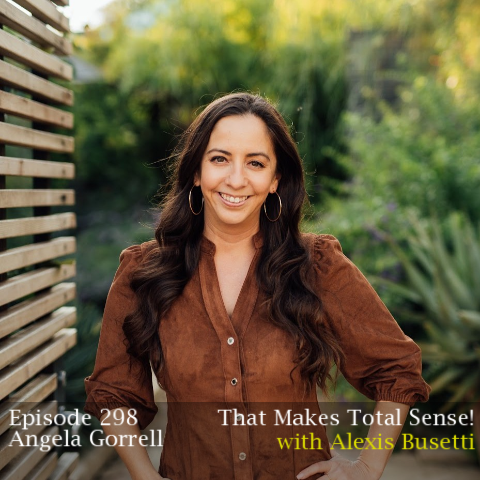
[00:02:04] Speaker A: It was so great. Like they offered me a latte when I walked in and that. And the woman was like, it's like a spa for your ears. And I'm like, it really is. But for me it was totally needed because I like everything was muffled and it was very bizarre. Anyway, we're going to talk about stuff of substance today, but I want to say welcome. My guest today is Angela Williams Gorell. Angela she has written a few books, but the one we're going to talk about today is called Braving difficult what to do when you don't know what to do. And I will say this is super fun because we found ourselves sitting next to each other at dinner a couple of months ago.
It's fantastic. Little Italian place in Pasadena, by the way, where I have dietary issues and I could eat like so many things on the menu. It was wonderful. And it was near the end of the night and then a friend of mine was like, oh my goodness, have you met Angela? We were sitting next to each other and we happened to be in conversation with the other ends of our table. And then it was like, oh, my goodness. We. We both have podcasts. You're an author, you've got a new book coming out. Anyways, so this was so much fun and I'm glad to connect again. So I feel like the conversation is continuing from now, this morning, but also from dinner in.
[00:03:17] Speaker B: Yeah, it was like 18 people at that table.
[00:03:19] Speaker A: There was. It was a long.
[00:03:20] Speaker B: It was a lot of people. And there.
[00:03:22] Speaker A: The last supper table.
[00:03:24] Speaker B: Yes. It was so fun. Like, that is one of my favorite things. Like, I don't know that very many things bring me joy. Like sitting at a table under the stars. We were out on a patio. Yes.
[00:03:34] Speaker A: It was gorgeous.
[00:03:35] Speaker B: Yeah. With great food and great people.
[00:03:37] Speaker A: Yeah. It was so much fun. And I also just love about SoCal that outside is always okay. So we were outside dining under the stars, as you mentioned, in February.
[00:03:49] Speaker B: Yeah.
[00:03:50] Speaker A: And it was beautiful. It's kind of ridiculous. Yeah. Okay. So I mentioned to you in pre record that I usually read my podcast more books in the mornings with my little beagle sometimes crawled up next to me. And I had a great time with this one.
[00:04:10] Speaker B: It's.
[00:04:10] Speaker A: It was hard for me to kind of get my brain around, like, what kind of category can I put this book into? And so I don't really want to put it into a category as you shared with me at dinner. And I'll probably just recap right now. There's.
And you'll do a better job of this in a moment, but multiple chapters kind of describing different, I don't know, maybe phases that we might go through when we're thinking about, we have a decision to make. We're thinking about what that might look like. And each chapter has, I would say it's an inspirational story, but it's a story from someone who has had to make a difficult decision or a series of difficult decisions. Some of these folks I'm like, their lives were difficult decisions. Ann Hutchinson is one of my husband's favorites, by the way. And so I was like. And your aunt made an appearance in Angela's book. But then also, you know, you share a little bit of your own personal story on decisions that you have made semi recently that were. That were tough. You know, kind of these ones that you knew that your life was going to look very different before and after.
And. And just some general, like, I don't want to say tips, because it's not really tips, but like, just some. Just some things to think about in each one of these sections. And so I'm going to let you kind of say in your own words what I probably just mangled. But then I'm hoping that we can talk about some of the things that stood out, that stood out to me in these chapters. Some of them were familiar, and some of them kind of gave me language. And some of them, I was like, that's it. You know, like that. That's why it feels so hard. Or that's, you know, whatever it is. So. So anyway, so give. Give us. Yeah. The real version of what. Of what this book is.
[00:06:05] Speaker B: Well, I think when people are at a crossroads or they've just had a crucible experience of some kind, maybe someone that they love has died, that has just. And it's caused their whole life, like they're disoriented to need to be rearranged, or maybe they're in remission from cancer or they've just been diagnosed with a terminal disease, or they have this question that they're trying to answer in their life or some kind of internal conflict or external conflict that they're trying to navigate. We find ourselves in a liminal space between the thing that I've just described and doing something in light of what has just happened. And so we're in this liminal space and a lot of us don't know what to do. We're in that limit when we're in that liminal space. And I hoped to write a book that would be a guide, a journey toward, like, that would give you. Every chapter is something to do, and it is a journey in the sense that you could start in chapter one and you could end the journey. You could just literally read it all the way through. Or it's also written in such a way that you could start with any chapter, the last one, not so much, but any chapter before the last one, and go all over the place. So it's meant to be read in whatever way you need. And so at the beginning of the book, there is a question and a prayer that goes with each chapter. And the prayer is the kind of prayer that all of us need when we really are feeling disoriented and confused and don't know what to do, and it's. Or we've come undone. And so the prayers are things like study me, show me, teach me, enlighten me, encourage me, help me. And so when you look through the little.
The page there at the beginning, and you're like, okay, this is the question I have right now. Then you can just go to that chapter or this is the prayer I need right now.
And. And so, yeah, it's meant to be a journey, but in whatever way that you need it. I asked, and over 200 responded, I think on Facebook, what makes difficult decisions difficult?
And then I tried to. I, as a researcher, I put the answers into categories, and we call it coding the data.
And then I wrote a chapter that addressed every single thing that people came, you know, brought up to me. And I was really trying to. Because for me, when I was going through the decisions I was trying to make, I was trying to decide whether I should stay married or get divorced and whether. Not at the same time time, but at a different point, whether I should leave my job as a professor right before I was about to get tenure, which is a huge promotion as a professor, or, you know, stay in my job or leave my job. And I was trying to find a book that would just give me something to do. But also I wanted to feel like someone was sitting across from me saying, like, do this and now do this, and then do this and then do this, and. And then I realized in my research that every denomination in the Christian tradition really has different ways of hearing from God. And all of them can be very helpful. So why not integrate as many of them as possible into the book? And then finally, I'll say that I. Yeah, I wanted to see how people throughout history, and I think it's from the 1100s to now that I include stories that were. That made really bold, difficult choices, answered big, difficult questions. How did they do it? What did they do? And what might we learn from them?
[00:09:36] Speaker A: Yeah, I think part of the reason that this book spoke to me and felt helpful for me is not that I necessarily have some big looming decision, but I will say about. It's been just over a year ago I graduated with my mdiv. Going back was one of those decisions, but I. I never thought that I would go back to graduate School, I thought, I've done that already. I did that in my. In my 20s, and I didn't think I was going to do it again at the time. In my. In my 30s, my late 30s.
But since I graduated, I've had other people even point out to me, like, wow, you're just kind of in, you know, maybe they didn't use exact word, this liminal space, but people like, man, you're just kind of in this transition right now, or you're, you know, whatever. And I'm like, yes. You know, like, for me, it's frustrating. I'm like, thanks for pointing that out. You know, And I remember asking a mentor of mine last year when I was kind of saying, I'm not exactly sure what's next.
I've got. I've gotten this degree. I'm not exactly sure what's next. And he asked me a question that has been really important for me, and it was really frustrating at the time, and I've told him that. And he said, do you think that this is more like a point A to a point B that you're going through right now, or do you think it's more like a season of transition?
And I was like, you know, I never would have named it that way, but hearing you ask that question, I would say for sure it's a season of transition. Which drives me nuts because this is exactly what I don't, you know, what I don't want. But my point is that in this season of transition, for me that's lasted about a year, I'm still in it. I feel like I am continually up against a lot of smaller decisions. And so some of these things, it doesn't. My season right now isn't described by some of the things that you mentioned. You know, something has happened and now I have to do this or that. But it's kind of like things are either continually happening or continually not happening.
And. But still, I saw myself in the pages of. Of your book because I'm. I'm making a lot of decisions that I would say maybe are unfamiliar to me in a season of transition. There's a lot of decisions to be made, but I think it's transitional because they're decisions that I haven't had to make before.
And so. Yeah. So anyway, so each one of those feels kind of feels. Yeah, it feels like that for me. So that's kind of where I was when I was coming at it.
[00:12:17] Speaker B: Yeah. I think that there are kind of two times in your life when you might turn to this book. And one is what I was describing before, and the other is when you're like, I want to have. Want to integrate into my life practices or rituals that help me to attend to the presence of God, that helped me to hear from God on a regular basis. And so the thing, I mean, what I'm hoping, what I would hope for people and for myself is that this, this desire to sit at the feet of the spirit and to just be like, okay, show me the way. And also at the feet of others who we feel like, want to ask us capacious, compelling, curious questions, who want to care for us and sit with us. You know, these practices that people throughout history, both within the, you know, the Christian tradition and outside of it, but also in sacred text, you know, these things that people have taken up, these practices, they can also be things that sustain us and, you know, become a way of life. I. I was really struck. I felt like a lot of times when I talked with people about overwhelming moments in their life when they're trying to figure out what to do or just consistently navigate. I mean, I think we're just, we're always making decisions. We're always answering questions in our lives. Some of the things really they struggled with the most were, how do I know it's God and not me?
Another thing is, what if I regret it? And then there was also, there's a sense for a lot of people that there are so many lives that we could live.
And so we want to make sure that we live the right one, the best one. And. And so we're just like, oh, man, you know, every time that we choose a path or we go this way, you know, we didn't go that way. And, and that can be hard to let go of. Like, how do I let go of all the lives I didn't choose?
[00:14:15] Speaker A: Oh, yeah. Oh, yeah, for sure.
All of those things resonate with me. I thought of the. I don't know if we, we may or may not be similarly aged, but I'll go ahead and date myself. I used to read those. Choose your own adventures. You're what?
[00:14:28] Speaker B: I'm 42.
[00:14:29] Speaker A: Perfect. I'm 43. Did you ever read those choose your own adventure books?
[00:14:32] Speaker B: Yeah.
[00:14:33] Speaker A: Yeah. You know, like, you were like, turn to page 67 if you wanted your character to do this, or turn to 39 if you wanted to do this. And like, those are fun because you can always flip flop and you can read them the other way. But those decisions don't always. Don't always work out. That way.
Here's, here's what I'm hoping we can do with some of our time.
People can't see us, but like you did before in prerecord, people often note the room that I'm sitting in, which I've talked about before on the podcast, which is my husband's music room. He is the musician, I am not. I often tease him that my, my guitar is the biggest because I'm the bass player, but I don't, I don't. Anyway, I don't play a lot, but I'm, I don't have questions. What I, what I have are a few things that stood out to me. My guess is these will also be things that will resonate with listeners. And so I'm kind of thinking similar to how I have seen my husband do a bazillion times. I'm hoping I can give you something and you can riff off of it. Okay. You know, he likes being with other guitarists, right? They start playing a chord, then he comes in in the same key and they just. It's, it's improv all the way.
But there were several things. I've tried to note the chapter, so that'll be helpful for us for context. But there were several things.
I annotate my books. I dog ear and I'm like that, you know, like, that's the thing. That's, that's the one. And so anyway, I have several. And I'm just going to kind of go down the list and maybe we can see if you're up for it.
So the first one is, I think this was from the Seeking chapter and this is how valuable it is. And again, when this is, I think it was from a, from a book in particular, but as you mentioned, sitting at the feet of the spirit, sitting at the feet of each other. And this is when someone or some text gives us language for something that we were already feeling.
And, and this has been something that has been so huge to me because. Okay, go back to the TMI that I wasn't going to mention earlier, but the earwax thing. But, you know, it's like I, I, in my personality, I'm often like, I can deal with a lot of things if I know they're kind of quote unquote normal, you know, like, if I can, I can deal with it, I can push through if I realized that this is part of the process, you know, like, I just wrote a really, the biggest paper of my life so far in, in my PhD program and I was talking with other students that were like a year ahead of me. And I was like, my brain feels like spaghetti. They're like perfect. That's exactly what it should feel like right now. I'm like, really? Because this sucks. And they're like, yeah, but you just, you trust the process. Your brain feels like spaghetti at this point in the process. It should feel like spaghetti. So kind of like lean into it. And so I'm like, okay. It didn't make the spaghetti brain feel better, but it was helpful for me because I was like, this doesn't mean I'm off track.
[00:17:27] Speaker B: Right.
[00:17:27] Speaker A: You know, like I'm, I'm in, I'm in a good place, even though it's an uncomfortable place. And so for me, that's what that part of the sea, I think it was the seeking chapter helped me of. Like when other people have given me language for something that I'm feeling in a certain situation, how helpful that can be and how. And how helpful it can be in, in the decision making process.
[00:17:53] Speaker B: Yeah, Yeah. I think that it's one of those things where we can feel, we can convince ourselves that we're very alone in whatever we're going through.
And no one understands. No one can help me. No.
[00:18:12] Speaker A: And no one has ever done this or felt this or been here or anything before ever in the history of all.
[00:18:18] Speaker B: Yeah.
[00:18:18] Speaker A: Yeah.
[00:18:19] Speaker B: And also relatedly, we can think, God doesn't care about this. God isn't speaking to me. God isn't listening to me. And then when someone says something to us that so deeply we resonate with that we feel so seen by them, or in a moment we think, God, you are listening. You, you do care about this thing. You are helping me. I am going to get through this. You know, that's the thing too, is that we can tell ourselves, I'll never not feel the way that I do today. I will never be okay again. This is so hard that I'll never be the same. I will never get. I will never get on the road to healing. I won't figure this out. There's all these things that we can tell our. And then in a moment, someone can look at us, they can say this thing, or we can read this thing in a text or in a movie, we can hear it or in a song and we think, oh, they get it too. Or. And you know, and then all of a sudden all those things I just said, like that thing fades away and we get some strength, we get some courage. I love that the word encouragement has the word courage in it because really that's what it is is like when someone encourages us, they give us a little bit of courage and we realize, oh, okay, I can keep going.
[00:19:42] Speaker A: Yeah, yeah, yeah. Related to that in again, I think it was the, the sensing chapter. You talk about how reason and our emotions are not separated.
Like there's, there's just a little part it says we can't choose between being rational and being emotional. Reason and feeling are caught up together within us, and our feelings are actually essential for making good decisions. Now I'm going to say this as someone who I am, like, I'm a very sensitive person. I always have been.
So that's just personality type. So sometimes my emotions can feel like a detriment instead of an asset. But I would think too, as a, as a woman, this is also like a stereotype that can exist of, oh, well, you're just too emotional right now. Don't do this or don't do that, don't base it on this or base it on that because you're just too emotional. Pet peeve. That drives me nuts. But it was so good for me to hear these things actually go together. And our emotions can be really good tools, in my words. But to help us discern what's happening when we're trying to make these decisions.
[00:21:12] Speaker B: Yes, and absolutely everything that you just said.
And it's important for us to realize that when we are caught up in the midst of a difficult decision, a big question at a crossroads, experiencing conflict, all these things, emotions are there. We are humans. And so it's important to realize that we need to constructively work through our emotions, whether it's anger, fear, sadness, and so on, so that then we can understand, you know, what's. What is being signaled to me, what's important to me. I have this paragraph in the sensing chapter that says your feelings are important for guiding your intuitions. Will this make me feel fear or peace? Your preferences. Am I disgusted by this or do I enjoy it? Your interest? Do I feel passionate or apathetic about this motivation? Do I feel confident or discouraged while moving in this direction? Morality? Will this action make me feel guilty or joyful? Creativity? Am I feeling inadequate or daring? Beauty. Is this boring or fascinating? And purpose. As I go toward this thing, do I feel more hopeless or more powerful? They really are. I mean, we don't realize that emotional maturity, emotional regulation is very integrated with moral decision making. And, and also that our feelings, like I said, they, they really, they can tell us a lot if we listen. But for many of us, we struggle to, To Talk about our emotions other than in a very like, simplistic terms, like, I feel sad, mad, happy, scared, like afraid.
And that's where I encourage people in this chapter to also find a feelings wheel online. There's tons of them. Google it. And this will help you. You can go to the center of the wheel and find that general feeling that you have and then work your way out and go, okay, how can I get really specific about what's going on with me here? And emotions then can be. Or feelings, excuse me, can be teachers. And so the difference here is emotions are things are emotions that we feel in our bodies. So we feel a feeling, our heart beats rapidly, for example. And then as we feel that thing, our brain deciphers what we're feeling. You know, it says, oh, I'm feeling nervous because I'm about to speak on stage. Or I'm feeling excited because I'm about to get on a roller coaster, and I love roller coasters. Or I'm feeling afraid because I have to go talk to this person and have this really difficult conversation. And in. People who study emotions and feelings call this emotional granularity, which is the more specific that we can get about what we're feeling, the better we can help ourselves and move through it in ways that are healthy for ourselves and others and make better decisions.
Feelings can be teachers if we allow them to be. And so all this to say we want to move in the direction that I'm just talking about. Rather, where we get into trouble is when we spiral into difficult feelings and they overwhelm us and they. And. And we just, we become like we're sitting on the couch and we're just crying uncontrollably and then we just don't want to get off the couch for two days. We're not working through them. We're not, you know, taking them to God, taking them to others, et cetera. I have some ways in the sensing chapters to how to constructively work through your feelings. And then the other way that they can really paralyze us is when we over identify that with them. I am an anxious person instead of I have anxiety right now. You know, I like when we become the thing that really like that feeling, then we can also paralyze us. So we're trying to move from parrot being paralyzed by feelings to allowing them to teach us something, to guide us with God's help and to move forward in a constructive, healthy direction.
[00:25:14] Speaker A: Yeah, no, that's so good because, you know, I remember the first one of the first Times my therapist years ago asked me that question of, like, where are you feeling this in your body? And I was like, whoa. You know, like, that felt like real crazy to me.
But in, you know, learning from that in my own body. I remember one time we were going through a difficult transition as a family. Family. And I was several. Several years ago, and I was scrolling through something on social media and. And I saw a post, and it just. I could feel something in my body, you know, And I remember it was one of those first times I had really practiced exactly, you know, the kind of thing you were talking about. It wasn't about making a decision, but it was like, wait, what is that feeling? And I think, you know, if we can identify it. Okay, this is fear versus excitement. Well, obviously, then those two paths look very different. What action are you going to take if you're afraid of something? Versus what action are you going to take if you're excited? Or maybe it is the same action, but you do it in a different way. You go about it in a different way. And so, yeah, thinking of our emotions, our feelings as teachers was like, is. Is really helpful, I think, in this. And that paragraph that you read. That struck me when I read it as well, just thinking about these things that I think sometimes, you know, if I think back to, like, gosh, who doesn't remember that. That Friends episode with the pros and cons list, you know, and it's like, whoa, whoa, whoa. Like these. But I think sometimes we've. We've kind of been culturally trained. You know, this should be an easy thing. We just. These things are positive about this decision. These things are negative. And I can just do this. But asking some of those additional questions, how do I feel? You know, what these different aspects, like, you mentioned of, like, beauty and joy or even guilt, you know, that can inform these decisions, projecting forward in my mind, if I make this, what do I. How do I think I'm gonna feel after? Or how do I feel moving into this? That's. That's huge. And I think that it's really helpful to. To think about those things, because sometimes we want to make it formulaic.
[00:27:27] Speaker B: Yeah.
Yeah. And so I love that you brought up the. The, you know, where do I feel this in my body? Because that is, like my therapist says, emotions are energy in motion. And so the first thing that we need to do, a lot of times we can't think our way toward a good decision. Like, we think that we think. I'm just gonna write down this pros and cons list and then I'll know what to do. Now there's all these other new, like, it's much more nuanced than that for like, pretty much every decision or big question that we have in our lives. And so first attending to our bodies. And I think it's so powerful not only for constructively working through our emotions, but for going into difficult things, listening to our bodies, too. Our bodies matter. And we can be as. As oftentimes, like people want to say, oh, I just. The rational mind is all that matters. But listening to our bodies can be very helpful. And I have the, the story right in, in my book of someone who was really listening to their body as they were going into work and as they were preparing for work on Monday morning and going, oh, wow, this is saying a lot to me about how stressful this situation is for me, how overwhelming it is. And as I shift and I start to go in this direction, I feel relaxed. I feel like that elephant that was on my chest gets off and I start to feel settled in my stomach and, you know, and so it's about listening to our bodies, centering our bodies, calming our bodies, and then being able to offer whatever it is that we're feeling to God and saying, God, I'm aware of this. Only you can fix it. You take care of my external environment and help me to take care of my internal environment. That's what I can care for, you know, and then help me think through the story that I'm telling myself, what kind of story is being, you know, told here. And yeah, all of that. I think that I tried in this book to bring to light and address some things that sometimes get really neglected in, in the, in the difficult decision process, namely our bodies and our feelings.
[00:29:33] Speaker A: Yeah, yeah, yeah. No, I was, I was so grateful for that.
Okay, I'm going. I'm going down my list.
Oh, gosh. Here was. Here was one that I have. I would say we've been in a cultural moment for the last five years or so where I have seen this one go a multitude of ways. But you have the idea in your sifting chapter of what we do, how we respond when we're challenged by new beliefs.
[00:30:12] Speaker B: Yeah.
[00:30:13] Speaker A: And this one, like I said, for me, I've seen it. It's been really impactful and, and I've seen it in some people close to me around, you know, some of the stuff that's become a difficult conversations again with the current administration, but things like, what do we do with white supremacy? What do we do with the, you know, the racist things we see around us or things like that. And, and there have been several people who have said, I am, I am being exposed to new information or it feels new to me or my, my friend or my sister or my co worker. I'm listening deeply to them.
[00:30:58] Speaker B: Yeah.
[00:30:59] Speaker A: And some folks have said, nah, you know, I don't buy this or that. And some folks have said, oh my goodness, like what you, you've, you've mentioned it. Like I'm expanding my understanding of this. And they're making decisions maybe to be allies or advocates or things like that that are, that are things that may are not always easy decisions for them and their personal or professional lives, let's just say. Or, you know, you know, their relationships are, are different.
And so that's just, that's one example that I've kind of seen broadly. I've seen it kind of go both ways.
But then I was thinking about this in terms of what, what your book is actually about, but that these, some of these personal decisions where you go, you think you have all of the information going into it and all you need to do maybe is make that pros and cons list. Or maybe you're at the point where you say, I'm just going to, I'm going to listen to my body about this or whatever. But then as you continue to investigate or talk to people, part of what I'm thinking about is it may not be new information about the decision itself. It might be new information we get about the situation around it or about myself, you know, that, that challenges what I thought I knew.
[00:32:15] Speaker B: Yeah.
[00:32:15] Speaker A: Going into it. And that felt like a really powerful idea to me.
[00:32:23] Speaker B: Thank you for saying that.
I'm grateful for that.
I do think that there are so many times in our life when we have two beliefs that we feel like all of a sudden I believe this to be true. And then there's this new thing that's coming up for me and it seems like that could be true too. And they become contending convictions, or it seems that way at first especially. And we're like, what do I do with this new belief?
And when I was talking with people and interviewing them who have had difficult decisions, it became really clear to me that there were at least three ways that we could deal with contending convictions.
And I think that they're really helpful for. And like I said, these came from interviews with other people. And almost like the seeking thing where you're like, oh, yeah, I, that that feels true. That that definitely happens. And I think that each one in its own way can be very difficult for people.
And, and so this is some of that difficult internal work. And this is what I say later on in the book is that the thing that will be, the thing that allows you to take a step forward, to keep moving forward in your life is going to be the internal work that you do throughout this book. This book is much more about internal transformation than it is about making a decision that changes your life. Maybe you will. Maybe you will make a decision that really changes the trajectory of your life and you'll move to a new city or you'll leave the kind of industry that you've been working in for several years or, you know what I mean? Or you'll get married or you'll break up or get divorced. And, you know, and that will change your life in some way that feels really, you know, but more probably more often than not, what will happen is that you'll really shift in the inside how you see yourself and see the world and your relationship to what you're going through. And so the, the, the three ways to think about contending convictions that came up in my conversations were. One is like this sort of catch and release where you, you hold on to the new belief that you have encountered and you say, you know, I really, I need to believe this very strongly now because I've been convinced by the spirit, by the facts, by this conversation, by the research that I've done, by my experiences within my body and my feelings. You know, I've done this internal work and, and I really have to let go of this old belief. And that's difficult for that is a painful loss to let go, especially of a belief that has, maybe is tied to your sense of holiness, that is tied to your sense of, yeah, doing being a good person, of other people, like how other people see you, or something like that that has allowed you to sleep at night.
Or a belief that maybe has really, like, if we go back to white supremacy, for example, if, if you're letting go of a belief that's related to another group that you, you know, you're not that part of that race, that ethnicity, and you're having to release that, then maybe it alienates you from people that your whole life you've been very connected to, you know, you have some sort of disagreement over a cultural thing that's happening, you know, and so that can be very painful. It's a loss. The second way that we can deal with contending convictions is what you were saying a moment ago. To expand. Expand our sense of belief and to realize, okay, I, like, the person I interviewed was trying to decide, like, should I stay married or leave my marriage? And they had been living, him and his wife as roommates basically, for a couple of years and really hiding it from a lot of people.
And so he went though, from his belief was, should I leave this person because she is not A, B and C. For me, that was his belief. Like, he thought, my, My concern here is that I believe that this person is not as spiritual as I am. She's not the kind of person I should have been with. You know, should I really be with this person, too? Oh, it expanded. It became a much bigger thing, which was what kind of person? And am I. Where. What is my spirituality? Like, what. What is my stuff from the past that I need to deal with? He expanded his belief, a lot of his beliefs around his marriage and himself.
And then the third way, which is related but definitely different, is paradox, where it's we. We decide. I'm going to hold that both of these things are true. Like, we might say that there are, you know, just to go back to your example, and I'll finish with this, it's just there are police that are really good and really love their jobs and are really serving people and like, contributing to the common good and that are not trying to hurt people who are black specifically. And then we also could have a parent and say, there are police that are absolutely hurting black people, racist against black people in very conscious, explicit ways who are harmful and don't have the good of everyone in their mind when they're doing their job. And you might realize one day, like, that's a paradox. Like, that's true about police or something like that, you know, or even in your, Like, I. You could say in a. In a friendship with somebody, you could say, I love this person and I can't be friends with them anymore. You could say it about a church community. This church community has been really good to me, and this church community is no longer good for me.
And paradox is hard, but the more we lean into it, I think, in our lives, the more we'll be able to, I think, make difficult choices that we need to for ourselves.
[00:38:36] Speaker A: Thank you for all of that.
No, no, no, I, I'm not sorry at all. I. I'm grateful for those, for those three. Those were helpful as I was reading and, and for just the reiteration that so much of what you're talking about in this book is. Is really about the internal work. You Know, not about this, you know, just, you know, going to page 37 or going to page, you know, 65 in our choose your own adventure book. Is it A or is it B? You know, it's like, it's. It's doing the internal work to. Yeah. To help us get there and beyond. Really.
I'm.
When you were talking about that in all of those, but especially, especially in the first one, you're talking about the loss, and that's really where I want to go next. I think it's was in the shedding chapter.
I. I don't remember if you're quoting someone else in this, but you talked about, oh, maybe it was Rachel Held Evans. I'm trying to think. But talking about spiritual life often being more about subtraction than addition.
And A, that's super hard.
It's. It was super hard, I would say spiritually, because kind of in the, in the realm that I grew up in, it was a. It was a lot about, you know, what can we do? It was. Some of these, like, tasks were helpful and they were, you know, great for me because that's kind of. My personality is. I like a checklist.
But. But spiritual life being more about subtraction than addition. But I also just want to say that in a lot of the things we've talked about, specifically what you just mentioned in that the sifting chapter with those things is that these decisions are almost. I feel like in so many ways, they're almost always going to lead to a loss. I mean, you mentioned to it earlier, like, choosing one thing that means not choosing something else. You know, whatever that thing is, and it's not always a bad thing. And, and, and if we're honest with ourselves, we're not going to look back and say, oh, I chose choice B because choice A was just bad. We're like, well, that's not a difficult decision. You know, like, if you know that, you know that, you know that A is not, you know, like, you're like, oh, okay, I open up the fridge and I see these leftovers and they have mold on them. I'm not going to eat that. Like, that's not a difficult decision for me. Compost pile is an easy decision for me for those leftovers. Like, that's not hard. I don't want a stomachache later. That's not a difficult decision. But most of these things we're talking about, there's. There's going to be some kind of loss associated with whatever it is we don't choose. And, and often the Choice isn't always so black and white or like 100% ours to make. Like, there may be loss associated even with having to make a decision. Sometimes, you know, there's loss associated with the fact that you're in a position where there is a decision that has to be made.
[00:41:46] Speaker B: Absolutely.
Absolutely. And I think that the two kinds of decisions that might be the hardest are when we are choosing, like, it's all hard things, you know, and we know that no matter what we choose, that people are going to hurt, we're going to hurt, or something like that, that it's going to be hard on our heart.
And Michaela, our friend, Dr. Michaela O'Donnell Long, she says that the thing that's really, really painful about these kind of decisions, where you're choosing between just two hard things, two sad things, whatever, is that we're choosing between oftentimes chronic pain and acute pain. And chronic pain is a kind of pain that we know how to manage because it's familiar and we have dealt with it for a long time. But then acute pain is very scary because, like, ripping the band aid off and it's like, oh, man, I know this is going to hur.
And it's hard. It's. We, many of us, prefer chronic pain over acute pain. And then the other kind of decision is when. When you're choosing between two really good things.
And that can be really hard, too. Like, both of these paths can be really great.
And it's hard to walk away from a path really, like, oh, what if that. What if I choose the less best thing?
And, you know, and maybe we're navigating. So, for example, when I was deciding whether to walk away from tenure or not, in many ways I was choosing between two good values. I wouldn't say that both paths were equally good, you know, staying or going. But I was choosing between two sets of values. And this is another part of the book is a chapter on selecting values. And that's the thing, is that in every season of our lives, like, I think different values guide that season. And it's a combination of spiritual, communal, and individual values that we have. But in my case, and in deciding whether to walk away from tenure or to stay, I was choosing between advocating for women. There were so few women who had had this opportunity in my department at the time. There were very. There was only one tenured woman in the department, and at like, 21 guys or something like that. And so I was constantly advocating for women in my department. And honestly, like, really there were so few female professors that could sit with women who were getting their degrees there and all this stuff. And I was like, oh, this is so important, important to me. And then to advocate for women to be here.
And then I was also the. You know, the other value was my own mental and emotional health and really realizing that I wasn't a very healthy person for a lot of different reasons at that time. And so I was like, you know, choosing between stability and advocacy and then choosing between my own mental and emotional and spiritual health and a number of other things I could name. It's so sometimes when you're choosing between really good things, too, you're shedding this. This particular vision, this particular path. But I found a lot of comfort. I saw this scripture where Jesus is like, I'm the vine and you're the branches, you know, and the Father, like, prunes away, cuts away the stuff that's part of the spiritual life, that is part of the kind of life that Jesus invites us into. Is.
Is shedding, is a part of the journey. And I found a lot of comfort in that.
[00:45:10] Speaker A: Yeah, I'm so grateful that you brought up that.
That quote from Michaela, because it was also in my notes. That one hit me like a ton of bricks. I was like, this is not fair. I don't like this at all. This.
[00:45:24] Speaker B: But.
[00:45:24] Speaker A: But the analogy is so great. This. Chronic pain versus acute pain. It didn't come to me when I was reading the book, but just now when you were sharing it did, and so I'll mention it. It may be helpful. I feel like this is. I don't know, Angela. I don't know. Maybe because we had dinner, I'm like, I'm just going to spill all the things today. But this is what. This is what came to my mind when you were talking about that. Again, it's good to process this. Chronic pain versus acute pain.
For years, I lived with some chronic health issues. And so for. For folks who have. I was eventually diagnosed with an autoimmune disease. But so I think the last time I checked, there was some sort of statistic that said it takes an average of like, seven years from symptom onset to diagnosis for an autoimmune disease, because they're just so tricky. They're just. They're really, really tough to diagnose. And so anyway, it doesn't happen as much anymore. But in the first few years after my diagnosis, I would tell my husband, who. We've been married since we were very young, and so he's. He's been with Me, walking with me through all of my symptoms and tests and diagnosis and all of this. And I would get so frustrated because now I have to be very, very careful about my diet. I feel much better, but I have to be very, very careful about my diet. And there were days when I would say to him, I wish I had never gotten diagnosed, you know, because there are things that I miss, you know, eating or whatever, and if I. If I ingest those things, it's like really bad sickness for me. And it lasts a while. And he would never skip a bean look at me. And he'd say, you are not, you know, you don't regret being diagnosed because you've got to remember the kind of pain that you were in all the time. But I say that to say. But often when we deal with chronic pain, whether it's something like this, it's emotional, it's something related to work or other aspects of our lives, for me, it was physical.
We find ways to just deal with it.
We can kind of numb it, or we cope with it in some kind of way and it becomes a part of our normal, everyday lives.
[00:47:35] Speaker B: Yeah.
[00:47:36] Speaker A: And we kind of don't. I don't know. For me, I would say I kind of didn't even think about it as pain anymore, you know, once I've been. Had, lived with it for so many years now, once my body started to recover and I no longer dealt with those things, I was like a new person.
[00:47:53] Speaker B: Yeah.
[00:47:54] Speaker A: But it was a little bit for me, like, the grass was greener sometimes, though, you know, it's like, oh, but I can't have this thing. Oh, I wish I just would have never known, you know, because before I could eat whatever I want. It's like, no, no, no, no, no. You're forgetting, you know, you're forgetting that chronic pain. And yes, the diagnosis was tough. And now if I do ingest something, the acute pain is real, but it's usually much shorter lived, you know, and now I'm living in this. In this new space and I don't know, it just for me became this analogy because I've dealt with it in my health where it's like, yeah, but I think it's that way for us. Sometimes when we have those decisions, like, we forget or we're not realizing how maybe how bad it is for us right now. We don't realize, gosh, this. This pain or this situation really is chronic. This is. Maybe it's toxic to my situation. And, yeah, making a different decision is going to hurt. But is it Going to be better? Is the pain going to be lessened significantly If I go ahead and like you're saying, if I rip that band aid off, if I make that really tough decision that's going to be hard for a lot of people, including myself, will it end up being, you know, really beneficial on the other side of it? And that can be tough to see from the chronic pain side.
[00:49:12] Speaker B: Yes, absolutely. And sometimes we can find ourselves ruminating. Yeah, I think this is one of the, the most difficult things that can happen even after we make a decision is we can find ourselves what if, what if I had gone this other way? What if I had never been diagnosed? What if any. I mean, just drowning in what ifs. Yeah, this is where I invite people to kind of like saying like this is, this journey is more like a wheel. It's not a linear, you know, you might find yourselves returning to. I need to shed this thing, I need to sift through these beliefs. I need to select new values or whatever. I need to work through these difficult feelings, you know, and that's in order to like release ourselves from rumination. Something that really has helped me a lot when I am struggling with the what ifs around any, like, not just the decisions that I wrote about in this book, but any number of decisions that I've made in my life. There was this thing, this moment, and I do write about this in the book where God began to reveal to me that there's this larger story that's being told that God, you know, that love wins basically that, that we're all caught up in this story that God is telling about how redemption gets the last word, that everyone belongs, that God is guiding us toward the good. And, and so that I, I had a comfort in that, that even if I take a turn that felt wrong in, in hindsight or where I'm feeling unsettled about the past is that my, like God's story doesn't hinge on any decision that I make. I'm still. And then also, I mean, you know, because sometimes we can feel that self centered as we're walking through. But also my story is still caught up in God's story, you know, and so God can heal any regret. God can walk us through any, any grief, any loss and that we can let that go and we can forgive ourselves and we can, you know, we don't have to, to walk through life with that kind of heaviness, you know, that we're choosing to.
We don't have to suffer about our suffering.
And yeah, and so that was something that was really helpful to me and I hope is helpful to listeners. Whether you read this book book or not. Like, your story is still caught up in the larger story that God is telling. No matter what you decided or. Or haven't decided, no matter, you know, what you're feeling today.
And also that you're in the middle of a paragraph. If you're here listening to us, you are in the middle of a paragraph. You are still here. And you can edit the paragraph that you are living you. And you can keep going. You are not stuck in paralysis, analysis, paralysis forever. Like, you can keep going. You can move forward, and you will not always feel the way that you do today. If it's an incredibly heavy and hard day.
[00:52:15] Speaker A: Angela, even though I think that would be a perfect place to end, I have one more, if that's okay. One more.
And then. And then I'll ask you to leave us with. With something as. As the author of this book, but also as someone who has. Has braved some difficult decisions. I'll just ask you to give us another.
Yeah, maybe encouragement for listeners, for people who find themselves in the middle of that paragraph.
So just to prompt you with that. But before then, my last. My last improv prompt is.
I think it was in the striving. I can't read my own writing. There's.
[00:52:56] Speaker B: That's okay.
[00:52:57] Speaker A: It's the striving chapter. We'll see.
You write about refusing negative peace.
That was another one that hit me like a ton of bricks. Maybe because in part, where it's like, I don't know, I mean, there isn't really anything that needs to be done then, right?
Everything's okay. It's the meme, right, where everything's burning behind. It's. It's fine.
[00:53:28] Speaker B: Yeah.
[00:53:28] Speaker A: It's just fine.
Yeah. So what about. What about refusing negative peace felt impactful for you as you were writing.
[00:53:42] Speaker B: There? There are lots of times in our life where. Lives where it feels like it would just be easier to say nothing or do nothing.
Like, why. Why. Why shake the boat? Why rattle the cage? Why say the hard thing? You know, especially like, why speak up about this? In my family, in my friend circle, at work, wherever, why say this isn't okay? We have to deal with this. We have to face this, whatever it is, because, yeah, it can feel easier to keep the peace than to question what's happening.
But to try to keep the peace is a form of negative peace. It's not actual peace. Not for the world, not for you, not for this the circle or whatever, because it's a false negative piece. It is. And this comes. I am ordained to the Mennonite Church, usa, and I thank that tradition and all the people who come way before me who've taught me about peace building, including mlk, including Gandhi and, you know, that would say that, yeah, to do nothing is to help nothing. And so I, I drew on the story of Peter Buxton, who was an incredible person who, who stood up against the Tuskegee experiment that was being done, where he realized, oh, we're basically experimenting on black bodies. We are allowing. We're just, you know, that, that researchers, doctors were just sitting around going, oh, I wonder what would happen if we just let these people die? How long would it take who would get infected even though there was medicine that could save their lives? And he said he decided to be what is known as a whistleblower. You know, and, and to say, I'm gonna fight this. I'm gonna say, this isn't okay. And it's so interesting that we even give people that kind of title. Like, you're a whistleblower instead of you're a peacebuilder instead of, you are, you know, that you are someone. You are a justice pursuer. Like, why, why isn't it something like that? We give it this negative name when you are deciding, I'm not going to keep the peace. I'm not going to preserve a negative peace. I'm going to stand up for what is right. And he did it for numerous years. It took a long time for people to listen. And even I think the, the saddest thing was when he went to his boss and he said, you know, this is what I'm going to do. His boss said, basically, forget my name.
Forget you. You know, don't include me in this. And, and there's so many of us that could be implicated in something like this. When we could think about different circumstances where it just felt like it was, you know, easier to not in a moment say, hey, that's not okay to say, hey, we got to do something about this. Hey, we, we have to, you know, whatever it is, there's so many circumstances that we could look at. And so I just encourage you, if you're in a situation in, with relationships, in your life, with workspaces, especially in this political environment, and you feel that stirring within, which is chapter one, where you know that you are preserving a negative piece, I encourage you to, and I use that word, you know, very encourage you to find that courage within you to be A peace builder, wherever you are. To be someone who says, no, this is what is stirring within. We must attend to this. The spirit of God is teaching me this. I'm realizing that this is not okay, or this is the right way or whatever it is. And to lean into your conviction, whatever that is. And sometimes that means.
Excuse me. Sometimes that means feeling really uncomfortable for a certain amount of time, and sometimes uncomfortable for, like, a long amount of time. But I think that when we live in ways that are worthy, as Miroslav Volf says, worthy of our humanity, that it's worth it and we realize it in the long run. Like, sometimes it's. But I don't know. I. Yeah. And so it was important for me to bring that up because I think sometimes our struggle with whether to stay or go or speak up or, you know, rock the boat is. Is really about this. Like, oh, and we. We can convince ourselves. We try to lie to ourselves. Oh, I'm keeping the peace. No, you're preserving a negative peace. Yeah.
[00:58:13] Speaker A: Yeah. No, for real. It's so good.
As a former professor, I love interviewing professors, authors, obviously, pastors, journalists.
But sometimes as a professor, I might say, how would you end our class today? Like, what would you leave us with before we got together again next week?
[00:58:36] Speaker B: Yeah, let's see. I'm gonna.
Yeah, I.
I'll leave you with two thoughts, and they're related to what I was just saying right before this, about our story being caught up in the larger story that God is telling.
Wisdom is a journey. It's not a destination.
When I was. I was struck, when I read the wisdom literature in the Bible, that they were always acting with great humility.
Any decision that you make, any question you think you've answered, anything that you do, I. I encourage you to do it with great humility.
To say that we want to be careful, I think always when we say, oh, God said God did you know, we want to do that with a lot of humility and.
And then the other. I mean, and total dependence on God, and then the other thing is related to.
So I got the. I used to always hate the scripture about all things, you know, come together for good for those who served. I hated that verse for a long time.
A lot of my life, I was just like, what? What? Like, this thing's good. No.
And. And then I was in my class, I was teaching Life Worth Living. Well, yeah. So a version of it. And at the. Anyway, I've taught a couple different versions of that class, but I was teaching this class, and we were Focused one day on death and dying.
And.
And like this, to this class time was dedicated to this aspect of life. And. And every week was a different aspect of life, but this particular week was death and dying. And one of my students began to cry and shared with the whole class that on this day, on this exact day when they were in high school, their dad had died by suicide.
And they grew up in a part of the United States that is pretty secular, not spiritual. And. But all of a sudden, when they were this. You know, I think they were 14 years old, they said that, and they thought it was so strange, the synchronicity, which we haven't talked about, but in the book I talk about synchronicity a lot of. Like, of all the things, you know, it was this day that their dad had died, and we were talking about death and dying, and so they began to cry, and they said, you know, when I was. When I. This happened in high school, like, I. I knew nothing about spirituality or religion, but all of a sudden, when my dad died, I just wanted to be with them so badly.
And so they found themselves, like, researching all these religions and trying to figure out how they could see their dad again, which is just so moving for me.
And they. They were really compelled by Christianity, and that's how they became a Christian. They were compelled by the Christian story. And they thought, like, I want to see my dad again, and I'm going to have this relationship with God. And. And then they looked at our class, you know, 22 of us or something, and they said, did my dad have to die this way for me to become a Christian?
Is that. Is that what God wanted? And if so, why?
And I felt the conviction as a professor to just let the question hang in the room.
And I said, what say you? What do you think? How would you respond to this question?
And it was like three minutes, Alexis. It was like a long, long pause.
[01:02:14] Speaker A: And as a professor, you're like, classroom pause. Yeah.
[01:02:17] Speaker B: You're like, I hope I did the right thing here, you know? And then one of my students said to this other student, God has always loved you. God has always been seeking you. I think it just maybe took your dad's death for you to see it.
And I was reminded of that when I was writing this last chapter. And I said, God wants good things for human beings, you included, and leads us toward the good. This doesn't mean life always feels good or even appears good. And it doesn't mean every choice we make is good. Rather, it all miraculously comes together. The broken relationships, the gut wrenching career choices, the beautiful intimate moments, the life changing revelations, the challenging conversations, the hard won wisdom. The crucible experiences this thing and that thing and yes, somehow even that thing. At the end it all meets in God's ultimate good. Nothing is wasted. Not because God wants us to experience heartbreak, but because God's love and grace always transform, resurrect, heal.
[01:03:33] Speaker A: Amen.
Thanks so much Angela for sharing and for this book. Again, it's called Braving difficult decisions. What to do when you don't know what to do. And I'll put the link for that in the Show Notes today, but thanks so much for joining me.
[01:03:50] Speaker B: Thank you for having me and thanks to everyone who's listening.
[01:03:55] Speaker A: The links for all the resources mentioned in today's episode can be found in the Show Notes music and podcast production by Seth Buscetti. Be sure to give us a review on itunes and subscribe at your favorite podcast listening app. You can also Visit
[email protected].