Episode Transcript
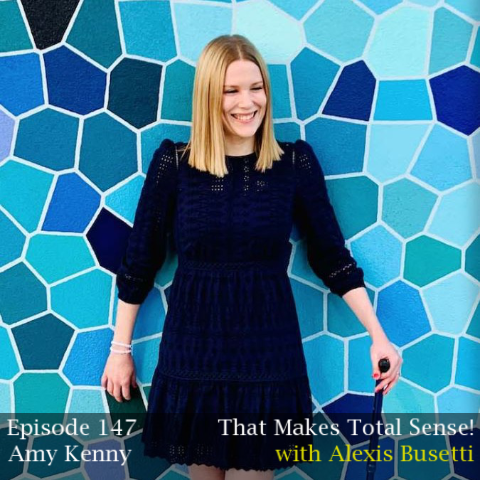
Speaker 0 00:00:07 Welcome to that makes total sense. A podcast dedicated to exploring God's generosity and justice. I'm Alexis, Boetti a Christian aiming to ask good questions and encouraging you to do the same. Every one of us is wired by God to live out generosity and justice, but the how sometimes alludes us that makes total sense is a way for us to get together, posture ourselves as learners and challenge one another to practice generosity and justice in a tangible way every day. Okay. So I am looking at my guest and nodding my head and saying I'm not promising to not cry again, but <laugh>, I've already done it once. So maybe, maybe it'll be done since we press record. I'm already so blessed to be sitting here with Amy, Kenny, who has written a phenomenal book called my body is not a prayer request, disability justice in the church. Amy, thank you so much for being here.
Speaker 2 00:01:06 Well, thank you for having me. I'm really excited for the conversation that we are about to have.
Speaker 0 00:01:13 You know, I feel like, um, <laugh>, I feel like I just kind of wanna jump right in with the, I mean, the subtitle is super important. I wanna talk about justice. This is kind of my Mo this is what we do, but I feel like I really wanna talk about this. My body is not a prayer request because the way it's almost the way you open the book with what you call, um, prayerful perpetrators <laugh> and people who are coming. And I'll say it. I think this is what I heard when I read it. People are coming and imposing their own will on your body. Um, absolutely. And this hasn't happened just once or twice to you or to other disabled people. This is a story that I first heard 20 years ago when I was in college. And I was, I was, uh, in close relationship with someone who had a disability and she, um, went most places in a motorized wheelchair and, and was a churchgoer as well. And, and I was so surprised at her agency in saying, stop it and dumbfounded at the same time that she had to use that. So, uh, Amy, I, I know that might feel like kind of a weird place to start, but, but you have bring so much humor and grace to it that I would love it. If you would start with those prayerful perpetrators in your book.
Speaker 2 00:02:35 Yeah. I had to give them a name because they have had so many faces in my life because this has happened to me so many times, whether it is at church or just at the local park, Christians come up to me telling me, God told me to pray for you or what sin is preventing you from getting up and walking and then proceed to pray for me often without my consent. So I will sometimes say, oh, actually, I'm good. Thanks. I've already met Jesus. I'm I'm not in need of these curative prayers. And they will not know how to respond to that, except to deny that that could be a response. They'll say, no, you need to hear, God wants to heal. You. You need to be prayed for, they have also made me potions as curatives <laugh>. I mean, so it's a little bit absurd and I do thank
Speaker 0 00:03:27 Christians, love their essential oils. This is true. Right. And, and our spices, right?
Speaker 2 00:03:31 Yeah. I mean, I'm just one Ric tea or one essential oil away from leaping up out of, um, out of my mobility, scooter, chariots of fire in the background, everyone cheering. And I have to, I have to laugh to keep from crying and raging because it has happened so frequently and it does treat my buddy as a type of public property. It says that there's something wrong with me just by virtue of the presence of a mobility aid, whether it's my cane, um, uh, wheelchair or a mobility scooter. And it also connects disability to sin and all of those assumptions, a really dangerous, not just for what they say about me and other disabled folks, but for what it says about God. And it assumes that God is not already at work in and with my disability. And that's just not true in scripture. And that's just not true in our lives.
Speaker 0 00:04:30 Yeah. Thank you so much. Um, <laugh> I just, I I'm thinking back to the list that you have at the end of that chapter, and you're, you know, you're one trimer too, I'm like, or garlic in your socks or, you know, <laugh> yeah. All of the other curative things that you list that people have mentioned to you over the years,
Speaker 2 00:04:48 Can you believe I'm still disabled? I mean, <laugh>, how could it be <laugh>
Speaker 0 00:04:53 I don't understand. You must not have enough garlic. I just can't. I just can't handle it. Um, while, while you were talking while I was talking, I was realizing the, the way that you actually opened the book is just put the short note on language. And so I think that that might be helpful, um, because I've already found myself kind of going back and forth. So can you maybe, um, the note, the same note that you did in the book and then how you identify and how you call yourself?
Speaker 2 00:05:19 Yeah. There's so much debate and ink spilled over how we should talk about disability and the sort of two prevalent ways usually to talk about it is identity first language or person first language. So whether or not we say people with disabilities, or if we say disabled people, I use disabled person, disabled people, disabled woman, for myself, as a way to reclaim the word. There's nothing shameful about me and my body. And also as a way of showing that this is a core part of my identity. So when people say people with disabilities, there's nothing disrespectful or wrong about that. But I think, well, it's not my roommate or my handbag. I'm not just hanging out with disability sometimes. <laugh>, I don't live with disability as though it's my roommate. I am disabled. That's a core part of the way that I engage the world and the way that I am treated by the world. And so it's also a core part of the way that I engage church and scripture and God. So I use disabled woman or disabled people as a way to reclaim that. But I have respect for the wide range of terms that people wanna use to describe their own body minds. If they're disabled,
Speaker 0 00:06:40 Thank you for sharing that. Um, I may interchange them. I have a, a old so back. My kids always make fun of me when I say back in the day, but I'm like, listen, this is, you know, my pastor said her, her, uh, kids sometimes describe the nineties as the late 19 hundreds. I'm like, listen, this is, oh, wow, this is unacceptable. Right. Um, so, but you know, back in the day, this was one of my, one of my first drops out of college was as a state case worker. And so I was trained like professionally in that space with people first language. Right. Um, and so I didn't work, um, directly with people with disabilities. Usually I was in a different department, but they train us, you know, kind of generally, and then down to our specific functions at the time. And so, um, and so I may end up saying both as kind of habit, but I appreciate the way that you, um, that you express that, that you choose to be identified.
Speaker 0 00:07:34 And I, and I appreciate that. Um, you know, that also just that extra piece of like saying this is a core part of who you are, this is not just something that is, um, you know, attached to you or some sort of, you know, appendage or something like that. And, and this kind of takes me back to where, where I wanna go with this after the prayerful perpetrators is that this being disabled is a core part of who you are. It's a core part of how you engage with the world. It's a core part of what, how you engage socially. And I love that you really, I feel like a strong point throughout the book is that we, I think we don't, but we should. I think theologically, you make the point very strongly. We don't generally, but we should value disabilities as part of God's diversity.
Speaker 0 00:08:28 Um, that we see this in people, we see this in all parts of creation. Um, and so this being a core part of who you are isn't as some of the peripheral perpetrators have, have, it's not a, it's not a shameful part of who you are. It's not a, an inherently wrong part of who you are. It's not connected to sin, but instead, what if we looked at it in the way that I think you make a strong point as accurate that this is a part of the diversity that God, um, created in the world. So can you unpack that theologically a bit for us?
Speaker 2 00:08:57 Yeah. I think that there's a few points in scripture that I think really speak to this one is that God takes credit for disability to Moses God, isn't saying, oh yeah, that's a bit of a mistake. Isn't it? How embarrassing no God's taking credit and talking about how Moses will be extended divine accommodations because of disability. Not that he is somehow, um, incapable or unable to do the, to answer the call and be faithful because of that disability. So that seems really important to me in this conversation. Another thing that I think is really important is the way that Jesus imagines new creation in this great banquet scene. Jesus talks about there being poor and disabled people. There. There's no mention of cure. There's no mention of condemnation. It's only community and poor and disabled people are invited first. And whenever I've said that in a church setting, I there's a quick retort of, oh, but that's just figurative.
Speaker 2 00:10:06 It's just figurative disability. No one wants to change bodies with me though. You know, there's this way that we are all biblical literalists until it comes to something that we are a little bit uncertain about or makes us uncomfortable because of the shame we've inherited because of ableism. And then we don't realize how that's impacting our theology. There's a lot of other points in scripture as well, where disabled people are seen as prophetic or having a gift because of disability or it's connected to blessing. I think about everyone from Jacob to Jesus, to Paul. And so this idea that disability is somehow inherently sinful and that it is connected to something that needs to be erased or eradicated come new creation, or now is a really harmful idea that isn't, um, I think people wanna blame the Bible for it, but it actually is more connected to some of the ableist lenses that we put onto the Bible, I think.
Speaker 0 00:11:13 Yeah. Um, thank you for sharing that. I wanna go deeper in more of those places a little bit, you know, as we continue, I think that will be a natural place for us to go. Um, but in that response, you, um, use the term ableist a couple of times. And, um, that might, I don't know if that is a phrase that is familiar to everybody. I would say, unfortunately, because this is so much a part of the culture that we're in, it's the air that we breathe. We may not even understand what you mean when you say ableist. So can talk about that a little bit.
Speaker 2 00:11:56 Absolutely. Ableism is the idea that some body minds are better than others. It creates a hierarchy of humanity that says that non-disabled bodies and minds are better and inherently worth more than disabled body minds. We see that this is connected to everything from racism to sexism and misogyny, to queer phobia, to fat phobia, the way that we are creating some sort of hierarchy of humanity and saying that this person has more worth because of thinness or whiteness or non disability, that's all connected to ableism specifically when we're talking about disability, it's any sort of discrimination or thinking words, action that is perpetuating that hierarchy. And it harms disabled people really specifically, because we can't keep up in a system that says we are inherently defective, or we are inherently worth less as people who believe that everyone is made in the image of the divine. There's no junior divine. <laugh>, there's no lesser holy spirit. There's no less than when it comes to that. So it's so often talked about this idea that we're all made in God's image, but when it comes to disability, that doesn't really bear out the way that we treat disabled people in church contexts, because it's as though there's little asterisks there and we seem to suggest that everyone's made in God's image, but those who are disabled are somehow portraying it less.
Speaker 0 00:13:42 Yeah. I, I wanna say, um, a thing about the, the connection there too. And so I think we could, we could talk about this globally, for sure. Although I am like not educated enough to talk about that in a, in a really meaningful way. I'm gonna pretend I am in the American context for a minute, just because I've lived here for a few decades, um, 40, but, um, you know, I think that when we, when we look at this and we, and exactly the description that you gave, that there, that people, that disabled people are inherently worth less, that there is a hierarchy. I think we, we can see this connection pretty easily when we go to our founding, right? When we say we, we, um, you know, as a country stole and, you know, we stole land from people that we called savages, right?
Speaker 0 00:14:32 We create, you know, there's a hierarchy there. This is what part of white supremacy, right? We, um, stole people from their homes and their land and enslaved them. And then when it came time to count for taxes and things that would be beneficial to the people who were ruling, then we determined that they actually were less than human, right by giving them a fraction of an identity. Um, and then the people who wrote this and voted on it were all white men who had enough money to own property. So they were rich. So this is connected to some, you know, discrimination when it comes to poverty and sexism, right. Because women were not allowed a vote as well. And so all of these things in our culture, in our founding are baked in, um, from the beginning and they're all connected. And so there's something that is particularly disturbing about ableism though. Um,
Speaker 0 00:15:35 In part, because, and I don't know, I'm kind of talking to think here, but I'm like in part, because it is such, um, it's a, it's really largely encompassing, right? You can be a disabled woman, you can be a disabled black person. You can be a disabled child, you can be a disabled, uh, native American, right? Like all of these things, it's like, it doesn't, it's like, we'll just, just lump everyone together. And then this entire group of people, which Lamar Hardwick points out by the way, is the only minority group that you can enter later in life. <laugh> right. So anyone could, you know, could enter this group. And then all of a sudden you are less than, this is not what God has ordained for us as yeah. As people, as people, but as the church.
Speaker 2 00:16:26 Yeah. And so much is tied up that I think in these notions of self sufficiency, independence, productivity, all of which are connected to ableism and upheld by ableism and white supremacy and all of these systems that we're talking about disabled people can't produce anything that the capitalist market deems worthy at a rate fast enough to, um, to allow for any sort of independence or self sufficiency or productivity. And so all of those myths that you can kind of get away with believing when you're, nondisabled in some ways, for longer, they're really harmful to everyone, but particularly to disabled people who really can't keep up. And to your point, all of these ideals are enshrined within the legal system. So racism and sexism and ableism have all been into woven into this tapestry of oppression. The, the way that disabled people still do not make the minimum wage here in the states, it's still legal to pay disabled people under minimum wage. We don't have marriage equality. 80% of polling locations to vote are not accessible. Those are just a few of the examples of how ableism is so much a part of our system that it almost becomes invisible. It's difficult for people to even recognize because it's what we consider normal. And so we then confuse what is normal and what is natural.
Speaker 0 00:18:03 Gosh, that's so good. Yeah. And, you know, I, I can't help, but thinking, as you know, we're thinking through this right now that, um, in, in no way, do I think that either one of us want to, and, and you certainly didn't in the book, but I don't think either one of us in this conversation want to come through and, and shame the church in any way. Um, but I do want to bring up that, um, there is a deep regret that I feel as I learn how, um, the church in many of those systems that we just named in many of those in those isms that we just named and, but including ableism, how, um, it's disappointing and it's regretful that the church has not been, um, a leader, kind of a beacon in this space, um, toward, um, inclusion and equality. And all of the things that biblically we know are the values of God. Um, and instead in some places, the church, um, in America has actually fought against, um, those things when it comes to the legal system. And you mentioned that, um, specifically with the, um, with the ADA, um, the, uh, American disabilities act, I think, um, yeah. So, um, so can you talk about that just, just a little bit, I think it's important for us to know our history, um, as a, as a church, um, in this country, when it comes to ableism,
Speaker 2 00:19:27 It's heartbreaking, isn't it? It's the exact opposite of loving your neighbor. So in 1990, when the Americans with disabilities act was signed into law, and this is the law that gave us Cub cuts, accessible bathrooms, it gave disabled people, the right to public spaces. It's very much a floor, not a ceiling. So we still have a lot of work to do from ADA. We could be building on it and grow from it. Um, but even so many churches for against the ADA, because they said it was against religious freedom and it was too costly. And so even today, religious schools, churches, any sort of communities that are religious, do not have to follow ADA. So it is legalizing discrimination against disabled people. So if you are thinking, well, yeah, I wanna support disabled folks, but I just don't really have many disabled folks in my church that is deliberate segregation that has been codified into law because churches fought against ADA. And then we wonder why my body becomes public property. Well, if you are not used to seeing disabled folks in your community, then you are led, believe that there aren't disabled folks in your community, or that being disabled and being a Jesus follower have to be separate paths and have to be bifurcated. And so this segregation is horrific in and of itself, but it has led to a lot of the ideology around disabled people in S as well.
Speaker 0 00:21:07 Yeah. I mean, that's, that's a really good point. I know the statistic that stood out in my mind is that in the United States, 25% of the population is disabled. And so to think about how so few non-disabled people have disabled people in their lives on a regular basis, again, like my mind keeps going back to some of these other things. Yeah. Well, right. White people don't have any friends except for white people, either the stats tell us, right. It's very similar because people tend to hang around with people who just look like them. And we could probably have a whole other podcast on, you know, on, uh, on just that. But I think it is important to name that again, as you say, because this has been intentional, you know, when we can talk about churches, when, when I was growing up, um, the, uh, special ed classes, it was called was not mainstreamed with, you know, none of the students were mainstreamed with the, with the rest of the student population.
Speaker 0 00:22:03 So we had, I'm thinking back even to my elementary school, right. There was this even a designated lunchtime for kiddos who were in this, you know, special education classroom. Right. And, and none of the non-disabled students and disabled students really interacted together at all. And, um, and I know that there has been some work toward eliminating that segregation, but it's still very present, um, at a lot of schools, but also churches and things like this when you're, when you're, um, talking about that, the ADA, and even, even like historical architecture and things like that, like places that get automatic exclusions or parks, or, you know, all of these kinds of places, um, where by, just by the definition of how they were designed, exclude a large number of people in the population, um, I wanna bring special attention. Um, <laugh>, you've got all these super great top tens at the end of each <laugh> capture.
Speaker 0 00:23:07 Um, but the one that I thought, oh, dear is the, um, oh, Craig, now I can't find it. But it's the one where, where you ask the reader to take a quiz. Right. Have, have, have you experienced any of, um, any of these things? And I think people will be familiar with that kind of quiz because we've seen it on social media when it comes to white privilege. Right. You know, have you have, has this ever happened to you and been stopped by the police, is someone, you know, ever crossed the road when they were, you know, um, past you and things like that, but you have one, oh, Amy, I can't find it, but you have one when it comes to, um, when it comes to this kind of, uh, exclusion that we're talking about, can you give us, cuz I can't find it a couple of examples. Uh <laugh> yeah. That, um, probably people that, um, non-disabled people probably haven't even thought of. It's never crossed our minds before.
Speaker 2 00:23:59 Yeah. It's everything from when I go out to a restaurant, do I expect that there's a restroom there that I can use? There is not always a given that there will be an accessible restroom when I am at my workplace. Do I expect that there is an evacuation plan for my emergency, the evacuation plan at most workplaces for disabled folks who use mobility aids is just wait in the corner. You can't use the elevator. You can't use the stair. Just kind of wait here, fingers crossed. Hopefully someone will be back for you when I go to a concert, can I sit with my friends or am I off in some other section? That's the accessible seating section. When I go to a coffee shop, does the barista look me in the eye? Or do they ask my companion or spouse? What do they want? All of those aspects that are part of my everyday life and the lives and many others at the lives of, you know, 26% of the us population and 15% of the global population in my experience, nondisabled folks have literally never considered any of these elements. So there's so much systemic ableism in the physical structures in the way that we create space that we often don't think about, uh, whether or not there's ramps or stairs or sensory rooms or, um, smells or SCS or different aspects for folks who are blind or low vision or deaf. But then there's also the ableism of attitudes that we've talked about. And then there's this systemic ableism of, there are so many barriers to access, any physical space, a school, a church, a restaurant, a concert that nondisabled people are largely just completely unaware of.
Speaker 0 00:25:58 Yeah. Um, there's a section where, um, gosh, I don't, I may be, I may be getting two places crossed, but I'm thinking about these religious spaces in particular and um, you know, there's one where you talk about going up to this beautiful prayer room. Right. But, um, and when you got there, it was beautiful and, and um, but it just wasn't accessible for you to get there in the first place. And the other one is the ramp with this, with the stairs. And so now that, now that I've kind of like, just given you a little prompt, I'm, I'm wondering if you might just even kind of retell some of those stories and the, and the impact, um, cuz that was those really emotionally impactful, um, places for me in the book to read from your perspective, um, how those religious spaces have, um, yeah. Impacted you.
Speaker 2 00:26:49 Thanks. Yeah. It's emotional to have lived it and to think about it as well, because I do expect more from my siblings in Christ. The, the, one of the ramp is that the church that I was, uh, really heavily involved in serving, leading at the time, giving a lot of my spoons and time and energy to had two or three little stairs out the front. And I asked for a ramp to be put in and was told that that was not stewarding tithe. Well, and it was then I was also told that I'm the only disabled person there. So it wouldn't be beneficial to enough people, you know, have you heard of a parable where Jesus talks about going off to the one? I don't know that might be worth reading, but even that's just not true that I was the only disabled person there, but even if that was true, do you think that might be connected to your lack of accessibility? <laugh> those two things are connection when
Speaker 0 00:27:52 It came first. Right. Right.
Speaker 2 00:27:55 And also just wanna say that every disabled person is worth the cost of inclusion, even if it does cost money or time or resources. And I think sometimes that's starting the story in the middle because that same church had a donut wall and gave Starbucks gift cards to people in goody bags. So somehow it found the money for those elements, but not for $130 portable ramp to put in for me to use, to access the physical building, very similar to a lot of church spaces that I've been a part of, either a prayer room or a Bible study or a small group is upper flight of stairs. And I will be carried there and everyone will make a joke about carrying one another's burdens except I'm the burden. And while I'm grateful to those who carried me up the stairs, I shouldn't require the bran of my husband, of friends, of people in the community to carry me if we could just make spaces accessible in the first place. And generally these experiences have come with a lot of defensiveness, a lot of excuses around cost and convenience, and really just an unwillingness to change and to think about how this impacts a large percent of the population. 25% is one in four. So while of course not all disabilities are mobility aids or physical or even visible. If you think about that's your attitude to someone leading in your church space, then how many other people are you excluding just by virtue of saying you are the only disabled person here.
Speaker 0 00:29:42 Yeah. I think, you know, I've been thinking a lot lately about just the church's ministry of hospitality. Um, and, uh, and we lack in that a lot. Um, and, and that is one of those, uh, places where I'm just saying we're, we're physically by, by not, um, intentionally being inclusive are physically putting up a barrier to welcoming everybody, right. Welcoming everybody that Jesus, um, welcomed that he asks us to welcome that he says we're welcoming if we we're welcoming him, if we do, um, welcome the, um, in these ways. And, um, yeah, it is, it it's, it's heartbreaking. I think that was probably the, you know, you, you spend a lot of time in the book on, um, some of these cultural things, like, uh, we've talked about the prayer for perpetrators, but um, disability doubters and, and the tropes and media and things like that.
Speaker 0 00:30:42 And you, and you spend a good deal in the book, um, on theology as well. I think what was, um, telling to me we've, we've touched on it already, is that with some of these things that I want to ride off to this secular culture that is so nasty sometimes to people, whoa, this is us man. This is like, <laugh>, we are just, we are just not doing a better job than anyone else. Um, when it comes to our love for disabled people in our community, um, at the same time, your book is really funny. And I'm wondering if you can tell us about some of the disabled, uh, disability doubters sections, cuz you talked about, you know, um, not every disabled person needs a mobility aid, not every disabled per not, not every disabled disability we can see. Um, and so that culturally gets really tricky and weird sometimes. Um, and, and you talk about that in your book with people who have kind of asked you to prove
Speaker 2 00:31:54 Yeah.
Speaker 0 00:31:55 Your disability.
Speaker 2 00:31:57 Yeah. It's as though people think that every cane is a con you know, we're all out here to get something. And I don't know what people are getting from being disabled. I'd love to see the prize room cause where is it? But I think that that comes directly from a number of TV shows that display people faking disability to Ghana, some sort of money or insurance reward, or even to get a date or things like that. And then that's just seeped into our imaginations and we haven't really bothered to ask, is that even true? And the statistics spare out that it's really not. That's just a plot device in TV that actually happen regularly enough in real life to warrant the amount of people who accustomed me in the public space, accusing me of faking it's everything from people saying you are too young to be disabled, to stop using your grandpa's placard.
Speaker 2 00:32:55 My grandpas ever even been to the us <laugh> I'm from Australia. As you probably hear it in my muddled accent, um, to, you know, this idea of you are too pretty to be disabled or you can't be disabled with a smile like that. No amount of smiling has ever changed my disability or has ever turned stairs into a ramp. So it's people making jokes or comments on the one end and then goes all the way up to at the DMV being asked to produce way more paperwork. When I have all of the forms signed to receive my license plates, it's being accused of faking there. It's when looking for accessible housing being told that they can't give me accessible parking and being made to fill in pages after pages, after pages of paperwork, proving that I'm disabled when I have all of the documentation from, from doctors. And of course just a, an asterisk on all of that, even that is a privilege to be able to have that documentation from doctors, not everyone has that. Not everyone can afford to go to doctors for a doctor's note saying you're disabled. So just thinking about how many systems are at play here to prevent receiving accessible housing parking and just the right to exist in public.
Speaker 0 00:34:22 Can you talk about the, when you, when you talk about the <laugh> the prize room that doesn't exist? Um, I have had a couple of close relationships with disabled people, long term over, um, the course of my life and um, this, uh, this disability payment from the government and all of this, you know that you, you talk about a little bit and it's like, this is, this is not, this is not making anybody a millionaire, but there's also all of these other ramifications, including what you talked about, marriage equality, we kind of breezed past that earlier, but I kind of wanna revisit that in this space because this is, this is super
Speaker 2 00:35:01 CR
Speaker 0 00:35:02 Crazy, but this is, uh, to me, it's one of the evidences of how we can talk about this being baked into our system and how completely unfair and, and, and UNE inequitable. This is
Speaker 2 00:35:13 Yeah, so many people don't realize that disabled people in the United States cannot collect disability if they get married. So what ends up happening is many disabled people will not get married because they need to collect disability because that's what allows for them to survive. And you have to choose between getting married and collecting disability. Also, the system means that you there's a rule within it, that you cannot have more than $2,000 in assets, including car, wherever you live, um, anything you own and in your bank account. So the system deliberately keeps disabled people collecting disability in poverty, $2,000 in most places, isn't enough to live on in one month, right? So you can't have any more than that. If you are to collect disability and then that's not even taking into account that thousands of people die, just waiting to hear if they are approved to collect disability, because the process is so long and tedious and it makes you go through so many different stages of paperwork and such a lengthy waiting period that I think the last count was 10,000 people have died in the last 10 years, just waiting to learn if they will be approved for disability payments.
Speaker 2 00:36:37 Most disabled friends, I know are not receiving any disability payment from the government as a result of all of those restrictions, myself included. So this myth that with somehow making money off of being disabled, couldn't be further from the truth. And even those who are collecting disability because they have the need to do so, cannot get married, cannot own more than $2,000 in assets have waited so long to even be able to collect that. And then the money that they receive barely covers a, you know, the, a living wage. So this myth is really held up by the ableism that says that if you are not producing constantly, you are not worth being a human. You are not worthy of care. You are not worthy of rest. And that is just a core spiritual lie that we need to call out and really dismantle.
Speaker 0 00:37:37 Yeah. Amen. I'm glad you said it. I'm glad you said it that way. Um, when we talk about being made in the image of God to, to kind of PI piggyback off of what you just said, um, part of that is that none of those things that you said matter, we're not loved and valued and given, dig dignity by God, because we can produce something or because we can make something or because we can work hard or, um, any of those things at all, right. Um, this is one of the reasons that, um, you know, so many Christians are so hardcore about their, um, conviction of, of, of pro-life, uh, meaning, uh, you know, against abortion because the dignity of the human, um, growing inside of a uterus is valuable and, um, and beautiful and, and, and inherently worthy, right? Um, because we are made in the image of God, which is something that's incredibly hard to grasp. Um, but I wanna take that a step further, um, and kind of provocatively as you do near the end of the book and talk about God as being a disabled God.
Speaker 2 00:39:04 Yeah. This one people have a tricky time with, because it really is a litmus test for what you think about disability and how far you have internalized some of those ableist ideas that we've been discussing thus far, God can't be disabled because disability is bad or disability is less than is something. I hear a lot. When I talk about my connection with the disabled God in Ezekiel and Daniel, we receive this image of the throne of God, having wheels within wheels, a chair that has wheels sounds a lot like a wheelchair to me, it's not that complicated. And so I picture my wheelchair as being reminiscent of the fiery turquoise throne of the living. God, when we see Jesus post resurrection, Jesus has wounds. And he says to Thomas, put your hand in my side, look at my scars, bless it of those who have seen and believed blessed of those who don't see and believe.
Speaker 2 00:40:14 And that is a disabled Christ. Jesus can defeat the powers and principalities and death itself, but chooses to come back disabled. The imperishable body. The only example of that, that we have is disabled. I don't think that's an accident or happenstance. I don't think that's a whoopsie, oh, I defeated death, but I couldn't get rid of these scars. No, that doesn't make sense. Jesus is beautifully disabled. And that disability speaks to our redemption and our healing. So when people try to pre me away, or when people give me poems that say no wheelchairs in heaven, it doesn't really make sense to me because why would I be ashamed of my disabled body? Because it is reminiscent of the crucified Christ.
Speaker 0 00:41:09 Yeah. Oh, I wanna, I want, I want you to keep going and, and you'll know where I'm going this because I'm a brown-eyed girl. <laugh>
Speaker 2 00:41:21 Amazing.
Speaker 0 00:41:22 And, and when you started worshiping me away in your book with your example, I, you know, intentionally by the author, right. I felt a little twinge. Yeah. There no wheelchairs in heaven, no brown eyed girls. Uh, uh, tell us, tell us about what that does. Um, when we stand on this theology of kind of a, a perfect body, um, in whatever sense we have, we have made that in our minds.
Speaker 2 00:41:55 Yeah. So people are probably confused right now if they haven't gotten to that part of the book yet what's wrong with brown eyes, <laugh> for
Speaker 0 00:42:01 Sure. For sure.
Speaker 2 00:42:01 That's the point? Yeah. The, that is in a chapter where I recount a scenario where I'm at church and with singing a song that says that there are no lame in heaven because in Jesus' presence will finally be healed and whole, and the mood is so celebratory and everyone's excited and no one really wants to make eye contact with me, but everyone's sort of indirectly looking my way with that ping head cocked side glance of, oh, there's a poor disabled woman, poor thing. At least she'll be whole in heaven. Ooh, why that's dangerous is because it suggests that we have to cross some magical thresholds into this afterlife in order to understand disabled people as whole, or as made in the image of God to connect to what we've been talking about. And I connect that to what, if everyone was singing no brown-eyed girls in heaven and thinking that that was so celebratory and people were jumping up and down and cheering and, and you had brown eyes, that's an intrinsic part of you that you didn't choose and you can't change.
Speaker 2 00:43:17 And maybe you like your brown eyes, maybe you don't, why wouldn't you they're glorious, but maybe you, you like them, maybe you don't, but it feels a little bit squidgy for a whole room full of people to be celebrating that that will be gone. And I think what we've done with heaven and with new creation is that we are making heaven in our own image of perfect. Instead of actually reading what Jesus and others in scripture are telling us about new creation and actually thinking about how the holy spirit is working in our lives now to give us imagination for what that can be. We want it to be that there's these 26 year old Baywatch buddies, where everyone is, looks a certain way. And that is definitely influenced by our Western ideals of what a perfect body is. And we just don't get that from Jesus and this disabled resurrected Christ. I don't think that that's this version of heaven that everyone is singing about and celebrating. And so I call that out in the book and invite people to rethink how they think of mobility, aids, how they think of disability and really how they think of new creation.
Speaker 0 00:44:36 Yeah. I, um, I wanna go, I wanna go there and that may be the last place we touch, although Amy, I really wish we could almost just do an episode on each chapter because it's, it's so rich. Um, but you know, one of the things that stood out to me in, in that section of the book is that you help, if I've heard you incorrectly, please, please. Correct me. What I feel like I took from, from the part of that section was that you do hold to a belief that there will be no pain in suffering in heaven, but that, that does not mean necessarily that there will be no disability in heaven. And in part that is because there are things here on earth that now of course, yes, there are some things that are inherently painful because of the medical conditions, right. And that, and that varies.
Speaker 0 00:45:34 Um, but a lot of that pain and suffering we've talked about is because we do not have an inclusive society of all people disabled and non-disabled, and that, that in my, in my own words, can't possibly be heaven, right. That can't possibly be what we're looking forward to. Um, and so I'm hoping you just take that wherever you wanna go, whether it's, you know, theological in heaven or, you know, some of the really practical things that you talk about here, um, on earth and in our culture, when it comes to, um, accessibility and inclusion and, and on all of those things and kind of that differentiation,
Speaker 2 00:46:16 Yeah, there's no pain, there's no suffering. And as you're saying, disability and pain or ven diagram, and sometimes they overlap and sometimes they don't. And sometimes where they overlap ableism is the center, right?
Speaker 2 00:46:30 So disability being, not a monolith and the broad category that it is, there's such a range. Some of us deal with chronic pain, myself included. Some of us, um, have different aspects of body minds that aren't physically painful at all. And the pain is from ableism and exclusion and the way that people treat our bodies as public property and doubt us and try to pray us away. And I invite people to really think about why is it so important to you that disability is not in heaven? <laugh> because that's really a revealing question. I'm not actually arguing that it for sure is a hundred percent end of, you know, mic drop. None of us can know that. And I think it's more important to really reflect on why are we singing about it and why are we celebrating that really what I receive in that church service and in many others where it has been celebrated that my full self won't be heaven is, is a type of eugenics, a type OFIA. If you can't celebrate heaven, unless it has no disabled people, Jesus, can't be there 25% of your neighbors here in the states, can't be here 15% globally. Can't be here. That doesn't sound like heaven to me. And I think what needs to be healed is ableism.
Speaker 0 00:48:02 Amy, thank you so much. Um, I'm gonna leave the last question with you, which is, um, what did I, what did I not hit on? What did I not bring up that you really would say, man, if, if, if I could leave this conversation, I need to say this, I need to say this last thing before we go, what would that be?
Speaker 2 00:48:23 Just affirming. Everyone's lovely brown eyes. <laugh> I think <affirmative>, I think so much of this conversation is probably new to some people or pushes on some wounds or some tender places in people. And so I would just invite folks to not dismiss the places that are uncomfortable and to not flee and to not lean into the shame spiral either. Cuz that's not what either of us are intending here or would want, but instead to have a meeting with ourselves and just think about what can we learn from the disabled Christ, what can we learn from our disabled neighbors and how can we take all of the fears that we have about disability that we will become disabled one day that our loved ones will, all of those fears that come up in these interactions? How can we let the perfect love, cost those out in, not costs those out enough for us to love on Abe as well?
Speaker 0 00:49:30 Amen, Amy, that's a good word. Thank you so much. Um, again, this is, uh, Amy Kenny's brand new book. My body is not a prayer request, disability justice in the church. Um, I also wanted to just name a couple of other resources. I'm gonna put the link so that people can grab this book. It's also really beautiful just by the way. Um, and Amy's voice and this is thanks, wonderful and encouraging and hysterical and challenging and all of those wonderful things you want from a book. Um, but I also wanna just name a couple of other resources really quickly that I think will be helpful. In addition to this, um, Lamar Hardwick has also written a phenomenal book. I believe that one's called disability in the church. Is that right? Amy? I don't have it pulled up.
Speaker 2 00:50:14 Yeah. Is it disability inclusion in the church?
Speaker 0 00:50:16 Maybe something like that. I'll put it, I'll put a link to that one as well. I've also talked to Lamar, so I'll put a link, um, to that conversation. And then also I just wanna pull out if people are intrigued by some of the theology that we've kind of, you know, just not had time to go really, really deeply into. I also wanna just mention DRMO young, um, and some of his work, um, he is cited in Amy's, uh, book. He is an endorser and he's also, uh, happens to be the Dean of my <laugh> of my department at school. And, um, and his work in this space of disability and theology is very, very deep and well founded and well respected. Um, and so I'll just kind of put that out there. He also, I don't know how he writes so much, but he just kicks stuff out.
Speaker 0 00:51:00 And so he's got tons of resources for people who wanna go a little bit deeper. Um, theologically Amy, is there anything that I'm missing that I can, that I can, uh, link for people that would be a great place to stop theologically? And then I would say Alice Wong's disability visibility is a good volume of lots of different disabled perspectives. It doesn't connect to the chat or theology, but it's just good to think about what disabled people are saying beyond the chat as well. Awesome. Thank you so much. I'll get that linked as well. Thank you so much, Amy. I appreciate you being with us today. Thank you. It's great to be here. The links for all the resources mentioned in today's episode can be found in the show notes, music and podcast production by Seth BTI. Be sure to give us a review on iTunes and subscribe at your favorite podcast listening app, you can also visit us at that. Makes total sense.com.