Episode Transcript
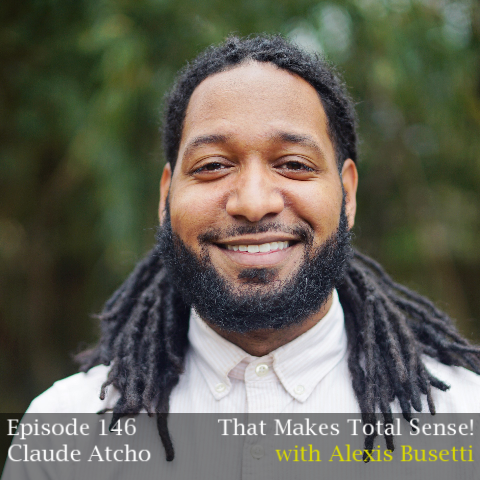
Speaker 0 00:00:07 Welcome to that makes total sense. A podcast dedicated to exploring God's generosity and justice. I'm Alexis. Boetti a Christian aiming to ask good questions and encouraging you to do the same. Every one of us is wired by God to live out generosity and justice, but the how sometimes alludes us that makes total sense is a way for us to get together. Posture ourselves as learners and challenge one another to practice generosity and justice in a tangible way every day. Hey everybody, I have spent the last two days largely engrossed in Claude achos new book, reading black books, how African American literature can make our faith more whole and just, and Claude is with me today. Hey Claude.
Speaker 2 00:00:58 Hello? What a pleasure to be, uh, on, thank you so much, Alexis.
Speaker 0 00:01:03 Yeah, I'm, I'm super excited. Um, I feel like there is a confession I have to make right off the bat, which is really hard for me, for someone who has taught literature, who this is your Mo I just don't read fiction <laugh> mm,
Speaker 2 00:01:19 Mm.
Speaker 0 00:01:20 Like I almost never read fiction. Poetry is even less. So for me now, I, I read a ton, right. I'm a seminary student. I'm a podcast. I was like, I read a ton and, and I like to read just for fun as well as those two things, but fiction, I just can't make myself do it. Mm-hmm <affirmative> and then I'm reading this and now thank you. I have like three fiction books now that I have to go out and buy
Speaker 2 00:01:43 <laugh>. All right, come on for
Speaker 0 00:01:44 My next school break. <laugh> yeah, it's crazy. I won't spoil right now what they are. Um, but this is a book about reading black books. So, um, for people who may be less familiar, kind of even just with the format of what this book is, can you tell us maybe, um, what the format is and then kind of zoom out and tell us like your larger picture and your larger goal, um, as you were, uh, compiling this work?
Speaker 2 00:02:12 Absolutely. So the way, the, the way the book works is I look at a key African American, uh, text, um, mostly novels, um, uh, in three chapters that deal with, uh, deal with poems. Um, but looking at a African American text through an in conversation with kind of a, a Christian or theological reality. So for example, novels are paired up with, uh, the idea of God sin, um, Jesus, uh, healing and memory, racism, justice, hope, things, things of that sort, and really, uh, zooming out my hope with this project is that it would help readers to, uh, under understand and, and see that, um, God's story speaks in conversation and two, the concerns needs and hopes of black stories. And that actually, as we read, uh, African American literature in this sort of, uh, theological way, um, our discipleship, our faith, our, our living, our theological thinking is, is enriched.
Speaker 2 00:03:14 We, we become, uh, um, more rooted, more full, more robust in our, in our discipleship to Jesus because these stories are raising questions, uh, wrestling and dealing with things that are both universal, but also a particular. And sometimes that particularity is lost. And so when we engage in these stories in the way that I propose and suggest, uh, we gain, um, we gain so much and it, and it makes our, our lived faith, uh, richer, fuller, healthier, uh, and I think from my perspective, more, more biblical, um, and, and true, and right, so that, that's kind of what the book is up to.
Speaker 0 00:03:51 Yeah, no, I, I loved it and I love this. Um, I love this concept, although I have to say, I'm, I'm curious with, um, some of the conversations that you've had, maybe even as you were just kind of, uh, you know, pitching this project because the, the works that you engage are by O well, I see the works, first of all, are not explicitly theological. Right, right. Um, and, and the authors, um, you know, some, some may have professed to be Christian, but, um, even if they did, you know, you may run into something where maybe they, maybe they did for a time, or they didn't, or some of the views that they, um, profess are not like, kind of Orthodox in quotes. Right. Mm-hmm <affirmative>. And so engaging with these texts that aren't explicitly theological from authors who aren't, most of them aren't explicitly Christian, I'm just kind of curious, like what, in, in the Christian world, what were some of the conversations you had about doing it in this way? Like looking through a literary and a theological lens at these texts by these authors?
Speaker 2 00:04:56 Hmm. That's a good question. You know, I, I, I think I haven't had too much wrestling on that point and maybe that's because no one, oh, good. You know, no one's aware of my project and to tell now that it's coming out, so maybe I'll have that in the future. So maybe I'll, I'll come back and answer that later. I mean, I, I think for me, what I was concerned with was just sort of, um, and I mentioned this in their, in their, in the introduction, uh, of trying to be mindful that, uh, I'm not making the argument that these writers had a Christian agenda, but that rather the truth and, uh, the value and the insights of their work, uh, lend themselves towards Christian reflection. And I think, you know, as long as, um, people are willing to recognize that I, in a, in a sense, all truth is, is God's truth, um, and human story and human experience.
Speaker 2 00:05:42 God has something to say to that, no matter who experience it is there, there, there is a word from God that, that connects with our longings, our, our wounds, our, our wanderings, our hopes, all of those things, our trials triumphs, everything, uh, as long as folks can, can recognize that, which, which I think is, is, is a truth. That's, that's right in front of our faces in so many ways. Then, then I think, um, literature can be mined in a theological way provided that, you know, we do so in a way that respects the, the literary form, right? So, so that's, that's one of the things that I, that I was striving to do. And, and hopefully, um, hopefully pulled off, is reading these works in a way that respects them as literature, and then sort of goes, uh, further and deeper to then make the sort of theological connections so that the theological connections are not sort of just pulled out of thin air, but are attached to sort of the form of the literature, the themes of the novel, uh, some of the characters, their motivations, tho those sorts of things. So I actually haven't had too much pushback there. Um, but, you know, uh, we'll, we'll see what comes, uh, <laugh> in the future <laugh>
Speaker 0 00:06:48 Well, I'm sure, certainly not trying to predict that there would be pushback. I was just, you know, I was just kind of curious because, um, you know, I mention, I mentioned to you before we started recording that, um, I'm in a class right now on hip hop culture. And so that was, you know, some, some of the similar themes and some of the similar tools from that class to this class. Um, and, and we could, well, anyway, we could get in a whole different conversation about that. That's not, you know, necessarily the point, but, um, because, but that's kind of even more of a, I guess, maybe even more of a dramatic juxtaposition, right. Like, right. You know, and so this, this is a little bit more, um, the connections feel a little bit more obvious, but I just didn't know if, if you had experienced any of that. Um, so yeah, not trying to say there's gonna be any pushback for sure. I just was, you know, it was just, it was just, it was just a curiosity of mine. Um, so before we started recording, I gave you my favorite chapters. And so I don't wanna go there yet. Okay. But I do wanna ask you, what was the most meaningful essay for you to write?
Speaker 2 00:07:53 Oh, my, um, that's really, that's, that's hard. Um, I, man, that's, that's a hard one. I, I would say maybe one that has meant the most to me, it, it sort of changes. Um, but I would say probably the, the, maybe at this point, the last chapter, the chapter on, on hope, uh, which is, uh, centered on a, a poem, uh, from Margaret Walker, um, that she originally wrote in, in 1942 called for my people, which you can, uh, listeners can, can look up online and read it. I mean, it's a, it's a, it's a powerful poem. It's a popular poem for, for good reason. It really encapsulates, um, the, the trials and, and the triumph of black experience, uh, in this country. And she does. So with this sort of sermon, cadence and tone, the, the poem is really, it's like a lament, it's a prayer, it's an exoration, it's an Anthem.
Speaker 2 00:08:51 It it's, it's, it's so multifaceted in what doing and what it's achieving and it's, and it's calling up and, and holding out a, a real sort of hope that's, that's thick and not thin. And so I, I think for me to, to try to engage with that, uh, after having gone through different chapters and different texts, that deal with a lot of hard, hard, cold, and true realities, but then to sort of sit and meditate and marinate on, uh, an honest sort of, uh, form of hope and the connections there into the resurrection and the hope of the kingdom of God, uh, was just really moving. And it felt like, uh, sort of fitting capstone to, to the book. So that chapter means, uh, means a great deal to me. My answer could change depending, depending on my mood and day, but, but that one, it does, uh, that, that poem in particular has a special place and kind of my story.
Speaker 0 00:09:46 So you totally reserve reserve the right to change your mind. I get it. I feel like I almost, it is, it is like trying to pick your favorite kid. I mean, you just can't do it right. There's there's true, Pearl. Yeah. Yeah. I mean, it's, it's crazy. So I will, I will say, um, this, I, I finished this up yesterday and I had a couple, well, more than a couple I've Dogg. Yeared this book up Claude. I mean, I've written what an honor. It I'm
Speaker 2 00:10:07 Honored. Thank you
Speaker 0 00:10:07 Like crazy, you know, notes, like Lord have mercy that was maybe, you know, one Lord help. Um, but also, you know, pH and, and, you know, you know, real, real, uh, deep, you know, uh, notes, but I will say, would it be okay if I register short paragraph? Absolutely. Yes. From this chapter that particularly, um, moved me, I think because I, I personally have a hard time wrestling with hope. Often it feels elusive in, um, in some ways to me, but this, this was so powerful. You write, um, my hope is not wrapped up in the enlightening of people white or otherwise as much as that is to be pursued. My hope is not tied to social progress as much as that is to be desired. These are secondary causes for hope. My hope is wrapped up in nothing less than the one whose death conquered death and in whose life I find my own. And through whose resurrection the new creation has launched and landed on this old broken world, the foundation of hope is the empty tomb. Hmm. I mean, come on. <laugh>
Speaker 2 00:11:22 It's yeah. I mean, it's
Speaker 0 00:11:23 Come
Speaker 2 00:11:24 On. Yeah. Um, I mean, what, what else could we, yeah, what, what else do we have? You know, and I, I think the, I think the thing for me that I love about the Margaret Walker poem and the way, the way that I try to read it, and I, I know others would read it differently. And, um, uh, I think that's, that's good. That's important. I think for me, it has hope as being incredibly honest. So when I think about hope, I think about, um, the necessity for hope emerges from things being horrible and bad and cold and wicked and ugly and, uh, unjust. And so to me, like hope is never at odds from reality, because if, if reality wasn't hard, why would you ever need hope? So to me, I always just think of like, yeah, there's, there's always hope because things are always bad and we have to look into the reality of things and also beyond them.
Speaker 2 00:12:14 And I, I feel that the poem, the poem does that. And so I, I, I get, I get, sometimes we think of hope in sort of soft and naive terms. And in tho in those cases, you know, then yeah, we, we, we probably shouldn't turn there yet until we kind of look honestly at the way things are and, and, um, and, and kind of reckon with reality for what it is that hope can, can enter in. So, uh, and I think our poem does that really well. And so that, that's sort of, you know, my, my perspective on that.
Speaker 0 00:12:45 Yeah. That's, yeah, that's just, it's just beautiful. Um, I love that. I, the, the, the other, one of the other quotes I had in that, and I'm like, I don't know, do we go here? So I'm just gonna leave it to you. I'll say I can, I can throw it out there and we'll, we'll list it as like a dangling chat and people can read it. Okay. Or you can talk about it either way. Okay. This, I have this, this, this underlined, um, uh, you talk about the, uh, you use this phrase, the ethnically neutered church.
Speaker 2 00:13:12 Oh, what page is that on?
Speaker 0 00:13:14 <laugh>
Speaker 2 00:13:15 When did I say
Speaker 0 00:13:15 That? Oh, it was, it was like, I was like, oh, he really said that, uh, 1 68. Okay. He said, otherwise unity would be the default because conversion would produce uniformity through an ethnically neutered church. You're talking about, you're having a discussion on Paul. Um,
Speaker 2 00:13:33 Yeah.
Speaker 0 00:13:34 And that was like, oh, he just said that. Yeah.
Speaker 2 00:13:37 Wow. Yeah. Well, yeah. I can talk about that a little bit. Yeah. And maybe that's the other thing I really like about the hope chapters. I felt like I got to, this may be more than other chapters. I got to do sort of a little bit closer to sort of like some biblical engagement with text. Yeah. Um, and you know, for me personally, I really enjoy that. And obviously like my, my male vocation is a as a pastor. And so in a sense, I do that, you know, week by week, but in this book, I, I needed to make space for literary reading and then kind of larger theological reflection. But in this chapter I had the opportunity, uh, or I, I made the opportunity to engage a little bit more closely, still, not all that close, but to ground in a couple key passages in, in Paul's letters.
Speaker 2 00:14:16 And, and I, and I, um, greatly love, um, love his sort of Corpus and scripture. And so to me, the sort, the, the, for my people poem that Walker writes to me, it immediately reminds me, as I mentioned in the chapter of Paul's longing in Romans nine for his kinsman, according to the flesh mm-hmm <affirmative>. Um, and so, and I, and I get at the same time and I, and I try to try to make a careful distinction in this chapter and in the, in the chapter on lament that, you know, sort of Israel and African American community connections, like there's, there's connectivity there, but we also need to be respectful for, you know, the experiences of both of those groups that are unique in their own ways. However, I think that thread of connection, um, can be handled rightly and it it's there for a reason, obviously, historically.
Speaker 2 00:15:00 Um, and so in the former people chapter, I, I just, I see that connective thread to Paul's longing for his people. And yet, uh, at the same time, Paul has this longing for his people, Israel in Romans nine, which doesn't undercut Gentile inclusion in Galatians 3 28 and, and in really his whole ministry. Right. So he's able to hold both of these things, um, not even intention, but at the same time that he belongs to this people, it's not the same thing as the way we think of ethnic identity, right. It it's, it's deeper, it's different, but there's parallel. So he holds like I belong to this people and also these people are also my people. And I just think that's such a needed word for us, um, in the present to understand, uh, the particularity of our, of our local, our ethnic identity and how, uh, our Christian identity doesn't, uh, cut that cord, but intensifies, it purifies, it, deepens it so that we have a, my people and we have an, our people and we have an all people. And so, uh, to me, that's, that's one of the things that I wanted to touch on is that recognizing that difference is actually part of our unity. And, and rather than pretending that there is no difference at all, um, which would lead us to not have new unity for any reason, because we're, we're all exactly the same.
Speaker 0 00:16:17 Yeah, yeah, yeah. Um, thanks. Yeah. Thanks for hitting on that. It just was, it was kind of like, oh, wow, there, there it is. <laugh> there it's. Um, but no, but, but, but in a really good way, um, I feel like that may be, so we've talked about kind of the, the, the endcap, but I feel like that may be a good place to go back, because as you're talking about particularity and ethnicity and race and people groups, and all of this, I'm immediately drawn back to the beginning where we discover that invisible is invisible <laugh>. And I mean, this was like such a, such a powerful way to begin this group of, of, of essays, of, of literary reviews, um, with, um, with this chapter on invisible. So, um, I don't wanna take that, but I want you to just kind of tell us what text you're looking at, and maybe some of the most powerful I'm gonna say imagery, because that's what came out to me in that chapter, but what were some of the most powerful, um, uh, moments for you in that text and what you really wanted to bring forward for us?
Speaker 0 00:17:32 I feel like that was a in, in, in addition to the introduction kind of a primer for, uh, the rest of the, of the book and the rest of the works mm-hmm <affirmative>.
Speaker 2 00:17:40 Yeah. So this, the, the first chapter is on invisible man by, uh, Ralph Ellison, which is one of the, the best novels of, uh, the 20th century in American literature, literature in general and African American literature. And it's sort of this sweeping, this sweeping, epic, this sweeping Odyssey of a protagonist that doesn't have a name. Uh, so I, you know, just call him invisible. And he, uh, he's, he's telling, he's telling his story, um, in retrospect, so he's, he's, he's looking back, he actually lives underground and is telling the story of, you know, how he came to realize that in the eyes of society, he was invisible. And so as you read the novel, you know, that there's gonna be this epiphany moment when he's gonna recognize his invisibility and his invisibility O obviously is this sort of metaphor for, um, the fact that people do not see him as a human being, uh, people do not see him as anything less than sort of upon to be moved and used for, uh, for purposes, um, beyond hi, beyond his own.
Speaker 2 00:18:41 He, he he's a tool. Um, and so you're reading, knowing that this moment of epiphany is gonna happen. Um, and so you're, so there's sort of this dramatic irony. That's just part of, part of the book, which is some of what makes it so powerful. A couple of the, um, couple of the things that stand out to me in the novel, which I talk about in the chapter is this sort of, um, uh, naivety that invisible has that if he can just achieve a few things, if he can just go to college, if he can just, uh, become politically active, if he can just be articulate, if he can just be respectable, then everything will be fine, and people will see him and recognize him. And so there's this scene where, you know, he, he is awarded the opportunity to give the speech, uh, for graduation.
Speaker 2 00:19:29 And he's excited about this. He's been working on it, um, uh, with, with a lot of labor and putting his, his whole heart into it. And he goes to give the speech and then he finds out, uh, he doesn't get to give the speech. What they want do is put all the black kids in this boxing ring and make them fight each other blindfolded while all the people watch. And, and so he's deeply humiliated, forced to, uh, fight against his own people for the entertainment of society at large. And for, uh, in, in the textile, all these kind of, uh, white power figures and, and, and white women are also, um, fetishized and objectified as part of this ordeal. And I think for Ellison, this is sort of, you know, it is very obvious, right? This is sort of a, a microcosm of society, uh, of, of what is happening, uh, in the world, according to Ellison's view, but at the end, invisible, uh, their, they, they say, Hey, yeah, yeah, come give your speech.
Speaker 2 00:20:18 And he's excited to do it, but in order to give this speech, he has to sort, the, the text says he has to choke down his own blood in order to give this speech about how, uh, black people need to take responsibility and so on and so forth. But as he chokes on his blood, he actually uses the word social, uh, equality, uh, in, in, in this phrase. And then everyone listens and says, did you, what did you just say? And I read that as being, you know, when you think theologically this sort of, um, moment where, uh, his blood cries out with, with the truth, sort of like, uh, how A's blood cried out from the ground with the truth that, Hey, for someone to say human dignity is based on your personal responsibility. That is, that is a lie. That, that is a, that is a, uh, a falsehood to the kingdom of God, to the truth of creation to the doctrine of the Imago day.
Speaker 2 00:21:09 It's, it's a falsehood, uh, to the gospel. And so there's this moment where, um, where he chokes on his blood and his blood leads him to tell the truth, even though he's naive enough to believe the lie. And I think that that's a really powerful moment and, and word, I think for us, uh, to recognize the dignity, uh, of, of all image bears. And so, uh, the novel has all of these sort of moments like that as he's going on this quest for dignity. So I, I think it's a sort of story that, um, any person that reads it, honestly, both sees the, the tale of invisible as something maybe other than their experience, if they're, if they're not, um, African American, but also at the same time, sees it as part of their experience, because we're all, we're all trying to find dignity in the world that in some way, or another wants to commodify us, um, uh, degrade us, um, sort of make us work for the dignity that's actually been given to us, uh, as creatures under, under God, our father. So I, I love the novel because it does, again, both that universal and that particular move. And, and for that reason, I think it's deeply powerful.
Speaker 0 00:22:13 Yeah, yeah, no, absolutely. Like, I, I have the, I have the picture that my imagination created of that scene in my mind, even again, as you're, as you're, as you're talking through it, um, because that, that imagery, um, and even just thinking about that, that swallowing, like, you can almost taste it right. You know, um, as, as you're describing it, as I was reading, um, the text and your, uh, commentary on the text, it's just, it's just, uh, it's so, so powerful. And, and I appreciate even that last part, you know, um, that resonated with me of saying like, in some way, the, the, the world around us really is trying to take our, our dignity. Um, no matter who we are, this is just kind of like the world that we live in. Right. Totally.
Speaker 2 00:23:05 Yeah. Yeah. And, and I think that's some of the power of, of Ellison's novel. And, and I mentioned this in the chapter, it has this kind of IU dynamic where it is telling the, the story. Um, and it's, it, it is, you know, he, he doesn't name his character cuz he wants to, I think to stand in for sort of an everyday, you know, black American, but the novel ends with sort of turning the question back on, on the reader. And it says, you know, who knows if somehow on the lower frequencies that, that I might speak for you in this sort of sense of like, oh, okay. How, how, how has my experience maybe also in its own unique ways, been similar to invisibles and it, and it sort of opens that possibility for us to recognize the, the particularities and the universal. And I think through that we can actually grow and heal together, um, in, in a way of recognizing not only, uh, may I be one who has been rendered and visible, but also how maybe have I also seen and rendered others invisible. And, and what does it mean to recognize both of those things and then to work together for, for a sort of healing and remedy that, that, um, that is dignifying and honoring. So, so I really resonate with the fact that he, that he makes that move without sort of short changing the BR brutality and the pain, uh, of invisibles experience and what that means it represents.
Speaker 0 00:24:22 Yeah, yeah, yeah. Um, for sure. Um, gosh, my I'm, I'm gonna try and order my thoughts right now, Claude, but I'm my, my mind is going back to some of the, some of the pictures that <laugh>, like I said, that my imagination created as I was reading this. And when you were talking about, um, the naivety of the, of the unnamed character now, I, I didn't even, I didn't even prep you for this one, but go ahead. Um, I wanna go to justice to the man who lived underground, the other man who lived underground.
Speaker 2 00:24:52 That's a natural connection. Yeah, absolutely. Yes.
Speaker 0 00:24:54 Wow. This, this was another one where I was just, um, yeah, I was floored by this chapter, but this book even has an interesting, uh, Genesis. Right. So can, is this, am I thinking of the right one that, that wasn't released and then yes, that's right. Yes. Yeah. Can you tell us about that first kind of as we, as we move into it?
Speaker 2 00:25:14 Yeah. Yeah. And I think Alexis, you're picking up on a, a real natural, clear connect between invisible man and, and Richard Wrights, the man who lived underground and, um, and Wright and, uh, Ellison like knew each other. And Ellison was sort of like the baby brother and actually was sort of like copying right stories. And Wright was like, you gotta like write your own stuff, man, <laugh> you gotta stop doing this. Um, so there's a lot of connections there. And so, you know, um, the man who lived underground started as a, you know, initially the way it was released to the public was as a, uh, a short story. And then, uh, just in, um, just recently in the last year, uh, it was released as the sort of full novel when they sort of uncovered all the manuscript, the full manuscript. So, so I had read the short story and was deeply moved by it.
Speaker 2 00:25:59 Um, and then come to find out like, oh, wow, this is, this is a fuller work. And so, yes, there's a connection between Fred Daniels, the, the main, uh, the protagonist in the man who lived underground and invisible and invisible man, both of them are sort of living in the world kind of just going along and thinking, Hey, if I, you know, if I'm good enough smart enough and, and you know, nothing can go wrong, basically. Um, they're very naive about the reality of, of racism, uh, and injustice, which in another sense, they're just really naive about a world full of sin, death <laugh> and brokenness that. And, and so for Fred Daniels, he, he gets caught up, uh, uh, by no fault of his own. He gets, uh, basically framed and arrested and, and brutalized and beaten by the police. And he has this, this, this thought that if they just know who he works for, if they just find out that he goes to church, if they just know that he's a member of, I think it's white rock Baptist church, then everything will be fine.
Speaker 2 00:26:57 And he comes to the cold, hard realization that, um, though those things are, are good and you should do those things. They cannot rescue you, uh, from, from this world. And, and he, he plunges into the underground in order to have that sort of epiphany and underground. He sort of reevaluates everything about the world and he has to make this choice, uh, as to what he will do with the knowledge that he actually lives in a world that the way Wright describes it is, um, bent with a moral arc, not towards justice, but towards injustice. And there's really nothing that he can do. Uh, and so he has to decide what will I do in response to this new knowledge and to this new reality. So it's pretty bleak, uh, is bleak. And I think because of that, it's an important text to reckon with.
Speaker 0 00:27:48 Yeah. The, one of the, one of the places that stood out to me in that chapter where you, you say something to the effect of black criminality, like racism is anti-Christian and sourced by Christians.
Speaker 2 00:28:06 Mm mm.
Speaker 0 00:28:08 Which is an important word for the church in America. Right. Can you unpack that a little bit?
Speaker 2 00:28:15 Yeah. Do you remember where I said that
Speaker 0 00:28:18 <laugh> let me find it. <laugh> this is awesome. I love, I love, I love talking text. This is just like, this
Speaker 2 00:28:23 Is, I mean, this is the teacher in me. It's like, Hey, love, let me, let me look at the page.
Speaker 0 00:28:26 Yeah. Let me, let me let sort that free. Um,
Speaker 2 00:28:29 Cause I wonder if I said that in the native sun chapter too,
Speaker 0 00:28:31 1 55 is where I have it. Yeah. Um, like second full paragraph under justice and narrative.
Speaker 2 00:28:37 Ah, yes. Okay.
Speaker 0 00:28:40 The narrative, I missed that word, which was really important in that quote, the narrative of black criminality, like racism in America is both anti-Christian and historically sourced by
Speaker 2 00:28:49 Christians. Mm yeah.
Speaker 0 00:28:51 That's good. Right.
Speaker 2 00:28:52 <laugh> yeah, yeah. Yeah. And, and I'm glad you brought that up. So one of the things that happens in the man who lived underground, uh, as, as folks read it is when Fred Daniels goes underground, he finds certain items and he starts to use them in ways that are, that are obviously decontextualized because he's seeing them not at work in society, but now at work in this underground sewer en cave. So he finds diamonds, he finds guns, he finds a typewriter, he finds money and he like nails them to the wall. And he laughs and does all this stuff, but he gets the typewriter and he starts to type his name. And, and he does it in a way that's mocking, uh, how he's seen people above ground work at typewriters. And you gotta remember at this time a typewriter, I mean, a typewriter is, is kind of a big thing, you know?
Speaker 2 00:29:36 And so he types his name all in lowercase, uh, no gap between, uh, Fred Daniels and he kind of types it and he laughs and all these things. And I think the way, if you read that theologically, it shows us that what is happening is he's taking tools that are actually, um, in and of themselves can be used for righteousness, can be used in God, honoring ways. And he's now, uh, trying to reclaim them and so money. Right? Think of how much injustice, evil and sin is perpetuated out of greed through the improper use of money. And then in particular, the passage that you mentioned, think of narrative, what does the typewriter do? We create stories? We, we tell about the identity of others. We interpret events. We do all these sort of things through narrative. And so I think the moment where he starts to type his name, he's sort of, he's trying to reclaim his own narrative, reclaim his own dignity.
Speaker 2 00:30:26 And that's where I make that point about, uh, narrative. And, and I think as, as readers, as Christians, we can then from that moment in, in rights, novel begin to think, how are we using narrative righteously, unright righteously, justly, or unjustly? How are we, how are we thinking about money and possessions to create community righteousness, healing, belonging for the kingdom of God? Or are, are we, are we content to sort of hoard and, and not even ask the question? And so that's where that kind of idea of the narrative comes in because later in the novel, uh, it will be through a typewriter that it will be declared that he has committed this crime again, the power, the power of narrative. And so the stories that we tell about the dignity of others, about the place of others, about the value of others, uh, is, is really crucial. And so that's, that's why I wanted to make those comments about, um, the narrative of, of black crim criminality because this, those sort of stories we believe, uh, whether we type it out online or not, or if it just lives in our minds, are, are, are, are tools, uh, for, for righteousness or, or otherwise.
Speaker 0 00:31:33 Yeah. I, I apologize for going so quickly in my notes. I was just trying to, to get it down. I just wrote a few terms. You're fine. I missed the most important one. I missed the most important word in, in the, in that idea, right? The, the, the narrative of black criminality, like racism is both anti-Christian and historically sourced by Christians. Right. Mm-hmm <affirmative>, which is, is, um, I think you, you, you, um, in a different chapter, you, uh, kinda put a, put a footnote in about, um, tisie's book, color of compromise, and I think that's, you know, kind of a place like if you wanna explore even some of that narrative part more, more fully. Yeah. Um, right. Like that's a good place to start to kind of see where the church, um, has sourced a lot of been the source of a lot of that narrative. Um,
Speaker 2 00:32:24 Yes. In historically in
Speaker 0 00:32:25 United States.
Speaker 2 00:32:26 Yeah. And it's hinted, I hinted at that a tiny bit through the, the chapter on, uh, on James Baldwin's novel, go tell on the mountain mm-hmm <affirmative> with the, uh, with the, sort of this idea between, um, the main character there and his father, and some of the ways that his father says to the main character, um, a young boy, a teenage boy that, you know, he's kind of like the face of Satan and how that connects with some, some, uh, realities that, uh, that white Christians historically had put toward black, uh, black folks about being cursed of ham, um, and, and all that sort of stuff. So, so that kind of narrative, I think, has, has deep, deep roots, uh, unfortunately in our, in our faith history. Um, but we have the opportunity to, to uproot those and to, to live and to plant something that's that's better. And that's that's right.
Speaker 0 00:33:12 Yeah. Yeah. For sure. Um, man, I feel like we're just kind of moving and shaking. I, I don't wanna, I don't wanna just like, just like pound you, uh, with, with questions. So I, um, yeah, so I almost feel like that might be like, this might be a good place for, instead of me going to the next, uh, chapter, if you have something that you feel like is important to kind of put in this place and, um, and no pressure, if not, then I'll just hammer on with the next one.
Speaker 2 00:33:41 Yeah. And, and maybe, maybe what I could offer is just another, um, I, I love how we're, we're moving into the text and into these ideas, and then maybe I can just offer a quick comment that, that zooms out. And, and I think it's come through through, through everything that we've said, but, um, you know, I think, and my hope, my prayer is that these stories, uh, I think read in the literary lens in the theological lens is a gift to the church. I mean, I think that this is, this is encouragement. This is, uh, constructive help. Um, this is spiritual edification. This is, uh, a, a way of, of growing in our discipleship. That is for, uh, all readers, all, all, all believers as well. And so, uh, so I would just want to offer that that word is zooming out. That's my hope. And, and I think that comes through through kind of the conversation that we're having. So, so I, I just offer that, but yeah, I love that we're, we're getting in deep and, and getting into the text and into particulars of the story. I hope that encourages people to, to take them up for themselves.
Speaker 0 00:34:36 Yeah. You know, that, I, I appreciate you saying that. And that's, that's kind of, uh, I didn't, I didn't know what I was grasping for, but that was it. Um, so, so thank you. Because even as we're talking about narrative, um, you know, we, we are, I think, I think culturally in the United States and in the church, we're being awakened to the power of story more in the past several years. I kind of feel that, I don't know if that's, if that's real to anyone else, but I kind of feel that we're being awakened to that. And so I think part of what your work does, um, in the way of edification and encouragement is it gives us opportunity to hear stories that we haven't heard before and to, to, to, to recognize the power, to engage in that narrative. Um, you know, I'm reminded when my husband and I were in college, we, um, we went to, we started going to trips, uh, to Israel several times.
Speaker 0 00:35:39 And this was back when we, with this, we said, this was back when we had more time than money, right. So we're doing these kind of long extended trips, but real, you know, on the cheap. And my husband went the year before my first trip. And so he was bringing back, you know, kind of testimony from this trip where he had been. And he said something that continues to be really powerful for me, of course, this isn't the context, we're all in, in college. Right. And he said, you know, you know, when you have a good friend or maybe someone you're dating and, um, and you get to know one another in, in your context at school and then, and, and, and, you know, you really like each other, you know, and, and all of this, and then you go home with that person and you see them interacting with their family and you get to, to meet their, their relatives and you hear those stories and all of that.
Speaker 0 00:36:31 Um, it's just a whole other ball game, right. Mm-hmm, <affirmative> like, it's just such a, an enriching experience. And he used that to say, that's a little bit how he felt when he was able to take his first trip to Israel, you know, like he, he was there in the environment. He, he met Jesus family. Right. You know, all of this, like, it was really enriching and powerful for him. And I feel like literally, you're giving us an opportunity to do that for the, that not just historic, but also modern black context in America. Mm-hmm, <affirmative>, you're giving us an opportunity for those of us who, who didn't grow up reading these stories. Right. Yeah. For those of us who didn't have, um, you know, some of these same experiences you're giving us the opportunity to, to not just peek into a window. Right. But really in a way, enter into this, um, enter into this narrative as much as we can through this literature and through your theological commentary on it. And it's really, um, it gives us a way to engage that we don't have if we kind of just know each other in, in a different context. Yeah, yeah. Right. Mm-hmm <affirmative> um, which is, is so beautiful. It's just, it's just so beautiful that you've done this. And so, um, gosh, I just, like, I know we're like, kind of in the middle of the interview nurse, like thank you again. Right. <laugh> like, this
Speaker 2 00:37:50 Is, oh, I appreciate that. It's just so good. Yeah. Yeah. I'm great. Grateful. Yeah. And that, that's what I mean when I, yeah. That that's a really good way to put it. And that's what I mean when I, I think of this as a, an offering, you know, an opportunity and invitation to, to, to the church as a whole. And because I think it can do, uh, the sort of work that you're talking about. It can, it can open up the doors for us to engage in, in these particular ways. And, and I think it's the power of reading and it's also the power of like re reflecting Christianly and, and, and hearing other voices, um, that we maybe had, had not heard before in bringing all of those together. That's what makes it, I think, um, a fruitful edifying endeavor.
Speaker 0 00:38:29 Yeah. Yeah. Now having said that, I'm like, can you dive into the chapter on beloved?
Speaker 2 00:38:36 Yes. Yeah. Yeah.
Speaker 0 00:38:39 I just can't. I just can't even say anything on that chapter.
Speaker 2 00:38:42 Do you, do you, do you want, how, how do you want me to just kind of talk, talk through it a little bit, or is there a certain starting point or what do you think?
Speaker 0 00:38:50 I mean, gosh, whatever you wanna say. Okay. Um, about that one, I mean, I, I think that the place that my mind goes to besides the haunting is the, is the clearing. Um, but yeah, take, take it away, cuz anything you say on that, on that chapter is gonna be totally amazing and worthwhile. So,
Speaker 2 00:39:11 Uh, so this is to Tony Morrison's novel, uh, beloved, and, and you had mentioned Alexis is some of the, uh, background of some of the different authors that I engage with. And I think, um, I think you're totally spot on there. And, and then I think it's Tony Morrison, that's probably the closest, you know, as a, as a, as a Catholic writer, that is very, obviously one of the best, uh, best writers, um, of, you know, uh, that is, that has come out of our, our country, um, in, in incredible, um, I mean just powerful, skilled, uh, brilliant. But also I think because of her, her, her faith and spiritual background ha I think has attention to, to a lot of, uh, deep truths. And I think that comes through, uh, all of her work and beloved, uh, certainly, um, one of, one of her best, this is a story that to, in my reading sort of takes up the question of like, how, how do we, how do we heal?
Speaker 2 00:40:03 How do we recover, uh, from, uh, from the trauma of, uh, of suffering historically. And so, uh, she, she looks particularly at a, uh, at a character Setha who has, uh, escaped slavery. Um, and, uh, and it did so at, at great costs and is now trying to, uh, recover and, and put her life back together if at all possible. And so that, that's, that's really the heart of the novel and it's, uh, I mean, it's a, it's a painful, uh, it's, it's a, it's a very, uh, painful read and, and I think the way Morrison crafts it is so that we can experience sort of the recursive, um, uh, nature of, of pain, of injustice, of trauma and suffering. So we Seth's experience kind of becomes the reader's experience, there's chapters and sections where punctuation is, is taken out. And we don't, we don't kind of know what's happening.
Speaker 2 00:40:53 It's just hard, it's just painful. And so I think she's put it together in that particular way. However, there is, um, there are these moments where healing healing seems to emerge. And one, uh, powerful moment is, uh, is through this space called declaring, uh, which a character baby sucks, her, her mother-in-law, uh, sort of, uh, leads all of the, um, the, the former enslaved. Now in this Ohio town, she leads them into this space called clearing. So it's this, it's, it's important in a lot of different levels. It's, it's a space that sort of actually exists as their own. And it's a space that they come into, uh, through sort of self volition, uh, self definition and, and then out of their own sort of, um, communal desire. So they kind of own the space. And, uh, baby Suggs is, uh, noted as a novel as she would go to Amy churches' and preach and, and do all these things.
Speaker 2 00:41:46 And she does the same thing in the clearing and in the clearing, she, she gives these sort of, uh, sermons. We, we hear this as a flashback, but she gives these sort of sermons where she tells her people to love their flesh, uh, because yonder over there, they don't love your fr your flesh, you know, and, and she, she gives almost these liturgical commands to the people like dance. So she wants the, she wants the, um, the, the children to see their parents dance. She wants the, the parents to see their children have joy, the sort of things that have been taken from these people in, in society, uh, at large, in every other place, they can't do these things, but here in the clearing, they're, they're sort of this, uh, this healing, because they're enabled, uh, they're empowered. They're encouraged to, to not be, uh, exemplary, but just to be ordinary, to be human beings worthy of visibility and dignity.
Speaker 2 00:42:32 And so that, that's a really powerful, uh, powerful place, uh, in the novel it's short lived, but, but it stands. And I think it teaches us a lot about how, how, how do we heal in that we, we have to heal in community, uh, and we have to heal under sort of liturgical movements of, and patterns that recognize, um, the, the belovedness that we have that, that that's not earned, but is given to us, uh, a as image bears. And so that becomes really, really crucial and really important. The other theme that I think comes out in the book is, is memory, uh, how, how do we heal when we've, we've faced deep wounds in, in our memory? Um, and so I try to dig into that too, but I don't know if that gives us a starting place to talk a little bit about the, about the novel. Um, but I hope, yeah. What, what do you think? Yeah,
Speaker 0 00:43:16 Yeah, yeah. Go, yeah, go for it. Go for it.
Speaker 2 00:43:18 Yeah. Okay. Um, the, the, the other piece, um, of the novel is this ID, uh, is this idea of, of memory. And so throughout the novel, uh Setha and then another character, uh, Paul D it it's mentioned that they, that they can't think back on their suffering, because it will O it, it will, they'll they'll shut down. Uh, they, they can't function. The only way that they've been able to function is actually by, uh, closing themselves off from, from processing these things. But as these two characters are reunited and having known each other from their past, um, uh, on the plantation, uh, named sweet home, uh, they have to encounter their past because they're now encountering each other. And they have this shared trauma and shared history that I, that I won't totally spoil for those who, who would, who would pick up the novel.
Speaker 2 00:44:05 And so it also, the novel teaches us that as difficult as it is, um, we have to confront our pain and our trauma, if we're gonna heal, but in order to confront it, we have to do it together. We, we cannot bear it alone. And so that, that, that symbolized in their relationship, but also it symbolized in the moment of kind of healing for SEHA, which actually happens through other women in the community, other black women coming, who, uh, had had problems with her family and they come and they, they sing for her. They pray for her, uh, and they, and they won't let, uh, it's actually in the text, they won't let sin get sassy and sort of invade on the, on, on the community. And so they kind of claim her. So I think this sort of notion that healing is communal healing means confrontation and healing has to come through, not, um, not neglecting our memory, but re remembering rightly, uh, rather, rather than, uh, pushing memory aside, but remembering rightly and taking our pain to others and processing it.
Speaker 2 00:45:03 This is, this is the way that we heal. And I think that actually, um, uh, brings to mind, I make the connection to, uh, uh, holy community, the Lord, the Lord's table, where in that act, we're, we're remembering, we're, we're remembering, and we're experiencing a healing. That's communal a grace that we can taste and, and touch and see. So, so I think the novels, as hard as it is, we have to enter into that history because it instructs us on how we can heal also, uh, as a, as a people, but also on, on our own individual sort of terms.
Speaker 0 00:45:34 Yeah. I just, I just wanna take a minute and say that, um, that rightly remembering, um, is not something to be entered into lightly. Mm-hmm <affirmative> I think we, we see that through Seth's experience. And I mean, I, I don't wanna like, put something on her character, but I mean, but, but like her fear of rightly remembering. Yeah. Right. Because what that, what that might mean for her present experience exactly. Um, is, is kind of what I gathered from that. And, um, and you, uh, now, now, now I've learned my lesson. I'm gonna look and see where it is right now that I have this underlined page. Um, and I don't mean to necessarily bring everything, um, you know, kind of to the, the, the social atmosphere, the here and now, but you do talk about it, um, quite a bit in the book and on page 1 25, you say, um, there is contested debate about the history of our nation and the haunting legacy of that history upon the present.
Speaker 0 00:46:34 Um, and I think it's easy for me to kind of come, come in kind of, you know, with my arms swinging, you know, ready, ready, kind of guns of blaze in to, to get irritated about, you know, band books and, you know, the opposition to whatever people think CRT is in schools and all this stuff. But, but I think that that is a superficial way to look at this, because when we're saying our history is debated, like rightly remembering is not an easy thing for anyone inside of our country to do. Right. Yeah. And to be aware that when we say we want, for example, to rightly remember the part of our history that is African-American suffering, um, you know, enslavement all of these things. Like we can't just throw that around. Um, you know, and, and, and, and kind of say, yeah, everybody, um, you know, this is a way that we need to rightly remember, because we need to remember that these, this generational trauma, that there could be people experiencing this, like, Setha right.
Speaker 0 00:47:38 Mm-hmm <affirmative>. And so we, can't just like, <laugh>, you know, blast from the loud speaker at the same time, you know, um, members of our society who don't have that in their personal backgrounds, we need to look into this and rightly remember, and not discount it just because it's not a part of our generational, um, you know, uh, family, family history as well. And so I think, um, I've heard, I think Mark Charles was quoting someone else. Probably I can, one of the Canadian leaders talking about a, talking about a shared memory. Yes. Um, and how important that is to, to healing as a nation. Right. And so I think it's, it's a shared right. To, to use your words a shared right. Remembrance. Yes. Um, right. But it's, but it's not something that we, that we can go into lightly. And I think that this book and your, um, commentary on this book really helps bring the, um, the emotional sensitivity that we need into that.
Speaker 0 00:48:31 Mm-hmm, <affirmative> the nuance, you know, all of those things, um, that it's not something that can come in kind of like a sledgehammer is what, I'm, what I'm thinking. Yeah. Right. We can't use this history and just be like, wake up everybody, you know, like this is something that's very tender, um, this, this right. Remembrance. And, um, and I think the way that, um, you describe as the novel having, um, entered into that for SEHA is really meaningful and, and powerful when we think about that in the process of healing. Right. <affirmative> cause it's also not just remembering just to bring up the passages to make us correct. Feel bad. Right. Right. Like it's a process that has to be involved in our healing and healing moving forward.
Speaker 2 00:49:12 Yeah. That that's quite helpful. Um, and yes, and it, it makes me think I've even looking back to that section. Um, I mentioned that healing, I said, I said on 1 25 healing then can only become actual when the dangerous thing is done, the trauma of memory is brought to the light and remembered. Right. Um, and I, and I think that's sort of what you're saying as well, which I'm, I'm really glad you added that, um, added that thought that it, that it is a, it is a frightening thing. It is a dangerous thing. It is a, it's a needed thing. It's a difficult thing. And that's, and, and I love the way Morrison makes that clear. She actually, uh, Paul D has this sort of like, uh, tin can, that, that sits in the pocket, uh, his shirt pocket throughout the novel. And it, it sort of comes to, uh, be connected to, you know, his memory and his pain and the trauma that he's facing the suffering, um, and the brutalization.
Speaker 2 00:50:00 And he, he doesn't wanna open it. Um, and it, it makes sense. We, we can understand these things and it's sort of the, can, can we take the journey? Can, can we, um, be tender, uh, enough to those who have, uh, suffered in these ways so that they can open, open, open that part of their story with us, uh, so that we can, we can begin to heal together by, by God's mercy. I mean, I think those are, those are some of the questions, the novel presents both at a, at a, at a individual level, but also at a, at our national level. Right. As we think of soci as a society, right. We're, we're, we are bonded together, uh, in, in, in our country. So, um, how, how do we deal do this on all of those sort of levels moving up and down, sort of the, the individual, the personal, and sort of the, the, the communal, and for that reason, I think, um, this is an important and important work to consider.
Speaker 0 00:50:50 Yeah. And I think it goes back also to, if we will receive it, the edification and the encouragement, um, to the church. Right. Cause in, in that spectrum that you're talking about from individual and personal, all the way to the, to the, to the national level and communal, um, in some place in there is obviously familial and in some place in there is, is, is church, right? It's, it's a, it's a, it's a congregational level. No doubt. Mm-hmm <affirmative>. And it's also just a, a church community level as well. And I think if we go back to that saying, we wanna be encouraged and edified by this, this is one of the ways in which, in which I am, but it's also one of the ways in which we have to rightly remember the church's history that we mentioned earlier. Right. And if we've been a source of this false narrative, then we need to go back and rightly, remember that help each other to heal from that. And then, um, produce a, a truth filled narrative, right? Yeah. Moving forward toward healing and toward Jesus ultimately right. Toward Jesus and toward each other.
Speaker 2 00:51:50 Yes, yes.
Speaker 0 00:51:51 Yeah. Um, okay. I know we're, I know we're coming down to it, so I wanna do a couple of things. Okay. First, I'm just gonna mention that one of my favorite chapters, we are not going to get to. And so I'm just gonna put that out there as a teaser and say, you've like, this is on my list. No, I don't read fiction generally, but I'm gonna read this one. Um, which is, which is passing by help me who the author is on
Speaker 2 00:52:15 Nella Larson. Did you watch the, did you watch the film adaptation? I think it came out in 20, 20, late 20, 21
Speaker 0 00:52:22 Produced by Netflix. No, no, but I'm always disappointed in the, I mean, is that, is that one worth it
Speaker 2 00:52:28 <laugh> I would, I would read the novel first, so I haven't watched
Speaker 0 00:52:30 Movie. Oh, I always will. Yes.
Speaker 2 00:52:31 Yeah. But, um, a friend is a film critic and, and he, he, he spoke glowingly of the movie, so, oh really just have not got around to watching it. So I look forward to it. So I it's, it is worth watching the novel, uh, is, is powerful. Uh, it's also short. And so you can, uh, you, you could put that thing away in a day. Awesome. It'd probably actually be a good way to read it. Um, so, so I would commend the movie to you and yes, that the novel is, is, is excellent. Now LAR in passing
Speaker 0 00:52:58 We're we're not gonna get to it in this conversation, but I'm just gonna say, I'm just gonna throw it out there and say this. This was, this was totally my favorite chapter. Mm-hmm <affirmative> so the, so the, the last couple, so that was one of them. The last thing is I, I usually like to end by doing one of two things, but you get the bonus, you get both <laugh> all
Speaker 2 00:53:17 Right. That's cool. I love
Speaker 0 00:53:18 It. So, um, so first of all, to really, really end us, um, I should put a disclaimer when you guys schedule that. If you're a pastor, I'm probably gonna ask you to pray, um, to end our time together. So, so I am gonna ask you to, if you, if you feel good about that to, to pray to end us. But the other thing is, um, and I love talking to teachers too, by the way, because I can almost envision myself in the classroom and say, there, there I've been in enough professors' classes where sometimes they're itching for somebody to ask a question and none of us ask it, none of us know to ask it. Right. So I'm kind of like, what question, if there are any, were you itching for me to ask and I just didn't do it? Or what did we not get to that you'd really like to say that you feel like would be helpful in this context to end us, and then I'll ask you to pray for us.
Speaker 2 00:54:05 Hmm. That is really insightful to ask that question. Um, because I think that is often very true. I actually don't think I have something from this conversation, I think because you yeah. Have engaged so closely with the book. I, I think the ability, usually it would be something to get a little bit deeper into the chapters, you know? Uh, but, but we did that, so I, I really can't, I really don't have anything there so well done. Oh, cool.
Speaker 0 00:54:31 Cool. I'm happy about that. I love it. Yeah. Yeah. Um, I also love it when someone, when someone has a, a really great answer to that too. So, um, CLA would you mind then just, uh, praying us out
Speaker 2 00:54:41 Be my honor. Yeah. Thank you. Let's pray.
Speaker 2 00:54:45 Heavenly father. We, um, we are honored to be, uh, your children, uh, Lord, what a, what a joy it is to be part of your kingdom, uh, through, uh, the gracious and powerful work of your son to be filled with your spirit, that we can, uh, walk in, uh, the newness of life, Lord, and can, um, move from following the patterns of, of sin and death and brokenness and, and step into, um, the, the ways of, of your son, Jesus, and, and put on, um, put him on as we, as we seek to walk in, in holiness and in love and in the fruit of the spirit. And I pray for all those who, uh, would listen to this conversation, uh, Lord, that you would bless them and keep them Lord that you would encourage them, uh, and strengthen them, uh, Lord, that they would be comforted by, uh, the victory of your son, Jesus, uh, over, over death and over, over sin and over brokenness. And that, uh, Lord, we would, uh, we would learn from the stories of, um, of these black authors. Uh, we would learn from, uh, any goodness and truth in this conversation. And we would learn in such a way Lord that our, our discipleship to you, uh, would grow and that we would, uh, love our neighbors well, uh, and display your kingdom. We pray this in Jesus name. Amen.
Speaker 0 00:56:04 Amen. Thank you so much. Um, so I'm gonna say the name of this book again again, it's, um, Claude, ATRA the author you've been so gracious and phenomenal. Thank you so much. Um, this is reading black books, how African American literature can make our faith more whole, and just, this is out by Brazos and I'll put the link to where people can find it and buy it, um, in the show notes. Thank you so much.
Speaker 1 00:56:29 Thank you.
Speaker 0 00:56:31 The links for all the resources mentioned in today's episode can be found in the show notes, music, and podcast production by Seth. Boetti be sure to give us a review on iTunes and subscribe at your favorite podcast listening app, you can also visit us at that. Makes total sense.com.