Episode Transcript
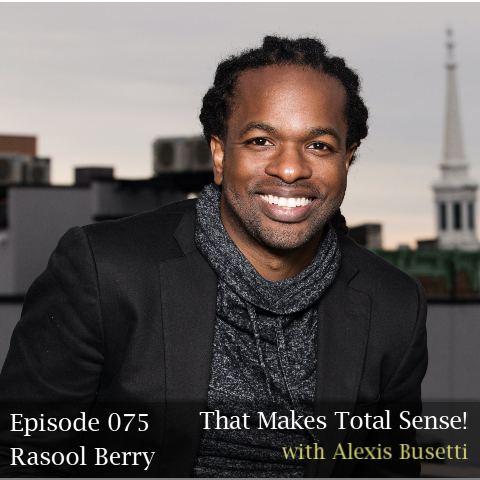
Speaker 0 00:00:07 Welcome to that makes total sense. A podcast dedicated to exploring God's generosity and justice. I'm Alexis resetting the Christian, aiming to ask good questions and encouraging you to do the same. Every one of us is wired by God to live out generosity and justice, but the house sometimes alludes us. That makes total sense is a way for us to get together, posture ourselves as learners and challenge one another to practice generosity and justice in a tangible way every day. Everybody I'm so glad that you're here. Joining us. I was just telling my guests that I regret in part, not already having the record button pushed because we were having some great conversations, but we're going to rehash some of it and talk about it some more. I am here today with Russell Berry, who is on staff as a pastor at the bridge church in New York. Hi Russell.
Speaker 1 00:01:04 Hey, what's up? I'm glad to be here.
Speaker 0 00:01:06 Thank you so much for coming on. I am just thrilled before I let you introduce yourself. I was, um, just checking the Twitter feed because that's one of my favorite things to do before I hop on with someone is like, what are they thinking right now? But I just saw, I had just listened to, um, an episode of unbelievable with Justin Brierley that you, that you were on, I guess it recorded last month or it aired last month. And I'm like, it was already in his top 10 episodes for the year and it just aired last month, which was crazy. So anyway, congrats on that. It was a great conversation. I really enjoyed it. I'll link it, um, here, but tell us a little bit about who you are, what you do in New York and, um, maybe even what brought you to that conversation, even though that's not going to be where we live today.
Speaker 1 00:02:00 Yeah, so, uh, Russell Berry, um, born and raised in Philadelphia on the playground is where I spent most of my days. Um, and, uh, yeah, I went to university of Pennsylvania, um, undergrad in West Philly, uh, as well, um, shout out to West Philly, first sprints. And, um, I, uh, came to faith, um, at 17 years old. Um, my parents had actually joined the nation of Islam when I was born. And so that was kind of my background and then kind of, we drifted into secularism. Um, but I still couldn't eat pork. That was like one of the carry overs. And like I had to read the ingredients of anything that like in the fat lard in it. I couldn't eat it. Um, yeah, food hard sometimes. Yeah. So, um, but it wasn't until my senior year in high school that the Lord really got my attention and, uh, through just a time of brokenness and awareness of my need for salvation, you know, came to faith in Christ.
Speaker 1 00:03:04 And, uh, it was right at my kind of, uh, freshman year was about to begin at Penn. And so I found myself a babe in Christ at a, um, fiercely secular university and trying to, you know, make sense of it all. And that's what kind of, um, got me, I suppose, to other believers who were also thinking very, um, hard about integrating their faith in their life and their culture. Um, and at the time, you know, the cultural piece was becoming more and more awakened in me as, um, you know, I started taking classes that taught me about my history for the first time. That was one of the tragedies that almost at first felt just angry that I went all throughout my entire high school, uh, without really having a firm sense of, um, of, uh, any kind of, uh, African oriented history or African-American history.
Speaker 1 00:04:01 And, uh, so I just kept taking classes just to kind of catch up of learning about myself in the past. And so that began a fuse with my faith journey too. And so, you know, on one night, um, president of the black student league, you know, uh, you know, preparing a protest on affirmative action to support it, then the next night I'm and a Bible study, you know, with, you know, kind of, you know, a predominantly white group, you know, from crew trying to, you know, plan evangelism on campus. And these were like two almost completely different worlds. I felt a little schizophrenia and, um, because one side didn't care about the other side of what I was doing, but I kind of had a sense that God cared about all of it, even though, um, I didn't quite know all of what it was.
Speaker 1 00:04:55 It wasn't until my senior year I took an African-American literature class and in that FM lit class, which, you know, literature classes, aren't typically the places where revival or awakenings happen spiritually, but we read the, um, read two books, the autobiography of Frederick Douglas narrative of a slave. And, um, the, uh, the story of, um, is the narrative of a slave girl. Was it name Harriet Jacobs, heritage, a Jacobs. And yeah, both of them talk very boldly about that, their faith in Christ and saw that as motivation for their, um, activism, uh, and for abolition. And so I ended up writing my paper on the gospel, according to Frederick Douglass and Harriet Jacobs. Wow. And that was like the first time that I kinda took the step of saying all these things are connected and am I academic or kind of more professional space. And so from there, um, you know, I, I, I, after I graduated and I taught first grade a year, and then I started doing ministry with college students and, um, with a crew, and then I kept doing that, then I started doing music ministry. I see the guitars in the background. So that's probably something we have. Yeah.
Speaker 0 00:06:08 These are almost all my husbands. Yeah. I like to brag and say the biggest one's mine cause I'm the bass player, but a nice everything else is, is yeah, yeah,
Speaker 1 00:06:17 Yeah. So, um, there's some music ministry, uh, for about eight years in Indiana. And then, um, we, uh, moved to Brooklyn five years ago to be part of a church plant, uh, for people that didn't like going to church. So we kind of target and help folks who we classify as de-churched, um, and in the midst of that, that process of, uh, faith and culture and life integration, um, of understanding the kingdom of God and, and seeing a vision for proclaiming the truth of the gospel that both has personal and societal implications, both righteousness and justice implications, um, and doing so in, in New York city where our congregation is average, age is 27 overwhelmingly single. And, um, and yet that's where, you know, God has planted us. So it's been an incredible journey. And in the midst of that, um, I think for awhile, the, I think some of the race or justice conversations kind of, that I was in a lot in college, they kind of laid dormant for a season, as I kind of was in this evangelical culture where that really wasn't a conversation that was happening.
Speaker 1 00:07:33 And so, um, you know, so I, wasn't part of those conversations myself a whole lot. Um, and then things started to change, you know, I think I would look at it first with Trayvon Martin, um, you know, killing, uh, by George Zimmerman and the reactions to that. Um, you know, then I would say even the reactions to the Obama campaign and administration, uh, regardless of, and again, when I say reactions, I don't just mean everybody didn't love him, but a unique kind of, I remember seeing protests, uh, with like nooses and, you know, or him depicted as a, an eight or something like that. That started to really tie in of course the whole birther concept. That was a lot of these, but the main thing was in a Christian con context, people talking about him as the antichrist, where I was like, well, wait a minute, Whoa, Whoa. Like, you know what I mean? This seems to be a different type of animosity. So, um, so those things started to turn, but I think the turning point for me was really Michael Brown and Ferguson. Um, that was when, uh, there was a lot of questions that people had. And I think I understood, you know, like what King says that riots are the language of the unheard, um, where there is a sense of justification, but there's a sense you
Speaker 2 00:08:56 Don't understand what's happening here. Like, and, and, and, and, and let me try to interpret this in a way that, um, but also similar to previous situations like Trayvon or even Rodney King, um, that the interpretation of the moment was so different. And so based on people's proximity to injustice or lack of proximity. And so I've really started off just trying to help my fellow believers just kind of share like, Hey, this is some context, this is some history that has to do with why people responding this way. Um, and, and this is kind of an important thing for us to kind of lean into and say, Hey, God cares. Um, and I think initially there was either indifference or a little bit of skepticism, but that was kind of, but you know, it kind of, it was par for the course of, Hey, this is I'm in this for the long haul with my evangelical brothers and sisters, just trying to help people understand.
Speaker 2 00:09:59 Um, and then I think, uh, over the last five years that it just, that changed into more of a, uh, I, it went, the conversation went from, tell me more about that. I don't, I've not heard these things too. No, no, no, no, no. This is actually a sign of you rejecting the gospel and, and, and it's changed over time because initially, um, you know, there were things that were, the problem was black lives matter, Oh, black lives matter, you know, look at the website. And I, and I, and I was one of those people that I, I avoided using the phrase because of the, you know, um, you know, the, the branding of the organization and what that meant. And, you know, it was all new and we're trying to figure out. So I was always about the cause, but, you know, I was on the margins of trying to necessarily representing that phrase because it was so loaded.
Speaker 2 00:10:54 But then I think as the dust settled over years and people were like, well, wait a minute, there's a difference between the organization and a movement. The movement is essentially saying the same as the civil rights movement or, you know, the black power movement, like there's, you know, so this is a black lives matter movement is a label to express a sentiment. You can talk about that without talking about the organization. So that kind of way, you know, kind of fizzled, then the next thing was cultural Marxism. And you started to hear your cultural Marxism being talked about a lot. And I think because most of us didn't live in the cold war era, um, that just didn't have the sizzle and the attraction that I think a lot of the detractors, you know, were looking for. And so that kind of fizzle. And then I started to see in comments that, you know, where I was posted and the things that I had been posting over to spend a years C R T CRT, CRT.
Speaker 2 00:11:53 Um, and I'm like, what is CRT like critical race theory? What is it, what's this, and why is this an a, like a thing that causes the conversation to stop? And, uh, so I, I literally just for my own sense of not having to respond to it out on every post that I was writing, just decided, let me just do a deep dive. Let me kind of understand this, wrap my head around it, see all the different, you know, um, perspectives, right. The stout. So I won't ever have to talk about it again. So I remember that, Oh my gosh. So I write this like, and I remember because it was so long, I didn't even, I don't call it the article. I call it an essay. It was about 10 pages or something. And I just remember thinking, no, one's going to read this because it's too long, but I don't care because I don't want to have to explain it ever again. So
Speaker 0 00:12:51 This is the one on medium, right. Because I feel like this is because there's two on medium. Yeah. The first one. But I feel like on medium, that one says, read more 23 minute read. Yeah. But you're like, no, no one on the internet reading 23 minutes with like 22 sources or, you know, however many it is exactly. It's not going to happen. Yeah.
Speaker 2 00:13:08 So I put that out really, just so that from this point on, I could just say, Hey, just look at this and that'll be my response. And he's on. And before I knew it, it just, people began to reference it more kind of conversations that, and then I ended up on this debate with, um, Neil Chevy. Who's kind of a, you know, self, uh, I don't wanna say self-proclaimed he's for those who are opposed to, and find great trouble with conversations about justice and race. He's someone that is looked upon very highly because he, in contrast to most, and to his credit has read a lot of the primary sources on these issues and, and kind of analyze them. The problem is the analysis, um, tends to, uh, be something that we differ strongly on it, but any case. So we ended up in a conversation with him and yeah. And that's where we got with, uh, unbelievable. And so then after that I ever had, I, I, after the conversation with Neil and kind of processing some more, I ended up writing another long essay called critical race theory, which I said, okay, this is it. I'm not doing anything more. So we'll see.
Speaker 0 00:14:23 It might be the 23 minute read one, but anyway, but they're both great. Yeah, yeah. That may be the 23 minute one,
Speaker 2 00:14:28 But the critical race theory one is 17 minutes. So it was right, right.
Speaker 0 00:14:31 There you go. It's right behind it. Yeah. But that's, that's right. Because I had, I had gone through the critical grace theory one before, and that's when I thought, man, I wonder if I reach out to him if he'll say yes. And then I, and then after, after you did, I thought, well, I'm going to listen to this Justin Brierley conversation and see, um, and see what it was. But anyway, but it was, it was amazing. Yeah. Like I said, before we started recording you just, um, handled that conversation with so much grace and, um, and I just really loved it. Um, but I kind of want to go back to some of the things that you were talking about before, because before we started recording, we were kind of comparing notes and saying, Oh, we've, we've like talked to a lot of the same people and we we've read a lot of the same people.
Speaker 0 00:15:15 We both happened to be in seminary right now. And we, um, and even in our previous education, um, we're studying things where we weren't shying away from this. In fact, we were kind of diving deep into it in formal education sense. And, um, and I think, I would say, I'm not gonna put words in your mouth, but I would say for me, the people who tend to do that, it's because this is what we're interested in, right? Like this is from way back. This is the stuff that we're interested in. And when you were talking about living in this kind of schizophrenia world, where you're protesting about affirmative action and then at a Bible study the next night, and you feel like these things aren't connecting and the people aren't connecting. Um, I was thinking about when I was in, I was probably in high school, I think maybe like in a comp class or something like that.
Speaker 0 00:16:05 And I was having to write a position paper and on something that was controversial. And so way back when, um, I chose the death penalty because this is something that I have always opposed. Um, you know, back as a teenager. And then even as a college student, I was kind of one of those feisty, let's get amnesty international, let's do the things, you know, all of this stuff. And, but I was also very naive about my faith culture, because I went to interview a pastor. He happened to be an SPC pastor. He's still an SPC pastor all of these years later. Um, I say all of the like 25, let's just be real, like a long, like a long time ago. And I interviewed him as one of my sources for this paper in high school, anticipating that he would be on my side, which I realized later was not only naive, but it was, it was, it was really ignorant of my culture of my faith culture, because I just didn't know any different.
Speaker 0 00:17:18 I, I read the Bible, I had these emotions just to be honest. And I had this, um, view of Jesus, um, and of God, the father. And I just thought, I thought as a 15 or 16 year old or whatever, this is the godly thing. This is the Christian thing to oppose this form of punishment. And I was shocked when I had this with my pastor. Then you fast forward, some years later I graduate college. I get, you know, a big girl job and I'm working for the state and I'm working in, um, their social work department as a caseworker. And I think this place is going to be swarming with Christians because this is what we're supposed to do. We're supposed to feed the hungry. We're supposed to take care of the vulnerable we're supposed to, you know, and I'm 20 nothing. Right. And, and I, and, and I'm going in, and my friend who had an actual social work degree says, um, Lex, I don't know how to break this to you, but they're Christians, aren't social workers.
Speaker 0 00:18:35 I'm so sorry. And I was just kind of like, what do you mean this is, this is our job. Like, you know, and, and I'm like, passionate. I'm like, this is, this is it. This is who we are. This is who we're called to be. But even that, you know, that many years after I was, I was still just really naive about the culture, about the evangelical culture. This is, I grew up in the Bible belt. This was it. And I assumed based on my understanding and based on my experience, and really honestly, based on my emotion, like I said, that this would be where we were as a people. And, um, it's, it's largely, um, I have been disappointed. I'll maybe I'll just say that it's been my experience. I have been disappointed. Um, so earlier we were talking before we started recording, um, that you're in leadership with an campaign.
Speaker 0 00:19:28 And when I, I don't even, I think I found them because of another podcast where Justin and Michael were on and I went to their website and I was like, this is it. This is the language. This is everything I've been feeling for all of these decades of my life. Christians can be for biblical values and for social justice and it's not conflicting, or it doesn't have to be conflicting. I think my argument would be it's, it's not like it's just not conflicting. Right. But, um, anyway, so all of your stuff, this just made me think.
Speaker 2 00:20:12 Yeah. And I think that nuance, when you S you know, when you talk about it, doesn't have to be, it's not, I think the little bit of the rub is, you know, what's in the word definitions, and this is where, um, I would have some, you know, agreement with, um, those who, um, are suspicious or critical of certain movements, um, that a lot of people justices in now, it's the hot, you know, it's the hot thing. It's the, you know, the thing to talk about, but not everybody, you know, there's a book, uh, that I'm in seminary as well. Um, you know, that I got exposed to through, uh, Dr. Tim Keller, uh, one of his classes where he talks about, you know, you know, which I think is which justice whose justice, which, uh, which values or something like that. But, um, you know, he recently wrote a, uh, a good article that kind of outlines different theories of justice that people, you know, kind of talk about are come to her at assume.
Speaker 2 00:21:20 And I do think that it's important for us to reckon with what the nuances of those, of what that term means, and in various spaces in the culture, the problem is that when the solution is well, forget all the secular versions, let's just go with biblical justice as if our concept of biblical justice is not somewhat informed by our close culture, some cultural assumptions, um, you know, that's where, or that it's an either or thing. I think that the reality, or in the same way as w w w in the medical profession, like we don't say, well, you know, let's have a biblical medicine, or, you know, like we just, or biblical social work, it's just like there's social work and Erik principles that, um, support, uh, you know, what we would say is a biblical understanding of these things. And then there are things that insights that the Bible is silent on, that these disciplines have developed over time that, you know, help us to move forward. And I think that work of cultural engagement is the tricky part. Um, especially for evangelicals who have a certain view of ourselves often when we think about what it means, what our own Christian tradition is.
Speaker 0 00:22:44 So one of the things that when I think it was in, when I was reading your critical grace theory article, I think it was that one, because, because you talk about that and you touched on it also in the critical race theory, but it's, um, the idea of exactly what we just said of being informed by other sciences or other, um, philosophies that are happening. Right. So one of the things that you talked about and think in the second article is how, um, when the church really was being split on the issue of slavery, um, in the antebellum period and, and the church members who were supportive of slavery were accusing the church members who were unsupportive of slavery, of being, um, indoctrinated really with things like philosophy, right? Because they were supporting their point of view with the Bible. And you've touched on this in different, in different areas.
Speaker 0 00:23:40 And one of the things that made me think of is, um, my husband has, he's a research geologist. He has a, he has a PhD, and this is what he does. And he works in oil and gas, and he has for a long time, but when he was getting his master's and his doctorate, and we were all at the university together, one of the questions that he got most often basically was how do you reconcile your faith with your profession? Because to be an earth scientist in the way that he is an earth scientist and, and deep dives, right? Where he is helping solve problems for, uh, you know, companies that are doing really deep earth science, um, you don't get to do that kind of science, and it doesn't work. If you have a six day, 6,000 year earth age philosophy, the science doesn't work.
Speaker 0 00:24:41 So it's not that my husband doesn't believe the Bible, and he's not a strong Christian, and he doesn't believe in Jesus. And he's the only way for our salvation and all those things, because all of those things are true. But one of the things that he's answered frequently is if you try and put this religion onto the science, it doesn't work. Like you can't drive your car with the petroleum products that we put in your car based on this form of biblical interpretation. Like it doesn't work, but that doesn't mean that you, you know, like, just because you or he or someone else can't completely fuse them in a perfectly seamless way. That doesn't mean that you can't have both. And right. Like he doesn't believe in the big bang theory. And he doesn't believe, you know, in all of these things that maybe sometimes scientists would be kind of accused of believing. But, um, he had, he does really good science, but part of it is because he doesn't see them as being, um, enemies, I guess he doesn't see them as having to be, um, well, if you have this one, then you can't have this one or vice versa. Um, I don't know if that
Speaker 2 00:25:59 Yeah, no, no, that definitely. And I think that the, the current, um, I would say crisis, um, I, you know, and this is, uh, something I've been thinking about recently is that, um, I think the current, um, divide that exists over this issue of justice and race or racial justice or social justice is similar to the fundamentalist modernist split of, of a century ago. And, um, in terms of the level of, um, of polarization that is occurring primarily from, you know, one side who is saying the other side has lost their orthodoxy. And, and I think that that is similar to the problem, you know, that you're, you know, scientists like your husband would face. It's not even simply that, um, Hey, I have a different approach, uh, to understanding the creation account, you know, is it more poetic? Is it, is it meant to explain a scientific phenomenon the way that we currently understand it?
Speaker 2 00:27:17 All of those are valid questions, but th and that's not the problem. The problem is when the other side says, Nope, you've just capitulated to Darwinism and you're no longer a faithful Christian, that's the problem, right? And that's the problem that happened. Um, you know, with, you know, uh, over a century ago was, you know, fundamentals modernism instead of having a debate and, and, and learning and trying to glean insights, because there are things that, uh, were helpful insights, um, that fundamentalist wanted to stick to when terms of inerrancy of scripture in terms of, you know, salvation through Christ. But then there were other things that got smuggled in as part of the debate that really wasn't a debate. I E what, you know, rash and Bob and others would call the social gospel, which also really highlighted things that Christians had been doing throughout, you know, centuries in terms of caring for the poor, uh, challenging injustice, seen that as part of the mission of God, but instead of, um, discerning and identifying and being more specific, it was Nope, those people, anybody who associates with any of that stuff is, um, is no longer Orthodox.
Speaker 2 00:28:31 And those of us who are, and is ironic because the fundamentalism tended to be very much if you use with racism as well. And so, um, and so I think that the, the, the, the thing we need to reckon with is what, how do we learn from the past so that we don't keep making the same mistakes and actually, um, have a theological vision. That's a concept that Keller talks about and center church that I find so helpful is that we, he, you know, he basically says, there's our doctrines on our doctrinal positions, which are kind of our software. And then there's our ministry practices, like our liturgy, our, our missions initiatives that our, our, our hardware, but then there's something in between. Like, that's a middleware, that's kind of somewhat hardware, somewhat software, and kind of in the middle and the technological space. And that's our theological vision.
Speaker 2 00:29:25 That's our, that's our perspective to say, okay, there is something we can agree that the tomb is empty. We can agree that the word is God-breathed. We can agree that, you know, Jesus is coming back. All of those things are doctrinal positions, but still doesn't inform all the that's that the only thing that informs our ministry practices, there's also a sense of our, our, our diagnosis of the culture and therefore our application of the field logical truth, because God's word is exhaustible. So we can't apply all of it equally all the time. Like you, you, you have to apply things with wisdom in light of what your culture needs, and that's the theological vision. And that's really what the debate is over racial justice. There's a, uh, I would say those who oppose it, um, and who, and they see a version of society that started off very much in a biblical framework has continued to become secularized.
Speaker 2 00:30:22 And, um, and so they feel like the, the enemies are at the gate and they're smuggling in secularism through the lens of this word called justice. And that there's really not a problem of, of social structures, but because Marxism always talks about social structures, that's why they talk about social structures. And so this is an erosion of our faith tradition, and we must start with lead defendant and protect against it. That's the theological vision. The other theological vision says, no, the problem is there is there's our country. Can't just be looked upon as, yeah. The good old days when everybody live. Right. Because even when, at a time when it was mostly Christian quote unquote, um, there were still mostly un-Christian Lee holding people as slaves, raping them, you know, selling them, separating families. And as you know, the country has got begun to realize that the horror of that as a collective, um, there've been more and more ways in which, uh, justice has been the norm as opposed to injustice, looking at the civil rights movement, et cetera.
Speaker 2 00:31:33 Now, the question is, well, there's probably some of both happening, right? There's a secularization that's occurred, and there's a, um, uh, an equality, uh, that has emerged as well, more so than a hundred, 200 years ago. And we have to reckon with those things together. And so not just see, talk in emergence of justice issues as a theological problem, that's meant to, uh, undermine the church. In fact, I would say that it, as the church continues to, uh, resist cause to speak out against these things and to act out that is actually the greater theological crisis, because when you look at any statistic, um, millennials, gen Z, uh, those generations are very much compelled to, uh, be involved in the causes that that actually help in, in, in, in serve the, um, the oppress. Well, if you have a church that is insisting that there is no oppression, then we are basically making ourselves more and more irrelevant to the culture, but also less and less attached to the vision of the scriptures as well. And, and I think that that conversation is the one that we need to be having.
Speaker 0 00:32:48 Yeah. I mean, as you were talking, I thought, I don't think I can be this. Like, I don't know this kind of like just out there, but I'm like, here's the deal I grew up in fundamentalism and it is so easy. Like, that's my perspective. I'm like fundamentalism is easy because, and this is where I would say, I don't want to be this brash. And so I'm not typically like this, but if I was having this conversation with you and nobody else was listening, I would say, fundamentalism is easy because you don't have to care about anybody else. You get to read the scriptures, determine what it says or, or be told what it says, and then live in that way. And if someone says out, you stepped on my toe, you say, I'm sorry that your toe is in the way I was just walking this direction.
Speaker 0 00:33:38 I was good. This is my experience with fundamentalism in, in this theological walk, is that it's easier. And I, and I kind of use quotes with that too. It's easier because it is, um, in a lot of ways it's less complicated, right? It's, it's, it's, if someone says to me, I see oppression or I'm hurting, or this is happening or whatever, I can, I can look down at my voting guide or I can look down at my doctrinal statement that is posted on the website, or I can do whatever. And I can say, it's not that I don't believe you. I just don't really see anything here for that. I don't, I don't see anything here for that. There's not a there's. I mean, I'm probably a little bit Jayden, I've done a little deconstructing late recently, but it's like, I don't see a role for that. I don't have a, I don't have a step for that. I don't have something for that. And I, for me, I feel like that's part of what I see in that conversation. And I don't think it's that people in general are calloused. Um, I don't think that, and I don't think that people in general are malicious because this has been my tradition. Um, I just think that,
Speaker 0 00:35:14 I just think that sometimes the, what I'm trying to say is the focus ends up becoming more inward than outward. Or Andy Stanley might say more upward than outward, more vertical than horizontal. And it's, it's not that the vertical is unimportant. The vertical is important. Um, but there are two commandments. It is love the Lord, your God, in this way, with everything you have and love the people around you in the same way, in the same way that you love yourself with, with, with all of these things as well. And, um, and sometimes I just feel like the, the, the vertical is very, very, well-defined, that's probably a better way. Maybe I'll have my husband edit everything else out. He won't, but, um, the vertical is very well-defined in fundamentalism. That's one thing I would say, I would say the horizontal is less well-defined, um, with a few exceptions.
Speaker 1 00:36:18 Yeah. And I think if there's one thing we were talking earlier about what is the conversation that, you know, we should be having in, in both, in, in all of this stuff that I've responded to in terms of critical race theory. Um, the main point that I make is that this is not actually the conversation we should be happy having. Like there is a overwhelmingly disproportionate emphasis and energy that is being spent deconstructing and critiquing a obscure academic theory that is as vast and broad as talking about, you know, something like social sciences and the bright light, it's almost that, uh, that abstract. Um, and they will tell you that, uh, one of the things that you know, was funny in the book introduction to critical race theory by, uh, Richard Delgado and jeans to Vanschick, they actually say, like, in the beginning of the introduction, it says, um, basic tenets of critical race theory.
Speaker 1 00:37:19 And then the second sentence is, Oh, by the way, not all theorists agree on these based on what these basic sentence are. Right? So even the basic tenants are, are debated. And so, but yet, somehow Christians emerge and go, Oh my gosh, this means if you accept the idea of, you know, systemic injustice, that means you have to accept every other thing that a critical race is the most extremely people say, and that's just not true. But the other thing is it's not the right conversation. So what is the right conversation? Well, part of what you described, I think about, um, in the book misreading scripture, uh, through Western eyes, uh, uh, by, um, Brandy, uh, Brandon O'Brien and Randy, Randy Richards, they write this reading scripture is a cross-cultural experience. All biblical reading is necessarily contextual. There is no purely objective biblical interpretation now. Okay. Now all of a sudden, you know, you start to your ears go up. So they explain this is not post-modern relativism. We believe that truth is truth, but there's no way around the fact that our cultural and historic context supply with habits of
Speaker 2 00:38:36 Mind that lead us to read the Bible differently than Christians in other cultural and historical context. And so that's an important piece, right? So I was just, um, I was reflecting on, um, the, uh, sermon on the Mount where Jesus says that you are the salt of the earth and, you know, but w but what good is salt, essentially, if it loses its saltiness, now most sermons and commentaries, um, will actually refer to the major emphasis being this idea of salt, like table salt that you put on food to flavor food, because that is the primary context. When we think about salt and you know that in America, you think about what you see on every table, but that's not the primary emphasis of what Jesus is referring to when he says salt of the earth, the idea, the primary context for the folks there, and this is why he says it's no longer good to, you know, you know, to be used, might as well, keep it on the manure piles that salt was used as fertilizer to, um, Aerie and to make the ground that was, uh, not as fertile and, uh, arable more so.
Speaker 2 00:39:51 And so, when we talked about being the salt of the earth, he's saying actually that you're, we're supposed to help things grow in the world. We're supposed to help things flourish in the world. But because our context is that we think of salt as, as a food item, a seasoning as the primary contact. Now, can it have some of those elements in the scripture? Absolutely. But the primary Thurston thrust in that verse is not even something we could think about because we don't think about using salt as fertilizer, you know, um, in our world. And so I think that there's some important things. And even when you talk about fundamentalism, there's a great book called doctrine and race by Mary Beth sweetened the Matthews. And in it, she looks at the fundamentalist modernist controversy, um, through the eyes of African-American pastors and theologians from a hundred years ago who were watching it like a tennis match happening.
Speaker 2 00:40:44 And, and instead of picking a side actually said, you know what, those fundamentalists got it right? That these, these, these, these height, this higher criticism school of, of, of, of interpretation that wants to dismiss miracles or dismiss any supernatural origin to the Bible, that's that's human philosophy. But then they would also look at the fundamentalists and say, but the, the, the, the, the modernist have a point when they talk about the kingdom of God being something that should manifest itself in the way that we live out, the gospel does have social implications and some of your eschatological schemes, because really, you know, like a lot of pre-millennial, um, you know, theology was a reaction, a cultural reaction to the crisis of the great war and technology, which was supposed to bring in this progressive era, but now all of a sudden wasn't happening. And so people were trying to be like, Oh gosh, what are we supposed to do?
Speaker 2 00:41:40 Jesus, just come back and just wipe everything out. So there's a lot of, of things happening culturally. And I think that w w the first step is probably for us to see ourselves, you know, um, we, we have a hard time of placing our emphases and our tendencies in a historic and even cultural context, not to say that we can't have access to truth. Not saying at all, of course we can, but to say that our perspective, like Paul says in first Corinthians at the end of the great chapter in 13 on love, right. We see through a glass dentally, you know, but when that, which is perfect comes, he will guide us into all truth. And so there's this aspect. And ironically, that the second point of that is that scripture interpretation and ecclesiology is a group project. You know, uh, my daughter just finished finishing up college.
Speaker 2 00:42:32 Right. And, um, she hates group projects because, you know, the mileage varies in terms of how much you'll get from other people. Sometimes she's been in group projects where she's had to carry 50% of the weight and a group of four people, right. Or six people. But there's something about the aspect of her major is film. So it's like, if you want to create movies, it's always a group project. Th th this is, you know, like it, we have to take the good with the bad of what it means to do it with other people. And the project of theology, the project of ecclesiology of, of doing church is a group project, which means that I need to engage with people who think differently, who come from different backgrounds than myself, if I'm going to do it to its fullest, otherwise I'm just in an echo chamber talking to myself. Yeah.
Speaker 0 00:43:25 Everything you just said, yes. Everything you just said. Yes. And amen. Um, I was thinking about, so I'm like, I'm like kind of a little bit having shares remorse. I like rules. I think they're good. I fundamentalism, I grew I'm a, you know, but I'm like, but I'm like, but I, I have, I have come back a little bit. Right. I'm trying to do, I'm trying to do what you say, which is, let's see where we are. Like, it's, it's very, you can't get somewhere else, unless you can first determine where you are, like the directory at the mall. I want to get to the shoe store. I have to look at the store that says you are here. Right. And so part of, part of my journey and having all of these conversations and, and, and really asking the Lord, what is my job right now?
Speaker 0 00:44:10 What is my role in the, in the, in this, in the speaking and the listening and the doing, what is my role is, is partially determined by where am I, um, where am I in this space and where have I been in this space? But I just took this phenomenal theology and culture class, and a shout to cut her into Misha. But, uh, I just took this incredible class where, where we really talked about methodology, right? We're talking about this hermeneutical method and, and, um, the three kind of main parts of that method. I hope they won't get mad at me, just kind of blasting this, but the three kind of main parts of this method are the very first one is, is primary thing you're talking about, which is what is your social location? So as the theologist, as the person, as the, as, as the person reading or trying to understand whether it's the Bible or anything else, what is my current social location?
Speaker 0 00:45:08 And I think for many people in the white evangelical church, the first thing, and Daniel Hill talks about this extensively, and I appreciate his work on that, but it's basically first realized that I am white. Like, there's, there's a, there's a, there's kind of a step zero there. And, and I would, I would kind of use maybe the, the six, uh, seminary presidents who wrote the SBC, you know, who wrote the, the statement on anything that has to do with CRT, we will reject. Um, I think one of the things first is to say, you can still have that statement if you really want. Um, but what I would prefer, what I would ask you to do is, is write it after you have located yourself in this situation. Right? So, so that's kind of the first step. And honestly, trying to keep that in mind, as I'm having this conversation is, has been a game changer for me, because it is a two-step process in and of itself.
Speaker 0 00:46:07 I have to locate myself, but I also have to locate the person who is speaking to me. So in the sermon, on the mountain example, I have to look at myself as an American reading this today, which is different than the social location of the people who he would have been speaking to on the Mount, in ancient, Palestine, Israel, Roman occupation, and then locate him. He is the authority on all things. He is the Messiah, right. And like locate him. But then inside of that, another step that I appreciate, and I think is important in this conversation is a radical inquiry step, where once we've located ourselves, then we try and have this conversation from a, from a, as if it's a brand new conversation. Like I am, I'm going to try and read or write or read or understand, or listen to this in a critical way, in a way that I can, I can notice who I am and put that to the side for a moment, everything that I would want to bring to that conversation, as much as I can notice it while I'm reading, because that changes the way that you understand what you're reading and listening to.
Speaker 0 00:47:29 Um, right. And then of course asking, and this is the question, this kind of back and forth question. That was, that was one of the things that was so powerful to me was, which is, what does God say about this? Like what, what does God say? And then the daring part of that is what does this conversation, artifact, article, film, whatever it is, what does this say about God and, and kind of being able to spin things, not in a, not in a, not in a negative way or a, you know,
Speaker 1 00:48:12 Not a manipulative
Speaker 0 00:48:13 Way. Right? Exactly. But, but, but try and look, turn, it is kind of what I mean, right? Turn, turn, whatever it is. I'm looking at it from these different perspectives. And if I'm hearing you, I feel like historically the evangelical church in America has had a very difficult time doing, I'm going to name them, doing all of those things, right. Locating themselves, um, and, and radically looking at this, whatever it is and, and asking some of those questions, because to me, the reason I, the reason I kind of went off and said, well, it's easier is because, um, much of it is put forward in, put forth in a very straightforward way as if, if you are someone who read the same text and came to a different conclusion, that's not okay.
Speaker 1 00:49:08 Yeah. Let me, let me, let me, uh, cause that that's good. And I want to, uh, so the first question, your first point you said was locating yourself, you know, what is your social location? The second you said is asking, what does God say? And then the third is what does this say about God? Right, right. That's good. Um, and, and I think those things are, are all, you know, really critical steps. And I think that what I tried to do in the critical race theory article, so essentially what, what I mean by that is that when, as I kind of stepped back and looked at this controversy, and like you said, it's only has, uh, it only increased after I wrote it in terms of the amount of people that this issue of CRC was polarizing. And I sat and I thought about it.
Speaker 1 00:49:54 And I'm like, why? I've not, it's a weird situation to have one group accusing you another group of being infected by an ideology that the other group is saying, no, I'm not like, like usually the issue is it's not bad to be like, it's just a different, I was like, why is this a thing? And what I discovered, um, is I started to go back into history and go, what, like, you know, what was the conversation among Christians around slavery? So I went and looked at, uh, Mark Knowles book, um, civil Wars, theological crisis. And I read that book and wanting to understand, okay, what, uh, what were the, how were the arguments framed then I looked at, um, well what about during the civil rights era? And so picked up the color of compromise from <inaudible> and read that, and kind of was like, okay. And what was surprising was that the, there was a similarity in the reactions to both of those things, even down to some of the same phrasing, uh, that exists, uh, in the current kind of critical race theory or justice issue.
Speaker 1 00:51:01 And should the church be involved in justice? Uh, which was one, the idea that, uh, of an attack that say, if you were involved with abolition, if you're involved with civil rights or integration, if you're involved with, you know, just social justice, then you have believed a false ideology that, that was the, the criticism from those who were on the other side of it, uh, in each case. Um, and the other case was to basically, you know, question, uh, their Christian, you know, uh, state status and, and, and commitments. Um, and I thought, wow, this is, this is interesting, but the other part to it, and this goes back to social location is we never asked the fundamental question. I have never been in a place where are so quick terms when I say, if there's lowercase evangelical and there's capital evangelical, right? Lowercase E evangelical is a move that you can go back to the 17, 18 hundreds of the Moravians that kind of is expressed with John Wesley.
Speaker 1 00:52:10 And that kind of, for the first time saw past ecclesiological borders of and saying, Hey, we can work together Baptist Presbyterians. Even if we have different differences, theologically, we take that for granted. Now, there was a time when that wasn't the case actually for a significant amount of time. So that's lowercase evangelicalism capital evangelicalism is a movement that actually looked back on fundamentalism and said, Whoa, folks went too far. This, this antagonism cultural war perspective is a bit too harsh. And so people like Billy Graham in the fifties emerged and decided to take a different tack, then his fundamental, his predecessors, such as Bob Jones, who founded Bob Jones university. Um, but they're still a derivative of that movement. They just move a little bit closer to cultural engagement. That movement now has been kind of largely co-opted by a certain political sensibility that has said, okay, by evangelical it's. Now what people mostly think of is conservative, Republican, that kind of thing. So I just wanted to specify. So when I identify as evangelical, I'm talking about the lower E you tradition of
Speaker 2 00:53:26 Seeing the kingdom of God beyond my particular faith boundaries. Right. So just a little bit of a context there. Yeah.
Speaker 0 00:53:33 Oh, I appreciate it. Yeah. It's important. It's important, especially right now. It's really important. Yeah. And, uh, Kristen Dumas, I don't know if you've read Jesus in John Wayne and she kind of, she has, she has a slightly different definition of evangelical because jemartisby lays out kind of these, these four evangelical tenants. Right. If you believe these and, and I think that's kind of the lowercase EMR.
Speaker 2 00:53:52 Yes. Yes. Crystal centric, Bible oriented activism and sharing the faith. Yeah.
Speaker 0 00:53:58 Yes. And then, and then when, when Kristen lays out the, uh, kind of the capital E she kind of says, um, let me just put it this way. If you like Billy Graham, you're probably nave angelical in that, in that sense. Right. Like, and anyway, and Phil Vischer actually, I don't know if you've seen this. He has like a 20 or 30 minute video where it kind of goes through the history of evangelicalism, but maybe I'll, maybe I'll put that on there too. But, but all of the things you said are noteworthy and important for this conversation, especially today, and as we enter 20, 21,
Speaker 2 00:54:28 Right. And that's when we're going back, even back to the question of justice earlier, like it's a valid point too, for us to have a conversation to say, well, what do we mean? And what does that look like? And that's not just throw, uh, accusations at each other when we, even, when we say something like race, like, so when you talk about one, just recognizing, and Daniel Hill does a great job of this in white lies where he says, Hey, there's a whole lot that we've built in. And this is my point. The reason why I brought all of that up is to say, I have not in lowercase E evangelical spaces heard a robust conversation about how is it that the heroes of our faith tradition got it so wrong when it comes to ethical issues and justice. How did that happen? That when I look at the, you know, George Whitfield's or the Jonathan networks or any other that we look at is significant figures, incredibly important, um, in revivals and whatnot, that, and not just them, but Southern Baptist convention, Presbyterian church of America, like, uh, there's a who's who lists of, of, uh, prominent denominations.
Speaker 2 00:55:38 And, and, and I'm not, I'm just saying, it's a fascinating question to just go, how did that happen? What, what, what were the missteps that were made now? The interesting thing is, and why is it that the black church typically didn't make those same mistakes? One of the big problems. And this goes back to the other aspect of doing the PR the group project of theology. I am AUSTRAC and of how often the black church is ignored in terms of these conversations. And so it, it blew my mind when John MacArthur and his kind of piece on social justice talked about this like new threat. That's like bad of social justice in the same article where he references John Perkins. I'm like, John Perkins was talking about this in the sixties, like this isn't new to black Christian evangelicals, but B but apparently we don't count because, you know, even though the black church has been dealing with these things and, and pushing both holding both together for centuries, literally from the founding in 1789, uh, you know, uh, the AME church, Richard Allen, but why doesn't that voice send to be matter in the group project?
Speaker 2 00:56:51 And I think because that voice keeps getting silence, there isn't a info informing of it that actually helps the present, which is, and you see the consequences. So after that statement comes out by the SBC, you see prominent leaders like pastor Charlie date, Sue is a up and coming dynamic, faithful pastor and preacher of the word who left, uh, you know, a predominantly black congregation, uh, denomination to join the SVC in spite of the history. And then that happens in any leaves again. So these things have a consequences for how our actual witness, so we have to do the group project. We have to, um, learn from the past and go, instead of making proclamations, I use this as an example because I don't want to just be like throwing rocks. Cause I, so when the me too movement was, was, was really generating a lot of attention.
Speaker 2 00:57:41 And I was in this space more where, you know, because of conversations on race and justice, people were, you know, responding to a lot of what I was writing. So I felt compelled to, you know, drop some. So I reach out to a friend of mine who, uh, is a great public theologian and, and, and, and an assistant that talks about race. And I said, Hey, I got these thoughts. I want to put this together for a pocket. I mean, for a blog, um, on the me too movement. And I want to get your opinion. And she was like, my opinion is that you listen to what women have to say about this. And just, I was like, Oh, so it was like, you don't have to speak on everything. And your first instinct should not be to lead by speaking. It should be to lead by listening.
Speaker 2 00:58:25 I'm like, Oh yeah, that's in the Bible. Wasn't to be slow to speak and quick to listen. And so I was humbled by that, but I was like, she's right. And I'm so glad that it, I just took time to listen to the women around me and to hear their perspectives. And so I, so it informed. So then when it was finally the appropriate time for me, so I, one of the things I was in those conversations that came up is that most preachers were not preaching about this from their pulpits. And so I said, okay, so this is an opportunity to have. So I did a sermon on, on sexual assault. You know what I mean, looking at, uh, Tamar and Absalon, and, and tying that into this thing. And at that point I had done so with the insight and perspective of others and, and platform in their voices. And I had to learn that my primary instinct, um, in our vision of leadership, which is that I always supposed to be, have something to say, and being an authority on everything was flawed
Speaker 1 00:59:22 And wrong, and that I needed to see my platform to let other people speak. And even in that sermon, I asked a young lady at our church who had had some, uh, personal experiences. And I said, Hey, would you be comfortable sharing your story? And she said, yes. And so, before I spoke, she spoke and it was, you know, and it was powerful when people came up to her afterwards and opened up in ways they hadn't before. And we started. And so that's what I mean, like, and that's something that we all have to learn. Anybody that has a microphone in front of them on a regular basis, you know, has to be thinking about what is it that I can do to pressure myself to listen before I speak. And it's not, it doesn't always come natural.
Speaker 0 01:00:06 Oh, no, you're at, you're absolutely right. It, it, um, wow. There's, there's so much I could say there, but I kinda just wanna do what you just said and just say, what else do you have to say? I just want to listen.
Speaker 1 01:00:22 Or, um, so I would say another thing in terms of the conversation we should be having, um, is about the solutions of when we just look at inequalities that exist. Um, so, you know, I saw today that to me, uh, the officers who shot and killed some your rice, you know, when he was, what, 12 years old, um, that there was, you know, the justice department decided not to explore charges against them because the video was grainy. And, um, and I thought about that. And ironically, the same day, I happened to listen to a podcast on, uh, New York times. They did a podcast of this black officer and from Flint, Michigan talking about the tension of him being an officer and also being a black person in the midst of all that's happening. And, and I just was listening, thinking about those two instances at the same time and going man, like there's so much brokenness that exists that as a Christian can do, like, shouldn't, I have a sense of compassion to recognize that there are a whole group of people who have to have the talk.
Speaker 1 01:01:32 And I know you mentioned, you know, having an adopted black son and, um, and I'm curious to hear your perspective on this and that there's a reality, at least a perception of reality, if you don't agree with them, but a shared perception that goes decades and generations back to the beginning of our, our, our country. And even before that, there's a adversarial oftentimes relationship between law enforcement and police. And what does it mean to, for the church? What can the church do to, um, to be about a solution? Um, I think that's a more productive use of time and energy than simply combating the overblown worldview, presuppositions and commitments of those who we, you know, also talk about justice. Um, just because they talk about justice doesn't mean that we can't, I mean, uh, just recently, um, uh, there was a push to, uh, expose and to challenge PornHub for it, putting a lot of content.
Speaker 1 01:02:43 There was a, they had a policy where anybody could upload content to their website and a lot of that content, exploited minors, and had, you know, children on it. And so even people who either for their spiritual convictions, like Mormons or people that we wouldn't agree with, theologically or people who didn't have those convictions at all, in any kind of spiritual commitment, they were just secular just were opposed and outraged about, you know, children being exploited that this got a lot of attention. They ended up removing all of the, in any user generated content, which was significant, like two thirds of their content. And, um, and that was a victory that we could all celebrate. So if that can be done in that environment where people who have different opposing theological ideologies or no theological commitments, that they kind of platform, and those of us that are doing this because we believe people are made in the image of God.
Speaker 1 01:03:40 If we can come together to say, Hey, these children should not be exploited, period. It should be taken down and we will co-labor will be cold belligerents as my friend, Justin. And given he talks about what the ad campaign, why can't we do the same thing when it makes sure that a kid like Tamir rice, um, doesn't get shot and killed in the playground, you know, for having a toy gun, why can't we do the same thing to make sure that situations is like George Foley or Brianna Taylor don't happen? Um, I think that I even, so it doesn't matter to me what the theological or philosophical commitments are, or maybe to the people who also share that concern, what matters is what we do about it,
Speaker 0 01:04:23 Right. It matters what we, what we do about it. And I would say for me, it as a parent, um, she brought up, I have a, a son, a black son who will be seven by the time this airs. Um, I also have a white son who is, uh, he, he favors me more, but he's only one fourth Hispanic. And so he looks, um, you know, he, he looks white and he's two years older than our youngest son. And, but he, my, my older son also favors me in that he's a little bit small. And our black son is they're almost the same size right now at, at almost seven and almost nine. And I frequently think about in just a few years when they're walking together to the park to play basketball. If my younger son has to come home, cause he forgot his water bottle and he's walking by himself on the sidewalk, how he could very well face an extremely different situation than if my other son does the same thing in a hoodie, all sweaty, you know, whatever it, whatever it may be.
Speaker 0 01:05:45 Um, and I think about how I have, because it is important, what we do, the problem that I'm coming up against, as I would say, someone who has educationally and theoretically enjoyed this conversation and enjoyed the action from, um, really just from the appearance of someone who looks like a white woman, um, it's a very different reality than raising my black son and having this conversation in an employing the actions from that perspective, what I'm, what I'm trying to get at is that what we do is important. Exactly what you said, but how you started that segment was by saying the reality or the perceived reality. If you don't believe it's actually the reality. Well, then I say, here's my, here's my predicament. I am parenting other people are living life and we're supposed to be doing the same communally. It's the group project of theology.
Speaker 0 01:07:01 It's the group project we're supposed to be doing this community. It takes a village, Hillary Clinton didn't come up with that term. It takes a village to raise, right? Exactly. It takes a village to do this thing that we're trying to do, whether we're a parent or not, whatever it is as a Christian community, this is our call and the predicament that I find myself in. And I don't think it's unfamiliar to, to anyone else in this race conversation. Um, if you're a person of color is to say, how can I ask my brothers and sisters and my neighbors to do something? Because I agree with you that that's the important thing when my brothers and sisters don't believe that there's a thing to be done, right? So if, if I say we're, you're talking about the talk and I'm saying, my husband is not equipped to have the talk with my youngest son.
Speaker 0 01:07:57 If he was a single dad, he wouldn't be prepared to have the ministration talk with my daughters either. Right. It's a thing, right? We, we have to rely on other adults in our children's lives to have some of those tough conversations, right? Brian's Ryan debts. So if it, my husband and I are not equipped to have the talk with our youngest son about the police. And it's not just one talk, I understand that just like the sex talk or the ministration talk, it's a series of talks. Um, our white brothers and sisters, not only are they also not equipped to have the talk, there are some of them who don't believe the talk should even be a thing. Right. And, um, with our black brothers and sisters and black friends, that is a lot to ask someone to help us in that parenting part. Right?
Speaker 0 01:08:57 If, if, if my husband was a single dad, I can't imagine the conversation that he would have to have with my sister or my mom or another good girlfriend of ours to say, can you please come talk to our daughters about their period? Right? Like this would be, he could do the best he could. Right. But he's, he's not a mom and he doesn't have that experience. And he doesn't know when he would be ill-equipped. Um, this is a lot to ask of my black friends to have this conversation too. Right. So the doing is important and, and, and I, and I a hundred percent agree with you. That's the predicament that I find myself in. And I think it's a microcosm in some ways, for the predicament that we find ourselves in, as the church at large, there are things that need to happen. Things that need to be done that are important and scary and sensitive and all of the things. And we, and what we have is even if, even, even if everyone doesn't have to agree that it's the same level or that it's a thing, but we do have some people who were saying, not only do I not believe it's a thing, I actually reject that. But if you reject it, you're not,
Speaker 1 01:10:09 That's, that's, that's good. And that, can I, can I try, can I try my best, please do. Okay. Can you try my best? And I think because in first, let me explain, because that's a very good point about it can be, it can very much be a non-starter if someone, um, uh, you know, is they come home and they're like, yo, I was physically assaulted, you know, on a date. Right. Like, you know, and it's like, where are you really? Like, you know, if that's the conversation, then you can't really be of emotional support when you're challenging. The very notion of what's happened. So I get that. Let me step back. I use, I, I kind of made space for perception of reality, primarily to instill invite people to the table who are not all the way there yet, to being able to say, I understand this is definitively true, or like, this is definitively like experience. I, I think that the reality is
Speaker 2 01:11:14 That because all of our experiences are different. Um, and I'm not just talking about white people too, increasingly, you know, as you know, uh, people have been raised people of color in different contexts. They I've met more than, uh, you know, a few, you know, African-Americans or Hispanic or, or Asian-Americans who are also skeptical of, you know, this idea of systemic inequality or race being a problem. So, um, but having said that the reality is if that those groups occur, if that occurs, I, I still want to invite them to spaces where they can listen in here now to your other point, that's not for everybody should not bear that burden. I am one in which, you know, because of the commitment and calling, I feel like I got as on me and, and some of my experience professionally or whatever, that I'm willing to enter into that journey with people who are trying to go down, but newsflash commercial break, please, like you said, don't expect that everybody isn't in that same place or shouldn't be because in a similar way that you shouldn't expect a person who was assaulted on a date to have to persuade you that that actually happened.
Speaker 2 01:12:33 And still they feel emotionally safe. We shouldn't put that burden on someone else, but here's the other part. All right. So that's the first caveat that I'm saying perception, not from the standpoint of someone who is vehemently opposed to the concept of inequality structurally, or that these things are really a problem, but they might just not know. They just may be unaware. And it was just like, okay, so I'm like, you know, you can come into this process, but selectively, like, as, you know, someone invites you to, but the other part of perception, I would argue that in our culture, one of the social aspects of our social location is that we place less of a value on perception than we ought to in the first place. Let me put it a different way that, um, essentially if I have kids and there's a perception that the one that I'm favoring one kid, you know, and one of my, I only have one job, but let's say if I had three and two of the three felt like I was favoring the one just because our personalities were more aligned, we kind of liked the same things.
Speaker 2 01:13:41 You know, she likes sports, I like sports. So we tended to go watch sports together, even if it was not, I honestly true that I favored her. And let's say, I actually preferred the other ones more because of their personality or their faith or whatever it is. They're just their temperament. I would still parent need to adjust somethings to make sure that the others, like, what can I do to alleviate the perception in that scenario? I would argue in the case of, you know, even, you know, policing that if a neighborhood feels so we saw in Ferguson that there was an overwhelming amount of, you know, suspicion, uh, toward the police in a sense of being treated unfairly, that those black community had by this overwhelmingly white police force right now, the justice department would later confirm those fears and show that there was indeed systemic racism, but there was like a two year window or something between the, the, the, uh, the, the uprising and the actual, the stats that come out.
Speaker 2 01:14:45 What are you doing to meantime, I would think of best practice in the meantime to say, what can we do to help people, uh, the concern or the, or the fear that there is preferential treatment, even. So, um, so when I say so to me, perception is reality to a, this, to a degree that I am responsible as a leader to trying to, uh, to change the perception. So that even if there are reasons, other reasons why people might feel like there was a unfair treatment, and there really wasn't that I can adjust my behavior or practices to even make space for them, uh, to make that happen. And so I gave one example, one practical example is a hundred percent. Yeah. Okay. So, um, one of the things that's happening just with the pandemic is that there was a study that came out that showed that, wow, maybe 60% of 58, I believe it's exactly the percent of white of the white community was, uh, hesitant to take the vaccine.
Speaker 2 01:15:50 Uh, but w w I'm sorry, 68%, 58% would take it. That that number was under 50%. It was like 45% or something, an African-American community, right. Of people who though, when the vaccine became widely available, would it be too apprehensive to actually take the vaccine? So it says at 20%, now when you add to that, the fact that black and Brown people are dying at higher rates and are oftentimes more likely to be on the frontline workers, essential workers, you know, working in services that they have to be there. Um, those number, that gap is even more alarming because the consequences of that, uh, it can be higher. So the question becomes, well, what do we do to solve that problem? Well, with the ad campaign, one of the things that we decided to do was to organize a, um, what we call kind of prayer and politics, where we kind of take on a topic and this one is going to be prayer, science and politics.
Speaker 2 01:16:48 We looked at the situation and said, okay, there are historic reasons why, uh, there is a skepticism. If you go back to the Tuskegee experiment force, you know, um, hysterectomy is on, on women that happened called Mississippi, uh, at, uh, appendectomy that Fannie Lou or experience. Um, I know there's, there's, there's a history of, of, of well deserved distrust that the black community has had over the scientific community. Um, and so that's the thing, then there's also questions about the speed at which so I've had medical, black medical professionals for professionals also concerned, right? Just because of the speed of which the vaccine came out. Now, I've talked to other black medical professionals who are a little bit closer to like one her mom. I just talked to her yesterday. She was like her mom, we used to work for AstraZeneca. So she's like, I trust that company because I know their inner workings.
Speaker 2 01:17:42 So one of the things that we're doing with this, with this forum is we're going to create a scenario where we provide, we dignify suspicion and, and say, Hey, we understand why there's a sense of skepticism. We want to dignify that. We don't want to shame that. But then we also want to give people access to that, which they didn't have before, which was proximity, which was w which was insight. And that's a way that we want to help to bridge that gap, because we actually see that for a lot of different reasons, including the fact that polio or measles or tuberculosis is not something that people are concerned about anymore because the vaccine in vaccinations, that that is a good thing, but we can understand why we need to be with people. And especially in this season where we just celebrate God with us, Emmanuel, that he embodied the concerns and the inks of the people in which he lived in order to essentially demonstrate that we now have a high priest who can sympathize with every weakness through the things that he learned.
Speaker 2 01:18:44 Now, Jesus is doing that, think about this is that he learned obedience. That's one of the most provocative theological statements that you can see that Jesus, the one who was omniscient learned to do the things he suffered, how was that possible? Because there's not just propositional truth, there's experiential truth. And that experiential truth goes back to perception. So my perception is influenced by my experience, and that matters in terms of how I relate. So instead of just saying, well, let's look at the statistics of black people were shot by police and white people. And instead of just doing all that, which is that that's a very scientific and a very, um, I would say overly rationalistic perception, that's more traced in our social location as children of the enlightenment than it is based on a biblical standpoint, which talks about compassion as the, the, the sense of my inner loins, having a sense of, of, of burden for somebody else, which is more of an emotive experience.
Speaker 2 01:19:41 And that's not to say that truth doesn't matter. It does. But what it does also say is I need to Terrie with somebody to take time with someone to kind of understand why they have those concerns and perceptions. And I think one of the main reasons why that doesn't happen is because of a paternalism that says, Oh, it's because you've been brainwashed by the elite liberal left, does have this sense of defeatism and victimization narrative, as opposed to saying, no, this is actually what my experiences that are, I don't care who told me that, which in and of itself is a type of, um, of, uh, of white supremacy just to put it simply.
Speaker 0 01:20:19 No, it is. And I'm jumping the gun here because I haven't read it yet, but I saw spoiler alert and it's actually sitting in my office next door, but Jamar TIS B's book that comes out, it'll be out by the time this airs, I think, um, how to fight racism. And he gave a little teaser on his social media the other day, and the heading was racist felt because there can be exactly where you're talking about an intellectual discussion. And I think he even said is die hard a Christmas movie. Well, you can have that intellectual discussion and then leave it. Um, but intellectual, I guess, kind of in quotes, but, but yeah, but it is that, um, but with the racial justice conversation, it is race is felt. And we have to recognize that, um, as, as part of what you're saying, which is, yeah, which is just so good, the compassion of Jesus, because I think that when I think about his interaction with the Pharisees, I feel like, and, and Scott salsa this, and I, I did an interview with another woman who said basically the same thing.
Speaker 0 01:21:29 We all have an inner, right. We all have an inner fair Resy and an inner tax collector in us. Right. We all have that. But in his interaction with the Pharisees, I feel like that was the thing is they weren't looking for him to feel they were looking for him to, to lay it out. Right. They were looking for him to, um, to present and to, to lay out the intellectual argumentation and to put the discussion out there in a lot of ways. And, and, uh, it's not that he didn't, of course he stood by the truth. It's exactly as you're saying, but, but what, one of the things that made him so crazy radical, right. Is that he felt that the pain, he felt the, the emotions of the people, um, around him and he, yeah. In a, in a very, in a very deep way.
Speaker 0 01:22:16 Um, here's the truth, Russell, I'm going to ask you one last question, but there's so much of me that you're, you're, uh, you're a preacher, you're a teacher, you're a writer and there's so much of me that is really tempted to just tell my husband, Hey, can you just, just end up just meet me and just, just put, we'll just put Russell out. It'll be like a sermon. Um, because this you've just, you've the, the richness you've brought to this conversation. Um, I just, I can't thank you enough for it, but my last question is, what did we not talk about that you're like, this is burning in me and she's not going to ask, and she's not going to give me a place. Or if I don't like, what is that? Is there something that you, that you wish we would have said, or you would have had the opportunity to say right now, um, that you wish people get here in this, in this context? Okay.
Speaker 1 01:23:10 Yeah, I would say I'm going to try to cheat here and get two things in. Um, but I think the one is, um, what's been helpful as a, a tool to think about the social location challenge. Um, so one, um,
Speaker 0 01:23:31 Because
Speaker 1 01:23:32 I would say of, uh, there's a part in, um, I've referenced this in, on critical race theory, so people can see that there's a concept called Scottish common sense realism that, um, Mark and whole kind of unpacks, but because of this, uh, our free dispositions are our philosophical assumptions. We're prone to as believers
Speaker 0 01:23:59 Assume
Speaker 1 01:24:00 That my ability to read an ancient texts, uh, written 2000, 3000 or more years ago. And, um, rightly explain it, understand it and apply into my current context is easy. Uh, we're prone to just think that that's simple. Um, it's obvious even. And I think because of that, we don't tend to properly have a, a, uh, pistol apology of suspicion toward ourselves, like a, or a, um, a hermeneutic of suspicion of like myself, like of the fact that, that my, and so, so I think that it's important for us to be able to try to find what are the ways that one of the key ways that this works itself out among those who, you know, I was considering that lowercase evangelical is what Dr. Carl L is shout out to him. He's a great mentor and a great mind, um, and is, um, you've wrote the book, um, you know, free at last, uh, which was just re uh, re uh, released by InterVarsity, um, recently, but he talks about a side a and side B of the gospel side, a he refers to, as the epistemological concerns, belief side B, he talks about the ethical concerns behavior.
Speaker 1 01:25:20 And that typically those in the dominant culture, um, will tend to focus on a pissed off Knology. And, um, because the world kind of works for them, like there's a certain sense of privilege and comfort and how the world is that that doesn't cause ethical issues to arise. Whereas those in the subdominant group who experienced marginalization and oppress tend to value ethics because the world doesn't work. So they're immediately curious about what does God have to say about my situation of injustice? What does God have to say about my enslavement or my, you know, uh, being, uh, alienated in, in Jim Crow laws, um,
Speaker 2 01:26:04 The, the S the fact that the, uh, criminal justice system doesn't work for me, right? Like, what does God have to say about those things, um, that those are important and they tend to be overlooked. And so those ethical concerns also tend to, um, cause us to ask, what do I do about a situation, oftentimes, especially in, as this conversation about critical race theory, I kind of zipped back. And because I have that framework of side a and side B, I can see that there's a side, there's a conversation that only wants to say inside a, it only wants to talk about philosophy. It only wants to talk about ideological issues and only wants to parse sentences in meanings and definitions, because that is what it is kind of geared to. And especially when you add to it, a post enlightenment post platonic philosophical lens that comes from a Western tradition, which has value in it, but has overemphasized certain things, as opposed to a, he break, you know, middle Eastern mindset that, that looks at the holistic idea of the mind in the, in the world, in a way I interact with it much differently.
Speaker 2 01:27:09 There's a, a slant, a predisposition that we have to work against to go, okay. I have to remember to do certain things at the end of this conversation and not just focus on,
Speaker 1 01:27:21 You know, uh, the analysis or I fall victim to what Dr. Martin Luther King call it the paralysis of analysis. And I feel like that's where we are in this conversation. The times we're just going in circles and arguing these things before we just show up. And, uh, there was a pivotal moment where our church, um, uh, the week after George Floyd was murdered, that we went to, uh, we decided to have a protest. Now at the time, it was just me and another chart us in another church. And we put out the invite, we thought maybe a few other churches would join us. Um, it turns out we had over 150 evangelical churches showed up over 5,000 people in the heart of Brooklyn, New York. And it was a key moment that happened where, cause this was the big time when tifo was a, was a big concern and cry.
Speaker 1 01:28:09 And that's what was going on. And, and just more violent people or people who were just angry because of what was happening. So while we're organizing, we're about to make a big turn on fifth Avenue in Brooklyn, there's a group coming. The police had warrant that NC Fu they had actually tried to get us to not have the protest because they said Antifa was going to come in to be disrupted. So I'm looking, I don't know if this group is them or whatever, but they're kind of taken over the street and, and they kinda, you know, you could tell by that some of the chants and stuff that they're much more aggressive and angry than we were,
Speaker 2 01:28:38 And they may get a turn and they join our group
Speaker 1 01:28:42 Right now. It's about 200 of them. It's about 3000 at the time of us.
Speaker 2 01:28:46 So we're way over in the majority. So then we just start going, they follow us and we go to different stations in pray,
Speaker 1 01:28:54 You get on this huge ladder with a megaphone. And as pastors pray over the situation and they're silent, they're respectful. And
Speaker 2 01:29:02 They continue to go with us along every step of the way. And what we did was change the atmosphere. What happens when Christians show up is we change the atmosphere. So much of this conversation. We try to be unsafe. You know, Jesus prayed in John 17. I'm not asking that you take them out of the world, you know, but that you would sanctify them by your truth. When we go into the world and we go into these spaces, we can actually change the atmosphere because we have other tools in our toolkit, other than anger and resentment, we have love, we have peace, we have joy, we have hope. And that's exactly what people need, but we're like the good Samaritan story where the priest and, you know, in the Levi went around because they didn't want to hang themselves. They didn't want to soil themselves with the broken, as they didn't know all of the details.
Speaker 2 01:29:49 We don't know. Maybe the Samaritan was there because he tried to Rob somebody and got beat up. While you tried to Rob them, maybe they don't know all those things, all that they avoided them. But the, uh, the Samaritan saw the Jewish person. And then even though he didn't know what was the reason why he was in that state, he didn't try to excuse it or blame it. He just took care of the person. And that was what was the thing that was transformative. And I think in the same way we have that obligation. We have that opportunity in a midst of a world that has largely written us off as people that are part of the problem, not the solution. We have an opportunity to actually show up, just show up. And when we show up, we can then allow God to, as they say, in my tradition, show out and demonstrate his glory and show off who he is. And that's all possible when we, uh, just not be afraid of what the world is doing or saying, but we insert and inject a Christ righteousness that says, I believe that, you know, I, that there's, the people are crying and whether I completely understand it or not, I'm just going to show up and listen and care and journey with, and in the midst of doing that, God will show off his glory. So that'd be the one thing I would add.
Speaker 0 01:31:10 I'm like, I think my prayer for everybody who hears this would be that, that they would be in some similar state Diane right now, which is me going, this conversation is not leaving me right now. There is so much food for thought that you have given me that I'm going to be digesting for a while. I'm just so incredibly appreciative. Um, where can people find you your work, what you do, um, so that they can connect with you and follow what you do.
Speaker 2 01:31:49 Yeah, thanks. Uh, Alexis. Um, so I think the, a couple of places, I would point them to Russell berry.com, R a S O O L B E R R y.com
Speaker 1 01:32:00 Is, um, a website that has, uh, you know, a, you know, compendium of articles, videos, and audio. So I have sermons and my podcasts there, uh, uh, docu series. I did journeying throughout the world called in pursuit of Jesus, where it was about having conversations and understanding kind of the group project of Christianity, um, from a global context. And, uh, as well as some of the written things that you could find from on critical race theory, what we talked about in other things written before that, uh, other than that, um, social media on the social, you can find me at Russell Berry on Twitter, um, and, uh, Russell Berry official, Facebook and Russell be on Instagram. Um, I am not on Snapchat because that is not my generation
Speaker 3 01:32:54 And I'm not even going to try. And,
Speaker 1 01:32:57 You know, so yeah, that's where you can find me and thanks again for the conversation. And I'm glad to also, you know, hear about how you are navigating, you know, that space, uh, you know, from your own social location, as a mixed woman, raising, uh, you know, black child in a transracial adoptive context, there's a lot of things in which we all experience the nuances and, and, and the, and the opportunities of that. Um, but also the, the, the, the challenges of that too. So it was great hearing, you know, you walked through that and worked through that, and even just thinking about what it means to talk about perception and reality. And I think that, that, you know, it's kind of like when you're, you know, when your kid is afraid, afraid, because there's a monster in the room, you're not like there is no monster shut up.
Speaker 1 01:33:48 And then like, you know what I mean? And soul, and, and in this case, the monster is very real and it has, um, been historically, you know, there, but in the meantime, um, I think the more that we can appreciate this is the one piece I was going to say to that. The w what I think that we have not emphasized enough in our faith tradition, but is there in the text is the mystery of, of God. And the fact that we are so pre determined to try to know facts all the time, that it doesn't allow us the humility to understand mystery. And when we get that, then it gives us a, a pice homology of humility to go, you know what, there's a whole lot that I don't know, you know, for sure, but, but what I can do is, is demonstrate the compassion and love of Christ. It's fascinating that at Lazarus is a tune that the reaction that we get very vivid is not so much the reaction of when he'd said Lazarus come forth. It's when he wept and the people in, they
Speaker 2 01:34:58 Looked and they said, how he loved him. Now, the amazing thing again, is that, why did Jesus wait, when he knew he was what he was going to do? But the over he was, he decided to sit in that experience of, of, of empathy and compassion with them. And that's what caused people to respond. And, and that's amazing, cause that was before he actually did anything, um, to change the situation. And I think in the same way, when we sit in that weeping, when we see a death that it was unjust or, uh, a verdict that, uh, is, you know, is, is, uh, is also just that causes people to weep in the streets. And we just go, man, what is cause of their weeping? Let me enter into that and learn from that. Even if I don't always agree with all the details of this front end account, let me understand what's causing there to be weeping. Let me with that and let them go, wow. Look at how they love them.
Speaker 0 01:35:53 Amen. Amen, Russell. Thank you. Thank you so much. I appreciate this conversation and, um, and I hope we can do it again sometime, but something else to talk about. Absolutely.
Speaker 2 01:36:06 That'll be fun. All right. Take care. Bye.
Speaker 0 01:36:11 The links for all the resources mentioned in today's episode can be found in the show notes, music and podcast production by Seth B city. Be sure to give us a review on iTunes and subscribe at your favorite podcast listening app, you can also visit us at that. Makes total sense.com.