Episode Transcript
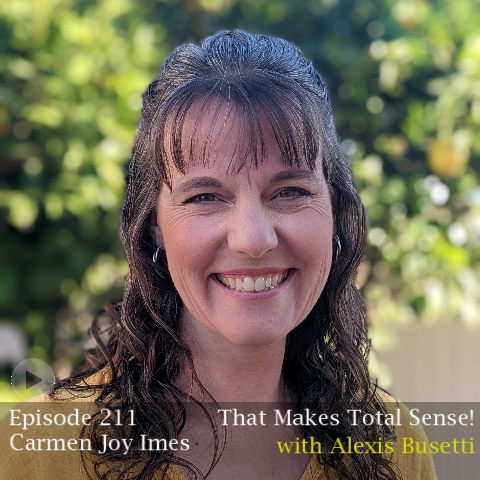
Speaker 1 00:00:06 Welcome to That Makes Total Sense, a podcast dedicated to exploring God's generosity and justice. I'm Alexis Busi, a Christian aiming to ask good questions and encouraging you to do the same. Every one of us is wired by God to live out generosity and justice. But the how sometimes eludes us that makes total sense is a way for us to get together, posture ourselves as learners, and challenge one another, to practice generosity and justice in a tangible way every day. All right, everybody. As is kind of my mo, I finished this book today over my first morning cup of coffee, and it was really great and just refreshing and so good. It's called Being God's Image, why Creation Still Matters by Dr. Carmen Joy IMEs. Thanks so much for joining me today, Carmen. Oh,
Speaker 2 00:01:07 Thanks for having me. I'm glad to be here.
Speaker 1 00:01:09 So I just wanna kind of start by saying you cover a lot of ground in this book, like a lot of ground from really <laugh>, really from creation to Revelation. Mm-hmm. <affirmative>, you hit a lot of it. Wisdom books in the middle have, have a, have a section, have, and you give us as a, as a professor, and I, I'm a student. I'm not your your student formally, but I was, I felt like I was when I was reading this book. But you also give us these little, um, side notes that help us understand things a little bit better. So one of the first ones I really appreciated was on a, on a Hebrew preposition <laugh>. And, um, and that was, that was just really lovely to me. And I just wanna throw it out here for folks who haven't grabbed a copy yet, many of the places where you translate the scriptures, you use your own translation mm-hmm.
Speaker 1 00:02:10 <affirmative>. Um, and so I just, I'm pointing all that out at the beginning to say, um, Carmen's done a lot of work here in this and, um, and I'm really, really appreciative because this topic is something that I think can feel a little bit elusive. Mm-hmm. <affirmative>, um, even this being God's image we're, I think so used to hearing that, but we're like, but yeah. What does that really mean, <laugh>? Mm-hmm. Like, how does it affect my everyday life? What does it really mean? So maybe that's a good place to start. This is a part of a set. I have not read the other book. Okay. Um, but where did this, where did this book come from?
Speaker 2 00:02:52 Sure. So, my first book with University Press, excuse me, is called Bearing God's Name, why Sinai Still Matters. And it is the popularization of what I learned as I wrote my dissertation on the command, not to take the Lord's name in vain, which I argue is not about swearing or policing how we say God's name or when we say God's name, but that it's this much broader idea that the people of God bear his name and represent him in the world. So we should live in such a way that our character reflects his. So I wrote that as an outflow of my doctoral research. I wanted the church at large to see it and hear it, and, and be captivated by these ideas, um, that we have this identity as the people belonging to God that works its way out in a vocation of representing him.
Speaker 2 00:03:40 So, as I released the book, I started getting questions almost immediately from people who were reading it and saying, oh, isn't that kind of like the image of God? Isn't that also representative like every human being? It has a representative role, so it affects our identity and vocation. And so this book is written to answer that question and to try to make the case that, yes, there's a similarity with the idea of bearing God's name, but this is not the same in scope because every human being is the image of God, and only the covenant people bear his name. So there's a difference in scope, um, but it is a matter of identity and vocation. So I argue that every human is the image of God, that we are tasked with ruling over creation on God's behalf. So it's, again, a representative role, whether we realize it or not, whether we're in relationship with God or not, we have an inherent dignity that's God given.
Speaker 2 00:04:40 So every human being is the image of God, and therefore has a representative role in ruling over creation, whether they realize it or not, whether they I, whether they are aware that they're made by God. And given this identity and vocation, every human being qualifies as the image of God. And it's a status that we can't lose or can't be diminished in any way. So that's the, that's the message, uh, or the premise of the book is teasing out the implications of what does it mean to be the image of God? What does it mean to be human through the entire Bible? Which is why I am covering so much ground, because I wanna go from Genesis to Revelation showing what are some of the key ideas. I can't be exhaustive, of course, in a short book, but I, I'm trying to touch on some of the biggest ideas related to our human identity and vocation.
Speaker 1 00:05:35 Yeah. One of the things that you bring up at the beginning that I think is really crucial, and I'm, I'm saying this as a, as a student, so I grew up in a congregational setting where our church, you know, in tradition really valued the Bible, but we, you know, kind of, I was, I was taught that to read it all kind of in the same way mm-hmm. <affirmative>, and I think you'll know where I'm going with this mm-hmm. <affirmative>, because you mentioned a couple of really important things. One is genre, um, and one is, um, is the, is who was the text written to, you know, what kinds of questions mm-hmm. <affirmative>, what, you know, what, what was this, what was the setting? Who was the original audience for some of these texts? And so I know we don't have time. I, I think, you know, if you were teaching us an Old Testament course, I can imagine how, you know, how extensive we might get into with some of these conversations. But in, you know, in this short time we have, can you help us understand why some of those things matter, especially when we're trying to dig into this idea of being God's image. Mm-hmm. <affirmative>.
Speaker 2 00:06:50 Yeah. I think it's so crucial that we, that we first ask the question, what are we reading? What is, what is the narrator trying to tell us in this text? And we tend to come to the Bible with our own questions, and then we look for those answers, and we might actually miss the whole point because we're listening for something that's not there. And you've probably had experiences, those listening have probably had experiences of where they're having a conversation with someone and the other person is not really listening because they're just thinking up the next thing they're gonna say. Um, and you can tell you're not being heard. And I think the biblical authors, if we were in a room with them, would often feel like that. Like, we're so busy generating our own thoughts that we don't turn off the, the, the buzz and listen to what's being said.
Speaker 2 00:07:43 And we can't help but import some of our own cultural and historical context into the Bible, because the Bible was written so long ago in a different language, in a different culture, in a different geographic, um, setting. And, and so some of the things it's taking for granted are not things that we share in common. And so then we've supply what's not being stated overtly with our experience of the world, which is so different now. We are human, and they were human. And so there are certainly areas of shared experience, but we live in such a different cultural context. So sometimes, for example, as I'm teaching through the text, I'll have to stop and say to students, you understand Abraham can't just stop in at Walmart and pick up supplies for the trip, right? Like, everything you eat, you have to either grow yourself or trade with someone who grew it so that you can have access to it.
Speaker 2 00:08:44 And so there, there's just such a different context, and I think that means we miss things. So for example, in Genesis one, I think one of the biggest ideas, uh, of that chapter is fruitfulness. If, if we think of God as a model farmer who's creating a place where plants can flourish, and where people and animals can find the food they need, um, the, the concern of the chapter seems to be about where can we live and where can we find food? That seems to be the question that, that Genesis one is answering. Not how long did it take God to make all this stuff? And, and, uh, how did it get here? Like how did he do it? That's the question modern readers are wondering, because we've come out of our science classes and we wanna know what the Bible has to say in relation to what we heard in science class. But ancient near Eastern people are not wondering how long it took, and they're not wondering how God did it. What they're wondering is, where can I find food and where do I belong in God's economy, in this world that God made? Where do I fit in and what's my job?
Speaker 1 00:09:55 Yeah. Yeah. That's, that's really, really good. Um, it, it, it was one of those things that kind of, I think it continues to be mind blowing to me. The more I, the more I study the Bible and the more I study, uh, culture, uh, that just continues to blow, just continues to blow my mind. Um, on that note of this, staying with this idea of image mm-hmm. <affirmative>, I'm hoping that you can take us a couple of places. The first is let's hit that preposition that I teased everyone with at the top. Okay. Um, this, this inner As, but then also I'm hoping maybe you can just go right into, um, continue with that ancient near near East, what other kind and, and representation, right? Mm-hmm. <affirmative>, what were they used to? You know what? Yeah. Like what, what did that representation look like and what might God, what might God have been, you know, sharing through this text Sure. To his people. Sure. You know, through that idea,
Speaker 2 00:11:00 Let me first say, for anyone who's listening who's doesn't have an academic background, and you've not been used to reading the Bible in academic contexts, that I have worked very hard to make this book accessible. So, although I did a lot of study behind it, um, and I do talk about Hebrew prepositions, and I do talk about the ancient Near East. I try to do it in such a way that you don't have to have any theological training to track with me.
Speaker 1 00:11:29 Can I say, I think you did a great job of that <laugh>. Thank
Speaker 2 00:11:32 You.
Speaker 1 00:11:32 And you're really funny <laugh> in the, in the, in the book. I just was chuckling my way through some of those, but yeah, I just, I just wanted to, I just wanted to throw that in there. I think you did an amazing job of that.
Speaker 2 00:11:43 My mom is on her third time through the book. She has not had any formal theological training. She's been in the church her whole life. So she has a general familiarity with mm-hmm. <affirmative> Bible stories. And that would help to have a general familiarity with like, who is God and what's Israel and what's a covenant like, those, those things are helpful, but I try to explain it in such a way that, um, that you don't have to bring in a lot of outside information. And so don't be intimidated by that, what I'm about to say about prepositions in Hebrew, because this is not a grammar book. Uh, but I did feel like I needed to start with an explanation of why I was gonna talk about the image of God different from everyone else I've heard talk about it. Because I try not to say that we're made in the image of God, and I don't talk about bearing God's image.
Speaker 2 00:12:32 My other book is bearing God's name. This one is not bearing God's image, it's being God's image. Because I don't think the image of God is something we carry. It's who we are. So we can't set it down. It's, it's intrinsic to our identity. Um, and similarly, I don't like to talk about being made in the image of God, even though our English translations, Bible translations usually render it that way. Because I think what's going on in the Hebrew in Genesis 1 26 is not to say that God made humankind in his image, but that he made us as his image. That is to say, we are the image of God. It's not like the image of God is something outside of us, and we're patterned after it. We are patterned after God. We are the pattern. And to be a pattern is to be the image.
Speaker 2 00:13:19 So I, I talk a little bit about how Hebrew prepositions work, and a preposition is just that little filler word that indicates the relationship of two things. So in two by four, over under, uh, beside those are all prepositions. And in Hebrew, the preposition is just a single letter. It's the letter B, and the letter B is attached to the, the Hebrew word sem, which means image. So it's something image. Um, but the, I don't think the English word in captures what's happening in that context, even though sometimes the, the letter B does indicate in and in is a good way to translate it in some context. In this particular context, I don't think it works because in works in spatial or temporal context when it, when it needs to indicate location or time. But this isn't indicating location. It's not saying where God made the image.
Speaker 2 00:14:19 And it's not saying, uh, when God made the image, it's, it's saying that, that we are the image of God. And so I compare it to Exodus six, verse three, where Yahweh introduces himself as El Shadi, uh, you know, to, to Abraham, Isaac, and Jacob. I made myself known as El Shada. And that's the same con con construction in Hebrew. It's the B the letter preposition B attached to L. Should I? But L should I. So here we have Selem, and I think it's in the same sense God is saying humans are his image. And part of what gets us off on the wrong foot is that a, there's a long history of interpretation of what does it mean to be the image of God? And people speculate about how humans are different from animals, and then how that must be telling us what it means to be the image.
Speaker 2 00:15:10 But that whole conversation is often not very tethered to the biblical text itself and what it says. And so I'm trying to help us come back to a close reading of Genesis 1 26 to 28, which is where we first encounter this concept and see what is it saying, what, what is it? How is it describing us? And the, the first thing to notice is that the Hebrew word sem had a concrete, physical, three-dimensional meaning in an ancient context, when a, when a Hebrew speaker heard the word sell, they pictured a statue, statue, a statue of a king, or an idol of a deity. Those words sem. And so when God says he made humans as his s, he's saying that we are the three dimensional representatives of his presence. We exist in the world to remind creation who's in charge and who's behind all of this, who made it all. So it's a very physical, um, statement, not, not a kind of, let's open up the floodgates and think of all the things, our rationality or our morality or relationality, all the things that people have attached to the image of God. This is something quite physical, and I think we need to start there if we're gonna have a clear picture of what it means to be human.
Speaker 1 00:16:32 Yeah. Thank you so much for that. I mean, that is, um, I don't, I don't often do this, but I'm, I'm wondering, I may read like just a, just a tiny quote because mm-hmm. <affirmative>, what I think was helpful for me to understand this as I was trying to kind of wrap my mind around is, or as, or bearing or, you know, and, and mm-hmm. <affirmative> and, and kind of nuance that in my head as well, is Yes. First that idea of something physical, right? So if, if the audience, this is what they would have naturally thought of. Yeah. Um, but then you also talk about some, some temple work here. Mm-hmm. <affirmative>, and, and you, you, you write it, could it be that the Israelite temple lacks a Yahweh idol because God has already placed an image in his cosmic temple mm-hmm. <affirmative>, just as a statue of a God is intended to represent that God's claim to a particular area. So humans are the physical representation of the creator God on Earth. Can you riff on that for a minute?
Speaker 2 00:17:47 Yeah. So that's one of the things we learn when we come back to Genesis one and read it with ancient questions in mind and see what is it saying to ancient people? Not, not how does it weigh in on our modern scientific de debates? We find that the language for creation is very temple centered language. That it, it shares a lot of similarities with temple creation, texts from, from the ancient near East, and then later when God tells Moses to build the tabernacle, it echoes many of the things that we read about in Genesis one. It has a lot of elements that remind us of creation. So it seems to be that all creation is, in a sense, a temple in which Yahweh is to be worshiped. And so we, because Yahweh hasn't chosen to make himself physically, visibly present as ruler of all creation, he, he made humans to be his physical representatives.
Speaker 1 00:18:47 That just is so huge to me. <laugh> like the, like the idea that we're all, we're all walking around this earth mm-hmm. <affirmative> with the job to steward what is here, which you also get into in the book. Yeah. But representing somehow, somehow representing God's claim as creator mm-hmm. <affirmative> of this whole place feels really wild to me.
Speaker 2 00:19:21 Yeah. I mean, it, it's simultaneously addresses the, the deep questions many people have about their own value by saying you are a representative of the God who created the universe. Like he appointed you. He made you personally and appointed you to this task. That's huge. Because suddenly I matter, uh, and, and the work that I do matters, um, but it also at the same time takes us down a notch <laugh> mm-hmm. <affirmative> if we've been thinking of ourselves as the center of the universe, because this tells us unequivocally that we are not what this is all about, that we are pointing to the creator God who made all things. And so, as we reckon with what the Bible says about what it means to be human, we find simultaneously that we are greatly valued, but that we are not at the center. And if we understand that a human being is of great value to God and represents God, then that fundamentally transforms how we think about and look at other people. Yes. Because every human being shares this status, we're all on, on the same, uh, on level ground together, meant to collaborate with one another in carrying out God's work in the world. And that's, that's just huge. I just think we could spend the rest of our lives trying to lean into that and have plenty of work to do.
Speaker 1 00:20:50 Yeah. Yeah. I completely agree. I mean, a couple of the things that, that brought up that I had in my notes as I was, uh, looking back at the book is, uh, you know, along those lines of how do we see other people is mm-hmm. <affirmative>, um, you have this really, really great section on, um, the city of Babel, I will say, instead of the Tower of Babel mm-hmm. <affirmative>, the city of Babel. And, um, what that could have said about, um, empire, but also about diversity, um, but also that, I mean, we've touched on it, but I'll just kind of also say it explicitly. Uh, I mean, you, you, you, you did say it earlier that because we are this representation of God mm-hmm. <affirmative>, there's not anything that either A, we could do, or b, that that could happen to us mm-hmm. <affirmative> that would diminish that representation.
Speaker 1 00:21:47 Right. And so, I just wanna say like, that was, that feels like a, like a really healing idea to me. Um, I grew up in a, in a, in a place where, I mean, a setting where people, like I said, valued the Bible, loved the Bible, loved Jesus, but it's, and it wasn't just they, but there was also this long tradition, not just with where I grew up, but in, in church settings, and it's been there for centuries, I think mm-hmm. <affirmative>, that when sin entered the world, somehow we as, as images of God, or even it, it kind of helps though if you, if, if you preach it as we bear God's image mm-hmm. Because then you kind of have that wiggle room to say what I'm about to say, which is that we're marred now. Yeah. Right. That image is somehow marred. Right. So like, our clothes got dirty, this thing that we wore mm-hmm. <affirmative> is no longer as PRIs Good pri as it was pri Right. It's not pristine. Yeah. And so, um, but this idea that, that we are God's image.
Speaker 2 00:22:52 Yeah.
Speaker 1 00:22:53 That, and, and, you know, I mean, gee whizz, we could go into all these other places where you do touch on, you know, disability theology and sin and fall and all these things, but, but all people are mm-hmm. Representing God's image, and there's not anything that could happen that would make that not true for us.
Speaker 2 00:23:18 Yes.
Speaker 1 00:23:18 And that feels really healing to me.
Speaker 2 00:23:21 Yeah. I think the church has spent a lot of time lingering on Genesis three mm-hmm. <affirmative> and, and teaching that we're sinners and that we're totally depraved. And I think it's true that we're sinners, and I think our sin has disastrous consequences, and we should talk about it. But I think the Bible presents humanity first as God's very good creation appointed to rule on his behalf. We are his image. And if we started our, our teaching on humanity there, instead of in Genesis three, we would have a clearer idea of what the end is in mind, uh, or of how I think sometimes we preach the gospel as if you're a sinner and you need to, for God to fundamentally change you so that you can be good. And I think what, what I wanna say instead is you are created good with, you're imbued with dignity and with a, a God-given task to do in the world, but you have not been living in alignment with that.
Speaker 2 00:24:26 You have lived according to, to lies about who you are or lies about who others are or what, what this world is all about. And so, what Christ came to do is, yes, he came to die for our sin, but to restore us to who we truly are, to restore us to that biblical vision of God's images who represent him. Um, and that this is not something fundamentally opposed to who we are, but it's, it's the core of who we are. And this is not to say that we just look deep down in ourselves to find salvation, that salvation had to come from outside of us. Um, but our God-given dignity is, is part of who we are fundamentally.
Speaker 1 00:25:09 Yeah. Yeah. And since, since you brought him up, Carmen, I told you prerecord, I'm like, if we can spend some serious time with Jesus in this conversation mm-hmm. <affirmative> mm-hmm. <affirmative>, that's where I wanna live. <laugh>. Yeah. So since you brought him up, I'm gonna, I'm gonna go there, because again, I think it's, it's, it's, it's, as you mentioned, it's not, these things aren't bad. It's not bad to talk about sin. Like it has effects. We live with it every single day. Yes, of course. Yeah. Um, and, and I think that, um, one of the, I'll just kind of start by saying this for me. One of the things for, for me, and this, I'm not, I'm not blaming my tradition as much as I'm just, like, part of this is like personality. I kind of really like for there to be categories and even binaries, sometimes tra you know, in, in my past have kind of, you know, helped me, helped me to kind of sort things out.
Speaker 1 00:26:03 And so I have put a lot of focus, you know, I've said, okay, here we know. Okay, here's what I know. Jesus is a hundred percent God, a hundred percent, man. That's how he used to say it. Mm-hmm. <affirmative>, you know, and the churches I grew up in, so he's a hundred percent, God, he is a hundred percent man. But the focus was usually on this a hundred percent God part. Mm-hmm. <affirmative>. And then if I thought about, or if we talked about the a hundred percent man part, it was basically that his, his humanity was basically to accomplish this task of living a sinless life mm-hmm. <affirmative> so that his sacrifice was meaningful Yeah. So that it could work, basically. Yeah. Because none of the rest of us could accomplish this. Um, Adam and Eve messed that up for us, and so mm-hmm. <affirmative>, none of the rest of us could accomplish this.
Speaker 1 00:26:54 And that was kind of the main focus on his humanity. Mm-hmm. <affirmative> maybe here and there. We, you know, touched on things like, oh, he was tired, or he, he cried that time that's recorded, or look mm-hmm. <affirmative>, he even got hungry. But that was kind of maybe the extent of where we focused on his humanity. And so I wanna, I, again, I don't normally do this, but you, you wrote this well, and this was, this is like, this can be, this felt, this can feel a little bit, um, provocative. Can I say that? Can I say some of your writing? Sure. It feels a little bit provocative. Okay. So I'm just gonna read these two sentences that I starred and underlined and dogeared. Okay. Um, Jesus is not the image of God because he is God. Now, I just wanna say, like, you didn't say he's not God. Right. But we're saying Yes, correct. Jesus is God.
Speaker 2 00:27:45 Jesus is God,
Speaker 1 00:27:46 Jesus is God. Period. That that is. But, but this part says Jesus is not the image of God because he is God. Jesus is the image of God because he is human. Mm-hmm. <affirmative> and I, I wanna let you explore that with us. But part of what struck me is that, and it continues to strike me, is that Jesus in his humanity, manity was and is, and is so much more than someone who could come and check off this perfect sinless life and then die.
Speaker 2 00:28:36 Yeah. Yeah.
Speaker 1 00:28:38 Like his in and out, his everyday life, his interactions with other people, right. Like all of these things, his humanity was so rich and wonderful mm-hmm. <affirmative>. And, and, and I think sometimes, at least for me, I have not really known how to explore that or even what it, what it means, you know, the, the, the meaning of, of Jesus humanity, because I've focused on his deity, which is good and wonderful and rich as well. But in something, I think there's a richness that I have missed Yeah. In exploring his humanity.
Speaker 2 00:29:20 Yeah. And Alexis, I would say it depends on what church tradition someone is in. Um, I've spent time in a number of different denominations, and, um, if you're in a cradle denomination, like if you recite the ene creed or the Apostle's creed, you'll notice there's almost nothing about Jesus' life in the creed. Hmm. The, the thing that the creeds are, are, are trying to nail down is Jesus personhood, and then his death and resurrection and ascension. Those are the things that show up in the creed. But we have this gap when it comes to his life. However, if you were in a Mennonite church, I spent many years in a Mennonite congregation, and they're Mennonites are very gospel centric, and they don't spend a lot of time with creeds. And so they're always looking in the gospels to find out, um, how Jesus is a model for the rest of us to live.
Speaker 2 00:30:14 So I think, I think for some people, they would've been like, oh, yeah, this is how I think about Jesus already. Um, but for many of us who came from more cradle backgrounds with a strong emphasis on penal, substitutionary atonement, um, you know, certain models of thinking about the cross, this is gonna be newer because we haven't spent much time unpacking his, his life and his humanity, because we've been, we've been so busy trying to prove he's God. And I think that's what gets us into trouble in thinking about the image of God, because many people have just assumed, of course, Jesus is the image of God. He's God, how would he not be? But I, I think this is just to look at it inside out. I cannot be the image of Carmen because I am Carmen. If I go somewhere, I'm, I'm representing myself.
Speaker 2 00:31:06 I like, I am myself. I'm not, I'm not representing myself. So there's a, there's a fundamental difference between someone and then someone else who's being sent as a representative. So to say, Jesus is the image of God is to say something profound. And that is to say he's human. He has taken on the identity of every human being by becoming the image of God. And he was already God before, but now he represents God in a way, in his hu in his humanity. And what qualified him to be the image of God, his human body. As soon as he was an embryo growing in Mary's womb, he was the image of God in a way that he, um, that he wasn't just before the incarnation. So this, this is, I think, profound, um, because there are a lot of people out there who would say, well, yeah, Jesus is the image of God.
Speaker 2 00:32:01 We are made in the image of God. We're not quite up to par, we're we are not what he is. And I, again, I think that's a misunderstanding of what the Bible's trying to say when, when the New Testament calls Jesus the image of God, it's not trying to say He's the image of God and you're not. It's saying, he's become one of us. And so that's profound because now we can look at him and learn how to live in alignment with our true identity. Yes, Jesus is superior to us. I am not trying to say we're same, same, but but in our status as God's image we are. And the difference between me and Jesus is that Jesus consistently lives in alignment with his true identity. Whereas I need, I have work to do, to live in alignment with who God says I am. Um, so we all, we all have days when we're living out of sorts with who we truly are, where we're believing lies, and we're acting in response to those lies about how the world works or, or what we're like or why we're here. And so Jesus shows us now we can, now we can come back to his life and see, okay, what does it mean to be human? Show me Jesus, what this could look like.
Speaker 1 00:33:19 You know, when I was in my, I think it was in my New Testament class, we, we had a couple of options for which versions we could read through, um mm-hmm. <affirmative>, some of our texts. And of course, we had to read through all of the gospels. And one of the versions that we had a choice was, I think it was the contemporary English version. Mm-hmm. <affirmative> Bible, maybe c e b I'm thinking. Yeah. Um, but I think it's in that version that in the gospels they translate son of man as mm-hmm. <affirmative> human one. Mm. Mm-hmm. <affirmative>. And that, you know, just sometimes just reading it, you know, because I'm like, yeah. You know, I'm kind of like your mom. Like I, I grew up in church and I have, you know, I have some of these familiarities and so reading son of man, son of man, son of man, it does, you know, it's like just kind of old hat mm-hmm. <affirmative>, but reading Jesus being called human one Yeah. Like, felt really different to me. Yep. <laugh>. Like,
Speaker 2 00:34:17 And
Speaker 1 00:34:17 Yet that, that felt really profound. Right.
Speaker 2 00:34:19 Seems, and yet that seems to be what that phrase means. Right. Uh, it comes from the Old Testament. It's God's favorite way of, of referring to Ezekiel. Yes. So the prophet Ezekiel is God's constantly calling him son of man, which is a way of saying immortal <laugh>.
Speaker 1 00:34:35 That's right. I actually was gonna say, I'm, I'm, I'm in an Ezekiel class right now. Oh, yeah. Everywhere. And my husband, every time he passes me, like on I'm studying at the dining room table, he'll say, hello, mortal <laugh>. <laugh>.
Speaker 2 00:34:46 That's perfect. <laugh>. You
Speaker 1 00:34:48 Know what? I'm like, yes. I mean, love it in my translations, I'm saying, son of man, but, uh, yes. But it's exactly as you say, it's mortal, right? Mm-hmm. <affirmative>, but to, to read this in, in this way, mortal or human one. Yeah. And, and how, I mean, we could go off on other things too, because like, that, that to, to me is reminiscent of, you know, he's being called a prophet, you know, and all these things mm-hmm. <affirmative>, which, which I believe he was, and anyway, but it's, it's, his humanity is really, um, it's just kind of, it's just kind of wild. I, I, I want, I mean, we can't just sit here in silence, but I think that's something where I think, uh, you know, I'll continue to meditate on that idea of Jesus being the image of God because he, um, was human.
Speaker 1 00:35:37 Um, but let's go like a, like a little bit further mm-hmm. <affirmative> and some other places that were just kind of mind blowing places. So, so that is one of them. But as we continue through, um, well, I was gonna go to Ascension, but I think maybe it might be appropriate to even go back to what, what you mentioned earlier, like him being incarnate in Mary's womb. Mm-hmm. Um, you know, this connection to, um, to people and partnership and male female partnership and, um, and what, how does that speak to us? That Jesus came as a human one, and we're used to, I think some of the phrasing, the biblical phrasing, he was born of a woman, right? Yeah. We, we kind of, you know, we kind of say that a big, but again, like the more we say it, they kind of more familiar it means, but like, but like, what is this really saying to us that he was born of a woman?
Speaker 2 00:36:45 Yeah. I think, um, for this part of the book, what really helped me was Amy Peeler's new book, uh, Jesus and the Gender of God. Uh, or is the, maybe it's called Women in the Gender of God. Yes. It's called Women in the Gender of God. Um, and, and the title has, I've noticed people be offended just by the title of the book as if the gender of God is up for grabs, or if as if there's a question, um, to be clear, Jesus is male. There's no, there's nobody debating over whether Jesus was actually male. So Jesus' gender, uh, is settled, but, um, but the question that some people have raised through history is, how can a male savior save women? How, how is it that Jesus is truly representative of all humanity? If he's a man? Does this say something about men being more human or more ideal or, or, um, superior in some way to women?
Speaker 2 00:37:46 And so that's where this, uh, this, the role of Mary becomes profound because God, and just to quote something that I say in the book, God dignified women's bodies by being born of a woman, it, God could have chosen another way, but he chose a woman. He, if, if, if there was something fundamentally off about women, if we were somehow inferior or polluted or problematic in some way, then God certainly could have found a way to accomplish the incarnation without the involvement of a woman Jesus could have just shown up in a human body. But instead, God has him go through the, the full process of coming into being, uh, being, being in Mary's womb, being birthed, being nursed, being raised by a woman. And this is not to say that Mary somehow saves us. I'm not taking a Catholic approach, um, that sees her as the co mediator of our salvation.
Speaker 2 00:38:49 But I do see her as a shining example of faithfulness, faithful participation in the work that God is doing in the world. And, and to watch how God uses Mary with her willingness, not, not uses her in a predatory sense, but invites her to participate in his redemptive work, I think is amazing because it restores what seemed to have been lost in the garden when Eve fails to obey God's word. And then we have this sort of cloud hanging over us as a female race. Like, like, are we always a problem? Is it a problem to be a woman? And God chooses Mary and says, come with me, participate with me in bringing redemption into the world. And I think that restores God's intention for men and women to partner together in gospel ministry, in, in the wider work of creation care, and ruling creation. So I ho Yeah. I hope that that is inspiring to others who are listening who maybe haven't, who who maybe wrestled or maybe haven't ever thought about the gender of Jesus.
Speaker 1 00:40:03 Yeah. I mean, I, I know that we probably have, you know, some of our church fathers to, to thank particularly for this idea of women's inferiority. Yes. We
Speaker 2 00:40:17 Do
Speaker 1 00:40:18 <laugh>. There are, there are a, there are a few that I'm like, oh, I don't even, I can, I can not read the rest of what you wrote, because I just read, you know, this, uh, thing. Anyway, I won't necessarily name names, but they're very, very old. Um,
Speaker 2 00:40:31 Oh, we could name names, we could name. I mean, there's some of the, some of the greatest theologians of all time Ous Augustine. Yes, yes. Who, who Origin, who said horrible things about women Yes. Horrible things about women. Yes. They did not understand. They, they missed the vision of creation where God makes male and female, both has God's image and calls us very good. Right. He calls creation very good. Um, yeah, I think we need to recover that.
Speaker 1 00:41:01 Yeah. I, I, I agree. And I, I also just wanna, I wanna say just, you know, plug for, for diving into this a little bit more with, with your book, since we won't have necessarily the space to go all of these places, but I do just think it's worth mentioning, as you mentioned, male and female together, that you and, and, and, and I am in full agreement. You're not talking only about marriage. No. This is men and women as people mm-hmm. As creator, as, as partners in this, in this creation that God has has made. And also, not just as in, we don't have to be married like this couple, I've, I've also heard that priest you probably have too, that kind of as a, as a married couple, this is maybe a full representation or something like that. You don't necessarily say that in the book, but I think No, I think you say things that negate that I
Speaker 2 00:42:01 Do. I mean, do mean if we just think about Jesus <laugh> Right, exactly. As our good example. Right. Jesus is not married, and yet he's the exact representation of God. He's the image of God. So clearly we don't have to be married to be fully human and to live satisfying and fulfilling lives of service. Uh, yeah. I think that's important to me.
Speaker 1 00:42:21 Yeah. Yeah. I do too. And so I, I, I just wanna kind of throw out there that you explore this both in kind of side notes, but also in parts of the book, but also really, you know, kind of in a little bit more depth in other, in other places. And I think that it's mm-hmm. I think it's noteworthy, but I, I do, it feels, again, kind of another one of those places that feels a bit, you know, a bit healing to think about. Mm-hmm. God dignifying women's bodies again mm-hmm. Through Jesus coming in Yeah. Into the world that way, but not just coming into the world, as you mentioned, like being raised by a woman and being, and being surrounded by women in his ministry. Yes. And I
Speaker 2 00:42:57 Think that that's really beautiful, and maybe one of my favorite parts to write was writing about Mary Magdalene. Yes. Who's the first witness of the resurrected Lord. Yes. And he commissions her in the garden. They're in the garden, and he commissions her to go to his disciples and declare that he's risen again. And it, it's so powerful because it was a woman in the garden who failed to keep God's command in Genesis three. And God said to eve that a, that the seed, her seed would crush the serpent's head. And now Mary Magdalene is in a garden being commissioned to share the news that the, the serpent has been crushed that mm-hmm. <affirmative>, that Christ has risen. And, and to me, Jesus is turning the conventional gender roles on their heads, and he's restoring the partnership, God intended, between male and female. He could have waited until some of the guys showed up to appear to them, and to tell them the news so that they could be the authoritative com proclaimers of the resurrection. He doesn't, he chooses a woman who understands what it is to be redeemed and who is distraught over his death, so distraught that she's there at the tomb weeping, and he tells her the best news, the most important news in human history, and commissions her to pass it along to others. And so, I think this should be the first place we go when we're asking, what can women do in the church? <laugh> <laugh>. Well, Jesus appoints the first proclaimer of the gospel, and, and she's a woman, so we should at least factor that in.
Speaker 1 00:44:36 Yeah. Uh, that's one of my favorite things to do actually around Easter time, is to go through each of the four gospels mm-hmm. <affirmative> and read the account of the resurrection in each of the four gospels. Mm-hmm. <affirmative> and, and, and because it's, it's women, every time it is, uh, in, in all of the gospels, they're slightly different takes as we see in each of the four gospels and in many of the stories. But I love reading the accounts, just those, you know, those few verses those, those chapters in each of the four gospels because of how Yeah. Um, the women in Jesus interact in those Yeah. In thoses places. It is, it is really beautiful. So thank you for including that in Yeah. In your book. I think it's really great. Um, maybe with a little bit of the time we have left, I would love for you to, on this idea of being the image of God and sticking with Jesus, the ascension and the Trinity. Mm-hmm. <affirmative> Carmen <laugh>, help us <laugh>. This is so good.
Speaker 2 00:45:44 Yeah. So the ascension is an often neglected aspect of Jesus' life. We talk about when we share the gospel, we talk about his death and resurrection, but we often leave out his ascension. And my friend Patrick Shriner, is the one who first sort of put this on my radar. He has a, a little book on the ascension that he asked me to endorse. And I thought, oh, you're right. We don't really include this, but it's actually essential that Christ take his seat, um, that he's seated at the right hand of God to rule all things, because that's what we've been waiting for. We've been waiting, um, not just for the end of evil, but for the reign of God. And so Christ Christ's ascension ensures that what he accomplished on the cross is available for all time. But I think what struck me as I was working on this book, and I think is what you're referring to, is that because Jesus rises from the dead in his human body, like he's still embodied, he still can eat dinner with his disciples after the as after his ascension.
Speaker 2 00:46:50 He still has the scars from his crucifixion in his body. And so he's still an embodied human when he ascends, which means there's now a human in the heavens, and a human is a member of the Trinity <laugh>. So what better, uh, what better representative and intercessor could we possibly have than God who became flesh and stayed flesh? Jesus didn't give up his body to go to heaven, and we won't either. We, we enter into the new creation as embodied humans. We don't leave behind these bodies and go float around somewhere. Um, the Bible talks about us being raised to new life, and it, it's a mystery how that will all work out. But I am here for it. I'm excited to see, uh, what the new creation looks like with all of us fully participating in our dimensional selves.
Speaker 1 00:47:49 You know, I was so grateful to, to read like an actual scholar say something like that, because it was years ago. I, I, I, I think, you know, sometimes my mind works kind of in weird ways. And I, I, I was thinking I had kind of, again, not necessarily, I'm not, this isn't my tradition, but in my head, I had kind of, there'd been parts of me, this is gonna sound like really blasphemous and really irreverent, but I'm gonna say it. But there had been these parts of me that were kind of like, oh, okay, big deals, 33 years, he comes to Earth is 33 years, and then he goes back to heaven. Yeah. Like, he kind of gets zapped back, right? Yeah. And so in this kind of like dualistic mindset or gnostic mindset or whatever, you go, okay, like big deal. Like he comes here, he's a human, then he goes back.
Speaker 1 00:48:37 Big deal. But several years ago, it was like, it hit me like a ton of bricks. It was like, wait a minute. No, no, no, no, no. This wasn't like for 33 years, this is it. Mm-hmm. <affirmative>, like he really is human now. <laugh> mm-hmm. <affirmative>. And you know, like these kind of scenes from Revelation, you know, kinda came, kinda came back. Or I'm thinking about, wait a minute, sitting at the, sitting at the right hand of the father, like, like as a person. Yeah. This is no like, whoa. Like, it was like all of this humanity, incarnation, sacrifice, you know, death, burial res, all of this stuff, resurrection ascension. It was like, it just hit me in a crazy new way to think, wait a minute, this really was world changing <laugh>. Mm-hmm. Not totally this little like, oh, he's God, he can do wherever he wants.
Speaker 1 00:49:41 Yeah, of course he can buzz down here for 33 years if he wants to. I can buzz over to Target if I need to for 30 minutes. You know, like, yeah. This wasn't a buzz over to Target. No. Like, this was a, a world altering, it was, you know, creator altering, you know, like God altering being Yeah. For, for, for the, for Yahweh to decide to do for the, for the, for the person of God, you know, to decide to do this is, is wild. It's maddening. It's like, it's like, it just, it just puts things for me. It just put things for me in such a different perspective mm-hmm. <affirmative> mm-hmm. <affirmative> that this, that this is what he did. The gravity of the incarnation hit me in a different way. And when you said it, like there's a person in the Trinity Yeah.
Speaker 2 00:50:33 Now Yeah. A human. It's like,
Speaker 1 00:50:35 What?
Speaker 2 00:50:36 Yep.
Speaker 1 00:50:37 There's a human. Yes, exactly. There's a human, there's a human in the Trinity. This is crazy <laugh>.
Speaker 2 00:50:45 It's mind blowing. It really is. It's
Speaker 1 00:50:46 Mind blowing. There's a human in the Trinity. Anyway, I just, yeah. I think that's gonna, that's gonna keep me for the rest of the day. I'll think about that again as if it was,
Speaker 2 00:50:57 As Tim Mackey would say, make yourself a cup of tea and go for a long walk.
Speaker 1 00:51:01 That's right. <laugh>.
Speaker 2 00:51:03 That's
Speaker 1 00:51:04 Right. That's right. That's right. Um, okay, so speaking of Tim Mackey. Yeah. Um, I'm going to, I'm, I've been trying to keep track of some of these notes, and so I'm gonna put a link to the Bible project for folks who maybe have not seen some of their videos, because you've got in the copy of the paper book, um, at least the, the physical copy, you've got QR codes for Bible project videos
Speaker 2 00:51:33 Yes.
Speaker 1 00:51:35 That go with many of the concepts that you Yes. That you introduce. So I feel like this is like an abrupt shift, but, um, do you wanna talk a little bit about that partnership?
Speaker 2 00:51:49 Sure. I mean, it's, it's not an official partnership in this book. Um, I have done work with the Bible project before, and Tim and John are friends of mine. Um, but this was just, you know, as I was writing the first book, I kept thinking, oh, I would stop right here and show a Bible project video <laugh>, because that's what I do in class when I wanna explain a concept. They've done such a brilliant job of showing it visually and explaining it. And so I use them in all my classes, and I'm like, I can't teach without Bible project videos. I need them <laugh>. And so I asked InterVarsity Press if we could include QR codes in the book so that people could just pause and watch videos. And so you'll find them at the end of the book. There are at least three videos to go with every chapter.
Speaker 2 00:52:33 And that one of the things that that's great about it is that it turns it into a, a small group resource. So if you wanna read through the book with a group, I have discussion questions, scriptures to read, and then bible project videos that you can watch together, uh, which, which makes for a, a, you know, multimedia group experience that kind of hits things from different angles. And I've heard from many groups that have done that and, and found that helpful. I'll also mention that I have filmed video, a video course to go with each book with seminary now. And the, by the time this conversation releases, they'll both be out. Um, and so Seminary now is a subscription service based service. You pay monthly to have access to all the courses they offer. And they have an amazing lineup of courses from some of my favorite speakers, writers, professors, um, people like John Walton, Sandy Richter, Issa McCulley, Scott McKnight, Nijay Gupta, lots of amazing professors who are making their content accessible. So, so there, there's a 10 minute video that goes with each of the chapters of the book. So if you subscribe to seminary now, then you can use it with your group and I can kind of help teach your group
Speaker 1 00:53:51 To be fun. Oh, that's, that's so great. Um, I wanna mention one other resource. I didn't know that this was gonna be Pause for Resource Time, but it has been, and it's been wonderful. But I started it with the Bible project. Yeah. And then now you have seminary now, but I wanna mention one more if it's okay. Mm-hmm. <affirmative>, we haven't talked about it yet, but as we were having this mind blowing conversation about Jesus, and I mention, I kind of have had this like, dualistic mindset that I think is really common in, uh, American evangelicalism, which, which makes for some of these ideas to be, they can be kind of jarring. I think they're really cool and beautiful, but they can also be kind of jarring if we haven't thought of our physical bodies in this way before. Mm-hmm. <affirmative>, you know, um, I think we can, maybe we talk about our, maybe our personhood or our soul or something like that.
Speaker 1 00:54:47 Yeah. But like our physical bodies, like our human bodies. Um, and I think that you quote it a couple of times, but that is, um, NT writes books, surprised by Hope. Mm-hmm. <affirmative> that I just, I'm gonna put a link in as well for that book, because that was another one for me that really helped me slow down. Yeah. And just kind of think about my, my physical nature. Mm-hmm. <affirmative> mm-hmm. <affirmative>, but also, um, you know, what is my actual hope in Jesus? Yeah. Yeah. You know, what, what does that, what does that actually look like? Like slow down and even kind of think about that, that phrasing that maybe many of us have grown up with. Yeah. Or things like that. And so, um, I don't know if there's anything else you wanna add on, on that book, but that I feel like in a lot of ways is, is also in addition to the books that you've named and the resources mm-hmm. <affirmative> that you've named, I think that is a good companion to this study
Speaker 2 00:55:52 As well. Yeah. So part of, I love Wright's books, surprised by Hope. Um, as I read it, it felt to me like it might still be too academic for some of the people I wanted to share these concept with mm-hmm. <affirmative> concepts with. And sometimes if we've spent several years in grad school, we forget what's accessible, what accessible sounds like <laugh>. And so I tried to put the cookies on an even lower shelf than Wright did. Um, but I absolutely recommend his book if, if you read mine and want to want to reflect on it further and wanna get a different voice. Um, another great book is Richard Middleton's book, A New Heavens and a New Earth, where he talks about where this is all headed. Um, I also draw on his book The Liberating Image, which is about what it means to be the image of God.
Speaker 2 00:56:42 And again, both of those books are a little more academic than mine. So if you, if you find that I didn't go deep enough for you and you want, you want more, more meat, any of those options would be a great place to turn. And at the end of every chapter, I have a little section for digging Deeper mm-hmm. <affirmative> with some of my top recommended resources on that topic. And some of the biggest influences on me as I wrote the chapter, because I recognize that in a book of, you know, roughly 200 pages, I'm not gonna be able to, to say all the things that need to be said. What I'm hoping is to lay a foundation so that, or, or to wet your appetite may be to use another metaphor so that you want to go on and read more widely on these topics. I think it's so important for us to recover the Bible's teaching on what it means to be human, and then to step into that vocation, uh, with, with energy and with joy and with purpose.
Speaker 1 00:57:41 Yes. Thank you so much. This, that all that is just brilliant and wonderful, and I certainly appreciate it. I, like I said, when I, when I, we mentioned the, the prepositions, but you definitely accomplished this, um, the accessibility of, of this book and the content, and made it just really understandable. And, um, and I'm, I'm super appreciative of that. Um, one question left, and this is one that I, I like to ask a lot of my guests, but I especially love to ask journalists and professors. Okay. And it feels like, uh, because there's just so much we didn't cover mm-hmm. <affirmative>, and so it feels almost unfair, but I'll give it to you anyway if you wanna answer it, which is this. Mm-hmm. <affirmative>, what's the question that I did not ask
Speaker 2 00:58:30 You today? <laugh>,
Speaker 1 00:58:33 I say this because sometimes I get the feeling, you know, you're in a lecture and, and I can almost see it on my professor's face where he kind of, or she kind of has this, this little grin. Like if, if somebody would just ask this, I could really go where I wanted to go. Mm-hmm. <affirmative>,
Speaker 2 00:58:52 <laugh>,
Speaker 1 00:58:54 That may or may not be a familiar feeling to you. Mm-hmm. <affirmative>, but that's what I wanna, I wanna give you, I wanna give you the chance. What's, what's the question that I didn't ask
Speaker 2 00:59:05 You? Um, you touched really briefly, kind of in passing on the issue of disability. Wow. And maybe you said race as well. Those are two of the areas that I spend a bit more time, time unpacking in the book. What does it mean for, uh, for people with disabilities? What does it mean for those of us without disabilities, uh, doing life with people with disabilities? That every human being is the image of God. Uh, what does it mean for people of color? What does it mean for, uh, for those living in communities with people of color? I, I think these are important questions to think about because we tend to go through life with an, a mental image of what makes the ideal human or what constitutes the ideal human. And we don't even realize that image is there, but we have a default so that if I asked everybody listening right now to take out a piece of paper and a pen and draw a human, there's a very good chance that, you know, with varying level of artistic ability, that what you draw would be an adult male who's able-bodied.
Speaker 2 01:00:18 And, and we, we don't, if I, if I say draw a human, you, you probably didn't think to draw a woman. You probably didn't think to draw a person of color unless, unless you are one. Um, you probably didn't think to draw a person in a wheelchair or a person who is blind or, or a child like. So we have, we just have this sort of default that's middle-aged, able-bodied, white male as kind of normal, and then everybody else is, uh, sort of more or less like that standard or, or cookie cutter. And I, I'm hoping that as people read through the book, they're gonna re, they're gonna begin to recognize that default and realize how problematic it is not, I'm not saying that middle-aged white men who are able-bodied are problematic. I'm saying what's problematic is, is the, the mental idea that we don't even question that that's normal or that, that, that that's the, the ideal.
Speaker 2 01:01:22 And that everybody else is not quite as, as good. And so this is, you know, I'm, I'm wading here into some tricky waters, but I, what I'm hoping is that people will realize that every human being is the image of God. That being in a wheelchair does not disqualify you. Being a woman does not disqualify you. Being a person of color, being extra tall or extra short, extra fast or extra slow, <laugh> does not disqualify you. That every person brings something beautiful to the, to the human community. That we are meant to collaborate with one another and live in interdependent relationships that, um, in which we can together carry out God's work in the world. And, uh, it's gonna take the rest of my life for me to unpack that and to live into that.
Speaker 1 01:02:16 Thank you so much. I am super glad that you mentioned that. Mm-hmm. <affirmative>, I did have it in my notes. I probably did say in passing, but we just ended up spending time at other places, which is Yeah. Which is the purpose of that question. Yeah. Yeah. Um, that, that was part of the, um, the Babel discussion. Yes. But then you also had, um, you know, quite a bit of it, uh, where you, where you reference it in terms of disability as well. And I just, I love the way that you, that you named that if you asked us to draw a person mm-hmm. <affirmative>, you know, what did, what
Speaker 2 01:02:50 Would you draw,
Speaker 1 01:02:50 What would you draw? That's actually a really good reflective, um, question for me as well. So, um, Carmen, I just, I can't thank you enough for, um, for your book and for your work and for your willingness to chat with me about it today. Um, I'm super grateful. I, this is the one of my, the favorite, my favorite kinds of conversations where I leave with more questions than I came in with <laugh>. And that's part of my job is to write questions, you know? And so I, I'm leaving with more questions than I came in with. Mm-hmm. But it's great. And I actually, I hope that it's the same for our, um, listeners today, so that we can delve into those places that, um, had a place that maybe particularly struck us today and would just send us on, you know, more, more opportunities for discovery. Mm-hmm. <affirmative>. Mm-hmm. <affirmative>. I'm really grateful. Um, I'll put all of these resources in the notes, but again, this book is being God's Image, why Creation Still Matters by Dr. Carmen Joy IMEs. Thank you so much for coming on. Thank
Speaker 2 01:03:57 You so much for having me. Blessings.
Speaker 1 01:04:02 The links for all the resources mentioned in today's episode can be found in the show notes, music and podcast production by Seth Busti. Be sure to give us a review on iTunes and subscribe at your favorite podcast listening app you can also visit us at. That makes.