Episode Transcript
[00:00:07] Speaker A: Welcome to that makes total sense, a podcast dedicated to exploring God's generosity and justice. I'm Alexis Busetti, a Christian aiming to ask good questions and encouraging you to do the same.
Every one of us is wired by God to live out generosity and justice. But the how sometimes eludes us that makes total sense is a way for us to get together, posture ourselves as learners, and challenge one another to practice generosity and justice in a tangible way every day.
Okay, so I feel like I cannot stop smiling. And this is not Alisha the way I normally feel when I just finish a history text. Normally, it's like I'm done. Check it off the list. I'm finished now because it doesn't. It is not normally my thing. But I just finished your book, turning points in american church history this morning while trying to hold a wrestly puppy, trying to drink the rest of my coffee. And it was just so great. It was just such a pleasure. So thank you for writing it and sharing it and thanks for coming on.
[00:01:24] Speaker B: Thank you so much for those compliments and for our conversation coming up.
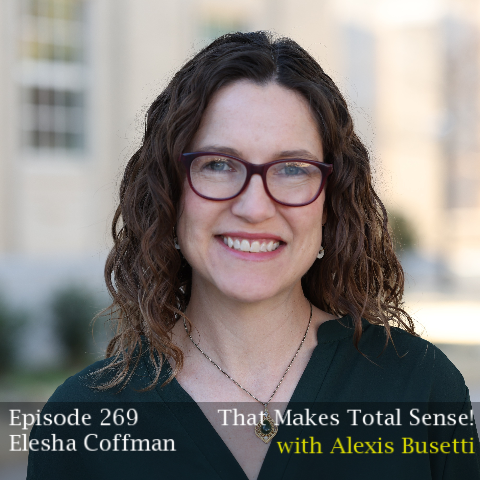
[00:01:29] Speaker A: So I'm here with doctor Alicia Kaufman. I've already mentioned her book is turning points in american church history, how pivotal events shaped a nation and a faith. And occasionally this happens. Alicia, I got to the conclusion, and I was like, oh, I hate this so much, but I want to start there. I want to start the conversation with where you ended it. And that is so I.
I don't know if I share this with you. I am. I just finished my m div about six months ago, and congratulations. Thank you. And by the time this airs, I will, like, officially be in my PhD program at an evangelical seminary. And so when I noticed in the conclusion, it's like, we've been hesitant as a people to study church history.
Now, I've already said I'm not a huge history buff. I live with a history buff, which is, like, great for him. But I, you know, I'm like, I did the church history classes. I enjoyed my professors. They were great. I checked them off the list, got the credits, and then I was like, I'll keep the books. I probably won't return to them. But I didn't sense a hesitancy in my context.
But when you said that, I thought, oh, yes, this is very familiar. And it rang true of just kind of culturally what's going on right now.
I live in Texas.
You live in Texas. Folks here are not real keen on studying, like, even all of american history.
When I read, oh, my goodness, I'm getting so sidetracked. I really want to let you talk. But when I read part of the secession Texas excerpt in the book, I turn to my boys who are both in Texas public schools who have taken Texas history. And I was like, tell me about the emphasis on slavery in Texas, because this document, like, harsh, does not even begin to describe the words about human beings in this document. And they're both kind of like, I mean, like, we might have talked about it. You know, I'm like, oh, no, no, no. Like, we're not emphasizing this. So I kind of want to start there. Like, what's your sense as a historian, as a professor of, like, why church history? We've been kind of hesitant as a people to go there.
[00:04:10] Speaker B: Right.
I loved that point about church history coming so late. That was a president of the American Society of Church History. That was his presidential address, and I just never forgotten it.
When I taught at a seminary before coming to Baylor, I taught at University of Dubuque theological Seminary up in Dubuque, Iowa. I would say zero of my seminary students had come to seminary because they wanted to study church history. That is not why they were there. That's not they, like, I need to learn how to preach. I need to learn how to study the Bible. I need to learn practical ministry. Like, how do I do a wedding? How do I do a funeral? Yes. Yeah, that's, that's what you're there for. And I would have to explain to them, well, you also have to take church history. Some of you have ordination exams, and you will have to know some of this also.
Sometimes I would describe church history as the lab class. So you're learning these theological ideas, you're learning these different ways that churches could be organized. If you wondered, so what would it look like to have a church that had this kind of theology, this kind of leadership structure, this kind of position in its society? Well, if we look through church history, we could probably find one of those. And what you learn is that none of them are perfect. Every system sort of solves some problems and then wrestles with other ones. Every, every version of the church has its own strengths and weaknesses, and I find that really liberating and really helpful as a Christian. That was something that I didn't learn church history growing up. I didn't learn it at my evangelical undergrad college. I didn't know that there were wildly other ways of being Christian across time and space. And so for me, that was just a great discovery. But for a lot of people, it's very unsettling if they believe that they know the way to read scripture, they know the way to organize a church, and now somebody's telling them, well, you know, that's one choice of many.
A lot of people don't want to feel that way about their own tradition.
[00:06:13] Speaker A: Yeah, I mean, it is unsettling. I think it's unsettling. Again, I didn't grow up in Texas, so I didn't have to take Texas state history. We don't have a Texas flag in our house. We're probably, you know, one of the few in our city who don't, you know, these kinds of things. And so as I'm, as I'm coming in, I'm like, oh, my goodness, this place where I live, you know, and yes, all of us, if we're Americans, the place where we live, right, is. There's unsettling things about it. But also that so many different traditions of Christianity, I love folks who now I hear even saying Christianity's, you know, plural, I e s. Just to recognize that and name that there are so many different christianities. And I love that lab example, you know, that we can. That we can find something.
Your book, and I don't remember if it was in the introduction, but talk about this, isn't a survey. So there are a number of chapters, and each chapter takes an event. And it's, it is a dive into the event, but it's also a dive into the context around the event. What kind of led up to it? What were some things that we saw that came after it as a result of this? That's the turning points. And you talk about that being specific as opposed to a survey. Surveys aren't bad, but as a historian, what drew you to this type of book as opposed to like, I'm going to write a short survey of church history in America.
[00:07:59] Speaker B: Right. The turning points format comes from historian Mark Noel, who was one of my mentors, not as an undergrad, because I was an english lip major and I thought I hated history.
I was also a communication minor. I was going to be a journalist. It turned out I was a journalist for five years. But I.
As a journalist, one of my early jobs was editing christian history magazine, which was a quarterly published by Christianity Today. It's still published no longer by Christianity Today international.
I had to every quarter come up with a whole issue on a different topic. It might be a topic that I had known nothing about. I had to find experts somewhere in the world who were willing to write in English for a lay audience on this topic. One of the very first issues. It was scheduled before the editor ahead of me left. I inherited an issue on Jan Hus, who was a reformer before Martin Luther in what's now sort of Czech, Czech Republic area. I knew nothing about this person at all.
And so I had to get up to speed very quickly. And one of the things I told my supervisors, Eric, Christianity today, like, I think I can run this magazine. It would help if I knew more about church history.
So how about I go back down the road to Wheaton and take a church history class with Mark Noll? And the book that he used in that class was his turning points in church history book. And that covers the whole sweep of church history. It was new then, it's been in print ever since. And I really liked that format. I really liked the, the way that there was enough of a, enough of a dive into these different events that you could get a sense of what was at stake and for whom, rather than just this was a thing that happened. And then there was another thing that happened. And there was another thing that happened. So then years later, when I was at University of Dubuque theological seminary, I had inherited the church history two course sequence. So that was every fall was early in medieval church history and every spring was supposed to be reformation, modern Europe and us. And we had twelve week semesters.
And the person who had taught it ahead of me was a reformationist. So his spring class was almost entirely reformation and basically no us church history. My training was in us. I was teaching in the United States. My students were going to go out and minister, almost all of them in the United States. It seemed very important to me that they understand the context in which they were going to be living out their faith.
But I needed a book that could do a creditable job of american church history and not just one denomination. Some of my colleagues would say, well, they take presbyterian history, they take methodist history. That's really not the same as, let's look at how this place and these different interactions between these different groups of people, these different political events, wars, land, territory, grab all that kind of stuff, how that affected the course of american churches. And so I needed a book that would do american church history in two, two and a half weeks tops. And the turning points book that Mark Noel had used, although he used it over the course of the whole semester, but I knew it's short enough that you can do it in a couple of weeks, but it also gets across a lot of important information and helps the reader think historically about these things rather than just, oh, history is this thing out there that somebody tells me about it and I have to memorize, but there's not a lot of engagement with it, typically. Why? I thought I hated history for all those years. So I asked the publisher that had done Noel's book, Baker, are there plans for more of these turning points books? Could there be one for american church history? And no, we hadn't really thought about that. And then after my first book, which was on a different topic, came out and I was a little bit more established author, those conversations became a. Well, would you be interested in writing a survey text that way, like a turning points book? And it was a lot to take on because my training is 20th century mainline Protestantism, and this book starts in the 16th century. But I really wanted it for teaching. I really thought it would be useful for people in a seminary context, in a church ministry context, adult study, personal study, like Noel's book has been in print for 27 years for a reason. And that's. Sorry, that was a long answer, but that was how this book, I needed it for teaching. But I also knew that the format worked really well.
[00:12:37] Speaker A: Yeah, the format does work really well. And I want to move into, we started at the end, and now I'd like to go back to the beginning.
But it was funny. So I read a lot for the podcast, and so I don't always recommend those books to my husband, who is, is also quite nerdy. And. But this was one, I was like, you, I think you would really enjoy this. And. But one thing we joked about was, I was like, oh, my goodness. But she starts so early, you know, I'm like, as you mentioned, 16th century. I'm like, spanish armada. This is where we are. And so I'm like, oh, my goodness, this feels so early to me. And he is dying laughing. And he's like, I'd be asking, why does she start so late?
So there's, there's a difference. It's some kind of history nerds, you know? And, you know, to be fair, he, he really enjoys when he understands the context, you know? And so for him, the context, the roots are long, you know, and I think that that is true, you know, but I'm like, she starts the spanish armada, and she ends with Reagan. And I jokingly, half jokingly said, I'd rather just start with Reagan. Can't we just start?
That's not history. I was born when Reagan was president. But anyway, so I was curious if I didn't feel necessarily like it was a timing thing. Although, tell me, I didn't necessarily feel like it was a timing thing. Like, we need to start in the 15 hundreds. I felt like, more. So it was like this was the event. Oh, I just got, like, a really kind of a gross word picture. But it's like if you're gonna.
Someone has, like, a.
Something on their skin above the surface, you know, you don't just, like, the. The dermatologist doesn't come in and just, like, cut it off there. It's. She's like, I have to make sure I get everything, you know, underneath. And so to me, just now, in this moment, I'm like, that's a little bit. What it feels like is like a. Let's dig just a little bit deeper. Yes, we weren't founded technically yet, but these are things that are happening on the continent, so, yeah. So why there, as opposed to any other starting place that it could be for american church history?
[00:15:03] Speaker B: Right. It was very important for me not to start with english colonization of what's now the east coast of the United States. Here at Baylor, the main survey class that I teach is american food history, from maize to momofuku. And that starts before colombian contact. So earlier than this, before 1492 with chocolate in Miso, America. I didn't go back quite that far. Here again, this book, originally written for my own church history class, it was the handoff from reformation to us. So something that was picking up on how these protestant catholic conflicts on the european continent are going to still influence the shape of church development in the United States and what would eventually become the United States, that was. Yeah, it's a quirky choice. I never expected to have to learn something, write something about a 16th century naval battle, and I'm sure I got parts of that wrong about the shape of the boats.
I was trying. And some people love that kind of history. Like, there are some history buffs that will be their absolute favorite part. It's the only naval battle in the book. There aren't any more. It doesn't. It doesn't continue in that vein.
[00:16:22] Speaker A: I mean, I live with one of those people, so I totally. I understand that thing. It's just. I'm not the same person.
[00:16:29] Speaker B: Yeah, it was. It was out of my wheelhouse, for sure, but trying to get the. Before the English, it didn't. It didn't have to be. It was not inevitable that we would be speaking English and mostly be Protestants in the United States. It was not inevitable at all.
And there's some. This chapter, often there's a turning point. There's a date, and I organize the chapters on a sort of a timeline, trying to spread them out. But not every chapter stays right at its time period either. This one does dip back to columbian contact and go forward. Some of them start, start where they start and go forward. Some of them start where they start and then back up and take a running start and barely get back to where they started. Some of them. It's a bit of a stretch to call them turning points. Some of them are more launch points. There were a lot of different considerations for what I identified as a chapter focus, and a lot of it was an attempt to cover a lot of things without it feeling like a survey text that exists only to cover a lot of things. I wanted to cover a lot of things, but not shout that at the reader. By the end, you've covered a lot of territory, but you don't feel like you just ran a marathon.
[00:17:45] Speaker A: Right, right, right. No, that was so great, and I appreciated you starting there. As much as I'm joking, I appreciated you starting there. And then that makes complete sense to me when you're like, the transition between reforming and I just want to reiterate that it is not inevitable that we would be speaking English and be many protestants in the US on it.
This was not inevitable.
When you mentioned the way that some of the chapters don't necessarily stay in their timeframe, one of the things that I think is, in the conclusion that you talk about, they hope it connects dots for people. And many of the events, many of the turning points in this were familiar to me, some because they just culturally were familiar, some because I had specifically read about them, you know, in seminary and some of my own classes, and some because I had sought out those kinds of materials, because the cultural inflection points were interesting to me.
But I wonder if we could just talk about a couple of those places where the dots got connected for me, and I'm interested in this from your perspective as a historian, but also as an educator.
You have a chapter on the scopes trial, and this is like, probably that name is probably familiar to most, but maybe if you could just, like, briefly, you know, give us the elevator, you know, a pitch of what, what that was.
But the dot that was connected for me, oddly enough. And I'm kind of like, I've read about this so many times in so many different sources by so many different authors, but I didn't, had never picked up or seen the connection between, I don't know if it was a surge, but kind of the surge of american students attending public high school for basically the first time in our country's history, happening right up into this Scopes drawster. So I think maybe you quote from 1900 to 1920, maybe being kind of this surge, and then 25, we are at the Scopes trial. And so this. This public high school phenomenon had not, it wasn't just a part of american life before that point. And so that connected with what are we going to teach in these public schools? Felt like a place where I was like, I need to know more about this intersection. But, yeah, so just, I don't know wherever you want to take this. About the Scopes trial.
[00:20:36] Speaker B: Scopes trial, 1925. So we're coming up on 100 years past that. This was something I also had previously taught, not at the seminary, at my first teaching job at a small christian college in southwestern Pennsylvania. A great book about the Scopes trial had just come out, Larson's summer for the gods. And I taught that to the undergrads and what they had to try to tease out Washington. Okay, of all these things, all these things that were happening culturally at that moment, why did the scopes trial become such a big deal? And this is a transition point in a lot of ways in american culture. We had had very high rates of immigration from the 1880s up through the 1920s, and then there had just been legislative change that turned off the tap. Like, we went from accepting millions of immigrants to almost nobody. That happens very quickly, and there's a lot of nativism and backlash and ugliness that might be familiar to us today that's going on. The United States population had just technically become more urban than rural, urban, meaning people living in communities of 3000 or more. So like tiny towns now. But this sense that something was changing, that people had been on the farm in these very small communities, and now city life with automobiles and electric lights and all kinds of technological change. As you mentioned, the rapid growth in high school population, part of that went along with the urbanization. There are more people in one place that you can have a school. They're not needing to do farm chores all the time. They need to be trained for new jobs. Again, all that technological change, and we were still having a religious conflict, and more specifically, theological conflict. What does it. Does the Bible just say what it means and mean what it says, or is it more complicated than that? There was a lot going on in biblical studies with discoveries about ancient archaeology and language and ways of reading the text as myth, comparative mythology. In what ways are some stories in the Bible suspiciously similar to stories elsewhere? So yeah. So I had asked my undergrads, okay, that the book that I assigned you lays out all these tensions that are going on. You decide, make a case that, yeah. What this was really about was rural versus urban. What this was really about Washington, anxiety about higher education. What this was really about was anxiety about the Bible. What this was really about was racial tensions. You can make a viable case for any of those. And that was really what I was trying to do in this chapter. You saying to my reader, you may have heard of the scopes trial, you might think it was about the Bible. Yes. Let's look at the context. Why was that particular set of anxieties about those particular biblical verses?
Why did that blow up in that moment?
[00:23:48] Speaker A: So there. Yes. I think that what you just named, you could make a case for any of those feels.
Yeah, feels accurate to me. After, you know, especially after reading this and kind of diving into it in a little, in a little different water, a couple of other things that stood out to me. Again, my, my connecting dots as a reader on this trial that was, I mean, relatively familiar to me was the Billy Graham quote. So I have a couple of students in my home who are, you know, they are kind of navigating some of this with some of their friends. And I tell them, I'm like, listen, your life as far as studying science and doing these kinds of things in this context of this largely evangelical space that we live in, it's just going to suck for you because you're in high school and your dad is a PhD level research geologist and your mom is a theologian, and so, I'm sorry, but this, this just sucks. This is going to suck for you. You know, and I'm, you know, joking with them about it, but they, in, in our house, we, you know, don't kind of have the same perspectives as has been some of the traditional evangelical perspective that you lay out, especially with the statistics. So two other things that stood out to me were, number one, the quote from Billy Graham. And I bring this in with my daughters, thinking this is going to be it. And then I realize they probably have no idea who Billy Graham is because, you know, they're only freshmen, which that kind of felt a little bit sad to my heart that, you know, I grew up with Billy Graham. I mean, you were at Wheaton, you know, these things.
But the Billy Graham quote was, was big for me. But also these statistics from other developed countries, including many in Europe, where this evolution issue is a non issue.
And I think it's probably growing up with american exceptionalism, but also just, this is the water we swim in. It just kind of feels like, well, of course this would be an issue for anybody who, you know, claims the christian faith, that this would be something that they would struggle with. And yes, I understand that Europe is, Christianity looks different there and all these kinds of things, but those statistics, I'm like, oh, this actually isn't, this is really a non issue for, like, it feels like almost the only people that this is an issue for is us, so.
[00:26:34] Speaker B: Right. Yeah. So I can, I can pull up some of those, the quote itself and some of those statistics, because I have the book in front of me. And the Billy Graham quote. This was from. He was speaking to a british journalist in the 1960s, not, not back in 25. The pastor who was influential in converting, Billy Graham, was active around the scope's trial time. And in 1925, Mordecai Hamm. And he was a staunch anti evolutionist. But Billy Graham, by the sixties said, I don't think that there's any conflict at all between science today and the scriptures. I think that we have misinterpreted the scriptures many times, and we've tried to make the scriptures say things they weren't meant to say. And I think we've made a mistake by thinking that the Bible is a scientific book. The Bible is not a book of science. The Bible is a book of redemption. And of course, I accept the creation story. I believe that God did create the universe. I believe he created man. And whether it came by an evolutionary process, and at a certain point, he took this person or being and made him a living soul or not does not change the fact that God did create man.
A little aside on that, when I was at Wheaton in the 1990s, they got a new university president. And one of the first things he did at the behest of the board was say to the faculty, you either have to believe in literal creation or you have to leave.
And I was a little cub reporter on the student newspaper trying to call faculty at home that night being like, what? Nobody wanted to go on the record. They were so afraid of what this was going to mean for their institution of higher learning that was known for sending students to medical school and things like that.
The board eventually backed off a little bit. But as I understood it, the STEM faculty, the biologists, the chemists, just threatened to quit en masse because that was such an interference with their intellectual freedom, with their credibility in their field, the way that they had all come to believe both science and the Bible. And just to ride roughshod over all of the ways. So one of the productive things that came out of that conflict was this interdisciplinary course on origins that was a non lab science, and it was team taught by a physicist, a geologist, a chemist, a biologist, and there was somebody from anthropologists, and somebody from the religion department sitting in. That was one of the best classes I ever took. Just hearing these people from their faith and their academic discipline, how they understood that it doesn't have to be a conflict, it doesn't have to be so scary.
But politicians and religious figures then and now, can make a lot of hay out of making it a big deal and casting themselves as defenders of truth and faith against this onslaught of terrible secularism. But again, mostly just in the US, that the statistics.
This is a little bit dated. 2005 study of 32 european countries, the United States and Japan, asking people, do you agree with the statement human beings as we know them developed from earlier species of animals? In several european countries, over 80% agree, 78% in Japan. In the US, it was only 40%, and that was down from 45, 20 years previous. So it's not that there's been growth and acceptance of something that has become scientific.
It's not just a wacky hypothesis anymore. Scientists are really quite convinced about this at this point. But Americans, I think, really largely because of certain influential actors who want to manipulate their opinion for political ends. Americans just can't refuse to accept it. But yet, like you said, it didn't have to be that way. Contingency is something that we talk about a lot in the discipline of history. It could have been otherwise. Why is this thing? Why did it happen this way?
What were the other options? This is definitely a case of contingency.
[00:30:48] Speaker A: Gosh, thank you for that.
That was one of those. Yeah, that was one of those places for me that I was like, okay, this is wild.
I could stay all day on the political actors comment and phrase there, but I see the next thing on my notes, and I want to mention it in two different contexts. One in the political actors context, but the other in just how you formatted the book. So I'll put a teaser out. There we are, two women sitting here chatting about this. And pre record, we talked about the role of women in all of these turning points and spaces. And so next, I'll ask Alicia to talk about the kind of how the women were represented in the book for that.
One of the things, again, that was interesting to me. I grew up in evangelical spaces. Specifically, I was raised in SBC, but also in SBC. Land in the buckle of the Bible belt, as we proudly called it in my growing up years. And so that has been my context. I go to an evangelical seminary, but it's very ecumenical still.
A lot of catholic thought is still on the periphery, I think, for me in particular.
But one of the things that I thought you did so well in the book was bring in catholic and protestant influence, impact.
You have a chapter on James Carroll, and as you said, youre expertise is mainline protestant. And there was so much catholic representation here, which just felt really great and refreshing, and it was much of it was new for me. So you did that all throughout the book.
So I'm gonna throw those two things. I'll throw that out at you first. And then I want to put a pin in this political actors, because I want to relate it to the catholic protestant vibe when you're like, next question.
[00:33:16] Speaker B: Okay, I will try to talk about Catholicism in the book, women in the book, and then land at a point that we'll naturally be talking about where I think you want to head.
There's not as much Catholicism in this book as would have been in a different book by a different historian. I also grew up evangelical. I've always been some kind of protestant.
I took a grad school class in catholic history. I have friends who are historians of Catholicism, Catholic themselves in a lot of ways. The history of Catholicism in what became the United States, not the Americas. If we were talking about France and Mexico, that'd be totally different. But what became the United States, institutional Catholicism had its own trajectory, and a history of Catholicism in the United States doesn't have the same turning points, even as. As broadly as I am describing them.
They weren't really involved in the scopes trial. They didn't split at the civil war like almost all protestant denominations did. It's just a different story. So I kind of cheated and had that. That chapter six, that starting with John Carroll elected the first roman catholic bishop of the United States, 1789.
[00:34:33] Speaker A: I think I said, james Carroll. Yes. Thank you.
[00:34:35] Speaker B: Yeah, that's my really quick capsule history of institutional Catholicism in the United States from the early period up through, like, Vatican II.
And for all my catholic historian friends and readers, like, that's I gave you, like, there's that. I know you're not getting the same treatment as everything else. I apologize for that, but at least it's in there. I did not want to do that with the history of women in churches. That was a.
You could have had a women in church history chapter that probably would have focused on ordination and church service. But women did all kinds of more things than that, and more things were done to them than denial of ordination.
So an astute reader would notice that, yeah, women keep popping up in here. You never quite know where they're going to be or what kind. It might be the queen of England. It might be a woman who was banished as a heretic. It might be a woman who sensed a call to ministry and was denied. It might be a native american woman who was educated at an indian boarding school and had really devastating things to say about that experience.
There are lots of women, but you have to be kind of paying attention to notice who they are, where they are, what they're doing.
And the gender as a topic probably comes up before the last chapter, which is, I know where we're going comes up more in the forefront in the chapter about the benevolent empire, all of the voluntary societies. Of the 18 hundreds, women were involved in a lot of that. And then the chapter about the foreign missionary ventures of. Of Protestants, which. That one I pegged to the student volunteer movement launched in 1886. I could have done earlier. 18th century, the ABC FM, the American Board of Commissioners for foreign Missions, that just got into a timeline jam, 1810. I had too much else going on, so I put it 1886. Sorry, that's very writerly thinking. But the missions chapter, one of the things that was true. Although most of books about protestant missions don't foreground this many, and in many periods, most of the missionaries were women. Why were so many protestant women missionaries and catholic nuns?
They had more leeway to pursue their vocations overseas than they did here. They could be teachers, professors, they could be teachers of the Bible. They could preach. They could lead religious institutions without as many people being all up in their business. And so the. The missions chapter, there are some towering male figures, John R. Mott and, yeah, DL Moody. But in every section of that chapter, it's about a man and a woman. And that was the only way I could figure out to telegraph like missions is a women's story as much or more than anything else. And we protestant evangelicals are not used to thinking about it that way, but we need to, because that's what actually happened.
[00:37:59] Speaker A: I want to hang out in the missions chapter for a minute and also just note, we haven't specifically talked about it yet. We've alluded to it a little bit, but there are lots of chapters in this book and just data points all throughout. If it's not a dedicated chapter, but there's lots of dedicated chapters on race relations, immigration, things like that. And then it's data points throughout the entire book, even if that's not the specific subject of that chapter. So naming that and going with what you said, so many foreign. Foreign missionaries were women because they had so much leeway. And I feel. I feel like a lot of affirmation for some of the things have just been stirring in my head for years. To hear you say that. As a historian, I will.
I try not to be, like, super harsh or cynical when I'm recording and just kind of leave those to my internal. I'm an internal processor, so I just kind of leave those there. But I will say this.
One of the things that has crossed my mind again. I grew up SVC. You have a little insert inlet on Lottie moon, which, of course, as an SB. Like, I'm like, you tell me your SBC. Without telling me your SBC, you put some quarters in that lottie moon offering. And one of the things that has stuck with me, especially as I've studied mission as a seminary student, but also just as a woman who feels called into the ministry, I'm like, oh, okay, so wait a minute.
Women can't preach to white men.
Oh, okay, now this makes sense. They can preach to men of color.
They can preach to men, women, children, in any other country, any other continent, any other tribe beside. Oh, okay, now it makes sense. It's not just men and women that women are like, absolutely.
Kind of less than men. Oh. But, no, this hierarchy has intersections.
And that is the way that. That's kind of just been a bug in my crawl, you know, as. As a. As a woman, but as a woman who was grown up in this context of, oh, you kind of. The white, white man. You like, oh, you don't actually have a problem necessarily, like, by definition, if I preach or if I teach or do any of the things that you just named, you just don't want me doing that to you.
You don't want to be my audience. That's where it becomes, you know, as far against God's will, you know, that's where it becomes that. And so the mission chapter, I really did appreciate how many women were spotlighted in that chapter in particular.
And. Yeah, so it. And it's very different than the chapter that we're going to. We've teased this so much, but that felt, yeah, I just. I still don't really know what to do with that, with the. With the history of Americana and american to foreign missions.
[00:41:31] Speaker B: It's a big topic. It was a topic of interest of my graduate advisor, Grant Wacker. We all took a seminar on the american missionary impulse. He also did a book on Billy Graham. There's a lot of all the things I could talk about in this. Why do I talk about what I do? It's little pieces of my own life often that are. That's the part I know, that I know how to fit those puzzle pieces in. So that's what I'll focus on. There is so much about, and some really great scholarship on the american missionary impulse, not the older style of, oh, these missionaries were basically protestant saints. There's a lot of that, and it's still being published. Older versions, but more. Hmm.
The us protestant missionary enterprise really ramped up at the same time as us empire abroad and the beginnings of the United States as a military power that the rest of the world had to reckon with, as well as our growing economic footprint. Probably not a coincidence. Let's think hard about that. What all were the missionaries taking with them? Why did they go where they did? What does it matter that they were backed by dollars and guns?
How did these intercultural interactions work? What? How did people who were evangelized respond?
It's almost never a simple binary of convert or reject. There's all kinds of complicated things that happen at those intersections.
So. Yeah. Again, in a book like this, I could hit it in one chapter, but there is so much more to discover there.
[00:43:13] Speaker A: Yeah. Thank you for. For going there with me.
The Reagan chapter I mentioned earlier, we start with the spanish armada. I kind of wish we could start with Reagan. That's a half joke from me. But I do think as you name, the rise of the religious right that takes place around that election is something we're just, we continue to swim in that cultural phenomenon you quote or you name Jesus and John Wayne, which is one of the books that, for me was like, I was like, I have to take breaks from this. When I read it several years ago, well, right when it first came out, and I was like, I can't do it. It's just a lot. But I have also said that I really believe that what she did was just pull back the curtain and just let us see what was happening backstage. You know, I felt like that book was, you know, not a lot of commentary, just a lot of receipts. And in that way, it felt kind of even more like, oh, my goodness, what do we have here?
So a couple of the things that you name in the Reagan chapter that I'm like, okay, let's talk about this.
Let's go with the women, since we're here, and then. And then we'll go to. Go to the other women.
I'm trying to figure out how to phrase this again. We all have our own lenses and perspectives. And so I am coming at this and say, this is what I've seen in the Bible, belts. I'm in my forties and I grew up, and it's still there to a large degree in that culture where women were as adamant about, kind of, quote, their place as the men in their lives were. And you really look at this in the Reagan chapter, I kind of. My own little term for it is like there were, like, anti feminists in this era who were defending the patriarchy, defending this hierarchy, defending these religious reasons behind why women couldn't or shouldn't do or be certain things in certain spheres. What was interesting to me is I had forgotten Phyllis. I will never say her last name.
[00:45:53] Speaker B: Right.
[00:45:53] Speaker A: Is it Schaeffly? Scheff?
[00:45:54] Speaker B: Schlafly?
[00:45:55] Speaker A: Schlaf? Yeah.
I had forgotten she was Catholic. And so I want to say, like, this is coming from Protestants and Catholics, which. Cause she was just one of the major, major players. And I don't know how I had just forgotten that she was Catholic, but that, to me, was, like, surprising and also felt disheartening. I'm like, no, you're. This is not. No, this isn't supposed to be it.
So maybe a little bit, like, even a contrast, perhaps, between some of the things that we see in this, in the missional chapter versus what we see in this Reagan chapter with how women are responding to this hierarchy.
[00:46:32] Speaker B: Oh, that's a. That's a good point. Yeah.
Really? Patriarchal women. You don't get that so much in the missions chapter. Certainly. There were. Certainly there were women who, a lot of the mission agencies wouldn't send single women for a while. They would only send women as wives to husbands. So let's maintain the gendered order.
They bent the rules on that eventually because they didn't have enough men and they didn't have enough married couples who would go. And it was women who were willing. So, yeah, you don't get the.
It's called the patriarchal bargain sometimes by scholars. Women who buy into the patriarchy because they like what it gives them, a sense of protection, a sense of belonging, a certain kind of power. Women who take that bargain, then men like them. Men let them speak. That can be handy. And you're not always fighting for basic recognition as a human being.
Yeah, I mentioned before, Catholicism gets its own chapter early, and then we kind of don't get Catholics. They start to get folded in pentecostalism because catholic charismatic renewal is also a thing in the 20th century. They appear a little bit with the civil rights chapter. There were some catholic allies of the, there aren't a lot of black Catholics in the United States, but black Catholics and white catholic allies of civil rights movement, like, they're showing up that the Kennedy White House is involved in helping to pass civil rights legislation. It's this last chapter, the Reagan chapter, where Catholics and certain Protestants come together. And it's funny that you say you forgot that Schlafly was Catholic. It kind of didn't matter. Right.
On a lot of these figures.
Robert Wutho, a sociologist, has written about how since World War two, increasingly in the United States, denominational boundaries matter less and right left political orientation matters more. That that's the new two party system in american religion. And so here in the religious right chapter, yeah, there's conservative Protestants and conservative Catholics making common cause, deciding that all those things that they used to kill each other about weren't actually important, but gendered order and anti abortion and anti communism, that's what matters. Another thing that several historians have noted after the civil rights movement in the United States makes it certainly not impossible, but unpalatable to be overtly racist, to be overtly saying, God ordained an order for the world, and it is racial. A lot of those energies turned instead to gender. God ordained a hierarchy for humanity and its gender.
So not that race is not important with the rise of the religious right, but I'm really talking about gender in that chapter, because most historians, including Christine Cobb's demean, say, well, that was the thing that, that was the thing that drew the new lines, made the new alliances, hardened a lot of stances on things.
In the Southern Baptist church, women could be pastors until they couldn't.
[00:49:47] Speaker A: That's right. Yeah, yeah.
[00:49:49] Speaker B: And Southern Baptist women in ministry is featured here again because two of my colleagues, dear friends, grad school friends, who are on the religion faculty here at Baylor, that's what they work on. So that, again, was one of those pieces of the puzzle that I knew was important. I knew that I could get it in here. Mother Angelica, I knew less about Phyllis Schlafly. I knew some about. Those are some of the women that you meet in this last chapter.
[00:50:12] Speaker A: Yeah. The other thing that I was interesting, and I understood it to be so. But again, this book was super great for me, connecting those dots as you write about. But the so I. I wrote, like, the longest annotation I had after this paragraph. But you talk about how when JFK was.
Was up for election, he's campaigning and there's all this backlash. Basically my words, he's going to be a pawn of the pope, and we just can't have that. You know, we hadn't had catholic presidents before, and, you know, all of this, and it's like, we cannot do this.
He's gonna be a pawn of the pope. And then I'm like, hmm, fast forward just a smidge. We're not even a generation out from that.
And then we have no doubt, I would say, even if it's not the same leaders, a lot of the same, the folks, right? The same, this same kind of crew who would say, no, no, no, no, we can't have that. We can't have JFK. He's going to be a pawn of the pope. Then they start to rise up and I'm, again, kind of adding a little bit of my own commentary.
Yeah, but what if we could get the White House to do what we said?
Reagan might.
Reagan might do what we say, and Reagan's all for it. He's that famous endorsement statement of Reagan. And then I'm like, oh, this is really interesting.
No one sees the irony here that we're real concerned that a religious leader, religious faction is going to be influencing our president's decisions and then we decide to become the religious faction. And no one thinks this is odd? This is completely acceptable.
[00:52:18] Speaker B: Right. There's a picture of Reagan and the pope in here. They were John Paul II. They met a lot. They bonded over anti Catholicism.
It was some Catholics. I do want to clarify that the US Catholic Church is big. It's by far the biggest denomination. They don't think of themselves as a denomination because they're the true church. Right. But if from a surveyor perspective, and has been the largest single religious body in the US since the early 18 hundreds, this isn't even a new thing.
So some Catholics, the mother Angelica, Phyllis Schlafly wing. Yes. Eagerly made common cause with conservative Protestants, evangelicals, Southern Baptists, in installing Reagan in the White House and putting a lot of energy, again behind changing laws, having control of the Supreme Court, tons of Catholics on the Supreme Court now, they were not appointed by catholic presidents. They were appointed by protestant or not very religious presidents who. That was the common cause. That was the. In the two party system. That was what mattered. Not that they were catholic, but that they were sufficiently concerned, conservative and catholic theology had a longer tradition of writing about gender and ethics and what you do when you have power. So in some ways, Protestants, evangelicals who, like, don't have robust theological traditions about, or they don't have canon law. We don't have anything like canon law, look to the catholic tradition as something that was older and heftier and more durable.
Again, these evangelical, mostly evangelical Protestants who are going to be our allies in this fight. Well, these Catholics, not those other Catholics, not the really liberal Catholics, not that, I mean, Biden's a Catholic, but again, you can almost forget that because that's not the distinction that matters anymore. It's all about who's on your side for a political agenda. And the main issue of the political agenda since the eighties has been gender.
[00:54:30] Speaker A: Yeah, this was just kind of a wild. Yeah, that was a wild ride for me, probably mostly because, as I mentioned, that was where I was kind of like, oh, yeah, here we are. We're in the place where I feel comfortable time wise.
I want to wrap up. And again, we've mentioned a lot, but we haven't done any kind of dives into the chapters where race is the major issue.
I think it's worth saying, again that practically every major protestant denomination splits over the issue of slavery in the US.
I was in high school when that rocked my world, again, because we don't teach about our own church history. So I grew up in the SBC, and someone finally tells me, you know, why we're the Southern Baptist. Right. I'm like, I'm devastated. Right. Because I was already kind of a social justice, you know, nerd at, in high school. And I'm like, I was anyway, completely devastated by that. But we didn't talk about it. You know, this wasn't, this wasn't something that we talked about.
And so there's tons of this. We can't talk about american church history without talking about race. And I really.
You have a chapter on the bombing in Birmingham, the church bombing where the four girls were killed. And again, familiar history introduced some new players that I either were unfamiliar to me or I just hadn't studied as much, but also the emphasis on the role of churches in segregation in our country.
I thought the emphasis there was not just appropriate, but it was like. Yes, like, say that again. You know? Say that again. I almost don't feel. I feel like it almost can't be overemphasized how influential and impactful church churches were and are still in segregation in our country.
[00:57:01] Speaker B: Yeah. And thanks for. Thanks for noticing those themes. There's a chapter largely on Native Americans. There's two chapters, largely on black Americans, an early chapter on the formation of black churches, both enslaved and free.
Obviously, race factors a lot in the Civil War chapter. That's the one thing anybody writing a book about turning points in american church history, there's going to be a Civil War chapter. There's going to be a church's split about slavery, although deny that that's why they're splitting. They'll say that it's a fight about polity. It's a fight about biblical interpretation. Yeah, come on. And that's why I included the state's declarations of secession that you mentioned before. And I use those in my us history class, like, come on, folks, let's be real. They said what it was about. You have no cause to say, like, well, that was added later. No, no, no. That's what it was, the Birmingham chapter. So I started this book when I was at Dubuque, and then I came to Baylor, and for tenure and promotion reasons, had to set it aside and do a completely different research project. So I researched and wrote a biography of Margaret Mead, came back to this, after which. And in the interim, there was the 2016 election. There was the murder of George Floyd. There were, and there are a lot of ways in which the completion of the book was different, because I felt like I started it in one era and had to finish it in another. And that change was most visible on the civil rights chapter. That was going to be about March on Washington. Martin Luther King, I have a dream. Because that's what you learn as a kid. That's all we got, really, about the civil rights movement. And it's obviously, King was an important figure and clearly a religious figure. And after George Floyd, I said, this is a story about violence.
This needs to be a story about violence. And so the event became a bombing and murder, and the main figure became Fred Shuttlesworth instead, who was closer to that violence.
Not that king wasn't, obviously. I mean, the man was assassinated, but Shuttlesworth was already in Birmingham. He was involved throughout in some different ways.
And, yeah, that, like the civil war, the civil rights movement was christian versus christian, often american christians, maybe other ones, too. Think of the problems as out there. Like, we are the church, we have the truth. We are the good people. The problems are out there. Civil war, civil rights. No, the. You are the problem.
Churches are the problem. This is a church versus church conflict. And christians who deny that or think that, they don't really have to take a side, they're missing the point.
[01:00:05] Speaker A: Yeah, yeah, yeah.
I'm grateful for you to bring this up.
I want to ask you to hang there for a second. This is not an out there problem.
And, you know, for me, I think when I think a lot of, I don't just say white folks, white christians, I'm saying this in Texas, say, just next Sunday, just look around, you know, and not just next Sunday, look around. But for many, it is walk in your front door, but look around, you know, don't go straight from the garage to, you know, the back door. Look around. Like this segregation that you talk about in the book that was present in the sixties is still here, and it is still a problem. And the church is still complicit.
[01:01:16] Speaker B: Absolutely.
I grew up in Indiana, didn't learn enough about the history of the Klan there, knew that my school was almost entirely white. Um, it wasn't talked about as much. Grad school in Durham, where you couldn't help but notice that just the streets, it would be a row of nice houses and a row of little houses and a row of nice houses. Well, because that's where the help lived. I had never, like, been in that kind of built environment that it was so undeniable. Also, they had recently merged the city school district with the county school district as part of an ongoing. Again, this is the early two thousands. This isn't the sixties. And school board meetings routinely had to be broken up by police.
How much this was a visceral issue for them in very, very christian Durham, North Carolina.
When we moved from Dubuque to Waco, my daughter was in middle school. She went from a school where you could count the students of color on one hand to a school where you could count the white students on one hand, because the public schools here in Waco, Waco is about 40% white. Waco ISD is less than 9% white, because, as we were told by the woman who was showing us, the realtor who was showing us houses when we moved here again in 2016, white people with kids don't live there.
[01:02:40] Speaker A: Wow. Wow.
[01:02:42] Speaker B: It's not the past at all. Certainly not here. It is where I live. Our house built in 1925. This is the last detail on this. There was a racial covenant on it. I've seen that documentation. It was built by the parsonage for First Presbyterian church. And so they have their records. The first line of it was like, no lot in this, in this neighborhood could be sold to a negro.
There's still. There's one black family in my neighborhood. Wow. Even though the racial covenants were technically outlawed in the sixties. So, yeah, it's. It's not. It's not gone. Uh, the. The famous quote, the past is not dead. It's not even past. The racial past is not dead. It's not even past.
[01:03:22] Speaker A: No, you're right. I I'm grateful for you sharing those things from your own life. I'll give a short vignette as well. I am mixed, hispanic and white. We grew up in southern Oklahoma, as I've mentioned, but my family moved to Indiana. Actually, when you. When you said that. My family moved to Indiana when I was in middle school, that, and we was in a small town. So I'll preface it by saying that everyone knew my parents, and I look like my mom could never deny me if she wanted to. And so people just kind of knew our family when I went around. If they hadn't known me, they'd known my mother. And so I was familiar, is what I would say in this small enough town for us to be familiar. But when I moved to Indiana in this large, largely white city, largely white district, all of that was the first time I was asked the question that most mixed people get asked multiple points in their life, which is, what are you?
That was my Indiana experience. You know, kind of one of the first things. I'm 6th grade, so, you know, nothing awkward or insecure about a 6th grader in general, but to walk in and to have classmates say, what are you?
Several years ago, I read Blackkklansman, handed it to my husband, who grew up outside of Denver, who, you know, was so shocked when he moved to Oklahoma and now Texas of, wow, you know, the south is something else. Uh huh. What about Colorado, hun? But again, and I think this is a good place to start to rap. It's like, as you mentioned, we haven't learned that history, though. We haven't learned it. So he grew up down the street from an airport who was named after a Klansman and had no idea that he was a klansman.
You know, it's just, it's wild here in Houston, there was a neighborhood who I think they might have beaten the 2016 election just barely, but took the word plantation out of their planned community name when I read, because I was like, wait a minute, this changed. So we've been here since. We've been here almost 15 years, so it's changed since I've lived here. And as I thought, what? Why is this name changed? They really. They didn't change it. They just dropped plantation. So I went on and I was like, oh, my goodness. Even the pr behind this is terrible. Like, they won't just name. This is offensive. It was basically like, this is shorter. This is, you know, whatever. I'm like, oh, my goodness. Like, you can't even name, like, we made a grave mistake, you know? Anyway, it's just. It's just wild. So, yes, the past is not history. It's not even past. I think that's a good word.
Alicia, I'm grateful.
I'm grateful for this conversation and for this book and for your work.
Thank you for doing the research, for being this historian who will bring things out and help us to think and discover and delve into those places. I also want to mention, just in closing, that the end of every chapter, there's a.
Here's where you can go if you want to read more. And so, and so I just encourage folks when you pick up a copy of this book to dive into some of the places that were especially meaningful or connecting points for you.
And there's options and resources at the end of every chapter. So thank you so much for coming on and for this work.
[01:07:06] Speaker B: Thank you so much. This is a great conversation.
[01:07:10] Speaker A: The links for all the resources mentioned in today's episode can be found in the show notes, music and podcast production by Seth Buscetti. Be sure to give us a review on iTunes and subscribe at your favorite podcast listening app. You can also visit us at that makestotalsense.com dot.