Episode Transcript
[00:00:07] Speaker A: Welcome to that makes Total Sense, a podcast dedicated to exploring God's generosity and justice. I'm Alexis Busetti, a Christian aiming to ask good questions and encouraging you to do the same.
Every one of us is wired by God to live out generosity and justice. But the how sometimes eludes us that makes total sense is a way for us to get together, posture ourselves as learners, and challenge one another to practice generosity and justice in a tangible way every day.
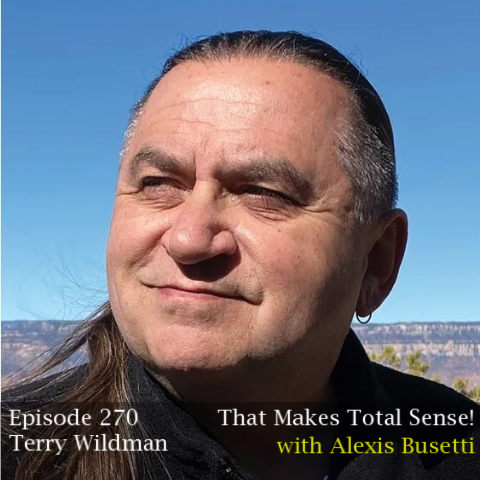
Okay, everybody, I am so happy today to be here with Terry Wildman.
He is the project manager. Right. Translation director of the First nations version, an indigenous translation of the New Testament that just came out of in August from IVP. And I have been flipping through this, I've been reading passages. Terry, I hope we get to talk about it. I read the prologue, which was like, mind blowing.
And so I'm so thrilled that Terry came on to talk about this. We were just chatting. He's good friends with Casey Church, who was on the podcast a couple of months ago, and I thought I was going to surprise Casey with this version, and he showed it to me at the end of our conversation. So he's been a big promoter of this. So happy to have Terry on. Welcome, Terry.
[00:01:36] Speaker B: It's good to be here. Really glad to be here with you and your listeners.
[00:01:42] Speaker A: Thank you so much. Do you mind introducing yourself to us in the traditional way?
[00:01:50] Speaker B: Well, I will say this, bhuju niji Bimarazik, and I said, hello, my friends who share this life together with me, that's the Anishinaabe language is also Ojibwe, and it's just a way to greet someone. It's not a full traditional greeting, but it's part of it. The full one takes a while, but my wife and I live now in Maricopa, Arizona. We live on the traditional lands of the pima and the Tohono Odom, and I also serve as these the chief executive officer or chief of Rain Ministries, a nonprofit that we've had for about 20 years. And Rain ministries. Rain is sort of an acronym based on Isaiah, where the rain comes down from above and waters the earth. So creator's word is like the rain that waters our lives and brings good things out of our lives. And so I'm also the director of spiritual growth and leadership development for Native Intervarsity. So I have the privilege and the honor to help mentor all the staff for native intervarsity. Right now I have 15 staff that I'm mentoring, and native intervarsity is just getting off the ground and growing in intervarsity. It has its own branch now, so to speak, and I'm so glad to be part of this. These young natives, they're just getting a hold of Jesus in a whole new way.
They love calling him creator sets free and introducing him in a native way. They love the First Nation version, and some of them are actually part.
They were reviewers on this translation, and so the first Nation version, New Testament, I was the lead translator, sort of the visionary and the project manager, but we had a Bible translation organization, one book of Canada, part of the Wycliffe Global alliance, who came behind this translation. I won't tell the whole story behind how they got involved, but it was in 2015.
They saw on. They found my website, and they said, we want to get behind you. How would you like a Bible translation organization that works with indigenous people all over the world help you with this translation? And what I love about what one book's philosophy is, they say the indigenous people have to do all the translating. All they do is give them the tools and the expertise and some help behind the scenes and help raise funds.
And they also helped me put together our first. Our translation council, because we created a council of twelve, all native american people, or First nations. You know, I don't have a problem. Most of your native people that live on reservations, they just say, hey, we're Indians, you know, but there's lots of different ways to refer to our native people, so.
But they were all First nations or Native American, or Indians from different tribes, different geographical locations, different age groups. All believers in creator sets free Jesus, and they're still standing behind this translation. And you can go to our website and you can see their faces and read a little bit about how this translation got started. So I'm just blessed it took us about five years to do this, and I'm blessed that now we're seeing the dream become a reality, and we're seeing such good fruit come out of this.
[00:05:42] Speaker A: It's beautiful.
It is really beautiful.
I mentioned before we started recording, I touched some places in the gospels, I touched some places in Paul's letters, in the small man's letters.
And it's just so rich.
I love the language. It's just so rich. I've seen you quoted elsewhere saying that it's a gift not only to the native people, but to other people living in other cultural contexts. And I completely agree with that. This is. This is something that when, you know, I've been working on some other stuff and having some conversations with some pastors and. And, you know, just kind of coming to this realization that when we are free to bring our full selves to the community, obviously, like, it's like one of those things, like, duh, this is kind of a one, oh, you know, Christianity 101 thing. But when so many of us have. Have assimilated or felt pressure to conform, when we can bring our full selves, including our full cultural selves, to the community, the community is only going to be strengthened and become richer because of that. And so this is a way where you guys bringing your full selves to the community is strengthening us and enriching us. And, you know, hopefully this can be a catalyst, right, for us to continue to do this. Absolutely.
I wanted to start, if it's okay with you, the dedication, Terry, is, well, I'm just going to read it if it's okay. And then I'm hoping this can be kind of a launching pad for our discussion. So this is how the translation begins. This is before the table of contents, but I'll just read. It's a short paragraph.
This translation of the good story is dedicated to the indigenous peoples of Turtle Island, North America, the tribal nations that call this land home.
We pray the first nations version will bring healing to those who have suffered under the dominance of colonial governments, who, with the help of churches and missionary organizations, often took our land, our languages, our cultures, and even our children.
As our tribal nations work hard to reclaim what has been stolen, it is our hope that the colonial language that was forced upon us can now serve our people in a good way by presenting creator sets free Jesus in a more culturally relevant context.
Yeah, there's a lot there.
[00:08:26] Speaker B: Yes, there is. And often my wife and I travel for ten years, visiting churches, visiting reservations, playing our music, and doing our storytelling at tribal centers. And we work to help native people understand christians. Then we work to help christians understand native people.
And so there's been a big gap there. There's a lot of misunderstanding on both sides.
But I'll tell you this. Our native people are more aware of what has happened than our non native people in this land.
There's a lot of ignorance, and the word ignorance comes from the root word for ignore.
See, this information has been out there. There's been plenty of books written. If we really want to understand what's happened, there's nothing to stop us from understanding it, except for possibly the idea that we've bought into a mythology about this nation called the United States of America. There is a mythology about it, a story about who we are. That doesn't tell us all the truth. There's some truth in it, but it doesn't tell us all the truth. And I have a friend from Alabama's doctor, Tom Dooley. He wrote a book called Half truths are lies.
So, yes, a lot has happened. And our hope is that the dominant culture, you know, one of the things that the dominant culture, as they read this, I challenge people all the time outside of our native context.
In the churches especially, I say, who are our national native leaders?
Please name me a few of them.
We can name our black leaders, right? We can name some of our asian leaders. There's a few of them out there. But can we name our native leaders nationally? Are they well known? No, they're just, you know, it's like we're out of sight and out of mind. And that was the plan from the beginning. That's why we were put on, you know, pushed onto reservations and told we had to stay there, told we could not leave, and we were forced to eat what they fed us. We couldn't eat or hunt our traditional ways, so they sent us lard and white flour and commodity cheese, and they sent us barrels of whiskey.
And this is what we subsisted ourselves on. And our bodies, genetically were not prepared for this. And also genetically, we were not prepared for all the diseases that came with the settlers over here. And, you know, I don't blame anyone for bringing. You know, they brought disease, but when they intentionally introduced those diseases, that's another story. That is a form of attempted genocide. And so there's a mythology that people have bought into, especially christians. I had a talk yesterday, driving to the airport with a couple of evangelical pastors, and I began to tell them the story, and they're aghast.
They had no idea that these things went on. I challenged them. I said, did you know that America was not founded as a christian nation? And they said, what?
What? They said, no. Look for the name of Jesus in our constitution. Look for the name of Jesus in any of our founding documents. It's not there. You know, the founders were deists. They believe in some faraway kind of God, and, you know, that's way away and very loose. But now there were a lot of christians involved in the founding of America. That's true. But our nation was not founded on Christianity, and that's hard for people to accept because we bought into this whole story, and it shaped the way we think about ourselves as we grow up. And native people, many of them, most of them know better, unless they've been so assimilated that they've also, some of our native people buy into the myth, you know, and so it's. It's a challenge as we go forward to demythologize people, especially believers in Jesus, and then say, how are we going to go forward?
You know, when. When the settlers came here, I believe creator had a purpose for us coming together, and his purpose, and I'm not on video, but his purpose was us to come together in equality and brotherhood. And I'm putting my fingers together and overlapping them and bringing together. That's the way it should have been done. And, you know, some people, some missionaries, some early people, William Penn, he gave us 70 years. So does it could have been done? Well, he was british, okay? And the british crown gave him permission to do this experiment. That's where Pennsylvania came out of. But this experiment was that the native people and the settlers would all live together in peace and in harmony. And they did. There were native villages and there were non native villages, and then there were combined villages, and they had 70 years of peace until a new king came in England.
And then his sons, William Penn's sons, had a different vision. And that's where they began to break the covenants, break the treaty, break the peace, and began to mistreat and push out our native people. And that's been the story. There's been. You can go all over this country and read of good beginnings. Native people were wide open to the good news about Jesus. And the name Jesus didn't have baggage attached to it back then like it does today, if any of our native people, you know, and so there's so much that has happened, we need to take a step back and reevaluate everything that we're doing.
We need to reevaluate ministry with native people, all the denominations and churches. And, you know, a lot of outreaches to our reservations are reservation tours. That's what my friend Bruce Plummer from Montana indian ministries, he's a cinnaboin. I just spent about five days with him in Louisiana on the Kashada indian reservation there in Louisiana with a small group of. Of.
At an indian Bible church, was putting on these revival meetings, and that's kind of the way it's always been done, tent revival meetings. And, you know, we like meeting outside better. That's a good thing that draws some of our native people just getting outside that building.
But a lot of times, it ends up being just kind of a pep rally rather than really digging deep, you know, if we're going to see true revival, it's got to cut deep into where the problems began and get to the root. You know, John the Baptist told the people of Israel, the axe is being laid to the root.
Oh, my goodness. To the root of the trees, not just to the branches or the leaves, to the root of.
And getting to where the problem began. And that's what we got to do.
What happened with our native people? There's a lot of injustice in America, and what happened to our native people is the deepest root of injustice. So we got to get down to that root. And I believe that if we can get to the root, if this nation and probably the government won't do it, but if the government won't do it, can't believers in Jesus, shouldn't we be leading the way into this kind of approach? And shouldn't the dominant culture step aside and let native people have a say, bring them to the table and include them in national leadership and things like that, rather than this kind of paternalistic. We know the best way for you to do church. We know the best way for you to do all these things. And, of course, Casey already talked about a lot of these things, so I'm just repeating some of it. I have a little bit different approach to it. But. But those are some of the things, and that's why we're dedicating this translation. This is, as far as I know, this is the first english translation ever done by native people for native people. And now, again, let me make clear. I want to. If there's native people listening, we're not saying that this translation represents all native people everywhere.
We're saying we got a group of many native people together. Over 50 native people were involved in this translation, probably more. I haven't done the statistics completely yet from many different tribal heritage, many different places. And we're saying this group of native people have put this translation together to help represent how we would understand Jesus and how we would use English to speak in a more traditional storytelling way to our people. So those are some of the things.
[00:18:22] Speaker A: No, it's. It's. It's so important. And, you know, one of the things that I think when you said kind of, oh, my mind's kind of racing, but when you said, you know, that native people are just kind of out of sight and out of mind. And I've been thinking about that lately with my own. Within my own context. Um, I'm mixed. My mom is hispanic, and my dad is white. And I have just noticed, you know, there are a couple of things that I feel like are similarities you know, one of them is my appearance. Right. I feel like there are a lot of people who are Hispanic or Latino or Chicano. However they identify, we just walk around and we don't. Our appearance doesn't have something that would shout to the people around us, you know, what our heritage is. You know, I'm married to a white man with an italian family. And so, you know, people see me. They see my dark hair and my last name, and they assume that I am italian. And most people just don't ask, you know, and we don't have enter into conversations like that. Right. But because of that, it really does feel, you know, this kind of out of sight, out of. Out of my ness, you know, is present. One of the other things that struck me is, is I'm a Mexican American who does not speak Spanish. And so I started really thinking about this with your translation, you know, and at the beginning, kind of how, I mean, the. In the introduction, how your team describes why it was written in English. Right.
[00:19:58] Speaker B: Right.
[00:19:58] Speaker A: And then the percentage of native peoples who actually speak. Speak English and don't speak their native languages, you know, and I just thought, well, if I'm looking at you as my neighbor and my friend, I'm not going to tell someone who is Native American that if they don't speak their tribal language, they're less native american. Right. So it kind of even, you know, like I was saying before, when we bring our full selves to the community, then that ministered to me. Right. And I thought, well, I'm not any less Hispanic because I don't speak Spanish. I wouldn't. I wouldn't tell a Native American she was less native because she didn't speak her own tribal language but spoke English instead. But there is at the same time, a way of using that language and a way of speaking English and a way of telling stories and narratives that are.
That find their home in your. In different traditions, in different. In different contexts. And that's important.
One thing I've been. I've been dying to ask, though, as you. As you've been talking, is when you talk about this chasm, kind of this gap between native american peoples and believers, I'm staring at someone who is in the middle of the Venn diagram.
So I just kind of want to ask you, will you just share whatever. Whatever comes to your mind about how you.
How did you come to this place? How do you fit in this? And what do you see, you know, from both communities as someone who is. Who is. I mean, my words, not yours, but as someone who's kind of a bridge maker, what do you see?
What do you see from your perspective as being someone who is both native and a believer inside these communities? Even this conversation you had yesterday in the. In the vehicle with the pastors who were, you know, were clueless about, you know, what's happening, how do you see your role in that?
[00:21:53] Speaker B: Well, one of the things I want to say ahead of time is I wasn't raised in my native culture.
I'm a mixed blood native, okay? And many of our native people are mixed blood, okay?
And it's the government policy that determines how much blood quantums you have to have to be considered native by our government. And that's a whole other story. So being raised knowing I had native heritage in ancestry, but not being connected to it, I became a believer in Jesus before I reconnected to my native ancestry. And so in some sense, that helped me, because if I would have been raised in my traditional native culture, I might not be a believer today.
[00:22:46] Speaker A: Is that because, how does that hit you?
[00:22:50] Speaker B: It hits me hard, as a matter of fact, as an adult, when creators started making it clear to me that he was calling me to work with native people, I knew I had to reconnect to my ancestry, to my heritage. And so that's how I would pray. And the amazing thing was, he sent people, creators sent people to me to help me reconnect. Casey Church was one of them. Casey Church was my mentor in the Anishinaabe ways for at least a year and a half. And at the end of my mentorship with him, he. I went through a naming ceremony where he gave me my. My indian name, Gichianemiki, which is, he says, voice of great thunder. You know, he said, that's you. That's you. You got. And that's.
But he says, but I. When you're home, when you're talking about creator, you're the voice of great thunder, but when you're home, you're just big thunder. You're just kind of a noisemaker.
You know, you gotta. Our names, you know, we wanna honor our names, but we don't want to, you know, if you get a name, a big name like that, you don't want it to go to your head, right? But. So I had help along the way, and as I re embraced my native heritage, but in doing, in that process, I had a crisis of faith.
And then I thought, well, I'm going to read church history.
And that was the worst thing I could have done because that put me deeper into a crisis of faith to understand that all throughout history, this is what christians have been doing. They've been taking up the sword and conquering and dominating and forcing people to believe in Jesus. And here it had come to my ancestors. They were forced to believe in Jesus. Many of them, some of them. And the amazing, the amazing power of the good story, the gospel, is that even in those terrible circumstances, some natives found such freedom in Jesus and beauty in Jesus that they truly became followers. Others were forced into it and just kind of went through the motion so they could survive.
So for me, I had to resolve this crisis, and that's a long story in itself, but I resolved it. And the main thing that helped me resolve it was this.
If I would have been presented to Judaism as a religion or as a spiritual way, I probably would have never become a convert to Judaism.
Even though there's a lot of things in Judaism that relate to our native ways, ceremonials, lodges or temples, and praying with smoke and all these different things that we do, there are some connections that are good.
But the story didn't, for me, the story didn't capture me. Who captured me.
Jesus creator sets free, captured me. It's because of him that I believe in the God of Israel. And I had the privilege of going to Israel, putting on my regalia with another young native man, going to the site Sea of Tiberias. And I got to share about why I, as a native person, believe in the God of Israel. And I said, it's because of Yeshua.
And I had this big crowd of 100 people, and they were, most of them were jewish.
And our translator, that was a messianic jewish person, and he thought for sure they were going to disperse the crowd because you're not allowed to speak about Jesus or Yeshua in Israel, you know, because we were native american, they thanked us.
So outside of the United States and Canada, we're sort of famous worldwide. And I think that gives us, we can get into places and share about Jesus in ways that other people can't, non native people. And I think the dominant culture should. In terms of the christian dominant christian culture should, hey, you know, let's get behind these native people.
Let's fund them, you know, as they. But the thing is, is some of our native ministries have rejected our culture completely, but it's actually through our culture that gives us the opening to share. Creator sets free Jesus with other cultures. So anyway, there's a whole story behind that. But so my role in all this being a mixed blood, I have german, I have English. I have Ojibwe. I have Yaqui. Okay, which 01:00 a.m. i. Well, one native guy, when I lived on the Hopi reservation, we lived there for five years, my wife and I. And one day, a hopi couple hopi guys came by walking by the church parsonage there up on second Mesa, and they came up and said hello to my wife. And she was out doing something outside, and I came to the screen door and looked outside, and one of the native guys pointed over and says, oh, you got a native?
A native pastor here. And I don't know how he recognized me as native, but he did.
And he came up to me and he says, you're native.
And I said, well, I'm part native. He says, which part?
Which part?
He says, if you're native, you're all native. If you're irish, you're all Irish. So whatever we have, we're all of that. It's not like we're divided up into chunks. It's like when Jesus is. He's not half God, half man.
He's all God, all creator. He's all Mandev blended together. So we get to be all of whatever our heritage is. And I think that's beautiful. So I'm fully Yaqui. I'm fully Ojibwe or Anishinaabe. I'm fully english, you know, but I relate best to my native heritage here in this land, because this is where I was born. I was born in the land of the native people of the Anishinaabeg, the people of the land here. So does that answer the question?
[00:29:46] Speaker A: Yeah. No. It's beautiful. I appreciate you taking the time to do that, because I do. I think it's. I think it's so important to.
It is. It's important to recognize the history. It's important to recognize the pain, the loss, what's been stolen.
It's important to recognize all of those things. I think. I think now we have, especially right now, we hear from, unfortunately, a lot from inside certain traditions in the church. I think we hear a lot of empty calls for unity without recognition of our history.
And it just can't happen.
I just don't think it can happen that way. This beautiful picture that you showed of the fingers interlocking, that doesn't come through this blind assimilation.
It comes through recognizing who we are and where we've come from and that we are whole people.
[00:30:45] Speaker B: And instead of interlocking fingers, what we had is one hand came over top, the other hand and pushed it down right.
[00:30:52] Speaker A: Right.
[00:30:53] Speaker B: That's the picture. The sort of picture of what happened.
[00:30:58] Speaker A: Yeah. No, you're absolutely right.
I'm wanting to talk a little bit about in the translation.
You've mentioned a couple of things, but they just made me smile when I was reading it. Reading about the lodges, the prologue is, like, mind blown. So I'll just say that the committee has taken the story from Genesis to Malachi, essentially, and condensed it into a few beautiful pages.
It reminded me of reading Steven's last sermon right before. Before he was stoned. It's like, this is the history of our people here in these pages, before we get into the story of creator sets free.
So I'd like for you to talk about in whatever order you want, but the naming that we see present in the translation, but also just the way the stories are told. Um, one thing I'll kind of edge in there that I'm hoping you can touch on. Um, that I love about this translation is the italics where I think you say in the introduction. Something like you've kind of imagined what. What the reader might be thinking. You know, one of the ones that stuck out to me was in mark talking about fasting. Right. Like, thinking, this. This may be an odd thing when we're reading it, and, um, I wish it was in all translations. Right. You know, we kind of read with this under. You know, there's some translators come, and it's like, well, you're just supposed to know these things. And I'm like, I'm a seminary student. I'm here to tell you we don't know these things. Like, you know, we don't know these things until we're taught. And so I. That's one of the things I guess I'll say is, I feel like this translation is a good teacher in a lot of ways, so. So wherever you want to go with that, the naming, the storytelling, and also the. The italics all really are.
[00:32:58] Speaker B: That's a lot there, but I'll tackle that.
[00:33:00] Speaker A: Yeah.
[00:33:01] Speaker B: So the vision that we had from the beginning was our people are an oral people, oral storytellers.
There's still many of our languages today that do not have.
Our tribes today do not have written languages.
And so it was the missionaries that created our written languages many times, most of the time.
But the funny thing was that at the same time, the missionaries were creating our languages and then translating the Bible into it, other missionaries were taking away our language and preventing us from learning our language and making us learn English. So in a negative way, the left hand didn't know what the right hand was doing, and they were working against each other in that. So our goal from the beginning was to try to capture the feel of a storyteller, a native storyteller. That was our goal, to word it in a way. And to do that, I spent a lot of time immersing myself in early native writing that had been translated into English. Some of black elk speaks and different things there. And also.
So we wanted to capture the feel of a storyteller, but we also wanted to write this. We wanted to decolonize the scriptures.
So there were certain words that we just didn't use intentionally, stayed away from words. We could have used those words. It's not like our native people couldn't understand that lord. The word lord. But the word lord has baggage. It's attached to colonialism. It's attached to Europe, and kingdom is attached to Europe and all these things. So one of the things that we wanted to do was to replace those words with words that had the same meaning, but words that wouldn't trigger these responses that were negative, because in our boarding schools, when natives were in boarding schools, it was a sin to speak our language. It was a sin. Sometimes it came across. It was a sin to be native. You had to quit being native so you could be accepted by God, by the christian God. And so we stayed away from the word sin. We stayed away from these words. But we also knew that a lot of people we wanted to write this to, people who knew nothing about the Bible. And so we knew that we had to add some things in there, historic, cultural things from the jewish culture, to explain what Passover was, to explain what, you know, in some places now, our native people did fasting. So that wasn't as much of a thing, but we did it different than the jewish people did fasting, you know, and so there was connections there.
The word kingdom, we didn't use the word kingdom. We used other words.
And we have explanations in the back of the book, and we encourage people. Before you read this, read the introduction and read the prologue before you read the rest of it, then you'll understand what's going on there. And if you read the glossary, in the end, you'll understand why we translated those most important words. Why did we call God the great spirit? Why do we call Jesus creator sets free and such?
So this was our goal, was to put that together that way. And so the naming. Our native people named our children. They were given names with meanings.
Well, hebrew people did the same thing.
And so we said okay, let's put in the meanings of the names.
So, you know, like Peter, he can be stands on the rock.
Abraham, the easy one. The Bible already clearly gives us the meaning of his name. Father of many nations.
And then we found out that all the places in the Bible, their names have meanings. Jerusalem. Jerusalem.
The village of peace, you know, and so all these names had meaning. So we decided to put the meanings of every name. So we had to research, we had to look into the meaning of the hebrew names and the greek names. And then we wanted to put a native feel to those names. Instead of God or yah, we would put creator. So Jesus, and here's something people don't understand. And we get people that say, oh, you can't get saved by calling on creator sets free. You have to call on the name of Jesus. And it's the only name that, I mean, they quote acts, it's the only name given under heaven by which we must be saved. Well, so what happens when you go to Mexico and you don't say Jesus, you say Jesus.
And what if there's hundreds and hundreds of mexican people named Jesus, you know, and in the time of Jesus, in the time of Yeshua, his hebrew name was a common name. It was. Lots of people were named Jesus or Yeshua.
And so it wasn't like this name had some magicness to it. It's the name is pointing to a person.
[00:38:46] Speaker A: Amen.
[00:38:47] Speaker B: And that person is who is important. The name needs to point you to that person. Well, the name Jesus most people don't know, didn't come into the english language. J e s u s until about maybe 350 years ago. So it's only been around 350 years. So what happened to all the people before that that didn't have that name, did they, to call on? Well, they called on another pronunciation in the 1611 King James Bible, the original one.
The name Jesus, J E S U S, is not in that Bible anywhere.
What you have in there is I e s u s.
Look it up.
Jesus, okay. Or jesus might be the pronunciation. And so it came from the greek to the LATIn to the english. And then the I, which had a sort of a y sound, became hardened through culture to a jdev. And that's why we have jesus. That's why we, instead of Yahweh, we have Jehovah or Yahweh, some might use it. We have Joshua. If you were going to say joshua in the original hebrew, you would say yahshua. The same name, that jesus had the same name. Exactly. So we don't want people to get hung up. We're not trying to hide the name of JeSus in the sense of. Of jesus, but that name, for our native people has baggage.
And so that prologue that we wrote, bruce plummer, is a MOnTanA indian ministries how he presents jesus to the native people, the traditional native people, he does not use the name jesus at all. At first, he starts with the creator, and he talks about who the creator is, and then walks them from creator all the way down through. And then he introduces creator having a son.
And then eventually, that son is shown to have a name.
But what's important is that the creator had a son. Our native people knew about creator. We didn't know he had a son, and we didn't know that creator called a tribal people to be the ones to bring this son into the world.
And so he chose one tribe. I don't know why he did that, but he did. And so our native people, we always learn things from other tribal people. We love to share spirituality and all different things with each other. We adopt things from other native cultures. So to go to the hebrew tribe and to learn from them, it doesn't reduce us as natives. It doesn't take away our nativeness. It just means, oh, they've got something that we need to hear. And so they got the story of the son of creator and how creator came down and he died on that tree pole, the cross, and he gave his life for all human beings. And so we're telling the same story, but we're not using Christianese, you know, this kind of religious language and church language that's been developed over so many years that church people. You know, when I lived on the Hopi reservation, I was pastoring a mission church that had been there a hundred years. And sometimes we would have other churches come in and do these vbss, right? Vacation Bible school. And I remember this one group came in, and they brought all these nice little beads that had different colors, red and yellow and black and white and green. And they had the kids making these little beaded things that would go around their wrists, you know, and they would talk about.
Then they talked about the red is for the blood.
These kids, these hop kids who had. Didn't grow up in church, they're like blood.
They're starting to get scared of. And then they talk about how. How he died on the cross and he shed his blood, and we killed him. Oh, my gosh, we killed him.
And these kids are going, and then they say, would you like to accept Jesus in your heart? And this little kid looks at her and goes, no, right.
[00:43:31] Speaker A: Terrified. We know. It reminds me of John six, right? I mean, because the story is familiar to us, we don't think about how terrifying it would be, right, when creator said to free. I didn't read it in the. In the first nations version, but, you know, that. That moment where he has so many step away because he tells them, you're going to have to eat my flesh and drink my blood. Hello. They're going, no, thank you. Yeah, I think I'll. Think I'll go back now. This. This preacher looked pretty good until the moment where he completely freaked me out, right. And I think, you know, sorry.
[00:44:10] Speaker B: We grew up in sort of a church culture, and so we were used to hearing this kind of, you know, we sing songs, you know, oh, you know, cover me with the blood. Let that fountain pour over me. And if you're not, if you don't understand the metaphor behind all that, you've got this picture of blood pouring all over you and how ghastly that might look to other people, you know, being washed in blood and all these pictures. But these were.
[00:44:39] Speaker A: I think it's important for us. I'm sorry, it just. Don't you think it's important for us as people? You know, if we have been raised in church, I think we have got to. You know, it was a few years ago, we were sitting. It was actually during Passover. We were sitting watching the Moses film, you know, Ten Commandments. And I just looked at my husband, I was like, do you know how strange this is, that our entire lives, everything we do in life, is because we believe that there was a man who came 2000 years ago.
[00:45:16] Speaker B: Yeah, a long time.
[00:45:17] Speaker A: And died, and we didn't see it, but we trust that he rose again, which is weird. Right? And then. And then we just. We just say, I'm like, this is an odd story. This is a very odd story. And I think it does us good to see this represented in ways that are unfamiliar to our own culture, to be reminded of how beautifully bizarre our faith is.
[00:45:48] Speaker B: Right? And so this prologue, kind of, you need to set the old. It's the Old Testament, it's the story of Israel, it's the story of creator and how he brought his son into the world. And so it comes up to that point, but then the story has this surprise ending that nobody expected.
Israel didn't expect the story to end the way it did. That Messiah would look like this. That Messiah wouldn't be one to kill all the Romans. He would be one to deal with the sins of Israel, their own sins, their own wrong ways of looking at the world and looking at roman people and wanting them to be destroyed and burned and become logs for the fires of hell and all this kind of things that the jewish people believed about gentiles. He had to break down that wall, and he came to deal with human beings within cultures and to break down the fear between cultures, Jews and Gentiles, the greatest separation in history.
And here the whole New Testament is written about how the apostle Paul, most of things he's dealing with in those early sacred family gatherings, the church, churches, sacred family gatherings, was this issue of Jews and gentiles coming together and how do we work all this stuff out? Can we eat at the same table? Can we eat the same food?
Can we all have communion together? Are Jews better than gentiles or are gentiles better than Jews? You know, does God love one group more than another? All this kind of, these issues were all raging within the early church, and then they had the. The other, the false teachers coming in, trying to pull jewish people away. The first 30 years of persecution of their believers was not from Rome.
It was from their own people.
It wasn't until AD 64 that Nero finally started persecuting christians. That's a long time after the day of Pentecost. So all the persecution up to then, Washington was jewish persecution. So there was so much going on in that early church, and a lot of people reading the New Testament don't understand that. So we added these portions, and they're in italics, so you don't mix them with scripture.
And we wanted to be clear on that. So they're set apart. And there's a few places where italics are used within the text to bring clarity, but we put it in italics because it could be questionable, even though we believe that's the right thing to say. And many times, greek scholars that have read this have told me, yeah, they don't have any problem with any of it. So it's wonderful.
[00:48:52] Speaker A: Yeah, it's just as you were talking about Paul and the debates and the things that were happening in the early church and all these letters and just, and just listening to you convey that, I just thought a, this is the same story.
2021. It's the same story. We're still asking the same questions. Can we eat at the same table? Can we speak different languages? Can we speak the same languages? Do we. How do we relate to one another? What if. What if that person is circumventing and that person isn't what if that person calls him creator sets free? What if that person calls him Yeshua? How can we do this together? Can, you know, and we're still asking the same questions. And on one hand, it's for me, you know, listening. It's completely disheartening that we're still asking the same questions. But on the other hand, the beauty of the canon that goddess provided to us, that we're still asking the same questions, but we have text to help us navigate the situation.
[00:50:07] Speaker B: One of the things is what happens? And it happens in every culture. Cultures become, you know, that's the way they view the world.
And so, you know, I would say that western christian culture has a sort of a monotheistic view of our creator.
And so. And so since we've kind of pulled ourselves together into sometimes into racial groups, you know, or ethnic groups, and avoided that ethnic group doesn't worship the same way as this ethnic group, then we're all divided up into all these denominations who agree on about 70% of everything, but then we got that 30% that keeps us separated and kind of suspicious of each other. And that's what happened with our native people. People today are still suspicious of our native culture. They think it's witchcraft. They think it's paganism and all this stuff, and so much of it is, you know, yeah, there was witchcraft in some of our native cultures, but we knew it was bad.
It wasn't a good thing in our culture.
You know, it doesn't mean all of our culture was witchcraft. We actually stood against witchcraft. We didn't like the bad medicine people. We liked the good ones who prayed good prayers and who, you know, all of our ceremonies had to do with restoring balance when things got out of balance. That's kind of the idea of broken ways. And, you know, our lives are out of harmony with the creator and the spirit world, and our ceremonies are our prayers to bring us back into harmony again. You know, native people understood sin, but they understood it differently than we do, or, I say, the dominant culture, than the way I was raised. And I love now that I've embraced my native heritage and immersed myself in it and I've been mentored in it, I love the native perspective. It's given me such a rich depth of the understanding of who our great creator is and understanding this sacred book, and I love this sacred book, and I loved being part of a group of people who put this together and presented it in a whole new way. And it is a gift to our native people from some native people. I can't say it's from all our native people, but it's from some of us, a group of us who believe that it's important.
[00:52:43] Speaker A: Amen. Terry, tell me about some of the other things that you guys are working on and that have come out kind of, you know, along the same lines of the First nations version. You guys also have that. I don't. I don't know if it's related. We used to call it the Jesus movie or the Jesus film back in the day. But you guys also have a Jesus film project, right?
[00:53:11] Speaker B: Yes. About halfway through the translation period, we put out some initial printings of the first Nation version. At first, we did the gospel of Luke in Ephesians because we wanted to get it out there to get feedback.
[00:53:27] Speaker A: Yes.
[00:53:28] Speaker B: And someone from the Jesus film crew.
Crew is campus crusade for the old campus crusade for Christ.
Found that version of Luke and contacted me and they said, they said, wouldn't it be an amazing thing to do Luke with the Jesus film that they've already produced? Right. And I said, oh, probably not.
[00:53:55] Speaker A: No, thanks.
[00:53:56] Speaker B: I said, you know, that. That film, I saw the film years ago. I think it's pretty dated.
[00:54:02] Speaker A: Yeah, yeah.
[00:54:03] Speaker B: I think it needs to be updated.
[00:54:04] Speaker A: Yeah.
[00:54:05] Speaker B: I think it shows a british white Jesus. Right.
And things like that. And I said, and also, it's going to be very difficult because of the way we did the translation. The names are long, you know, our translation, I can't remember how much bigger it is than a standard english translation because it has, you know, our book has 260,000 words.
[00:54:29] Speaker A: Oh, it's heavy. Yeah.
[00:54:31] Speaker B: They started saying, well, maybe we can do a narrative where you. You show pictures, but you don't try to match the lips and everything. And you just tell. You have a storyteller telling. Reading the first Nation version and then it's acted out. Well, we thought about that, and we thought about how big of a project that would be. And I still didn't like the film. We didn't. And could we create a whole new one for native people? And that wasn't practical, at least yet. So we landed on an animated version.
[00:55:01] Speaker A: Yes.
Yes.
[00:55:03] Speaker B: And so the idea was that we would do two stories from Matthew of Jesus feeding the 5000 and Jesus walking on water. Okay. With Peter. Peter walking on the water. And so the idea was that I would be the narrator, the voice. And so we had to find artists. We had to find Donnie and Renee Begay, who are part of Crew nations, which is crew's native ministry from Albuquerque, New Mexico. Donnie is Navajo and she's zuni from New Mexico.
And they became consultants on there, along with myself, and became eventually executive producers. How you like that?
[00:55:57] Speaker A: Wow. Wow. Wow.
[00:55:59] Speaker B: But it took a long time to put this together.
We looked for native animation artists, but we weren't able to find any. So then we began to pray that creator would show us someone who would do this. And it turns out there was a guy who has such a heart for native people.
And he's. He believed from the time he was doing Disney art, he did art for Disney.
[00:56:25] Speaker A: Wow.
[00:56:26] Speaker B: From that time, he worked on Pocahontas. Okay. And from that time, he wanted to do something. You know, he left Disney and he started his own company.
I think it's called premier media, something like that.
And his name is Dominic Carolla. And Dominic said it's always been in his heart that he would do something to share Jesus with native people in his films. And then, so he came and we interviewed him and we finally said, yeah, you're the one. And he was so honoring to our culture, he listened to us. We had so many Zoom meetings with him. We went through native cultures and pictures of native, you know, art and native old native outfits and things like this, and how an apache might dress, how a Navajo would dress, how different tribes would dress. And we worked all that into this animated version. And it took about a year to do it because there's a lot of things going on. But the funny thing was, is the people at inter varsity Press who were getting, who were putting out the first Nation version were releasing it in August, right? Well, this was going to be released in August, too.
[00:57:50] Speaker A: Wow. It's just so phenomenal.
[00:57:52] Speaker B: The finding all came together. So about a month, about a month before the film was supposed to be released from the Jesus film People, we got intervars city staff and crew staff working together because this is based on the First Nation version.
And so they actually say on this, on their advertisement. And you can go to their website, thejesusfilm.org, and forward slash Goodstory, or you can go to first nationversion.com and you will see that there's a link to this film, to the Jesus film in there, and you can watch it on there. And you can also, the First Nation version has its own YouTube channel that you can subscribe to. And we have lots of videos there. We have videos of behind the scenes how this film was made. We interview the people involved. Donnie Begay and I went down there to their studios and were interviewed, and we worked with the musician, a Hollywood guy that does Hollywood movies, and he worked with us and incorporated my wife and I music with it. It's just amazing. So we decided how we would do it was we'd start out with a storyteller, a native storyteller sitting around the fire at dusk, and he's telling the story to a group of native people sitting in a circle. And then it moves to the story of Jesus. Now, they did three films. One is the full length, six minutes. And then they did two little ones. They broke it into two separate stories with the same intro. And so you can watch a short version or a long version or whatever. And it's being used in Bible studies. It's being used by intervarsity native ministries, by crew nations. It's being used in churches in Canada. And we hope that other churches will pick this up in terms of native churches as they presenting the gospel, the good story, to our native people. So that's a little bit of that story.
[01:00:06] Speaker A: Oh, that's just. That's beautiful. I love how that has all come together. And I will. Just for the listeners, I will have all of these links in the show notes so that it'll be easy for you to click on and find some of these things. I'm looking at the. At the. At the site right now for the. For the film, and it's just beautiful. The animation is stunning. The art is beautiful. The colors are amazing. And how. How cool. How cool is that? I'm thinking, I'm glad you said yes.
[01:00:38] Speaker B: Yeah, absolutely.
[01:00:40] Speaker A: I'm glad you said yes. It's amazing.
[01:00:42] Speaker B: And I'm glad that that crew was so excited about doing this is the first time they've ever done anything like this.
And now they. They have this whole branch they're creating of reaching other cultures.
[01:00:57] Speaker A: Wow.
[01:00:57] Speaker B: But doing it in a cultural way.
[01:01:00] Speaker A: Wow.
[01:01:00] Speaker B: You know, instead of just, you know, kind of putting this americanized christian way on everybody.
[01:01:07] Speaker A: Right.
[01:01:07] Speaker B: And so that's going to change. I believe our native people have a gift from creator for this land. This is our homeland. Acts 17 says, from one blood or One human being, God created all the different tribes and nations and people groups. And it says he decided ahead of time exactly where they would live.
Okay. So he sent us here, and he gave us this land.
Okay. And so we have a special calling for this land, a special place in this land, and a special authority in this land that has been unrecognized by most of the church. And I believe that when the church begins to recognize this gifting and get behind our native people and begin to take and fund our ideas that we're going to see some of the walls coming down between people groups.
[01:02:13] Speaker A: Amen. Amen.
[01:02:14] Speaker B: You know, and our native people have a gift of bringing people together.
Our powwows, our different tribes would all come together. We had native gatherings, inter tribal gatherings. We know how to get along with each other without forcing our specific spiritual ways on each other.
And so that's a gift that creator has given us, and there's many other gifts he's given us that are important. The eye, Paul said, small man said, the eye can't say to the feet, I don't need you. Or the hand, I don't need you. But you see, the dominant christian culture has basically said, we don't need you.
We know how to do this the best. We don't need your way of doing it. But, yes, you do. You need us. Yes, you need us to help heal this land, because we are so divided in so many different ways. And that is the fruit of the seed sown, of division sown among our native people. And I can't go deeply into that. I did write another book I would recommend. Yes, it's one of my books. It's called sign language, and I'm talking about creator sign language, not indian sign language.
A look at the historic and prophetic landscape of America. And it talks about a lot of what I've been saying today. It brings the whole history in a short bird's eye view of the history of the us government looking at it through the lens of native people, and then through the lens of the good road, the kingdom of God, and the justice of God. And how do we reconcile this history with this land, and how do we. And then what can we do to go forward? What can we do to make things better? How can healing come?
[01:04:05] Speaker A: Yes. Yes. I will link that one as well. Terry, thank you so much for letting us know about it.
I didn't ask you ahead of time, but as we wrap up, I'm gonna. I will ask you now, and it's an invitation, so it's completely okay for you to say no.
But your words right now are stirring some things up in me, and I imagine they're stirring some things up in the listeners, too.
Would you feel comfortable closing us out by just praying for us?
[01:04:42] Speaker B: Absolutely.
[01:04:44] Speaker A: As a sacred family?
[01:04:46] Speaker B: Yes. And what I would love to do just before I pray is to share a verse, amen. From the first nation version.
[01:04:54] Speaker A: Thank you so much. Yes.
[01:04:56] Speaker B: So this is from Ephesians, chapter four, verses 22 through 24.
Small man says, take off that worn out and stained outfit of your past life, with its selfish desires and worthless ways of thinking. It no longer represents who you are.
You are now true human beings with a new way of seeing and thinking. Put on the regalia of your new life, for you have been made new, created again to look like the one who made you, standing in a good way and walking a true and sacred path.
So, creator, today we come before you in the name of your son, creator sets free that many know as Jesus.
We come before you asking for forgiveness, asking for healing between our peoples, asking that there would be a humility that would come upon all of us, that we would humble ourselves before you and humble ourselves before each other and admit to all the wrongs that have been done so that you can straighten out the path before us.
Those that have been exalted too high need to come down. Those who have been pushed down into the valley need to be come up. So there is a straight path for the power of your spirit to come and bring healing to our land.
Help the dominant culture and the native people and all the other cultures help us to come together.
Around the table of creator sets free the table you gave us, where we partake of his broken body, where we partake of his shed blood. And we take it into ourselves spiritually to bring healing to our souls, bring healing to our lives. So I pray for every listener today. I pray for your families, your relatives, your friends, all those around you. I pray for this nation, and I pray for the whole world. We are under a disease that is plaguing the whole world right now and greater. We pray for your great mercy and kindness, your gift of great kindness to come upon all. We don't deserve it, but yet you don't treat us in the way we deserve. Otherwise we would all be wiped out right now. But you love us, and so we pray. You told us to pray, so. We pray for healing. We pray for the healing of bodies. We pray for an end to this virus. We pray for every person to come together. We pray for this misinformation and division and the fighting between us to come to an end. And it will take humility to humble ourselves before you and humble ourselves before each other. And we pray for this. And I thank you for this time that we've had to talk together. And we know that you've been here and that you would make everything we've talked about a prayer. As we send our voice to you. In the name of creator sets free your son, Jesus. We pray and thank you. We say Chi Miigwech. Thank you so much.
Creator Miigwech Bzendawi. Thank you for listening.
[01:08:41] Speaker A: Thank you.
[01:08:42] Speaker B: Aho. And amen.
[01:08:44] Speaker A: Oh, and amen.
Thank you, Terry.
[01:08:49] Speaker B: Thank you.
[01:08:50] Speaker A: This has been phenomenal. Again, I'll have the link to everything we talked about and also to the main page and to a place where you can purchase the First nations version and indigenous translation of the New Testament. It is beautiful inside and out. So thank you so much for sharing with us, Terry. All right, the links for all the resources mentioned in today's episode can be found in the show notes, music and podcast production by Seth Busetti. Be sure to give us a review on iTunes and subscribe at your favorite podcast listening app. You can also visit us at that makestotalsense.com.