Episode Transcript
Speaker 1 00:00:06 Welcome to That Makes Total Sense. A podcast dedicated to exploring God's generosity and justice. I'm Alexis Busi, a Christian aiming to ask good questions and encouraging you to do the same. Every one of us is wired by God to live out generosity and justice. But the how sometimes eludes us that makes total sense is a way for us to get together, posture ourselves as learners, and challenge one another, to practice generosity and justice in a tangible way every day.
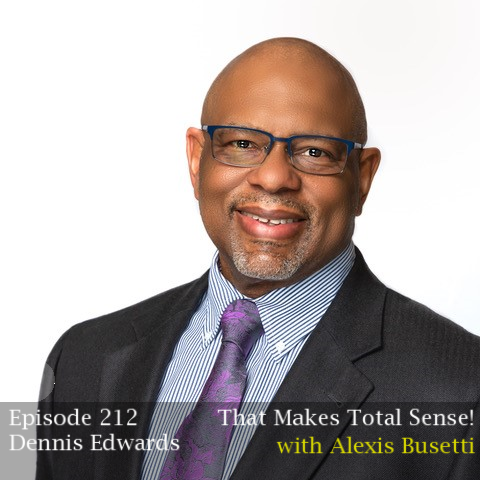
Speaker 2 00:00:42 Okay. So, can I start? People don't know when we're recording, but I just found out it's my guest birthday. Happy birthday, Dennis
Speaker 3 00:00:49 <laugh>. Thank you so much. It really is a pleasure to be chatting with you. Thank you.
Speaker 2 00:00:53 I am just so thrilled. I'm an August birthday and I, I told a friend the other day, I'm like, who was also an August birthday? I said, I feel like I, when I find out people are August birthdays, I'm like, I knew it. I knew it. <laugh>
Speaker 3 00:01:05 <laugh>.
Speaker 2 00:01:06 There's something about us, I think.
Speaker 3 00:01:08 Yes. Yes. The summer birthdays late summer too. That's right.
Speaker 2 00:01:11 Late summer. So, were you, uh, like the oldest in your class or the youngest in your class growing up?
Speaker 3 00:01:17 Um, I tended to be, oh, I didn't even think about that way, uh, younger, because everybody seemed to be having their birthdays during the year, and I would be like, oh, my birthday's not coming till the summer. So Yeah. It was, it was younger. That's right. Yeah. Mm-hmm.
Speaker 2 00:01:30 <affirmative>. Yeah. Yeah. Yeah. I graduated high school when I was 17. Right. Yeah, same. Right. I didn't, yeah. Because I did. And so I, you know, turned 18, like a week or two before I started college.
Speaker 3 00:01:39 Yep, exactly. Same <laugh>. Super
Speaker 2 00:01:41 Weird. Yeah. It was super weird. But anyway, yes, we late summer birthdays and Right. I mentioned earlier I had something going on my birthday and my friend, my kids were like, oh, mom, we'll celebrate, or blah. I'm like, listen, I was used to, we had to go enroll. It was like always on my birthday, you know, for school back at, you know, when I was a kid. I'm like, oh, it's your birthday. They're like, whatcha gonna do? We're gonna go enroll for school. I'm like, oh, <laugh>. Hey, <laugh>.
Speaker 3 00:02:06 Well, all the kids, all the other kids would've parties in school or, or, yes. Or kids or moms bring cupcakes or something like that, you know? That never was true for a summer baby. So that was, that's right. That's okay. <laugh>.
Speaker 2 00:02:18 That's right. That's right. It was, it was good. It's good. So, I'm thrilled that you're spending a little bit of your birthday with me. That feels really special. Um, and we're gonna chat about a book that you and Lisa Bowens have edited together. That's right. And the title of the book is, do Black Lives Matter? How Christians Scriptures Speak to Black Empowerment? Um, Dennis, I feel like still this is, that title is a provocative title. Yeah. That title feels, unfortunately, it feels, you know, kind of loaded probably Yeah. To some people. Um, and I say that it's unfortunate, um, but I maybe we can even start with, with that. Yeah. That your book title is a question.
Speaker 3 00:03:21 Yeah. Um, thank you. It's funny because my adult children, they said, are people still really asking that question? And, um, and they said, well, maybe it depends on who's the, uh, who's the attended audience. And I thought, I hadn't actually thought about it that way. I thought of it as, I mean, 'cause Lisa and I wrestled back and forth with the title, and I thought of it almost as a, um, rhetoric, a sarcastic rhetorical question like, do Black Lives Matter? Of course they do. You know, that's the way I thought of it. And, um, but, and the subtitle was really meant to say that the scriptures are telling us that Black Lives Matter. So, but we also wanted that phrase in the title, um, because we know for some people it's triggering for some reason. They find it, um, necessary to, um, counter it with, well All Lives Matter, that kind of thing. And we wanted to make a, a pretty clear statement, even though we ask it as a question to draw you in, or the book is a clear statement of response to that question.
Speaker 2 00:04:27 <laugh>. Yeah. Yeah. Thank you so much. Mm-hmm. <affirmative>, um, this book, um, I wanna I wanna ask you about the why mm-hmm. <affirmative>, um, when I was reading, um, parts of it, I read, um, your chapter of course, and then there are other places in the book and the introduction especially where, um, you, uh, you and Lisa referenced the timing mm-hmm. <affirmative> of this, what, you know, what was, what was happening, uh, you know, as you were writing what was happening, as ideas were coming in, what was happening even as the book was going to print. And so I feel like some, in some ways that is a little bit of an answer to the question, but, um, but where was the idea for this book birthed?
Speaker 3 00:05:15 Yeah. Well, it's interesting. We, it <laugh>, you know, it took us a while to get it, to come to, to, uh, fruition because we started after the, uh, murder of George Floyd, of course. Um, the country seemed to be going through another sort of racial, racial awakening or reckoning. And I think that was particularly acute in Christian circles, and for a variety of reasons. I think particularly evangelicals were, um, trying <laugh>, I don't know, I don't, I can't speak for the whole group, of course, but it felt like people were trying to, um, hold on to certain values that they've always held, but yet said, but I'm not racist. You know? And yet much in that's sort of baked into the system was really racist, <laugh>. And, uh, so, so when, after George Floyd was murdered, there were a lot of people asking for, for many black Christians to speak, um, at, at events, or be on podcasts, or be on panels or write books.
Speaker 3 00:06:16 And there was a lot of that happening, as if to say, okay, now we're ready to listen. Um, so we said, um, we, we, we meaning, uh, a publisher and then Lisa and me, uh, we were talking about how we could add our voices to this by saying, well, it's not just a quick response in the moment of crisis to something that's in the news cycle. This is something we've been thinking about writing about living for, for years, and it's an opportunity for us to now put that in a context, put what you're seeing in the summer of 2020 in a bigger context. And even though the book didn't come out, like right after those events, we, we thought we maybe could get it together fast, and it would come out, um, in a few months. Unfortunately, uh, what we say in there is still relevant <laugh>, you know, even though we're past 2020, what we say, I think will in the book will be relevant for, unfortunately, for quite a while.
Speaker 3 00:07:15 So, yeah, it came about because of that time, and I, I mentioned George Floyd's murder, but of course, there were so many events that were happening around the same time. There were, there was, um, like, ah, Maud Arbery. There were, there was, um, uh, people who felt, uh, free to, you know, attack a man on the street. Um, uh, uh, there were people who were confronting, um, black people who weren't law enforcement, and then other cases where it was, so there was this whole sense of, my goodness, it's like the fifties and, uh, in the south in some instances. So we felt like this was a good time to, to speak up as, as Christian, as theologians, as biblical scholars, as practitioners, and, and, uh, sort of add our voices. Mm-hmm.
Speaker 2 00:08:02 <affirmative>. Yeah. Thank you for that. Um, again, yeah, I'm, it's kind of like, it's, it is unfortunate that it is still ex extremely relevant. And as you mentioned, it will be for a while. Um, the, the list of contributors mm-hmm. <affirmative> in this, in this book, is, it, it kind of blows me away. I mean, who <laugh> who all has written for this, but you've got, you've got folks like yourself who are, who are scholars and professors and, and pastors, um, and, and you cover kind of a big area of mm-hmm. <affirmative>, um, of topics. So, I don't know, maybe can you, can you talk a little bit about, um, you know, kind of who you were able to get to contribute and then like where you wanted them to write?
Speaker 3 00:08:57 Yes, yes. Thank you. Well, it's, it's interesting that we, now that we are still the publisher, um, Wiffin stock, um, Lisa and me, we, we were thinking we'd like this not to be just a series of academic essays by biblical scholars, although Lisa's a New Testament scholar as I am. So we knew <laugh>, we thought right away, of course, about our discipline, but we said, we don't want to just do that. We would like to hear, um, from people who work, of course, in the Old Testament, and then also who think theologically about ideas. So we went after biblical scholars, theologians, in some cases, historians, um, like in the case of Vince Tu, he's, uh, he's a, his, he's become a historian, even though I know his doctoral work was in Ethiopia. And he, he, um, and others are, well, in many cases, our scholars are also practitioners.
Speaker 3 00:09:51 I mean, they're active in church life as well. And then we wanted to add, um, the voice of preachers who, who reckon with these ideas on a more, um, I was gonna say popular level. But on that day-to-day level, that's a little different than the way the scholars might approach it, approach it. So we've included sermons. So there's really three major sections. There's biblical analysis, old and New Testament. There's theological, historical, and I would even say missiological analysis in the middle section. And then there's the voice of the preachers at the end. So that's, um, that's how we arranged it. And it was, it was grace of God that people responded. I mean, we, we <laugh> we talked to people that in some cases we didn't know really well, other people that we do know from, from, uh, academic associations and such. And it was really very wonderful when people said, yes, I'd like to contribute something.
Speaker 3 00:10:41 So we did not tell them what to write on, but we said, work in your discipline and, and just come with what you think fits this broad category of how the scriptures speak to black empowerment. And it was wonderful to start seeing the essays come in as people, you know, took us back to the Old Testament, looked at prophetic witness, looked at, you know, hagar's life. I mean, looked at so many, um, uh, biblical stories, narratives, uh, people, and made connections to our time. And then to see people do that in the New Testament as well. And then for some who, who theologically like stepped back and looked at the big picture of what's, what's been, uh, what we might say are theological ideas that have been at work in our, in our world. I, right away, I'm thinking, I don't wanna, it's hard to shout out some people.
Speaker 3 00:11:29 I don't wanna over, uh, you know, highlight some without highlighting others. But I did think right away of, of Reggie Williams essay, A white supremacy is a script we're given at birth. I mean, his, his essay actually has appeared in a couple of places, but it's, it, it's really a kind of a really, uh, um, well, it's a remarkable study of how white supremacy is just embedded in our way of thinking. But to have a theologian, um, come at that, uh, and, and, and highlight that was really, I think we are very, just very significant. Yeah. <laugh>.
Speaker 2 00:12:05 Yeah. Well, well, I, so
Speaker 3 00:12:06 That's, that's a little bit about how we got together. Try, try to, I mean, it's, it's a little like, um, I mean, editing a volume of, with a lot of voices was, was harder than I realized it would be. But I'm just really delighted at the people who said yes to this <laugh>.
Speaker 2 00:12:21 Well, I, I know you don't wanna shout out some and not others, but that's exactly what I was about to ask you to do <laugh>, but not in a,
Speaker 2 00:12:29 Not, and I can necess a shoutout way, but it intri it's intriguing to me that you, you, you know, you're familiar with people's work, right? Mm-hmm. <affirmative> and things that they, um, have previously done, but then that you didn't ask specifically for them to write on a, on a specific topic. Just giving them the broad mm-hmm. <affirmative> the broader topic and saying, right. You know, give us something from your discipline. So that's actually what I was gonna ask you is when some of those returned mm-hmm. <affirmative>, were there any, you know, maybe not necessarily surprises, but anything that you thought that, like, you know, maybe kind of helped you think about things in a, in a new way or in a different way, or, you know, something that, that, that came back that maybe was a little bit different than what you were expecting?
Speaker 3 00:13:18 Oh, Hmm. That's a, that's a interesting question in terms of that, anything different? Um, I, maybe not different, but certainly more, more depth in certain areas than I, you know, was familiar with. There's, there's, oh my goodness, it's hard to, to, um, like I said, I don't want any essays to overshadow others, but I do think of some of our women scholars who, whose voices, um, were, were muted for a long time. Um, just to put that in context. I, I mean, I'm getting older here. Of course, what you said is my birthday, I'm getting really old. I sometimes think <laugh>. But when I was a young scholar and just finishing up my doctorate, I, I mean, there were relatively few African-American scholars at all in the guild. I mean, um, just on a little side note here, I'll mention, there was an article written in the nineties in the Washington Post, and I was in DC studying in DC and, um, and it was an article about how few African-American scholars there are in biblical studies, particularly, and I think the articles entitled, uh, African American Scholars Find Their Way or something like that.
Speaker 3 00:14:27 And it was in the Washington Post. But anyway, my point is there were so few, and, and of that number, uh, very few women. So I, um, I'm happy to have the women's voices in this volume. And so, I guess what I'm gonna say is, in a general way, I was delighted by, uh, how many women scholars were willing to be in, in this. And I'm thinking right now of Jennifer Kaylin's essay. She, she's another New Testament person. We, we have done work in the same parts of the Bible, the, uh, Catholic epistles, but she has a, an essay entitled The Stories Our Bodies Tell, black Bodies That Matter, black Lives That Matter, and does a real, just, just, I, I, um, interacts with contemporary literature, not all of it being biblical scholarship. I mean, she interacts with, with, um, yeah, some contemporary, contemporary popular literature as well as doing good exegesis deep work there, and, and raises some powerful questions of, of what the, the significance of the body.
Speaker 3 00:15:34 She, let me see, toward the end, she goes to believe in the body is to believe in the possibilities of life. Dead and alive bodies tell stories if only we would listen. And something where I think many times in Christian circles, we've tended to either demonize the body or minimize it, and she does something really celebratory in, in that essay. Um, and to say that about black bodies is so empowering when our bodies were, were used or, or somehow maybe objects of, uh, fantasy or something, or, but not valued. And so, yes, I found her as essay one of those powerful ones. Mm-hmm.
Speaker 2 00:16:15 Mm-hmm. Um, you edited the, the volume co-edited the volume with mm-hmm. Lisa Bowens. Right. And you also contributed a chapter. And so I do want to get to your chapter, but maybe mm-hmm. As we segue into it, I sometimes take for granted that what I spend 20 to 30 hours a week doing is studying <laugh> <laugh>. Right. So the MDiv is not a joke. And, um, and I, so I spend a lot of my time right, with my head in books, and I'm reading and writing and reading and writing and talking about this kind of thing. Um, and so sometimes I feel like I take that for granted. Like, you know, oh, isn't this, isn't this everyone's day job? It's not everyone's day job, but it is mine. And one of the things that struck me as, as you began your essay, and I'm hoping that maybe you can take us there before we specifically talk about the topic of police brutality, which was the, the topic of your essay is talk about the African American hermeneutic mm-hmm. <affirmative>, um, that this is not a monolithic lens for interpreting scripture, but there are some themes, maybe Yes. That are present, um, in an African-American hermeneutic. And so could you just help us kind of like maybe set the stage for us before we talk about your essay Yeah. Of some of the things that we might become more aware of if we are intentionally trying to utilize that lens.
Speaker 3 00:18:02 Yes. I, yeah, I'll do that as briefly as I can, because it really is a deep, um, uh, deep topic and a rich one. Uh, you're starting to see many scholars, younger ones <laugh>, who are writing more about, um, from an African American perspective without have having to always say that it's an African American. In other words, our voices are starting to get out there so we can, we can just say who we are and do our interpretation from that lens. In fact, just the idea that we have a social location that flavors our interpretation is, is, is an idea that's catching on more and more. But it used to be when I was younger that no, there was just this one interpretation, and you had to find it, it was like a detective hunt, like a where's Waldo kind of a thing. You just had to find the right, right interpretation.
Speaker 3 00:18:50 Um, so I would say that you're seeing, uh, and, and I've written an essay on this elsewhere, I'll just acknowledge in the new, um, dictionary of, of Paul in his letters, the second edition that in a varsity press has put out, I have an essay on African American Biblical interpretation, particularly as it relates to Pauline studies. But there are a few things. One is that's central is the deliberative way that we read the scriptures, meaning that we see the scriptures as for human flourishing. Whereas in many times, the scriptures were used as, uh, a weapon to marginalize some folks, and to hold some people down, particularly African American folks or non-Europeans, the so-called curse of ham from Genesis, where, um, black people were, uh, told that, and I was even told that coming up, this is in the 20th century, um, that, that God had ordained that we be slaves to white people.
Speaker 3 00:19:45 So that, so the way the Bible was used right that way has, has created this, the need for a hermeneutic of suspicion where we read and say, Hmm, is this what, uh, the Bible's really saying in terms of the oppressive way that we've been treated? So African American interpretation has a, has a liberative kind of interpretation that looks to see God and, and see salvation from God as, as an act of liberation. The, the quintessential story is of course, that of the exodus where God is on the side of the oppressed people, and salvation means deliverance from enslavement. So that kind of narrative fuels into our interpretation. We want to see, um, all of humanity thrive, particularly those who've been on the margins. Another thing that's that African American interpretation does, is pay attention to, to the voices and the people that appear in the scriptures who aren't European <laugh>.
Speaker 3 00:20:48 And, and many times you read the Bible and almost forget that we have so many, so much African presence in the Bible. And to, um, highlight that is something that we're drawn to. So a lot of, uh, times you'll see an African American interpretation references to Africa itself and the highlighting of Africans. Um, there's, there are o other streams with, I mean, other themes I guess I could say that emerge in, in our interpretation is, is there's a, um, overlapping with, with the affirmation of women. So women as scholars, I would say, kind of overlap with if you could do a Venn diagram thing with some feminist ideas, African American interpretation, of course. And, um, and so we see the same notions of, of flourishing, of liberation, of, uh, lifting up those in the margins, but particularly as it as it applies to women's voices.
Speaker 3 00:21:50 So those are the kinds of themes that you start to see, um, emerging in our writing. Um, and I would say it's, for some people, it's, it's difficult because you'll find us questioning, uh, interpretations that people held on for a long time. And that's, that becomes difficult for, let's say, white evangelicals to a large degree, because they hadn't heard those, those ideas questioned in the past, you know? Um, and we will bring those questions because of the way we've seen the scriptures used to, uh, to hurt and even oppress people. So that's some basics. I mean, I'm, I'm, uh, sketching in broad strokes, you know, but, but those are some things that emerge in African American Bible and interpretation.
Speaker 2 00:22:33 Well, it's, it's helpful. So thank you for doing that. Mm-hmm. <affirmative>, I think when I first started studying, I was, I was kind of taken aback. And I, I think that you're right, I have much less experience in education than you, but I think that you're right in that you are seeing scholars now just writing from their lens without necessarily having to explain mm-hmm. <affirmative> what the lens is. And when I first started studying, I really was kind of struck by this, what I was seeing as there's kind of like theology or even biblical studies, but I'll use theology like with a capital T mm-hmm. <affirmative>, which is kind of the white Eurocentric, that's right. Way of interpreting and then, or, or, or biblical, uh, studies. And then you have kind of everything else, right? Then you've got African American theology or, uh, liberation theology, or feminist theology, or post-colonial theology.
Speaker 2 00:23:25 And all of these have lowercase, you know, in adjective words and lowercase, that's ts, you know? Um, and, and, but still you've got this big, you know, capital T, which is, which is, you know, I, I think that's what I thought of when you said there's kind of this one interpretation. It's kind of like a, where's Wal, and you have to find it because it's this one, it's this one way to, to look at it. That's right. Um, but, you know, one of the things I just, I just wanna mention really briefly, because, um, you mentioned, uh, Hagar, and I haven't read the essay mm-hmm. <affirmative> that references Hagar, but it was a, a few years ago, I think, when I was starting to kind of, um, practice my, my theological imagination and, and reading, you know, perhaps from different perspectives, but I kind of had this like, moment, it was just in my normal, like, devotional time, and I was in Genesis, and I'm reading through this, and I'm like, oh my goodness.
Speaker 2 00:24:20 Like, and, and of course now I can look back and say, I hadn't read a lot of the Womanist scholars who'd been pointing this out mm-hmm. <affirmative> for decades. Yeah. But, um, when I did read them on Hagar, it affirmed what I felt like I was experiencing in my devotional, you know, where it was like this, why hadn't I seen that before? Right? Mm-hmm. <affirmative>, like, it, I, I'll just like, kind of be blunt. What I saw in that moment is like, why had I not seen Sarah as an oppressor before? Right? Yeah. Like, why, why had I never, you know, never seen this, or, you know, getting to practice in a biblical interpretation class of putting myself in the shoes, just trying Right. To empathize with a character and, and choosing Bathsheba for an essay, right? Yeah. And saying, oh my goodness, I'm reading through this. And guess what, if I were in a play and I was Bathsheba, I would have no dialogue. Right?
Speaker 3 00:25:11 Right.
Speaker 2 00:25:12 I would have no scripted words. You know,
Speaker 3 00:25:14 Good example, in
Speaker 2 00:25:15 Good example, you know, in this, uh, scene, you know what mm-hmm. <affirmative>, how does that feel? You know, as a, as a woman, as a person, you know, who, who doesn't even have a voice, you know, in this, in this, um, scripture passage. And so, um, I just wanna say, it's, it's, it is, it can be, I think as you mentioned, difficult for some folks who aren't used to hearing those perspectives, aren't used to reading, um, you know, the scriptures from different perspectives, then maybe this kind of, uh, Eurocentric white capital theology t mm-hmm. <affirmative>. Um, but that this is, it's not, it's not just helpful. Anything I say here is, is sounds like, ugh, it sounds like so diminishing, but it's like this, like, we need each other.
Speaker 3 00:25:57 Yeah. Yeah. Well, well read the scriptures. A amen. We need each other. And, and I'm, I'm certainly an advocate of, of that each other being really broad. But in many cases, um, you know, I'm gonna respect my own context as an African American for many years. I mean, I think back to my seminary years as well as then my doctoral study years, there was not, um, almost an expectation. There wasn't an expectation that your social location mattered in, in interpretation. Right. And, um, so, so I would say we're, we still need each other, but we particularly need those who who haven't been heard from Amen. You know? Yeah. So, um, I want to shout out at this point, my, my colleague, uh, or, or my, uh, co editor Lisa Bowens, because I came to know her through some professional associations. But in her written work, particularly her recent book, African American readings of, of Paul, she, she, uh, has, um, uh, a lib, she puts a liberative lens on Paul's writings, which for many African Americans is hard to do.
Speaker 3 00:27:04 Yes, we be, because particularly those household codes. And Paul seemed to be oblivious to the realities of slavery. So we, um, <laugh>, I mean, he's a citizen. He's enjoying his, his rights, which I guess relates to my essay, which we'll, we can talk about. But I want to particularly shout out Lisa, because she's going back to the writings of enslaved, or, or people who had just come outta slavery. So we're going back to 17th, 18th, 19th century, and she's talking about, um, people who, who saw their own call to ministry in Pauline writings. They, so Paul's writings empowered them to live in a way that often countered what they were experiencing from the dominant culture's practice of Christianity. So, to me, that is another example of how this liberative lens says, you know, even though some of the Christian teaching came from, uh, enslavers, or at least the people that they represented, um, uh, black peoples still came to see that faith in God could be a liberative experience, and it didn't have to look like what was happening to them.
Speaker 3 00:28:20 I mean, classically, we know, I mean, now it's popular with memes and stuff. To hear the voice of Frederick Douglass in that, that the slavery that was practiced by the enslavers is not this, the Christianity of Christ. You know, that he, would he make this contrast? Well, we are seeing that in people who, who then accepted calls to do ministry, who went out preaching, went out teaching, who put their lives on the line in many cases, and even stood up to male authority in the case of many women to, to live out this calling. And they got it from reading Paul, which for some people is like, wait, really? From reading Paul? So their, their eyes on Pauline texts led to different, uh, conclusions than some white people's eyes on Pauline texts. And I think that's, that's something I, I, it's really worth noting. So that's one reason why we need each other. We see these empowering passages for people whose voices got muted.
Speaker 2 00:29:08 Yes. Yes. That's, that's really important. I, I think as, um, as a woman, I sit back when you say, when you say this reading Paul in a, in a deliberative way, and I thought, you know, immediately, of course, thought of what you just, uh, referenced of that, you know, that was a difficult thing for many people, uh, African Americans to, to think, even think about reading Paul with a deliberative lens. That's right. But also for many women, you know? Yes, that's right. Uh, for the, you know, many of this, many of the same passages, household codes, codes and things like that. That's right. Um, but that, that feels really encouraging. Mm-hmm. <affirmative>, uh, that we can read, um, Paul's text from a deliberative lens. Um, me too. And, and I, and, and on that, I do want to dig into your chapter, uh, because you, you look at a text in Acts, right? That is not a Pauline text, but Paul is there <laugh>.
Speaker 3 00:29:59 That's right.
Speaker 2 00:30:00 He's a, he's a character in this That's right. Uh, in this story, and we do know these things about Paul. Paul was a citizen. He did not, um, shy away from, you know, using that fact when he interacted with authorities. And, and so maybe can you set the stage for us, not just these, uh, few verses that you really focus on, but kind of this whole scene of what got this is, this is Paul and Silas get thrown in jail. Right? Right. So what's the, what's the <laugh>? I want you, like, I even wanna use the word reason loosely, right? Sure, sure. Like, I'm like, what? Okay, so what happens here? 'cause they end up in jail. It's arguable that they shouldn't be there in the first place, but what, what happens
Speaker 3 00:30:40 Here? That's right. That's right. Well, yeah. Thank you. I <laugh>, you know, this text has always been a thing for me. And I, I'm not a luin scholar per se, but I, I've been intrigued at how little I have found people interact with what happens after the conversion of the jailer. But the story is, is well known in some Christian circles. I mean, there's songs about it and all, but when Paul and Silas are ministering in Philippi, at least according to Luke's accountant, acts mostly chapter 16 here, he's, um, the two of them are going around doing ministry. And there's a woman who's enslaved and used to make making money because she also has this power to, to kind of be a soothsayer. And she's going around saying, these men are from God. The text actually says he has a python spirit, which is actually a whole ancient thing.
Speaker 3 00:31:27 But the point is they're making money off of her, and she's enslaved. And, and what she's saying isn't necessarily wrong or incorrect, but somehow it bothers Paul that it's coming out of her mouth. So he, uh, he cast the spirit out of this woman who, um, which then means that a loss of income for those men who have been enslaving her. I'm laughing because we don't always think of the story in economic terms, but that's really the issue. They, they, their money machine had just dried up. And so they, there's all kinds of, um, uh, pressure now on the community to get Paul and Silas out of there, and they throw them in jail, and they actually beat them and throw them in jail. And it's in jail that we have the, the beautiful and powerful story of this earthquake at midnight, while Paul and Silas are praying and singing hymns to, to, to, to the Lord.
Speaker 3 00:32:21 And the, um, chains fall off of the, of everybody in the earthquake, but nobody escapes the jail is gonna kill himself. And Paul says, no, we're all still here. The jailer asks those questions, what must I do to be safe? And it's this beautiful story of conversion. So jailer, we often translated jailer, I translated it warden, uh, in line with, um, one of my doctoral professors, um, uh, Joseph Fitz Meyer translates that way, way better warden, somebody who's overseeing the whole, the whole jail situation, and, um, and the <laugh>. And he gets converted and takes care of Paul's wounds. And we usually in the story right there, because it's such a beautiful story of conversion, that in evangelical circles, that's our main point. We, we want to highlight that somebody got converted even in these, uh, odd circumstances. But Luke continues the story, and he tells us that on the next day, um, the ma the magistrates say that Paul and S can go.
Speaker 3 00:33:17 So the warden says to them, look, you can go in peace, uh, the magistrates of, they're letting you go. And Paul then gets agitated. And, and in essence he says, peace. They beat us publicly without a trial. And he starts to then assert his rights as a citizen and to speak up. Now, we don't know if he was doing this before. I mean, Luke doesn't tell us that he, maybe he stood up for his rights before or something, but we don't know. I mean, he, he, he certainly ended up in jail, but here he is making a fuss when he has the opportunity to, to go out. And the magistrates then are, are really agitated because they've broken the law by having Paul whipped without a trial. Paul and Silas whipped without a trial. So they want him to just get outta town quietly. But that episode said a lot to me, partly, and, and I'm not the only one who thought of it this way, although I tried to do a little bit different than than Willie Jennings and his ax commentary.
Speaker 3 00:34:12 He mentions this, this encounter as well. And, and it, and it raises questions about what we think about imprisonment and justice. Now, I, I also wanna put here in context, Alexis is what, what motivated me to look at this passage is the way that it, for me, in my lifetime, I've heard white Christians particularly get upset with black Christians for protesting, for even getting together and raising their voices against injustice. Even though in most cases, we are citizens. And so, for one, for some of them, just the fact of, of protesting is, is not a, a thing a Christian should do, or at least that we Christians shouldn't do. And then also the assumption that anybody who's in prison is there, um, justly or, or rightly, or because they deserve to be, if, just to borrow the kind of language I've heard. Um, so I wanted to deal with that. We've got two people who are thrown in jail for their faith, and it's questionable whether they ought to be in jail, <laugh>, and then they protest. They're jailing. So they do the very things that I've heard people, I mean, they do the opposite of the things that I've heard people talk about in, in evangelical circles. So I wanted to highlight that in, in my essay <laugh>.
Speaker 2 00:35:26 Yeah. Thanks for, uh, thanks for setting that, setting that stage there, because there, there are so many questions that I, you know, kind of have, you know, just swirling around in my mind. But I, I kind of wanna go back to the beginning of that passage where you say, we don't talk about the economics of that Yeah. <laugh>. But, but what we've got is kind of, um, you've got someone who had some privilege because he is enslaving this
Speaker 3 00:36:00 Woman.
Speaker 2 00:36:00 Yes. And so he has some privilege, he has some power, he has some money. Um, he has some influence. That's right. It seems, because it's kind of, you know, his, his fussing that is, you know, that is influencing this. And it, and I don't think it's in the same section that you referenced it in your essay, but, but that brings my mind to, uh, the encounter between, uh, Amy Cooper and, um, yeah. And I have now, I've lost his first name. They're both
Speaker 3 00:36:28 Coopers though. Both
Speaker 2 00:36:29 Coopers, and he is birdwatching, right? That's right. In the park. And, and, uh, and, but some people may not re remember what we're, what we're referencing, but basically, as I remember the story there, uh, both birdwatching in the park, he asks her just simply if she could mind leashing her dog. That's
Speaker 3 00:36:49 Right.
Speaker 2 00:36:50 And then she, which is one of the rules in the park That's right. In, in, in the city. And, um, and she who, whatever, she becomes offended, I guess, to the point that she decides to call 9 1 1, I think not even just, you know, the, the regular police number and insists that there is a black man threatening her.
Speaker 3 00:37:17 That's right. That's right. It was Christian Cooper is the guy. That's
Speaker 2 00:37:20 Right. Christian, thank you, Christian. Yes, yes, yes.
Speaker 3 00:37:22 Well, you, you, you do mention, I actually do mention that in my, in my essay, because that, that story really, that encounter that, and it was in the news, really bothered me. I've since done some reading because Kristen Cooper has written about this in, in other places. I heard him in an interview. He's got a, a book out actually, because he's a black bird watcher, which he already thought he was kind of an outlier in that, but <laugh>. But, but yeah, it's, it's just the way that this woman was ready to use the police as a weapon because she, she knew that if she claimed that she was a victim of this black man, that the police would likely believe her. And, and, uh, so there was something scary about this for me, as, as a, as a black man, that somebody could simply say that they're being threatened and, and, uh, and use the police in a sense as a weapon.
Speaker 3 00:38:18 So I, um, yeah, I feel like <laugh>, that, that, yeah. I mean that really, it, it, it, it bugged me a lot, um, when that happened in the, in the news. I, I, um, I think when you talk about the power and privilege that goes with that, you're, I think you're right to connect that to the merchants there in Philippi, that because of their social position, they could say, look, these two guys are causing trouble. It, it gets the whole town in an uproar and gets, and gets the police on them. And actually, it's interesting, the, the word for the, what we translate sometimes as police, um, or as the, um, guards or authorities, I forget how it's translated in some places, but it's literally the rod men. So they came with, with rods to beat people, which in some ways is we haven't evolved all that much further, you know, <laugh> Yeah, yeah.
Speaker 3 00:39:10 Expect the police to come in with their sticks and to, and to beat on people that they perceive as the, as the wrongdoers in the situation. So yeah, I think these men, these merchants in Philippi called on their privilege in the same way this Amy Cooper called on hers. And the police become a vessel or a tool in that this is not to demonize police work, but it's to say the way our society has operated is that it's, it's easier for people and privilege to see the police as allies and people who don't have privilege to see the police as, as, uh, as frightening.
Speaker 2 00:39:47 Yeah. Yeah. Yeah. For sure. Um, and that, that reminds me how you even begin your essay. Um, the first line, the first sentence of your essay could be seen as controversial <laugh>. Right. I mean, you, you begin with, I'll, I'll just, I'll just read this first sentence. Sure. But, but because you begin with those who profess faith in Christ mm-hmm. <affirmative>, right. Those who profess faith in Christ ought to lend their voices and energy to transforming law enforcement, including policing, rather than maintaining the status quo. Yeah. And I agree with that. It's a blanket statement that I agree with mm-hmm. <affirmative>, but this statement, um, and, and I think that, I think the truth in that statement has not been received by mm-hmm. <affirmative> all who profess Christ, especially in the us especially after mm-hmm. <affirmative> the events of the, the policing events of 2020.
Speaker 3 00:40:56 Yeah. Well, the funny thing is, again, if the system seems to work for you, then you don't want to change it. And if the system seems to, um, I mean, you have a lot of Christians who will quickly run to Romans 13, that the authorities exist, they're ordained by God. Yet, yet as our friend, uh, Issa McCauley has written in his book, you know, um, reading While Black, he deals with that passage in Romans 13. I mean, authorities aren't, aren't there just to punish the, uh, oppressed <laugh>. You know, that's, that's not their role. But we, we tend to give them this carte blanche to, um, to be the, uh, we, we assume that they're in the right. Um, and I, again, I'm not trying to demonize law enforcement. I, I know people work in law enforcement, but the point is to say that there's some issues in the system, and we've been seeing it all across the country.
Speaker 3 00:41:48 And, and now, and more recently, of course, since the book has been written, the reports have come out out of Minnesota that talked about the Minneapolis Police Department and a sort of a systematic built into the structure of racism that treated dark skinned people poorly for years. So what we saw with George Floyd was horrible. Yet at the same time, it's indicative things that were already going. So if you, so I would say Christians should be like, whoa, the first ones to say, let's fix this. Right. And instead, I'm often hearing, uh, even evangelical Christians say, look, we don't know the whole story. You know, it's the few bad apples. It's the, it's the, maybe he really did something. Look, I mean, <laugh>, I, I would almost wage him money that if a white guy, you know, showed a sketchy looking $20 bill, he wouldn't have been killed in the street. So I, so there's, there's something about the system that needed to be changed. And I felt like the scriptures give us, for those who profess Christ, who say, well, the Bible doesn't say X, Y, Z, I wanna say, well, actually, maybe it does <laugh>. And some of what it's saying should prompt us to think in terms of how we, we order our, our society even today. Mm-hmm.
Speaker 2 00:43:04 <affirmative>. Yeah. Yeah. No, I, um, yeah, I completely agree. I mean, let's, let's go back to that mm-hmm. <affirmative>, you know, kind of ignored part of the story after mm-hmm. <affirmative>, the conversion happens. Yeah. Um, you know, I think that you, you alluded to it earlier, but I'm gonna ask you to, to say more, because one of the responses, and you, you kind of list some of these, and, and you did earlier too, some of these responses to either Black Lives Matter, or let's look at police reform even mm-hmm. <affirmative>. Mm-hmm. <affirmative>. Um, and one of those, when, when, when folks start saying, look, we can really look at the scriptures, or the scriptures have something to tell us about that. And then the response, uh, sometimes is, well, I think you should just preach the gospel. Yeah.
Speaker 3 00:43:52 <laugh>. Yeah. That's, that's been much of my life. I mean, I think, uh, I, I won't won't take this conversation in a different direction, <laugh>, but when I was, when I got really fed up with, with the way, um, white Evangelicalism was operating, and I was back, I was around 40 years old, um, about 20 years ago. And I was, um, I just, I just gave up. I mean, I didn't wanna read anymore stuff. I didn't, wasn't reading Christianity today. I wasn't reading all the popular, um, evangelical stuff. 'cause I, I just got tired of it. I felt like for all the energy I put in, and this would be now going back to the nineties, all the language of racial reconciliation and all the seminars I was in, all the panels, I was part of all the times churches, I spoke at all these things I had done as a young man in my thirties.
Speaker 3 00:44:42 I was like seeing, uh, it, it, it, it, it, it appeared that there was hardly any change. And what I was seeing was the white power structure in Evangelicalism was just gonna keep business as usual. But every now and then, there would be some black voices that co-signed on what they would say. So those people got big platforms and got pushed in front because for whatever reason, I don't know what's in people's minds, but they would represent a minority voice among black people. And they, they got the big platforms. So I just got really tired of it. So for me, it was, um, I, you know, my scholarship was starting to come out, and it was just finishing up my doctoral study. So I thought, well, <laugh>, this is the way, I think, but then I started to realize there were other people thought this way too.
Speaker 3 00:45:25 Right. So, anyway, I just wanted to put that all in the context that for me, it became important to say, um, we who have been not been able to add our voices to this mix, actually do have something to say. And it's still rooted in the same scriptures. Right. It's still that we're working with these same texts. And that to me was the important thing is to say, I, I would hear people criticize and say, well, those are like sociological arguments, or you're making political kind of arguments. And I'm saying, well, I think that text is pushing us in a certain direction, or at least, at least we could see it that way and not, um, minimize the, um, uh, positions that had not been popular in white circles, like protest and such. I mean, just as Warren, this topic, I, I mentioned also, um, you know, when Colin Kaepernick took a knee and, and didn't stand during the national anthem as when he was still playing football, and how, you know, he, he got framed as being anti-American or anti-military or, you know, not patriotic, which of course it was nothing that he was even saying.
Speaker 3 00:46:30 And then, then after George Floyd was murdered, you had the N F L then sort of trying to backpedal and say, you know, support, trying to play now the black national anthem at the games, you know, thing things, these performative kind of things without actually addressing the structure. So white Christians were complicit in this, you know, they, they, they also co-signed on, on the negative, uh, trash talk about Colin Kaepernick, rather than saying, wait, if he's talking police brutality, let's, let's explore that. I mean, as Christians, let, let's look at that and say maybe he's got a point. And, but not enough of that happened.
Speaker 2 00:47:07 Yeah, yeah. Yeah. I'm
Speaker 3 00:47:08 Not even sure I answered your question at this point. No, it's good. No, it's good. Got carried away. <laugh> <laugh>.
Speaker 2 00:47:13 No, I appreciate it. I love it when I love it. And guess it carried away. It's, it's my favorite. But, um, but yeah, it's this, uh, it, we were Yes, yes. To everything you said. Yes, <laugh> Yes. And amen to everything you just said. Um, uh, but going, going to the, the part after the conversion. Yes, yes. What made me think of it, and I wasn't explicit in that, but that's what made me think of it. This kind of just preached the gospel. It's kind of like, well, this guy got saved. Right. Right. So what's, what's the problem? Right. You know, like, you're like, okay, well here's the deal. Yeah. This guy gets saved and it's great. But Luke feels like Right. Maybe we should hear <laugh>. Yes, yes. What happens, you know, what happens after the fact? And why is Paul mad? Or why is he even, you know, like, you, you, you know, I, I think that's part of, part of it. When you start looking at it and you go, well, I mean, he got free. Right? They tell him he can, they tell him he can leave. Right. Right. It's fine. And, and Paul really insists that mm-hmm. <affirmative>, this isn't the way the system should be set up.
Speaker 3 00:48:15 That's
Speaker 2 00:48:15 Right. That's right. And really insists that they own it,
Speaker 3 00:48:18 <laugh>. That's right. Exactly. Thank you. Well, you, you summarized well, what I'm trying to say there. That's exactly right. And yes, and you put it <laugh>, you put it nicely in that context of the folks as they just preach the gospel. You know, I actually hadn't thought about that when I wrote it, because that's, that's the other thing that I've heard so much in my life. Just preach the gospel as if we would solve all the issues of race and power and privilege in class and so forth in our, in our society when clearly, uh, Luke, I would say clearly in this case, like you said, Luke didn't think that was where we should end the story with, with the conversion of this jailer. That, that we needed to see Paul speaking up as a citizen. Now, I admit that I don't wanna make arguments from silence.
Speaker 3 00:48:58 I, I admit, I wish he would do, would've done the same thing about slavery. So that does lead to some questions about fact. The fact that his, his, um, privilege as a citizen allowed him to, uh, maneuver in certain ways. And for some, that's the only point of Paul bringing out his, his, uh, citizenship, is to show us that he could, you know, propagate the gospel more freely. He can move about more freely. Um, but I think there's something also at play about the way authority should work and way power should work. That comes up in the, in these verses. But it also maybe hint at why even in the, uh, situation with the woman, uh, that he cast a demon out of him. I mean, she's, she's free of that spirit, but we don't know about her social position in there. That's not something Luke tells us about. So again, I pay, I would say not just me, but other people, women and other minoritized scholars would pay attention to that too, and have some questions about what does that say? So they would interrogate that too. So it's for, so for us, that preaching the gospel part, while that's powerful, that's not all that it means to preach the gospel. It's not just seeing the jailer and his household converted. It's seeing the jailer also confronted with an unjust system, you know, and Paul confronts that system right in front of him.
Speaker 2 00:50:20 Right. Yeah. I mean, I feel like that that does open up, you know, quite a bit. And we definitely don't have mm-hmm. <affirmative> time to go there at this moment. But, um, you know, conversation, I'd love to, you know mm-hmm. Have over coffee sometime. But it's, it's this, um, you know, uh, uh, you know, how we, you know, kind of this idea of, uh, even Christians, how are we reading the Bible? How are we taught to read the Bible? What are we taught it is, what does it include? What does it not include? Right. So Paul does not say these things about slavery, but does that mm-hmm. <affirmative>, does that silence say something or not? You know, I, I, I think, you know, my, the example I use frequently is my husband is a research geologist, p PhD in geology. Wow. Right. And so it's like, you know, we've had folks even asking, like, people have asked me like, is he saved?
Speaker 2 00:51:07 You know, because it's like, he's an earth scientist. Right. And so he, so he must not be, because, you know, he doesn't, you know, subscribe to this, you know, maybe young Earth six days Oh, yeah. Yep. Kind of thing. But, you know, but the, but you know, again, it's like, what are we taught that the Bible even is, is it That's right. Supposed to have all of the answers for everything question that we might ask that might come up in 21st century society. That's no. Does it, if we're attuned, give us some ideas about mm-hmm. <affirmative>, how to love each other, well, how to interact with authority and things like that. Yes. Does it give us all of those answers? I don't think so. Right, right. So I think that, you know, some of, some of those that are kind of much bigger questions, but I do wanna kind of throw out a, because I love talking about it, and b um, you know, just for folks who might be listening of, of like, you know, you, you spent a little bit of time, thank you very much for doing that on, on, uh, some aspects of an African American hermeneutic.
Speaker 2 00:52:02 But I just think mm-hmm. We all probably could, it would do us all good to reexamine our own, uh, lenses. Your best. Yes. Every once in a while, at least. Right. You know, what, what have I grown accustomed to? How have I grown accustomed to reading this? And what might it be doing? How might it be forming me? Well,
Speaker 3 00:52:19 I'm, I say amen to that. And also, I mean, just to, just to be able to question, um, or bring questions to the Bible. I was not taught that as a kid. It's like the Bible's only the answer book. You don't bring questions. You don't question it. Um, and, um, because that would seem to be like, you're, you're questioning God's authority. Right. But some, you know, one of the scholars also who's in this book, uh, Angela Parker, she does a really good job of giving us the freedom to ask questions of biblical texts. And, and it forces us to pay attention to context, which in my, also in my upbringing, there wasn't a lot of that. There was, you know, you saw the words in black and white and back then it was King James words. And then you sort of made this quick leap to the 20th century, my time period coming up and, and made what we thought were the applications those verses should have in our lives without paying attention to context.
Speaker 3 00:53:15 And I would say all the biblical scholars, you know, I think would agree with me that Yes. Context. Context. But I know Dr. Parker thinks that way. 'cause I've interacted with her on other things, Angela Parker. But she's done, um, she does a good job. I think her essay is on Romans. Yeah. And she, again, takes us back to context, but also allows us to ask questions of, of biblical texts. So that's a Herman a hermeneutical approach that some of us were, um, cautioned against. But, but minoritized scholars do this. I mean, that's part of a hermeneutic suspicion. Not to say that the Bible is, should make us suspicious, but we become suspicious of the way the Bible was used. So we start to ask questions about the Bible, it, does it say this? Or what is going on here? And it got, kind of pushes us back to some things.
Speaker 3 00:54:00 And yes, the Bible's not gonna give us all the, um, the kind of answers that might satisfy us in our 21st century time. Like, I want, I wanted Paul to say more. I mean, it's a prominent scholar, a white scholar who said pretty straight out, he said Paul was a blind. He said to the immorality of slavery. And that's a pretty strong statement. But, so, but he's willing to say that scholar's willing to say, Paul didn't put, you know, slavery in a moral category, you know, 'cause it was sort of just a functional thing that he lived within his society. To me, that's a shortcoming. And, um, but at the same time, it doesn't make the scriptures be, um, any less helpful for us. But it does mean that Paul lived in a world, maybe had a frame of reference that was shortsighted. Now for some people, that's, that's sacrilegious. And I get, I, I get why people feel that way. I understand. But I do feel like we're allowed, and I've felt that increasing freedom over the years to say, I'm allowed to interrogate how the Bible's been used and how it was functioning in its time and how, and, and what is it really meant to do. So I kind of more what you were saying earlier, what is its job mm-hmm.
Speaker 2 00:55:08 <affirmative>. Mm-hmm. <affirmative>. Yeah. Thank you for that. I feel, um, I think it's important for me. Mm-hmm. <affirmative>, maybe folks like me who are rules followers or may or may Nothmm be other people out there who are like that, but it feels good to have that permission, you know? Mm-hmm. <affirmative>, I kind of started delving into those waters several years ago of maybe it's, maybe it's not that I need all the kind of quote right answers, but maybe I could just ask some decent questions, maybe some better questions, or maybe questions at all. Um, so it feels really good to have a, a biblical scholar say, yeah, this is, this is not just permissible, right? But this, this is helpful and it can increase intimacy with God, I think, and it's formative and, you know, all of those things to, to ask questions of, of the text and to, and ask questions of ourselves as well. Yeah. Yeah. Thank you. Um, Dennis, as we start to wrap up mm-hmm. <affirmative>, I just want to, um, I just wanna give you opportunity. Usually what I love to ask professors is, um, what's the question that I didn't ask? Yeah.
Speaker 2 00:56:11 So I, sometimes I feel like I can see it on their faces, you know, it's like, ooh, if somebody would just raise their hand and say this, that I could really riff, you know, what I wanna riff on. So, so, so what's, what's the question that I, that I didn't ask? Hmm, hmm. Of you
Speaker 3 00:56:24 In this case? Well, in this case, I'm, I, one does not come readily to mind. I, you, I think the thing I really wanted to stress, and it's come through, I think, um, but I'll say it again, it's, that is how much that we are looking at a biblical, ethical, historical, missional kind of framework to, to look at the power that the scriptures are demonstrating and yielding and giving to, uh, marginalized people, particularly African Americans in this case, and that we are not coming at it as merely, you know, secular sociologists or something, which is not a bad lens, but that's not our lens. Our lens is a biblical one. So I really wanted to stress that, that, that our work is not trying to push a political agenda, per se, but it's trying to say, you know, that the Bible is giving us voice and agency. So that's the thing I wanted to stress. But you've, you already touched on that and I, I can't think right now of anything else, but I want to push how that, that there's a multitude of voices in this, in this collection and I, I really want to encourage people to, to, um, to, to read the whole thing. 'cause you'll get a taste of different scholars and different practitioners.
Speaker 2 00:57:45 Yeah, yeah, for sure. And I will link the book, uh, in the notes as well as we have a lot of, a lot of resources that we mentioned. So I will, I will link as many of those as I, as I noted and as I can find, and I'll also just say on these voices, I'm so thrilled to have this as a reference. Um, a couple of folks have been on the podcast, so I'm gonna link their episodes too. They can, people can hear them talk on other things. I'm looking specifically, um, Vince Bantu, uh, has been nice, been on, and Brian Bantam Oh. Who came on with Gales. So yeah. So I'll link their, uh, their episodes because, uh, they talk, you know, Brian talked about, uh, marriage and, and Oh yeah. Vince talked
Speaker 3 00:58:29 A new book
Speaker 2 00:58:30 Out about Yeah, yeah, yeah. Vince talked about, um, uh, I'm trying to think if his was, if where we went in that episode. I think it was, uh, Christianity Beginning in Africa.
Speaker 3 00:58:44 In Africa, yeah. Oh, he, he's become a specialist on Yes. The, uh, Chris, the African origins of Christianity. And he touches a bit about on that in his essay in this book too. Yeah. Yeah.
Speaker 2 00:58:53 Mm-hmm. <affirmative>. Yeah. So that'll be so great. Mm-hmm. <affirmative>, thank you again, Dennis. Happy birthday.
Speaker 3 00:58:57 Yes, thank you so much, Alexis. I appreciate it.
Speaker 2 00:59:00 And uh, this is again, do Black Lives Matter, how Christian Scriptures speak to black empowerment. Thank you so much for coming on and talking.
Speaker 3 00:59:09 Thank you. My pleasure.
Speaker 2 00:59:12 The links for all the resources mentioned in today's episode can be found in the show notes, music and podcast production by Seth Busti. Be sure to
Speaker 1 00:59:20 Give us a review on iTunes and subscribe at your favorite podcast listening app. You can also visit us at that.