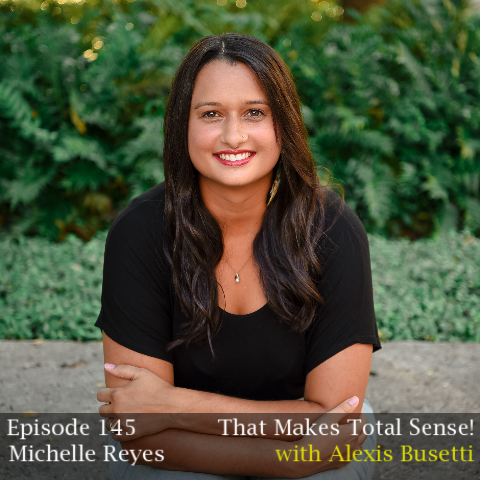
Speaker 3 00:00:07 Welcome to that makes total sense. A podcast dedicated to exploring God's generosity and justice. I'm Alexis, Boetti a Christian aiming to ask good questions and encouraging you to do the same. Every one of us is wired by God to live out generosity and justice, but the how sometimes alludes us that makes total sense is a way for us to get together, posture ourselves as learners and challenge one another to practice generosity and justice in a tangible way every day.
Speaker 0 00:00:39 Hey everybody, I'm super excited because I mean, before we press record, I just got to spend a few minutes catching up with my friend, Michelle I'm me Reyes. Hey Michelle.
Speaker 2 00:00:48 Hey Alexis. Good to see you.
Speaker 0 00:00:50 Oh, I'm so excited. This book I had reviewed it, uh, you know, a little bit and kind of, kind of, uh, browsed through my little PDF, but then I took it to the coffee shop this morning and finished it. And it is incredible. It is called the race wise family, 10 postures to becoming households of healing and hope. And you've coauthored this with Helen Lee and I love the back and forth that you guys bring to it. Um, I love that, you know, she talks about being married to a Canadian and like just bringing that other, you know, cultural aspect into this. Um, and this comes out, is it May 17th? Is that right? Mm-hmm <affirmative> mm-hmm <affirmative> awesome. And this is just, gosh, I just wanna say this is full of not only practical tips, which it is definitely full of those, like on the ground as a parent, sometimes you're scratching your head and going, I don't know how to answer that question, or I'm not sure how to address this, but there's also so much biblical wisdom here and, um, and good definitions for some of these phrases that we kind of hear floating around these days.
Speaker 0 00:01:59 Um, and so I just wanna say thank you, first of all, for you and Helen writing this, it is gonna be invaluable to families moving forward who wanna be conscientious in their household.
Speaker 2 00:02:09 Oh, thank you. Thank you. It was a, a joy to co-author this with Helen. Um, and it's, you know, it's interesting because we started the conversation about this book in 2020, uh, and who knew that two years later in 2022, we would need this book all the more. Um, and I think what we were feeling even two years ago is that just whether it's because of viral videos, social media, um, what's happening on the ground in our communities, issues of race are becoming so much more at the forefront of people's racial consciousness. Uh, it's not that we didn't have racial brokenness and division in our country, but, um, people's awareness to these issues were growing. And I think in particular for parents there we've come to the, so many of us have come to the realization that, uh, we can't just be silent on these issues in our home.
Speaker 2 00:03:10 Um, no matter what the topic is, we're always being formed in one direction or another, right? And so for our children, uh, they're always being formed positively or negatively in their racial awareness, uh, of what's going on in the world. And, but if it's not happening in the home, it's not happening at church. Uh, their spiritual formation on race could be through Instagram or it could be through, you know, their friends, which isn't necessarily a bad thing, but you don't, you don't know what's happening in those conversations or their teachers, or, uh, you fill in the blank. And so I think there is just our, our heart in this book is to equip Christian parents, uh, you know, first with this, this knowledge of their good and godly calling <laugh> to raise our children in the way they should go. Uh, and this includes being race wise.
Speaker 2 00:04:07 And so, um, and then we're gonna get into definitions on all, all the rest, but what we wanted to impress upon folks is one, we're not gonna get this right all the time. And I know Helen and I, we don't have all the answers. We're still on our own journeys with our kids. You know, I have younger kids, six and three. She has older kids, um, later in high school. And then in college, uh, you know, we're still learning and growing too. And so with being a race wise family, it's not about some formula that you just sort of like checklist and you're like, okay, we figured it out, but it's more of this posture of the heart, uh, admitting actually that we don't always know how to respond to issues of culture and race in our lives, our communities, our country. But what we're going to do is our posture is the first turn to God and ask him for wisdom and guidance and how to, um, humbly <laugh> and sensitively address the issues of race, uh, in our lives. And to do that as a family and with our children.
Speaker 0 00:05:12 Yeah, I, I am, I'm so thankful as I mentioned, one, one of the things that, um, that you and Helen mentioned, and it's, it's not gonna be a spoiler alert. It happens to be in the last chapter, but it's that it's that the kingdom mindedness doesn't happen automatically. And so I just wanna say, like, I think that sometimes, and you, you kind of alluded to it. I think that sometimes we kind of think, well, if we have our kids around enough different kinds of people, or if our church is multiethnic enough, or they go to a public school where there's lots of different, you know, there's lots of diversity that it will just kind of by osmosis happen, that we become, you know, this race wise family. Right. Um, and, and that's just really not how it works. Right. Um, because there are all of those things you named kind of coming at us and coming at our kids as well.
Speaker 0 00:06:03 And then just trying to kind of, um, we're just kind of trying to figure it out, right. It's not an automatic thing that we learn, um, how to inten be intentional about having these conversations at home and, and, and kind of where to allow, you know, ask God to, to shape us and form our mindsets. Yes. Um, in this space. And so, um, and so, yeah, I, I am becoming more and more aware that I'm, I'm actually really thankful for the way my parents were able to do this. This was before books like this existed. Right. But we did have these conversations. Um, but in part, it was because it was really important because we came from a multi-ethnic family. Right. And so those kinds of things were just happening. But I've learned from my peers who grew up in more mono-ethnic spaces in their families and in their communities that these conversations, I feel like, especially kind of in our generation, a lot of times we just didn't talk about these kinds of things at home. Especially maybe people from dominant culture, white culture didn't really have a lot of these racial conversations at home. And so now, um, you know, as culture does, it, it, it moves and it changes. And we want to provide this space for our kids, but sometimes we haven't had it modeled for ourselves. And so I think sometimes we feel like we're kind of left with, like, I don't really know how to do this.
Speaker 2 00:07:28 <laugh> yes. Well, and I think what just compounds the problem is that race is an incredibly complex issue. And so like,
Speaker 0 00:07:36 If you
Speaker 2 00:07:36 Haven't had any experience, any conversations within the topic of race, you're just looking at this like 47 foot, like monster <laugh> like wondering, like, where do I even begin with this? Uh, and so, you know, one of the things actually that I encourage, uh, Christian parents in is to think about the rhythms in your family that you already do. And, you know, for example, prayer, like most of us as Christian families, we pray on a regular basis, whether it's at meals or, uh, when we're putting our kids to bed. And, and so prayer, for example, is a natural and easy segue to incorporate what's happening around the world and in their community. Um, and to bring those issues of race before God. And so, um, that phrase let's pray about, it should be a phrase that's on the tip of our tongues, whether it's, uh, the war in Ukraine or it's, uh, Haitian migrants at the border, uh, or it's because a black or brown person has been shot and killed by the police, or, you know, fill in the blank, um, that, that we can ask God, uh, to protect people, to provide for people to just bring his piece.
Speaker 2 00:08:54 Uh, one of the things that we pray about in our home is like, God, just comfort people with yourself, or God bring people to yourself during this time. Um, that's some of the more heavy stuff, but even maybe on a more, uh, a fun note is when you're at a restaurant, uh, you're trying out food from another culture, uh, whether it's Ethiopian or Costa Rican, uh, that you can thank God before the meal for the people of that culture. You know, thank you so much, God, for, for this food that we're eating and for the people who made it help us to, you know, you know, you can name that dish name, the ethnic background, just say, help us to delight in these people. You made these people help us to love them the way you do. Um, and you can just trust that the more often you pray about issues of race and culture, you know, thank you for this people group. God helped me to love these people the way you do or whatever it is. I guarantee you that your kids are going to start thanking God for these people as well. And it's gonna be on their tongue when they hear something on the news to be spiritually formed for their first posture to be, we need to pray about this.
Speaker 0 00:10:04 That is, that is so good. It is so good. And at the same time, I think I can still almost feel the hesitancy in that a little bit. You know, mm-hmm, <affirmative>, I think, um, you know, I, I grew up, like I said, I've in a multi-ethnic home. Um, and, and our entire community, um, of my, of my parents' friends and just the people that we hung out with a lot. Um, it was really multiethnic. There were people, lots of people, different ethnicities, backgrounds, races, um, hanging out. And, and I, and I would say, even I'm thinking now to my, my aunt, um, had a disability and she was in a, a wheelchair. And I'm thinking about these moments where we think as parents, we're really trying to, um, point out kind of difference in love, you know, like you're like you're doing right now and saying, thank you for this people that they're, they're not like me.
Speaker 0 00:11:00 Right. Mm-hmm <affirmative>. Um, but I'm, I'm like kind of hearing a four year old going mommy, look at that lady in a wheelchair, or look at that woman's really curly hair, or, you know, look at that, look at that man's skin and, you know, whatever, and, and kind of feeling the hesitancy of like, wanting to be sensitive and, you know, and that's probably a generational thing for me, I think maybe right. Um, where you kind of, you're saying, how do I lean into this and still make sure that I'm being honoring of, um, you know, people who are my neighbors, who God have made, has made who look different than me and, and that pointing out that difference, or, you know, naming that difference even in those prayers is not a bad thing. I think that's kind of what I'm getting to is that I was kind of the, the general culture, not necessarily my family, but kind of the general culture as I was being raised in this was like, sh
Speaker 2 00:11:55 <laugh>,
Speaker 0 00:11:56 Don't put that out. Right. And you're like, what? Like he knows he's black, right? <laugh> like, yes,
Speaker 2 00:12:01 <laugh> like,
Speaker 0 00:12:02 He already knows. Right. And so, like, you're not, and you're not telling him anything new, you know, but, but there's still kind, I think there, because there it's a, because race, this kind of topic is that you said kind of this big feels like this big monster. Like we don't know how to approach these topics from different angles. So I know that that's like really big, but, um, but what, what about parents who are, who might be feeling that like sensitivity, and they're really scared to kind of jump in and have those conversations. I I'm thinking about white parents right now who maybe just kind of don't know what to say or do, or how to start those conversations. Really. That is, that is a really great thing to, you know, pray in those spaces. What, what maybe are some other kind of intro things that people that families can do
Speaker 2 00:12:47 Well. Yeah. And I'm glad you brought this up and I wanna even just, I I'll answer that. I just wanna take one step back because, um, I don't want anybody to feel shamed for <laugh>, uh, the way they were raised or what they were taught growing up, uh, because admittedly throughout history, even in recent history in their country, uh, we were taught or we even believe that being colorblind for example, was the path toward racial, unity and healing. Uh, you know, and, and even that specific term to be colorblind it's it's lifted from, uh, and I think in a very PO, like it was a positive effort, but it was lifted from Dr. King's own speech where he said, I want my children to be judged, um, by their character and not by the color of their skin. And so I think a lot of people living through the civil rights era were like, okay, we've seen the way in which people, um, hyper visualize skin color, you know, black, white, brown, we're going to take away what we believe is the barrier for racial healing.
Speaker 2 00:13:57 Uh, and we're going to be colorblind, uh, in that effort. And so, um, when I talk to a lot of folks, um, parents in particular, who were raised in the seventies, <laugh>, they're like, this is what we were told. And we thought this was the right path forward. And now you have all of these black and brown Christians, uh, and you know, 20, 22 saying not Nope, like this is not actually helping. And so I, I understand that for so many people, there is this confusion of like, this is what I was taught. I thought I was doing it right. I thought I was just, let's just all focus on people's hearts. Uh, and now I'm being told that I've been doing this wrong and that's like, that's a very hard situation to be in. So I just wanna name that. Um, and to not for people to feel ashamed that they've somehow done this wrong.
Speaker 2 00:14:46 I think it's just part of being on this path of learning and growing. Um, and as new voices arise and say, Hey, this no longer feels honoring to me that we listen to that and make pivots uh <laugh> as, as we go along. Um, because I think ultimately, and I, I say this too, is that when people tell me, oh, Michelle, I don't, you know, I don't see your skin color. Like, I don't see you as Indian. I just see you. <laugh> kind of like, I don't even know what that means because <laugh> like, I live in the reality of being a brown-skinned woman. Yes. Every day that thought never leaves my mind. I'm treated as a brown-skinned woman with all of the microaggressions and the racial bias and racism that comes with that. And so when people tell me, I don't see the color of your skin, I just see you, what I hear is, um, I don't see your stories and experiences of pain.
Speaker 2 00:15:45 Uh, and so I feel like, oh, you don't, you don't really see me. You don't see the full me. Um, so I just wanted to name that. Uh, and I like to, you know, you asked about like practical steps. I think this is why we always have to point back to scripture. Um, you know, when it comes to being colorind versus, uh, you know, I think it's a, a pastor Derwin gray that says we need to move from being colorblind to color blessed. <laugh> uh <laugh>. But, um, you know, in Genesis 16, 13, we see the God who sees, uh, a God who sees Hagar and the desert, and he sees her fully, um, that, that is an attribute of God that we want to lean into, that we wanna be like, God, that sees, uh, his children fully, uh, their heart and their skill, skin color.
Speaker 2 00:16:37 Right. Like I am, I am, uh, I am more than my pigmentation, but I am my story. And my embodied reality is no less than the color of my skin. And so, um, how can we, how can we learn from the character of God himself? And from the words of scripture about what it means to see people fully. So if you have young kids, an easy way to do this is to intentionally choose a picture Bible that, uh, represents people of different skin colors. Um, you know, when I was growing up, I had all the picture Bibles, I even had like the graphic novel version of the Bible. And let me tell you, Alexis, it didn't matter if they were Canaanite Cushite Egyptian, Roman <laugh> like they, they all had vanilla colored skin. <laugh>, they're all white. That's exactly. They're all white. Uh, and so, uh, it makes a big difference for our children to be able to see people with, with hues of brown, you know, um, to see angels with brown skin.
Speaker 2 00:17:46 Right. We don't know if they were, if they had white skin or brown skin or black skin. Um, so for people to be able for kids to be able to identify people's skin color and have that as a springboard, into asking questions, like, uh, in fact, I would encourage you as a family when you're reading the Bible together to then follow up after a passage and say, what, what ethnicity, um, are these people, or let's find where they lived on a map, like, let's visualize this. Um, what do you think these people looked like? What kind of foods did they eat? What kind of holidays did they have? Um, and even in passages of racial conflict, we can ask our kids, like, why are the people fighting here? Um, how do you think God feels about these kinds of fights? You know, whether it's Jews and Samaritans or, you know, fill in the blank.
Speaker 2 00:18:32 Um, what would you do if you were in this situation? And so I think the Bible's commentary on God's heart for multiculturalism, uh, the Bible's celebration of different cultures within the body of Christ it's it's framework for racial unity. Um, these are some of the most important tools that our children need to navigate race related issues. And so, um, our goal is for when they go out into the world, uh, you know, cuz they're not gonna be in our house forever, but if my children leave home at 18 or 21 or, you know, we're Indian. So maybe when they're 45, I don't know <laugh> but like when they leave home, if I know that the posture of their heart is to bring everything before the Lord in prayer, and they're going to go first a scripture to see what does God's word have to say about this? I know they are set up to be biblically race wise in the world.
Speaker 0 00:19:34 Yeah, yeah, no, that's, that's really good. Um, I've got a, I've got a hundred different directions, but I'm gonna try and focus. So, um, so this is good. It's really fresh. Um, but I, I wanna talk about that Hagar for a moment because I don't remember if she's the example that you guys used, but you have a portion in your book where you talk about the news and that you guys used to watch the news as a family and used to talk about it at dinner and, and, um, and as you were along the way and what, what you and Helen say in the book is that we need to recognize that the, that the news is told from the dominant voice primarily. Yeah. And, and, and what I would say is I would, I definitely agree with that, but my first thought was the social reason to look at it from other voices to hear other voices, right.
Speaker 0 00:20:21 To hear marginalized voices in society and all of this, which I think you would probably agree with, but that's not where you guys go. <laugh> you say, scripture challenges us to hear all these other voices. Right. And, and I thought of Hagar in that space because I'm like, yes, like who, what other ancient literature is gonna tell this story of her? Right? She is the enslaved woman. She's being treated like garbage. She is exploited <laugh> right. Like there's all of these things that are happening. And yet God comes and visits her and lets her name him as we know, and saves her and her son. And we see this story of the patriarch of our faith and his wife. We see part of that story through the lens of this woman who is not, you know, the dominant voice. And I wanna say just real quick, one of the places where this struck me and I would say it is true in the news today.
Speaker 0 00:21:19 And it is also true historically. Right. And so one of the places where that came together for me, um, I grew up in Oklahoma, right? So like I grew up in Oklahoma. I graduated college in Oklahoma. Got my master's degree in Oklahoma. <laugh> I had some education in Oklahoma. <laugh> I was, it was three, two or three years ago, maybe at this 0.3 or four years ago before I had heard about the Tulsa race massacre. Mm okay. I'm like, this is okay. Read 18 years or not 18, 12 years of Oklahoma history. Right. K through 12 Oklahoma history. Yeah. Kind of a big deal right. Happening in my home state never was taught this in history. Right. Never had heard of this, never had seen a news story, commemorating some sort of major anniversary of this or anything, nothing until a hundred years later when I see a news article and I'm like, wait, what?
Speaker 0 00:22:21 This <laugh>. And I was grieved and shocked right. In all of these things. And so for me, that's kind of the standout example in my mind of how dominant voices can choose, right. Often what we tell and what is not being told and what we hear as a society and what is not being heard. And so I wanna point back to what you said, and we say, we, we can always go back to the Bible on this, the Bible challenges us. It's not just a something that we wanna do because it's kind of fair in society that is true. And that I'm not gonna discount that that is absolutely true. And <laugh>, this is also not how the Bible teaches us to read or to report. Yes. Um, you know, both of those. So, um, can you talk to us a little bit more about that and kind of what, how we, as parents can, can address that in our homes?
Speaker 0 00:23:20 Cuz the other thing I thought of that's another one of those places where, you know, you might even walk, you might even drop your kid off at a play date at another kid's house and then you see like a different news organization maybe on the news. Right. And you're kind of going again, it's kind of these bombarding messages that we get from, from different, um, people around us and at school and stuff like that. So kind of what can that look like in our home to really be intentional about how we view the news and what's
Speaker 2 00:23:44 Happening? Yeah. That's so good. Well, I'm glad you brought up, um, the issue of the, the Tulsa massacre. Um, I I'd say the same thing is true about Asian American history in, in, in our country that, uh, the realities of Asian Americans have always been silenced and overlooked and there is a long history of anti-Asian racism in our country that begins all the way back, uh, to 18 to the 1840s when we saw the first, uh, mass immigration of Asians to the United States during the gold rush. Uh, and, and yet it's because nobody knows this history it's been, uh, it's been overlooked. Um, you know, Asian lynchings have been overlooked. Uh, the Japanese American incarceration during world war II is like a little, uh, blip <laugh> in the history book, um, that in the present time, as we're experiencing anti-Asian racism related to the pandemic, there is this continual response of like, oh, that's just an isolated event or like Asians, you guys have it good in this country.
Speaker 2 00:24:48 Like you've always had the good, you've always been rich and successful and no one's messed with you. So, you know, don't make a big deal out of this one event. And you know, we have to kind of do all this back peddling of like, no, no like what's happening right now is just the most recent, uh, link in a long chain of, of, of racism against Asian Americans. But, um, when you don't know that history, your perspective is skewed in terms of, of present realities. And so, um, Y I, I, I love, uh, what Carl Bart, the theologian Carl Bart says where he says, you know, we have to hold the news in one hand and, and scripture in the other. Um, but you know, we kind of have to go back to that first hand of the news, whose story is being told. Um, as we know, history is always written by the victors.
Speaker 2 00:25:39 Uh, and so there's always other stories, other perspectives, other realities that are, uh, omitted from our history books. And so, um, again, this is not an issue in which we're trying to shame anybody, like shame on you that you don't know this history, but I think when it comes to being, uh, a race wise family, when it comes to having a posture of being race wise, what this means when it comes to the news is when somebody tells us a story or an experience that doesn't align with the news channel that we watch, or that doesn't align with the history textbooks that we read, instead of having some sort of knee jerk reaction where we say, well, you're wrong <laugh> or like, you must be lying or you must be making this up, or you're crazy. Um, instead we, we open ourselves up to saying, well, that's new, that's different.
Speaker 2 00:26:37 I've never heard that before, but would you share more? Um, I I'd, I'd like to learn more about your perspective or what you are saying. Um, so I think that's in part how we grow our children to have gospel rooted news literacy, uh, is, is by being willing to hear all the stories. And I think about Jesus and the bleeding woman, uh, in the gospels, it's such a powerful story for so many reasons. But one part of the story that sticks out to me is that after she touches, after this woman touches Jesus and she's healed, you know, he's asking like, who touched me? And that I remember reading that story at one point being like, why is he asking this he's God, like, of course he knows who touched him and who he has just knee, but the story goes on to say that he has the woman come in front of the crowd and tell her story.
Speaker 2 00:27:33 Um, and you see that this is, this is an act of justice because this woman who had been socially ostracized, she's poor, cuz she's used all her money on medicine. Um, she's living on the fringe of society. If she had somehow become miraculously healed and then like tried to enter back in, people would've thought she was crazy or maybe she did something bad to like be healed or something like this. So he makes sure that her story is told in front of the crowd. So everybody believes her at such a dignifying response and then sends her back, uh, in, you know, into society. And so I think, yeah, we see God, uh, at the God who sees, we see Jesus, uh, our savior, who cares about our stories. Um, so do we see people in that light, do we care about their stories, especially when they don't seem to align at all with what we know about news and history.
Speaker 2 00:28:32 Um, and then beyond that just a few extra things is, is, is the news no matter what, I'm not picking on any channel, but the news in general is inflammatory <laugh>, it's, it doesn't matter what channel you're watching. They're trying to get an emotional response out of you, uh, whether it's on your TV or on your phone. And so I think for us as parents, for our children to teach them to think before they click <laugh>, uh, to help them even assess what, what is click bait, uh, you know, click bait articles versus actually things that are research based really well informed. Um, we should watch the news together as a family, you know, age appropriate, certainly, but use that as the springboard to then having conversations like growing up, we'd watched the news, um, while cooking dinner. And then oftentimes when we sat down to eat dinner, we talk about the, you know, the segment that we had just watched, um, and to ask, you know, as a parent to ask your children questions, like what, you know, what did we just watch?
Speaker 2 00:29:35 Um, so they can kind of re you know, rehearse it, summarize it in their brains, what messages do the words and images convey? Um, you know, so they can kind of start thinking about details and nuances. And then from there just help our kids slow down and assess the situation. Um, okay. You know, we watch this news channel, let's watch another news channel, kind of see what other people are saying, or if it's an article, okay. Let's read an article from another news source and, and see, you know, are the stories aligning, um, or are they not? And then again, a posture of if it's, if it's really different, if it's feeling uncomfortable, let's just pray for God to help us, um, find the truth. Like, what is the truth, help us to be able to hear it, even if we feel uncomfortable.
Speaker 0 00:30:25 Yeah. I, I feel like that's, um, a good kind of segue into you. You have you and Helen have some really, really good sections on, um, on lament and trauma. Um, because you're absolutely right. The news is it's intended to be inflammatory, right? <laugh> this is, this is what it wants once to Eli an emotional response from you. Yeah. Um, and you know, but with a lot of the things that we've seen in the last two years, there there's no, no exaggeration needed, right. No inflammation needed. When we, when we see just the reality right. Of what's happened and unfortunately, viral videos and things like this that have, um, that have shown us. I mean, I say unfortunately in that sense, because it extends the trauma. Um, but you know, fortunately that things can be done. Justice can, you know, can be served. Um, but those things are really heavy.
Speaker 0 00:31:17 Yes. Um, those things are really heavy. And so, unfortunately, again, we've seen this with, you know, affecting the black community. We've seen this affecting the Asian American community, um, especially since COVID, um, and the, and the rise in violence against Asian Americans and for parents who, who fall into those groups, it's traumatizing, you know, for, for families and parents who fall families and parents who fall into those groups, it's traumatizing. Um, and for, for people who don't, I think sometimes we maybe feel like we're at a loss, you know, how do we, um, you know, communicate with our friends, how do we, um, show solidarity with our church family, um, with our neighbors, you know, um, how do we go about this and really acknowledging, um, that the, the trauma is real, you know, acknowledging that it's not just that it's, it's also, I love how you and Helen talk about kind of capital T and lowercase T traumas.
Speaker 0 00:32:32 Um, I remember after, um, the murder of a mod Arbery after that video was released in 2020, um, one of my black girlfriends, she just simply, you know, just posted one of her Instagram stories. She just said, I'm tired. Right. You know, I'm tired. And, and so I called her <laugh> right. Yeah. And we chatted, but, you know, it was just, it's like all of this and mm-hmm, <affirmative>, my husband can't even go for a job now. Right? Yes. Like I'm tired. Right. And, and, and, and I hope that I responded to her in lament. I hope that I, I wept with, I mean, I did physically weep with her, you know, but I hope she felt, um, the solidarity in that. But again, this is maybe for people like me who feel a little bit awkward and grief in general, <laugh>, you know, what are some ways that we can, um, communicate our, our heartbreak, you know, our solidarity with, um, with the people around us who are being affected.
Speaker 2 00:33:37 Yeah. That's such a great question. I think honestly, it begins with developing our own emotional intelligence. Mm-hmm <affirmative>, uh, I think just the average human being does not have a high EQ. <laugh> like, I think we can just name that. Like, we are not naturally, like, we're not born into being, um, emotionally intelligent people. <laugh> like that takes, uh, uh, intentional growth, uh, and commitment. Uh, and so I think that because we don't have high E EQs, what ends up happening as a racial tragedy hits the news, and it's either I'm sad or I'm angry. And those are like the two re you know, the two emotions that we hear. And then we see other people being angry and then we're scared and we kind of step back and that cycle perpetuates right. That we don't, we don't know how to feel ourselves, but we're kind of scared by how other people are feeling.
Speaker 2 00:34:30 Um, and there's just like this complete emotional breakdown and nobody knows how to help each other. Um, and so I think it's incredibly important, not just for our kids, but for ourselves <laugh> to grow in our emotional intelligence. Yes. Uh, and one of the ways that we do this is, uh, I, you know, I have a picture of they're called kimchis. They're like cute little, I don't know, cartoon monster looking things, but they all have different facial expressions and they all have a different, uh, emotion labeled on them. Uh, and every morning at breakfast, uh, or, or right after breakfast, I'll ask my kids, how are you feeling today? It's not even connected to racial tragedies. It's just, how are you feeling today? What emotion best describes, how you're, you know, how you're feeling about this day. Uh, and, and, um, you know, so then we get to talk about I'm feeling, you know, it could be everything from like I'm feeling, uh, curious, or I'm feeling, uh, optimistic, or I'm feeling confused, or, you know, ki kind of beyond that, just happy or sad or mad, um, categories.
Speaker 2 00:35:38 And so this then translates into like, the more you can develop that emotional toolkit for yourself and for your kids in the moment of a racial injustice, all of a sudden, they now have this far more robust language to describe how they're feeling as well as to have a sense of familiarity to other people who might be experiencing emotions like rejection, despair, guilt, vulnerability, um, avoidance pride, uh, feeling threatened, feeling humiliated, like all of that. Uh, and, and not necessarily feeling as awkward or confused or weirded out by those emotions because we've been reading books on it, we've been talking about it. Um, and then again, you know, I'm gonna have to point back to the Bible is that as we read the Bible together, and we're reading stories about racial division and wars and conflict, you know, how often do we ask our kids?
Speaker 2 00:36:38 Like, what do you think this person felt <laugh> when they were treated this way? Um, or in a story where there's tension between like a person in power and a person who's not in power and like skin color and ethnicity are involved, you know, asking your kids, who do you most identify with in this story and why, um, so that you can start helping your children make, um, explicit emotional connections to racial suffering and oppression through a biblical lens. You know, how does God respond to this racial division? Um, and then I think as you were mentioning too, sometimes obviously our words matter a lot, but our emotional response is spiritual formation as well. Like if our kids see us angry and shut down to something happening in the world, that's gonna tell them, um, like this isn't something to like care about, or kind of have that same negative response versus if they see us in tears or lamenting, or just grieving like that alone is, is teaching them that their harsh, their heart should weep for the brokenness in, in, in the world. And so I think even just learning to become more comfortable in our own tears, <laugh> the good tears, um, and to show grief and lament to our kids goes a long way in developing them to show that same grief and lament, um, to, to the, to the pains of the world.
Speaker 0 00:38:02 No, I love that so much. Michelle, if you think about it, will you send me the chart and I'll put it, yeah. I'll put a link to it in the show notes. Cause I would, I would love that. I love the idea of doing that kind of at the breakfast table and just, you know, talking about it regularly. Um, you know, in that way, my, my son's school, they have, um, a little chart and where they, they have like a, a colored heart or something right. Where they, you know, each morning they come in and they, you can't see their names like the, you know, the teacher, but the teacher can go and see if there's, you know, if there's anyone who kind of falls, um, in a, in a line, you know, um, if they feel like, you know, I think it's for them, it's also partially like a safety thing.
Speaker 0 00:38:38 Right. If they feel like they, they might be kind of in a depressive state or something like that, you know, the teacher can notice, but also it does exactly, as you're saying, it gets them in touch with their own emotions. Right. They're having to think about, oh yeah. How do I feel? Or why might I feel that way? You know, sometimes I grew up kind of an anxious kid. And so when those, uh, when the anxiety comes back to me now, I I'll ask myself, like, I'm feeling anxious in my body. Why, you know, like, is there, is there a reason why, you know, and, and it, and it might, it might come back to something and it might not. Right. Um, and so, and so I think that's, I think that's really good, you know, my kids and I have also, I think as God, we allow ourselves to be formed in that way.
Speaker 0 00:39:20 Right. I end up using that with my kids, you know, whatever I'm learning, I'm trying to transfer it down. I want them to not have some of those struggles that I've had. Right. And, and, you know, one of the things we've chatted about recently, um, is just how sometimes we feel many emotions at the same time. Yeah. And how sometimes that can feel really confusing, you know, to be, we, we, um, had some neighbors move some really close neighbors move this past week. And so, you know, to feed, you know, what does it mean to, to when we feel sad because we're gonna miss them, but also to be happy, like for them is the phrase, you know, that we're using. And so to kind of use that empathy, but say, they're, they're moving into a brand new house and it's gonna be so great.
Speaker 0 00:40:03 And so we can be happy for them and sad for us at the same time. Yes. And that can feel confusing, but when we give it language, it does, you know, it does help a little bit. And so I like all of those things that you said when it, you know, kind of building that foundation. And so then when you do talk about the news, when you talk about racial tragedy, when you are engaged with people who are grieving very heavily, it gives us, um, a place to come from. Yeah. Um, in those places. And I think that that's, I think that that's, um, yeah, I think that that's really important. Um, I'm wondering, I think we have, I think we have time for this. Um, I know that you said we're just, we're sometimes we're just not great with EQ. Here's one thing that I'm like, here's one thing I know I wanted to take all of the tests.
Speaker 0 00:40:53 We're also, I think, societally, not that great about assessing our own biases. <laugh> right. Yeah. And I think we have seen this, especially in these last, maybe five, six years where I would, I'll just say, well, I'll go back. I think we chatted about this last time you were on the podcast. I'll, I'll name it in the theology space. So that I'll just kind of take the brunt of it and say, we just kind of say, this is theology. And we, and we norm we say, this is normative, this mm-hmm <affirmative>. And really it's like white reformed kind of the
Speaker 2 00:41:32 Theology European
Speaker 0 00:41:34 <laugh> European. And we say, yeah, this is normative theology. This is theology with a capital T. But, um, I think that some of us though, when it comes to our own views, we, we think those are normative. Right. So whether it's majority culture, you kind of walk around that way or you just walk around because it's your own lens. You don't know you have a lens on, right. Yeah. Or we don't recognize that we have a lens. And so it makes dealing with issues of race, race really tough because we kind of think we're coming at it in kind of a neutral way. Right. Mm-hmm <affirmative> like, well, yeah, of course this is the way a person should look at it because this is the way I'm looking at it. But we all have biases <laugh> that we don't realize some of them we do, and we can work through them. And I like how you guys differentiate between the two, but some of them, we don't. So how do we, how do we name those two and how do we kinda work through the things that we don't even know we have?
Speaker 2 00:42:34 Yeah. I mean, no, that's so true. Like we don't know what we don't know. Right. <laugh> um, which is why it's all the more important to be living in multicultural communities. Um, if you're a Christian family to be, uh, attending a, a multicultural church, um, if you have the means and ability to put your child into a school that has a lot of diversity, multicultural student population to do that, um, because it's in those spaces that we're going to just sort of naturally begin to learn more about ourself, but we're also going to be having friends and acquaintances tell us things about ourselves. Um, and I like to compare, you know, building friendships across cultures, uh, to, to marriage. And what I mean by that is, um, there were things that I didn't really know about myself till I got married to my husband, Aaron, like, I didn't know, I had a certain preference to the way the shoes were lined up at the front door or where dirty laundry should go or like things like, I even had a preference right. Until we got married and he did it differently. And I thought, well, that that's different. <laugh> well,
Speaker 0 00:43:51 See, and I was gonna say until he did it differently, and then you knew that yours was the right way. Yes,
Speaker 2 00:43:54 Exactly. I mean, that's obviously that's biased, right. Is, is we get, we get exposed to a person of a different culture, um, or ethnic heritage. They do it differently than us and we respond by naming it, judging it and then rejecting it. Right. Right. Um, and so we have to be rubbing shoulders with people of different cultures in a humble posture so that when those differences are brought to our attention, that our next re response isn't to say, oh, and that's bad. And here's why, but just, um, it's different, but it's not wrong. <laugh> right. And how can I appreciate this more? And, you know, I think some of the, some of the biases that I've just come into contact with, um, from majority culture folks is just kind of that, um, that feeling that you have a right to like question people about everything <laugh>, you know, and like I'm walking down the street of my sidewalk with my kids in my own neighborhood. And because I have brown skin and because my, you know, my kids have darker skin, like people feel totally comfortable walking up to us and asking us if we live in the neighborhood or, you know, demanding that, I tell them my house number. And I'm like that that's just not right. <laugh> and, and that's also not normal. <laugh>, you know? Yeah.
Speaker 0 00:45:21 I've got, I've got one of those, my mom. So my, my mom is, is Mexican American. And we were in kind of a, you know, slightly uppity part of town. But my daughters take after my husband who is white blonde hair, blue eyes. And so I'm dark, my mom's dark, but she was with my daughters who at the time were like two blonde hair. Um, and my mom, someone approached her in the grocery store. She was just my mom and my daughters. And they asked her in Spanish how much she would charge to clean their house for them. Aw. Because they assumed that she was the nanny, that she was the housekeeper. Right. For, um, for this family of these little twin blondies, um, over there. And so of course my mom, because, because I think kind of this little Detra, these, these, um, paper cut kind of things like she's used to microaggressions because she's was born and raised here as a, as a brown woman.
Speaker 0 00:46:17 Right. And so she comes to me and she laughs it off. And she said, well, I should have asked her how much she'd pay me, you know, or whatever. And she's, and she's laughing, of course, she told her that she was the grandmother and that she was just visiting and, you know, et cetera, et cetera. But yeah, that's, that's kind of, <laugh> not to like bang that on the head, but that is kind of one of those things. Like you go, that's, that's actually not really normal. <laugh> to just go up and solicit work yes. From someone, um, you know, because they look different than you do, right?
Speaker 2 00:46:46 Yes. And I I've had a similar experience. I feel like so many black and brown people have had similar experiences right. Where I was actually the speaker at an event. And somebody came up to me and asked, you know, for me to get them a glass of water or something, like, assuming that I was the help. And so, I mean, those are just some very simple biases that, that, you know, people can start to consider about themselves. Like how often do they feel confident just to walk up to a stranger and, and, uh, share their opinion with them. Right. Like to tell them what they're doing is wrong. And to ask them to stop, right? Like, Hey, if you guys don't stop this, I'm gonna call the police or, Hey, um, can you guys keep it down? Like you guys are too loud. Like if, if you find yourself kind of in that pattern of, of trying to control other people, that's a bias right there.
Speaker 2 00:47:34 Like that's not normal. Um, if you have this assumption, when you see black and brown people, that they're the help, right. Or that, you know, um, they're in a different class, socio economically than you. Like, these are biases that come to the fore. And I think if you can have friends of other color that you live life, live life with that, hopefully I would hope if you were recounting those experiences that they could tell you, uh <laugh> we need to talk about this <laugh> because, uh, you know, those, aren't the sorts of things you should be saying. Um, but I think I forget the statistic, but I think it's somewhere like 60% of Americans prefer to have friends of their own ethnic background. Like it's a really high number, which means that over 50% of us, the majority of us live in monocultural communities, um, and for our children, uh, if, if 60% or more of their friends look like them talk like them dress like them eat the same food as them. We are not, uh, setting themselves, setting them up well, um, to really appreciate and value kids who are different from them.
Speaker 0 00:48:46 Yeah. It is. It's higher. It is a little higher than that. I think I'll share this sta I think it's a Washington post step that came out maybe 2012 or something like that. Um,
Speaker 2 00:48:54 Okay.
Speaker 0 00:48:55 Michelle, whew. This is like, this is so good. Um, I wanna really encourage everyone to grab a copy of this book because, um, it's gonna be so helpful. I know it's like we just don't have the time to go through everything that I, I showed you. I have like two pages of notes on this that I crammed into one spot because I was just like every, I was starring, you know, everything. Um, but Michelle, before we go, can I just ask you to pray for us? Um, just whatever comes to your heart as we, as we end this time together, um, for us to become more race wise families in our, in our discipleship journeys at home.
Speaker 2 00:49:39 Yeah, absolutely. Um, if you don't mind, I'd like to pray one of the prayers from our book I'd love, uh, because every chapter ends with a prayer. Uh, you know, we intended for this, uh, book to be immediately practical, but you could take this to the dinner table. Um, God of the new heaven and new earth, we pray that you would give us the eyes to see and the ears to hear the ways in which this world, uh, is not our own help us not to conform to the culture around us, but to be kingdom minded in all we do as individuals and as parents give us the wisdom to lead our families in a manner that reflects your values and your mission protect us from the evil one who would endeavor to confuse our minds and lead us astray, may our lives reflect the saving work of Jesus so that others will be drawn to you, especially because of how we handle issues related to race. Thank you for creating a way for all the nations to be adopted into your family. And thank you that we have access to your kingdom through the shed blood of the king of King's Jesus Christ. May we be single minded in our devotion to our savior until he comes again to reign forever more? Amen.
Speaker 0 00:50:53 Amen. Thank you so much, Michelle. Um, again, it's the race wise family, 10 postures to becoming households of healing and hope. I'm so glad you're with us.
Speaker 2 00:51:03 Thanks for having me, Alexis.
Speaker 3 00:51:06 The links for all the resources mentioned in today's episode can be found in the show notes, music, and podcast production by Seth. Boetti be sure to give us a review on iTunes and subscribe at your favorite podcast listening app. You can also visit
[email protected].