Episode Transcript
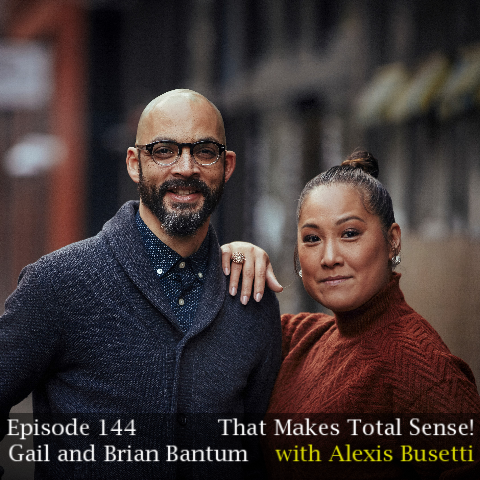
Speaker 0 00:00:07 Welcome to that makes total sense. A podcast dedicated to exploring God's generosity and justice. I'm Alexis, Boetti a Christian aiming to ask good questions and encouraging you to do the same. Every one of us is wired by God to live out generosity and justice, but the how sometimes alludes us that makes total sense is a way for us to get together posture ourselves as learners and challenge one another to practice generosity and justice in a tangible way every day. Okay. So for, uh, regular listeners to the podcast, to say that I'm having some authors on to talk about a marriage book might feel just like slightly different than what I normally do, but I am stoked to have this couple on the show today. Um, I've got Gale song Bantom and Brian Bantom. We're gonna talk about their book, choosing us marriage and mutual flourishing in a world of difference. Thank you guys so much for coming on.
Speaker 2 00:01:07 Hey, it's great to be here with you, Alexis. Good to be here.
Speaker 0 00:01:10 I am super excited about this in part we we've touched on it before we hit record, but I've read like a lot of marriage books. <laugh> like, especially when we first, my husband and I first got married, has now been almost 19 years ago. You know, you kind of get bombarded, especially in the church, right? I think everybody kind of wants you to read this one, right? This one was so helpful for me or that one was so helpful for me, but we are a, a couple where I'm, I'm a mixed woman. I'm a woman of color. My husband is a man, a white man. And I don't know that I've ever read a book that I felt like even came close to representing or giving a voice to what we were trying to navigate as, uh, as an you can call us an interracial couple or a multiethnic couple or whatever you wanna say. Um, and so I will say there, most of my notes are actually about how you guys have navigated those spaces, because it is, it's just a part of who we are, right? We can't separate this racial, ethnic conversation from everything else. And so I'm gonna give you guys a chance to introduce yourselves, but will you include that, um, part of yourself in, as you give your introduction and give us just a little bit of context of where you're coming from?
Speaker 2 00:02:27 Yeah. I am a second generation Korean American woman born in Chicago. Um, so both of my parents were immigrants, um, in their twenties and thirties to the states. And, um, much of my childhood actually was occupying lots of different spaces in the home. It was Korean language, Korean food, Korean parents, who also were very active in their Korean Pentecostal church. My school was predominantly white with maybe a couple handfuls of, um, students of color, which were my friends and my neighborhood was predominantly families of color, um, in a more, uh, probably lower economic, um, middle class. Um, yeah, so my worlds were just, just a, a, a mixture of lots of different things. And, you know, it wasn't until I was 12 that I moved from that space and found myself in black Pentecostal community in black community. Um, so my, I always tell people that I have this kind of, uh, labored relationship, complicated relationship with my identity, cuz I always felt like I was in between. I never felt like I belonged in any particular space fully. Um, and I think that for me was kind of the attraction to Brian, even though we met long distance, hadn't seen him knew that he was biracial just from conversations also felt in between. And I could tell from the moment we started talking on the phone that we shared that space together and there was a resonance there and there was a strangely, a kind of familiarity and a space of belonging and hope in the not belonging, if that makes sense at all.
Speaker 0 00:04:29 Yeah, no, it makes, it makes perfect sense for me as you're talking, I'm like Gail, maybe we could set up a pastoral counseling call later about this, about this in between
Speaker 2 00:04:37 A mutual right.
Speaker 0 00:04:38 A mutual <laugh>, you know, it's that, it's that in between space. Yes. Occupying that is so it's so tough. Yeah. And you just, and you just cry out for belonging and, and in part you saw that, uh, in Brian and so Brian, what's your kind of, what's your background and what's your story as far as that goes?
Speaker 3 00:04:56 Yeah. So I am, uh, a black, uh, mixed man. So the, the language is actually pretty particular. So there's, I think sometimes when we call ourselves biracial, there's a way of kind of erasing, um, sometimes the particularity of, of black existence and the ways that race works is, you know, if you're mixed, you're not white, you can white pass maybe. But, um, so a black, uh, mixed man white, my mother is white, was white. My, uh, father was black, uh, grew up in the DC, Maryland area. Um, and but most of my kind of upbringing was really socially formed in white spaces. Uh, so my father was kind of in and out of our lives, uh, in my younger years. Um, and I think he himself was wrestling with his own kind of blackness and identity. And, and if I'm really honest, probably running from it in it's in, in a certain kind of way.
Speaker 3 00:05:54 So there were never really talks about what it meant to be black in the world. No kind of intentional pilgrimages to see, you know, my granddad to see what, what, what it grew up, what it meant to grow up black on the Eastern shore. Um, so those conversations were not really existent. Um, and so it was me, my mom, my two white aunts and my grandma who I lived with, uh, my brother who, my younger brother who is a little darker than I was hair was a little curlier. So in some ways like those were like kind of reference points was, was, um, when I was in elementary school, you know, kids would ask, you know, why do you talk like that? Or what kind of music do you like, why are you sitting with those kids? Um, and so really younger, like younger, there was a lot of kind of questions of in between this.
Speaker 3 00:06:41 Um, I knew for sure that I wasn't white. Um, but by all of the markers that are typical, I also wasn't black either. Um, and so it wasn't until I started dating that, I started to kind of realize, oh wait, there is something going on here. Cause I'd knock on a little white girl's door and her father would answer and be like, yeah, my daughter's not da not dating no black eye, um, or was an Indian girl that I like, next thing you know, her mom's coming over. It says, no, no, like she's not dating those kind. Um, your kind. Um, and so really like early on, like by middle school, you know, I started realizing, oh, it doesn't matter what I think I am. Um, the world is seeing me in a different kind of way. And, and so that was kind of, so that in between this was knowing and feeling the kind of boundaries, um, but not really sure what the center was necessarily.
Speaker 3 00:07:35 Um, and so ultimately it was kind of like these two moments kind of coincided where I was in an African American history course in college. And I saw a picture of WWE dub boys. Um, and he was my skin tone, um, had, and Langton Hughes had my hair. Um, and in the kind of long history of, of kind of seeing all this, I realized, oh, wait a second. I like, if this were 30 years ago, I would not be sitting in this classroom. Um, so I don't have a choice to not be black. Um, so the, in between, this is not so much that I don't have a place it's that I don't understand where I, it doesn't, I don't understand my own history. And so what does it mean to begin to understand the work that my body's doing, but that very same semester I met Gaye.
Speaker 3 00:08:27 Um, and, and so learning then about what Korean, what Korean experience was like. Um, and then oddly enough, the more Gaye and I talked, given her own experience in the black church, I kept thinking to myself like, dang, I think she's blacker than I am in some ways. And, and so what does that mean? And so I think that those kinds of form social formations and intuitions, um, kind of the cultural, the, the jokes that one gets and the sensibilities, um, I think were all like really a deep part of my own formation, um, and learning out, learning what it meant for me in particular to be a black man, um, given my own histories. Um, and we carried all of those into our relationships. So I think for Gail, you know, she was a person who could be home for me because I was safe to bring, it was safe to bring those uncertainties, um, because she could understand them, identify them. Um, and I, I, I learned a lot from her.
Speaker 0 00:09:28 Oh my goodness. There's so much there. <laugh> there's so there's so much there, but you used the phrase, Brian, that I really wanted to be sure that we touch on because, or really not just touch on. I really want you guys to, to talk it out with me if you will, because this is a book on marriage about your marriage, but the phrase, especially from, so <laugh>, when, when my husband, this is actually funny, I just thought of this. So my, when my husband and I first got married, I used to tell him all the time, like we would look in the mirror, you know, he'd come up by me in the bathroom or something. And I was like, we just don't look like we go together. You know? And then I think it's funny. I'm like, but the context of my generation was always couples that were the same ethnic identity, but in the generation prior to me, it wasn't.
Speaker 0 00:10:16 So I'm like, why am I even saying this? Like, my mom is Mexican. My dad is white. Like, why am I saying that? You know, my husband and I looked so off, you know, kind of together, but we noticed these things right. About one another. And, and the phrase that you used is the work that our bodies are doing in the world. Oh my goodness. Like I have that underlined probably almost every time you guys used that phrase because it's like, this is just me, but I think it's kind of like, when I don't know, I don't even know how to put it exactly, but it's like just taking a moment to name it and say, my body actually is doing work in the world, but I'm, I'm traveling this far. And I may not have realized how much work my body is doing. Right.
Speaker 0 00:11:07 Or how hard my body is working. What kind of work? I think it was in this, forgive me, I'm a seminary student. So I read a lot and now I'm trying to place things <laugh> but I think you guys have both had the, what are you experiences? Yeah. Right. I mean, this, this was me growing up. Right. Like, I, I constantly got that question, but that's one of the evidences that my body is doing a kind of work in the world that I may not be aware of. So can you guys, I, I have like kind of a meaning that I've brought into it from reading that text, but can you guys kind of unpack a little bit that phrase for us and what you mean when you recognize that your bodies are doing work in the world?
Speaker 2 00:11:48 Yeah. I would say for me on two levels on maybe a personal level, and then I think on a more broader level that I wasn't aware of until more recently actually. Um, but for me, my Korean identity has always been kind of disrupted or disruptive, I should say, uh, from a young age career, my own people, Korean people, older Korean people would would question whether or not they use this phrase. Are you a hundred percent? It's a thing. Um, are you a hundred percent? And initially I was like, what do you mean? Am I a hundred percent? Like, are both my parents Korean? Yes. Um, because I think that question alone assumes that there's a part of me that's not fully Korean or I'm mixed or I'm adopt whatever the case may be because of the way I look and the way I present. I'm very gregarious.
Speaker 2 00:12:44 I'm very demonstrative. I'm loud. I, I remember my dad having to sit me down. My dad was more traditional and try to teach me how to laugh. Korean women, don't laugh loud like that. You need to cover your mouth, create a, a circle of your lips and make it like much more demure. Like you're covering your half your face when you laugh. Don't, don't laugh the way you laugh. You don't just let it go like that. And you know, things like that. And then, so that's like the personal, I'm just trying to, you know, realize that I'm presenting a Korean female body in this world in a way that I felt comfortable, but was not necessarily received by my own people. And then fast forward I'm in ministry for, you know, years in non-car spaces. Um, and prob maybe six, seven years ago, I was preaching somewhere.
Speaker 2 00:13:50 I was guest preaching and there were these young Korean women college students in the audience who came up to me and they waited in line until, you know, they can speak to me. And they're like, you're the first Korean woman we've ever heard preach. Wow. Ever. And we're talking like 2015. Wow. I mean, and that, like, I started getting teary eyed. I'm like, are you kidding me? Um, so in that sense, that just reminded me that I am largely where I am because my mother was a preacher. My mother was in ministry before she passed. And I, that, if there's a gift that she passed on to me when she died, I was 18. So no real formative memory as an adult woman. But every time I'm met by an obstacle or a boundary as a woman and a Korean woman, my mother left the legacy of an imagination. Her body, me seeing her behind a pulpit, teaching preaching, um, left something in me. And I realized that that's what I'm doing to these younger, this next generation of young Korean, Asian American women that gives them an imagination. So in that sense, I know my body is also doing work in the world. That's bigger than what I even imagine it's doing or think it's doing.
Speaker 1 00:15:25 Amen.
Speaker 3 00:15:29 Yeah. I, I think for me, it's, uh, you know, obviously you kind of always know that your body's doing a little bit of work based on, you know, even in elementary school, whether it's, you know, the hair, what, like, like why does your hair do that? Or why does it not do that? Um, the ways that, uh, you know, who, I mean, even like in middle school, high school, you know, like who finds you cute or not cute, right. Um, or who you find cute or not cute. And sometimes those things are not, not the same. Um, I think what, like this kind of journey of kind of understanding what my blackness meant was probably most profound in a lot of ways. It was really similar to Gaye where, you know, in the midst of like moving to the south, all of a sudden, you know, raced functions really differently there, you know, you have this kind of the reality of, of, of black folk and white folk living with a kind of intimacy, but also a kind of separateness.
Speaker 3 00:16:29 Um, and it's very different than the north. And so my first, uh, my first weekend at duke, uh, where I did my master's, uh, I remember we, the black student, black seminarians union invited me to a fish fry, you know, and like fish fries were not part of growing up or anything. And, and I think out of my own, I'm almost kind of embarrassed that I, that I said it, but I like, you know, I'm not sure if I'm black enough <laugh> to, to do this. I don't know if I count essentially. Yeah. Was the kind of question. Um, and so that was, and that's the thing is like, in a lot of ways, those are the messages implicitly that I was getting, you know, granted through image for kids, but always that, you know, you're not quite black enough. Like you have to meet, meet this bar.
Speaker 3 00:17:12 But what I found in the south was that that noticing of a one drop rule that was oftentimes used to exclude, actually got inverted as a kind of inclusion. And they were like, it's the one drop romance, like you one drop and you're in. And, and I was like, oh, oh, okay. Um, so we go to the fish fry and, and that began a kind of, uh, a kind of more embodied experience learning experience of what it meant to be black inside of a black culture that actually far from having a kind of homogenous litmus test of this is what it means to count is actually really varied. Um, now what I also had to realize inside of that though, was that there was also a history of how bodies worked that just because I got in doesn't mean I can just come in and flash my black card around wherever I wanted to, but as a light skin, um, black mixed man, there was also a long history of light skinned men, especially being seen as more beautiful as being natural leaders as the talent to 10.
Speaker 3 00:18:20 Um, whatever you kind of wanna wanna name it. And as much as I kind of felt a kind of insecurity and exclusion, I couldn't turn that around and, and feel wounded when black folk were also like, well, are you going to be for us or are you gonna bring in your white formation into our space? Um, you know, are you gonna sit back and just learn from the folks who have been doing this on the ground? And so what I've had to learn is that even while I understand myself to be black, when I enter into black spaces, I still have to take a posture of learning. I still have to take a posture of, of being allowed in, in spaces where people don't know me because my light skinned black body is doing a certain kind of work. Um, and then when I go into white spaces, there is a kind of multiple layers there's on the one hand, a kind of distrust, a kind of uncertainty or a kind of tokenism.
Speaker 3 00:19:18 And so you're kind of always trying to figure out, okay, well, these people trying to take me, use me as a token because I seem safe or am I gonna be, am I, they seeing me as a threat? Um, and so those are always things that, so soon as I walk in the room before I've said anything, those are always kind of things that I'm reading for having to see. Um, and what does it mean to both make space for folks in the room, but as well as also, and sense guard myself in certain ways. Um, and, and knowing the privileges that I bring into a space, even in the midst of the kind of histories of, of oppression as well.
Speaker 0 00:19:57 Yeah. I, I love that you guys have both talked about kind of the personal and the broader, um, sense too, because, um, while I could, while I could hang out on the race conversation for just the rest of the time, I do wanna move us to gender. Um, because I think, you know, as I was reading this book, what struck me is how well the two of you explore just the subtexts right. Of, of the marriage relationship that don't often make it to these kinds of books. So these, that the, the marriage section in your Christian bookstore is kind of filled with, um, you know, and you guys, you guys talk about it in the intro, right? But it's like, okay, is this, this is gonna be about sex. It's gonna be about the kitchen. It's gonna be about in-laws, it's gonna be about school for kids.
Speaker 0 00:20:47 And that's kind of it. And this is all it's, it's fine and good. And yes, it's places that we have to navigate in marriage, but it's all, um, on this surface, right. It's, uh, you know, it doesn't go extremely deep into this relationship, but you guys navigate these subtexts really, really well in this book. And one of those major places is in the racial conversation, but another one is in the gender conversation. And Brian, I wanna kind of start with you, um, because one of my pastors read your book before me. And I was like, oh yeah. I was like, I actually have that on my list. Like, what'd you think? And she was like, I love the book. I loved Brian's chapter. Um, because this pastor is a woman pastor. Right. And so she really loved the perspective that you brought. And so I wanna give you freedom to share, you know, whatever, whatever, um, stories or things that you think might, we might need to highlight from your, from that specific chapter, from, from the perspective, from the male perspective, but I'm gonna kind of bait you with patriarchy <laugh> cause I loved that, that discussion, you know, I mean, it's important that we bring it up, right.
Speaker 0 00:21:53 It's important that we recognize that this is a thing, um, when we, when we're talking about marriage, so, so feel free to take that wherever you want. But, um, my notes are kind of like ask Brian about patriarchy.
Speaker 2 00:22:05 <laugh> can I just interject here though?
Speaker 0 00:22:06 Please do. Yeah,
Speaker 2 00:22:08 It is my favorite chapter. Yeah. And I think that chapter alone is worth the cost of the book.
Speaker 0 00:22:14 Yes. Yes. Ma'am no, it's really good. Yes. As my husband was cooking dinner last night and, and you guys know where, because you read the chapter, I was like, listen, I just read about this. And their first 15 years were like our first 15 years, but I'm gonna leave you here to cook dinner while I take the kids to swim team. So there you go. <laugh> go ahead, Brian.
Speaker 3 00:22:34 Well, I like, I, I think part of it is it started really when Gale first started. Um, well, I guess it, it started earlier because growing up, you know, my parents were divorced when I was eight. Um, and my mom, you know, everything from welfare, you know, in food stamps and trying to make ends meet and a certain suspicion of my, both my father and maybe men in general. And, and we ran to talk to therapists about all that. But, um, so, but clearly there was something I, I understood that there was something off, um, and it had tended to kind of shy away from the kind of Uber macho kind of masculine. I mean, my first became a Christian and, uh, a mentor took me to, to promise keepers, um, and got me a copy of tender warrior. Um, and it all just, it never quite seems to fit, but it was the only language that I had because I was new to Christianity and I loved Jesus.
Speaker 3 00:23:34 And I was like, well, if I love Jesus and I love the Bible, then I have to follow. I have to, I have to, this is the path I have to go on. And so I remember Gail and I, we were first, we were dating and we had this conversation on the phone, you know, and, and I think, and she talked about her mom being a pastor, you know, and at this point I'm 19 and I'm like, oh, well, that's, that's not actually biblical. And then it's like, and then dead silence, like, hello, hello. And, and so she goes, goes on to tell me about like, well, this is what my mom did, and this is what she was called to do. And if you look at all these different places in scripture, um, and so of course I loved, I loved Gail already by this point.
Speaker 3 00:24:14 So when I go back, when I started reading again, all of a sudden you start seeing all these things, um, and then you start asking yourself, well, why didn't I see them before? And, and, and so both scripture begins to open up for me. And then at the same time you have the race conversation. That's also helping you to see the ways that these stories have gotten used in really problematic ways over time. Um, and so I think, and then we kind of fast forward a little bit to Gale's first worship ministry jobs. Um, and, and clearly she is gifted. I mean, clearly, and, and to see the, kind of the ways that these men would have to bend themselves into such precarious positions to somehow exclude her, um, and the ways that, but at the very same time, the way that her body was doing work, the ways that, you know, women would come up and say, like, I heard God in my own voice in the way that she led worship, you know, so all of a sudden those things start kind of mashing together a little bit.
Speaker 3 00:25:19 Um, and, and, and so that's the question then of patriarchy is of how is it that we co that men come up with these amazing stories to somehow divinize and glorify their own mediocrity, all the, while one pushing aside the, the profound giftedness of the women in their lives is, is just kind of always like, kind of boggles my mind. And so on the one hand, like patriarchy. So I, so seeing it through the lens of how Gale's gifts were constantly kind of marginalized and meant and diminished, I mean, her first full-time job, they asked her to do it for free. <laugh> a worship direct the worship pastor was leaving and they called gal in. I was like, oh, great. This is the moment. Like, they're gonna recognize her gifts. They're like, okay, we want you to be the worship director and we want you to do, we want you to not take, but we want you to stay at part-time.
Speaker 3 00:26:21 And I was like, I was so pissed. So, so like to see like all of that. So like, so that's, so that's one level is to kind of see all of these things in our everyday lives. Um, but I think the other part of this was also the kind of intensely personal, which is while I could see all of these things happening and I had fancy language for it and, and systemic structures and epistomological frameworks and all this kind of stuff at the very same time, you know, Gail and I are having arguments about, you know, who's gonna take the kids for the day, you know, who's, who's make, who's arranging, um, you know, who's arranging childcare. Um, we've just, we are just, we are, and these are conversations we're still having, you know, about who plans vacations and what are all the small little moments that get decided.
Speaker 3 00:27:12 Um, and so even while I had this really large language, I didn't have, I still had to think about the every day. And you know, one of the stories that we talk about in the book a lot is like this conversation about cooking and, you know, and, and going through, gal's working full time at this point and I'm working full time and I come home and I just expect dinner to be ready or a plan. And gal's like, well, you know, I have not had time to think about the list. And, and up to that point, the posture's always been like, well, just babe, I'm here for you, right? Whatever you need me to do, just tell me, you know, gimme a list and I will knock that list out. Um, and so the ways that patriarchy, in a sense, absolved me of the responsibility to be engaged in the household, invested in the household in a kind of way that saw it as my work.
Speaker 3 00:28:05 And, and this is the thing that always gets me in, in the art. And we had a very vigorous conversation that night. And the thing that really stung and still kind of sticks with me was I would kind of hide behind this. Well, like I just don't know, I'm still learning, blah, blah, blah. And she was like, well, you never said that for your soccer games, you never said that for your conference trips, you never sit, so you can do this. It's just a matter of whether or not you wanna do it for, for all of this other stuff, whether or not it's your work or whether it's my work or whether it's our work. Um, and so I think that's the other thing that I think I've still had to wrestle with. And I, and frankly, I'm still coming to wrestle with, with is, is that profound formation that we as men, like just seep in, which is that our lives are really the only ones that we have to think about. Um, fundamentally
Speaker 0 00:29:01 He's gonna prove
Speaker 3 00:29:01 That's too, too <laugh>. And I think that's the case is like, we, we walk out our door and we don't have to worry about what we're wearing. We don't have to worry about what people are gonna say. We don't, we can stay out for as long as we want. We're authorized to kind of everything that, all the mistakes that we make are not seen as deep, fundamental character flaws, but just as young men sewing their oats and they'll figure it out along the way. Um, there's that basic presupposition that we're probably right until we're proven wrong. Um, and so I think all of those things ultimately kind of create a really false sense of independence and autonomy and self sufficiency, um, and disconnectedness, which I think hurts us as much as it as in addition to hurting the people around us. Um, and I think that's the, that's the deep tragedy of the, of, of this kind of patriarchal framework is the ways that it, it robs us of the kinds of connect connections and connectiveness and realization of our gifts.
Speaker 3 00:30:06 So, like I talk about in the book, the, one of the kind of funniest things about all of the cooking was that while Gail did it, like I made GA, she was like, oh babe, this is so good. And I was like, oh, you know, what's actually funniest. I actually didn't really like it. It's really fun. Um, there's something about the kind of planning. I really, I love that people enjoy it. Like, I mean, I enjoy food, but it's not like my not like my heart language, the gals like, well, this is great, cuz I love when people cook for me, like I love eating. I never really liked cooking. Um, you know, and so something about patriarchy also robbed me right. Of the discovery of what I, of what I could be like in the grand scheme of things. I probably would've been a really good house husband actually.
Speaker 3 00:30:50 <laugh> um, you know, somebody who just kind of loved attending to like all of these small little things and, and maybe the kind of, kind of high driven career path, maybe I'm not actually wired for, but something about patriarchy kind of forced me into this idea that my worth is in my job. And my worth is in this kind of success about things all the while also diminishing and, and loo and kind of lowering the possibilities of what Gale could do because everyone was giving me opportunities while Gale was, you know, busy doing, trying to hustle around the house. Um, so I've gone on a little longer than probably I should have, but yeah, I think, I think those are kind of the things that are, we've been wrestling with throughout our marriage. Um, and continue to, I don't think it's one of those things where you just solve it. Um, we, we Gail and I continue to have hard conversations about these things and how that shows up in everyday ways.
Speaker 0 00:31:45 No, I'm glad you went long. I feel like you could keep preaching. I mean really, but I mean a couple of things I just wanna, I wanna kind of say before I hand it over to Gail is, you know, the first thing that that hits me is as you were talking about that and continuing to have these conversations, it again, it's, it's, it's the, it's the larger system and the smaller system. So it's one of the conversations my husband and I have been having, since I went back to grad school again with kids, you know, we, we did this, but it was years ago before children, right. And grad school, as you guys know, is different with kids. Right. And, and moving in a different vocational direction. And we are kind of realizing, oh, we had not just the patriarchal kind of overarching system that you're, uh, talking about Brian, but also inside our house, we had a system, right.
Speaker 0 00:32:31 And my going back to school is totally disrupting our system and we're having to, to figure it out, right. Figure out new new ways to do things because there were always assumptions based on the systems that we had built for who would do what, you know, a kid gets sick or grocery shopping or things like that. And so, so to recognize that that is a thing I would say probably three data points that stood out to me in, in your chapter, Brian were, and that felt familiar to me as well. Is that you, you kind of name, you were already doing like a lot more than a lot of the other men, you knew <laugh> right. Changing diapers and caring for, you know, and all of that stuff. And so, and so that is that's tricky because then, then I think that patriarchy works in that space as well.
Speaker 0 00:33:18 Right? Like what else do you want me to do? Right. I mean, have you seen Fred, like, he has not changed the diaper in six years. You know, they have eight kids, you know, or whatever it is. And, and then, and then one of them was, um, Gail responding with, you know, when you're saying I'll, I'll help you, I'll do whatever you asked me to do. And I think your response was something like making the list is work, right? Like, like knowing that it's not just about helping kind of in quotes, the other spouse it's like rec and you, and you said that, but like being aware of what's going on, what are the needs, anticipating those, observing those, you know, that kind of thing. And then I think Brian, back to you, I think it was in one of, I think it was in that chapter, maybe it was in a different section of the book where you said, so now I have to like write these deep theological papers and be aware of whether or not we have enough sugar.
Speaker 0 00:34:08 Like all of those things have to be going on in my head at the same time. And I'm kind of like, yes, that's the story of a woman's life, right? Like, yes, like I'm a woman in seminary and that's exactly, you know what I'm doing? Although I would say I'm doing it less now because my husband is doing the ordering of the groceries. <laugh> right. And so, yep. Maybe he'll ask me on a Saturday morning if we have enough toilet paper and I'll run and check, you know, while, while he's, while he's ordering them. Uh, but for the most part, that brain space has been taken from me by my partner so that I can write the deep theological papers. And part of that is season, right? When he was writing his deep science papers, I was doing that right. Well now I'm writing papers and, and he's doing that. So there's an ebb and flow. And so which brings us to GA's chapter. Although I want you to say whatever you wanna say about Brian's chapter two, but the seasons that was so helpful for me. I just want you to know that with the, the rubber balls and the, and the glass bulbs, like that picture is amazing. So I want you to, to go there, but I do want you to feel free to respond to anything and add anything about Brian's chapter that you want.
Speaker 2 00:35:17 Yeah. Well, you know, one thing I love, and this is, um, this is indicative of his wanting to write this chapter is the way that Brian is constantly trying to learn and recognizing that he's not quite there at any given moment as any of us. Right. Um, and one of the things that has been this phrase that's been coming up that just fits this conversation that we've just been talking about is I've been talking about patriarchy and MACU toxic masculinity as this kind of air that we breathe. It's just everywhere. And women often are the ones that are like looking for pockets of exhale and respite, somewhere in the cosmos of patriarchy. Right. And then Brian brought up this phrase that I feel like is just so perfect. And it's that women typically are the ones that have to be mindful of the invisible work. So there's the right, the visible work that everyone sees changing the diapers, burping the baby, taking the garbage out, uh, and then there's all the invisible work that stays planning thinking ahead. Oh no, the food is the food for the, baby's almost gone. We have like two meals left. Right. All of this planning. And I love that. He names it like that because that's actually what it is, but it's work.
Speaker 0 00:36:44 Yes.
Speaker 2 00:36:45 And so, as we've been doing and sharing about the book, um, that phrase has stuck with so many people and we've been hearing back and I'm glad that it's something that is kind of a tangible phrase that we can actually use in real time in real life. And I actually, now it's a weapon that I use. I'm Brian, babe.
Speaker 0 00:37:07 Real talk
Speaker 2 00:37:08 <laugh> even yesterday, Hey, it's invisible work. Right. That's right. Um, so I love the fact that he's equipped even me with more language to be able to use against him. So, um, it's, it's just a give and take ebb and flow, but I just am so grateful for somebody who occupies that space, but is so generous in being self-reflective, um, and you know, helping to free the captive mm-hmm <affirmative> in a lot of our relationships mm-hmm <affirmative> and that's why for me, I would almost say, you know, if a whole podcast can be about this. Yeah. It would be, um, liberating for both men and women.
Speaker 0 00:37:51 Yes, yes. For sure.
Speaker 2 00:37:54 Um, so just on the inside, giving a little inside glimpse of both of our chapters after we both wrote it and we read each other's, you know, I had this really insecure moment, uh, thinking like, oh babe, your chapter, like you're giving like the history of, you know, gender and of, of patriarchy and everything is you start with facts and then you start building on all these systems and structures. And then mine is kind of like, but this is what we do. This is how women, right. This is how you, we, we navigate the world. And he was like, but it's perfect because this is actually how both kind of genders in general kinda live into these spaces. And so all that to say, as, as, um, a woman who finds a calling outside of the home and as a mother, a partner, somebody in ministry, this has been a conversation.
Speaker 2 00:38:59 These juggling balancing, spinning plates, um, superwoman power, couple, all of these things has been kind of a weight and a pressure. Um, and even some women back in other spaces that have challenged me in this, like, that's not your role, or you're not gonna be able to do it. You can't balance everything. And then as a pastor hearing that from other women, this expectation on themselves to be perfect or to feel guilty, it's the either, or I'm either doing it right, or I'm failing. And so I had to quickly come up with a way, even for my own life and my own sanity and my own, um, sense of worth, um, this can't be it. And after moving to the Pacific Northwest, I realized, you know, there's so much nature. There's so much beauty and creation. I started thinking, this is not how the rest of creation operates.
Speaker 2 00:40:03 It doesn't balance itself. It doesn't try to juggle all the things. It's cyclical, things, die, things emerge things, rest and hibernate and things come alive, our birthed and like we are part of creation. And so the sooner I can kind of internalize this, the sooner I can accept this for myself, as I do my yard and everything that's growing in my yard, the better off we're gonna be, the more human I'm gonna be. Um, and so that's where that whole phrase of, um, rubber balls glass bulbs, that in every season, there is something that is very fragile, that if you let it drop, it can be devastating. And at the same time, there are many things that we've already attended to. Um, and we're very intentional in caring for in previous seasons that if we let drop it'll bounce back. Um, and so the wisdom is in knowing what are those things mm-hmm <affirmative> and where can we let go?
Speaker 2 00:41:09 And where do we need to embrace both individually and as a couple. And I think I wrote it in there where it's typically the newer things or changing things in our lives that need additional and extra care, uh, and intentionality, but that's actually helped me. Um, and us as we're navigating different realities changes as our kids are now in their twenties. Two of them are in their twenties, new jobs, changing jobs, uh, changing cities, right? Like so many things, letting parents go, um, burying our loved ones. Um, so many transitions in our lives. And that's inevitable. That's a given it's more of a matter of when are things gonna transition, um, and then giving ourselves grace and then having a focus of fo Hey, in this moment, we need to pay attention to this particular child they're going through it. Maybe I'll come home earlier for the next, however many months to make sure we're attending to this.
Speaker 2 00:42:22 Right. And so I think the sooner we can embrace that. And as, as, as soon as we can embrace that, we live in seasons and there are cycles and nothing is permanent. Um, no space is ever permanent. So I think that's a word for me that I wanna share with some of your listeners who maybe feel like they're in a season that's lasting forever and they're never gonna get out of it, or they're always gonna be in this position. Um, that that's not true, but when we're, when we're collectively in our relationships within ourselves mindful and saying, this is just a season, that's when we can actually find hope in the present, um, with a kind of anticipation of the future.
Speaker 0 00:43:08 Yeah. So just a couple of things on that that I think would do me good if I, if I took those and meditated on those a bit more is, is just that in creation, it doesn't work that way. Right. Right. Like exactly how you said, I know it's been said before. I know, but that the way that you just phrased that was really helpful for me. You know, even, even as I think about my own, you know, front flower beds, right. And, and, and that, and, and that we, we had a, we, we call it in our house, we call it the deep freeze, but a couple of beds Februarys ago, we had a really, really hard freeze and we, people lost power in water in Texas, and it was terrible. Um, but we had some things that had to be cut back. Right. Um, but they came back and it was in part, because as you said, it wasn't, it wasn't the things that were brand new.
Speaker 0 00:43:57 Right. It was the stuff that was already established. And so when the freeze tore into it, I could cut it away and not have to be so concerned that it wasn't gonna come back because it wasn't fragile growth. I knew that because we'd been through seasons where I, I had had to cut them back before. Right. So to have that visual in my head is really helpful. Um, but also, even as you, even, as you said, you know, just the example of maybe you've got a kid that's going through it and that's a glass bulb that helps me as a parent, as a member of a couple picturing holding that with tender care, as opposed to, instead of seeing that, that, um, moment or that child, or that season as a glass bulb season. Sometimes I see it as a fire <laugh> right. And it becomes chaotic in my head that I, well, if we can just put out this fire. Right. Um, but that has a different, that that makes me respond and react in a different way. Right. Um, then if I were to picture it as this glass bowl that needs tender love and care for this moment, especially while, um, while it's particularly fragile. So I just kind of wanted to, to respond and say, oh, that's really helpful kind of word pictures for me as I'm, as I'm going through this. Um, so here's the deal.
Speaker 0 00:45:13 I'm glad people have gotten a teaser because there's, there's so, so, so much more, but we have a little space left. And what I would love to do is to just open it up to both of you and say, just take a couple of minutes, um, if you, if you want and just, you know, say man, the, the, sometimes I say, what's the question I didn't ask <laugh> that you wish I would've asked? Or what, what did we not get to? Or what would you just love to leave people with, um, between now and, and hopefully when they get a copy of the book, um, that might give them some hope or encouragement in their, in their marriage or in, or in other relationships in their lives.
Speaker 3 00:45:50 Yeah. I mean, I think one thing is, I mean, even as we've talked about, you know, coming to understand the work that your body does in the world, um, in racial and ethnic ways, the ways that your body does work, um, in terms of your gendered notions, that part of the marriage doesn't matter because it's the thing that completes you, or it's the thing that makes you more like the image of God. Um, it's just one kind of relationship among lots of different relationships, but it also, it matters not just for the people that you're with the person that you're with, but it also matters for your community because all of these things that we've talked about, that there will be glass bulbs and rubber balls in your workplace yeah. In your community, there, there are gonna be people that you're, that you're working with who have lots of glass bulbs in their life and they don't need their workplace to be another one.
Speaker 3 00:46:45 Um, you know, and or there's we talk about this idea of invisible work, there's invisible work. That's still, that's also happening in workplaces where men are going on golf trips and doing bro, bro, all the bro things. Yeah. And women are like planning birthday parties and stuffing boxes because, you know, Sally just had a baby. Um, and, and so the reality is, is that these kinds of possibilities for just make us, I think, decent people <laugh>, um, and people that I think reflect and participate in God's life more fully that our marriage lives allow us to live into those ways and ways that are really deep and profound, but that also make it possible for us to create spaces beyond our homes. Um, and I think ultimately that's marriage is never just for us, for the participants. It really is a kind of relationship for the sake of the community. Um, and that if we cultivate these kinds of things, we'll find that they bear fruit beyond our home as well.
Speaker 0 00:47:49 Amen. Amen.
Speaker 2 00:47:51 I don't think I can add anything more beautiful than that. <laugh>
Speaker 0 00:47:55 Thank you, Gail. Could I ask you warning? I should have warned you ahead of time. If I have a pastor, sometimes I ask them to pray. So would you mind praying us out?
Speaker 2 00:48:04 Absolutely.
Speaker 0 00:48:05 Thank you.
Speaker 2 00:48:07 Gracious. And a God who is not about scarcity, but lives in abundance and is abundance, uh, in yourself and invites us into that space. I thank you for the gift of being able to share a little piece of our story, um, for those who are listening, God, I pray for every year, every heart, every relationship, every individual, uh, who may be in a place of struggling or navigating, discerning, hoping, longing for, um, maybe something different. I pray for spaces of possibility. I pray for an expansive imagination. I pray for a tethering to a God who is able to do exceedingly and abundantly more than we could ever ask or imagine. And God, I pray that our lives both individually and collectively, uh, would be evidence of your, um, your kingdom here on earth, uh, where everyone, um, sees themselves, everyone belongs in you. Um, so God, thank you for the opportunity to share of our relationship that is, um, tethered to who you are and who we know of you. Um, and may it bring blessing, may it bring abundance and multiplication? Thank you God, for your goodness and your trustworthiness in Jesus name. We pray. Amen. And amen.
Speaker 0 00:49:46 Amen. Amen. So I will link this in the show notes, but thank you again to Gale song. Bantom Brian Bantam. Their book is choosing us marriage and mutual flourishing in a world of difference. I mean, I know we got I'm like we didn't even get to the flourishing, the covenant, the all, all of the things, but it's, it's so good. Um, it's like no other marriage book that I've, that I've read and one, um, that I'll recommend frequently. So thank you guys so much for coming on.
Speaker 2 00:50:15 Thanks for having us.
Speaker 3 00:50:16 Thanks so much.
Speaker 0 00:50:18 The links for all the resources mentioned in today's episode can be found in the show notes, music and podcast production by Seth BTI. Be sure to give us a review on iTunes and subscribe at your favorite podcast listening app, you can also visit us at that. Makes total sense.com.