Episode Transcript
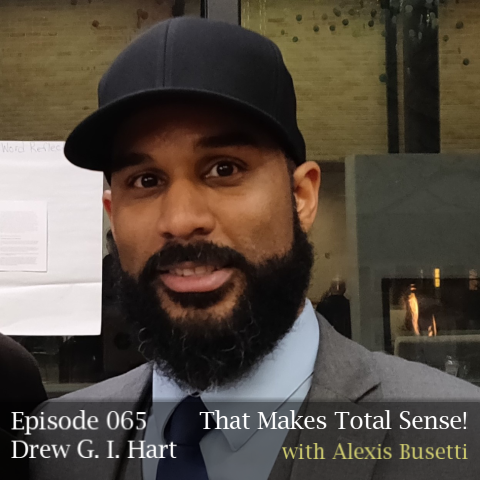
Speaker 0 00:00:07 Welcome to that makes total sense. A podcast dedicated to exploring God's generosity and justice. I'm Alexis resetting the Christian, aiming to ask good questions and encouraging you to do the same. Every one of us is wired by God to live out generosity and justice, but the house sometimes alludes us. That makes total sense is a way for us to get together posture ourselves as learners and challenge one another to practice generosity and justice in a tangible way every day. Hi everybody. I am so thrilled to be sitting across my computer screen today from dr. Drew G I heart. He is a professor, so we were just chatting about school a little bit. And how, um, it's, it's a lot, sometimes he's also a leader in, um, the church when it comes to anti-racism and a social change practitioner. And so drew, if I've gotten those right, can you introduce yourself and kind of your roles in each of those spaces?
Speaker 1 00:01:11 Yeah. Um, so I'm starting my fifth year in teaching at Messiah university, uh, teach I'm an assistant professor of theology in the biblical and religious studies department. And so I teach undergrad students and, um, yeah, I, I teach a range of course is actually not only theology courses. I teach, um, a little bit of Christian ministry stuff because I've passed through a ministry background as well as some first year seminar courses, which get, I allowed to allow me to play with whatever topic I want to outside of my normal teaching load. Um, and yeah, and mentoring students, walking with students in many ways. A lot of my work prior was working with young people, both, um, adolescents and young adults. And so this has been just a continuation of my pastoral ministry, uh, walking in journey with students, um, in the present. Now I also, yeah, I'm married. Um, you know, I've been married and we have three boys. Um,
Speaker 0 00:02:10 I mean, come on, please. We have two boys and I'm like, it's a thing
Speaker 1 00:02:15 Nine, seven, and three, almost four. But, but, um, so our house is full and busy all the time. That's a whole nother, a different kind of energy needed. Um, and also trying to, I think I'm learning like, you know, so I have this deep belief in like, um, conflict transformation, all that stuff. And I get to like practice and try to test out this stuff. Cause it's just constant conflict between these boys. They can find ways to argue and fight about just about everything. So anyway, um, so I'm trying to figure out if I actually know how to pass on my ethics and practices to, to my next generation,
Speaker 0 00:02:53 I'll stop you there for a second. We have, so we have four, we have two boys and two girls and they range from almost the same as your, as like 10 to six. Um, but we've got twins there. So we've got 10, 10, eight, and six. And I remember listening to some radio show a hundred years ago about, uh, sibling conflict, exactly what you're talking about. And, and I forgot what the stat was, but I remember the number being in terms of hours and not in terms of days, like, you know, it's like so many conflicts per hour or what's normal between siblings. And I thought, Oh dude, then we're doing something right?
Speaker 1 00:03:28 Like that's like legit,
Speaker 0 00:03:30 What's in my house, right. It's not like, Oh, once a week we have a little spat. No it's like described.
Speaker 1 00:03:39 It's more, the amazing moment we, we, we stop and we'll talk about the moments when they actually got along really well. Like it wasn't that so beautiful how they play together this afternoon. That's the conversation. Um, so anyway, that's a part of my life. I also, I'm, I'm a, co-leader for a group in my city called free together. Um, it's a relational network for Christian leaders who are working for justice, collaborating with organizers and activists and folks doing good work in our city. And so that's some of my time and energy is turned toward that. And of course, um, I'm an author. And so in fact, since, um, this kind of second wave of the black lives matter movement has kind of unfolded. I mean, the demand just on my time has just in that area, it's just constantly every day, I'm zooming with some church or there's just so there's a lot of that going on.
Speaker 1 00:04:33 Um, I, Oh, and most recently, I guess something to add to my, my plate, if it's not full enough is, um, we just got, um, granted and almost nearly $1 million grant from the Lilly foundation to start missus at Messiah university to start a center it's called, um, thriving together congregations for racial justice. So we're going to be working with, uh, congregations in our region, looking at race in place, thinking about the role of various churches and their traditions within our context and how they, and just a whole bunch of stuff, seminars and trainings, but also experiential learning, all kinds of stuff. And I'm going to be a director along with one of my colleagues for that as well. And so that's something else, my plate. Yeah. And I do also podcast a little bit, um, uh, inverse podcast with Gerrit McKenna who's from Australia. And so we have a kind of a global conversation going on there as well. And so, yeah. So I guess that's most, I don't know. Sure. I'm leaving something out, but, um, that's a lot of what taken up my time in my life right now.
Speaker 0 00:05:39 Awesome. Oh my goodness. Well, congratulations on the grant. That's incredible. That's amazing. That's huge. And the podcast I'm like, how did I do my research and not know about the podcast? I'll have to subscribe,
Speaker 1 00:05:49 You know, it's, I don't think I've done as well of a good job of getting the word out all the time. So constantly I hear people saying, Oh, I didn't know you were podcasting. When did that start? Um, and so I got to do a better job of that
Speaker 0 00:06:03 Exciting I'll, I'll subscribe to it and we'll put a link to all of those things, um, up here too, because of course, like I'm always, I love, you know, a new good podcast. Um, so that's awesome. And my husband does too. So I'll pass that onto him. Um, but no, that's, that's incredible. And you mentioned an author. And so I sent an email to the woman who, uh, who connected us yesterday telling her that I was excited about our time together today, but I, how I regretted not having read you before. So what is the name of your first book? And then we'll talk about the one that we're going to talk about today.
Speaker 1 00:06:44 Yeah. So my first book is called trouble. I've seen changing the way the church views racism, and that came out in January, 2016. Yeah.
Speaker 0 00:06:53 Right. And, and you mentioned kind of the second wave of the black lives matter movement. And what's been so incredible to me is that I have, I have been one of the people vying for everyone's time. Right. So I appreciate that. You're saying that. And it's actually encouraging to me. I know that that you and many of your colleagues are swamped in this space, but it is encouraging to me that so many people, um, are valuing your time and your voice and what you have to say in this space. And we're, um, doing our best to, to open our ears and learn. Um, but what's been incredible to me is that, uh, many of the authors that I have had the chance to visit with who have books coming out this year, they're ridiculously timely, but this is not how the publishing world works. I mean, these books were written really on the tails, right.
Speaker 0 00:07:52 Of this kind of first black lives matter movement. And then they're coming out now and they're just perfectly timed, um, for us to sink our teeth into them now, um, in a time when it is so vital that we have this voice and this information. Um, so the one that you most recently released is who will be a witness igniting activism for God's justice, love and deliverance. And this book, I'm going to say to everyone out there first, you need to get yourself a copy. Second it's thick, but don't let that deter you because it was described to me as accessible and it is incredibly accessible. So I want to thank you for that. Um, you know, you might hear drew as a theology professor and think, Oh dear, am I going to be able to understand? Yes, the answer is yes. Um, I think, I don't want to put words in your mouth. I feel like you wrote it for us, right? This isn't a textbook for your students to the church. Yeah. Yeah. This is written to the church. So, um, tell us first, I don't know like why, why this topic, why this book and, and I say right now, but you didn't, you didn't write it last month, so why this book, why this topic, why right now,
Speaker 1 00:09:18 So, uh, the story actually comes out of my first book, really. Um, so my first book came out in 2016. I mean, that was a little bit more during the first wave of the black lives matter movement. Um, I had even that book, um, came out of the work I had was already do it like I had for a very long time. I've been working with churches around racism, in the church, doing seminars and workshops and talks and stuff like that. I mean, that's just work that I've been doing. I mean, you could, since I graduated college Postlight, would it be like 2005? That's just been an ongoing developing thing. Um, and so when the first wave of the black lives matter movement happened and I saw the immediate kind of like horrible conversations happening in the church. I wrote that. Right. Um, and I was actually really amazed at the reception of the first book and I was speaking all over the country, but the one thing that I kept hearing was all right.
Speaker 1 00:10:10 So it seems like towards the end of the book, you want us to like work for like racial justice. Right. Um, but like, and they're like, we're on board, we sure. But what in the world is that even mean or look like, what does it actually mean to really do that work? Right. That's congregations. And so I heard that more than once, um, people, um, they all right, you've shifted our imagination. We see systemic racism, we see the white supremacy, you see any blackness, all this stuff. And we see how our discipleship is tied to this, but we don't necessarily get what we're supposed to do. So the origins and the kernel of the idea was, all right, folks need some help with this. Right. Um, and because I do a lot of work, um, in my own city collaborating with faith-based organizers, I've done all that kind of stuff.
Speaker 1 00:10:55 In fact, I talk, I give some ex some of my experiences, even in the second book. Um, I knew I had something to say on this. That would be both practical, but also, um, helping church think about faithful ways forward as well. And so I, um, so that was the kernel, but then I was like, all right, I'm a theologian. I got, yes. I just not just going to write a, how to book, right. Our strategy book. I mean, I could, but in some ways, like, there's no point in me doing that because there already are books that do that. Um, so I, I wanted to do so much more. Um, and so I was thinking about like, what do I really want to say to the church that for churches and congregations that want to actually engage in the public square seeking justice. And so I thought about number one, we've got to deal with Jesus, right?
Speaker 1 00:11:41 Cause we've domesticated and distorted Jesus's image. Um, and we've lost the radicality of his message and his life. And so that was the first thing I knew. Um, and then everybody knows, even in my first book, I think you could almost argue that when you read my books, even when it's, it might not seem like it, but in many ways they're portraits of Jesus half the time. Right. That's what is so important to me. I want people to fall in love with the Jesus. I know. Um, so that was aspect I need, I felt like we also needed to grapple with the history of the church. Um, but there's this long legacy and there's some deep denial or maybe suppression of, of the church's role, um, in a whole range of oppression and social domination and racism and all that kind of stuff. And so I think that I knew that we'd had to wrestle with some church history and that's something that I've always kind of grapple with in my work, as well as church history.
Speaker 1 00:12:32 And then, um, think about what does it mean to be the church internally in terms of our own lives. And then finally, what people are probably expecting, which is, um, providing some practical strategies that are also faithful strategies in the way of Jesus that we can get to work on the ground grassroots in our neighborhoods. You know, what does that mean? What are some options? I don't tell people, Oh, you must do this. Or you must do that. But instead I lay out a whole range of options that I think are conducive for the church and faithful with the way of Jesus, but also are effective ways to pursue social change. Um, because we love our neighbors. Yeah.
Speaker 0 00:13:08 Yeah, no, I I'm glad you, you actually mentioned one of the phrases that I had jotted down and I'm like, I'm going to ask him what he means by that, because it's so good. But so I'm going to ask you that question kind of combined with another one. So you, you, you mentioned like that the domestication of Jesus that we have, that we have deradicalized him, we have domesticated him to some extent, and then the other thing, so I want you to, to kind of tell us what you mean by that, but then also I'm like, there was at some point I'm like, I wish I had this book and an electronic copy because I'm going to search for every time he uses the term, Jesus shaped this hyphenated beautiful term of Jesus shaped because I'm looking through it and it's catching my eye and I'm like, okay, it's a Jesus shaped way. Okay. Now it's a Jesus shaped community. Okay. Now it's a Jesus shaped this or that. And it's just this continual, um, adjective of, of all of these different aspects of life conforming is the image I think we're supposed to get from that conforming to the shape of Jesus. And so, um, it is a little striking and I think intentionally to, to see domesticated Jesus, what, what have we done? So if you could start there and then maybe that the Jesus shaped, uh, things. Yeah.
Speaker 1 00:14:32 Um, there's no question that, um, and again, it becomes more clear. The more you can get in church history that we have westernized Jesus whitened, Jesus, domesticated Jesus, and basically have turned him into a mascot for the status quo. Right. Um, and so, um, and we can see over time, like, I mean, I won't get too much into detail, but like, um, there's, uh, over time, like the West begins to forget that they were Western Europeans forget that they were Gentiles and grafted into Israel story. Right. Um, and so after a while they think they're the owners, they have copyright on Jesus, copyright on Christianity, copyright on biblical interpretation. And everyone must come through Western Europe, right. To meet Jesus and Jesus himself. In some ways a colonized figure, a converted, like all things die, all things become new. And on the other side, even Jesus must be refashioned.
Speaker 1 00:15:29 Right, right. In whites, in Western form and civilization. And so it's pretty, um, I'll say spectacular in a horrifying way, spectacular what was done with Jesus and his implications. It's not just about what he looks like though. That is problematic already. When you, when I mean, the, the history of, um, whitening Jesus in the United States comes in the midst of, um, white supremacy being practiced in really horrific ways. And so it's not just this, I know some people like, Oh, everyone creates an image of Jesus and the actual creating of the white Jesus that we know today, which is actually a powerful image all around the world, um, was done and tied to the project, the white supremacy. And so we've got to recognize that, but then the theological implications of it tying Jesus to social dominance, um, yeah, in some ways it's almost like tiny Jesus to the crucify crucifies rather than crucified.
Speaker 1 00:16:24 Right. Um, it has deep theological implications. Um, especially when Paul says he came and preached Christ crucified, right. And that somehow God's wisdom and God's power were revealed and express this crucified Christ. And then he goes on, God has chosen the weak, the shame of strong, right. And God has chosen those who have considered that are considered nothing to shame those that are considered something. And so all of a sudden we see, um, really powerful ways in which, um, yeah, Jesus, his image has been manipulated and his image actually has been vandalized. And I tell stories about folks who think Christianity is the white man's religion, right. Because precisely because of this legacy of conquest and colonialism and enslavement, right. Um, that has been tied to Jesus. Um, and his name has literally been attached in sanctions that work at different historical points. So that's kind of, that's the shorthand version right.
Speaker 1 00:17:17 Of, of what I'm getting at is that we've got to grapple with that. And I think we downplay and we've, I think in the church have repressed the realities of how significant the church has been in tangled with that project. Um, I say it like this, that sometimes we think of racism as, Oh, this secular problem that, you know, that's, the church got effected us somehow. No, no, no, no. It's not a secular problem. As a starting point, it actually was birthed out of a Christian society. Right. Um, and so we've got to grapple with that anyway. So if that, if we've westernized and whitened Jesus and attached him to social dominance, um, the language of Jesus shaped is trying to use different language. Um, and in fact, that's language. It really actually, I coined it. I use a term in trouble I've seen first.
Speaker 1 00:18:06 Um, and I just carry that over into this new book, um, because the word Christian doesn't mean what it used to mean, which shouldn't just be the same thing, right. If that's really what the word means is Jesus shaped. But now it's just this generic label. It has nothing to do with the way of Jesus says nothing to do with the birth life, death, you know, teachings, all of that resurrection of Jesus Christ. Um, now it's just this generic label that one claims, because you said a prayer or, you know, you're baptized whatever, but not necessarily a way of life. That actually is Christ-like, which is what Christianity Christian is supposed to mean. And so Jesus shapes hopefully, um, carries, um, connotes as, I mean, I'm grateful that you picked up on that and, and that it's using Jesus shaped imagination. Right. What does it mean for all of that in our lives to die and rise with Christ, um, and to actually take seriously, um, the life of Jesus in our own lives.
Speaker 1 00:19:05 And I know that sounds strange to most people who think, of course I take seriously Jesus. Right. What do you mean? Um, but oftentimes I think we take seriously the idea of like worshiping Jesus, uh, but not necessarily, um, taking seriously the life and teachings of Jesus. Um, then all of a sudden he's a little too radical. Oh, Jesus doesn't actually mean for us to do that. Right. And so, yeah, I think that that's kind of gets at both of those two ideas, the domestication of Jesus, and then the Jesus shaped language that can all areas of our lives can, can yield to, to the reign of Christ, but in the particularity of the life of Jesus.
Speaker 0 00:19:43 Right. And so to, to, to, in order to imagine Jesus shaped things, we have to do the first thing, we have to figure out what, and I'm using this. I hope you understand how I'm using this. We have to figure out what our Jesus looks like. Um, there was, uh, an evangelist who came to my school when I was an undergrad. And he said something that so profoundly affected me. And he was talking about, um, having conversations with young people and asking them to describe God to him. And, and they would say things like, well, my God wouldn't do this. Or my God wouldn't act like this, or my God, wouldn't such and such, but these are some Christian, some not, but just kind of like Bible belt, America kind of thing. And he just kind of slammed it and said, dude, you're, you're God doesn't exist.
Speaker 0 00:20:38 Like you're worshiping a figment of your own imagination. Basically you have to turn to the God of the Bible. We have to see who this is. And, and it shook me because I don't think I realized at that time that I had put some attributes onto God's character that didn't really exist, that don't really exist. And so I appreciate the terminology that you use right now in conversation and throughout the book, which is this wrestle, this grappling, you know, like we've got to be, I think courageous enough to engage in that kind of grappling because goodness knows Jesus can handle us grappling with that, but we've got to be able to wrestle with it. Um, I've had the privilege of talking with some amazing authors who will tell me specifically, um, I'm thinking of one in particular, who's saying he would give speeches and people leave, maybe be wilderness or angry or something like that.
Speaker 0 00:21:40 And it's not until months later after they've gone through their own wrestling process that they might come back or write an email or see him in another talk or something and say, you know what, I get it now, I get what you're saying. So I also, I mean, just kind of shout out to the listeners of this conversation. I feel like there's probably going to be some of those moments, even in, in what you were talking about, the domestication of Jesus are probably some people who went, Oh, what, or I'm done. I'm not sure, but grapple with it. Right. Grapple, grapple with it, you know, engage the text and grapple with it. So, um, I want to talk a little, I'm hoping you'll share a little bit of your story because one of the things I found when I was reading through the book is that I felt like maybe, maybe you would describe it as maybe you wouldn't.
Speaker 0 00:22:31 But I thought, man, this guy was kind of lucky that he got slammed with a lot of stuff as a really young dude, because I'm thinking we're probably close to the same age. I was a, I was a junior in college when nine 11 happened. I think you were a little younger than that. And you, you were engaged in a lot of spaces that I, what I mean by that is you were engaged in a lot of spaces, specifically your, your Christian White college, primarily white college. Um, but even some of the jobs that you had after that, that you write about, you were engaged in some spaces that gave you a concentrated view. I feel like of what was happening and what is arguably still happening in like white evangelical white Christian spaces across the board in America. But you had exposure to them in kind of some really concentrated ways that I feel like in the way you wrote about them, got your attention a bit. And, and one of the places I'm specifically thinking about is the midnight screen.
Speaker 1 00:23:31 Yeah. Will you share
Speaker 0 00:23:33 That with us? Cause that was, that was great.
Speaker 1 00:23:36 Yeah. Um, I mean, it's, I like to tell these like really random stories that probably seem pointless otherwise like probably most people would think like, what's the point of telling this story, but to me there's so regulatory, at least they work for me. Right. Um, and so there was, uh, so the tradition was on our campus that at midnight, during finals week, people would open up the windows and just yell and scream basically as loud as they could at, at midnight, just venting out all their frustration and anxiety and stress that people had built up, um, around finals week. And then, you know, people either gonna, you know, go to bed or some people pulling all nighters or whatever. Um, but this night after the scream was done, um, and this particular time act, people actually did it in our room. So me and my roommates, just people, I don't know, just whatever reason there was more people from the floor just kind of gathered together.
Speaker 1 00:24:30 And so it was a little bit more of a, you know, uh, an event happening in that moment. And then out of nowhere, um, someone starts chanting USA, USA, USA, and everyone just jumps in USA, USA, USA. And even for brief moment, like, you've talked with like group thing, I just joined it too. I'm not right. You want to say, and then all sudden, like, you know, I stop and I'm like looking around like what in the world is going on? Like where did that come from? Why are people chanting USA? You know, like there was nothing, there was not like the Olympics. They were just like this moment, just out of nowhere. Um, it just like, it was like, it's almost like it was in the East. We are just to be grabbed, um, at any moment. And that was so foreign to me because growing up in a black community, black church, like there wasn't this like a stream like radical patriotism, um, where people would just chant out USA.
Speaker 1 00:25:32 Um, so I, I didn't understand, like I was actually baffled in the moment and curious, like what is going on, what's happening. Um, and I think that, um, I mean, I had other experiences as well, that helped me clue in over time what was going on, but this was my first year. This was my, my first year on campus. And I was trying to make sense of this seemingly strange patriotism that just burst out of, on this Christian campus. Like why this, I mean, literally it could have been anything right. Um, that they could have changed. They could have championed stuff for our campus, like the little slogans and stuff. Right. But no USA USA. And so, um, for me, it was one of those moments that begin to unveil, um, that under the cover or under, under the surface, um, whereas this really entangles faith and patriotism that existed for many of my peers, um, especially American evangelical peers, right.
Speaker 1 00:26:34 White evangelical peers, I should say to be specific. Uh, many of them had this entangled in and I think it was unexamined and it was just kind of just there. And, um, and so th there's just one of these strange moments that I like to describe. I've many of those, right. Um, that had me questioning and wondering like, where is this coming from and why would somebody do this? Because even it's not like in the black community, we do have folks who, you know, even my own brother, um, was in the military during my early years. Um, um, during college and other people, you know, served in the military and some folks, I mean, it's, uh, you have a mix in the black community, but, but some folks are very proud of their military service and you still won't find even among those folks, usually that kinds of random and explicable patriotism. Right. And so, yeah, there's something there that I knew needed to be uncovered. And I think eventually it helps me see the religious nationalism that has just been a part of so much of American Christianity for so long.
Speaker 0 00:27:37 Yeah. Um, when I was, when I was kind of reading through those parts of your story and, um, specifically in the chapter about talking black, talking black talking back, and this concept of two Americas that dr. King spoke about, but that we still very much live in. Um, today I had this really bizarre thought. And so, so I'm going to share it, um, because that's, that's what we're here for, but I don't, I don't by any stretch one, it to trivialize this idea. But I, I kind of had this thought of like, because I will say, um, I grew up largely in white evangelical spaces, um, and not so much, um, my parents, but my grandparents and my extended family were just really, um, just kind of, it was just like what we bathed in. Um, you know, and it, when it, when it's that way, it becomes difficult to see it from a different perspective.
Speaker 0 00:28:37 Um, but I was thinking about, you know, like when you go on and you're looking for a restaurant or something, and you have like Google reviews or Yelp reviews or something like that, and it ends up, ends up, you have like two and a half stars, but then when you look at the breakdown, you have like, you know, like half of the people are giving it raving reviews, five stars, no, no, no matter what. And then you have like, half of the people saying this place stinks, this is garbage. There's nothing good about it. And you, and you kind of have maybe a few in the middle, but then you're like, I don't know what to believe. Like I don't get it because you have half of the people saying everything was perfect. My food was on time. The server was really sweet. You know, that place was clean, you know, blah, blah, blah.
Speaker 0 00:29:18 And then you have other people going this, this was ridiculous. I didn't get my food. They wouldn't wait on me. They sat me next to the bathroom. And when I finally, everything came out, it was cold and it wasn't white, it ordered and your life. And it's not like you can see, you know, chronologically like, Oh, they just kind of had a rough start. And now all the five stars are like from last week. So we're good. It's like, no, these two people went there on Tuesday and, and they had these experiences. And this is what I thought of, of these two different Americas. The difference being and where it breaks down is that there isn't, I don't think largely, I think it's growing, but I don't think there, there isn't, it's just like happenstance and there isn't really a recognition that it's like, the reason for the differences in the reviews is because to go back to the analogy on the restaurant, it's because they, the, the managers told everyone to act that way.
Speaker 0 00:30:13 Right. They picked out certain people and said, treat them like garbage, treat them sweet, treat them like, you know, and it was this weird, bizarre thing, but it's like it. So it breaks down. But it's like, there's not a large understanding that this really is systemic. I would say maybe, maybe that's being very kind and saying, there's just not the understanding, but man, can we ignore that recently? We have heard a large uproar that says, that pushes back against that and says, absolutely it is not systemic. It's happenstance. It's circumstantial, it's it? I don't know. Can you talk about that? I mean, that's a big thing, but just, just give us whatever you want, um, around that space, especially how it affects us in the church and how maybe you've seen the church respond.
Speaker 1 00:31:04 Yeah. I mean, I think so. I mean, this is one of the things I'm always grappling with when I'm thinking about how to teach my students, because I have a majority of white evangelical students. I mean, it's diverse and we have a full range, but I mean, they tend to be the students that want Christian colleges the most. Right. Um, and so I had them in my classroom and I'm teaching courses like African-American theology, or even, like I said, I teach a first year seminar, which is so it's not in theology at all. So I do as it's called the politics of blackness and it's like black history and intellectual thought, I do a little theology in there just for the fun of it, because I can do whatever I want to with that class, because it's more about the types of assignments that they have to do.
Speaker 1 00:31:42 But anyway, I'm always thinking about how to engage them well, um, for them to see more, right. Because I know that almost all students, they come in with a narrative and that's really the key is they have a really powerful narrative that, that helps them make sense of the world that they're interpreting everything through. Um, and so for me, I need to help them, um, tell a more truthful story. Right. Um, so like, even today, I'll talk about what I did in a classroom today. So we were talking about complicity with, um, the North in racism throughout the 20th century. And so the first thing, I mean, they did some reading on it, but then at the very first thing I do is I showed them a video clip of dr. King in Chicago in the late sixties. Right. Um, because not most of the students, 99% of my students don't even know that King went to Chicago as did demonstrations there.
Speaker 1 00:32:35 And so I show the footage of how they received late sixties, right in the North. Um, white people are cussing st go home and word and, you know, you hear guns going off and all that stuff. And then King gets hit in the head with a brick. Right. And you see, I mean, even after that desk and he's okay. And then you see him, like as more things go off in the he's like jumping and he's like scared. Um, and then afterwards, the end of the March, they see that some of the cars, their cars that were parked were set on fire and blown up. Right. Like it was just horrifying and why, because they wanted to, to demonstrate and, um, have Chicago and open city, right. To where black people could move into those neighborhoods. Now I say to them in my class, I say, um, how many of you guys have been taught about this in your history classes?
Speaker 1 00:33:23 Right. I think I had one students who got taught that, right. We actually saw footage of it. No one else even knew that King spent any time in Chicago, um, or anything. And I said, tell me if I'm wrong, but you guys probably, as you learn about King, it was all about the South, right. It was about Montgomery, Alabama. It was about, um, Birmingham, Alabama. It was about Selma Alabama. Right. And it's the Southern racists down there. Right. Um, I'm like, what's the narrative that you've been told and how does that relate to the South and the North? Right. And they were able to, they're connecting the dots real quick. Now we've been told that it's the bad racist down there, and that we're been the good racist. Now they already know, because we already did some stuff on slavery and stuff. They already saw the complicity of the North during slavery anyway.
Speaker 1 00:34:06 So that story has already begun to get unraveled. But now we're getting close to the home, right? Where all of a sudden, late sixties in the North, and they're seeing with their own eyes and own ears, how white people are actually treating black people who want to integrate into their neighborhoods. And all of a sudden this story is, is just continues to just disintegrate. Um, but had I not done that work? I mean, I am competent that I probably could not have convinced them how complicit white northerners were with racism up to this point and how systemic it was, how structurally it was. It's not until they're actually learning, doing a close read on the policies and practices, red lining, restricted deeds, covenants highways going through black and Brown neighborhoods, all this kind of stuff like they're learning about this and now their narrative can fall apart.
Speaker 1 00:34:52 I think the real challenge is, is that in the church, um, we haven't told truthful stories, right? Um, we haven't told the church has not been the place where truthful stories live. Um, and so these myths, these powerful myths, revisionist history, even in the last call and all this kind of stuff, right? All of these stories, um, exists that that helped to both say, America is just this perfect place and everyone is equal. And there's, everyone has the same exact opportunities, right? Has nothing to do, do with structural racism or policies or access or any of these and these things that seem so obvious. It has nothing to do with it. It has nothing to do with the history of hundreds of years, years of slavery and Jim Crow and convict leasing systems and lynchings, black people and terrorism, none of that has anything to do with our present realities.
Speaker 1 00:35:40 This w what is really obvious is that everyone has access and opportunities and everything. It's a level playing field, and you can't tell me otherwise. Right? So these myths and narratives, I think, are deeply a part of what shapes religious nationalism in the church and the patriotism and this unwillingness, I should say a kind of patriotism, right? Because you could argue that many black people have been very patriotic to the point that they love their country enough, that they want it to be its best. Right. Um, and so there's a, uh, so patriotism doesn't have to be, um, unexamined. Uh, it actually like if you love your children, you don't like the worst aspects of them. You try to correct them and instruct them in better ways and have conversations to, so that hopefully the, their best selves can emerge. Right. And I think that's, um, unfortunately that's not possible if you have this really powerful narrative that's shaping the life.
Speaker 1 00:36:34 And so, um, what, what is it in contrast to that is, you know, to wrestle with the complex, and obviously it's a messy story, but the biblical story fulfilled in the person of Jesus Christ. I think that's orients us to actually hear the stories of those who give the bad reviews. Right. Um, to, to, to listen, to be attentive, to tend to, that you can't tend to the presence of Jesus without also tending to those who are the little ones, the least last of loss in society, that that's a package deal. That that's where Jesus takes you. Right. Um, and somehow we've missed that. And so we only listened to the positive reviews and we demonize and say, you need to go home, go back to your country, right. To anybody that wants to suggest otherwise. And so, yeah, that's so deeply a part of our, our national conversation.
Speaker 0 00:37:24 I just, one of the terms that you, that you use in the book that it comes up in this, in this conversation, um, and it's, it's kind of interspersed throughout, is this, um, it's this idea of branding, right? Like the United States is branded exactly how you just said, like, we're the land of opportunity. You, you got the American dream, anybody can do anything they want. And when this branding exists, that's the branding I grew up with. Right. Um, that's the, um, pull yourself up by your bootstraps branding. Um, that is the, the, the Rockefeller branding, you know, of the look at these people who came with nothing and look where they are now, that's our brand. Right. And if, if it's not that, then it's not on brand. Um, and, and that's, that's troubling because, um, there are enough stories of the exceptions to the rule.
Speaker 0 00:38:31 And there are enough stories of the five-star reviews that when you say we're, we're just not really paying attention to, to the people who are, um, to the stories of the people who are really giving us their perspective and this honest narrative that we're living in. Um, part of that in the church is I want to phrase this well, but I don't know if I'll be able to part of that. I feel like in the church, especially in white evangelical America, yes. We don't know about all of that history that you just said, but then we also, I think many in white evangelical America see the black church for what the black church represents today, or maybe not what it represents, what it, what it is today, and don't know the history of the black church. And so that adds to reasoning for their complicity. Right. Um, if it was really that important that I hear my black brothers and sisters, and we would be together or something of that sort of reasoning, does that make sense?
Speaker 1 00:39:45 I'm not sure. So I'm not sure if I understood that last part, what you were again. Yeah.
Speaker 0 00:39:48 So it's kind of like, let's just put it bluntly people. Aren't listening to the people with the one star reviews, because we don't know anybody, white evangelical Christians are secluded, but many wheat, white evangelical Christians might say the black church went off and did their own thing. Not my problem. Right. Not my fault. I'm not listening to them because they, they went and did their own thing. Right. So, and yeah, I don't know. I can't, I can't really help it. I don't know. I mean, this is the brand, I know this is the place I know this is the history I know. And because white evangelicals in general don't know the history of why the church black church even exists. Right. Then we kind of look at it and say, I have, I have heard, I have heard this. I don't know if you have heard this. I have heard this in white evangelical circles. Um, it's, it's incredibly disheartening. Um, but can you, I mean, give a, I know we don't have time. There are libraries on the origins of the black church, but can you give us a little brief history, something for people to grapple with if someone's hearing this and they're going well. Yeah, of course. That's what I'd always been taught. Can you give people something to grapple with and when it comes to
Speaker 1 00:41:09 Yeah, absolutely. Yeah. So, I mean, I think so first and foremost, we got to think about it. Um, the relationship between black and white Christians did actually begun under slavery. And actually there were, they actually worked together and that's, it, it wasn't pretty, but they weren't so technically together. Right. Kind of, um, but, but white Christians, um, we're afraid of black Christians, uh, living into their own faith on their own. So they actually wanted to control it. It was actually very paternalistic and they actually had special preachers to preach to black, to black people. Um, slaves obey your masters, right. This whole slave holding religion, um, was being pushed. And so that was the relationship. That's what, um, the church looked like when they were together, right. During all through slavery, um, after slavery. And the best example of this is with Richard Allen, um, and the birth of the AME church in Philadelphia.
Speaker 1 00:42:07 So there's this experience where there, um, at this Episcopal church, they're down on their knees praying, but they're in the white people's pews right on their knees people. And so white people come in and say, no, no, you can't pray there. Get up, let us finish. Let us finish praying. No, no, no, you gotta get up. And after a while, so they get up and all the black people withdraw, they all leave the congregation and they start a new congregation. Um, and that begins to happen in mass all across the nation is that black Christians withdraw from white supremacists practices and segregationist practices because in the life of the church, as it was at that moment, there was paternalism black people had to either be behind balconies or on the, you know, behind ropes or whatever. It was a S uh, second, uh, you know, second class status in the life of the church, racial hierarchy was alive fully, right?
Speaker 1 00:43:01 So it was actually white supremacists, Christianity being practiced. And black Christians said, no, we withdraw. We reject this as legitimate Christianity. Now. What's interesting though. So most people would like to say, Oh yeah, I bet. And then you just practice your black Christianity. But what's interesting is, is that is black Christians actually insisted that we were all one single family, that we are all one in Christ. And so even as Richard Allen is creating a church it's called African Methodist Episcopal, you write and read in his writings. And it's very clear that everybody's welcome in this space, which is the exact opposite of what's emerging. So at the exact same time, but that they're insisting that everyone is welcome in the church. Why Christians are practicing explicit segregation, why black people are no longer even welcomed in the life of the church at all. Right. That's most of the 20th century, very few denominations.
Speaker 1 00:43:49 Um, in fact, very few congregations we should say, um, can are exemptions from this story, um, wide scale, um, churches practice, racial segregation in white churches. Um, and, and so what's fascinating is what's only possible in a black church. And the example I give to kind of highlight, um, what could have been is the Dietrich Bonhoeffer example, right? 1930 Dietrich Bonhoeffer from Germany of all places comes and visits. Uh, he's at union seminary for a year and his black friends, um, Frank Fisher invited him to go to church with him in Harlem, at Aberdeen Baptist church, famous black church, right. Um, with a historic, very famous gifted black preacher, Adam Clayton Powell, senior, um, gifted, right. And they're all of a sudden Bonhoeffer is welcomed in. He's actually amazed. He's blown away by all that. He's seeing he's captivated, he's writing home about it. Uh, before he knows that he's involved, he's teaching Sunday, school midweek and all these kinds of stuff.
Speaker 1 00:44:46 There's rumors that he actually got to preach. We don't have like written evidence, but that's the oral tradition, um, from the community was that he actually preached while he was there. Um, which is that in and of itself is miraculous. I mean, they don't need any, any help in the preaching. In fact, Bahnhof himself is writing home about how great the preaching is. So they didn't need him at all in any capacity. And they just had this really powerful holistic ministry justice and all that stuff in the community, helping folks who are coming from, um, you know, great migration refugees, basically from white terrorism in the South, uh, all that's going on. And he's just captivated. And what I say is that's only possible in a black church in the 20th century, under Jim Crow. Right. Um, and so what Bonhoeffer offer does was actually available to any white Christian, but that was rejected because they were actually explicitly practicing racial segregation.
Speaker 1 00:45:39 And so I guess the differentiation we get once we look at it from a historical standpoint, is that there's a difference between segregation and withdrawal. And sometimes we've, we've conflated those two terms together. Um, the white church exists because it practiced racial segregation and racial hierarchy and paternalism, uh, the black church exists because it rejected that and withdrew from that form of Christianity. But most black churches, even when I grew up, we actually always had some white people in our congregation. That was always, it wasn't a lot. Um, but it was always available, but most white Christians didn't see that as an option because they didn't find their belonging in Christ, uh, fully expansive enough so that they could see themselves being full participants in a black church, but there was effects. Uh, you can ask any of the white members who are part of our church.
Speaker 1 00:46:26 Um, they were, they loved, in fact, I always say that, um, if black Christians have in any way, it's not in not loving white Christians, it's in immediately loving them too quickly and not being cautious enough. Right. I always tell my students cause I actually send it forever American theology. So I want them to do is, think about lived physiology as well as academic theology. So I actually send them, they go visit in Harrisburg, a black Baptist church, AME church, and a church of God in Christ. Right. And they're all nervous at first. So how are we going to be treated? And so I tell them, look, you're going to be treated better than you have anywhere else. And then after they come back, like, man, I've never been, if it, many times to say that I was welcomed more there than in my own home church.
Speaker 1 00:47:05 Right, right. More hugs, more. And they wanted us to come back. And, and so the error in the black shirts, despite popular assumptions from white people is not that they've not welcomed white people. I think white people are projecting what, how they've treated black people onto how they think they're going to be treated. Right. Um, and so I think that, um, yeah, I, I, so we, and so all of that trajectory, Lee leads up to our present and the same realities exist. Yes. Black Christians, um, which is uncomfortable for some white Christians, if you're explicitly anti-racists and denouncing white supremacy and things like that, and you haven't done that work, then maybe that's uncomfortable. But if you are anti racism and anti hierarchy over others and domination and injustice, um, those are spaces where all people are welcomed. Um, and that's still is the reality. I mean, you go to church like, um, Otis muster, third's famous, you know, Trinity UCC church in Chicago, right. Um, explicitly black prophetic tradition in terms of its witness. Uh, but you look carefully in those videos. You'll see there's white people there. Right. Um, this is not just because they're proud and they celebrate what it means to be African. It doesn't mean that white people are not welcomed and appreciated and valued in that space. It's just not true.
Speaker 0 00:48:23 Right. And, and thank you for that because I do feel like there's this us and them mentality is perpetuated, of course it's perpetuated by lies, but that is one of the lies I think, or at least one of the ignorant spaces is it's kind of when, when there are some white Christians who see a black Christian space and they kind of think, see that it's not us, it's them. Or, you know, it's, it's not my fault. I would talk or I would do this, but, but they, you know, they don't want to, or whatever. Um, I actually know a couple who in the midst of all of this, um, racial injustice over the summer, um, just, I, I feel like, I think many people would kind of agree that it's people are just kind of things are being revealed in the character of individuals and institutions and organizations that have been there.
Speaker 0 00:49:23 You know, it's not that anybody's probably changing their perspective real drastically right now, except for, I think the people who were, who were honestly trying to learn and open up, I think that that, that can be the case, but I think a lot of stuff is being revealed that has just kind of been under the surface. And, and so I actually know a couple who they, they met and married and grew up in a particular white evangelical church. And once things started coming on, um, started having one-on-one conversations with the pastor, started having one-on-one conversations with, with other congregants about this kind of, what can we do kind of almost like leaning towards your, your grassroots stuff. Like, let's do something about this. This is what we're here for. We're met with such rejection of those ideas from the leadership. They were extremely disheartened and, and found themselves in one of the local black churches and, and have found a home there.
Speaker 0 00:50:22 And this is a white couple and they have found their home in this, in this church. Um, because I think you said they, they have found their belonging, um, there, because their values line up better with this particular black congregation than they did their home congregation, but it was not without heartbreak. Right. Um, that this happened because this, the second wave, as you're, as you're, as you're talking about has really just kind of exposed a lot of things, I guess, um, in the church. So maybe it should maybe to kind of wrap us up. I want you to talk about some of the, some of the grassroots things, um, that we can do, because I will tell you, I have found myself being in this space. I I'm going to say for probably 20 years, which is this, like, even, even in college, some of the organizations I was a part of and my fields of study, I was always shocked that I wasn't in line with the churches that I knew about to the point that even when I mentioned the words, social justice, it was kind of like, like, this is a customer, like, what are you doing?
Speaker 0 00:51:44 And I'm like, I don't know. I thought I was reading the Bible.
Speaker 2 00:51:46 Yeah. I'm not really sure. I don't, I don't really know. I I'm sorry. I thought I was, this is what I was supposed to.
Speaker 0 00:51:56 Um, but you mentioned that, that it kind of leaves though, for some people feeling like lone Rangers feeling like we're alone in this space. Um, so whether that's the feeling or whether someone's going to a church that is like completely on board or, or somewhere in between, what are some of the things that we, who are reading about this radicalized or the, the radical Jesus, not radicalized Jesus, but the radical Jesus, the true Jesus. Um, and we want to do things in, in Jesus shaped ways. What, what can we do? What are some of those practical things that, that we can do?
Speaker 1 00:52:33 Yeah. I mean, I think so for me, um, and I am always careful like to not baptize a particular stress social strategy. Right. Um, but, but to see and think about what social strategies align well, and, uh, certainly our faithful and don't invite, we don't need to abandon the way of Jesus to engage in those things. Right. Um, and so those are the kinds of things I think about. And I think the very first thing that we've got to do, I think is, um, break from captivity to our restricted, uh, political imagination. Right. Um, and maybe this is, you know, tough for people here right now is everyone's warring right now in our moments. Um, but it's not helpful when the church begins their ethical imagination, their moral imagination, um, with the platforms of political parties, that should not be our starting points. Right. Um, and so when we do that, literally, I mean, there's some elite wealthy elites and political strategists, somewhere in some backroom who packaged up this platform, um, cause they think it can manipulate people to vote for their whatever, and we just wholesale eat it up and buy into it.
Speaker 1 00:53:43 And I think the debt is actually extremely dangerous and it, it, it it's, Knifes out, uh, Jesus shaped political imagination. Right.
Speaker 0 00:53:51 You mentioned somewhere in your book, maybe the phrasing is something like, um, that the Christian ethics really are kind of the result of culture Wars.
Speaker 1 00:54:01 When you step into a church and you already know, Oh, this is Republican church, this is a Democrat church. Right. Um, and it's very clear how it plays out. Um, and it has very little to do with our imagination being back in the birth and life and teachings and death, the resurrection of Jesus Christ. And so I think that, um, yeah, that that's a reality. So what does it mean to in the way of Jesus first and foremost, to think about, um, the way that Jesus engages those who are suffering in his midst, the least last lost and little ones right. In his midst. I think that that is the starting point to think about how do we stay on the ground rooted in our worlds? Um, how does, um, encountering the crucified one, uh, keep us attentive to the crucified ones in our worlds, right.
Speaker 1 00:54:48 Um, and start there where the pain is, where the suffering is. Um, I think that that's how Christians ought to be thinking. And so then I think about social strategies that allow us to join in on the ground with our neighbors. Um, and so some of the stuff I talk about in the book is like community organizing and I, and some of that should be upfront. Like I, even the stuff that I engage in, I critique and offer strengths and weaknesses of all of them. Um, cause there's no perfect thing, but these are options that I think are produced, have been possible for the church. So I talked about community organizing and the kind of ways that we can come alongside the unite and link arms with our neighbors around the issues and concerns, local issues that are impacting their lives and harming them. Um, that that's a starting point for us.
Speaker 1 00:55:31 I talk about protest movements and the strengths and weaknesses of those and the opportunities that exist. Um, I haven't talked about the hybrid of the two approaches that some groups do, um, and how that's helpful, um, and so forth. But, but these are all grassroots stuff, um, about embodying, um, the way of Jesus in the public square, um, making visible God's reign and that God actually is doing something. God is alive. God's presence is active and alive and we're joining in with that in our communities. And that's what the church ought to be doing. Um, and then it changes how we engage the political process when it comes to thinking about elections and things like that, because then we're not captive to somebody else's platform we're coming and saying, this is our platform right now. I know it's tough now because everyone's kind of been so socialized.
Speaker 1 00:56:20 I know like, so some folks would say, well, that's what doing with abortion, right? But the interesting thing is before the eighties, that was not a concerted evangelical movement. It was literally in the back room, the moral majority idea was created. Then they decided that was one of many things that they were going to use to bring together. And all of a sudden that's the platform and that, and it worked very successfully, right. It's shaped people into being single issue voters. And I'm not saying that that abortion is not a Christian issue. Um, I think it is something that Christian had to take seriously. I mean, you look at the early church, they're grappling with, um, infanticide and things like that in the early church and grappling with, uh, denouncing that and finding a better way. And they're actually caring for the orphans in their midst, right.
Speaker 1 00:57:03 And cared for the poor and things like that. And so it's not necessarily that it's an anti-Christian view to, to, to care about, but the way that it has, co-opted the political imagination of the church, um, to actually do other things, to not be in support of, uh, uh, people living in poverty to not care about that, to not worry about racial injustice, not worried about economic injustice, not to act, to not care about how we treat, um, immigrants right. In our midst who are undocumented. Right. And just, and side more with law and order, which is always a strange thing for Christians to do to side with law and order as a starting point. I'm like, what Bibles are we reading? What, what Jesus story, you know, this is the guy, Jesus was the one who was, uh, uh, arrested at night, run through an unfair trial beaten, and then given a state sanctioned execution, like how do we, you know, the early church is constantly arrested over and over and over again.
Speaker 1 00:57:55 And they say, we must obey God, not man. Right. We have all throughout the Bible, examples of them resisting, you know, the, the Imperial decrees in Babylon and stuff and being thrown in lion's dens and in the fiery furnace, Oh, I just don't understand how Christians have co-opted our radical imagination in the way of Jesus. Um, because of these platforms and ideas that have come down from the top. Um, and not to only pick on conservatives because Democrats, I think, uh, democratic leaning, Christians also do that in many ways as well, but at least there's usually at least in this acknowledgement, that justice is actually vital to what it means to be followers of Jesus. Um, that, that, that from the beginning, all the way up to Jesus fulfilled and forward, um, there's this image that, that guy's going to let justice roll down like waters and righteousness, like ever flowing streams.
Speaker 0 00:58:44 It's talking about law and order and, and what happened to Jesus? I'm like, yes, what happened to Jesus? But then also what we see Jesus do, like we saw, we saw law and order come to Jesus, dragging a woman out of bed. That's right. What are you going to do? Right. Law law and order you, you know what the law says, they're telling him, so what are you going to do? And we don't see Jesus enact quote justice in that way. No, we see him completely flip the script on not on them only, but on us too. Right. And, and that is something that particular passage is something I come back to over and over and over again, because I think I'm like, this is who Jesus is. He is, he is the man you described who was arrested at night, betrayed by his friend, taken an and crucified under the Romans.
Speaker 0 00:59:49 And he is also the one when he was called upon to enact that kind of sentence on someone else chose not to do it. That's right. And, and I think that that's powerful for us. Um, I think that image is so powerful for us, um, and, and helps us see how we can look out for our neighbors and how we can look out for the, all of the ELLs that you listed, but the last and the last and the little ones and, and all of that. So, um, no, those are some, those are some great ideas. And I love, especially that kind of, that concept of, of, of gaining our paradigm from scripture. Right. And then like finding some people who were doing, um, similar,
Speaker 1 01:00:42 You can join in with the good work that's already happening. Um, and yeah, I, and I caution against, you know, churches trying to reinvent the wheel and competing against others rather than working collectively and collaboratively for the common good and trying to see Shalom, right. The flourishing of all hats and being breaking into our communities. That should be our goal and not, not trying to build our church brands. Right.
Speaker 0 01:01:07 Oh yeah. I wrote a few notes on that, uh, on that chapter. Um, so, uh, drew, thank you so much for being with me today. And I feel like I always ask my guests to do this, but I feel like even in the midst of some of my own clumsiness or clunkiness in this conversation, I want to give you the opportunity to leave us with whatever you feel like we didn't touch on. Or if we did touch on it, if you want to emphasize it, like, what would you leave us with today? That is, that is really important that you want to emphasize in this.
Speaker 1 01:01:41 Yeah. I mean, I guess maybe it'll be, um, to that we have to really take serious our discipleship to Jesus. Um, it, what is interesting in the new Testament is that it's, it's said in every possible way, right? Whether it is take of your cross and follow me, or, you know, we're called to be his disciples, um, to walk in his footsteps as first Peter says, um, to, you know, to live as Jesus lived. I think his first John writes, um, or I think it walk as Jesus walked. This is the actual little bit, some translations lived as Jesus lived, um, to imitate him, um, to follow his example, to participate in the life of Christ, um, to, you know, be formed in his image, however it over and over and over again, right. It's dying and rising in him. However, it, the text wants to say it in all the different ways that we find it in a new Testament.
Speaker 1 01:02:34 Um, we're supposed to be oriented around Jesus. Um, the Christian life is not a content list life, right. Um, and so the particularities of Jesus's life and teachings are essential to being followers of Jesus. If you detour that, if you skirt that in some ways, you're not really followers of Jesus, you can say you are. I mean, that's what has happened all throughout our nation, right? Is people will engage in slavery and call themselves Christians engage in Jim Crow and lynchings and stuff call themselves Christians, but they weren't actually following the way of Jesus. Um, and, and so I think that's a radical discipleship to Jesus, um, is essential. And when we do that in the context of a society with centuries of white supremacy and racial injustice, the only way to faithfully do that is to be explicitly, anti-racists like, that's the way Jesus will lead you.
Speaker 1 01:03:28 It will be an anti-racist way. You actually don't need, you know, I don't know. Some people misunderstand critical race theory and all this stuff. And I think those things can be very helpful tools. Uh, but, but even aside from that, you don't even actually need that. If you were actually were attuned to the presence of Jesus and following him into the world, uh, we would be attuned to those that are suffering and we'd be living in solidarity and identifying with them and working for their wellbeing, loving them enough. I mean, love is about compassion and action. Right? Compassion, new Testament is about being moved so much that your bowels hurts, right? That's the Greek word. Right. Um, and so what would it mean for us to be physically moved and then acting on that on behalf of those who have suffered in our society, not being in denial, that's the pressing not getting defensive.
Speaker 1 01:04:15 Um, but as followers of Jesus, uh, voluntarily opening ourselves up and caring for others. And so discipleship to Jesus is huge. I think that's, we've called everything under the sun discipleship, except for actual following Jesus, uh, small groups and devotions and things and stuff of all kinds of stuff that hot often are distracting us and turning us away from the way of Jesus. Um, discipleship is not just about head knowledge, it's a way of life. And so, uh, it's comprehensive of all that we do, and it is orienting us how to live in God's reign here on earth, God's new society. Um, um, God's new order that ordered that has birthed itself right under the nose of the old order. And so I think that, um, that's going to require dangerous imaginations of God's dream for all of us and what God wants to do. And so discipleship, discipleship, discipleship, I guess, is what I will say.
Speaker 0 01:05:10 Amen. Amen. That's a huge theme, overarching theme of this book. And so I appreciate that you, that you bring that out and we, and we don't forget it bold, radical, true discipleship to Jesus. Um, the book is who will be a witness by drew Hart and drew, where can we find the book and where can we follow you on social media?
Speaker 1 01:05:34 Yeah. You can find the book anywhere where books are sold and something exciting is that we just, this week released, um, they just released the audio book for who will be a witness. And so, yeah. So if anybody wants to hear it, um, you can it's, I recorded it myself. And so you can hear it in my voice as well. Um, so, but yeah, anywhere books are sold, you can find, um, uh, both of my books and yeah. Whether you can order it from your local bookstore, if they don't have it, or you can find it anywhere else. Um, and what did you ask me also where, so you can find me on Twitter, D R U H E R T, same thing for Instagram <inaudible> and I got a Facebook page. And again, I also am, um, I do podcasting with Jared McKenna from Australia, and the podcast is called inverse podcast where we explore liberative readings of scripture and readings that can turn our world upside down with interesting guests.
Speaker 0 01:06:31 Oh, I love it so much. And I'll put the links for all of that. So everyone who's listening, you don't have to try and get open up your notes app or anything. I'll just link all of that in the show notes for this episode, but thank you so much, drew, this conversation has been super enlightening and helpful for me and I trust that it has been for the people who are listening too. So thank you so much for coming on.
Speaker 1 01:06:51 Yeah, thanks for having me. This has been great.
Speaker 0 01:06:55 The links for all the resources mentioned in today's episode can be found in the show notes, music and podcast production by Seth B city. Be sure to give us a review on iTunes and subscribe at your favorite podcast listening app, you can also visit us at that. Makes total sense.com.