Episode Transcript
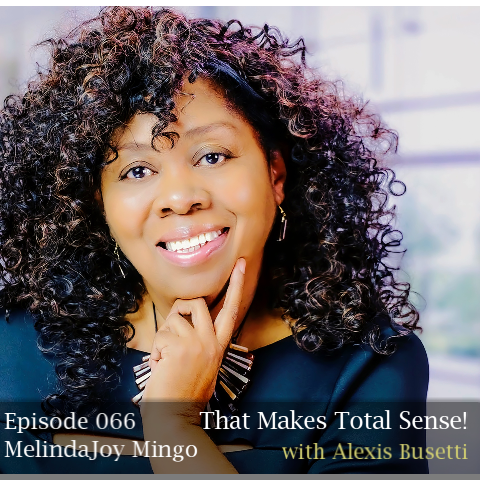
Speaker 0 00:00:07 Welcome to that makes total sense. A podcast dedicated to exploring God's generosity and justice. I'm Alexis resetting the Christian, aiming to ask good questions and encouraging you to do the same. Every one of us is wired by God to live out generosity and justice, but the house sometimes alludes us. That makes total sense is a way for us to get together posture ourselves as learners and challenge one another to practice generosity and justice in a tangible way every day. Hello, I am so thrilled to be sitting across from Melinda join Mingo. She is in Colorado this morning, and we were just praying and talking about how amazing it is that we can have a conversation over coffee or not, um, across time zones and across States and part of the way across the country. So thank you so much for being with me today, Melinda joy. Yes.
Speaker 1 00:01:04 Good morning. Thank you so much. I so appreciate being here. Thank you.
Speaker 0 00:01:08 I am so thrilled. I was just telling Melinda joy that I finished her brand new book this morning, and it was really the perfect way to start my day. I had, um, read most of it yesterday and finished it up this morning and I just left that session feeling so encouraged and really hopeful, especially in the midst of all of our current, um, political season, um, with the, with the racial unrest that we're witnessing again in this country. Um, the name of the book is called the colors of culture, the beauty of diverse friendships. I just love that so much.
Speaker 1 00:01:51 Thank you. You know, it's interesting if I could just say this, um, several people have asked me about the title itself, the colors of culture, and immediately people have said, well, are you talking about race? Um, are you talking about ethnicity? I said, no, I'm talking about humanity. Yes. And he, men is beautiful and that culture is beautiful. A lot of times when we think of culture, we're just thinking of race, but I wanted to really write a book that would encapsulate the beauty of humanity no matter where people live, where they've come from. But that is so beautiful when we learn that we don't have to fear each other.
Speaker 0 00:02:32 Oh, it is. It is so beautiful. Melinda joy. Would you give us some background on you and your ministry first? Because I just feel like if we could understand a little bit of where you're coming from, then of course, I want to talk about where the, where you're coming from in the book, but your own personal background is just so rich in this cultural understanding. So how, how did you get here? Because I don't feel like you probably woke up that, but how did you get
Speaker 1 00:03:00 Here to this understanding? Yeah, no, I didn't. I grew up in inner city, Chicago. Um, there's a, a housing project. They used to be they're called the <inaudible>. And so, yeah, is, it was kind of the infamous project down to moody moody Bible Institute. And so my father was killed. Um, eight weeks after I was born, my mom was severely traumatized behind that. Um, she tried to have an abortion with me and here I am, you know, so, so that, um, I came out severely ill and because of that, um, and my father being killed, my mom gave me away to a couple and asked them if they wanted a child. And they said, okay, we'll take her. And so I have five brothers and five siblings, but anyway, I grew up apart from my family and it was just amazing, Alexis, you know, I just, you know, I could say this in a couple of minutes.
Speaker 1 00:03:59 I learned so much about community in the midst of so much brokenness around me. I mean, when I say poverty, I mean like extreme poverty, like, you know, we're eating mustard, bread sandwiches, sandwiches with, you know, bread with mustard and drinking, jello water, and we're knocking on each other doors and going up and down the staircase, Hey, do you have a couple of eggs or whatever? You know, I can't remember too many of my friends who had cars. You know, we were on the bus, we were walking, but because I lived across from the gold coast area in Chicago, whereas it's very wealthy, predominantly white during the time I really developed a kind of, I don't want to say racist, but I was very prejudice against whites. I really was. And, and I remember as a little girl, when Martin Luther King was killed, I was so terrified.
Speaker 1 00:04:52 And I remember dropping to my needs and just going, God, please make me a white woman. I was like, I'm not going to make it in this world as a black woman. And I, and when I say it, people go, Oh, MJ, they call me MJ. I go, yeah. But it's the truth. I've prayed for months to God would make me a white woman. And I was like, if you do this, no one else will, no I won't. But I was like, I'm not gonna make it. I'm never gonna make it. I see nothing but death and destruction. And when I look across, you know, a mile down the road, here are people living really well. They're all white. So I became very angry at whites and all of that, but God really got my heart. And, um, the use an elderly white woman, um, to really minister to me, I started college when I was 15.
Speaker 1 00:05:39 Um, and, and she was such a mentor. You know, I was little, I had no money or anything that was leaving, leaving the inner city of Chicago, riding a bus for an hour and a half to go to a college called Loyola, the only black student in the class. And I believe God used, I, he did not believe he used that time of me being surrounded by nothing but whites and people who were loving on me to come out of this place of thinking that the only people that were caring for me would be African-Americans people who look like me, but, but I just had a trauma traumatic upbringing. And, you know, in, in my life I was around gangs and I wasn't a gang member. I was a bad girl though. You know, I was, I wasn't, I didn't go to church coming up.
Speaker 1 00:06:28 I mean, I was shot in my leg with a pellet gun in high school cause I was severely bullied. And so, uh, you know, because of that, I haven't been able to bend over since high school because it literally just kinda messed the ties, my nerves and stuff. So I just have a lot of that kind of stuff. But the things that I've learned beyond all, you know, the trauma and all I learned so much about how pain is across the spectrum. It's not just for African-Americans. I know we're not talking about presently what's going on, but it really caused me to see that there's people everywhere who are hurting and in pain and, and our stories intersect. And when they intersect, we learn about each other, you know, we learn about each other through joy, through pain. So that's kind of my first part of getting to the point where God really began to, besides my heart, I gave my life to the Lord when I was almost 20. And by that time I had come out of the racist mode that I was in, you know,
Speaker 0 00:07:30 Oh my goodness, that story that you, you, cause you tell that story in the book after Martin Luther King died. And, and, and I just said, thank you for sharing it again. I just felt like I could almost, I could almost feel your despair because, because in the book you mentioned, um, you know, and just out you, you won't tell anyone, God made a mistake and if he would turn you into a white woman, you would even love black people like that. That was, that was one of, one of the, one of the deals you were willing to make, right. That you would.
Speaker 1 00:08:06 Yeah. And, you know, I really had to pray about being very vulnerable about with my story and the stories in the book. And I really prayed. I thought, Oh my gosh, I'm going to be judged. People are going to say, Oh my gosh, this lady had so many things, but I'm like, it's the redemptive power of Christ that I want to talk about is true. It's true. I really, after my dad was killed and there's keying and all these things, I'm like, I'm not going to make it, you know? And what it caused me to understand Alexis is the three words that I so believe in the value worth and dignity of all people, because until I could see myself as a person of value and that God didn't make a mistake in how he created me until I could see that I couldn't value anyone else.
Speaker 0 00:08:59 Yes, yes, no. There was, there was something that, um, has hit it hit me this morning, but also it's just been in the last, I think weeks and months, that that has become a real understanding for me that, you know, in this, in this journey of spiritual formation, it's not that it's a, it's a self centered thing. It is understanding ourselves in, in relationship to God. And in the context that he created us sin helps us to truly understand the people that we're in community with and to truly understand, um, that God has given them worth and dignity and value. But it's very difficult to be able to paint that on someone else, if we don't accept it for ourselves. And I think it comes back to the two, the two greatest commandments, right? It's like, how can I love my neighbor as myself if I don't understand those things that you just said, if I don't understand that God has created me with that inherent dignity, then how can I love my neighbor in the same way if I don't understand that for myself.
Speaker 0 00:10:11 And so, um, so I think that's really good and really valuable. Um, so let's, let's talk about the book a bit. Um, I don't know if you want to start with kind of where, where it came from because, okay. I'll just, I've said, I feel like I've said this in the past, like half a dozen podcasts that I've been able to interview authors who are, whose books are coming out right now, which is, I know just a tiny bit about the publishing world and enough to know that you did not write a book on culturally diverse friendships in may,
Speaker 1 00:10:48 But it's here
Speaker 0 00:10:50 Right now. Um, and it is, it's always been relevant and I will always, it will continue to be relevant, but right now people, many people have ears to hear and eyes to see right now. So maybe let's start there. Like where did the idea of this book come from and, and why write it and then, and then maybe comment on, wow, it's coming out right now.
Speaker 1 00:11:15 Yeah. Thank you. I love that question. Um, uh, the idea itself came from an experience, a lived experience that I had my husband and I, we moved from Illinois to, to Colorado Springs where I live now and he died a few months after we got here. And, uh, we were trying to have a new beginning, et cetera. But anyway, in the midst of that journey of pain, um, I was here in the city, no friends, no one, I wouldn't even know what we had literally just moved into the city itself. And he was diagnosed with, uh, immediate terminal cancer and just, they said maybe a and he died a few months, but in the, in the midst of that, I was standing on the sidewalk. This story, it might sound sad, but it's going to so beautiful though, in a way I'm standing on the sidewalk going through so much depression and trauma.
Speaker 1 00:12:07 I mean, after my husband had died, months later, I'm like, I don't know, or to do whatever. And a couple of Vietnamese couple, um, in the building I was living in, they saw me out there with my house shoes on. Um, just, just, it's just a raw story. Yeah. This is going to be real today. A raw story with my house. She was on a team out. They just love it on me. They couldn't even speak English really well. They just knew that there was so much pain. They invited me into their apartment and they said, all we want to do is fix your meal. Love on you. And so this couple is young. Couple kind of took me under their wings, Vietnamese couple SAP for almost a year, feeding me fixing food for me doing my hair. The, the, uh, the lady, the wife was a cosmetologist, just loving on me, teaching me Vietnamese, how to speak Vietnam, the Vietnamese language.
Speaker 1 00:13:03 Um, I was sharing a Bible with them and I knew God was up to something so fantastic. So the book was written as a resolved, continually having these amazing intersections with people, um, in the city that I didn't know who didn't have my experiences, then look like me. And I began to say, okay, God, there's something here. You're showing me, I've known this for awhile, but you are showing me the intersection of humanity, energy here and community. And, and what's going on in my life everywhere I go, that there's a diverse population of people who come together and we find out we have more like in common than we do differently. And so that's kind of the birthing of it. And the other part of it is, um, the Lord allow me to be invited to go to Vietnam, to teach as a professor. Um, just kind of this whole setup of, you know, taking time to learn the language.
Speaker 1 00:14:04 And so I spent like five to six years in Vietnam, and that was where this, this whole idea of, you know, community and humanity. And I am because, or that's how it kind of started. It just really burst there as I lived in Hanoi, Vietnam, and, you know, yes, I was the professor there, but you know, I ate with, um, the Vietnamese people. I have friends there, we danced together. We cried together for years. You know, they saw me at my lowest when I had panic attacks in the dark, they just saw all of humanity and they love it done me. And so I just felt the Lord was saying, what about, you know, here, you begin to birth this book. It's not just about, Oh, let's just be friends get along. It's not that it's about how our friendships transform us and how our relationships with people are the catalyst for significant life change.
Speaker 0 00:15:01 Yeah. Yeah. I love, I love when you share that experience in the book, because it just, it does, it feels so raw and so real and, and, um, and so vulnerable because don't, don't you think there's something about many of us that we feel much more comfortable giving help than receiving?
Speaker 1 00:15:24 Oh my gosh. Yes. It's so true. I mean, we, we feel okay. You know, being there for other people, but when it's our time to be on the receiving end, a lot of times shame or whatever it, you know, might kick in. So I'll say this here. I don't know if you, if I've mentioned this in a book, but I was homeless when I wrote this book and yes. So I wrote about my experiences around the wall where I had traveled and God had allowed me, but by the time, um, I was to finish this manuscript, which was, uh, over a year ago, year and a half ago, I finally finished it last year, but I was literally sleeping in my car in a parking lot in Walton, Walmart in the Walmart parking lot and parked in front of some, some people's homes. And they would come out, they will help me.
Speaker 1 00:16:18 I just had an abrupt situational thing happened, loss of income, you know, all of that stuff that happens in life. And you can't explain that you don't want to share it. It makes you feel embarrassed to say, Oh my gosh, here you are. Again, MJ, you have a master's degree. You, you know, you have a PhD and why can't you get yourself together? But, um, I had illness and, and stuff, but anyway, as I was homeless writing the latter portion of this manuscript, I have people say to me, MJ, if you allow the Lord to just, um, strengthen you to write this here, we believe that not only is it going to be a manifesto for you about you have value in work, sleeping in your car and the homeless. When you share this about this book being published, hopefully it will literally also transform the lives of people to understand that we all have intrinsic worth and value, no matter what. So I just wanted to share that, that I was homeless writing his book.
Speaker 0 00:17:23 Wow. Wow. You do mention in, in the book homelessness, but I don't think that I was reading it, making the connection that you were homeless as you were finishing a manuscript. Thank you for sharing that. I mean, it just, it brings up so, so many things, right. Um, about assumptions that we all make when, when we see someone whose situation is different than our own. Um, and I think every single one of us has had those experiences where we kind of, the phrase I use is I made up a story in my head. Right, right. I made up a story in my head about this person, about this scene, about this circumstance. Um, and, and so thank you for sharing that because maybe now I'm thinking maybe now the story I'll make up in my head is wow. That person probably has a PhD in something happened. Right. I mean, it could be the case. Right. And, and we don't always think that way.
Speaker 1 00:18:24 No. And I think also too, again, you know, to be vulnerable and transparent with people, that's how our lives intersect because I thought about it. I said, well, once the book is published and all, Oh, I'll just go with the flow. And I'll talk about, you know, the wonderful part of humanity. But I knew the Lord was saying to me, humanity is what you have lived, Melinda joy. And that, no matter what people debate, their opinions, whatever they philosophize, none of that ever trumps over your lived experiences, what you have experienced is what you have experienced. There'll be some people who will never understand why a woman who has a PhD is sleeping in her car, writing her book, I'm struggling, still trying to encourage other people. Why did that happen? Well, again, you know, thinking about community and loving on people, I'm, I'm a pastor as well.
Speaker 1 00:19:21 And my ministry is to street people. Um, so I do a lot of ministry to people in under the good, you know, under bridges. I mean, so when I walk into a park is so exciting, people go here comes, our pastor has to move the joys here, but, but he told me, he said, you're paying was not wasted. Wow. That your pain had a mission attached to it. That is for the people who will see you and see you on stages and see you with, with headshots and all, and never think that you understand any part of their story. And yet they will be able to understand, you know, what it feels like to sleep in a bus station. You know, what it feels like to be a woman and can't get a manicure, pedicure, just need a cure, no other fields like to not be able to wash your hair, to don't know where you're going to use the restroom to feel so vulnerable. They will understand that. And yet on the other swing, um, I've walked, I worked on wall street. I've been all over the world training and teaching. And so all of these different experiences, one doesn't count, you know, um, kind of erase the other. They were all allowed in my life so that I may come to know, um, Jesus in a, in a deeper way and to have compassion and empathy for people. Yes. Yes.
Speaker 0 00:20:48 Let's, let's talk about kind of the overarching, um, concept of the book because, um, I have to admit when I saw the, the word you booned through in the book, I was so excited because I had just read my first Desmond Tutu book, um, for school and, um, in the, in the last quarter. And I was like, Oh, this is familiar. This is so exciting. And so, um, and so I, and so I was just so excited that this was that this was the theme of the book, and I want to paraphrase, um, you open one of them, one of the middle chapters, I think it might be in the second part of the book with a quote from Bishop Tutu. And I, I just paraphrased it here, but he basically says that we are all made, that we're all made in God's image yet. There is so much diversity among his people. And I love that. So will you give us the, um, the, the, the theme of that phrase of that word and tell us, like, why, why is that important to what we're talking about to the humanity and community?
Speaker 1 00:22:06 Yes. So the theme of you want to is it comes from a beautiful picture of all of these kids in Africa. Um, they've linked arms together. There is a bowl of food or fruits in front of them. And so they all start running together toward the fruit. And the people were like, well, why does unlink your hands? And one of you run up there and just get it. And they were basically saying, how can we be happy if one person is hungry and I'm eating, how can I be happy? How can I be happy if I don't share life with others? So we'll run to the bowl together and we will share together and, and the whole piece of humanity and why it's so important to what we're talking about today is that I do believe Alexis in our society today, that the metaphor is going to look different.
Speaker 1 00:23:06 Again, we're not rolling in, you know, running for Bowser feuds, but how do we build and, and create communities of compassion communities, where we learn how to not just share natural things with each other, but how do we come together? You know, as believers and pray together, how do we come together in our communities and let go of all of the things that separate us, that we can still become, you know, be who we are, our value and our words, but how do we learn that? Jesus says the dividing wall has been separated. And so if we keep erecting that wall because of fear, because you look like this or that diversity is beautiful. So I am a diversity equity and inclusion trainer, and I trained for a law enforcement, uh, our police department and Sheriff's department here in the city and the County, and also at a college.
Speaker 1 00:24:03 And one of the things I say all the time is I used this funny phrase, 40,000 shades of diversity, because again, the eye, and you look at that whole kaleidoscope of 40,000 different colors that come from just a couple and, you know, uh, things that kind of spread out. So I believe diversity, you know, again, when, when people say, well, you know, I'm colorblind, Melinda joy. And I said, you don't have to be, you really don't have to dismiss what I, what you see in order to value who I am, because we're not colorblind. That's why we reference people and say, I have a friend from Uganda, I have a friend who's black, who's Asian, so we're not, but I know the concept is why don't, I don't build relationships with people according to how they look. Well, of course not, but neither do we need to discredit the fact of the beauty that's in front of us.
Speaker 1 00:25:03 Uh, one person's beauty does not discredit another. And so I do believe, and I sticked about Jesus and we were talking earlier and I just looked at him and I had this phrase who was Jesus with O everybody that nobody else wanted to be with. That's who he was with. He was with everybody that no one wanted to be with. And you think about that. And I was doing a study once as I was teaching at fuller seminary. And part of my study is, wow, let me see how many times I can find what Jesus was reclining at the table and eating, you know, here's the kids come down, I have to have dinner with you. You know, here's a Lazarus, okay. Get up now Lazarus, and let's go eat. You know, we all gonna hit the table, but he was relational. He was incarnational because of a greater mission. And I just believe it's not just friends for the sake of fence. I believe that our society is going to be systemically, systemically, um, change for the good, when we come together with diverse people and by various groups.
Speaker 0 00:26:08 Yeah. No, I that's. That's so good. And, and, you know, when you were talking about the, the shades, the, the 40,000 shades of diversity, I thought we, one thing that happens sometimes, and, and you, you, you alluded to it in your book somewhere. It's like, um, we have categories for certain things in our heads, and we don't have categories for other things in our heads. And, um, I've told this story before, but we, so we have four children and I jokingly say, ah, out of the four children, one of them actually looks like me. One, my, my daughters look like my husband. Um, I have one son who looks like me, and then we are transracial, adoptive family. And so one, my other son does not look like me. So out of four, I got, I got one. Um, but I was walking our youngest, who is, um, African he's from dr.
Speaker 0 00:27:03 Congo. And I was walking him to school last year when he was in kindergarten. And so we're just, we're just walking up the sidewalk and talking before school. And of course there are other kids coming and going, and he just in conversation, of course, he calls me mom and he just says, mom did it. I don't remember what he was saying, mom, I don't wonder what we're going to have for lunch today or something like that. And another black boy in front of us turns around like real quick and just says, that's your mom like that like real, you know, like real quick. And, um, and it was the first time that we had been confronted with something like that. And of course, other other times have happened since then. I said, yes, I'm, I'm his mom. And we just kinda, we just kinda continued going, but I just thought part of it was a, we're not colorblind.
Speaker 0 00:27:59 We did not know this boy. And he did not know us. And there was, we had no relation with him. Um, other than they, they go to the same school. He was an older boy. Um, but we're not colorblind. If we were colorblind, he wouldn't have turned his head around in confusion because my son and I don't look alike. Um, but the other part of it is it is minder to me every single day, even if I don't consciously think about it, that our different shades of diversity don't have to do it fine, our relationships, and they should, and they shouldn't define our relationships. Um, when my husband and I first got married, we've been married 17 years. And of course I'm Mexican American. My husband's white. When we got married, he had blonde hair and he has blue eyes and he has pale skin.
Speaker 0 00:28:51 And I would constantly look at us if we were in the mirror together or pictures of us. And I would say to him, honey, we just don't look like we go together. And, and, and he was like, of course we go together. What do you mean you? Of course, you know, of course we do. But a lot of them, my friends were married to people who looked like they could have even been in the same family. You know, maybe they had the same shade of hair or the same color eyes, or their skin tones were similar, or even they were the similar height or something like that. And to me, when I was looking at them, I thought, Oh, they kind of look like they quote, they go together. My husband and I looked like we, to me, we looked like we didn't go together. But, but I think it's about, you know, when you talk about, is there sometimes we don't have a category for it, but that doesn't mean it's not right. It doesn't mean it's not okay. It doesn't mean it's the right thing. It just it's us. We have assumptions or categories that are, that are different from reality.
Speaker 1 00:29:47 We do. And there's a term that I use when I do diversity training. Um, and it's, uh, it's called assumed familiarity. And so assumed familiarity is that we, we become familiar with things that we want to become familiar with or things that we like. We do tend to group ourselves with people who are almost dislike us. And we will say they're different. They might look different on the outside, but they all think, you know, not challenge us, you know, or whatever. But the, the assume familiarity is when we don't come out of our places of discomfort to learn some new things, to, to have different experiences. Um, you know, you've heard people will say, well, I had a, I have a, uh, a Mexican friend when I was in high school. I'm like, that's great, but you're 55 now. And do you still have, you know, and that's not being sarcastic, but I'm just asking.
Speaker 1 00:30:47 Um, are you still being intentional with your relationships? Are you doing things that, you know, to, to build intentional communities? Um, even if you live, if a person lives in a community that is predominantly one ethnicity or race, um, it's just what it is, but are you stepping out of that community? Are you, are you reading books? Are you willing even as Christians or believers, are you willing to go to church and have a different experience? You know, that you've not had before? Are you willing to go to another side of town and eat at a restaurant that you've never eaten at before, or to build the, to lean into the discomfort of being the outsider to go somewhere and to experience being the outsider for the sake of learning? Yeah.
Speaker 0 00:31:38 Yeah. So I'm wondering if we, I mean, I didn't have this anywhere on my notes and I just, I'm just kinda like gonna throw it at your cold here, but I'm like, I'm wondering if you can talk to us about that intentionality. So I I've, I've been having conversations lately and I feel like, um, as we are going through what we're going through in the United States right now in this, in another, another period of racial reckoning, um, these conversations are coming up more and more, and I'm, I'm doing my best to engage at the levels that I can engage in. But, but like you, I really, I, I love to read and I have that, but I really have only my lived experience that I can really talk with someone about. But that's a question that comes up a lot. Is, is there are people who do tend to have friends only inside of their ethnicity or only inside of maybe even there. I think maybe even, I don't know if it's more so, but it's their ideological, um, values or something. How do we become intentional about making friends and having community engaging with community of people that don't look or think, or act or speak like us? And I think we've been talking about why it's important, but also why is it important, but how do we do that? Cause there are people listening, going that's great. But when I look around, I don't know how I could make that happen for me.
Speaker 1 00:33:10 Yeah, no, that's great. So intentionality means that we first did the intentionality first starts in our heart. It doesn't start with us doing a, an action or going somewhere. We become intentional in our heart of knowing that, uh, probably for most listeners who are Christians or believers, knowing that our great commission here is to go and make disciples. And if we put it in that vernacular to think that, okay, it's okay, you know, you're in a neighborhood, whatever. And maybe you didn't intend to be in a neighborhood that where everyone looks alike or whatever, but it's basically just stepping out and stepping out of the comfort zone, stepping out of what feels uncomfortable. So again, like for me, for an example, um, I gone to Africa twice. I have a medical background and, um, people just automatically thought, well, Linda joy, you loved Africa. I said, I did, of course I love Kenya and Ethiopia, but I love Vietnam. But when I was invited to Vietnam, I was not going to go because my first thought was my first question was, are there any blacks in Hanoi? And you know, you know, just being honest,
Speaker 0 00:34:27 Is there anybody that looks like me? Is there anybody
Speaker 1 00:34:29 That looks like me? And am I going to be received there? And I said, no, at least three times to the author. And then finally, you know, I began to pray and the Lord said to me, so you miss the joy and say like this, you know, but, but again, but again, he really spoke to my heart. I'm always encouraging people to be cultural champions. I use that term. And in order to be a cultural champion, you have to go into a culture, not positioning yourself above a culture, not going in trying to save a culture or a people, but going in with the heart of a learner, going in with the heart of a listener and thinking and living like a missionary all the time, not just overseas. And so when I went to Vietnam, that was very discomforting to me to walk the streets of Hanoi, just to be honest, um, as a black woman and to see how people stop on the street and literally stare when they will literally stop walking and turn around and just stare.
Speaker 1 00:35:29 I felt so uncomfortable. Um, but again, I pressed and leaned into the uncomfortableness of, with friends that I made and five years after the fact of my being there, I, you know, now it's just why I walked the streets upon Neu when I go back there and it's like, Oh, Hey, I'm Jane your bag. You got your favorite earrings. You know, we got this or whatever, but I had to literally forge my flesh out of what felt so uncomfortable in order to complete an assignment that I felt God had given me. So here's some practical things, um, in a community that you're in there, there's always different groups, you know, that have movie night that have, well, we have Coleman now, but, but there's a lot of different, um, things in our communities. We just have to be intentional to look them up. We have a group here in Colorado screen.
Speaker 1 00:36:23 Uh, that's very diverse. It's food for thought. And people just come around a table and talk about diverse issues, brings your, bring their food. That's how you, you know, get to know people. Um, again, stepping out to maybe go worship, you know, at a different place, maybe listen to some songs from a station that you've not listened to. So I tell my friends this here, um, because it's, um, Colorado is probably 80% white and maybe 6% African-American and you know, et cetera. And so for me, I have learned how to be a bicultural person in intentionality by cultural means that I'm okay with who God has created me to be. Um, I can have black IPS in cornbread, but I'm okay going somewhere and eating sushi. I allow myself to be emerged in cultures with stuff that I might not have really wanted to do.
Speaker 1 00:37:22 I frequent a lot of white churches where sometimes I'm the only black person there. And so this is what I tell my friends. I said, if you name any white Christian artists, I probably know who it is. Um, whomever it is. I know Hillsong. I love all of it. I said, but my question to my white friends, um, has been, can you name me one gospel song by an African-American or black artists? Can you tell me one movie that you have watched? Not because things have kicked up now, that's fine, you know, with the racial unrest, but what movies have you watched that have challenging
Speaker 2 00:38:07 From another culture? What, what
Speaker 1 00:38:10 Have you leaned into to listen to their stories and learn from them? What, what have you done intentionally, if you feel uncomfortable of leaning into the uncomfortable so that God can bring truth. And then lastly, I'll just say for this year piece, I believe intentionality also starts with prayer. I really don't. Yeah,
Speaker 2 00:38:29 I really do. I believe just dislike your story, Alexis. I'm just so amazed. I'm listening
Speaker 1 00:38:36 To your stories as well, but you lay you and your husband will leave, leaned into what you felt your assignment was, even for your adopted son as well to, to do that. That's, you know, again, it was an assignment and I believe that the Lord says to us, sometimes the person right in front of you, don't, don't negate the person right in front of you in a grocery store, don't negate the person in your neighborhood or overlook the person in your neighborhood that you never smiled, you know? Yeah. There's a mask on. But even before that, you know, do you know anybody's name and your neighborhood, do you know anyone, if something would have happened with people in the neighborhood know you were gone in your places of employment? I mean, right. There is intentionality to maybe do you know, strike up a conversation with someone you never know. So I just think just practical steps.
Speaker 0 00:39:30 Yeah, no, it's, it's really good. And one of the things that was kind of going through my mind is, um, that even now, and I say, now it's been, it's been this way for a while now, but like the idea of, um, maybe follow me, unlike the idea of like online dating sites and things like that, right. We're where it's not that you're going to go online and meet your friends necessarily, but it's the, the amount of intentionality and the amount of discomfort, right? In the amount of vulnerability that culturally we're willing to put out there in order to find a mate in order to find a life partner in someone who we can love and will love us, and we can partner together and do life together. We're willing to do that to the point of, you know, something like which decades ago online dating was like, not even a thing.
Speaker 0 00:40:24 Right. But, but we're willing to do that. And we don't think it's odd, you know, it's like, of course you would do that because it's for the sake of love and relationship. And it just kind of hit me where it's like, yeah, but we can be that intentional and that uncomfortable sometimes. And that vulnerable sometimes to reach out for the sake of love and relationship in our friendships. Um, right. Because we can find, uh, there was, there was part of your book where you were talking about that. We're, we're all like the same and we're all like different. Um, and I've, I've butchered what exactly what, the way you put it. But, you know, there's, there's part of us where we, we, even, if people look different from us in a lot of ways, we will find commonality because that's how God created us to be.
Speaker 0 00:41:10 And at the same time we can enjoy each other's diversity. Um, one thing that you mentioned, I just want to say real quick is when you were talking about the beauty, the beauty of each other and are in our diverse cultures and how we look and how we, how we think and feel. Um, recently I was, I was reading, I was reading a book and, and there was a concept hit me really hard. And it was this concept that not just that God is beautiful because he is, but that beauty, um, the way this author put it, beauty is, um, there's, there's something about beauty that is because God is beautiful. It's like beauty just is right. Like it's inherent. And there is a certain amount of objectivity to beauty that we can look at something that God has made and say, this is beautiful.
Speaker 0 00:42:04 You're in Colorado. You can look at the mountains. And you're saying, I don't know, a single person who would look at the mountains and say, Oh, that's, that's hideous. That's ugly. Like the mountains are beautiful and God created them to be that way. And I think when we can look at each other and look at all of our shades and say, this is beautiful. This is objective, beautiful, like the mountains or the ocean. Um, you know, that God has created this and it is beautiful. It's not my opinion. Like it got created that for beauty, like it is, it is actually beautiful.
Speaker 1 00:42:42 It is. And I think too, a lot of times, um, as I've been sharing about my book and the beauty of diverse friendships, one of the things that I, you know, say is it doesn't negate when things are wrong, you know, like you're saying, we have a lot of racial unrest, injustice is injustice. Things are not right. We as the church and as the body of believers, I think we should be leading those conversations. Courageous. We should lean into those conversations and to be able to say, you know, this is just not right. And so what do we need to do if we do look systemically and say, things are wrong, what is my role where I'm working at? What should my boys be? Shall I, you know, if someone is making horrible comments about people from different cultures or whatever, do I just walk away or am I in a position to address that?
Speaker 1 00:43:37 Or, you know, in whatever, how do I become courageous when things are wrong? Because I think of Amos five and 24 is such a key passage that, you know, and it's acquainted with Martin Luther King a lot, but it says, let both justice and righteousness roll down. And when we use the term racial reconciliation, it confuses some people because a lot of people are saying, what are we reconciling, Melinda joy. I didn't have anything to do with slavery. I had nothing to do with someone hanging on a tree or the Holocaust or any of that, you know, the first nations people. So I'm feeling a little beat up right now because I don't feel that all of my friends are diverse. And I don't feel that I'm given a fair chance. And what I share with people is that this is a time for all of us.
Speaker 1 00:44:29 We're all. I mean, not all of us, many of us are feeling very uncomfortable and discomforted right now because we're asking, God, Lord, what should my response be? What should my posture be? What should I say? What should I do? But the main thing that I share with people is that it says justice and righteousness, and there is racial righteousness, which means that again, the book, um, that I'm tired of, you know, I'm talking about humanity and that again, there is the Maggio day, the module Cristo of people will be informed in the image of God. But I think what happens is we camp on behaviors. And so we'll look at someone and say, well, do you see what they did up there? They're violent, they're rioting. They're whatever it might be. And so, rather than thinking about what should my response be during this time, we begin to have more conversations about behavior, of what we see than what the father would have us do. And I just give this one last metaphor here of, do you remember Alexis? At one point we used to always talk about the melting pot, the melting,
Speaker 0 00:45:40 Oh yes. I grew up on the melting pot. Yep.
Speaker 1 00:45:43 And so I just honestly think people, we don't use that too much anymore. That term, because people are like, I don't want to melt. I just want, you know, I get the analogy of unity, but unity and diversity means that we don't have to assimilate. We can still be the unique people that we are. And I use the analogy of the melting pot to say, um, if there's any specific, you know, items that a person wouldn't like in that pot, for instance, an onion, they would put it in a Ziploc bag and put it in a pot and say, Oh, it's flavoring it. No, it's not. It has to work really hard to flavor that pot. And I believe the father is saying that we should not have people anywhere who have to have worked really hard to have dignity and value.
Speaker 0 00:46:35 No, it's so true. And I will share with you, I, we chatted a little bit about it before, but reading, I was 20 pages into your book and I texted one of my good girlfriends yesterday and I said, okay, I'm prepping for a podcast. And I'm wondering if I can share a little bit of a conversation we had over the summer. And I kind of, you know, gave her, I said, do you remember this? I don't know. We talk about like, do you remember this? Cause we talk about a lot of stuff. She's like, she was so sweet and gracious. She said, yeah, I remember it. And she said, who am I to get in the way of a good podcast? And I thought, but, um, we were chatting. So was a girlfriend that I've, I've had for a few years now. We've been, we've been friends for a few years and we were talking on the phone about this racial injustice that is happening right now.
Speaker 0 00:47:32 And she, I was, I was kind of fired up. Right. And, and I'm, I have a, I have a social justice background. I've worked in government, you know, and I'm like, we need everything needs to change. Just, you know, systemic, you know, and, and of course, yeah, yes, that's true. But I started and minting with my friend and I said, and I, I think I naively thought that if we, we all just had friendships with people who didn't look like them, um, that we'd get there. You know, there was something, something about it. This girlfriend of mine is black and we were having this conversation and I'm, I may have even been crying. I'm kind of a crier, but I, and I'm just like lamenting this, what I felt was just this naivety in me of, of like, you know, because that's what you hear.
Speaker 0 00:48:29 A lot of people, I'm just gonna throw it out there. You hear a lot of people say, I'm not racist. I have a black friend. Or like you said, I'm not racist. My best friend in high school was Mexican or, you know, whatever my neighbors are Asian. And he say, okay, that's not really the point. You know? And, and so for me, I was just lamenting this like is not, not necessarily does it and matter because I enjoy all of my friendships. Um, but just kind of in the grand scheme of things, right? Like, is, is this making a difference? And my friend was really quick to come to me with a, a Holy correction where she, and just encouraged me and said, this does matter. It does matter. Our friendship matters what, what we are doing on this personal relational level matters matters. And when I was reading your book, I thought, well, well, Melinda joy thinks that to right.
Speaker 0 00:49:32 And it was, it was a really good correction, but yeah, but it's not just to say things are going to magically get better if everybody has friends. But I think it was a correction to me to say, you can do all of the systemic stuff you want to, and if we're not engaging with one another at our tables on the phone, in our everyday lives. Yeah. This systemic stuff, what good does it even do here? Right. But also, also this is important to them. Part of God, it's important to us and to the people that we're friends with to our spiritual formation, right? Yes. This is, this is important. If you want to speak to that at all and, and kind of close up after that. But, but it just was like, it just, it was another, another layer and your whole book was another layer. And another encouragement of this really does matter.
Speaker 1 00:50:32 Yes, it does. I mean, I'm so passionate about that, because again, you want the first chapter, second intro in my book, I talk about why history matters. And I do talk about why we have so many things that are going wrong, but I didn't want to just camp on what's wrong. I mean, because sometimes we don't share what's going good. You know? And so many people do have friends from different backgrounds. And I mean, they're just, they're making just so many inroads in their community and people are watching and, and, and I believe we get a chance to model and, and our lives mirror the life of Jesus. And that's why it doesn't matter because Jesus did have friends. He called people prints. It's not just us saying, Oh, I just have a friend to hang out and do movies with no, our lives. And our, the purpose in our lives for our lives are so far greater than just sitting with someone and saying, I have a friend now. It's how we in our own lives are transformed friends with child be a real friend
Speaker 0 00:51:39 Challenge. Yes. Ma'am yes. Ma'am
Speaker 1 00:51:43 Challenge you. I mean, I have friends from all different backgrounds, you know, male, female everywhere. And they challenged me, you know, even when I get off with my assumptions and I start saying stuff, and some of my friends from other cultures would say, ms. Melinda joy, you might need to think about that. And I go, yeah, you're right. I feel my heart getting hardened. I mean, when George Floyd, um, died, honestly, I had to recalibrate my heart. And I'm just being honest and go before the father. Because again, I could feel a lot of things kind of trying to reroute themselves in my, in my heart, you know, and yet I train law enforcement. I love the community that I'm in. I love the police department that I, and when I say it, it's the truth. I have friends who are police officers, very close friends.
Speaker 1 00:52:36 We started a group in the city. I started a group where we have prayer for our law enforcement and fire department. And we come together, we pray over each other. They come from your shifts, you know, the hop out of their cars and they'll come in for prayer. You know, it's very, very beautiful, but I felt my heart just kind of going into a direction. And, and I knew the Lord was saying that we have a choice every day where we see things in the media where we experienced stuff with driving, somebody cuts us off and they're of another race. And we immediately default to that black person, that white person and the Lord is like, no, you're more mature than that. You're more mature than that. And again, I think for me, just be quiet if you have a first Corinthians, 13 is such a mantle for me that again, love is not loving what a person does is loving who they are. And it's coming to learn and understand that the Lord did not give us options of you. Like this person, you categorize this one. He did not. He said that all people would know that we are his, because we do have love one for another. And that begins with us.
Speaker 0 00:53:54 Yes. Oh, that's, that's so good. That's, that's so good. Melinda joy. Um, we have covered a lot of ground and I feel like we haven't even, you know, touch the tip of the iceberg, but, um, just in the couple of minutes that we have left, what did we not talk about that if you said, Oh, I wish she would've asked that question or, Oh, I wish I wish if, if people were listening, they heard this one thing. Um, what, how would you, how would you close this? What would you tell us, um, to encourage us on this journey?
Speaker 1 00:54:29 I will say my last thought is, um, think very intentionally, always about what the father is putting on your heart. He might not be putting the same thing on someone else's heart, or maybe they don't understand why you feel the push in your heart to do this or that. But allow yourselves, you know, allow yourselves to really hear what the father is saying. And then when you get his directions about people connecting, whatever, just do it, don't be fearful. Don't get paralyzed, be a voice and not be an echo invite people into the kitchen, not just at a table, don't just have diverse people at a table to say, Oh, we have Mexicans, we have Asian. So the table and the menu has already been set, invite people into the kitchen to be creative and to set the menu and then go together and do life together and create something in this society that we so desperately need.
Speaker 0 00:55:41 Melinda joy. That was perfect. That was, that was, that was a word. Um, my heart needed today. And I have absolutely no doubt in my mind that that is the word that many people who are listening, um, needed to hear today. So thank you so much for sharing that. Um, again, the book is called the colors of culture, the beauty of diverse friendships and Melinda joy. Where can we find the book? And if we want to connect with you, how could we do that?
Speaker 1 00:56:14 Yeah, so you can, um, uh, listeners can go to InterVarsity, press ivp.com and just type in the colors of culture. And I'm on there. Uh, the book is also on Amazon and Barnes and you can go online for Barnes and Nobles as well.
Speaker 0 00:56:32 Awesome. Thank you so much for being here today. That was just a wonderful day to start my morning. Thank you so much. This has been great. The links for all the resources mentioned in today's episode can be found in the show notes, music and podcast production by Seth B city. Be sure to give us a review on iTunes and subscribe at your favorite podcast listening app, you can also visit us at that. Makes total sense.com.