Episode Transcript
[00:00:07] Speaker A: Welcome to that makes total sense, a podcast dedicated to exploring God's generosity and justice. I'm Alexis Busetti, a Christian aiming to ask good questions and encouraging you to do the same.
Every one of us is wired by God to live out generosity and justice. But the how sometimes eludes us that makes total sense is a way for us to get together, posture ourselves as learned, and challenge one another to practice generosity and justice in a tangible way every day.
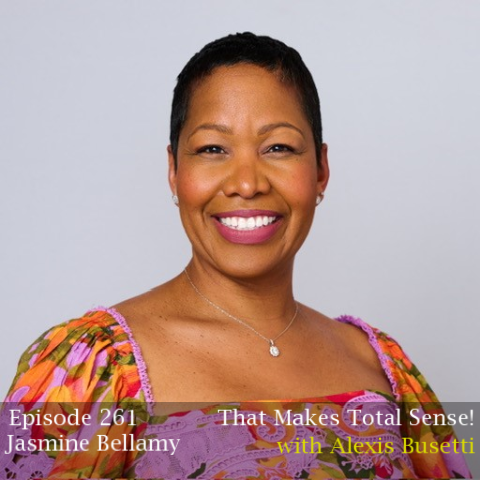
Jasmine.
[00:00:44] Speaker B: Alexis.
[00:00:47] Speaker A: I've been thinking about this conversation for a long time, especially since it got delayed by a week because of Beryl. Don't make me talk about him. He was very nasty to us.
[00:00:59] Speaker B: But I'm so glad we're here now.
[00:01:01] Speaker A: Me too. Me too. I'm very glad at the time that this is airing, though, we still have. So, for people who may not have been, there's been a lot of news to keep up with. Can we just say that there's been a lot of news this last week, we had a hurricane hit the Houston area, and over 2 million homes and businesses were without power, some for just a few hours or a few days. And then, as of the last time I checked this morning, because I'm still trying to keep tally, we got ours back after about six days, but there were still about over 200,000 customers, as they call it. But, you know, that means individual bills who were without power. So, in my house, one customer represented six people.
I'm sure there were places with more than that. So we just continue praying. Even after the power comes back. There will be a lot of repair work that still needs to be done. So, um, thanks for being patient. I know we checked in almost every day. Like, we still don't have power. We still don't have power.
We still don't have power.
But now we're back.
[00:02:12] Speaker B: We're back.
[00:02:13] Speaker A: We're back. I also was thinking. Cause I've been thinking about this conversation for a long time. Okay, I'm gonna say this out loud. You know that this is true, but when I say it out loud, it sounds weird.
Okay. We should say we're. We're real life friends.
[00:02:27] Speaker B: Yes.
[00:02:28] Speaker A: Not everyone I talk to on the podcast is. Is, as of yet, a real life friend. Some of them are new friends, people we just meet on the fly. But Jasmine and I are real life friends. Real life, like, in real life friends. And we have spent time together. You know, this is true, but this sounds weird. We have spent time together on both coasts and in Texas.
[00:02:48] Speaker B: Yes.
[00:02:49] Speaker A: Is that stupid?
[00:02:53] Speaker B: Awesome.
[00:02:54] Speaker A: That's so dumb. We have spent time together on both posts.
[00:02:58] Speaker B: We have.
[00:02:59] Speaker A: And Houston. Yeah. Anyway, okay, that's weird. But I am, and I'm really excited to be spending time with. We also often spend time virtually.
[00:03:10] Speaker B: Yes.
Which I'm so grateful for the flexibility of our friendship.
[00:03:16] Speaker A: Me too.
[00:03:16] Speaker B: And the containers that hold us.
[00:03:18] Speaker A: And the containers that hold us. And sometimes these random texts around, like, jasmine, listen to this. Or. Anyway, but we're here, and I will say, you got a mention I preached on Sunday. And you got to mention because one of those random texts that I sent you, and this is it by way of introduction to kind of who you are to me, but also who you are continuing to become as a love practitioner and a joyful disruptor in this spaces.
But I texted you, and I was prepping for the sermon because I was in John three. You and I love to talk about John four, but I could not do 42 verses for what I wanted to do for John four. So I did John three, and I texted you something like, I cannot believe this lens of love that is John's gospel.
[00:04:19] Speaker B: Yeah.
[00:04:21] Speaker A: And you, my love practitioner friend, knew probably off the top of your head that John's gospel. Yes.
Has more mentions of the word love than the other three gospels combined. Did I get that right?
[00:04:34] Speaker B: Yes.
[00:04:36] Speaker A: Wild. Right, right.
Wild. So what I ended up saying after I threw out that fact that my sweet friend from seminary told me was that what if we. Because I kept thinking about this lens of love that John is riding through, this disciple whom Jesus loved, and I was like, what if every interaction we had, every experience we had was viewed through that lens, that Jesus just deeply, kind of ridiculously loves us? Like, what if we were utterly convinced of that?
[00:05:18] Speaker B: Yeah.
[00:05:19] Speaker A: With every interaction, with every experience. And those words came out of my mouth on Sunday, and then I. I didn't really start to meditate on them until this morning as I was making my bed, kind of for us after the fact of this hurricane. And I'm like, man, I wish I'd meditated on that all last week when I was sleeping in the heat and, you know, all of these other things.
But I'm grateful because this is part of what I've learned from you as a friend and as a minister and as a professional in this space, is to think about things like that. So that is a tool that I. You are one of the people who has helped me gain that tool of, like, how. How could I look at this through a lens of. Of love?
So I'm really grateful for that, and I want to give you the opportunity now to do like, a brief introduction of yourself, because I've said two phrases that there may be people who are like, I don't know what that is. And I used the terms that I've heard you use, love practitioner and joyful disruptor. But I just want to give you the opportunity to say things about yourself and your practices in this space that might help give context for this conversation that we're going to have.
[00:06:42] Speaker B: Sure. Well, thank you for a beautiful friend for having me.
And when I just say that I am so deeply, deeply touched to be able to influence sermons via text like that, that is a love language for me. And so I'm just so I'm grateful that you trust me, first of all, and that you confided me in that and that we actually then exchange and engage. It's the most delightful thing. And you know how much you have. Our conversations have actually been the pivot point for so many things that I've done in ministry. And so I'm just grateful for you and for our friendship that we've been cultivating, which has just been a gift.
So, yeah. So I'll start with a love practitioner. A love practitioner is about the intentional ordering of your life around love.
And I. I didn't know that was a thing.
I think that's always the funny thing, you know, you think you discover something and. But I got there from this as I had decided to order my life around love. And what would that look like? To put it into practice on a daily basis. Every single moment, every single word interaction, everything.
I remember I was also at the same time developing a yoga practice and a meditation practice.
And I remember having one of those fraught filled responses where it was like, well, yoga meditation. I mean, a yoga meditation practice. You have your mat in your cushion and it's just you by yourself that you're wrestling with love. You are doing this with others, and it's interdependent, and that makes it immeasurably more complicated.
And that's when I said love is a practice out loud for the first time. And I remember being like, yeah, like, that's actually what this is. And, but lo and behold, you know, and I'm sure you experienced this so many times on your seminary journey, too. As you are studying, as you're reading, as you are digging, all of a sudden you find these sages who somehow have lived your life before you ever knew they even existed. And they have all the language to describe exactly what you are experiencing. And so for me, two of those people are bell hooks and Eric Frome. And so she said, love is a practice before me, and he said it before her. And so I'm so just honored to be a part of that lineage and have had that as a revelation on my own before even finding my teacher. So that's what the love practice is all about.
And then the joyful disruptor part is.
The story behind it is that when I was. And we talked about this journey on your other episode, when I was asked to lead culture transformation at Reebok and reflecting on what I was being asked to do and just feeling the enormity of that challenge in the aftermath of the murder of George Floyd, I remember saying, I want to disrupt the way we do business. I want to be a light to show that business can be done another way, and a colleague.
You know, I think some people think the word disruption or being a disruptor is a bad word. And for me, in business, we think it's actually a brilliant word because it shows that you've brought some creativity to the table to do something differently. And so it was a very innovative word to me. And he said, joyfully disrupt. And I was like, yes, that's it. And so I took the language of a joyful disruptor from that exchange, and that is really what has carried me through these years, to know that I also call myself a business and culture transformer, because I'd been a business transformer for 31 years in the marketplace. And then all of a sudden, as I was doing this work of love in the marketplace, then I realized I had an HR leader come up to me, and they said, you're not just a business transformer. You're a culture transformer. And I was like, I am. So that's really.
It just really speaks to who I am becoming, who I'm called to be a love practitioner, a joyful disruptor, and a business and culture transformer.
[00:11:42] Speaker A: I love that you name that. A disruptor speaks for many of us. Feels kind of like a bad thing, or it feels like. Oh, it feels like. Kind of like a. Just, you know, I can only describe with these grunts. Cause I'm kind of like. That makes me feel uncomfortable. I don't love that people who disrupt do XYZ, but adding the joyful part for me helps me be able to kind of jive with what you were already saying. In the business world, this is not necessarily what that means. It means somebody's doing something that's innovative. And when I think about you, I imagine because we're friends, I imagine you as a supervisor sometimes, you know, what. What must you be like? I've heard you on other podcasts. You know, I've read some of the things that you have written, and I imagine work that you must do in those spaces. And in my head, in my imagination, the disruptive part must be with those systems that are already in place.
We had a.
During this hurricane that we had here, they had to bring in people from other parts of the country to help us. And the language that was being used felt really kind of confusing because I think what they were trying to communicate was how many people had been brought in, but people was not the word that they were using. You know, it was 12,000. You know, I even forget now some of the words. I think it changed, you know, over the course of the week. And one of these says internal resources. We bought 12,000 mutual assistance resources. We're like, we don't know what that is. We're not internal to your company. We have no idea what that is. But if you want us to actually feel great about what you're doing, communicate to us that you're bringing people who are skilled at their jobs, who have left their families in other states for a week to come and help us. This builds this kind of mutual compassion, you know, that they're coming in to help us, and we're so grateful. We recognize the sacrifice that they're doing. But when you tell me you have x number of internal resources and x number of mutual assistance resources, I don't know what you mean by that. And that system feels broken to me that even the vocabulary of some of these things doesn't acknowledge that there is humanity inside of this work.
[00:14:41] Speaker B: Yeah, well, I mean, since you started with that, let me just follow up on that.
So, you know that I am a doctoral student at Fuller seminary.
I'm really excited about that. And my cohort is focused on the redemptive imagination of the marketplace, which is also a mouthful.
My redemptive imagination is love, of course.
And I have been so delighted to actually be inspired by Doctor Willie James Jennings in his work in after whiteness.
And I remember having that book on my shelf for a while to read and thinking that there might be something there for me specifically.
But there was something about the fact that it was so academic centered that I kept delaying reading it.
And so I was so grateful to have read it this past fall. And it was what he gave me was a framework for the language and the change management system that I envisioned for the marketplace. And what he talks about is the distorted formation of what, I will add, the marketplace. And that distorted formation is exactly what you are speaking about. And so if you. And this is actually in this article that I'm writing for Dupree or I've written for Dupri, that talks about the fact that if you go back and think about the 16th century and capitalism being birthed out of that time period, we are talking about a system that was based on the enslavement of Africans, that was about free labor, and so people were treated as objects.
And that's just. That's the root. That's where it comes from. And so when you define what you're saying and that we can't even identify these resources as people, it is because it's a system that was never really built for human flourishing in the first place.
Okay, so that's. I mean, let's just start with it.
[00:17:22] Speaker A: Okay, let's start with that. That's great, because it must be just in my. In the back of my mind, because this is where I wanted to start. Okay, so you named it. I didn't even say that up front. This is where I am. I didn't even say that up front. We have an article. I'm going to link to it. That's going to be the basis of our conversation for today. Okay. Um. You wrote it for Dupree, and it's wonderful where you start in this article. I'm like, I love you, and I love the whole thing. We might not get out of this first, like, three paragraphs, because that has the most. Now, I underlined and starred and. And, you know, I did all the things, but most of my markings are literally in the third paragraph. Wherever you talk about these things. And I want to read these two phrases here.
One thing you say is, I've become increasingly aware of self deception and my decades of indoctrination into a culture that insists my value and worth are tied to my achievements, productivity, possessions, and the companies that employ me.
Then you say, our faith tells us that is not true.
[00:18:39] Speaker B: Yeah.
[00:18:42] Speaker A: But this is a very incongruent space to live in, jasmine. Yeah, because.
And you do. You do name later. Like, we're not saying capitalism is the devil. That's not it. But these. But this statement, what you just said, like, capitalism.
Okay, that's real stupid of what I'm about to say. Capitalism capitalizes on this belief, but that's what it, like, capitalism takes. You know, it's able to do its thing, and it's. I'm guessing it works kind of like a cycle. I'm just kind of talking to think right now, but, but all of those things that you just list, like, I'm like, it is so much of the water we swim in. It is so much of the culture that I want people like you to help transform that we. I mean, think about. Think about. I don't know. I would say think about your middle school self. If I think about my middle school self right now, maybe hopefully you were better than this. But my guess is you probably fell into these traps, at least at some point.
I had to have z cavarici jeans. Can I just say that? I had to have z people. Now, if I said that, my kids would be like, mom, what are you speaking a foreign language? But, but even then, my point is, I had no job. I had no bills that I was responsible for. I had no allowance in middle school. I didn't do anything.
But I kind of knew inherently, like, I felt like I knew that what I went to school wearing was going to make a difference for me socially, meaning who was going to be my friend? How were people going to look at me? How was I going to feel when I walked into these spaces? I know it's not just me because I've seen mean girls, you know, like, this is.
But, but that. What kind of genes I have, my possessions, this, you know? Well, that doesn't have anything to do with who I really am or how valuable I am, but it sure feels that way.
[00:20:47] Speaker B: Yeah. Well, I'll tell you. And I think I had my moment of disorientation.
I was, this is my first, I think this is probably my second quarter in Fuller.
And I was taking social ethics and with Matt Kamek, and we had a segment that we could choose. Like, pick your, you know, pick. Pick what path you want to go down. And I wanted to go down the marketplace path.
And I remember as I was reading, I had this, like, moment where I said, I've been in business working my whole life, like, as an, you know, as an adult, and I.
My faith is not challenged because I work in the marketplace. I was so, and I'm not saying that that wasn't a naive question at the time, but I just remember saying I don't come to work and feel like I am living against the values of my faith. That was really kind of where I was coming from. So I was, I was actually asking this question, like, so what's the beef? Like, where is this coming from? Like, why are we at odds? And so that's where you have to start to look at the dimensions of these things, right. And so for me, I remember in that reflection in that class, I was saying, like, I love being a part of a team. I love contributing to something that is greater than myself. I love, you know, I remember the former CMO of Coca Cola has a book out from years ago, and they had this point where they said that marketing is all about find a need and fill it. So to me, you know, specifically in a role in the retail landscape, it was about not just selling things to people for selling sake. It, you know, I remember another company I worked for, you know, we talked about helping people be at their best, but, you know, so there, it wasn't necessarily to take advantage of them, you know? And so I, so I was wrestling with, you know, these, these ideas that the marketplace was this bad thing or was I supposed to be this bad person because I was a part of it and I I don't feel that way. And so I just remember being a bit perplexed.
But then I started to look at the history, right? And so then when you start to connect the history, you're like, oh, like, I get it now, right? It's not just about me in this present moment, but it is about the system that has been built in this dehumanizing way that has evolved to some degree, yes, but that there's these cultural roots here. And so that's actually the fun work of what I'm doing right now in my dissertation is that it's really digging into understanding what are the cultural norms of this marketplace and how are many of those things unloving and the outcomes that they are producing. And so that's so, again, I'm not here to say the marketplace is a bad thing to exist. And I mentioned in that article as well, just scriptural parts that talk about work as a part of life and being in society.
It's the values of the system, from my perspective, that are the pieces that really need to be challenged and interrogated and reimagined. And so for me, whether it's in this article where we're talking about the countercultural norm of rest versus this idea of exhaustion, which we know is the World Health Organization talking about the challenges of burnout and so really challenging those views there, the idea of people just being valued because of their productivity, or even my big thing that I have been working toward is the dismantling of fear in the workplace. And so all of these things start to help you look at the troubling cultural norms of the system that are the end, that are antithetical to our faith. And so my redemptive imagination is all about, well, what would it look like if love was our cultural norm?
How might the work experience turn out to be differently? And I do wanna, I always kinda, every time I say that, I also wanna add, I am also a p and l driver. So I am not saying that we shouldn't build companies that can function and are profitable because they provide for the livelihood of the people that work for them. And I'm not even saying the owners who are brilliant enough to invest and fund them and create them shouldn't do well. I'm not even challenging any of that. I'm saying, can we have a culture that is honoring to the humans that are a part of it? And how could flourishing actually for the humans be a part of what we do? And how would we do that different if we were guided by love and not fear and dehumanization?
So that's like, so for me, it's all about the lens of love being projected onto the marketplace. And how might that world be different?
[00:27:17] Speaker A: I want to hang here for a second. I have a lot of different things going through my head.
Maybe we can. Well, maybe we can hang out on the value part of it. Again, one of the things that came into my head when you were talking about that was, if we're looking at this through the lens of love, I'm thinking. I'm thinking, okay, let's just, let's go back to Jesus for just a second. Sometimes he has some wise things to say. And let's talk about this, like, loving others and loving ourselves. Let's talk about this. Shema, for a second.
[00:27:52] Speaker B: Yes.
[00:27:53] Speaker A: And when I read just that, that little bit again that you just said, I'm, like, thinking about myself. And I'm also thinking about my interactions with my neighbors, friends, with new people that I meet.
So I have a couple of thoughts on that. One is just thinking culturally, just socially, we've all named this probably, but I have tried my hardest, when I meet new people, to not ask them what they do for a living. It's not that I don't care about people's jobs, but I would even say for myself, you know, I've had this career path where I quit my job five days before my twins were born. They're almost, they're 14.
And for seven years, I was exclusively a stay at home parent. You know, I had a little small business part time. I went to school, blah, blah, blah. But there was always something in me, and I think because culturally, we just ask these kinds of questions that says, if I don't have this full time job with the title that I'm super proud of and all of this, like, I feel embarrassed to answer that question. Now, I don't think I should feel embarrassed to answer that question, but it has felt that way sometimes. But that has also evolved for me into less embarrassment or shame. But also just thinking, if I feel this way, there are probably other people. Like, what would it look like if we just shifted? So I started asking people, what is the most fun thing that's ever happened to you?
And I am telling you, I have heard some crazy stories from people that I have met for the first time at parties. I met a woman who met Beyonce and Beyonce's mom at a property, like a. Like a real estate closing at one. And she had pictures on her phone. And this happened probably two decades ago, right? And I was like, oh, my goodness, this is the craziest thing. I literally don't remember which. I don't even know if we talked about her job. So it's not to say that people's jobs aren't important, but I'm just thinking, like, there are other ways to get to know people, but there are also, I think if we just. We keep hitting this same thing over and over, it. It feels tender to me.
[00:30:14] Speaker B: Yes.
[00:30:15] Speaker A: For that to be the thing that we keep hitting, because I think every time I hit it, then I feel like I'm contributing to. This is the thing that gives you value.
[00:30:24] Speaker B: Yeah.
[00:30:25] Speaker A: This is the thing that tells me how much you're worth. What you're worth.
[00:30:28] Speaker B: Yeah. Yeah.
I mean, it's such a.
It is tender, exactly what you said. And it's interesting because as you were saying that I also was thinking about part of what I see in my practice as a joyful disruptor.
Part of what that means to me is that I am willing to go to the places that we would rather not see and sit with them.
And so I am. So I'm not afraid to go to that, to the tender place. I'm not afraid to go to the dark place. And that could look like helping someone unravel that they have value beyond their title.
And let me be so clear, I'm not just talking about the title that is attached to the job you work for or the company you work for. I would also argue that's the title of momentous. I think I have that conversation the most, where people believe their identities are so wrapped up into it that they have lost sight of their own lives. And so I am a mom of young adults now, and I'm so clear that things are seasonal, right? So I'm not disregarding that, either. But the idea that, you know, and I'll give you the flip side of that. Right. I wrestle with people who also have deep sadness cause they're not a mom.
I have people who have deep sadness because they are not married. And so, to me, these are all the same question. It is the same wrestle with identity. And so that's a really my point, that our value doesn't come from all of these titles and all of these things.
Our value is in our belovedness.
And I would, you know, when you were saying this and you were talking about the shema, I still believe that many of us don't believe that Jesus actually really wanted to love like this. Like, we think it's a theoretical idea, that we don't think it is actually to be embodied and practiced. And so because we dismiss it, we do get consumed by the cultural norms, whether it's Rome or whether it's western culture, and we start to operate as if that is our value system. And so I'm also not saying, oh, dismiss everything that's in culture. I am very much a believer of being Christ in culture.
And honestly, I think that is the very interesting role that has been kind of evolving for me. What is it? Obviously, when I'm speaking at work, I'm nothing. Speaking the language of a theologian or a minister or a spiritual director as I am. I'm speaking as a business leader, you know, but there's just so much.
I just see people check their faith at the door, and they come into work and they operate under the system of the company that they are working for. And what I am really encouraging us to do is to continue being our belovedness, to continue being. Being our light and bringing that light into that context. To me, that's where the transformation happens and helping people understand how to confidently do that.
I'm not saying come to work and evangelize. I'm not saying that. But I'm saying that it is in your being how you move the decisions you make, the way you honor people. So, for me, when, you know, when I started this conversation about the loving leader and what does it look like to be, you know, for love, to be the culture at work, people were like, I don't even understand what you're talking about.
Like, what does that even mean? Those. Those words don't even make sense. Together. Like, that's the kind of reaction I got. And so the loving leader framework really came about giving people a place to begin.
And what does it actually look like to show up of love as work? And I just think, you know, and I mention it in the article, that we have gotten so, like, capitalism has done its job so well that we have lost sight of what it actually is to be a human being. And we have absorbed the language and the posture of human doing. Like, we have become convinced of it. And so I think that's the interesting piece, is to just to be reminded. To be reminded of who we are called to be the beauty, the gift of our own lives and the lives of every other human. And what does it look like to honor the. That life and yours? And when we come together, the synergy that produces beautiful things. I am actually operating under the mindset, or I have this assumption that anything we produce in the marketplace is not to a flourishing standard or to our optimal. Because we have nothing.
Honor the humans that are actually producing it. Right. Because if fear is actually running your workplace, if dehumanization is the norm of the day, there is no way you are getting the fruit of the gift of the people who work there. It's not possible.
And so that's kind of where I am. I'm just like, oh, you like? If we really want to think about value creation of the people who work somewhere, then we've got to start with a different baseline of how we see them and how we honor them and how we cultivate the culture that they work in. And so I just feel like we literally have it all wrong and that the true flourishing will happen when we take on a way of being that is culture normative, but we redeem the culture.
[00:37:59] Speaker A: Jasmine, I want to go to one of the other things that you said that I think it's not directly in the article, but I think it directly applies to the ideas in this article. People are going to have to read. Read this because we really aren't going to get past the first three paragraphs. But when you talked about fear in the workplace. Okay, so I'm going to throw a lot at you, and then you just like spaghetti, see what sticks, and then you can respond however you want. But you.
I listened to another podcast that you're in. I texted you about it after the fact, so you may need to remind me of the link. But you talked about a statistic about supervisors and how much impact that those supervisors have on the mental health of the people that they supervise. But I want to talk about that partially in the context of fear, because when you were talking about that in the, that episode, all sorts of things hit me at once. And, and one of them was, I think, and you can correct me if I'm wrong, but it was basically like, there's no one else has that much kind of influence or impact on someone's mental health, even. It's like a spouse or a life partner and then supervisor, which was wild to me. But then I'm thinking about this in terms of like, oh, what's the environment like at work or this or that, not even thinking the more obvious kind of low hanging fruit of this is how I pay my mortgage. This is where my health insurance comes from.
[00:39:28] Speaker B: Right.
[00:39:28] Speaker A: Like all of these things. And so again, we've just come off of this hurricane and we didn't have power. And we are, we're members of this, like, family fitness club, and they have a generator. And so the people in the neighborhoods around who are members of this club were there, like every single day, my household included. And people are sitting on floors. People are up there trying to find places to plug in their devices. But everywhere you look, people are online at work. But they're here, right? Some of them don't have power. Most of them who were there didn't have power or, and, or wi fi. Some of them didn't have water.
So I'm not going to sit here and name that. For every single one of these people, fear was a factor. But in my imagination, there was some amount of fear inside of those interactions, especially now, because for many of us, the teams are remote. I had a meeting today where I had someone, a contractor at my house dealing with some of the aftermath of the hurricane stuff, and everything was fine. But I said, you know, I've got it. I've got to sit in on this meeting. And I look in the meeting and there's no one there from my city. And so I'm like, people, there's almost, there's almost no one in this meeting knows that I've been six days without power. Yeah, almost. No one does. But I'm saying that because I think as people, any other kind of interaction, these would be the first things that we're asking. Oh, my goodness. Are you okay?
How are you getting along? There were people here in town who said they went to their offices because maybe their offices did have power, so they would go and work, literally so they could be in the air conditioning. Is heat index up to 107 this week when people were out of power. So they were going just for the air conditioning. And I'm imagining, though, people inside of their offices there because they're exhausted, as you mentioned in your article. But it's not just from the work. It's from the life that they're living. And then they get to wherever they're going. And it's, and I'm not saying that the companies weren't kind or, you know, things like this, but at this point, it really is like, where's the humanity in this? What part of human resource are we really talking about here? And are people operating to some degree out of fear of, if I don't show up for this meeting or if I say that I'm vulnerable in this way, or if I admit that I can't sign onto my wi fi, will something happen, you know, whatever, to whatever degree that might be for different people's work.
And so the last thing I'm going to say is this, connecting it to the things that you mentioned in the article about rest, dreaming, imagination, resistance, those kinds of things, and connecting that to fear.
Back in my, I usually say, in my former life, before I had children, I used to work with vulnerable children.
And one of the things that we would try to keep it at the forefront of our minds is when these children have, even if they, if they don't have, you know, now I've learned different language for it, but back then, we say we wouldn't say the same thing exactly, but it's like, if they don't have a felt safety, in other words, if they feel fear, are they going to be able to do XYZ? And we might talk about performing at school, or we might talk about relationships, but we can also talk about everything you listed here. If someone has a feeling of fear, can they rest? No.
Can they resist anything? Absolutely not. Because they're terrified what consequence it might be. Can they dream? No, there's no space for that in their life. Can they imagine? Hardly. And if they're imagining, it's probably an unhealthy imagination based on that fear. Okay, I'm done. I threw a lot of spaghetti at you. So did anything stick?
[00:43:37] Speaker B: A lot stuck. And I'm trying to, um, I'm trying to think about the most coherent way to respond. So I want to first start by talking about a couple of studies based on what you just talked about. So there's a specific reason that my work is focused on the loving leader specifically because of the, to your point, the impact that managers have on people.
CEO's are great. But I'm talking about the people who lead teams themselves, and what does it look like to help them be loving so that they can then have the trickle down effect to the people that are in their care. But let me actually connect that to what you just actually talked about in terms of the crisis in Houston.
So if you are under my care, I would know that that's what you're going through, and we can talk about what that might look like for you to be in or out of work in a way that is appropriate given this crisis that's happening.
But I also, I want to mention that what ends up happening with managers in particular.
There's so many studies that I have come across that speak to their role specifically in the well being of employees. And so one of them is the study that you talked about that basically said, you know, when you measure for what is impacting, you know, or what are the greatest influences on mental health to employees, there is this measure that managers at work have an equal impact to the mental health of people as their spouse. The challenge, which is crazy, and more. More than their mental health professionals. The crazy challenge about that is that what we're also saying, though, in that example, if you think about it from a very personal perspective, if my manager is impacting my mental health negatively, there's a trickle down effect to my family.
That to me is the scary part, that how I show up at home as a parent, as a spouse, as a child, a sibling, a community member or whatever, is also being impacted by what is happening at work. And that to me, is a really scary thing that we don't take responsibility for because we think our responsibility ends at work, and it doesn't. It goes home. But the other piece, this other study that I wanted to mention around fear, particularly in measuring fear in the workplace, when this particular study looked at all of these different factors and was trying to measure, or attempting to measure what really created fear in the workplace, off the top of my head, it's 68% of. And it was the number one thing, the number one thing that caused people fear, not layoffs. Layoffs might have been like, 21% strongly agreed or agreed, 68% said what their managers thought of them.
And that also speaks to, and is, even if the system is rigged to focus on productivity, that becomes antithetical to productivity, because what they also talked about is the amount of time and hours that are wasted because people are wrestling with this fear. And so it actually makes them less productive.
And so, like, it's just, it's so mind boggling. So, yes, fear as of a manager being the number one thing, essentially, that is creating fear. But it also goes back to what you were saying. Also in the example of children is the safety that if there is this great amount of fear, there isn't psychological safety. So, no, we're not going to be able to be innovative or creative in all the things that we would talk about.
And we also are talking about the fact that burnout is rampant and we won't even get into the idea or the challenge. That is the real naming, the reality of the fact that there's also a mental health crisis and epidemic of loneliness and depression. Right. That also, as my friend Angela Howard says, if it's going on in culture, it's happening at work. So you got all of these things that are showing up as things that are going to actually work against the productivity of a unit. What. What do we get to create together? Is going to be limited by all of these things. And I think those are just real things that. That we've got to start dealing with. And so when I. When I really thought about the loving leader framework, what it really came from was my experience as a leader in this season of having practiced love, you know, going back to the very beginning of the conversation, because what I learned about practicing love is that practicing love was not just about me. It was not just about my life. It had an impact on every single person I touched. It had an impact on every context that I went into, including the workplace.
And so I sat back and looked at the fact that I showed up as a different leader once I had cultivated a love practice. And so while I was always good as a people developer, like, there was always a strength of mine in my reviews and things of that nature.
I had a measurably different impact to my team, and not just my team, but the entire organization when I showed up as a loving leader. And so I really started to literally look back and do a study on what was the difference and what was the impact.
There's a book by a Columbia B school professor that I love that is called inner mastery out of impact.
And that is what I saw. And so for me, I am really looking at the fact that all of us can be those of us who choose to be people, leaders in organizations, that we have an invitation to offer a significant transformation by pivoting how we lead and using love as a framework.
And let's just also say, right, we also talk about the impact that work has on the well being of society as a whole.
However, what we're not thinking about then is, well, if we're contributing all of this angst and mental health challenging, what actually are we contributing? We have an opportunity to do something good though. And so what would it look like if we use a loving leader as a framework and then therefore started to impact society that way? Because we had a positive contribution to the people that are in it? And so that's really where I'm coming from. And to your point, if we are exhausted, you know, and I'll, and I'll tie it back to the title of that article about unlearning exhaustion. It is that idea from Willie James jennings that we have to name the distorted formation that is in existence, name the context in which we are moving in, and we've got to also deal with our own deconstruction, our own, you know, when I think about Doctor Cindy Lee, our own, our own unforming.
And so, you know, the I and the loving leader framework is about our inner work. How, how can we start doing the work of, of really looking at the, what has shaped us and then do the deconstructing and reforming ourselves into something else, something new, something that looks more like love?
And that to me, this is so, you know, people can be dismissive when they think about love. They think it's soft, all these things. I'm like, no, it's actually the transformative power. And it is it from my belief, you know, Doctor King described it as the most durable power.
Philosophers for centuries have talked about that. It is like, it is the very livelihood, it is the aliveness. Enough as humans. It is actually the thing that AI can't do is to be more human, is to be loved. And so for me, this is a huge invitation for us to be a transforming force of not just the marketplace, but our society. And to me, it's a worthwhile endeavor.
[00:54:01] Speaker A: I really feel like we need a part two.
There's like a lot. A lot.
There's like a lot we can't go there. But just like you said, we got mental health challenges, we got loneliness. So part of my list is then I'm just gonna name, I'm just gonna put the bullet point of success. This was one of the things that I, that I underlined in this particular article.
To be the desire to be successful within the culture compels us to resist rest. And then I also think then that makes you have to ask the question behind the question is then, what is successful? And I think you've been taught, talking a lot around that and about that today, but, you know, I think of four children. Do I want them to make six or seven figures? Is that what I'm going to say is successful? Or if they can be loving, show up in a loving way in all of the places that they show up? I know you don't. It's not an either or. I know you don't have to choose one. But what does our culture say is successful?
What compels us? Kind of, to use your words, like, what compels us? What are we expected to do or be? Or how are we expected to show up or look like when we're in some of these spaces and thinking about managers and even the term human resources, but thinking about someone has a skill set to do a job that you need, want them to do inside your company.
But this, for many people, is only a small part. It is, like you said, it's one title of these other titles that they carry of who they are, and not just managers. But how can we recognize those things in each other, recognize those things in ourselves and encourage the things that you talk about here, encourage each other to rest. How can we encourage each other to rest? How can we encourage each other to notice when things are off in the system and need to be resisted? How can we encourage each other to dream?
Just this week, I. We had friends of ours who got their power back and offered their place to us. And so five of the six of us, my husband stayed home with the dogs, but five of the six of us went there. I stayed in bed, aka my air mattress, until almost 09:00 in the morning. I can't tell you the last time I stayed in bed until 09:00 but my friends, part of my community, gave me the opportunity to rest, to literally have dreams in their space.
And I was afforded that because someone saw me as a person who was worthy of that, had a need. And now I could have gotten up at 06:00 a.m. and done all the things. And I'm not saying that would have been a wrong thing to do, but I was also able to see, thankfully, in that moment in myself that I was safe, that I could have this opportunity, that these people loved me enough to provide that for me and my children. They had the resources, and so they availed themselves to us.
That was so meaningful. But when we're caught up, sometimes we don't have the space for that. And, you know, lastly, you also list imagination.
The last thing I'll say on this, and then I'll let you close this out.
I interviewed your friend Michaela O'Donnell a while back. It's been a couple of years, probably when her last book was out, and she caught me, as she does sometimes, and she said, what if instead of you? It was not these exact words, but what I gained from it was what if instead of using your imagination to imagine a worst case scenario, what if you imagine a best case scenario and that hasn't left me, thankfully, because I'm so really good at imagining worst case scenarios. I just want to say I should get like a medal. I'm really, really good at imagining worst case scenarios.
But partially because of that conversation with Michaela, I've tried to become better at imagining best case scenarios. Like just things that would blow your mind. Right. Because there's no harm in doing that. But part of what I thought when I was reading this is if you. But if you don't have the space to rest, then you don't have the space to imagine a best case scenario that's not even on your radar. But how good it is for us to imagine best case scenarios. I heard a neurologist, I think she was saying years ago, if we just let ourselves daydream, how good that is for our mental health, how good it is for our brains just to allow ourselves a certain number of minutes every day, minimum, to just let our minds wander and just daydream. But how difficult that is if we don't have the space to rest?
[00:59:52] Speaker B: Yeah, well, it goes back to, and, you know, I'll use this as, like a summary of our conclusion, because we could keep going, as we both know, if you. So first, let me just say this. You know, I was for this article, I was in conversation with Tricia Hersey's book, rest is a resistance. And so she offers these four pillars of rest, resistance, dream and imagination.
And essentially, I put those in conversation with love as a practice. And also, what does that mean for us as marketplace leaders who are distinctly Christiane?
And that's kind of how the article goes. And I think the important thing to keep in mind is that when I think about my love practice and what that requires of me, it requires that I have space, that I'm not living a marginless life, and it looks like having space to just sit in the morning. You know, I am a contemplative, so, you know, there's just rhythms for me to be successful in my own life, right? That's part of what successful is to me. And that space is where I get to listen to how spirit is leading me and so if we are constantly, always going, if we are constantly, always doing and we have no space to listen, then how do we know where to go? How do we know how to discern how God is moving in our lives? And so for me, the idea of rest, the idea of having space to daydream, to practice Sabbath, all of these things, they give us the spaciousness to receive. And I'll say this last piece, it's so funny. I've been, it's something I've been pondering myself. So I've been pondering two kings for the story of the woman with oil and Elijah. And I always, I think when I remember that story, I think about the oil never running out. So I'm always focused on God's provision.
But it was as I sat in that scripture yesterday, I was reminded that the oil stopped when they no longer had receptacles to receive it.
And if we're honest with ourselves, that is what a marginless life is.
We have no more room to actually receive the anointing that is ready to be poured into us.
And so it is such, it is not a nice to do.
Like, if we are desiring to live a life of love and purpose, whatever we were, you know, whatever each one of us, as unique gifts, were imagined in the mind of God to become.
If we are so full of the things that we think are so important that we have no more space to receive the anointing, we've missed out on something. And so, for me, I have been really in this well, I'm going to keep processing all the things I need to process, because as I process, it opens up more space. You know, there's space, there's anointing, there's oil that is continually flowing.
But will I have the space to actually receive it? And so that, to me, is the reason why rest is such an incredible imperative. Because burnout means we have no space.
None.
Exhaustion means we have no space. We are living a marginless life. And so that's kind of like my kind of gut check or reality check in that sense.
And so I see it as a very beautiful invitation to be a co creator with God, to see things that we didn't even know were possible. Let me just be so crystal clear. There is no way I saw myself as becoming a love practitioner or joyful disruptor in a business and cultural transformer at all. Not a plan of mine. But it's in the spaciousness that I have allowed that I've been able to see God's movement in my life. And when I tell you that I know with every fiber in my being that this is what I was called to become, it's because I've had the spaciousness to receive and discern and co create with.
And I just, you know, it's like, this is the thing about being a love practitioner.
When you have received this beautiful gift, all you want to do is share it.
All you want to do is share it. And so you, you know, and when you know that it's such a countercultural way of being that there's a significant amount of grace and tenderness to help us all, wherever we are on the journey, start to see that that invitation is available to all of us.
[01:06:12] Speaker A: Thanks, Jasmine.
[01:06:14] Speaker B: Thank you.
[01:06:15] Speaker A: I'm really grateful.
Oh, I would say I wish we'd hit more spots of the article, but this conversation was valuable and people can read the article and get even more and get even more out of it, which I will link, as well as the other things that we listed. Willie James Jennings book, the podcast, Tricia Hersey's book. You know those things. So thank you so much for coming and just being willing to have this conversation, to talk about rest, to share your heart as a marketplace leader. I'm grateful for your work and I'm grateful for the impact that your work is already having and will continue to have in the culture of these marketplaces. I'm grateful. Jasmine, thanks.
[01:07:07] Speaker B: Thank you.
[01:07:09] Speaker A: The links for all the resources mentioned in today's episode can be found in the show notes, music and podcast production by Seth Busetti. Be sure to give us a review on iTunes and subscribe at your favorite podcast listening app. You can also visit us at that makestotalsense.com.