Episode Transcript
[00:00:07] Speaker A: Welcome to that makes total sense, a podcast dedicated to exploring God's generosity and justice. I'm Alexis Busetti, a Christian aiming to ask good questions and encouraging you to do the same.
Every one of us is wired by God to live out generosity and justice. But that the how sometimes eluse us that makes total sense, is a way for us to get together, posture ourselves as learners, and challenge one another to practice generosity and justice in a tangible way every day.
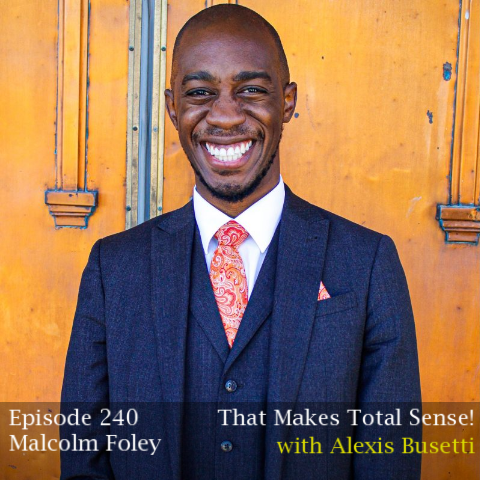
Okay, so this is like a few almost firsts for me. Malcolm, you said, when did we last do this? And I laughed and said, uh uh, I'm hitting record first before I answer that question. The other almost first is we have zero notes today.
We have no article, no book, no sermon.
What else could we have that we don't have?
[00:01:15] Speaker B: That's a lot of things that we don't have.
[00:01:18] Speaker A: We have nothing. Okay. You want to know when we last did this? You really want to know when we last did this? I only remember this because it resonated so deeply with me. First of all, you were not revdoc when we did this.
[00:01:31] Speaker B: That's true. Oh, wow. That was a long time ago, though.
[00:01:34] Speaker A: Thank you. You were not Dr. Malcolm Foley. Okay.
[00:01:38] Speaker B: Oh, wow.
[00:01:39] Speaker A: You were Reverend, which is great, but you were not doctor yet. The reason I recall this is because.
Do you have two girls?
This was two girls ago for you.
[00:01:53] Speaker B: Oh, wow.
[00:01:58] Speaker A: I remember a lot changed since then. Only two more humans in the house. That's not a big deal. But I remember this because it resonated so deeply with me. Because you were getting ready to graduate with your PhD and your wife was pregnant.
And when my husband was getting ready to graduate with his PhD, I was pregnant with our first. We had twins, so we had two extra humans in the house from the first from the get go. But I just remember this visceral, like, oh, my goodness. I know in a very deep way what your life must look like right now.
[00:02:42] Speaker B: And that's really funny, because does that mean that it was in 2020?
[00:02:48] Speaker A: Because it had to have been close to the front of 2020, right?
[00:02:52] Speaker B: Because then I still had another year before I even graduated.
[00:02:56] Speaker A: That might be true, yes.
[00:03:00] Speaker B: I thought I was going to finish my dissertation at some point, but some other things happened and I ended up graduating the next year.
That's funny.
[00:03:09] Speaker A: Yeah, I'll pull it up. I'll link it, of course, in this one. I have rereleased it once since then, after they passed the anti lynching bill.
[00:03:20] Speaker B: Okay, got you.
[00:03:21] Speaker A: It would be good for context since we had just done that episode. Well, not just since the episode was in the archives. I rereleased it so it'll be fresh for the anti lynching bill that was released.
Okay, so here's the deal. I've already said we have no notes. Okay, so let's back up, because there are some people who are like, yeah, but 2020 feels like a lifetime ago. For you, it was two children and a degree ago.
For us, it was a few years of COVID ago.
Nothing has happened between 2020 and now.
Let's start by saying, I'm going to start, and then I want you to go. We have no notes, people. Okay, so Malcolm came on and talked in 2020 about your dissertation work, which is really hard work, and research on the history of lynching in the led that research and time in your life led to, good night, Malcolm.
All of this stuff that you've seen happen since then. So I would say, tell us what you're up to now. You were a PhD student. You had this research.
This is my perspective. All of a sudden, everyone's like, oh, my goodness, what is Malcolm Foley doing? Like, everyone now, all of a sudden, in 2020, with all of the horrid events, wants to know. This is all of a sudden relevant. I'm using all of a sudden kind of in quotes, right? This is all of a sudden, this history of ours is all of a sudden relevant to a whole bunch of folks that it was never relevant to before. So I don't know. Tell us about that. And then what are you doing now?
[00:05:13] Speaker B: Maybe.
Yeah, I probably said this last time, but I had no intention of being relevant when I did my research.
[00:05:30] Speaker A: I feel like, is that the cry of every PhD student? You start off and you're like, listen, I'm not doing this to be relevant.
I have no interest in being relevant.
This is purely academic.
[00:05:45] Speaker B: It's how I frame the introduction of the book, too, because for my entire academic career, so to speak, I didn't want to be kind of the black eyed pigeonhole and talking about race all the time, right?
And so I wanted to do work on the early church, and that's what I wanted to do. And then the lynching stuff kind of just grabbed me in the PhD program.
But, yeah, I mean, finished that dissertation and then began work in Baylor senior administration, where that's been my day job.
And then also the church we planted. We planted back in 2019, but after we left the.
I wasn't formally ordained until after we left the PCA because I was in the ordination process in the PCA. And then we had stuff, and so we ended up leaving. But that's been wonderful.
And then there's the book that I'm doing with Brazil's press, which we'll talk about another time once it comes out. But the pre orders will be available in July, so that's something that people can keep their eyes out for. Say the title.
[00:07:04] Speaker A: You have a title?
[00:07:05] Speaker B: Yes. The title is the anti greed gospel, why the love of money is the root of racism, and how the church can create a new way forward.
[00:07:15] Speaker A: I'm laughing because I'm like, malcolm, let's just keep it light.
[00:07:24] Speaker B: I don't know how to do that.
That's how this works.
[00:07:31] Speaker A: Apparently. That's how this works. The anti greed gospel.
[00:07:35] Speaker B: That's the title.
That's the title.
I'm excited, too.
And it's the kind of thing where just as a peek behind the curtain, Brazil's first asked for this book back in 2020 as I was writing my dissertation, and I was like, I don't have time to write a book right now. I'm trying to finish the dissertation. Also, a child is being born, and I got a new job. There's all this other stuff going on. And then it was 2022.
They kept reaching out. And so I was like, oh, I guess people are really interested in this.
After I was able to write a proposal in 2022, in a few weeks, I had a contract.
[00:08:25] Speaker A: Wow.
[00:08:27] Speaker B: So I wrote it over the course of this past year, which I will eventually process, the fact that I wrote a book over the course of the year.
But, yeah, I'm doing edits. I'm doing edits right now, and we're chugging along.
But I was not ready to write this book as it is three years ago, but I am now. And we can talk about that process.
[00:08:56] Speaker A: We can spend some time talking about, let's do. Okay. Because it surprised me, did Brazos, when they were asking, and this isn't necessarily specific to them, but I'm saying, like, were they thinking this subject matter?
[00:09:10] Speaker B: They were thinking racial violence in the church.
[00:09:12] Speaker A: Okay.
[00:09:15] Speaker B: Broadly.
And that was just right in the sweet spot that I was trying to navigate anyway. So I was like, we can do a book for the masses on this topic, but the content of it, at least the book that I knew that I had to write, the content of that, I think, changed over the course of the last four years.
So that when I actually sat down to write the proposal and then the actual book, it looked different from, I think, the way it would have looked four years ago.
[00:09:52] Speaker A: Okay. But I want to know that we're going to talk about the actual book. We already have a date to talk about the actual, talk about the actual book. But I want the in between because I have a lot of thoughts of imagining if I were in your chair, what would take me from racial violence in the church to this anti greed gospel. But I want to hear what took you.
How did that navigation go? Like, what happened in your mind that you were like, I see what you want, and I can do that. You could do that in your sleep.
[00:10:26] Speaker B: Malcolm, that book, I appreciate that.
[00:10:29] Speaker A: Right. I mean, a book for the masses on something that you have been navigating in a, that I've talked to you, you can write that book in your sleep. But it was great and we would all benefit from. It'd be wonderful. Maybe you will someday. But how did you pivot to the focus on money?
[00:10:47] Speaker B: Yeah.
As I would narrate it, I don't even think it's a pivot.
I narrated it actually to the church. I narrated it to the church a few weeks ago as a conversion.
But back in February of 2022, I was prepping for a talk that I gave at Eastern Nazarene University, and it was for an MLK day kind of celebration thing. So they wanted me to do a lecture on kind of just the legacy of the legacy of Dr. King. So I was prepping it, going back through king stuff and reacquainting myself with the triple evils of racism, economic exploitation and militarism and war.
And I looked at that stuff again and I was like, wait a minute.
This is just right.
All three of these things are necessarily intertwined. And he'll say, you can't deal with one without dealing with all three. And so I was, well, like, what would it mean for me to actually think in that way? Then I read two other books. I read Jonathan, trans asian Americans and the spirit of racial capitalism. And Jonathan's a good friend and now a member at my church.
And I also read Antonio Gonzalez's God's reign and the end of empires.
And so in a single month, essentially the entirety of my theology was summarized in three books.
I cannot think of another time in my life where I experienced something like that, where there were particular books that when I read the Gonzalez book, it was almost every page of it. I was like, this is my theology now. This is what this is not. And then, and then, and then as I thought about even this book.
So in trans book, one of the things that he's emphasizing there is that race is race is. Race is fundamentally a system that was, that was, that was created to justify systems, systems of economic exploitation.
That's its primary purpose.
And when he narrated that, it reminded me of the stuff that I had read about racial capitalism before but hadn't really internalized.
But I read it in that form, and I was just like, yeah, this is just right.
Why did I not deal with this at all of the dissertation?
[00:13:48] Speaker A: I didn't read your dissertation, I'm thinking. But the conversation that you and I had, you kind of threw that out in our conversation in the podcast. I was like, whoa, whoa, whoa. I remember thinking, it's going to take me a solid minute to wrap my mind around what you just said.
Like you said this, summarize your theology. You owned this theology before my experience. You did, because you threw it out there like it was just a thing. And I was like, it felt like a huge roadblock to me. I was like, no, we're talking about lynching. We're talking. Okay. Like you mentioned Chattel slavery. Okay, but what you just said, that trans. Said that you already knew.
That's big for people.
[00:14:35] Speaker B: Yeah.
[00:14:35] Speaker A: Who have not considered that before. It's tough.
[00:14:38] Speaker B: Yeah.
It was this thing where. And as I look back now, I look back before I had read that stuff, and I could see hints of me thinking in those ways before. But this was one of these moments where just all the pieces kind of came together, and they came together in a way. And I told the church after that month, I was like, my preaching changed.
I told them at the beginning, now that I think about it, was it last year's New Year's service, one of these New Year's sermons? I was like, I'm going to be talking about greed a lot, a lot more. Just so we're all clear, I'm going to be talking about it a lot.
But it really is because, and this is a line out of the book, too, that race is not fundamentally about hate or ignorance. It's about greed.
And when that became abundantly clear to me, I was like, oh, this is also one of the reasons why we're going to consistently see this back and forth of, quote unquote, progress and then backlash. Progress, backlash, all that kind of stuff. It's one of the reasons why when we addressed the particular system of racialized chattel slavery, things weren't. I mean, things changed, but the, but the root wasn't. But the root wasn't. Wasn't. Wasn't pulled out. And that root is not. And that root is not racist ideas through is much more material than that.
It's been fun in its own right. I mean, it's not, like, fun material, but it's been fun to.
Once that happened for me, that also opened up much of the scriptures for me, because I then saw how much greed shows up in the scriptures as this thing that keeps us out of the kingdom when the Lord picks another God rival to the God of the scriptures and chooses mammon or riches and says, we can't serve both.
And a lot of our history is basically just trying to think up ingenious ways to say we can serve both.
It's my thing now.
[00:17:30] Speaker A: I think arguably it's been your thing, but yes, it is your thing now. Now, wait. I feel like I'm trying to take notes for the episode. Have. I thought you said three books. But I only have trans book and.
[00:17:45] Speaker B: Well, and then Martin Luther King's. Where. Where do we go from here?
[00:17:49] Speaker A: Oh, where do we go from here? Sorry I missed it. I was like, I think there is a community.
[00:17:53] Speaker B: I didn't say, I didn't. I didn't say it before, but that was the book. Got it.
[00:18:01] Speaker A: Okay, so we're going to talk a lot more about greed next year or the end of this year when the book is, like, getting ready to come out. But I want to talk about, because some of the things that you're doing right now are connecting points for the things that you study, the things that you research, the things that you talk about. So, like I said, the book that I think you could write in your sleep is this racial violence in the church situation.
The book that you did write, not in your sleep, was anti greed, the anti greed gospel. But these.
[00:18:40] Speaker B: One of lynching is in there now. There's lynching stuff in there.
[00:18:43] Speaker A: I would hope so with you being the scholar, that I hope, yes, that it would make an appearance, at least. But you are doing, or have done some stuff recently on the Baylor campus regarding chattel slavery. And this, of course, is one of those places historically where we see racialized violence in the church and greed come not just intersect, they're fully intertwined.
Okay, so maybe tell us about the work that you are working on at Baylor regarding that. And I want to talk know, I feel like. Like there's all of this stuff right now. I probably shouldn't even be saying this, but. Oh, well, I warn people. We have no notes, so whatever.
But there's all these things, like someone at an institution that I've connected with was saying recently, we want to work towards a land acknowledgment.
[00:19:46] Speaker B: Right.
[00:19:49] Speaker A: And then this is a thing that we say lots of institutions are doing, land acknowledgments, for example. And part of the reason that some of those can be problematic sometimes. I think in general they're good, but they can be problematic sometimes, is sometimes they're shallow. There isn't really much depth or there's not much work that's being done outside of that. So a quick Google search can tell us what we need to know in an email signature, write a land acknowledgement, or put a plaque on. But that is very performative if there's not something deeper and more significant happening.
I know your work well enough to know you're not going to hold a shovel for a performative reason.
But it's not just at Baylor. I'm saying, what is that work that you're doing at Baylor? What can it be representative of for us as christians, as churchgoers who want to not just shallowly recognize this existed in this spot, but how can that be significant for us in our theology and our discipleship and all those kinds of things? So first, tell us what you're doing with the shovel, and then we can go on from there.
[00:21:03] Speaker B: Good question over the course. So back in 2020, Baylor convened a commission, called it the Commission on Historic Campus representations, where we looked at all the kind of statues and building namings and things like that and wanted to narrate a more comprehensive history of Baylor. And the. And I served on that.
So we released a report with all that data as well as with suggestions. One of the suggestions was the building of a memorial to recognize the enslaved persons who built the campus.
Another was erecting statues of Baylor's first two black graduates outside of the Bible building, where every student takes christian scriptures and christian heritage. We did that last April, and that was a great event. And those are two statues that are going to be there forever.
[00:22:16] Speaker A: Can I stop you for a Second? Okay. We're both Texans, Malcolm. At least now we are. I'm not the bumper sticker gal that says I wasn't born here, but I got here as quickly as I could. That's not me.
[00:22:29] Speaker B: Right.
[00:22:29] Speaker A: But I'm going to own it now that I'm here. I've been here for over a decade. I'm Texas. Okay.
One of these things that you slipped over, and I'm not going to let you slide over it this time.
The enslaved people who built the campus?
[00:22:46] Speaker B: Yeah.
[00:22:48] Speaker A: Okay. We'll say more.
When was the campus built?
Baylor is for people who don't know which most people do, I think. But Baylor is a christian public university.
[00:23:04] Speaker B: It's private. We're private.
[00:23:05] Speaker A: Private.
[00:23:05] Speaker B: Sorry.
[00:23:06] Speaker A: Christian private university. As it was coming out of my mouth, I knew I'd misspoken a christian private university in Texas. It's not a small fry. This is a big university.
[00:23:19] Speaker B: Roughly 15,000 undergraduate students, 6000 graduate students.
[00:23:23] Speaker A: Thank you. Which is those combined almost as big as my hometown in Oklahoma anyway.
Right. So this is not a small fry kind of institution in the middle of Texas.
And I think sometimes, and again, I'm not from Texas, so I didn't grow up having to learn Texas history and all that kind of stuff. Even though Texas is squarely in the South, I don't know that people really are aware, because it's not, I would say, because it's not necessarily what people think of as deep south. This is not Mississippi. This is not Georgia. When people think of chattel slavery in the US, I dare to say most people aren't like, oh, yeah, Texas. Texas was one of the worst places to be for chattel slavery in the United States. Like, worst.
[00:24:13] Speaker B: And this is the oldest.
[00:24:14] Speaker A: You don't even have to go there. Right. This is one of the worst places that you can be. So we have a private christian university campus that was built in. I'm going to ask you for the years, and this was built largely, mostly, yeah. Significant way, by enslaved people.
[00:24:35] Speaker B: From what we've been able to find, Baylor is the oldest university in Texas operating under its original charter.
[00:24:44] Speaker A: There you go.
[00:24:44] Speaker B: We founded in 1845.
[00:24:47] Speaker A: Okay.
[00:24:51] Speaker B: Some of it is originally kind of the name was memorial to the unknown. To the unknown. Enslaved, because the records are sparse. But we also know that all of the founders were enslavers, except for two.
With that data and what we were able to find, we're like, if there's labor that was done, chances are it was enslaved labor, chances are very high.
And yet that history hadn't really been told at all at an institutional level. Right.
And so one of the things that was really important, at least for that commission, was, this is a story that we need to tell, but it was also important that this is not a story that just needs to be told just for the sake of just kind of telling a story.
And I said this after we did the groundbreaking.
Because Christians had so much of a significant role in the justification and mobilization of racialized shadow slavery, we have a unique responsibility to narrate the ways in which it's deeply incompatible with the faith.
And now, over the course of the next year, that message is actually going to be engraved on campus. So around the now statue of our founder, Judge Baylor is going to be narration of his own enslaving history, as well as a statement of, hey, this university and its christian mission.
These things are deeply incompatible with racialized chattel slavery.
And the memorial that's about to be built is going to give the campus a new physical space for new kinds of traditions, for bearing witness to a better future. All those things. All those things are to come. And this is going to be. I mean, the memorial is going to be probably the most significant physical representation on Baylor's campus, and it'll be there forever. It's going to be great.
[00:27:13] Speaker A: Okay, I have so many thoughts, Malcolm. Like, so many thoughts. Okay, so first of all, I want to say, okay, we're not calling out Baylor. Listen, you could name better than I could how many universities in the United States were built by enslaved people?
[00:27:30] Speaker B: And they're all doing reports now, right?
[00:27:33] Speaker A: Of course, yes. And I'm thinking, and many of them are in. Okay, here we go. Many of them are kind of in the.
They're prestigious, Malcolm.
Right. They're the places that we would call prestigious.
They're on the east coast, they're in New England. They have real know people that we've all heard of anyway, so it's not to call out Baylor. Baylor is not the only university whose campus was built by enslave people. So say that. The other thing is, I want to talk about space for a moment, what you just said. I kind of want you to elaborate on a bit, because I think as we see these kind of cultural shifts and changes in Christianity, perhaps, where, like you said, everybody's doing reports now on this. This is good. Attention is being brought, but I think also in our spiritual formation and our discipleship, more attention is being paid to space.
Reading books on, for example, just was skimming through one this morning on disability, theology and even accessibility in physical, you know, walking around, I'm thinking, went to did my undergrad, my first master's at Ou at University of Oklahoma. Right. And thinking about, like, this is one of those things like the iconic statue at OU, there's one of the seed sower, right? Everyone knows the seed sower if you've gone in. But these things are meant as students, tens of thousands of students, as you just mentioned, are walking around. Their attention is drawn to these things because they're required to be in these spaces. And as they move about, not just students, faculty, staff. As they move about, the public comes to picnic and do things like this on campus. Visitors for football games and all these kinds of things.
We will inhabit those spaces and we will share space. This memorial will share space with every visitor to campus.
[00:30:09] Speaker B: Yes.
[00:30:10] Speaker A: Like, theologize with me for a second.
[00:30:14] Speaker B: Well, and we located it very centrally.
Founders Mall is the area that's right in front of the primary. It's right in front of the main administrative building on campus. So the president, provost are in that building. I'm in the building right now. My window looks out right on that. Right on Founders mall. And right in the end, at the end of it is the statue of Judge Baylor. And in the middle of it is going to be this memorial, and it's going to be constructed in such a way that you can't go through the mall without interacting with this in some way. Yes.
Which was an intentional. So I co chaired the group that basically walked this process to its completion with the design firm that we're working with.
And this was one of the things that was, for us, really important to the design, that it's something that you can't.
That you can't really walk around without actually interacting with. We're having it cut into basically that whole area, which is great, but, yeah. So I think about the role that confederate monuments played in the late 19th and early 20th century, especially in the sense that when those things were put up, even during Jim Crow, they were put up as displays of dominance, historical dominance. So they're like, anytime you walk by this, you will remember who's in charge, specifically black communities.
Remember, we're the ones in charge of this stuff, which is to say.
[00:32:10] Speaker A: There.
[00:32:10] Speaker B: Are always going to be ways to make systems more just and equitable. But that doesn't. But that. But that doesn't dilute how important physical. How. How important kind of physical and symbolic moves are. We don't want our moves to be just kind of merely symbolic, but we do want to recognize that there is weight to materially changing someone's space we're about to build, about to actually do the construction on the memorial. But that's one of these things similar to putting up the two statues of our first two black graduates.
It's these physical representations of the kind of people that we want to be. So it's not just a recognition. It's not just a recognition of history or where we've been, but there's also the aspirational element of it.
Yeah.
[00:33:20] Speaker A: So this feels, like, slightly out of character for me, but I'm feeling a little boldness rub off from you. But anyway, I'm going to call out a couple of cities because it just ticked me off.
But we were driving. For the past few weeks, one of my kiddos has had volleyball games on the weekends at a YMCA in a suburb that's a little bit of a drive from where we live in Houston. And my map and I didn't get along the first time. And so we had like three or four games there, and we ended up taking like three or four different routes to get to and from this y, from our house anyway. And we're driving around in these neighborhoods, some of them the ones I'm thinking I built probably in the can tell by the style, kind of.
And you're not shocked by this? No one's shocked by this in this point. But in Sugarland, Texas. Don't you like it? Sugarland and Missouri City. Here we are.
How many, I'm curious. I should look it up. How many master plan neighborhoods are named with plantation in the name and streets with plantation in the street name?
So let's make it up for a second. I don't remember exactly, because I was just so ticked off. But let's pretend you got, like, magnolia plantation or something like that, and then you go down and you have like, I'm really making this up now. But then you have like, daisy Plantation street, lily Plantation Street, Magnolia Plantation street, and drive and court and whatever. So it's like, really. It's etched in stone.
Yeah, etched in stone. Marble, probably.
But as you were talking, I thought the other thing that's interesting to me is that these areas happen to be some of the most racially and ethnically diverse areas in our city, in our kind of the greater Houston area. But it also makes me. And. But who built that place?
Who was in charge there? Who had the money? Who had the power to name all of these spaces? Which might mean. Okay, Malcolm, your family can come and live here if you want. We can't legally stop you anymore in parentheses. We might want to if we could. You can come live here, but you will on your address.
Reverend Dr. Malcolm Foley. Two eight two magnolia plantation lane.
[00:36:13] Speaker B: Well, I really do think the logic of race would prefer not to kill you.
It prefers exploitation. Okay.
Basically, killing you is a last resort.
We think about this with racial segregation, too.
The goal is to keep black people close enough to take advantage of them, and that requires, there's this weird kind of dichotomy because you can't really completely eradicate them because that removes the source of your exploitation.
I think about you were naming places.
I think it was a conference in Augusta, Georgia, a few years ago, and it was my dad's birthday. And so they have this, like, in the town square, they've got, like, this statue of James Brown. So I took a picture of me, and my dad loves James Brown, so I took a picture of me and James Brown, came back to my car and then looked over to the right, and I don't know how I didn't see this the first time. There's this giant. I think it was an obelisk, or there could have been statue of somebody on a horse at the top. I'm like, ooh, what is this? I go over and I look at the inscription, and I see never a nation rose so.
Never a nation rose so fair, nor fell so pure of crime. And I'm like, oh, wait, this is a confederate monument.
I'm just parked right next to my mom.
I was like, mom, I'm in Augusta. I just took a picture with this James Brown thing, and there's this monument right in the middle of the square. And it says. And I tell her what it says, but she's like, malcolm, I hope you're, like, inside your car, right? Just like doing this, right?
I was definitely outside, but I told her. I was like, oh, no.
As I open the door and get into my car.
But all that's to say, going back to what I was saying before, and this is something that. We'll talk about this when I talk about the book, but I look at races functioning within a demonic cycle of self interest that begins in economic exploitation and political domination. That's where this begins. And then when people are, the only way to maintain exploitation and domination is through violence. The violence is not primary. The violence comes as the violence is always kind of an enforcement, an enforcement of something.
And then there's the fact that when you do that long enough, you have to find ways to justify it to yourself.
And this is kind of where our ideas of race originally come from. Then as that starts, then those processes continue, and as is the nature of demonic realities, they prefer to work invisibly.
So that thing continues, starts to manifest itself in hate and ignorance. And then people think that the hate and the ignorance is the issue.
So you then, as a number of church communities try to do, it's like, well, we'll deal with this through racial reconciliation. Let's all just hang out with each other and not deal with the deep material realities that led to these circumstances in the first place.
So, yeah, that's that.
[00:40:21] Speaker A: Oh, my goodness, there's, like, a lot there.
But you know what? And this is, okay, I'll tell you, and I'll also tell my husband, and he can edit this out if this is not making any sense or if this feels, like, real superfluous and stupid. But when you were talking about that, I thought, this is, like, now, again, let's not talk about the actual person of Bill Cosby. This becomes real problematic. But I'm thinking of, like.
But thinking of, like, the Cosby show ticking people off, because I'm like, well, you have a couple of black professionals who are making a ton of money and living in ways that black people should not be living in. They're highly educated characters, right? They're highly educated. They live in a great house in New York City. They have friends and connections and physical things and all of this kind of stuff, but just kind of thinking out loud to this greed part, because then that is like, well, if the Cosby's have that much pie, there's not pie for other people.
Specifically, there's not pie for white people who might be just as hard of a worker, but as a symbol of what that can look like in other places. And some of these spaces, like the plantation thing that I was really ticked off about, I think is kind of like a reminder. Like, you make enough money to live in this suburb, you make enough money to live in this planned community, we're going to remind you where you are, because every time you turn in to go home, you have to turn into Magnolia Plantation Boulevard.
[00:42:27] Speaker B: Yeah.
In the early 20th century, there were a number of these communities of black professionals that were specifically targeted by racist. By racist violence.
Think about that. There's a community in Denton, Texas, that was bought out in the orchery. But you can think about the violence in Tulsa and other places where what made you a target was being an economic success.
So Booker T. Washington for a while, thought that if we just invest in this economic base, then that's actually going to stop lynching.
And then over the course of time, as time went on, he found that, oh, no, actually, that makes you even more of a target.
But it's those kinds of pieces that I was aware of a number of years ago but didn't put it all together. I'm like, oh, wait, no. Maybe this is actually all about money. Not just incidentally, but maybe this is actually the name of the entire.
[00:43:56] Speaker A: Yeah.
So two things on that I was thinking. First one is Robert P. Jones's recent book that came out.
He has some thoughts in that kind of, I want to say in the conclusion that struck me, but it's kind of when we start talking about reparations, then you realize, oh, yeah, people are real ticked off about this. And it's not really about money until you start talking about reparations and then it really is about money. You can see where this comes out because I think he says something about. Okay, yes. Just a second. I can't wait. Okay, sorry. Malcolm's showing me a book. No one can see this. Malcolm. I'm just about. He says something to the effect of there's always this kind of excuse of like, well, we couldn't figure out a way to do it. And he kind of says something off the cuff, like, oh, yeah, we were super creative when we were stealing from everybody, but now we can't figure out a way to give it back. Like BS, right? Like I call you on this BS situation.
So that's one thing. I think we should go there first. The other thing that I'm just going to mention is if we have time, if we don't, we'll talk about it next time. But the importance of not just the institutional narration of this, but when you talked about Tulsa, and I'm going to link in here an episode that I did with the guy who was in charge of the commission on the centennial for the Tulsa. But I grew up in Oklahoma, so here. Twelve years of school, public school in Oklahoma. I was in my 30s before I knew about what happened in Tulsa because the state public education department is not telling the story.
I'm like, this is on a side note, I remember calling my dad years ago and I said to him, because there's all of this about space, about language, about education, about narration. I remember calling my dad, my parents still live in Oklahoma, and I said, dad, what do we say now? Because I grew up saying five civilized tribes.
But it was just like you would say peanut butter or school or church or.
I didn't even think about that phrase until I was grown and then had to confront it in something that was like, public. And I was like, what do we say? And I'm not that old.
And I was trained and educated in the church. We would say I was discipled to say five civilized Malcolm.
[00:46:49] Speaker B: As opposed to what?
[00:46:51] Speaker A: As opposed to what?
And then you get into, why were they called civilized? Right? As opposed to what? And all of these other things that go down the list. But let's talk about reparations. Let's talk about money. Let's talk about.
Yeah.
[00:47:10] Speaker B: The book that I was lifting up, that nobody can see.
It just came out.
When did this come out? This year? No, it was late last year. But it's called reparations and the theological disciplines, prophetic voices for remembrance, reckoning and repair. And I have a chapter in this.
So who's the editor, by the way? It's edited by Michael Baram, Drew Hart, Michael Rhodes, and Kettering.
[00:47:41] Speaker A: Okay.
[00:47:48] Speaker B: Tap me to do a chapter in there. And so my chapter is called reparation as reckoning. And essentially in that I kind of rack up the cost through kind of a narration of racial violence and stuff like that. But I also say, because I bring Gonzalez in here too, and kind of some of the other stuff that's been going through my mind on greed, one of the things that I press, at least in the conclusion, is that, well, let me read a portion.
[00:48:22] Speaker A: I mean, you have it right?
[00:48:26] Speaker B: Because I have it right here.
[00:48:29] Speaker A: Now I'm mad because I'm going to have to order.
[00:48:32] Speaker B: Fine. I mean, and it's expensive, too, so don't feel the pressure.
[00:48:38] Speaker A: Who published it?
[00:48:40] Speaker B: This is with, what is it? Is it Lexington? I think it's Lexington.
[00:48:45] Speaker A: No, I'm probably going to have to own it, but anyway. Okay, go ahead.
[00:48:49] Speaker B: Ultimately, reparations, rightly and justly administered, will require a system that does not currently exist. The moral imperative seems to be that we must begin the process of reparations now in the process of bearing witness to a different way of living as a manifestation of what theologian Antonio Gonzalez speaks of as systemic change from below. Insofar as the Gospel of Jesus Christ, is a message of reckoning with sin, turning from it and toward the Lord, and being cosmically reconciled with one's neighbor and creation. Part of our ethical commitment is to resist domination and exploitation in all of their forms in order both to recognize the wound and heal it. An unquenchable thirst for profit, otherwise known as greed and also often narrated as a necessity for our current economy, will have to be forsaken, since it is precisely the historical and moral evil that precipitates racialization and the violence and exploitation that plague our history and present. We currently find ourselves in a financialized political economy that obscures these dynamics, yet they still remain in the light of such national dynamics. The current clarion call is for creativity. The debt is clear and the blood continues to run. We can either stanch the flow, stitch the wound, and form more redemptive and supportive national habits, or we can allow greed and death to continue to wreak the havoc that they have wreaked for centuries, which is to say, in summary, reparate.
Go back to the creativity point.
If folks were creative in the exploitation and the powers and principalities continue to be creative in their exploitation and domination, we have to answer with a counter creativity. And this is like what the last third of my book is about too. So all of it's coming.
[00:50:38] Speaker A: All of it's know one of the things. So this is making me think of Duke Kwan co wrote the book, I think just called reparations. Right. Which I thoroughly enjoyed.
[00:50:51] Speaker B: Wonderful book.
[00:50:51] Speaker A: Thoroughly enjoyed. And you know, the main thesis in that book, at least as I recall, is basically as christians, if we see something has been stolen, we ought to work to repair it, give it back.
[00:51:09] Speaker B: Yeah.
[00:51:10] Speaker A: Wow. You would think they were from another planet.
[00:51:16] Speaker B: I know, right?
[00:51:19] Speaker A: I mean, just another actual planet.
Come on. Yeah. Okay.
[00:51:31] Speaker B: I say this too. I really do think greed is harder for people to deal with than pride is.
And I think in a lot of people's minds, when we're dealing with issues of race and racism, particularly, you think about it in terms of pride. You think about it in terms of, well, this is just a group of people who thought they were bet who said that they thought that they were better than these other people and we're not. We're all the same and all this kind of stuff.
Yeah, but also there's some material things that are lying behind this, not just me thinking that I'm better than you. Well, what actually precipitated that? Well, I needed to be able to tell myself that slavery was a perfectly fine thing, that submitting another human being to this kind of brutality was a perfectly okay thing to do because it made me a lot of money and I didn't want to give that up. So I then construct all the sequencing is very important.
[00:52:27] Speaker A: Okay, on that. And this may be to be continued. Cliffhanger, as my kids like to say it when they're watching episodic series, right? Oh, there's such a cliffhanger. We have to wait till the next season. Okay, chill out. Your next season is in five minutes. You're this right as Netflix. Okay, whatever. We had to wait all, like I said, I may be opening a can of worms. If so, you're like, listen, Alexis, we'll do it next time. Okay? But here's something that I've heard. I've had this brief discussion. Okay? So I'm going to start here.
I remember I was on this trip where I was witnessing a lot of injustice and I was talking with one of the leaders who worked with the organization. And I was so righteously indignant. Can we say that? I'm just going to pretend like that? There was, like, everything about it was righteous, but I was like. I was really upset and mad, and I was kind of like, but why is the leadership, why is the government, why is the institute, why are they doing this? And the leader of this organization said something very wise to me. I thought it was very wise. And he said, in our organization, we actually steer clear of assigning motivation.
We can see what's being done, and we can do our best to act against the injustices that are being done, but we don't assign motivation to the actors, which I think was wise and fair and good and something that I've tried to kind of internalize even as I go about daily life in some ways.
Now, I was reflecting with some, have reflected with some folks about this idea of greed that we're talking about. And I think that there is not just a temptation, but I think there can be a temptation, even a wisdom there, to say, what's the motivation? Right. Can we even assign this as a motivation? Because greed, like you mentioned, pride, it feels very internal, right. You kind of get this pushback of, like, judge not lest thee be judged. This kind of thing. But then, at the same time, I think, but can't we see it? We see the evidence of greed. So, yes, I'm not trying to dig into your heart with a spoon and say, okay, I know everything that you're thinking and feeling, and I know all of your motivations, and at the same time, there's evidence.
[00:55:04] Speaker B: Yeah.
[00:55:05] Speaker A: Would you say, I mean, how do you, as you've been exploring this space theologically, but also in a community, how do you navigate that space of thinking about greed as being a motivator? I'll use it to just kind of keep the same language.
[00:55:27] Speaker B: I mean, part of it is also.
Part of it is just getting people to remember that they should be deeply uncomfortable with material inequality.
[00:55:37] Speaker A: Yeah. Okay. Yes.
[00:55:43] Speaker B: Because we have a set of narratives that is essentially trying to teach us to be okay with it.
And this is what I think back to the nonsensical arguments for racialized chattel slavery, particularly.
There's a presbyterian minister, James Henley Thornwell has this sermon on the duties, on the rights and duties of masters.
And in it.
And in it, he makes this argument that Africans are just kind of built for slavery and white people aren't.
It's just the way that the Lord just kind of the way that the Lord set it up. And that's just the way. And I was like, this is just an assertion, but it's an assertion that benefits you in a particular way.
There's not like an exegesis that gets you to this point.
This is just a thing that you're saying.
And, and part of it is, and this just goes back to, I think what I think is basic to Christianity.
In two Corinthians eight, when Paul is talking to the corinthian church because the macedonian church has just put out a call because they need money. And he's like, corinthians, well, you've got it, so give it to them.
But recognize this is not me. Know, I want you to suffer and for them to prosper or whatever. No, I want you to be equal.
When Jesus being rich became poor so that through his poverty you might become rich.
Not saying that I want you to be wealthy kind of materially, but that you would understand that every member of the body of Christ has something that another member needs and actually has a right to. So the goal is equality because equality is not a state. Equality is a relationship and it's a relationship of mutual interdependence.
And so, you know, this is what I want to emphasize and I think ways that I might not have as much five years ago is just focus on the material. So focus on the fact that materially we only need so much. So the things that are in excess of our needs should be used to meet other people's needs.
And if our calling is to love our neighbors as ourselves, well that means that if I recognize something as a need, then that's something that I ought to expend myself making sure that everybody has. Because if it's an actual need, then that's what I'm saying by saying that it's a need.
And if we end up looking out at the world with those eyes, we'll find the ways in which particularly exploitation and domination are woven through so much of our society.
[00:59:32] Speaker A: Including the church.
[00:59:33] Speaker B: Including the church, unfortunately.
[00:59:36] Speaker A: Yeah, unfortunately.
Malcolm, just a taste we didn't do bad for having.
[00:59:48] Speaker B: Right?
[00:59:50] Speaker A: I think that was fine.
I think that was better than fine. I think it was a problematic for me because I have more books added to my reading list.
[01:00:04] Speaker B: Sorry about that.
[01:00:06] Speaker A: No you're not.
No you're not and that's fine.
More books added to my reading list and more things to think about. I feel the way I felt. I mean I have to look at the date. It's got to have been almost four years. Almost exactly that. We've talked before, which is crazy, but I'm feeling the same way of like, my head is spinning. I need either a nap or a cup of coffee and then a few weeks to process what we just went through, and then we'll do it again when the book is.
I'm super stoked. So now would be the time when I would say Malcolm Foley, author of or the thing or whatever, and we don't have any of that. But maybe you can say the title of your new the soon to be book that's coming out next year with Brazos, which is again, the title is.
[01:00:57] Speaker B: The anti greed gospel subtitle, why the love of money is the root of racism and how the church can create a new way forward.
[01:01:05] Speaker A: All right, taste of what's to come. Exactly as you just said. Thank you. Thank you. This has been incredible and amazing. And where can people follow along with some of this work that you're doing? We'll do that instead of the toe.
[01:01:18] Speaker B: Yeah, my x and threads accounts are going to be basically almost exclusively book stuff now.
That's what they're going to be.
You can check that there. And I'm still doing the occasional piece for the anxious bench blog as well, once a month, but I'll keep people updated as more things come out.
[01:01:50] Speaker A: Awesome, and we'll chat when the book gets closer.
[01:01:54] Speaker B: Sounds good.
[01:01:57] Speaker A: The links for all the resources mentioned in today's episode can be found in the show notes, music and podcast production by Seth Busetti. Be sure to give us a review on iTunes and subscribe at your favorite podcast listening app. You can also visit us at that makes total sense.