Episode Transcript
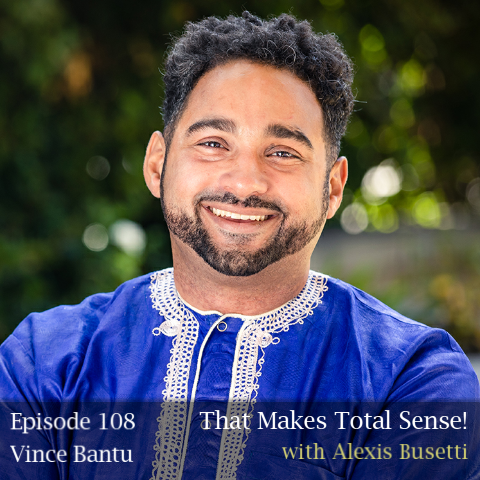
Speaker 0 00:00:07 Welcome to that makes total sense. A podcast dedicated to exploring God's generosity and justice. I'm Alexis resetting the Christian, aiming to ask good questions and encouraging you to do the same. Every one of us is wired by God to live out generosity and justice, but the house sometimes alludes us. That makes total sense is a way for us to get together, posture ourselves as learners and challenge one another to practice generosity and justice in a tangible way every day. All right, everybody. I am so thrilled. So I didn't know where I was going to be talking to this man today. In fact, a couple of weeks ago, we tried to get this set up and I forgot to tell you Vince. We were, uh, we had this conversation set up a couple of weeks ago with my guests whom I'll introduce in a moment. I had to cancel at the very last minute because our internet and our neighborhood was down just completely randomly on a, you know, weekday afternoon or whatever. Then I'm driving back from getting lunch this afternoon. And I see the Xfinity truck in the neighborhood and I'm like, oh no, this is not going to happen again today. But anyway, I came back and everything was good. It must've been somebody else's outage or maybe somebody cables. So I'm so thrilled to have Vince Bantu here today, except you're not here. You're not in Houston. You're not in your normal stomping grounds. The St. Louis, Vince, tell us where you are today and then we'll, and then we'll get into it.
Speaker 1 00:01:39 So, so I I'm actually sitting right now, uh, in the museum of Bodhi quad college, which is in the Bronx, uh, in New York city. Uh, and, and I am like currently, uh, habitating with my family in, in my wife's hometown of Newark, New Jersey. Um, so yeah, we're, that's where we are today, but it might be different tomorrow,
Speaker 0 00:02:01 Right? It might be different tomorrow. That's awesome. So, um, Dr. Vince Bantu is known to those of us in fuller campus and Houston as mom here, Bantu. And I was so privileged to have him as my instructor, my professor, a couple of terms ago. And, um, and one of the things that I just love about how you present, um, is you really your history professor, first of all, I'll say that. And so time and place are really important. I think that you, you helped me understand time and place being really important in how we understand our faith and how we understand our faith context. So, um, Vince, can you tell us, like, just a little bit about, um, like what you do academically, kind of what positions you hold right now? Um, I know every time we've emailed back and forth, I get an automatic thing saying you're currently on sabbatical, but that does not mean you're not working on something. So what's your, what's your current status right now? Yeah,
Speaker 1 00:03:04 Definitely. Um, well, yeah, I, I am on sabbatical and, uh, that's, that's been a lot of fun and, um, but, uh, yeah, I'm actually working on a book project that, um, you know, it was really focuses a lot on the stuff that we covered in class where I'm, it's looking at, um, the Egyptian Christology and ethnic identity and place and things like that. So, um, uh, so just, yeah, working on that, uh, this, this, this, uh, this summer and fall, uh, while on sabbatical and that's also why I can kind of hang out in my wife's stomping grounds, we can come out here and soak up some of her culture, but, but yeah, generally, uh, you know, I teach at fuller, uh, in the departments of church history and black church studies. Um, and, you know, kind of like my new book project, like my big interest is, um, really just learning and teaching about, uh, early Christianity, especially in parts of the world that we might not know as much about or might not be as well known, especially Africa is like kinda my big, um, big interests. And that's kinda where it leads over into both black church studies and church history. Um, and then, uh, and then I also, uh, also run an Afrocentric, biblical seminary called the Meacham school of high minnow. Um, so, um, and that's kind of geared at providing accessible, affordable theological education for black church leaders in the, in the community. Um, yeah. Yeah. So that's kind of a little bit of, um, about kind of what I, what I'm up to these days,
Speaker 0 00:04:28 Right. I'm going to put the link to the museum school here. Um, so we can put it in the show notes so people can, uh, so people can check it out. So I'm just jotting that down real quick, but, um, yeah, so we, so we did, I took, I took a class that no one in the class, I think, including you, none of us really got the name of this course ever because it was just so long, this like ridiculously long name, but one of the things that we, that we covered that you've written about obviously extensively and, um, and in your area of research is this, um, I love how you, you framed it to us. Kind of what I took away is that some people are out there saying the church is becoming global, right? Christianity is becoming this global religion and Dr. Bantu is here to tell us, um, it's always been a global religion. And so I want that and why that matters for us, right. To be kind of the central kind of the, the point that we keep coming back to. Um, but bef you know, as we discuss that, can you tell us like a little bit about your upbringing in St. Louis, your church upbringing and kind of how your cultural upbringing relates to how you got interested in this kind of conversation in the first place? Yeah,
Speaker 1 00:05:49 No, that's a great question. And yeah, they do a hundred percent go together. I mean, the reason I'm interested in this, like as a scholar and professor, it completely comes out of my own upbringing. Um, I mean, you know, we, before we, I guess officially started, I was mentioning to you how we're spending time right now, out in New Jersey to, to reconnect with my wife's kind of new Eurekan, uh, cultural setting and introduce our kids to that. And, uh, you know, we're, we're a multi-racial family and, and place and culture and people, hood is really important to us. And, you know, that's something that, uh, goes back to my upbringing, cause I I'm actually multi-racial myself or biracial. My dad is black and my mom is white. And I grew up in St. Louis, Missouri, which is where I, where we still primarily live. We still live in the neighborhood I grew up in, um, and saying, well, this is crazy because it's, you know, I mean, just the, I mean, every, every city has its history, ugly history of racial segregation.
Speaker 1 00:06:45 Um, but St. Louis is just maybe one of the most dramatic I've ever seen. Um, and the city is literally cut in half where on the north side of the city, it's, it's pretty much all poor and black and south of that line. It's, it's not only white, but it's extremely wealthy. So it's a really psychologically traumatizing place to grow up. Um, and, and, you know, just about kind of like what, um, you know, just the experiences to start contrast, um, you know, of, uh, of seeing white equate wealth and seeing blackness equated to poverty in that, in that micro kind of context. Uh, and, and, you know, I grew up north of that line in a black community. My mom was the only white person in the neighborhood, and I always identified as black and culturally, uh, you know, it was a, it was kind of, uh, you know, urban, low income, uh, you know, gang neighborhoods.
Speaker 1 00:07:30 So that, that was eighties and nineties. So that was, that was the culture that I grew up identifying with. And, you know, multi-racial identity is already a complicated thing. And, um, but, uh, but I definitely, you know, grew up identifying as black and that was kind of my, my experience. Um, and, uh, and, and, but the thing is that, you know, I got saved at an early age, you know, my, you know, my, some of my relatives were doing the, the, trying to do the folk life or whatever. And I, I was one of those that I saw that, and I was like, okay, I'm gonna learn from the mistakes of others and try to, so, I mean, the Lord grabbed a hold of me at an early age and it, and it really stuck. And I was, uh, you know, say, you know, I was baptized at 10 and I was, I was handing out tracks in my middle school at 13 and started a Bible study, um, in my high school when I was like 15.
Speaker 1 00:08:16 And, and I was just, I was, I was just, I was a Jesus freak all day. And, and, you know, the, and, and, and I mean, you know, I had a passion for evangelism from, from the beginning, but the church that I grew up in, uh, was on that, on the white side of that line, it was actually, you know, pretty wealthy area of St. Louis right by Washington university. And they, the reason we got connected was because they were coming into the neighborhood that I lived in and doing outreach, and they were, they were coming into the dark, uh, bad areas, uh, in order to try to bring the light of the gospel and say, you've the people in our community and bring us into their community for church. And that was the, that's the verbiage that they used. And I'm not, you know, putting that in there myself, but that's, that's part of the, the psychological and the theological trauma of, of, you know, kind of that, all that racial and economic disparity.
Speaker 1 00:09:02 So my church was two miles away from my house, but it was on, it might as well have been on another planet. Um, and that was the ethos that I grew up in. And I always grew up traversing that line. And my church was in a neighborhood of mansions and, uh, and things like that. But then my community, it's predatory, payday loan places and abandoned lots and, uh, liquor stores. And I'm just seeing this reality two miles away, uh, and just start contrast. And, and in my brain that conditioned me growing up for my whole childhood and adolescence to, uh, subconsciously associate Christianity with whiteness and with kind of suburban, uh, upper middle class lifestyle. And everyone that looked like me, everyone in my neighborhood, uh, nobody was really going to church. I mean, there were churches in our neighborhood, but the people who went to those churches and the people who ran them didn't live in the neighborhood.
Speaker 1 00:09:51 Um, but they commuted in on Sunday and then went back to wherever they came from, but nobody in my neighborhood was going to church. And so I didn't have any concept of what it was like to follow Jesus and look, and sound and be like myself. And so I always kind of felt a disconnect or a dissonance with who I was and who I identified with culturally, and then what it was seeming to be, to be a Christian and how people were intentionally or directly, but also in most ways indirectly saying that if you want to be a real true follower of Jesus, you need to act like a middle-class educated, white, conservative American person. Um, and I always felt like who I was, that's not who I am, but who I was was, was not pleasing to God and I needed to be like that.
Speaker 1 00:10:33 And when I, when I heard the voice of the Lord audibly, um, uh, you know, call me to ministry when I was 17, I felt like, okay, now is the time where I really need to be serious about the Lord. And to me, that meant really trying to culturally assimilate to this culture, uh, that I, I didn't identify as a racial or socioeconomic or an ethnic culture, identified it as Christian, um, that this is what a Christian acts like. And so I felt that I had to assimilate into that. Um, and, you know, I ended up going to a Christian college where I met my wife in order to study theology. And, and, and it was really during that time where the Lord, uh, really spoke to me, um, where, and, and the past is that, that God really used to kind of call me out of that sense of, I need to reject who I am was actually an ax chapter, Tim, when God revealed.
Speaker 1 00:11:23 And really, really when God fulfilled the prophecy that he had been making ever since, you know, ever since Abraham, uh, that, that God was going to have this universal plan of salvation, that through the Hebrews, that all nations would be blessed and be brought into, um, covenant relationship with God. And, and, you know, God heard the prayers of this Gentile, Cornelius, the first Gentile believer, but really it was Peter that God had to prepare to receive. And, uh, and, and by extension, the Hebrew, Christians had to be prepared, receive the Gentile believers, and, you know, God told Peter kill and eat. And Peter said, no, I'm never going to touch anything that's unclean. And God said, do not call unclean what I have made clean. And that's really what I felt God was speaking to me directly, that I had had felt that my black, urban hood culture was unclean.
Speaker 1 00:12:12 And that it was, you know, just now to be sure there was some things about growing up in that context that were broken and were, uh, things that, that don't fit the life of a Christian that I had to reject and walk away from, but it was like throwing the baby out with the bath water and say all of it needs to be rejected. Um, and the thing about, I mean, the funny thing about culture is that humans can't estate escape culture. All of us, all of our theology is cultural. There's no such thing as a cultural theology, but the way white normativity works is we tend to label, you know, theologies of color as such like black theology, Hispanic theology, you know, Asian theology, but then theology that comes from Jonathan Edwards or, or John Piper or Rick Warren or Cal or Calvin or Luther.
Speaker 1 00:12:54 That's not, that's not cultural theology. It's just normative theology, Wayne Grudem, Alyson, McGrath, whatever. That's not cultural theology, it's just theology. And we do that with all aspects of life. Like we say, ethnic food or ethnic church, like we put ethnic modifiers in front of nonwhite things, but then with white things, we just call them normal. And that's, you know, a really actually insidious expression of white supremacy that normalizes whiteness, um, and then kind of boxes in non whiteness into only specific, you know, silos of, of existence. And so, you know, that was something that, and, but the thing is, again, all of us have a culture, uh, you know, all every, so every, every church is an ethnic church. Every food is ethnic food, every music is ethnic music. So if we don't, if we don't embrace our own, then we're going to end up just trying to assimilate or emulate someone else's, uh, cause there's no, uh there's no, yeah, there's no theology.
Speaker 1 00:13:44 That's, that's three of culture. And so that's really what God brought me back into that place of saying, no, I, I, I put you in the west side of St. Louis, that's where you from. And so that's who you were meant to be. And, and I started listening to like Christian hip hop. I hadn't been exposed to that. My church, you know, I, I had my, I had my secular, you know, misogynistic, violin, hip hop that I grew up on. And then I had the alternative for my church was Michael W. Smith and Sandy Patty and Twila Paris and, and that kind of stuff. So I'm like, you know, okay, well, I don't like that, but this is who I am. So where do I go? And so then, but then I got introduced to Christian hit or good Christian hip hop, I should say, because there was some stuff in the early nineties that was, I don't know what was going on, but I finally got introduced.
Speaker 1 00:14:26 That was around the time where you started having good Christian hip hop. And I started, and it was powerful for me. It really was because I had never seen people who, again, look like me, dress like me act like me, but following Jesus and like spitting theology, I had never. And so that just spoke a powerful message of affirmation of God saying I've made you clean. I made your people clean. You have a place in the heavenly Jerusalem that in heavenly, you have every nation, tribe and tongue. We're not all assimilated. We're not all speaking one language, but there's every language. And that includes hip hop. That includes before that includes, that includes the hood culture. It includes every culture. Uh, and so that's really when I really kinda came back and really started to embrace who I was as a Christian. And I would say that's really what gave me a heart for not just my own people who have the similar kinds of struggles or what I like to call people who feel culturally alienated from God.
Speaker 1 00:15:21 But again, if using this to says, once you were alienated and now you brought, you've been brought close, you've been brought near. And so my heart really in ministry and in academics, as well as in evangelism and apologetics is really to really encourage my people, um, as well as other, you know, people native Americans or, or Arabs, or, or, you know, um, Asian or other cultural groups that, that, because of colonialism, because of slavery, because of the crusades, because of the inquisition, because of, uh, Jim Crow, because of 2016, uh, you know, 80% of evangelicals supporting Trump, all of these kinds of things, uh, because of the ways that a certain version of, of, of Western Christianity has been implicated in acts of terrorism and colonialism and oppression, that, that a lot of people understandably reject Christianity and say, you know, there's this isn't for my people.
Speaker 1 00:16:15 Uh, and that's, and that's, you know, um, and that's really, um, I would say the number one reason in the world, why people don't choose to be a follower of Jesus. Uh, that's the number one reason why people reject the way of Jesus, because that, because again, I mean, most people around the world are black and brown people of color and, and all of them have been touched by Western colonialism, which came with a perverted version of Christianity. And so, you know, if you look at not, not people say, oh, well, Dr. Bazzi, what about, uh, you know, all the Christians that are, you know, like starting to emerge in the world and all, you know, it's, it was more Christian Day. I'm like, yes, praise God for that. Uh, but number one, a lot of times that's a very westernized Americanized version of Chris <inaudible>, that's, that's being imputed into other contexts, um, that other people in those spaces that are not Christian can see and smell that American and Western is from a mile away.
Speaker 1 00:17:11 And so that's just exacerbating the chasm. So again, I'm talking about the, non-believers the non-believers in the majority world, the number one reason why they don't want to be a Christian is because they associate that that's tantamount to becoming white or becoming Western or becoming American. And so out the gate, Jesus has rejected and it's like, you can't even see the real brown skin Aramaic speaking, Palestinian Hebrew name Yeshua, because we just use talked talking about Christianity, you put across. So we just think crusades colonialism and all that. And so that's why it's so important to me, um, evangelistically to understand that the gospel is for all people. And, and to your point, Alexis, you know, that, that led me into, in seminary, a lot of missiological literature. Um, but as you mentioned, a lot of them sometimes will say things like, well, in the 20th century now Christianity became global.
Speaker 1 00:17:59 There's literally books that said how Christianity became global. But Alexis, when I first went to seminary and took a class on early African Christianity, that just shouted out to me, that was God, just, you know, I just got hooked and I'm still hooked basically, because what, what, what really caught me about that was like, okay, I had this heart because of my own experience and my people, I had this heart to really, really just think about and promote the, again, the, the global inclusivity of the gospel. Um, but when I, when I learned for the first time and mind you, I had had a theology degree, uh, you know, from a Christian college. And this was the first time that I had ever heard that the church was in Nuvia and Ethiopia and Syria and India and China and all these places long before colonialism, long before, you know, like these, these white supremacists expressions of Christianity that it had been there that just struck something in me deeply.
Speaker 1 00:18:50 And I was like, man, I didn't know this. And I think maybe a lot of other people don't know this. So I think I want to learn more about this until that's out of the story. Cause when I learned church history in undergrad, it was just kind of the Roman empire, Greek, Latin church fathers. And then it was like, you know, European, uh, rent, you know, kind of different medieval historian, you know, historical things like the crusades and the emergence of scholasticism and all that. Then it was that it was the reformation in Europe and then it was in the Americas and then you don't get to global or non-white stuff until it's like the 20th century. And, and there's a whole other story. We need to learn that story, but there's, there's other stories in trajectories too. So that's, and, and I, and my thought was that can help to, you know, really be an encouragement to, again, people, groups that are really culturally alienated from the gospel that feel like the gospel is not for their people.
Speaker 1 00:19:41 And so even, and then even if you try to point out well, but look, the gospel Christianity is worldwide. It's global. That, that somebody who again, is aware of history and colonialism and, and, and all those things, they can still reject that and say, yeah, but like I said, that's still an Americanized westernized expression of it. It still is. So came from, you know, if you trace it back through the 19 and 18 and 17 hundreds, it came from the west. So one can still think that despite the fact that as Philip Jenkins' book points out, that most Christians in the world are in Africa, Latin America, Asia, many of those churches came from the west. And so someone can still reject that, but it's, it's a whole new story. It's a whole new paradigm when you say, okay, well, what about these other Christianities that were in Africa and in Asia, even before it was in Northern or Western Europe, then that's a whole, and then a lot of times you're like, oh, I didn't even know that was there. I've talked to so many people in Africa and Asia and various parts of the continent that are like, I had no idea that Christianity was in these lands like centuries ago, like even before they were in Europe, people didn't have any idea and that just expands people's minds, but it also really is just an historical echo of the biblical reality that Jesus is for all people and all places.
Speaker 0 00:20:56 Yeah. I mean, honestly, the questions that are going through my mind are like, probably you'd have to write another course to answer them. Cause, you know, cause I mean, after spending a term with you looking at this kind of stuff, right. And like every week, just like mind blown, right? Like every week, because even those of us who are earning our first theology degrees when we, you know, growing up in church or, you know, even just history in our undergrad or in, or in other, you know, in my graduate school, even it's like, we're, we have the same experiences you right. Where it's this one track is the kind of the quote world history that we learned. Right. It's kind of this one, this one note track. And, and so the, the question that I'm going to say, well, I just need, I just need to take another course apparently is.
Speaker 0 00:21:46 Yeah. But how did it get that way? All right. Like why is it so focused on whiteness? Right. I mean, I understand there's colonialism and all of this, but I kind of want to, I almost want to trace that route, you know, like we did, you know, like we trace the history in your class, but like I said, that's probably another question for another day. Um, but it's reminding me of this experience that my husband and I had, we were, I think I may have told you about it in class, but we were, we were looking at different education options for our kids years and years ago. And there was one that we had to read this handbook at this particular place. And it talked about being involved in the great conversation, like capitalized, right? Like the great conversation. And I was like, well, first of all, I'm not smart enough to go here for my kids to go here because I have no idea what that is.
Speaker 0 00:22:32 Like, I don't know what the great conversation is. Apparently I'm missing out on it. But as I read further, it's basically this understanding, right? That all of the great thinkers, uh, you know, the, uh, all of the great discoveries that have come out of all of the areas of, of, you know, history, science, geography, all of these things in life, the humanities, right? All of this stuff has essentially come out of this Greco-Roman ideas of things, right? It's all of these, basically these white men who have come out of these European spaces who have spread their Western colonialist, thought all over the world, these are the people, the thoughts, the ideas that we should be learning and encouraging our kids to learn. And we took one look at that and said, no, I don't like that. This is not okay. Right. Like I'm, I am mixed ethnicity.
Speaker 0 00:23:26 Right. We have as son who is not from our continent at the time we were worshiping in a more, um, you know, middle Eastern style context. And we're like, this does not make any sense, but it's not, I would say it, it wasn't necessarily something, again, to go back to your point, it wasn't necessarily something that like, come join our particular cultural lens for viewing this education. It was, this is the way education should be. If we are being taught, if we are teaching our children, we should be teaching them in this way. And we should be teaching them these things from these particular people. Because I used to, I used to joke when I was, when I was an undergrad that I, that I grew up and I haven't read any books that any learned people should have read. Like I like, I just, I didn't read the classics. I didn't do, you know, I just didn't interest me. Um, and so, and so it kind of felt like if you are learned, right, you should have this kind of academic experience. Um, and it's just completely discounting every other experience, which is the vast majority of the world, right?
Speaker 2 00:24:35 Hmm. The vast majority
Speaker 0 00:24:37 Of the world and in the Christian world, as you mentioned, this is, I like that terminology. This is theologically traumatic
Speaker 3 00:24:49 For people
Speaker 2 00:24:52 In general,
Speaker 0 00:24:54 For people that we would want to minister to for evangelism sake for misseology like, this is theologically, theologically traumatic
Speaker 3 00:25:03 Too,
Speaker 0 00:25:05 Because I would say because not everyone has the experience that you had or that, that many, that many people have had where they just kind of at first kind of jumped on the bandwagon and said, well, if this is what, and I don't want to put words in your mouth, but what I'm kind of hearing is what this was following. Jesus means then I'll do it. Right. I don't like Michael W. Smith, but I guess I can deal with him on Sundays because you know, you know, Sandy, Patty, if that's where it is, I was singing a special, I love Jesus that much. That's what this means. An Oak then Sandy Patty. It is, you know, um, but they're just like you ended up rejecting that idea. There are many, many people who would reject that idea from the beginning. Right. And say, I'm not interested in even getting to know if I might want to pursue Jesus. If pursuing Jesus looks like this. How has your, your, how has your experience in education and understanding that Christianity has always been global? How has that affected how you engage in misseology like in real life?
Speaker 1 00:26:21 Yeah. No, that's, that's a great question. I mean, you know, and, and even, I would say, you know, in the, in my, in my book, multitude of all peoples it actually both kind of speaks to the question you had asked earlier where, you know, like I said, we don't have a whole lot of time to get into, but, you know, the, the first, like in the first chapter of the book, it gets into like, how did we get to this place? Like, how did we, uh, so it kind of assumes a given that, that, um, that there is this reality that people see Christianity as a white man's religion or as a Western religion, um, you know, and that's kind of assumed, but then it gets into like, how did we get to that place? And then, and then also in the conclusion, it kind of gets to, um, what you were, you know, what we're talking about now, which is what does this actually mean missiologically or for practical ministry.
Speaker 1 00:27:04 And I, I, I tried to point out really just to kind of, um, missiological principles that are gleaned from history that are really important, uh, for the health and growth of the church in any context. And one of those is we need, um, indigenous leaders that churches need to be led by people who are from that, that space. And again, part of, um, you know, white supremacy in Western colonialism is this assumption that, you know, like you said, you know, there's there, uh, the greats of literature are always, you know, predominantly white men or, um, the leadership of like all of our major institutions in the world are predominantly white men. And, and, you know, even in the church, it's pretty, only white men, even people theologians who get quoted are predominant white men. So we have all these again, dramatic messages that say that white men know best and they know, uh, theology best.
Speaker 1 00:27:53 They know the Bible, they interpret the Bible the best. And again, that's not to say that there's not a place at God's table for the white male perspective. There there's a place for everybody. But, um, you know, again, missiologically, as you asked my past is that I always really think is informative, uh, for a decolonized and a de-centered way of proceeding is really first Corinthians 12, where Paul says that the, the, the parts of the body that have gotten greater honor, they actually don't need as much attention right now. Instead, we actually are going to give greater honor to the parts of the body that have lacked it, uh, or that have been seen as unpresentable or are, or are kind of unusable they're actually indispensable. And so, so even like, you know, historically to highlight some of these other stories that haven't been told as much, um, that, that really shows us that again, there's already indigenous leaders, you know, all over the country, all over the world.
Speaker 1 00:28:47 And, and we really need to support, um, those indigenous leaders who are already in place rather than thinking, well, they don't do it like us. They don't have our institutional banner or their whatever. Uh, they don't talk the exactly the way we talk. So we need to have our leaders go in and kind of lead it. And then eventually we'll kind of hand it off. And historically that has not worked that, that, you know, that does, that just does not work. Um, but rather we really need to partner as equals and allow indigenous leaders to really share the gospel and build the church in their own style. Um, you know, uh, my, my family and I love to travel. And, uh, I remember we went to, um, uh, the Sequoia national park in California. And it was so interesting how I was learning about how, like these giant Sequoia trees can only grow in the exact location that they are like, there has to be like, there's like this range of elevation that they have to be at, you know, too low and they'll, they'll die.
Speaker 1 00:29:39 Um, and, and sun exposure. And, and, and that's why they only grow in this part of California, this particular species of Sequoia trees. But so there's still trees. They're still part of the tree family, but that particular expression of tree can only grow in that climate come on, somebody preach, preach opener. And so, and so that's, that's how the, that's how the gospel really works is that's the same gospel. So this isn't pluralism, this isn't universalism, this isn't relativism. There's only, Jesus is the only name under heaven by which people can be saved. Um, and at the same time, the gospel takes on the language and the culture of the people, Matthew writes to the Jews and say, Jesus is the son of man. And John writes to the Gentiles and say, he's the logos that, that platonic stoic term that you guys use that's Jesus.
Speaker 1 00:30:24 And so Jesus can take on the language and the culture of the different of different cultures, but again, it has to really be done by indigenous leaders. Um, and that's the second that gets into the second principle too, which is that it needs to be contextualized, uh, that it needs to really take on that local flavor. Um, you know, uh, uh, Cornelius became a believer and Peter had realized he is just as acceptable because of the blood of Jesus before God, as I am. And I am no, you know, my Torah and Shabbat background does not gain me any points before the Lord, as, as Cornelius. He's just as, as acceptable. And you have Gentile leaders, uh, like, you know, Luke and, and other, you know, folks who are all who are co-laborers in the gospel, but not only are they acceptable, not only are they admissible, but there's no like cultural assimilation into Judaism that's necessary.
Speaker 1 00:31:11 And that's where acts 15 comes from where it's like, okay, well, we're getting all these believers coming in these Gentiles, but do they need to be like Hebrews? And then it's like, no, they don't need to be, it seems good to the holy spirit in us that we don't place any further burdens upon you. And so you can still be a Gentile. You don't have to be circumcised, but that also doesn't mean acts 21. That also doesn't mean that Hebrew believers need to stop being Hebrew, because that's what, you know, that's the balance of the gospel, because then, you know, James was saying that, well, there's some people that are misinterpreting Paul in acts 21. They're saying that you're telling Jews not to be Jews anymore. And we know that's not what you're teaching. And so then Paul goes in and partners with James and then he goes and helps these Hebrews go into the temple and fulfill their Nazarite vow.
Speaker 1 00:31:48 So Hebrew Christians are Christians, but they still be, they're still Hebrew. And they still do Hebrew stuff. And Gentile believers are still Gentiles. They don't need to be Hebrew. Hebrews don't need to be Gentiles, and yet we're United in the same way. And in fact, if you try to, again, going back to the Sequoia tree, if you try to implant one expression of the same species in another area, it will die. And historically, that is what has happened, that when you have had foreign expressions of Christianity in planted into other places, then it died out. I mean, a quick snippet and it's in the book again, but, you know, Chinese Christianity has had wave upon wave of, of, you know, Christian history. But the interesting thing is that it came from Persia, uh, in, through central Asia, into China in the seventh century. And it died out around the 10th century.
Speaker 1 00:32:34 Then it came back, there was a second wave of Christianity during the Mongolian, uh, kind of, uh, hit Germany in, in China and in the 13th and 14th century, there was another wave of Christianity, but then it died out as well after, uh, after the Islamic Timberlane took over. And so both times that Christianity came into China, it was a largely, very kind of foreign expression. But the interesting thing is that they didn't associate Christianity with European or Western Christianity like they do now, which is a very, again, a very calm it asked any missionary in China or Japan or Korea in any parts of east Asia. They'll tell you one of the biggest struggles is what we're talking about is people's perception that Christianity is a Western religion. It's not, it's not our religion, it's not an Asian or Chinese religion. And so that's a big, you know, that's a big, um, struggle evangelistically.
Speaker 1 00:33:21 And, and again, even for, even though Christianity is blowing up again, it's often a westernized expression of it. And oftentimes people and not just in Asia, but in other parts of the world, people look up to the west, they look up to America as again, the white males, that's the people who know Christianity the best. So that's the theologians we need to follow. That's the Bible commentaries. We need to follow. That's the denominations we need to follow. And so that exacerbates this idea. And again, in China, both times that there was a, and Christianity lasted for centuries, but it's still always other, instead of being seen as Western, it was seen as Persian, but there was this kind of subservience that the Chinese church in the seventh, eighth centuries had towards the Persian church. And so it wasn't as deeply contextualized, or even there wasn't as much indigenous leaders, but they were relying upon bishops and leaders sent in from Persia ordained all the way in Baghdad.
Speaker 1 00:34:09 And so that, that's part of the reason why there was two times that Christianity was, was kicked out of China. And the primary reason was it was seen as this foreign thing. And so, again, historically, when you have Christianity, that's in a particular place, but if it looks and smells really foreign, it, his history shows that even though it might be there for centuries, but it won't last, it eventually will eventually will die out. The same thing happened to Nubia. But on the flip side, when you look at Christian contexts like Ethiopia or Armenia, um, or, or Syria, or the us Syrian people of Northern Iraq, when you have these churches that are so contextualize, number one, that takes on the language and flavor of the people, rather than just kind of importing a foreign expression of it. And then number two, when indigenous leaders are, are empowered to lead their own people, to find out what worship and, and evangelism and, and, and all these things look like for them in their context, when you have those two strong ingredients, then that's a good recipe for the gospel to live and thrive and even endure persecution and, uh, and, and religious, uh, uh, uh, you know, fundamentalism and, and, and globalization and, and colonialism that these, these, some of these churches have survived for 2000 years and, and have stayed there.
Speaker 1 00:35:26 But when you look at the churches that have lasted, uh, and, and doers and things over the centuries, and then you look at the ones that were there for awhile, but then they died out. You can almost always correlate it to the, to which those two things were present the contextualization of the gospel and the empowerment and freedom of indigenous leaders to lead their people.
Speaker 0 00:35:46 So I've got kind of two, two questions or thoughts on that. And the, and the first one is, you know, going back to when it's not indigenous. Um, but then, you know, the example of, you know, maybe the Chinese church looking up to the Western church, um, in that way, I think, gosh, doesn't it become like this kind of weird co-dependent relationship, almost like if they're looking up and then they say the Western church is so excited to support the Chinese underground church, for example, because the videos we see or the books we read, or the news reports that we get, you know, these newsletters and things like that, it's because it kind of looks like a, just like a slightly different version of American Christianity. Right. It looks, it looks like people who like bear the image of, of, you know, Chinese, you know, east Asian people, but then they're in a basement singing songs that sound very Western, you know, Christian or something like that.
Speaker 0 00:36:42 Right. And so it's like, well, if they look up to the Western church, but then the Western church is willing to support them because they look like kind of miniature versions of the Western church. Right. So I'm kind of wondering like a, would the Western church be so apt to support, you know, these other Christian communities, if they looked indigenous, right. Would they be, would they be as willing to kind of, um, support them? And then if not, does this kind of become this unhealthy, you know, codependent relationship or whatever. And then, and then the second thing I thought of as far as the indigenous crowd is concerned and the, and the communities that are raising up indigenous leaders, and it's looking more contextualized globally. I can see, you know, some of the places, some of the, the counter are coming to my mind where that is, where that's happening, but then kind of going back to your story.
Speaker 0 00:37:30 I'm also like, man, but isn't that same thing true in the states. Like, you can, like, you can see this, like what you're talking about, like your side of town did not really have any indigenous leaders. And so the churches were not thriving, but we see that everywhere, right? Like kids getting bused in for VBS or, you know, these various things where you don't see Christian leaders and pastors maybe necessarily like being like, kind of home grown right. In these spaces or staying in the spaces. And if they did, would, would would the churches in those areas be thriving in a different way? Um, perhaps, you know, does it, does what we see in the states kind of mirror what we see globally as well within the different cultural contexts that we have in the states?
Speaker 1 00:38:17 Oh, absolutely. I think that there's a huge correlation. I mean, uh, I, you know, I talked to, um, a friend of mine, who's a missionary in Japan and he was telling me, yo, Japan's like 2% Christian and it's even declining. Um, but even the few churches that there are there, there, they are like overwhelmingly by pastors who are not indigenous to Japan, but there, there might be Chinese Taiwanese from Hong Kong. There might be a merit, white American or Canadian or Australian or whatever the case may be. And then he was telling me, even the few churches that are indigenously led, there is a very big gap between, and also, especially that are again, indigenously led and contextual into Japanese culture, not just trying to import Western, uh, norms, that they are so much less well-funded. Um, and a lot of times those indigenous pastors have to be bi-vocational, uh, in order to support, you know, they can't even, they're not in self sustaining those searches.
Speaker 1 00:39:09 And meanwhile, a lot of these foreign led and foreign feeling churches, um, have a much better, um, funding, much more economic stability, even though they are less equipped in my opinion, to actually reach the Japanese people than someone who's from there. You absolutely see those patterns happening in the Ludes and in the values of the United States where you have now, uh, you know, uh, some more movement than there was when I was a kid of like having like, like pastors that are from the hood planting hood churches in the hood that really look and feel like folk that are from the hood. Um, but at the same time, there's all, there's oftentimes a lot of paternalism that comes if they are connected to a largely whites and nomination, and they don't get as much funding or they get cut off, it's like, you didn't raise this many people that you didn't grow it to.
Speaker 1 00:39:54 This many people, you didn't raise enough support in three years. I'm like, how do you think that a leader who's indigenous to the hood, who's dealing with 400 years of slavery and Jim Crow and, and, and red lining and all these kinds of things. How do you think that that person is going to be able to raise a self-sustaining salary as quickly as like a middle-class white dude who has a network of people? It's not even the same thing, but again, people are expected to lead and operate in these kinds of ways. And so they, a lot of times those indigenous leaders don't get supported and they ended up leaving just like the AIC is in Africa, African initiated searches for over a century now have been moving away from the paternalistic kind of, you know, European or north American denominations and starting their own.
Speaker 1 00:40:32 But a lot of times they're not as, as well-funded. And so can we get behind and support, you know, gospel movements, if they're not part of our denomination, or if they're not going to advance our, our kingdom or our network or our flags or our band or whatever the case may be. But if it's, if those people are actually going to be more equipped to actually reach people in that particular context, can we beat have the spirit, like Paul told the Corinthian church to have with regards to the Jerusalem church and, and th the Jerusalem church is not going to have the refined wise words that Paul talked about, that the Corinthians so respect and look up to, and he says, I come to you with foolishness. And he came to them. He said, I'm sending Titus to you because that's God's money. And so there's that, there's that biblical partnership that we're really lacking in these contexts.
Speaker 1 00:41:14 And then what happens is even in the hood, a lot of times folks will come in and there'll be already a black or a, a lots of necks, or, you know, a Caribbean church storefront in that community. It's already there where the pastor and the leaders have cultural currency and trust with the community, uh, in powerful ways. But that leader might have to drive a cab, or they might have to another job in order to be sustaining. So they're working 80 hours a week working during the day, and then visiting hospitals at night. And then on the flip side, you'll have a young white church planter, uh, move in right across the street. And within a week, they'll have, uh, an old building bought up renovated missionary teams coming in. They got a full self-sustaining salary and all that. And then yet it's only P it's predominantly people who look like them in the church, even though they in a black or brown neighborhood, it's mostly people who look like them, or it's like mainly people who are looked like them that are in the leadership.
Speaker 1 00:42:04 Uh, and even if you do get some black or brown folks, it's people who are educated and they're socioeconomically kind of not really, you know, exuding that culture of the community. So you absolutely see that same dynamic happening, which is why globally and in the U S again, it's so important that we really have these two ingredients that we really again get behind indigenous leaders and support them to reach the people the way they want to, and not put these foreign norms on how ministry should go, but really empower them to reach their own people in their contextual norms, uh, in placing indigenous leaders at the forefront. Absolutely.
Speaker 0 00:42:37 Oh my goodness. I'm like, I'm like looking at the clock going, okay. Oh my goodness. I'd felt like I went to church in class. I'm loving every minute of it, but I want to be mindful of you in this museum of this university. I just love it so much in the Bronx right now. So I'm going to ask you to, I'm going to ask you to close this by, um, this is a question I often like to ask guests, um, especially since I've been back in school, I think this is, this is kind of one of the things that resonates with me, which is which question did I not ask you today? What was the question that you wish I would have asked, or, you know, like where, where did you want to go? That I just, that I just didn't get your, it didn't pop into my head. That way you can have a way to kind of have the, kind of have the final word on it. And then, and then we'll close this up.
Speaker 1 00:43:27 Oh, no, I, if you have another one, uh, definitely. I want to go. Cause I, I honestly, uh, I honestly would not be able to think of one, like, I I'm just loving the conversation and I don't. Yeah. I don't have anything that, you know, is like, oh man, I wish we would know. Like I'm. Um, so yeah, there's another, I'm happy to close with another question that you have that, you know, that's, that's, uh, yeah. That's related.
Speaker 0 00:43:49 Well, okay, let's do this then. Um, let's do this then, because I'm feeling like I'm feeling like that's such a great, that's such a great place that to, to kind of wrap the conversation, because it's just so relevant to where we are right now. You know, if we can open our eyes as a, as the church inside of America to, to that, to say this, even what you're talking about, a, it's not just a historical issue. B it's not just a global issue. It is, as we talked about, it is a it's, it's a contextual issue where we are, right? Wherever anyone lives in the U S right now, this is a con, this is an issue for us as, as believers. Um, but I know you're a pastor too. So I'm going to ask you, would you just, would you close this in prayer that this would like sink into our bones that we could be, you know, cause I feel like we've got people listening. Probably most of us are, are, are Peter. Um, so I'd say for those of us who represent Peter in that story, and for those of us who represent Cornelius, right? Because there's because we're all here. Just, just maybe that you would just pray, however, the spirit leads, but that this message would just sink into our bones that we can't not do anything about it. Right.
Speaker 1 00:45:10 We just can't definitely. Oh man. Well, let's that I'd be honored. Let's pray, father God in the name of Jesus, Lord, we thank you for this time, Lord, I thank you for my sister, Alexis, thanks for this podcast. Thank you for her heart Lord, to reach the nations and equip the church. Um, uh, just with these conversations and we just thank you for the blessing that this is Lord, we thank you that you make good on your promises, Lord, that we have a reason to trust you. Lord, you said, even after we walked away from me, you created us good. You said, it's good. And you said, fill the earth and cultivate it. Lord you, you desire diversity, Lord, you are diversity. Lord father, son, holy spirit, Lord, you made us male and female in your image. And you told us to fill the earth and to cultivate it, to create culture.
Speaker 1 00:45:55 Lord God, diversity was always a part of your plans and you are taking us there again in revelation seven Lord that our eternal destiny will be one where there is diversity and there is unity, not uniformity, but there is unity in diversity, Horace. And so even though we walked away from you in sin and Lord God, we have tried to build towers and, and, and have homogenous, culturally ethnocentric ways of doing things. You still push us out into diversity. Lord you, when your spirit falls Lord at Babel and at Pentecost, there's multiple languages that are present. You choose to be glorified in diversity. So we thank you for that Lord, that's you because of the blood of Jesus. And because you got begin in all power that we now have the power to have new life again, and that our ethnic and racial and cultural identities are not erased.
Speaker 1 00:46:43 They are not set aside. When we become Christians, when we become, we move, we become made right with you and renewed by the blood of Jesus. Rather, they are fulfilled in Jesus Christ. We thank you, Lord, that just, as you said, you came not to abolish the culture of the Hebrews, but rather to fulfill it, that the same is true of every single tribe, culture of nation. That when you said you were the logos, that was your way of saying that I am the fulfillment. If you really want to understand how the logos operates, you have to that only find fulfillment in Jesus Christ. And that works for all of us, black, white, Asian, native American area, oh, Latino, whatever our culture is, what we thank you. That being a Christian doesn't make us less part of a culture. In fact, it's the only way to be truly part of our cultures because you're the ones that made these nations and tribes and cultures in image.
Speaker 1 00:47:29 And so we thank you for that Lord, God, we know we all are Peter, Lord God. I was Peter. And I thought that because of internalized racism, that who I was was unclean. But thank you, Lord, that you called to me and reminded me that my people are beautiful. Lord God, that my people have literally shaped the musical and artistic framing of the entire planet. And thank you Lord, that our people are beautiful each and every one of us. So Lord God, would you help those of us that maybe have forgotten that we are beautiful, that we are made in your image that we maybe have believed the lie that the gospel is not for us? Would you remind us just like Cornelius, how you said to him that you have heard his prayers Lord, that his prayers are acceptable to you. Would you help all of us insider movements and underground movements and all of these other kinds of things that might be less funded or less of a platform, would you help all of us believers who maybe have been culturally alienated to know that we are beautiful, that we are black and beautiful brown and beautiful indigenous and beautiful and Lord that we are exceptable until you help us to reject the spirit of assimilation and reject the spirit of self hatred.
Speaker 1 00:48:32 And to know that we are beautifully and wonderfully made in the image of God and Lord, I thank you for all of us that are also struggling like Peter, Lord God, that we want to think that someone else needs to assimilate to our ways, help us to repent. Lord God, help us to remember that. We also were once separated from God that we too were slaves in Egypt and that because of the freedom of Jesus Christ, you brought us through the red sea and into the promised land so that not so that we could be your servants. You said through the prophet Isaiah, but so that we would be a light to the nations, Lord God. So help us to have the empowering spirit of Paul and the Corinthian church, where we see our resources, not as our own, but it belongs to the global body where we see not our ways of superior, but rather that all of God's people are acceptable before you.
Speaker 1 00:49:15 And so we thank you, Lord that even though Peter struggled with ethnocentrism, just like he struggled with cowardice, Lord God, but you redeemed him when you said feed my sheep. And just like you struggled with his ethnocentrism and all had to rebuke him in Galatians. Then he yet repented of his ethnocentrism. And he stood with Paul and Barnabas after Jerusalem council and defended the freedom and the cultural and fulfillment in Christ Jesus of the Gentile believers. So help all of us Peters today. Lord God, to prophetically stand against any expressions of white supremacy or religious nationalism or economic exploitation or male patriarchy help us to stand boldly and prophetically more God and proclaim that the spirit of the Lord is upon us to proclaim freedom to the captives and good news to the poor. And Lord may we have increased those of us among us, like the Corinthian church who realized Lord God and stepped into the justice work of God.
Speaker 1 00:50:08 And maybe we connect with the poles and the Tituss and the Peters that bridge us all together. And as we live out on earth, as it is in heaven, the multiethnic multicultural justice seeking body of Christ that glorifies the name of Jesus. And we know, Lord God, we'll be very careful to give you all the praise honor and glory, that of our justice work. All of our reconciliation work, all of our decolonial work. All of our empowerment all goes to the glory, praise and honor of our Lord and savior Jesus Christ in whose name we pray today, man. Amen. Amen.
Speaker 0 00:50:43 Thanks Vince.
Speaker 1 00:50:45 Oh, no praise. God. No, this was awesome. Anytime.
Speaker 0 00:50:48 This is amazing. This is amazing. Well, I'll link everything in the show notes, including the book, have it right here, but it's finals week. So I got to tell you, I'm only about 50 pages in, but a multitude of all peoples engaging ancient Christianities global identity. I figure I got the course, so you know, we're close, but I'll link everything for everybody in the show notes again. Thank you. Thank you. Thank you, Vince. The links for all the resources mentioned in today's episode can be found in the show notes, music and podcast production by Seth B SETI. Be sure to give us a review on iTunes and subscribe at your favorite podcast listening app, you can also visit us at that. Makes total sense.com.