Episode Transcript
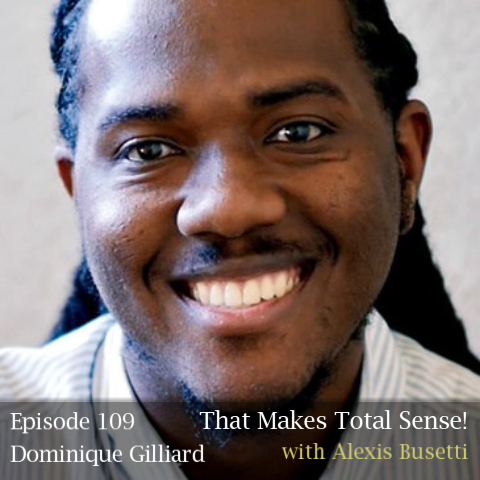
Speaker 1 00:00:07 Welcome to that. Makes total sense. A podcast dedicated to exploring God's generosity and justice. I'm Alexis. We setting the Christian aiming to ask good questions and encouraging you to do the same. Every one of us is wired by God to live out generosity and justice, but the house sometimes eludes us. That makes total sense is a way for us to get together, posture ourselves as learners and challenge one another to practice generosity and justice in a tangible way every day. Okay. So today I'm going to start in a way that I don't normally do, which will be by directing you when to look at an episode that we've already done, uh, because it's been pretty recent that I've spoken with this guest that I have on today. And on that previous episode, we talked about his first book, which was an award winner and he mentioned, oh, I've got another one coming out. So here we are back with Dominic Gilliard and the new book that he just put out, Hey, Dominique,
Speaker 2 00:01:10 Hey, excited to be back with you and your community.
Speaker 1 00:01:13 Oh, I am thrilled to have you on of course, right before we started recording, I was telling Dominique, like I finished this book yesterday, which I had finals. It was kind of an excuse, but I, I should have known better. I should have given myself about a week to process what's in here. So if I'm acting like a blubbering idiot, we have an agreement. Dominique is going to take over the show and he's just gonna, he's just gonna throw down some of the stuff he threw down in the book. Right?
Speaker 2 00:01:43 We got it.
Speaker 1 00:01:44 It's not going to leave me hanging on me. Um, so we're talking about this book, subversive witness scriptures call to leverage privilege, and this is serious. It is so good. Dominique. I just cannot tell you what a gift. I feel like this book is to the church. This book is a gift, um, is a gift to the church. And we're going to, I hope we get to talk about, um, kind of the layout and some of the things that you've done there, but I want to say there's a scary word. I just dropped it. There's a scary word on the cover, which is privilege. And you address that like in the intro basically. Um, and so maybe we should kind of go there first before we get into some of the meat of the book. And could you tell us what is privilege? Why is it scary? You know, what, what kind of led you to want to have this conversation surrounding privilege? Because it is, as you have said, it is a, it is a message in a book for such a time as this. Um, but why?
Speaker 2 00:02:59 Yeah. So when I do my job, which is to be a pastor to pastors for roughly 900 congregations throughout north America, and I do ministry and other, uh, context outside of the denomination, uh, this conversation about privilege is really something that's hamstringing, the church's witness. And for those who don't know, it is a labor of love to write a book. Uh, it, it takes so much emotional, spiritual, mental, physical, um, energy to take something from idea to the finished product. Um, and so for me, I'm only willing to give myself to that process. If I really believe it's going to be something that is going to help the church bear more faithful witness. Um, and so in this book, I make what I believe the mission of the church, very simple, uh, is to make guy's name known and loved shown throughout the world. Um, I think we make it a lot more complex sometimes than it has to be.
Speaker 2 00:04:18 And I think the real guiding anchors for that are the great commission and the greatest commandment, um, and holding them equitably together as opposed to uplifting one at the sake of the other. Um, but this conversation about privilege is something where I just noticed that there were predominantly three congregational responses to the conversation. Um, the first congregation would be a congregation that really just denies the privilege, exists and denounces the conversation is unbiblical. Uh, so pretty much that's the start and the end of the conversation in that context, uh, the second congregational context, uh, the leaders really kind of recognize that there's something going on, but they say, you know, it's too tricky of a terrain to navigate. It'll be perceived as being too political. So instead of really entering in, uh, and losing funding and losing members, we're just going to kind of sidestep the conversation.
Speaker 2 00:05:29 Um, and then the third congregational response, uh, leadership and congregants, both affirm their privilege is real. And they try to do the hard work of trying to reckon with it and, and consider what it means for their lives. But oftentimes in those congregations, uh, many of the members feel immobilized, uh, by the weight of privilege and don't know what to do with it missionally. Um, and so seeing this trend, uh, over and over and over again, uh, in congregation at the congregation, it really drove me back to the word of God and really some intimate time with, with God and, uh, inner circle discernment, uh, partners. And through those times of reading and praying and discerning, um, it became very apparent to me. The scripture offers us a fourth option. Um, and that fourth option says that privilege is real. And, but we're always going to have the temptation of exploiting privilege for our selfish gain rather than taking a <inaudible> two type approach, taking the mindset of Christ and understanding that privilege is something that we're supposed to set, uh, intentionally steward and leverage for the further inside the kingdom and to sacrificially love our neighbors.
Speaker 2 00:06:55 Um, and so as I went back, um, the scripture, I saw that there is not just this example in Jesus, but there were these consistent examples throughout scripture, uh, that continued to attest to this reality of privilege being real. And the people have got understanding privilege in a distinct way, in a missional way that allowed us to intentionally leverage it to further the kingdom and sacrificially love our neighbors. So, uh, when we talk about privilege, uh, let me just start by saying what I don't mean when I talk about privilege. Um, acknowledging privilege is not about condemnation or shaming or guilting one, another intercourse actions. Uh, I believe Christians are called to acknowledge privilege because it's real and because doing so liberates us from its power, um, confronting and addressing privilege, frees us to live into our creative purpose fully and freely, which again is to make guys named, known, and love shown throughout the world, uh, privilege.
Speaker 2 00:08:06 Uh, I talk about it on a couple of different levels. Um, so there are privileges that are the by-product of our ancestors sins and really the rotten fruit of the churches indifference to systemic oppression and complicity with evil, um, privilege in that sense is rarely neutral or benign. And it almost always comes at the expense of our neighbors. Then I talk about a different kinds. So those privileges are mostly privileges that are connected to embodiment. So the ways that our bodies are composed, um, so we're talking about things like gender, uh, race, mental cognition, able-bodied weakness, these different elements of our bodies, um, and the value and the currency that society, a fallen society, worldly empires, ascribe to our bodies based off the patterns of this world. Then I talk about another form of privilege, which is more of kind of a positional privilege where I talk about God.
Speaker 2 00:09:19 So the first part that is a privilege, uh, let me just read a extort real quick to make sure we're clear about this. So privilege connected to embodiment how our bodies are constructed, race, gender health, and more slowly but surely negate the fundamental biblical truth that we are all created equitably in the image of God. And therefore suddenly creates a sliding scale of humanity where some lives are respected, protected, and valued over and against others privilege. In this sense is the offspring of hardened hearts and unrepentant sin spirits. It truly sustains and frequently expand systemic injustice, social inequities and targeted oppression privilege is not just something certain individuals are endowed with. It also becomes institutionalized perverting, the societies, customs education, laws, and practices. So that's one thing when we're talking about that kind of privilege and that kind of privilege, I make sure to really explicitly state that that kind of privilege is a privilege that is not reflective of the Will's guide.
Speaker 2 00:10:33 Um, that kind of privilege is something that is, is something that really kinda attest to when we abide by it as Christians. It really attest to the fact that we really have conformed to the patterns of this world and have not lived distinctively and missionally and purposely for, for Christ and the kingdom. Then I talk about a second, uh, manifest as general privilege, which again is more positional privilege where I talk about the fact that God does intentionally and strategically place believers in positions of influence and distinction for them to bear witness to who and who's they are through how they choose to live and love in those places of distinction. And when that happens and we faithfully understand that our privilege is not something belts, positions of distinction and influence aren't for us to exploit for our own selfish gain or just the gain of our nuclear families to make our lives more comfortable and plush.
Speaker 2 00:11:44 But they're missionally supposed to be positions that allow us to advance the kingdom and sacrificially love our neighbors. Then I talk about how we, in those places of distinction, we become the 11 and the loaf, and we really are able to create kingdom pressure points within unjust systems and structures that need to be deconstructed and reconstructed in a Christ centered manner. And so in that I talk about a whole range of, uh, illustrations of this, but Joseph is one that I talk about, and I like to point to Joseph because Joseph is one that allows us to see, like, to talk about privilege. Doesn't mean that we're saying that your life has always been easy and there's never been any struggling. Joseph was kidnapped by his brothers, MIS mistreated, and essentially traffic came in traffic, and then God, you know, sees him through all of that and points them to the second, most powerful position in the land.
Speaker 2 00:12:43 And missionally Joseph is supposed to be using his position to help the people of God navigate their way through this famine. And Joseph gets a chance when his brothers come and represent his family to get their food portions. And Joseph has to fight this temptation to exploit his privilege, to use it to enact revenge and vengeance, uh, for, uh, the injustices brothers did to him. But Joseph was in a centered place. He was prayed up, he was discerning and he was able to resist that temptation and to live into his, his missional purpose, uh, in this place of distinction and successfully helps the people of God navigate this, this, uh, complex reality of trying to exist in a famine. And so I raised up a number of different examples of the people of God who got put in places of distinction, thinking, think of like the prophets consistently.
Speaker 2 00:13:46 Uh, these are people who have the ability to speak into the lives of the king to actually speak into, uh, you know, judiciaries and elected leaders and to remind them of the distinct nature of what the people call God or call it to be in representing the world. Um, and so there are these totes undeniable to me, the God does actually give people privileged positions and he's God expects them to live missionally in those positions. Um, and then lastly, I'll give one more example of kind of how I see this also articulated. Uh, one of my favorite passages in scripture is Proverbs 31, uh, particularly verses eight and nine, but in the broader chapter, we see, uh, the King's mom write him a letter. And she is basically telling him because of who in whose he is, uh, who being a Christian and who's being someone made in the image of God commissioned to live in a way as a co-labor, who collaborates with Jesus and the holy spirit and reconciling all things to God's self.
Speaker 2 00:14:53 Um, she tells him that he's supposed to rain in a distinctive way because of who and whose he is. And so she says, you can't be like all these other Kings out here in the world who are abusing their power and abdicating their responsibility, particularly their responsibility to make sure that the least of these are cared for. And their dignity is affirmed and justice is upheld for them, the courts. And she tells them that he has a responsibility to speak up for those who can't speak for themselves to make sure that justice is enacted for the least of these in the halls of power. Um, and she said, and, and in doing so, she says, you help people to understand who and whose you are. And I think that is a missional word for the body of Christ as a whole. Um, it's one that she spoke directly to king leukemia, but it reverberates out to the broader body of Christ.
Speaker 2 00:15:49 Um, and so, and I connect that. Lastly, I wrote that in John 13 34 35, which is a critical passage where Jesus literally gives us a new commandment. There's not many places where Jesus explicitly says, this is what I'm commanding you to do. And in this passage, Jesus says that the world will know that we belong to Jesus by how we choose to love one another. And, you know, I think there are a lot of different ways that churches think that the world will know that we belong to Jesus. Um, a lot of people think is through culture roars. A lot of people think it's, uh, for what we stand against. It's a lot of people think, uh, it's about all these things, but Jesus, in this tells us that there's one way that the world we're really know that we belong to him and it's through how we choose to love one another.
Speaker 2 00:16:43 And I can think of a few ways that we prophetically get to bear witness to the fact that we belong to Jesus and choose to love one another, um, in distinctive ways then entering into our neighbor's suffering when that suffering or that oppression or that injustice doesn't directly impact us. And we have the ability to, again, conform to a worldly logic that says that I only have to be concerned with oppression, injustice, or, you know, systemic disparities when they directly impact me. But when we, as the people, God see legislation, uh, institutional practices or systemic targeting, impacting our neighbors. And we enter in, I believe we start to live into what scripture calls us to do when it says that we're supposed to share in the sufferings of Christ, that we are repairs of the breach, as <inaudible> says, um, when we live into the Luke four, 18 and 19 mission, that Jesus commissioned pronounces as his mission.
Speaker 2 00:17:53 Well, if we're people whose lives are supposed to be patterned after our crucified Lord and savior crucified and resurrected Lord and savior, then Jesus has mission must inform our mission. And when we live in that way, and we prioritize passages like Matthew 25, that Jesus said, whatever you did to the least of these, you did to me, like these are the ways the scripture is laying out, that the world will know that we belong to Jesus. And I think it's so powerful because not only will the world know, but also when the world sees us living and loving in that distinctive way, the world is going to want to know why we do what we do. And this is where we get a chance to bear witness to the fact. It's not that we're just great ethical people, but it is because we actually are new creations because it is no longer we who live, but we have died to self.
Speaker 2 00:18:45 And now it's Christ who lives in and through us. And this is one of the ways that we get to reconcile the gospel of Jesus Christ, which has been so fragmented into a evangelism versus justice, kind of articulation within so many of our communities. And that honestly is not the gospel of Jesus Christ. It is only the gospel of Jesus Christ when evangelism and justice are whipped together. And I believe this passage really tells us that a lot of the ways that we thought about this historically, is that we evangelize first and then we do justice second, um, is really the missional model that scripture oppose. But in this passage, it actually kind of reverses that and says that, you know, most people are most interested in what we do more than what we say. And it's when we actually live in a tangible way that the world can see that there's something distinctive about us. Then that's when they get the curious as to why. And that's when we get to point to Jesus as opposed to ourselves. So that's the, uh, broad way of answering that question.
Speaker 1 00:19:49 No, it's, it's good. And I kind of want to go, like, I kind of want to go to the, the book ends of the book, you know, so trying kind of started here and I want to go to this repentance issue in a moment, but I feel like it kind of connects to with what you just said. So the positional stuff, um, like I'm hearing yes and amens, you know, there's, there's a definite amen corner to that. When you start, when you talked first about the embodiment, I feel like that has been where I at least kind of, you know, some of the things that I see poking around on social media or something like that, you know? Um, and I think that's where I see kind of the most objection when it comes to congregations or individuals within congregations, because people will say things like this, well, I can't help how I was born.
Speaker 1 00:20:31 Right. And, and you're distinctively saying, look, it's not wrong. You're not sinful. If you're born a white man. Right. Why a white, straight man in America, you're not, you know, you're not sinful. I mean, I do joke with my husband and my dad sometimes because they're both white men in America and I had some, oh, it's so hard. Like, it's so hard to be a white man in America, right. Like, oh, you know, oh, this is really awful for you right now. You know? And of course they get the joke, but this is not a sinful thing. Right. Yeah. But I do like how you point out though that, to live into that privilege for your own gain, you're just continuing with that rotten fruit that you say our ancestors, um, you know, planted these things that are, they're bearing this rotten fruit. Right. And we, I think, I think as much as I hear that, objection, I want to keep beating the drum of repentance generational sins and generational repentance, corporate repentance. Right. Because the answer will, I can't help it if I, this is not an answer. This is, this is not, um, a biblical response to owning that privilege. Right. Um, and so I, I was reading this, finishing this up this weekend. I turned over and looked at my husband. I said, I really wish I was smart enough to understand more of what John the Baptist was preaching about.
Speaker 1 00:21:54 He's one of my favorites, but every time, and he goes, oh, Jay bap, because I was reading a new Testament scholar who abbreviated John, the Baptist, Jay bap everywhere and said from now on, I'm just going to call him Jay bat. Well, Jay bap, you know, talks about this, this fruit producing fruit in keeping with repentance. Right. And, and I want you to go there, but I want to, I want to mention something first, because you talk about the difference between oral confession and repentance and how we've gotten those kind of mixed up. But that, that tags along with this, um, this privilege though, that you're talking about for like this kind of embodied privilege, right? Like we, we need to anyway, I think there needs to be a connection there, right? Like we ha we have to, we have to own those two things together.
Speaker 1 00:22:41 But on the, on the first point of this oral confession saying, I'm sorry, apologizing, versus this repentance that we've gotten them confused, um, in the American evangelical church, I think a lot of times, um, I've said this before in one or two other podcast episodes, but it, it just spoke to me so much. This was goodnight, probably 15 or more years ago. And my husband and I were traveling to Israel on a regular basis. And we would talk with believers in Israel and, you know, in American evangelicalism is specific specifically. I grew up Baptist. And so the phrasing that we would use when I grew up was when did you get saved? Right. If you wanted someone to share their testimony with you, that was the question you asked, when did you get saved? Right. In other traditions, it's other things like, when did you decide to follow Jesus?
Speaker 1 00:23:32 Or when did you get baptized or, you know, various things like this, but with the believers that we were speaking with in Israel, if you wanted to hear someone's testimony, or if you ask them a question like that, they would rephrase it. And their phrase wasn't I got saved when, or this is when I was baptized their phrase, was I repented? So their phrase was, well, I was 17 when I repented or, you know, my mom repented first and she started doing this or that. And then I repented when I was, and that, I hope that never leaves me, um, that language, right. Because it really does give us a more right picture of how to look at this whole following Jesus situation. Like it's supposed to be like our whole life and everything. And I think this is the same, right? This leveraging privilege is the same. Well, well, we repented, we turned around John, the Baptist is asking us to do something and then to plant in this way now. Right. And move forward and plant in this way. Um, so how does this producing fruit and keeping with repentance connect with this privilege, leveraging that you're suggesting in the book. Yes.
Speaker 2 00:24:56 So first I want to speak to what you talked about a little bit early about privilege and sin. So the way I, I try to be very intentional about this. Having privilege is not a sand. Absolutely no privilege emerges from sin. What is sinful is exploiting privilege for our own advantage and turning a blind eye to the suffering of our neighbors in order to sustain it.
Speaker 1 00:25:23 And when you talk it, when you preach it like that, I can almost just now I almost saw the cycle, right? That we've got this rotten nasty fruit that is still being born out from our ancestors in this country. We can say all the way back, right. For fathers and before we've got this, and then you say, well, you're born into that. You're, let's, let's just use kind of one of the most obvious examples you are born the son of a slave holder. You can birth isn't sinful. Yup. You continue in your father's actions and continue to exploit people for your own personal gain. Now you're sending, and then you have kids. Right. And then you can see, and when you say it like that, I feel like I can almost draw the circle. Right. That, that makes the wheel, that just keeps on, keeps on turning to where we are right now. Okay. Sorry, go ahead. I just,
Speaker 2 00:26:15 Yeah. So, you know, I think I was just having a conversation online and we were talking about, we were trying to define power and someone was saying power is the ability to act. And I said, yeah. And I would add that power is also the ability to coerce others, to act in a way that aligns your will or interest. And my friend responded and said, what you're talking about is coercive power. But I think it's important for us to talk about power has something that just is, and it's not necessarily good or bad. And I think in that way, if we frame it that way, then I think privilege really is something that exists. Like it is a concrete material reality that is the rotten fruit of ancestral sin. Um, like it is now what matters to me though. Like some folks get hung up on that part of the conversation.
Speaker 2 00:27:25 But I really, what I think the gospel is most concerned with is what do we do with privilege? And for me, if we understand that our lives are supposed to be focused on again, making guy's name known and loved shown throughout the world, then privilege gives us the opportunity to bear, witness to that again, through how we live and love. But also it allows us sometimes people of distinction to be in places and spaces that other people are excluded from. And in that place, you get a chance to leverage your privilege intentionally, to advance the kingdom and sacrificially love your neighbors to represent voices that aren't present at the table that have been excluded from the table. Um, you get an opportunity to subversively use what you have either been entrusted with or what you have been in Dow through a sinful system as a way to try to breed correction, um, and, uh, reallocation redistribution, reparation.
Speaker 2 00:28:42 Like it looks all of these different ways. I think one of the things that I really try not to do is the one size fits all. Um, because I really do think that so much of this is contextual. Um, and so one of the things I said, probably on the last time we were together, cause I really do believe this. We're not all called to the same thing, but we're all called to something. And it's that something that is contextually worked out within where you've been called to is kind of the way that I want to really encourage folks to think about this. But you know, the, the, the distinction between confession and repentance is really, really significant because, you know, you can confess something and then continue to live in sin. Um, like confession doesn't require you to turn away from Santa and turn back to God, right.
Speaker 2 00:29:40 Um, where repentance is not confession is a one-time action. A one-time acknowledgement. Repentance is a lifestyle of turning away from sin and turning back to God and living in right relationship with God and neighbor and creation as a whole. Um, and if you read my first book, when I talk about right relationship, right, relationship is just shorthand for righteous relationship. And if you look at the word righteousness as is broken down in the Greek and Hebrew righteousness and justice are inherently interconnected so much so that you could legitimately flip one out, trade one out, and it, the passage would still have the same substance in regards to what we're being called to as followers of Christ. And so when we live uprightly with justice, with righteousness before God and neighbor, we are living into repentance and living in that way should produce tangible fruit that the world can see.
Speaker 2 00:30:48 And that can be, you know, I know the word measure makes people nervous, but there, there should be fruit and new life and flourishing that comes from our turning away from sand and turning back to God in right relationship with neighbor and creation. And so, because we don't call folks to repentance in a consistent way, what I believe happens is that too many believers become content with confession and they therefore stay conform to the pattern and the logics of this world. And we become comfortable in things that the gospel calls us to be diametrically opposed to. Um, and we then become a farmers of the status quo as opposed to folks who are ushering him, the in breaking kingdom, which again is antithetical to so many things that are hallmarks of worldly empires that are constantly trying to seduce us into giving our allegiance to flags over the cross.
Speaker 2 00:31:58 Um, and so I think this piece of it is really important and to bring, break it down to what you were just talking about, what you saw, um, during your time in Israel. Um, I think the story of John, uh, I'm sorry, this story is the key is, is the story that really gets after that. Um, the key is when he encounters Jesus and Jesus comes to his home, Zakiah is understood. And I, I wonder if they're really, I talk about the power of the power of proximity in our last podcast. I wonder if it's the power of the proximity of the Lord and savior being in his myths that he was having had had a greater clarity about this. But the key is with someone who got rich off of robbing his neighbors, like literally not metaphorically, he got rich off of robbing his neighbors and participating in the anti gospel, uh, system and structure that ensure that he would always come out fiscally more prosperous then before he engaged in any kind of connection with his neighbors.
Speaker 2 00:33:10 Um, and so when he encounters Jesus, he understands that it would be inadequate for him to say, Lord, I robbed my neighbors, I'm sorry, but to retain all of the material wealth and possessions that he had accumulated over the years by participating in this sinful system. So he not only declared that he robbed people now, the declares that he knew, what he was doing was wrong. Not only declares that he understands that this is created, uh, uh, under cast within his community, but he says that I will repay everything I've stolen, but not only everything I've stolen before times as much. And it's really interesting that it's only after Zakiah acknowledges through his repentance, that it's not enough to confess. And it's also not enough to pay back one to one what I've stolen, but I actually have to multiply that because my oppression has had a multiplicative impact on this community, that Jesus says that salvation is coming to this house.
Speaker 2 00:34:27 Now I know this conversation makes some people a little antsy because again, they start to think that what we're pointing towards is works righteousness. And that's not what we're saying. What we're saying is that the gospel is very clear that we are not able to faithfully follow Jesus and to participate or passively benefit from knowingly passing passively benefit from oppression. Like when we come into a revelation of the impact of our sins, we are not only called to confess our sins. We're called to try to repair, make repair reparation. Um, and it was a beautiful story. And the fact is the key is demonstrates in Jesus has affirmation of Zachias. His words demonstrate that there's something more that's required of us. And that this is what it looks like to live a lifestyle of repentance, which is, again, not just this one-time act of confession, but is a turning back to God and really surrendering to the holy spirit for it to guide our steps and to help us to really work out, um, work out what it means for our faith to be expressed in love. Um, and for us to men, really, for us to be repairs of the breach, because the key is participated in creating and expanding the breach. And so as someone who's commissioned to be a repair, he had to really submit himself and his wealth to the holy spirit and discern what a reconciliation actually entails.
Speaker 1 00:36:17 Yeah. Zacchaeus is a great place to kind of start talking about the, the meat of it, you know, like what does this look like on the ground? Um, because I will just say the phrasing that you used. I, I had never seen this before. Um, and I started because I'm like this, this, this will convict some people, okay. It convicted me. Um, you use this term fiscal socialization. I'm like, Dominique, can you get out of my business for a minute, please, if you would just stay over there and mind your own business, you
Speaker 2 00:36:51 Know,
Speaker 1 00:36:53 Like fiscal socialization, what, you know, and I would say like, I would argue, and I don't know, I'm not gonna put words in your mouth. I think you would probably argue the same thing, especially because you talk about pre kind of privileged stacking, you know, near the beginning of the book. But I would say probably everybody who has a copy of this book, everybody who is reading a copy of this book has some amount of privilege that we can leverage. Yes. Ma'am every one of us does. Right. And so, so now you go on to talk about fiscal socialization. So stop, you know, but there's, but there's something like that in every chapter, right? There's, there's something like this in every chapter with every real person, right. With every character that we're seeing from the Bible that we're saying, and for Zacchaeus is the fiscal socialization, but it's also kind of along those lines of, of you, we've all got something that we can leverage.
Speaker 1 00:37:44 You know, when we look at some of Jesus's words, some of these, um, you know, the least of these are you came to, to do this. And he quotes Isaiah, um, in the synagogue, um, or even, you know, when we, when we spend our time and I think it's a good thing to spend time reading, like, you know, liberation, theologians and things like that. But, but when we look at this in the end, the impact that says the gospel is good news for everyone, the gospel is good news for the oppressor. And the oppressed is that key is fell in the former category and the gospel is good news for him. And so the gospel, Jesus, didn't just come, come to save the least of these, right. I mean, we, we, again, the argument is we're all that, right. But, um, but when we've been a part of these systems of oppression, Jesus came for us to, he came for those of us who have, and again, I would argue this probably of us at some point where we have utilized our power for something that is not for the good of our neighbor, right.
Speaker 1 00:38:41 That is a selfish thing. And so the gospel is good news for us too. I'm reminded, I don't know why this just came to my head. I read, uh, Jackie hill Perry, his first book years ago. And she went through this little speech and she said, I think it was her mentor was, was giving her saying like, how do I get through this temptation? How do I do this? And her mentor told her, like, don't you understand the gospel? Didn't just save you. It's the gospel that keeps you. And I'm like, this is it. The gospel is good news. And not just as you, as you mentioned in the fruit of repentance, it's not a one-time confession. The gospel is this good news that keeps us on this path of repentance that will help us to, to prayerfully, hopefully bear good fruit, new life flourishing. Yes. My, my notes are nuts over here. Yeah.
Speaker 2 00:39:32 I mean, I, I try to point, I've tried to bear witness to that in the fact that like the Kias was a sworn enemy of his community. Right. Um, he was despised as an exploiter, um, but through his repentance, he becomes a covenant member of community, a vital piece of communal flourishing, um, and the pursuit of Shalom. I try to, uh, and another chapter I talk about, uh, Pharaoh's daughter, um, and the story of Moses, um, where you, you have somebody who is being indoctrinated in her household to see Hebrews as less than her as dispensable people. Um, and you know, in our minds, we would think that, you know, when Moses is, uh, put in the basket and the basket finds itself on the banks of Pharaoh's household, and he's found by Pharaoh's daughter, that she's probably like the second worst person in the world who could discover the best yet.
Speaker 2 00:40:45 Um, and yeah, and then she would be like, think about the bigotry that was exposed to her over her lifetime, over the dinner table, she was primed and conditioned to carry on this toxic legacy of bigotry and oppression. But when she goes and she actually encounters Moses and opens the basket and looks into his eyes, we really see the transformative power of the gospel. Um, the gospel has the power to break generational cycles of bigotry. It has the power to liberate us from these prescriptive roles, uh, that our parents or grandparents, or whatever have cast for us. And oftentimes that we unconsciously live into, um, and the, the, the power of the gospel is really displayed in the troubling of the water. Um, and when she counters Moses, she looks, and she doesn't see a child whose life doesn't matter because of his athletic identity.
Speaker 2 00:41:57 She doesn't see a disposable person whose only value is through the enslavement and exploitation of their labor. She sees somebody, this wouldn't be the language that she would have used, but she sees somebody who is also made in the image of God. And she realizes his humanity. And that ultimately her flourishing is inherently connected to his flourishing. And this is the kind of kingdom revolution that we talk about. The gospel is having the power to enact, but it only is. It's also going back to what you talk about in the fact that the gospel is good news for her, because she actually gets to move from being the, the, the colonizer, the exploiter, the, the, the, the, the person of oppressive power into a person who actually leverage his, that power to create a more equitable society and a place where more of God's children have the ability to live into, uh, what God intended them to do.
Speaker 2 00:43:01 It just really live into their creative purpose and their, their flourishing and, and a community of Shalom. Now, in saying that, you know, there's always going to be, you know, folks who say, but yeah, that was when baby, or that was one story, or that was whatever. But I do think that these, these stories are our foretaste of what we know will ultimately be fully manifested in the inbreaking kingdom. And what I believe that these stories are supposed to be are, they're supposed to be stories that feel our, our desire and our longing for the kingdom, and inspire us to realize that while there are not enough of these stories, that these stories are possible. And if enough of us show up and live intentionally for our creative purpose, then we do really create these kingdom pressure points where we actually start to see, these are just systems and structures of exploitation and oppression, tart start to topple.
Speaker 2 00:44:07 And when they topple, we get the opportunity to use their synergy that we built together to prophetically reconstruct, um, and speak life into the reconstruction of systems and structures in a way where they actually do create room for communal and human flourishing and Shalom. Um, that's what it means for, to be co-laborers with Christ. And I point to that specifically rooting that articulation and the scriptural true for Jesus says that we will go on to do greater things than what he was able to do during his time on earth. And so I think part of what that is, is this broader commissioning of the body to see the signposts, these foretaste of the kingdom on earth, as it is in heaven and us developing enough synergy and enough belief to live in the already in the midst of the night yet. And we start to break through, uh, the, the, the worldly logic of the empire, and because we've been liberated from the powers and the principalities, and we are now free to live as people who know the end of the story. And as we live in that way, that's where we really become the transformative presence in the world. The scripture commissions us to be.
Speaker 1 00:45:35 Do you have time for one more? Yeah. I was hoping we would get to Esther and I just don't know if it's going to happen. So I'm going to throw it out,
Speaker 2 00:45:43 Just go to Esther.
Speaker 1 00:45:45 Well, we can get there, but I want to throw it out as a teaser and say, if we don't get to Esther, Esther was my favorite chapter. I'm just going to put on the record. I'm going to say yes. And yes, that is in a book that has a whole chapter on Jesus. Esther was my favorite chapter. Oh, that's not sacrilegious, but it was, I mean, whew. I'm just going to say Vashti. Okay. That's it. That's it. I'm gonna say whew and Mordecai. Okay. I'm done. But I want to talk about Jesus for a second, because when you talked about the Pharaoh's daughter, I remembered what you said about Jesus, because you're talking about stuff that's happening at the dinner table, right. And it's in this, in this legacy and this, this imperialism, right. That she was bred into. Right. And, and, and the thing in this familial tradition, right?
Speaker 1 00:46:29 This is, this is her lineage. And the thing that I loved, this phrasing that you used, I mean, you're the writing in this book. Let's just stop for a second. I did have to get my dictionary app out a few times, but I like that. So it's great. I just make that a habit ever since I started school, I circle it. And I look up the, you know, and then I write the definition in the margin. I do that every time until, until I can actually remember what those new words mean. It's, it's fine. But in, in this chapter on Jesus, what I love, the way you phrased it is something like it's Jesus continuing in his prophetic tradition. Okay. Now, now Pharaoh's daughter had a tradition. Yep. Right? Yep. And, and I'm thinking about Jesus continuing in, in his prophetic tradition, because here's what I'll say.
Speaker 1 00:47:22 I say yes. And amen to that. But I think a lot of times, in some traditions in the, we look at these, like, we look at Jesus reading from the scroll of Isaiah in the synagogue, right. And sometimes what he's reading has eclipsed us, and it's just like, we're, we're gone. And then what we look at it is we say, well, he did this to fulfill the scriptures. We go right to that next part. Right. Well, he did this to fulfill the scripture. So he did this difficult that it said this, he did this. And Matthew does that for us. Right. Matthew gives us a checklist, man. Every single time he does, Jesus does something. That's fulfilling anything. That's a prophetic witness. We get that. And we get to check all these boxes and we get to use that in our evangelism apologetics and all the things.
Speaker 1 00:48:04 And I think it's great. But I think sometimes we can look at the checklist and we see that Jesus has built these things just as the scripture has said. And we have forgotten that his prophetic tradition is that of Isaiah, that his prophetic tradition is that of AMS. Right? His prophetic tradition is that of a ZQ. And his prophetic tradition is that of Jeremiah who wept over his people, right? This is his prophetic tradition. His prophetic tradition is that of Moses who came as a deliverer, right. Who utilized his privilege, like his prophetic tradition is that of these profits that we see from the old Testament, Jesus is a prophet he's continuing in his prophetic tradition. And in that continuation, he is leveraging his privilege that you said, okay, I'm done preaching on Jesus, but I just wasn't.
Speaker 2 00:48:57 Yeah, Jesus is, Jesus is the greatest prophet. And so the other way to read it is to read it backwards. All of these other profits are reverberations of Jesus, but they can never fully encapsulate all of what Jesus manifests and really extends to us the manifest as the hands and feet of Christ in the world. And so I think we have to learn to read Jesus both ways, because I think when we don't, we make Jesus and the gospel too small. And if there's anything that I'm really trying to help us to reckon with in this book is all of the ways in which we make the gospel too small and all of the ways in which we focus so much on Jesus's and the church's mission that we failed to reckon with the fact, the scripture is very clear. This Satan has a missional purpose too, and saving's missional purpose is to kill steal and destroy our witness. And there are very few things that Satan uses to mobilize that mission, like unbridled privilege
Speaker 1 00:50:01 That got a dog ear in my book, by the way that got a star and an underline and a dog ear in my yes, yes, yes. That's ridiculous.
Speaker 2 00:50:11 Yeah. And it informs how we read the scriptures, preach the scriptures, teach and disciple folks into the scriptures. And I was really trying to reckon with in this book, the questions that naturally that we're conditioned and discipled not to ask of the techs, um, and to ask of God. And I think when we have this kind of censored encounter with God, it limits our ability to truly see ourselves as people that God would ever call and choose to work in and through. And it hinders our ability to envision how God is inviting us to actually prophetically bear, witness again, to who and whose we are, um, in our communities and to speak truth to power. And not in a way that's all about deconstruction, because I believe deconstruction without reconstruction is just as, maybe not just as harmful, but it's very harmful. And so we have to really find ways to think about how we're called to the work simultaneously of deconstruction and reconstruction.
Speaker 2 00:51:23 But I love the way that Brian Stevenson says it. I quote him in this book. He says, I believe in truth and reconciliation, but I also know that those two are sequential. And I think so much of what we try to do in the church is to pursue reconciliation without truth, because the truth hurts sometimes. Um, and I think one of the things that constantly invite us to do as the church is really to move from milk to solid foods. So we can start to have some of these mature conversations that are rooted in truth. And I always say, um, within the immersive discipleship experiences that I lead is that we have to speak the truth in love, but we cannot weaponize the language of love to shroud out hard truths. Like we have to be willing to go to these hard places because we know that there's life and liberation and freedom and flourishing on the other side, like we don't go there to, to make people feel shame and guilt and condemnation. We go there because as we try to pursue life together, the only authentic way to get there scripture tells us it's true because that's the thing that will set us free. And so we have to be willing to speak the truth. And I think a fruit of our truth and our commitment to stay at the table together will be reconciliation. But it's only when we tell the truth.
Speaker 1 00:52:51 It's only when we tell the truth and at, okay. And that's going to bring, okay, w if we, if we can get somebody in the Esther chapters can be mortified, because I really, I hear here's part of the reason why the Esther chapter hit me is because, and, and you quote her. Um, uh, and she actually came on the show to talk about, uh, the book, but, uh, Brenda Salter McNeil wrote a whole book on, on the Esther story. Right. And I think it's one of those that's that is super familiar to us as, um, as, you know, church people, if we grew up in Sunday school, you know, or things like that. Um, but the space that you spend on Vashti was, um, wow, really valuable. This is this, that, that was, that was pages well spent. Uh, I really felt, and, and, and I would say, I think it would be a good accompaniment to Brenda's book, but I'm almost like, can you just take the Esther chapter and expand that whole thing?
Speaker 1 00:53:53 I mean, can you, can you read a whole book on, you know, on this subject from Esther, because it was, it was so good. The places that you took us. So I would say Vashti kind of starts it in Esther kind of ends up, but in the middle, you've got more to Chi. And the reason I'm going to say this is this will be the last one that I bring up less character, because I agree with you and Brian Stevenson, that truth has to come before reconciliation in that order sequentially. But when the truth comes, I would say if, if, if we're talking about kind of steps in order, there are some of these things that you cannot tell the truth about with, without spending some time in lament after that, right? If you're telling the truth about this, if you're the person who is, who is telling the truth, if you're not spending some time in lament about what you already know, right?
Speaker 1 00:54:50 This is, this is probably not going to lead you to a healthy place as a truth teller, as a, as a, you know, as someone who is bringing peace is, is trying to make peace and not keep peace. But if you are on the receiving end of hearing some of that hard truth, some people for the first time, yeah, man, if that doesn't cause us to lament, um, we need to ask Jesus to, to, to examine our hearts and help us examine our hearts. Right. And the place that I will say, one of the places that struck me, and you can take us wherever you want to go with Mordecai. But the place that struck me was when you really point out, because, because people will remember this story, Mordecai is, is, is distraught about what's happening in, in the kingdom. And he's wearing his, um, his grief clothes, his morning clothes.
Speaker 1 00:55:44 But the law is that he cannot get past the palace gates while he's in these morning clothes. Yeah. So Esther's first response is, will change your clothes, bro. She sends him some new ones, right? You want to come in and chat with me. That's great. Why don't you go get dressed? Right. And he refuses them. This is no, I'm not going to change my clothes. Right. I want you to pay attention to what's happening. I'm in morning here. And so the relationship between lamentation and power was really, um, eye opening for me. So I'm just going to say that was like, that was, that was crazy. What, where, where would you, what would you like us to, to think about in that, in, in that way?
Speaker 2 00:56:28 Yeah. So a couple things. So first, um, what you talk about if, um, once we hear the truth, if it doesn't compel us to lament, um, really we've gotten hardened hearts, um, and you know, the first place I, I encourage everybody to start when they feel like that might be at play and I've worked within them sales or their community is really to pray songs 1 39, 23 through 24. Um, that really asked God to search our hearts, to know us and to reveal to us anything that is really keeping us from kind of living, uh, faithfully in response to the gospel. Um, that's, that's the, that's the place to start. Um, and I think sometimes within both justice and evangelism work, we, we can forsake the role of prayer and the spiritual battle. That's simultaneously taking place as we are trying to materially and physically navigate these realities on the ground.
Speaker 2 00:57:27 Um, so that's the first place I start. Um, secondly, I would also say that, um, I agree with you with the, the rhythm. And so one of the things I offer up in the book, uh, is a liturgical rhythm for our congregations of confession of a remembrance, confession, lament, and repentance. Um, because really you can't confess things that you don't know. And I think one of the things that the church needs to become more intentional about is calling its people to remembrance. Um, I think what remembrance is a liturgical act that keeps us centered and grounded, um, and humble and open to be attuned to what the spirit is willing into existence. Um, but I would, I would then go and say that, yeah, I think it's critically important because I think one of the things that we've been conditioned to do in Western discipleship is to prioritize intention over impact.
Speaker 2 00:58:34 And I think that prior toward prioritization is really dangerous and it causes us to be complicit with a lot of harm in the world. Um, and so Esther's intentions were very good in what she does in responding to Marta Chi. Um, but her impact would have been fatal literally, um, if he would actually comply to her request, but I do want to pause and back up, I know we're getting short on time, but I want to, I think it's really important to be honoring and to be true to Esther, Esther, as someone who's trying to navigate the complexities of trauma. Um, and one of the things that I try to really do in this book is to ground it in, in reality, I think there, there are realities that inform our lives and our behavior on the ground today that we completely disconnect from scripture.
Speaker 2 00:59:40 And we act as if these realities didn't exist and didn't impact and inform the decisions and the behavior and the witness of our four parents. Um, but trauma is a real thing that impacts our brains and our bodies and our decisions. And so Esther is somebody who has experienced trauma. She's an orphan. Both of her parents died at a very young age. She goes to live with her uncle. Her uncle, uh, tells her that app as she swept into this quote unquote booty beauty pageant, which is just a euphemism for this exploitative sequestering of young attractive virgins by the king who will ultimately be pampered before they're sexually assaulted by the king. And the one who pleases him most Welton will be appointed queen. Um, so Esther has to go through the trauma of losing both of her parents, of being coerced into sexual activity with the king all as a young teenager.
Speaker 2 01:00:44 And she's trying to make sense of her life. And one of the things we know about trauma studies now is that generally when people are re triggered, which are taken back to that place to, or to a place of trauma, they respond in one of three ways, uh, it's fight flight or freeze. And I think so much of what Esther is doing in the palace is she's freezing. She's trying to make sense of the trauma she's endured and in doing so, she really starts to engage and indulge the luxuries of the palace in a way that fully disconnects her from the pain of her people so much so that she is completely unaware of the pending genocide that is, uh, waiting on her people until Mordecai comes to the gates and actually confronts her with this truth. Um, and so in that, I think her first response to Marta Chi is an Imperial response of trying to suffer, uh, trying to silence suffering.
Speaker 2 01:01:56 Um, it's well intentioned, but that's what she's doing. She's trying to silence suffering or to say, can you make your protest more palatable? Can you repackage it in a way that doesn't feel as disruptive for me? And this is the tendency the church has when we first see suffering protest activism, if it causes any kind of disruption or makes us feel uneasy in any way, shape or form, before we seek to figure out what sin or brokenness has kind of provoked this type of response for our neighbors. Our first response is generally to say, can you repackage that? So I can become more of an advocate because the way that it's currently packaged, I can't get behind. Um, and she does that and Marta type refuses and persist. And then it's only, then that she's able to say like, okay, maybe I need to actually seek after what's actually inspiring this.
Speaker 2 01:02:58 And when she sees it, she realizes that it's not just something that concerns other people, but it's something that has something that directly connected to her life and her reality and Mordecai's persistence, um, really helps her to reconnect to the fact that her privilege has a missional purpose. Um, but I do want to also say one of the other things that I think we're tempted to do in Western Christianity is I think we desire these, these spotless heroes, these heroes who do it all right. And I don't want to frame Mordecai in that way because Mordecai is also complicit in what Esther's trying to navigate because he first tells her that she has to conceal her ethnic identity to be able to pass as Persian in the palace. Now, again, he does it based off good intentions and he's concerned about her own wellbeing, but he's also complicit with everything that she's trying to carry and navigate.
Speaker 2 01:04:01 And so I think as we just get into the messiness and the muck and the mire of these biblical characters more intentionally, I think it's actually going to be really empowering for us because I think that there's a number of people in the church who don't see themselves as anybody that God would ever choose to work in and through because of the baggage, because of the trauma, because of the imperfections. And we have created this unbiblical, uh, kind of pedestal for all of these characters that God chose to work in and through to the point that we feel like they're unobtainable, unapproachable and applicable to our lives. And so I really, my, one of my hope is that as we ground these characters in reality, more, we'll start to see the scripture is not this archaic book that has no relevance for our lives today, that these characters were not these, you know, specially commissioned set apart people that are so unattainable for us in our lives, but God chooses to mess.
Speaker 2 01:05:06 Uh, God chooses to work through the broken through people who are willing to acknowledge and reckon with their own brokenness and are seeking liberation. Um, and God needs a humble heart and openness to the reality is something else is possible. And that we're not only commissioned to think about our own individual issue, uh, interests, but we're blessed to be a blessing, uh, that we are people who are commissioned to understand that what we've been entrusted with is not just for us, um, that my flourishing is connected to my incarcerated sister and brothers flourishing to my undocumented neighbors, flourishing to my neighbor who doesn't have secure and stable housing and food on a daily basis. When we understand the Jeremiah truth, that when we seek the peace and the prosperity of our communities, of the other, that's where our flourishing is found. That's really what I want to commission us to engage in and to see how diametrically opposed those truths are to the worldly empires truths, uh, that commission us to, to abide by logics of rugged individualism and pull yourselves up by the bootstraps. And it's all about my individual freedoms and liberties, um, as opposed to this collective vision of flourishing.
Speaker 1 01:06:44 So good Dominic and, and I have heard, and I want to receive all the commissionings that you have that you have given us today. Um, but I'm going to ask you, you said it at the beginning, you're a pastor to pastors. Um, what would you, would you pray for us? Would you, would you commission us, would you call that out in us? Those of us who have baggage, all of us, those of us who have been there presser all of us, those of us who have privilege to leverage all of us, would you, would you pray for us that we would hear God's call to do that? Thank you.
Speaker 2 01:07:26 Yeah, God, I just like, thank you for my sister and her, her ministry and, uh, this platform to be able to invite, um, fellow believers into a collective discernment and engagement of what does it mean for us to really begin to function as an interconnected body, uh, to truly live as if when one, when something happens to one part of the body, it happens to all of us to live into this. What I talked about as this baptismal vision of belonging, uh, where we realized that our neighbors problem is our problem and that you invite us to sharing your through how we choose to live in love and intervene in the face of sin and injustice and harm that tries to Thorte the Shalom that you've created us all to experience. Lord, I like to pray and ask that you help give us eyes to see, uh, empathetic ears to hear and compassionate hearts that respond.
Speaker 2 01:08:40 When we see suffering in the world, help us to resist the temptation to pass by on the other side, as our wounded neighbor, bleeds to death, help us to have the integrity, to ask the hard questions, like what makes good people follow leaders who are diametrically opposed to your wheel in the world? What does it mean for us to tangibly pursue the kingdom on earth as it is in heaven? Give us encouragement, give us people who speak truth into our life, where it's a challenge and conviction and affirmation who will help hold us accountable, because this is not work that we do on our own. Uh, this is communal work that is guided and dictated by the power of your spirit. Um, that is modeled by the example of your son, help us to be repairs of the breach. Give us eyes to see the breach and give us a heart that refuses to respond in worldly ways that say, well, I didn't create that.
Speaker 2 01:09:49 I didn't construct it. I wasn't part in building the brokenness. So therefore I have no responsibility to be an ambassador for reconciliation, help us see the flaws in that worldview and in Knight and as a buyer for your kingdom. And it's in breaking nature, um, help us to be ambassadors of reconciliation, repairs of the breach co-laborers with your sign. Um, and I like to pray and just finally ask that you give us eyes to really see scripture as you have laid it out for us. Um, there are questions that we're afraid to ask. There are interpretations that we have accepted as your truth that are not rooted in the redemptive power of the gospel of Jesus Christ, help us to seek a more holistic and faithful understanding of your word so they can commission us into the world as the transformative presence that you long for us to be. And we pray all this in your son's name. Jesus Christ. Amen. Amen.
Speaker 1 01:11:00 Thank
Speaker 2 01:11:00 You, Dominic. Thank you. Great to be with you all
Speaker 1 01:11:04 Full book again, it's suburb subversive witness scriptures call to leverage privilege, and Dominique, I follow like all of your accounts. So I'll put all of them links down to get the book. Um, if you want to follow along with Dominique on, on Twitter and Instagram and well, I'm not on Facebook, but if you got one of those, I'll put that up there too. I think it's on the show notes. From there
Speaker 2 01:11:26 You a link there's also an accompanying small group video based curriculum that goes with the book because I really want people to have these dialogues in community.
Speaker 1 01:11:35 Yes. And I, I haven't even seen it yet, but I'm just gonna, I'm just gonna pump that up and say the F one of the first things I said to Dominic before we started recording was now, I wish we had six weeks. Like I wish we had a week on each one. And so anyway, I don't need to facilitate that because you got that covered. So yeah, small group and there's, and there's, even if you're reading this on your own, I encourage people to read it with a book because I think it's great to reflect, um, you know, back to one another in community, because that's what this is all about, but you've got questions at the back of each chapter, um, which is great. Um, so we can process, like I said, what we've, um, what we've just read. So thanks again, Dominique. We'll put all of that in the show notes and you guys can just click around and see what would, um, interest you. But I'm just going to encourage you grab a copy of this book. It's it's so good. And it's, it's got words in it that I just, I hope just never leave me. So thanks, Dominique.
Speaker 2 01:12:26 Thanks be to God. Thank you for having me on again,
Speaker 1 01:12:32 The links for all the resources mentioned in today's episode can be found in the show notes, music, and podcast production by Seth the city. Be sure to give us a review on iTunes and subscribe at your favorite podcast listening app, you can also visit us at that. Makes total sense.com