Speaker 0 00:00 <inaudible> hi and welcome to that makes total sense. The podcast where we talk about faith, finance and everyday life in a way that makes total sense. I'm your host, Alexis obesity on this podcast, you'll hear the personal stories of friends I'll be interviewing, who are doing familiar things in new and innovative ways. We'll answer questions specifically about money and our relationship with it. And we'll explore faith and Bible teaching together in all of these, it's not about changing our convictions as much as it is about messing with our methods. We'll have a lot of moments here together where we pause then say that makes total sense.
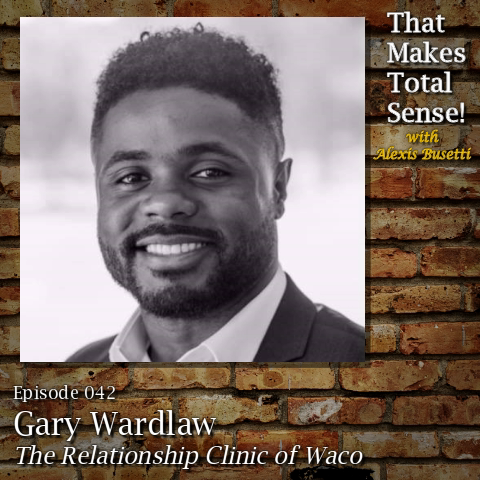
Speaker 0 00:44 Welcome everybody to that makes total sense. I am Alexis Piseti and today I have the privilege of bringing you a really, really important and really good conversation with Gary Wardlaw. Gary is the owner of the relationship clinic of Waco. He is a follower and lover of Jesus. He is a husband. He is a father, and today he talked with me very, very candidly about racism and healing. And it is, it's just so incredible. I can't wait for you to hear it. Gary tells us at the beginning, how he met Jesus and how he met his wife and how he was tasked with opening up a private practice in Waco, focusing on relationships and healing. We were both admittedly, a bit raw this morning in our emotions, uh, following the deaths of George Floyd and, uh, Arbery and Brianna Taylor among others, just in the last couple of weeks here that, um, you know, this has been surrounding the news.
Speaker 0 02:04 And so this was a good time to have this conversation because I think it's okay, um, to be raw. And so I really hope you hear Gary's heart in this and, um, and our spurred on our spurred to pray for, um, for healing and reconciliation in our country. And, uh, and spurred to talk with in conversations. Don't let this be the only conversation you hear have other conversations. Um, Gary's, uh, clinic has a phrase. They say, I pray, I talk, I see a therapist and all of these things are so important. Gary's going to elaborate on them. Enjoy this conversation today with Gary Wardlaw. Hi, I'm Alexis Piseti. And welcome to that. Makes total sense. I am really excited today to have Gary Wardlaw to talk to, Hey,
Speaker 1 02:59 Hey Alexis, how are you?
Speaker 0 03:02 I'm doing well, Gary is guys I'm so I'm so excited. I don't even know where to start with Gary. I, um, I'm gonna let him, I'm gonna let you introduce yourself in just a second. Um, but Gary is wearing his t-shirt that this campaign is about to come out in just a few days. Gary is a therapist in Waco. And why don't you tell us your hashtag to get us started your, your kind of byline for your company,
Speaker 1 03:32 Man. So the hashtag is, first of all, I appreciate being on I'm excited, um, has been a busy week and I don't think there's a better way to end the week. Um, then besides being, um, being on your platform, being on your show to talk through such an important topic. So thank you for having me on.
Speaker 0 03:51 Yeah, I love it.
Speaker 1 03:52 Yeah. Hashtag I pray. I talk, I see a therapist, um, that is, that is a campaign that is a hashtag, um, that I believe is turned into a movement. Yes. But that is what, that is what you see on my shirt. That is what you see on my social media. Um, so yeah.
Speaker 0 04:11 All right. I pray, I talk and see a therapist. So Gary, tell us who you are, where you live. Give us some context for this before we get into this.
Speaker 1 04:24 Okay. Before we really jump in. Okay. Then did you want me to break down? I pray. I talk, I see a therapist and a hashtag, or do you want me to save that for later?
Speaker 0 04:31 Let's save it. Let's save it. I just, I just saw the shirt and I had to introduce it because I love it so much. I'm ready to talk. I see a therapist.
Speaker 1 04:41 He was already okay. So the Sunday everyone was wearing it. So you have to, we shipped everything out as, as much as we could. So side note, we're going to have people come to the house today and tomorrow to pick one up. So if you want to swing by the house, pick one up. Um, I want you to come up with it. So I'll set this out your size aside. Got it. Um, okay. So Gary Wardlaw, I am first and foremost, a lover of Christ. I love Jesus. I will go into my testimony a little bit, but, um, I'm a Christ follower since may of 2000, no 10, maybe 2010. Um, shortly after I started following Jesus, I got married to my beautiful wife of nine years. We're in, we're in year nine and her name is Brittany and she is my rock. She is my best friend.
Speaker 1 05:45 Um, she is my, my blue thing. She was my, my little spoon, right? Sometimes I'm a little spoon, like she is my rock. Uh, and then she has graciously carried five of our babies. Two of them are with the Jesus and three are with us right now. Um, Anastasia, who is six, uh, justice. Who's three and mercy. Who's 18 months. And they are our three girls. I'm a girl dad through and through. Um, and yeah, originally from Virginia, um, my wife is from New Jersey. Um, I'm from Virginia. I was born in Baltimore, but my mom moved us when I was about four. Um, we met in college. What kind of after college and was, it was that much rare for about Lynchburg, Virginia for about 10 to 12 years. And then in 2017, Brittany got recruited to come to Baylor and we've been in Waco, Texas since then. I mean, this Texas is different. Yeah.
Speaker 1 06:54 Virginia and New Jersey help you. All of you because Texas is different. We're not, we're not originally Texas people. We've been here about 10 years. Um, but, and then I went two years in college in Texas. So I'm from Oklahoma and my husband's from Colorado. Okay. Texas is a toll other, it's a different country. It's a different country. You don't, until you get here, you hear people say it, and then you don't know that it's really legit until you move. He tell you in your room and you see that that's the speed side speed limits are like 85 and people don't even care about that.
Speaker 1 07:45 And then Texas is another whole thing, but don't get me started on that. It is, it is. Well, I'm glad you guys are here. You guys are here, but that's a whole, a whole different ball game. So, so I don't want to hear, I mean, I share enough of your testimony, but you are, I mean, I would say 2010. That's that's not that long ago. Yeah. Yeah. It's a relatively new, so how did you meet Jesus? Yeah. Okay. How I met Jesus. Um, so I grew up in the church, um, right. Typical black family. Um, my mom had us in church. Um, no, every Sunday, every Wednesday Bible study. Um, and we know we did that until I probably was about 16. So six things when you get to license, okay. Then you get a job and then you volunteer to work on Sundays and you don't go to church.
Speaker 1 08:47 And I had just gotten to the point where I'm like, this is not for me. Like, it was cool when I was little, but I wanted to be cool and church wasn't cool. Um, so my mom always raised me and was very important. Like, it was very important for her to make sure that we like knew who Jesus was like was in church. And then, um, fast forward a little bit. I did. Okay. In high school, I was an athlete, um, for sport athletes. So I did enough to make sure that you around, I could play. Um, so grades weren't that important to me, but, and I didn't apply myself the way I should have. So by the time college came around, I applied to all of these good schools. However, my grades were mediocre. So I ended up getting rejected from all the schools that I applied to.
Speaker 1 09:36 And so it's, it's, you know, March ish and I'm like, I don't know where I'm going to school to school. And my senior year, my sister, Gary, who is, who is three years older than me. She had got really on fire for Jesus. Our senior year bypass a scholarship to like, she had got admitted to like Hampton and I think university of Miami. So I'm like these good schools and she wanted to go to Liberty university. Wow. And I'm like, Oh, you, you weird. But you know, like, and, but she was super on fire for Jesus. So fast forward, we, I come home one day and I see this letter on my bed after getting a whole bunch of rejection letters. I see this letter on my bed from Liberty. And I was like, Hey, you've been accepted. And I'm like, uh, I didn't apply to Liberty. Unbeknownst to me, my sister had applied for me.
Speaker 1 10:36 So I was like, well, I guess I'm going to Liberty because this is hysterical. Yeah. You cannot take a year off. Right. But as a black male right there off Donald, you know, you got to get a girl pregnant. You're going to have to it's over. It's all right. It's just there's little room for that. So I was like, I'm going to college, go to Liberty. And I ended up getting in trouble. Um, and my Ben trouble led to me actually get went from going to the Dean of students office for trouble to working in a Dean of students under the Dean. Wow. Crazy story. But I went from, I went from Stacy to now being in this mentor role, working under the Dean who saw that I was going to, I was about to become a statistic. Oh, that'd be another black boy who came.
Speaker 1 11:33 And then within a year was, was out of here. So, and it was racist intent behind it. But, um, again, I mean, that's a whole nother episode. Um, but essentially I ended up working under him. Graze, went from Stacy's to A's and B's, and just, this is a new life form started to form. We started reforming relationships. He's the Dean of students, but he also had a church that he passed her. He never pushed Jesus on me. He never like, he was just doing like, I would go places with him. We just had this relationship for about three years, fast forward to my senior year, about three weeks before we graduate, he says, Hey, do you want to go to Africa? You, you to go to Uganda. And I'm like, just know it was no thing for him to call me and say, Hey, do you want to go to New Jersey?
Speaker 1 12:21 Do you want to go to Virginia? You want to go to, uh, North Carolina, I got to do this, what we did. So he's like, you want to go to, you got, and I was like, sure. He was like, you got to pass away. And I was like, yup. And I had a passport because I went to London, my junior year in high school, which was another crazy story because the only one I'm so glad I had that passport because had I not had that passport, we didn't have time. Right. We tell them God, fast forward again. We get to Uganda. And I am like, like weirded out in a good way of how much peace the people of Uganda and Kenya has. And I was sitting there like, what is this? Like, I'm surrounded by what I considered spiritual giants. And I'm just sitting there and wondering like, how did I get on this trip?
Speaker 1 13:10 Like I have not. I'm still, you know, and it turns out I'm still being a Savage. I'm still, you know, being a, not so nice guy with, you know, a lion and she, and then like just not live in the way that I should. And I'm sitting like, how did I get on this trip? So I'm like, I'm like, what is going on? And I ended up going to my room, going back to my room one day. Cause I'm sitting there looking like these people have so much joy and whatever they have, I want, but I don't know what it is, but whatever they have, like, I need it. And yeah. And I was like his joy and I, and I felt like, okay. And I knew that joy came from Jesus and our pure relationship. Not, not this passed down generationally relationship, but a true relationship with Jesus.
Speaker 1 14:04 So I was like, I'm all alright. But back to my hotel room and I'm like still tripping. I'm like, why, why me? So I go to my passenger, my door and I'm like, why me? And he was like, why not? You? And it was the most profound, but simple answer, simple, simple, but, but most profound answer I've ever received in my life. And he was like, if your earthly father wanted to take it anywhere in the world, he could, he said, your heavenly father want to take you all the way to Uganda just to get your attention. And he can do that. And it was at that moment. I was like, because mind you, he said, this pastor could have taken anybody. Right? Imagine I didn't raise a dollar. He literally clicked over when you were on the phone. After asking me that I to go, I clicked on this and said, everything's paid for, Hey, do you have any money for your shots?
Speaker 1 14:55 I'm a senior in college. I don't have any money. Right. He ended up giving me four or $500. He buy my shots. And just literally within a, within minutes, I am fully, fully sponsored trip to Uganda and Kenya, which literally changed my life forever. So he could have taken anybody. Like he had people that he was mentoring spiritually. That, I mean, take your pick. And until this day we always joke about it. When we told the story, I was like, why don't you pick me? He was like, I don't want to take you right to this day. And it's like, man, God really want to get my attention. So I go back to my room and I'm like, okay, God, like I get it. I will one as said one promise, just allow me to go still, be still be able to go around my boys when I go back.
Speaker 1 15:46 But it's easy to be a Christian in Uganda when you're surrounded stage, it's a whole new ball game. And I knew that was gonna be my challenge. So help me, Lord, when I go back to still be able to be a light and be around, not engage in the things that we still used to do well, help me to still be around. So I can now share this light. And I just, I never want him to be that person that turned to Jesus and then forgot about, or, or Disney stuff. So I got that. And until this day, like I can still go around my hometown boys and still be around people that don't believe in Jesus necessarily. But I have a peer where like, I could still be around them. It's been a challenge. But you know, that ever since that day, I was just like, I'm going to follow you. Jesus. And I haven't turned back. Um, there's in the decision was the best decision I've ever made.
Speaker 0 16:35 That's amazing. I mean, that's, that's just like, that's incredible. Even down to the passport. Right. And all of that stuff. I mean, it's nuts, but I love your prayer because I hear your prayer. We, we had a big, big, big church camp in Oklahoma where I grew up and everybody would always talk about the high. Right. And everybody got saved on Thursday night. Everybody rededicated their lives. Thursday night, everybody, everybody was saved when they left that camp.
Speaker 1 17:08 Yup.
Speaker 0 17:09 Everybody was saved, but
Speaker 1 17:12 School started a month later. Ah, I just got chills
Speaker 0 17:17 And then what? Right. But to have the intentional prayer of, and being able to recognize that was the Holy spirit.
Speaker 1 17:25 Yeah. Right. To show you, you can see me here. Right.
Speaker 0 17:32 But what's this going to look like in Virginia?
Speaker 1 17:34 Can you see me there? Yup.
Speaker 0 17:36 Yeah. That's just going to look like in Virginia. Thank you, Gary. That is
Speaker 1 17:39 Incredible. That is like a summarized version of my testimony. But that was, that was May, 2010. I never forget it. And it's just been, you know, this after month, year
Speaker 0 17:50 To year saying, okay, Jesus, like I don't want to lose this. And from that, I met my wife on that trip as well. Oh really? That's incredible. Her heart.
Speaker 1 18:00 She saw my, um, and it was, you know, it was a, it was a little story behind that too. But I feel like that's where our friendship really started in Uganda, Kenya, Tanzania. They're all special places to us because that's, that's what I appreciate. I've been love started.
Speaker 0 18:18 Wow. That's incredible. That's incredible. So now we can fast forward a little bit more. You guys went to grad school and now you have professional lives and kids and life in Texas and all of this stuff. And Britney is an attorney and you're a therapist. And I want to, I want to go in a little bit. I asked, I reached out to you guys because I S social media, I mean, right. It's, it's, it's the good, the bad and the ugly of social media, but I saw, and so I don't want to, I don't want to skip over too much, but I'm gonna let you maybe kind of take us here and then maybe take us back. Um, so I had interviewed another, the Waco gal, um, named Christine and Crenshaw, who is a lecturer at Baylor as well. And so I follow her on Instagram and after the murder of a Marbury became public
Speaker 1 19:34 <inaudible>
Speaker 0 19:35 She had posted on her story, a link to a video that you and Brittany had made on your daughter's birthday.
Speaker 1 19:48 Yeah.
Speaker 0 19:49 Yeah. Um, and so I'll put a link to your IQ profile in the notes, but I reached out to you guys because in that video, you said, we're ready to talk about it again, but can you, can you take us through that first of all, what does it mean to be ready to talk about it? Second? What does it mean to be ready to talk about it again? How were you feeling in this interim King? That's what I'm saying. Can you, can you start here, but kind of take us back to, again, means that this must be something that you guys were talking about then maybe you weren't and now you are, so why are you why the change what's going on in your heart when you're making that video and then we can kind of go from there.
Speaker 1 20:39 Okay. That's a great question. Let me take us back to kind of the,
Speaker 1 20:48 Let me, let me, let me take you back about three years and then I'll fast forward to 2020. So when we got here in Waco, um, I became a stay at home dad there, Brittany, I recruited, she was, she was 10 months pregnant with nine months pregnant with justice. Mmm. You got in January, just as out here in February. Wow. Um, so it was like, I'm not going to just try to find it. I'm not going, I'm going, I'm going to babysitter. Like I'm being a stay at home dad. Right? I was, but Anastasia, um, you know, the baby was coming, so let's just let me stay home. And I loved it. I loved being a stay at home. Dad. I still carry that title because to me what I do, I'm a therapist part time. I'm a dad stay home that full time.
Speaker 1 21:34 So in this interim, I'm like, man, like I love being a stay at home. Dad. I don't want it to end. However, Lord, I know that you've given me this gift in this education to, to, to be a therapist. So like, what do you want me to do with that? And I'm sometimes I'm praying one day and I felt like Laura said, I want you started private practice. And I interpret that as, okay, well you want me to go like, get on an already established practice so sure. I'll start looking. So I'm like going online and I'm looking at all of these private practices here in Waco and I'm strolling through the meet, our staff, white male, white, white male, white female. And I'm like, I'm probably, I probably looked at a dozen, if not more, how? Sorry I saw two, I saw one black female. I saw one Asian female. Wow. I said, this is a problem. I just kind of stood back. And I was like, I want you to open a private pilot. He is like, kind of
Speaker 0 22:33 Like, I, I think you misunderstood me. I wouldn't say it again in a, in a real kind way. Gary's broken.
Speaker 1 22:41 And I was like, okay, never opened a private practice. Never thought about being a business owner. I don't have my MBA. Right. And you have to have your MBA to start a business. And I'm like, there's no way. So obedience. I was like, all right. They, we think about starting prior practice and as backup a little bit. And I was like, well, we don't want to call his private practice. He said, it's clear as day. The relationship clinic of Waco. No, this is so cheesy. I guess the cheesiest they, Oh my ah, okay. Talking to Brittany. I was like, babe, you know, Hey, you know God said open prior, prior, you said name of relationship.
Speaker 0 23:18 Oh my gosh. I love it. Oh, it was a little bit of you. Like, no, you're supposed to think this is the craziest idea you've ever heard. Yeah, absolutely. Yeah.
Speaker 1 23:36 Okay. Now she was like, Oh, she was like, I love it. That is it. Wow. So I was like, okay, Julie, you think it's cheesy? I love it. Okay. So fast forward. We're like, alright, you know, looking for homes and all that. And we're like, okay, we hear that. We need to get a house. And the Bryant buying Brent, Emily Mills, the founders of Jesus said love their house. And they own their house. They have a, I, they had a guest house. They had a mother last week detached. So we're sitting at dinner one day. They were like, Hey, you guys want to buy our house. But they were about to put it on the market. I'm like, Oh, we need four bedrooms. So I can turn one into a room, into an office. They're go. We got a whole detached place in the back. So we walk out and we're like, okay, got it.
Speaker 1 24:22 We never wanted to have a, uh, uh, office inside of the, the home just to not have traffic go through our home, the clients. So this is perfect. So like basic line and up. And as he told me, like what the clinic was going to be at valuables for healings or for marriages and family, like I wanted to help couples restore and heal, restore repair. Right. And just look with Marywood specific on marriages, specifically on marriages. But then the other part kind of formed into helping our country heal from racism. Wow. And that, and that piece came a little bit later. So I was like, okay, don't know how this is all going to work together, but alright. So then we get to Colin Kaepernick and the kneeling and, and we get to, you know, trauma, he says and all of the backlash on social media and like me and Brittany are like, this is, we gotta start speaking up about it.
Speaker 1 25:25 We gotta start talking about it. So then I start engaging in conversation. Then you had, you know, you had Cabernet, you had, um, my brows a little bit before, you know, we're still engaged with people, even in Lynchburg. And I would be engaged in like white friends and family about, um, they like this topic, you know, black lives matter, came on the scene. And then I got finding myself and we're finding ourselves engaging in conversations on social media, in person, and it's starting to drain us. And we're starting to feel like, why am I trying to convince you that black lives matter? Why am I trying to convince you that this is a real thing in America? Like, why am I trying to convince you that I don't have necessarily the same privileged that you have? Do I have privilege as a, as a, as a black male in America, opposed to a black male and I don't know, another third world country. Cause I have one running water. Yes. I do have a sense of privilege. I recognize that. But you can't say that you don't have a privilege of your white skin versus my black skin. And then there's, there's a privilege that comes with it. Right. So just trying to explain that to people specifically, why people, I got so taxing and I'm just like, okay, well am I wrong? Am I right? Like, and I just felt like I was spinning my wheels and I just kind of got, I just got, and I was like,
Speaker 0 26:44 What, what specifically where you met with? Because I, I had a conversation similar to this with one of my black girlfriends recently. But where are you met with? Would you, do you feel like it was apathy? Do you feel like it was disbelief? Do you feel like it was, was it, um, harsh? Like what, what do you feel like you were met with most often when you were engaging as what was the most tiring?
Speaker 1 27:07 Yeah. All in between. I had, you know, we had people coming at us on social media saying this is not from the Lord. And like it's real, real, real, real attacking in their comments. It is. But for the most part, it was the all lives matter comment. Oh sure. You know, we're all human and, and Hey, you know, and really the poor white people that grow up poor white are the, probably the hardest second people because they pulled us up by the bootstraps and we have the same, like I didn't come from money. I didn't. So that was the conversation it was. And it was the most tiring, right?
Speaker 1 27:47 W yes, we might come from the same area, but I'm trying to, I'm trying to let you know that just because you have a hoodie on doesn't mean you should be shot that just because you had your hand hand and just because you're big, you're black and you're resisting doesn't mean you deserve to be shot unarmed. So I would get hit with statistics. I would get hit with, you know, well, look at these, look at these disproportional statistics and take a look at this article and you know, well, we'll really like, well, if Mike Brown hadn't made that sudden boom out, cause based on the evidence he was, he was, Oh my gosh. Right? Well maybe they're right. Maybe, maybe it was my ground spot. Maybe it was Trayvon Martin's fault. Like maybe George was really being <inaudible> Zimmerman was really being, I hear like, so it just that's what started, it started happening. Like you started confusing me, like, okay, well, do I need to like zoom out and really looking at all the facts? I was like, no, this is a human being who literally, because the color of their skin was considered a target. It was considered a threat. So therefore I'm going to protect myself.
Speaker 0 29:10 Right. It's I was, when I was, I was having this conversation, it was a weekend. It was the weekend. I saw your video and aye, aye. I haven't, I haven't shared this like publicly, I've shared it with a few close friends, but, but here we are, because we already talked about this. We're just, we're just kind of rubbed this morning. But, um, one of my, one of our best family, friends, that girlfriend was, was coming over that morning and I'm sitting, I cried all weekend about Amman Arbery's death. And, and I know, I know that this is not the first time we've seen this in America, but I w I want to talk about this in a little bit, if you're comfortable, but it's after your video. Cause it's like this, I was hearing it. Wasn't just me internalizing what I was hearing over and over and over again was this feels different.
Speaker 0 30:09 This feels different. For some reason, this time, this feels different. And I look over at my husband and we, um, we have a black son, we haven't an African son. Um, and, and I told before we started, I told you a little bit how I grew up and everything. And I looked at my husband, I'm crying. I'm thinking about Wanda Cooper and I'm crying my eyes out. And he's like, like what? I mean, he said too, but he's kind of like, what, tell me what's going on. I'm balling. And I said, I kind of laugh because of the words that came out now. But I said, honey, I'm not as woke as I thought I was.
Speaker 0 30:49 And it was me. And I was talking to my girlfriend and I just said, you know, Hey, at some point, cause this wasn't the point of our visit. But I said, Hey, at some point I said, you can say no, but I said, at some point, can we have coffee? Can you help me process my feelings about race right now? Now this is a close girl. I want to make a disclaimer. This is a close girlfriend of mine that she and I have processed together, sorts of other stuff. Okay. Friendship stuff, family stuff. You know, they have, we have dinner together in my home often. You know, we joke her husband has fallen asleep on our couch, watching a movie. This is my girlfriend who I processed life with four years. Um, and I'm thankful for her that she said, yes, I will help you process that.
Speaker 0 31:45 Um, but even before that, I looked at her cause she, she was talking about, um, and she didn't use these words, but I'm going to say she was talking about some of the, what people call like microaggressions, right? Getting followed in the mall and you know, all this kind of stuff. And I looked at her and I said, don't you think that white people think this is in your imagination? Oh, do you feel like white people think this is all in your head because they've never been followed because of the color of their skin. Do you think people, white people specifically think this is all in your actresses? Oh, you are. You are crazy. You're crazy in your head. We make this up. This is not real life Because this is not
Speaker 1 32:40 The America that white people live in. No, no, no, no, no, no, no. We don't want to talk about the other America.
Speaker 0 32:45 We don't want to talk. There is no other American. It's just one.
Speaker 1 32:55 And that's a great segue into like, you know, going back to your original question of
Speaker 0 33:00 The gap, like what happened? Yeah. Yeah. So I want, I want to go there, but I just thought
Speaker 1 33:06 We got so tired and fatigue when, I mean probably a year or some change close to two years, like we kind of went silent and, and kind of, it's almost like there were no shootings and killings and they kind of, they just started to ramp back up, but I still need to get his name. I can't remember if this is, so this is how I put my head in there. This is how far I put my in the ground. The guy that was in his apartment, the cop came in and shot him in Dallas. I believe it was. I think his last name is John. But had you heard about that case?
Speaker 0 33:41 Well, when you sit Dallas, I was thinking about the woman who was in her home and was shot playing video games. But now this was before this was before. Okay. I may not have heard about that.
Speaker 1 33:52 Okay. I had stopped looking like if I saw it on, so I would scroll past it. Like I literally stopped engaging and stuff. I went to sleep. I wasn't, well, well didn't want to be, so then a might happen. And like you said, I'm glad you said that were like, it was something different about a month <inaudible> and that is what I finally, in a moment, God spoke to me and said, this is why this your clinic not only needs to be about restoring marriages and families, but also to restore the wellbeing of blacks and our allies here in America, those are relationship clinic will step into that space. And it was for a moment. It was, it was an awakening for me that I'm no longer focusing my attention on trying to get white people to understand the hurt and the pain. And now I'm going to focus my attention on healing and helping our community, our nation healed from the 400 plus years of oppression and mistreatment.
Speaker 1 35:02 And so that's why it was a we're coming back to this where now we're going to start talking about this topic again, because we have to heal. And if we don't get a part of that healing process is to talk through it as to it's as harmful and painful as it may be. I feel like on the other side, there's a promise from God that there's healing. And if we can help people heal that I want my images and you focus on that. I want to practice. I want my wife's intelligence, her intellect to be focused on how do we help there's these marginalized group of people heal from Oh, overt and covert racism. So that's why we're coming back to it.
Speaker 0 35:52 But does it, I'm so glad you're coming back and I'm so glad you're willing to talk about it with me. And I think, do you feel God giving you a renewed sense of strength for that task? Because I'm no prophet, but I'm saying you're going to get tired again and not, I'm not saying I'm not saying fatigue in the same way, but I'm just saying the conversation. Yes. Yeah. I feel like there's a move coming, but I feel like there's still
Speaker 1 36:31 Resistance. Yeah, yeah. Yes, yes. And yes. I feel like there is a new renewed sense, um, of how to handle. Cause I think two years ago, I just didn't know how to handle boundaries. Right? Whenever someone would comment, I would comment back. I didn't have any boundaries. Like I felt like I had to engage everyone and put, put it all out there, like just trying to get them, like it was my job. It was my responsibility to change this. This is white person's mind and thoughts. Who did they really want to have their minds? There's a group of people that just want to just want to engage debate, uh, go against.
Speaker 1 37:21 And then there was a group of people, of white people that are like, you know what? I don't get it. I want to get it. And that's what we want to be able to focus on it. Then there's people that like the white people, I look, you might get it. They get it better than I do sometimes because they they're, they've been woke for a long time and they're like, look, this, yes, this is an issue. I'm out great friends. Um, a handful of white friends who like they're educated me well on some certain things. So you just have these three different groups and we're like, we want to focus on group two and group three. So for me, I've one renewed sense of strength is no way knowing where to put my energy, knowing my boundaries are another progress. Um, Brandon Lilly mills, they have had a silhouette. Um, there was a talk that they had with, um, Jeremy came, who's his last name right now, but Mmm. They, they live across, they live in a different country. Um, I'm forgetting the name of the ministry love anyway. Yes.
Speaker 0 38:28 Love anyway, but I can't remember his last name either, but yes.
Speaker 1 38:31 And we had a conversation afterwards was one thing that really stuck with me. He said, I was like, how do do the work that you do as a, give a simple answer. He was like, I've learned to live with pain. Hmm. Wow. And that struck me in Brittany because it's, I have, I have to recognize, okay, you know what? This is what God's called. I would love to be doing some other research that is happy and fly. I love to do something else. A job is not so taxing mentally and emotionally, but Lord, I get obedience and this is what you, this is what you've called me to. Then I'm going to step into it. So learning to live with pain has been in something else. And then just making sure that I meditate, making sure that I'm in my word, make sure that I'm praying because that is what centers me.
Speaker 1 39:12 Right. Dads will move back to, okay guys, this is the word that you called me to do. And here are your promises. We, Mike afford to, as a amazing promise that like, we will be able to feel like he'll heal and feel in a way that society tells us that we can't promise that I'm holding on to. So I know it's going to be tough. I know it's gonna be texting. I know it's going to be a hurdle. However, if, if we don't, if we don't heal now I've later generations, the world that annexation doesn't mercy grows up in the cycles. Don't continue. So if we can step into that space, no, we want to,
Speaker 0 40:04 Can you talk a little bit about The experience that you've seen in your practice and maybe with yourself and your family and your friends
Speaker 1 40:22 Of the, the concept
Speaker 0 40:25 Because of the fatigue?
Speaker 1 40:32 Not just,
Speaker 0 40:33 Yes. There's. I mean, I feel like there's this, this like racist act here, there's this societal white supremacy here. There's the relational taxing of, of people not getting it. But all of these things, I heard you, I heard you speak on it and speak to it a little bit.
Speaker 1 40:52 How about this fatigue? Yeah.
Speaker 0 40:55 Is that people feel and need to be healing.
Speaker 1 40:59 Can you talk about that
Speaker 0 41:01 A little bit? What you see and maybe, maybe as a therapist and as an personally, but what is, what is that fatigue and what is the,
Speaker 1 41:10 What is the healing process look like for that? So I guess I'll start with the symptoms first. You know, the consequences of it is this fatigue is this sense of hopelessness or sense of anger. There's this sense of denial is this sense of confusion? It's helplessness.
Speaker 0 41:34 Mmm. You said deep sadness. I think those are the consequences that I've seen of this fatigue. Literally there's there's no hope like that's, that's what I, that's what I've seen in my therapy room. That's what I've seen in our own personal life. Uh, with me, with Brittany, with close friends that we've talked to, um, it's a sense of sympathy. Oh yeah. We just feel so sorry for him, but nothing past that. Mm. So that's what I, that's always the first question, like know one of the consequences of this fatigue, and this is really, you want to go put, you I'm want to go lay down. You want to go put your head in the pillow and extreme cases. You have to go get on medication because you literally, but that depressed, would that anxious that you think that you're going crazy. Now, some of the things that I heard after the murder of a Marberry and over and over and over again, that I, like I said, I feel like many people who benefit from white privilege don't I understand the reality.
Speaker 0 43:04 Um, but also the feeling of, I can't draw, I can't go for a jog. You know, when you start adding, I can't go for a jog. I can't go into a store. I can't play video games in my own room. I can't be, you know, one of my, one of my other close friends on Instagram, um, she is a black woman living on the East coast actually. And she was having this great post, but she was having this and moment where she had, had a really, really good today, personally, professionally with their family, you know, all of this stuff. And she was still so deeply grieved and saddened by the death that she's seen around her. And, and of course, COVID on top of all of this, you know, as an umbrella. And she said, she's getting comfortable in the and space, right. Is being happy and, and, and excited about what's going on in her personal life and feeling deeply saddened and deeply grieved in and all, all of these emotions at the same time.
Speaker 0 44:08 And she ended her post by saying, I'm just so thankful my daughter and I get to be safe at home, you know, during, during this code time. And then she ended her post by saying, but Brianna Taylor was home too. And it was just this profound word picture for me to see, this is so taxing. This is so fatiguing that, you know, my friend is scared because her husband is going to go jogging. My other friend is scared because her husband drives home at night, late from work because of his shit. And then my friend saying, yeah, but she was home too. So it's powerful. It's taxing. I can't, it's taxing because there's where I were told like, well, if you just, you just obey. If you just do what, how much it's like working two jobs. Right. Do I have to make sure that I'm being upstanding citizen and I'm going to put my hands up and I'm following direct as well.
Speaker 0 45:28 There's this other job of, I gotta think through, with every move that I do, because if I make a sudden movement, if I go jogging, like, yeah, there is a residual effect because we're in this dude, there's a residual effect because we're in this constant state of, because of what we've seen in the past. Right? So literally the day after I'm going jogging in a pickup truck, my heart started racing. Right, right. Because I was exposed to that a few days ago and you know what? That could be me. There's there's, you know, they tell us they'll well, if you just follow the recipe, that's not true because just is, it's simply not true. Like we can do everything correctly. And then there's going to be something that justifies us being treated differently. Can we, can we come back to the healing? Cause, cause I want to talk about that because I think it's, I think it's the, I think it's the point, the point in the midst of all of this, I thought of I'm a little bit older than you, but I feel like generationally for me, the word, the word of the generation in a lot of ways was colorblind.
Speaker 0 46:49 Right? Right. Well, you're going to be colorblind right? When I'm color blind and you're color blind and we're all colorblind. And, and so I feel like sometimes that's why white people don't get it because my generation of white people was raised to kind of live in this, um, environment that doesn't exist of color blindness. Right. And so they might say, well, when I see you, I've heard this phrase right. When I see you, I don't see a black man. You say, I am a black man. Right? Like you, you can't look at me and not see who I am. But I think that what, one of the things I have experienced that I think has awakened to me more. And like I said, I was bawling. Cause I thought I was woke. Right. Like I heard. But I think one of the things that has awakened me more is having a black son because, and, and he's so young that right now we're not dealing with this kind of issue because even though he's six, he's never out of my sight, he's kindergarten.
Speaker 0 48:01 Right? I mean, this, this is it. But what I would say is what we've experienced positively and negatively as a trans racial adoptive family is the opposite of colorblindness. Right. Right. Because, because now my other son, uh, you know, for example, someone might say something to do us about him. If they see him acting in a certain way, Oh my goodness. Just he's so cute. Or, you know, something like that because they see, but we do, we get comments now. And we did when he was little that we never got. He's our fourth child, he's our fourth child. And we get comments now, positive and negative that we never got with any of our other kids, because people are not colorblind because they see five white people and one black person together as a family, it's everything from, you know, the very well intention. And I receive it that way.
Speaker 0 49:06 Very sweet. Oh, your family is so beautiful. Blessed you, you know, this kind of thing, we're eating at a restaurant back back when that thing was possible or, you know, the I'm walking my son to school and we're having conversations, just he and I and walking him in the morning and, and he says, mom, he calls me, mom, mom is today. We're going to do such and such. And this other black boy is walking past us. And he whips his head around and says, you're his mom. You said, yes, mom. But you know, he, he wouldn't have done that if it had been my other son. Right. Because we don't because we don't, we don't look different like me and my son or we're, we're, we're on a family bike ride. And my, my little six year old is in the middle because he's the youngest and we have to keep him the safest, you know? Um, he's also the craziest on the bike, but that's a different story. And I heard a little girl say they were on a family bike ride and she says, daddy, look, they must be a group of friends. And her dad said actually hunting. I think they're a family. And then they kind of just about it for a minute. She said, no, daddy, look,
Speaker 0 50:28 They have to be a group of friends. Right. And so we went back and forth, but I bring that up because I say this, these are not the same Americas because we grew up believing that colorblindness a was a thing and B that it's good. And it's neither of those. Neither of those are true. Right. Um, but it's a different America. And I see that more now because my son doesn't have to open his mouth. I don't have to open my mouth when we walk hand in hand, someone whips there. You know, if he just says, mom, even if that's it, someone whips their head around and says,
Speaker 1 51:13 They wouldn't say with my son who happens to look like, yes, it's a real, I think you can do a whole season on colorblindness. And, uh, the truth is truth on us, a term <inaudible> ignorance. It's probably the best word in that statement. And then lack of truth. Because as we can tell from the video that service the other day, um, where you say, I'm gonna, I'm gonna call the cops and tell them there's was African American men. That is, that is a, that is a UN conscious or unconscious, um, way of saying I do see like you see my color, right. Layla. And let's not pretend, I think there's just a way of coping by saying we're color blind.
Speaker 1 52:16 I have so many things I was going to say. Um, I think a short story. And even when I was, we lived in a upper middle class, white neighborhood back in Virginia, and I'm just reminded often of how much people see my color. I thought, Joe joke about five 30 in the morning. And I come and I'm jogging up behind a Oh a white lady. Um, she gets startled and she literally stops, turns around like backs away as if I'm about to pee prop pounce on her. And Lily takes off running the other way. Wow. You know, and it's one of those, like, that's, that is the world that we live in. So I'm constantly reminded. And it's those things that have, I got, have to tie back to what you said about healing as those there's those moments that hurt, right. Really the healing has to happen. And I think if you, and you consider America and what we were founded on, you know, from chattel slavery to Jim Crow, to the new Jim Crow era. Mmm. There, can you think of back in time, doctor, I got this from dr. Joy, uh, who wrote the book post traumatic slave syndrome. If you think about the intervention or the lack there of
Speaker 1 53:43 Slavery happened, was there any, after we were afraid with any therapists, were there any therapy that happened
Speaker 1 53:51 As a result of the slavery they're in the pain, the emotional pain, physical pain, like, do we, did we say, Hey, we're going to send a therapist and be happy. We got to, after we got emancipated 1865, were there any, uh, social workers or psychologists that said, Hey, let's come in and help heal, but post traumatic stress disorder, you know? And, and, and, and, um, research on every other, every other aspect of big topic in America that, that matters, right. Veterans, they put their, literally put their lives. And there is Mo there's so much research about posttraumatic stress. And then how that, how that framework can relate to other aspects, um, I'm live, but it hasn't been any research to say, Hey, we want to help this group of people heal from the centuries, not decades, but centuries of emotional and physical pain. There's, there's not been any there's. There hasn't even been a reckoning. There hasn't even been a, you know what, we got it wrong. Like South Africa, you go after the apartheid, They have unity for the most part. Right. And that's because they were able to say, Hey, well, we did in terms of segregation and discrimination was wrong, America, hasn't done that. No. And so how can we start to heal from a wound that we can't admit that's there.
Speaker 0 55:20 Right. And, and I feel like that was it's so well said. And I feel like that's one of the areas for me personally, that I, Mmm. I won't say I was in denial that the problems were systemic. But I do think that I had bought into the idea that if we only just one-on-one right, it starts, yes, this is, this is in no way, shape or form a discount of what you guys are doing at the relationship clinic. But I think I had thought, Oh, well, if you know, what, if we can just make friends, if we can just talk about it, if we can just heal on this level only, then we'll be, you know, we'll be good. And I saw, I can't even remember who it was an author tweeting saying, we have to deal with racism and white supremacy internally, interpersonally and institutionally.
Speaker 0 56:31 And if we don't deal with it on all of those levels, we won't have healing. Exactly. Which is, which is, is so good and so true. But I think this is my personal opinion. I feel like I would say in my generation, we have focused on the second level only because what do you hear? People say that I'm going to, I'm going to step on some toes, but it's okay. But what do you hear? People say, this was my generation. Okay. And like I said, I'm a little older than you guys, but I feel like anytime, anything like this came up, this is the wording, Oh, people are going to get hurt. This is the wording. I'm not racist. I have a black friend, right? Tell me you heard this. Oh my goodness. My son, my wife does a whole training when you a whole training centered around that comment.
Speaker 0 57:27 But this comment of I'm not racist. I have a black friend, his peoples attempt and justifying their own behavior on that mid level. On that interpersonal level. I can't be part of the problem because look at me, I'm talking to you right now. I have a black friend. I can't, I can't, I'm not part of the problem. I'm not racist. Right? I'm here. When the same person, probably isn't willing to deal with a internally. Wow. I have to ask God, where are the racist seeds in my heart? What have I let grown that I haven't even realized have grown what's affecting my mind. I don't even realize is affecting my mind and the same person, probably isn't willing to admit on the top level either. Oh, there's actually institutionally, there are issues here across the board because we sit in this middle section and say, I'm not racist to have a black print of school.
Speaker 0 58:28 You said that interpersonal institutional as a middle level, it was an internal was the internal interpersonal and the institutional. Now I'll have to look up the author. Who said that? I liked that because that's the thing is it's racism is no longer guys in white hoods. Oh yeah. Does that still exist? Absolutely. Absolutely. A a domestic terrorism terrorist group. Absolutely. It's called what it is. Yes. However, like, and because of the lack of education, which is a space that my wife is going to step into, I'm going to step into, is this idea that right. The institution there's racist practices. Absolutely. It's not just calling me the N word or right. Or throwing racial slurs like that. Yes. That is a,
Speaker 1 59:22 That is one tiny piece of racism that was in the forefront. And what kept marginalized people, Martin wise. Now we have a whole different beast. Um, uh, a very, uh, very sophisticated system of racism, Literally. So if you look across The S the banking system, the housing system, you look across the criminal justice system. If you look across, um,
Speaker 1 59:56 Yeah. Banking, land, and housing, uh, healthcare, right. All of these systems that are in America, they all have racist roots. Yes. And unless we at an Institute and that's the big fight, right? It's the big fight of how do we change the institutional systems of racism here in America, but we don't, we don't talk about it. So that's why people say, well, I'm a racist because I'm black friend because they truly don't get right. Racism is, has evolved. Yes. And unless you can sit down and ask your interpersonal question and an internal question to yourself, you, you, you're going to say, you're going to stay asleep. Right. I'm with you.
Speaker 0 00:48 Okay. I'm sorry. I keep taking us different places. Let's talk, let's talk about your work. Let's talk about the, the healing and not just why that is important. She was, but what does that look like for people of color and what does that look like for those two groups of white people that you were talking about earlier?
Speaker 1 01:11 Okay. Um, so give me
Speaker 0 01:16 First question. What does healing look like for people of color who are fatigued and taxed and hurt and wounded in it's every day?
Speaker 1 01:28 I think it looks different for everybody, I think, Right. It's hard. I just put a post up. It's hard to really heal when you get retraumatized every day. So this is a really hard question. I'm really, I, I have a framework, but literally when you have a loon in his healing, and then you hit that wound again, you hit that one and get like, it's really hard for that to heal.
Speaker 1 02:05 So I think what are the protective factors that has to go around this one? I think it comes with, I do think it comes from me personally, right? Not every, I don't speak for every black person, every marginalized group, because know we all have perspectives, but I really do think it's the framework of the shirt. All right, though, the campaign is praying for me. That is a point that was a part of my healing process is being able to pray, find scripture five meditation, you know, like I could not do this work if it wasn't for a connect, a direct connection with the Lord. Like I, through his, through my prayer that he said, do this campaign is through prayer that I heard started this clinic. It's it's through prayer that, Mmm. I say, okay, you know, do I do this podcast? Do I, you know, do I put my, don't put myself out on social media?
Speaker 1 02:55 So for me to ask, that's the one that's, that's the first step then too, is being able to like, it does bring healing to talk through it because when we talk about it and we educate ourselves, can we educate ourselves? We get liberated. And then we no longer have to stay in this, um, sub did this, this, this secondary position in theory, your position too wise. Cause for me, until I started talking about this, I had to break down those chains of, Oh, I'm not second-class right. It was only through talking about that through. I feel like I am healing from those braces. Cause for me, growing up every time I married a beautiful black woman who is strong and I am so glad to be married to her. I got it as a blessing growing up, I dated and majority, Oh, the black girls, they didn't really weren't feeling me.
Speaker 1 03:51 So the white girls and I dated a lot of white girls from sixth grade, seventh grade, eighth grade, ninth grade. And I can literally tell you every year a different cause. You know, and, and, and middle school, you know, you got white fandom of three to three to six months. Um, but it will always be the same thing. I would date white girls at some point, the ball will drop and I cannot date you because my dad and my mom, because you're sixth grade to freshman year in college, where that girl and it came, I'll wait for the shoe to drop. And my name is white girl was talking and she hit me with it. And I, and it was at that moment, I was just like, I'm done years and years of that led me to believe I must be second class. I'm like, great.
Speaker 1 04:37 So through talking, I feel like there's healing from this narrative that we are second class, second rate. And they're seeing the therapist. If it gets to that point, being able to have a safe space to process the hurt, the anxiety, the depression, like being able to say what you're experiencing is not necessarily depression, but it could be, you know, hopefully we get to some DSM, it could be racial battle fatigue. I it's, it's not like something's not wrong with you. You're not crazy. And it's okay to be able to go to a professional and see a therapist as a result. So that's not only a plug for the shirt, but it's really a framework of healing to answer your question.
Speaker 0 05:17 We don't have time right now to talk about the racial battle fatigue, but, but maybe we can have you back. I'm really hoping to have Brittany on so we can, you know, maybe we can figure that out. But, but to, to go back to the second part about, about talking and, and changing the narrative
Speaker 1 05:34 Yeah. For yourself. Yes. Yeah. And then, and then that's not the true nerve is the true narrative is that we're not broken. Right. We have literally endured slavery by 11 George slavery and enduring Jim Crow in an endured KKK and black wall street looked at a black wall street where literally we were, uh, doctors and attorneys and engineers and politicians had a whole community doing well because of the wellness. Honestly, it was all bombed in Tulsa and Tulsa, all of this without any intervention, without any therapy, without any help, true help from the government and little book height. So we are resilient. We're not lazy. I mean, I think it's hard to call the slave labor lazy in one sense, we're lazy. But then, and I know that since we're, we're, we're literally building the back of this, this, this economy that we enjoy the fruits of now.
Speaker 1 06:42 So it's, it's not that we're angry. That's not the narrative. It's not that we're a threat. Right. That's, that's what, that's the narrative that has been told for years centuries. And I think once we start to break our minds of that mindset, like, because, because we, the reason we have to do that is because we have such a distorted self image, right. I had this distorted self image of myself. Yes. I'm second class. Yes. I am black. I am a male. I am subpar to all my white counterparts. And it left me in this really mental, like subservient position. And it's like, wait, no, I'm a King. I, you know, my daughter's a Queens, like, and there's so much freedom in that. And with that new found sense, it's like, wow, now I can go out and affect change. It's going to be hard. It's going to be, it's a challenge. But if we don't, how many other people, how many other generations, I mean, of the kids, how many other people continue to perpetuate the cycle of the racism? Yeah. And so for me, I think that is a huge part in the healing is Tatum is distorted self image of who we are as a people group. Yes. I think it really does help the healing process.
Speaker 0 08:02 Amen. Amen. It's it's so good. So good. So while we're wrapping up, can you tell us where people can connect with your clinic, where they can connect with you and Brittany on your website or social media? And I will link all of that. It's going to be too late when this airs for them to do the campaign, but they can still get a shirt, all leaned all of that in the show notes for the episode, but go ahead and tell us where we can.
Speaker 1 08:32 Okay. So, um, TRC Waco on Instagram, um, the relationship clinic of Waco on Facebook and then TRC Waco on Twitter, um, website is www dot TRC, waco.com. Um, you want to email me TRC
[email protected]. Mmm. Yeah. Those are my social media platform that we are currently on.
Speaker 0 09:06 Awesome. And the hashtag, which is way more than a hashtag, there is a framework of healing, amen.
Speaker 1 09:14 Trauma. And that's the, that's the thing like we have to heal from trauma trauma left untreated turns into a whole slew of mental illness and what I want to bring our community and our allies. Right. You know, your heart has been broken because you get it like you are doing the work. You have a son in it. Is that his closer to home now that you have a son of color, a black son. Um, so right there, the healing from the trauma, it's going to be so important. We don't heal from trauma. It literally turns into depression and anger anxiety. It turns into this fatigue. So we want to be able to treat the trauma. And that's what I talk. I see a therapist, um, and that's why it transcends, transcends beyond a hashtag. And it is a model and hope for healing from the trauma that we've endured for years and years and years.
Speaker 1 10:03 So, um, hashtag I pray, I talk, I see a therapist, get your shirt, put it on, wear it around town. It is a eye catcher. People love it. Uh, it was a blessing that God has given us that we want to just continue to promote this message of healing and hope to our community. So get your shirt there, $26, um, uh, where it posted on social media, you know, explain, you don't have to have all three. You don't have to do all three to wear the shirt. Um, but just get it and just let people just see the message that we're putting out there. So
Speaker 0 10:38 It's good. Thank you, Gary so much for coming on. All right. Thanks for having me toxin. So thank you again so much for listening. Don't forget to subscribe. So you won't miss an episode, share the link with your friends. You can visit
[email protected]. And until next time, this is Alexis SETI remembering to do well for ourselves so we can do good for others.
Speaker 3 11:04 <inaudible>.