[00:00:10] Speaker A: Welcome to that Makes Total Sense, a podcast dedicated to exploring God's generosity and justice. I'm Alexis Busetti, a Christian, aiming to ask good questions and encouraging you to do the same.
Every one of us is wired by God to live out generosity and justice, but the how sometimes eludes us. That makes total sense is a way for us to get together, posture ourselves as learners, and challenge one another to practice generosity and justice in a tangible way every day.
Tatum, I am, like, so excited to be here. I might have. I don't think I bombarded my almost 14 year old this morning at breakfast, but I also might have just a little bit and then, like, some done.
I am learning so much about disability theology. And he's like, cool, cool. So I love that I was sharing, you know, anyway, but I think because the way you describe some of the theology that you were familiar with growing up, this is. We're trying to make some changes. Hopefully we'll get to that, you know, healing from kind of these bad theologies. And so I was like, but you don't understand the way I grew up. This, this, and this. And anyway, so I've already.
I've warmed up already talking to my son about all of this, and now I'm thrilled that you're here and we can have this, like, real deal conversation.
[00:01:38] Speaker B: Awesome. Yeah, I'm super excited to be here. I'm really. I just love talking about it and I've already heard really great things from you, so I think it'll be really fun.
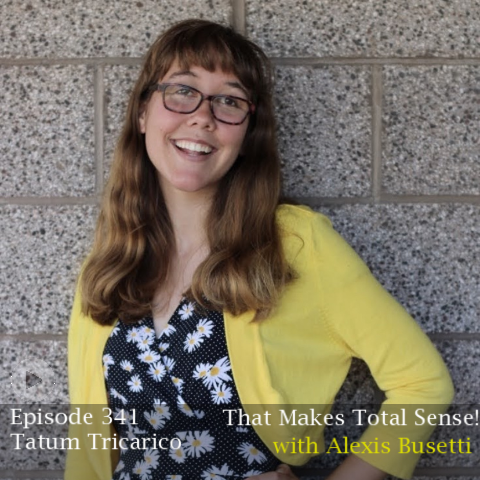
[00:01:45] Speaker A: Oh, my goodness. I think. Well, I hope that I've reflected how much I really enjoyed this book. Let me say it before we just get into the conversation. I'm here with Tatum Tricarico, and she has written a beautiful, like, beautiful, beautiful Lenten devotional called Blessed. Are you a blessed or blessed?
[00:02:10] Speaker B: That's a great question. I say.
What do I say? I say, blessed.
[00:02:15] Speaker A: Is the body blessed? Yeah, I think so. Because when we're. When we're beatituding, we say blessed.
[00:02:20] Speaker B: Right. We realize it's like the difference between a noun and a adverb or something like that.
And we're like. Or a verb and an adverb. Blessed. Because. Yeah, blessed is like.
Yeah, you're like, doing a thing and blessed is like a, like what it is. And so it's fun to hear what people pick. Yeah. Okay. I say blessed. I think, like, of you.
[00:02:44] Speaker A: We're gonna.
[00:02:44] Speaker B: Okay. Yeah. Okay.
[00:02:47] Speaker A: So take two. Just kidding. Don't really edit that out.
[00:02:49] Speaker B: Okay.
[00:02:50] Speaker A: Okay, here we are. I'm gonna say it for real.
Blessed is the body, disability justice in the community of Christ. And this. Tatum, I would like. I was sharing with my son this morning, have. Okay, now I'm going to flip it. I have been blessed by so many disability theologians, but really only the last, over the last several years. And I have just been kind of taken aback at this, like, beautiful.
I don't know, might we sub discipline. I don't really know what we say, but of theology, it is just so beautiful. And it starts one of the conversations I'll have my. Had with my son this morning.
And I'll. I don't know, we'll get there. But I was saying we kind of grew up. I kind of grew up with this idea of like, everything's going to be perfect in heaven.
You know, what does that look like for everything, everyone to be perfect in heaven.
And so we'll skip some of the stuff that we talked about because you and I will talk about it here. But I said we take this to kind of an illogical end because the point is, as you bring out in this book, everybody has limitations.
We are finite creatures, not just in our bodies, but we're, we're finite in our, in our abilities and our time in our, you know, like, all of these things. And I'm like, I don't know. I'm like, I'm five, three and I'm a woman and I don't have like a ton of strength. And I, I just like, what will I be able to slam dunk in heaven? Well, I. Probably not if I'm, you know, here's something I don't know. Like, what do, what do we mean? Kind of how, how far do we take some of these things? So anyway, well, we'll get there. I won't get us too far in the weeds right now, but I would ask you to kind of set the stage for this conversation in a similar way that you set the stage for the book. This haunted me in the best possible way. The story that you tell in the introduction about your friend, classmate who stuttered when she spoke. Will you share that story here? And I think that's just a great way to get started as we engage this topic.
[00:05:19] Speaker B: Yeah. So that's. Yeah. I was actually really glad to get to start the book out that way because it really, like, I didn't realize it until writing the book, but it really did shape a lot of kind of like my assumptions and my base of this theology is that.
So when I was in, I think, what did I say there? I Think fourth grade, third grade.
I, like, went back to figure it out. One.
[00:05:44] Speaker A: Fourth grade.
[00:05:45] Speaker B: Yeah, fourth grade.
I also have, like, changed the story just enough to make the person not obvious.
Because I, like, I don't know.
But in fourth grade and several other grades, I was in class with this person. But in fourth grade, I was in class with a girl who had a really significant stutter.
And I, I knew she was a Christian, and I was a Christian, and I was like, God, like, if you, like, you love this girl, like, please help her not to stutter. Like, and specifically, she really enjoyed speaking in front of the class, but everyone, like, no one enjoyed her speaking in front of the class because she had a stutter. And so I just pray, like, please help her stop stuttering. Please help her stop stuttering.
And over the course of learning more and more about disability theology and writing more and more about disability theology, my prayer had really changed. And it isn't like my prayer became not, obviously this did not happen in fourth grade, but as an adult now, I look back on that and I think that my prayer really isn't anymore, like, please erase this part of this person, but instead, like, please let the other people in the space accept this part of this person. Like, please let them, like, embrace this stutter and understand that that's part of why she loves speaking, is that she's gotten a lot of practice with it because she's practiced in speech classes and she practiced, like, in these other ways and like, the way that, yeah, that, like, this is a part of who she is, and it makes her better and it makes her more who she is. And so my prayer has been, God, please help us to embrace her stutter. Please help us to embrace her disability and accommodate it in the way, in that scenario of just sitting and listening and taking a little bit extra time.
[00:07:46] Speaker A: Yeah, I love that you. I mean, in my head, to kind of as a shorthand, because I think that at some point you, you say, yeah, God, let them listen.
[00:07:59] Speaker B: And.
[00:08:00] Speaker A: And so it's like that, you know, for me, almost like a.
In a similar way to a breath kind of these two things of like, like, it's not.
Yeah, I'd help her not be who she is in this way, but help us to. To listen to her and you know how she is. And this, this is a. That's a big shift personally, but also theologically, it's a really big shift. And so I wasn't necessarily going to jump in here right now, and if you want to pause and we come back to it later. That's fine.
But I think what you said is really important. And it was a thread throughout the book that was also very helpful for me. And one of the ways that you talk about yourself and you talk about Jesus of, like, you being holy, who you are, but also Jesus being holy, who Jesus is, and I'm using holy W, H, O, L, L, Y. We're going to have grammar lesson. We're going to have grammar and spelling throughout this, apparently, which I'm not great at either one.
[00:09:05] Speaker B: So.
[00:09:06] Speaker A: But.
But can you talk a little bit more about maybe, I don't know if it's fair to say your evolution, but maybe your growth and in.
In. In those two. Those two identities, except so meaningful and helpful for me.
[00:09:23] Speaker B: Yeah, that's one of the most vulnerable parts of this book, honestly. And I'm glad that I, like, finally get to kind of put it out there.
I. So for a long time, people, especially when I first became disabled, but even now, people come up and like, ask to pray for healing for me, similarly to probably what I was doing without the consent of this person, they come up and they immediately say, like, can I pray for you?
And want to pray that I am functionally blind, I walk with a cane, I read braille, and they want to pray that all of that goes away.
And when, especially when I was younger, these adults were praying it over me. When my vision changed really significantly in high school, these adults were praying it over me.
And I felt like I had to listen to their.
Their desire that it went away, that my blindness went away. But I was actually. Because I had had a vision impairment my entire life, when it changed, I finally felt like I was actually living into, like, who I was.
Like, it was actually just making my life easier to use the cane and to read braille. And, like, it was just. It was just honoring the part of myself that I had, like, been pretending wasn't there for so long. And so I was in high school and all these adults were praying that it would disappear, but I had just, like, embraced it. Like, I just, like, decided, like, okay, this is actually part of me, and now I can, like, do the things that I need to do. And it felt really meaningful. And so.
And I mean, still, people come up and pray at Panera the other day or at the grocery store or whatever, people will come up and pray and, like, tell me that they want healing for me.
And that really felt like it erased this part of who I was. And I couldn't necessarily name that in high school, but I can Name it. Now that, like, that really feels like it erases a part of who I am and a part that I've worked really hard to treasure about myself and to embrace about myself and to have strangers look around a room and see, oh, this person over there, like, they're so different, so wrong that this part of them should disappear out of everyone in the entire room. They pick me and they say, I want this part of your identity to go away. Like, what? That's crazy. Or that's terrible, I should say.
But it just.
Wow.
And so. And I know that it's coming out of a place of, like, love and compassion, which is why I, like, really believed all of these people in my life saying that they wanted this healing for me.
And I really believed them in that that was who Jesus was, that Jesus also wanted this healing for me.
And that Jesus ultimately was healer. And that was really how Jesus was presented to me over and over, was as this healer who was going to come and heal me.
And so I realized around college, like in the middle of college maybe, that I had a really hard time with Jesus because I encountering, like, the idea of encountering Jesus meant that either I was healed and I lost this part of who I was, or God, Jesus didn't heal me, and then Jesus lost a part of who Jesus was, which is just as concerning and confusing for me.
And so I really. That was really, like the.
The personal kind of reckoning that I had, like, having to.
Yeah. Just figure out what, like, who I was and who Jesus was and how we could exist in the same space if I wasn't being healed.
And even for folks who want healing and aren't receiving healing, like, that's still an issue.
And like, there's nothing wrong with wanting healing from a disability.
But A, a lot of people don't. And B, the people who do want it oftentimes don't receive it. And so then who is Jesus if Jesus is not healing?
And so kind of this book and a lot of my work really says, okay, well, if Jesus is a God who loves me and me is a person with a disability or a disabled person, then what?
Then who is this God that loves me? And so kind of trying to figure out a little bit more of who God is from this sort of disability perspective. I don't know if that really answered
[00:14:13] Speaker A: your question, but yeah, absolutely. No, thank you. And again, I think it's foundational. As we continue through the conversation, I'll just share a little bit here kind of self reflecting. There were times in the book, saying this because I loved when you said this was a part when you felt like you could just really live into your identity, you know, like you could just live into who you were.
And that. Yeah, we don't just get to pick and say, oh, I want this part of this person's identity to be erased.
And it's funny. So about eight years ago or so, I was diagnosed with an autoimmune disease. And I'd had symptoms for as long as I could remember, but it wasn't until, well, well into my adulthood that I was finally diagnosed. They're tricky. Autoimmune diseases are tricky. They take a long time, most of the time, for folks to get diagnosed. But what was wild is that I felt this.
I don't know, this. Like, I felt inside.
At the time, I would probably have said I was Pentecostal enough to say, I don't know, maybe I'm hearing from the spirit of this, but. But it just felt this.
[00:15:41] Speaker B: This.
[00:15:42] Speaker A: This kind of odd realization that I felt like, with that diagnosis, like it was coming with the diagnosis that I was receiving this gift.
And it was strange language for me that I wasn't comfortable with then, and I don't know that I'm entirely comfortable with now, meaning I just don't know how to play. Place it. Like, I don't really have great categories for something like that, but I did have friends who would say, you know, God can heal you from this. You. You do know that God can heal you from this. And my.
Probably, maybe even a month before, I would have been like, yes, and amen. And I want that, but because I had kind of received that, that little drop of this is. This is a gift. Or this. This might be a gift. But then I thought I was much slower. And I would say maybe that's not it for me. Maybe healing. Healing kind of in quotes, almost like, isn't it for me, like, this is the way my body operates. This is what it does.
There are tools that I can use to function, and I will always have this. You know, like, I will just always have this. There's no cure. There's no, you know, anything medically, and that's okay. You know, there are days and there are moments when it's harder than others, for sure.
[00:17:05] Speaker B: But.
[00:17:06] Speaker A: But as you said, like. But this is a part of, like, who. Like, who I am. And in some ways, similarly, where it's like, oh, it's a relief now I finally have a diagnosis. You know, now I can name it. Yeah, now I can Name it as
[00:17:21] Speaker B: like accommodate it and know what you.
[00:17:24] Speaker A: Yeah, yeah, yeah. So in some ways it did feel like a relief, but that did lead me to some. Some other noticing things in a different way than I did before. And I kind of want to shift into that because when you said, like, now I can accommodate it, let me say, yes, we can accommodate it. And that was one of the things I brought up with my son this morning, was thinking about disability. One of the things I'm learning from disability theologians is how to frame that. It sometimes it's helpful to frame disability through a diversity lens, which I think is so great.
And when we do that, then it's much easier to look at systems that aren't accommodating rather than our bodies being kind of the fault or the burden being on our bodies that need an accommodation rather than like a system that doesn't really allow for accommodations. And I want to. I want to spend some time here because you spend a lot of time in the book and it was one of the things that. It was a lot of missing pieces for me. But you spent a lot of time in the book going through the history, US History of disability accommodations and laws.
And I just want to throw out here that I know my kids might say it was the late 1900s and it makes it sound like it was a long time ago, but it really was.
I even struggle to use the word history here because I'm like, listen, yeah, if I'm in middle school, elementary school, and this stuff is happening, this does not feel like history to me.
And so I wonder if you could maybe just like broadly kind of talk about that.
I don't know what concept of the systems being the ones that are broken and how we just have not been very willing to accommodate and then maybe share some of the things from, from the history that.
That stood out for you might be helpful for listeners or new for listeners.
[00:19:43] Speaker B: Yeah, definitely. I think so. I think that sort of that system not being accommodating thing is a really huge switch that disabled folks are really asking other people to make in their understanding of disability.
Namely, like the medical model versus the social model of disability, meaning the medical model. And maybe you've gone into this in podcasts past and you can cut this out or whatever. But the medical model, meaning, like there is something wrong with my body because I'm disabled and doctors or God.
Well, actually that's the. That's a whole different model. God fixing it, but like doctors, medicine needs to fix my body so that I can do the Things that I need to do. So for example, if there is a set of stairs that someone in a wheelchair can't get up, like, okay, we need to get the person who's using the wheelchair, we need to get their legs working or whatever other piece of them so that they're able to walk up the stairs.
Or an autistic person, they're super overstimulated by sound and light and other things and are getting overstimulated, it would be, okay, we need to medicate their body or, I don't know, therapize their body in a way that they don't respond that way anymore. Whereas the social model of disability says that actually like, it's society that puts.
Society is putting the barriers for us. So instead of saying we need to fix our body, we need to fix society to, in this sort of diversity model to accommodate folks. So instead of saying like the person in the wheelchair that we need to fix their body to be able to get up the stairs, we need to put in a ramp.
And like, ultimately that's an easier fix. It's a more like, it's a more embracing fix of all different types of bodies. And it's like more powerful because it helps that person and a bunch of people in the future with strollers or walkers or carts or whatever and everyone else in a wheelchair.
And same for the autistic person having, instead of like changing their body so that they're not overstimulated, changing the incredibly overstimulating room that we are in and changing the lighting or changing the noise levels or changing whatever needs to be changed to help accommodate that person, which then makes it easier on everyone else in that space as well.
And so that's sort of the social model of disability, that society is what needs to be fixed.
And I wish that when someone comes up to like pray for me, I could say like, why don't you pray for like this, this world right here to be more accessible? Especially when I was in school, I was like, I'd much rather you pray that my professors would get the materials accessibly than for me to like suddenly lose this part of myself.
Like, that's the most frustrating part of a lot of it. And of course like some disabled folks don't fit super neatly in any of those categories. And some do really want that healing. And so it's not a like one size fits all. But as a whole, moving to this sort of social model of disability feels really, really meaningful for disabled folks that the assumption isn't healing. And then Individuals can seek that out if they want, but the assumption is we should just be accessible.
And so, yeah, I think the two biggest pieces of history that really stick out to me are. And there's so many good ones and not even all that I put in my book. I actually, a few years back, ran a disability culture calendar on Instagram where I talked a ton about cool moments of disability history.
And so the biggest one in the book that I talk about is the 504 sit in and how and please go watch Crip camp. I actually made my therapist watch Crip Camp, and she was like, super cool about it and then knew a bunch more about disability and it was very kind and then we could talk about it. So I just please, please go watch Crip camp because it tells the story of these 504 sit ins better than I could ever tell it. Yeah. So the 504 sit ins were this just really cool piece of disability history where activists like Judy Heumann, Brad Lomax, Kitty Cone, Holland Delill, Ed Roberts were all fighting for the section 504 of the Rehabilitation act, which was the first anti discrimination law for disabled folks in the US and so it was just kind of one line of this law that said that, like, that disabled folks cannot be discriminated against in these very specific ways, or maybe less specific ways, but very specific context. And so they said, we need this law to get passed. And they started advocating for it. And the government at the time just was not hearing it.
They were delaying it and delaying it and delaying it. And so finally they went sort of across the country. Well, totally across the country. But the one that stands out is the San Francisco one.
And they held sit ins in all of the health, education and welfare buildings across the country to try to get folks to sign this into law.
And the San Francisco one is the most famous because it lasted for.
[00:25:37] Speaker A: For
[00:25:40] Speaker B: a lot of days. I also.
40.
Sorry.
I know all of this information. 26 days. I know all of this information, but my brain cannot hold it right now.
Yeah, so the San Francisco one was absolutely the most important one because it lasted for 26 or 28 days, depending on who you ask.
Because a group of the people from San Francisco then moved over to. Flew to D.C. and fought in D.C. as well.
So it lasted 28 days where they were living in this building and were fighting for access to this. To really just get this law signed so that they could be able to access spaces and.
Yeah. And while the. The coolest part of the whole story of the sit in Is that while they were doing the sit in, they were living out the hope that they wanted to see in the world. They were living out that anti discrimination. So they were sitting in this building. And the reason that they were able to stay in 28 days was partly due to the fact that they were able to use sign language to sign down to participants below.
And it threw off the government. They were cutting all ties to the outside. They were cutting power, they were cutting water.
But they could communicate with the outside, and they couldn't figure out how.
And it was because of what deaf folks call deaf gain that they were able to do this really powerful thing. And so they stayed. They communicated down. And then the.
Because Brad Lomax was there, the Black Panther Party, and because a lot of queer folks were there, the Gay men's chorus and several other.
I think it was called the Butterfly Brigade, several other groups helped support this and were able to kind of secretly support this from getting stuff inside because of this sign language communication. And so it was just this really intersectional, really beautiful use of.
Yeah. Accommodation and accessibility in a way that, like, brought this whole community forward.
And Judy Heumann sort of led this sit in, and she waited for everyone to talk.
So she checked in individually with everyone, and whether they had a stutter or they spoke sign language and needed an interpreter, or they had a multitude of other, like, things that made them take a little bit longer to talk.
Judy waited for each person to say, every day, yes, I'm in. And she would ask them, like, are you in? To say another night, I'm in. And, like, she would get their opinion. She would take all of these people, and it was a ton of people. It was like around 100 folks.
And she would get all of their opinions and all of their thoughts before kind of moving forward.
And they, as this group of disabled people, did all of this organizing in a way that, like, people didn't think disabled people could do at the time. And then they also had a ton of fun. So they celebrated Easter and Passover in the building, which is why I focus so much on it in my Lenten devotional, because they were living in this building during the time of Lent and they. Yeah, they celebrated.
They held, like, religious songs and religious services or at least conversations, and they played games. And they.
A lot of them said it felt like camp. Like they just got to.
Yeah. Be themselves and had fun and made it accessible for each other. They helped each other get the medications they needed. They helped bathe and clothe and feed each other.
And they kind of did. They lived out the accessibility that they wanted to see in the world, which is why it just so powerfully relates to.
Yeah. To really, like, any religious space but Christianity, to me, because there's this hope of the already and not yet that they were really living into. They said, we want this accessibility, and you're not giving it to us. And so as we're fighting for it, we're going to live into it. And that's really what we're called to do. Like, we want this hope and this peace and this love in the world. And as Christians, we don't have it yet, but we're called to live into it, and we're called to, like, show up and bring it with us where we go.
And so, yeah, it was just this really beautiful example.
[00:30:31] Speaker A: Thank you so much, Tatum.
I would like to move to the scriptures next.
Gosh, you have just. The passages that were chosen for this devotional were just. So many of them were just. They were. They just felt perfect in this space.
So I want to. I want to move to them now, but I.
I'm torn, and I hope we can circle back. But one of the things that I want to name there after that, that piece of history and kind of our call as Christians is to. Is to name that unfortunate part of our history that the church in the US has not been, in general, I'm speaking kind of broadly and in generalizations, has not been a particularly willing partner in accessibility and accommodations, especially thinking about ADA acts and, you know, accessibility and things like that, besides the theological stuff that we. That we will continue to talk about when we talk about the scripture pieces.
And I just want to name that as something that feels not just unfortunate, but just, like, opposed to what you just named as, like, what we kind of, like, should be bringing, what we're called to bring to situations and communities as Christians.
[00:32:07] Speaker B: Yeah, yeah, totally.
[00:32:08] Speaker A: That.
[00:32:08] Speaker B: Actually, I think I had said there were two parts of the history that was the most important, and that was the second one that I was thinking.
[00:32:13] Speaker A: Oh, go for it.
[00:32:14] Speaker B: Yeah. Was that the churches, actually churches across the US Fought to not be included in the ada, and it really was going to apply to churches, and they fought to get religious exemption from it. Specifically, Christian churches fought to get this religious exemption because.
And for two reasons that they gave. One being that they were old buildings and they were beautiful buildings, and they didn't want to have to change them and, like, build a ramp or whatever to these beautiful buildings that disabled folks can't get inside.
And then the Second reason was almost even worse. Well, definitely even worse that the ADA covered folks with HIV and AIDS and the church would not support folks with HIV and aids. And now we know that a lot of churches did. So this is not like every church, but the Capital C church as a whole in the US fought against this because they said, we will not support folks with HIV and aids. And so the disabled activists actually had to kind of sit down and say, do we let like, do we give in to these churches and say, okay, then like, this particular disability is not covered under the ada? And they said, no, of course not.
And so they said, obviously, HIV and AIDS will be covered under the ada. And. And so then churches, for those two reasons pulled this religious exemption card.
And now there's no. So as someone who's gone to seminary and has fought numerous fights to try to get ordained, I'm no longer on the ordination track because it's been so inaccessible and there's no safeguards for anything. There's nothing that you can do as a disabled person to say, hey, I can't accessibly access this church space. I can't accessibly access the stuff that I need to move forward in ordination.
I can't access these church materials.
It doesn't go anywhere. There's nothing to hold. Like, there's nothing to hold on to.
And so if a church, out of the goodness of their heart, does their little accessibility audit every year, or even if the district requires the accessibility audit every year, that's great.
And it's not required other than from the districts. And if it doesn't go past the district, then it doesn't, then it doesn't go anywhere because there's nothing like holding that accountability. And so it's really, it's really sad to just note the ways that the church was really radically opposed to disabled folks and opposed to this accessibility and this like, really love and justice that were so important for this community.
[00:35:20] Speaker A: Yeah. Thank you for. Thank you for going into that and naming that. That is, that's a really important part of this story too, as we talk about it in this context. And what you shared about your own experience goes exactly where to the parts of the scripture that I wanted to start with. Like I said, you picked so many amazing passages, but I was hoping that you could share some of the things that felt meaningful to you about the passage with Moses.
You know, I just think like, Moses is so incredibly important, such an important figure to obviously to Judaism and Christianity. And I think, you know, I had this little imagination for a Moment. Like, what if churches now, but even when the ad is being passed, had looked to Moses and Aaron and God's interaction with them as an example. Example of how disability can be not just accommodated, but how we can flourish with a disabled leader and how that really encourages the kinds of interactions in community.
Excuse me, that you just mentioned. So talk about Moses.
[00:36:35] Speaker B: Yeah, I mean, really, this is like the exact example of, like, I was praying for God to, like, heal this person's speech and impediment. And God, when faced with Moses, who was God's like, chosen leader with a speech impediment, didn't say, oh, let's just go ahead and erase this.
God said, okay, cool, I'll accommodate you. Like, they will listen to you and they will listen to you with the help of your brother Aaron.
And it. I actually, I don't think I included. I included both of these stories in the book, but I didn't tie them together because it kind of didn't fit and because it also feels a little bit like maybe, like, I don't know, a little like, woo woo to me. But I was at church camp in high school when it was the first time I was up there using my cane. Maybe the second time I was up there using my cane and I was talking with one of the leaders, and there were three of us that needed help to get down this hill that was like, super rocky and like, unstable and like, just probably not something a bunch of high schoolers should be trying to jump down anyway.
But, like, the camp hadn't, like, paved it correctly yet. And so it was like, you just kind of had to make this leap.
And I needed help to get down, as did a couple other people. And I was in tears later that day because I knew that I wanted to be a pastor, knew that I wanted to be a leader in the church. And I said, if I can't get down this hill by myself, then why, like, then I can't. Like, then I can't lead. Like, surely I can't lead.
And interestingly, I had read enough scripture and had heard quite a bit about Moses's story from, like, different, like, vacation Bible schools or things going on when I was younger.
And for some reason as I was having this, like, crisis of, like, I can't be a disabled leader.
And I really, like, and I didn't say this in the book, but I really do think it was kind of like a. A God thing of God was like, just put this story on my heart and was like, tatum, Moses did it like, that's the whole thing.
And I sort of immediately was like, wait, what about Moses? And then I, like, looked in Scripture and like, Moses could do it, and so then, like, so could I.
Which was like a super funny thing. Is like, a high schooler to be like, me and Moses, like, we're going, you know. But, like, it was really meaningful for me.
Um, and so, I don't know, it was like, it was just a really meaningful moment for me to be like, actually, like, one of the main leaders that we look to was also disabled. And like, we never talk about that in church. I feel like we never, like, oh, you know, he, like, received accommodation in these ways.
But, yeah, it was just super.
Yeah, it was just super meaningful for me. And I think, like, now I.
With him. And there's a lot of other folks in the Bible that were not healed but were accommodated, and we don't.
We don't talk about them.
I think of also in the New Testament, when I talk about it, Zacchaeus and how he was, like, too short, like, of short stature, and was like, had to climb up a tree. And of everyone, Jesus went to him and like, honored this sort of accommodation that he had made for himself.
And the healing of the paralyzed man starts with Jesus accepting this accommodation that was made to a physical building that probably people were upset about, much like the ada, but that, like, let disabled folks get closer to Jesus, like physically in this case and maybe physically in a church. But also, I don't know. Yeah, we as disabled folks have to find Jesus other places. And so I think it is just this really beautiful.
I don't know, Moses and so many others in the Bible have these stories of, yeah, accommodation instead of healing that are really meaningful for me. And so I chose all disabled folks to focus on in scripture, or at least people with the experience of disability.
But I didn't.
With him specifically, I wanted to make sure there were several that weren't healed that were either disabled or in Jacob's case, became more disabled after an interaction with God.
[00:41:02] Speaker A: That's where I want to go next, is Jacob. Yeah, because Jacob, one of the.
In my.
In my notes here, I just have a little note saying, spend some time with Jacob's crippling encounter with God.
One of the things that you. A phrase that you use, I think it's in the week on Jacob is kind of asking the reader.
We feel comfortable. Most of us, I think, feel comfortable, as we've talked about quite a bit in this conversation, addressing God as healer or even the God of The healed. But do we feel as comfortable addressing God as the God of the disabled? And you. You name this to say. We say God is the God of Jacob. He's the God of Abraham, Isaac, and Jacob. He's the God of Israel. He is the God of Jacob.
Yeah, but Jacob was disabled. Do we feel comfortable naming God as God of the disabled?
[00:42:09] Speaker B: Yeah. And disabled because of his encounter with God.
[00:42:14] Speaker A: Wild.
[00:42:15] Speaker B: Yeah. Right.
And that's why I kind of. I shift the narrative of these healing stories and name them more as changing stories. Because instead of just like.
Instead of just separating out these times that people were healed, I kind of put them back into this context and say, like, it's not just healing. Like, God heals bodies. God accommodates bodies, and God disables bodies.
And again, we think like, Paul on the road to Damascus. Paul with the thorn in his flesh, which might be a residual blindness from the road to Damascus.
And there's several other.
Yeah, there's just several other places where people become more disabled as they encounter God.
And so, yeah, I think it's really important to name that. Like, God doesn't just heal. God does all of these, like, changes bodies in all these different ways, which I think ultimately means that God cares about our bodies. You know?
Like, I think rather than just being like, God wants to erase disability and, like, disability will disappear in heaven and, like, whatever. I think it means that God cares about our bodies and, like, wants to see good for them and, like, wants to honor them. Jacob's story, especially fall, it follows that the place that he was disabled by this encounter with God, they then honor that part of the meat for, like, through Jewish history.
And that honoring of the place in which Jacob became disabled in the encounter with God is just this beautiful, really honoring of disabled people that I just don't think that folks recognize.
And so I think it's. Yeah, it feels really relevant to me to say, like, this is the God of the disabled. Like, the person that we are honoring became disabled in their encounter with God, and we're honoring that specific piece of him when we don't. Or when folks don't eat this particular thigh muscle of the animals.
And so it's just this. Yeah, I just think it's this really beautiful, like, shift to.
Yeah. Sort of think of God as more than just healer, but of, like.
Yeah, someone or a God who cares about our bodies and loves our bodies and engages with our bodies, really, and changes them and makes an impact on them. When people are so, like, soul related to God. Like, no, really, God like, makes an impact on each one of our bodies in different ways.
[00:44:59] Speaker A: Yeah. I mean, I want to. I want to go.
I don't know. Sometimes I. Sometimes I do this, sometimes I start, and I have to kind of back up a little bit. So I'm going to kind of back up and more. Ask you to. To talk about something that's kind of more broad about the. About the book.
And. And I would say this. This is not to.
What I'm going to ask you to talk about is not in any way to discount what we have been talking about or to discount the experiences of disabled people.
But what you name at the beginning of the book is. And we barely brushed it, is this idea of finitude and how finitude doesn't necessarily equal broken.
[00:45:48] Speaker B: Yeah. Yeah.
[00:45:50] Speaker A: And. Yeah. And you talk about this in the context of Lent, and I think it is a really. I just want to name for myself that. It's a really powerful thing. I'm thinking back to Karen Swallow Prior was on the podcast, and she was talking about a book on vocation. And I'm a geriatric millennial. So she was speaking to me and my crew in this book. But it was this.
My generation was raised in the US with this.
We were constantly told that we could do anything and be anything.
And it hits hard for a lot of us when we realize that those things are just not true.
When I say I'm not just limited in my body, but I look at.
My husband is a research scientist. He's in the hard sciences. And I'm like, it's not that I'm not smart, but I'm like, not that kind of smart. Like, I. Like, I could not do that. You know, like, my brain just doesn't work that way. I don't process information the same way. Like, I don't have the math skills to do, you know, that kind of thing. Or, you know, I look at other people and what they do. Like, I. My. My son plays a piano, and he can just, you know, he's one of those who. He can hear something and memorize patterns and then. And they just go and play it. I'm like, not me. Like, it's just not any of those things. And it's. I think we grew up with kind of this mentality. I think in the church, not just millennials, but I think in the church, it's kind of like, you know, it's this. You can do anything. God can empower you to do anything
[00:47:26] Speaker B: you want to do.
[00:47:27] Speaker A: And I'm like, but for real, no, like, for real.
[00:47:30] Speaker B: We can't, though. Yeah. And that's okay.
[00:47:32] Speaker A: I can't just, like, practice as, you know, like, and that'll make me be as good as some. Someone else at piano. Like, I just. I don't actually have that inherent ability to do that.
I'm limited. Like, I'm. I'm limited. But that's not a bad thing. That doesn't mean there's something wrong with me.
And I think for many of us, maybe millennials or in the church, it kind of.
[00:47:55] Speaker B: It.
[00:47:56] Speaker A: There is something that makes us kind of maybe think that when we come, when we butt up against our limitations and we think, crap, I'm not. I'm not fulfilling what I'm supposed to do. I'm not being the kind of Christian I'm supposed to do and not being the kind of human that maybe I'm supposed to be.
And that sucks. And I think this book was so good for me of, like, I. I've been living with that realization for a while, but it's always good to hear someone else say it, too.
[00:48:23] Speaker B: Yeah.
[00:48:23] Speaker A: Like, your limitations don't mean that there's something wrong with you.
[00:48:27] Speaker B: Yeah. And I think that's really where. Like, especially in the church. And I don't know what's up with this, but I think, like, because we think of God as, like, all powerful, then we're like, God can make us all powerful, too. And it's like, that doesn't really work that way.
Like, that's kind of the point of us not being God, actually. Right. And not being all powerful means that we do have limits, and that that means that, like, there are certain things we can't do. And that's not a negative thing. Like, I mean, it really feels jarring for me to be like, that's not a negative thing, because, like, we really just think of limits as bad things, especially in church contexts.
And it's just kind of a thing.
Like, it's just a thing that we can or can't do. And I remember being in church one time, and we were doing this activity, and I was like, I can't do this. Like, with my eyes. Like, I am unable to make this happen. Like, we were, like. We were, like, stamping tiny letters into, like, metal things, and I was like, this is not happening. Like, I cannot do this. And this one guy was like, yes, you can. Like, with the right attitude.
And then I, like, did it, and then I was in pain for, like, the rest of the day. And I was like, maybe I actually didn't have to.
And it didn't occur to me until, like, years later that I was like, wait, I could. I guess I technically could have done that thing. He was right.
But I. I was naming a limit that I had. And I wasn't even that upset about it. I was just like, man, I can't do that.
And I was like, I was maybe, like, man, I wish I could, but, like, I can't do that. Or maybe the church could have social model of disability and had an. A thing that we could all do. Knowing that I was part of this group, but neither here nor there, I just. I was like, I can't do this thing.
And he was like, yeah, you can.
And I think that, like, yeah, we just think of these limits as, like, really negative. And I think of another interesting limit that I came up on, probably the hardest one with. Well, no, that's not true. Not being able to drive. Still the hardest one. That just always will be the hardest one. And because of the social model of disability, because you can't do anything without being able to drive yourself places, and it's so frustrating.
And that is really the social model of disability at work. Because if we just made towns more walkable or if we made public transit more accessible, then I could do what I wanted to do.
But the one that comes up for me a lot is reading. And I can't read print books. And I love reading.
And so when I was in high school, like, elementary school through high school, I absolutely loved reading. I read, like, probably a book a week all the time. Like, I was just reading, reading, reading.
And then when my vision changed, I was like, this causes, like, a lot of pain now. And to be fair, it probably did cause some pain when I was younger, and I just didn't, like, pay that much attention to it. Or I was able to push past it easier, or I had less demands on my life.
But in high school, I was like, this causes so much pain that I cannot get past it, so I can't read anymore.
And I was mad at audiobooks, and I was trying to learn braille as well as I could so that I could, like, read again in the same way that you can, like, read with your eyes.
I was trying so hard to learn braille so I could do this. And I'm really glad that I learned braille.
And I was angry at audiobooks. Like, I was like, this isn't the same. And like, da, da. And like. And not every audiobook, like, not every book has an audio version.
And so I was talking, I went to. I kind of just stopped reading. Like, I didn't read unless it was in braille. And I didn't know braille well enough to read my age level books. And so I just kind of stopped reading.
And I went to college and I was talking to my professor about this, and I was saying, like, man, I loved reading, and now I hate reading, and I, like, hate that I can't do it.
And she said this thing, and I think in another context, it maybe would have been kind of dismissive, but with the relationship that I had with this professor, it was super helpful. And she was like, tatum, everyone is limited in, A, the books that they have access to, and B, the number of books that they're able to read in their lifetime.
She's like, I have all these books I want to read, but I can't get my hands on this one. And I can't get, like, I just don't have time to read like this. Like, she's like, there's this whole, like, genre that I'm like, I want to go into that, but, like, I just don't have time for that.
She's like, everyone is limited in the books that they're able to read. And, like, you have access to a whole host of books and audio that, like, you could read. And, like, just because there's books that aren't on your bookshelf, the books that you can read doesn't mean that, like, everyone else doesn't also have books that aren't on their bookshelf. And I was like, dang, that's so true.
And again, if from another person, it would have maybe been dismissive and been like, you're not taking this seriously. But, like, really from that moment on, she was like, okay. And then she started recommending some books, and I was, like, really into philosophy at this point. And she started recommending some books that did have audio versions. And I started listening to these, like, like, really dramatic philosophy books in audio and just finding, like, hey, I can have these conversations with my peers and I can do this. And so when I started doing disability studies stuff and disability theology, I, like, deep dove into audiobooks and, like, listened to so many books all the time. And I, like, still, I listened to, like, probably, like, people are like, oh, I'm gonna read like, 100 books a year. And I'm like, I probably do, like, more than that. I listen to so many books, and it's so fun. And now it's become a social thing for me of all with friends Especially friends who have different disabilities. That makes it easier for them.
I'll call them on FaceTime, play an audiobook, and we'll listen to one of my favorite books together. Or me and my girlfriend will each put a headphone in our ear and we'll listen as we, like, do stuff.
And it's just like, it's become this really beautiful thing and it is totally a limit that I have and even like a limit that I kind of hate. And it's a limit that's like, become this really beautiful thing of like, I do have access to this bookshelf and I can do these things. And I don't, I don't know. That was a really long story to like, make not really a huge point, but like.
Yeah, just that these limits aren't necessarily bad things and like, when we get creative with them, they can be really beautiful things of like now it's like become this really cool social thing for me that I've connected with all these different people and like, and maintaining friendships through listening to these audiobooks, you know?
Yeah. And so like, limits can really make us more creative and more accessible and more inclusive.
[00:55:26] Speaker A: Yeah, I think, I think all of those things, all of those things are true, you know, when I think about limits in general. First of all, I'm super irritated with your professor for reminding us that there
[00:55:38] Speaker B: are, yeah, there's books you just literally can't.
[00:55:41] Speaker A: You know, I'm like, no, my like to be read pile is just, I mean, wow.
Yeah, I was like, no, don't, don't reiterate that there's books that we can't read. What? I don't, I don't like that. I don't like that at all.
But it's, but it's true. But it also, as you said, it like, makes us more creative and it makes us more inclusive. You know, rather whether it's just like recognizing. And I think it also makes us kind of grow in our empathy and our compassion, you know, I mean, you know, when I think about like, I've often used, like because I mentioned I have an autoimmune disease and then we have one of another person in our family who has a diagnosis that requires like daily medication and accommodations at school and things like that. And it's like, I have to, like, it's helpful for me to remind myself when I have like, compassion, empathy. You know, I even take myself back to if someone said to me, it's fine, you just go out and you just run five, five minute miles in a row. Even five, six or seven minute miles in a row, I would look that person straight in the face and say, I cannot do that.
[00:56:54] Speaker B: Yeah.
[00:56:55] Speaker A: Like I know my body. I've been running since the sixth grade and I promise you there's never been a time in my life when I could run five, six minute miles in a row. And it's easy for some people, but for me it's not just hard, it's not possible.
And when I look at that and I go, okay, there are things for other people in my life that, that are. Might be easy for me but are just not possible for them in the same way that it's just not possible for me to run at that pace for that long or even one mile. If I'm just being real honest. Am I going to go out there and run a six minute mile right now? No, not even one in a row. Um, and so it's not. Just not easy for me. It's not possible. And so thinking about, even in that context of like, okay, Alexis, how can I.
Yeah. Be accommodating? Conclusion, inclusive, creative, empathetic, compassionate. Because for this person in my life that I love, this thing just isn't possible. So let's find another way or let's just not do that thing, you know?
[00:58:01] Speaker B: Yeah.
[00:58:02] Speaker A: Or let you know. Or let's find another way. And then it helps me to be thinking about limitations in that way that you mentioned.
Helps me, I hope, to be more aware of places where we could do better, you know, especially in the church. I'll just say real quick, I know we're running out of time, but I'll just say real quick. One of those areas for me is communion.
[00:58:31] Speaker B: Oh yeah.
[00:58:32] Speaker A: I mean, I. There I am in tears pretty much every time. If I can go to a church service and actually take communion because my autoimmune disease has dietary restrictions.
And it sometimes happens and it sometimes doesn't, but it makes me look around. We were at one service a couple of years back and everyone was asked to go forward for communion, but there were stairs to get to the altar. And I'm like, this is not accessible, you know, or just, just the act of even being asked to go up front without anything being said for, you know, if you'd like to remain in your seat or if you'd like to remain where you are, you know, there's an accommodation for that. We can come to you or, you know, whatever it is. But these kind of like with the building, as you mentioned, sometimes these traditions, we want to stay and say, well, we're exempt from a collective on that because this is what maybe tradition requires or whatever kind of lie we want to tell ourselves.
But I think recognizing limitations in that way, embracing that I'm a millennial who was encouraged in lies my whole life of, like, you can be anything, do anything. You can be the President of the United States.
It's like, well, no.
[00:59:56] Speaker B: And.
[00:59:57] Speaker A: And it helps me to. To pay attention, like, what you're saying and to not. There's no. There's no blame. There's no wrong in that. I can't do this. Someone else can't do that. And that's.
That's actually really is okay. How can we help each other out.
[01:00:14] Speaker B: Yeah. And it's actually, like, maybe wrong of the church. Oh, my goodness. To say that. To not have it be accessible.
[01:00:22] Speaker A: Right.
[01:00:22] Speaker B: Like, to be like, this is a table that welcome. Like, you are welcome to the table, except that you're not.
[01:00:29] Speaker A: Except that you're not. Except that you can't get here.
[01:00:31] Speaker B: Yeah, exactly. The church that I work at now, we do exclusively gluten free bread so that we're all, like, taking of the same bread and using gluten free bread, and we use grape juice so that we're all taking from the same juice, and it's grape juice.
And so that.
And I mean, there's so many other things that we could even do to be more accessible, but it just is.
It is. I don't know. I got into so many fights with people in seminary for, like, being like, can we do and not even do communion differently, but just maybe, like, move it down from the steps, you know?
[01:01:12] Speaker A: Yes.
[01:01:12] Speaker B: Like, make it gluten free bread or, like, give an option, like, for folks who can't eat at all or are like, even, like, tube fed or what, like, can we just give another, like, way to connect, like, to the experience there?
People got so mad at me, and I was like, I'm not suggesting that we change, like, what, like, we are called to do as Christians. I'm just suggesting that we make it so that Christians who are called to do it can do it, you know?
[01:01:43] Speaker A: Yeah.
[01:01:45] Speaker B: Yeah. There's one guy particularly who got, like, super mad at me for it, and I was like, I just want it to be accessible. I don't know what to tell you. Like.
[01:01:52] Speaker A: Yeah, yeah, yeah, no, that's right.
Tatum, I really feel like I could just talk with you all day about this, but I do want to wrap us up and I want to give you the opportunity to.
I don't know. I'm thinking about at the very beginning, when you open us up with this story of your classmate and how your prayers changed over the years.
How would you.
If folks are listening and for some of them, some of this information might be new.
This disability theology may be something they haven't really heard of before or don't really know exactly how to embrace or what it might look like in their context. But how would you encourage maybe, I mean you've got some wonderful. That was. I didn't even mention this. The book is great with like reflection questions and connection practices and things like that. But what might you encourage folks? Maybe it could be a practice from the book or, or maybe just curiosities, questions to ask of themselves or of God. That might be kind of like a stepping stone, maybe like a way for people to kind of move forward with what they understand now and maybe some next moves for them.
[01:03:13] Speaker B: Yeah, I mean, I think reading this book or a book like this, like feels like a really good first step of just getting some like information. I also always suggest, and this is such a little thing and not like a God thing at all necessarily, but if you just follow five disabled folks on Instagram, like you will learn more disabled stories and that will like change the way that you think about the world. And like on like whatever social media you use, just follow five disabled folks who. And not just like disabled folks that are like doing other things, but like five folks who like advocate for disability justice.
Like it's going to like you're going to read the little blurb and then it's. You're going to like, yeah, just shift your thinking.
And so I feel like that's the thing that I recommend to the majority of people because it's just so easy for folks that are on social media.
And then in terms of like faith, I really think like, yeah, just thinking about these healing stories as like changing stories and thinking about praying to a God who, yeah, God who changes bodies. God of the disabled, God who isn't always every time healer.
And like what that means I think is really important. And also just like looking at your church and your spaces and saying like, where can we be more accessible? And then like inviting God into that. Because like, I think a lot of churches are like, oh, this is a logistical thing that we have to do. Like we have to pay so much money to get an elevator and da, da, da. But like really like, sure, elevators are really helpful, but like, do you have money for that? Probably not.
And so like, can you invite yourself and God into the Creativity that, like, accommodation necessitates. And, like, really say, like, where can we get creative? Where can we be more accessible? Like, can we.
Yeah, can we have, like, a sensory friendly space? Can we have, like, like, prayers that are repeat after me instead of read aloud? Because we can't. Like, not everyone can read them. And. And then, like, how does that help you see God differently and understand God differently? Because if you're in a sensory friendly space feeling God's presence, that might mean something different than if you're in a, like, sensory overstimulating space feeling God's presence. Or if you are doing a prayer that is repeat after me rather than a prayer that is, like, everybody reads it out loud.
You're praying differently, you're encountering God differently. Like, what?
Yeah, get creative with and, like, invite God into it. Like, it's not just a, like, logistical thing that you have to figure out, but it's like, a way that you can encounter God deeper in your own life and in church spaces. Like, that's true of, like, so many spaces that you can really invite God into it and get creative, but especially in church spaces.
[01:06:19] Speaker A: Yeah. Thank you so much for that. Again, this is Blessed is the Body, Disability, justice, and the Community of Christ. A Linton devotional.
I'll put a link to this where people can grab it in the show notes. And I just want to say I did this before Lent, and so even though it is a Lenten devotional, I just want to, like, throw it out there that any time, any season of the church, any season in your year, any season in your life that you pick this up, I don't think you'll be disappointed. So, yes, use it for Lent and also use it at other times too, because it's so fabulous. Tatum, thank you so much for spending time with me today and coming on.
[01:07:00] Speaker B: Yeah, thank you so much. This was really great. I appreciate it.
[01:07:03] Speaker A: The links for all the resources mentioned in today's episode can be found in the show notes. Music and podcast production by Seth Buscetti. Be sure to give us a review on itunes and subscribe at your favorite podcast listening app. You can also Visit
[email protected] Sam.