[00:00:10] Speaker A: Welcome to that Makes Total Sense, a podcast dedicated to exploring God's generosity and justice. I'm Alexis Busetti, a Christian, aiming to ask good questions and encouraging you to do the same.
Every one of us is wired by God to live out generosity and justice, but the how sometimes eludes us. That makes total sense is a way for us to get together, posture ourselves as learners, and challenge one another to practice generosity and justice in a tangible way every day.
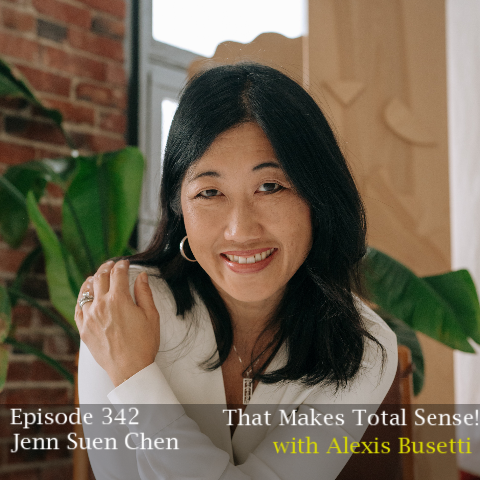
So I'm really. I feel like I. I don't know why I feel like I need to say this. Jen, we're getting ready to start talking about this book about, not about food, but surrounded by the table. And I am feeling full and satisfied right now. I just had lunch, but I'm also feeling just full and satisfied to be. To be sitting across from you to talk about this really wonderful gift that you've given us in this book. So I just want to start that way and say thanks for coming on.
[00:01:18] Speaker B: Thanks for having me, Alexis.
[00:01:20] Speaker A: This book that Jen has written is called Dim Sum in how our stories form our souls. And I just want to start off with a little confession, maybe recommendation. Totally unsolicited advice here for folks and just to put out here as a desire. I am grateful that I have this book on my shelf because I read through it prepping and basically the first chapter, I paused and I was like, I wish that I had about a month to spend with each chapter.
Like if I could just engage in the invitations that you offer throughout each chapter. If I, you know, basically I found myself wanting to do as you recommend and just slow down. So I'll say my desire is keep this book on my shelf and re. Engage with it because while I read it prepping for the conversation and I think this will be great.
Personally reading this from a spiritual director, I'm like, okay, I really want to take full advantage of everything Jen is offering us here and slow it down. So maybe that's a good place to start and say, you know, ask you to speak to us as not only an author, but as a spiritual director and kind of some of your ideas and intent behind this book, but also the way you wrote it.
[00:03:10] Speaker B: Thanks, Alexis. That feels just like such a compliment. So I'm just really grateful.
In a world that is so fast paced and we are commended on how much we get done, our Western values of efficiency and doing, I mean, I've lived by them. So the undoing of those ways of thinking has taken time and continues to be a process for me.
You know, I've read a. I'm a reader as well, and so sometimes I find myself in the middle of a book going, I can't remember what the point was of the book.
And now having written a book, I'm like, yeah, I totally get that because it's just really easy to get lost. I don't know. We'll see what the point of my book was. And that's probably what some people are saying. However, my longing was that it would be kind of a well, in the middle of the wilderness kind of space just to come and be and to pause.
And I think if you run in a community where those. That language is used, like pause and reflect and breathe and what are you holding and. And are we connecting with God and are we paying attention? If you're in that community where that kind of language is used, that begins to reform the way you think.
But if you're not, and that might feel foreign to you, it.
It's.
You feel would be easy to feel like, oh, that would feel selfish. Like that. I need a pause. Right. Well, wouldn't everybody want to take a day off for reflection? Right. That's extra.
But I think in the life that we are called to live, in the way Jesus invites us to live, we have to take moments of pause. Because, I mean, I think a lot of pastors would say because Jesus did, and you need to too. But it's like. I think it's like Jesus is God and he was fully human, but we are just so very human and so very flawed. And I need.
I need time to pause to.
To figure out, like, what is going on inside. So that what I say is more kind and is more patient.
And so the. I think my heart in the book was just to give spacious time and spacious space to be redundant, just to invite.
When I was writing, I think I had even more words like, could it be possible?
And what if?
And I think at some point my editor was like, can you be a little bit more prescriptive?
And. And I get that, you know.
[00:06:25] Speaker A: Right.
[00:06:25] Speaker B: With a little more authority. And I thought, I'll try. But I think at this point in my journey, I honestly am less sure about some of those things. I was so sure about, and I'm more sure about some things than ever.
But those things are like four things. You know, I'm sure that God loves us more than we could ever imagine, and I'm sure of his presence, and I'm sure that he is real.
And I think those are the messages throughout the whole book that I repeat over and over.
Because I don't know.
I don't know what God would be inviting us to in the middle of the storminess of life, but I know that he wants us to know that he's with us.
Yeah.
[00:07:17] Speaker A: Thank you so much, Jen.
I mean, so much of how you spoke and shared of your own life, I could relate to. And especially what you just shared of, like, I don't really know.
I don't really know much right now. I mean, this is the real truth. And. Yes. Can I be more prescriptive? I don't know. I don't really want to. I just kind of want to stay along with you. Like, I'm curious about or. Yeah. What if this is the thing?
Part of my thing when I started the podcast was the way I phrased it and framed it for myself was I spent a lot of my Christian life looking for the right answers. And I kind of use, you know, kind of quotes around the right answers.
And now I'm wondering if it might be more helpful to ask better questions and what. What that might look like.
[00:08:11] Speaker B: Yeah.
[00:08:12] Speaker A: You know, in my life. But even just to invite others to say, hey, can we be curious about this? Or, you know, there isn't. There really isn't a stupid question or whatever. And kind of rely more on those things that you.
That you just named, because there's. There's not a whole else that I know. And some days, if I'm being really honest.
[00:08:32] Speaker B: Yeah.
[00:08:32] Speaker A: And days I'm not even super sure about the things that you just named. Yes.
Feel very real, you know.
[00:08:40] Speaker B: Absolutely.
[00:08:40] Speaker A: But we can go back to that.
This is my curiosity, and I'll just ask it. Maybe other people have curiosity too, and forgive me if it was like super clear in the book, but I kind of want to hear you say, don't worry. Why dim sum?
Of all the foods that you could have chosen, why dim sum? And then I have a follow up after that.
[00:09:06] Speaker B: Okay.
You know, dim sum was the table of that I remember most consistently for me growing up. Family from Hong Kong immigrated to the US in the early 60s for college. And dim sum was a way, I think, in which we, like my parents, got to offer belonging for friends and family, but also for us as the girls got to experience just a place of belonging. Like, I think I wrote that when we walked into a dim sum restaurant, it was like our place. And there was no other place in the world that felt like our place where we felt a sense of belonging and a sense of homeness with friends and family. Besides, you know our physical home that we lived in or that I lived in so dim sum, I think the metaphorical. So I in its essence means to touch the heart.
But essentially it. It has come to mean these little. It's like a. I write that it's like this Chinese tapas experience of small dishes, sweet, savory fried and steame baked. And they come like three, you know, three. Three or four little things in it in a little bamboo steamer. And it's so fun because there's so much variety. And for my ENFP self, that was probably just the most amazing thing because you could just eat whatever you wanted and no one was watching because everyone was just so happy around the table. And I remember those places to be a place of intergenerational.
So old and young. And it was a place of variety, it was a place of friendship, it was a place of laughter and connection, not only just around the table, but with the restaurant owners and the people who worked there and the same people we saw weekly who are also there with their families.
And I think for a Chinese American family in the 70s and 80s, that was a really important thing.
But I think it came. It's come to be just a.
The table itself has become just this place of gathering. Not only just a physical place, but we can create a table wherever we are. And most of the world connects around breaking bread and food and meals are not rushed, we're not eating on the go.
And lots of time it goes into preparing, right? It's almost like it's a. It's a liturgy, it's a. It's a. It's a. It's a work that we do to love our families and those around our table. So for me, that was an example of the kind of meal, but also an invitation to all. And I think growing up, I. I say this often is, you know, as a Chinese American growing up in the States, like, you're just always just.
You're shifting spaces all the time. You're, you're, you're scanning the room and wondering, like, what is required of me in this moment, right? Old to young, young to old, white to Asian, or I'm the, you know, Asian, you know, like, what are the rules of engagement?
And I think sometimes when we get to the table, when we realize there's some rules that are there, like sharing. We're sharing plates and we're honoring the people around the table and we're taking our time and we honor the people who made it.
Um, but other than that, we're just enjoying and we, we honor the food that's there and we try everything, but we also just, we wait till everyone is full and everyone has their needs met.
So I think the table continues to be, I think it's a biblical picture for us, but also I think an Asian family table felt very personal.
[00:13:18] Speaker A: Yeah.
This leads well into my follow up question. And I will reference the work of one of the endorsers of the book, Daniel Lee, who talks about, in his book on Asian American theology. He talks about particularity and universality. And I'm wondering, my question for you is kind of using that as a backdrop if you're familiar with his work in that area. But just to say your story that you tell here in the book is importantly and so closely related to your Asian American identity.
From the title of the book all the way through, which is very particular to you. And I read it as a mixed Hispanic woman and found it to be that I could kind of transfer that particularity to my story. So when you're writing about dim sum, I can kind of at the same time imagine this table. I was imagining the fights over the checks. This was my favorite picture that I got in my head.
And I can imagine myself around the tables that were familiar and important and meaningful, informative for me.
And so I'm wondering if you can talk about that in the context of your book, but maybe a little bit broader too, as we learn how to share and listen to one another's stories, how those particularities matter.
[00:15:11] Speaker B: Oh, that's such a good question. If we just sat here for the rest of the time, I think that would be enough. That's so good.
That was my hope, was that knowing that not all of us reading the book would come from the same background, but I've also not come from the same background from most of the books I've read. And you know, so there are things that we can learn from each other and we can identify with each other, especially the universal, universality of food and being together and the longing for belonging that is in all of us.
That longing to just be welcomed to a table.
And I recognize that was my privilege and my.
It was such a gift to me.
And I've sat with many people who grew up with TV dinners in their own rooms and microwaved dinners and just watching TV in their own room or eating by themselves. And there's grief when I hear that because I think, oh, to not have been seen as a mom and sister and friend and daughter. And I think all of these to be seen around a Table.
And so I think that that piece of that is universal to all of us, is that longing to belong, to be seen, to be loved.
And I think now I've totally lost what you just asked me.
[00:16:52] Speaker A: That's all right. We're going to the particular as well.
[00:16:55] Speaker B: Yeah.
So I think that piece of.
As an Asian American, like, someone. Someone asked me, like, were Asian American, were Chinese American families, were they into sports? Because this, you know, our team is going to the Super Bowl. So I was like, no. Like, not in the 70s. And she's like, no. And I was like, no, we were trying to survive.
We were fighting for our lives.
[00:17:26] Speaker A: Yes.
[00:17:28] Speaker B: And I say that and my heart hurts because I don't know that a lot has changed.
[00:17:35] Speaker A: Say more about that.
[00:17:37] Speaker B: Yeah, I think there's a deep grief even as I. Today, as I sit, even different. I was there six months ago when book launched, or five months ago. But it's a deeper sense of, like, some of that stuff that I held as a little girl, the wanderings and the questions that I didn't even know where to ask.
I know that I wasn't alone then, and I know there's still people asking it now, is there a place for me?
Because even just, you know, six years ago when people were shouting at us to go home, you say that to an Asian American, you say that to my kids and my nieces, and there is no home to go back to. This is home.
And so I think it.
I say all of this really sensitively and just.
Yeah, there's like this feeling in the. The pit of my stomach, like where now more than ever is a time where we need to show up for one another.
That our table. Even as I speak, I'm on this podcast now.
Two minutes before I got on, friends just drove in that live in the Middle east and they just came to visit, and we didn't know when they were going to show up.
And our senses of time are really different.
And so the door is open and the bed is made, and we'll find stuff in the fridge for lunch, but the table is open. And I think that practice has to be ours. We just have to start somewhere.
I think to.
I think somewhere in the book, I quote St. Benedict, where he just says, and again we. We begin. We begin again, and we just continue to begin again.
I think people are afraid to engage because we're afraid to say the wrong thing.
And we might. And that's okay.
I don't need you to know everything about me. For us, you and I, to Show up is a sense of respect, the sense of honor. Imago dei, made in the image of God, to be loved and to be seen. And so we interact with each other the way we want to be interacted with.
So to your question, how do we listen to each other?
I think one. It's really important for us to become more familiar with our own stories because everyone has a story of migration.
Everyone.
I don't. Not even immigration. It's migration because the story began long even before we came across here.
Many of our stories began in other places, to another place, to another place, till here.
And it continues, right? We continue to move and we continue to have to set up home. And so I think the more we're familiar with, like, oh, yeah, my story contains that too. Maybe it's not mine direct. Maybe it's my parents or my grandparents, great grandparents pushed out due to war.
My grandparents, it's not far. My dad, you know, I wrote about that.
I'd say if we polled people and asked, did your. Were your grandparents impacted by war? I think a lot of people would be like, yeah.
And yet.
So I think that part of our own awareness of our own stories becomes. Makes us better containers for others.
The more familiar we are with. I think we're so uncomfortable with grief and pain. And especially in Western Christianity, we're really like. We just have good answers for, like, God is good and, you know, what? He is. But I say that from, like, my belly that sometimes comes out in, like this. Like, I know he is, but it's sometimes so hard to say, yeah, but when it comes from that place that it's born out of, like, I have walked pain and I know sorrow, and I may not know sorrow in the same way as you, but somehow that's okay.
Even as we sat together, we could sit together and say, I don't know what it's like to grow up as a mixed Hispanic. My granddaughter is. She's. She's. She's half as well, you know, half white, have Chinese and she's gonna have her own story, right?
So I think this piece of. The more familiar we are with our own stories, I think that that sense of, like, being able to.
Then when I'm listening to other, I'm not eager. I don't need to, like, fix your story.
I don't need to make it better or interrupt you so I can be heard. Where could we create spaces of mutuality where there's this listening and holding?
And that might sound so existential for some, but I'd say Just begin to practice and practice by, like, not talking for five minutes.
Just listen to someone talk.
And all you need to say back is like, I heard you say it was really hard.
You don't even have to say, I'm sorry.
It's nice to hear. But even just that, I heard you say that you wish someone loved you. Whatever it was that you heard someone say, I think the practice of listening, we can do it at Trader Joe's, we can do it at Costco. Literally, it takes two minutes that practice.
People probably don't like lining up after me.
[00:23:45] Speaker A: Me either. Don't ask my kids, they hate going to places with me.
[00:23:50] Speaker B: But I think just that pause of like, paying attention to who's in front and then especially to the people in our lives.
Yeah, sorry, that was very roundabout.
[00:24:03] Speaker A: No, it's great. And. And now I'm. I'm thinking of, like, a lot of different places where I could go, but I think.
I think, well, let's hang out here for a second.
I'm thinking about the way that the book is founded on Psalm 139.
But when you mention. I want to go back for a second when you said six years ago when people were telling you to go home, but where is home? Home is here.
And how that felt.
I want to just name the probable. I think, I mean, possible just the fatigue of that.
And we're recording this at the end of January 2026.
And this I want to just say for folks listening whose.
I would just say for white listeners, for listeners whose migration or immigration story feels further.
That sentiment is one that bipoc folks in the US have been hearing for probably. I would. I don't know about you, I would say for our whole lives.
Unfortunately for I think there are probably also a lot of us. It came. That sentiment was most loudly heard for me from Christian communities.
I am a. I mentioned, I'm a mixed Hispanic woman. I remember in probably middle school and high school being in youth group with people who were saying they, you know, kind of this. They checking out Mexicans. I'm Mexican American, should just go home and. And, you know, pointing those things toward me. What was funny for me, especially at the time is kind of this, like the way I held these two things. So number one, my family, we didn't travel when I was growing up. I had at the time that I was hearing that. Never been to Mexico, like, not even close.
I am 4th generation on my Mexican American side, so it was my great grandmother who immigrated.
The question I have gotten about her actually Was, did she cross the border or did the border cross her? So, yeah, this is a whole other conversation that we could have. For the record, she did cross the border. But this is one of those things where we go, let's actually learn our history a little bit here about who's where and things like that. But I just want to say that we.
And I'm speaking broadly here, and so feel free to jump in. But I would say it's my experience and the experience of a lot of folks who I've spoken with who are not white in the US that.
And I would say I was in this. I would say, like, not white and also not black. Are. We are assumed, yes, to be. And I've heard the term used specifically about Asian Americans. Like, there's a perpetual foreigner, you know, to us. And so when people were yelling at Asian Americans to go home, this brings out a sentiment I think, for many of us that we have heard consistently for much of our lives.
And for many of us, it doesn't actually make any logistical sense because we were born here and this is home or we've lived here as long as we remember, and this is home or, you know, whatever.
[00:27:45] Speaker B: Right.
[00:27:46] Speaker A: And so it doesn't actually make any sense. It just speaks to some of the political stuff that we don't have time to get into, which is, who belongs here? And so I just want to name that. A, it's fatiguing, but also, B, even when I would say we might start to kind of gain this sense of, yeah, this is. This is where I am, or these are my people, or this is where I belong, or things like that, and then we hear these contradicting messages of, go home, you don't belong here. You're a foreigner. You know, I drove. I've shared this on the podcast before I drove past in this past election, when I was living in Houston, when I would drive my son to school every day, I would pass by a sign. You know, everyone had. A lot of people had political signs in their yards, and this one said, stop the invasion at the border.
And I, as a Mexican American woman, can't help but I feel something when I.
I feel a lot of things.
[00:28:41] Speaker B: Yes.
[00:28:42] Speaker A: You know, when I see that. But, you know, it's. It's dehumanizing. It's all these things. But it's also interferes with our sense of belonging, as you said, because then we say, if this is where I was born, if this is where my family is, if this is where my community is, and at the Same time, my neighbors. Like, quite literally my neighbors.
[00:29:02] Speaker B: Oh, my goodness.
[00:29:03] Speaker A: Say, you don't belong here.
[00:29:06] Speaker B: Yeah.
[00:29:07] Speaker A: Then what. What are we to do with that?
[00:29:11] Speaker B: Yeah.
[00:29:12] Speaker A: You know, I just think it's. It's. I just kind of want to name those two things because I think it's. It's fatiguing. And we do all have this desire for belonging, and many of us might be surrounded by neighbors, even our Christian neighbors, who would say, you actually don't belong here.
[00:29:28] Speaker B: Yeah.
[00:29:29] Speaker A: Yeah.
[00:29:30] Speaker B: Yeah.
[00:29:31] Speaker A: So I don't know. Not really a question there, Jen.
[00:29:34] Speaker B: No, but thanks for naming that.
[00:29:35] Speaker A: Yeah. Yeah.
[00:29:39] Speaker B: I just want to say I'm so sorry. I'm so sorry that your son has to see that. I'm sorry that you.
That disruption of, like, oh, you know, like, I'm having a good day. And then all of a sudden, I'm reminded that there's this break in people's understanding. Like, you can, out of one hand say, I really like you as a friend. And then out of the same mouth can say, I wish, you know, whatever we want to say. About right now.
[00:30:07] Speaker A: Yeah, about right now.
[00:30:09] Speaker B: And I think, can we hear ourselves, what we're saying?
My daughter is involved in refugee advocacy at the un, and so she will say to me. She's, you know, in her mid-20s and will say to me, mom, are we reading the same scripture?
And, you know, as a mom, I think I so believed that we could make the world a little better. I really. I mean, we raised them overseas in Asia, wanted them to see the world and experience, like, compassion and mercy and to just. They grew up seeing a lot of things, and they are. All four of my kids are just incredibly compassionate people, but they're also very. Like, they. They will call out what they see as. As, you know, it doesn't line up what they see. What they sense is not lining up, recognizing we all have our views. But I think going back to Scripture and, like, really looking at. Is what comes out of my mouth. Love.
And that's for me, I need to make sure that what comes out of my mouth is to build up. I.
And I think sometimes there is this resignation. Like, well, it's just the way it is. We'll write it out, but could we. I think every moment we get.
And I'm not talking about, like, those things that you just wear on a bracelet, like, you just be you. I'm not talking about those. That sentiment. Like, as believers, followers of Jesus who have experienced. Encountered the love of God, we carry that, and we actually can shift things. We Actually can, in the one on one interactions. What we're doing here, I believe, can shift things.
And I just want to say, like, it is exhausting. And I.
It was with all of my kids, you know, nine of us were together over the weekend in California. And I, I just looked at them and I said, we cannot lose heart.
We just cannot. As exhausting as we might feel, we cannot lose heart. And I have enough history with God that tells me that he will still win.
And he is the righteous judge and he is the one. So I just think that that piece of, like, I.
You and I could just get so tired. And yet you look at your kids, look at mine and my grandkids, and I think, I've got to stay in it.
You and I have to stay in it, Jen.
[00:32:58] Speaker A: We do.
I think I want to go back to the Psalm 139 and to some parts of the book that felt really meaningful to me, related to this, because I think part of how we can stay in it, part of how I can stay in it is remembering those true things. You know, even going back to the. The four that you named at the, at the top of this conversation.
And sometimes when we get fatigued and this isn't, this isn't a cop out thing, this really is like, like I'm thinking, like, I look to the hills and where does my strength come from? You know, it's like, it really is like, what are the truth things that we know?
I want you to talk about Psalm 139. And there were at least one part in the book when you talked about just kind of getting better at the practice of letting God love you and that you spent parts of your life like, kind of, and maybe intellectually understanding and if that he loved you, but maybe not really being that convinced that he liked you.
And I could so relate to that. And it brought me back to.
There was this. I know it's controversial for me to reference the Cosby show at this point, but I grew up on it, so here we go. And there was the episode where facts where Denise was leaving for college.
And this stuck with me. A lot of Claire Huxtables phrases stuck with me. But Denise, you know, she said, Claire said to Denise, I'm. I'm gonna miss you.
And she said something like, I'm gonna miss you. Do you know why I'm gonna miss you? And Denise said, because you love me.
And she said, yes, but I'm gonna miss you because I like you.
And I don't know that I really Got it. As a kid.
But I will say it's not because of Claire Huxtable. It's because of my husband. But we say those two phrases a lot at our house. We say I love you a lot, but we say I like you a lot. Because it's true.
[00:35:20] Speaker B: Yeah.
[00:35:21] Speaker A: Like, we genuinely like each other. I mean, I think we do, you know, like each other. I like the people I live with.
[00:35:28] Speaker B: So good.
[00:35:28] Speaker A: And I want, you know, because I look at my kids, you know, look at my spouse, and I'm like, I would want to just hang out with you. Like, I would just want to be with you even if you weren't related. Because I just think you're cool, you know, like I said, a great person. You're fun to hang out with. And I like you, and that matters. And to think about God having that kind of affection for us, him liking us. Yeah, Jen, that feels kind of wild. So I'm wondering if you can. I'm really. What I'm kind of asking you to is pastor us a little bit and talk about that 149 or 139. Why?
And also about God liking you and liking us.
[00:36:15] Speaker B: Well, I think you just did such a beautiful job describing that, Alexis.
I just.
Yeah.
The fact that he likes us is so phenomenal that he delights. And if it wasn't repeated so much in scripture, we probably could, you know, find reasons to dispute it. Right.
Yeah, I've.
I probably say this psalm, at least some portion of it every day.
Where we've been searched and known.
To be. To be searched feels like, you know, spotlight, you know, looking for something and known. That also feels like a parent is all knowing. You know, parent knows about kids or whatever. I know something about you. But to be known and then to be pursued.
Right to every thought and every word.
You're familiar with all my ways.
You hem me in behind him before and lay your hand on me. Such knowledge is too wonderful for me. It's too high. I cannot. I cannot. This. Almost like I actually cannot.
But then this knowledge, it's like these. This reference to God's knowing.
Down at the end, it says, how precious are your thoughts towards me.
If I had to count them, they were. They would outnumber the sand. When I awake, I am still with you.
It feels like such an interesting shift there, like your thoughts.
And so when I'm awake, When I wake. When I wake up, I am still with you. What a miracle that is.
And I. I think that that piece of.
If anybody's Wondering, does my life matter?
Does it count? Is it. Is it any. Of any significance? Am I making any difference?
And I just want to say, yes, you are.
No one can reflect him like you do.
And if the enemy does one thing really well, it's to make us want to be someone else or try to be just a little bit like someone. Even someone else's spirituality, it's crazy.
Even someone else is good. We want to. We want to be like. And I think there's ways in which we can follow examples and we can learn from each other, but when we try to be someone else.
And again, I recognize those phrases are often just used co opted into like, silly little cliches, but I really mean that.
And no one reflects him like you do.
And when he says that your eyes saw my unformed substance. And in your book were written all my days, even before there was one of them, my unformed substance, he saw and was important to him. How much more?
And I think that piece of God's all knowing is such a comfort to me because not only do we live in stormy times, there's a storm that rages in each of our lives.
There's something big that's going on for many of us. Right.
And there's, you know, even for me personally, just. There's a. We're just waiting on some. I write about my husband's cancer in the book and it's something we're actually, as of a week ago, we're waiting on something that just came up. And so it's very present tense for me.
And I know it is for listeners.
And maybe the storm isn't like, right in front of us, but it's adjacent. It's connected to us somehow. Someone we love is going through something really hard.
And so I feel like when I write that I think that the blueprint for our lives is found in this psalm. It's just going back to worth and value.
And at the end of the day, Alexis, if you and I didn't do anything important in very large quotes, that he just loves us because he does not, because I can do anything for him.
And I think we live in a world where we all want significance and we want to make our life count. We call it stewardship and wisdom. And it is.
And yet there's the simplicity of just being, Being with.
Yeah.
God in the moments.
So I think Psalm 139 speaks to just this intrinsic value that's been given to us.
And we cannot dispute it, even though we want to and even though the Enemy goes after it all the time.
[00:41:49] Speaker A: Well, that part's the truth.
You know, you and I are both parents. We chef four kids. And I thought there was a. A woman who's older than me and wiser than me in many ways. And I remember I was shared with her.
This is. Gosh, it's been a decade ago or more kind of about that, what I just shared with you, about God liking us or God loving us. And she is a grandparent.
And she was reflecting on her first grandchildren being born.
And I could relate to it because I was already a parent at that point. So I'll share it here because we talk about this intrinsic value. It was so helpful for me. And I think about it, and it brings me joy right now to think about.
She just, you know, said, just remember when your kids were born and how thrilled you were with them, you know, just as. As beings. Just how. How much it filled your heart. And she specifically said, you know, she was like, I remember when our grandchildren were born, she said, and all they could do was poop and pee and sleep and cry.
And that's all your kids could do. And that's all you could do when you were born. It was pee and poop and sleep and cry. And still they were the best thing that had ever been.
[00:43:14] Speaker B: The best.
[00:43:17] Speaker A: And I think about that overwhelming joy. And like you said, even if we don't do anything today, even if all I did today was pee and poop and sleep and cry, I'll probably do all of those things today. I'm crying right now, but I'll pee and poop and sleep and cry.
Tmi, as my kids would say.
But.
But God loves and likes us.
[00:43:37] Speaker B: Yeah.
[00:43:38] Speaker A: In just those four things.
Sleep and cry.
When you talked about us reflecting God, this was connected to that. One of my favorite quotes. I always forget what the quotes at the beginning of chapters are called, but anyway, I know they have a special name, but you have them in the book. Do you know it? What's the special name for those?
[00:44:06] Speaker B: Epigraph.
[00:44:07] Speaker A: Epigraph it is. I always get the first. That's right. Okay, so the epigraph.
[00:44:12] Speaker B: Yes.
[00:44:13] Speaker A: For chapter three was a quote from your daughter.
And she says, when God reveals something new about us, it's like finding a new piece to the puzzle. Though it might not unlock everything, it helps us understand ourselves just a little bit more.
And that is one way God shows us his grace.
And I think it's very true in what she said about us as individuals. But when you're talking about us Reflecting God. I think about that so often, like, as a seminarian, I think about, like, oh, when I can hear this person's perspective on the Scriptures, when I hear how this person's experience, you know, informs how they, how they read the scriptures or their experiences with God, I get to benefit from that, like a puzzle piece when I can hear that from someone else. And so I think it kind of works on both of those levels individually, about ourselves, like your daughter was naming, but also with one another as we, as we engage with one another and how it feels kind of fun, like a process or like a puzzle piece. And just having this understanding, like both of us kind of named from some of our previous, you know, theology. It's like we don't really have these answers.
[00:45:33] Speaker B: Yeah.
[00:45:34] Speaker A: We're just kind of consistent, hopefully consistently trying to put pieces together. And some of them might not fit. We might have to try it a different way or move it around.
I'm wondering what about that quote felt really important and meaningful to you in your journey about God? Revealing things about your own self that felt like a. Like puzzle pieces.
[00:45:57] Speaker B: Yeah.
What was fun about the epigraphs were, I realized as I was first. My first draft, all the epigraphs were actually, they were authors that I had read.
And at the time, most of them in the spiritual formation space had all been. And it's been formed by a lot of white male writers, which I've learned so much from. But a friend of mine pointed that out and she said, jen, I think you have a lot of really, really wise people in spiritual formation in your life, because that's where you swim. So I began to write friends. And, and so that was really fun. And when I asked my daughter, would you write something?
I didn't ask, actually ask her specifically. I just said about your own growth journey.
And I think that piece that a lot of us are like, well, do I need to remember everything about my life? And I want to say no, I don't think that's the point.
But I think God brings to mind. So it is even, it is even that we're doing, like, I'm not talking about therapy and lifespan integration or these more complicated therapy practices that are about whole healing from a different angle. But as a spiritual director in, in the area of spiritual formation, I think God will bring things to mind that will help us for this moment and will begin to help us in our understanding of God, in our understanding of ourselves.
So they both go hand in hand.
So I think that that piece, it feels like there's just grace in that comment that just says. It's just, it's a grace. Like he just shows us like, oh, honey, like you, you've been trying to hold it together because. And I know why.
Because that little girl worked really hard, worked really hard to protect her siblings, worked really hard to be good oldest daughter, worked really hard to bridge the gap. And she still came up short and she's still trying to do a really good job now.
And that, you know, those, those times when I just. The grace, when he just talked, he talks to me like I just feel like God talks to me like, oh honey, you know, like you're working really hard.
But I in that going back, like, I wonder.
I was just with someone yesterday and she said, I feel like I'm. I'm just learning about God's love. But I also. And she was like grimacing as she was sharing. And I said, I noticed the grimace and I'm wondering if it's because you feel a little bit of shame around that that you feel like you should already know that.
And I think I don't know that it is any place of shame. Isn't that funny that we'd feel shame around that. That idea about letting God love us. Shame still goes after everything.
And I think that that piece of like that is. And I write my. The final epigraph is my husband saying just the final summit in our lives. And he is a man who is just in these years has just pressing in to let God love him. And people are so drawn to him.
This Asian American man in his late 50s is just like a delight. I know he's a delight to the Lord, but he's a delight to me as I watch him just like let God love him. And then all these like young adults are so like, what is it? They're like, hey, can we hang out? John and I come cracking up. My kids are like, hangout is crazy.
Like he's 25.
But I think it's just because that childlikeness is emerging in a new way of security and belonging. So it's not young 25 year old that's like insecure, but there's this real secure attachment that I think grows in time and that's our journey into the love of God, into his heart.
That is all love.
[00:50:17] Speaker A: I was trying to find the scripture there was there. I don't think I'll be able to find it quickly, but there is shame sometimes for us around that which is. Which is wild.
I've shared on the podcast before there was.
I don't remember how many years into my, like, regular therapy I was when my therapist made a recommendation that I thought was just completely out of this world.
But, you know, I'm like, well, I'm paying for it and I'm here. And, you know, okay.
She hadn't steered me wrong in a lot of places so far, so let's have it.
She was asking me about some of my daily prayer practices and things like that. And I was telling her how I would just pray that I would please God, you know, and it's very normal for me. This was my very kind of everyday.
And.
And she took it like a good therapist was, okay, what if.
What if. I'm not asking you to not pray that, but what if you added something like, God help me to accept, experience your love today.
And I thought that was about the stupidest thing anyone could have suggested to me.
I really was taken aback. I just thought, I don't know what her angle is right now, but I guess I could try it.
And I did.
And I did.
Just wild. I. I did try it.
And all sorts of things started, you know, happening with me by just that shift there.
And I think, yeah, because for lots of reasons, but one is kind of, you know, I love. Thank you for sharing, like how you hear God speak to you. Because I think this is all that, you know, other parts of it. I started to notice things in nature, for example, that I maybe had. Maybe I had noticed, but I hadn't taken the time to really, you know, really notice and, and realized, oh, this is. I experienced God's love in this, you know, in this sunset, in this plant, in this moment. You know, my kids kind of make fun of me in a very loving way. You know, when we, Exactly. When we lived in Houston, I had these amazing. Until I let them freeze in the deep freeze last year. But I have these amazing succulents on my patio, and I'm not a plant person. And so it felt like a miracle that they were just there and they were thriving. And yes, every morning they were the kind that they would, they would open up their flowers in the morning and then they would bring it down when the sun set.
[00:53:39] Speaker B: So beautiful.
[00:53:40] Speaker A: Oh, my goodness. Every day I'm like, my succulents. Has anyone seen my succulents today? And they're. Oh, my goodness, mom, you're succulent. You know, okay, okay, I get it. But that was one of that delight, delight. The ways I experienced God's love. You know, I'm like, oh, my goodness. They're like. They're like, opening and they're closing and it's with the sun, and they're connected, and it's so great. And how cool is God? And, you know, all these things. And then, you know, if he cares
[00:54:06] Speaker B: about these things, surely how much more.
[00:54:10] Speaker A: Surely he digs us a little bit.
[00:54:12] Speaker B: You know, I mean.
[00:54:14] Speaker A: So anyway.
Yeah, so anyway, I thought that was great, Jen. I'm realizing this time has flown by, but I want to ask you to maybe talk a little bit about the layout of the book, like how it's designed, and maybe just touch on those major. I think there's four. Right. Like the major. Four major sections. And like, now I'm adding all of this to the question right after I said, eek, we're running out of time. But, but. And how they. How they flow into one another. I just want to give people a sense of that before we sign off.
This is a book that, again, I think it has a lot of flexibility for how people want to engage with it. And so I think that that might be helpful. To cover. Yeah, to cover that.
[00:55:08] Speaker B: Well, I. I look at four different seasons of our lives. So the first is shaping the shaping of our lives. What are the stories?
How is your. How would you know? Your character, your personality, your faith, things that have shaped you. What are the stories?
And then the second season is undoing.
And it kind of follows that Psalm 139 piece. So the undoing being just the spaces of maybe wilderness places where maybe our questions have been more than the answers.
Some have referred to it as maybe the dark night of our soul or the wall coming up where, yeah, I can't actually just plow through.
And God is gently undoing. Or sometimes it might feel like it might feel violent because of the way it happens. But I think we're just some detangling, untangling of things and ways in which God is just showing us maybe things we've believed about him, ourselves or of others.
But it's with God.
The third season is the remaking, the awakening.
So just where God in the. Through the undoing, then God begins to awaken our hearts to just more of who he is. And I think it is this awakening to his love to Lord. I. I say to every listener, pray that, Lord, what I encounter, would I experience your love? Would you show me today?
And it comes, I think, when we begin to notice.
And the fourth season is the remaking, that God is ever remaking us and forming us to be like him, that Christ is Being formed in us and he's forming us and we're all. We. We're all being formed by something.
So what is it that we are being formed by? What has formed us? And then what do we intentionally need to submit to and surrender? Not in a bad, like God's not grabbing it from us, but this. Like, what does faith look like in this, each season that we're in?
Um, yeah, I would just say, you know, I. I write this as a. It's so open ended for me where I think we move in the cycle of seasons. So I really don't think it's. I think we'll just journey there until we reach heaven.
And scripture says that it will make sense.
We'll see. And we only see in part now, but we will see in full.
Yeah. As I got off the phone, we're dealing with a doctor a week ago. And it's just.
Yeah.
In a space of the unknowing right now.
And I went on a walk with the Lord and I just heard him say, would you notice me?
So to your point, to the flowers that open with the sun and close with the. As the day is done. Like, I think that when I notice him and I notice his presence, it feels less scary.
Yeah. So I invite people to just begin to pay attention to that. The movement of life and the seasons that we're in.
[00:58:41] Speaker A: Thanks for sharing, Jen. And.
And thanks for sharing. And I think it feels meaningful for you to name that. It's a cycle.
You know, you shared, you mentioned that you shared about your husband cancer in the book. And when I hear you say that you're in the midst of another season of unknowing again.
And to hear you say, you know, hearing. The sense of God asking, will you notice me?
Goes back to what you said at the beginning. We know God is present with us in these seasons.
We know that God is present with us in these seasons. But the seasons can sometimes feel very overwhelming.
I'm a details person. I get lost in the weeds sometimes.
[00:59:56] Speaker B: So I'm like, absolutely.
[00:59:58] Speaker A: When I look around, I'm like, sometimes it just feels like this is it. This season is gonna be, you know, all there is. Or I can't see.
[01:00:04] Speaker B: Yeah.
[01:00:05] Speaker A: Else. And so, yeah, to hear you say those things as an encouragement.
[01:00:12] Speaker B: Yeah, we're in it.
I think we'll spend most of our. A lot of our life in winter.
[01:00:18] Speaker A: Yeah.
[01:00:19] Speaker B: I think because we live in a broken, fallen world and broken, fallen bodies.
And maybe that's the beauty of it. In winter. It doesn't look like anything's happening.
But it is.
But it is.
[01:00:34] Speaker A: But it is.
Jen, if I could ask you to close us sometimes I say choose your own adventure.
I used to do this more often, and I. I don't do it as often as I. As I used to.
But since you're a spiritual director, often when I have spiritual directors or pastors on, I will ask if you feel comfortable, would you pray us out? But I will say to you, would you choose your own adventure? Would you either pray us out or read us Psalm 139? Maybe in one of your favorite translations or both or something different.
But that's just. Yeah, it's kind of what I was feeling right now.
[01:01:15] Speaker B: I would love to do that. Thank you.
Yeah. If you've stayed on this podcast this long, invite you just to take a moment to take a deep breath in slowly and breathe out slowly.
Just imagine you syncing up your breath with the Holy Spirit's breath over you.
And I'll read Psalm 139 in the NLT.
Oh, Lord, you have examined my heart and know everything about me.
You know when I sit down or stand up, you know my thoughts even when I'm far away.
You see me when I travel and when I rest at home, you know everything I do.
You know what I'm going to say even before I say it.
You go before me and follow me.
You place your hand of blessing on my head.
Such knowledge is too wonderful for me, too great for me to understand.
I can never escape from your spirit. I can never get away from your presence. If I go up to heaven, you are there.
If I go down to the grave, you are there.
If I ride the wings of the morning, if I dwell by the farthest oceans, even there, your hand will guide me and your strength will support me.
I could ask the darkness to hide me and the light around me to become night.
But even in darkness, I cannot hide from you.
To you, the night shines as bright as day.
Darkness and light are the same to you.
You made all the delicate inner parts of my body and knit me together in my mother's womb.
Thank you for making me so wonderfully complex.
Your workmanship is marvelous.
How well I know it.
You watched me as I was being formed in utter seclusion, as I was woven together in the dark of the womb.
You saw me before I was born.
Every day of my life was recorded in your book. Every moment was laid out before a single day had passed.
How precious are your thoughts about me. Oh, God, they cannot be numbered. I can't even count them. They outnumber the grains of sand.
And when I wake up, you are still with me.
Oh God, if only you would destroy the wicked. Get out of my life, you murderers. They blaspheme you. Your enemies misuse your name. Oh Lord, shouldn't I hate those who hate you?
Shouldn't I despise those who oppose you?
Yes, I hate them with total hatred.
For your enemies are my enemies.
Search me, O God, and know my heart.
Test me and know my anxious thoughts.
Point out anything in me that offends you and lead me along the path of everlasting life.
Amen.
[01:05:12] Speaker A: Amen.
Thank you so much for being here. I do want to say the name of the book once more.
It's Dim Sum and Faith How Our Stories Form Our Souls by Jen Swin Chen.
And of course, the link for where folks can find this will be in the show notes.
Thank you so much Jen for being with me today.
[01:05:35] Speaker B: Thanks so much for having me. It's been such a joy.
[01:05:39] Speaker A: The links for all the resources mentioned in today's episode can be found in the show Notes. Music and podcast production by Seth Buscetti. Be sure to give us a review on itunes and subscribe at your favorite podcast listening app. You can also visit us
[email protected].