Episode Transcript
Speaker 1 00:00:06 Welcome to That Makes Total Sense, a podcast dedicated to exploring God's generosity and justice. I'm Alexis ett, a Christian aiming to ask good questions and encouraging you to do the same. Every one of us is wired by God to live out generosity and justice. But the how sometimes eludes that makes total sense is a way for us to get together, posture ourselves as learners, and challenge one another, to practice generosity and justice in a tangible way every day.
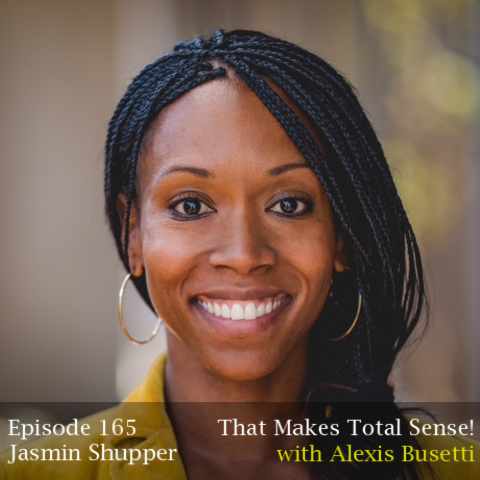
Speaker 2 00:00:42 All right. I'm thankful for the gift of laughter this morning that I can laugh with my, with my guest because I was, before I hit record the first time, I was saying how excited I am to be here with Jasmine Scher. She is a friend of a friend. So, um, podcast listeners may remember my friend Phil Allen, who has been on the show twice now. And he texted me one day and was like, Oh my goodness, can I share someone with you who I think would be an amazing fit for your podcast? I'm like, Always. And now I'm like, Okay, Phil. He's probably holding back on me. There's probably more people I need to connect with, but right now I am just beyond thrilled to be here with Jasmine. Hey, Jasmine.
Speaker 3 00:01:27 Hello Alexis. I'm so happy to be here. Thank you for having me.
Speaker 2 00:01:31 Oh, thank you so much for coming on. Uh, Jasmine lives in the Pasadena, California area in the LA area, and she is the founder of an incredible organization called Green Line Housing Foundation. And Jasmine, I just can't wait to get into what you're doing at the organization, but just even on the front page, this, these are, these are the lines, closing the racial wealth gap. Hello. Granting access to home ownership, come on. And restoring justice one home at a time. I mean, Jasmine, this is such an honorable, ambitious goal that you have at Green Line Housing Foundation. I don't really know exactly where to start, except for maybe where did you start with Green Line? Like what is your background? What gave you the idea to begin this amazing foundation?
Speaker 3 00:02:39 That's a great question, and I think at the beginning is always a great place to start. So
Speaker 2 00:02:43 <laugh>, we'll start singing here in a minute.
Speaker 3 00:02:44 Yeah, let's, let's, let's go back, um, because that is, it's a really relevant question too, even in terms of how Green Line came to be. Um, and it really was the convergence of a lot of, you know, seemingly isolated experiences and incidences that just all kind of came together and beautifully and Green Line was born. So, um, a little bit about me personally. Um, I was born on the south side of Chicago, um, the one that you read about, um, in Michelle Obama's book. Yes, Right, exactly. Um, and lived there for a time then grew up in central Illinois. Um, and my, my grandmother on my dad's side, so my paternal grandmother was fortunate enough, somehow as a black woman in the sixties to purchase a house on the south side of Chicago, which she then left my dad, um, upon her death. And then that was the house I was born into.
Speaker 3 00:03:33 Um, and the assets from that house is what helped, um, you know, fund future house purchases that my family made. And so, you know, I'm kind of living that generational wealth through home ownership, um, as well. And so, you know, fast forward as a child, I loved houses. I was just always fascinated by the idea of houses. I would ride my bike to open houses just for fun, um, that were happening in the neighborhood. I just really loved the idea of what a home represented. Um, and so that started at an early age and didn't really come from anywhere, I don't think. I, I, it just was, you know, just me. Um, and so then even fast forward from there, I went to college, went to Pepperdine University, and I studied, um, business with a business major there, you know, and learned a lot of the ins and outs of finance and, and wealth accumulation and, you know, financial markets and, um, all of these things.
Speaker 3 00:04:24 And, you know, so it was like, Oh yeah, this is all very interesting how wealth is accumulated, how wealth starts and then grows and, and different things like that. And so then upon graduation, I actually, um, went to work as a, as a corporate credit risk underwriter. And so I was analyzing the financial statements of these large home builders and developers and other, and other clients, and was struck by a couple of things. One, you know, these, these developers balance sheets are very, very large <laugh>. So there is a lot of money, you know, that, that, um, is made through this land acquisition and development and sale, right? And, and two, um, none of the developers that we would meet with as part of our evaluation criteria and, and all of that, none of them ever looked like me. Right? And so, um, that was just kind of one of the eye opening things that I was like, Okay, well, you know, clearly there's a lot of wealth here and also none of the people, you know, leading the charge on this wealth or benefiting from this wealth look like me, right?
Speaker 3 00:05:22 And so that began to just make me question why, and, and wonder why that is the case. Um, and so, um, you know, going back to my love of real estate, while I was still working there, I as like a side hustle, decided to get my California real estate, um, license. Cuz I just, again, love houses, wanted to, to be able to have the opportunity to help friends or family purchase or sell their homes. Um, and so went back, got my license, it's, and as I was studying for the exam, was struck by something that I didn't even know, you know, as a black woman in America, that it wasn't until 1968 that it became illegal everywhere to discriminate on the basis of race among other protected classes, but on the basis of race and the sale financing and rental of property, right? Which means Alexis <laugh> that in 1967 you could legitimately say, you know, deny someone alone or refuse someone, um, refused to transfer property because of this color of somebody's skin. And so that was just, you know, really, really jarring for me. Um,
Speaker 2 00:06:25 Like, say that again. Like, my parents were 10.
Speaker 3 00:06:28 Exactly, exactly. I mean,
Speaker 2 00:06:30 This is not, this is not like, oh, we're talking like back in the day when people aren't covered wagons and stuff. I mean, this is like, my parents were 10 and, and when they were 10, their neighborhood, their neighborhoods, the people who own those properties could discriminate on who was living there buying Yes. But even just who was renting in those spaces because of race.
Speaker 3 00:06:56 That's absolutely right. That's insane. I know. And that, that really takes it from like, and I'm so glad you said that cuz that really takes it from this idea that yeah, this is, this happened centuries ago, or this was, you know, such a, such a long time ago to the fact that it became illegal. And this is something that's really important to, to understand as well. The fact that it became illegal didn't mean it stopped happening. <laugh>, of
Speaker 2 00:07:17 Course. Yeah, yeah, yeah.
Speaker 3 00:07:19 It just became covert, right? Mm-hmm. <affirmative>. Um, and so anyway, and so that really, really struck me. I remember very specifically that that point in time where I realized that, um, and so yeah. And so fast forward began, you know, kind of practicing real estate and then my first job was born. So I took some time off from my corporate, um, job. And then I started, um, working part-time after several years at my church, in their business department. They had had a transition in staff. And so they asked, you know, Can you come in while we're looking for someone, um, and, and kind of help with this transition? So I started very, very, you know, like five hours a week doing accounts receivable, payable, and then fast forward six months and I was the business director running the whole budget managing, you know, the, the 8 million budget in the entire organization.
Speaker 3 00:08:02 And so, um, what I learned there was, was twofold. One, I learned obviously the ins and outs of nonprofit management, right? And what that looks like and how nonprofit is different than for profit. And, you know, some of the really specific and technical elements of that. And then two, and probably most importantly, I learned, um, the gospel imperative to pursue justice. Um, and it was something that I, I knew conceptually like, yes, Jesus is good and he's kind and he loves justice and he loves us and he wants things to be right. But just really learning deeply what the scripture says about justice and God's heart toward that is something that I really, really learned while working there. Cause our, our church, um, fellowship in, in Monrovia has a center for racial reconciliation and have long been kind of trailblazers, even in this area of the gospel and justice, and started the Center for Racial Reconciliation, um, years before it was a hot button topic, right? Right. Um, and so just really sitting under that teaching for so many years in the context of working for that organization and, and, and seeing how funds are, are stewarded and determining how funds are stewarded and, um, just really was, I think the, the last kind of piece. Um, and then I was journaling one day and, and God put it on my heart, um, to, to do something. And I'm like, Well, I'm gonna work at a church. Jesus, like <laugh>,
Speaker 2 00:09:28 I I'm doing something in case you
Speaker 3 00:09:31 <laugh>. But what he said specifically was like, all of your experiences have kind of led you to this point, and this is what I want you to do. Um, and so I'm journaling and then I'm like, Are you sure God? And then he led me to a, um, passage in Psalm 82 where it says like, pursue the cause of justice. And I'm like, Okay, okay. I get it. Like this is, this is what needs to happen. So literally, my husband was in the shower one day and I busted and I was like, Babe, I wanna start an organization that gives money away to black and brown people to buy a house. And he's like, Okay, okay babe. You know, like, let's, let's talk about this. Let's talk about how this will work, how, how this is gonna work. And that was really the time when like, the seeds of Green Line are born.
Speaker 3 00:10:08 And so, you know, and so as we still often do, I think as believers, right, we like second case are so well like that, that sounds really audacious. Like, is that, like, are you sure God? Like, you know, that feels really big. Like, are you sure me, you know, I'm, I'm ill equipped to do this, all of that. And as if, as if in a direct answer to, to what he knew I was like, you know, stuck on. Right? Um, we get a phone call from, from friends of ours who have a friend, um, that's a couple that's raising money for friends of theirs to buy a house because they're believers and, you know, they are deeply, um, connected and committed to this couple and this couple is very active in the area of racial reconciliation. They have left a legacy in terms of the work that they've been doing for decades.
Speaker 3 00:10:51 Um, and, and this couple, their friends wanted them to have an economic legacy to match that, right? And so they just started, right, this, this initiative, this Holy Spirit led initiative to raise funds for their friends to purchase a home. And so I was invited to this meeting to conceptualize and see how I would wanna be a part of it. And I'm like, Okay, Jesus. Like I hear you loud and clear, and this is a direct answer to is this audacious? Is this too audacious? Like, no, cuz here it is happening. And so connected with, you know, with that initiative and I was like, Oh my gosh, you know, shared with them that the god, what God had put on my heart, what I was, you know, thinking through and processing through. And it just converged beautifully. And I was like, this needs to be a movement.
Speaker 3 00:11:29 And they're like, well, well we just wanna concentrate on this one family, you know? And, and so, you know, that's, that's really when like the seeds of Greenland got, got cultivated and watered and started to bear fruit, let's say. Right? Um, and so now one of the gentlemen that was leading that initiative is now on our board of directors, um, cuz just God is, he's the ultimate multitasker, right? Like <laugh>, he is the ultimate multitasker. So anyway, all of those lived experiences, both personal and professional, really converged, um, and, and Green Line was born. So that is a very long winded answer to your
Speaker 2 00:12:04 Question, <laugh> No, it's, but it's all but it's all, obviously it's relevant and it's, and it's super important because you have hit on so many, I mean, I'm saying this in kind of a cold way, but so many data points, right? In this, in what you just shared in your story that a a lot of Americans are not aware of, you know, even just the 1968, you know, um, changes in the law, but even I think some of it is just that we, we swim in this water and so we're unaware really, Well, I don't know, let me say exactly how I'm gonna put this. We're unaware of this even how the underlying undercurrents of how wealth is built in this country and that a lot of it really is based around home ownership, like you said. Yep. Yep. And that affected your family, and you're aware that that gave you a lot of opportunities that maybe you wouldn't have had, had your family, you know, had your grandmother not been able to purchase that home and then pass it down and, and all of those things. But for white Americans, and we'll, we'll get here, but for white Americans, this is just normal. This,
Speaker 3 00:13:27 That's absolutely right.
Speaker 2 00:13:28 Mm-hmm. <affirmative> has just always been, right? Yeah. And, and so there's not, you know, some of that connection made. And, um, you know, I'll say, I mean like a little bit of self disclosure here. I mean, I, I told you beforehand that I used to work in, um, used to do a little bit of personal finance coaching, and a lot of that was because of I had to just learn things a hard way. Mm-hmm. <affirmative> and, you know, I was like realizing, oh man, there were lots of people around me that were my peers as far as like neighborhood and things like that. But there were a lot of them were white people who were 10 or 15 years younger than me. And, you know, I kind of started just observing, right? And just thinking, oh yeah, because, you know, I made a lot of really dumb choices when I was, but I also, you know, went to an expensive school and then had like tens and tens and tens of thousands of dollars of student loans that I had to pay back and all of that stuff. You know, I think, well, you know, we just, we had different experiences and it wasn't just my mistakes, it was my mistakes. But it was also like, there's a, there's a long line for everyone. We're not only living in what we have done, we're living in what our parents have experienced and we're living in what their parents have experienced. And that's right. You know, white Americans and their parents and their grandparents have experience, have different experiences when it comes to wealth
Speaker 3 00:14:58 Building. And, and I'm, I'm so glad you say that, Alexis, cuz even, you know, with my story, you know, being relatively rare in terms of, of statistically less likely, let's say, um, in terms of like a black legacy behind home ownership, right? Um, and, and how that did have very positive implications on my life. But even juxtaposing that with my husband, who's Caucasian, his family, his grandpa, um, you know, started a a a kind of a fund for him to be able to purchase a house at some point, um, later on in life. And even looking at our grandpa's experiences, right? Like my grandpa, you know, did not get his GI Bill wasn't able to get access to his GI bill after fighting in the war, right? Um, Nick's grandpa was able to go into a bank and get a small loan and capitalized on that opportunity with hard work and was able to grow it into something that left a generational impact on his family, right?
Speaker 3 00:15:52 So that's not to impugn his hard work, of course, but the fact remains that he was able to walk into a bank and be assured that he would be evaluated solely on his credit worthiness and nothing else. Whereas my grandpa could not even even get access to something that was promised to him because he served. Do you see what I'm saying? So even within that, yes, my grandma, despite all odds was, was able to purchase a home as a black woman in the sixties, which in and of itself is remarkable. Um, but what, what would've happened had she been able to purchase, you know, further north in Chicago or what would've been, do, do you see what I'm saying? Mm-hmm. <affirmative>, like there's still
Speaker 2 00:16:26 Oh,
Speaker 3 00:16:26 Yeah. Oh yeah. Plenty of, And and, and even you touched on something earlier, um, about how it's not necessarily widely held, just how big of a deal generational wealth is and where it comes from. Like, it's not widely understood necessarily, but even if you go back and, and, and talking about the history of how we got here and why organizations like Green Line or even necessary is that, you know, if you look at the, after the Emancipation Proclamation and after, you know, Juneteenth, when the slaves, the last slaves were notified, um, that they had been free and General Sherman, you know, asked them like, What, what do you need? And it was, it was, it was overwhelming that they, you know, that that over overwhelmingly understood, I guess, um, that in order to have a chance that economic independence land had to be a component of it, and thus 40 acres in a mule was born, right?
Speaker 3 00:17:18 And so this initiative that gave 400,000 acres of land, 40,000 freed slaves along certain southern states, um, lasted and, and one of the most bold and corrective policies ever, ever passed, right? Um, and then it was reversed when, when President Abraham Lincoln died because Andrew Johnson was a southern sympathizer and in like political quid pro quo, you know, reversed the order and returned the land to the Confederate land owners, right? Do you know the present day value of that land? This is, and this is just based, um, obviously it's an estimate, right? And based on like economists and having done work, 64 billion
Speaker 2 00:17:56 Isn't that insane?
Speaker 3 00:17:57 $64 billion. So what would that have even meant for the legacies of those, of those, um, formally enslaved, right? If they would've been able to keep that right? And this is 1865 right? To present day. And then from that you had, you know, after the great migration, um, the, the creation and the beginning of zoning laws, right? Intended specifically for the purpose of keeping areas segregated and restricting black access to white suburban areas. Like that's where you get single family zoning. That's, that was a response to the Great migration af after federal protection ended for black people in the South, right? And they, and they migrated north. And so, so, you know, then you have the New Deal, you know, and, and it's so important to understand this in the context of history, lest we think it's just this isolated idea, um, or there's some other reason why the racial wealth gap is what it is, or the home ownership gap is so staggering, right?
Speaker 3 00:18:55 And so you have the new deal, um, after the depression and all of these initiatives on the federal level in order to spur the occurrence of home ownership and make it easier, right? And, and to come alongside current homeowners who are feeling financially burdened. And so then you had the Homeowner's Loan Corporation, um, which started, which had this rating system C and d that was color coded red being worse. And that was the precursor to redlining, right? Entire communities were evaluated based on their ethnic makeup, um, and, and not the, the credit worthiness of the people in those communities <laugh>, but just what the demographic, what the ethnic makeup of the community was, right? Um, and this is one staggering one that, that, that I just, I've, I've, I've, I know it now. I've repeated it many times and every single time it's like the same gut punch. Um, but you know, when the FHA was created, and you have this initiative of the government backing these loans, mortgages, there was 120 billion of government backed mortgages given between 1934 and 1962, Less than 2% went to non-white people. 120 billion over almost 30 years, Less than 2% went to non-white people. This is at a time, Alexis, when it was arguably the easiest and, and home ownership was most accessible, But you had, because of discriminatory policies, you had less than 2% of all of this assistance go to people who were not white. I,
Speaker 2 00:20:32 Yes. I need, I, I need I'm glad you said that and because, because some of the things that were just crossing my mind were, um, yes and amen to everything you just said. And so we can be aware of the, of black people trying to purchase homes and the 48% meal and all of those things. And as you were talking, my mind couldn't help but go to my ancestry as well. You know, I, I recently, and this is kind of those, uh, I've, I've said it several times recently, my husband's favorite Mark Charles quote, We have two different favorite Mark Charles quotes, and my husband's favorite one from him is when someone is saying something like this, and people are probably experiencing this right now as they're listening to us going, What? I didn't know that. Are you, Are you sure? And Mark Charles is Mark Charles says, When it comes to American history, you weren't supposed to find out.
Speaker 2 00:21:25 Like you don't know because you weren't supposed to find out. Right? Oh, that's so deep. Yeah. <laugh>. It's true. And yeah. And, and my favorite Mark Charles quote is, he was specifically in the context talking about, um, women earning 70 cents on the dollar to men. And he says, You know, why are you surprised the Constitution is working? That's, that's my favorite. Mark Charles quotes. He says, The Constitution was written for and by white land owning men. So when things like this happen, there's a part of us that could say, Well, the Constitution is working. And, and, and I actually, I like how he says white land owning that. That's right. That's right. White. That's the whole context of our conversation right here is is the land owning part. So back up to some of the things that were going through, my mind when you were talking was Tree of Guadalupe.
Speaker 2 00:22:11 So, so one of, uh, I had met a new friend a few years ago who's, who's, um, also a Mexican American. And he asked me, Did your great-grandmother cross the border or did the border cross her? And that was the first time I'd ever been asked that question. And of course, what he meant by that was much of the southern United States used to be Mexico, right? Until it wasn't. I mean, it used to be, you know, until it was now Texas and California and Arizona, and parts of Oklahoma and Kansas and New Mexico. Um, and of course, this started over a war that was originally over just a few miles on either side of the river. And now that's right. You know, all of this territory. But part of what happened in, in that treaty was these Mexican citizens got the opportu the opportunity, I guess we could say, to become US citizens on the land that they owned.
Speaker 2 00:23:02 But then if they wanted to maintain that land, if they wanted to maintain ownership, I'm kind of paraphrasing and, and rushing through this little part of history, but they had to be able to prove that it was theirs. According to us, land laws, which are surprise, not the same as Mexican land laws <laugh>. Right? Exactly. So if you couldn't prove it, then you lost it. Right? And so this is the same kind of thing, 18 hundreds, these families have That's right. All of this, all of this land. And they couldn't, they couldn't legally prove that they owned it, literally because the legalities were not the same. Right? Right. And so they lost it. And so I, I am so thankful for the wording, even in the green line, uh, uh, you know, on the website talking about helping black and brown people. And also this statistic that you just shared, which I'm gonna ask you to say it again in a minute, but that only 2% went to nonwhite people.
Speaker 3 00:24:05 That's right. Yeah. That's,
Speaker 2 00:24:07 That's, that's huge. This is anyone mm-hmm. <affirmative>, we're talking Asian Americans, Native Americans, African Americans, Hispanic, Amer, every, everybody who does not fit the category, quote white mm-hmm. <affirmative> on a checkbox. Only 98% could fit that box. Everyone else, you're not getting any money.
Speaker 3 00:24:27 Yep. Yep. And it wasn't, look, it wasn't, you know, explicit. That's the thing that's so crazy about it, you know what I mean? Like, this is a, this is a statistics that, you know, the federal government has this because it's a federally, you know, backed program. Like, this is not like just some made up thing. Um, but the fact that it, it, I mean, it was explicit. I, I take it back, and in some areas it was explicit because they were racial, you know, covenants in, in the deeds. And a lot of them in, in Southern California and many other areas in the country, they still are, they still go with the deeds. And so there's this big push now even to, to go back and remove those and get those all taken. Um, good friends of mine, friends of color, um, black family just bought a house and they have the, and they're like, I don't know whether to burn it or frame it, you know, this racial covenant that says like, I shall not own this house. You know what I'm saying?
Speaker 2 00:25:14 Yeah. Right, right,
Speaker 3 00:25:15 Right. And here I am. But, but, but I say that to highlight just the reality that, that the obstacles in place for people of color, it was specifically and intentionally black people for a while. Jewish people, you know, I mean, still, still as black people, Jewish people, you know, were very blatantly discriminated against as well mm-hmm. <affirmative>, um, after a time began to realize that colorism worked in their favor and were able to, you know, um, I don't wanna say pass as white, but but be considered Right. Be considered white. Um, but it, it's, it's, it's staggering that, um, there seems to be such a disconnect between this, this very real history and our present day reality and, and people's, uh, consciousness and understanding of how we got here and how it's incumbent on us to do something about it. Right. Like, um, Yeah. And, and, and it doesn't even, you know, it doesn't even end there in terms of the, the new Deal on my little, you know, chron, chron chronological order of, of, of, um, of how we got here.
Speaker 3 00:26:23 But, um, you know, so post New Deal, and then you have the GI Bill in the forties, right? That's a whole, that's a whole nother thing where, where, you know, veterans returning from war were promised this, this, um, this, this program was launched. And what, what a lot of people don't know is that the, the, um, the house rep for the Department of Veteran Affairs was a very outright and blatant racist and made sure that the GI bill was something administered on a state to state level as opposed to on a federal level, which then gave states free reign to control how it was administered, which basically assured that black people did not get access to the benefits of the GI Bill. Um, and you didn't see that statistically, you know mm-hmm. <affirmative> in terms of, of how many, how many people, um, received the GI bill.
Speaker 3 00:27:16 I think it was like in, in, in several states in Mississippi, I think it was a hundred out of 64,000, um, that that received their, their GI Bill and in New York, um, has a similar, um, and, and equally a staggering statistic, right? And so then you've even got, you know, the, the GI Bill, these resources that were supposed to have been earned by people meeting the criteria of having served in the war. You also had a lot of black people being disproportionately discharged dishonorably, um, because you had to be honorably discharged, right? In order to get the benefits of the bill. And just so many ways that it was, you subverted the system that was intended to help and provide these, these benefits. Right? And so, um, and so that left a hu I mean, how many people do we know who, who grandparents bought a house and or went to school with their GI bill, right? Absolutely. Those two things, education and, and home and land ownership are two of the biggest determinants of economic health overall. <laugh>, right?
Speaker 2 00:28:15 Um, right. Yeah. Right. I, I loved the way that, that Jim Wallace actually presents when he's talking about the GI Bill. Um, so, so, uh, why pastor, uh, leader in reconciliation, racial reconciliation space. And he just kinda introduces it and says, I, I'm a beneficiary of affirmative action because his family benefited from the GI bill in both education and home ownership. Mm-hmm. <affirmative>. And he lays out those statistics of how he as a white man and his family benefited from those when families of color didn't benefit from those same things. And he was growing up in Detroit. And so you mentioned, you know, Mississippi and New York, and you know, Michigan, you're like, this, this is, we're not gonna call this a southern southern thing.
Speaker 3 00:29:04 That's right.
Speaker 2 00:29:05 This is everywhere. Mm-hmm. <affirmative>. Um, before, I do wanna mention before when you and I were chatting, we mentioned the kind of landmark book, The Color of Law that I'm gonna put, you know, a link to that if people really wanna do a deep dive into this. Because we mentioned, you know, when, when I was, when I was reading the beginning of that book, uh, this author talks about redlining in San Francisco, and that was one of my eye opening experiences, you know, growing up in the, in the Bible belt, living now in Texas, which I didn't classify as the Deep South until I learned more about Texas history. I was like, Oh, this is this crazy, That's a whole other episode. But, you know, then, but I was like, you know, he talks about all of the redlining in San Francisco, and I was just like, if this is happening in San Francisco, like the, the whole rest of the country, there we're every, everybody's messed up
Speaker 3 00:29:59 We're, nobody has a chance. That's right. That's right. That's right. All of us are due. It's true. That's right. And I think he included that story specifically to address this notion that, you know, it was specifically a southern thing only carried out by like, sheet wearing blatant outright vocal racist. You know what I'm saying? Right. And, and, and to look at it specifically like that is to miss the whole undercurrent of how it's baked in the cake and the systemic nature of it. Right. Which is the harder thing to address and more necessary thing to address.
Speaker 2 00:30:28 Right. Right, right. So let's go there. So how are, how is Green Line specifically? I love that this story that you shared with this, you know, this one particular family, like let's create a legacy for them. So how are you guys scaling this? Like what does this look like on the ground? Um, how you're, how you're doing this at Green Line?
Speaker 3 00:30:52 Yeah, absolutely. So what we do specifically is we give home maintenance and down payment grants to qualified people of color, um, to purchase a home or make repairs on their home, specifically to close the racial wealth gap and facilitate access to home ownership as we attempt to really kind of repair these devastating effects of systemic racism and housing. Right? So that's kind of broad level. Um, what we do, uh, the way that we do that is, is, um, obviously requiring our, our, um, candidates to apply, but there's also a really a specific and curated financial education component because we really believe that, um, you know, we, we want our, our homeowners to be not only set up well to purchase a home, but set up to thrive once they're in their home. Um, and financial literacy, financial education is such an important part of legacy building from an economic standpoint, right?
Speaker 3 00:31:45 And so to understand, um, these things and what goes into it, and even the different types of mortgages and so many things that, that, um, oftentimes, you know, black and brown people have had less access to, Right? To really make that a crucial and foundational part of what it is that we do. Um, because again, we can't talk about building an economic legacy without there being some element of, of, of education and literacy that we're also attaching to it. Um, and that's hugely, hugely important for us. But really, I mean, we, we are, we're giving these grants, it's a bonafide gift. It does not need to be repaid. Um, we have certain application or evaluation criteria, of course, an eligibility criteria. Um, you know, but really what we're seeking to do is, is have these grants be like upfront equity or lost equity, right? So not only are we, we hoping to make home ownership, you know, more accessible by way of, of extending the grant and theoretically being able to reduce the amount that someone has to get in loan, right?
Speaker 3 00:32:49 But we are also giving back lost wealth. Um, and that's a huge, huge component of what we're doing. And, and part of the audaciousness behind the vision, because it, it'll take something intentionally audacious to combat such insidious and long lasting and pervasive, um, discrimination. Um, that is, that has led to this point. And so, uh, you know, but at the same time, we realize that we're not, you know, dismantling systemic racism and housing is not a solo job. And so what we're really seeking to do is also establish partnerships, um, specifically among institutions that were historically responsible for perpetuating a lot of this injustice to now participate in the repair in a very tangible and sustainable and specific way. Um, so we're looking to partner with, um, mortgage brokers and, and financial institutions, right? We're looking to partner with real estate brokerages and real estate agents to donated, you know, portions of their commission.
Speaker 3 00:33:46 We're partnering with other community, you know, organizations, um, to help really multiply the impact of what it is that, that we're doing. But, um, you know, if somebody, it's, it's funny because I, for one of our grant recipients that, you know, we have to work with the bank cuz the funds are wired directly to escrow at the time of closing, right? And so the bank called me and they're like, You're doing what? <laugh> Like, they're like, We, you know, we, you know, our client told us this and we just, we not that we didn't believe them, but we didn't believe it. And so we have to call and just confirm and verify what it is that you're doing. And I can't tell you, Alexis, the number of times these lenders even and agents have said, Wow, I'm out here in the field doing this work.
Speaker 3 00:34:26 What you're doing is so necessary mm-hmm. <affirmative>, it is so, so necessary. And so really what we're trying to do to scale, you know, to answer your question is attract institutional dollars. Right? Now that we've got our 5 0 1 <inaudible>, it took the IRS nine months, they were very backlogged. But even what we've been able to accomplish, just through private donations and the number of people that we've been able to get into home with, with sizable down payments for, for their respective geographic area, right? Just with private donations, just with people hearing the vision or hearing about it, or being told about it and being like, Yeah, this is necessary. This is a need. How can I help? How can I participate? And I really think that that's the beautiful thing about, about Green Line is that when you give to Green Line, you are very tangibly impacting someone's economic legacy.
Speaker 3 00:35:10 Like a, a black, brown family's economic legacy. And that like, what a gift. Who wouldn't want to participate in that way? And, and even as I look at the church, cuz one of our, one of our anchor partners and and biggest financial partners at this point is a church, right? What would it look like for the church to participate in, in, in bringing justice? And, um, I I, I, excuse me, I was reading in my Bible and I came to a passage, Isaiah, um, 61 that really was like, wow, you know, how can we as the church do this? How can we participate in this? But it's, it's when he's saying that, you know, the spirit of the sovereign Lord is on me because the Lord has anointed me to proclaim good news to the poor, to bind up the broken hearted, to proclaim freedom for the captains and release of darkness from the prisoners, right?
Speaker 3 00:35:56 And then he goes on to say, for I the Lord love justice, I hate robbery and wrongdoing in my faithfulness, I will, I will reward my people and make an evernet everlasting covenant with them. Their descendants will be known among the nations and their offspring among the peoples, all who see them will acknowledge that they are blessed. And so, I mean, he's saying in, in this, in this one part that was, Oh, and so you will inherit a double portion in your land and everlasting Joel will be yours. You know? And so I just in thinking through even like what the gospel says about this and justice and the marginalized and the oppress and how often they're mentioned in scripture, right? The poor will always be among you, you know, the marginalized uphold, the cause of the oppress, seek justice, love, mercy, you know, like, it's there. It's overwhelmingly there. What would it look like for churches to participate in this work? Um, you know, the way that, the way that fellowship has and, and really trail blaze this. So anyway, I say all that to say those are, those are the type of partners that we're also looking for and, and multiplying the impact of this work.
Speaker 2 00:37:01 That's incredible. I mean, one of the things that was going through my head, and I I will, I will put this in the show notes as well, was, um, I had the opportunity to interview Duke k who wrote a book called Reparations. And the premise of the book, essentially, he doesn't offer a lot of, uh, practical, um, you know, I think, uh, Gregory Thompson is the co-author, but they don't offer a ton of like, practical here's what you can do. But the, the thesis of the book essentially is like, we need to recognize that people of color, specifically black Americans, have been stolen from, for the extent of our American history. Yeah. And when he makes really a biblical, a faith case to say, as believers, what is our responsibility when we recognize that someone who is near to us has been stolen from what, what do we do? You know? And even as you're, you're using the language of like, repair this, right? Which is reparations is where this come from. And I'm like, not trying to alarm anyone cuz that can be a word that people kind of get. But
Speaker 3 00:38:15 It
Speaker 2 00:38:15 Is, it is. But it's an important concept for Christians to talk about, for us to discover for ourselves, what do I think that means? What is my responsibility when you are aware of, of something that's happening in injustice that's going on? Like, we are responsible for that now. And so how are we responding to that injustice? And so I'm thrilled to hear that you're just imagining the grants that have been provided by private donations alone is like blowing my mind. But, but that it's not just on your radar, but your plan to seek out more institutional partnerships is just, that's, that's key. I just, I can't even, I can't even imagine, like, I just wanna daydream with you, like, what would that look like, you know, if you had these, these institutional partnerships come along and help repair Exactly. Help repair what they have, you know, been complicit in Absolutely. And, and we have been complicit in, you know, but, but you know, as American citizens. But, um, they have been exp uh, complicit and explicitly, um, through their institutional history. That's that's huge.
Speaker 3 00:39:29 Yeah, it is. It's, it's, it's powerful when you think about it like that. And even, like I said, the opportunity to participate in writing such a wrong, um, is something that I, I can't imagine somebody being like, No, no, no, I don't, I don't wanna I don't wanna change the world. I don't wanna participate. You know what I mean? Like, I don't wanna, I don't wanna impact legacies. No, thank you. You know, <laugh> like, um, yeah. And it really, it really does take just getting the word out. So I'm so thankful to even have the opportunity to be here to share, you know, with, with your listeners and with you, Alexis, what we do and why we do it and how people can help. Um, cause it really is good and holy work.
Speaker 2 00:40:07 It is, it's, it is good and holy work. I wanna mention just a couple of more things that I just, I just want to, you know, for what it's worth, just kind of affirm from my end what you guys are doing and then just point out a couple of things that have come to my mind even as we've been talking. Number one, the financial education piece. I'm just gonna like, boom, this is, this is so important. I know I've shared a little bit of my personal finance history, it's so, so, so important. Um, ugh. So I'm so grateful that that's it, that's a key part of what you're doing on the assistance, the grant assistance, both for down payment and for home maintenance. So, a couple of things that came to mind, and then there's not really necessarily a question there, but maybe if you just, um, you know, wanna comment, continue that conversation is, you know, just, just to kind of, we've been talking about home ownership being a big part of wealth building, and so I'm just gonna state the obvious here.
Speaker 2 00:41:00 I'm just gonna, I'm just gonna be that girl for a second just to kind of help us to get our minds around what that looks like. So my husband and I bought our first home, blah, I don't know, 2005 or something like this. It was this tiny little house that had, was built in the thirties in, uh, this, in the college town in Oklahoma, where we are from. So Oklahoma property prices were, were pretty, it was pretty affordable back then, um, especially compared to the coasts, right? And we bought this first house of ours, this little tiny two bedroom, 900 and some square feet for like $70,000, right? It's crazy, right? But my boss at the time was a middle-aged woman. So I was in my twenties, she was a middle-aged woman at the time. And she said, she was like, Oh my goodness, my husband and I bought our first house in that same neighborhood. And I wanna say, so this would would've been, you know, maybe 20 or 30 years before that, right? Uhhuh <affirmative>, they bought it for $12,000, right? Something like that, right? So, wow. So this, you know, like I said, again, just kind of stating the obvious that like, what if I had been her daughter, right? She bought this house for 12,000 and then I inherited as my first house. You know, that's, they had maintained it as a rental or something like that. Now all of a sudden I didn't do anything but be born.
Speaker 3 00:42:18 That's right.
Speaker 2 00:42:19 Mm-hmm. <affirmative>. And now all of a sudden I have an asset that's worth $70,000 Yep. That my parents paid $12,000 for because it's appreciated. Right. And of course, inflation and all that stuff too. But I'm, I'm born right. And I have an asset now worth $70,000. That's, that's, that's crazy, right? That's crazy. Um, that's crazy. But, you know, and then, and then pretend as a wedding present, she gives this, I'm making this up, but this happens all the time, right? All
Speaker 3 00:42:46 The time. This, this
Speaker 2 00:42:46 All the time. You know, this is a compilation of stories that could be real mm-hmm. <affirmative>. And she says, Okay, here, this is your wedding present. You can have this, you may not wanna live in it, but do whatever you want with it. Mm-hmm. <affirmative>. So I sell that baby for 70 Gs. Yep. Here I am, 25 years old, Newlyw sent on 70 Gs. Right? Then I invest that and my, I buy a, I buy $150,000 house. Right, Right, right. I get, I put half down on that baby. That's right.
Speaker 3 00:43:13 Right.
Speaker 2 00:43:14 You know, and then it just, and then it just goes on from there. I live there until we have our first, you know, kid or whatever. And, and in the meantime it appreciates $50,000. Boom. Then I have, you know, and it just keeps going. And that's, that's a 10 year period.
Speaker 3 00:43:28 That's right. Mm-hmm.
Speaker 2 00:43:29 <affirmative>, you know, for, for, for fictional Alexis at 25. Right?
Speaker 3 00:43:34 Yep.
Speaker 2 00:43:35 But this is the kind of thing, just to give like a real practical example. This is the kind of thing that we're talking about when we're talking about home ownership being so key to wealth building, to
Speaker 3 00:43:47 Wealth building and generational wealth is a really big deal. To take your example even further. Okay. So like, let's fast forward, you know, to Alexis and, and Alexis having kids and, and maybe they graduated from college and we're like, you know, we want to be able to make it so that you have very minimal debt when you go to college. And so we're gonna take from some of this asset that we have in this house that grandma gave me, Right. Because we have it and it's there. Um, and it's even grown. And so now you don't have to pay for college Alexis's daughter. Right. And so now Alexis's daughter has no student loans. Right? Right. And so then when Alexis's daughter goes to buy a house, not to mention what equity might be able to be provided by Alexis by way of grandma's house. That's right.
Speaker 3 00:44:25 But also by way of not having to have, um, the burden of school debt on her personal balance sheet Right. Qualifies for X, y, z bigger loan Yes. Than, you know, black family that did not have access to that generational wealth has. And so I, I love your example, Alexis, because it does such a great job of painting a really practical picture of like what generational wealth is and what it means and how incredible it is in terms of giving a leg up in, in, in life in so many areas of life. Not just in the mere fact of owning land, which in and of itself is we, we know is very big. Right. But also from the context, like you said, of what it means for access to education or even healthcare or in so many different economic determinants of, of health. Right. And so, Right.
Speaker 3 00:45:09 Um, yeah, it's, it's, it's huge. It's huge. And to have, even with the stat that I gave between that 30 year period, you know, from the thirties to the sixties when $120 billion of government back loans were given when houses in various areas of the country, depending on where you were, were going for $12,000 or $30,000 or $40,000 or $5,000 or whatever it was, to be able to get in and access it at that time with the help of the government is a game changer. It's a game changer. And less than 2% of people who were not white were able to play that game.
Speaker 2 00:45:43 Yes. Yes. The other one is this home maintenance. Yes. Mm-hmm. <affirmative>. Now this, because <laugh>, anyone who does own a home is like, dang, there's like, there's been a moment, I promise when you're like, if I was renting, I would not have to fix that dishwasher if I was, you know, whatever it was. Right? That's right. Yeah. And even with inspections and all of those things, stuff happens, stuff happens and big repairs are needed, and sometimes, you know, maybe it wasn't caught or whatever, something breaks and it's, and it's crazy. And, and this is not exactly the same, the same thing, but I will tell you, do you remember this show? This is a hundred years ago. You're, you're probably not enough, but this, this, there was a show called, uh, Ex Extreme Makeover Home Edition. Of course. I remember. Sure. I was not, Okay, you're a real estate girl, so you, like you were, you were watching this. Right. But this was one of the things that was, that was crazy for me. And of course, like my husband sometimes calls me Debbie Downer, whatever. But one of the things, it's supposed to be this real beautiful, and it is, it's happy and it's joyful and all this stuff. Sure. But it stressed me out. I'll tell you why. Okay. Tell, there are a few things about that stressed me out, but this is one of the things that stressed me out. Okay. So the families usually we're going through a really hard situation, Right.
Speaker 2 00:47:02 And, you know, maybe it's a medical thing or whatever in the house is in, you know, awful condition. And they come in and they do this extreme makeover and it's like a big deal. And now it's amazing, right? And they show, show it. And it's like the, it's like they can't show the rest of the neighborhood because this, this place is like a monstrosity compared to everything, everything else in the neighborhood. And then I think, well, crap what happens when this family who could not afford their mortgage, and maybe sometimes they paid the house off for 'em or did real low. And then, you know, what happens when this family who could not afford the mortgage gets a leak in that brand new roof or has a foundation issue or you know, whatever, some major Yep.
Speaker 3 00:47:49 Major absolutely
Speaker 2 00:47:50 Repair.
Speaker 3 00:47:51 Yep.
Speaker 2 00:47:52 Has this show, you know, picking on them, set this family up for failure by providing all of this stuff. But we're not
Speaker 3 00:48:00 Coming
Speaker 2 00:48:01 Support system. Exactly. No support system around. It's like, Woohoo, Bless you. You got a house, but mm-hmm. <affirmative> that, I mean, when I see that, I just see maintenance. That's all I see.
Speaker 3 00:48:11 <laugh> legit. Cause we never is super cool into
Speaker 2 00:48:14 It. Mm-hmm. <affirmative>, that room is super cool, but that carpet's gonna get stained that, you know, like all of it, like that's all I see is main. Yep.
Speaker 3 00:48:21 And so, and then they fall into it, they can fall into a state of disrepair, right? Yes. Which leaves them susceptible to gentrification and these big huge, you know, companies coming in and wanting to buy the houses on the block to erect some huge development property. Right? And so really the home maintenance becomes a way to keep people in homes. And I'm also thinking of the people that have, that we're able to purchase people of color that we're able to purchase homes. You know, we all know that a lot of the red line areas still retain the same make, you know, ethnic makeup, Right. Which is, you know, a lot of times the quote unquote other side of the tracks or the place in the city that you don't wanna be. Right?
Speaker 2 00:48:56 Oh, in my hometown, it's literally the other side of the tracks. But,
Speaker 3 00:48:58 And that, and that's also very on purpose, but that's also another podcast episode.
Speaker 2 00:49:02 Yes, it is. You'll come back, I hope you'll come back, <laugh>.
Speaker 3 00:49:06 Um, but so if you were able to, to purchase a home and you fast forward between, you know, increasing property taxes and, and like you said, the cost of maintenance, it's so easy for those homes to fall into a state of disrepair. So really what the home maintenance grants are intended to do is to maintain a home's value, right. As it appreciates. And so it doesn't lose value because of, um, deferred maintenance things. And you, because it needs a new roof, which is 30 Gs. And unless you have that line around, you know, like Right. Um, it can, can be, can be very, very expensive. And so that's, that's where the home maintenance, um, portion was conceived, because really the overall thing that we're trying to accomplish is generational wealth and facilitating access to it. And, and that's a part of generational wealth, right? Mm-hmm. <affirmative> is if you are, if you already own a home to be able to afford upkeep and maintenance on your home on an ongoing basis Yes. That, that is what these, these grants, these particular grants are, are intended to, to achieve.
Speaker 2 00:50:02 Absolutely. I'm, I'm so grateful that Green Line is doing that. That that is, it just, it, it just brings me so much joy, um, you know, thinking about as a, as a homeowner myself and kind of going, I'm sorry, what? Like we have to, I'm no one, no one told us about that <laugh>, you know, cause some of these things are so, are so major and, you know, looking at this with, with with families and communities, black and brown families and communities who are, this is a, this, they're beginning to build wealth. Yeah. For many of that's right. Right. And so it's like, what's starting, Right. And so we're not gonna try and sabotage by this and then, Oh, and then you have to take out this giant loan to fix your roof. That's right. And then, and then it just is gonna snowball in the wrong way. Right. We wanna, we want it to snowball in the, in the right, you know, going up. We want the to
Speaker 3 00:50:56 Go up. That's because the reality too, even, you know, and, and this is where I have to really pray, um, because if you were up to me, you know, we would have like $50 million and we'd be able to, you know, and then we'd develop properties so then we could just own it and be able to sell it so we could control the asset. And, you know, that's coming. So stay tuned for that. But, um, but you know, I, I have to remember that it's, you know, it is, it's one, it's one home at a time. You know, ultimately we would like to get up to 20% grants, 20% of what an applicant is pre-approved for. We would like to be able to give that in a grant. We're not quite to 20% yet as we're still ramping up our fundraising efforts. But we've been able to do, you know, quite a bit and, and, and even take a family that was maybe gonna put 2% down or 3% down to, to over 10% down. Right. And so really like pad that equity cushion, which is so important for so many reasons. Um, and so, yeah, I just have to remember it's one home at a time because I want all the people to have all the homes with all the grants and all the money. And so, um, but God is doing a work here and he's making it really clear that this is much bigger than me. Um, and, and so I, I know that he will continue to provide in that way.
Speaker 2 00:52:05 That's right. That's right. So I'm just gonna, I'm gonna say this and then I'm gonna let you take it. I'm gonna let you take this home, but the 20% I'm sure, so that people will not be, have to pay the private mortgage insurance. And so, which is saving hundreds, hundreds of dollars a month that could be put toward equity in that space, but even 10%, they're halfway to not being able to pay, which is just absolutely,
Speaker 3 00:52:27 Thank you for saying that, Alexis, because yeah, there have been some that still have to pay PMI with our grant, but for significantly shorter of a period time than they would've had
Speaker 2 00:52:35 Years taken off. That's right. Years taken off. That's right. Of that's, And that, and that, those several hundred dollars a month is, you know, probably what it is in a lot of cases, um, is gonna go straight into that equity afterwards. And so That's right. That's huge. And then you're educating people to help them understand that and how it works and how to get the PMI taken off and all those things. Um, so it's fantastic, Jasmine, I mean, we, nobody's gonna say we haven't hid some stuff. I mean, we have gone back to 40 acres in a mule. That's right. PI bill, we're talking, I mean, so I know that we've covered, we've covered a few things today, but, um, I want, I would love for you to have the last word. So what, what question did I not ask? What, what thing about Green Line, um, do we, would you still like us to know at the end of this conversation? And I'm, I just thought of it, so I'm gonna tag it onto this and tell us where you are. Tell us how we can help, uh, donate and how we can get involved too. But, so in addition to that, um, you know, what, what, what major thing would you like to leave us with?
Speaker 3 00:53:38 Yeah, I mean, I, I really just wanna say thank you for letting me have the time. This is, like I said, I really believe it's whole work. Um, it's something that's so necessary and so needed and understanding in the context of history is so important. Um, but really what an opportunity to be able to impact some of these legacy. And that's what I keep saying. Like, so one of our, one of our grant recipients, I'll give you the example, you know, even to, to go off of the example that you gave in terms of like grandma's house, right? Like one of our, one of our recipients was like, you know, as we're going through this process and we're trying, we've saved for years and years and years and like the, the cost of housing has outpaced our efforts to save. Cuz we've got what I thought was a lot of money, but it was three years ago before, you know, significant market appreciation and all this.
Speaker 3 00:54:22 And she said, I just wish we had like a grandma or an uncle or someone that could help us and gift us these funds. Right. You know, like our lender asked us, Do you have a, do you have a parent or grandpa or anybody that you can ask? And she was like, I was so heartbroken that the answer was no. And she was like, Green line became that for us, Right? And like, that's the real meat and potatoes of the work. That's, that's what it is. That's what we're doing, right? Is is we're becoming that grandma or that parent or that uncle that, that statistically black and brown people don't have, you know, And, and to the same degree, right? Like we are becoming that for people and opening a door that, that so many for so long thought was just permanently closed. Um, and, and, and what I will say to, to people listening is who would not wanna participate in that? Like, who, who wouldn't wanna participate in being that for someone, being that family member, being that resource, um, you know, for, for someone and bearing each other's burdens in that way with the scripture so eloquently tells us to do. Right? And so, um, I really leave it with an invitation, Alexis, an invitation to really come alongside in this journey and, and participate with us, um, in restoring justice. So
Speaker 2 00:55:37 Thank you so much. Um, yeah, so this is your website, which I will put in the show notes is greenline housing.org.
Speaker 3 00:55:44 That's correct. Yep.
Speaker 2 00:55:46 Beautiful. By the way.
Speaker 3 00:55:47 You beautiful. It took a very long time. <laugh>
Speaker 2 00:55:49 Oh, oh, well it shows, it's gorgeous. So everyone can find all of the information there on, um, Green Line. You can read a little bit more about Jasmine and, um, and just, I want just invite people to pray. Just pray for this work. It is, it is Holy work. And thinking about how you can impact families and communities one home at a time is beautiful. So thank you so much for being with me, Jasmine.
Speaker 3 00:56:17 Yeah. Thank you for having me. And thank you for your heart for this work and for Jesus and Justice <laugh>. It's, it really is a beautiful thing. I'm so happy to have to have, um, had the chance to talk with you. Amen.
Speaker 1 00:56:28 The links for all the resources mentioned in today's episode can be found in the show notes, music and podcast production by Seth ett. Be sure to give us a review on iTunes and subscribe at your favorite podcast listening app. You can also visit us. That makes total sense.