[00:00:05] Speaker A: Welcome to that Makes Total Sense, a podcast dedicated to exploring God's generosity and justice. I'm Alexis Busetti, a Christian, aiming to ask good questions and encouraging you to do the same.
Every one of us is wired by God to live out generosity and justice, but the how sometimes eludes us. That makes total sense is a way for us to get together, posture ourselves as learners, and challenge one another to practice, practice generosity and justice in a tangible way every day.
Okay. I feel like I don't normally. I'm not normally like you should. Everybody should be jealous. But I feel a little bit like, oh my goodness. I've. Rose and I have had the most delightful pre recorded conversation. It almost feels a little abrupt to be like, okay, now we're getting down to it. But now we're getting down to it, Rose, we're gonna really talk about the book and all of the things.
[00:01:04] Speaker B: I am ready.
[00:01:05] Speaker A: I know you are. I am too.
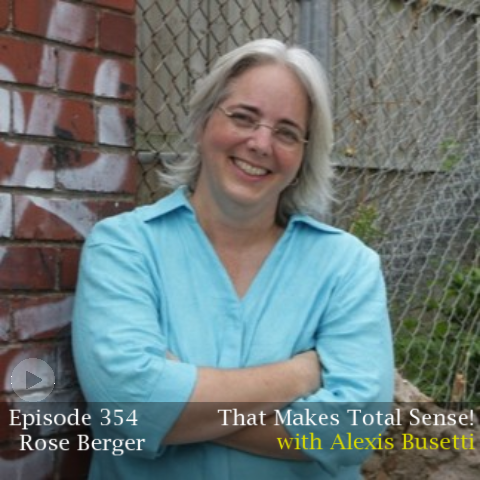
I'm sitting here and having a marvelous conversation already with Rosemary Berger, who is editor for Sojourners magazine and also helped edit this wonderful volume that I'm telling you, it's been like, I'm guessing it's unseasonably rainy in Austin. This is what I'm hearing. We're new enough that we don't really.
So when we have had sunshine. So this weekend I was like, I am going to be outside as long as I possibly can today. And I sat out with my laptop and read this, the last chapter almost of this volume on my patio last night. And it was wonderful. And to say that I did that on a Sunday afternoon when I normally kind of try and say, okay, not going to do a ton of homework today, I'm not going to do. But I was like, this volume is literally such a joy to read.
It does not feel like work. It feels like patio readings. So thank you for putting that together. I mean, that's like, that's not an easy feat. I feel like.
[00:02:11] Speaker B: Yeah, well, it was a lot of good work and hopefully creates a little bit of good trouble. But yeah, this kind of a book, we really wanted it to carry a kind of spirit of our Sojourners community and mission and give people who are people of faith who have tons of questions and need a faith to be big and expansive and welcoming and who are taking a beating right now because everything seems so hard just from getting up in the morning and helping the kids get to school or, you know, whatever, that this could be a little bit of the balm and gilead for people without Being naive and without being simplistic, but really creating kind of setting that table like they say, you know, where you're just going to sit down and have coffee with good friends and ask good questions.
[00:03:14] Speaker A: Oh, my gosh. That is exactly what it felt like. I want to say the name of the volume before we get too much further. Of course, we'll have a link for where people can grab it in the show notes, as always, but this one is called Light for the Way Seeking Simplicity, Connection and Repair in a Broken World. And this is a collection of essays over decades of. Of Sojourner's existence. And I will tell you, one of the most delightful things for me, just as we. As we get started is when. So at the end of every essay, there's of course, a little blurb of, like, what the author was kind of working on at the time or where the author was situated, what projects at the time. And it was so funny because some of these, I was like, thinking, I'm like, oh, this. I'm sure this came out. You know, some of the authors, I didn't. I didn't necessarily recognize. I wasn't familiar with their work. And I'm like, oh, yeah, this came out like two years ago or whatever. And I'm looking and I'm like, oh, oh, no, like 1997. Right. But it. But it was helpful for me in that context and kind of situating myself to remind myself that folks have been wrestling with the same kinds of questions and our culture, even though we are all talking about. And you just did. And it is very true how hard it is right now.
We know where we are right now, didn't come out of nowhere.
And folks have been listening and perceiving and wrestling and. And asking these questions for longer than I.
Much longer than I have even known there were questions to ask.
[00:04:57] Speaker B: Right, right.
[00:04:58] Speaker A: And so that actually felt. Even though it's hard, it felt a little comforting, you know, to see some of these. It's like, oh, my gosh, that came out when I was a kid or that came out when I was in high school or college. And it's like, oh, yeah, yeah, yeah. Like, these guys are. Are wise. They've been. They've been aware and they've been wrestling and doing this hard work for decades. And even though the material still felt fresh, it did feel comforting in a weird kind of way.
[00:05:26] Speaker B: Yeah, it's interesting. I mean, part of the gift of Sojourners. Sojourners is a Christian magazine and organization that started in 1971 and we have been publishing and organizing and speaking about Christians engaged in social justice and kind of a Christianity of liberation.
We've been talking about that since 1971 and being in conversation with whoever else was talking about it through those years. And so what was exciting in putting together this collection was that we got to go back and look at just what you said.
Who was asking the critical questions that resonate, resonate with us now, and who did, who was writing for us? How did they approach the question all the way up through, you know, fairly current.
And so one of, one of the things I was just thinking about from the introduction of Light for the Way is, you know, it's, it starts with, if you have picked up this book or opened it on your reader, there is a reason.
Something in you is seeking an authentic spirituality, something deeper and wider and more truthful and more generous than what you may have grown up with or are experiencing in the surrounding culture. Maybe you are worn out by grief, exhausted by work, sick of the politics of hate and division, or maybe you've just decided that no one is going to steal your joy, hijack your happiness, or trivialize your own truth. Welcome. You are in the right place and this is the right book.
And I think, you know, for, for 50 years, Sojourners has been wrestling with this question as if we take Jesus seriously. And Jesus says, you know, feed the poor, visit those in prison, give water to those who are thirsty, clothe those who are naked, all those things, or go to hell, which is basically what the scripture says, then maybe we should take those things very seriously. Jesus centered them.
And I don't think the go to hell as in is necessarily a punishment. It's just a description of what happens to a life if you don't live it toward those who are most vulnerable and who have been crushed by the systems around them. And if you separate yourself off from, from those communities and those folks and you don't allow that kind of energy of charity and generosity to flow through your life, then literally your life becomes a very small, very hard hell.
And so that's, that's a lot of what Sojourners has, has engaged in over the last 50 plus years. And, and we were just really excited to look at the articles that we had published over time, sort of frame them in themes that we thought were accessible to people who might be interested now, especially people who have never heard of Sojourners. I think that was a really important piece for us. We wanted to try to offer something that people who had never heard of us before, but were wrestling with issues of spirituality, faith, politics, social concerns, that they could find something familiar and find a kind of family through reading this book.
[00:09:20] Speaker A: Yeah, Rose, that's really beautiful.
I want to also just invite you to talk a little bit about the early community of Sojourners, too, because there is something to be said. I think it's. It's unique, but, you know, in. In this podcast, I feel like it's kind of one of the things I can do. I just. I have conversations and kind of put them out there and kind of hopefully try to help people to think and speak on these things in ways that maybe they haven't thought of before, ways that might bring more nuance or wisdom or, you know, something like that. And I think that that's really valuable. I mean, that's. That's why I do it. But I also think there's something really incredible about saying that sojourners, especially the early community, really just kind of put their money where their mouth was.
I had the privilege of meeting and spending some time with Jim Wallace a few years ago in D.C. at Georgetown, and. And of course, he talked about the early year. Days and years of Sojourners. He's been on the podcast a couple of times. Maybe I'll. I'll link his episodes.
And then he also has an essay or two in this volume. And I. I think it was Jim's, but I can't remember where.
[00:10:30] Speaker B: Where.
[00:10:31] Speaker A: Where he recounts some of the early community, some of the violence that they witnessed in D.C. and so if you could just kind of talk about that early community, but also how it continue. I'm. I'm guessing it continues to inform how Sojourners thinks and writes and talks and continues to act when it comes to these social justice concerns that you just talked about.
[00:10:58] Speaker B: Yeah. And I think part of what that early group of seminary students, they were students at Trinity Evangelical Seminary outside of Chicago in the 70s.
And what they learned from their churches, mostly more conservative evangelical churches, was God and country, you know, that the. That the Bible was. Was kind of divinely inspired to support American patriotism and nationalism. And this is in the midst of the Vietnam War.
And these students were sort of picked up the Bible and picked up what was then the daily newspaper and were reading them alongside each other and. And had a lot of questions,
[00:11:50] Speaker A: as they should have had a lot of questions, as we do now have a lot of questions.
[00:11:55] Speaker B: Exactly. And so they basically. They started by just coming together saying, you know, we're serious about our Faith. I mean, we went to. We went to seminary, right? We're serious about our faith. We want to know more about the Bible. We're reading the newspaper and we're just asking, you know, an early version of what would Jesus do? You know, what if it wasn't filtered through all of our lenses of Americanism?
How would Jesus be reading our current situation?
And that didn't necessarily point them to an immediate answer, but it pointed them to, as you said earlier, a whole different set of questions.
So it wasn't how do we make Jesus become more American and support what America is doing?
But how is America and our social systems bending to the work that Jesus invited us to? Feeding the poor, clothing the naked.
And.
And then I think as they held those two things side by side, it just generated questions and perspectives.
And eventually they came to say, you know, I, well, we're pretty convinced after reading Scripture that Jesus would be against the Vietnam War. And so they, they began to ask questions about that. They began to have, you know, kind of public protests on campus, and eventually many of them got kicked out of seminary because of it.
Questions do, Questions do lead to, to problems with administrations, obviously, and institutions.
But I think that experience of being kind of pushed off the campus forced them into community.
So they had had this shared experience together, and they're like, well, we're not going to stop asking these questions, so let's come together and do it together and try to practice what we are reading and experiencing.
And so that started this early community outside of Chicago, living in a big house together, trying to put some of their questions into a little broadside newspaper that was called the Post American. They were, they were printing, you know, 500 copies of it with essays by their friends, and they were taking it out on the old station wagon and dropping it off at churches and, you know, doing all this kind of stuff. And that was kind of the origins.
And then as the, as the community living developed, there was a greater sense of, well, let's, let's try to really live into this kind of acts two community. What if we shared our funds together? What if we shared our assets together?
What if we tried to live the way that it seems as if those early Christians lived? It's not going to be the same, obviously. It's a completely different situation. But what might we learn with that experiment with the gospel?
And, and I think that really led to a kind of communal life that became.
How do you say that, a discipling project.
People were experimenting with the gospel. They were experimenting with what it would be like to actually do what the gospel said. And they were learning things.
And out of that learning came more writing and public speaking.
And so that that community changed its form over, you know, many times over the years.
But it is that sense of community, of you don't take off and just do all these things on your own.
You do it in conversation with others who can both keep you in check. If you're going to start to wander off down Crazyville Road, you know, or if you're becoming too individualistic, you know, you're just focusing on me.
And there's somewhere in the balance of those things is where community keeps us traveling on a. On a generative path together.
And, you know, and it's interesting, I think community really calls into.
Calls the question about who is our family?
And sometimes, if you're very, very lucky, your blood family is also part of your family that walks with you after Jesus.
Sometimes they aren't, and that doesn't mean you don't love them, but it just means that sometimes you do have to step away and you find new family who are kin in faith because they're asking the same questions, they're wrestling with similar issues. They're. They're asking Jesus is, is. Is putting questions into them in a way that is similar to you.
And, and that's, That's a really great gift, especially in the United States, especially in these times when everything is very split apart and, and family feels necessary and broken and dangerous and loving and all the things that it, that it. That it can be.
So I think community does still really inform our vision, even though we don't have a formal community in terms of an intentional community anymore. We, we.
But we do have a very unique kind of workplace and work ethos that is built on trying to be respectful and thoughtful with each other and is a place of experimenting with the gospel still, you know, which I think is a. Which just. It's a great gift.
[00:17:58] Speaker A: It's. It's interesting to me that you have used the word experimenting because I am married to a professional scientist.
He has a PhD. He is in Earth, like hard sciences.
And sometimes I'll say, not infrequently, he has used that same term when talking about our faith journeys, you know, and he, he'll say, yeah, I feel like I ran that experiment, you know, and he might. Anybody say, that's an experiment I ran for 10 years, you know, and I wasn't real happy with the results, you know, of this or that. And I think it's. But I think it's funny to add that, experimenting with the, with the gospel in community because just to take the analogy of my husband being a scientist a little bit further, I think people sometimes have in their imaginations a scientist being alone person. You know, it's just, just. Just someone in a lab, you know, by themselves with a coat and some goggles and doing some work. And, you know, I'm not, I'm not a scientist, but I've been married to one for a hot minute. And I do know that it is also, it is also a communal. There are communal experiments. Right? He is co author on almost every, you know, paper he's. He's ever written. There's lots of back and forth, you know, these kinds of things. And I think it's. I think it's a beautiful analogy because you don't come to these, and I wouldn't say conclusions really kind of loosely because, you know, it just keeps get, you know, built on what you just learned, and then that poses more questions and then you've got to go run more experiments because you learned something different in the last one that you did.
And I think that that's a really beautiful thing when it comes our faith and when it comes to, as you said, experimenting with the Gospels. And I say that because I grew up in a community, a faith community, that for all the good, bad and different and ugly and beautiful, there was this real sense that experimentation would have been taboo because we kind of already know, you know, like, we have our checklist. We have these things that we know and phrase. If I heard it once, I heard it a hundred thousand times, probably growing up. It's like, you know that, you know that, you know, and, and it's like, well, but, but do we. You know, and. And so one of my seminary professors in my M. Div.
John Golden Gay, who's just like, so fantastic. I remember him in a, in a, in a lecture once. And it was like, it's. It lives rent free just real close up here in my brain. And he said something like, I don't want to misquote him. I think I'm paraphrasing. Close enough. Um, he actually started by quoting another professor from our seminary. And it's like this, you know, he quotes and he goes, and you know what?
He's wrong.
He goes, you know what? Here's the thing. You are too.
And then he goes, and so am I.
And he said, the deal is all of us are wrong. Like, theologically speaking is what he was talking about. He said about 10% of the time.
The problem is none of us know which 10%.
And I was like, okay, first of all, my percentage is way higher, Dr. Golden Guy. So I appreciate that vote of confidence, but mine's way, way higher. But that little.
None of us know which 10%.
I hope and pray that humbles me until the day I die, because none of us know which 10% or 40% or 60%. You know, we're, we're kind of quote, wrong about. But I think it's just experimenting. This, this availability and invitation to continue to ask questions in community, to live some of these things out and get them wrong and then, you know, start over and then maybe get a couple of things right and then maybe kind of even question what is right, you know, or what is wrong, you know, in some of these things. And I love the way that sojourners over the years has modeled that kind of experimentation and thinking and living and action and conversation.
For the rest of us, you know, like, it feels like a way that we can pick up and kind of join in and say, yeah, yeah, but, but what about that? Yeah, yeah, for sure. Like, why don't you go and report back to me, you know, like what, what you've, what you found out, you know, what did you learn when you ran that experiment? And then maybe when I'm running mine, I'll be able to take what you learned and, and I'll, and I'll report back to you what I learn, you know, from.
[00:22:36] Speaker B: Yeah, yeah, I think that's, I think that's really it. I mean, Gandhi used to talk about experiments in truth. And so from his Hindu perspective and his social action, social movements, from his point of view, that was kind of his framework. We know what the truth is. So now let's experiment with these different manifestations of our liberation movement to see what truth that continues to reveal. And Clarence Durden at the, you know, Koinonia community used to talk about, what do you call them, Test, test patches for the gospel. Like, you know, like, if you're farming, he was a farmer. So it's like we're going to test something in this, in this little part of the field and see how it does. And, and he said that's, that's what we're doing in our, you know, Christian community experiments. We're, we're just testing things. We're going to, we're going to try this and see how the soil takes it and see how it responds.
And I think so Sojourners has, has done that too. It's not that you throw out the received wisdom of a tradition or of the church, but you do interrogate it because it's not, it's, it can become, like you said, kind of fossilized. And you're just supposed to receive it and hold onto it and protect it and defend it, but it's not giving you any life because it doesn't actually help you in the day to day, you know, And I think if you're able to really interrogate the received wisdom and ask a lot of questions in conversation, in community, and do it in the context of, you know, what I said earlier, holding up the newspaper, holding up your newsfeed, you know, whatever, and saying, okay, but what does this tell me about what I do about the fact that we're bombing Iran, you know, and put those things constantly in conversation together? I mean, you can, you know, the most recent issue around President Trump reacting to Pope Leo is, you know, is, is a role kind of traumatic. Traumatic is not the right word, but it, it is an example of what I'm talking about.
Pope Leo was reading Isaiah about war and Trump took it personally and attacks the Pope.
So there you go, you're holding up scripture, you're holding up contemporary politics. You put them next to each other and boom, you know, something happens. What do we learn from that? You know, what do we learn about a, a president who is so reactive when he's got access to nuclear weapons?
What do we learn about the power of scripture and its ability, you know, over 2500 years to make comments on contemporary situations? Because at a root, they are often have similar issues.
Yeah, you know, crazy leaders, 2500 years ago, crazy leaders. Today, the Bible recognizes them and has something to say, you know, so I think there, there is that. Always putting these, these things kind of in close proximity to each other and seeing what happens and asking questions in that space and recognizing that at different phases of our life, in different places where we live, the answers may be slightly different.
And that, that's okay. That, that's, that's Jesus walking with us, you know.
So, yeah, I think part of what we were looking at with this book is tying in those.
Well, I think it's in the, it's in the subhead, but like tying in a sense of simplicity, a sense of connection, a sense of repair. So connection kind of goes to some of the community values and issues.
Simplicity is just keep it simpler.
If you're, if you're going to have time to put your faith at the center of your life, then things need to be simpler than the culture wants them to be.
It's a culture of distraction. So how do you keep a sense of simplicity in a very complex and complicated world and then repair. What do we do to restore relationships, to restore the nature and earth around us, to restore historical harm in our families, to, you know, restore broken social situations, immigration, you know, whatever. What, how, how do we restore and repair the things that are around us, that are within our power to engage?
And how do we allow our faith to just nudge us and push us and accompany us as we try to step in that direction?
So that's, I think that's a lot of what the essays that we chose for the book were, essays that we thought spoke into that moment and those kinds of questions. Yeah.
[00:28:09] Speaker A: It's funny that you mentioned the Pope on Isaiah and Trump took it personally. Well, it's interesting for a lot of reasons, but I think, you know, as you said, holding these two things together, but then also the example that that gives us of, like, how a faith leader engage culture, engage conflict, and also engage with leaders who have the power to do something about it and asking questions and putting those things out in public.
And one of the notes I had was on Isaiah that made me think about it was Daniel Berrigan's essay in the last chapter. Because this was one of those places where I, I underlined twice, 1989 printing. And then I, I put an exclamation point on it, because I'm reading this, his commentary on this chapter in Isaiah, and I'm like, how is this from 1989 when this could have been written yesterday?
[00:29:16] Speaker B: Yeah.
[00:29:16] Speaker A: I mean, can you, if you know the one I'm referring to, maybe can you, can you riff on that a little bit? Because this, this is an example of, like, people have been talking and asking these questions, and if we're perceptive, if we're, if we allow ourselves not just be in community here, but, but we, we are, you know, hopefully in the Christian tradition, relying on our ancestors, on our brothers and sisters who are a few decades older than us, who have this wisdom and gain this experience before we had a chance to do it. You know, 1989. I'm in elementary school, so I'm not over here, like, you know, commentating on, on Isaiah yet, but I can pay attention to what he was thinking about and who he was talking to and how the scriptures were speaking to him in 1989.
And it, if we're perceptive, I hope, like, it can show us something for how we are dealing with Similar things today. So, anyway, this was one of the ones that struck me where I was like, okay, I don't believe you. That it was 1989. I think it was last month.
[00:30:23] Speaker B: I am so glad that you picked out Dan Berrigan's essay, because it was one that I struggled with, because I said, this is kind of a hard essay.
[00:30:31] Speaker A: Yes.
[00:30:32] Speaker B: And. But I am absolutely and totally committed to Dan Berrigan, and I want him to be in this collection.
But are most people just going to skip over it because it's too hard?
[00:30:44] Speaker A: You know, talk about why it's hard. Why. Why did you feel like it was hard? It was. I agree.
[00:30:50] Speaker B: I think it's hard because Dan is a very deep writer, and he is riffing off of so many harmonies in.
In what's happening in the Scripture, in what's happening in the world around him.
And he's a. He's a poet. And so his word choices are. Sometimes you're like, what? You know, I gotta go back and read that three times until I can kind of get the way it sounds and see if I can get his meaning.
But it is so rich and so deep, and he was so deeply prophetic his whole life. That. That.
I think that comes through in this. In this one essay.
And it's an example, too, of, you know, Father Berrigan had a long and important.
I don't even want to say career time of his public witness.
And he.
He taught.
He and his brother Phil and Elizabeth McAllister, who's. Who's still. Still alive, still with us. They taught generations. They discipled generations of us and how to live our faith radically and boldly and with joy. And.
And the importance of taking liturgy into the streets to not keep it trapped inside church walls.
And he was funny, and he loved to sing, and, you know, and he just was like. He had a hilariously subversive sense of humor. And I think all of that taught so many of us about how you carry forward the joy of the gospel, especially when empire just closes in and closes in and closes in and closes in.
And the.
So for those. He was a Catholic priest. For those of us in Some of those. Some of us in the Catholic tradition know of him, and he's an important part of American Catholicism, along with. With Dorothy Day and a few others.
But I think most people who are coming out of the evangelical churches or some broad, you know, stroke of Protestantism, they've never heard of the Berrigan brothers.
And these are really important people in American Christianity who took their faith to the streets and, and inspired the life of many communities.
Were, you know, did extensive writing and really do have something to say about how we form our faith today.
And I think as you maybe picked up on as, as we have an increasingly authoritarian regime, we're being dragged to this far right nationalist kind of politics and social culture.
Berrigan's words and the writings of some of his contemporaries, they speak directly into that moment and that situation. And, and I just find it helpful and life giving. And as you said, it, it appears timeless because you feel like, wow. Yeah. Did. When did he write that? Two weeks ago.
[00:34:19] Speaker A: Exactly. That's exactly how I felt. I was just like, there's no way. This is 1989. Are you kidding me? Yeah, but what a gift. I mean, I, my, my dad is not a theologian. He's a political science guy. And, and for. This is so embarrassing, but I've said it enough on the podcast. It's like, well, it, it just is.
For years he would tell me things, and I think, oh my gosh, my dad's an alarmist. You know, like, I don't want to, I don't want to admit that about him, but he might, you know, and I've told him as much.
But, you know, 2015, he's sounding the alarm and he's telling me these things that later I'm like, oh, crap, dad was right. And it's funny because in his sense, and I've said it to him and I've said it to other folks around me who I love. I've just said, I don't think my dad is prophetic, but I do think he's very perceptive.
And I think that there is some of both.
I think there's some of both in my dad, too, but I do think that there is some. There's some of both here. Right. Did, did, did Dan Bergman know, you know, Berrigan, know what was going to happen in, you know, 2026? Probably not. But if, but when folks are paying attention and when they've been. Allow themselves to be educated, when they've sought after, you know, that whether it's in the scriptures, whether it's in the political systems, whether it's in, you know, justice orientation or organizing or, you know, any of these things, there's patterns that emerge. Obviously, you know, there's things like this. And so it's like, this isn't our first rodeo. You know, as a global community. This isn't our first rodeo as a national community. This isn't, surely isn't our first rodeo.
[00:36:08] Speaker B: Right.
[00:36:08] Speaker A: And we Can. And we can pay it. Pay attention, you know, and that's. That's one of the things where I'm like 1989, this feels wild.
But again, where we are living right now didn't come out of nowhere.
[00:36:23] Speaker B: Right.
[00:36:24] Speaker A: Yeah.
[00:36:24] Speaker B: And I think that's what. What you're saying, what I hear you saying is your dad pays attention to history.
[00:36:30] Speaker A: Absolutely.
[00:36:31] Speaker B: In order to be, you know, in order to be a political science scientist, you gotta. You have to know.
[00:36:37] Speaker A: Right.
[00:36:38] Speaker B: How politics has unfolded over time. And if you pay attention to history, if you're a historian, you see the patterns, you know, how these things go. And, and this is the. The thing that I think Christians sometimes don't.
Don't attend to as well as we should is that we. The Scriptures in the. Just as they are, you know, collected in our. In our Bible are one of the most powerful tools against empire that exist.
And scriptures are complicated. There's kind of some pro. Empire threads in scripture as. But there is a large analysis of how empire impacts people all the way through scripture.
And our scriptures are much older than any of our current systems, yet they know these systems because these systems are based on human people. Right.
And so if we read our scriptures, you know, I mean, we read them in lots of different ways, and hopefully we allow our scriptures to read us in a. In. In certain ways. But. But we.
We should carefully and thoughtfully allow the prophetic politics in our scriptures to tell us something about what's happening.
What's happening in our world today. And I, I think they do. And I think Berrigan was always very good at being able to hone in on that place. Like, this is the message that America needs today and dig into the Scripture to bring that forward.
So, yeah, that. The marvelous design essay on Isaiah 25, I think is really a. Really a great one. I'm glad you pulled it out.
[00:38:35] Speaker A: I loved it. I want to say, to move on from one of my.
Who will probably become a new favorite to one of my old favorites. I want to use the reason or the name and then say he's not in the volume, but he's in the volume. And Howard Thurman Rose, correct?
[00:38:49] Speaker B: Yes.
[00:38:49] Speaker A: Is all over this volume. And again, this. The way. Gosh.
The way that Thurman keeps. He just keeps talking to us is absurd.
And I was reading. Okay, I found it because I was like, I have to remember which one this is. I think we're kind of moving backwards in the volume now. So we start at the end. I wanted to say this was in section 5. How. Correct me if it's not. Eye on the Sparrow by Beth Norcross. She writes of this Thurman, I may just read the quote, if that's all right. But.
She writes, in early times, Thurman wrote, in the gendered language convention of the day, man learned how to use a club in self defense and thus to extend his control over an area farther than his arm unaided could reach.
When he learned to throw this club with precision and power, it meant that the control of his environment was farther extended.
Thurman then traced the increasing sophistication of human power over the earth from club to quote, bow and arrow, gunpowder, gasoline, engine, through various kinds of vehicles and machines, up to the atomic bomb.
[00:40:13] Speaker B: Wow. Yeah.
[00:40:14] Speaker A: The challenge then, to quote modern man, is to match spiritual and moral maturity with the amazing power created by mastery over nature.
He has learned a part of the secret of energy by unlocking the door of the atom. Yet he continues to be moved by prejudice, greed and lust.
Rose, I was like, what? I mean, as you've mentioned and as we record this, we're, we're in mid, near the end of April and even today on my the news podcast, I listen, you know, one of those short ones from npr, right? Just give me what I need to know while I'm like blow drying my hair. Right, right. And it's like she mentioned, the reporter mentioned, she was like, you might remember because they was talking about this, the straight, oh, this will be old news by the time this releases, all of this will be old news. We won't even remember it. You know, but that was her point. She was like, if anybody remembers, like two weeks ago, Trump had this, this Easter, you know, tweet about how he was going to demolish all of these civilian infrastructures and blah, blah, blah. Now he's threatening the same again. Da, da, da. And this was before I knew he was threatening it anew.
I was reading this on my patio last night and. But just thinking, wow, isn't this how it works? I've got my arm, then I've got a club, then I've got this and all of this, controlling his environment further and further and further. And now from a completely different part of the world, control further and further and further. I mean, so Thurman's not in the volume, Rose, but he's all over the volume.
[00:42:01] Speaker B: Absolutely. Yeah. Yeah. No, and, and he, he's referenced by so many of the, of the writers in this collection because sadly he never wrote for us directly or I definitely would have included him.
But yeah. Thurman is another one whose spiritual insights are so deep that he can figure out the kind of the, the, the mechanics of the powers and principalities that are operating.
And it's that mechanics that carries through the characters change. But the mechanics, the kind of spiritual manipulation and mechanics are the same.
And you know, and again, it's like Howard Thurman and, and his wife spent, you know, time with Gandhi.
And this, this is part of the learning that I think they were exchanging was how do we understand the mechanics of power and the spiritual nature.
Not always good, not always a positive spiritual nature, but this, the spiritual control and spiritual nature of the mechanics, politics of the day, the politics of oppression, whether you were an African American in the United States or whether, you know, you, you were a native Indian under British rule.
And so they, they, they learn to talk about the role of the powers and principalities and how they work and how they inhabit people at certain times and, and, and what the outcomes are and, and how you, how it takes our spiritual life, not just, not just acting in the world on behalf of the gospel, but an actual well developed interior spirituality that understands the importance of prayer in impacting the powers and principalities of the world. I'm saying this, it's kind of confusing, but there are spiritual components to all of our political actions.
And it's very easy to focus on the, on the action part because that, that's usually very clear. It's, it takes a little bit more, well, it takes a lot of humility but a little bit more acuity to understand the spiritual nature of the thing.
What, what is, what is the kind of, what is the spiritual power that is motivating this domination system and this desire to, to dominate and crush others? And then how do we as people who are, want, want to follow the Prince of peace?
What do we need to activate in ourselves to strengthen a spirit of peace?
And then how does that, how does that lead us into action?
But we have to be able to do both. We have to be able to, to work interiorly with, with prayer and then have that prayer lead us, lead us to action that we can do, you know, not, not, not some big, huge thing, but just something in our life. What is it that I can do in my place and my time to allow a spirit of peace to be more present?
And so I think even, you know, throughout all these essays, there is a connection of doing both. Like what's the spiritual interior work? What are the.
Well, you started out about talking about asking different questions and you know, there's the old proverb that it is the question that prompts the quest.
Right. And so your questions are very, very important.
What is the question? Arise. Don't be afraid of them.
Let the question come to the surface and then spend time with it, telling you what it is that you want to find and allow that search to happen, because it will lead you to.
To a good place, it'll lead you to good work, it'll lead you to good community, and it'll lead you to a deeper trust and understanding of God.
And.
And I think that, that that's how we be human people, the way that God made us. You know, it's how. It's how we be human people made by God in this world, in this time right now.
[00:46:56] Speaker A: So, yeah, yeah. Rose, I wasn't even thinking about this before, but you've mentioned Gandhi a couple of times. And oh, my gosh, I told Rose prerecord, there's no way we're getting to everything I have on this notebook. It's just like, way too much. I was like, grab a copy. It's totally phenomenal. Use it for your patio reading and drink a cup of coffee.
[00:47:15] Speaker B: It was wonderful.
[00:47:16] Speaker A: But one of the things that is just coming to me now is as you mentioned Gandhi a couple of times, and I'm thinking back through some of these and I'm like, you know, what was really interesting to me is not just because Sojourners has authors from a lot of different Christian traditions, but included in this volume is at least one essay by a Jewish rabbi, and then also an essay called Five Things Christianity Can Learn from Buddhism.
So I want to ask you to talk about, like, oh, and then I almost forgot, there's one now I can't think of the author.
It was on maybe like, contemplative spirituality, where the author was talking about having a community of, like, bipoc folks and recognizing that even though a lot of the people who came were Christians, many weren't. And so leaving that space open for spirituality that wasn't defined by how the organizers were defining it in sense a necessarily and really even inviting that, you know, by saying, you know, the. The divine source that I call God or, you know, something similar to that. And I'm. I'm just thinking about now, but so this won't. I hope this won't get too convoluted. I will say to my husband, if this gets convoluted, just like, cut out this part.
But. But what prompted me to think of that was when you were talking about that, like there's, there's something, there's a spirit that motivates, you know, these things. And of course, that took my mind, not of course, but it took my mind to Pete Hegseth and him kind of naming in a very Christian nationalistic way the spirit that is motivating his actions as Defense secretary.
And how Christian nationalism specifically, and very like, inherent to what it is as an ideal, but also external, explicitly bars this kind of pluralism where this, these kinds of conversations and community and let's talk about, you know, divinity and what does this mean to you? And, and, and learning from one another's spirituality and spiritual growth is inherently unwelcome. As I understand Christian nationalism. I've read a little bit and, and, but how this can be really valuable to have voices and community, not just from Christian folks, but from folks who are living out spirituality in different religious traditions, specifically ones who are sharing in these desires for the good of humanity to be done, for shalom, to use that word, shared with our Jewish brothers and sisters, for peace, for, you know, for interrogation, curiosity, you know, those kinds of things.
And it didn't strike me until the mention of Gandhi and then that conversation after Thurman of how that's really present in this volume as well. And I think as Christians, sometimes we miss that. And I would say I grew up in a tradition where I don't know how welcome, you know, that would have been, but I'm grateful for those voices now. And to say, yes, we have some, some differences. That's, that's, that's definitely to say we didn't, wouldn't be true to either one of our traditions.
But to say that those differences don't keep us from learning from one another. And I think that's actually what, what helps us to learn from each other is, is, is our differences and how those can continue to, to shape and form us mutually.
Yep.
[00:51:11] Speaker B: What she said.
Yeah. So a couple things. I'm just going to say this very bluntly. Christian nationalism is not Christian. It is nationalism with some religious frosting in order to make it more palatable to a large group of people. So it has nothing to do with Jesus. It has nothing to do with Christianity.
And while it, since it takes, it hijacks my religion, our religion, I have to take particular responsibility to push back against it. But it is simply a kind of nihilistic political manipulation.
And so the language fails us a little bit. But Christian nationalism has nothing to do with Jesus.
It is a secular political construct.
But what you are pointing to in terms of the book is that I think our stance at Sojourners has always been we are Christians.
We are deeply embedded in our tradition, and we also have a.
A social aspect to build up the common good. And we live, you know, for most of us, we live in the United States.
So we have a democratic pluralism that has helped us as Christians thrive in this.
In this country.
And so Scripture tells us, you know, contribute to the place where you found yourself, contribute positively.
So part of what we as Christians can do is uphold religious pluralism as a democratic principle that helps all of us thrive together.
And in some ways, we've kind of always said it, Sojourners. It's like, if you want to work with us on feeding the poor, clothing the naked, visiting the prisoner, if that's what you're doing, then we want to work with you.
And.
And sometimes that's taken us into more conservative circles where they were very serious about feeding the poor. It's like, okay, let's talk together about how we can do that together.
Sometimes that's taken us into inner, interreligious or interfaith circles where they're also very serious about, you know, clothing naked or whatever it happens to be.
And so there's a way to be deeply one's own self, one's Christian self, and be in robust and generative conversation with certainly other faiths, you know, but. But also other people, even across the spectrum in. In one's own. In one's own tradition, particularly. I guess I want to say for Christians to not be in a robust conversation with Jews is to really miss the depths of our own scriptures.
Of course, we don't agree on all kinds of stuff. We've got theological doctrines that we would just have to agree to disagree on.
But 95% of our theological and scriptural understanding can produce really robust conversation and deepening of faith, I think, on all sides.
And so when we've had long relationships with Rabbi Waskow, who died recently, and he was an enormous influence on sojourners and helping us really understand what does Sabbath mean?
How do we understand our economic responsibilities?
How do we inhabit the kind of joy that God calls us to?
How do we understand the sacredness of the earth? Looking at the Scriptures in the Old Testament, in the Hebrew Bible, for little details that we would have missed about care for creation if we hadn't been reading those same scriptures with someone so well versed in. In the depth and nuance of. Of the Hebrew Scriptures.
And, and certainly, I think, you know, more. More recently, as we've worked with Islamic organizations or Muslim colleagues, particularly around economy and the practices of charity, that's been an enormous contribution to us as well as the disciplines of prayer and what it takes to really help your body, help. Help each of us embody our prayer practice and not just stay always in our head, but to, like, embody a prayer practice.
So I. There's a huge richness there. And I think you mentioned, you know, one of the essays of what we can learn from Buddhism.
I. I think those are just great conversations to have.
And I think there's. There's even one. An essay in here about why I, as an atheist, went back to church.
[00:56:48] Speaker A: Yes.
[00:56:48] Speaker B: Or as an agnostic. I'm an agnostic. Here's where I went back to church.
So, again, that's kind of that expansive way of opening the door. You know, in the Catholic tradition, this. You may need to cut this far, but in the Catholic tradition, it was never. I never had the assumption that you had to.
You had to have an ascent to all kinds of theological beliefs to go to Mass. You just went to Mass. That's what you did. Mass was an embodied experience.
And.
And of course, your questions changed over time. And of course you said, do I believe this or do I believe that? I was like, okay, fine. Yeah, just there. The tradition was robust and big enough to handle all those questions. And it wasn't like, if you don't believe this right now or you have questions about it, then you are no longer part of this community or church. Like, that would be ridiculous, at least in my understanding of the Catholicism that I was raised in. You know, and it was like, no, you go to church, you receive Eucharist, you do the embodied action of the community, and it changes you, and you change it, you know, and you just keep doing that. That's what it is. And then you bring all your questions to it, and hopefully there's a community and people around who can guide you and help you stay on a firm ground as you take one step from one firm ground over to another firm ground. But you've got that big chasm of doubt in between, you know?
So, anyway, I think. I think it. I think including some of those essays in Light for the Way allows many doors and windows for people to enter into the text and find themselves, I hope at some. You know, in. In one of these essays,
[00:58:47] Speaker A: Rose, as we.
I just looked at the clock and I was like, oh, crud. We're. We're in trouble. I'm in trouble. Um, so I'm So I'm going to give you this question, but I'm going to give you a second to think about it, because I'm not going to go through all of these notes, but I am going to kind of, like, bullet point. Some of the things that we just, like, didn't get to that stood out to me maybe as, like, wet people's appetite. Like, grab this. Like I said, read it on the patio.
But sometimes I like to ask this, especially when I see what the time is.
Think about what is the question that I didn't ask you? So what did we not get to that you really. That you really want to. In the meantime, while you're. So as you're thinking music, you don't have to pay attention to this, but as you're thinking music.
Oh, my goodness. Some of the things that we did not get to.
Ah. Okay.
There's an essay talking, and I don't even have the authors on these. I just have these kind of. These kind of bullet points. Like I said.
There was a section on seeing the face of Christ in each other.
There was an interview with a Benedictine sister that just really blew me out of the water.
Let's see.
Oh. A sign of health in a community being hospitality to outsiders.
How.
Oh, gosh, Praying.
A paraphrase prayer is paying attention long enough to see what rises to the top. I just thought that was very beautiful. I think there's an essay by Richard Rohr talking about how silence is more spacious than words, which was really meaningful to me.
Whoo. There was an essay that talked about acedia.
Keeping busy can foster indifference. Hello. I feel like that's not just me. I hope on rest I found a little bit for my research. By the way, Rose, in one of these essays, but talk about Sabbath, about being about labor laws.
There was some talk of Advent. Listening to our sleep. Oh, my gosh. Like, listening to our sleep. Just, like, let that phrase rest in you for a minute.
Oh, how rest may not lead to comfort. Which is like, what?
Also more on rest. Rest begets rest. That was an interesting one for me. I was just telling my son the other day, he came back from a youth group, lock in, and we were talking about sleep. And we have twins who are in high school now.
And when the doctor was trying to help us understand how infant sleep worked, she gave us a book.
And in the book, the author kept talking about sleep, begetting sleep. So I was telling my son, he was like, I don't know what beget means. I was like, I got you But. But it was like. It feels counterintuitive, you know, that sleep would beget sleep. And it's. You know. But then that's what I immediately thought of, like, rest, begetting.
Rest. Rest as a racial justice issue.
Prosperity breeds amnesia. I put that one in all quotes. That was a Brueggemann phrasing, I think.
Oh, my gosh, there's so much more on capitalism. Capitalism invented consumerism to preserve its own momentum, addicting ordinary people to stuff. That was a quote in that third section. Oh, there was an essay on the clothing donation mountain, which we've probably all heard of and seen recently.
I'm losing. I'm losing track. Reverend Billy. Oh, my goodness. There's a whole article on Reverend Millie, which was so great. Made me go. And I had to look at the choir. I had to. You know, I had to. I had to look it up and all those things. There's an interview with Wendell Berry, which is phenomenal.
There's one from Isaac Viejas, who's been on the podcast. That. That article was great.
There's. There's so much here. Oh, goodness. Article on Ruth and Boaz from 97. That was another one where I was like, what in the world do we have going on here? So, I mean, as you're thinking, music. Just to let you know, Rose, this was, like, so impactful for me. I couldn't even. I only stopped because I couldn't fit anymore on my page. But this is so. This is so. This is so rich. So thank you for bringing these articles back out, putting them in a collection like this for folks like me, who in 1989, I wasn't even thinking about reading so magazine. It was more like, you know, connect, contact, three, two, one, or whatever it was, you know.
So thank you so much for that. Now, with your thinking music over, where did we not go? What's the question that I did not ask? Something that might be burning for you.
[01:03:36] Speaker B: Well, let me. Let me get in my. My plug so you can. You can get the book and you can learn more about
[email protected] light and that'll. That'll take you to the order page and you can see the reviews and you can see all the things and see if it's. See if it's the thing for you.
And then, you know, check out sojourners on sojogram on. On Instagram and look at all of our things. You know, go to all the socials, figure out who we are, figure out where is your good place to connect with Us for some that might be reading the print magazine when you want to just hold something in your hand. And for others, of course, it's going to be digital and online. All of our good stuff. Some of it will be social media channels. But figure out what's a good way for you to connect with Sojourners.
And then, yeah, think about ordering the book. Think about who you want to give it to.
Because I think this is a book that we, if I could put steal this book on it.
Yes, we would like to make a little money. Yes, it's true. To cover our costs. But mostly we just want this book to get out there. To get out there so that it.
So that can really provide some of that balm that I think people need.
I guess I just wanted to close out a little bit with just the end of the introduction because we touched on some of these things. So it says Sojourners are ordinary people trying to follow Jesus in a complex and changing world. We have one fit foot in the church, one foot in social movements, so we are constantly tripping over our own feet.
But we try to own our mistakes and we try to make amends and pick ourselves up when we fall.
We are constantly changing while holding fast to our faith and to our practices. This book is one way of sharing our conversations with you.
So what are your questions? If you're ready to step into a road that started before you and will go on after you, then read on, enjoy the stories, laugh at the humor, mark up what makes you angry or afraid. Underline what makes your soul sing and share it with a friend. Trust your own wisdom and be curious about the experiences of others.
Welcome to Light for the Way. There is a light blazing in the darkness. Let's step forward into it together.
So that's what I hope your listeners will. Will take up.
Things are crazy out there.
We have been here before.
Our tradition and our faith and the Easter presence of a resurrected Jesus is walking with us. We're like those wackadoodles on the road to Emmaus, asking all these questions, not seeing what's right in front of us, being scared, being.
Yeah, being anxious, being disillusioned. And that's all. Okay. We've been there before.
And Light for the Way really is. It is a book. We want you to order it. And it's an invitation to.
To rest a little bit and to have an opener of conversations with other people by saying, look, I just read this essay.
It really raised these questions for me. I'd like to talk to you about it.
So let, let, let light for the way be that bridge for you and everybody who's listening into some really good and rich conversations.
[01:07:22] Speaker A: Rose, thank you so much. Again, my guest today has been Rose Marie Berger, senior editor at Sojourners. We've been talking about a wonderful collection of essays in this volume called Light for the Seeking Simplicity, Connection, and Repair in a Broken World. Thank you. Thank you so much for sharing and for joining me.
[01:07:43] Speaker B: Thank you. Thanks for having us. Thanks for having me. It was a great conversation.
[01:07:49] Speaker A: The links for all the resources mentioned in today's episode can be found in the show Notes, music and podcast production by Seth Buscetti. Be sure to give us a review on itunes and subscribe at your favorite podcast listening app. You can also Visit
[email protected].
[01:08:13] Speaker B: Sam.