Episode Transcript
[00:00:05] Speaker A: Welcome to that Makes Total Sense, a podcast dedicated to exploring God's generosity and justice. I'm Alexis Busetti, a Christian, aiming to ask good questions and encouraging you to do the same.
Every one of us is wired by God to live out generosity and justice, but the how sometimes eludes us. That makes total sense is a way for us to get together, posture ourselves as learners, and challenge one another to practice. Practice generosity and justice in a tangible way every day.
Okay, Natalia, I have to hear that recording in progress in my ear because we were just saying the end button is red. Why is the end button red?
[00:00:54] Speaker B: Just, it's just not user friendly in that way. But I don't think zoom was ever meant to be. Like, I didn't think they would. They. I don't think they end game thought this would be used for recording things.
[00:01:05] Speaker A: That's true. You're probably right because red in real life, it's like, okay, stop sign, stop. Like we're, we're ending this. But for, for those of us who record, we're like, no, red means record. Like a red little circle. Like that means record anyway, but we're recording now. I got the thing in my ear saying that we were. I'm going to be hovering over this every once in a while, cuz that's always my biggest fear. I know you have a podcast and it's like, is, do you.
Are you ever afraid that you're like 30 minutes into this great discussion, you're like, we've. What if we're not recording?
[00:01:33] Speaker B: Oh yeah. And sometimes my co host and I will be like pre talking, you know, as you do, and then we'll be like, oh my God, just hit record.
[00:01:39] Speaker A: Just hit record.
[00:01:40] Speaker B: Like we're having. We're talking about too many good things and we can't do this authentically a second time. So we gotta just like, just, let's just start. Stop right now and start.
[00:01:48] Speaker A: Just hit record. So yeah, the number of times I've had that with guests too. We're like, why, why are we doing this? Why did we not just record like the instant we came on anyway? But here we are, we are recording now.
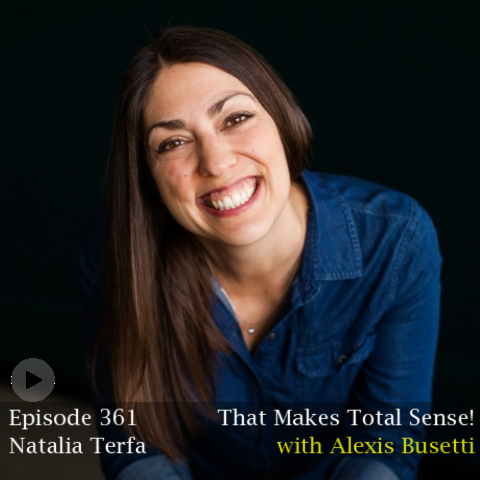
I'm here with my amazing guest today, Natalia Turfa.
Natalia, this book that I finished this week is. It just felt like home when I read it. I'm gonna say the name of it so everyone can kind of. We can be where we all are in the same place before we get going. But I just thought it was great. I just wanted to throw that out there.
[00:02:19] Speaker B: Thank you.
[00:02:20] Speaker A: At the Beginning, it's called. It all counts. Finding God everywhere. They told you not to look.
They know a lot.
[00:02:31] Speaker B: Isn't it so pretty?
[00:02:32] Speaker A: It's so gorgeous.
[00:02:35] Speaker B: It is. Every time I look at it, I'm like, it's so pretty. I just think it's so pretty.
[00:02:40] Speaker A: It's so pretty. I love the colors, actually. I'm almost like, people can't see this. I'm like, it's almost my tattoo. I mean, it's like. I feel like it's in the same kind of vein as it. And with the water and the. In the forest and the sunset. Anyway, it's. It is just beautiful. We'll get into that a little bit, because you're a forest girl at heart, and you talk about that a little bit in the book.
But the reason I say it kind of felt like home for me is because in the last few years, I'm gonna say few years, it's been longer than that. Now, one of the verses in the psalms, that has resonated with me on a lot of different levels in many different contexts and seasons of my life. And I. I didn't even know I was going to talk about it. So now I'm like, I can't remember where it is, but where. It's where the psalmist talks about God bringing him into a spacious place.
And I have spent so much of my faith life.
You're an enneagram one. I'm an enneagram one. I don't want to put this on all enneagram ones or even on you, but I will say for me, sometimes those confined spaces felt and do feel very safe. Where the rules are, where the boundary, you know, like, all of these things. And it's like I just kind of know what I know, and I feel really good there.
But that spacious place has resonated with me over maybe the last decade or so. And this kind of finding God everywhere feels like it resonates again with that spacious place. So that was for me as a reader. But what for you, as I know you'll probably answer this as we continue the conversation. But what for you as a writer, as someone who wants to kind of give this message across?
What for you is in that finding God everywhere peace, or, you know, even just starting with this. With this title, it's like, I feel like there may be other people who are like, we've been kind of confined to where we've been told God exists or where we can interact with God.
And, yeah, there's just so much more out there. So where did that come from for you?
[00:05:01] Speaker B: Yeah, I mean, I think, you know, the podcast that, that I host has a lot of deconstructing Christians in it. And I think so often those spaces, the evangelical space spaces or, or more conservative spaces tend to be very restrictive. And I think what I had hoped was to offer people a lot of permission to. Just to trust that if you feel like the thing you're experiencing is God, to trust that. Like, what if it is? Even if they've told you it's not, like to ask the question, you know, what if. What if God is here? What if God is in this place? What if God is in this activity? What if God is present here? And then to see what happens is sort of a starter of that. And I think when you widen the boundaries of where God can meet us, I think.
I think God only gets bigger, not smaller. And I just. I just.
I mean, I really believe in a big God, not a small God. And so I think I just wanted this to be a permission slip for folks to at least try or to not feel.
I grew up Catholic, not evangelical, but I grew up Catholic, which is also pretty restrictive as a. As a religion in some places, not everywhere. And I do think I needed the.
The freedom and permission to say, okay, can I. Can I try this thing without shame? Can I wonder if.
If God is here and I might have some spiritual connection to something, can I do that without feeling bad about it or apologizing for it? And. And what might that lead to? And for me, I feel like often that leads to a. A deeper connection to God, not.
Not a more restrictive connection to God, you know, not a smaller God, but a bigger God. So I think it's always been sort of like a doorway. All of these have been doorways. And I. I hope. I hope for that for people who read it.
[00:07:09] Speaker A: Yeah, I.
I felt that very much when I was reading the book. And I think the permission that I.
Not necessarily that I. That I felt, because gratefully, I have. I have also had some folks, as you have, you know, kind of speak into my life and, and grant me some of this permission that I didn't feel before, like to doubt or like to, you know, not believe.
[00:07:39] Speaker B: Yes.
[00:07:40] Speaker A: Or, you know, things like that.
[00:07:42] Speaker B: But. But I.
[00:07:44] Speaker A: But I loved how you introduced that. So there are a couple of things that really stood out to me right off the bat, and one of them, I want to kind of introduce them at the same time, and then we can just kind of choose our own adventure and kind of go in this way. But near the beginning of the book, you talk about doubting Thomas and. But you compare him to Gideon, which I hadn't heard before. And then it became kind of this like, duh, moment. It's like, why do we. Why, why so much shade for Thomas but so much honor for Gideon, when really they're kind of asking, you know, the same thing.
[00:08:32] Speaker B: Yeah.
[00:08:33] Speaker A: You know, in essence. And then I'll introduce this other one was. I can't remember what chapter it's in now, again, at the. Near the beginning, where I have these kind of three quotes that you bring in from three theologians who've been influential in my life as well.
Barbara Brown Taylor, Will Williman, Rachel Hild Evans, and these together. So Barbara Brown Taylor's. It's when she's talking about God's. God's presence that she can't shake the sense of God's presence.
When Will Willimon, who I just. I mean, amazing pastoral mind and example, you know, asks for God not to make a liar out of.
[00:09:19] Speaker B: Yes.
[00:09:19] Speaker A: When he goes to speak. And then Rachel Held Evans, you know, saying, on the days. On the days that she believed. And so.
Yeah.
[00:09:28] Speaker B: Oh, that phrase.
[00:09:29] Speaker A: Right. You know, there's so much permission granted in that phrase alone on the days I believe. So maybe those four kind of five figures, if you count Gideon, really kind of set the foundation for me as I was reading the book and kind of going, okay, what if I just had this in my mind and kind of borrowed some of these phrases for myself or some of these examples for myself, like, on the days I believe.
And what if I just. Even though, like, I'm, like, same as you, like, I'm a Christian, I have an M. Div. Like, I'm trained in this stuff. Right. But it's like.
But also, what if I just kind of gave myself that to say it's okay to say on the days I believe, like, no one is getting struck by lightning or sent straight to hell. If we say today I'm just not feeling it, I'm not thinking it, I'm not believing it today. Yeah.
[00:10:23] Speaker B: Yeah.
I mean, I think.
I think when Barbara Brown Taylor talks about faith as a cycle, like the moon. Right. I just think that's so beautiful. Just to say, like, there are times when it's not there and times where it's shining bright and everything in between and.
And that image of. Of faith as not being like one sort of stagnant, you know, so there. There are days where I believe strongly and there are days where it is really Hard to do so. And, and I think it's really important for people in, in pulpits who have education and theology and letters behind their names and to get up and say on days I believe, right? On the days I believe, or to get up and say, like, I don't, I, I mean, I've said to people, if, if this is what God was like, I would not do this, right? To be, like, I'd be out and to name those places so that people feel like, oh, well, I don't believe that about God either. Think. And if, and if she doesn't believe that about God, but she's a pastor, then I could not believe that about God. And I think that kind of freedom and permission giving is, it's not like I'm the only one. I mean, obviously Will, Willimon, Rachel Held Evans, you know, I mean, Barbara, Ron Taylor, like, they're all saying it's, it's in the ether and it's in scripture, right? Like there are people in scripture who don't have an unwavering faith that never struggles. I mean, Peter is an example of this as well. He's kind of one of the worst disciples, honestly. And yet he's like the one we, we like, hold up and build the church around. And I just think, you know, what does it mean that, that Peter is called the rock and yet, you know, he's not solid. It's just really interesting. And so I think it matters to, to say publicly the days you doubt and to trust that community is there. I mean, one of my, one of my colleagues and pastors, Mayta Herrick Carlson, she has, has reminded her congregation and, and has kept this fresh in my head often is that the bold words, the things we say together in a worship service are there so that you can drop out when you don't feel it.
And I just love that image of like the Apostles Creed being a thing we say together that not every voice can say every day. And, and on the days you don't have it, somebody else has it for you. And on the days you have it, you can cover somebody else. And I just think that's such a beautiful description of what a faith community can be for each other and to hold the things we believe and don't believe really lightly, but also with a sense of reverence because we're not just holding it for ourselves, but we're holding it for each other and that we're always sort of, you know, held and being held at the same time or, you know, supporting and being supported and that we take turns and that it's not like 50, 50, you've got some of this and I've got. So it's like, I've got, I got 90 today and you got 10, and don't worry, I'll cover you. Right. But together, or Maybe I got 125 faith today and you got negative. Like, that's okay. I got you, you know, So I just think it's, it's really a beautiful way to think about shared faith and also the freedom to not have to feel like you, you need all the answers or you need all the faith, or you need all this, like, perfection, but that there's some grace built into this system, which, again, very, very scriptural.
Like, turns out we build this whole thing on grace and then forget about it all the time.
[00:13:53] Speaker A: I mean, very scriptural. Right. Like, I remember, like, I took my first Hebrew class, we were going through some of the Psalms, and I just remember going, oh, my gosh, these are, like, not theologically sound. Right? Because, like, everybody's in there talking about, you know, what, what kind of God God is, which, you know, in some of those places is, like, terrible.
[00:14:18] Speaker B: Yes.
[00:14:19] Speaker A: Or talking about, like, what they want to do, you know, to their enemies, also not great, you know, or also, like, what kind of doubt and lack of faith they have. And so my joke and saying, like, these are not theologically sound was that everything I had been taught, you know, for my whole life kind of was just didn't give room for that kind of confession.
[00:14:43] Speaker B: Yes.
Yeah. And the Psalms are, I mean, I love, I just, I just love a smite my enemies song. Right. Like, there's days you need that. You just need it. You're like, oh, my gosh, please come and, like, get rid of these people. Like, I, that, like, that is in all of us. And it feels so good to have that reflected in Scripture or to be like, so grief stricken or so broken or so whatever, to be like, where are you? Are you God? Like, are you kidding me right now? And like, the rage and lament that is in the Psalms is like, you got a feeling it's in here, right? And and to then say to turn around and be like, you can only be one way in church, you know, is like such a misread of all of the feelings in here. You're like, if, if all of my feelings are represented in Scripture, why don't I see them in front of me? You know? And I think, I think there's, I, I, I'm sort of known in in my first congregation, I'm not there anymore, obviously, but I was sort of known as the. The like, tender pastor. I just was like, I just wear my emotions on my sleeve, and I just, you know, I'm out there crying all the time, and.
And it took me a long time to see those tears as a gift and not as a liability.
But I think there's something to say about, like, every feeling you feel is allowed here, and I'm going to show you that it's allowed here by doing it from this place that you think is really holy, which is the pulpit. Right. And. And I just think that's. That's what I hope for this book, too. All the different chapters are like, these are things that I've either been told or somebody has told me that they've been told.
No, that doesn't count. You can't do it that way. Don't. Don't let that be a part of your faith that can't be in here.
And I just keep being like, well, what if it can? What if it can? What if it can? You know? And I think part of that is because I've experienced it as really holy, and part of it is because I've watched others experience it as holy. And sometimes it feels like even if it's not my experience of God, that doesn't negate someone else's experience of God, and I want to do that for other people as well. So I. I just think there's something really powerful about, I don't know, we being honest about what we've been taught, and then, like, maybe just asking one question outside of that, and it doesn't have to be all of questions, you know, like, this book does ask a lot of questions, but you could just choose one and say, like, what's one feeling one, you know, spiritual practice that I've been told isn't, isn't okay. And, like, what if I tried that one? You know?
[00:17:20] Speaker A: Yeah. Yeah.
I was just kind of looking at my notes going, oh, my gosh, there's so many places we could do this. I know, but on that, you know, on that, there was your chapter on bodies was.
Was really helpful for me. And there's a. There's a phrase that you use in that chapter, challenge by choice, and you're just kind of asking again, like, I love all these what if questions. Like, what if, you know, faith kind of, you know, looked more like that. And.
And it reminded me you. You have examples that I'll. That I'll let you share if you Want that, you know, from the book. But the example in my own life that it reminded me of was this was. I mean, years and years ago, I was doing a yoga class at our Athletic Club, you know, so it wasn't like, at, like a real yoga place or something. This was just like, you know, 10:30 in the morning when all my kids were little and could go to the childcare there or whatever it was.
And it was one of those places where I was like, I've been told not to do this, but it felt like a safe place to go into kind of my gym or whatever and do it there. But I had a great time. I love yoga, and I continue it as often as I have the opportunity now.
But the instructor said this phrase, and she just said, if it's available to you today.
And so, you know, she was. And this was one of the first times I was really introduced to that, not just in yoga, but, like, at all.
Because I. I mean, I'm one of those, like, we're going to do it the right way. And so it's not. There's none of this if it's available to you today, bull crap. It's like, no, we're doing it the right way. And the right way says, you put your leg here, then you better put your leg there.
But, you know, she said all throughout the class, if it's available to you today. And then she would do, you know, a pose and explain the pose, and then, of course, offer all of these options, Right. You can put a block here, you can use a band here. You can do those things if it's available to you today.
And the freedom that I felt from that phrase and continue. I mean, this was probably, I'm guessing now this was maybe 12 years ago or more, maybe 14, that I heard her say that to me. I could not pick this woman out of a lineup. I could not tell you what her face looked like, what her name was. But that phrase stays with me, and I try to bring it in not just to my faith life, but to my. To my life life, you know, in general. But this, if it's available to you today, and I think we've already touched on it a little bit, there can be those places in the liturgy. This may not be available to me today. Yeah, but there's lots of other places, too, where you use this like it's challenged by choice. So what do you mean by that? And what does that look like in your actual. Like in a person's faith walk?
[00:20:26] Speaker B: Yeah, I mean, I think you know, challenge by choice often is like, when you're pushing yourself in some way, right? I think, like, it's for me that I first. I first heard that at like, a camp, right? Like a Bible camp. And they would call things challenge by choice because it was like an intentional pushing yourself out of your comfort zone in some way and recognizing that it might be too far for some people and like, letting people opt out and opt in. And I just, I think that phrase to me is. Is asking.
I think we all have. I mean, my. The current place where I work out right now, they ask. They remind us so often that everybody's body is different. And so it's never. Nobody's going to look the same in this space.
And, and then they always do reminders, like, if you feel tens, you should stop. If you feel this here, here's how you should adjust. It's not a. This is the best way to do it. And, And. And like, hurt yourself to get there. It's like everybody's body is different, and so if yours is feeling it here, it's not supposed to. So that means your body should do it this way. And it's just like, so, I don't know, just really beautiful and, and flexible. And I just think there needs to be more flexibility in faith to say, you know, if you don't. If you don't feel comfortable with the passing of the piece, what do you do with that? Right? Like, how do we. How do we communicate that? Can.
Can we make more parts of worship challenged by choice? And that's an accessibility thing. That's, that's an inclusion. It's the way we include people, right? So. So having a way to. To. To say peace without shaking somebody's hands. Because maybe, I mean, there was a lady in a church I served at last year. She said, I love the passing of the peace, but I have.
She had arthritis in her hands so badly. She's like, I. It takes me a day to recover. And she's like. And. And, you know, she's just like. So I just. I want to do it, but I. And we were like, girl, you do not have to put your hand out. Like, you can just. You can do, like, we, you know, like, what are the ways we can include more people or help people not feel like they're required to do something?
And I think there were so many times growing up in church, especially in the Catholic church, where I felt like that was not an option. Like, you. It. It really was. It felt to me as a kid like it really was do or die, right? Like you, you do this or you go to hell, right? Like this is what we've been told. You have to do it this way at this time and you can't deviate at all or you're a very, very bad person.
And so it's taken me a lot of work to like untrain and again enneagram1. Like there is a right way and I know what it is. And so it's so hard to, to trust that maybe my way and somebody else's way are different for a reason and that if I believe that God is present in, in each part of worship and God is present, however I show up, then that's enough, right? And I just think, I think it's too easy to start being like, well this way is better and if you do it this thing, it's better, you know? And like what if you, you know, churches don't have a, there's churches that do gluten free options now, but what if there isn't one? Like, do you miss out on, you know, like what, what does it mean to be a part of the communion table and you can't partake in the, in the elements or you know, if you have neurodiversity in your family or in yourself that like, what does it mean that the place is loud and, and chaotic and how do you find a service that feels, you know, it just, it's just this idea of like if you can't be in the building for whatever reason, that doesn't make you less right, it doesn't make you less faithful or less spiritual if it doesn't feel like a safe space for you for whatever reason.
I just think like we have, we have overridden our body's messages for so often and so long that it's, it's really hard and, but important work to like undo those overrides and say, you know, just check in. Like how. I mean even just asking how does my body feel? If you've never really done that is a really hard, it's really hard work to be like, I don't know, I don't know what this feels like. But to leave a space and, and think, do I feel good or bad? Did I feel good or bad when I was there? Is like a good enough. It's gonna start right? That's a start.
I did a funeral this week and at the beginning I asked people to close, close eyes and breaths and to feel what they were feeling. And then I said if it, if it feels Good to you to place your hand where you're feeling your feels right now to do that. And it was beautiful to watch from my vantage point where people put their hands, like chest, stomach, eyes, throat, you know, just like all these places where you could feel like grief lives, right? Shoulders. It just felt.
But that's a practice. Like, you know, there's 200 people in this room and maybe 10 of 20 did it, you know, like, move their hands. This people did it, but not everybody. And for some people, that was the most uncomfortable moment of that whole service. And for other people, that was the most beautiful moment of that whole service.
And I don't know, I think those, like, reconnecting and checking in helps us connect to the ways that we are wired to help us find the ways to connect to God best, right? So when I'm in nature and I'm like, I feel like I breathe differently here, that's something. That's not a mistake, right? Or if you feel your shoulders drop when you sit in worship, that's something. If you feel your shoulders go up when you sit in worship, that's something, right?
When you pull into the parking lot of a place, whether it's church or a place where you're going to meet people or whatever, check in. Your. Check in. Like, how did that. How does my body. Do I feel tense? Or do I feel, you know, like excitement tingly? Or do I feel nervous in my gut? Like, all of those things are. Are messages that we have spent a lifetime overriding that are giving us good clues for how we are and where we are and how we're doing.
And I think that the same is true with our spirituality. Like, when you do a practice like, I.
Meditation is not for me. Like, it is.
I listen, I try joke.
[00:26:49] Speaker A: I'm like, I have contemplative friends. Okay.
[00:26:50] Speaker B: Oh, my gosh.
[00:26:51] Speaker A: And it's not me.
[00:26:52] Speaker B: Yes. Do I. I mean, I have all the tools. Like, I got.
[00:26:55] Speaker A: Yes.
[00:26:55] Speaker B: I got prayer beads. I got a meditation pillow. Like, I got all the things.
It is just not for me.
But.
[00:27:02] Speaker A: But I feel that so deep.
[00:27:04] Speaker B: Oh, my gosh. But give me a breath practice and I can do it, right? So. But some people who meditate might be like, but a breath practice is meditation. I'm like, no, no, don't say that.
I. Like, there is. I just need. But to me, breathing is meditative. But because there's a.
Because I have such a deep connection to my breath, it feels more spiritual to me than trying to think of nothing, which I'm not Very good at, obviously.
But to. To say that spiritual practices, some of them are like, helping us reconnect to God or. Or that when I go out and stand. I've talked about this lots in the book about trees. Because if I go and stand under a tree or touch a tree or be in nature, like, something physically happens in my body that is. That doesn't happen in church. And I listen. I love a church building. I do. I'm not. I. The church building that I attend is beautiful. It's like an architectural wonder. It's so lovely. I feel good when I'm in there.
And the first time I went in there, I like, I just was like, oh, this place feels holy, right? Like, it still does, but it's not. It's still not the same as what I feel like when I'm under a tree.
And so to just trust that and be like, okay, can I. Can I connect? Can I trust that maybe that's God? Can I trust that maybe God is present here too?
And can I lean into that for just a second and wonder what God might be trying to tell me? And for me, trees tell me the cycle of life every year to remind me that nothing stays the same. And I, as a person who always feels like the world is ending or that, you know, I just feel like, oh, it's gonna be like this forever. It's like, no, look around. The trees are always telling you about death and resurrection, always.
And like, I just need. I just need that in a way that church has not given me. And I say that as a pastor and a person who preaches life and death all the time. But.
But trees remind me in a different way. And so that has just become a part of my spiritual practice. That some people might be like, that is pretty woo, woo, Natalia. I don't know. And I'm like, it's. It's what works for me and.
And has profoundly changed my faith. And so that's.
That's the sort of thing I want people to be curious about. Like, what if the thing that makes you feel the best, if you can connect to that feeling, is actually God's call into understanding God differently. Like, what if we just tried it out for a little while, you know, for a season?
[00:29:37] Speaker A: It's. It. It is so. It is so true and good after.
I can't remember if it was today or yesterday. I had. And I don't think I jotted this down. But you. You quote another author who helped you with the practice of looking up, like, just straight up and it did help that you said sometimes your teen kind of cringes at that. Cause I'm like, I'll do anything to make my teens cringe. Like, I mean, destroy my life. I just feel like it's a good day.
But they weren't with me. And I was walking my dogs, and I was, you know, out under. I wasn't under a tree. I was just out. And. And I was like, I'm going to try it. Because I, I. That just really, really appealed to me. And so I thought, I'm just going to look up, like, just straight up, like, you know, flip top head, you know, kind of thing.
And of course, what do I see? Like, the clouds are moving, which is not unusual. Clouds move, but I don't notice that they're moving because I never put my head up. And, you know, I think it's beautiful. And along those lines, we. I mentioned my tattoo, which people can't see, but people are like. Some people ask, because I got it really just a couple of years ago, is my first one. It's my only one. And so people like, there's got to be a story here. And I'm like, really? There isn't. It really is just.
It makes me happy I had it. We worked with the orientation so that it's on my arm so that I can see it best, not so that someone else can see it best.
And it's like all of the wonderful parts about nature that are my favorite. So mountains, beach, forest, sunset.
And the spouse of the artist, they actually. Both of the artist and their spouse both previously were therapists in their kind of previous career lives. And the spouse said to me, oh, so it's kind of like an anchor for you?
And I was like, yeah, I think, you know, I think so. But it's one of those places where I can look and I can say even if I'm not outside.
This reminds me of creation. This reminds me of God. This reminds me of bigness, you know, of. Of all of those things. Things. But it's not really kind of what's supposed to you know, remind. You know, remind me of that.
I had a couple of. A couple of notes in my brain that I'm going to dump out right here. When we were talking about at the beginning of this little segment in our congregation, and maybe you're nearest to or you've seen this. I love it. When we pass the peace, there are lots of people who just give a peace sign.
And that kind of shows us, right? Like, you're not. You don't want to shake hands. You don't like you're. You know, and. But we still receive it and give it, you know, in that way. Also, I have an autoimmune disease where I cannot eat gluten. It will make me very, very sick. Even the amount of a communion wafer will make me very, very sick. And so, yes, I've been in those congregations where I could not partake. Yeah. And it reminds me, and it makes me think, who else here cannot. Is there a stare, you know, is there a step? Is there. You know, will someone come to come to the pew if. Or the. You know, or the seat if there's not? And it's.
I say those things, mention them, kind of bring it back around again to go back to where we started in a little bit, in a little. In some ways to say I appreciate this book coming from a pastoral perspective, because it brings attention not only to how am I feeling, what's in my body, what are. What are. How do I experience God, what are my spiritual needs, but also how are the systems built and what we. You know, kind of what this whole. There's, like, this. You know, there's, like, the threads all the way through it, kind of this veil of like, what's okay and what's not okay. And when we walk into a space, I think, especially if it's something that we're accustomed to, we're not always thinking about what's okay and what's not okay or who says that this is okay or what's not okay.
[00:33:48] Speaker B: Yeah.
[00:33:49] Speaker A: I grew up in a.
In a church culture where my grandmother, who was one of my favorite people on the planet, period, I. I love her so much, but she. And she passed away right before COVID but she just. The idea of going to church and not having pantyhose on. I mean, Natalia, like, why would you ever, as a woman, walk into a church service without pantyhose on? Like that, like, mind blown. And. And, you know, and I didn't wear pantyhose a lot, but. But there was kind of this evolution of that for me. It took a long time for me to feel comfortable going into a church service, especially if I was gonna be on the platform and be in pants. You know, I wear pants every day. But when I walked into that church building, it was like there was something in this system, even if it wasn't the same congregation, not even the same denomination, but there was something culturally and in my system that said if I walk into a church, I'm a woman. So I need to be wearing a skirt or a dress. And I didn't realize kind of how ingrained that was in me until there were people in my community who started to question, namely the guy I was dating the time we turned into my husband. He's like, what?
And so he would, like, he would blow my mind. He'd be on the platform, musician, wearing shorts. I'm like, straight to hell shorts.
[00:35:21] Speaker B: Are you kidding me?
[00:35:22] Speaker A: Are you joking? What is wrong with you? Like, what is wrong? But those things get ingrained in some of us and many of us because it feels it's so holy, it's so sacred, it's so special. How could we.
I'm speaking, of course, again, as a one. I probably haven't said that I'm a one as much in all of the other episodes combined as I have today. But, you know, there's that kind of sense of, sense of justice is like rightness that says, like, yeah, how could you do that? How could you impose on something that is so sacred and holy? And I love that your book comes around and says there's a lot of things that are sacred and holy.
[00:35:54] Speaker B: Yeah. And, and that if, I mean, if, if we believe God is in all things, which I do, then like, then you have to leave room for the, that there's more than one way to, for something to be holy and more than one way for someone to connect with the holy. And I just feel like, and that's, I think that's a practice, obviously, lots of, lots of therapy and the work of my life as an enneagram one to be like, there's more than one right way. Right.
To like, let that be a part of my own theology. But I, I, I have really come to believe that the ways we connect, it's different for everybody. And that's, that's okay. Right. And so what your, what your sort of individual work is, is, is to find out the ways that you are wired to connect to God and that God is already waiting for you in those places. Right. And I think, yeah, it's, it's so interesting. I do want to say, going back to the looking up and you say you like to annoy your teenager. I do want. Or your kids. I do want to say that my 16 year old will sometimes now when she's out with friends or out somewhere, she'll text me a picture all the way up and, and it's like she doesn't even know, you know, it's just, she just is like, oh, these trees are pretty. I Bet my mom would like it. And I'm like, yeah, but you don't even know that you like it. Like, you. You also like it. You just are like, not. It's just such a. Yeah, it's so fun. I'm like, I'm so proud every time it happens.
[00:37:16] Speaker A: Dream. I mean, dream. I have, like, once or twice gotten a sunset picture. But of course, the always. The, like, the little comment underneath it is like, mom, it's your next tattoo. Kind of like, haha, you know, thing. I'm like, aha. But you only know, like, you noticed
[00:37:30] Speaker B: and you took that picture and you took that picture, and it made you think of me and things I love and, like, it's in there somewhere. I just think. Yeah, I like that a lot.
[00:37:38] Speaker A: It's in there somewhere.
A couple of things that, again, I don't even think they're in the same chapter, but are connecting to me in this moment as we're talking, are curiosity as a doorway and not a threat.
Which, you know, I think has kind of been a lot of what we've been talking about.
But also this question that you ask of where is church? And you give the example of a congregant coming to you and wanting a baptism to take place not at the church building.
And then, of course, kind of like with. With Thomas and Gideon, you give this, like, biblical example, like, okay, but what about the Ethiopian eunuch? You know, like, this is one of those. One of those places where we can. Where we can see this.
And I.
Maybe I should pause first here to say, you grew up Catholic, would you say? I think some of the things that you talk about are from a Lutheran perspective.
I am at an Episcopalian, you know, congregation. So there's some of this. Some of this, like, liturgical kind of, you know, mainline kind of vibe that we're giving here. But I grew up sbc, and there's not a written liturgy in sbc, but there's totally a liturgy in sbc, right? Like, there's. I mean, there's a lot of these. These things. And so I just kind of say, like, if we examine our traditions, even if they seem very, very different, like, Episcopalian is, like, really different than Southern Baptist. But I think if we examine those traditions, we'll see there are some of
[00:39:18] Speaker B: these,
[00:39:21] Speaker A: you know, these. These railings that exist no matter what the tradition is, the railings might be different.
[00:39:27] Speaker B: For sure. For sure.
[00:39:28] Speaker A: You know, but they're there. And so there may be some traditions where they're like, oh, my gosh, like a river Baptism is, like, no big deal, but in that same tradition, something else might really be taboo and kind of vice versa.
But so. So with that in mind, I'd love for you to share a little bit about that experience with the baptism outside of the church and kind of those questions that it prompted you to.
To ask and. And how that, you know, also influenced some of this. Like, you know, God is everywhere. It all counts.
Everything is. You know, all these places can be sacred.
[00:40:12] Speaker B: Yeah. We'll start by saying it's, like, super not allowed in my denomination to baptize outside of the church. I mean, like.
But I'm of the belief, and I guess I will just. I'll just fight this until they take me out of the system, I suppose. But I'm. I'm out of a belief that if somebody's option is a backyard baptism or no baptism, my choice is always baptism.
[00:40:36] Speaker A: Right.
[00:40:37] Speaker B: Like, so I just feel like, why would we withhold this thing? And. And I think that is born so true in the story. I mean, I love the story of Philip and the Ethiopian eunuch. I love that story so much. Part of why I love it is because the eunuch is like, what. Here's water. Like, what's to prevent me from being baptized? And Philip's like, I guess nothing. And then they do it. You know, it's like, yeah, guys. Like, that's the whole story is. Is like the. The desire to do that is.
Is enough. Right. Like, the desire some. Whatever it is in you. It's same with communion to me, where if a kid holds out their. Whatever desire it is to hold out your hand, like, I'm trusting that that is the spirit in you doing some kind of work that I don't understand.
And I'm gonna put bread in your hands.
[00:41:26] Speaker A: Yes.
[00:41:26] Speaker B: And so every time. Right. Whether you've taken the class or not, you're gonna bread. And so I feel the same with. I just feel the same. Same with baptism. And so if a family comes to me and says, we're not connected to our church. And, like, I have a request for this summer from a couple that I married.
Actually, they're the couple I married that's in the book that I did their wedding. They just had a baby. The they. I did their wedding the day after my good friend died. That story is in the book.
They just. They moved far up north. They're not in the city. They're not local, and they are in deeply conservative Minnesota. They are not members of a church up there. And they just said, hey, are you going to be up north at a family cabinet all this summer, and would you be willing to come and do a baptism for us? And I'm like, yep, you know, I'm just, like, still doing it. I'm still gonna do it. Because again, their option is no baptism or backyard baptism. And so I just feel like the. The promise that is received in that sacrament, it's not. I don't believe that baptism is, like, the act of salvation for somebody. Like, I don't think God needs baptism. I think we do, right? I think we need that act to be like, there's a day and a time and a place where I can hold on to and say, this is when. This is when this thing happened to me. It's when we acknowledge this thing that already exists happened again. Right? Like, I'm always beloved, I'm always a child of God, but this is the day that everybody heard it said out loud. And. And I'm like, we need that. And I don't want to limit anybody's ability to hear that promise however they want to hear it. And in the book I was asked to do, I mean, I did a couple during COVID in particular, people were not going into churches. They felt kind of weird. I thought all the, like, squirt gun baptisms were super weird. I don't know. I didn't really love those. But if a family wanted to, like, meet in their backyard. And I just love the image of, like, we're going to take the biggest bowl that we have that happens to be like our popcorn bowl on movie night, and we're going to fill that with sink water, and we're gonna do this beautiful. It's like, here's water.
You know, it's the same. Like, they're on a. Philip and the eunuch are on a. On a road, and they go to the ditch and there's water. And this is like, the same image to me is like, I got a bowl, I got some water. What's to prevent me? And you're like, nothing.
And often in these moments, the family that they invite or the friends they invite to be a part of that are actually the people who will help them keep those promises.
In some ways better than, no offense to churches, but in some ways better than church communities do, right? To a stranger who's just going to pop into a church to get this thing that they've been told they should have without any connection to that community. I would rather do a baptism in a backyard surrounded by their people than some random church that they don't have a connection to and will never go back to that. Like, one of those is holy to me. I feel like, you know, they both count. Sure. But, like, one of those feels more like the community God intended. And I want to just free people up to be like, if. If you don't have a church home and you want a baptism, you know, call me. I'll do it. Like, I've. I got my. I got my little pottery bowl over here. I'm happy to bring it with me and baptize anyone anywhere. But some of those have been the most holy experiences of my pastoral life. Right. That.
The baptism by Minnehaha Falls during COVID of this kid who was not supposed to survive and, like, made it, you know, like, that was really powerful. And the one that I write about in the book where she was a rainbow baby, which, if people don't know what that means, it's a baby they had after a miscarriage, and they were so scared she wouldn't survive the pregnancy because it was during the height of COVID when we did not know how that was going to impact kids, and she. She was high risk anyway, and it was just a big trauma. And they were absolutely not walking into a church again, Right? Like, they were not.
They were not coming into that crowded space and risking that baby. Right? Like, they just weren't. It was trauma, it was fear. It was all those things.
And I. I just cannot imagine a scenario which God would be like, oof, I'm sorry. You gotta.
You gotta get in this particular place to make this work. You know, I just am like, no, no, no. I just. Just. I just. I just don't think that's God. And so I think God to me, feels very open and permissive and, like, meeting people where they are. We have stories that are all over the place. And so I just keep doing that for folks, too. Like, that one felt really beautiful and really powerful. And it was like having her sisters there, like, helping and her splashing in the water because it was familiar, and it wasn't a big, scary church that she'd never been to before.
It just felt, like, really holy. And, I mean, I couldn't. I can. Listen, you gotta. We gotta tone me down, because I could talk about baptism forever because I got just such big feelings about it. I just don't want to withhold.
You know, we have this. We call it the use of the means of grace. That's like the fancy document that Luther wrote, Martin Luther wrote that the Lutherans use to talk about all the ways we give grace to folks. And I just feel like we withhold. I just think there's no scenario in which with, when withholding grace is like the right call. I just don't think that's our decision. And, and I don't think scripture backs it up either. And so I'm just like, that's not my job. It's not my call. If I did it wrong, I guess I'll answer to, you know, I'll answer to that in the future. But I just don't think there's going to be a moment where God's like, oh, you did too much grace.
Like, better punish you for that. I was like, I don't think that's like, if, if I do love too big or grace too hard, I think like, okay, I feel like that's all right.
[00:47:11] Speaker A: You know, I, I invite the big feelings with baptism. I also have big feelings with baptism. I have probably bigger feelings when it comes to communion.
[00:47:20] Speaker B: Yeah.
[00:47:21] Speaker A: And like you said, like, someone opens their hand, we're putting bread in it every time. And, and I remember the first time I kind of, I kind of felt that way in, in seminary. And, and I was just like, it was really kind of this, like, who am I? Or who are we?
[00:47:41] Speaker B: Yes.
[00:47:42] Speaker A: To Gatekeep.
[00:47:44] Speaker B: Yes.
[00:47:45] Speaker A: This kind of thing. And, and I grew up in a, in a tradition that there were.
Yeah. I mean, there were rules about it basically. And the rule was if you had not. We. We called it believers baptism. So my tradition did not baptize as babies. It was believers baptism. If you had not gone through believers baptism, you were not to eat the bread or take the wine. Interesting. Well, it wasn't wine. Who am I kidding? It wasn't wine. I say wine now, but it was, it was grape juice. But I also found that to be interesting now. Now I'm kind of talking to think, which sometimes gets me in trouble. But then I thought, this is, that's a very interesting kind of culture because in how I grew up, I'm kind of imagining now, now I'm there with my grandmother that I mentioned earlier. But it also turned in that kind of tradition where I was growing up. And because we generally didn't come to the altar, it was past then. This makes other people gatekeepers and not just clergy. Because, you know, my grandmother, before I was baptized, had to say, this gets passed over you, you know, like you cannot, you know, as a seven year old or whatever. Like I'm sitting there and I have these memories of not being able to take the same bread and juice as everyone else. But it wasn't the pastor who was telling me I couldn't. It was my loved one who was telling me that I couldn't do it. And so it's not any shade on my grandma. It's just like this tradition. Traditions like that. It turns everyone kind of into a gatekeeper, and we say, no, this isn't.
[00:49:28] Speaker B: Yeah. And, boy, don't we love that? Don't. I mean, doesn't that just to be like, oh, I get to be judge and jury over somebody else and put it in my veins. Right. We just love. We just love that. And I just, again, like, I just can't square that with what I read about God in scripture. Right. That the gatekeeping is.
Is in some ways, you could say gatekeeping is God's job and not mine. Like, oh, God, I'll figure it out. Like, I don't worry, guys. I think God will. God will straighten this out. I'm not super worried about it. And I just. I just want to be like, then if I do something wrong and I offer too much grace or I, you know, give communion to the wrong person, God will figure it out. Like, it's just not. It's above my pay grade. Yeah. And I just want to, like, keep. Keep being as expansive and inclusive as possible. And.
But, yeah, that. When you think about that feeling, I mean, again, like, by the intro of the book, I tell the story, my grandma, like, pulling my hand away from my face. I'm trying to do the sign of the cross with the wrong hand. How dare I? And it's that same feeling. Like, you feel there's, like, a part of you that feels shame. Like a flash of shame. Right. Like, I, you know, especially if you're, like, reaching for communion and they put your hand down or any of those things, you feel, like, a flash of shame. And then, like, all of the rush of, like, but why not? Right? And that, to me, is like a stiff arm to a faith community that I think people hold for a really long time. Like, then when you start teaching messages about, this isn't for you. You're not welcome here. Your. Your, you know, desire to do this is not allowed. Your.
The way you are wired. Right. For me, being a lefty, like, I couldn't help it, but, like, that wasn't allowed. It was just like, these instincts of yours are wrong.
You know, get small, get quiet, get conformed. Like, all of those things just feel like it creates this distance between us and. And the reality of what God Wants for us as. As people of God.
[00:51:26] Speaker A: Yeah. Oh, my gosh. I've, like, got way too many notes. I. I think we can try to squeeze in, like, two more. Kind of my bullet points. We'll see. We'll see where the time goes. Um, I. I will say this ahead of time, so help me be accountable. I want to end with rituals and joy.
[00:51:42] Speaker B: Okay.
[00:51:43] Speaker A: You know, and then I'll let you have a. Have a final word after that, for sure. But I want to get there. Before we get there, though, I want to talk about this really important thing. I think as we're kind of sharing some of our own experiences. Oh, gosh, do I want to do that? I want to do the next one. Okay, just go here. There's so many. Get the book, everyone. But it's this.
[00:52:04] Speaker B: This.
[00:52:05] Speaker A: You talk about everyone having a hermeneutic that we all have a baggage or a lens that we read scripture through. I would also say, you know, that we read our tradition through, that we read our experiences through.
And the little note I have to the side, it says, we pick and choose what stays and what goes. And I would say this. This phrase, for me, when I was doing some of my work and I was. We weren't calling it deconstruction at the time, but I was doing some deconstruction work. I was telling my therapist about it, and it was really tough. Again, partially because of what I've referenced of, like, but if there's a right way to do it, and I'm feeling this so strongly that maybe I'm not going to do it this way anymore, like, that feels very wrong. It feels sinful. It feels outside of what is okay and what's allowed.
And my therapist just kind of very simply said, well, why don't you ask Jesus?
Why don't you ask Jesus what stays and what goes? You know, like, when you come up with, you know, across something like that. And for me, it was more practices.
You know, it was kind of like, why don't you just ask him, like, what. What stays and what goes?
And.
And I felt some. You know, I didn't feel like. It probably sounds a little bit like spiritual bypassing. That's not what I felt at the moment. It really fel a freedom to say not everything that I have been married to in this religious experience.
You know, in this set of religious experiences, I actually needed to stay married to. Like, there was a freedom to say I could let go of some of those things. I could reincorporate some other things or incorporate Brand new things.
I could find God in some of the places that maybe I had felt off limits before, but I was getting freedom to pick and choose what stays and what goes. But I like the term baggage that you use here. Hermeneutic is good. Lens is good. Baggage is real good.
So can you say what you mean when you say baggage and how it affects how we read and interpret and experience?
[00:54:32] Speaker B: Yeah, I mean, I think I.
Well, I'm not sure. What did I say about this? I have no idea.
I mean, I think there's. There are every teaching, everything we've been taught, we, like, put in our. We put in a, like, faith suitcase. And I think sometimes we forget to open it up and, like, make sure we still need all the things that are in there. And I just think there's something to be said about, like. Like, you can. I mean, to use an older phrase, like, you can. Marie Kondo, your church baggage, you know, I mean, like, you can open it up and be like, is this bringing me joy? Does this still serve me? And, like, there are parts. I mean, I think what Covid taught people is that, like, maybe being in worship every Sunday is actually not needed, right? But, like.
Or maybe people left and when they came back, they were like, oh, oh, actually, I do really need this. I thought I didn't, but when I'm here, I do. Maybe I don't need it every week, but I certainly do need to be connected to this group in this way.
I think that's a good example. And Covid did that for a lot of areas of our life in faith, not just church attendance, but I think that's what deconstruction does a little bit. But I just think we don't have to carry this bag of lessons from our whole life along with us forever. Like, and I think when, you know, when Jesus says, my yoke is easy, he's like. He, like, means it.
Like, it shouldn't be so hard to be a person of faith, right? It should be.
It should be light and freeing and liberating. Like, the gospel is at its core, liberation theology. And, like, we're supposed to be set free from the things that are weighing us down. And.
And I think part of us, part of our, you know, some of the baggage we carry, like, we just do it because we think we should. Like, there's. And I just. I think Jesus, like, oh, guys, no, don't. Like, you don't need that. It's okay. You don't need that. If that's not. If doesn't Feel good or help you? You know, I remember we were taught, like, oh, the most faithful people read their Bible every day. Like, weren't you told that? And you're like, I'm a horrible, horrible person if I'm not opening up scripture every day. And I'm like, that's not my jam. I, like, I. I read scripture regularly because I'm a preacher, and that's required, you know, But. But, like, does it make me a better person to read scripture every day? I mean, I don't think so. And. And, like, does it. But does it make me a better person to go outside every day? Yeah, sure does. You know, like, I'm a much better person when I'm doing some of these. These other things. And so to, like, look at the things I was told, you can't do that. You know, like, you certainly. Or you should absolutely be doing that. And just ask, like, how often do we open up this baggage and say, like what? Like, you know, what. What part of the journey am I on? And do I still need all these things? Like, if you're not climbing a mountain, you don't need hiking shoes. You know, like, just, like, if you're in an easy phase of life, set those aside. Just keep the flip flops. You'll be all right. Like, you can. You could pick them up, up later. And just to be honest about where you are and what tools you need and, and not have to drag everything along with you, I think is part of it. And. And to recognize how much you're dragging along with you is just something you were taught. Right? Like, I think I tell the story of a gal who we would. You know, she grew up in just a very conservative house, so we would do Bible study sometimes, and she would be like, oh, I was taught this. And we would all just be gobsmacked by whatever wild conservative message they took out of the story. And I would be like, okay, can we just set that down for a second? Like, listen, if you want to pick it back up when we're done, feel free, but, like, let's just put it over here. And we saw it, and now let's wonder if there's another way. And I think that's sort of the same. Like, are we looking at this and being like, is this still. Does this still fit what I believe about God or the world? And if it doesn't, like, you are allowed.
You're allowed to set it down and.
And move on. And I think the podcast community and part of our tagline is take what you like and leave the rest. And part of that is, like, we're allowed to, to, you know, you don't have to carry it all. So if, if there are certain ways that don't work for you, it's fine. You know, I think the other part that we forget often is that something may be absolutely not your jam, but it might be somebody's absolute connection to God. And so to just always have an awareness of, you know, when we, I, we. We had. I had this group of ladies who just hated the fact that during worship I made people breathe sometimes. And I was like, you know, you're always doing that, right? Like, you're always breathing. But, But I was like, but every time we do it, a handful of people say, thank you so much. I really needed that. So can you manage your dislike of that slow breath section for the sake of your person in this community who needs that in order to feel good? And they were like, okay, grumble, grumble. Okay, but like, that's the, like, the, the, the way we perceive our likes and also the likes of other people to say, you might be setting this down, but it still might be necessary and communication, community, and, and it, and it may really feed someone else. And so can you, can you, like, maybe you don't have to carry it, but can you let someone else carry it and let it serve them for what it is? And like, that's part of what being in a community is too, is that we all have things. Some people, like, I love worship. And some people are like, I only like the sermon. And you're like, okay, this is why a worship service contains all of these things. And like, it's okay.
[01:00:16] Speaker A: So I think too, I mean, yes, and amen to everything you just said and, and what? You know, when I think about lenses and baggage and hermeneutics for scripture especially, I think about how much, not just what you said, but also how much I learn from folks who have a different lens than me. I didn't grow up in the forest. And so, you know, so when, so when you, but when you bring that, you know, you bring something to me that wasn't a part that's not in my suitcase, you know, like, I don't have that part.
You know, we could do that, you know, rural or city, we could do that and say when, when I have, you know, when I read womanist theology, that brings something to me that I don't have, you know, that I didn't have historic, historically. When I, when I read, you know, the church fathers and Mothers like that brings something to me that I didn't have because I can't, I don't have all those experiences and I don't have everything in my, in my suitcase.
And, and there was a, the phrase just came to me 100 years ago. I was in like a mom's group and someone was talking about something in a different context. But she, what she said was, you don't have to own it to enjoy it. And that, you know, that phrase just came right back to me right now. It's like, I don't, I don't have to have grown up in a forest to enjoy some of these fruits that you bring. When you talk about looking at the trees or looking up or these, you know, what you're learning from the seasons of that I don't have to own that to enjoy it. I can borrow yours and, and, and take that on this trip and then, and then, you know, and then bring it back.
I did not intend this, but man, if that's not a good segue to the next place I wanted to go. Which is, which is when you talk about being a joy vampire and this like borrowing the joy of other people's experiences, I think this might have been the place where you did tell the story of marrying that couple.
So I'd love it if you could talk a little bit about. Because we've kind of, I don't want people to get the wrong idea. Like, you know, we're kind of poo pooing, you know, the rituals or the sacraments or any of those kinds of things. We're totally not. I mean, neither one of us are.
And you, and you have this section in your book where you talk about rituals and joy and those things, how they go together.
And I found that to be really just communally beautiful.
So, so, yeah, tell us about being a joy vampire.
[01:03:04] Speaker B: Yeah, I mean that was, that was a, that was a title, like a subtitle I had on, on like my, like way early when this was still in the dreamy stages. Because, you know, as, as clergy, we do both weddings and funerals and, and I know a lot of clergy who will say they don't like weddings, they just don't like a wedding.
But they really enjoy funerals. And I know that sounds funny to people to be like, oh gosh, how can you love a funeral? But you're like, they care what you say at a funeral. Like, people really care what the pastor has to say at a funeral.
And yeah, that's, that's true. It's Valid. I had a Prof. A colleague of mine once say, really early on, when you get up at a funeral, everybody leans forward. And when the pastor gets up to talk at the wedding, everybody leans back.
Which I don't think is wrong. Right. But.
And like, you. Your words, like, I think you're just preaching into a different, like, space in those moments.
But I, I love a wedding. I. I love a wedding. And, and part of it is, like I said, I have. I'm a joy vampire because I get the best seat in the house. Right? Like, you're staring at this couple.
They're beaming their joy at your face. Like, you get. I mean, the. Especially the couple that I write about in this, in this book, like, they, they tried to kiss, like, you may kiss the bride, like, four times before it was time. Like, they just, they. They. It was so cute. They were so happy. They were just so delighted with each other. And it, it like, changed. I was so sad. My. I tell the story in the podcast. My friend had died the. The day of their rehearsal, which, you know, rehearsals are scheduled. Weddings are scheduled a year in advance, so it wasn't like I could bug out.
And so I, like, got my. Gathered myself together from the grief gathering of my group of friends to go do this wedding rehearsal.
And it was really hard. And then the next day at the wedding, it was like, it. It like, healed a part of my heart that was broken to be around this couple. And I like, really struggled to say phrases like till death do us part. And, you know, these things in that moment. Like, it means something different when you're coming from loss like that. But I really feel like those moments, baptisms and, and joyful communion moments and, and they, like, are the fuel that carries you through the really hard parts. Right? Like, I, I actually need weddings to survive funerals. Right? Even though I know people like, well, funerals are. Should be a celebration because they're, you know, new life, resurrection. You're like, listen, listen. Sure, yes. Also, don't say that.
Like, don't say, don't say that.
Funerals are sad and hard because our person is, Is no longer here. And, and whatever we believe about life after death, it, right now, in this moment, our person is gone. And so to have something to counteract that grief and sorrow and trauma is like, joy is the, Is the antidote. It doesn't like, make that stuff go away, but it just is like, it. It brings me to a level of which that kind of grief is survivable, I think, because I've been exposed to so much joy. And so I just like, I take in these, these moments, like I'm just absorbing, absorbing their joy to sustain me for whatever I'm asked to do next. Right? And I think that that is what I mean by so I mean by being a joy vampire. But I think like that's why I love weddings. I just, just, I'm like, give me front row seating to your joy. Like anytime, whether it's a wedding or a baby or any of these things. Like, give me a front row seat to your joy. I'm, I'm in. I'm full in and I'm. It just, I just really, just really love a wedding. So.
Which again, and I think ritual, you know, I think rituals, weddings and funerals are rituals, right? They help us any, any place that helps connect us to the divine.
But it's not just.
But like we call them milestones or whatever you want to call them, but like a moment that you mark for whatever reason.
And so I mean, I think part of like having joyful milestones, like we're really good at marking hard things and we're not always so good at marking joyful things except like the few weddings babies, right? It's kind of. But like when, when something really good happens in your day, how do you market, like what are your joyful rituals to sustain you? Because life is hard and the world is awful sometimes. And like, what are, you know, like right now a joyful ritual. I have currently, which I think will still be existing by the time this episode comes out, which is like a daily roundup of watching fans of the World Cup. Like the daily roundup of watching people celebrate is a delight. Like it's just so joyful that I, I just, I can't, I don't need to be on it all day long, but I do like seeing a little daily roundup of like, how did people interact with each other? You know, they think, they say like this is the World cup is like a big cousin sleepover and our parents don't like each other. I don't know if you saw that. So funny. But like those kind of videos are so joyful.
And that has been like joy that sustains me for all the other bad news that comes across my feed, right? So like it's these little rituals that we can, we can use to sustain us as well. And so yeah, it's, I mean again, be a joy vampire. It's, it's good, it's good stuff.
[01:08:56] Speaker A: Well, I mean, so I'll share like a little anecdote and then say, I'll. I'll come back to you for us to. For us to end it. And I'll just ask you to. To kind of maybe give some encouragement or talk about, you know, one thing that we didn't. That we didn't touch on, that you really want to be sure to mention. But I think for me, years ago, again, when I was kind of in this. More in kind of a deconstructing phase, I. For me, it was my dog, the particular dog that I'm talking about just passed away a couple of months ago. She was almost 11, which was older, for she was an English mastiff. And that's, you know, for a giant breed, 10 is old.
But for years, I mean, she was mine, you know, I was her person.
And I would look at her and I would say, she had this silly face. And I would say. I would laugh to myself, she brought me so much joy. And I would say, what kind of God would make an animal like this?
You know, the wrinkles. She was so big. And.
And I would just look at her face, stare at her face, and say, what kind of God? But to me, that was joy. And it was also, you know, connection. And to her, but also to God anyway. And she would, as dogs do, lie on her back with her, you know, all four paws, you know, legs up in the air.
In our family, we would call that possuming. And we'd say, oh, Hildy's possuming. And then we. Joking, like, the rule is. The rule is so a little joyful ritual there. The rule is when Hildy's possuming, you have to rub her chest and belly like she's inviting you to. And so sometimes we would joke and we'd say, oh, she knows the rule, you know, because she would do it. And then you. And then you had to rub her until she flopped back over, and then you'd sit back down and you'd be there for like, 30 seconds. And then there she was again. We're like, she knows the rule. Of course.
[01:10:49] Speaker B: Course.
[01:10:50] Speaker A: Like, you have to. And then. Then it would, you know something? Well, I did it last time, you
[01:10:54] Speaker B: know, like, it's been two minutes.
[01:10:55] Speaker A: I did it last time. But, you know, and I saw someone recently on. On Instagram, said he said one of the best things in life is that sometimes there's a dog, you know, And I just. I saw your cat coming, so I'm like, I know we can't have cats. We have allergies in our house, but it's like, you know, even those little moments where you're like, it's a pet. This is an animal. This is whatever.
[01:11:21] Speaker B: But it.
[01:11:22] Speaker A: But I find it to be very true and very true to God, I think. Very true to creator, creature, you know, kind of thing. Like, from one creature to another, like, one of the best things in life is just that sometimes there's a dog, you know.
[01:11:38] Speaker B: Yeah.
[01:11:39] Speaker A: Sometimes there's a wedding.
Sometimes there's a baby who laughs and farts at the same time. You know, sometimes there's a flower or a tree or a cloud or something that connects us to the divine, to ourselves, to each other, to bring us that joy.
And. And sometimes it's in these ordinary, you know, moments. It's in the. It's in the fan video where you say, it brings me joy to watch other people experiencing joy.
[01:12:14] Speaker B: Yeah. And beautiful. And that, like, again, our. If you want to take it back to scripture, like, God. God doesn't want us just, like, walking through life, sort of like, blah, blah, blah. Like, God longs for us to have abundance in our life. And so, like, I just want, you know, I. You saw, you saw. I know everybody else seeing this, but my cat wandered through the screen because as soon as I started talking, he's like, oh, God, my gosh, are you calling me?
It's like, of course. Of course. And I. We have two cats, and one is my. My daughter's cat is like, he is hers. And he could care less about anybody else in the family. He is her cat.
But this cat we got later, he is my cat. And sometimes I'm just like, I cannot believe how much I love this stupid cat, you know? You're just like, I can't believe. I cannot believe how much I love this wild, right? This dumb animal. He's so weird, and he's so wonderful, and he just is like, like, just a delight. And you're like, yeah, I just. I can't believe how much I love this dumb cat. And then to just, like, mark. I don't know, just, like, mark the moments. Like, we just need to mark those joyful moments as.
As, like, fuel to get us through the next. The next hard thing, right? And, like, we're allowed to think of those as abundance, Right? Like, yeah, how lucky are we that there's a dog, that there's a cat, that there's a wedding, Right? Like, these things are moments of abundant life that we are called to be a part of and to recognize and not just. Not just sail on through as another thing on our checklist but to, like, notice and market and. And recognize it for what it is.
[01:13:46] Speaker A: That's right. That's right. Okay, Natalia, we totally didn't get through all of my notes, but I'm not gonna. I'm not gonna burden us with one more of my bullet points, even though, gosh, there's so much here.
Um, I'm curious if you have any particular way that you'd like to wrap up our conversation today. You're a pastor, so if you have a word of encouragement, if you have a prayer, if you have a breath, practice, if you have any. Just something that you're like, man, I thought we might touch on this, but we didn't.
I'd love for you to. To bring it up and.
And if there's nothing, that's totally okay too. But I just wanna give you the space as we wrap up our time together, which I have felt has been really lovely and wonderful.
I just want to give you the opportunity to. To bring up anything that we might have missed today.
[01:14:39] Speaker B: I mean, I do think the. So I wrote, like, an addendum chapter long after I had kind of written all the chapters right after the 2024 election, being like, okay, well, maybe not everything counts. Like, it was sort of a. Like, I just had to, like, wake up and be like, no, not all of this counts, right? And so I think, as people are, you know, my hope is that this book is very permissive. Like, just a big old permission slit for people to try and to wonder and to be curious about where they might connect to God, the God of the universe, the God of creation, and yet to measure that up with love. And, like, if it doesn't feel loving or create love or. Or inspire love, than, like, pause for a hot second and wonder if maybe it might not be the thing that counts. Like, I just think when. When we're wondering what is. What is from God or what is of God, I just think it comes back to, does this.
Does this create or inspire love in others? And I just.
That's. That's the piece where I'm like, I think sometimes it can feel really sacrilege or, like, heretical to be. Like, it all counts. And I, Like, I know it's titled that because it's pushy on purpose. Like, I'm just oppositional enough to make, like, to. To really do a little poking there, but to also say, like, yes, it all counts. And the asterisk is when it's love, right? Like, when it's. When it's love. And so, like, breathing creates life. And I. And like, a breath practice is not inherently harmful to anybody. Right. And so, like, to recognize that, like, is this. Does this create life and love or does it create harm and death? And like, those are the measures through which we. We judge whether or not things are. Are godly or not. So, like, that's the, that's the piece where I recognize how.
How the title can be. I mean, it can be. It's going to get some people angry. And that's okay. I look forward to it.
But I'm. I'm always in. In support of angering people for the sake of love and expansion and the widening of who God is like in the world. So. Yeah. But there is that last little. Don't forget.
[01:16:56] Speaker A: Yeah, yeah, yeah. When you said that, it reminds me of a good friend, Jasmine Bellamy, who calls herself a joyful disruptor.
[01:17:03] Speaker B: Yeah.
[01:17:04] Speaker A: And I love that because it's like, yeah, we're going to disrupt. You know, that's. And that's okay. That's okay. But we're going to do this. Yeah. For the. For the sake. So thank you so much, Natalia. Again, the name of the book is It All Counts.
Finding God everywhere. They told you not to look. Thank you so much for coming on today and for your work.
[01:17:25] Speaker B: Thank you. This was so fun. Thanks so much for having me. I really appreciate it.
[01:17:30] Speaker A: The links for all the resources mentioned in today's episode can be found in the show notes, music and podcast production by Seth Buscetti. Be sure to give us a review on itunes and subscribe at your favorite podcast listening app. You can also also visit us at that makes total sense dot com.