Speaker 0 00:04 Hi and welcome to. That makes total sense. The podcast where we talk about faith, finance and everyday life in a way that makes total sense. I'm your host Alexis BU city. On this podcast, you'll hear the personal stories of friends I'll be interviewing who are doing familiar things in new and innovative ways. We'll answer questions specifically about money and our relationship with it and we'll explore faith and Bible teaching together. In all of these. It's not about changing our convictions as much as it is about messing with our methods. We'll have a lot of moments here together where we pause and say, that makes total sense.
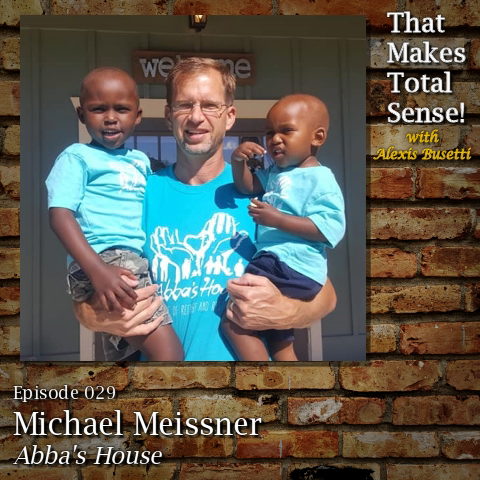
Speaker 0 00:44 Hi, I'm Alexis B SETI and this is, that makes total sense. Today I am talking with Michael Meisner of Arbus house. Michael and his sweet wife Julie, are pastors of a local church and they also pastor administer right out of their home. Alvis house is located in Northwest Houston and the primary ministry of obvious house is to welcome in refugee families one at a time. They help them get acclimated, they share a living space. They share the love of Jesus in a really tangible way. And it is so beautiful to watch my family and I have had the privilege of having dinner with Michael and his family and um, some of the volunteers and families who are living, uh, as part of the refugee population here in Houston. We have had the honor of going up and doing some babysitting and just helping with some of those tangible needs of the families.
Speaker 0 01:45 And it has been such a blessing. I can't wait for you to hear Michael's story of how he and Julie even got to be where they are today and how they can see God moving not only in the lives of the people they're ministering to, but how the people they're administering to are ministering right back to them. So enjoy this conversation today with Michael. I will be sure to put all of the information for <inaudible> house in the show notes so that you can go read about what they're doing, be encouraged by what you're seeing and that you can see how you can pray for them and if you're local, even how you could get involved yourself. So here it is. My conversation with Michael Meisner of opposites. Hello everybody. This is Alexis B city and I am so thankful you joined us on that. Makes total sense. Today I have a guest on the show that I am really excited about and I'm going to let him introduce himself mostly.
Speaker 0 02:46 But I do want to tell you a little bit about, um, how we became familiar with Michael. And this was, um, actually kind of by accident months ago, my husband was looking for a different ministry called Alvis house, which is what's is the ministry that Michael works with. And we ended up through a series of events at a dinner at Michael's house and we were just blown away and we can kind of share a little bit more of that story later. But I was pretty much speechless the whole way home and my husband's going, are you okay? How did you like it? And, um, and I would just tell him because the work that they do is so moving and so important and so precious, um, with, uh, to the lives of the people that they, um, that they're working with. And I believe it's really precious in the heart of the Lord. So, um, Michael, thanks for being with us today.
Speaker 1 03:45 Yeah. Thank you for having me.
Speaker 0 03:46 Can you, um, I've already said that you guys would always aspect, can you tell us before we get into what all this house is, can you just give us a little bit of context? Like, um, what your life looks like, what you do for a living, your family, that kind of thing?
Speaker 1 04:02 Yeah. So a very ordinary on the one hand and that, uh, kind of, uh, way off the beaten path on others. I guess. I am a full time pastor. I've been mine my entire ministry. Uh, I was 27 years now as a, as a pastor. And, uh, I had a big change a couple of years ago when we stepped back from full time ministry. I went part time at the church where I pastor and with the other partner. By the time I, uh, I'm running OBA's house, which is a ministry that, uh, a home really that welcomes in refugee women and children from all over the world, from directly from the UN camps as they come here to the U S we, we open up our home and, uh, my family lives in part of the house and then we have a, uh, a wing that is set aside for welcoming and our guests.
Speaker 1 04:48 And, um, they stay with us for a couple of months and then they move on through the normal resettlement process. They say a lot more about that later. Um, have three children. The oldest is a freshman at Texas a and M and then the two younger ones are still at home. My wife works part time for InterVarsity, a new position. She just started and is actually at the Texas a and M campus, working with graduate and graduate students and the faculty there, uh, in a, in a Christian ministry. So we are a busy family, uh, neck deep in all sorts of exciting ministry ventures and is, uh, loving the adventure.
Speaker 0 05:26 I love how you said it's like totally normal, like totally ordinary on one side and then it's just not, and, but I think that that's kind of the field that we first got. And so, um, so it's okay. I told Michael earlier when we, before we started recording that I wanted to do way more listening than talking and, and trust me, you guys will be thankful, uh, that Michael is doing most of the talking, but I do want to share a little bit of our experience office house and kind of touch on that, like this ordinary and then this like, not like this not ordinary part. And so I said earlier that, um, my husband was looking online for a different ministry called Alvis house and he kind of stumbled across, uh, your page. Maybe it was even the Facebook page. I don't remember. And so he sent me, he just like texted me a link to this and I was kind of like, what do you, what do you want me to do with this?
Speaker 0 06:26 Like I don't, I don't know what this means. Like there was no text with it. It was just like a link to this site. And so I look at it and then he says, Hey, um, these people like they, they're serving refugees from dr Congo. And so that is where our youngest son is from. We have a little adopted boy from dr condo. And so I'm like, Oh, that's kinda cool. And he's like, yeah, they're like right here, just like in Houston. And I'm like, Oh, that's super cool. And he's like, so we're going back and forth now at this point. He's like, they have a dinner, you know, like coming up. Maybe we should, maybe we should see what that's all about. And I'm kind of like, what? Like, I don't even know where this came from. And so, um, I went to, you know, you went to the website or Facebook or whatever it looked it up, called the number and I think it was like, it made me been been like your cell phone number, Michael or something.
Speaker 0 07:15 And I'm kind of like expecting this, like I don't even know, like this small like nonprofit office or something or like a message machine or his, you know, it's kind of like, I don't really know what I was expecting. And then, so we decided to sign up and go ahead and come out to dinner. And again, I think I was expecting kind of a, a hall with like round tables and uh, you know, like, I don't know really, you know, I'm thinking nonprofit, I'm thinking, I don't know. We're going to an information meeting and it might be, I don't even know what to wear. My be kind of stuffy. Can remember you remember our kids, I don't know. And so we, you know, end up checking in, ya'll go ahead and bring the kids and we bring the kids and it's like, people, this was the most incredible thing.
Speaker 0 07:59 We went and had dinner with other people who just wanted to learn about the ministry at your dining room table. Like we had tacos that night and, um, and I loved it. And we got to eat and share with other people who were volunteering for the ministry. And of course with your family, with Julie. And then, um, you know, we got to hear the story of one of the women who was staying in, in your home at the time. And, and like I said, we left and I was dumbfounded. I mean, I, I was completely taken aback. I had no words. Um, because while I had been exposed to, I don't know, even kind of the framing of like this refugee, I don't know, people call it a crisis where people, you know, and we had seen some numbers and we had, you know, I wasn't, I didn't feel completely unfamiliar with the work that you were doing, but I kind of learned, I was completely unfamiliar with the work you guys are doing because, um, this is on the ground.
Speaker 0 09:07 These people are not numbers and um, they really need to be cared for and loved and, and shown the heart of Jesus for them. And so, yeah, so it's like ordinary, like tacos at the table, but this is completely extraordinary. Completely out of the ordinary what you guys are doing. So I just kind of wanted it to share that for a little bit of context because it's like, I think maybe there are some people who are like me when they see certain ministries or in they see these things. We have a certain maybe idea. I used to, you know, I had some nonprofit background and so that probably colored a lot of that. And I think that that's true for some, for some ministries, but, um, this is very, very, I don't know, to use some of those words. This is organic or this is grass roots or this is, this is home. This is home for you guys. And this is home for the families that you serve. And so what does like give, give to people who aren't able to have tacos at your dining room table? Give them a kind of a little picture of what that looks like for you guys. Just kind of every day living out this ministry.
Speaker 1 10:16 Sure. Yeah. So, um, Hmm. So, so I was, house is really an oversized house and uh, and we live in a portion of it and we welcome refugees who live in that portion. And then all of the house where you eat, where you cook your living room,L , that is just shared space. And so we, you know, we have the opportunity to kind of separate and be our own styles, but then we can come together. And, and the whole goal is, is to spend time with people in family and to welcome into our homes and to, to share life with them. And it's kind of extreme in some ways, but it's beautiful. And, and so what we're doing is for a welcoming in a honestly, the people who probably have some of the toughest stories that this world has to offer. Um, refugees come from all sorts of different places, but the, the unsaid usually come to us are women and children who are coming from some of the very remote war torn, uh, violent places on earth.
Speaker 1 11:15 And so they've had just a really, really tough journey and some of the stories that will just break your heart. And yet also some of the most inspiring stories and just amazing people and their resilience. And, and so we're welcoming them, man. They're coming to a new land. Uh, oftentimes they lost their entire families that everything's been taken from them. They have no connection, no belonging, nothing. They often come with a suitcase in their hand and that's all that they have in life. And you know, my, just my, my heart is a follower of Jesus is drawn to care for them. How do we welcome them? Just have them come and dropped into an empty apartment in downtown Houston? It doesn't seem like it kind of welcomed that Jesus would give them. And so, uh, you know, I've been involved with refugee work and I've seen it happen over and over and over.
Speaker 1 12:06 And my heart was just compelled to, how can we do a better job as the followers of Jesus here, a better job of welcoming them. And so for us, what it looked like, ultimately it was building a ministry home, um, through a whole bunch of Christians that came together. We welcome them in, we pick them up at the airport, we have a hot meal waiting for them. Um, so I, my own family obviously is very involved, but it goes way beyond that. This is, uh, people from volunteers, from a lot of the area churches. And so what it looks like is, uh, the, the family environment they're coming in. But then every single weekday morning we have volunteers coming in from various churches and the community. And, uh, there'll be a volunteer will come in and say on Monday, uh, we'll work with them on how to use our appliances.
Speaker 1 12:52 It's really different than what they've been used to. Uh, another volunteer will come on Tuesday and work with them on their English and English gearing out where they're at. And that's such an important part of assimilation is just getting to know the language. On Wednesday, somebody will come and they'll take them to the grocery store and, and when they're used to a roadside market going into HEB or Kroger, pretty intimidating thing. Um, Thursday they'll go to the ESL classes that are here in the community and you know, maybe on Friday a different volunteer. I'll come and take them to the park or to the library. And it's just, uh, mobilizing the, the local body of Christ to serve as a warm smile. Uh, you know, good hearts friendly people and just helping them adjust to their new life here in the U S
Speaker 0 13:41 it's so crucial. It's so important. And I love what you said of like as followers of Jesus, we can, we can do a better job than that. You know, and it's not, I know that it's not to disparage any of the efforts that anyone else is doing, but it's just like, what would I want? How would I feel if I were just dropped off right in another country in an empty apartment.
Speaker 1 14:06 Well that's the thing is each one of them is so different. I mean, some refugees come in and they're there used to be a doctor or you know, some of them come in very, very educated and all kinds of skills and then others will come in and they, they've lived in some remote camp and aren't familiar with hot and cold running water. And so, you know, everything in between. We tend to get the ones because the, the government agencies are kind of specifically looking for the ones that are gonna have the hardest time. So we tend to get the ones sent to us who, who are from extreme war torn areas. They've undergone extreme trauma or they're just from such a remote area. They know that they're going to need some extra help. Those are the ones that come to Alvis house. But, um, yeah, they, they can come from all sorts of different backgrounds. And basically what it means is a refugee is their state lifts. They don't, they can't go back to their home country. It's not safe for whatever reason. And, um, and the country they're living in now is taking them temporarily, but they can't stay there. So the language, a lot of times can't work. They can't go home, they can't stay where they are and they're just waiting just for a chance at life.
Speaker 0 15:10 Right. Um, and I, I'm, I'm hearing you talking and I'm, and I'm kind of going, Oh my goodness. Like the question is coming to my mind of, of not just how did you get here, which we're, we're going to go there, but it's like, you know, the heart for, um, you know, the, like you're saying the agencies kind of searching for the people that um, will be best served by being in an environment like office house. But it's like that would be super intimidating for most of us I think. And, and we're not all, you know, uh, called to them or whatever. Like we obviously have different things, but I'm like, how did you get here? Like, um, you know, for, for, I would say for most of us it's like wherever we are in our ministry and our calling, like God has definitely used things that have happened in our lives. And so I know I've heard a smidge of it, but I'd like to hear it again. I'd like for our listeners to hear it. Like what is your story that you, that got you from, you know, pastoring for 20 years is amazing, but not all pastors are transitioning into some sort of ministry that looks like this. And so when did, when did God kind of start working in your heart? Or when did you start to feel the call toward serving, um, people without home these ref refugee people?
Speaker 1 16:45 Yeah. Uh, it's definitely not something that I aspire to do 20 years ago when I started ministry. And I'll be the first one to say it's intimidating for me to, I am not cut out for this. I'm not a natural at this. And it's, it's something that God has put in my heart, but there are days I still wake up and I'll walk out into the kitchen in the morning and go, Oh my goodness, I have a woman and a couple of little boys from the Congo living in my house. What am I doing?
Speaker 0 17:12 That helps. And I just say that I feel like that's also administry across the board to say that you're doing something only God can do. Right. Um, and I think a lot of us are in that boat, right? We go, what I did, we get here. So thank you for sharing that because that, that's an encouragement.
Speaker 1 17:27 Yeah. And, and, uh, I am Whoa, fully inadequate in so many ways. I speak English and sometimes then never very well. Uh, you know, I don't speak other languages. I'm, you know, I've had some cross cultural experiences that bitch and God has used. But, um, I am not one who you would just look on paper and a resume and say, Oh, that guy is cut out for this kind of work or this family. Perfect. Yes. Um, we're just willing and God's using it, the fumble and there's foibles and uh, awkward moments and things where we have to laugh at ourselves and all of that. That's part of it. God works in the messiness. Um, okay. So, so our journey, um, it goes back to even things that in childhood, and I think a big part of my journey honestly, was the church that I was raised in cause it was so far from this that, you know, it was about as opposite of this as you can get.
Speaker 1 18:21 And I had a great church growing up. Uh, love it to this day. It shaped me and everybody in it looked pretty much like me. And, and it was a very typical American Christian experience. I think it was middle-class. Everybody was white. Um, family journeys look pretty much like my family and, and that's all I was ever exposed to. And I loved church and it went through cause all my friends who were there and youth group was awesome cause we got to play basketball and have lock-ins and you know, and all that. And, and it was a great environment to grow up in. But I, I distinctly remember reading the scriptures and particularly the gospels and had the book of acts and thinking, man, that world seems so different than my neat, clean church life. But we had our issues and our problems like anybody, but it was a pretty sterile church environment.
Speaker 1 19:10 And I'd read the book of acts and just the amazing things going on and say, ah, it shouldn't following Jesus look a little bit more like this. And it was just a seed that God planted in my heart. I think back then, uh, went into ministry and, uh, you know, I had some great churches that have been involved in and it was, it was when I was pastoring a church in Colorado that seemingly a little chance encounter, uh, uh, you know, a weekend mission project that I thought would come and go ended up turning into something that the Davos house, and this was 15 years ago, maybe more than that when our church somehow got connected with a group of refugees called the lost boys of Sudan. And, uh, this was, uh, I knew nothing about refugees, didn't know a refugee or anything at that point, but it was an neat mission project and I always enjoyed those.
Speaker 1 20:00 Uh, we basically were asked if we would help sponsor a couple of, of young men who were coming from a refugee camp. Um, and they were called the lost boys of Sudan. The, a bunch of them were being resettled here in the U S and their basic story was that, uh, as best I can remember, uh, there a lot of their villages were just totally destroyed as people would come in and shoot them up and all the adults were killed. And there was a group of these young boy when these young boys were out in the field watching the animals, their villages there were destroyed, their parents were killed. Uh, and there was this huge number of young boys ages eight to 14, who, who came back and found their, their lives. And they banded together, you know, uh, Allison's upon thousands of them that were wondering around in this group and mass trying to figure out where to go, what to do.
Speaker 1 20:52 They tried one country, they got turned away, went into another and all these amazing, terrific stories that totally off my radar. But then as a church, we welcomed in Abraham and promise, uh, help find an apartment. Uh, got some basic things, gave him a couch and a laptop, you know, some things like that and kinda started getting to know them. And, and it totally blew open my world of what ministry looked like because they had a story that was so unlike mine. And I, I distinctly remember the day, I think the moment that I can point to that God changed my heart when I was sitting there talking with Thomas and he got black skin of the slightest speed that, that genderless spirit and telling his story. And, and he talked about the time when he and his, the people traveling with him came to this river and the, the bad guys, or they were coming after them with guns and they needed across the river to get away from these guys who are, who are after them, but they didn't know how to swim art and everyone was full of, so he was just describing this in his quiet, gentle voice.
Speaker 1 21:58 And he said, finally we decided we needed to get across the river. We jumped in and we tried to cross and he said, well, my friends were by the styles, but I made it. I remember kind of, you know, calling a timeout and say, wait, what? And he said, yeah, many, many of my friends died. They drowned and they were eating by the crocodiles. But I made it across all of a sudden my little bubble of what Christianity looked like, um, a loan away. And I realized this is the type of person that Jesus would be sitting down and having dinner with care last I lock and I'm, and I'm still lock-ins are great, but I, my lock in with all my buddies where we play basketball seemed pretty small in comparison to the opportunity to share time with us. And so from that moment on, in some form or fashion, I've been involved in refugee work and a lot of it was just getting to know if you do scrawls different countries, uh, having them over for dinner or welcomed them into our home for an evening, uh, going their homes, learning a little bit about the culture, eating some foods and things that I was eating.
Speaker 1 23:09 Um, just more and more spending time in different communities. A lot of it involved material helps when they come. They have nothing. So we would, I delivered more couches and, uh, carrying beds upstairs and things that I had ever would've imagined as a pastor. Um, and just helped them get started in life. Some of the material things they need, but way more importantly, just all the conversations, the faith and the friendships that have been formed through that. So that's really been the, the root of it. Um, and then came here to Houston about, uh, 12 years ago and uh, know did more of that. Cause Houston is one of the big hubs. We do a lot of refugees. And so, you know, we started our church. We, we just wanted to do things differently rather than having a vacation Bible school or we tried to get everybody to come to our church.
Speaker 1 23:58 We pack up and go down to Southwest Houston where all the refugees live. And when we would go into one of the parking lots and we would have vacation Bible school for the, uh, the refugee kids that lived in the, in the apartment complex. And Scott involved with people who are doing refugee work and delivered a lot of furniture, uh, shared a lot of meals. Um, and all of that for us, kind of in the suburbs on the North, Northwest side of town, all the refugees, the new, uh, newly arrived refugees live about 45 minutes to an hour away. So what refugee work looked like for us as we, whenever we could, we would pack everybody up and go down and have some sort of an event, you know, and they were great but really got to know people and we just kept longing for something where we could be more a part of their lives and they are part of our lives.
Speaker 1 24:52 And so in conversations with, uh, the agency that we work with refugees, um, conversations, then we started talking about is there something up on our end of town where we can be more directly involved? And generally the answer is no. And Houston is in the Southwest portion of the city. And um, and yet we can't, you know, earning for something up here where we could, we could be more hands on involved. On a daily basis. And finally we stumbled across a ministry, uh, outside of Atlanta called Jubilee partners and their website. This is what we've been talking about and think about. And, uh, bar is largely modeled after them. And basically what they do is in their case, they have a large ranch. All these cabinets, we've been doing this for years. They, they pick up refugees at the airport in conduction with the agency, um, as they come in and they, they provide an initial landing point for these refugees. They run an entire farm. They have all these homes and everything where they live are on the ranch. But it's this beautiful little community of people from all these different nations and the Americans who have a heart for them. And so we, we saw that and it's largely what God put in our heart. And so we're just kind of at the beginning stages of doing what dad, and it's a creating a little community of, of people from all these nations and got here who are walking and the other word learning. Wow.
Speaker 0 26:27 I feel like, how do I even respond to that? You know? Um, I read a book recently and I didn't think I was going to mention it, so I didn't look it up, but it was one of these, um, it was on bestseller years ago, but it was, uh, about the, uh, some of the refugee boys who, um, had been trained as soldiers, um, throughout their time. Uh, you know, similar stories to your friends. Thankfully they did. That wasn't a part of their story, but that's, no, no less difficult. Um, you know, but it's like just to wake up one morning or two to go to school and come home and your entire world has changed. Gone. Exactly. And there's, and there's no one there to help you. Like you're, you're, you're just, you're just, you're, you, you're fending for yourself. You're, you're, you're crossing the river with crocodiles. You're, you're walking to your next destination with, maybe you, maybe you have shoes on your feet, you know, um, and
Speaker 3 27:42 <inaudible>
Speaker 0 27:43 and it's like, like, yeah, I, I can see in that moment that it's, it's like we can't unsee what, what we've seen. You know, we can't unsee it. And, um,
Speaker 0 28:03 but I also, but I also wanna want to point out like we can't and see it. And so sponsorable now you know, it's a good thing to do that thing. But what I heard you say at the beginning of your story is that doesn't necessarily mean for you guys. It did. It doesn't necessarily mean you start a ministry or a nonprofit and you just do it. It's like you can see that, but what you can do is you can talk to that person. You can show that person the love of Jesus. You can fix a meal for that person. You can let that person fix a meal for you when they're ready. Um, like you said, the conversations, the visits, um, delivering a couch, um, you know, doing so many of these things that we take for granted, but just, I feel like it's, it's like this redemptive work of Jesus, of like for so many people, their, their lives have changed and they, either they were alone or they felt alone or they were maybe treated as a number.
Speaker 0 29:07 And it's like, what we can come back in and do is do what God did for us and, and bring them relationship and bring them love and bring them community and um, and tell them they're not alone. And um, and, and B start to live that picture of the body of Christ, which is made up of so many different people, EV every tribe and tongue and nation. Right. And, um, we'll um, you know, be able to experience the love of God. And so that's like, thank you because it's just, it's mind blowing, um, to hear that kind of story. But it's like, it connects us all to our humanity. Um,
Speaker 1 29:53 you find also that we need them as much as they need us. There was a lot that we have to offer. They've lost so much. And so there's a lot that we needed some of us material, but a lot of it is just emotional healing and spiritual healing and all of that. And so it's, it's the, the obvious thing is, is how we can help them. But what I found is how much they can help us because they are rich, even though they've lost everything. They are rich in ways that we are poor. And so where they're rich is they have, they have learned how to trust in God, but there is nothing else. I think, man, that's where we are poor typically because we have so many securities around us. We hardly need God. Or at least we think so. Um, you know, I, I uh, trust in God, but I've got my health insurance and I've got my five Oh one K and I've got, uh, all these safety nets.
Speaker 1 30:42 If something would ever happen and I've got this backup and that backup and, and yet I trust in God, but do I really have to? And then you sit down and you have dinner with somebody who was literally crawling, gets it, wasn't safe to get up and walk and they're eating grass and you're wondering if they're going to make it through the night and crying out to God and finding that it grew the worst the world can offer, that their God was faithful there. God saw them through a really, really tough time and all of a sudden you realize, um, I, I've, I've got a poverty of spirit and I've got a, I've got a lot to learn from this person. They have so much to teach me about what it means to trust God and know. So it's, it's a two way street. And so at Alvis house, one of the things I love is employing a lot of, you know, bringing a lot of volunteers from the churches who come and say, Hey, I can be a missionary because I can teach the first person to happen, but I can be a missionary.
Speaker 1 31:43 He goes, I don't know how to shop. You know, I do that really well. Um, but in turn to challenge them and say, learn from our guests, learn from our new friends, and get to know their story. And, and the work of God is working both ways here. And I've seen lives changed on the American side just as much as the other way.
Speaker 0 32:05 Amen.
Speaker 1 32:06 Beautiful part of it. That's the beautiful part of it is as we open ourselves up to, to ministry, to being around people who are different than us. It very, uh, at times it's hard. There are, it's messy, but that's where God grows us too. And, and I see it every single day. I've seen it in my own life. It's totally changed my faith. And, um, as hard as it is, uh, I wouldn't do anything else cause it's just beautiful. But God doesn't yet.
Speaker 0 32:34 It's, uh, it's amazing and you're, you're absolutely right because the stories, these, um, the testimonies, right? Like we're strengthened by one another's testimonies and the testimonies that they're, that they're bringing in, um, you know, it's just, it is his strength, his faith, strengthening for the people who, who are able to, to hear that and enter into those relationships and, and hear those testimonies of how God has really brought them through. And, and to hear them recognize this was God. Like this was completely God. There's, there's no other way around it. It's just, you can just, you're just in awe of those, um, of those times of those stories. And even if you haven't, you know, we, most of us haven't had to look through something like that. We've had our own tragedies perhaps, but we haven't had to live through something. Um, you know, as extreme as some of these people have come from. But to hear those and it's a, it's, it's face strengthening for us to be like, God, God is still working. Like he's still mighty. He is still working. He really is everything we need. Like when everything else gets stripped away, he really is everything. Please do.
Speaker 1 33:50 Am I in, does your Tom, so one of our recent families was a, a young woman from Honduras and she was a, she's blind. She's been blind since, uh, she was one years old, but she has a journalism degree and you know, a brave young woman. Um, and she came to, uh, to our home. She also has a little boy about a year and a half and he has eye cancer. He had already lost one of his eyes and most of the eyesight, the other one, um, she is back in Honduras and, and, uh, at one point started writing about the police corruption and the things that were going on there, you know, standing up to the authority that was, uh, uh, very corrupt. And, uh, they came calling and telling her she needed to quit talking about these things and she said, Oh, I'm speaking truth. I'm not going quiet.
Speaker 1 34:39 And you just saw a whole series of things happen. Bad stuff. That's her story to tell, not mine, but, but, um, but through it all, she ended up being pregnant with what would be now her, the baby she has with her, uh, she lost her home. Terrible stuff that happened to her family all because she was standing up to the, the corruption. And I eventually had to leave just for, for her life. Uh, you know, and so she could have so easily look back at that and just had a pity party for herself and, Oh, how terrible, you know, how could God let this happen? But her perspective on it was, I see God's hand in it because when I came here, the U S um, terrible is all though was, uh, her little boy was the, just the light of her life right now and, and get from a very early age, he is battling, I can't, that's supposedly, this is a really, really rare type of eye cancer that if it hadn't had been caught early, would have killed him. If she had stayed in under us, um, her little boy would not have made it cause he wouldn't have had that medical care cause she was granted asylum and came here to the U S was able to get the right medical care. It was caught early enough that while he lost one of his eyes, you didn't lose this life. So she's sitting here telling her story and it's not a, Oh, poor me. It's a look how good God was when I couldn't see what worldview was doing. He was working to save the life of my boy.
Speaker 0 36:01 Wow. I mean, just like perspective, right? Like the perspective is just, and I think, and I'm so thankful that, um, that you're here because, so Michael and I were talking before we started recording about, you know, um, what, what would we love to see come out of this conversation? And, um, and that was one of the things that, that you mentioned Michael was just like, um, if it would, you know, help to open, open people's eyes to see, you know, have, invite someone over to your house. It's different from you or you know, go out and, and, and have that conversation or, or serve this person or start this relationship. But it's like every person that we see, there is a testimony behind what you see right now, um, where they've come from, that God has brought them through something and, um, they leave us speechless so many times, but, um, it is an incredible thing to hear, to hear that, to see that life saved into antici.
Speaker 0 37:21 Someone set their eyes on Jesus and said they're focused on him instead of their focus on their, on their circumstances, around the things that they've gone through to set their eyes on him. And it's a, it's a really, really good teacher. It's a really good teacher for me. Um, to hear other people say, you know, God was, God was watching out, you know, um, because I think it's really easy for all of us to kind of get, like you said, maybe maybe we don't call it self pity or we were kind of just like bare down and the things that we're in. But, um, but those stories for me, it's like, I feel like it's kind of like Jesus taking his hand and putting it on my chin and turning my head, right. Like, look, look at me, look at, you don't have to look at all this stuff that's going around.
Speaker 0 38:12 It's there, you know? But, um, but like, turn your eyes toward me, see what, and see what I'm doing. See who I am, right? Like this, this woman is confident in who got is. Um, and that's a real testimony. That's a real testimony to so, um, thank you. I just, I'm just like, thank you. Thank you. Thank you for sharing all of this. What do you want? If you were able to just sit and have coffee with anybody who happens to be listening to this conversation and they kind of said, Oh my goodness, that's like super great for you, but I have no idea how to even address that. Now to a degree, people have seen something they can't unsee if they've heard this conversation. So they go, that's super great for you, but I can't, I can't start a nonprofit or that's super great for you. But I don't live in an area that even has refugees. I live in rural Wyoming and there's nothing, you know, like, what would you say, um, could be a possible response, like a real, you know, uh, POS tangible or, or spiritual possible response to people who have heard something like this now and they say, I want to share the love of Jesus. What can I do?
Speaker 1 39:30 Well, the cool thing is even in a rural Wyoming, if you open your eyes to what's around you, you find all sorts of interesting people. It really is. And, and so I guess what I would say is, um, read the gospels and, and just look with new eyes at who are the people that Jesus loved, who were the people that he invited, you know, to have dinner with or, or they spent time with and then walk around and whether it's at the grocery store or, uh, you know, the local ball game or whatever it is, look around and say, who, who are the people around me now that of Jesus are walking around. He would probably go on up to then saying, Hey, um, tell me your story and what are those? A Kia says, where are the lepers? Where are the, you know, the, the, the blind people today.
Speaker 1 40:24 And it might be, it's typically ones that are just overlooked. We just don't notice them cause we get so caught up on her own little world. But, uh, for me it was refugees that maybe refugees, they're, they're all over the place. Uh, for somebody else. And I'd be the homeless guy under the bridge or the person stuck away in a, in a nursing home that never gets visited or the emergency room. Every account has one of those. Man, you can find some interesting stuff going on there at two o'clock in the morning. If you, if you're a night owl, you know, I mean just everywhere. Where, where is the hurting person that, um, that, that we can just be Jesus do. And, and as you get to know those people that may be on the surface are so different than you, you find that there's so many things that are alike and so many similarities and so many, uh, areas where their journey and your journey intersect and where you can make each other's lives richer. And so just open your eyes to it, open your heart, take some risks, be willing to go into some areas that you aren't comfortable in because I assure you it's not comfortable on our end either. Picking up a at the airport when you maybe don't even speak their language and um, but the guide gives you the grace to, to get those things and um, and, and underneath it, as you get into it, there is just a richness there that grows your faith by leaps and bounds. And it's, it's a beautiful thing
Speaker 0 41:51 that's amazing.
Speaker 1 41:54 Perjeta, open your eyes and look around you and see people everywhere you go. There's this fascinating play out. Go to the brochures for the, uh, emergency boom morning or wherever it may be. There are people everywhere that, um, that maybe you've overlooked before I haven't seen before or, uh, just haven't been part of your circle in your bubble and, um, share a meal with somebody who's really different than you and you are in their home or in your home. Beautiful things happen.
Speaker 0 42:31 I guess the question that I have kind of is, is one that's bigger than five minutes, but I just keep thinking why is that important? I mean, I know that it is in my heart, but I'm like, why is that so important that we interact with each other? Um, in that way, why is that so important, um, to our faith? Or why is that so important to God? Or why, why is it so important that we interact with each other that way?
Speaker 1 43:03 Yeah. Well, you know, in, in the scriptures, um, Jesus loves everybody.
Speaker 4 43:07 It's people who are just like me, but he loves people who are really, really different than me. All of a sudden he came for the world. And, um, and so his love is for all people. I think part of where he would stretch me is to love all people as best you can. Love all people. And, and you know, so I, I love people who are just like me. They're comfortable. That's easy for me. Be he been stretches. Cindy says, love the ones that are really different than you, that maybe you normally wouldn't have interacted with. Cause that's an expression of the love that Jesus has for the world. And you know, throughout the scriptures, um, it talks specifically about God's heart for the vulnerable. And in particular he mentions three groups of people, the orphan, the widow, and the foreigner. And, and he says, care for these people because in loving the vulnerable person we're showing of how God reached down and loved us when we were all in our most vulnerable central state.
Speaker 4 44:09 And, and so, um, you know, as we, as we love and in my case it's particularly the, the foreigner as we love and welcome in the foreigner, we're, we're showing the heart of Jesus and um, you know, I just, there is such a critical moment in their life, a big transition moment and for God's people to be there saying, Hey, your God is faithful and he's got you in this transition. It's just a beautiful, beautiful testimony to them in their journey because they've lost everything. They've given up everything. They literally come with a suitcase and that's all they own. They'll never go home again. They'll never go back to familiar places. They'll know, you know, very likely all of that is gone. And so we get the privilege of being the first marker here in their new life. You know, I in scripture, I love it.
Speaker 4 44:59 Wherever God would do something significant, it would say, okay, stop here and pile up some rocks. You know, build a little monument or build an altar here or something at a way, you can come back later and say, Oh, remember God did something big here. This God was faithful to us in this moment when he did whatever. And for me, it's like, what a, what a joy. That Ahvaz house, it's to be at first marker of their new life from here. They're going to go on and they're going to, you know, live down in Houston or move out of state or whatever. And, but good for people who've lost everything. We now get to be that first marker. They come back and they say, ah, this was the first place, the first bed that I slept in, the first home that I had in my new country, in my new life. And our God is faithful. And he showed it to me at Optus house. And I just, I love that it considered a, uh, just a high privilege to be able to, to represent Jesus and share his love through that.
Speaker 0 46:00 Wow. Good. Good answer. It's like, it's almost like you've been a pastor for 20 years. It's almost like you've walked through some things with Jesus and, and you know, I just, when you were talking, I was thinking about, um, when cause you, cause you're exactly right, like the, you know, the Bible says, Paul says, like when while we were yet sinners, Christ died for us. It's like he came at the right time. When was the right time, I guess the right time in history, but also the right time that we were all still sinners, right? Like where we're here. And, um, but you know, he, he came at the right time cause we're all still centers and so, and so here we are. But so I was thinking of that scripture, but I was also thinking of, um, the Israelites, you know, and you mentioned like God pudding, but having people put a marker in different places, um, which happened all, all the time, all over the old Testament.
Speaker 0 46:56 We see Abraham, we see, we see God putting a Mark with Noah. We see, you know, the children of Israel crossing over the Jordan. And there being a Memorial stones, but so many of the times he instructs the Israelites to do something and he'll say a couple of things, right? He'll say, do this because I am the Lord your God who brought you out of Egypt with a mighty hand and an outstretched arm and a lot of times, so we'll remind them of of who he is. I'm the one who brought you to this space where you are now, but he also says do these things because you were once a foreigner and you were living in a place where you were the ones being oppressed and you were the slaves and you were the ones who were not in charge. And so when you come into contact with other people who are foreigners, who are oppressed, who are slaves, who are not in charge, then you treat them with kindness because you are a member of.
Speaker 0 48:00 That's who you were before I came and brought you out of that with my mighty hand and my outstretched German. I think for every single one of us who knows Jesus, we all have a an oppression story. We all have a slavery story. We all have an Egypt story of our own where we were the foreigners, you know, and, and by reaching out and interacting with one another in that way, I think it's, it's exactly, you can kind of going back to even some of this stuff we talked about at the beginning is it's not just like, Oh, we have all this stuff and we're giving it to you because we're, so, yeah, that's part of it. But it's a, but it's a, it's a relational thing and it is to say, look, I can do what I can do right now because of what God has done and is doing for me. Like it's the only reason I'm not still living in Egypt is because he came and took me out. I didn't get a truck and move, you know, he brought me, right.
Speaker 4 49:05 Well, it's a reminder too that we're still not home. We're all stateless people in a sense that while I'm a citizen of the United States home, heaven is my home. And, and so just as a refugee by hitting, you know, demand or, but because there's no other way, and travel is really, really light because they have no belongings that they take with them. We're reminded we're not taking anything with us and we're on a destination here and this life. Until that day, when Sunday we will be home and I guarantee God's going to welcome us way better than we welcome anybody to anybody here. And he's preparing a place for us. And when we get to heaven, he's not going to say, Oh yeah, good luck in your new life. He's going to say, I've been waiting for you. I'm preparing a plan. I've been preparing a place for you come and, and there's a feast and there's this beautiful picture of in a well and ironically in our ABOs house, our father's house, or for us. So in a tiny, tiny way, we get to be a living example of that here at <inaudible> house where we welcome in people throw us feast for them, welcome them in as family and just love and celebrate the goodness of our God.
Speaker 0 50:16 Oh my goodness. This is just, this is perfect. So before I completely lose it, I'll, we'll, we'll sign up before I started the real tears. Um, but Michael, thank you. Can you tell everybody just how they can learn more about what you guys do, whether they live in Houston or not. How can we learn more? How can we pray for you guys? Because even if we can't do something really tangible, really close, we can always pray. So how can we pray for you guys? How can we get involved? How can we know more about what you guys are doing at office house? Where can we find you?
Speaker 4 50:53 So just look up ABOs house, texas.com if you want to go to our website and then we're also on Facebook. Um, I've been ABOs house and, and should be able to find us, uh, on there and that'll give you information about who we are, how to get involved. If you're here local or if you have questions, feel free to contact us about how maybe something you can do in your own area. I'd be happy to, uh, help guide that. As far as prayers, just pray for our nation because we're in a very divided time right now politically and you know, God's not Republican or Democrat or you know, pray that our nation would, in the midst of all the political stuff that is part of the necessary conversation, I guess, that we would see the people behind all of the politics and remember that every single one of these people has a story, often times a horrendous story.
Speaker 4 51:45 And that Jesus loves them. And how can we as followers of Jesus love them? Well, um, still need to have the other conversations and honest Christians can dialogue and struggle with, you know, the role of government to do, let's do it with love of Jesus in our hearts as we have that conversation. And then for us personally, just help us to navigate, um, all of the, uh, the, the politics that are having a very real effect on when we get refugees and how they come to us and, and all of that. Uh, pray for us personally as a family. It is hard work. There are days where, I mean we are taken to the Brank and not sure we could keep going on. And so pray that God would give us the, the heart and the stamina and um, and all to keep doing this. I'm ready for volunteers, uh, as compelling as it is and as interested as people are, there are days where we really wish there'd be a volunteer to take him to the store and, and there isn't always and, and so there, there's clearly opportunities for more people to get involved in and um, just that God would raise up his people here and wherever it is to, uh, to touch these lives.
Speaker 0 52:57 Amen. Those are, those are wise words, Michael, so thank you for that. Thank you for that call to action really, um, for us. Um, for me. Thank you for that call to action because it, every, everything he says is right on in my opinion. So thank you for that. I will put those links to the office house website and to the office house, Facebook in the show notes for this episode. And so if you're listening even on your app, you can, you'll just be able to scroll through and click on those and get connected with Michael and his family and his team at all this house. And so we can, we can do that for you as well. And I know they would love to hear from you and trust me, you will be welcomed. You will be welcome to just like the refugee families when you come in with, with a hot meal and a smile and you'll feel like family by the time you leave because, because we sure did. So anyway, thanks again Michael. I appreciate you so much. Thanks for having me. And, uh, I just appreciate all you're doing as well. Thanks. We'll talk soon. So thank you again so much for listening. Don't forget to subscribe so you won't miss an episode. Share the link with your friends. You can visit
[email protected] and until next time, this is Alexis Piseti remembering to do well for ourselves so we can do good for others.
Speaker 5 54:23 <inaudible>.