[00:00:07] Speaker A: Welcome to that Makes Total Sense, a podcast dedicated to exploring God's generosity and justice. I'm Alexis Buscetti, a Christian, aiming to ask good questions and encouraging you to do the same.
Every one of us is wired by God to live out generosity and justice, but the how sometimes eludes us. That makes total sense is a way for us to get together, posture ourselves as Lear, and challenge one another to practice generosity and justice in a tangible way every day.
Okay. This is. This is a conversation. So, like, no pressure, you know, for either one of us, but this is like. This has been like a long time in the making.
[00:00:52] Speaker B: Yes.
[00:00:53] Speaker A: I mean, I got ahold of this book a while back and I really enjoyed reading it. I really enjoyed your voice in this. And I already know from our Pre record, and you've been super gracious with me because I came in a little bit scattered today, so appreciate your grace. I just know I'm going to just love this conversation. As much as I enjoyed the book.
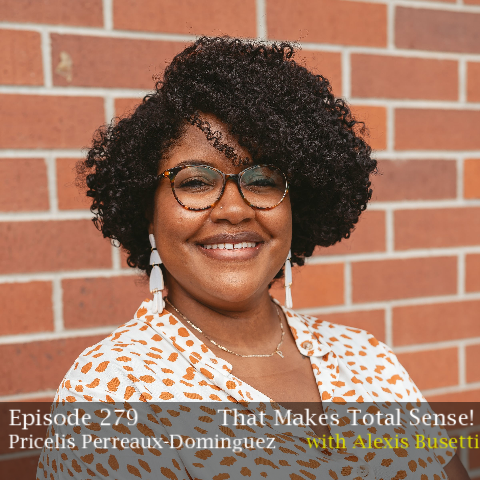
I am here with Pre Dominguez. She has already. I love nicknames, and so I love that you invited me.
[00:01:28] Speaker B: Yes.
[00:01:29] Speaker A: To a shortened name. We have, like, everybody, but my husband in our house has kind of a shortened name. Even the puppies.
[00:01:36] Speaker B: Oh, I love that.
[00:01:37] Speaker A: Like, a little. Of course, they're. They're not as cool, like a little short name anyway. They're. They're kind of silly. But I'm here with Pre Dominguez. She's written a great book called Being a Sanctuary. The Radical Way for the Body of Christ to be sacred, soft, and safe. And I almost.
Priya, I almost want to turn those last three words into a breath prayer right now. You know, like, for the spaces that we occupy, for the spaces that we just enter into, for. For, you know, just our embodied selves. Like, just thinking about that, what would that look like for me to be in this space? For me even to be a welcoming space that is sacred and soft and safe. So thank you so much for that and thanks for the book and thanks for coming on.
[00:02:36] Speaker B: Thank you. Thank you for having me. And for those who have, you know, read it and not canceled me or not gotten so upset, I really appreciate it.
[00:02:45] Speaker A: I didn't. I didn't find anything cancel worthy, but, you know, that's me.
I thought. I thought it was. I thought it was. I thought it was very sweet. I mean, I don't want. That sounds like a weird word to describe it, but.
[00:03:01] Speaker B: Yeah, people said kind.
[00:03:03] Speaker A: Yeah, kind. That's a great. Yeah, that's another great one. I think I just felt, even through some of your experiences, which. Which I hope we'll talk about, I think I felt like even some of the things that we didn't share, I think I. I felt seen, but I also felt like, oh, she sees what's happening. You know, she. She sees kind of what's. What's going on. Um, and so, I mean, that might even be where I'd be. Where I want to start is I'm curious, and I'm hoping that you'll share part of your motivation in this. You share tidbits of your own experiences. But my hunch is that it was more than that. That what I have kind of jotted down is, I'm guessing it's your own experiences. But I'm also wanting to ask you what. What have you observed that motivated you to write this? But also, really. And I think we'll get through this last one throughout the course of the conversation. But, like, what's your hope?
You know, what was your hope when you thought, if I write this and I say what I'm seeing, what do I hope will come of that?
[00:04:12] Speaker B: Yeah. This journey of writing this book, it initially started actually as a book for those who have been hurt by the church or harmed by the church.
And quickly I realized I wanted to create a resource that is more preventative in nature than intervention. So I have a social work background. That's why I'm using those words.
And much of the work of a social worker that we're trained to be is preventative workers.
Obviously, there are times that we have to develop intervention systems and tools and approaches, but our heart and the work of social work, the foundation of social work is preventative work. And whenever I think of social workers, I think of the first social worker, which some might say existed in the 1800s, and I would say existed 2,000 years ago, which is Jesus. That he was here to create, kind of give people eyes, to see ways to create healthy culture and be preventative in certain ways. Right. To be. Prevent the worship of abuse and power, to prevent the othering of humanity and people, to prevent the dehumanization of women, like was already happening. So in some way, he did do some intervention work, but the way he approached it was so radical that it felt. It felt preventative. It felt like he was kind of like doing a start over.
And so for me, I got to a place. I grew up going to church almost all my life. There was a stint where I spent a few years outside of it, and the Lord pursued me, and I returned and since then I had been working in churches. So I was in it. In it, I was seeing things that most people do not see, which wasn't necessarily delightful, but.
But it has taught me a lot. You know, when we think about, like, the hard things that we've gone through and the pain that we've gone through, we're like, you know, I hate when people say that, oh, there's purpose to your pain. Because that's just a kind of a crazy thing to say to people in their pain. But I do think that God doesn't waste anything. And so, as in giving me this inside look into this world that I never thought I would be a part of, I actually started growing weary. And in 2020, we left the, the previous church we were at, and I just was like, lord, I'm. I'm so tired of Christianity and churches and Christians and yeah, I think I gotta like, unlearn some things and relearn and some people call that deconstruction and all that. But, like, it was really more than anything, I was just in a weary state of the church. And in being the social worker, justice worker that I am, if I see a problem, I acknowledge the gifts in me and the things that are in me to see if I can then be a contribution to the solution. Right? That does not apply to every single problem in the world. We all don't have the solutions and gifts and capacity to address all things, which is why we're not saviors. But I found in seeing the problems, I was like, okay, I think I have some gifts, some knowledge, maybe some educational understanding and some real life experience of perhaps what can we do better and how things can look differently. But before I even thought of all that, I was like, God, I think you have more than, more of that than me. And so I went into 2020 just walking through the Bible, and I didn't do like a year in the Bible. I was just like walking through the different parts where it's talking about pastoral care and the church and community and healing and safety and what the church is really meant to be. And as I was reading it, I was just becoming really confused because what I was reading was not aligned to what I was seeing in the world. And I was like, am I the only one? Am I crazy? Like, am I the only one? And. And I, you know, started to getting to know people and seeing even people that I hadn't real life, that just because of, you know, you never talk about the church in a certain way, people actually thought the same Things as me, they just wouldn't say it out loud. And so I got to a place where I didn't feel alone about it anym, but I still felt like the people who were feeling that and thinking that still felt like they had no, no, no position or power to do anything or no capacity to do anything. And, and I was like, that's just not true. You know, that's just not true. We all can contribute to the health of the church. And so that's what I often find even in the justice realm, like, well, I don't know what to do, so I'm not going to do anything. And so I wanted to create a book that could answer that. Like just if, if you are weary, if you are over the church, if you are disappointed, if you are discouraged and you don't know what to do and you don't know what it can look like and what actually the Bible guides us to see the church as and, and Christianity as, then that is, that is what the book is. The book is meant to be a kind of next step for the person who is not content with where the church is because we shouldn't be, we shouldn't be and doesn't accept the amount of things that they see in the news and all this stuff going on. And so that's where it came from. It came from a place of seeing, seeing the real reality and wanting to help create both preventative and intervention measures for what's going on to then hopefully be a whole church and be a sanctuary that is holistic and healthy.
And so that's. So then my hope in aligned to that is that same thing that the hope would be is that the everyday Christian, I think we've lost our, our power. We think that it's the pastor that's in charge that has to change things. And we think that it's the elders and the celebrity Christians and it's no, it's the everyday faithful Christian that is choosing to speak truth to power, to advocate, to walk in, living justly daily to read their word and not be reliant on always sermons or other people to teach them like that. That is what, who the book is for. And yeah, if pastors want to read it, praise the Lord. If leaders want to read it, praise God, yes. But I want to also help the body of Christ remember that a finger is just as important as an ear, just as important as a neck, just as important as a toe, just as important as a knee. Like every part is important and holds a really important position in the health of the body.
And so that's my hope, that people would see their power and their position in the church and that they would use the book not just as a so good moment, but as a. Oh, I have been equipped, I have been challenged and I have been invited.
And now I'm going to walk this out.
[00:11:01] Speaker A: Okay. I'm trying to hold back some of my enthusiasm right now, but I'm going to let it go. I don't think I've ever really gone here in an episode before. I'm trying to think in an interview if we've really gone here. So I do not have a BSW or an msw. My first master's is human relations, which was organizational studies and social justice.
But I did work as a caseworker.
[00:11:26] Speaker B: So basically you're a social worker.
[00:11:28] Speaker A: I was a social worker, yeah. I mean, I signed my name social worker. Right. On all my documents for years. And anyway, but so, so when I'm, so when I'm thinking about this. So just for a second, like we're thinking about the Christian community and Christian communities. And one of the things I think, like that's so great about thinking about this from the mind of someone who is trained as a social worker. Now you can correct my perceptions and my experiences, but I, as someone who has. I've always been justice minded. I think one of the beautiful things about working in social work is that it is not punitive. Like, that's my experience is that there's nothing about social work, the as, as, as a thing. Right. As a vocation that is focused on being punitive. It was even to the point where I would say people would question me because I'll just. She's like a real blunt example. Okay. And this, I mean, I'm just like, like real talk here for a second. I used to work in child protective services. Okay. So people can't see what you just did with your eyes. But that's like.
[00:12:41] Speaker B: Sorry.
[00:12:42] Speaker A: No, it's real. But I mean really, I mean that's, that's like. That was a lot of in the, I know social work is in the trenches work, including child protective services. That's definitely some in the trenches work. And I used to work in child protective services way back in the day. And we would often have. I would work with clients and parents who were drug users. And in my state at the time, which is not the state where I currently live in, and this was a long time ago, 15 years ago, it. We did not. There wasn't like a, like I Said it's not punitive. So, like, I'm not law enforcement, so there wasn't anything there. If so, the only way I would intervene, really, is if that drug use was affecting the care of that child. So, like, let's just say this is, like, way before marijuana was legal anywhere and was not legal in my state. But let's say the parent had the habit. Let's just, like, use that as an example. Parent has the habit, they smoke weed a few times a week, whatever. And I know that because I walk in and I can smell it or I can see it or whatever. I mean, here's the Duke. I didn't report it. It wasn't my job to report it. And if I could see this is clearly not affecting the care that this parent is giving towards this child, then I don't affect. Now, does this mean I don't care about the health of the parent? No, none of that. Right. But the point is like, that, A, that wasn't why I was there. But also, B, this just isn't a punitive system. And so we're looking at this of, like, let's look at this holistically. You know, yes, I'm focused on the child, but I also want this family to be, like, really healthy, successful. I want them to be connected with their community. I want them to have resources so that they can meet the needs that they have. I want them to be able to feel like they can reach out when they do have a need. I want them, you know, to have a good family structure. I want them, you know, maybe they don't have family in town. I want to, you know, who are your close friends? Who are your neighbors that you can call on? You know, I want to connect them with organizations that already have systems in place that can help serve them, you know, all of these kinds of things. Right? And.
And I want them to. To be serving, you know, as they're. As they're capable of doing anyway. So the point of that little. This kind of side note is so now thinking about that mindset, and we come and we look at Christian communities, and we're like, what if we just applied? Like I think you've done in a lot of ways in the book, but, like, just to speak it out loud here, like, a real similar mindset where we go, look, people have been hurt, okay? Things are happening. But this is not like, we're not coming in in a punitive way. We're like, man, how can we help? Even in the ways that we can, like, restore some Health, you know, in this community, or how can we, you know, help people to see things or to know where their resources are? You know, like these same kinds of things. Like, how can we help people to recognize their own gifts and what they can offer and, you know, have that generosity out there so that they're, you know, they're putting something, you know, forward in their community and how can we work together? And it just really is kind of it. I think for people who have worked in it, it feels natural even for you to use the language, you know, of like, preventative and versus intervention, you know, all these kinds of things. But I love that language of like, what can we set up? You know, like, how can we. We understand that these things are happening. We understand people are getting hurt, we understand these things are broken, and we want to help towards that. So what can we set up where we say, we actually. We don't want these things to perpetuate. We want to. We want to change some things so that this isn't the norm. And like. And like, how can we, you know, how can we do that? How can we look at that? So I just wanted to throw that out there because I think that's a really. That. That helps frame that conversation in a way. For me, that feels very different than in ways that it's been framed in. In other settings.
[00:16:56] Speaker B: Well, to that too, when I think of even. That's a really good point. And that word punitive, I think, for those listening on two ends. So, like, the leaders and the pastors of churches, like, really taking a moment, have we created a culture where people feel that they would be punitive to us if they spoke up, and if so, we need to change some things. And then on the other side, if for the people who belong to a church or Christian spaces, community or ministries, like, do I feel like I will receive, like, punishment or backlash or even be like, exiled if I say something? And if so, that's an examination of, like, is this place safe? Should I be here? Will I speak up anyways, right? So that even mindset needs to be considered for both sides, right? Within. Within the church and within our communication. Because, like, kind of like you're saying, like, your goal with the family is that everyone is healthy. I'm not sure if that's every Christian's thought that, like, I want the whole church to be healthy. Some I think it's like, oh, I'm good, I'm healthy. Or some will be like, oh, my church is healthy. It. It'll be very, like, what Me centered or anything having to do with me when the, when the church that's bugging in California has everything to do with me. Yeah. Can't. I'm not there and all this stuff. But they have everything to do with me because they are the body too. Right. So it's also seeing like that this is, this is a, a big house. Right. Of. Of all of us. And it's just, it's not tribalism. Right. It's not little cults. Although. Although, yes, there are some little cults, but it's not the building of little. Right. It's really one family and we need to care for one another and brothers and sisters by willing to address these things.
[00:18:44] Speaker A: Yeah. I'm wondering if you can talk about those three.
The three things that are named in the subtitle of the body and you've just named like this kind of. This bigger body of being sacred and soft and safe. And so I feel like I may like in my own realm and kind of words preempted the safety a bit because that was, that was my job in social work was focused on safety. Right. All those other things, yes, were important, but it was focused on safety.
But man, if we haven't.
I think that is one of the things that feels present in the front of a lot of people's minds right now is the safety piece.
But.
And you know, if you look at, again, kind of looking at things, social work, you can't really think about much else if you're, if you fear for your safety. So that's super important.
But there's going to. I hope there's going to come a time when we're out of triage.
[00:19:48] Speaker B: Yeah.
[00:19:50] Speaker A: And so what does that look like, you know, when, when safety is a concern, but then we take time to think about these other concerns as well and these other, these other environmental things as well, like sacredness and softness, as you name them.
[00:20:12] Speaker B: Yeah. So I.
The three parts came from a play. You know, some people have asked like, why those specific ones? And I'm like, it's, I think because it's like the missing pieces.
It's the missing pieces that perhaps could put the puzzle all together.
And so the first part, sacred, is to be people who are Bible based. And you know, sometimes some people are saying you that can be misunderstood of like, well, what does it mean to be Bible based? And I would say more than anything is to be guided by the, the story of the Bible. Right. So sometimes I'm not saying, like there's some crazy parts of the Bible. That doesn't mean being Bible based doesn't mean we replicate the crazy parts of the Bible.
[00:20:55] Speaker A: There's some crazy parts of the Bible.
[00:20:57] Speaker B: Crazy, right. So people talk a lot about them in prescriptive and descriptive. Right. So the descriptive parts of the Bible shouldn't be ignored. They also. But they shouldn't be the thing that we live by. But they are lessons learned. Just like we listen to our elders in our life and the people in our life who share stories about their life and we learn from them. We don't replicate necessarily, but we learn from them. Same thing is how we should read descriptive parts of the Bible. People are bugging, people are doing wild things because people are people and we learn from it. Right? Not, not living that out. But then, so then that's to be Bible based and seeing that with wisdom and the prescriptive parts of the Bible of really like embracing and seeing like does this God. Is God making this a commandment for me, is God inviting me to live this way as well? And that is much of the New Testament as well as definitely parts of the Old Testament, but so much of the New Testament. And what I find is that the sacred part is missed in the sense of that we perhaps have become Christians that want to look at Scripture. Kind of like I want to be encouraged by this. I want this to. I'm going to spend my first five minutes on it. And that's about it. When really this is a book that is living and active and meant to guide us in all things, in all decision making, in the way we think we live. We see and we can see the absence of scripture in the American church by the way the American church acts. You will see that in any person. If someone claims they are reading the Bible and they are Bible based, but they are not living it out, then there is, there's a disconnect or there's an absence of scripture in their life. And so I find that to be the very much the case. Like people not acknowledging that racism is a sin is. You have missed, you have, you're not in scripture. People trying, people like we kind of said earlier, trying to act like justice is not a part of the Bible and there's just a few scriptures in there. You're missing, you're missing it. You, I don't know what you read, but you're, you've, you're missing it, right? So it's this like missed part of just like maybe you're just listening to sermons and watching Bible project videos. And I love the Bible project. But like it's not the Bible, right? Like really being in the Word and in community with the Word because there can just be so many things that we're unlearning and relearning. And so in that first part of the book I talk about ways that I have feel that the church has disconnected from the Bible because of certain behaviors, like the amplification of uniformity. Like every church looking the same and sounding the same and being the same is intense and it's uniformity, right? It's not unity at all. You know, the idea of sanctification, of like actually looking set apart from the world and not to shame the world, but to really be like oh like maybe we shouldn't be having church this way or function in this way. The invitation to Selah, that's how I start the book, right? Like we see Selah all over us, the Psalms and other books of the Bible. And really it's an invitation to shut up, just to shut up. Like so much we think we are the generation that wants. And it's such a pendulum because I get it, so many communities of color and women and so many marginalized communities could not speak. And we weren't voiceless, but we couldn't speak decades ago. But that don't mean that this is a time to over talk and over communicate. So say lies invitation to just be quiet, right? So that's what a lot of the first section is talking about. Like us returning to the Bible as a guide, not as a, as tips or a footnote every once in a while, but truly like a guide like the way women are treated. If we read our Bible, women would not be treated the way it just, they just wouldn't. So it's really kind of a little bit admitting that we are not in our, in our word and that that was, that's what the first section is. The second section is to be Christians that are trauma informed. And maybe you know, because I'm a social worker obviously like I went to school and that was easy because I had a courses on it and I could practice it. So like I do get the reality of like well trump. Being trauma informed as a training is not something that all people have access to, but there's actually a lot of minist and organizations giving free trauma informed trainings these days. So it actually is accessible. Maybe five years ago and 10 years it wasn't, but now it is. So like pastors and everyday Christians should, because we, we think we know how to be gentle and soft and kind and trauma inform. But when it comes to someone we disagree with or someone that lives differently than us or someone that has a different opinion on a different, on a scripture or theology, oh, the kindness is out the wind, like we have forgotten the fruit of the spirit, that is gentleness. So, but to be trauma informed is to understand that in all circumstances and cases, you are seeing the person in a siloed experience. So for example, if I'm talking to a white man, I am not seeing him as all, as I see all white men and he is not talking for all white men. I am having this interaction with him and I am giving him dignity. He is the image bearer of God and I am having the interaction with him and him alone. And based on his experiences in his story, I get to listen to him and he gets to listen to me. That is part of what it looks like to be trauma informed, to not put all people as a monolith, to not group all people, to not other specific groups of people, and to not silence people. And we have really missed that. And Jesus actually has very good examples on how he's a trauma informed God in the Bible. And then the last part is safety. You know, as a, as a woman of color and as a daughter of immigrants, as a woman itself, when I think of safety, I think of a place that I think of Jesus because I think of a place of a person who will fight for me, who will dignify me and who also is willing to see me and all of, all of who I am. Right. It's not like I don't see color. It's not that I don't see your gender. No, I do see your gender because I chose it when, when, when you were your mother's womb. I do see your race because I chose it when you and your mother's womb, all those things he chose. So to say that we don't see it is disrespectful actually to God.
So, so part of being safe, being a place that is safe, is to see people in all of that they are again, even if you disagree with choices that they're making or lifestyle they're having. And to really learn from the Bible in that part, I talk about the Jewish and Samaritan beef and how we just have replicated that in so many ways. And again, if we are not sacred and in our word, then we would not see that. We would not see that we're repeating a history. And so I walk through those different kind of component components as an invitation for Christians to Be Bible based Christians, trauma informed Christians and justice centered Christians. Because that is what truly would make us a healthy body to embody those different things not occasionally and not reactively, but consistently on a daily basis.
[00:28:05] Speaker A: And I'll just add my little two cents, my little observation that none of us can do or be any of those things as individuals.
And I think that, I think the temptation there and we don't have to spend a lot of time on the sacred part, but I think the, I think the, the, the place there that we think we can the most is that sacred piece.
[00:28:32] Speaker B: Yeah.
[00:28:32] Speaker A: Because you know, when I read the Bible, that's between me and me, me and God pri. So I don't really need you, you know, intervening in that, you know, my quiet time. Space.
[00:28:41] Speaker B: Quiet time.
[00:28:42] Speaker A: Oh, if it were ever. But what I have learned the most, I think since I was introduced to spaces, for example, I would say that had a different hermeneutics, so different ways of interpreting the Bible. And what I mean by that for some folks who are like, what do you mean different ways? Like, this feels sketchy, but like, you know, to look at it like, I love. My daughters were reading some stuff in the Old Testament recently and I'm like, isn't that beautiful that it doesn't come through in the English, but really that this is poetry, you know, and to be able to look at this and say, but if we read this through, you know, and look at it in the same way that we would read some of our stuff in our literature classes, this is a beautiful thing, you know, but also, and I need someone to help me do that because I'm no literary geek, that's for sure. You know, I'm a geek in a lot of other ways, but literary is not necessarily one of them. But we also need each other when we're being Bible based, to use your words. Because when I see it, there's naturally, there's no other way for me to see it besides the way I view it and the way I've been discipled to view it. And I think for me there was a disconnect there. I was kind of taught in some of my spaces to read it in a certain way. Sometimes that certain way didn't make sense to me and there, that can be a detriment, but it can also be a blessing if you look at it, you know, you go, okay, maybe this way doesn't make sense to me. And. But if I listen to another member of my community and I listen to another member of my community and I Listen to another member of my community. And she says when she reads it as xyz, then she reads the text in this way. You know, I mean, think about you in New York City. It's like there are going to be ways that someone who's always lived in a big city is going to read the text versus someone who's always lived on a farm, you know?
[00:30:54] Speaker B: Exactly.
[00:30:54] Speaker A: Even that difference is a big, you know, can be a big difference.
Of course we have gender differences. Of course we have racial differences. Of course we have socioeconomic differences. You know, we have our own experiences that goes into some of the other stuff. You know, when I. If a woman is reading who has been sexually assaulted, is reading the story of David and Bathsheba, she is reading the story very differently.
[00:31:22] Speaker B: Very. Yep.
[00:31:24] Speaker A: Then maybe a man who has not had that experience or doesn't know a woman who's had that experience, you know, and so anyway, so I just, I want to say we can't do any of these things that you're saying. We can't. I can't be a safe place by myself. I can't create a soft place by myself. I can't be a sacred place by myself. I can't be Bible based even by myself.
[00:31:47] Speaker B: Correct.
[00:31:49] Speaker A: That all of that is a communal.
It's a communal effort.
[00:31:55] Speaker B: Yep.
[00:31:56] Speaker A: And a communal offering. But I think all of that is a communal effort. So that's. That's just kind of my two cents.
[00:32:01] Speaker B: And that's why I named the subtitle is the Body of Christ.
[00:32:05] Speaker A: Yeah, that's right.
[00:32:06] Speaker B: And I could have put the church or Christians, but not everybody likes the word Christian these days. And the church people could be like, oh, on Sunday. I'm like, no, this is not, you know, this is just about a group of people.
[00:32:17] Speaker A: Yeah, that's right. That's right. No, yeah, I think. No, you're definitely right on, man. Because of my bent, I'm going to. I'm going to guide us a little bit to some of these justice places.
You have this really great. So the way the book is set up, there's lots of invitations to pause, as you mentioned, invitations to Selah. There's questions and there's scripture references that people can go and find. And one of the places you call radical thoughts. And if it's all right, I'm gonna. I'm gonna read a couple of the radical thoughts in the justice section because here's.
Here's my note. You ready for it?
Welp.
[00:33:17] Speaker B: Yes.
[00:33:19] Speaker A: Welp. I mean, okay, she said it anyways. And then I, and then I put a, and then I put an arrow for these first three. And I just put at the same time, like, this is a note to me. So anyway, first one, first radical thought. This is what got the whelp pre. Thinking about injustice is not justice work, period.
Welp, I'm not done. You're. You weren't done. I'm gonna read thinking about injustice is not justice work, period. Welp, there are, though simple everyday things we can do in our homes to live justly, such as recycling, treating our neighbors with dignity, and honoring those we live with. And then that you, you have more. But then the third one that I connected all these three for me in my notes was justice doesn't have to be a grandiose step of action.
It can be dismantling isms and phobias in our everyday actions and words.
[00:34:19] Speaker B: Yeah.
[00:34:20] Speaker A: And I mean, I'm even going to throw out that last one. I live in Texas. I live in a big city in Texas. I live in Houston, which feels different than some other parts of Texas do, but still in Texas, there's quite a mix of folks.
And even just that last part, even just with your words, like just, you know, being intentional and saying some things in a just way, in a dignifying way.
And, and maybe that's because our speech has changed and we're choosing that, you know, societally to do some of these things now.
But whatever it is, it's like, you know what? I'm gonna, I'm gonna choose this. And even if it's just, I'm gonna, I'm gonna make this habit or I'm going to, I'm going to be more intentional about this.
But that matters. I mean, I was struck recently, I'm like, oh, duh. I have a podcast because I think conversation matters, because I think when we talk about these kinds of things, it matters. But I would also say that even is, this is a step from that first radical thought, which is thinking about injustice is not justice work.
Can you, can you say more about those, about those three? Because I feel like, not that they're like low hanging fruit necessarily, but I do feel like when we're talking about accessibility, you know, this isn't something that everyone, you don't have to have a master's degree in anything to pay attention to those three things I just said and to make a difference there.
[00:36:01] Speaker B: Yeah. So I've been doing some research, really lately about the history of justice, particularly in the United States, mainly because I did not learn it as a Kid. And as I've been learning, what I've been sitting in right now is the civil rights movement of the 60s and what I have been finding, some peer review articles is really interesting and fascinating because of that word grandiose that I put in that third one that perhaps the people we right now, the people that we are right now are seeing the civil rights movement, right? And we're seeing what we, I would say we would call grandiose approaches to justice work. But what we're not putting maybe attention to or noticing is that that was needed because the average person was not living justly. The average person was racist or sexist or against the civil rights movement. Like the average person in America 60 years ago was not living justly. It was a very scarce idea or approach of living. And so then those things had to be grandiose. The marches and the protests and the political movement and engagement because of that lack. Now we move forward to where we are now.
And I want to bring some encouragement that I know so many people living justly. I. The majority of people I know are living justly, right? And so there is a difference.
When we look at history and we look at present, for those who are not living justly, I think they're not paying attention to what is now. And they're only looking at history and saying, well, a grandiose approach would be a march or would be this and this and that. And because I can do that, or I don't feel equipped to do that or feel have a call to do, a capacity to do that, then I don't, then apparently I can't live justly. And that's just a lie. That's just a lie. Right. So I think it, that's why it's a part of it. And I wanted to ensure, to put that point, because a little everyone doing something, like a whole bunch of people doing something, is actually together grandiose.
And because we are doing that now compared to how they were living then, that we don't necessarily. And there are protests now for different things and marches for different things. And not to say that we, we don't need to do those things, but we don't need to do them in the way that they existed before because our effectiveness and power in everyday justice living is actually huge and can make a really big impact. So I wanted to say that because I think we just, we only have this one picture of what justice living. That's why I even put the practicality of like recycling, like environmental justice. There are so many Things that we forget is the work of justice that we just think, think it's either racial based or it looks one specific kind of way. And that's what we miss. That's how we miss. That's also, I think that's how we miss seeing Jesus being justice center because we only have this one picture. So he's like, oh, is he really justice centered?
I don't know if I could say, hell yeah. Heck yeah, he is. What are you talking about? You know, so that's that part and then thinking the, the word thinking I really, I really wrestled with because I'm someone, I put it all over my book. I'm someone who, who thinks meditation is incredibly powerful. And to meditate on God's word. In the Old Testament it says to meditate in God's word day and night. Like, I really believe in the power of meditating on things, but just meditating on something, which is really the, the equivalent of meditating is thinking, can lead us to be really inactive people in what we meditate in. And this really applies to anything. I know when I've been in seasons of healing, if I just meditate on the scripture about forgiveness, but I don't actually forgive, then, then what the heck, what's the point? You know, I'm just, you know, I've just been sitting in, in the scripture medit of forgiving for like six months. Cool. Have you forgiven the person? So it's so we, so it is powerful and important think. Yes, absolutely. Be through critical thinkers, think about things, reflect on things. But we, we do the halfway job when we think about things only.
And the world is in such desperate need of justice that I'm saying that even just thinking about it is not even a halfway job, but it's not even a certain percentage part. It just is not the actual work of justice. While you're thinking someone is being put in jail that shouldn't. While you're thinking someone is being dehumanized when they should like, like, you know, which they never should. Like, while we're thinking things are happening. So that's how I think about meditation. It, it, it's, it is good. And think about thinking. It's good and it's important, right? We think about the scripture. It says, dwell on these things whatever is lovely and whatever is this. And I'm thinking about, I'm like, I wonder. I'm like, is the Holy Spirit just saying just dwell on what's lovely or live out a life that is like lovely, Dwell on what's excellent? Or live a life that is excellent. Like, like, I think he's saying to like dwell in it, as in like think and live it out. And so that's what those invitations are in those sections of really just helping us see our living justly can be practical and every day. It doesn't have to be this grandiose way. You don't have to go to mass, get a master's to know certain things. I promise you, if you read the Bible, you will understand justice really well. You will understand justice really well. And yeah, maybe pick up some extra books and maybe do a course or get to know people. But like, like when God says, I am the God of justice, he is, he is very. This is not like a secretive characteristic or a mysterious way. He is. No, he makes it very obvious and blunt how justice center he is throughout the Bible. So that's a place to start. If you're just think. If you're in just the thinking place of still or if you're still in a place of thinking.
[00:42:11] Speaker A: Yeah, no, that's good.
Gosh, there's a, there's like a couple of different places. Okay, I think, I think we'll go, I think we'll go here. I'll ask you to go here.
You had a quote again. This is still this kind of justice, this justice centered space. And it's. You quote a theologian who talks about Jesus kingdom as being right side up.
Can you say more? Because a lot of people were like, wait a minute, that's not the right quote. Yep, you got it mixed up.
[00:42:55] Speaker B: Yeah.
[00:42:56] Speaker A: So can you say more about that in the, in the relationship to justice?
[00:43:02] Speaker B: Yeah, I think, you know, honestly, probably she said that like two years ago I heard her say that. Probably up until then I always heard Christians say like, oh, the upside down kingdom. Upside down kingdom.
Which like, I do get why it would be seen that way. But I think what, I don't want to say what's like wrong, but like what can distort the understanding of right side kingdom by saying upside down kingdom is that we're basically saying we're kind of communicating that we should forget creation and Eden. Because when you say upside down, you're saying the, like the initial of everything was not right.
Right. And so really is right side up. Like the initialness of it all was right side up. God had that in mind. And the reason why I mentioned that in light of justice is because of several things. So one thing is that we can then be like, we can just like give up. Just be like, well, this is how there's injustice and there's evil because everything's upside down. And you know, well, God, he. He conquered the grave, but, like, everything's upside down. And the problem with seeing that is, like, it's like this surrender to evil. It's the surrender to injustice.
And I do get it. Like, I get weary. I get so discouraged. The amount of things that are happening not just in this country, but in the world locally. In my neighborhood. There's something going on in New York City right now that is, like, really unjust. And so, like, I. I do get that right, but that is. But I also never want to get to a place where I surrender and just be like, well, the world's going to world and evil is going to be evil. And. And it's just like. It's just this surrender as if, like God doesn't hold power. And also as if God is not just.
And. And then the third part, it's as if we have no position in the justice work he does.
And I think that's a great disservice. Imagine, imagine Exodus without Moses. You know, like, it just like God uses people in on Earth to execute his justice. And so when we think about the world as upside down, we're just centered around that. It's really. It's kind of like a pessimistic approach to seeing what God is able to do and capable of doing despite what we're seeing kind of like around us. So I really appreciated when she said that because it was very different from what I've always heard and recently even in seminary, because I wrote a comment on something and my professor challenged me, and I was like, oh, you're so right. Because I was talking about, like, going back to Eden. I was like, well, God doesn't want to go back to Eden. Revelation talks about creating a new heaven, new Earth.
And so in that direction of that even, you know, I've. I've talked to some people where they're just like, well, it's supposed to start getting super dark in this way, and we can just expect this of people and all this, that. And I'm like. Like, I don't know. I don't. I don't know. I. I can get all those things to a certain extent, but I feel like we're just handing our towel. Like, it just. It feels a little bit like giving up. And no matter what is going on, I feel like we can still, like, me dignifying the person across the street and dignifying my neighbor or that business owner or fighting for an immigrant neighbor who doesn't know English. Like, it still does something beautiful and radical and wild in the mystery of all this darkness. It brings light into this world and. And you just can't tell me that it does not affect something in the entire history of the world. Whenever I choose or anyone chooses to live justly or dignify somebody like it, it does something. It does something mysterious and beautiful. And so I think when we see it upside down, we give up on that reality. We give up on that beauty. We give up on the truth of what justice actually can do in the world.
[00:46:55] Speaker A: Yeah, I mean, you're. Yeah, you're so right. I'm.
Gosh, I'm looking at.
It's funny. I'm. I'm preaching on Revelation on Sunday. And so I've got things spinning in my head. It's just a few short. There's a. By the time this airs, it won't be there. But I'm preaching at a mainline denominational church. And so they go by the lectionary and next to it is Christ the King Sunday. And there's the first part of Revelation is an option, but it's one of the places where it's who is and who was and who is. The message says who is about to arrive. Right. So who is and who was and who is coming. And one of the things that has been going on in my head that relates to what you said is the way we look at God presence in where we are right now, like in our spaces in our time. And we look at that and then we can also, like, if we look at it on like a meta scale, like, we can also, as you're saying, we can look back to Eden and this is who was there with us, creation walking, you know, with Adam.
And then we get to look forward to when he's about to arrive. We look forward to what's coming in the new heaven and the new earth and the new creation. We can. We can look forward to that and just, I don't know, meditating maybe to talk about that. But. But just how cool that is that God is in all of those spaces. But also what it does kind of to our own psyche when we think about God being present here in the now and thinking about God's presence historically and thinking about God's future presence, like that does something to a person, I think, you know, and it gives us hope. It does give us hope, you're right. And like. And it's like there was Eden, but we're not Also going back there. Yeah, as you said, we're going, but we're mo. We're moving with God in this trajectory toward something that is hopeful and beautiful. You know, the gates are never closed in this place. You know, like, we're moving toward something there. We're moving towards that as people who are living in this now space. And then, you know, kind of there's this, like, what do we do with that?
Okay, I'm not going to preach that sermon right now because this is not the place. And also, I haven't written it. But anyway, what I want to ask you to kind of, as we. As we are starting to close out, is kind of circling back to the beginning of our conversation here with what I think you bring into this space, which is a kindness.
A kindness and a focus on prevention and health and those kinds of things.
And there are no doubt going to be some people who listen to this conversation, and they have, as you've said, a lot of people you talk to are folks who have been hurt by the church. We know that. Like, we know that that exists, and whether this is them or not. There are also. There's probably some overlap is what I mean. But there are also folks who are going, man, I understand that.
And I just.
I hate it. And I want to do whatever I can to be, you know, whatever I can communally to where that I am preventing it, where that is not going to happen again on my watch, you know, kind of thing. So I guess what I'm. What I want to ask is for folks who haven't read the book or as a supplement to the book, what would you say if you were just having coffee, you know, with someone who said, look, I haven't experienced this, but, man, my best friend did, and I saw how it affected her or him, and it sucks. And I could see that, you know. But, man, what. What do I do? I'm just a.
I just, you know, I sit in the pew on Sunday and go to Bible study, you know, I go to my small group, you know.
[00:51:33] Speaker B: Yeah, yeah, it's so. It's so tough. First, I think when I think of the Lord, when I think of God, I think of. First of.
And I don't know. And I don't even know if this is, like, biblically accurate. Accurate, but I think of, like, wanting to tend to my soul before he tends to the problem, and I think that should be the approach. So it's like. Like acknowledging the friend and wanting to tend to the friend before the person tries to tend to the problem and if they have capacity to do at the same time, bless them. But most of us got so many things to do with that. You know, it's like, you know, we can maybe do two, two things at a time. And so what I've been saying to a lot of people recently and those who have been harmed by the church is to disciple people, people, most people that even have been harmed within the church haven't been discipled or they have in a really unhealthy way. And discipleship is actually a really beautiful relationship because it moves us closer to be like Jesus. And often that comes with like healing and growing and forgiving. And so discipling them through scripture that shows them what lament and grief looks like. So maybe like walking through the psalms and then discipling them through the God Gospels to help them see who Jesus really is and that he isn't what, how the people that treated this person is like.
And then maybe even walking them also through acts so they can see a better, a healthier picture of what the beginning of the church was like. And it was intended to be not perfect, right. But far different from now. And so I think those are different elements to acknowledge in someone's experiences that you want them to heal, but you also want that to help them renew their view of Jesus and their understanding of church.
I think that's what keeps them within the body and healthy. And then to the problem, right, that caused them to be harmed within the church or ministry or wherever it was is to pay attention and to observe and to be convicted to pay more attention.
And so that doesn't mean like, show up Sunday and like, come with a notepad and write down all the problems. Like, that's crazy, don't do that. But just pay attention. Because probably there's just so many things that you have overlooked or have been passive about or have intentionally does not pay attention to. That probably is unhealthy approach to church, to leadership, to pastoral care, to.
Yeah, like noticing, like, go to the 10:00am service and then go to the other services in the day. If you see all the people serving all day long, that is a red flag, right?
Try to maybe serve or connect with someone, the connect team, and understand more of the next steps of the church. Like just try to maybe pay attention and do things that you hadn't before. That will maybe give you the eyes to see. And this will take time and this will also take. Take a lot of reframing and renewing of your heart and mind to not grow bitter and not become someone who only observes negative. But I think it is important for us to really acknowledge it. And maybe that also means you repent to your friend.
Maybe you repent to your friend for not noticing and for not, you know, being there, or maybe for being part of the problem and perpetuating it. Like, I think that would be a great kindness and beautiful picture of the church to your friend. So that's what I think about those different elements.
There's so much that we can be doing that really just requires us to think more and meditate more and observe more, but we also have to check our hearts and check our motivations. Do I want to observe to help my friend, to advocate for my friend? Also ask your friend if they want advocacy.
Like, some people don't want to be fought for, some people just want to be hugged.
So. So, yeah, there's. There's definitely different elements to that, but I think those two things in serving the person and trying to tend to the problem could be helpful.
[00:56:01] Speaker A: That's amazing. Thank you so much. I. I'm super grateful for you coming and sharing, sharing your thoughts with me. I'm really grateful for the book as well. And even if I, as I look again at the picture of, you know, the arm with the bandaid and the candle and the scriptures and the plants, I just think this is beautiful. This is a beautiful picture of who we can become when we.
Through the grace of God. Right, but who we can become. And so it's just really beautiful.
Again, the title of the book is Being a Sanctuary. The Radical Way for the Body of Christ to be Sacred, Soft and safe. Thanks again so much for joining me. Pre.
[00:57:00] Speaker B: Thank you for having me.
[00:57:02] Speaker A: The links for all the resources mentioned in today's episode can be found in the show notes, music and podcast production by Seth Buscetti. Be sure to give us a review on itunes and subscribe at your favorite podcast listening app. You can also Visit
[email protected].