Episode Transcript
[00:00:07] Speaker A: Welcome to that makes total sense, a podcast dedicated to exploring God's generosity and justice. I'm Alexis Busetti, a Christian aiming to ask good questions and encouraging you to do the same.
Every one of us is wired by God to live out generosity and justice, but the how sometimes eludes us that makes total sense is a way for us to get together, posture ourselves as learners, and challenge one another to practice generosity and justice in a tangible way every day.
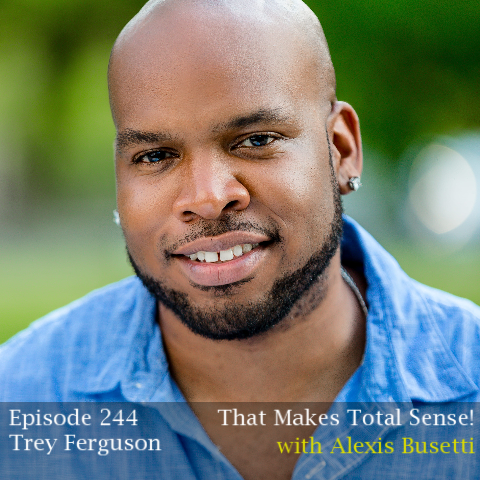
Okay, so I'm really excited tre to sit down with you today.
[00:00:48] Speaker B: I'm excited, too. I've been looking forward to this. And here we are.
[00:00:50] Speaker A: And here we are. And as is par for the course, I feel like people hear me say this often. I finished the book this morning, but you were my companion over a little coffee cake and a little coffee this morning. And for the last few minutes, some silence in my house.
[00:01:12] Speaker B: Oh, man. I like, I like being. Those are some of my favorite conditions for companionship. So I'm glad I was able to be there for you.
[00:01:18] Speaker A: You were. It was. It was pretty fantastic. Don't ask how the morning started, but anyway. But the rest of it, you know, has been pretty good. So I got your book, theologize and bigger homilies on living freely and loving holy. And first of all, I want to just say thank you for your voice in this book.
[00:01:41] Speaker B: I appreciate you saying that. Cause there are lots of people who do not necessarily appreciate my voice over the things I have to say. But no, I do appreciate you sharing that and taking the time to even recognize that there is a voice, there is something to say. Right. Regardless of whether or not you agree with all of the things that are said in that voice. I think that God gives us voices for a reason. And I appreciate you holding space for mine.
[00:02:09] Speaker A: Yeah, I mean, I appreciate you using yours. And part of what I want to say on this is, you and I are no strangers to the academy. Right. And so when you sit in spaces, often I'll say, I am really fresh. I feel like, okay, so pause for a second. This is the way I introduce myself these days, is how many days away I am from this m. Div. And so you are one of the first people that I will say, I am done with this m. Div. So it is like really fresh. I turned to my last final this week, but I will say congratulations, by the way.
[00:02:44] Speaker B: There we go. Congratulations.
[00:02:46] Speaker A: Thank you. I mean, I really. I mean, you know what it is like to, to go through that whole process. And so I'm like, you know what? Listen, I'm flexing everywhere I go. This is. This is the first thing I'm saying. But I would say my point in that is not just the flex, although the flex is there. My point in that is to say there's a recognition. I remember having conversations with other BIPOC scholars. So I'm. I'm mixed. Hispanic, but I remember having conversations with other BIPOC scholars and minoritized scholars. Right. I'm a woman, too, and there's this kind of. There can be, I think, a phenomenon that says, like, we know code switching is real, but it's. It's more than that in the academic space. I'm trying to kind of process this out loud, but it's like, I've had these conversations where it's like, if you don't write a certain way, and not just a certain way, but, like, over the top. Right. Like, we have to throw in all of these $5 words and we have to, you know, all of this to be taken seriously in the academy. And so one of the things I was reflecting about your book, as I. I was reflecting to my husband as I was reading it, is I said, trey is a scholar, but in this book, I don't. There's not any of that. There's not any of this. Oh, let me. I have to throw out all of these five dollar words, or I have to write this in a certain formal kind of way or whatever. And I think that, for me, as a reader, played into the whole concept of theologizing bigger. You know, it's like, we don't have to be put in this little, tiny academic space. Not that the academic space is tiny, but you know what I'm saying? Like, even the style of this in the academy, we don't have to do that in order for our theology to be.
To be respectable, you know, to be something that we can throw out there.
[00:04:34] Speaker B: Yeah. There's this pressure to perform a certain role, to meet a certain standard of respectability in certain settings. Right. And when you are minoritized in any way, shape, or form, whether that be by gender or by physical ability or by, you know, ethnicity or sexual orientation, whenever those things come into play, the impetus and the burden of meeting that standard of respectability is actually increased. Whether or not we, like, know it or not, you're already regarded with suspicion. And it doesn't matter what your self esteem is like at the end of the day, when you're actually doing this in community, your self esteem will only get you so far. It's the respecting of that voice that you led with earlier that is not always present. Right. But at the end of the day, for a lot of people, and, well, I don't want to speak for other people. I know for me, that's not really enjoyable. Right. Even if I am fully capable of meeting that standard of respectability, that I can write the papers with the right vocabulary and everything. No, I'm not having fun doing that. And having already been accredited and gotten the stamps and all that stuff, like, why am I. Why would I still do that? Having already proven that I am capable and that I do know what I'm talking about. Now, let's get back to what brings me joy, as Katie Cannon says, the work that my soul must have. And so one of the things that I do, and this is actually, like something I wrestle with on a regular basis. Right. Senator Raphael Warnock, who is also the Reverend doctor Raphael Warnock, writes about it in the divided mind of the black church, which I think. I think that might actually been his dissertation, his PhD dissertation, where we talk about this divide that exists between the academy and the church. At the end of the day, the reason I went into the academy is so that I could better serve the church. Right. And it doesn't make sense if I got to bring all these $5 words back to people who's really trying to make it through day by day. Part of theologizing vigor is okay, knowing that the world of $5 word words and all of these things exist out there. How do we connect the dots? How do we build a bridge between all of the things that exist out here in our head and what we must do with our bodies on a day to day basis, you know?
[00:06:39] Speaker A: Yeah, no, what I'm. I appreciate saying that so much, and, yeah, I'm. And I'm. And I'm grateful for it. So I just. I kind of just wanted to throw that out there to say, yeah, I mean, I can sit and read. I do often sit and read academic papers. And so, you know, part of what I. Part of what I want to affirm is to say, this brought me joy to read. Right.
This brought me joy to read. And I recognize that the medium is different, you know?
[00:07:10] Speaker B: Right.
[00:07:10] Speaker A: And I appreciate that because it brought me joy. It caused me to think. It increased my theological imagination. It made me want to push back in some places and all of the wonderful things that can be done in, like, a formal academic setting is done, you know, with your voice in this book. And anyway. And so it was really great. So, anyway, I just want to throw that out there at first. Um, I have a. I have a few notes, and this is like cheating. I kind of almost want to start at the end of your book, but I don't really. So keep that in mind. Okay. So keep that in mind. Okay. Because I want to start with the concept of imagination.
[00:07:54] Speaker B: That's beautiful. That's. That's the whole book right there.
[00:07:56] Speaker A: That's the whole book. But wait, but wait. So where you actually ended is where I hope we come back around to today. So you. You're looking at my face, and you know what I'm talking about, because we both read the book, right? So, anyway. But you know what I'm talking about. But where I want to start, though, I kind of would love to circle back around. Where I want to start is a term that was introduced to me, actually, in the academy, and I'm so appreciative, and I never heard it before. And that was theological imagination, which is a different. It's a synonym for the title of your book, um, in. In a lot of ways. But. But I would say when I first heard that term, a, I loved it, b, it scared me, and c, as you name in parts of your book, I thought, this is heretical. Like, there are circles that I could say just the phrase theological imagination, and people would automatically. People would be asking if I'm saved, like, what's wrong? You know, like, what's wrong with me? So, um, that was, that's my phrase, theological imagination. But I'm going to ask you, what does. What does that phrase mean to you? And in that, what does theologizing bigger.
What are some of the starting points for you there?
[00:09:05] Speaker B: Yeah. So when we talk about theological imagination. Theologizing. Theologizing big or whatever have you, what I'm really arguing for is that we would reclaim our humanity and our agency in this whole enterprise of God talk.
Some of us have intuited that God is who God is and what God is, and that we know all of these things through direct revelations that do not have any human fingerprints on them. And my argument is, at the end of the day, that's not really the case. Now, I say that, and it sounds heretical to some people, right? Like, God is revealed through God's word and everything. But if you look at even what the Bible is, it is God's word presented through the experiences and the stories of very real people. People are always wrestling with who God is and what God is. Is God a desert warlord who is paving the way for people? Is God love? Is God, all these things. The answer is yes to all of these things, depending on where people find themselves at any given point in time. And if there is any truth to what the author of first John says, that nobody has ever seen God, then we have to deal with the fact that what we are talking about when we say the word God, what that word evokes in our minds, is actually a product of our imagination, the constructs that are going on in our head. And that's not a bad thing to acknowledge. It can be scary, because then all of a sudden, we're introducing things like mystery. We're introducing things like humility and the limits of our own knowledge and understanding. But I think that's actually what the Bible invites us into. That is what faith invites us into. We're walking by faith and not by sight, right? Nobody's ever seen God. At the end of the day, all we have is faith, hope, and love. The greatest of these is love. But certainty does not factor into the equation. And so when we talk about theological imagination, we're naming all of the things that we carry into our constructs of who God is and what God is like. There's a reason that there are so many different denials. There are reasons that christians around the world cannot even agree on the number of books in our Bible. All of these things are constructs of people that are pointing toward a God that we will never know in fullness until the day of Christ Jesus return. Right? For we know in part, and we prophesy in part, when that which is perfect has come back, which is part we'll be done away with. And what I'm saying when I talk about theological imagination or theologizing is okay, knowing that this is the case, or having acknowledged, having been courageous enough to admit that this is what we're doing, can we be humble enough to do this alongside other people whose imaginations are maybe tinted a little bit differently than ours?
[00:11:44] Speaker A: Say that, because that is what gets me.
That is what opened up my theological imagination.
That concept that you ended with opened up my theological imagination probably more than anything else, because of this, because everything that you said prior to that is true. And you saw me, like, fist pumping and, like, I can't, you know, my body language. I, like, can't control myself when you're taught, when you're preaching like that, and all that's true. And I think I knew that there's a part I would say this in the theological. With the theological constructs that I was raised, those things are alluded to I don't think they are practiced very well in some of those settings. Like, we don't. We don't push the envelope. Like, we kind of say, yes, God is mystery. Yes. We don't really know, yes. You know, those things. And then we have a list of contracts that we have to say, or else it's, you know, outside of orthodoxy.
But can we theologize with people whose imaginations are tinted, as you said, differently than us? So I think those two things for me, one, that studying the Bible, wrestling with the Bible, interpreting the Bible, any of. And our experiences doing that inside of community, I feel like that, in my experience, was something that my communities gave lip service to but didn't really do. And this is what I mean. I don't mean that they're doing something malicious. This is what I mean. We gather together as a community, and then someone says, this is the way it is. So we say, we're doing this in community, and there are aspects. There are communal aspects there, but it's. But then there's, like, a voice who is kind of dictating, yes, you know what. What that is.
So. But actually, theologizing in community looks different, because then I get to ask you, Tre, as someone who lives in Florida, as a black man who you, who, you know, emphasize in your book, was raised to love your blackness as a man, as a father, as a father of teenagers, right? All of these things with your experiences in the academy, with your experiences in private school, public school, all these things. What does your do, your experiences and your imagination bring to this? And then you get to ask those things of me, right. My experiences and my imagination are different. They hold some differences. That was part of what I loved in the book, where there were places where I'm like, oh, my goodness. Like, I had never thought about this scripture in this way before, but Trey, with his imagination, brought that out. And it might be something that you've wrestled with, or it might be something that feels kind of obvious to you when you read it, or there's, you know, might be all these different things, but your lens, because of your social location, brings something to the text that I get to appreciate because I don't have that lens naturally.
[00:15:17] Speaker B: Yeah.
[00:15:17] Speaker A: And that, for me, was. Was the thing that I think opened up theologizing in ways that almost nothing else did. It's that communal aspect.
[00:15:26] Speaker B: Right. And I think it's actually a beautiful thing that we often lose in, like, our contemporary discussions, because the moment you start talking about things like social location, people will say, oh, we're going in a marxist direction. These are postmodern concepts and everything. And I understand the impulse to believe that because at some point we value this idea of objectivity in a way that I think was a mistake. I think it's an overcorrection. I think the solution to the multivocality of scripture and the diversity of our human experiences is not striving for an objective lens. It is community. It is giving people equal voices at the table. Right? And the reason I say that, because if we look at the book of acts in acts, chapter two, the outpouring of the Holy spirit is not such that everybody speaks the same language, that the truth of God is rendered in languages that people can understand. Right? And then if. I know you mentioned that you're mixed. Are you bilingual, by any chance?
[00:16:22] Speaker A: No.
[00:16:23] Speaker B: No? Okay. All right. But so I don't know. You know that, like, there's no one to one equivalency between language, right? Like, sometimes if you speak to somebody who is bilingual and they're trying to translate, sometimes they get hung up, be like, I don't know how to say this. And they have to construct an idea in a different way. A lot of times, the way a language is constructed is bound up in the culture that it represents. And so in that upper room, as people were speaking the gospel in languages that they had not yet known, so that everybody might hear it, there had to be some divergence in what was being communicated there, right?
When we hear that I am the bread of life, somebody whose culture does not really eat a whole lot of bread has to hear something different. Jesus might be the rice of light there or the yam of life there, right? If our english translation of John one, one says that in the beginning was the word, and the word was with God, a spanish translation might say, in the beginning was l verbal. Right. And even the implications of that are different, even though the same truth is being communicated. So I think the opportunity for us is there to sit with people who are sitting with the same God, that we are the same truth in ways that will land differently just because of where we are, where we happen to be born. And there's so much beauty in that, because if in the beginning was the verb and the verb was with God, then that means that God is action, which is actually affirmed in the story of creation. Oh, my gosh. I never looked at it like this. If God is. If Jesus is the rice of life or the sweet potato of life or anything, then that means that whatever it is you need to get by Jesus is that. That the truth is not bound up in the words, but in the word, in the verb, in the essence of God. And that because God is so powerful, right. Because God is omnipresent. Because God is not monolingual nor bilingual. God is not lingual at all. Because God is. I am who I am, right. There's an opportunity for us to get a fuller picture of who God is and what God is. Like. There's an opportunity for us to see God in higher definition each and every day. Like, you know, tvs were black and white at one point. Then it was fancy. We got color tvs, and you had rabbit ears, and sometimes you got to bang the side to get a clearer picture. And then before you know it, we got cable. We don't have that so much, but then you got hd, and there's a special core that gets in the higher definition. Before you know it, we got 4k tvs, and now there's eight K tvs and ultra high definition. We're always trying to see things more clearly. What if we took that same desire to see God more clearly each and every day that we do NFL games on Sunday? Like, what would that look like?
And I think one of the better ways we have to do that is with the humility. Like, oh. Like, my vantage point is limited, and it's only when I'm asking somebody sitting in a slightly different location, like, hey, what are you seeing over there? Wow, I didn't know that. I can't see that over here. You know, that we could start seeing God a little more clearly.
[00:19:18] Speaker A: Yeah, I know that. That was actually one of my favorite sections of the book. When you go into that in acts two, because, again, it was something. It's a familiar story. Right. Something that I had thought about before, but, like, just the way that you presented it, I was like, dang, he's right. You know, like that. Anyway, anyway, I loved. I loved that. And I want to. I want to take this. There's, like, a couple. There's a couple of chapters that I want to hit, Trey, because. Okay, I think it's. I think. I think you'll be okay with this. I laughed out loud a lot.
[00:19:45] Speaker B: Did. No.
[00:19:46] Speaker A: When I was reading this book, I laughed out loud a lot. And I had a lot of yes and amens. And anyway, I talked back to you a lot.
[00:19:56] Speaker B: I love it.
[00:19:57] Speaker A: Like, we were sitting in church when I was reading this book, but one of the places, because as we're talking about this with community and social location, even in acts two and looking at different, you know, asking for different people's perspectives. One of the things also that I think was. Was, and I don't want to, like, focus on things that were lost in my tradition, but it is part of how I view things now is. Is kind of, by comparison, a bit. But one of those things is.
Is history. So, you know, like in Hebrews, when the author talks about, you know, the. The cloud of witnesses. And one of the things that we have is not just our own contemporaries. It's not just that I get to ask you and you get to ask me, but it is our church for parents, you know, from all, you know, going all the way back. And you have a chapter that I think helps with the process of theologizing, helps with the exegesis of some texts if we kind of have this in our head a little bit, but also with just the understanding that we're not just asking each other in our contemporary times, how do you see this? How do I see this? But also, how was it seen?
[00:21:14] Speaker B: Right.
[00:21:15] Speaker A: How was it seen and read? And a lot of times, how was it heard right before things were written down, which many of us don't even really think about that much, that a lot of this was just oral. Oral tradition before, you know, scrolls and things like that. And you have a chapter where you talk about in house discussions. Yeah, this is black people business, which was my favorite. And this was one of the places where I laughed out loud, because I will say, I don't ever remember being directed towards me, I don't think.
But I grew up in a really wonderful multiethnic, multiracial environment, growing up in public school, and I heard the Kool aid quote all the time.
[00:22:06] Speaker B: All up in the Kool Aid. Don't know the flavor.
[00:22:10] Speaker A: Mind your business. Yeah, mind your business. Okay, so we've. We've talked about. So you talk about in house discussion, Kool Aid. What does this have to do with theologizing?
[00:22:20] Speaker B: Trey, that's a great question. And I think when we remember the boundaries of community, it actually helps us make sense of this sacred text of ours, these ancient scriptures. Because the christian faith is so large and diverse and everything, we have a tense. We have a tendency to read it through a universal lens, which is good. Right. But one of the things that I hope people wrestle with is that this stuff wasn't written to you.
It was written for you through the providence of God. It was written for our benefit, but it wasn't written to us. Right. If I were to write, like, if I were around the country in the olden days. We didn't have Facetime and all that stuff. And I'm traveling for whatever reason, and I wanted to get in contact with my family. A primary way that I might do that is through writing letters to them. And if you were to get your hands on those letters, you would understand a lot about how I viewed family and what that looked like, what love looked like to me. You would understand some of those relationships, but I'm not talking to you. And when we properly regard this with the right humility, I think there's a whole lot for us to glean. And it doesn't detract from what you're reading. It doesn't do anything, but it reminds you of how this thing works. And so there are a lot of times we end up being harmful when we universalize that which was actually provided in an in house context. When we look at Jesus disagreeing with his contemporaries and read that as a condemnation of all of the Pharisees, as opposed to the fact that there are lots of people within this second temple jewish context. Who wanted the same things, but disagreed about the exact mechanisms or methods of how to get there, then it makes more sense that, oh, yeah, of course, in the butt head sometimes, right? And it's not the Bible even gives us examples of pharisees who Jesus had good relations with. Right. We have, like Nicodemus, we have Joseph of Arimathea and all these things. And, of course, like, those are names that we could pull out. But to flatten it is that, oh, Jesus stands against the Pharisees. No, not even talking to you. You don't know what you're talking about. And I think a more helpful thing is, okay, if we were to look at some of these dynamics, can we recognize those in our same day and age? And if the answer is like, oh, yeah, there are people who are very close to the seats of not only ecclesial power, but political power, who often do so in the name of religions and things of that nature, then, oh, yeah, I think there is room for us to hold these people to account in a similar way to the person that we're supposed to be following does. And we don't have to call them pharisaical, because you're missing context right there. But what we can say is that we are actually harming people in doing that. That we are actually laying burdens that people cannot carry, making ourselves feel better in the process. And passing up opportunities to grow closer to God and to the vest of the power that actually separates us from God in the process. Right. And I think that when we tend to universalize these things, we actually end up universalizing contexts that shouldn't be universalized. So now you're acting pharisaical. What does that even mean? No, if you mean hypocritical, say that. If you, if you mean self righteous, say that. If you, if you mean all these things. And then when I point out to some people that, oh, Jesus was crucified by the Romans, and they're like, no, he was crucified by the jewish people because they're the ones who demanded it, I'm like, no, let's think about this for a second. Does it make sense that the jewish people could force the roman empire to do something that they did not want to do? And if the answer to that is no, then why is it written that way? And it doesn't, it's not harmful to admit that, oh, like in the midst of these in house discussions, that these stories are being told in a way that reflect the very real tensions that existed, that's not harmful to acknowledge that I'm restoring, again, the humanity to these sacred traditions. Because at the end of the day, if you were to take a conversation that happens in a barbershop on a Saturday morning, right, if you were to take the conversations that are recorded between Malcolm X and Martin Luther King when they were not getting along, sometimes when Martin Luther King is being referred to by Malcolm X as Reverend Chicken Wing, and you take and you go and repeat all those things, that is the sacred story, as opposed to people wrestling with what self definition looks like, what it looks like, looks like to live in the fullness of what God has for them, then we're missing opportunities to learn about God and emphasizing the actual, like, things that we're trying to work out as people. Right? And so when I talk about in house discussions, what I'm saying is, no, like, this was a conversation that described a situation in a particular point in time. What we're really after is what this says about a God who exists outside of time and for this moment broke into time for the, for the express purpose of our salvation.
[00:27:13] Speaker A: Yeah, yeah. I mean, that there's, oh, my goodness, there's so many different places that we could go with that. But I think one of the things is that I just want to acknowledge, and I think for me, even if I, if I kind of back up and I take myself and I say, okay, 2003 Alexis, or maybe even 2013 Alexis, if you said to me what you what you asserted at the beginning of this segment of this wasn't written to you.
I am all over that. Like, I'm real mad about it.
[00:27:54] Speaker B: Mm hmm.
[00:27:55] Speaker A: I'm offended. I'm mad. I probably won't listen to anything else you have to say.
[00:28:00] Speaker B: Right?
[00:28:00] Speaker A: This is me. This is me.
Because this is not how I was discipled.
[00:28:08] Speaker B: Right.
And I hear that it's funny because in the earliest stages of me writing this book, I was sending out chapters as I was writing them to people, somebody that I love and dearly respect. Read this chapter, and it was like, yo, this line right here is, like, I kind of get what you're saying, but, like, it's hitting me in a certain way. And I actually, like, that was the softer version of me saying that, because at the end of the day, I understand what you're saying, and it makes sense. Even the tradition, the traditions that I grew up in, like, oh, wait, what are you saying when I say that? But I don't think it's a problem for us to sit there and be like, oh, wow, you're right. My name is written in the Lamb's book of life, but it's not written in this book right here.
It's not.
I'm not being addressed right here. Some of. Some of these letters, some of these things actually have addresses listed in here. Oh, I'm writing to the church in Sardis. I'm writing to the church in Rome. I'm doing it. You wasn't there. It's not you. Right. It is specifically situating itself in a context, in a historical context that we are not a part of. And I think when we acknowledge that, it actually helps us to understand what it means that God broke through the spacetime barrier separating eternity from time itself in order to enter into our story. That speaks powerfully to me that this is not just something that happened in a vacuum and in our imagination. And, no, these people were struggling. And their testimony is that God put on flesh and bone in the person of Jesus Christ to help us figure out what we could not figure out on our own.
Now, when I say it's not written to us, it means that, okay, certain of these stories, like, no, it's not. When I say it's written for us. If these people were bold enough to believe that about the creator of heaven and earth and say that you were invited to join us in this endeavor through baptism into the life, death, and resurrection of Jesus Christ, that's inspiring to me. But first, we got to be honest about what it is that we're reading, it's for us, but not always to us.
[00:30:05] Speaker A: Yeah, yeah. No, I think you're right on in that.
I'm going to hold back on some of the things because I want to get to other. I feel like this, this discussion, for me, if we were, if we were each just having a cup of coffee and not these microphones, listen, we're going somewhere different, but we can go where you want to go.
[00:30:25] Speaker B: Because at the end of the day, I recognize that whatever tensions people are feeling, you're not feeling that alone. Right. I don't think that I am the miracle whisperer or trailer where everything is going to make sense just because I say it in this deep voice of mine. Like, no, I understand that at the end of the day, it's always going to be some of these things. I'm gonna be right. I'm gonna be wrong about a whole lot before it's all said and done. Like, I will. This is how it goes. But I hold these things humbly for the simple fact that I believe that it's only when we have these conversations that both of us gain this clearer picture of God. You know, the eye exam, when you sit with the optometrist and they flip the lens, they're like, better, one or two. It's in these conversations, like, okay, one or two. Which one allows. See a little more clearer.
[00:31:08] Speaker A: Yeah. Yeah, I like that picture. I like that picture. I think I will say, to sum up where I don't want to go.
[00:31:14] Speaker B: Yeah.
[00:31:15] Speaker A: To sum up where I don't want to go, I think it would be of benefit to the christian community.
And I will say this.
I'm going to start by using an analogy.
We are an adoptive family. One of our kiddos is adopted. And I think adoption is a very, I have experienced adoption as a very complex, complicated endeavor. Right.
It involves a lot of grief, it involves some joy and a lot of parenting, which is hard no matter what.
[00:31:57] Speaker B: Right.
[00:31:59] Speaker A: And I, and I think it can be a way in which we attempt to live faithfully as christians. Now, I say that, and years and years and years ago, I heard someone say, I was listening to a radio program and someone said, I don't believe all christians are called to adopt. And I would say, yes, yes, and amen to that. I don't. I actually, I actually agree with that. I would not go and say, every christian family out there needs to adopt. I don't think so. But I think it makes us a good community when we, for example, surround adoptive families that we're a part of. Right. And we say, how can I help? How can I support you? And we even just try and think well about this. You know, think. Think in, you know, try and think about the adoption process in a way that's, like, realistic and helpful and, you know, these. These kinds of things. So. So I'll say that. Now, here's what I'll say.
I'm a seminary graduate. Flex again, Trey. But I don't think every Christian is called to go to seminary.
[00:33:07] Speaker B: Right.
[00:33:08] Speaker A: I don't. I don't think that. I don't think every Christian is called to vocational pastoring. Right. I don't think that. Just like, I don't think every Christian is called to adopt.
[00:33:19] Speaker B: Right. Um, I don't think every seminarian is called to be in seminary. I don't think every vocational pastor is called to that.
[00:33:25] Speaker A: Right. We're being right. Right. Right.
But what I do think is that as a christian community, we might do better to, um. To think well about some of the things that maybe. Can we put in parentheses some seminaries are putting out there about biblical scholarship, about theology, about things like this, because I think part of what makes the things that we just talked about difficult and. And offensive sometimes is because we've been thought, we've been taught. Okay, this is real. I blame the reformers. Okay, I said it. I blame the reformers. Sola scriptura. You know, it's like, well, it's plain and it's clear, and it's this and it's that. You're like, no, it's not. You know, it's always like, I don't think every Christian is called to go to seminary, but when we just put our ear to the ground for a second and listen to biblical scholars who say actually these things, that. I'll give you an example of something.
It was an Old Testament class, and professor just throws out, like, the Torah wasn't written by Moses. Oh, my goodness. Like, you know what I'm saying?
[00:34:32] Speaker B: Like what?
[00:34:32] Speaker A: But it's like. But no, Tre. It's clear, and it's this and that, and you're like, okay, not every. Not every Christian is called to go to seminary, but if we would just give credence to the idea that the Bible is complex, right? Kind of like a doctor. It's complex. It's complicated. It involves a whole lot of things inside of it that we would do well to think better about. And that doesn't mean everybody needs to learn Greek and Hebrew. I don't think that. But I think, you know, kind of in a similar way, it's like, I'm not asking every Christian to come and live in my house for a month, so they kind of understand what adoption is. No, none of that. But, like, put your ear to the ground, you know, and like, let's. Let's pay attention. Maybe I'm, you know, you're not a seminarian. Pay attention to what are. What are biblical you scholars saying about this text. You don't have to know everything. You don't have to read all this stuff. But I think it would cause us maybe to step back as a community and maybe not be offended when someone comes out and says, this wasn't written to you. And we say, okay, tell me what you mean by that.
[00:35:36] Speaker B: Yeah, absolutely.
[00:35:37] Speaker A: I may not be able to understand, but tell me what you mean by that. Or the Torah wasn't written by Moses. Okay, explain to me. Help me understand what you mean by that, because in my Sunday school class, this is what, you know, they taught us. So help me understand I, what you mean, or, you know, whatever it might be. So that kind of maybe encapsulates the places we don't necessarily have to go, because I have all sorts of things going through my. Going through my head about that. But it's like this biblical scholarship piece, I think is very beautiful and wonderful, but sometimes we kind of, like, put it to the side or discount it or whatever, because maybe we don't understand it and we think, no, we. And I do believe in, like, the priest of all believers and all this stuff. Like, I believe in, we have connections with God directly and, you know, all this kind of thing. And I also, also understand now more that the Bible is a really complex sacred text.
[00:36:26] Speaker B: Absolutely. And I think part of that, like, when I talk about theological imagination, I'm talking about theologizing, right. And then the chapter that you even mentioned where I end up at. And we get. We can get there eventually again or whatever. But what I call salvation, a rehumanization project. And I talk about how we are stripped of our imagination systematically. And I mean that in a very real way. Because if, like, when you talk about the authorship of the Torah, right. I don't have to go into the corridors of academia to illustrate that point. I could take you to the actual book, right, where it says things like, Moses was the most humble man who ever lived, and that presents an immediate problem. Like, okay, if Moses wrote that, is he really that humble? And if we understand that, like, hearing that this was written by Moses is really about the fact that oh, this is an oral tradition about the person of Moses, the central prophet of the time. That actually makes sense. It's not standing in conflict. We are honoring the tradition of a very real ancient israelite people from whom the jewish people that we now conceive of are descended. Like, no. We're restoring the humanity of the Bible that allows us to acknowledge our own humanity. I think that's beautiful. A lot of times we try to divorce ourselves from humanity, and we look at this. Some of us have this escapist christian faith where we're looking forward to just getting to heaven. It's all about getting to heaven, except we think about the fact. The good news is that the God of heaven came down to earth and said that we are to pray on earth as it is in heaven. We're to cherish this thing that we've been given right now, the fullness of our humanity, that God entered humanity, that Jesus was fully God and fully human. Why can't we acknowledge all of the complexities of humanity? That Jesus hungered and thirsted, that Jesus went into the wilderness and was tempted, that each and everything that makes life difficult, God is intimately aware of because of Jesus. That's a great story, and that's something that we need to own the fullness of. And so when we start talking about, like, the complexities of scripture and everything, I get why it's uncomfortable because, like I said, and I'm ready to blame the reformers with you to an extent. Right. It's not all their fault with some of it. Yeah. But I think that the acknowledging the complexity is really an affirmation of the fact that life is messy. Life is hard.
And it's a miracle that enough of this messiness was preserved for our consideration, our reflection, our understanding of the character and faithfulness of God for as many thousands of years that it has been in these sacred texts, and that we might not be doing ourselves any favors as we try to remove the human fingerprints from this ancient, rich tradition, that those human fingerprints are actually there for our benefit.
[00:39:06] Speaker A: Yeah. Yeah, Trey, thank you for that. Thank you. Sorry. Thanks for letting me kind of get it off my chest. And then we can. And then we can move to a space that I think is related.
This is the one. Now, I mentioned offline, before we hit record, that I chatted with your friend Scott Coley.
[00:39:26] Speaker B: Yeah.
[00:39:27] Speaker A: Just because of how the podcasting world works and publishing world works, I think your episode is going to drop before his. But anyway, when it comes back, I'll re put in the show notes as Scott's episode when I have the link for it because I think it's going to drop later. But we talked like, we talked like a lot about creation science in that episode. So just teaser for people who are going to listen to scotts. My husband is a PhD level research geologist, so this is always like a real fun conversation for me to have. But im wondering if you can do me a favor.
You have a copy of your book, right?
[00:40:03] Speaker B: I do.
[00:40:03] Speaker A: Like next to you.
[00:40:04] Speaker B: Yeah, I got a few of them. Yeah.
[00:40:06] Speaker A: Can you read the tweet out loud for chapter four? There is an arc in Kentucky.
[00:40:12] Speaker B: All right, all right. Let me get there. Let me get there. Oh, lord.
Okay.
[00:40:16] Speaker A: It's related. Can we say this is related to the conversation anyway, I don't have a good segue for this one. This is just one of my favorite chapters.
[00:40:22] Speaker B: All right. If you'd be going to Ken Ham museums, don't be in a hurry to tell nobody to wait for the facts. You sent this one out, beloved.
[00:40:31] Speaker A: You sit this one out beloved.
[00:40:34] Speaker B: Yeah. And I mean that from the heart. I do.
It's okay.
We'll get you a court side seat, but you need to sit. You need to sit down. You need to sit down. You can watch real close, but you, you're not on the court for this one. Yeah.
[00:40:46] Speaker A: Listen, listen. I could not continue myself when I read, when I read that at the beginning and I looked this morning when I was closing that up. I have some, I have quite a bit of dog ears on this book. And I couldn't figure out maybe you can see it, Trey. I couldn't figure out why I had this big space right here. Like, and I was like, oh, that's because I just must have flattened out the book at the beginning of chapter four. Like, I just, like, I just rested it here, I think, because I knew I was going to want to come back to it now it's permanently kind of etched in the spine of this one.
This was one, this was one of my favorite chapters. So tell us what, Trey, what does Ken ham have to do with waiting for the facts?
[00:41:32] Speaker B: Because, so a lot of the book is built around me weaving, like, theological conversations and stuff with the way that we approach the world in general. Right. And the facts that we're willing to assume about faith versus, like, when it comes to matters of justice, how all of a sudden now we need to, like, wait for certain facts. Like, we can't call a bad thing a bad thing until we know every single thing about it. But whereas, like, creation science is predicated upon us assuming that this is a fact and then waiting for the evidence, like, later, it's. I was like, oh, there's. There's a lack of consistency there, right? And so that tweet is me tongue in cheek, being like, yo, this is how you view this. And then when it comes to this, right? Cause at the end of the day, how you feel about the arc is not really gonna impact how you show up in the world. It really won't. Right. But how you feel about life in terms of, like, oh, is shooting people in the back as they're running away from you? Is that bad? Right? Like, no. How you feel about that does impact how we show up in the world. So I'm like, oh, if we're comfortable right here, and. And all of a sudden now we're fine with nuance, and you need to sit this out because it's not that helpful. But when we're talking about Ken Ham in general. Right. What my argument is, is that. Answers. In Genesis, Ken Ham's organization builds itself as an apologetics organization. They are there to help people defend their faith in Jesus.
And the question that I want to put forward before everybody is, if we assume that everything that Kim Ham. That Ken Ham believes about the ark, that everything the Bible says about this ark can be assumed to be scientifically and historically true, what does that tell you about Jesus of Nazareth?
What does that tell you about an infinite and incorruptible God putting on finite tude and corruptibility in the human body, in the person of Jesus? Are we letting the facts of our quote, unquote, faith distract us from the substance of our faith?
You see, if the ark is really telling us about God's faithfulness and preserving an element of humanity in spite of our own sinfulness, because all of those elements are there. The reason that the ark is there is because God recognized that what humans and the sons of God, if there is any truth in, I think, Genesis five, he talks about the sons of God reproducing with the children of man.
[00:44:02] Speaker A: It's a weird passage, man.
[00:44:04] Speaker B: Yeah. Yes. It's a lot of weird stuff going on here, right? But if that's what precipitates all of this, then what the ark is telling us is that even in spite of the worst that we have to offer, that God is faithful enough to preserve even a fallen humanity, and Noah's not particularly righteous. If we look at the story immediately after all the water subsides, he gets drunk, is cool to brown all the way there. As a matter of fact, Scott talks about that in his book ministers of propaganda. Right? Like how drunk about that too, immediately starts cursing is his descendants and everything. Like, no, but in spite of Noah's character, in spite of the falling as of humanity, God is faithful right there. And we could take all of that. And that's the same story that's told in the crucifixion and the resurrection, that Jesus takes on the worst of what humanity has to offer on the cross and is faithful enough to get up again. That's what the love of God looks like. That is consistent there. It doesn't matter if there were dinosaurs on the ark. It doesn't matter if any, like all of that stuff is actually distracting us from the actual truth. And when I talk about that, like, oh, if you go to Kenhan museums, don't be talking about, no, wait for the facts. Like sit this out because you are distracted by the facts. You are focused on factual truth instead of practical truth. And what the Bible is getting at is wisdom and practical truth. Who is God? What is God like? If God already promised never to flood the earth again, then why am I spending all of my time bolstering my faith in God? What happened during this flood that we already know isn't going to happen again? What is God doing in the here and now? If time is irreversible, if we are still living in the story of God, then shouldn't we take the practical truth of the faithfulness of God, of the provision and the protection of God and ask ourselves, what does that mean for how God is showing up in the here and now? What type of lives are we living and are we actually doing anything for our faith when we build arcs in Kentucky?
[00:46:01] Speaker A: Okay, I'm gonna, I'm gonna, there's not a pushback. I think it's an affirmation. But when you talk about how we feel about the art doesn't make a lot of difference in how we show up in the world.
And I think, I think, yeah, but it does in the ways that you're talking about. Right. Like, it does because, because then we end up, this is so, this is so ridiculous. But we still, we still joke about it when people talk about putting, putting God in box. That was the thing that we said in college, don't put God in a box. Yeah, and my husband changed it to a barrel. Don't put God in a barrel. So now that's what we say in our house. But when you, but when, but when you have real strong feelings about the art, then we put God in a barrel. Right. And that's like the whole antithesis of what you're trying to get across in your book. And I think with your voices, don't put God in a barrel. Like, we can't. You know, we're not trying to do that. And so.
So I think, you know. Yes, you're right. It does affect, though, how we. How we show up in the world because we put God in a barrel. And then it. As you. As you point out, all of these things we say we.
Becca McNeil, in her first book talks about certainty worship, and I think that that's how things like the Ark encounter turn us into certainty worshipers. And as you point out in this chapter, then we become a certainty worshiper, and then that affects how we show up when it comes to justice, because we have to be certain of, you know, in our. You know, we have. We use that as an excuse.
[00:47:45] Speaker B: Yeah.
[00:47:46] Speaker A: Right. We have to be certain about what happened before we can make any sort of action regarding the injustices that.
[00:47:55] Speaker B: Yeah, I actually love how you presented that, and I think that I don't. I don't have any problem agreeing with that because, like, my argument there is that, like, oh, the facts of the actual arc won't actually, like, impact. Like, okay, if I believe that Jesus got up, that impacts how I encounter the world, right?
[00:48:12] Speaker A: Yes.
[00:48:12] Speaker B: If I believe that this happened for this exact amount of days and literally this many amount of animals and stuff on there, like, that doesn't have the impact. But if, like you said, that becomes the non negotiable. Right. Like, this is what my faith is anchored in the facts of this situation. Like, yeah, you're right. That does impact how. And then anybody who has a different view becomes somebody that we can't trust and all of these things. Because, like you said, we were worshipping certainty at that point, and certainty, I don't think it'll ever feed your faith. I think we're kind of locked into a different sort of situation at that point. Right. So I agree with what you're saying. I appreciate you bringing that to the fore here.
[00:48:49] Speaker A: I think that needs to be a tweet, certainty and gonna feature faith.
[00:48:53] Speaker B: Yeah, I think it probably is a tweet. I might have said something like that before. I think. I think it might. I gotta search my record. I tweet a lot. I tweet way too much.
[00:49:01] Speaker A: But it's. Right. Certainty isn't going to be. Isn't going to feed your faith. And I think, you know, as I reflect on my own experiences growing up, I think I now, a lot of this is personality. As I'm reflecting on some of these things, I'm not blaming, you know, my home, the church I grew up in. I'm going to blame the tradition, you know, all that stuff. A lot of it is my personality. I just like things to be done the right way, Trey. I mean, you know, it's. And sometimes around my house, ask people who live here. Don't really ask them. You know, I'm like, just do it the right way. Like, what's so hard about that? Like, can you just. Just do it? Just do it the right way. Like, and anyway, um. And I like that. And so, and so part of it is certain, if I. If I believe what you just said, that certainty isn't really going to feed my faith.
This comes as a stark contrast to what my personality kind of naturally emphasizes for me, which is that certainty is what feeds my faith. Like, my faith is built on certain things. Like, a hymn just came to my head. Right. You know, um, on Christ, the solid rock, I stand, you know, like. Like my, my. Now Christ, yes. But all of these other things. How many animals were on the ark? Not.
This is not included. So, so, no, I'm with you. I think we're both with each other in that space. But my. My personality, my natural bent is that certainty is kind of what makes my faith.
And when I have those things, then I can. I can kind of breathe a sigh of relief, because whatever I read, whatever I experienced, that is what it is, and I can. I can breathe a sigh of relief inside of my faith. But that actually isn't. That actually isn't how I want to live as disciple. How I want to live as a disciple is, um, is. Is how you just said. Okay, okay, I got, before we get back to the imagination part, let's go with this.
Your discussion. I'm sweating here because I'm still processing. This was one of the places where you were my companion this morning over coffee. So I have not slept on this yet.
[00:51:07] Speaker B: Okay. Okay.
[00:51:08] Speaker A: Um, your discussion on. And I'm thinking of this because one of the things that was real certain in my life was sin, right? And so your discussion on lies and sin tre, I'm feeling like the mind blown emoji over here. And so I don't even have an, I don't even have enough in me to introduce the topic. So I'm gonna have to rely on you for this, because I'm still kind of going, okay. Yes. And amen. And also. Huh. Like, help me.
[00:51:42] Speaker B: Yeah.
[00:51:43] Speaker A: Help me process this, because this was. I'm gonna see if I can find the place where I. Like. I know I don't. I don't always reference books quite as much like, these direct. These direct things like I am today, but this was just one of these, like, okay.
Ha. Okay. This isn't the place I was thinking of, but let's go here for a second.
Okay.
I'm on 148. In the christian tradition, we tend to read the serpent as evil. That makes sense. The serpent had bad intentions. His goal was to misrepresent the character of God. The same God who created a self sustaining paradise for humanity to enjoy in the fullness of the divine was recast as a tyrant in a matter of moments by this crafty creature. The same God who let two grown adults live rent free and roam around butt naked, eating whatever they wanted from a garden they didn't plant. Sounds like a stingy control freak. When the serpent tells the story that mischaracterization is evil, where harmony, unity, and wholeness exists and a conscious decision is made to destroy that we've witnessed evil, evil is the intention to present a barrier to wholeness.
All evil is sin. Not all sin is evil.
This is one of the places. But I think you had. I feel like it was maybe a few chapters right there in a row where I was kind of like, okay, Trey. Like, I'm tracking and I'm also, like, struggling. So help me.
[00:53:13] Speaker B: Yeah, so it's funny. That's chapter 14, living in the matrix, which was my personal favorite chapter to write. Like, I was really geeked about that. And you're right, because it made me.
[00:53:25] Speaker A: Want to rewatch the Matrix.
[00:53:26] Speaker B: By the way, it's a dope movie. There's so much to mind, especially, like, yeah. When you think about it like that, when you get to theologizing through movies and everything, but chapters 14, 1516, and 17 make up the last section of the book, the faith that shapes tomorrow. And so, as we're struggling right there, some of it is. Is intentional. Right? Like, I try to structure the book sort of like a swimming class. Like, we start dipping our toes in. In a certain area, and then we keep on getting a little bit deeper. But my argument here is that we have a fundamentally malformed understanding of what sin is.
Right. And so when we talk about being sinners saved by grace, we read wretchedness into ourselves that maybe God isn't really calling us to.
The fact that we are saved from sin suggests that it is a condition that we did not necessarily take on willfully. And yes, it has the ability to damage us in very major ways. That's why we need to be saved from it. But sin is just a reality. It is the air we breathe. That's a quote from the matrix when he talks about the matrix. This is the air around you, right? But it is everywhere. Because we live in a world that is shaped by sin. And when I say that not all sin is evil, a lot of the things that we are doing are sin, but we're not doing it on purpose. It's not like we wake up and decide to sin all the time. Something, oh, my gosh. I didn't even. I didn't even know that that was outside of God's will. I didn't even know that this was bad, that this is harming the people that I love. I didn't know. And that's not what evil is. Evil is actually a conscious decision to do those things. An evil person is one who was hell bent on destroying destruction. Right? The thief comes to steal, kill and destroy. I have come that they might have life and have it more abundantly is what Jesus says in John, chapter ten, verse ten. And so I love the Garden of Eden, that story in Genesis, chapter three, because it speaks of the character of God and creating something so wonderful, so sustaining, that there is no lack, there is no need, that everybody's needs are met, everybody is existing in harmony. We don't have any hierarchy between man and woman. They exist as community. As a matter of fact, the first time we find out that there will be enmity between man and woman is a result of the sin that is introduced by the evil of the serpent. It's not until we start getting twisted ideas about who God is and what God is like, that sin is introduced into the picture. And so one of the things, I think we even read the curse wrong sometimes when it's like, oh, like, because you have done this, you will do this. I think what God is actually describing is the consequence of us believing the wrong things about God. Like, no, I didn't want this. Now you're never gonna be able to trust me. And when you don't trust me, you end up trying to do things yourself. And when you do things yourself, this is what happens. You can't do what I had set up for you. You're not capable. You don't have what it takes. Like, you don't know how this thing gets hooked up the right way. Right? And so it's so interesting when you break down even the curse that God pronounces to look at the events that transpire. There's a serpent speaks to a woman and the woman speaks to a man, the man who was there to tend the garden. And as God pronounces these irises, he says that there's always going to be enmity between the serpent and the seed of the woman, and that the serpent would strike at the hill, but that the hill will crush the head of the serpent, because the serpent right there in introducing that distrust and lying about it now all of a sudden, like, you never be able to trust each other, there's going to be fear, like, oh my God, I remember what happened the last time our past crossed. I'll never be able to trust you again. They were fine before then the woman felt fine listening to the serpent. There was community right there, but having this wrong view of that. And then the moment the woman speaks to the husband right there, and then the husband, when he's confronted by God, says the woman, you gave me right where there was community and union before. Now, because we believe the wrong things about God and everything falls apart now it says there's going to be enmity between the woman and the man and that the desire will be for community, but there's always going to be strife right there, because the man's going to remember, oh God, it's the woman you gave me. Because the man doesn't want to own up to what he has done in this situation. And because of that distrust, the same guardian that's applied all of the man's needs before, without toil, without struggling. Anything says that you will be toiling. You won't have to work at this. Like you'll never have the same relationship that you had with the ground before. Because all of this, do you understand what happens when you don't trust me, when you don't believe that I have your best interest in mind, right? And that's what the serpent had in mind the whole time. His goal was to introduce that distrust, to create that break between creation and creator.
And the moment that happens, that evil intention is fulfilled. Now we're bound in sin. And all of these systems of hierarchy of distrust, of this scarcity mindset, where now we have to compete for resources and I have to hoard these things, because if I allow you access, then I'm not going to have what I need in everything. That is what sin is and everything the result from that. Sometimes we're really just trying to take care of the people that we love the most, not knowing that God had actually set us up so that God would take care of everyone, we wouldn't have to do all of those things. The sin that we need to repent of is not necessarily an evil intention on our behalf. It's the result of evil. Now, there are evil people.
There is evil in the world. There are people who wake up like, nah, this is how I'm gonna play this. Because x, y, z. And we need to be able to call that that. But I think that there is a mercy that we misunderstand when sometimes the motivation behind the salvific act is one of pity.
God, forgive them, for they know not what they do.
Yes, the reality of crucifixion is evil. The fact that, oh, we will torture these people to death in the most humiliating fashion possible, that is evil. But then there is another way where, like, oh, that is still sin. Because we're sitting here walking along. We didn't stop this a ways ago. We've been going along with this the whole time. That part is sin. And father, forgive them, for they know not what they do, but what the power of God is able to do is overcome the worst of our sin and our evil. Because even after having been subjected to that sort of life and that sort of torture to death, Jesus gets up from the grave with all power in his hands, says that whatever the worst you have to offer, whatever sin you have, whatever evil there is among you, pales in comparison to the power of God. And the power of God is such that it is made known to you in the most merciful and kind way possible, that even as you are dishing out the worst that you can, my thoughts for you are forgive them, but they know not what they do.
And so as we're looking at that story, like, I think it's important to. To actually pin. Like, Eve wanted wisdom. That's a good thing.
But she listened to somebody who was not telling the truth about God, God who wanted Eve and Adam to have wisdom, and said that there is a way to do this. They listen to somebody who was not willing to tell the truth about God and went about this the wrong way, and there are consequences behind that. It's not like, God. Like, oh, this is what you deserve. It's like, nah. Like, the same way I have a daughter who just started driving, right? I'm like, look, I'm not gonna be able to be in a car with you all the time, but you need to, like, drive carefully. Like, the way I showed you. Because there are consequences out here. Not only if you drive distracted, you could wreck in a car, and on top of that, you share the road with other people. Sometimes we have to account for the fact that other people don't know how to drive. Good, baby. And you can't do that if you got the phone mounted and you try to be on facetime at the same time. Right? That's not me pronouncing a curse on you. Oh, because you did this? You gonna flip my car? No, I'm still paying insurance on that. Why would I want that? That hurts me.
But I do have to, like, be honest about the fact that sometimes there are consequences to the way that we live. And so it's best if we try to stay away from sin. It doesn't help anybody. Even if in the moment, it feels good, in the moment it seems good. The moment. Oh, man. I got this under control. That should the worst come to, nobody gets to enjoy it. This.
[01:01:44] Speaker A: Thank you for that.
Yeah, yeah. I think as you elaborate on that, what comes to the forefront of me as I'm still kind of processing those few chapters, and I think this is gonna. This is gonna bring us around to the place I was hoping where we could. Where we could start to wrap things up is, you know, the. The lies that we believe, the lies that we believe about God, the lies that we believe about ourselves, the lies that we believe about each other.
And I think that there is a. A natural progression as we grow, as you talk about that begins to erode at our imaginations for various things, whether it's theological or otherwise. You know, as you mentioned, I don't play with cardboard boxes anymore either. Right. But, you know, even. Even my kids are older teens and tweens. I feel like if we had a refrigerator box that was just dumped on our porch today, I feel like, give them about five minutes. You know, I might get. I might get a couple of eye rolls, and then about five minutes, that thing's on the back patio, you know, getting torn up and cut and drawn on and, you know, all of those kinds of things. Um, but, you know, but the lies also erode at our imagination. And you talk about some moving. I mean, not fully moving from theological imagination to this other part at the end of your book. So, obviously, they're related.
But when you talk about, we just.
We just inherit the systems, you know? And that inheritance of systems also erodes at our imaginations. We can't think about possibly how there might be a better way or a different way, even of living together, you know? And again, I think for, for people who might share my personality, aspects of my personality type. One simple example I think of, my girls are 14, and when they were babies, we have. We have twins. And when they were babies, a friend came to visit to help with the babies for a little while, and they were napping in the car one day. We had gone and run some errands. You know, they were. They were little bitty. And we came back inside. Trey, you're going to be like, I don't know why they let you take these children home from the hospital, but they did. I still. I still think there should be a test or something anyway, but. But they, you know, we come home from running errands. They're asleep. We bring the, you know, the car seat slash carriers in, and I say, oh, I hate this part, because as soon as I pull them out to transfer them to the crib, they're going to wake up. It happens every time. And my friend, who did not have any kids at the time, looked at me and said, why do you have to transfer them to the crib?
And it was like, it was like she had told me, I don't even know, like, it was like she had told me grass was purple or something. Like it was so far outside of my tired, postpartum, new parent, you know, realm that I was kind of. It took me a second, and then I was kind of like, oh, snap. I guess I don't, you know, like, these are, like, safety graded, you know, like, before we left the hospital, they did check and make sure that they could, like, breathe properly inside of the car seats. They did, you know, all of this, and they were months of. A couple of months old, I guess, at the time. So I knew that we would just been running errands and they were safe and breathing in the car seats. We brought him in in the car seats. They're sleeping, like, on the dining room floor in the car seats. And I thought, oh, man, I'm going to have to transform. This is going to be awful. And she just says, why do you have to transform? And I was like, it took me longer than it should have to say. I guess I don't, right? But I had no, my new parent, I had no imagination to letting them sleep in the car seats.
[01:05:39] Speaker B: Yeah.
[01:05:40] Speaker A: Just setting them there. They were safe, they were fine. But I had no imagination for just letting them sleep in the car seat because my routine, kind of the system that I had made for myself, says, when the babies are sleeping, if we're home. They sleep in the crib.
[01:05:55] Speaker B: The crib, yeah.
[01:05:56] Speaker A: You know, and that's a silly example, but I think on a larger scale, we do lose that imagination just because we're used to doing things a certain way. So what I want to ask you to explore on and kind of riff on in the last few minutes that we have is this. You alluded to it earlier, the rehumanization.
And so when you talk about Nicodemus and this concept, which is, gosh, one of my favorite places in the scriptures, and this concept of being born again, that's one of those places in your book where I always kind of thought about it in this way, in this certain way, but it never had connected imagination in the way that you did when you talk about rebirth. So can you expand on that a bit?
[01:06:44] Speaker B: Most definitely. I love the car seat story, the car seat illustration. And one of the things I got a similar story I'm going to share in a moment that points out that it's not always that, like, oh, we're silly for thinking these things. I'm like, wow, why did I think of that? Sometimes the systems that we inherit serve somebody well in a certain time, right?
I knew a friend who had this really great meatloaf they would make all the time. I got to watch make it, and I asked was like, oh, I noticed you always cut. You always cut it at the ends. And, like, why do you do that all the time?
But what she said was, oh, you know what? I'm not sure. It's the way I've always seen my mom do it. And I was like, it's really weird, like, wasting me, like, fit this all in one little situation. She asked on Tom, and she was like, yeah. So I asked my mom how she always cuts the end of the meatloaf. And what she had communicated was that, oh, the dish that I used to cook the meatloaf in wasn't that big. And so we had to cut it to fit it in the dish.
Now, when we got to a different station in life and we had bigger appliances and we had bigger dishes and everything, this grew, and we were still cutting the meatloaf to fit a dish that was. We were no longer using.
What I'm saying is, there are so many different ways in which we are still operating by old paradigms. Despite the fact that the world around us is changing, the universe that we live in is expanding at this very moment. It is still expanding. We're still doing things to fit certain situations that are no longer the case.
And so if the God that we serve is indeed living, we have to ask ourselves what that means for this expanding world around us.
And when we talk about this, Jesus says, oh, you have to be born again to see the kingdom.
That's what that is.
You have to be able to see things with fresh eyes, right? Babies vision actually isn't that good when they're born. It has to come in. And that's why babies got the odds just be going anywhere. They don't know what they're looking at. They can't focus on nothing. They don't got no neck strength. Everything's all wobbly. Babies just got drunk goggles. That's why when they first learn how to walk, they're stumbling everywhere. They're mess. It's a mess. You have seen a baby giraffe learning how to walk. It's not just humans. Like, babies are goofy. They're goofy creatures. They're ridiculous, can't do anything right. And so at this juncture, though, one of the ways that baby learn, babies learn how to move and everything is not only by watching humans like adult children, no adult children. That's oxymoron. Adult humans and children, like actual children who can walk and everything, is that babies are also flexing their own muscles, right? So when the babies first learn how to roll over, it's like, oh, snap. If I contract these muscles at the right time and throw my force over this way, I can do this.
They're watching to learn, and they're also figuring things out in their own time.
And there's something so beautiful about that because babies have so many innate senses, so many instincts that they use without being taught that, and some of these things trained out of them over time. So when a three year old sees the cookies given out and notices that somebody gets four cookies and somebody only gets three, they say, that's not fair.
That's a good observation for that baby to make, for that toddler to make. But eventually they get the lesson that life's not fair, but keep on reinforcing this, and then they lose this sense of justice that they were born with without having to be taught.
They lose all of these things, and slowly but surely, we're preparing them for a world that we have created and not necessarily the world that God created.
So one of the things that Jesus says is that in order for you to enter the kingdom, to see the kingdom of God, you have to be born again. Nicodemus says, how am I supposed to do that, man? I'm old. He says, hey, man, how you don't get this. I'm talking about spiritual things. You need to be born again. You have to learn. We got to hit the reset button on everything that you've learned. And some of these things, like this thing that we were first born with, right? Think it's Matthew Tyson who argues for what he calls pneumatic gene therapy. The fact that we are filled with the Holy Spirit, that our actual composition is changed when we are born of the spirit in that way. Now all of a sudden, I can see things with fresh eye, like, wait, why are we doing that? Is that just, is that righteous? Is that loving? Does it accurately reflect the character of God? Because so many of the things that we were taught were right or godly. So many of these things are actually reflections of the world that we have created and people trying to prepare us for that world as opposed to the world that God has created us for. And so in being reborn, born again, in being born of the spirit, we have this divine gift of being able to see the world around us with fresh eyes, seeing the ways in which we are actually falling short of the fullness of what God has for us. And then we can do what Jesus says and pray on earth as it is in heaven. That's a gift. That's a wonderful thing.
And it only happens if we submit to this process, being born again, having our vision reset, resetting the clock on what this thing called development looks like. And then following Jesus, the one who did not think of equality with God as something to cling to, but took on the humble position of a slave and was obedient to death, even death on a cross, and then said, take up your cross and follow me. It's only in being born again of the spirit that we can see that there is actually power in that act. It looks like the opposite of power. It looks like losing. But it's only being born again that we were able to see that as a victory.
This is what it looks like to live out the fullness of what God has for us. That in emptying of ourselves in order that the people around us, the people that we quote unquote, love, might know the fullness of who God is, that that is what it looks like to be godly. God is one of self emptying for your benefit.
That when we worship, if we're worshiping a God who acts differently, then we still got to learn to train these eyes a little bit better, right? And that all comes through the process of having our imaginations reset, of being rehumanized. Because a lot of times these things that we'll be in shape for are dehumanizing systems. When we teach kids, oh, life's not fair, what we're preparing them for is a system in which the older world doesn't really care about us.
It doesn't.
It doesn't. We're being dehumanized, desensitized. All of the things that the imago de, the image of God is being sanded away.
But in the process of salvation, Jesus says, I will shine you up. I will dust you off because you are still good creation.
And when you learn to see in you what I see in you, then you will know what the image of God is like. You will know what salvation is like.
Only you have the spirit and the courage to imagine it, to put that image together and to affirm, to agree with God and what God is saying about you, you.
[01:14:21] Speaker A: Trey, thanks.
That's good, friend. That's good.
[01:14:27] Speaker B: Thank you. I appreciate you.
[01:14:31] Speaker A: I think that's a great place to wrap up.
I just like, for more, just somebody grabbed the book. You know, we hit a few places. We hit a few places. That chapter four is still creased. I'm staring at the gap right now. That's so funny. But it's, but it's good. This is theologize and bigger homilies on living freely and loving wholly by trey Ferguson. Of course, the link where you can grab a copy is going to be in the show notes. And Trey, tell us your, do we have to say x? Tell us your ex handle. Tell us your hand.
[01:15:06] Speaker B: I will never say that. Yeah, there you go.
I am past the trey zero five just about everywhere. The best place to link up me is at pastortreo five.com dot. That is pastor Trey Zero five.com dot. You'll find all my social media handles there. If you want to listen to either of my podcast, three black men or the new living trayslation, both of those are linked at passthetrail five.com dot. You want to subscribe to my substack newsletter, you can do that at passertrail five.com. All the good things is happening over there.
[01:15:36] Speaker A: All right. We'll link it up, too. Thank you so much for coming on. This has been a joy.
[01:15:41] Speaker B: Yeah, this is dope, man. I like this. Thank you so much.
[01:15:46] Speaker A: The links for all the resources mentioned in today's episode can be found in the show notes, music and podcast production by Seth Buscetti. Be sure to give us a review on iTunes and subscribe at your favorite podcast listening app. You can also visit us at that makestotalsense.com dot.