[00:00:10] Speaker A: Welcome to that Makes Total Sense, a podcast dedicated to exploring God's generosity and justice. I'm Alexis Busetti, a Christian, aiming to ask good questions and encouraging you to do the same.
Every one of us is wired by God to live out generosity and justice, but the how sometimes eludes us. That makes total sense is a way for us to get together, posture ourselves as learners, and challenge one another to practice generosity and justice in a tangible way every day.
Okay, so I don't know why it feels fun. I'm not a native Texan, so I'm just going to throw that out there. We've been in Houston for 15 years, and when I talk to Texans, I feel like I have to say that we're neighbors, even though we're not really neighbors. Is that fair?
[00:01:00] Speaker B: You know what? Texas is a big. It's a big neighborhood. So, yes, absolutely fair. And I would say if you've been in Houston 15 years, you're certainly not a native Texan, but you're a Texan by now.
[00:01:11] Speaker A: Okay. Like, I almost feel like, okay, Zach, are we gonna start that way? Is that how we're gonna start? I say, I. My kid, I'm raising four Texans. That is for sure.
[00:01:21] Speaker B: You won't claim it.
[00:01:22] Speaker A: I will say, you know what, it's awful. I shouldn't even. Why are we even starting this week? Cause I.
I'm talking with someone from Austin. I will, I will often say I don't necessarily claim Houstonian. I will say I'm not a native Houstonian, but I think there's something about me that feels more comfortable saying Houstonian than Texan.
[00:01:42] Speaker B: I could not understand that more. I mean, I like.
So we have a joke here that we say Austin really isn't Texas, but we can see Texas from here.
[00:01:53] Speaker A: That's the best.
[00:01:54] Speaker B: Yeah. So I so understand what you mean. I so understand what you mean. But I also think that, like, as someone who's a lot lifelong Texan, born and raised here, there is a.
There is a piece of being a Texan that is so much bigger than kind of the, like, right wing maga, you know, like caricature that exists for a lot of the rest of the country about Texans, that it really is kind of a big, beautiful and incredibly diverse place. I mean, Houston's the most diverse city, I think one first or second most diverse city in America.
[00:02:31] Speaker A: Yeah, that's right.
[00:02:32] Speaker B: And so there's.
Yeah, there's a lot more to Texas than. Than meets the eye. In fact, one of my favorite stats about Texas is that there are More.
There were more Kamala Harris voters in Texas than any state in America except California.
[00:02:49] Speaker A: Wow.
[00:02:50] Speaker B: More Kamala Harris voters here in Texas than any state except California.
[00:02:54] Speaker A: That's super crazy.
That is super crazy. I'm actually really glad you shared that with me, because I feel a little bit better. Maybe I'll hold my almost Texan head a little prouder because of that.
Here's the real funny thing. Before we get into the book, you should know this for context of why I think that probably because I am actually a native Oklahoman.
[00:03:13] Speaker B: Oh, that's a whole different thing.
[00:03:15] Speaker A: Doesn't that make so much sense now? Because I'm like.
And because you spent some time in Dallas, I will say you don't know my hometown. I'm certain of it. But if you've ever driven north on I35 past that red river, you've driven through my hometown. So what's it called? It's called Ardmore, which is like, Ardmore.
[00:03:33] Speaker B: I've driven through Ardmore.
[00:03:34] Speaker A: Of course you've driven through. You've never been to it, because there's not really anything there to go to except for the restroom. Like, you want to stop on i35. Like, that's your stop. But it's exactly dead center on I35 between Oklahoma City and Dallas. So, like, 100 miles to Oklahoma City, 100 miles to Dallas. And so even still, like, we have a magnet on our fridge from some, like, race my husband did or whatever. And of course, like everything else, it was in Houston. So it's like the whole magnet is shaped like Texas. But, like, there's. But there's space on the top, and that's, like, where the logo is, you know, or something like that. But I'm like. But that's. But that's Oklahoma. Like, I only.
So anyway, so it's not like I have some sort of, like, you know. Anyway, I don't live there either. But there's, like, a little bit of sentimentality. Like, it's not just this vacant space. Texas. Like, there's a state there.
[00:04:23] Speaker B: But I'll be honest with you, that makes a lot of sense.
If I'd lived, like, let's say, like, Oklahoma City, you know, if I. If I'd spend the last 15 years in Oklahoma City, there is a zero percent chance I would say I'm an Oklahoman, whatever you call yourself. So, yes, I'm Oklahoma. I get it. I get it.
[00:04:39] Speaker A: Yeah. No, that's right. But anyway, so here I am, a transplant to Texas.
Anyway, so I Just feel like we're neighbors, so.
[00:04:49] Speaker B: Well, it's good to be with you. Thanks for having me on.
[00:04:51] Speaker A: Thanks, I appreciate it.
I.
I had a really fun time reading your book.
It.
I won't go as far as to say it was triggering. It was almost triggering in some ways, but I would say it felt good.
It felt good to be in good company.
This region, as we were just talking about, is there. There are some.
There are some distinctives about this region. My hometown, we used to call ourselves in Oklahoma, the buckle of the Bible Belt. I've argued with people about where that actually is, especially other Texans.
But it is a very interesting place. It is not as you described necessarily only right wing maga, all of this kind of thing. It is quite diverse.
But religiously, I have found it to be a very interesting space.
A lot of those things you talk about in the book in your own Southern Baptist upbringing. My upbringing was also Southern Baptist. And I will just say I.
Especially in your chapter on women and kind of how your wife had grown up in some of these spaces where it's just like this is kind of a given that women aren't, or women don't, or women can't.
And I think that religiously, but also, you know, socially and culturally, some of those religious things kind of get. They get in the water. They. They're in the streams here. And so, and so it was really good to read about this. I would say including one of those things is this undercurrent in the, in the book, this thread that I really want to talk about is kind of right. Ness of like, yeah, we, we got this.
[00:06:36] Speaker B: Yeah.
[00:06:37] Speaker A: And, and, and that's. That's a tough space to navigate culturally.
And, and so anyway, so I really. I just really appreciated all of that. I feel like I need to stop now and give you. Thank you a second.
[00:06:54] Speaker B: I just want to say thank you. Thank you for that. Thank you for reading it. Thank you for having me on. Thank you for.
Yeah. Allowing yourself to engage with both the hard parts and hopefully some of the beautiful parts too, because it is, I think when we tell vulnerable stories and we tell real stories, they always have the chance to be both difficult and beautiful. So, yeah, thanks for just opening yourself up to that.
[00:07:21] Speaker A: Yeah. So I'll say the name of the book because where I really want to start is kind of in the. In the subtitle maybe.
So it's called Better Ways to Read the Transforming a Weapon of Harm into a Tool of Healing. Healing.
And I want to talk about the first part of that subtitle in the Bible as a weapon. One of the notes that I wrote was from the David Dark quote at one of the beginnings of one of the chapters about religion, not tolerating questions.
And I mentioned that before when I started this podcast, it really was out of some of this evolution that I was experiencing where I had grown up in a culture that you are familiar with. I read about it.
It's a very similar culture to what I grew up in, which is. And I would frame. I have framed it like this for myself.
It was very important to be. To have the right answers.
And so you. You, like, maybe can ask questions, but really the important. The most important thing was having the right answers. And so when I started this podcast, even a little bit before that, when I went to seminary and all of that, it was like I was asking myself a question. And the question was this, what if, like, what if this whole faith thing isn't necessarily about having all of the right answers? What if it's about asking better questions?
And I have been wrestling with some form of that question for the last several years now. And so when I read this book of yours, I was like, oh, yeah, there's a whole lot of me out there. There's a whole lot of people like me who are kind of wrestling with the same kind of thing.
And included in that is the Bible being utilized in a way that is harmful, not just to say what's right and what's wrong, but really affecting people's lives. So I'm wondering if you can just maybe start there with, like. Because that's some pretty strong language.
Transforming a weapon of harm.
That weapon of harm feels strong, but I think it feels appropriate.
[00:09:42] Speaker B: Yeah.
You know, it's funny. I did a podcast with kind of a more conservative, centrist, ish theologian, and he actually had a real problem with the subtitle. He's like, it seems like you're calling the Bible itself a weapon of harm.
And my response was, you know, some of this is published marketing and stuff like that. Right. So it can't be like, transforming something that is sometimes a weapon of harm into, you know, that doesn't. That gets rejected.
[00:10:13] Speaker A: Not a real big ring to it.
[00:10:14] Speaker B: Yeah, but. But I think the idea that the Bible has been used as a weapon of harm is irrefutable. I. And it's. It's historical, and it's personal to me and to you and to so many other people. Like, it lives in our body and our bones and the wounds that we carry.
Many of them were inflicted by somebody wielding the Bible like a weapon.
And there are many, many ways that this is done. I, that's kind of what the first half of the book is about with these harmful lenses.
These are things that are often used by people who are attempting to wield the Bible like a weapon. And then I, I tell a bu. Bunch of stories in the book which I know, you know, just. And, and they're all, you know, real stories, people that are dear friends or church members who have experienced that weaponization. And so the Bible is so often weaponized, especially in more fundamentalist type spaces.
And so I like to think of fundamentalism as like a big box with really stiff barriers, as the kind of four edges of the box.
And if you start asking questions about life outside the box, or God forbid, you take a half step outside the box, you have to be brought back in or fully expelled. Right.
There's no liminal space allowed in fundamentalism. You cannot ask kind of really open big questions you cannot explore outside of it, or fundamentalism falls apart. And so the Bible is really used like, like, I think about it like, like a police baton, right? When somebody gets too close to the, to the barricade, like they get baton, so they go back where they're, quote, unquote, supposed to be. That's how the Bible is used in fundamentalist spaces to keep you away from the edges is to say, oh, no, no, no, don't get too close, don't ask that question, don't investigate that, don't read that book, don't go to that church, don't be friends with that kind of person.
And the Bible, again, is used like that baton to keep you inside of that fundamentalist box because again, if you step out, everything inside of the kind of fundamentalist framework of Christianity falls apart.
[00:12:32] Speaker A: Yeah, I resonate with that quite a bit. And I think that it's the right answers to the right questions.
And interpersonally there is a whole lot of who's in and who's out. So as you mentioned, if you start to tread on the borderlines, if you start to tread on those liminal spaces, even with asking questions, it's either you're gone or we need to rein you in.
And that. Yeah, anyway, that just becomes a very, very difficult place to navigate, I think as insiders and as outsiders in that space, very difficult to navigate.
One of the things that you talk about quite a bit about, and it's not on my notes, but here we are in this conversation is you have a lot of statistics in the Book, which I also really appreciated. And because, not because people are numbers, but because they illuminate our situations oftentimes. And there were a lot of statistics you had about people leaving churches, categories of people who have left, categories of people who want to come back, categories of people who are like, no, thank you. This is, this is not for me.
And yeah, I'm wondering as we talk about that not only in terms of fundamentalism, but there are a lot of things going on there. And I think I'm kind of wondering what about exploring the liminal spaces maybe helps with a more welcoming environment? I mean, this is maybe as an author, but also as a pastor. You know, what, what have you seen where maybe some of those edges aren't quite as stiff?
What, how does that help in providing a welcoming space for folks who, who have those questions?
[00:14:35] Speaker B: Yeah, that's a great question.
Yeah. I make a statement in the book that, you know, so many people are fleeing the church, something like 40 million in the last 25 years in America.
And they're doing so for a myriad of reasons, but a lot of them are doing so because the version of Christianity that they have found inside of these church spaces has very little to do with the Christ that they've been talked about. It's this kind of Christless Christianity.
A lot of other ones are also leaving because when they tried to push back against the things that they saw that were wrong or simply just ask some questions about it, as I said, they get, they get pushed out.
And so I've got a ten and a six year old, two kids, and I know you've got kids as well.
When I'm talking with parents, you know, kind of advising them on, you know, I get some of that as a pastor, right. Like, what do I do with this situation, my kiddo? And a lot of ones that I get are about like my kids asking some crazy questions, you know, some difficult questions about life and God and theology and things like that.
And a lot of us were brought up in spaces where our parents, you know, shut some of those questions down and just were like, hey, don't ask those, you know, and my response to people is the questions don't go away when we shut them down, you know, we just ask them somewhere else. Right.
And so I would say the same thing is true for people asking questions in churches. If you're not allowing people to ask those questions, if you are not attempting to engage with responses in good faith, it's not like the questions go away, they go and ask them other places they ask them a lot in online spaces. They ask them to friends and all kinds of stuff. And so what you're ending up doing a lot of times is actually, like, driving people away because you won't allow them to ask these questions.
You won't be curious with them, you know? And I think what a lot of people have experienced, I know, at our church and a lot of other spaces, is that to flip the fundamentalism metaphor a little bit from the box to, like, a basement, you know, where you're kind of told when you're inside of the basement, like, this is all that there is. Like, this is Christianity. Anything outside of this is no longer Christian Christianity. And it's, like, dark and damp, and you're like, okay, well, I guess this is just it, though.
But someday you wander up the stairs and you open that door, and you walk out into this big, spacious, beautiful house with a ton of rooms, and you realize that Christianity is so much bigger and more beautiful than you could ever have imagined.
For the last 2,000 years, that there have been branches of faith and Christianity that have done some really incredible things, you know?
And that's, again, why the. The edges of fundamentalism are policed so hard. That's why the questions are not allowed. Because once you open that door, once you step over that barrier, most people have found that other spaces are just a lot more welcoming, a lot more open to questions, and, yeah, just a lot more receptive to actually meeting people where they are. And so if we want to stem the tide of people rapidly leaving the church, then we need to do a whole lot less shutting down questions, shaming doubters, condemning deconstruction, and a whole lot more of walking with people as they journey through faith and life and just meeting them wherever they are.
[00:18:19] Speaker A: Yeah, I. Yeah, I agree with that. I have a couple of things are going through my head. One of them is a quote that I. That lives rent free in my head. I hope it continues to live rent free in my head. But when I was getting my M. Div.
@ Fuller, I had a really incredible professor, Old Testament scholar, British.
And he was lecturing, and he said something like this. He said.
He quoted another Fuller professor from my seminary, and he said he was wrong.
And he said, and you want to know what you are, too?
And then he said, and so am I.
He said, theologically speaking, he was saying all of us are wrong about 10% of the time.
The problem is none of us know which 10%.
[00:19:20] Speaker B: Yeah, that's so good.
[00:19:21] Speaker A: Now, I would say for me, I Feel like the percentage is a lot higher than 10. Like I'm feeling like 40 or 60 might be more accurate. But it was that none of us know which 10%, you know, and I think that that's, I've heard another author, and I don't know if it was, if it was hers or if she borrowed it, but Beck McNeil talks about certainty, worship, you know, and I think that that's something that is present in so many of these spaces is this worship of certainty.
But according to John Golden Gate, it's like none of us know which 10%, you know, and so, and so what do you, what do you do when none of us know which 10%. The other thing to talk about your big beautiful rooms, you talk about this in the lenses that, that harm some. And so I really want to get to those specific lenses. But one of the things that is very.
That was like common in all of them and you talked about it some is like some of these lenses that are harmful and you, you know, literalism, apocalypse, apocalypse, moralism, hierarchy.
Many of those, at least how we experience them in the U.S. especially in evangelical, evangelical adjacent spaces, come from traditions and doctrines that are very young.
And that is wild because it's like, well, it's older than me, so it feels like it's brand new. And it's like, well, yeah, but if it was in the 70s, it's older than me. So come on, you know, like, I know my kids like to say I was born in the late 1900s, which I was.
But I'm like, I'm not like an old person. And some of these doctrines are just like a little older than me.
But when you were talking about the big beautiful rooms, I was thinking about, like you said, Christianity over 2,000 years. And so it's like when we're doing this, like, really, sometimes it feels, it's a beautiful. But sometimes it feels like this tightrope dance of interpretation. Like we've got our current community, but we also have a history of 2000 years of people who have been doing their best, sometimes doing their worst, but doing their best to interpret this, these texts.
And a lot of these harmful lenses, especially that we see the effects of them in the US Today are like super young versions of this interpretation. So I'm eager to hear you talk about that.
Maybe it would be helpful to talk about the concept of lenses first and then maybe kind of talk about like, we'll go into the harmful ones and then the healing ones.
[00:22:01] Speaker B: Yeah, I think, you know, that one of the main Theses of the book is that we are all doing interpretation every time we read the Bible, that none of us are just reading it. We're not reading it in black and white.
You know, it's not. God says that. I believe it. That settles it. A lot of the things that we heard in, you know, evangelical or evangelical adjacent spaces, like you said, that's not true. We all have social locations, we all have experiences, backgrounds, beliefs, biases that we bring to the text.
And not only that, I mean, the text is.
We are not the main audience of the text. Right?
The Bible is not a singular book. It is a collection of writings by a collection of authors to a collection of audiences. And we are none of the audiences.
[00:22:51] Speaker A: That's right.
[00:22:52] Speaker B: Best we are reading the Bible over the shoulders of the original audience. And it's wild to think that not only is that true that we're reading the Bible over the shoulder of the original audience, but that even the original audience has debated interpretations. Right?
[00:23:09] Speaker A: 100%.
[00:23:10] Speaker B: And so I think we have to get to a place where we say, okay, we are all interpreting.
Now the question becomes, how are we interpreting? What criteria are we using to make interpretive decisions?
Easy example, right? Is when we're reading the Bible, we are constantly, either overtly or kind of subliminally asking, is this descriptive of an event that happened or is it prescriptive for all time? You know, and so your kind of typical biblical, biblical literalist, kind of, you know, wooden reader of the Bible would say, well, it's all prescriptive, you know.
And then I always ask them, you know, do you greet other people at your church with a holy kiss? Because that's what Paul says to do. He says, greet everybody with a holy kiss. And they'll say, well, no, no, that's just. That was cultural. And I was like, okay, well if that's cultural, then couldn't some other things be cultural too? Right? And so we're all doing this. I think it starts with admitting that. And then again, my next piece of the thesis is to say there are better ways of doing this than a lot of the ones we've been handed. Or another way to say it is that there are sometimes very harmful criteria that we use for biblical interpretation and juxtaposed to some much more helpful ones. So I identify four most common harmful lenses for biblical interpretation that a lot of us were handed and that we might read through without even really knowing it. And then how do we identify and kind of discard those or at least develop an awareness of them.
And then how do we then learn and implement healthier lenses? And to your point, about.
About the age of some of these lenses, the harmful ones, is so well said, you know, and I could talk about the doctrine of inerrancy. I talk about that quite a bit in the book about how young it is that it really is not written down and codified until 1978.
And it was really in reaction to a bunch of other things and incredibly problematic in so many different ways. But honestly, one of my favorite ones is that depending on your kind of, you know, theological stream, that you grew up in denominational connection, most of us grew up with something that in the book I call left behind theology, which is this way of understanding the return of Christ and heaven and hell and the end times and all of that, and that it is not only very new, like from the, you know, about 1830s, but it was really invented by this one guy named John Nelson Darby, and that there's a pretty compelling case that he didn't actually invent it, that he stole it from a teenage girl in rural Scotland who was prophesying at a tent meeting and that he heard it and was like, that sounds right. And then he, you know, started writing about it. And then it gets picked up by, you know, like, Jerry Falwell and Billy Graham. Hal Lindsay writes the late great Planet Earth and then left behind the massive empire burst onto the scene using this very specific theology, this dispensational, premillennial, pre tribulational eschatology. But again, let's just call it left behind theology for now that not only is it young, but it was really like just kind of invented by this one or maybe two people, depending on if you believe the story about the teenage girl in Scotland.
And that now it is by far the prevailing understanding of the end of the world and Jesus return and revelation and heaven and hell. Okay, and then one more thing.
Not only is that true, and not only has that done so much damage, especially for children who are exposed to these horrific pictures of Jesus coming back and, you know, killing all of his enemies and, you know, just wild stuff, but it's pretty hard to overstate how much this garbage theology has influenced American foreign policy over the last hundred years.
[00:27:25] Speaker A: I mean, can we do a part two on that?
[00:27:26] Speaker B: Because I know we totally should.
[00:27:28] Speaker A: It is wild, right?
[00:27:29] Speaker B: So, so wild.
And. And the last thing I'll say is because the. The lens that the kind of, you know. Yeah, the lens for interpreting the Bible that, that the apocalypse lens gives us is it Essentially culminates with, like I said, Jesus returning, doing horrific violence to all of his enemies until, you know, he. He has won the war, whatever.
If that's your understanding of who God is, that God is someone who at some point will return and kill, murder absolutely everyone who dares to disagree.
That makes it a lot easier to justify violence against anyone who disagrees with you. You know, Makes a lot easier to justify war. It makes it a lot easier to justify really any kind of dehumanization and oppression. Because if your God's going to do that eventually and why wouldn't you start now?
[00:28:25] Speaker A: Oh, my goodness. I have, like, so many things to say about this left behind theology.
I. Number one, just for the record, it is way older than me, 18, 30s. But I, I was one of the kids, though, in. In youth group who was like, severely traumatized by this. I mean, this was Thief in the Night movie. That's older than you. But I had to watch it in youth group where I was, it was presented to me in youth group Left behind book series. I started it and like, literally the nightmares made me stop. I was like, I cannot do it. I was having nightmares that I was left behind.
Lots of talk about heads getting cut off. Can I just say, like, there's lots of decapitation. So much decapitation, so many decapitations.
And left behind. And, and it is just in this, in this whole left behind theology.
This is. It's just, it's weird. It is very weird. But to your point, I mean, foreign policy, whoo. Like, that really can be a whole nother conversation. But also, I just want to point out, it's one of the frustrating things, I think this was my life. This was really how I grew up.
And what feels frustrating, just to point out, kind of. So take your Holy kiss situation for a second. And they were like, okay, like, everything's literal. And these are like, these are the same groups of people. Same people, right? All of these lenses that, that you mention. And then you're like, okay, everything's like super literal. So this is a sin. This is not okay. This really happened. And no, I don't greet my church going people with a holy kiss. And Russia really is the thing. Like, no, Russia's not mentioned my name. And well, it's the, you see, it's the helicopters and that's what happened. You're like, ok, hey, how. Like, this is none of this, but you also want it, but you read it literally. So is it helicopters or is it birds? And we really don't know, but in this case, no, I'm telling you, it's helicopter. Does it say helicopters? Is that. Well, no, but that when you're like, okay, like make that make sense. Because all of these things, like I think that has been, if you catch me on a bad day, which maybe apparently you have. I think my, my like frustration with all of this is like, like you don't get to have it all of the ways though.
[00:30:44] Speaker B: No, no, no, I totally agree. And it's a, it's an incredibly salient point that nobody actually does this, that what ends up happening is that people take the parts literally that they like and they take the parts figuratively that they don't like. And, and I'm saying this to, to all of us, that I think we have to try to do the work to make sure we're not just, you know, like remaking everything with our own ideologies and stuff, that we should be challenged and transformed and all of that stuff.
I would say I've developed a lot of grace, I've tried to develop a lot of grace and empathy for Sunday school teachers, you know, adults and stuff in my life who gave these things to me in full earnestness, you know what I mean? Like they, they believed it and that's why they told me about it. They were legitimately worried that I was going to get decapitated, you know, or that I was going to get left behind.
They didn't want me to be left behind. Like, you know, the sweet, I'm like picturing my mind like this sweet 80 year old second grade Sunday school teacher who talked, I swear she talked about hell every single Sunday because that lady was freaking terrified that her little second graders were going to end up burning forever in eternal conscious torment. And I have got so much grace for her, so much grace for her. I get incredibly angry at the people who know better, the people who see the inconsistencies and just double down, the people who have the training, who have the knowledge, who've been exposed more broadly and choose to continue perpetuating this horrible harmful theology because it helps them stay in power or make money or whatever.
And I am trusting God's forgiveness for them too.
But I'm still pretty angry about it.
[00:32:47] Speaker A: Well, I, yeah, I think so. And I also, but I also think, like when I think about, I think we all had an 80 year old second grade Sunday school teacher in the SBC, you know, I think about mine and I think that too one of the differences for me, I appreciate you saying that because it really is.
It is just like grace, grace all around. One of the phrases that I try to live by when I get frustrated both with myself and with other people is like, we're all doing the best we can with what we have. You know, and like, I really believe that of most of us, like, we are. We are really doing the best we have, we can with what we have. And sometimes what we have is meager. And I speak for myself in that situation.
But I do think about. I think about her. I think about the Sunday school teachers who answered my questions and to the best of their ability and encouraged more questions. I was really grateful for that and terrified that we would spend eternity in conscious torment and wanting to pull us toward Jesus versus though I think with some of these lenses, there are the folks. It's very difficult to watch. And this is one of those things, like when people are leaving, it's like, maybe there was a fear at one point. I don't really know the motivation, but like.
And then instead of like, really earnestly trying to pull people towards Jesus, it is like, Jesus hates you. He's mad at you. He's, you know, like. And that feels.
That is just awful. I mean, for.
And I think even, I don't know, personality wise, even being in some of those spaces sometimes can just lend itself toward that. I think I thought that for a long time. And so for. During the pandemic. I think it was during the pandemic, we had a sign in our front yard that I just had made up at one of the local sign places.
And on one side it said, God is love. And it had little almost cartoon heart. And the other side it said, God isn't mad at you.
[00:34:53] Speaker B: I love that.
[00:34:55] Speaker A: And I actually got. We got a few. Not many, but like a few notes in the mailbox that were just like, thank you, you know, for that.
And then I had one neighbor who said, why do you have that sign in your yard? And I was like, I just.
I don't know, I think maybe people sometimes. I know. I think that's what I said. I said, sometimes I need to hear that God isn't mad at me. So I thought maybe if I need to hear it, maybe I'm not the only one. And she was kind of like, I don't know about that. I was like, okay, well, he loves you. You know, whatever.
But I do think even sometimes these theologies communicate. Instead of like, I'm scared. I want you to come here. And this is the way I know how to do it. Sometimes they Communicate. God is just like, mad.
[00:35:42] Speaker B: Yeah.
[00:35:42] Speaker A: At you.
[00:35:43] Speaker B: Yeah.
[00:35:44] Speaker A: And like you said, like, if you think Jesus is going to come, he's going to kill everybody. Well, that's hard.
[00:35:48] Speaker B: Absolutely.
[00:35:49] Speaker A: You know, like, is God mad at you? I hope not. Because if God's mad at me, there's not really. I don't feel a lot of hope.
[00:35:55] Speaker B: Yeah.
[00:35:55] Speaker A: For anything. If God's mad at me.
[00:35:58] Speaker B: I totally agree.
[00:35:59] Speaker A: Anyway, I don't know, we talked a little bit about some of these. I wanna. I want you to talk about hierarchy for a minute in this lens. I was very appreciative to see that named as a lens. It probably is not one of the ones I would have picked off the top of my head, but when I saw it, I was very grateful for it.
I would say we could go everywhere from the documentary about the dude that has the umbrella, you know, like, I don't even think you mentioned that, but that's. That's one, you know, like a lot of authority talk, but just kind of to in general, like, kind of what's allowed and what's not allowed and who's allowed to be in charge and who's not allowed to be in charge.
And so I want you to talk about hierarchy as a lens, if you will, because that.
It felt weird at first, and then I was like, oh, yeah, no, I'm totally on board.
[00:36:50] Speaker B: Yeah, it's everywhere. It's everywhere.
Yeah. The hierarchy lens is essentially the leveraging of scripture to prop up power structures which elevate some and diminish others. And then it's usually based on these intrinsic characteristics about us. So gender, race, socioeconomic status, sexual orientation, things like that. Right. So some people are closer to God than others. Some people are more qualified to be in charge than others.
Some people are smarter than others.
And then sometimes this. This goes together with, you know, like pseudoscience or. Or politics or things like that.
There is a not insignificant portion of the population, especially a portion of the powerful in the population who their main engagement with scripture is an attempt to baptize or give divine credence to whatever it is that keeps them in power or lines their pocketbooks.
And so you see something like, I talk a little bit about the curse of Ham in the book, and it's this really bizarre story that some people don't even know at this point. But this is wild story where Noah, you know, like after.
After the ark and stuff, he gets drunk and he falls asleep naked. And his son Ham walks in and he's like, oh, my gosh, Dad's drunk and naked. He goes and gets his brothers. His brothers come in and they actually don't look at their dad. They like, you know, back up and put a blanket over him, whatever. Noah wakes up and he's like super pissed that Ham saw him naked, even though it's like, like completely his fault.
And so he curses Ham and he basically says, Ham is going to be now and all of his people forever and ever are going to be subject to the other brothers. They're going to be servants of the other brothers.
And it's, it's this really wild text that, that actually, you know, is. I, I don't think the story is even probably true, but the, the purpose of it is to tell essentially why it was okay for them to wipe out the Canaanites. Like that. That's really like the purpose of these other pagan nations.
That was like, look, they've been cursed by God from the beginning. Who cares if we wipe them out? Like that's God's will.
But fast forward because of where supposedly again, some of this is like pseudo history and pseudo geography. But supposedly because of where the descendants of Ham settled, which was Africa, that the descendants of Ham were dark skinned people.
And so race based chattel slavery in America was justified by going back and saying, well, look, God cursed these people forever and ever. And so it's fine that we enslave them and treat them as property and trade them and do, you know, horrific, unbelievably terrible things to them. It's actually God's, you know, it was God's idea and God's cool with it.
That is the lens of hierarchy. And it is hard to like say which one of these is the most damaging or the most harmful.
But I do think that the hierarchy lens, when you look back at 2000 years of Christianity, is the one that has inflicted the most violence.
Because it's the lens behind. It was the lens behind Nazi Germany.
It was the justification for the Klan, it was the justification for race based chattel slavery. Like I said, it was the justification for the Crusades and the, the murder of millions of Muslims. So it's, it's hard to overstate just how not only prevalent this hierarchy lens is, but just how damaging and violent and harmful it really has been.
[00:40:43] Speaker A: Yeah, it's. Yeah, thank you for that.
And there are so many, there are so many layers to it and these lenses are connected. So when you were talking about, in the book, when you're writing about, I don't remember if it was literalism or moralism but we're going back to the doctrines in the 70s where it's like, okay, this interpretation is the right one, probably inerrancy. And some of the other statements there.
And you talked about, like, who were the ones? Who were the people who wrote these statements and said, these are the ones. Okay, well, let's just name it, right? You do. They're like a whole bunch of white men, straight, most of them married, white American men, middle class or more, you know, whatever, politically conservative and politically conservative, all the things.
And then their interpretation ends up becoming the interpretation. And then when you look, it's like, okay, and then these are the people who are, who have power. Another quote that lives in my head, Rent free. Mark Charles I have heard him say when you, when you, when you hear about whatever one of the ones is, if you, you say women, women make such and such sense on the dollar, whatever it is now to men. And his answer is, you shouldn't be surprised by that because the Constitution is working.
It was written by white landowning men for white landowning men. And so when we see any of these things, especially in the US we shouldn't be surprised, but we should just remember that the Constitution is working.
And I think the same thing applies here. And so when we look at this, like, hierarchy, it's like, but it applies in so many things. But what is constant is that the hierarchy is working because it's the equipment. Like white, straight, landowning, essentially men who are politically conservative and powerful, who, as long as they're on top of, like, the hierarchy is working. So whether it's people of color, people with disabilities, people with sexual orientations that they don't recognize to be legitimate, whether it's women, whatever, even children, you know, it's like the hierarchy is working to kind of paraphrase that because they're on top and everyone else is just like, it doesn't really matter, but they're just like somewhere else down there.
And you talk. I don't know that it was in this chapter, but you use those stories in Genesis to talk about that with women, which is something that I'm familiar with. I was having a conversation yesterday and I'm like, man, it's rough in Texas. You know, I said last year when I graduated with my M. Div, I was like kind of casually looking. I was like, maybe I'll do like part time church work, part time pastoral, whatever. And I'm like, I am here to tell you that a woman with an M. Div is not qualified to pastor in Texas, because I am not a married man.
Maybe with a high school diploma, you know, and no theological education. And I'm like, man, that sucks, you know, but, like, there's nothing I can do about it. Like, I am never gonna be a white married man. I am a mixed Hispanic woman. You know, I'm like, I don't know. I don't know what to do. I will never be a husband of but one wife, which is in the job descriptions, by the way, if you've ever read that. And, you know, and I'm like, oh, okay. Well, you know, back to the drawing board, I guess, you know, because the hierarchy says these men, these people must be in power, and everyone else kind of where they fault. Not really that important, just as long as they're on the rungs of the ladder that are lower below us.
[00:44:14] Speaker B: Yeah, right.
[00:44:14] Speaker A: But. And so I would say we're. We're accustomed to that. When I say the Constitution, I'm going to shut up after this. But the Constitution is working. That's one thing.
But it's a different thing to say the Bible is working or our religion is working. Yeah, that stings.
That is problematic.
[00:44:31] Speaker B: Absolutely. And I think you really hit the nail on the head.
And I. I think we have to be asking, when we encounter any kind of biblical interpretation or any kind of, you know, institutional structures and things like that, who benefits?
Who benefits from this interpretation?
And if it is one group lording power over another group, then there's a really good indication that that's a bad interpretation, because that is so far from the heart of God. And the way of Jesus, who was quick to elevate women, was quick to go to the margins, was quick to engage with people who'd been pushed outside of societal boundaries and things like that. Jesus went to those places.
Carlos Rodriguez says, one of my favorite quotes that lives in my head rent free, he says, anytime we draw a line to exclude people, Jesus goes to the other side of the line and stands with them and invites us to join him there.
And so when, when you're encountering a biblical interpretation, to stay on, you know, directly with the book, if you're encountering a biblical interpretation, a great first question is, who does this benefit? And if the answer is not the flourishing of all people, then it's a. It's a bad interpretation. And that's why on the flip side, I use flourishing as one of the healthy lenses to actually engage with to try to figure out if this is a good interpretation or not.
[00:45:59] Speaker A: Yeah, I, I'm so glad you, I'm so glad you said that because I'm like, let's get to the fun stuff, you know, I really. Yeah, I, Yeah, I really do.
So the, so the healing lenses, the lenses that promote healing, Jesus centered context, flourishing and fruitfulness, those are, gosh, I would say those are just beautiful. But those to me are among lenses that can, that can help us maybe even kind of like change our hermeneutic from the, from the box, from this kind of rigid box to this. More like, okay, what are, like, big picture, like, give me a big picture. What are we talking about here?
I don't think it was in these chapters, but I think it was more. It was closer to the beginning of the book, maybe, where you tell a story about a made up rabbit that you tell with your kids and kind of like, what is true. And so maybe I'll ask you to kind of tell us about that because I think that's a good thing to kind of have in our heads as we talk about these, these lenses that promote healing is like even that concept of truth or what is true.
[00:47:15] Speaker B: Yeah, well, you get an award because you're the first person that's asked me about Cuppy the Rabbit. And I've done a lot of podcasts.
[00:47:22] Speaker A: No award. I didn't remember his name. Yeah, that's right.
[00:47:25] Speaker B: You remember the story and you asked me about it. So, yeah, I feel like my boys are gonna grow up and be like, I can't believe you told the whole world about Cuppy the Rabbit.
But yeah, he really is now. So, yeah, it's this, this thing that I, it started with. And you know this as a mom, right? Like your kids, especially when they're younger, you got to be ready with a story anytime, anywhere. You know, like they could be in the, in the car, on the way somewhere, they might yell at you from the toilet, be like, tell me a story. You know, and you got to be ready. And there was a time early on in parenthood where I was not ready. I was caught off guard all the time.
I had no stories to tell. And so I just kind of like invented this rabbit and this like, little world where we could all, you know, like every story could be told inside of this. That's why I didn't have to like, you know, come up with something new every single time.
And so I tell them all these little stories about Cuppy the rabbit, his adventures, and they usually involve him, you know, getting into some mischief, into some trouble, and then, you know, usually reconciling at the end. And I try to throw a little dad life lesson in there, you know, of course.
And there is this. The story I tell in the book is that I told a couppy story one time about Cuppy, and he and his friends are playing soccer. My. Our family is, like, soccer obsessed, and so love that. And he's playing soccer, and this other rabbit comes and steals, or fox. I don't know, something. Some other animal comes and steals the soccer ball and runs away with the ball. And the whole rest of the adventure is them trying to get it back.
And they finally. They finally get it back. And then Cuppy asks the. The. The animal that stole the ball's name is Maverick in the story. And asked Maverick, like, why did you steal the ball? And Maverick says, well, I didn't. I didn't have anybody to play with. And I thought maybe if, you know, I took your ball, that you guys would have to come play with me. And Cuppy is like, well, come play with us. We love and, you know, it's a happily ever after kind of a story. So I tell him that story, and months later, one of my kids comes home and he says, hey, something happened today at school, just, like, with Cuppy and Maverick. And I'm like, I have no idea what you're talking about. Like, copy and Maverick.
[00:49:34] Speaker A: I thought that story was so gone. Like, the second day came out of my mouth.
[00:49:39] Speaker B: But he says, okay, you know, we're on the playground, we're playing basketball. Some kid steals our ball. It's a whole thing. Like, he's being disruptive. Whatever. He's getting in trouble. And my son is like. I remembered the story, and so I asked him if he wanted to play with us. And the kid said, I would love, like. Like, basically, like, yes, I want to come play. And he played, and it was awesome, you know, and so the question I ask in the book is like, is the Cuppy and Maverick story true?
Well, it's not, like, historical, you know, like, I'm not.
[00:50:08] Speaker A: That we know of.
[00:50:09] Speaker B: I mean, that we know of. Great point. I'm not that deeply involved in rabbit life to know it could be.
But is it true in the sense that. Does it tell us something true about the world and how we should treat people and how a lot of people act out because they're hurt or scared or frustrated? Absolutely. And that Jesus was this masterful storyteller, you know, like Cuppy and Maverick, you know, I mean, he told parables more than any other teaching style. And so I think when we engage with Scripture, not just the stories of Jesus, but more holistically, we should be asking, like, what's universally true about this? What was true then, what's true now?
And so whether it's like the creation story in Genesis or the, you know, way we engage with revelation or whatever it is, the biblical authors are so much less interested in, like, this is the historical recounting of the creation of the earth, and here is all the science and the history and the facts and more concerned with being like, God created all of this because he loves us and he wants to be with us, you know, and other gods that told. They told stories about other creations at the time, and those gods created humans to. Because they didn't want to work anymore, and they wanted to kind of make humans their slaves and do all their work. But. But Yahweh, our God, actually created us to rule alongside and to be in deep relationship and to walk and talk and love and laugh and, like, gosh, what an incredible story. And I'm telling you, like, in that, in that way, Genesis 1 through 3 and the Adam and Eve story in the Garden of Eden is as true as any story I've ever heard.
And there is no part of me that thinks that is a factual retelling of the creation of the earth, but yet it is so, so true. And I think that applies broadly throughout the biblical text.
[00:52:04] Speaker A: Yeah. Thank you for sharing that, because that was really meaningful to me. Those are some conversations that I have had with friends, especially who we were, you know, been friends since young adulthood, grew up in some of the. The same spaces, were discipled in some of the same spaces. And when my questions started leading me to other theological places, that was one of the most common kind of places where we rubbed each other wrong. You know, it was that kind of this abrasive little, like, I don't know, not in a mean way, but just kind of like, I don't get it. You know, what about this? And it's like, like, but, you know, truth can mean something, you know, different. And so. Yeah. So I just, I really appreciated that as a. As an example of.
Yeah. Of what is true and how this can be helpful and all that.
I want to. I do want to spend some time. I know we're running short, but I do want to spend some time on these lenses that promote healing because they felt very wonderful for me to read, I would say, especially, honestly, especially the, The.
The flourishing and the fruitfulness ones, I think, you know, I.
Yeah. When. When I think about.
When I think about justice, When I think about.
About.
About. About flourishing. When I think about some of the passages where, oh, the New Testament and the Gospels and some of John's writings, we talk about fruit. I'm like, gee whiz, this is so. This is so hard. But what is, like, I don't know. I don't say universally true, but like, when I'm looking at these big pictures, it's like, what does God really desire, you know, for us and for our communities, for our.
For us in our. In our neighbors. If. If you'll bear with me for one second. I like, almost ready this. But there was a beautiful quote that you started. Well, all of. I just want to say, like, all of the.
What are these? I always forget what these are called. The quotes at the beginnings of the chapters. What are those called?
[00:54:21] Speaker B: Oh, they have names. I don't know.
[00:54:22] Speaker A: They do. And I always forget it. I always forget it.
[00:54:24] Speaker B: Okay, well, this is new information. I would love to know if you figure it out.
[00:54:27] Speaker A: Yeah, I'm glad. I'll think of it as soon as we hang up. Yeah.
But this is one by Barbara Brown Taylor, who's one of my favorites, but she said, the only clear line I draw these days is this. When my religion tries to come between me and my neighbor, I will choose my neighbor.
Jesus never commanded me to love my religion, but I think this of, like, what is kind of like, what is the point?
Well, I don't know the one before that about love, right. Eugene Peterson's like, like, what is the point? I think the point is that we've got to, like, try to love each other. Well, and. And what does. What does that look like? I think something that I've been wrestling with lately is like, you know, go. Going way back to the beginning of our conversation, like, who's in and who's out? What's in this box? I'm like, gosh, I think even if I go back to that paradigm of, like, being wrong and right, I'm like, man, these days I just feel like if I'm going to be wrong, I'd rather be wrong for, like, inclusion people. I'm not supposed to then, like, excluding people that, that I'm, you know, anyway, so that really spoke to me, especially in those.
In those two chapters. So maybe choose your own adventure. Pick one to start with.
But. But why? I guess, like, why were those meaningful? And then give us, like, a little bit more than just the word. Because when I got in, I was like, oh, this is what he means.
[00:55:49] Speaker B: Yes, absolutely. I love those two Lenses as well.
It's. It's not surprising either. I mean, you are se trained theologian and so a Jesus centered lens, engaging with context.
Hopefully. Those were still helpful chapters, but they're not new concepts to you, right?
The other two, I think, are ones that. They're also probably not new concepts. But I think my hope was that the way that we package them and the book would be actually like, really deeply helpful because the whole book is. Is really pastoral.
It comes out of my pastoring of people here in Austin and in some online spaces and things like that. And the questions that I get so much, which is essentially just like, you know, what do I do with the Bible? But much more than that, what's most important? Like you just said, like, what's the point?
What are we actually supposed to be doing?
And if we are people who are Christians, which means little Christs, then the point is really to look like Jesus, to act like Jesus, to follow Jesus. And Jesus was actually incredibly clear about what was most important to him. You know, he got asked, what's the most important thing in the world? He said, love the Lord your God with all your heart, soul, mind and strength, and love your neighbor as you love yourself.
And when he got pushed back about like, well, who really is my neighbor? He's basically like, well, let me tell you a story about the person that you, you revile the most. The person that's the most different from you, that's your neighbor. That's the person you are responsible to.
But then we also have these pretty incredible times when Jesus gives us what I would call, like, mission statements.
So one happens in Luke 4 when he preaches his first, first public sermon in his hometown synagogue. And he says, you know, he reads that pass from Isaiah and says, I've come to, you know, bring good news to the poor and set the captives free and declare the. The year of God's favor and all that stuff. Then the second one, kind of the. I think the even more compact and, and thus powerful one is John 10:10. I came to bring life and life abundantly. I came to help people flourish. That's what God's desire is, is for everybody to flourish.
And that if that's Jesus's mission statement, if that was. That was the why, why he came, I came so that people might experience life to the full life abundantly, then goodness. Shouldn't our biblical interpretation be leading to flourishing?
If it's the thing that Jesus came to do, and our Bible interpretation is either not leading to that, or, God forbid, getting in the way of people's flourishing, then my goodness, we should be reconsidering those interpretations, you know, and so that's the flourishing. When I talk a lot about liberation theology in it, which is such a gift from the kind of South American, Central American church, and then up into the black church of the United States, liberation being kind of whatever gets in the way of our flourishing. Liberation is the removal, the freeing from that so that we can step into flourishing.
And the last one is fruitfulness, that last lens. And this is probably the one that I talk about the most, just kind of day in, day out, pastoring.
Because Jesus said, you'll know my followers by their fruit. You know, if you want to know if someone's following me, look at the fruit that their lives produce. And.
And then he says, I'm gonna, I'm leaving. But it's actually better for you that I'm leaving because I'm gonna send my spirit. And it's not just, I'm gonna be next to you, I'm gonna be within you through my spirit, right? And so then a little bit later on in Galatians, right, Paul says the fruit that Jesus was talking about, the fruit of Jesus spirit within you, is love, joy, peace, patience, kindness, goodness, faithfulness, gentleness, and self control. So when Jesus said, you'll know my followers by their fruit, he's saying we should be people known for love, joy, peace, patience, kindness, etc. And so when we're doing biblical interpretation, we should be asking every single time, does this interpretation lead to more love, joy, peace, patience, kindness, etc. In me and in the world around me? And if not, we should absolutely reconsider that interpretation. Because it's not the fruit of human intelligence. It's not the fruit of our hard work. It's not the fruit of checking all the right doctrinal boxes. It is the fruit of Jesus's spirit at work in and through us. And if that's what we're supposed to be doing, then shouldn't our Bible interpretations lead to that too? And all the way down to our beliefs and behaviors and all of that, we should be constantly asking, like I tell our people, at the end of the day, you lay your head on your pillow and you say, was I a part of helping people experience more love, joy, peace, patience, kindness, etc today?
And if no, then like, go to sleep and wake up and try again the next day. Don't, like, live in shame and condemnation and all that stuff. Because like you said, I think most of us are trying the best we Can.
But in a world where so many of us are just constantly asking, am I doing it right? Am I doing enough?
Am I, you know, doing what God wants me to do?
I think there's no more practical check than to say, am I making sure that as much love, joy, peace, patience, kindness, etc. Is happening in me and through me? I don't think there's any better check than that. And it's also just not put too fine a point on it. There's absolutely a reason that love is the first one mentioned, and there's a reason that Jesus talked about love more than any of those other ones put together. I mean, that is the central aspect of all of it. It's. It's where peace and joy and kindness and self control, it all flows from love.
[01:01:52] Speaker A: Yeah.
Gosh, Zach, you're right. Thank you. Thank you so much. I'm. I'm just like, I'm really grateful for this, for this book.
Some of it, you said some of it wasn't new. Some of it wasn't new because I, because I feel like I grew up in the church next door. You know, I mean, that, that was, that was a lot of it for me. And so this felt like a really.
This felt like a really personal book.
And it also was just. But it was just also very encouraging because I just thought I. There's.
We're. We are all out there trying to. Trying to do the best we can with what we have and when. And I think that looking at the Bible in this way as a, As a tool of healing, even that in and of itself feels. Healing like, that feels something where I can, like, I can, I can open this book up, one that, you know, for me and for you and people who grew up maybe with. We don't talk about Bible drills and stuff like that, but it's like, very familiar, you know, to us from, from having to memorize where the Beatitudes, you know, back in the day.
But even for people who, for whom it's not as familiar to open it up and see it as something that came to us by a God who cares about our flourishing, who cares about our fruitfulness, who comes to us with gentleness, and those other fruit of the Spirit that you named and wants us to experience God in that way, that feels really amazing. So, anyway, thank you so much. I realize we're like, like pastime. But again, like I said, part. Part two. You're always welcome.
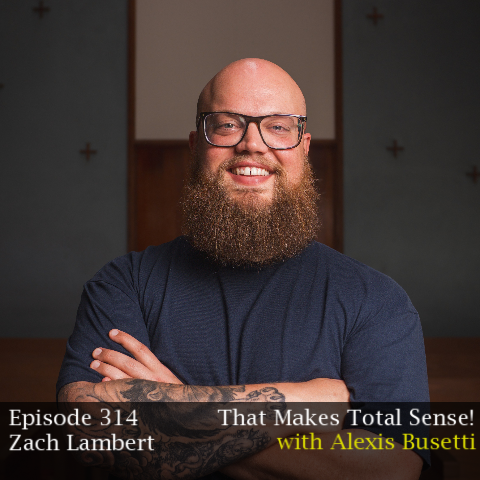
Let me, let me say the name of the book one more time. And of course, there'll be a link in the show Notes where people can grab it. It's called Better Ways to Read the Bible Transforming a Weapon of Harm into a Tool of Healing by Zach Lambert. Thank you so much, Zach, for being with me.
[01:03:49] Speaker B: Thanks. Oh, thanks for having me, Alexis. And thanks for saying that at the end. I I want more than anything else for people to have that exact experience that you just described. And so I'm so glad that was true for you, and I hope it's true for lots of folks.
[01:04:08] Speaker A: The links for all the resources mentioned in today's episode can be found in the show Notes. Music and podcast production by Seth Buscetti. Be sure to give us a review on itunes and subscribe at your favorite podcast listening app. You can also Visit
[email protected].