Episode Transcript
Speaker 2 00:00:07 Welcome to that. Makes total sense. A podcast dedicated to exploring God's generosity and justice. I'm Alexis. We setting the Christian aiming to ask good questions and encouraging you to do the same. Every one of us is wired by God to live out generosity and justice, but the how sometimes alludes us that makes total sense is a way for us to get together posture ourselves as learners and challenge one another to practice generosity and justice in a tangible way. Every day,
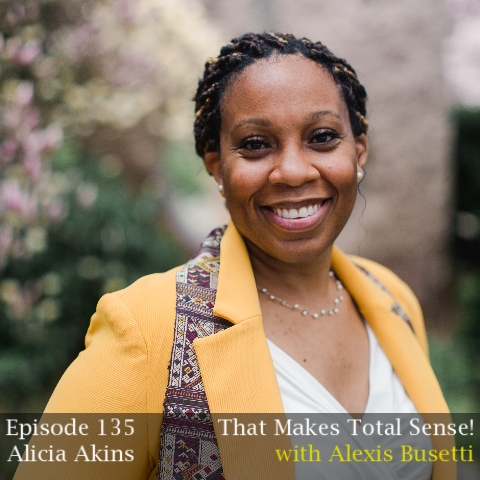
Speaker 0 00:00:39 Everybody, I spent my morning drinking coffee, eating gluten-free toast with spiced pear jam from the farmer's market and finishing up this amazing book by Alicia Akins called invitations to abundance. How the feasts of the Bible nourish us today. And I am blessed to be joined by Alicia to talk about it. Hey friend.
Speaker 3 00:01:10 Hi, thanks so much for having me.
Speaker 0 00:01:13 Oh, thank you so much. This was, um, this was the morning. I didn't know I needed, I really wanted to finish this up, uh, last week and I just didn't make it because of school and things. Um, it was the morning. I didn't know I needed this world as we know this week. Um, just feels like it's been appended and, um, to spend this time with your book and a wonderful cup of coffee. And as I mentioned before, we started recording, I got to turn the page from Nehemiah into the new Testament this morning. And even just that page turn where Jesus enters was, was water for my soul. So anyway, I, I, I don't want to give everything away, Alicia, but thank you so, so much for writing this and sending it over.
Speaker 3 00:02:10 Thank you for reading it.
Speaker 0 00:02:13 I do want to know from you where it came from. So we're going to start there, but I want to give a little introduction and then please add any introduction, um, of yourself to that that will help give us a little bit of context is where you're writing from. So, okay. You're currently a student at reformed theological seminary, and you are studying you're in biblical studies, right? A master of arts and biblical studies. And so I just want to say upfront that that really shines through in the book and it was appreciated by this I'm a theology students that was really appreciated, but you have also, I mean, you're in DC, but you've also lived all over the world and that comes out in this book too. So what else is important for us to know about you before we dive into the book?
Speaker 3 00:03:03 Um, yeah, so I am a student part-time at RTS, um, masters of arts and biblical studies. I'm a, a D D uh, Deaconess at my church, um, in the PCA. And, um, my full-time job is in international education and I've been in DC for seven years. And actually, um, if I could just sort of lead into the question about where this book came from, um, and my international experience, um, I used to live in China for three years. Um, and then I lived in Southeast Asia for two years. Um, after grad school, I did grad school before grad school. Again, my first master's is in China studies. Um, so when I returned from China and when I returned from Laos, I had short periods of unemployment, maybe three to five months. Um, and those periods were really difficult for my faith. I really struggled with believing that God was good, that he would provide for me, um, that he was gracious, um, that he saw me and my experience.
Speaker 3 00:04:18 And, um, then I moved to DC finally, after about six months of unemployment. And I was, um, I I'd say arrived pretty threadbare, like discouraged from having it take so long to find a job. Um, and I had been staying with my family, um, and who a person with a 30 year old wants to do that. I'm not there there's anything wrong with them, but it just, it wasn't what I wanted for myself. And, um, I found a job, um, that I worked in for two years, and then I found myself unemployed again. And I went into that period expecting the worst because every time I had been unemployed before had not gone well for my faith. Um, and it turned out that, um, I was out of work for, um, 15 or 16 months. Um, and it was the time of greatest richness in terms of my faith that I had ever experienced, even though I had the least, um, I was on unemployment.
Speaker 3 00:05:30 Um, I had like part time or temporary gigs doing things like pressing buttons on the elevator for people to go up to Washington, post building or hanging up people's coats, um, and things like that. Um, and there was one month that I couldn't pay rent. Um, and my church had to pay rent for me another month. I couldn't pay rent. My mom paid rent for me. There was a time when, um, I didn't have money for food and I was just going around my house, finding coins to take to the dollar store and buy the heaviest box of food that I could find. Um, and it was actually at the end of that month when I didn't have money for food, um, it was November and, um, a friend had invited me to his house for Thanksgiving. Um, and I had finally gotten my first unemployment check, uh, had gone to the grocery store to get, um, to get food, to take to the dinner.
Speaker 3 00:06:31 And, um, my card was declined because of like identity fraud or something like that. Um, when I got there and I was like, they said, you can just buy this, but after this, we're gonna like, turn your card off and you'll have to get a new one. Um, cause there've been fraudulent charges on it. And I was like, of all the people I tended to still the worst person, because I've been eating off pities, you know? So, um, I went to that dinner and my friend asked what makes you rich has like a leading question to the dinner. And so I was just sitting there and I thought to myself, like how, as a person who like at that time had very, very little like, how do I answer this question? And like, from the depths of my soul, I was like, God, like absolutely him and everything that he has provided for me in this time, when, what he's provided for me, hasn't been the one thing that I want. Um, and so that's sort of like where my journey into God as an abundant, God began versus God maybe as a prosperous, um, as a, as a God who brings prosperity. Cause I think by all accounts, I was not living my best life, but in the same vein, I was also living my best life. Um, and so that sort of like a little bit of backstory into how the, this book came to be. So.
Speaker 0 00:08:01 Wow. Thank you for sharing that Elisha. That is um, wow. When you said he asked that question, my eyes just got big. I'm like, yeah. How are you going to answer that?
Speaker 3 00:08:16 Yeah. And it wasn't, it didn't feel like a Sunday school answer kind of thing. It just felt like I am, I have survived and I haven't just survived, but I have been met by grace. You know what I mean? That sounds really corny, but like I was really expecting to not do well. Um, because I hadn't, every other time I had been in that situation. And, um, I was just really carried in a sweet and meaningful way during that season. So
Speaker 0 00:08:46 Isn't that just so gracious of God that he didn't let you fulfill your own prophecy In that season? Um, because he knew what you were thinking. This is going to be the worst.
Speaker 3 00:09:00 Yeah. I wasn't even thinking, I was saying this is going to be bad.
Speaker 0 00:09:05 Wow. That is, that is beautiful. Um, this book, the, that abundance comes through again and again and again. And, um, one of the themes, speaking of Thanksgiving dinner, one of the themes that I kind of chuckle at after I'm finished reading it, because I, when I put the notes, it sounds kind of gross, but I'm like, Alicia talked to us about this theme of fat you got going on here throughout the book. So I want to talk about that, but really just a little bit of the formatting you take us, there's, there's this thread of fat that comes through. Um, now I'm picturing like a steak, right? With like this, like, you know, sliver of federal in the end, um, which is kind of what it feels like to me, but you take us from, uh, from Passover to revelation, really like chronologically through the Bible and through the biblical feasts.
Speaker 0 00:10:05 So you kind of start with the ones that we might be most familiar with, um, Passover and, uh, and Tabernacles and Roshashana and some of these like pilgrimage feast and then through, um, some places in the Hebrew Bible that I really appreciated you naming as feast times or as feast passages, uh, in the Psalms and in the profits. And then into the new Testament all the way from some of Jesus' parables all the way through to communion and the marriage supper. And so it really is this beautiful kind of array kind of quilting of feast all the way through the Bible. And one of the things that connects those feasts is this is this fat
Speaker 3 00:11:02 Yeah.
Speaker 0 00:11:02 All the way through.
Speaker 3 00:11:04 So that same friend who had me over for Thanksgiving that year, that was like an annual tradition. Um, the next year he asked if I would write a blessing for their Thanksgiving meal. And, um, so I, at that same time was taking Hebrew and, um, was also, um, spending a lot of time in Jeremiah. And so I found this first in Jeremiah that was, um, perplexing to me on multiple levels, but it was, I will face the souls of the priests with gladness, but the word for gladness was literally fat. Um, and so I sort of became obsessed with the idea of like, wait, what is the, why is the word fat used here and looking for it elsewhere? And then seeing that, like in the book of Leviticus, when it talks about the offerings that the fat's prohibited and I'm like, well, if it's prohibited, then why is he giving it to them? And I remember our fall retreat is the first weekend in November. And, um, when it was time for people to like relax and go like play games or go for a hike or something, I was like, um, locked away in the library with my computer, trying to like solve the, the issue of why what's fat doing in the Bible. You know, everybody's not having fun. I'm like, I need to understand this imagery. I need to understand what this means.
Speaker 0 00:12:36 That sounds like fun. To me, It sounds like a great job.
Speaker 3 00:12:42 This is the relaxing. So I just sort of started on this investigation of the way that the Bible uses fat, um, and its imagery and how that's meant to, um, symbolize the best part of something. Um, and then thinking about how that then applies to the other symbolic ways that it's used. Um, and the idea that the priests would get the best part of something or that God would give us the best part of the land, or, um, just in general, the idea that God is giving us the best. And not that we're, we're not getting scraps, we're getting the best part. And so that's sort of where my interest in fat came from. And then even just thinking about practically speaking that like fat makes food tastes good, you know, it's used to seasoning and all of the different, um, ways that it's used in cooking. And, um, I just was like really taken by that imagery.
Speaker 0 00:13:44 There's a part in your book. It just came to mind. I don't remember where you were, forgive me where you were in the world and the little cubes
Speaker 3 00:13:52 China at a wedding brought out. Yeah, so I, uh, after college, I lived in China for three years and my third year, um, I taught English at a university and one of my students invited me to their hometown for wedding and at the reception, um, the server brought out the table a plate that, um, had like white translucent, um, globs or squares. Um, I didn't know what it was, it's it wasn't that uncommon for people to bring things to me that for me to eat that I was unfamiliar with, but the consistency of it, um, kind of made me, you know, ask more questions. So I'm sitting there, I think this isn't a chapter on wisdom, but yeah, I'm sitting there and I asked what it was and they told me it was just fat and apparently some cultures just eat fat. Like there's no meat attached to it.
Speaker 3 00:14:55 It's just the fat portion. And I was like, yeah, I'm I'm I can't, I just, this is, I don't even know, like, and everybody around the table just started laughing because they're like, oh, haha. Like Americans don't eat fat. Apparently it's common in other places. But, um, it's interesting because here we like think of it as, you know, something to help with seasoning. But um, not something you would just eat on its own. Um, in most cases it's not something you would just eat on its own. So, um, I think the chapter where I talk about that is wisdoms, feasts and thinking about rebuke as being this thing, that's a delicacy, but that we don't think of it as being a delicacy.
Speaker 0 00:15:41 Yes. That was really good. Gosh, it was one of those places where I'm like, ah, she's bringing up all these fees that I never would have thought she's so good. Yes. Yes. Beautiful. And being able to dine at wisdoms table. Goodnight. We should. That was, yeah, that was really good. Um, but that's one of the fat, that's one of the threads that takes us through, um, takes us through the Bible on this. Um, I'd like to spend a little bit of time if we can, at the beginning where you start in the Passover section, I will just say one of the things that I appreciated so much about your writing in this book is I mentioned to you before we started recording that my family and I have spent, and even before we had kids, we spent time with friends celebrating some of the pilgrimage feasts, um, you know, not, well, sometimes we actually did get to pilgrimage, which was cool, you know, spending Sue code in Jerusalem and stuff like that was it wasn't blessed.
Speaker 0 00:16:46 Um, but a lot of times we just did it with our friends, you know, here, and we would, uh, have Passover Seders with our families and things like that. And so I started reading the book kind of with this mentality of just like, yeah, yeah, I got this. Right. Like that was kind of how I went into it. I'm like, yeah. I mean, like, this is really beautiful and it's still really beautiful every time someone writes about it, but I've kind of done this before, but that ended a few pages into the first chapter because of how you narrate the Passover, this accompaniment of your narration of the Passover was so, uh, dramatic and thought provoking that, um, I was forced to look at it again and look at it in another way. And one of those places, um, was when, well, two places, one is when you introduce the, say the Passover introduces God as a, as a parent defending child, which I have four kids.
Speaker 0 00:17:50 So don't take me there. This mama bear might come out. But also I think many of us are familiar with this idea inside of the, of the Passover feast, the way it was initially instructed in the way that it continued to be, um, you know, designated and, and lived out is that, uh, uh, lamb was for a household. And so there is, uh, a situation set up where you can't have any meat left over the next morning. And so you have to be really conscientious about how many people are coming around your table and how much meat you have from that animal. And I was thinking about something in the way you put it. I don't have the page right now, but something in the way you put it made me think of one of our dearest friends who happens to be a single woman. And I just thought, gosh, this is like, it would be, can you imagine the burden for her to have to do this? I say this because she is around our table a lot. We're all, we're together a lot.
Speaker 0 00:18:59 He stays the night at our house and we just love her so much. And she moved a few hours away and it's devastating for our family anyway. Um, but I thought how, what a burden that would, can I have even imagined, can I put myself in her position where, you know, I have a family of six, so we're just like grocery bills keeps climbing and all of this, but there's a difference between kind of just trying to figure out how much portion everybody gets and then imagining one person, for example, having to do all of that, you've got to get the lamb, you've got a slaughter, you've got to cook you've and then even if you were able to do all of that, you would still be going against the regulations because you can't possibly eat an entire animal by yourself in one night. So this beautiful thing about neighbors, loving neighbors in this way, right?
Speaker 3 00:19:54 Yes. That was, um, something that was surprising to me as well. I think as I have been taught, um, about Passover and read about Passover, that was a detail that I missed, um, for a very, very long time. Um, but it was actually sort of in light of all of the other, um, fees that are sort of from that pilgrimage fees section of the book and thinking about, you know, the gleaning, um, laws and, um, and Sue caught that, uh, sharing with other families as well. That made me sort of on the lookout for how does God, um, build in care for, um, the easily overlooked within these, um, feasts, uh, and you know, what also does that mean for us, but, um, yeah, the idea that everyone had to finish the lamb, but obviously there would be some families or partial family units, um, that wouldn't have the capacity to do that. And so they were to be welcomed into other families. And so it wasn't just, as you said, it consideration of what the mouse that I am obligated to fill within my own home, but who else might be burdened to meet this requirement that I can, I can lift their burden by, um, allowing them to participate with my family. So like that theme just kind of also, I feel like permeated the feasts as well,
Speaker 0 00:21:28 Lifting their burden, which I think is super important, but also then by nature of that, you're creating community.
Speaker 3 00:21:36 Yeah.
Speaker 0 00:21:38 Because then we get to share that together around the same table. It's not a takeout meal. Right,
Speaker 3 00:21:45 Right. Exactly. I mean, no way. Yeah.
Speaker 0 00:21:51 That's true. That's true. That particular one. Yes. Yes. Um, but you know, even that night, that's one of the beautiful things about that feast to me is everyone had to be together, right. That first night everyone's everyone's keeping watch and, and you had to be together, you would want to be together that would, you know, what a, what a beautiful thing that God in his Providence would not really even allow any Israelite to be left alone.
Speaker 3 00:22:17 Right. Yeah, exactly.
Speaker 0 00:22:18 To keep watch alone. Um, gosh, that's beautiful.
Speaker 3 00:22:23 Yeah. But he doesn't just call us to himself, but he calls us to each other in these I think is really powerful. So
Speaker 0 00:22:32 That's right. That's right. Thank you so much for that. That's that's amazing. Um, Gosh, there's just, there's just so much Alicia. I feel like I could take us to the next place, but maybe do you have something on your mind? Where do you want to go next?
Speaker 3 00:22:49 Um, it's interesting that you had said that like your family, um, has a practice of celebrating these and has experienced. I feel like that's not a common response that I get. Yes. Everyone usually has heard of, um, the Passover, fewer people have heard of the feast of first fruits, even fewer, um and things like that. Um, and so it's interesting as I was thinking about, um, well, these might be obvious to readers what you were saying like, oh yeah, this is just like a rehashing of things that I know. Um, but what might be missed, um, thinking about what might be missed in how they're often taught, um, and the idea of like walking people into what happened, like just wanting to set people into the scene. I feel like in general, maybe with the exception of the Passover, um, a lot of the old Testament is, um, scary and unknown and obscure to a lot of Bible readers who prefer the comfort and ease and familiarity and the more straightforwardness perhaps of the, the new Testament.
Speaker 3 00:24:07 And so part of, um, what I was hoping would come across, um, in the old Testament chapters was a sense of what it might have been like to be there, or, um, you know, the Estonia Nehemiah, uh, or the Nehemiah chapter. That was one of the first ones I was supposed to write, but ended up being one of the last ones I wrote, um, just cause I was trying to get the like chronology and like explain what happened because I was like, I can almost guarantee that the, the average person who picks up this book is not going to be where's Nehemiah, won't know anything about what's in those books or like who these people are or, you know, what role they have in the Canon and the larger picture, um, of the Bible. Um, so how can I, how can I make it clear and vibrant? I think we're like sort of two things that I was, um, trying to convey as I retold those stories. So
Speaker 0 00:25:13 Yeah. So the Nehemiah chapter, oh my goodness. So as I told you, that was, I got to flip from Nehemiah to the gospels today. And so I'll say, first of all, I will confess there was a class I took last quarter where we were all supposed to come into this meeting with a verse that God had given us about a particular subject. And I kept getting this verse from Nehemiah and I was like, just dreading going in and saying anything because I was like, I was like, you I'm like, is this even the right context? Like, I, I really feel like I got this first from holy spirit, but am I? And so what was funny, I was literally driving to class and I pulled up. I knew because I had watched it before that the Bible project had done a short video on Ezra Nehemiah combination. And I literally listened to it on my way to class just to make sure that I wouldn't make a fool out of myself.
Speaker 0 00:26:12 And so, so a, I really do what you're saying. Um, but B I would say the part in that chapter that flooded my imagination because I happen to enjoy those books, even though I may not be completely certain on the chronology. I happened to be having to be one of the people who enjoys those books. And so I'm familiar with the rereading of the law, right. But that was it. That, that page that you spent on, like everyone is there, that they, the way they had it out so that the women and children could be there, come on Alicia. And then that the image of, of, of, of priests going out into the crowd so that people could be sure to understand answering questions, defining words, giving context, while people are absorbing and weeping and, and, and, and grieving and cellar, you know, coming into that celebration all at once was so powerful. Um, because I think that Nehemiah is obscure and as there is obscure, and sometimes it feels weird. And again, you say where's the feast in this, right. But, um, there's a part where you say that the, the law, the, the end to the law wasn't for grief,
Speaker 0 00:27:39 That wasn't the point was to make people feel bad about themselves and feel shame, um, that wasn't the point of the rereading of the law in that it was through that grief and into,
Speaker 3 00:27:52 Into
Speaker 0 00:27:53 Yeah. Into joy.
Speaker 3 00:27:54 Yeah. The joy that's the joy of the Lord is my strength passage that people I've heard. I had heard so many times before, not familiar with the context in which it was said. And to me it's so much more powerful knowing what was going on, sort of like the Jeremiah passage that everyone loves Jeremiah 31. That's like, but wait, D once you realize, like, you know, the setting and all of that, it gives the words much more weight, but yeah. At the effect of understanding on the soul isn't grief, um, but it reaches joy, it's fully flowered. And so this idea that, um, it is good and right to be repentant and to grieve, um, our sins and other sin that we see in the world, but that, um, like a true understanding of God's intent and goodness and fullness, um, doesn't stop there. It can't stop there.
Speaker 3 00:28:51 Um, yeah, but like his goodness and his fullness mean that grief is not the end. Um, so yeah, I, I, I did struggle with that chapter, but, um, I do think that seeing celebration is the end to our understanding, um, is a really powerful way to even think about just how we study scripture, how we approach, uh, the need for repentance or, um, when life doesn't look like what we expected to, or when we're just, you know, picking ourselves back up and realizing how far we have to go, um, knowing that, you know, we're carried where we have to go and partake in there. And, um, all of that to me is I find really comforting.
Speaker 0 00:29:47 Yeah. That's a beautiful example, biblical example of, um, communal repentance, um, which we're not great at, um, in the state of American evangelicalism, isn't actually, well-known for our communal repent. Um, we focus a lot on individual sins, right. Which is a thing it's like really legit, you know? Um, and we do, we do need to recognize that, but that's one of the, that's one of the great lessons I think, from the Israeli and Mayan story is that communal repentance, um, that, that, that shows us, thank you for that. There. I want to kind of hang on that idea of grief for a minute, because where we just were is grief from, from realizing the need for repentance, which is real and valuable. Okay. But a lot of the fees I'm specifically thinking of Passover now. Well, and into some of the new Testament topics that you cover, there is grief from hardship that is not caused from sin.
Speaker 0 00:31:12 So the Passover, they were not there enslaved because they had been as sinful people. And in the new Testament places where examples you give of Jesus healing, people's physical ailments. That's one of the things probably in the last six months or a year that has really hit me hard as I've studied in the new Testament is we have an understanding now that, well, I say we, I know there are some pockets that don't, and it really grieves me, but I would say in general, I would say, , we have the understanding that disability and, and sickness does not come from sin. It is not rooted in sin. And it feels, we can look back at the people who were pushing against Jesus and, and see them as heartless people. Right? Why would you stop someone from healing, a disability in someone or an illness in someone, but if we put ourselves in their shoes for a moment and realize that they had an understanding that that probably came from sin, I E it was deserved.
Speaker 0 00:32:28 It gets a little, right. It gets a little messy in there, theological understanding, right. Of why is he coming in and showing this grace, um, you know, that kind of thing, but, but there's costs from, from hardship that is not caused from sin. And I would like for you to talk for a moment, because I felt like this was a really distinct and heavy in the book that it is not only about celebration. I had had a friend once whose daughter had experienced a breakup. And she said, I told her, honey, you can't go over it. You can't go under it with heartache. You just got to go through it. You know? And I feel like that was, that was distinct in your writing here, that these faces, God isn't allow God isn't leading us over it, or under it in this heartache and grief, he's actually leading us through, Through it. The Passover, the healings, the songs chapters, good night is this God leading us through grief to get to the joy and celebration. Can you just talk about that conceptually, and then, and then, you know, whatever examples you might want to bring us are welcome those.
Speaker 3 00:33:38 Yeah. So one thing that I, one of the sort of hopes that I had for this book, um, sort of spring from conversations that I had with friends who were struggling with things, um, and when I would ask them, like, what do you think God has for you now? They would always talk about like some thing in the future that he might have, uh, but never any way where he might be present or immediate in their time of need. Um, and I thought that, um, there was sort of a real lack there in terms of their understanding of what God was offering when he was offering to be our God, like he's offering to be, um, ours, to be with us, um, to give us his presence. And I think people sort of sleep on the presence of God. I, they don't know what that means.
Speaker 3 00:34:31 They don't know what it feels like to be kept and sustained by him in the middle of hard things. Um, but I think there's definitely this element that I have sort of wrestled with and thought about for a long time that like, just because something is hard and just because I feel sorrow doesn't mean that God's not there or that I'm not seeing, or that there's no solution to this or that part of the solution, part of the immediate solution might just be a deeper savoring and appreciation for the comfort that God provides that only he can provide when I'm feeling lonely. And like nobody else understands the situation that I'm in. Um, the sympathy that he has knowing that, um, you know, that passage, I think it's from Hebrew is talking about not having a high priest who can't sympathize with us, but just knowing that like he is been tempted by the same things we've been tempted by, he suffered, um, and sort of our union with him and suffering, um, I think is something that we don't talk about as much.
Speaker 3 00:35:47 I think when we, um, hit sort of speed bumps or run into roadblocks, her instinct is to try and remove the thing that's uncomfortable as soon as possible, or to avoid having to engage with it, to run from our pain. Um, and I, well, I, I do believe that God doesn't want pain as the end goal for his people. Um, I think that there's a lot that he offers us in the midst of it and that, um, when our focus is just on getting past it, that we miss a lot, um, I must, I have myself approached life often that way, where I'm just like something bad happens and all I want is for it to be over. Um, I, I don't, I'm just like, sometimes I'm like, I don't want peace that passes understanding. I want to feel better, you know? And, um, that's sort of why there have been times that I've been struggling and in pain and grieving, um, things.
Speaker 3 00:37:07 And I realized I might live my whole life encountering things like this and living like, I think that God is really small and stingy until he changes something. Um, not realizing that his ability to change things. And, um, my current experience, I don't have to be at odds. He can change something, even if he doesn't change it, you know? Um, and that not changing it, isn't the same thing as not being able to change it. You know what I mean? Um, but that's so hard. Yeah, no, absolutely. And I got to this point where I was like, I don't want to go through my whole life thinking like that small, cause I don't think he's small. I don't want to go through my whole life, doubting him every time I hit a roadblock. I don't want to act like he's never done anything from you before.
Speaker 3 00:38:12 You know, like, even though I can't see what he's doing and I don't know how long this is going to last, I want to live like, he's the glorious God that I say he is when he's doing good things, you know? So, um, that's sort of where the idea of like, um, our trust being our triumph, that sort of idea comes from that. Like God wants us to trust that he can do anything. Even if he doesn't do those things. If I can point, you know, you know what I was unemployed, I had a friend who went through like two or three jobs. She like laughed me with finding jobs during that time. And I was like, you can give jobs to people. Like I've seen you give people jobs and you're not giving me a job, but you're still good. And you have something for me today. Um, and I'll wait for you to give me this other thing, but like, I'm not going to forfeit what you have for me today. Cause I'm focused on the future.
Speaker 0 00:39:13 Yeah, there, that reminds me, there was one of the quotes in this, um, chapter. I think it's in the, to the thirsty chapter. And you talk about the Psalmus there and you're saying he in, I think in Psalm 63, he does not make one reference to God's utility in that song. Like what, like that's what we're about. That's what I'm about a lot of times more often than I want to admit. And, and he, this almost doesn't do that there, like keep focuses on his goodness and his generosity and he's not small and he's not stingy and he's not, you know, any of those things. And it's not just about what he can do. Um, I still want to hang here for a second in part, because I want to say that we're recording this in the, at the end of February. So we're less than a week into Russia's invasion of Ukraine right now.
Speaker 0 00:40:15 Um, and I've made it through this whole conversation so far without crying. Don't say that I teared up a little bit when we were praying before, but I said, I'm going to try it. I'm going to try and do this. But this idea that you're just talking about has been kind of my heart's cry for Ukraine during this time for the people of Ukraine and, and this idea that you just had. I wrote out the quote from the book on the chapter two, the defeated is the name of the subtitle of that chapter, but you, right. We do not triumph through trust in God. Triumph is trust in God and we do not try it through trusting God. Triumph is trust in God. And that sentence has been rolling around in my mind because for some people it won't be okay from our perspective, right. Um, triumph won't come for some people in the situation. Some people have already been killed. Hundreds of thousands of people have at least temporarily, we don't know for how long have lost their homes, you know, have been Destroyed. Yeah. And, um, that does not look like triumph. Right. Um, but that sentence has been rolling around in my mind. We do not triumph through trust in God. Triumph is trust in God. And that's huge. You also say in that chapter, God resources, us toward peace that you could just take and just preach a whole sermon on that one sentence. Um, but can you impromptu just share a little bit more about those two ideas from, uh, from that chapter?
Speaker 3 00:42:24 Yeah. Um, so I think maybe the, the sentence right after the one that you read before the first one is that the battle is over our trust. Um, and that it's really, are we going, are we going to believe that darkness and evil win in the end, um, and that they can't be stopped and that God maybe didn't see an opportunity to oust them when he could and he was outsmarted. Um, and I think, you know, if it was a quiz, none of us would say that we believed any of those things were true. But when trials come, when deep dark, heavy things knock on our door, that's kind of what we default to behaving as. And I, I, I say we, because I do this too. It's not, you know, I'm not just saying that like somebody out there that I'm saying that I do this, this is me.
Speaker 3 00:43:36 Um, I act like, oh, finally I found something that's too big for God. What do I win? Um, I found this thing that he can't work through or that he didn't see, or some angle that he wasn't able to, um, take into consideration, um, or this thing is actually going to keep me from God's will for my life here. And, um, maybe some, someone might say that that's, um, kind of a childish way of thinking, but, um, I, part of me feels like at the end of the day, God is either able to do all things or he's not. And, um, as hard as it might be to believe that, I mean, as I have, I've had a hard time sleeping because of everything going on and Ukraine. Um, recently I've been up in the middle of the night, scrolling images on Twitter and just like crying in bed.
Speaker 3 00:44:46 And I'm thinking about are the things that I wrote still true for the Christians in that, in that situation. And to be honest, like because of my experiences overseas, I think a lot of the time when I write, or when I think about theology, I asked myself, is this true for people who live in countries that are in war? Is this true for people, for Christians who live in poor parts of the world, is this true for people who will be imprisoned for their faith? And, uh, you know, I'm thinking about like, is this true for the least of these, is this true for the people whose lives are most desperately, um, vulnerable and in need of hope? And I sometimes can't sign on to a lot of what I hear from American evangelicalism. Like just blatant optimism about things, um, or just the prosperity gospel or yeah, secular optimism, um, that does everything will be all right.
Speaker 3 00:46:00 Or if you're a good person, bad things won't happen to you. Like, um, or that God being big means that you don't die from this illness or that your marriage survives or that you get married or, you know, any of those things. Um, and so I really do think God, God wants us to come to him with the brokenness that we find in ourselves and in the world and say, I don't know, you know, I don't know what your plan is, but I believe that you are in control. And I, I believe that you are able, um, to change things. I'm not, it's hard knowing that things don't change like looking at, and it feels like it's easy for me to say sitting in my bedroom where, you know, there's no threat of my home being bombed or, um, anything like that. Um, and in a way that's true that like I can talk comfortably about, you know, believing that God's big in the middle of dire situations because I'm not in a dire situation myself.
Speaker 3 00:47:22 Um, but I do know that there was something supernatural about the fact that when I had nothing, I felt like I, everything. Um, and that can't be explained by the world and meeting my needs in a lot of different areas of life and that things haven't turned out the way that I have had necessarily wanted them to on a lot of different ways. And they're, um, times that I long for justice or companionship or different job or, um, health or things like that, that don't get that or that haven't been met yet, but that doesn't change my ability to trust in who God is sending his goodness. So, yeah. I don't know if that was like
Speaker 0 00:48:14 Rambling
Speaker 3 00:48:14 At, or what was this the second?
Speaker 0 00:48:17 No, that's good. That's good. I, it was on, um, God resourcing us toward peace, but I kind of want to piggyback what you just said just now, because I think I know one of the things that I'm learning and God has been really gracious. I think she, to bring me to a space, um, where I thought of that from, I don't remember which Psalm it is now, but he, he, he rescued me, brought me into a broad place. Right. But this broad, I feel like God is giving me some space kind of outside of that American evangelical, uh, optimism that you just mentioned because when things are not okay, thinking of a time just a few months ago when, um, the Afghanistan exit was not great and, and Haiti was experiencing yet another crisis and it was just like, you know, I have it tuned in PR way too much on my, you know, FM radio in my car.
Speaker 0 00:49:18 But, um, I was, I was chopping carrots for a stew that night. And I just put on, I don't know if you're familiar with the collective of, of artists that Porter's gate, but they had a, uh, they have an album called lament songs. And the very first track in that album, the lyrics are taken from the, the, the song is taken from the moment in the gospels where Jesus is asleep on the boat and the storm is coming and the disciples are trying to wake him up. Right. And, and, and the lyrics, some of the lyrics in the song are Jesus. When are you going to wake up?
Speaker 0 00:49:57 And, and I'm singing Jesus, when are you going to wake up? Right. And chopping these carrots. And I think that that process, even when we are comfortable enough, just to chop carrots and aren't affected directly by some of these things, I think the space to process that is a gift from God. And I think that it helps our intimacy with him that battle, like you said, the is for our trust. Well, you said that, but you framed it that way because it's true. It's not always, I think there are some moments when maybe trust does feel kind of more like a gift, you know, dropped to us. And I think that's very beautiful and gracious. It doesn't usually happen that way. For me, it's probably personality and other things. Right. It does feel like a real battle, like something that I'm not willing to. It doesn't, I can't just take over that territory.
Speaker 0 00:50:56 I can't just say, oh yeah, you're right. I just trust him yet. I'll leave your hands up. Like, it's not really that way for me. A lot of times there is a lot of back and forth with myself probably. Right. And, and principalities, no doubt, but with myself to say, do I really trust you when I'm looking at you, you look asleep right now. You look like things are not, you're not aware of what's that maybe it is, as you know, kind of, as you said before, if we were to check the box, we wouldn't say, well, he just didn't pay attention this time. Like we know that's not true,
Speaker 0 00:51:28 But that in that feeling of trust, doesn't that doesn't always equate. Cause we can check the box and fill out the right bubble on our scan. But it doesn't mean we always feel it in our hearts or believe it fully in our spirits. And so I just kinda wanted to say that, you know, for me, I think that the space to be able to do that is something I'm learning and something that I'm being formed by. Because a lot of times, as I mentioned before, we say, my friend said, you can't go over it. You can't go under it. You've got to go through it. Ah, but I think sometimes community we're guilty of just hopping over or hopping under, you know, that grief, that hardship that these hard times and saying, well, God is good. Like, yes, he's good, but man, we've got it. We've got to go through it.
Speaker 3 00:52:17 Yeah. You know,
Speaker 0 00:52:18 We've got, we've got to go through it. I'm so sorry. Yeah.
Speaker 3 00:52:22 Chapter actually the one on, um, Psalm 63, uh, it's the, I think the first line is like if ever a soul was thirsty, it was mine. Um, and that sort of came from the three-year period where it was right after I had come back basically from being a missionary. Um, or I felt like God had completely abandoned me for three years and my mom was like, I don't even recognize you anymore. I didn't want her saying anything to me about that. I went to church, but I would just sit in the corner and cry, um, like every Sunday. And I remember going to someone's baptism and crying and hoping that they would have a better experience with God than I had. And uh, like feeling almost sorry for them, for what they're about to get themselves into. And, um, I was also in a small group.
Speaker 3 00:53:11 I would go to every week and cry and I remember one Sunday or one meeting, um, instead of praying for each other. Cause I felt like I could pray for other people and God would listen to my purse for them, but he wouldn't listen when I, for myself. And um, they said, okay, this week we're going to pray for ourselves. And um, so when it came my time in the circle, I just bawled, like no words could come out. My throat was like caught in my neck or whatever the braces. And like, I just was like, how do you go from like being a missionary who trust the Lord to being someone who can't even pray for themselves because you think God doesn't hear you. Um, and I don't know if the people around me prayed for me, I just sort of like my mind went blank and I just was like lost in the, the grief of how far I had fallen.
Speaker 3 00:54:10 And I thought I will never do ministry again. I will never be close to the Lord again. Um, all of my time encouraging other people is over. Um, and I think not to make this about me, but a part of what makes this book really special to me is that it's like, I, the me who couldn't pray for myself would never have imagined writing a book one day, encouraging other people to draw near to God in the midst of whatever it is that they're going through. Um, the only reason I feel like I held onto my faith during that time was because of the things I had seen as a missionary. And I remember resenting God being like, if it was going to be this way, I would have, I wish that I had never been a missionary. So I could just wash my hands of this whole effort.
Speaker 3 00:55:03 Um, and I didn't want to be a Christian when I was like, well, I can't say that the things that I saw didn't happen. And so it was the things that I had seen before that really kind of kept me going to church, even if all I did was cry. Um, but yeah, I, um, I don't really know where I'm going with that, except I, I get that sometimes it's really hard. I didn't even want people talking to me about God at the time. Um, and it definitely wasn't a time where I was like, yes, I trust you. But coming out of that on the other side, it was actually, uh, I had gone to a Christian concert and the lead singer, uh, was losing his voice to a disease. And he sang a song about why would you basically, why would you let this happen?
Speaker 3 00:55:59 Um, and it was a song of lament and it was like, I heard it and I don't think anybody else remembered the song, but I was like, somebody gets it. Somebody has like, this guy has been deeply disappointed by God in his, um, journey to following God. Like his very, like, I want to give you the gift, like give back the gift of my voice in service to you. And now you're taking this for me. Like that song I was AF after the concert, uh, I said to someone like that, you know, that one song just like lifted my soul and they're like, what song? But it was like so powerful to me to know that somebody else had, you know, doubted. Um, but that was actually really instrumental in helping me find my way back, knowing that we do sometimes have those periods where we can't do it on our own and trust is heavy and feels like it could crush us or it feels totally few tile. Um, but it's totally worth it.
Speaker 0 00:57:16 Thanks for sharing that. At least it feels actually like, that's perfect. Like that's the, like, that's a full circle. I kind of, uh, before we started recording, uh, I felt like our promised you that's where I wanted to start. And that's more like where we're ending is to say we're, you can look at this and say, we're, we're a couple of seminary students talking about the biblical feast, but this, while it has excellent hermeneutics, in my opinion, this is not an academic book. This is from your heart. I mean this, um, and, and, and what you just shared. This is about a personal experience with God and the way that you have shaped the narrative of this book, it, we can't help, but come away from the understanding that not only are the feast, not an academic exercise today, they weren't intended to be an academic exercise.
Speaker 0 00:58:21 They are intended to be an experiential way for God to connect with his people. Um, and, and we see that in the book and we hear that in, in your stories and it causes us to reflect and ask the Lord, how does he want to connect with us through the grief, through the joy, through the sorrow and lament through the celebration. Um, and how does he want to do that again? And again and again, with us in this cyclical way. Um, so thank you for that. That was beautiful. Um, Alicia, as we start to wrap up, I'm going to say the name of the book again, as we, as we close and where we can find it. But, um, we connected on Twitter is that the best way for people to, uh, to connect with you, to find out more about your writing and your work and you're doing all
Speaker 3 00:59:16 Right and best way,
Speaker 0 00:59:18 Where can we find you on Twitter,
Speaker 3 00:59:20 Feet cry, mercy.
Speaker 0 00:59:24 All right. And I will put that in the show notes as well as a link to buy this beautiful book, which is what's the release date on this by way, by the way, I don't know how tomorrow. Oh my goodness. Okay. There's a recording this on the 28th. So March 1st. Yeah. So by the time this episode comes out, it will no longer be a pre-order. You can just buy it. The amazing, this is invitations to abundance, how the feasts of the Bible nourish us today by Alicia Akins. Aleisha thank you so much again. I really appreciate it.
Speaker 3 01:00:00 Thank you.
Speaker 2 01:00:02 The links for all the resources mentioned in today's episode can be found in the show notes, music and podcast production by Seth city. Be sure to give us a review on iTunes and subscribe at your favorite podcast listening app, you can also visit us at that. Makes total sense.com